Hubbry Logo
search
logo
2298128

Scout (Scouting)

logo
Community Hub0 Subscribers
Read side by side
from Wikipedia

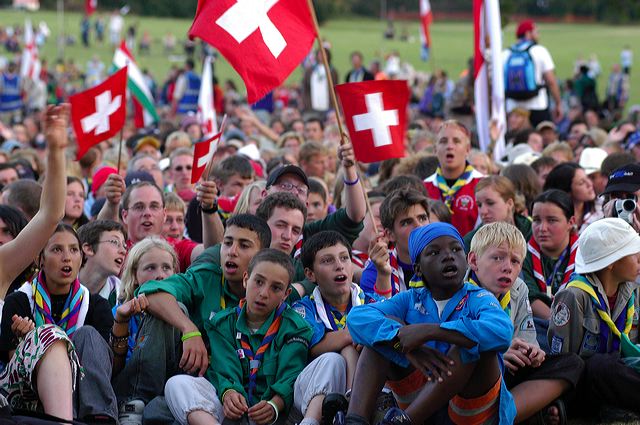
Scouts coming from various nations sing at the European Jamboree 2005.

A Scout, Boy Scout, Girl Scout, or, in some countries, a Pathfinder is a participant in the Scout Movement, usually aged 10–18 years, who engages in learning scoutcraft and outdoor and other special interest activities. Some Scout organizations have split this wide age group development span into junior and senior programs. Scouts are often organized into patrols of about 6–8 Scouts under a patrol leader with a number of patrols forming a larger troop under the guidance of one or more adult leaders or Scoutmasters. Many troops are affiliated with local, national and international organizations. Some Scout organizations have special interest programs such as Air Scouts, Sea Scouts, high adventure, Scout bands, mounted scouts and cyclist Scouts. In the United States there were around 6 million scouts in 2011.[1]

Foundation

[edit]

At the beginning of the twentieth century, there was popular interest in frontier and military scouts. Boys and girls emulated these scouts in dress and activities and teachers and youth leaders instructed boys and girls in scoutcraft. Aids to Scouting, a book about military scouting written by a hero of the Second Boer War, Robert Baden-Powell, was one source used for instruction.[2] Inspired by the interest in his book and urged by the founder and leaders of the Boys Brigade, Baden-Powell wrote Scouting for Boys for boy readership, which was published in 1908 together with The Scout magazine which describe a Scout method of outdoor activities aiming at developing character, citizenship training, and personal fitness qualities among youth.[3] Baden-Powell intended his book and scheme would be used by established organizations, particular the various Brigade Movement organizations.[4] However, because of the popular image of scouts and desire for adventurous outdoor activities, boys and even some girls formed their own Scout patrols independent of any organization.

Local and national scout organizations were formed in many countries. In the United Kingdom, Baden-Powell formed The Boy Scouts Association in 1910. Over time, Scout programs have been modified in many of the countries where it is run and special interest programs developed such as Air Scouts, Sea Scouts, outdoor high adventure, Scout bands and rider Scouts but most hold to the same core values and principles.[citation needed]

Girls

[edit]

Many girls took up being Girl Scouts. Edwardian values of the time would not accept young boys and girls to "rough and tumble" together, so Baden-Powell formed a separate organization for girls in 1910, the Girl Guides Association, which was followed in other countries forming the Girl Guides.[5]

Senior Scouts

[edit]

Many Scout troops and central organizations found it useful to provide separate training for older boys as senior Scouts in separate patrols and troops. Later, programs for senior Scouts were formally established (e.g. Senior Scouts, Explorer Scouts, Venture Scouts), often with more challenging and diverse activities.[citation needed]

Other programs often associated with Scouts

[edit]

The Scout scheme is aimed at 11 to 17 year-olds. Younger children, particularly younger siblings, attended some Scout meetings and so programs for younger children were developed by some troops and organizations. Baden-Powell's Boy Scouts Association launched its Wolf Cubs in 1916, which Baden-Powell wanted to be distinct from Scouts in name, uniform and identity to ensure they did not give Scouts a juvenile image. Similarly, some Scout organizations developed programs for those who had grown too old to be Scouts but wanted to remain associated with and support Scout Troops. Baden-Powell's Boy Scouts Association formed its Rovers in 1918 for young men and its Guild of Old Scouts.

Activities

[edit]
Scouts at a campfire ring at summer camp in 2002

A Scout learns the cornerstones of the Scout method, Scout Promise, and Scout Law. These are designed to instill character, citizenship, personal fitness, and leadership in boys through a structured program of outdoor activities.[6][7] Common ways to implement the Scout method include spending time together in small groups with shared experiences, rituals, and activities, as well as emphasizing good citizenship and decision-making that are age-level appropriate. Cultivating a love and appreciation of the outdoors and outdoor activities are key elements. Primary activities include camping, woodcraft, first aid, aquatics, hiking, backpacking, and sports.

Fellowship

[edit]

Camping most often occurs on a unit level, such as in the troop, but there are periodic camporees and jamborees. Camporees are events where units from a local area camp together for a weekend. These often occur a couple times a year and usually have a theme, such as pioneering. Jamborees are large events on a national or international level held every four years where thousands of Scouts camp together for one to two weeks. Activities at these events include games, Scoutcraft competitions, patch trading, aquatics, woodcarving, archery, and rifle and shotgun shooting.[citation needed]

For many Scouts, the highlight of the year is spending at least a week in the summer as part of an outdoor activity. This can be a long event such as camping, hiking, sailing, canoeing, or kayaking with the unit or a summer camp operated on a council, state, or provincial level. Scouts attending a summer camp, generally one week during the summer, work on merit badges, advancement, and perfecting Scoutcraft skills. Some summer camps operate specialty programs, such as sailing, backpacking, canoeing and whitewater, caving, and fishing.[citation needed]

Personal progression

[edit]

A large part, compared to younger and older sections, of the activities are related to personal progression. All Scouting organizations have an advancement program, whereby the Scout learns Scoutcraft, community service, leadership, and explores areas of interest to him. This Badge system or Personal Progressive Scheme is based on two complementary elements:

  • Proficiency (Merit) badges, which are intended to encourage the Scout to learn a subject which could be his work or hobby, so cover many different types of activities, not always related to Scouting.
  • Class badges or Progress system, which symbolize increasingly difficult levels or successive stages.

Most Scouting associations have a highest badge that require mastering Scoutcraft, leadership, and performing community service. Only a small percentage of Scouts attain them.[citation needed]

Unit affiliation

[edit]

Troop

[edit]
A group of Australian Scouts hike along a fire trail in a national park.

The troop is the fundamental unit of the Scouts. This is the group a Scout joins and via which he participates in Scouting activities, such as camping, backpacking, and canoeing. The troop leadership, youth and adult, organizes and provides support for these activities. It may include as few as a half-dozen Scouts, or as many as seventy or more. Troops usually meet weekly.[citation needed]

Patrol

[edit]

Each troop is divided into patrols of around five to ten Scouts. A patrol's independence from the troop varies among troops and between activities. For instance, a troop typically holds ordinary meetings as a unit. Patrols' autonomy becomes more visible at campouts, where each patrol may set up its own area for cooking and camping. However, on a high adventure trip which only a small part of the troop attends, divisions between patrols may disappear entirely. Patrols may hold meetings and even excursions separately from the rest of the troop, but this is more common in some troops than in others.[8] Each patrol has a Patrol Leader (PL) and Patrol Second (PS), or Assistant Patrol Leader (APL). Some troops mix older and younger Scouts in the same patrols, so that the older Scouts can teach the younger ones more effectively, other troops group Scouts by age, so that the members of one patrol have more in common.[9]

Group

[edit]

In most countries a local organisation, a "Scout Group", combines different sections together into a single body. Scout Groups can consist of any number of sections of the different Age Groups in Scouting and Guiding. Scout Groups can be single sex or have boys and girls in separate and/or mixed-sex sections depending on the group and the national organization. In some countries, the different sections are independent of each other, although they might be sponsored or chartered by the same organisation, such as a church.[citation needed]

Uniforms

[edit]
Alfonso XIII wearing a boy scout uniform, c. 1920

The Scout uniform is a specific characteristic of Scouting, and is worn at most events.[10] The original uniform, which has created a familiar image in the public eye and had a very military appearance, consisted of a khaki button-up shirt, shorts, and a broad-brimmed campaign hat.

Uniforms have become much more functional and colorful since the beginning and are now frequently blue, orange, red, or green, and shorts are replaced by long trousers in areas where the culture calls for modesty, and in colder weather. T-shirts and other more casual wear have also replaced the more formal button-up uniforms in many Scouting regions. In some countries Scouts can display their various proficiency (merit) badges on their uniform, while in other countries they can display them on a green sash.[11]

To show the unity of all Scouts, the World Membership Badge (World Crest) or another badge with a fleur-de-lis is a part of all uniforms.[12] Neckerchiefs[13] and Woggles (slides) are still quite common,[14] but not all Scouting associations use them. Patches for leadership positions, ranks, special achievements, patrol- animals, colors or names, troop- or group- numbers or names, and country or regional affiliation are widely used.[15]

See also

[edit]

References

[edit]
[edit]
Revisions and contributorsEdit on WikipediaRead on Wikipedia
from Grokipedia
Scouting is the world's leading educational youth movement, engaging over 60 million young people and 5 million adult volunteers across 176 national organizations in more than 170 countries and territories.[1] Founded in 1907 by British Army Lieutenant-General Robert Baden-Powell following an experimental camp on Brownsea Island, England, it originated as a program for boys aged 11 to 18 to foster character, self-reliance, and practical skills amid concerns over urban youth development and national preparedness.[2] The movement's core mission is to contribute to the education of young people through a value system based on the Scout Promise and Scout Law, which emphasize duty, honor, helpfulness, and moral integrity.[3][4] Scouting employs non-formal education methods, including outdoor adventures, teamwork in patrols, skill-building challenges, and community service projects, to develop participants physically, intellectually, socially, and spiritually.[5] These approaches, rooted in Baden-Powell's adaptation of military scouting techniques for civilian youth training, have evolved to include co-educational programs while maintaining emphasis on personal responsibility and leadership.[2] The Scout Promise typically involves commitments to duty to a higher power, country, helping others, and obeying the Law, which outlines traits such as trustworthiness, loyalty, and thriftiness.[3] Globally, Scouting has grown into the largest voluntary youth organization, promoting sustainable development goals through initiatives like environmental conservation and youth mobilization, with significant membership increases in regions such as Africa and Asia.[5] Its structured advancement system, badges, and jamborees have influenced generations, though it has faced adaptations to modern societal changes, including inclusivity policies varying by national organization.[6]

Historical Origins

Baden-Powell's Inspiration and Brownsea Island Camp

Robert Baden-Powell, a British Army officer, drew inspiration for Scouting from his experiences during the Second Boer War (1899–1902), particularly the siege of Mafeking, where he organized a corps of local boys as messengers and lookouts, observing their resourcefulness and initiative under pressure.[7] These boys, aged around 12 to 15, performed duties such as signaling and patrolling with minimal formal training, demonstrating how practical skills could foster self-reliance and discipline in youth without direct military combat roles.[8] This led Baden-Powell to adapt scouting techniques—originally for cavalry reconnaissance—into a non-military framework for character development, emphasizing outdoor activities to counter urban youth idleness and moral decline he perceived in early 20th-century Britain.[9] To test these ideas empirically, Baden-Powell organized an experimental camp on Brownsea Island in Poole Harbour, Dorset, from August 1 to 9, 1907, selecting 20 boys aged 9 to 17 from varied social backgrounds, including public school attendees from Eton and Harrow as well as working-class youths from the Poole Yacht Club and a Southampton seamstress's son.[10][2] The camp lacked a formal organization or uniform, instead dividing participants into four patrols for activities focused on camping, tracking, woodcraft, observation, lifesaving, and chivalry, with daily challenges like semaphore signaling, knot-tying, and nature hikes to build practical skills and teamwork.[10] Baden-Powell prioritized self-reliance, requiring boys to cook their own meals and navigate the island's terrain, drawing directly from his military scouting manual Aids to Scouting (1899) but reframed for civilian youth training.[11] Participants provided immediate positive feedback, with boys expressing enthusiasm for the hands-on challenges and crediting the experience with enhancing their confidence and sense of accomplishment, as Baden-Powell later recorded in notes validating the approach's effectiveness in developing initiative through experiential learning rather than rote instruction.[2] The camp's success, evidenced by the boys' adept handling of tasks like fire-building in rain and patrol competitions, confirmed Baden-Powell's hypothesis that diverse groups could unify and thrive under structured outdoor trials, laying the empirical foundation for broader Scouting principles without reliance on institutional authority.[12]

Publication of Scouting for Boys and Initial Launch

Scouting for Boys, authored by Robert Baden-Powell, was first published in six fortnightly installments beginning on 24 January 1908, each priced at four pence and totaling around 60,000 words.[13] [14] The handbook drew from Baden-Powell's prior military text Aids to Scouting (1899), which outlined reconnaissance skills for soldiers, but reframed these for civilian youth instruction, stressing self-reliance, outdoor skills, and moral virtues like honor and service over tactical combat or paramilitary drills.[15] Its eclectic content, blending camping techniques, nature lore, and yarns from Baden-Powell's experiences, aimed to foster character and citizenship amid concerns over urban youth delinquency in Edwardian Britain.[16] The book's release sparked immediate grassroots enthusiasm, with boys self-organizing into patrols and troops using its "self-instructor" methods, bypassing any formal oversight.[14] By late 1908, an estimated 60,000 boys had joined Scout groups across the United Kingdom, reflecting organic diffusion through schools, churches, and communities rather than top-down recruitment.[13] This rapid, unstructured expansion—reaching over 100,000 by 1909—prompted Baden-Powell to establish The Boy Scout Association on 24 January 1910, headquartered in London, to standardize training, issue warrants to adult leaders, and manage the burgeoning movement full-time after his army retirement.[17] [2] Girls participated spontaneously from the outset, forming "Girl Scout" units and comprising about 6,000 registrants by the time of the inaugural national Scout rally at Crystal Palace in September 1909, where they sought inclusion alongside boys.[18] To address this while maintaining gender separation, Baden-Powell collaborated with his sister Agnes to launch the Girl Guides program in 1910, adapting Scout principles into a distinct framework for female youth emphasizing domestic skills, health, and imperial duty.[18] This parallel initiative formalized early female involvement without integrating it into the core Boy Scout structure.[19]

Early International Spread

Scouting's international diffusion commenced shortly after the 1908 publication of Scouting for Boys, with organic adoption driven by expatriates, military personnel, and enthusiasts encountering Baden-Powell's methods. In the United States, Chicago publisher William D. Boyce, lost in London fog during a 1909 visit, was guided to his destination by an unidentified Scout who refused a tip, prompting Boyce to acquire Scouting literature and incorporate the Boy Scouts of America (BSA) on February 8, 1910.[20][21] The BSA's early growth reflected direct emulation of British practices, emphasizing self-reliance and outdoor skills amid America's urbanizing youth.[22] By 1910, Scouting had established troops in Commonwealth nations including Canada, Australia, New Zealand, and South Africa, as well as non-imperial countries such as Sweden, Mexico, Argentina, and Chile, often initiated by Baden-Powell's travels or returning servicemen from the Boer War.[2] In British India, the movement began in 1909 when Captain T. H. Baker formed the first registered Scout troop in Bangalore for European boys, expanding to multiple organizations by early 1911 in cities like Shimla, Calcutta, and Jabalpur, though initially excluding Indian youth amid colonial hierarchies.[23] This colonial adaptation highlighted Scouting's appeal for character training but also sparked early tensions, as nationalists later repurposed its skills for anti-colonial efforts, diverging from Baden-Powell's loyalty-oriented aims.[24] The First World Scout Jamboree, held indoors at London's Olympia from July 30 to August 8, 1920, formalized global ties, drawing nearly 8,000 participants from 34 countries and culminating in Baden-Powell's recognition as Chief Scout of the World.[25][2] This event, more exhibition than encampment due to postwar constraints, underscored Scouting's burgeoning transnational network while reinforcing ideals of international brotherhood independent of political borders.[26]

Foundational Principles

Scout Promise, Law, and Motto

The Scout Promise, formulated by Robert Baden-Powell in 1908, commits participants to personal honor and duty, stating: "On my honour I promise that I will do my best: To do my duty to God and my country, and to help other people at all times; and to obey the Scout Law."[27] This pledge underscores obligations to a higher spiritual principle—originally "God," with secular adaptations substituting spiritual principles or equivalent phrasing in some national associations—and to one's sovereign or nation, reflecting Baden-Powell's view of moral formation through hierarchical duties starting from self-discipline to communal service.[28] The emphasis on helpfulness extends to practical altruism without expectation of reciprocity, positioning the Promise as a foundational ethical covenant rather than a mere oath of allegiance. The Scout Law, also originating in Baden-Powell's 1908 publication Scouting for Boys, comprises nine core points that delineate virtues of character: (1) A Scout's honour is to be trusted; (2) A Scout is loyal; (3) A Scout's duty is to be useful and to help others; (4) A Scout is a friend to all and a brother to all Scouts; (5) A Scout has forbearance, that is, he must not take offence at trifles or bear malice; (6) A Scout is a thrifty boy; he saves every penny he can and puts it in the bank, so that he may have enough to pay for anything he has to buy; (7) A Scout is clean in thought, word, and deed; (8) A Scout smiles and whistles under all circumstances; (9) A Scout is thrifty, brave, and cheerful.[27] These tenets prioritize trustworthiness, loyalty to kin and nation, resource stewardship, and self-mastery, with later expansions in organizations like the Boy Scouts of America adding points such as reverence to reach twelve, yet preserving the original framework's focus on intrinsic moral habits over external rules.[28] Baden-Powell intended the Law as interpretive guidance rather than rigid commandments, fostering internalized principles through daily adherence. The Scout Motto, "Be Prepared," derives directly from Baden-Powell's writings in Scouting for Boys, signifying readiness in mind and body to fulfill duties amid unforeseen challenges, exemplified by preparedness to "die happy" through lifelong fidelity to the Promise.[29] This concise imperative roots in Baden-Powell's military experience, translating tactical resourcefulness into ethical vigilance, with minimal variations across associations to maintain its call for proactive self-reliance.[28] Longitudinal analyses link sustained engagement with the Promise, Law, and Motto to heightened adult civic participation, including volunteering and community leadership; for instance, structural equation modeling of youth Scouting involvement reveals positive associations with four civic indicators, such as charitable giving and organizational membership, independent of self-selection effects.[30] These correlations suggest the ethical framework causally reinforces prosocial behaviors into maturity, as duration in Scouting predicts greater social capital accumulation compared to non-participants.[31]

Aims of Character Building and Citizenship

The aims of Scouting, as articulated by Robert Baden-Powell, center on three interconnected educational objectives: developing moral character, cultivating responsible citizenship, and enhancing physical and mental fitness through hands-on, experiential methods. Character building emphasizes self-reliance and ethical integrity, derived from Baden-Powell's observation that outdoor woodcraft and personal initiative foster independence and resilience, countering tendencies toward dependency or unthinking conformity.[9][32] Citizenship training promotes patriotism as active loyalty to one's nation—manifest in service and defense preparedness—without alignment to partisan politics, prioritizing individual accountability for communal welfare over state-directed collectivism.[32][24] Physical and mental fitness arises causally from confronting natural challenges, such as camping and hiking, which empirically build endurance and decision-making under adversity, as evidenced by participants' documented improvements in self-sufficiency.[9] These aims reject ideological impositions, instead grounding education in observable outcomes from practical trials, where self-directed problem-solving in unstructured environments demonstrably cultivates traits like perseverance over rote obedience or groupthink. Baden-Powell viewed Scouting as "a game with a purpose" to train boys for manhood and societal roles, explicitly linking character formation to real-world utility rather than abstract doctrines.[33] Historical validation appears in Scouts' World War I contributions, where over 500,000 British Scouts aided the home front through non-combat tasks like signaling, first aid, food production, and Liberty Bond sales, totaling millions in funds raised and resources gathered, illustrating how Scouting's focus on initiative prepared youth for national duties without paramilitary structure.[34][35] Similar patterns emerged in World War II, with Scouts assisting in evacuation, firefighting, and coastal watches, underscoring the causal efficacy of experiential training in generating civic readiness amid crises.[2][36] This empirical record affirms Scouting's emphasis on personal agency as a bulwark for societal stability, distinct from collectivist models that subordinate individual judgment.

Distinction from Paramilitary Training

Baden-Powell, drawing from his military experience in works like Aids to Scouting (1899), repurposed reconnaissance skills such as tracking, signaling, and observation for civilian youth development, explicitly framing them as tools for "peace scouts" who apply these abilities in non-combat roles like exploration, emergency response, and community service rather than warfare. In Scouting for Boys (1908), he differentiated war scouts—specialized military personnel trained solely for battlefield intelligence—from peace-time equivalents, underscoring that Scouting's methods cultivate self-reliance and practical utility in everyday life, not combat readiness.[29][37] To counter perceptions of militarism stemming from his army background and the adoption of his manual by boys prior to Scouting's formal launch, Baden-Powell repeatedly disavowed any aim to create soldiers, asserting in 1910 that the movement's primary object was to train citizens through character-building activities, not military drills or hierarchy. He advocated replacing rigid army formations with informal games and the patrol system, where boys elect leaders and exercise initiative, fostering personal agency over unquestioning obedience to authority.[38] This approach empirically prioritized voluntary skill acquisition in camps—evident from the 1907 Brownsea Island experimental camp's emphasis on woodcraft and teamwork without formal parades—contrasting sharply with paramilitary training's focus on regimentation and state loyalty. Early criticisms from pacifists, who viewed uniform and badges as precursors to armament, and nationalists, who demanded explicit army preparation, were addressed in Baden-Powell's writings and public statements by highlighting Scouting's non-compulsory nature and emphasis on moral development for peacetime citizenship, rejecting conscription-like structures in favor of skills that enhance individual resilience and civic responsibility. Unlike authoritarian youth organizations that adapted Scouting elements for ideological conformity, original Scouting's causal emphasis on experiential learning built adaptive problem-solving, verifiable through its foundational texts' avoidance of drill manuals and promotion of scoutcraft as a means to personal empowerment rather than collective subordination.[38][29]

Organizational Framework

Local Units: Troops, Patrols, and Groups

The patrol constitutes the fundamental unit in Scouting, consisting typically of six to eight boys who operate as a self-contained team responsible for planning and executing activities.[39] Each patrol selects its own leader through election by members, fostering immediate accountability and decision-making among peers rather than reliance on adult directives.[39] This structure, emphasized by Robert Baden-Powell as the core method of Scouting, enables boys to develop leadership skills through direct experience in managing group dynamics and responsibilities. Empirical observations from Scouting practice indicate that the patrol system promotes servant leadership and confidence by allowing youth to guide one another under minimal adult intervention, contrasting with hierarchical models that suppress initiative.[39] A troop comprises multiple patrols, generally four to eight, coordinated by a scoutmaster who serves as an advisor rather than a commander, ensuring the boy-led principle permeates operations.[40] The senior patrol leader, elected from patrol leaders, represents troop-level coordination, but primary authority resides within patrols to maintain decentralized control and peer-driven accountability.[40] Baden-Powell designed this arrangement to instill responsibility, noting that assigning duties to small units prevents diffusion of effort seen in larger, top-down organizations. In many national associations, a Scout group integrates several troops or age-based sections under a local committee, providing administrative support while preserving patrol autonomy. This grouping facilitates resource sharing and community ties without overriding the patrol's operational independence, yielding benefits in sustained engagement through localized peer structures over centralized mandates.[41] Variations persist, such as the UK's sixer system for younger members paralleling patrols, versus the U.S. den structure in junior programs, yet all uphold the patrol method's emphasis on small-group leadership integrity.[42]

National Scout Associations

National Scout associations serve as the primary sovereign entities responsible for implementing Scouting programs within their respective countries, tailoring Baden-Powell's foundational methods to local cultural, educational, and social contexts while maintaining adherence to the Scout Promise and Law as a condition of recognition by the World Organization of the Scout Movement (WOSM).[43] These associations exercise significant autonomy in developing curricula, age-group structures, and activity emphases, provided they align with WOSM's core value system aimed at youth development through character building, citizenship, and outdoor skills. Membership data from these national bodies aggregates to WOSM's reported global total of over 60 million youth participants across 176 member organizations as of 2025.[44] Prominent examples include the Boy Scouts of America (BSA), established on February 8, 1910, which has adapted Scouting with a strong emphasis on structured advancement, culminating in the Eagle Scout rank—first awarded in 1912 and earned by approximately 4% of participants since inception as the pinnacle of leadership and service achievement. In the United Kingdom, The Scout Association, rooted in Baden-Powell's 1908 publication and formally incorporated via Royal Charter on January 4, 1912, reflects early imperial influences while evolving to serve diverse urban and rural youth through flexible section programs.[45] These organizations exemplify how national bodies integrate local priorities, such as the BSA's focus on merit badges tied to American civic duties, without altering the obligation to uphold Scouting's ethical fundamentals. Cultural adaptations have occasionally generated tensions, particularly around the Promise's reference to a "duty to God," which underscores Scouting's original spiritual dimension. In religiously diverse or secularizing societies, some associations permit phrasing variations or de-emphasize religious elements to broaden inclusivity, prompting criticism from traditionalists who view such changes as dilutions of Baden-Powell's intent.[46] Conversely, in the United States, faith-based chartering organizations—accounting for 42% of nearly 40,000 units as of 2025—reinforce religious integration, stabilizing membership amid broader controversies over policy shifts.[47] These variances highlight the balance national associations strike between global standards and domestic realities, with WOSM requiring fundamental alignment to preserve Scouting's integrity.[2]

World Organization of the Scout Movement

The World Organization of the Scout Movement (WOSM) serves as the international confederation coordinating over 170 independent national Scout organizations, preserving their autonomy in program implementation and local adaptation while fostering global standards for Scouting principles. Established in 1922 following the first World Scout Jamboree in 1920, WOSM maintains its headquarters in Geneva, Switzerland, and operates without imposing direct control over member associations' internal affairs.[25][48] WOSM's governance centers on the World Scout Conference, its triennial legislative assembly comprising delegates from member nations, which elects the World Scout Committee to oversee strategic direction and policy. The organization divides into six regions—Africa, Arab, Asia-Pacific, Eurasia, Europe, and Interamerica—for regional coordination of events, training, and support, enabling tailored responses to local contexts without supranational authority. This structure emphasizes voluntary cooperation, with decisions binding only on WOSM's operations rather than mandating uniformity across diverse cultural and national frameworks.[49][50] In 2024, WOSM adopted a new Strategy for Scouting, succeeding the Vision 2023 framework, to guide the movement through 2033 with priorities on youth empowerment, inclusive participation, and sustainable growth amid varying national membership trends. The strategy promotes youth-led initiatives and measurable outcomes in skill development and community engagement, reflecting data-driven adjustments to challenges like demographic shifts and resource constraints in some regions. Globally, WOSM reports over 57 million registered youth members as of 2023, with a 7% increase from 2021 to 2024 based on national census data, underscoring focus on verifiable participation metrics over prescriptive ideological alignment.[51][6][52]

Program Sections and Age Groups

Junior Sections (e.g., Cubs)

Junior sections in Scouting, such as Wolf Cubs or simply Cubs, target children typically aged 8 to 11, providing an entry point to Scouting principles adapted for pre-adolescent development. These programs emphasize foundational character development through age-appropriate play, basic outdoor exposure, and group cooperation, avoiding the more rigorous demands of older Scout activities to foster early interest without overwhelming younger participants.[53][54] Robert Baden-Powell introduced the Wolf Cubs in 1916 as a junior branch in response to younger siblings eager to participate in Scouting, drawing inspiration from Rudyard Kipling's The Jungle Book to frame activities around animal pack dynamics, with Cubs aspiring to become "wolves" under an Akela leader.[53][55] This thematic approach, rooted in Baden-Powell's collaboration with Kipling, made abstract values like loyalty and self-reliance engaging through stories of Mowgli and his pack, promoting simple tests in tracking, signaling, and household duties scaled for short attention spans.[56] Activities in junior sections prioritize fun, collaborative games, basic crafts, and introductory nature exploration to build motor skills and teamwork, such as relay races or simple knot-tying, often integrated with family involvement to reinforce home-based responsibilities like tidying or cooking basics.[57][58] Globally, variants extend to even younger ages; for instance, Joey Scouts in Australia serve children aged 5 to 8, focusing on discovery through sensory play and short hikes to cultivate curiosity and social bonds before advancing to Cubs.[59][60] Participation in these programs correlates with improved socialization outcomes, including enhanced self-esteem and peer cooperation, as evidenced by studies showing Scouting's role in buffering stress through group belonging and structured goal-setting, without the intensity that might deter early engagement.[61][62] This preparatory focus ensures juniors develop habits of discipline and community awareness, priming them for senior sections' leadership challenges.[63]

Core Scout Age (11-18)

The core Scout age spans youth from 11 to 18 years, representing the original program established by Robert Baden-Powell in 1908 as a boy-only initiative focused on adventure, self-reliance, and character formation through immersive outdoor experiences.[2] This structure prioritized activities like hiking, camping, and tracking, conducted primarily in peer-led patrols to cultivate leadership and interpersonal bonds in the absence of constant adult oversight, aligning with Baden-Powell's military-inspired yet non-paramilitary aim of preparing boys for responsible manhood.[2] Advancement occurs via progressive ranks—such as Tenderfoot, Second Class, First Class, and higher honors like Eagle in the Boy Scouts of America—and merit badges demonstrating competence in practical skills, from orienteering to environmental stewardship.[64] Research links participation to measurable gains in male self-efficacy, with studies showing enhanced self-confidence, ethical reasoning, and leadership competencies that persist into adulthood, as evidenced by higher rates of community involvement and decision-making prowess among program alumni.[65][66] Post-1970s reforms in various associations, including the Boy Scouts of America's 2019 admission of girls to its Scouts BSA program (previously boy-exclusive for ages 11-17), introduced co-educational or parallel female units amid declining membership pressures.[67][68] While enabling broader access, analyses indicate potential trade-offs for boys, including diluted focus on male-specific bonding and comparatively stronger outcomes in single-sex formats for academic performance and confidence-building, per educational research favoring segregated environments for adolescent males.[69][70]

Senior and Rover Programs

Rover Scouting, established in 1918 by Robert Baden-Powell, extends the Scouting program to young adults typically aged 18 to 24, providing a structured environment for transitioning to independent adulthood through practical exploration of life challenges, vocational preparation, and community involvement.[71] Originally designed for former Boy Scouts who had outgrown youth sections, it emphasizes self-reliance, leadership, and service projects, often organized in crews that plan expeditions, skill-building workshops, and voluntary aid initiatives.[72] This phase prioritizes real-world application over merit badges, fostering maturity via peer-led activities like long-distance hikes, emergency response training, and career mentorship.[73] In national variations, Rover programs adapt to local contexts while retaining core elements of adventure and citizenship. For instance, the World Organization of the Scout Movement endorses Rovers as the final youth program stage, focusing on ethical decision-making and societal contribution before full adult leadership roles.[72] In the United States, the Boy Scouts of America introduced Venturing on February 9, 1998, as a co-educational counterpart for ages 14 to 20, evolving from prior Explorer units to emphasize high-adventure pursuits such as whitewater rafting, international travel, and ethical leadership seminars, with crews chartered to align with participants' interests in areas like sports or public safety.[74] These programs historically maintained a male-oriented structure to build on Boy Scout foundations, though expansions to include females have prompted debates on preserving original disciplinary rigor amid broader inclusivity goals.[75] Empirical assessments of senior programs highlight their role in sustaining engagement post-adolescence, with activities calibrated for autonomy—such as crew-elected officers managing budgets for service expeditions—yielding reported gains in resilience and employability, though retention challenges persist without tailored challenges for maturing participants.[76] Traditional implementations, centered on male cohorts, have documented steadier long-term involvement by reinforcing patrol-like hierarchies and outdoor ordeals, contrasting with mixed-gender formats where anecdotal dilution of focus arises from divergent priorities.[77] Overall, these extensions serve as bridges to lifelong volunteering, with over 100 years of Rover evolution underscoring their adaptability to vocational demands like skill certification in trades or emergency management.[78]

Methods and Activities

Patrol System and Leadership Development

The patrol system organizes Scouts into small, self-managing groups of 6 to 8 members, each led by a peer-elected patrol leader responsible for planning activities, maintaining discipline, and representing the group within the larger troop.[79] This structure, derived from Robert Baden-Powell's adaptation of military scouting tactics observed during the Boer War in 1899–1900, emphasizes youth initiative over adult direction, with the Scoutmaster serving primarily as a mentor who advises rather than commands.[80] Baden-Powell articulated in 1933 that the system's core aim is "to give real responsibility to as many boys as possible," enabling them to function as autonomous units that compete, collaborate, and execute tasks independently from troop-wide operations.[81] In practice, patrols handle their own internal elections, resource allocation, and evaluation, distinguishing them from centralized troop activities where adults predominate; this peer governance cultivates skills in negotiation, conflict resolution, and collective accountability absent in adult-led models.[82] Baden-Powell insisted the patrol method "is not one method in which Scouting can be carried on. It is the only method," arguing it mirrors natural social groupings and real-world team dynamics, thereby causally building self-reliance through experiential repetition of leadership roles.[81] Observational frameworks from Scouting programs, such as those in the White Stag Leadership Development program established in 1960, demonstrate that youth under this system exhibit higher initiative and reduced dependency on adults compared to hierarchical alternatives, as patrols vie in contests and demonstrate methods to peers.[83] Empirical correlations from peer education analyses within Scouting indicate that patrol participation advances social competencies into leadership proficiency, with progression through roles linked to enhanced decision-making and group cohesion.[84] This contrasts with adult-dependent youth programs, where initiative often atrophies due to over-direction; the patrol's semi-independent operation—planning patrols-specific outings or competitions—directly transfers causal mechanisms of small-team efficacy to adult contexts, as evidenced by Baden-Powell's military-derived rationale that such units succeed through distributed responsibility rather than top-down control.[79]

Outdoor and Survival Skills Training

Outdoor and survival skills training in Scouting emphasizes hands-on mastery of wilderness competencies to foster self-reliance and physical resilience, drawing directly from Robert Baden-Powell's military background and the 1907 Brownsea Island experimental camp, where participants engaged in camping, hiking, and basic survival techniques.[85] Baden-Powell's manual Scouting for Boys (1908) codified these practices, promoting skills like fire-starting without modern aids, shelter construction, and resourcefulness in austere environments as essential for character development through direct exposure to natural challenges.[86] Core activities include tent pitching and campsite selection adhering to Leave No Trace principles, trail hiking with load-bearing packs, fire-building using natural tinder and friction methods, and navigation via topographic maps, compasses, and celestial cues.[87][88] Additional competencies encompass knot-tying for rigging, water sourcing and purification, and rudimentary wilderness first aid, such as treating hypothermia or fractures without immediate evacuation.[88] Training progresses from supervised group exercises to solo or patrol-led ventures, simulating real-world isolation to build decision-making under uncertainty.[89] Large-scale events like the World Scout Jamboree amplify these skills, convening tens of thousands of participants—over 30,000 on average—for extended outdoor immersion, including mass campsite operations and inter-patrol navigation challenges across expansive terrains.[25][90] Empirical evidence links sustained Scouting involvement to tangible health benefits, with former participants 35% more likely to report excellent health at age 50 and nearly 20% less prone to anxiety or mood disorders in adulthood, attributable to the resilience cultivated through repeated outdoor stressors rather than mere recreation.[91][92] These outcomes stem from causal mechanisms like enhanced physical fitness and adaptive coping, as opposed to self-reported surveys alone, with longitudinal cohorts showing persistent reductions in mental health risks independent of socioeconomic confounders.[93]

Personal Advancement and Merit Badges

In Scouting programs, personal advancement is structured around progressive ranks and skill-specific badges that require participants to demonstrate verifiable competencies in areas such as outdoor skills, citizenship, and personal development.[94] The system emphasizes hands-on proficiency over mere attendance or participation, with requirements evaluated by qualified counselors or leaders who verify completion through observation or testing.[95] For instance, in the Boy Scouts of America (BSA), now Scouting America, youth advance through ranks including Tenderfoot, Second Class, First Class, Star, Life, and Eagle, each building on prior achievements with escalating demands for leadership, service, and skill mastery.[96] Tenderfoot rank, for example, mandates demonstrations like proper knife and ax use, basic first aid for cuts and burns, and tent pitching, ensuring practical aptitude before progression.[96] Merit badges form a core component, awarded for completing detailed requirements in over 130 categories covering topics from first aid and environmental science to cybersecurity and artificial intelligence, with updates reflecting contemporary needs as of 2025.[97] [95] These badges require scouts to perform tasks such as bandaging simulated injuries for First Aid or analyzing global trade impacts for Citizenship in the World, verified by registered merit badge counselors to confirm competence rather than passive learning.[98] To achieve Eagle Scout, the pinnacle rank attained by about 6% of eligible participants, youth must earn 21 merit badges—including 14 specified ones like Camping, Citizenship in the Nation, and Environmental Science—while holding leadership positions and completing a community service project.[99] [100] This proficiency-based model extends internationally through national Scout associations affiliated with the World Organization of the Scout Movement (WOSM), where similar personal achievement badges reward demonstrated skills in sections like Cubs or Rovers, though specifics vary by country.[101] Official guidelines stress rigorous verification to maintain standards, with counselors authorized solely to sign off on met requirements, countering potential dilution from expedited sessions observed in some units.[102] Empirical data links this advancement structure to enduring positive outcomes, with Eagle Scouts exhibiting higher rates of goal attainment, civic engagement, and ethical decision-making in adulthood compared to non-Scouts.[66] A Baylor University study of over 1,000 Eagle Scouts found they were 64% more likely to report recent personal goal achievement and demonstrated stronger prosocial behaviors, attributing these patterns to the program's causal emphasis on verified skill-building and responsibility.[103] [104]

Symbols, Uniforms, and Traditions

Uniform Design and Purpose

The Scout uniform, originally designed by Robert Baden-Powell in 1908, draws from practical military attire he encountered during his service in South Africa, featuring a khaki shirt, shorts or trousers, sturdy boots, and a wide-brimmed hat for sun protection.[105] This khaki color, derived from the Hindi word for dust-colored fabric used in British Indian Army uniforms, was selected for its camouflage properties in outdoor environments and durability against wear from camping and hiking.[106] Baden-Powell emphasized simplicity and functionality, intending the uniform to equip youth for active pursuits without encumbrance, allowing easy modification for tasks like bandaging wounds in emergencies.[107] Baden-Powell's core purpose for the uniform was to instill equality among participants by masking socioeconomic differences, as he stated: "The uniform makes for brotherhood, since when universally adopted it covers up all differences of class and country."[108] This design choice aimed to erase visible markers of wealth or status—such as tailored clothing versus hand-me-downs—fostering a sense of shared identity and reducing class-based hierarchies within patrols.[107] Uniformity also promotes discipline by imposing a collective standard that encourages self-control and adherence to group norms, aligning with Baden-Powell's first-principles view of Scouting as character-building through structured equality rather than individualism.[109] While the core khaki elements persist globally under World Organization of the Scout Movement guidelines, national variations adapt to local climates and customs, such as long trousers in colder regions like Europe or lighter fabrics in tropical areas like Africa, without altering the egalitarian intent.[110] Empirical studies on uniforms in youth settings, though primarily school-based, indicate they enhance group cohesion and reduce behavioral disruptions; for instance, one analysis found decreased bullying and disciplinary referrals in uniformed environments, suggesting analogous benefits for Scout identity formation through visual uniformity.[111] In Scouting practice, this has causally supported patrol-level teamwork by prioritizing merit over appearance, as observed in the movement's early adoption across diverse social strata.[107]

Insignia, Flags, and Ceremonial Elements

The fleur-de-lis serves as the central emblem in Scouting insignia, adopted by Robert Baden-Powell in 1907 for the badges awarded at the inaugural Scout camp on Brownsea Island. Baden-Powell selected the design for its resemblance to a compass needle pointing north, symbolizing a moral compass guiding Scouts toward truth and duty. The three petals represent the points of the Scout Promise—duty to God and country, duty to others, and duty to self—while the surrounding trefoil evokes growth and the natural world. Rendered in white on purple, the colors denote purity and leadership, respectively, as chosen by Baden-Powell based on heraldic traditions.[112][113][114] Proficiency badges, precursors to modern merit badges, emerged from Baden-Powell's early system to certify specific skills and reinforce personal achievement, with designs echoing the fleur-de-lis compass motif. In the Boy Scouts of America, formalized in 1911 with 57 initial badges covering pursuits like archery, lifesaving, and seamanship, these insignia mark demonstrated competence and encourage self-reliance. Patrol totems, often animal or symbolic emblems selected by groups, embody collective traits such as strength or cunning, fostering unit cohesion and identity without formal standardization across organizations.[2][115][116] Scout flags, typically bearing the fleur-de-lis on a field of national colors, feature prominently in ceremonies that instill patriotism and respect for sovereignty. Routine flag raisings and lowerings, conducted with precise etiquette, teach participants the historical significance of national symbols and the sacrifices they represent, linking individual duty to collective heritage. At World Scout Jamborees, ceremonial elements include hoisting flags from participating nations and prior events during openings, with the closing ritual entailing the transfer of the World Scout Flag to the next host, underscoring global unity rooted in national pride and historical continuity since the first Jamboree in 1920.[117][118][119]

Role in Fostering Identity and Discipline

Scouting ceremonies, such as investiture rites and large-scale gatherings like jamborees, cultivate a collective sense of identity by synchronizing participants' emotions and reinforcing shared commitments to core principles. A study of the 2014 Eurojam event, involving over 10,000 Scouts, found that higher levels of perceived emotional synchrony during communal activities correlated with increased in-group identification, identity fusion, and pride, effects that persisted post-event and enhanced openness to out-groups.[120] These rituals, rooted in structured repetition of oaths and symbolic acts, build esprit de corps by creating psychological bonds that prioritize group cohesion over individualism, as evidenced by self-reported gains in interpersonal skills and self-confidence among participants.[121] Uniforms and insignia function as enduring visual anchors that prompt adherence to the Scout Law, embedding discipline through habitual cues that associate personal conduct with organizational standards. Longitudinal research on youth in Scouting programs demonstrates significant improvements in traits like obedience and trustworthiness after sustained exposure to these traditions, with participants exhibiting higher self-reported discipline after three years of involvement compared to non-participants.[122] Empirical analyses of extracurricular Scouting activities, including uniform-wearing protocols, link such practices to enhanced character formation, including reduced impulsivity and greater rule-following, as measured by pre- and post-program assessments in educational settings.[123] Participant surveys underscore that traditional ceremonial fidelity strengthens identity formation more robustly than diluted variants, with respondents in programs preserving historical rites reporting deeper loyalty and moral alignment. For instance, feedback from Scout leaders highlights that erosion of localized traditions diminishes participants' sense of pride and belonging, implying that unmodified practices yield superior outcomes in fostering enduring self-discipline.[124] These findings align with broader evidence from Scouting's character development studies, where adherence to symbolic protocols correlates with elevated ethical standards and community involvement in alumni.[125]

Controversies and Challenges

Debates Over Gender Inclusion and Co-Education

Robert Baden-Powell established the Girl Guides in 1910 as a parallel organization to the Boy Scouts, explicitly designed for girls to address their distinct developmental needs through separate programming.[18] This foundational approach reflected a belief in gender-specific scouting methods, with boys' programs emphasizing rugged outdoor challenges suited to male physiology and socialization, while girls' activities focused on domestic skills and community service tailored to contemporaneous views of feminine roles.[2] In the United States, the Boy Scouts of America (BSA) maintained a boys-only model for over a century until announcing girls' inclusion in Cub Scouts effective January 2018 and in the core program (renamed Scouts BSA) starting February 2019.[126] This policy shift coincided with the Church of Jesus Christ of Latter-day Saints (LDS) disaffiliating its youth programs from BSA, effective December 2019, resulting in the departure of approximately 425,000 boys—about 18.5% of BSA's total youth membership at the time.[127] BSA overall membership fell from 2.3 million in 2018 to under 1 million by 2023, with traditionalist observers attributing much of the decline to perceived dilution of the boys-focused mission, including the exodus of conservative charter organizations unwilling to adapt to co-educational structures.[128] Advocates for retaining single-sex boys' scouting argue that co-educational models disrupt essential male bonding and leadership development, as all-male environments reduce interpersonal posturing, sexual distractions, and competition for female attention, allowing boys to engage more authentically in risk-taking and camaraderie central to scouting's outdoor ethos.[129] Empirical studies on single-sex education, while mixed, provide some support: boys in gender-segregated settings often exhibit improved behavioral focus, higher participation in physical activities, and reduced disciplinary issues compared to co-ed peers, outcomes potentially transferable to scouting's patrol-based, hierarchical training.[130] These proponents contend the BSA's post-2018 declines reflect causal realism—families seeking undiluted male-oriented programs migrated to alternatives like Trail Life USA, whose membership grew over 20% in the same period—rather than unrelated factors alone.[128] Proponents of co-education in scouting emphasize expanded access and preparation for diverse workplaces, positing that mixed-gender troops build empathy and equity from youth.[131] However, rigorous data countering single-sex efficacy remains sparse for scouting specifically; broader youth program reviews show no consistent superiority of co-ed formats in achievement or retention, with some evidence of heightened mixed-gender anxiety among single-sex alumni transitioning to integrated settings.[132] BSA reports modest female participation (about 6% of Scouts BSA by 2023) but no offsetting gains in overall program vitality or boys' engagement metrics post-inclusion.[133] Globally, the World Organization of the Scout Movement permits both single-sex and co-educational units, but many national associations sustain parallel structures—such as the UK's Scouts (co-ed option) alongside Girlguiding—to preserve specialized efficacy for each sex.[2] Countries like Australia and Canada offer local choices for single-gender troops, reflecting empirical recognition that boys' programs thrive when unadjusted for inclusivity mandates, avoiding the enrollment erosion seen in fully co-ed transitions elsewhere.[134]

Policies on Sexual Orientation and Leadership

In its foundational policies, the Boy Scouts of America (BSA) excluded avowed homosexuals from membership and leadership, maintaining that open homosexual conduct conflicted with the Scout Oath's commitment to being "morally straight" and the organization's emphasis on traditional moral values.[135] This stance was upheld by the U.S. Supreme Court in Boy Scouts of America v. Dale (2000), which affirmed the BSA's First Amendment right to expressive association by excluding individuals whose presence would impair its core message.[135] On May 23, 2013, the BSA National Council voted by a margin exceeding 60% to lift the restriction on openly gay youth members, effective January 1, 2014, while upholding the ban on gay adults; the resolution specified that "no youth may be denied membership...on the basis of sexual orientation or preference alone."[136][137] This adjustment followed years of external pressures, including corporate sponsorship threats and lawsuits, though internal surveys indicated limited support for broader changes.[138] The policy evolved further on July 27, 2015, when the BSA National Executive Board removed the national ban on openly gay adult leaders and employees, deferring final authority to chartered organizations (such as churches) to impose their own standards if desired.[139][140] Proponents framed the shift as ending unjust discrimination and aligning with evolving societal norms, yet it prompted immediate opt-outs by some religious charters citing conflicts with their doctrines.[141] These policy alterations correlated with accelerated membership declines, with youth enrollment dropping 6% in 2013 alone following the youth policy announcement, from approximately 2.8 million in 2013 to 2.3 million by 2015, and continuing to fall by over 2 million members by 2021 amid cited factors including perceived ideological shifts.[142][143] Conservative critics, including organizations like the Family Research Council, contended that the changes prioritized activist demands over child safety and organizational tradition, pointing to empirical studies documenting disproportionate homosexual involvement in child sexual abuse cases—such as analyses showing adult male homosexuals accounting for a majority of reported pederastic offenses despite comprising a small population fraction—and arguing that BSA-commissioned research downplayed orientation-linked risks to justify inclusion.[144][145] In response, Trail Life USA emerged in 2013 as a explicitly Christ-centered alternative, founded by former BSA affiliates to preserve biblically grounded standards on sexuality while delivering comparable outdoor and leadership programs, attracting tens of thousands of participants who prioritized moral clarity over inclusivity mandates.[146][147] Religious bodies like the Lutheran Church–Missouri Synod similarly voiced apprehensions that the BSA's trajectory elevated accommodation of non-heteronormative orientations above verifiable safety data and the group's historic focus on character formation rooted in traditional ethics.[148] While advocates dismissed such critiques as discriminatory, post-policy retention metrics showed no reversal in declines, suggesting that the reforms failed to stem disaffiliation driven by value misalignments rather than broadening appeal.[143]

Sexual Abuse Scandals and Institutional Responses

The Boy Scouts of America (BSA) maintained internal records known as "perversion files" dating back to the 1920s, documenting allegations of sexual abuse by scout leaders and volunteers against youth members. These files, which spanned from the organization's early years through the 2010s, cataloged thousands of incidents, with a 2012 court release of files from 1944 to 2016 identifying approximately 1,200 perpetrators in a sampled period alone, though subsequent lawsuits revealed broader patterns involving over 7,800 individuals across decades. By 2019, advocacy groups alleged the BSA had failed to report hundreds of additional cases, prioritizing internal expulsion over law enforcement notification, which allowed some abusers to relocate and offend elsewhere.[149][150] Facing over 82,000 claims from survivors alleging abuse as boys, primarily during scouting activities in isolated outdoor settings, the BSA filed for Chapter 11 bankruptcy on February 18, 2020. The resulting settlement, finalized in 2023 at $2.46 billion, compensated victims through a trust funded by BSA assets, insurance, and contributions from local councils and chartering organizations like churches. This payout addressed claims concentrated in the mid-20th century but extending into the 1980s and beyond, with empirical data from the files indicating that volunteer-led troops provided opportunities for predation due to limited direct supervision.[151][152][153] The BSA's decentralized structure—relying on autonomous local councils and chartering partners for troop oversight—facilitated cover-ups, as national headquarters deferred to local discretion, often resulting in quiet removals without criminal referrals to preserve institutional reputation. This approach contrasted with centralized models in some other youth organizations, where uniform reporting yielded earlier exposures, though comparable underreporting persists across groups like sports leagues; verifiable incidence data from youth-serving organizations shows sexual abuse comprising about 6% of maltreatment cases overall, with BSA's scale elevated by its longevity and male-focused programs but not exceeding general population rates of 1 in 6 males experiencing contact abuse.[154][155][156] In response, the BSA introduced youth protection reforms starting in the 1980s, including mandatory training by 2002, criminal background checks (initially opposed until widespread adoption around 2008), and "two-deep leadership" requiring multiple adults for youth interactions. However, a 2021 congressional testimony by former BSA youth protection director Michael Johnson criticized these as insufficient, citing leadership resistance to enhanced vetting and persistent risks in volunteer-driven units, with no independent audits confirming zero incidents post-reform. While internal data claims effectiveness in reducing reports below societal baselines, the absence of transparent, peer-reviewed incidence tracking post-2010 underscores ongoing vulnerabilities tied to structural reliance on self-reporting rather than external accountability.[157][158][156]

Empirical Outcomes and Criticisms

Evidence of Positive Impacts on Participants

Participation in Scouting programs has been linked to improved mental health outcomes in adulthood through longitudinal analysis of the 1958 British birth cohort, where former Guides or Scouts exhibited a 2.22-point higher score on the Mental Health Inventory-5 (MHI-5) scale (95% CI 1.32 to 3.08, p<0.001) and 18% lower odds of mood or anxiety disorders (OR 0.82, 95% CI 0.74 to 0.92, p<0.001) at age 50, after adjusting for sex, childhood social class, parental aspirations, prior mental illness, and physical activity; this participation also eliminated socioeconomic gradients in mental health observed among non-participants.[159] Comparative studies of adolescents demonstrate that Scouting involvement correlates with enhanced academic performance and specific social skills; in a sample of 430 Spanish high school students (ages 13-17), Scouts achieved significantly higher average grades (mean 7.57 vs. 5.72 for non-Scouts, p<0.001, Cohen's d=1.05) and better conflict resolution abilities (mean 20.20 vs. 18.98, p=0.006, Cohen's d=0.29), though no differences emerged in self-esteem or other social skills like assertiveness.[65] Longer duration of Scouting participation predicts greater adult social capital, including community involvement and networking, as evidenced by structural equation modeling of 2,512 U.S. adult males from a 2010 national survey, where years involved indirectly boosted relational well-being through mediators like goal orientation and group membership (indirect β=0.037); similarly, Boy Scouts involvement level positively associates with civic engagement indicators such as volunteering and trust in institutions.[160][161][30] These outcomes reflect Scouting's emphasis on structured skill-building, which fosters leadership and resilience; for instance, confidence and competence developed through program activities fully mediate Scouting's effects on adult civic participation types, including political involvement and community service.[162] Historically, Scouting participants demonstrated practical leadership and outdoor proficiency during global conflicts; in World War I, British Scouts served as messengers, fire watchers, and stretcher-bearers, contributing to home front efforts that earned official recognition for over 1 million hours of service by war's end.[34][163] In World War II, American Boy Scouts distributed millions of posters, collected scrap materials exceeding national quotas, and acted as coast guards via Sea Scouts, illustrating the causal translation of trained competencies into real-world utility under pressure.[164][165]

Membership Declines and Causal Factors

Membership in the Boy Scouts of America (BSA) reached its historical peak of over 6 million youth members in the early 1970s, but by 2023, total youth enrollment had fallen to approximately 1 million.[166][167] This long-term decline, which began in the post-1960s era, initially correlated with broader societal changes including the rise of television, urbanization, expanded youth sports leagues, and increased parental work demands that reduced family time for organized outdoor activities.[168] However, the rate of attrition accelerated in the 2010s following a series of policy shifts toward inclusivity, such as admitting openly gay youth in 2013, gay adult leaders in 2015, and girls into core programs starting in 2018, which some analyses attribute to alienating the organization's traditional faith-based and male-focused constituency.[169][170] Post-2019 data shows particularly sharp drops, with BSA youth membership falling by about 43% from 2019 to 2020, coinciding with the girls' inclusion policy and subsequent rebranding efforts, though compounded by pandemic disruptions.[171] Critics, including former leaders, argue these changes eroded the BSA's distinct identity as a boys-only character-building program chartered primarily through religious institutions, leading to widespread withdrawals by church sponsors—over 50,000 units lost between 2010 and 2020—and a shift toward alternatives like Trail Life USA, a faith-based scouting organization that reported membership growth from 40,000 in 2013 to over 60,000 by 2023.[169][172] Empirical observations link this to rising societal individualism, where parents prioritize personalized activities over group commitments emphasizing duty and hierarchy, further eroding participation among traditional demographics.[168] In contrast, global Scouting trends reveal stability or growth outside Western contexts, with the World Organization of the Scout Movement (WOSM) reporting total membership exceeding 60 million by 2024, driven by nearly doubling in Africa (+95.9% since 2014) and substantial gains in Asia-Pacific regions (+4.2% recently), where cultural emphases on community, discipline, and hierarchical structures align more closely with Scouting's foundational ethos.[44][6] Europe, while showing modest increases (+1.8% to +3.7%), lags behind non-Western regions, underscoring how Western cultural shifts toward individualism and skepticism of institutional authority have disproportionately impacted membership in developed nations.[44] These patterns suggest that while early declines stemmed from technological and lifestyle changes, recent accelerations in the West stem from internal policy divergences from core principles, prompting a realignment toward niche groups preserving traditional models.[169][172]

Critiques of Modern Dilution Versus Traditional Focus

Critics argue that the Boy Scouts of America's shift toward co-educational inclusivity has diluted its original emphasis on boy-specific character formation through rugged outdoor challenges, undermining developmental advantages rooted in gender differences.[169] Boys, per psychological research, often thrive in single-sex settings that encourage risk-taking, physical competition, and leadership without the social dynamics of mixed groups, fostering greater engagement in activities like hiking and camping that build self-reliance.[129] [173] This erosion is causally linked to reduced male participation, as traditional programs better align with innate preferences for hierarchical, adventure-focused bonding absent distractions from opposite-sex peers.[70] Empirical outcomes underscore the superiority of the traditional model: of the 12 astronauts who walked on the moon, 11 were Eagle Scouts from the boy-only era, exemplifying how focused scouting honed skills in perseverance and problem-solving that propelled national achievements.[174] [175] In contrast, modern dilutions—prioritizing equity narratives over merit-based advancement—correlate with institutional identity crises, such as the 2024 rebranding to Scouting America, which critics view as a capitulation to broader cultural pressures rather than a revival of core values like personal responsibility.[170] [166] Membership data reinforces these critiques: BSA numbers plummeted from a 1970s peak of over 6 million to about 1 million by 2023, amid policy pivots away from boy-centric rigor toward generalized programming.[166] Meanwhile, alternatives like Trail Life USA, which maintains a traditional boys-only framework emphasizing faith, adventure, and moral discipline, expanded to over 60,000 members across 1,200 troops by late 2024, attracting families disillusioned with diluted missions.[176] [177] This divergence suggests that verifiable successes in leadership cultivation—tied to unapologetic self-reliance—outweigh inclusivity-driven reforms, which have failed to stem declines despite institutional resources.[169]

References

User Avatar
No comments yet.