Hubbry Logo
Seti IISeti IIMain
Open search
Seti II
Community hub
Seti II
logo
8 pages, 0 posts
0 subscribers
Be the first to start a discussion here.
Contribute something
Seti II
Seti II
from Wikipedia
Left side of the entrance portal of the temple of Amun (and Thoth) inside the sacred enclosure of the temple of Thoth. Pharaoh Seti II can be recognised, and on the right, the figure of the god Thoth. Schiaparelli excavations.

Key Information

Seti II (or Sethos II) was the fifth pharaoh of the Nineteenth Dynasty of Egypt and reigned from c. 1203 BC to 1197 BC.[1] His throne name, Userkheperure Setepenre, means "Powerful are the manifestations of Re, the chosen one of Re."[4] He was the son of Merneptah and Isetnofret II and occupied the throne during a period known for dynastic intrigue and short reigns, and his rule was no different. Seti II had to deal with many serious plots, most significantly the accession of a rival king named Amenmesse, possibly a half brother, who seized control over Thebes and Nubia in Upper Egypt during his second to fourth regnal years.

Contest for the throne

[edit]

Evidence that Amenmesse was a direct contemporary with Seti II's rule—rather than Seti II's immediate predecessor—includes the fact that Seti II's royal KV15[5] tomb at Thebes was deliberately vandalised with many of Seti's royal names being carefully erased here during his reign.[6] The erasures were subsequently repaired by Seti II's agents. This suggests that Seti II's reign at Thebes was interrupted by the rise of a rival: king Amenmesse in Upper Egypt.[7] Secondly, the German scholar Wolfgang Helck has shown that Amenmesse is only attested in Upper Egypt by several Year 3 and a single Year 4 ostracas; Helck also noted that no Year 1 or Year 2 ostracas from Deir El Medina could legitimately be assigned to Amenmesse's reign.[8] This conforms well with the clear evidence of Seti II's control over Thebes in his first two years, which is attested by various documents and papyri. In contrast, Seti II is absent from Upper Egypt during his third and fourth years which are notably unattested—presumably because Amenmesse controlled this region during this time.[9] Seti II is only attested in Upper Egypt in Regnal Year 1, 2, 5 and 6 of his reign while the usurper Amenmesse likely seized control of Upper Egypt and the Valley of the Kings sometime between Year 2 until Year 5 of Seti II's reign when he was finally defeated.

Mummy of Seti II

Finally, and most importantly, it is well known that the chief foreman of Deir el-Medina, a certain Neferhotep, was killed in the reign of king Amenmesse on the orders of a certain 'Msy' who was either Amenmesse himself or one of this king's agents, according to Papyrus Salt 124.[10] However, Neferhotep is attested in office in the work register list of Ostraca MMA 14.6.217, which also recorded Seti II's accession to the throne and was later reused to register workers' absences under this king's reign.[11] If Seti II's 6-year reign followed that of the usurper Amenmesse, then this chief foreman would not have been mentioned in a document which dated to the start of Seti II's reign since Neferhotep was already dead.[12] This indicates that the reigns of Amenmesse and Seti II must have partly overlapped with one another and suggests that both rulers were rivals who were fighting each another for the throne of Egypt.

During the second to fourth years of Amenmesse/Seti II's parallel reigns, Amenmesse gained the upper hand and seized control over Upper Egypt and Nubia; he ordered Seti II's tomb in the Valley of the Kings to be vandalised. Prior to his fifth year, however, Amenmesse was finally defeated by his rival, Seti II, who was the legitimate successor to the throne since he was Merneptah's son. Seti II, in turn, launched a damnatio memoriae campaign against all inscriptions and monuments belonging to both Amenmesse and this king's chief supporters in Thebes and Nubia, which included a certain Khaemter, a former Viceroy of Kush, who had served as Amenmesse's Vizier. Seti II's agents completely erased both scenes and texts from KV10, the royal tomb of Amenmesse.[13] Vizier Khaemter's scenes in Nubia which were carved when he served as the Viceroy of Kush were so thoroughly erased that until Rolf Krauss' and Labib Habachi's articles were published in the 1970s,[14][15] his career here as viceroy was almost unknown, notes Frank J. Yurco.[16]

Reign

[edit]
Limestone fragment inscribed with the birth-name of King Seti II within a cartouche. 19th Dynasty. From Egypt. The Petrie Museum of Egyptian Archaeology, London
A replica statue of Seti II holding a shrine to the god Amun on display at the Rosicrucian Egyptian Museum
A small temple erected by Seti II in the atrium of the temple of Karnak.
An obelisk erected by Seti II in front of Karnak temple

Seti II promoted Chancellor Bay to become his most important state official and built 3 tombs – KV13, KV14, and KV15 – for himself, his Senior Queen Tausert and Bay in the Valley of the Kings. This was an unprecedented act on his part for Bay, who was of Syrian descent and was not connected by marriage or blood ties to the royal family. Because Seti II had his accession between II Peret 29 and III Peret 6 while Siptah—Seti II's successor—had his accession around late IV Akhet to early I Peret 2,[17] Seti's 6th and final regnal year lasted about 10 months; therefore, Seti II ruled Egypt for 5 years and 10 months or almost 6 full years when he died.

Due to the relative brevity of his reign, Seti's tomb was unfinished at the time of his death. Tausert later rose to power herself after the death of Siptah, Seti II's successor. According to an inscribed ostraca document from the Deir el-Medina worker's community, Seti II's death was announced to the workmen by "The [Chief of] police Nakht-min" on Year 6, I Peret 19 of Seti II's reign.[18] Since it would have taken time for the news of Seti II's death to reach Thebes from the capital city of Pi-Ramesses in Lower Egypt, the date of I Peret 19 only marks the day the news of the king's death reached Deir el-Medina.[19] Seti II likely died sometime late in IV Akhet or early in I Peret; Wolfgang Helck and R.J. Demarée have now proposed I Peret 2 as the date of Seti II's actual death,[20] presumably since it is 70 days before the day of his burial. From a graffito written in the first corridor of Twosret's KV14 tomb, Seti II was buried in his KV15 tomb on "Year 1, III Peret day 11" of Siptah's reign.[21]

Seti II's earliest prenomen in his First Year was 'Userkheperure Setepenre'[22] which is written above an inscription of Messuy, a Viceroy of Nubia under Merneptah, on a rock outcropping at Bigeh Island. However, Messuy's burial in Tomb S90 in Nubia has been discovered to contain only funerary objects naming Merneptah which suggests that 1) Messuy may have died during Merneptah's reign and 2) Seti II may have merely associated himself with an official who had actively served his father as Viceroy of Kush. Seti II soon changed his royal name to 'Userkheperure Meryamun', which was the most common form of his prenomen.

Two important papyri date from the reign of Seti II. The first of these is the "Tale of Two Brothers", a fabulous story of troubles within a family on the death of their father, which may have been intended in part as political satire on the situation of the two half brothers. The second is the records of the trial of Paneb. Neferhotep, one of the two chief workmen of the Deir el-Medina necropolis, had been replaced by Paneb, his troublesome son-in-law. Many crimes were alleged by Neferhotep's brother—Amennakhte—against Paneb in a violently worded indictment preserved in papyrus now in the British Museum. If Amennakhte's testimony can be trusted, Paneb had allegedly stolen stone from the tomb of Seti II while still working on its completion—for the embellishment of his own tomb—besides purloining or damaging other property belonging to that monarch. Paneb was also accused of trying to kill Neferhotep, his adopted father-in-law, despite being educated by the latter and after the murder of Neferhotep by 'the enemy,' Paneb had reportedly bribed the Vizier Pra'emhab in order to usurp his father's office. Whatever the truth of these accusations, it is clear that Thebes was going through very troubled times. There are references elsewhere to a 'war' that had occurred during these years, but it is obscure to what this word alludes—perhaps to no more than internal disturbances and discontent. Neferhotep had complained of Paneb's attacks on himself to the vizier Amenmose, presumably a predecessor of Pra'emhab, whereupon Amenmose had punished Paneb. This trouble-maker had then brought a complaint before 'Mose' (i.e., 'Msy'), who then acted to remove Pra'emhab from his office. Evidently this 'Mose' must have been a person of the highest importance, perhaps the king Amenmesse himself or a senior ally of the king.

Seti II also expanded the copper mining at Timna Valley in Edom, building an important temple to Hathor, the cow goddess, in the region. It was abandoned in the late Bronze Age collapse, where a part of the temple seems to have been used by Midianite nomads, linked to the worship of a bronze serpent discovered in the area.[23] Seti II also founded a station for a barge on the courtyard in front of the pylon II at Karnak, and chapels of the Theban TriadAmun, Mut and Khonsu.

Wives and treasure

[edit]

Of the wives of Seti II, Tausert and Takhat seem certain. Tausert would rule as regent for Siptah and later as Pharaoh. Her name is recorded in Manetho's Epitome as a certain 'Thuoris' who is assigned a reign of 7 years.

Takhat bears the title of King's Daughter which would make her the offspring of either Ramesses II or Merenptah. A list of princesses dated to Year 53 of Ramesses II names a Takhat who is not included in earlier lists. This would make her about the same age or younger than Seti II. The traditional view has been that the rivals were half-brothers, with Takhat as Queen to Merenptah and mother to Amenmesse while the mother of Seti II was Isetnofret II.

Takhat is shown on several statues of Amenmesse and on one of these, she is called King's Daughter and King's Wife with the word 'wife' inscribed over 'Mother'. According to Aidan Dodson the title was recarved when Seti regained control and usurped the statue. This would seem to indicate that Takhat was married to Seti and that Amenmesse was Seti's son and usurped the throne from his own father.[24] Dodson allows that there may have been two women named Takhat, but the treatment of the image of Takhat makes it unlikely.

Gold earrings containing Seti II's name discovered in KV56
A Faience tile bearing the cartouche of Seti II.

For many years, a certain Tiaa was also accepted as a wife of Seti II and mother of Siptah. This was based on a number of funerary objects found in the tomb of Siptah bearing the name of Tiaa as King's Wife and King's Mother. However, it now seems that these items washed into Siptah's tomb from the nearby tomb, KV32, as the result of an accidental breakthrough. KV32 is the tomb of the wife of Thutmose IV, Tiaa.[25]

In January 1908, the Egyptologist Edward R. Ayrton, in an excavation conducted for Theodore M. Davis, discovered a small burial in tomb KV56 which Davis referred to as 'The Gold Tomb' in his publication of the discovery in the Valley of the Kings; it proved to contain a small cache of jewelry that featured the name of Seti II.[26] A set of "earrings, finger-rings, bracelets, a series of necklace ornaments and amulets, a pair of silver 'gloves' and a tiny silver sandal" were found within this tomb.[27]

Mummy

[edit]

In April 2021 his mummy was moved from the Museum of Egyptian Antiquities to the National Museum of Egyptian Civilization along with those of 17 other kings and 4 queens in an event termed the Pharaohs' Golden Parade.[28]

Bibliography

[edit]

References

[edit]
[edit]
Revisions and contributorsEdit on WikipediaRead on Wikipedia
from Grokipedia
Seti II was the fifth pharaoh of Egypt's Nineteenth Dynasty, reigning approximately six years from c. 1203 to 1197 BC as the son and successor of Merneptah. His rule faced significant internal challenges, notably a contemporaneous rivalry with Amenmesse, who established a competing kingship in Upper Egypt and Nubia, evidenced by monuments bearing both rulers' names in overlapping regions. Seti II eventually reasserted control over the realm, commissioning temple constructions and restorations at sites like Karnak and maintaining Egyptian political relations in Canaan through administrative oversight and limited military activity, as indicated by artifacts such as stamped jar handles from Gezer. Despite the brevity and turbulence of his tenure, Seti II's cartouches appear on numerous monuments, including usurped inscriptions over predecessors' names, underscoring efforts to legitimize his authority amid dynastic strife.

Background and Family Origins

Parentage and Position in the Royal Line

Seti II, originally named Seti-Merneptah, was the son of Pharaoh and his queen Isetnofret II, who served as . Isetnofret II bore Merneptah several children, including Seti II and possibly a son named Merenptah, positioning her offspring within the core royal family of the late 19th Dynasty. Merneptah himself was the fourth son of to ascend the throne, having outlived elder brothers such as Khaemwaset, thereby maintaining the dynasty's patrilineal descent from the powerful Ramesside founder. As a royal prince, Seti II occupied the role of under , indicating his designation as primary in the succession line. This status reflected the Ramesside practice of tempered by survival and favoritism, where Seti II's name—incorporating "beloved of "—signaled paternal endorsement amid a lineage featuring multiple princely siblings from 's unions. His position thus anchored the royal continuity from Ramesses II's extensive progeny, with 's (c. 1213–1203 BC) serving as the immediate precursor to Seti II's claim.

Early Evidence of Existence

The earliest attestations of Seti II, then known as the crown prince Seti-Merenptah, derive from depictions on monuments commissioned by his father, Pharaoh , during the latter's reign (c. 1213–1203 BCE). These representations portray him in a prominent role, affirming his designation as and intended successor within the royal lineage of the Nineteenth Dynasty. Such evidence indicates that Seti-Merenptah held a favored position among Merneptah's sons, distinguishing him from siblings like the high priest of Memphis, Merenptah, or military figures such as Khaemwaset. Scholarly examinations further posit that he undertook military commands under Merneptah, reflecting active participation in Egypt's defensive and administrative duties prior to accession, though direct epigraphic proof for these roles remains inferred from contextual royal rather than standalone inscriptions. No earlier non-royal artifacts or personal monuments attributable to him have been identified, consistent with the limited documentation of princely activities in late New Kingdom records.

Succession and Power Struggle

Death of Merneptah and Initial Claim

, fourth of Egypt's Nineteenth Dynasty, died of natural causes circa 1203 BCE following a reign of nearly a decade, during which he maintained Egypt's imperial holdings amid growing external pressures. His mummy, discovered in the royal cache at (TT320) and now in the Egyptian Museum in , shows signs consistent with advanced age rather than violence or disease. Seti II, 's son and designated heir, immediately asserted his claim to the throne upon his father's death, adopting the prenomen Userkheperure Setepenre and commencing construction of his royal tomb (KV15) in the Valley of the Kings. Contemporary administrative records, including wine dockets and ostraca from dated to Seti II's Year 1, demonstrate continuity in royal authority and supply distributions, indicating initial recognition of his succession in key bureaucratic centers like the . This smooth transition reflects Seti II's position as the legitimate successor, supported by his familial ties and prior attestations as a under , though it was soon contested by a rival faction.

Rivalry with Amenmesse

Upon the death of around 1203 BCE, Seti II, his son by Queen Bintanath, initially asserted his claim to the throne as the legitimate heir, evidenced by early regnal dates appearing in and Memphis. However, this succession was contested by , whose origins remain debated but whose monuments suggest possible ties to through a lesser queen like Takhat, positioning him as a potential rival claimant rather than a clear usurper from outside the royal line. The rivalry manifested as a division of , with establishing control over , including Thebes, and extending influence into , as indicated by his inscriptions at sites like TT358 and rock-cut stelae in the region, while Seti II maintained authority in the north. Archaeological evidence for this split includes the absence of Seti II's names in Upper Egyptian monuments during his regnal years 3 and 4, correlating with dated ostraca and inscriptions attributing activities to in Thebes during the same period. Mutual erasures further attest to the conflict: 's cartouches were chiseled out and replaced by Seti II's on structures like the of Queen Twosret (KV14) and statues at , while initial defacement of Seti II's early monuments in the south implies Amenmesse's agents targeted symbols of his legitimacy. This competition likely stemmed from factional support among officials, such as the chancellor Bay, whose shifting allegiances—initially backing Seti II before possible involvement with —highlight administrative intrigue, though direct causal links remain inferential from epigraphic patterns rather than explicit records. The rivalry concluded with Seti II's forces regaining dominance in by his fifth year, as evidenced by the resumption of his monuments in Thebes and the posthumous vilification of , whose tomb (KV10) was repurposed and whose name was systematically effaced after his death or defeat around year 4 of Seti II. A judicial stela from Seti II's reign at records trials against conspirators, including Maya and a group accused of disloyalty during the , underscoring efforts to purge Amenmesse's supporters and reestablish centralized authority, though the precise military engagements remain undocumented. This episode of co-regnal opposition, lasting approximately two to four years, exposed vulnerabilities in the Ramesside succession system, reliant on royal favor and bureaucratic loyalty rather than codified .

Reassertion of Authority

Following the death of around 1203 BCE, Seti II initially held power in and the Delta, but seized control of , including Thebes and extending to , for approximately four years overlapping with Seti II's early reign. This division is evidenced by monuments bearing Amenmesse's names in southern regions, such as quarries and temples in Thebes, while Seti II's authority persisted in northern administrative records. Ostraca from document administrative activities under both rulers during this period, including references to a civil disturbance phrased as "the land was in uproar," indicating contested legitimacy and possible low-level conflict. Amenmesse's rule ended abruptly, likely by natural death or removal around Seti II's fourth circa 1199 BCE, allowing Seti II to reunify the kingdom without recorded large-scale military engagement. Seti II then reasserted authority through systematic , erasing Amenmesse's cartouches and royal images from Upper Egyptian monuments—such as fragments and tomb inscriptions in Thebes—and overwriting them with his own, a practice visible in over a dozen attested sites including KV10 and local quarries. This erasure extended to mutual vandalism, as Amenmesse had previously defaced Seti II's tomb KV15, but Seti II's restorations predominated post-reunification. The completeness of these overwritings, combined with the absence of surviving monuments in official later records, underscores Seti II's successful consolidation, bolstered by loyal officials like Chancellor Bay, though no inscriptions detail a specific campaign or victory. This reassertion stabilized the dynasty temporarily, enabling Seti II's remaining two years of sole rule focused on internal recovery rather than expansion.

Reign and Governance

Chronology and Length of Rule

Seti II acceded to the throne as the son and successor of shortly after the latter's death, conventionally placed around 1203 BC in the high chronology or 1200 BC in the low chronology variants. His regnal years are attested from Year 1 through on monuments and administrative records, primarily from and , confirming a total reign length of six years from accession to death. The early phase of his rule was disrupted by the rival claimant , who controlled , including Thebes, for approximately three to four years, corresponding to Seti II's regnal years 2–4 or 3–5 based on stratigraphic evidence from Theban tombs and quarries. Seti II maintained authority in the north and reasserted control over the south by his fifth or sixth year, as evidenced by the overwriting of Amenmesse's cartouches on monuments and the resumption of dated activities under Seti II at . This interruption does not alter the continuous counting of Seti II's regnal years from his initial accession, per Egyptian scribal practice. Seti II's death occurred in his sixth regnal year, with the precise date proposed as 2 I Peret based on the 70-day mummification period leading to his on 27 III Smw in KV15. places the end of his reign around 1197 BC (high) or 1194 BC (low), succeeded briefly by under the influence of Chancellor Bay. These dates derive from astronomical synchronisms and king lists, though minor variances persist among Egyptologists due to uncertainties in Ramesside lunar observations.

Military and Foreign Policy

Seti II's military efforts were constrained by the need to consolidate power after defeating the usurper , with primary focus on regaining control over southern Egypt and rather than initiating large-scale conquests. Inscriptions indicate that Seti II reasserted authority in by overwriting or erasing monuments of Amenmesse's supporters, such as the Messuwy, suggesting military operations to secure the region and its resources, though no detailed battle accounts survive. Evidence for expeditions includes activity at the and mines of in the , where inscriptions or administrative records imply resource-gathering missions under royal oversight to bolster the economy amid internal recovery. These operations reflect a pragmatic prioritizing economic stability over territorial expansion, continuing pharaonic traditions but on a reduced scale during his approximately six-year reign (c. 1203–1197 BC). In the and , Seti II maintained political relations amid the declining Egyptian influence at the end of the Late Bronze Age, as analyzed in scholarly examinations of diplomatic and administrative ties, though specific military interventions are unattested in surviving Egyptian records. No inscriptions detail campaigns against Libyans, , or other external threats, indicating a defensive posture focused on oversight rather than aggressive projection of power.

Administrative Reforms and Internal Stability

Seti II's administration, following the division of Egypt during Amenmesse's usurpation (c. 1203–1199 BC), emphasized the reconsolidation of central authority rather than introducing novel reforms. With Amenmesse having controlled and for approximately four years, Seti II, upon reclaiming Thebes and the south around his regnal year 3, directed officials to excise his rival's cartouches from key monuments, including temples at and forts in . This systematic not only symbolized the restoration of pharaonic legitimacy but also reinforced bureaucratic loyalty by aligning provincial administration with the Memphite court. In the royal necropolis at , administrative records via attest to the prompt integration of the tomb-workers' community under Seti II's rule. An early from the site documents the official announcement of his accession as Userkheperure Setepenre, signaling the resumption of tomb construction and rations distribution to maintain workforce stability amid prior disruptions. The appointment of Paneb as chief workman of the right side of the crew, succeeding Neferhotep, reflected efforts to reorganize local oversight, though Paneb's tenure involved documented disputes over resources and authority, highlighting ongoing challenges in enforcing discipline. Key appointments underscored Seti II's strategy for internal cohesion, retaining experienced viziers like Hori while elevating Chancellor to oversee state affairs, including foreign correspondences and protocols. These measures, executed over his attested six-year (c. 1203–1197 BC), mitigated factional remnants from the civil strife without evidence of structural overhauls to the Ramesside , prioritizing continuity to avert further fragmentation as the 19th Dynasty waned.

Monuments and Architectural Legacy

Restoration of Usurped Structures

Upon reasserting authority over following his rivalry with , Seti II undertook a deliberate campaign to eradicate traces of his opponent's rule from public monuments, erasing Amenmesse's cartouches and re-inscribing them with his own to legitimize his reign and enforce . This process targeted structures in Thebes and surrounding areas where Amenmesse had held sway, including temple walls, stelae, and statues that the usurper had either commissioned or appropriated. Such re-appropriations were not mere cosmetic changes but assertions of dynastic continuity, often involving chiseling out names and titles before recarving Seti II's prenomen Userkhepeshepesheferure and other epithets. At Temple, Seti II systematically usurped multiple artifacts associated with , including six statues originally depicting the rival , which were recut to bear Seti II's features and inscriptions while retaining underlying traces of the original workmanship. Wall reliefs and door jambs in the temple complex also show evidence of overlaid inscriptions, where Amenmesse's contributions to ongoing construction—such as additions to Amun's sanctuary—were overwritten to attribute the work to Seti II, ensuring the god's favor aligned with the restored ruler. Similar alterations extended to private monuments, like those of Amenmesse's Khaemwaset, whose Theban stelae were defaced and reassigned, reflecting a broader of supporters. This restoration extended to Seti II's own unfinished tomb (KV 15) in the Valley of the Kings, where initial carvings had been partially obliterated during Amenmesse's control of the region; agents under Seti II repaired these erasures, reinstating royal to secure the pharaoh's eternal cult. The scale of these efforts, documented across over 200 known instances of erasure and re-inscription, underscores the intensity of the power struggle and Seti II's priority to consolidate legitimacy through rather than new grand constructions.

Original Building Projects

Seti II initiated the construction of the triple barque shrine at the Karnak Temple complex in Thebes, located in the northern corner of the first court behind the first pylon. This structure, completed around 1200 BCE during the later years of his reign, functioned as a processional way station for the sacred barques carrying the statues of the Theban triad—Amun in the central chapel, flanked by Mut to the left and Khonsu to the right—during festivals such as the Opet procession. The shrine's foundations and doorways utilized quartzite from Gebel el-Ahmar, with the upper portions constructed from sandstone quarried at Gebel el-Silsila; its facade rises approximately 7.1 meters, with the central doorway measuring 4.5 meters wide and the side doorways 3.79 meters. Inscriptions within the shrine provide the sole known reference to Seti II's son and designated heir, Prince Seti-Merenptah, underscoring its role in affirming royal lineage amid the pharaoh's contested rule. Each chapel features niches for the respective deities, emphasizing Seti II's devotion to the Theban cult and his efforts to integrate his legitimacy into the temple's sacred landscape. This project represents one of the few unambiguously original architectural endeavors attributed to Seti II, distinct from his more extensive restorations of prior monuments. Limited evidence suggests additional minor contributions at , including a small ancillary temple in the atrium dedicated to with adjacent chambers for and , though these may overlap with the barque shrine complex. Seti II's building activities were constrained by his brief six-year reign and the political instability following his rivalry with , prioritizing symbolic assertions of authority over large-scale new constructions.

Archaeological Evidence and Recent Finds

Seti II's , designated KV15 in the Valley of the Kings, provides key archaeological evidence of his practices, featuring multiple corridors, a pillared hall, and a chamber with decorations from the and an astronomical ceiling representing the nocturnal sky. Fragments of the lid, inscribed with funerary texts, persist in the , evidencing post-interment disturbance and partial looting in antiquity. Inscriptions and statues across and attest to Seti II's authority, frequently displaying erasures of Amenmesse's names overwritten by Seti II's cartouches, such as on temple reliefs at and Thebes, confirming his campaign to reclaim legitimacy. At 's Hypostyle Hall, a head of Seti II adorned with the blue crown, originally part of a larger , was recovered, highlighting his of Amun's . Three additional statues depicting Seti II as standard-bearer for Amun-Re have been documented at , bearing hieroglyphic inscriptions of his royal titles on bases and kilts. Recent excavations in November 2024 at Matariya, , yielded the upper torso of a of Seti II, discovered alongside Ramses II artifacts near Heliopolis' ancient , underscoring continuity in 19th Dynasty monumental traditions. In 2025, digs beneath Greek ruins near uncovered a Ramesside-era town with a fragment inscribed with Seti II's cartouches, alongside administrative , indicating his oversight of Delta settlements possibly linked to military or trade outposts. These finds, dated to circa 1200 BCE via stratigraphic context and , extend evidence of Seti II's influence beyond the Valley core.

Royal Household and Personal Life

Principal Queens and Consorts

Twosret served as the principal queen and of Seti II, evidenced by her prominent depictions alongside him in royal inscriptions and the granting of the elaborate tomb KV14 in the Valley of the Kings, which underscores her elevated status during his reign. No children are attested between Twosret and Seti II, though her later role as regent for and subsequent brief pharaonic rule highlights her political influence in the royal household. Takhat is identified as another consort of Seti II, based on recarvings of her titles to "King's Wife" on monuments originally associated with , suggesting Seti II's efforts to assert legitimacy over rival claims possibly linked to her. She bore the title King's Daughter, potentially indicating descent from , which would position her as a contemporaneous or younger relative integrated into Seti II's court to bolster dynastic ties. Scholarly consensus views Takhat as a secondary queen, with debates centering on whether she was primarily wed to Merenptah or Seti II himself, though inscriptional evidence favors the latter's marital claim. Tiaa, once proposed as a wife and mother of Siptah, lacks conclusive ties to Seti II; funerary objects initially linking her to his reign have been reassessed as belonging to an earlier context or unrelated tomb KV32, rendering her status as consort uncertain and unsupported by primary epigraphic data.

Children and Potential Heirs

Seti II is attested to have had at least one son, the prince Seti-Merneptah, who was designated as his heir apparent. This prince appears in inscriptions on the Triple Bark Shrine at Karnak, where he is depicted alongside his father in a context indicating succession planning. Seti-Merneptah predeceased his father, likely during Seti II's reign, leaving no direct heir to immediately assume the throne. The prince's mother is unidentified in primary sources, though some Egyptological interpretations associate her with Queen Twosret based on familial proximity and later regency roles. No other children of Seti II are verifiably attested in monumental or textual evidence, though his principal queens—Twosret, Takhat, and —raise questions about potential offspring. Takhat, a consort possibly linked to earlier Ramesside lineage, bore no known children with Seti II, as her primary association is with the rival claimant from a prior union. The following Seti-Merneptah's death centered on , who acceded after Seti II's death around 1197 BC and reigned briefly under Twosret's regency. Siptah's parentage remains debated among Egyptologists: early assumptions held him as a son of Seti II and , supported by funerary artifacts linking Tiaa to the royal household, but this lacks direct inscriptional confirmation and has been challenged on prosopographic grounds. Alternative theories propose Siptah as a son of or , with his nomen change to "Siptah-Merneptah" suggesting alignment with the latter's lineage rather than Seti II's. Without conclusive genetic or epigraphic proof, Siptah's status as a biological heir to Seti II is unverified, highlighting the instability of late 19th Dynasty succession.

Associated Treasures and Court Officials

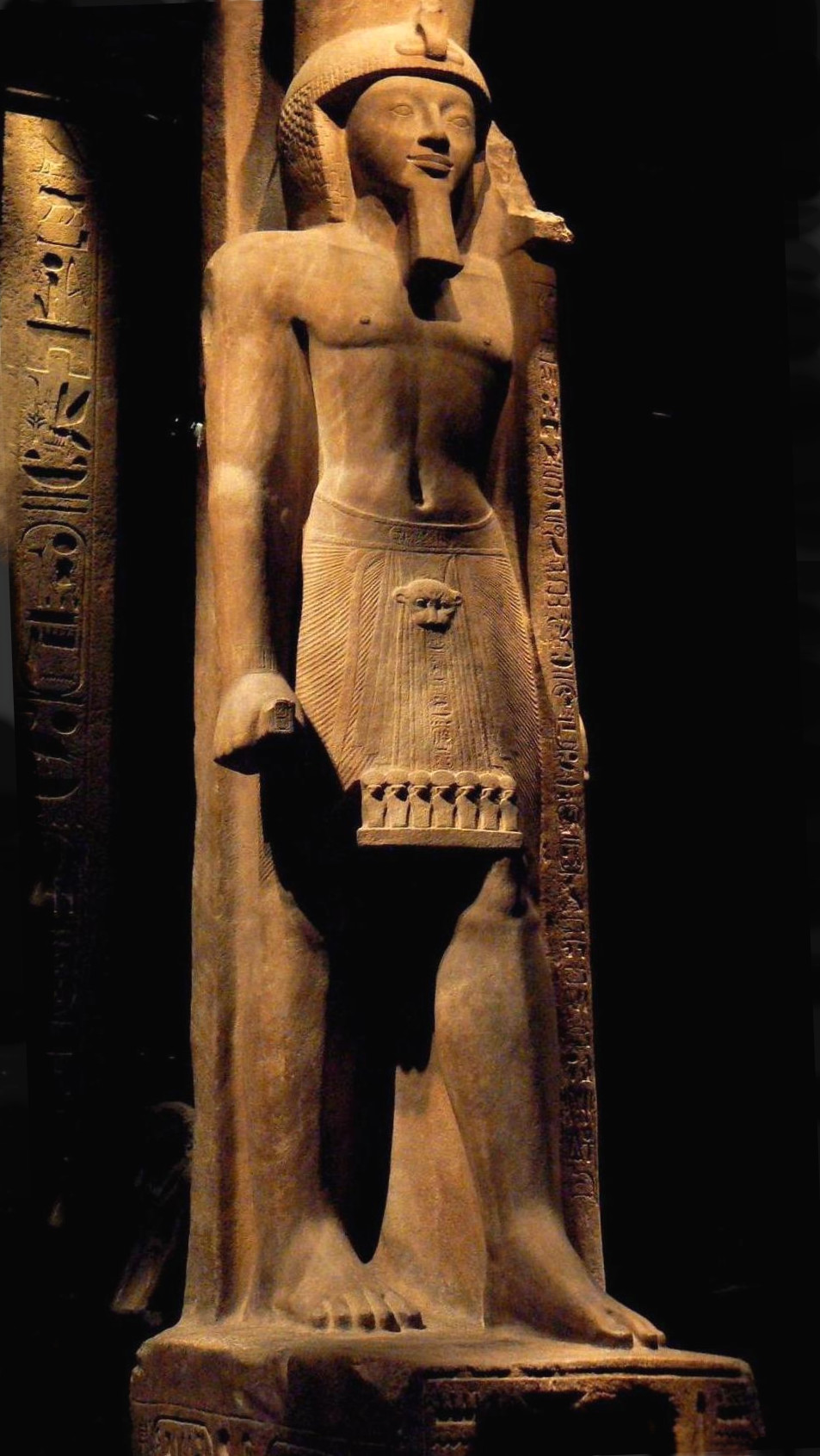
Chancellor Bay, an official of probable Syrian origin, emerged as Seti II's most influential , holding titles including Fan-bearer on the Right Side of the King, Royal Scribe, and ultimately of the Entire Land and Chief Treasurer. Bay's rapid ascent, documented in inscriptions from and other sites, positioned him as a key administrator overseeing royal projects and diplomacy, such as correspondence with , during a period of dynastic instability following Amenmesse's brief usurpation. His prominence extended to funerary preparations, with evidence of his involvement in tomb constructions in the Valley of the Kings, though his exact role in state treasury management reflects the era's reliance on non-native elites amid administrative challenges. Fewer high-ranking officials like viziers are explicitly attested for Seti II's six-year , likely due to the continuity of Ramesside II-era figures or the king's focus on consolidating power through loyalists like rather than new appointments. Inscriptions from record judicial officials handling tomb robbery investigations under Seti II, indicating active oversight of security by local scribes and overseers, but these were subordinate to central court authority. Associated treasures from Seti II's era are limited, reflecting his short rule and the tomb's ancient plundering; KV15 yielded fragments of sarcophagi and canopic equipment, but no intact major caches. Surviving artifacts include a of the king, approximately 1.7 meters tall, depicting him in traditional pose and now housed in the Egyptian Museum of Turin, symbolizing royal piety toward . Other items, such as inscribed limestone fragments with his and figures, attest to standard New Kingdom funerary provisioning, though many were repurposed or lost to looting. These pieces, analyzed in museum collections, underscore the pharaoh's efforts to emulate predecessors despite resource strains.

Death, Burial, and Post-Mortem Examination

Circumstances of Death

Seti II died during the sixth year of his reign, circa 1197 BCE, following a period of political consolidation after suppressing the rival claim of Amenmesse. An ostracon from Deir el-Medina documents the announcement of his death on I Peret 19 of that year, implying the event transpired days or weeks earlier to allow for the 70-day mummification process. Calendrical reconstructions by Egyptologists Wolfgang Helck and R. J. Demarée pinpoint I Peret 2 as the likely date, aligning with seasonal inundation records and regnal chronology. No contemporary Egyptian records specify the , and historical accounts provide no indication of violence, , or epidemic-related factors during his final . The incomplete state of his (KV 15), with a hastily repurposed corridor serving as burial chamber, suggests the death may not have been long anticipated, though such adaptations were not uncommon for pharaohs with abbreviated reigns. The mummy conventionally attributed to Seti II (inventory no. 61081, Cairo Egyptian Museum) yields no conclusive forensic evidence, as its identification has been contested since early 20th-century examinations. G. Elliot Smith noted atypical mummification techniques and facial morphology inconsistent with Ramesside lineage in 1912. Subsequent analyses by James E. Harris and Edward F. Wente in confirmed craniofacial traits aligning with Eighteenth Dynasty Thutmosid kings rather than Seti II's ancestors (, , ), proposing it instead belongs to . Absent a verified , any speculation on pathologies—such as potential injuries, infections, or age-related decline—lacks substantiation, rendering the biological circumstances of death empirically unknowable.

Tomb and Funerary Arrangements

Seti II's tomb, KV 15, lies at the base of the cliffs in the main near ancient Thebes, constructed during his reign (c. 1203–1197 BC). The structure follows a basic New Kingdom royal pattern but was hastily adapted due to the pharaoh's abbreviated rule amid usurpation by ; a planned corridor was repurposed as the burial chamber, leaving the overall design incomplete and utilitarian, with three descending corridors leading to a well shaft and the chamber itself. The burial chamber contained a large , discovered empty by Victor Loret during his 1898 excavation, as Seti II's mummy had been removed in antiquity—ultimately found in KV 35—and no viscera or canopic equipment was recovered in KV 15, consistent with extensive ancient plundering and the tomb's unfinished provisioning. Sparse fragments of and minor artifacts attest to minimal funerary deposition, lacking the elaborate assemblages typical of undisturbed 19th Dynasty burials. Wall decorations, executed in raised relief, include partial scenes from the and images of protective deities in the corridors and chamber, but their quality is notably inferior and incomplete, reflecting resource strains and artistic disruptions during the late 19th Dynasty. The tomb's arrangement underscores pragmatic burial priorities over grandeur, with possible initial interment in KV 14 (Twosret's tomb) before relocation to KV 15 under or Sethnakhte to affirm legitimacy amid succession instability.

Mummy Discovery and Analysis

The mummy of Seti II was discovered in 1898 within the royal cache in the side chambers of , the tomb of in the Valley of the Kings, by French Egyptologist Victor Loret during his exploration of the site. This cache, established by 21st Dynasty priests to protect royal remains from theft, contained several New Kingdom pharaohs' mummies alongside non-royal individuals. The find included Seti II's remains in a fragmented state, with the body partially unwrapped and bearing signs of ancient disturbance. In 1907, anatomist Grafton Elliot Smith conducted a detailed unrolling and examination of the mummy as part of his systematic study of Egyptian royal remains, documenting it in Cairo's Egyptian Museum collections. Smith observed that the embalming process was meticulous, employing fine linen wrappings and resins typical of 19th Dynasty practices, but the body exhibited severe post-mortem damage: the skull was fractured, the face mutilated (likely by tomb robbers seeking amulets or identification), and limbs disjointed. The estimated stature was approximately 1.68 meters, with dental wear and skeletal robusticity suggesting an age at death of 35 to 45 years, consistent with a reign marked by political instability rather than advanced senescence. No definitive cause of death was identifiable from the remains, though absence of major pathologies like those in contemporaries (e.g., arterial sclerosis in Ramesses II) points to possible natural causes or unpreserved trauma. Subsequent analyses have raised questions about identification, as craniofacial metrics reported by Smith do not closely align with those of Seti II's presumed father Merneptah or grandfather Ramesses II, prompting some scholars like James Harris and Edward Wente to suggest potential substitution or mislabeling in antiquity. However, cartouche inscriptions on associated wrappings and the mummy's contextual placement in KV35 affirm the attribution for most Egyptologists, with discrepancies attributed to embalming variations or genetic diversity rather than error. No comprehensive modern forensic techniques, such as CT scanning, have been publicly detailed for this mummy, limiting further insights into health or perimortem events. The remains were relocated in 2021 to the National Museum of Egyptian Civilization in Cairo for better preservation.

Historical Assessment and Legacy

Role in the 19th Dynasty's Transition

Seti II, the designated heir of , ascended to the throne around 1200 BC following his father's death, but his rule was immediately contested by , a member of the royal family who established a rival kingship primarily in and possibly . This division persisted for approximately four years, with Seti II maintaining authority in from the royal residence at Per-Ramesses, while controlled Thebes and southern territories, reflecting a period of civil strife that fragmented administrative and economic control. Monumental evidence, including ostraca and temple inscriptions, indicates 's brief but disruptive influence, such as alterations to quarrying records and divine cult associations in the south. Seti II's forces ultimately prevailed, leading to Amenmesse's defeat or death circa 1200–1196 BC, after which Seti II systematically usurped and erased his rival's inscriptions across monuments in Thebes and elsewhere, thereby reasserting unified royal legitimacy. This campaign, evident in overstruck cartouches at sites like , served to restore ideological continuity with Merneptah's and mitigate the usurper's legacy, stabilizing the dynasty's symbolic order amid evident military and political challenges. His six-year (ca. 1200–1194 BC) thus marked a critical reclamation of central , preventing prolonged but exposing underlying weaknesses in succession mechanisms and loyalties. The resolution of this conflict temporarily bridged the 19th Dynasty's late phase, as Seti II prepared for succession by designating a and resuming standard pharaonic activities, including quarry expeditions and temple dedications. However, the internal turmoil accelerated institutional erosion, paving the way for the regency-influenced rule of and Twosret, whose dependencies on figures like Chancellor Bay underscored the dynasty's faltering grip on power before its transition to the 20th Dynasty under . Archaeological patterns, such as the selective preservation of Seti II's works over Amenmesse's, highlight how his victory enforced a of continuity, though the brevity and contested nature of his rule contributed to the dynasty's ultimate decline amid broader pressures.

Scholarly Debates on Legitimacy and Effectiveness

Scholars debate the legitimacy of Seti II's accession following the death of his father, , around 1203 BC, primarily due to the rival claim of , who controlled , including Thebes, for approximately three to four years. While Seti II is widely accepted as 's principal heir and son by a chief wife, Amenmesse's origins remain contested; some evidence suggests he may have been a son of by a lesser consort like Takhat, positioning him as a potential half-brother with priestly backing, whereas others view him as an outright usurper lacking direct royal descent. The erasure and re-inscription of monuments between the two rulers, particularly at and Thebes, indicate a period of civil strife rather than a smooth transition, with Seti II eventually prevailing through military action or alliances. A key artifact underscoring Seti II's efforts to affirm his legitimacy is the Decree from his fifth regnal year, which invokes divine sanction from and restructures temple priesthoods to curb corruption by high officials aligned with rivals, thereby consolidating royal authority amid succession instability. Peter Brand and others argue that Amenmesse's activities, such as inscribing his name over earlier monuments without initial usurpation of Merneptah's, suggest he initially presented himself as a legitimate successor before escalating to rivalry, challenging the narrative of Seti II as the uncontested heir. This interpretation contrasts with views emphasizing Seti II's propaganda, including restorations of his father's works, as evidence of restoring orthodox lineage against an interloper. Regarding effectiveness, Seti II's six-year reign (c. 1203–1197 BC) is assessed as a stabilizing force after 's disruption, with documented building projects at —including bark shrines and temple expansions—and limited military expeditions to to maintain imperial oversight, continuing Ramesside traditions despite internal divisions. However, reliance on powerful officials like Chancellor , who later influenced the court under , and the purges of Amenmesse supporters indicate weakened central control, exacerbating economic strains and paving the way for the 19th Dynasty's collapse. Egyptologists like Kenneth Kitchen note that while Seti II quelled the immediate threat, his rule failed to reverse broader systemic decline, marked by fragmented loyalty and diminished foreign prestige compared to earlier 19th Dynasty pharaohs. Some assessments portray him as neither particularly weak nor transformative, but as a transitional figure whose successes were overshadowed by unresolved factionalism.

Contribution to Egypt's Decline

Seti II's accession following Merneptah's death around 1203 BC was immediately contested by the usurper , who seized control of and for approximately three to four years, resulting in a de facto division of the kingdom and mutual defacement of royal monuments. This internal strife, evidenced by the vandalism of Seti II's KV15 tomb entrance and the execution of officials like weaver Neferhotep as documented in Salt 124, diverted administrative and possibly military resources toward domestic consolidation rather than external defense or economic stabilization. Although Seti II regained full authority by his fourth , his remaining two years of rule—ending around 1197 BC—yielded no recorded major military campaigns against foreign threats, in contrast to the proactive expansions of predecessors like and . Limited activities focused on quarrying expeditions, such as mining in the , and restorative building like temple expansions at , but these efforts prioritized symbolic legitimacy over broader imperial maintenance amid emerging regional instabilities. The absence of offensive actions left peripheral territories vulnerable, contributing to the erosion of Egypt's cohesive control as disruptions loomed. Seti II's death left the throne to the young , likely his son, under the regency of Chancellor Bay—a figure of possible Syrian origin who wielded outsized influence—and Queen Twosret, fostering court factionalism and reliance on non-royal advisors. This precarious succession amplified administrative fragmentation, enabling Twosret's subsequent brief queenship and the dynasty's collapse into the chaotic transition to the 20th Dynasty, where weakened central authority struggled against invasions and economic strain. The unresolved tensions from Seti II's era thus marked a pivotal weakening in the 19th Dynasty's , accelerating Egypt's broader decline from imperial zenith.

References

Add your contribution
Related Hubs
Contribute something
User Avatar
No comments yet.