Hubbry Logo
Spirit levelSpirit levelMain
Open search
Spirit level
Community hub
Spirit level
logo
8 pages, 0 posts
0 subscribers
Be the first to start a discussion here.
Spirit level
Spirit level
from Wikipedia
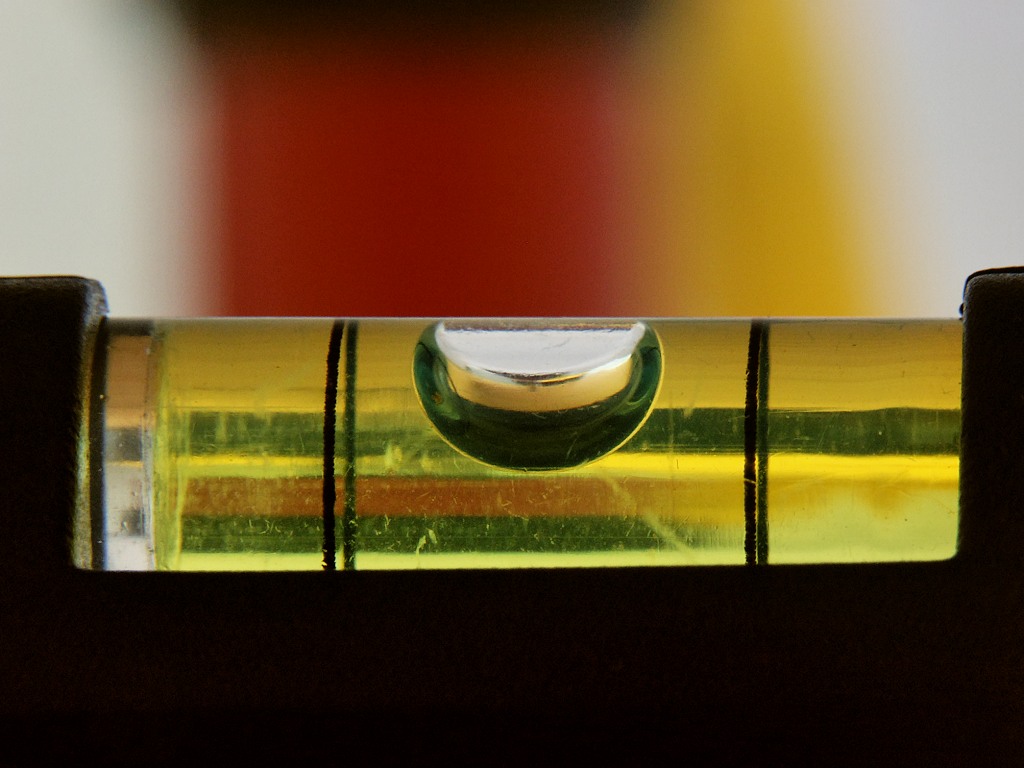
A tubular spirit level
A bull's eye spirit level mounted in a camera tripod

A spirit level, bubble level, or simply a level, is an instrument designed to indicate whether a surface is horizontal (level) or vertical (plumb). It is called a "spirit level" because the liquid inside its vial is commonly alcohol, or "spirit". The name refers to this alcohol-based solution, which, along with an air bubble, indicates whether a surface is level or plumb. Alcohol was historically preferred over water because it has a wider temperature range, won't freeze, and provides less friction for the bubble, ensuring greater accuracy and longevity of the tool. Two basic designs exist: tubular (or linear) and bull's eye (or circular). Different types of spirit levels may be used by carpenters, stonemasons, bricklayers, other building trades workers, surveyors, millwrights and other metalworkers, and in some photographic or videographic work.

History

[edit]

The history of the spirit level was discussed in brief in an 1887 article appearing in Scientific American.[1] Melchisédech Thévenot, a French scientist, invented the instrument some time before February 2, 1661. This date can be established from Thevenot's correspondence with scientist Christiaan Huygens. Within a year of this date the inventor circulated details of his invention to others, including Robert Hooke in London and Vincenzo Viviani in Florence. It is occasionally argued that these "bubble levels" did not come into widespread use until the beginning of the 18th century — the earliest surviving examples being from that time — but Adrien Auzout had recommended that the Académie Royale des Sciences take "levels of the Thevenot type" on its expedition to Madagascar in 1666. It is very likely that these levels were in use in France and elsewhere long before the turn of the century.

The Fell All-Way precision level, one of the first successful American made bull's eye levels for machine tool use, was invented by William B. Fell of Rockford, Illinois in 1939.[2] The device was unique in that it could be placed on a machine bed and show tilt on the x-y axes simultaneously, eliminating the need to rotate the level 90 degrees. The level was so accurate it was restricted from export during World War II. The device set a new standard of .0005 inches per foot resolution (five ten thousands per foot or five arc seconds tilt). Production of the level stopped around 1970, and was restarted in the 1980s by Thomas Butler Technology, also of Rockford, Illinois, but finally ended in the mid-1990s. However, there are still hundreds of the devices in existence.

Design and construction

[edit]
Machinist's precision level

Early tubular spirit levels had very slightly curved glass vials with constant inner diameter at each viewing point. These vials are filled, incompletely, with a liquid — usually a colored spirit or alcohol — leaving a bubble in the tube. They have a slight upward curve, so that the bubble naturally rests in the center, the highest point. At slight inclinations the bubble travels away from the marked center position. Where a spirit level must also be usable upside-down or on its side, the curved constant-diameter tube is replaced by an uncurved barrel-shaped tube with a slightly larger diameter in its middle.

Alcohols such as ethanol are often used rather than water. Alcohols have low viscosity and surface tension, which allows the bubble to travel the tube quickly and settle accurately with minimal interference from the glass surface. Alcohols also have a much wider liquid temperature range, and will not break the vial as water could due to ice expansion. A colorant such as fluorescein, typically yellow or green, may be added to increase the visibility of the bubble.

A variant of the linear spirit level is the bull's eye level: a circular, flat-bottomed device with the liquid under a slightly convex glass face with a circle at the center. It serves to level a surface across a plane, while the tubular level only does so in the direction of the tube.

Calibration

[edit]
Level adjustment

To check the accuracy of a carpenter's type level, a perfectly horizontal surface is not needed. The level is placed on a flat and roughly level surface and the reading on the bubble tube is noted. This reading indicates to what extent the surface is parallel to the horizontal plane, according to the level, which at this stage is of unknown accuracy. The spirit level is then rotated through 180 degrees in the horizontal plane, and another reading is noted. If the level is accurate, it will indicate the same orientation with respect to the horizontal plane. A difference implies that the level is inaccurate.

Adjustment of the spirit level is performed by successively rotating the level and moving the bubble tube within its housing to take up roughly half of the discrepancy, until the magnitude of the reading remains constant when the level is flipped.

A similar procedure is applied to more sophisticated instruments such as a surveyor's optical level or a theodolite and is a matter of course each time the instrument is set up. In this latter case, the plane of rotation of the instrument is levelled, along with the spirit level. This is done in two horizontal perpendicular directions.

Sensitivity

[edit]

Sensitivity is an important specification for a spirit level, as the device's accuracy depends on its sensitivity. The sensitivity of a level is given as the change of angle or gradient required to move the bubble by unit distance. If the bubble housing has graduated divisions, then the sensitivity is the angle or gradient change that moves the bubble by one of these divisions. 2 mm (0.079 in) is the usual spacing for graduations; on a surveyor's level, the bubble will move 2 mm (0.079 in) when the vial is tilted about 0.005 degree. For a precision machinist level with 2 mm (0.079 in) divisions, when the vial is tilted one division, the level will change 0.04 mm (0.0016 in) one meter from the pivot point, referred to by machinists as 5 tenths per foot. This terminology is unique to machinists and indicates a length of 5 tenths of 1 thousandth of an inch.[3][4]

Types

[edit]
Level tool being used to establish horizontality.

There are different types of spirit levels for different uses:

  • Carpenter's level (either wood, aluminium or composite materials)
  • Mason's level
  • Torpedo level — a level with a torpedo-shaped frame with vertical, horizontal, and sometimes 45° tube levels
  • Post level
  • Line level
  • Engineer's precision level
  • Electronic level
  • Inclinometer
  • Slip or skid indicator
  • Bull's eye level

A spirit level is usually found on the head of combination squares.

Carpenter's level

[edit]
Carpenter's bulls-eye level

A traditional carpenter's spirit level looks like a short plank of wood and often has a wide body to ensure stability, and that the surface is being measured correctly. In the middle of the spirit level is a small window where the bubble and the tube is mounted. Two notches (or rings) designate where the bubble should be if the surface is level. Often an indicator for a 45 degree inclination is included.[citation needed]

Engineer's precision levels

[edit]

An engineer's precision level permits leveling items to greater accuracy than a plain spirit level. They are used to level the foundations, or beds of machines to ensure the machine can output workpieces to the accuracy pre-built in the machine.

Line level

[edit]
Measuring elevation with a line level and measuring tape.

A line level is a level designed to hang on a builder's string line. The body of the level incorporates small hooks to allow it to attach and hang from the string line. The body is lightweight, so as not to weigh down the string line, and small in size as the string line in effect becomes the body; when the level is hung in the center of the string, each 'leg' of the string line extends the level's plane.

Torpedo level

[edit]
Torpedo level

A torpedo level is a level enclosed inside of a roughly torpedo-shaped frame with small vertical, horizontal, and sometimes 45° tube levels. Torpedo levels are especially useful in small spaces. The frames are usually made of plastic or metal.[5]

Surveyor's leveling instrument

[edit]
Modern automatic level in use on a construction site

Combining a spirit level with an optical telescope results in a tilting level or dumpy level.[6] These leveling instruments as used in surveying to measure height differences over larger distances. A surveyor's leveling instrument has a spirit level mounted on a telescope (perhaps 30 power) with cross-hairs, itself mounted on a tripod. The observer reads height values off two graduated vertical rods, one 'behind' and one 'in front', to obtain the height difference between the ground points on which the rods are resting. Starting from a point with a known elevation and going cross country (successive points being perhaps 100 meters (328 ft) apart) height differences can be measured cumulatively over long distances and elevations can be calculated. Precise levelling is supposed to give the difference in elevation between two points one kilometer (0.62 miles) apart correct to within a few millimeters.

Alternatives

[edit]

Alternatives include:

Today level tools are available in most smartphones by using the device's accelerometer. These mobile apps come with various features and easy designs.[7] Also new web standards allow websites to get orientation of devices.

Digital spirit levels are increasingly common in replacing conventional spirit levels, particularly in civil engineering applications such as traditional building construction and steel structure erection, for on-site angle alignment and leveling tasks. The industry practitioners often refer to those levelling tools as a "construction level", "heavy duty level", "inclinometer", or "protractor". These modern electronic levels are capable of displaying precise numeric angles within 360° with 0.1° to 0.05° accuracy, can be read from a distance with clarity, and are affordably priced due to mass adoption. They provide features that traditional levels are unable to match. Typically, these features enable steel beam frames under construction to be precisely aligned and levelled to the required orientation, which is vital to ensure the stability, strength and rigidity of steel structures on sites. Digital levels, embedded with angular MEMS technology effectively improve productivity and quality of many modern civil structures. Some recent models feature waterproof IP65 and impact resistance features for harsh working environments.[citation needed]

See also

[edit]

References

[edit]
[edit]
Revisions and contributorsEdit on WikipediaRead on Wikipedia
from Grokipedia
A spirit level, also known as a bubble level, is a precision instrument designed to indicate whether a surface is horizontally level or vertically plumb relative to the Earth's gravitational pull. It typically consists of a rigid frame housing one or more sealed glass vials partially filled with a liquid such as alcohol or mineral spirits, within which an air bubble floats to the highest point; when the bubble centers between etched calibration lines on the vial, the surface is aligned correctly. This simple yet effective mechanism relies on the principle of buoyancy, where the bubble's position reveals any deviation from true level due to gravity. The modern spirit level was invented in 1661 by French scientist and royal librarian Melchisédech Thévenot, who developed it as an improvement over earlier leveling methods like water-filled vessels or plumb lines used by ancient civilizations such as the and Romans for constructing aqueducts and pyramids. Although Thévenot's design gained limited adoption initially, it became widely used in and by the 18th century, evolving with advancements in materials and manufacturing to enhance accuracy and durability. Today, spirit levels remain indispensable tools in fields like , , and , ensuring structural integrity in building projects from framing walls to installing shelves. Spirit levels come in various types tailored to specific applications, including the versatile box-beam level for general with its reinforced I-shaped frame for stability; the compact torpedo level for tight spaces like or electrical work; magnetic levels that adhere to metal surfaces for hands-free use; and modern digital levels that provide electronic readouts for enhanced precision. These variations maintain the core bubble mechanism while incorporating innovations like shock-resistant vials and ergonomic grips to meet professional demands.

Fundamentals

Definition and Principle

A spirit level, also known as a bubble level, is an instrument designed to indicate whether a surface is horizontal (level) or vertical (plumb) relative to the Earth's by observing the position of an air bubble within a liquid-filled . This simple yet precise tool is essential in , , and for ensuring accurate alignment. The core working principle of the spirit level is based on and acting on the air bubble trapped in the . The , typically a slightly d glass or tube, is nearly filled with a low-viscosity such as alcohol or mineral spirits, leaving a small air pocket. Due to the bubble's lower , it rises through the to the highest point of the ; when the is perfectly level, this highest point is at the center, positioning the bubble between etched reference lines. If the surface tilts, causes the denser to flow toward the lower end, displacing the bubble toward the elevated side, thus visually signaling misalignment. The name "spirit level" derives from the alcohol—historically referred to as "spirits"—used as the vial's , chosen for its low freezing point and clarity to ensure reliable performance in varying temperatures. This has no connection to elements but reflects the that enables the tool's function. Illustrations of the spirit level often depict a cross-sectional view of the vial in two orientations: horizontal, with the bubble centered under a gentle arc; and tilted, showing the bubble shifted to one end as the pools oppositely, highlighting the intuitive visual feedback provided by the device.

Physics of Operation

The operation of a spirit level relies on the , where the air bubble within the liquid-filled vial rises to the highest point due to the upward buoyant force exerted by the surrounding liquid. This force, governed by , is expressed as Fb=ρliquidVdisplacedgF_b = \rho_\text{liquid} V_\text{displaced} g, with ρliquid\rho_\text{liquid} denoting the liquid's , VdisplacedV_\text{displaced} the volume of liquid displaced by the bubble, and gg the acceleration due to gravity. The bubble, being less dense than the liquid, experiences this net upward force and migrates to the least dense region, which corresponds to the uppermost position in the vial's slight curvature when the level is horizontal. Upon tilting the spirit level by a small θ\theta, the bubble displaces along the due to variations in gravitational potential energy, seeking the new highest point aligned with the direction of . The 's internal surface is curved with a RR, creating a subtle barrel shape that positions the bubble centrally when level. For small tilts, the bubble's displacement ll is proportional to the tilt , approximated by l=Rθl = R \theta (with θ\theta in radians), derived from the geometric relation where the height difference along the leads to sinθθ\sin \theta \approx \theta. This movement provides a direct visual indication of the tilt, with the bubble shifting toward the elevated end of the . The choice of liquid, commonly or a similar alcohol, is critical for responsive operation, as its low enables the bubble to move swiftly and settle accurately without significant , while low surface tension reduces adhesion to the vial walls. Furthermore, the liquid's volumetric coefficient is selected to approximate that of the vial material, minimizing changes in bubble over fluctuations and preserving consistent sensitivity. Despite these design considerations, limitations arise from temperature effects, where differential expansion between the liquid and vial can subtly alter bubble size and position if not fully compensated, potentially introducing minor errors in readings. Additionally, parallax error occurs when the observer's line of sight is not perpendicular to the vial, causing the bubble to appear offset from its true position and leading to inaccurate tilt assessments.

History

Early Developments

The origins of leveling tools trace back to ancient civilizations, where basic methods were essential for monumental construction. Around 2500 BCE, the ancient Egyptians employed water levels, often referred to as A-levels, consisting of U-shaped or V-shaped tubes filled with water to establish horizontal planes during pyramid building. These devices relied on the principle that water seeks its own level, allowing workers to mark even foundations across vast sites by observing the water's surface alignment. Complementing these were simple plumb bobs—weighted lines suspended from a frame—to ensure vertical accuracy, and sighting instruments like the , an L-shaped tool used for aligning and leveling by observing stars or shadows. In the classical era, Greek and Roman engineers refined these precursors for more systematic surveying. The Roman architect , writing in the 1st century BCE, detailed the groma, a cross-shaped instrument with plumb lines for establishing right angles and straight lines in land division and road construction. For horizontal leveling, Romans adapted the Greek chorobates, a wooden frame with a or sighting groove, which provided greater precision than earlier Egyptian methods by integrating water levels with visual alignment. Additionally, the libella, an A-frame leveling tool equipped with a plumb line or water-filled trough suspended from a crossbar, was employed by Roman carpenters, masons, and surveyors to determine horizontal planes in construction projects such as aqueducts and buildings. These tools facilitated the engineering feats of aqueducts and , emphasizing practical geometry over complex mechanics. Although the bubble-based spirit level emerged later, earlier uses of similar fluid-based devices appeared in ancient around 200 BCE during the . Chinese surveyors utilized water levels combined with plumb lines for and architectural projects, as evidenced in historical records of equipment including sighting poles and set squares. This approach paralleled Western developments but was independently adapted for large-scale . A pivotal advancement occurred in the with the invention of the modern spirit level, credited to French scholar Melchisédech Thévenot. In , Thévenot described a compact frame level using an air bubble in a curved filled with alcohol or , mounted on a for portable use. This innovation marked the transition from cumbersome water troughs to a more accurate, handheld device, though it initially remained obscure outside scholarly circles. By , descriptions of Thévenot's level appeared in English translations of European scientific correspondence, facilitating its adoption among British builders and surveyors.

Modern Advancements

The marked a significant leap in spirit level design, with the introduction of cast-iron frames in the mid-19th century by the Stanley Rule & Level Company, founded in 1857, which provided greater durability and precision for heavy-duty construction applications. These advancements shifted production from wooden prototypes to more robust metal constructions, enabling widespread use in expanding industrial infrastructure. In the , materials evolved toward aluminum and for enhanced portability and resistance to , reducing weight while maintaining accuracy in field conditions. The saw the of the by Henry Ziemann of Empire Level Manufacturing, a compact design ideal for confined spaces like and electrical work. These innovations reflected growing demands for versatile tools in modern building trades. From the late into the 21st, electronic integration transformed spirit levels, with digital models featuring LED displays for real-time angle readouts; Bosch, for instance, released its GIM 60 digital inclinometer in 2016, building on earlier electronic measuring tools from the . Post-2010, hybrid laser-guided variants emerged, merging traditional vials with projected beams for extended-range alignment in large-scale projects. By 2025, smart spirit levels with connectivity, such as SOLA's BIG RED DIGITAL series launched in the early 2020s, allow data syncing to mobile apps for overlays in planning, improving collaborative accuracy on job sites. Enhanced sensitivity in these digital tools, often achieving resolutions down to 0.1 degrees, has also supported precise bed alignment in setups, minimizing print defects. Despite these progresses, modern designs retain core principles of bubble vial operation for reliable, low-tech verification.

Design and Construction

Key Components

The , also known as the bubble tube, is the core functional element of a traditional spirit level, consisting of a sealed or acrylic tube partially filled with a such as spirits, leaving an air bubble that moves within the tube. The tube is slightly curved or arched to ensure the bubble naturally centers at the highest point when the instrument is level, with typical dimensions ranging from 1 to 2 inches in length to fit standard level bodies. This design allows for precise visual indication of alignment by observing the bubble's position relative to reference marks. The frame or body provides the structural support for the vial, typically constructed in an I-beam or box shape to enhance rigidity and resist warping or twisting during use, ensuring consistent accuracy over time. Protective end caps are integrated into the frame to shield the ends from impacts and prevent damage to the overall structure. Bubble indicators consist of etched or printed position markings directly on the vial, such as central lines or circles, which the user aligns with the bubble to determine if the surface is level. Many spirit levels incorporate multiple vials oriented at different angles—commonly one for horizontal leveling, one for vertical (plumb) checks, and an additional one for 45-degree measurements—to enable versatile alignment tasks in a single tool. The assembly integrates these components through precise sealing methods, such as sonic welding for the to prevent liquid leaks and maintain long-term reliability, while some models include adjustable mounting mechanisms within the frame to fine-tune vial positioning during initial setup. Materials in these components are selected for to withstand job site conditions without compromising precision.

Materials and Manufacturing

Spirit levels employ a range of frame materials selected for durability, weight, and environmental resistance. Traditional wooden frames, often crafted from , provide rigidity and natural shock absorption but are susceptible to damage. Modern frames predominantly use aluminum alloys, valued for their construction (typically reducing overall tool weight by 30-50% compared to ), resistance in humid or outdoor conditions, and excellent that allows precise and for mounting. Composite plastics and impact-resistant polymers are increasingly common for portable models, offering superior resistance to drops and impacts while maintaining low cost and ease of molding. However, in metal spirit levels susceptible to rust, such as those with non-coated iron frames, rust can cause pitting on the base, affecting how the level sits on a surface and potentially compromising its practical accuracy, even if the vial itself remains intact. This highlights the importance of corrosion-resistant materials like aluminum to prevent such degradation and maintain precision over time. Vial construction prioritizes materials that ensure optical clarity and stability under varying temperatures. remains a standard for precision vials due to its low coefficient (approximately 3.3 × 10^{-6}/), providing excellent thermal stability and resistance to cracking from temperature fluctuations between -20°C and 60°C. Acrylic alternatives, such as PMMA, are favored in shatterproof designs for their high impact resistance—up to 17 times that of —making them ideal for rugged, portable spirit levels where breakage risk is high. The liquid within vials, commonly referred to as "spirit," consists of denatured alcohol or mineral spirits, chosen for their low viscosity, non-freezing properties down to -20°F, and chemical compatibility with vial materials. Additives like fluorescent dyes (often yielding a yellowish-green hue) enhance bubble visibility under various lighting conditions, while UV stabilizers prevent fading and maintain performance over time. Manufacturing processes for spirit levels integrate precision fabrication to ensure accuracy. Metal frames, particularly aluminum, are produced via die-casting, where molten is injected into molds under high pressure for complex shapes like or box profiles, followed by for smooth surfaces. Plastic and composite frames utilize injection molding, heating resins and forcing them into dies to form lightweight, intricate components with integrated recesses. are formed by molding or blowing the chosen material, then partially filled with liquid under controlled conditions to create the air bubble, and sealed via to prevent leaks. emphasizes curvature, typically maintained at a radius of 2-3 meters to achieve desired sensitivity (e.g., 0.5 mm/m), verified through optical and tilt testing during production. These materials and techniques directly influence operational sensitivity by minimizing expansion or distortion effects.

Operation and Calibration

Calibration Procedures

Calibration of a spirit level begins with initial setup on a known level reference surface, such as a precision , to establish a baseline for the bubble's position. The bearing surfaces of both the level and the plate must be thoroughly cleaned to eliminate any dirt or debris that could introduce inaccuracies. Place the level on the surface and observe the position of the bubble within the ; for precision instruments, mark the outline of the level on the surface using a to ensure exact repositioning during subsequent steps. Adjustment techniques typically involve the two-point reversal method to achieve high accuracy. Rotate the level 180 degrees end-for-end and realign it precisely within the marked outline on the reference surface. Record the bubble's position again; if it deviates from the initial reading, the level requires adjustment. Use the provided adjustment screws or set screws on the mounts—accessible via an Allen key or —to incrementally tilt the until the bubble centers equally in both orientations, effectively nullifying any systematic offset. This reversal process compensates for minor imperfections in the reference surface and ensures the level's zero point is correctly established. Essential tools for calibration include a certified precision or adjustable flat table to provide the reference datum, fine adjustment implements such as an Allen key for set screws, and optionally a micrometer for measuring subtle tilts during verification. For professional applications, should occur annually or immediately following events like drops, heavy impacts, or prolonged exposure to varying temperatures to maintain reliability. Common errors in calibration can arise from thermal expansion mismatches between the level's body and the glass vial, which may cause temporary misalignment if the instrument is not allowed to stabilize at ambient temperature prior to adjustment. To verify post-adjustment accuracy, repeat the 180-degree reversal multiple times, confirming the bubble remains centered without drift; any persistent deviation indicates the need for further fine-tuning or professional servicing. Proper upholds the spirit level's inherent sensitivity, enabling precise detection of minute inclinations in practical use.

Sensitivity and Accuracy

Sensitivity in spirit levels refers to the degree of tilt required to produce a measurable movement in the bubble within the , typically defined as the change in or needed to displace the bubble by 2 mm. This is commonly expressed in units of mm/m, where, for example, a sensitivity of 0.5 mm/m indicates that a 0.5 mm rise per meter of level length causes the bubble to shift by 2 mm along the . Alternatively, sensitivity can be quantified in angular terms, such as arc minutes or seconds, with higher sensitivity corresponding to smaller angular changes for the same bubble displacement. Accuracy of a spirit level is primarily influenced by the vial's internal radius and the precision of spacing on the vial scale. A larger increases sensitivity by requiring less tilt for bubble movement, while graduations spaced at 2 mm intervals allow for consistent reading of displacements. For applications, standard tolerances often reach 0.02 mm/m, as specified in manufacturer guidelines for tools like those from and Level Developments. Manufacturing processes adhering to ISO 9001 ensure these tolerances are met through . Furthermore, the condition of the level's base is crucial for practical accuracy; rust can cause pitting that prevents the level from sitting flat on the surface, thereby introducing errors independent of the vial's calibration. Testing methods for sensitivity and accuracy involve controlled tilting of the level using precision tilt tables to apply known angles and observing bubble response, or employing autocollimators for high-resolution angular measurements against a reference. The angular sensitivity θ can be approximated using the equation: θ=(bubble displacementradius of curvature of the vial)×180π(in degrees)\theta = \left( \frac{\text{bubble displacement}}{\text{radius of curvature of the vial}} \right) \times \frac{180}{\pi} \quad \text{(in degrees)} This relates bubble movement to the effective tilt angle, aiding in verification of the level's performance. Improvements such as anti-parallax markings on vials, which minimize reading errors from off-angle viewing, and magnified readouts enhance precision by improving bubble visibility and centering accuracy. These features enable engineer's precision levels to achieve resolutions up to 0.001 degrees, supporting applications requiring extreme flatness and alignment.

Types

Carpenter's Level

The carpenter's level is a fundamental tool in , consisting of a rectangular frame typically measuring 24 to 48 inches in , equipped with two to three bubble vials for checking horizontal level and vertical plumb alignments. The frame is usually constructed from extruded aluminum for durability and lightness, with a milled edge for precise contact on surfaces, and the vials are sealed tubes partially filled with liquid to allow a bubble to indicate alignment when centered between marked lines. Weighing approximately 1 to 2 pounds, this design provides stability without excessive bulk, making it suitable for handheld use on job sites. This tool evolved in the through innovations by the Stanley Rule & Level Company, founded in 1857, which introduced standardized carpenter's levels like the model in 1877, featuring wooden frames with brass hardware that set benchmarks for and reliability in . By the late 1800s, Stanley's designs shifted toward more robust metal constructions, influencing modern versions that prioritize accuracy and ease of use for carpenters. In practice, the carpenter's level is employed to ensure straight and even installations, such as verifying the alignment of floor joists, wall framing, and during and projects. Its extended length allows for checking broader surfaces compared to shorter tools, providing greater accuracy over spans like door frames or shelving units, and general involves tapping or adjusting vials to center the bubble on a known level surface. Variations include I-beam and box-beam frames, with the offering a lighter, more affordable option for general tasks through its open-sided design that enhances rigidity via flanges, while the box-beam provides superior strength and resistance to twisting on demanding job sites due to its fully enclosed rectangular profile. Magnetic versions incorporate strong strip magnets along the base, enabling hands-free attachment to beams or metalwork during framing, which is particularly advantageous for commercial involving materials. Shock-resistant models feature reinforced end caps and thicker aluminum extrusions to withstand drops and rough handling common in environments.

Line Level

The line level is a compact variant of the spirit level specifically engineered for verifying the alignment of straight lines over extended distances, typically by attaching to a taut string or wire. It features a single horizontal bubble vial encased in a small frame, allowing it to indicate level when suspended. This tool is essential in trades requiring precise linear checks without direct surface contact. In design, the measures approximately 3 inches in and weighs under 0.1 pounds, ensuring minimal interference with the supporting and preventing sag during use. It includes a hook or V-shaped notch on one end for secure attachment to the string, while the opposite end often has a flat surface for occasional direct placement on edges. Common materials include lightweight aluminum for durability or high-visibility plastic for impact resistance and portability, with the typically acrylic to maintain bubble sensitivity. Historically, the became common in and framing practices during the late , coinciding with advancements in bubble level technology that enabled more reliable -based alignment for laying bricks, installing pipes, and ensuring even foundations. Prior to this, builders relied on rudimentary plumb lines or water levels, but the introduction of the compact design improved efficiency in workflows. To operate, the is hooked onto a tightly stretched between two fixed points, such as stakes or anchors, and the bubble is observed to confirm horizontality; adjustments to the 's tension or endpoints are made until the bubble centers. Its portability and low weight make it ideal for on-site use in for aligning courses of bricks or in broader contexts for checking lines over spans. Despite its utility, the has limitations, as it is optimized for straight-line verification and provides less accuracy on curved or irregular surfaces where direct contact tools are needed. Modern iterations in enhance durability against drops and environmental exposure, though sensitivity can vary with vial quality, typically offering accuracy within 0.5 degrees for practical applications.

Torpedo Level

The torpedo level is a compact variant of the spirit level, typically measuring 9 to 12 inches (23 to 30 cm) in length, designed specifically for use in confined or awkward spaces where larger levels cannot fit. Its frame often features a triangular or boat-shaped (trapezoidal) profile, which allows it to nestle into corners, , or irregular surfaces for precise alignment. Most models include three bubble vials: one for horizontal leveling, one for vertical (plumb) checking, and a third for 45-degree angles, enabling multi-orientation measurements in tight environments. Commonly constructed from lightweight, durable aluminum alloy with optional rubber grips for enhanced handling and shock resistance, torpedo levels achieve accuracies of approximately 0.5 to 1 mm per meter, suitable for professional trade work without requiring ultra-precision calibration. Many incorporate a magnetic base, typically using strong rare-earth magnets, to securely attach to surfaces like metal pipes or ducts. Introduced in the early by Level for industrial applications, this design emphasized portability and versatility over the bulkier frames of standard levels. In practice, torpedo levels excel in for aligning pipes, HVAC installations to ensure ductwork straightness, and tasks where space constraints demand a maneuverable tool. Their high portability—often weighing under 0.5 pounds—makes them ideal for on-site use by tradespeople, offering quick setups and reliable readings in dynamic work conditions without compromising on the core principles of bubble-based leveling.

Engineer's Precision Level

The engineer's precision level is a specialized spirit level designed for high-accuracy applications in and , providing measurements far beyond those of standard construction tools. These instruments feature a robust cast-iron base that is precision-ground for flatness and stability, often weighing around 4 pounds for typical 8-inch models to minimize deflection during use. The base includes a V-groove along its length to securely seat on cylindrical surfaces like shafts or pipes, ensuring reliable contact. Central to the design are long main vials, typically spanning the length of the tool (12 inches or more), filled with high-grade to dampen bubble movement and resist . The vials have fine graduations, often divided into 0.0005-inch increments per foot or better sensitivity, allowing detection of minute deviations in level. Adjustable vial mechanisms enable precise to maintain accuracy over time, with cross-test vials incorporated for two-dimensional leveling in both longitudinal and transverse directions. These features conform to standards such as DIN 877, which specifies requirements for inclination measuring instruments including vial precision and base tolerances. In practice, engineer's precision levels are employed for critical tasks such as setting up tools to ensure perpendicularity and flatness, and inspecting surface plates for overall levelness in processes. Their high sensitivity—often 0.0005 inches per foot—allows for adjustments within tolerances essential for precision manufacturing. The oil-damped vials provide anti-vibration , stabilizing readings during handling or environmental disturbances. Developed during the late amid the rise of precision machining techniques, these levels addressed the growing need for reliable in industrial settings.

Surveyor's Leveling Instrument

The surveyor's leveling instrument, also known as a surveyor's level or automatic level, is a precision optical device mounted on a and equipped with a for sighting distant points, integrating a spirit level —typically circular or tubular—to establish a horizontal reference line. The core design includes a compensator mechanism, often consisting of pendulum-suspended prisms or mirrors, which automatically adjusts the to horizontal even if the instrument base is slightly off-level, enhancing usability in field conditions. This integration of the spirit level principle ensures the 's aligns precisely with the bubble's equilibrium position. In operation, the instrument is set up on a stable over a known benchmark, roughly leveled using foot screws, after which the compensator fine-tunes the alignment without manual intervention. The surveyor then sights through the at a graduated leveling staff held vertically at target points, recording backsight and foresight readings to compute differences via differential leveling techniques. These instruments achieve accuracies typically ranging from 0.3 to 1 arcsecond for the compensator, translating to vertical precisions of about 1-2 mm per kilometer in geodetic surveys, suitable for leveling standards. Automatic levels, featuring pendulum compensators, emerged in the mid-20th century, with early models such as the Cowley level in 1944 and the Zeiss Ni 2 in 1950. Wild Heerbrugg introduced their first automatic level, the NA2, in 1960, revolutionizing field surveying by reducing setup time compared to manual dumpy levels. Post-1950s advancements refined these designs for greater robustness, while digital variants, introduced in the 1980s, pair electronic image processing with bar-coded staffs for automated height readings displayed on an LCD, minimizing parallax errors and enabling data storage. Key features include collimation adjustments via precise screws to calibrate the telescope's alignment with the spirit vial, ensuring long-term accuracy in demanding environments like construction sites or topographic mapping.

Applications

In Construction and Carpentry

In construction and carpentry, spirit levels play a vital role in verifying the alignment of structural components to maintain building stability and functionality. They are routinely employed to ensure foundations are level prior to concrete pouring, walls are plumb during framing, and door frames are vertically aligned for proper operation and aesthetics. In tiling and decking, these tools guide the placement of tiles, joists, and railings to create even surfaces that prevent issues like water accumulation or uneven load distribution. Carpenter's levels, often 24 to 48 inches in length, are integrated for on-site checks of broad framing elements, while torpedo levels—compact and frequently magnetic—facilitate precise adjustments in confined areas, such as aligning metal studs or conduits. Misalignment from inadequate leveling can result in severe hazards, including structural weaknesses that lead to cracking, , or potential of load-bearing elements. Effective use involves combining spirit levels with tools like framing squares to simultaneously confirm level and alignments, reducing errors in layout and assembly. In residential , such as additions or cabinet installations, shorter carpenter's levels provide versatility for detailed work, whereas commercial builds utilize longer levels for extensive or framing to ensure uniformity across larger spans. By 2025, adaptations featuring attachments on spirit levels have become prevalent for large-scale projects, enabling projected reference lines over distances up to 100 feet to streamline alignment in expansive framing or tasks without constant repositioning.

In Surveying and Engineering

In , spirit levels, particularly in the form of surveyor's leveling instruments, are essential for establishing benchmarks that serve as reference points for control across large areas. These benchmarks enable precise determination of height differences, forming the foundation for contour mapping, which delineates elevations to guide and environmental analysis. For instance, in road assessments, differential leveling with spirit levels measures variations to ensure safe and efficient alignments, preventing issues like excessive runoff or structural stress. In , spirit levels facilitate bridge alignment by verifying the horizontal and vertical positioning of piers and spans during , ensuring load distribution and stability over varying terrains. Similarly, in pipeline grading, they are employed to achieve uniform slopes for gravity-fed systems, minimizing hydraulic inefficiencies and risks along routes that span kilometers. These applications often integrate spirit levels with total stations, which incorporate built-in spirit vials for instrument leveling, to capture 3D positional data that combines angular measurements with references. The core procedure in these contexts involves differential leveling, where the instrument is set up at intermediate points between benchmarks. A back-sight reading is taken on a known point to establish the of the instrument, followed by fore-sight readings on subsequent points to compute differences using the : of new point = of instrument - fore-sight. To reduce cumulative errors from instrument setup, , or rod settling, surveys are conducted in closed loops, returning to the starting benchmark to measure closure error, which is then distributed proportionally across the circuit. Accuracy requirements are stringent, with first-order differential leveling typically achieving a closure error of no more than ±4 mm × √K, where K is the distance in km, for double-run leveling to support high-precision infrastructure. For highway projects, second-order standards often limit closure errors to ±8 mm × √K km, ensuring gradients remain within design tolerances for vehicle safety and drainage. These metrics underscore the method's reliability in geospatial analysis over extended distances. Modern applications hybridize these techniques with GPS, as seen in vertical control for large-scale like , where spirit leveling verifies GPS-derived elevations to achieve sub-centimeter accuracy in hybrid networks.

Alternatives

Traditional Methods

Traditional methods for achieving level surfaces and alignments predate the invention of spirit levels and rely on simple physical principles like gravity and fluid equilibrium. These techniques, employed in ancient and , provided reliable references for horizontal and vertical orientations without mechanical indicators. They served as foundational tools in building monumental structures and systems, demonstrating early ingenuity in . Water levels, utilizing the U-tube manometer principle where fluid in connected vessels settles at equal heights, enable checks for horizontal alignment over distances. This method involves filling a clear or tube with water and observing the meniscus levels at both ends to determine if points are at the same elevation. Ancient Egyptians employed water levels during construction in period (c. 2686–2181 BC) to ensure even foundations by comparing water surfaces in trenches or channels. in ancient and , beginning around 6000 B.C., involved constructing canals and basins to manage floodwaters for uniform distribution. Roman engineers also adapted water-filled devices, such as the chorobates—a wooden frame with a trough—for precise leveling in aqueducts. Plumb lines and bobs offer gravity-based vertical alignment, consisting of a weighted object suspended from a to create a true vertical reference. When the weight hangs freely, the string aligns with the direction of gravitational pull, allowing builders to check if surfaces or structures are to the horizontal plane. This tool dates back to , where it was used alongside water levels for erecting plumb walls in pyramids and obelisks. The simplicity of the setup—a and a pointed metal or stone bob—made it essential for masons in ensuring structural stability across various scales, from small framing to large edifices. String lines and chalk lines establish straight horizontal references, particularly in framing and . A taut stretched between fixed points serves as a guide for alignment, while a —created by coating a with powdered , stretching it over a surface, and snapping it—marks long, straight lines for cutting or laying materials. This snapping technique, known since , allowed precise layout of building edges and over extended spans. In framing, string lines help maintain consistent heights for joists or walls by attaching small levels or sighting along the line. Despite their effectiveness, these traditional methods have limitations in precision and reliability under certain conditions. Water levels are less accurate for detecting small tilts due to potential errors from air bubbles, kinks in the tube, or temperature variations, which can cause up to 3/8 inch discrepancies over short distances if one end is exposed to sunlight while the other is shaded. Plumb bobs and string lines are susceptible to environmental factors like wind, which can cause swinging or deflection, reducing readability outdoors; immersion in oil or indoor use mitigates this but limits applicability. Additionally, string lines suffer from sag over long distances (e.g., beyond 50 feet without intermediate supports), compromising straightness unless pulled extremely tight. Evaporation in water levels can also introduce gradual inaccuracies during prolonged use in dry climates. These constraints made them precursors to more robust tools like spirit levels, particularly for fine or adverse-condition work.

Modern Digital and Laser Alternatives

Modern digital levels represent an evolution in leveling technology, utilizing electronic sensors such as accelerometers or to detect tilt and display precise angle measurements on an LCD screen. These devices provide numerical readouts in degrees, percentages, or other units, enabling users to achieve accuracies often surpassing traditional bubble vials, with typical resolutions of ±0.1° or better for general tasks. For instance, the Bosch GIM 60 digital employs a 60 cm body with electronic measurement accuracy of ±0.05° at 0° and 90°, and ±0.2° at other angles within its 0–360° range, making it suitable for applications requiring high precision like machine alignment or framing. Laser levels offer optical alternatives that project visible beams for leveling over extended distances, commonly categorized into line lasers, which emit straight lines for alignment, and rotary lasers, which spin a beam to create a 360° horizontal or vertical plane. Self-leveling mechanisms, often incorporating or electronic compensators, ensure the beam adjusts automatically within a range of about ±4° to maintain accuracy, with many models achieving precision of 1/8 inch at 100 feet or better for site layout. The Stabila line of point and line lasers, for example, uses a rugged system for fast self-leveling, protected by IP65-rated housings to withstand and exposure on job sites. Advancements in smart integrations have introduced app-connected digital levels that pair with smartphones via , allowing remote monitoring and data logging, while some incorporate (AR) overlays to visualize alignments in real-time through mobile apps. Hybrid tools combine spirit level vials with integrated lasers or digital displays for cross-verification, such as certain Johnson Level electronic models featuring dot lasers alongside inclinometers for both visual and numerical feedback. The SOLA RED DIGITAL series exemplifies this by connecting to the SOLA Measures app for inclination tracking and sharing, enhancing efficiency in collaborative projects. These modern alternatives provide distinct advantages, including rapid setup and coverage over large areas—laser levels can project references up to 1,000 feet with detectors, reducing the need for manual repositioning compared to traditional methods—though they rely on batteries, which can limit runtime to 20–40 hours depending on usage. Disadvantages include higher initial costs, typically $100–$500 versus under $50 for basic spirit levels, and potential vulnerability to environmental interference like bright affecting visibility. Durability standards such as IP65 ensure resistance to dust ingress and low-pressure water jets, making them viable for professional environments, but proper remains essential to maintain stated accuracies.

References

Add your contribution
Related Hubs
User Avatar
No comments yet.