Hubbry Logo
PyrographyPyrographyMain
Open search
Pyrography
Community hub
Pyrography
logo
8 pages, 0 posts
0 subscribers
Be the first to start a discussion here.
Pyrography
Pyrography
from Wikipedia

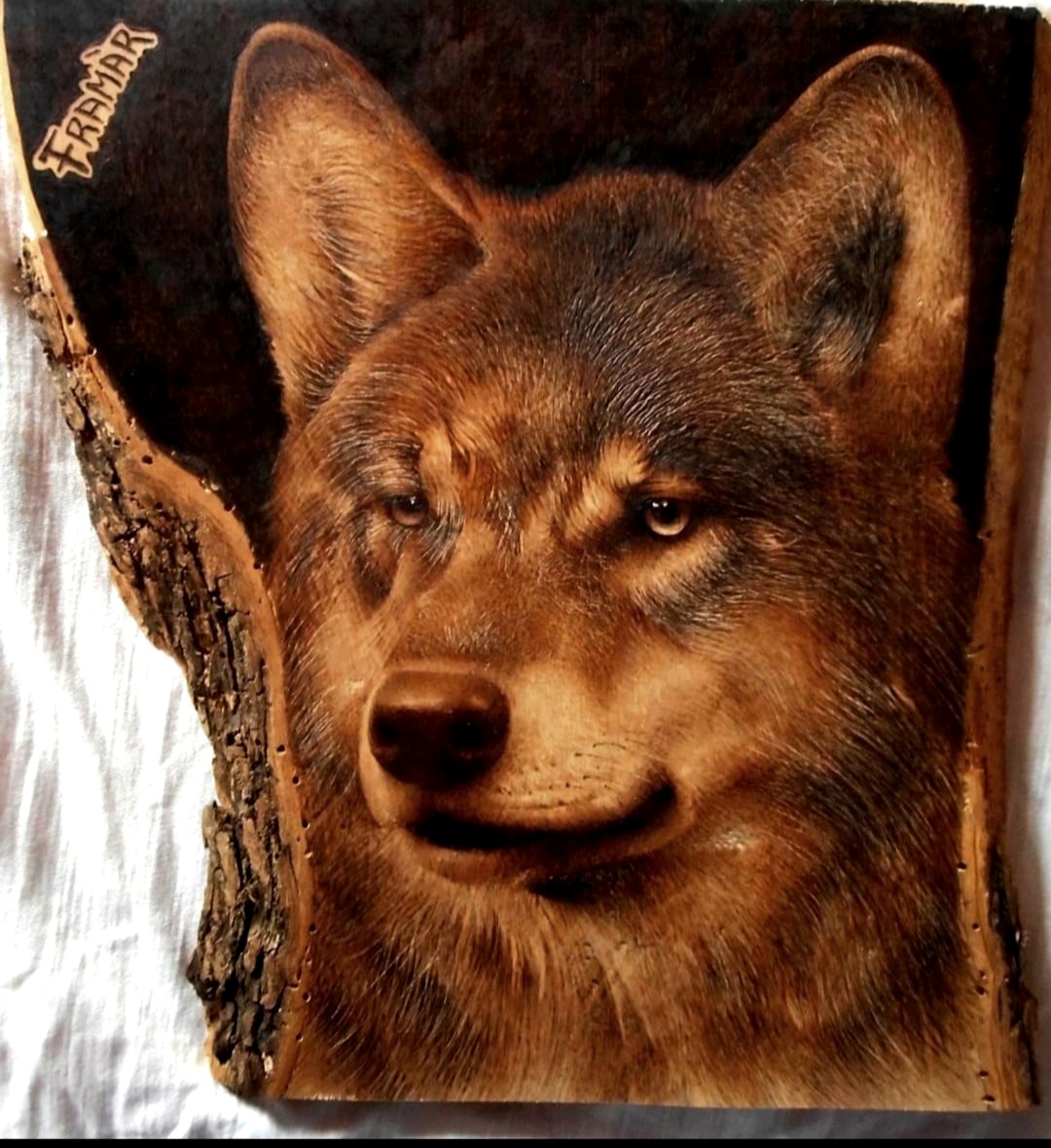
The King Wolf, pyrography on olive wood by Roberto Frangioni Piroritrattista Framàr

Pyrography or pyrogravure is the free handed art of decorating wood or other materials with burn marks resulting from the controlled application of a heated object such as a poker. It is also known as pokerwork or wood burning.[1]

The term means "writing with fire", from the Greek pyr (fire) and graphos (writing).[2] It can be practiced using specialized modern pyrography tools, or using a metal implement heated in a fire, or even sunlight concentrated with a magnifying lens. "Pyrography dates from the 17th century and reached its highest standard in the 19th century. In its crude form it is pokerwork."[3]

Pyrography is also popular among gourd crafters and artists, where designs are burned onto the exterior of a dried hard-shell gourd.

History

[edit]
The Tawny Eagle. Davide Della Noce pyrography.

Pyrographer Robert Boyer hypothesizes that the art form dates back to prehistory when early humans created designs using the charred remains of their fires.[4] It was known in China from the time of the Han dynasty, where it was known as "Fire Needle Embroidery".[5] During the Victorian era, the invention of pyrography machines sparked a widespread interest in the craft, and it was at this time that the term "pyrography" was coined (previously the name "pokerwork" had been most widely used)[6] In the late 19th century, a Melbourne architect by the name of Alfred Smart discovered that water-based paint could be applied hot to wood by pumping benzoline fumes through a heated hollow platinum pencil.[7] This improved the pokerwork process by allowing the addition of tinting and shading that were previously impossible. In the early 20th century, the development of the electric pyrographic hot wire wood etching machine further automated the pokerwork process, and Art Nouveau pyrographic gloveboxes and other works were popular in that era. Pyrography is a traditional folk art in many parts of Europe, including Romania, Poland, Hungary, and Flanders, as well as Argentina and other areas in South America.

Pyrographic Leopard
Herbarium, pyrographic artwork by Zuzanna Dolega

Equipment

[edit]

Traditional pyrography can be performed using any heated metal implement. Modern pyrography machines exist, and can be divided into three main categories.

A large range of tones and shades can be achieved. Varying the type of tip used, the temperature, or the way the iron is applied to the material all create different effects.[8] After the design is burned in, wooden objects are often coloured.

Solid-point burners

[edit]

Solid-point burners are similar in design to a soldering iron. They have a solid brass tip which is heated by an electrical element, and operate at a fixed temperature.

Wire-nib burners

[edit]

Wire-nib burners have variable temperature controls. The writing nib is heated by an electric current passing directly through it. Some models have interchangeable nibs to allow for different effects.[9]

Laser cutters

[edit]

Laser cutters can be set to scorch the material instead of cutting all the way through it. Many laser cutters provide software facilities to import image files and transfer them onto a sheet of wood. Some laser systems are sufficiently sensitive to perform pyrography on thin card or even paper.

Woods

[edit]

Woods differ in hardness, grain, figure, texture, color, and other physical characteristics.[10]

Hardness: All woods can be classified into hard or soft. Usually softwoods are from coniferous (needle-leaved) trees.

Hardwoods are from broad-leaved trees. These hardwood trees can be classified into two distinct growing seasons each year (hot and cold season or a wet and dry season) such as:

  • Earlywood: normally lighter in color and weight and only moderately strong
  • Latewood: usually heavier, darker, and much stronger.

Softwood will burn faster than a hardwood does. It does not require very hot temperature to burn as do the hardwoods.[11]

Light-coloured hardwoods such as sycamore, basswood, beech and birch are most commonly used, as their fine grain is not obtrusive. However, other woods, such as maple, pine or oak, are also used.

Grain: Grain is the direction of the fibrous elements of the wood cells. This is important to sand with the grain. Also the grain can cause deviation from its intended path with use of woodturning pen unless the artist applies more pressure and burns slower on the grain.

Figure: This is the natural design, or pattern, that can be seen on the cut surface of the wood. The figure present on the wood should always be taken into consideration when the artist is planning their woodburned design.

Texture: There is a texture on the surface of that wood that feels either coarse or fine, even or uneven.

Woodburners typically avoid using very fine or intricate designs on uneven, coarse-textured wood. Softwoods are more apt to be fine or moderately coarse-textured.

Color: Woodburning is mainly used to enhance the natural beauty of a wooden project, so woodburners take precious care not to obfuscate a beautiful figure, grain, luster, or color by over-charring.

Leather

[edit]

Pyrography is also applied to leather items, using the same hot-iron technique. Leather lends itself to bold designs, and also allows very subtle shading to be achieved. Specialist vegetable-tanned leather must be used for pyrography (as modern tanning methods leave chemicals in the leather which are toxic when burned), typically in light colours for good contrast.[12]

Safety

[edit]

Extremely fine wood dust is liberated when sanding wood. All wood dust is hazardous, can cause respiratory problems. For this reason, many woodburners wear quality dust masks/respirators while power carving, and use a good dust collection system to prevent indoor air pollution.

There are serious risks associated with burning pressure-treated wood. It is treated with chemicals that, although safely bound in the wood fibers for construction purposes, are inherently dangerous to woodworkers and woodburners when liberated through sanding or vaporized by heat. Similar dangers are inherent to stained, painted or sealed wood.[13] A well ventilated room with a running fan will encourage air circulation and displace lingering smoke.[14]

Fractal burning is a specific pyrography technique that is extremely dangerous and has resulted in many documented deaths.[15]

[edit]

References

[edit]
[edit]
Revisions and contributorsEdit on WikipediaRead on Wikipedia
from Grokipedia
Pyrography, derived from the Greek words pyr () and graphē (writing or ), is the of creating decorative designs by burning marks onto the surface of or other organic materials using controlled from specialized tools. The practice has ancient origins, with the earliest known artifacts discovered in and dating to before the 1st century AD, where heated implements were used to etch patterns onto and leather. During the , it evolved into "pokerwork," involving simple metal rods heated over open flames in portable stoves to produce basic motifs. Pyrography surged in popularity during the late 19th and early 20th centuries, particularly in the United States and , where it became a favored known as "pyromania" or pokerwork, supported by commercial kits from companies like the Flemish Art Company that employed hundreds of artisans. Key techniques include varying the heat intensity and pressure to achieve effects such as fine lines, , , and textures, progressing from early fire-heated pokers to 20th-century benzene-fueled platinum-tipped tools and contemporary electric burners with adjustable temperatures for precision. Common materials encompass softwoods like , , and basswood for smooth burning, as well as , gourds, and bark, chosen for their responsiveness to heat without excessive charring. Today, pyrography remains a versatile medium in fine arts, crafts, and custom work, blending traditional methods with modern innovations like laser-assisted burning for intricate designs.

Introduction

Definition and Etymology

Pyrography is the art or process of creating designs, images, or patterns on surfaces such as , , or by applying controlled heat from a metal tool to burn or scorch the material, producing tonal variations from light tan to deep black based on temperature, pressure, and duration of contact. This technique allows artists to etch intricate details, textures, and shading, often resembling or but achieved through rather than incision or . The term "pyrography" derives from the ancient Greek words pyr (πῦρ), meaning "," and graphē (γραφή) or graphos (γράφος), meaning "writing" or "," literally translating to "." This etymology reflects the method's core principle of using fire or heat as a marking tool, a concept echoed in historical practices across cultures where heated implements were employed for decoration long before the modern term emerged. The word's earliest recorded use in English dates to 1676, appearing in Henry Cornelius Agrippa's The Vanity of Arts and Sciences, though early references may have been more metaphorical than descriptive of the artistic technique. In contemporary usage, pyrography is often interchangeably called woodburning, emphasizing its primary application to wood, while "pokerwork" denotes a rudimentary precursor using hot metal rods or pokers heated in open flames. The term gained prominence in the late 19th century during the and , coinciding with refined tools that elevated it from folk craft to a recognized artistic medium.

Basic Principles

Pyrography involves the controlled application of to organic surfaces, primarily , to create designs through surface via , a thermochemical process that occurs in the absence of significant oxygen to prevent full . This method relies on localized heating typically between 250–500°C to induce partial breakdown of the material's polymers, producing a range of tones from light brown to deep black without igniting flames or releasing excessive volatiles. The principle distinguishes pyrography from uncontrolled burning by emphasizing precision in , where the tool's tip acts as a to vaporize and carbonize microscopic layers of the substrate. At the molecular level, the process targets wood's primary components—cellulose, hemicellulose, and lignin—which decompose at distinct temperatures during . breaks down between approximately 200–300°C, initiating initial and volatile gas release; degrades at 300–400°C, contributing to structural weakening and darker marks; and decomposes over a broad range of 250–500°C, influencing the overall char quality and . These reactions form a thin carbon-rich char layer that provides contrast and permanence to the design, while minimizing oxygen exposure limits oxidation to surface-level effects. Full , requiring temperatures around 700°C or higher, is avoided to preserve the artwork's . Key variables in pyrography include heat intensity, contact pressure, and stroke speed, which collectively determine line width, depth, and evenness. Higher temperatures and pressure accelerate for bolder lines, while lighter, faster strokes yield finer details and gradients through gradual . Wood species further modulate outcomes due to variations in and composition; for instance, hardwoods like enable precise linework, whereas softwoods like facilitate broader but may produce uneven burns. Surface , such as sanding to uniform exposure, enhances predictability by reducing irregularities in absorption.

History

Ancient Origins

The practice of pyrography likely has prehistoric roots, as early humans may have used the charred ends of sticks from their fires to sketch patterns on wood, bark, and other materials. This rudimentary technique represented one of the earliest forms of artistic expression, predating written records and serving both decorative and practical purposes. Pyrographer Robert Boyer, in his historical analysis, posits that these initial markings evolved from natural interactions with fire, laying the foundation for more intentional burning methods across cultures. The earliest known artifacts date to before the AD, discovered in and , where heated implements were used to etch patterns onto wood and . Archaeological evidence suggests pyrography was used in to decorate wooden furniture and other objects, as well as in some African cultures. Similar techniques appear in ancient , with evidence from the (221–206 BCE) where hot irons were used to adorn wooden artifacts and ceremonial items, including on calabashes in later traditions. In the Mediterranean world, archaeological findings indicate pyrography was employed by ancient Greeks and Romans to decorate wooden furniture and other objects. The civilization in produced pyrographic items featuring elaborate line work on gourds and wood depicting mythological scenes, as revealed through excavated artifacts dating to around the 1st century BCE to 5th century CE. These diverse ancient applications highlight pyrography's global diffusion as a versatile medium, adapted to local materials and traditions.

Modern Development

Pyrography experienced a significant revival in the late 19th century, particularly within the context of the Arts and Crafts Movement, which emphasized handmade craftsmanship and rejected industrial mass production. Previously known as "pokerwork" for its use of simple heated pokers, the art form was elevated through the adoption of the term "pyrography" to denote more refined techniques. This period saw increased popularity among Victorian hobbyists, who applied it to decorative items such as furniture, boxes, and leather goods, often incorporating motifs. The resurgence aligned with broader cultural interests in and domestic crafts, spreading across and . Advancements in tools drove this modern evolution, beginning with gas-based devices in the and . In 1875, Dr. Claude Pacquelin's machine, originally medical, was adapted for artistic use, featuring a tip heated by gas for precise control. By , François Manuel-Perier refined this at the Exposition with an insulated handle, for fuel regulation, and interchangeable points for varying line widths and shading effects. Architect Alfred Smart further innovated in the late with a benzoline-fueled pencil that allowed colored burns when combined with water-based dyes, enabling tonal variations beyond simple charring. These inventions shifted pyrography from rudimentary folk practice to an accessible , with spirit lamps and small stoves facilitating home use. The early marked the transition to electric tools, revolutionizing precision and safety. In , the Thayer & Chandler introduced an electric pyrographic pen with constant heat, followed by the 1907 Gas-O-Pen hybrid. By the mid-, adjustable temperature controls became standard, allowing artists to achieve fine lines, gradients, and shading by modulating heat intensity. This era also saw automated machines for , though handcraft remained dominant. Pyrography waned mid-century amid modernist trends but revived in the late through movements and educational workshops, gaining traction in the as a therapeutic and decorative pursuit. In contemporary practice, pyrography has flourished with solid-point and wire-nib burners offering variable temperatures for diverse effects, from photorealistic portraits to abstract designs on woods like and . The digital age has expanded access via online suppliers for exotic materials and communities sharing techniques, while professionals exhibit in galleries and sell custom works. engravers, introduced in the late , complement traditional methods by scorching precise patterns from digital files, blending analog artistry with technology. Today, pyrography thrives in global folk traditions, such as Romanian and Argentine variants, and as a sustainable medium in eco-conscious crafts.

Materials

Wood

Wood is the most traditional and widely used material in pyrography, prized for its natural texture, patterns, and ability to hold fine details when burned. The process involves applying controlled to the wood's surface, creating permanent designs through and oxidation, which results in shades ranging from light tan to deep black. This material's responsiveness to makes it ideal for both novice and advanced artists, as burns can be precisely controlled to achieve varying depths and tones. Desirable properties of wood for pyrography include a light natural color to provide strong contrast against the burned lines, a soft to medium for even burning without excessive resistance, and a straight, fine that minimizes irregularities during the heating process. Woods with low content are preferred to reduce production and prevent sticky residues that could gum up tools or obscure designs. Additionally, the wood should be kiln-dried with low moisture content to ensure consistent burning and avoid or cracking. Sufficient thickness is recommended to provide stability and prevent warping from exposure. Among softwoods, basswood (Tilia spp.) stands out as a top choice due to its creamy white color, very soft texture (Janka hardness of about 410), and uniform grain, which allows for smooth, detailed burns with minimal effort. (Betula spp.), another popular option, offers a pale hue and medium softness (Janka around 1,260), providing good contrast while being more readily available in form for larger projects. Poplar (Populus spp.) is favored for its affordability, light color, and softness (Janka 540), making it suitable for beginners, though its slightly greenish undertone may require testing for color balance. For hardwoods, (Acer spp.), particularly soft maple (Janka ~950), delivers a clean, light surface with tight grain that supports intricate shading, while aspen () excels in smoothness and low density for quick, even charring. (Salix spp.) is valued for its ultra-soft quality and pale bark-like surface, ideal for delicate work. Resinous softwoods like should be used cautiously, as their can cause uneven burning and excessive smoke, though select heartwood varieties work for rustic designs. Preparation of wood involves sanding to a smooth finish (220-grit or finer) to eliminate rough spots that could snag tools or create inconsistent burns, followed by a light wipe with a tack cloth to remove dust. For enhanced longevity, pieces can be sealed on the back and edges with a non-toxic finish like beeswax before burning, and the front surface finished afterward with oils or varnishes to protect against fading. Always source untreated, sustainable wood to avoid chemicals that might release toxic fumes during heating.

Leather

Pyrography on leather, also known as leather burning, applies controlled heat to create permanent designs by caramelizing the leather's proteins, resulting in darkened patterns that range from fine lines to shaded textures. This technique adapts the principles of wood pyrography to leather's organic structure, which reacts more sensitively to heat due to its fibrous composition and varying thicknesses. Unlike wood, leather requires precise temperature control to avoid cracking, scorching, or weakening the material, making it suitable for decorative items such as belts, wallets, journal covers, and custom accessories. Leather pyrography has ancient origins, with evidence from pre-1st century AD artifacts, and continued into practices around the 1500s where it was used to embellish bindings, armor, and equestrian tack, evolving from rudimentary hot-iron methods to more refined artistic applications. By the early 1900s, specialized pyrography tools emerged, initially designed for wood but adapted for , allowing for greater detail and safety in crafting. Today, it remains a niche within leatherworking, blending traditional craftsmanship with modern precision for both functional and ornamental purposes. Suitable materials for leather pyrography are primarily vegetable-tanned leathers, such as suede or sheep napa, which burn cleanly without releasing harmful chemicals and provide a smooth, even surface for designs. Chrome-tanned leathers can be used with adequate ventilation, as studies on similar treatments indicate minimal risk of chromium emissions. Preparation involves wetting the leather to soften it, burnishing the surface for smoothness, and allowing it to dry fully to prevent distortion during burning. Designs are transferred using carbon or before applying heat. Traditional hot-tool pyrography on leather can produce strong odors and fumes; work in a well-ventilated . Techniques emphasize low to moderate with tools like variable-temperature pyrography pens featuring polished tips for shaders or fine points, ensuring light pressure and short strokes to achieve smooth results without tearing. Basic methods include outlining for crisp edges, via graduated for depth, and texturing through or cross-hatching for varied effects. Advanced applications can create 3D illusions or realistic images by layering burns after cooling, always testing on scrap pieces to calibrate for the leather's thickness. Post-burning, the material's functional shift: tensile strength decreases, abrasion resistance drops slightly, but air permeability and loss improve, enhancing comfort in garments while reducing overall durability. Safety is paramount due to potential fume release; work in a well-ventilated space, wear a respirator mask to filter particulates, and use protective gloves and . Avoid burning dyed or finished leathers to prevent toxic emissions, keep a nearby, and never leave heated tools unattended. Tools should be cleaned frequently to maintain even heat distribution, and vegetable-tanned leathers are recommended for beginners to minimize risks.

Other Surfaces

Pyrography extends beyond wood and to a variety of organic materials, each presenting unique textures, challenges, and artistic possibilities due to their differing densities and heat responses. These surfaces allow artists to explore diverse forms, from curved organic shapes to delicate miniatures, often requiring adjusted temperatures and tools to avoid scorching or structural damage. Common alternatives include , , cork, , , , bark, and nuts, which have been used historically and in contemporary practice for decorative and functional items. Gourds, dried hard-shell varieties from plants like the , offer a , curved ideal for or geometric designs. Their fibrous exterior burns with a subtle texture that enhances realistic themes, but the irregular spherical shape demands steady hand control and frequent tool cleaning to manage residue buildup. Artists often combine pyrography with or acrylic paints for added depth, producing items like ornaments or vessels. Lower settings prevent cracking, and sanding with fine grit prepares the surface for even burning. Paper, particularly acid-free rag varieties in cold-pressed rough or hot-pressed smooth finishes, serves as an accessible, affordable medium for detailed sepia-toned artwork. Thin sheets risk , so gentle techniques with , skew, or writing nibs at moderate temperatures are essential, emphasizing patience to build layers without holes. Illustration board provides added texture, while colored papers require caution with potential dye reactions to heat. This surface suits framed portraits or , mimicking traditional effects. Cork, derived from the bark of cork oak trees, burns quickly and cleanly, making it suitable for functional objects like coasters or trivets. Its soft, porous structure allows for bold lines and shading but can char unevenly if heat is too high, necessitating short contact times and rounded tips. Pre-sanding smooths imperfections, and designs often incorporate stencils for precision on this eco-friendly material. Bone, antler, and ivory (including vegetable ivory from tagua nuts) provide hard, durable surfaces for intricate miniature work, such as jewelry or small carvings. Bone and antler require high temperatures around 850°C for effective burning, producing lifelike textures like fur, though they emit strong odors demanding good ventilation. Tagua, a sustainable alternative to animal ivory, "cooks" rather than burns due to its oily composition, allowing fine details with skew nibs but frequent cleaning. Historical uses include decorative bone tools, while modern applications favor ethical sources to avoid endangered materials. Sealing with spirit-based acrylic preserves the finish. Bark, especially from or cottonwood, offers a rustic, textured base for nature-inspired motifs, with its natural layers enhancing organic patterns. Drying prevents moisture-related issues, and stabilizers like Mod Podge prevent chipping during burning. Nuts and similar small items, such as those yielding tagua slices, support compact designs but challenge artists with their limited area and hardness. These surfaces highlight pyrography's versatility in sustainable, non-traditional media.

Equipment

Solid-Point Burners

Solid-point burners, also known as or soldering-style burners, are a fundamental type of pyrography tool consisting of a pen-like handle with a fixed and interchangeable tips that screw into the front end. These devices operate by heating the solid tip to a high , which is then applied directly to the surface to create burns through contact and friction. Unlike variable-temperature systems, most solid-point burners maintain a single heat level, requiring artists to control line darkness and shading by adjusting stroke speed—slower movements produce deeper, darker burns, while quicker passes yield lighter tones. The tips for solid-point burners are versatile and come in various shapes to suit different techniques, manufactured primarily from durable brass for heat retention and conductivity. Common types include the universal tip for fine lines and basic shading, the calligraphy tip for lettering and bold strokes, the flow tip for filling large areas, the cone tip for intricate detailing, and the shader tip for creating gradients and textures. Some models incorporate a rheostat on the cord for basic temperature adjustment, though many remain fixed-temperature for simplicity. These burners are widely produced by companies like Walnut Hollow, making them accessible and affordable, often available in starter kits with multiple tips. One key advantage of solid-point burners is their ease of use and low cost, making them ideal for beginners learning basic strokes and control without complex setup. They provide reliable heat retention for shading larger areas and are durable, with tips less prone to bending than wire alternatives. However, disadvantages include slower heating and cooling times compared to wire-nib burners and limited precision for fine details due to the bulkier tip design and fixed heat, which can lead to inconsistent tones without skilled speed variation. As a result, they are best suited for introductory projects on , , or , but advanced artists may prefer them for bold, textured work rather than photorealistic rendering. Modern models often include safety features like auto-shutoff to prevent overheating.

Wire-Nib Burners

Wire-nib burners, also known as wire-tip or variable-temperature pyrography pens, are specialized electric tools used in pyrography to create precise burn marks on surfaces like wood and . These devices consist of a handheld pen connected to a via a cord, where the pen features interchangeable nichrome wire tips shaped into loops or points and secured by collets or screws. The wire nibs generate heat directly through electrical resistance when current passes through them, allowing for rapid temperature adjustments via the control box's rheostat or digital settings. The design emphasizes , with lightweight pens that mimic writing instruments for extended use, and nibs made from 16- to 20-gauge wire for durability under heat. Users can customize or replace nibs to suit techniques such as line drawing, , or texturing, making them versatile for detailed artwork. Heat-up times are under one minute, with quick cool-downs that prevent accidental burns during pauses, and precise control enables subtle variations in line darkness and depth. Compared to solid-point burners, wire-nib models offer superior precision and responsiveness, ideal for fine detailing and shading, as the thinner wire allows for sharper lines and faster heat modulation without the thermal mass that slows solid tips. Professionals often prefer them for intricate designs, though they require careful handling to avoid bending the delicate wires or short-circuiting the collets. Drawbacks include higher costs and limitations to smaller tip sizes, unsuitable for large-area branding without multiple strokes. In practice, wire-nib burners excel in creating graduated tones by varying pressure and speed, supporting advanced pyrography effects like or cross-hatching on prepared surfaces. Maintenance involves cleaning oxidized residue from nibs after use and storing them to prevent deformation, ensuring consistent performance. Many contemporary units feature digital displays and auto-shutoff for safety.

Laser and Advanced Tools

In recent years, technology has emerged as an advanced tool in pyrography, extending the traditional heat-based burning process through precise, computer-controlled light beams that vaporize or char material surfaces. Unlike conventional pyrography pens that rely on direct contact heat, engravers direct a focused beam—typically from CO2 or sources—to etch designs into wood, , or other substrates with micron-level accuracy. This method maintains the essence of pyrography by creating charred patterns but automates the process for consistency and speed. Laser pyrography tools operate by converting digital designs from software like or LightBurn into vector or raster files, which the machine's controller interprets to guide the beam across the material. Power levels determine the depth and darkness of the burn; lower settings produce fine lines, while higher ones enable shading effects mimicking traditional techniques. These systems are particularly suited for repetitive production or intricate motifs, such as patterns or photorealistic images, that would be time-intensive with manual tools. For instance, lasers offer portability for hobbyists, whereas industrial CO2 lasers handle thicker materials efficiently. Beyond basic , advanced setups incorporate features like air assist to clear debris and prevent char buildup, or rotary attachments for cylindrical objects like , enhancing versatility in pyrographic applications. protocols are critical, as can produce fumes and require enclosed systems with exhaust ventilation to mitigate health risks, along with protective eyewear compliant with standards like ANSI Z136. While purists debate its artistic authenticity compared to hand-held burners, pyrography democratizes complex designs, enabling artists to blend it with traditional methods for hybrid pieces. As of 2025, portable with integrated features continue to gain popularity among hobbyists.

Techniques

Basic Burning Methods

Basic burning methods in pyrography involve controlled application of to create lines, tones, and textures on surfaces like or , forming the foundation for more complex designs. These techniques rely on factors such as tool , , speed, and stroke direction to achieve desired effects, allowing artists to build contrast and depth without additional media. Fundamental approaches include line work for outlines, for tonal variation, and for texture, often combined to render realistic or stylized . Line burning, also known as outline or burning, uses a heated tip to draw precise lines that define shapes and details. Artists apply consistent pressure and speed to produce uniform lines, starting with lighter temperatures for fine details and increasing heat for bolder marks. For example, uniform —burned with steady motion along the grain—create smooth, even lines suitable for borders or basic forms, while pull-away techniques begin with firm contact for a dark start and lighten by lifting the tip to form tapered ends, ideal for curved elements like leaves or feathers. strokes, executed in quick up-and-down motions, simulate or wavy patterns by varying tip angle for sharp or soft edges. These methods ensure clean contours and are essential for transferring patterns to the surface. Shading techniques develop gradients and volume by layering burns of varying intensity, mimicking light and shadow. strokes, involving continuous small circles with the tip, produce soft, blended tones for misty backgrounds or rounded , with open circles allowing visible gaps for lighter areas and closed ones for denser shading. Pull-away shading extends line work into broader gradients, pulling the tool across the surface while gradually reducing pressure to transition from dark to light, commonly used for spherical objects or fabric folds. is critical here; lower heat with longer contact builds subtle tones, while higher heat and quicker passes create bolder contrasts, enabling realistic rendering of forms like animal coats or landscapes. Stippling employs a series of heated dots to build texture and subtle , particularly effective on irregular surfaces. The artist taps the tip repeatedly, varying dwell time and spacing—closer dots for darker areas, wider for —to achieve a pointillist effect that adds depth without continuous lines. This method excels in creating granular textures, such as grass or stippled shadows, and is often layered over line work for enhanced dimensionality. Combined with , stippling allows for fine control in delicate areas, like facial features in portraits, promoting a textured yet controlled finish.

Shading and Texturing

Shading in pyrography involves applying graduated tones to create depth, , and realism in designs, simulating and shadow effects on surfaces like or . This technique relies on controlling the of the burning tool and the applied to vary intensity from light tan to dark brown, allowing artists to build subtle gradients that enhance the three-dimensional appearance of subjects such as portraits or landscapes. Unlike basic outlining, shading requires a steady hand and practice to avoid uneven patches, often using specialized tips like the or spear shader, which have curved or flat surfaces for broad, smooth coverage. Common shading methods include pulling the tool in straight or circular motions to layer tones gradually, starting with lighter passes and increasing or dwell time for darker areas. For instance, the spoon shader is particularly effective for filling large areas with uniform color, as demonstrated in monochrome leather burning where repeated overlapping strokes build tonal values without harsh lines. Cross-hatching, an alternative approach, involves intersecting fine lines to create denser in recessed areas, useful for portraits to prevent fading over time. Artists adjust tool temperature to achieve desired darkness, testing on pieces first to match the wood's and absorbency. Texturing complements shading by adding tactile and visual patterns that mimic natural surfaces, such as , bark, or scales, through repetitive strokes that vary in density and direction. Techniques like use the corner of a tip tapped at a 45° angle to form dots, creating shadow depth or 3D effects in motifs like foliage or animal hides. Crosshatching employs perpendicular lines for denser textures, while curved or wavy lines follow the material's grain to simulate organic patterns, such as or ripples. For dynamic effects, methods like "flicker" or "burst" involve quick, angled flicks of the tool to produce irregular marks, ideal for backgrounds or feathers. In , combining and texturing requires attention to the tool's angle and speed; for example, holding the flat for broad tones or on its edge for fine details ensures seamless integration. Ventilation is essential when experimenting with pigments over for enhanced contrast, though traditional methods prioritize heat alone to respect the material's natural properties. These approaches, refined through iterative practice, allow pyrographers to achieve results on diverse surfaces.

Safety

Potential Hazards

Pyrography presents several potential hazards associated with the use of high-temperature tools and the of organic materials, which can lead to thermal injuries, respiratory issues, and exposure to toxic substances. The primary thermal risks stem from the pyrography pens or burners, which typically reach temperatures between 600°F and 1,200°F (315°C to 650°C), capable of causing severe burns upon contact with or accidental ignition of nearby flammables. hazards are exacerbated by sparks or embers produced during burning, which may ignite clothing, hair, or surrounding materials, and by unattended hot tools that retain heat for extended periods. Inhalation of smoke and fumes is a significant respiratory in pyrography, as the process generates particulate matter and volatile organic compounds that can irritate the lungs, eyes, and throat, potentially leading to acute symptoms like coughing or long-term conditions such as or . Wood dust and particulates are classified as irritants by authorities, with prolonged exposure linked to respiratory disorders and, in rare cases, . Certain woods, including green, wet, or rotted varieties, produce denser , amplifying these risks. Toxicity varies by wood species, with some releasing harmful chemicals during burning that pose severe health threats. For instance, burning woods from the genus, such as , ivy, or , aerosolizes , the allergenic oil that can cause severe irritation, allergic reactions, and respiratory distress upon inhalation. Other hazardous woods include ( spp.), which emits leading to cardiac effects and nausea, and or , which can trigger , headaches, and reactions through their fumes. Man-made or treated materials like pressure-treated , , or MDF release and other synthetic toxins, increasing the risk of chemical poisoning and irritation. may contain salt-based irritants, further compounding exposure dangers. Additional hazards include skin contact with wood sap or dust, which can cause or allergic rashes in sensitized individuals, particularly from species like western red cedar or . Electrical risks from faulty pyrography devices, though less common, can result in shocks, while indoor burning without ventilation may elevate levels, contributing to overall air quality degradation.

Precautions and Best Practices

Practitioners of pyrography must prioritize to mitigate risks associated with high temperatures, , and potential hazards. Essential precautions include working in a well-ventilated space to disperse fumes and particulates generated during burning, as wood can contain irritants and carcinogens similar to those in general operations. Local exhaust ventilation systems are recommended to capture emissions at the source, maintaining duct velocities of 2,500–4,000 feet per minute to effectively remove airborne contaminants. Personal protective equipment (PPE) forms a critical layer of defense. Respirators rated N95 or higher, such as P95 masks, should be worn to filter out fine particulates and pollutants from wood smoke, which can cause respiratory irritation, , or long-term health issues like nasal cancer from prolonged exposure to dust. Safety protect against sparks and , while heat-resistant gloves prevent burns from hot tools reaching temperatures up to 1,000°F (538°C). Additionally, should be tied back, and loose clothing or jewelry removed to avoid contact with heated elements. Fire prevention requires vigilant handling of equipment. Pyrography tools, including solid-point and wire-nib burners, must never be left unattended while powered, and should be unplugged after use to eliminate electrical and ignition risks; tips remain hot for several minutes post-shutdown. Work on non-flammable, heat-resistant surfaces, keeping the area free of combustible materials like solvents or fabrics, as accumulated wood dust can ignite easily. A Class ABC should be readily accessible, and tools stored in a cool, dry place away from children and pets. Material selection and maintenance enhance safety. Use only untreated, unfinished natural woods to avoid releasing toxic chemicals from paints, varnishes, or preservatives during burning. Regularly inspect tools for damage, clean tips with pliers or tongs while hot to prevent contamination, and follow manufacturer guidelines for heating times—typically 5–10 minutes—to ensure stable operation without overheating. Good housekeeping, such as promptly removing dust and shavings, further reduces explosion and slip hazards. For advanced setups involving lasers, adhere to laser safety protocols, including rated for the specific and enclosed work areas to contain beams. Beginners should practice on scrap materials in short sessions to build familiarity, always assuming tools are hot until verified otherwise.

Cultural and Contemporary Significance

Traditional and Cultural Uses

Pyrography has ancient roots in , where artifacts from the Nasca culture (c. 100 BCE–800 CE) demonstrate the use of heated tools to burn designs onto , such as bird motifs combined with shell inlays for decorative purposes. In , pyrography emerged as a sophisticated during the Western (206 BC–25 AD), with Nanyang pyrography representing one of its earliest forms, boasting a history exceeding 2,000 years and often applied to wooden surfaces for intricate decorations. The technique flourished further during the Eastern Han Dynasty (25–220 AD), producing decorative items with auspicious motifs. Among the Uygur people in , pyrography remains a traditional practice for crafting home decorations, reflecting cultural motifs and everyday utility. In , pyrography, known as pokerwork, developed from medieval techniques using portable stoves and shaped pokers to decorate furniture, religious relics, and household items, with claimed origins in where it influenced early 20th-century commercial kits. It became a widespread in regions like , , and , employed for embellishing wood and with local motifs in community crafts. Among Indigenous Australian communities in central desert areas, pokerwork has been traditionally used since at least the to incise designs onto , coolamons, and other wooden artifacts, symbolizing emu tracks, snakes, and cultural narratives. This method preserves ancestral stories and connects to land-based traditions, often featured in ceremonial and functional objects.

Modern Artists and Applications

In the , pyrography has evolved into a vibrant medium for contemporary who blend traditional burning techniques with modern themes, materials, and to explore , identity, and . Julie Bender, a self-taught based in , , specializes in detailed portraits of and domestic animals, using pyrography to "paint with heat" on maple wood or heavyweight , often enhanced with acrylic paints for added depth and color. Her works, such as "Autumn Rut" depicting a male and "Baby Blues" featuring blue herons, draw inspiration from observing animals in their natural habitats, emphasizing their expressive qualities and emotional connections. Court O'Reilly, known professionally as Hippie North, is a Canadian artist renowned for her intricate pyrography pieces capturing and , where she employs fine-line burning to achieve hyper-realistic textures in leaves, flowers, and animal fur on wooden surfaces. One of her notable large-scale works, "The Gathering," a three-month project portraying a group of animals, highlights her perseverance in scaling up traditional techniques for immersive, narrative-driven art. Similarly, Michelle Loa Kum Cheung, an Australian artist of Chinese-Mauritian heritage, integrates pyrography with and on wood panels to create surreal landscapes that reflect themes of cultural , , and human control over . Her process begins with the wood's natural grain, incorporating up to 20 layers of paint and pyrographic marks to form circular motifs symbolizing fragmented identities, as seen in pieces like "Penglai" and "A Divided Fabrication." Alex Peter Idoko, a Nigerian contemporary artist, has innovated pyrography by developing a unique approach to wood burning, using fire to carve highly detailed portraits that blend realism with cultural storytelling. His technique, which reinterprets "writing with fire" through precise scorching and shading, produces works that honor African heritage and individual narratives, often featured in international digital art platforms for their technical precision and emotional depth. These artists exemplify pyrography's shift toward fine art status, where it serves as a standalone medium or hybrid practice, gaining traction through online galleries and exhibitions that showcase its versatility beyond decorative crafts. Contemporary applications of pyrography extend its utility across diverse materials and contexts, fueled by a resurgence in DIY culture and accessible tools that democratize the craft. On , it remains central for creating functional items like cutting boards, , and with personalized designs, while in , artists employ advanced shading and texturing to produce abstract, geometric, or surreal compositions that challenge traditional boundaries. Pyrography has also adapted to non-wood surfaces, such as , where low-heat tools enable intricate patterns on wallets, belts, and bags, as well as detailed portraiture that mimics tattoo-like permanence without . Innovative uses include burning designs onto felt hats for custom millinery, combining the technique's precision with fashion's expressiveness to yield durable, one-of-a-kind accessories. In and , pyrography enhances jewelry—such as pendants and earrings inspired by motifs—and integrates with or for gallery-worthy pieces that explore environmental themes. Its therapeutic and meditative qualities have popularized it in workshops and hobbyist communities, where beginners use variable-temperature pens to experiment with shading for photorealistic effects or bold line work, broadening its appeal in and personal expression. As of 2025, pyrography continues to revive through innovations like electric tools in traditional centers such as Nanyang, , blending heritage with sustainable practices. Overall, these applications underscore pyrography's adaptability, positioning it as a sustainable, low-waste form that bridges craftsmanship with contemporary .

References

Add your contribution
Related Hubs
User Avatar
No comments yet.