Hubbry Logo
Stealth technologyStealth technologyMain
Open search
Stealth technology
Community hub
Stealth technology
logo
8 pages, 0 posts
0 subscribers
Be the first to start a discussion here.
Stealth technology
Stealth technology
from Wikipedia

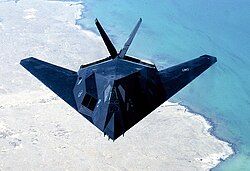
F-117 stealth aircraft
PL-01 stealth tank
Surcouf, a French stealth frigate

Stealth technology, also termed low observable technology (LO technology), is a sub-discipline of military tactics and passive and active electronic countermeasures.[1] The term covers a range of methods used to make personnel, aircraft, ships, submarines, missiles, satellites, and ground vehicles less visible (ideally invisible) to radar, infrared,[2] sonar and other detection methods. It corresponds to military camouflage for these parts of the electromagnetic spectrum (i.e., multi-spectral camouflage).

Development of modern stealth technologies in the United States began in 1958,[3][4] where earlier attempts to prevent radar tracking of its U-2 spy planes during the Cold War by the Soviet Union had been unsuccessful.[5] Designers turned to developing a specific shape for planes that tended to reduce detection by redirecting electromagnetic radiation waves from radars.[6] Radiation-absorbent material was also tested and made to reduce or block radar signals that reflect off the surfaces of aircraft. Such changes to shape and surface composition comprise stealth technology as currently used on the Northrop Grumman B-2 Spirit "Stealth Bomber".[4]

The concept of stealth is to operate or hide from external observation. This concept was first explored through camouflage to make an object's appearance blend into the visual background. As the potency of detection and interception technologies (radar, infrared search and tracking, surface-to-air missiles, etc.) have increased, so too has the extent to which the design and operation of military personnel and vehicles have been affected in response. Some military uniforms are treated with chemicals to reduce their infrared signature. A modern stealth vehicle is designed from the outset to have a chosen spectral signature. The degree of stealth embodied in a given design is chosen according to the projected threats of detection.

History

[edit]

Camouflage to aid or avoid predation predates humanity, and hunters have been using vegetation to conceal themselves, perhaps as long as people have been hunting. The earliest application of camouflage in warfare is impossible to ascertain. Methods for visual concealment in war were documented by Sun Tzu in his book The Art of War in the 5th century BC, and by Frontinus in his work Strategemata in the 1st century AD.[7]

In England, irregular units of gamekeepers in the 17th century were the first to adopt drab colours (common in 16th century Irish units) as a form of camouflage, following examples from the continent.

During World War I, the Germans experimented with the use of Cellon (Cellulose acetate), a transparent covering material, in an attempt to reduce the visibility of military aircraft. Single examples of the Fokker E.III Eindecker fighter monoplane, the Albatros C.I two-seat observation biplane, and the Linke-Hofmann R.I prototype heavy bomber were covered with Cellon. However, sunlight glinting from the material made the aircraft even more visible. Cellon was also found to degrade quickly from both sunlight and in-flight temperature changes, so the effort to make transparent aircraft ceased.[8]

In 1916, the British modified a small SS class airship for the purpose of night-time reconnaissance over German lines on the Western Front. Fitted with a silenced engine and a black gas bag, the craft was both invisible and inaudible from the ground but several night-time flights over German-held territory produced little useful intelligence and the idea was dropped.[9]

Diffused lighting camouflage, a shipborne form of counter-illumination camouflage, was trialled by the Royal Canadian Navy from 1941 to 1943. The concept was followed up for aircraft by the Americans and the British: in 1945, a Grumman Avenger aircraft with Yehudi lights reached 3,000 yards (2,700 m) from a ship before being sighted. This ability was rendered obsolete by radar.[10]

Chaff was invented in Britain and Germany early in World War II as a means to hide aircraft from radar. In effect, chaff acted upon radio waves much as a smoke screen acted upon visible light.[11]

The German U-boat U-480 may have been the first stealth submarine. It featured an anechoic tile rubber coating, one layer of which contained circular air pockets to defeat ASDIC sonar.[12] Radar-absorbent paints and materials of rubber and semiconductor composites (codenames: Sumpf, Schornsteinfeger) were used by the Kriegsmarine on submarines in World War II. Tests showed they were effective in reducing radar signatures at both short (centimetres) and long (1.5 metre) wavelengths.[13] The Type 29 concept was the first design to use faceted sides and angled sail were similar to the F-117 stealth fighter but instead of deflecting radar waves, it was intended to deflect active sonar pings from enemy warships.[14]

In 1956, the U.S. Central Intelligence Agency (CIA) began attempts to reduce the radar cross-section (RCS) of the U-2 spy plane. Three systems were developed, Trapeze, a series of wires and ferrite beads around the planform of the aircraft, a covering material with PCB circuitry embedded in it, and radar-absorbent paint. These were deployed in the field on the so-called dirty birds but results were disappointing, the weight and drag increases were not worth any reduction in detection rates. More successful was applying camouflage paint to the originally bare metal aircraft; a deep blue was found to be most effective. The weight of this cost 250 ft (76 m) in maximum altitude, but made the aircraft harder for interceptors to see.[15]

In 1958, the CIA requested funding for a reconnaissance aircraft to replace the existing U-2 spy planes,[16] and Lockheed secured contractual rights to produce it.[3] "Kelly" Johnson and his team at Lockheed's Skunk Works were assigned to produce the A-12 (or OXCART), which operated at high altitude of 70,000 to 80,000 ft (21,000 to 24,000 m) and speed of Mach 3.2 (2,400 mph; 3,800 km/h) to avoid radar detection. Various plane shapes designed to reduce radar detection were developed in earlier prototypes, named A-1 to A-11. The A-12 included a number of stealthy features including special fuel to reduce the signature of the exhaust plume, canted vertical stabilizers, the use of composite materials in key locations, and the overall finish in radar-absorbent paint.[15]

In 1960, the United States Air Force (USAF) reduced the radar cross-section of a Ryan Q-2C Firebee drone. This was achieved through specially designed screens over the air intake, and radiation-absorbent material on the fuselage, and radar-absorbent paint.[17]

The United States Army issued a specification in 1968 which called for an observation aircraft that would be acoustically undetectable from the ground when flying at an altitude of 1,500 ft (460 m) at night. This resulted in the Lockheed YO-3A Quiet Star, which operated in South Vietnam from late June 1970 to September 1971.[18]

During the 1970s, the U.S. Department of Defense launched project Lockheed Have Blue, with the aim of developing a stealth fighter. There was fierce bidding between Lockheed and Northrop to secure the multibillion-dollar contract. Lockheed incorporated into its bid a text written by the Soviet-Russian physicist Pyotr Ufimtsev from 1962, titled Method of Edge Waves in the Physical Theory of Diffraction, Soviet Radio, Moscow, 1962. In 1971, this book was translated into English with the same title by the USAF, Foreign Technology Division.[19] The theory played a critical role in the design of American Lockheed F-117 Nighthawk and Northrop B-2 Spirit stealth aircraft.[20][21][22] Equations outlined in the paper quantified how a plane's shape would affect its detectability by radar, the RCS.[23] At the time, the Soviet Union did not have supercomputer capacity to solve these equations for actual designs. This was applied by Lockheed in computer simulation to design a novel shape they called the "Hopeless Diamond", a wordplay on the Hope Diamond, securing contractual rights to produce the F-117 Nighthawk starting in 1975. In 1977, Lockheed produced two 60% scale models under the Have Blue contract. The Have Blue program was a stealth technology demonstrator that lasted from 1976 to 1979. The Northrop Grumman Tacit Blue also played a part in the development of composite material and curvilinear surfaces, low observables, fly-by-wire, and other stealth technology innovations. The success of Have Blue led the USAF to create the Senior Trend program which developed the F-117.[24][25]

In the early 21st century, the proliferation of stealth technology began outside of the United States. Both Russia and China tested their stealth aircraft in 2010. Russia manufactured ten flyable prototypes of the Sukhoi Su-57, while China produced two stealth aircraft, Chengdu J-20 and Shenyang FC-31.[26] In 2017, China became the second country in the world to field an operational stealth aircraft, challenging the United States and its Asian allies.[27][28]

Principles

[edit]

Stealth technology (or LO for low observability) is not one technology. It is a set of technologies, used in combinations, that can greatly reduce the distances at which a person or vehicle can be detected; more so radar cross-section reductions, but also acoustic, thermal, and other aspects.

Radar cross-section (RCS) reductions

[edit]

Almost since the invention of radar, various methods have been tried to minimize detection. Rapid development of radar during World War II led to equally rapid development of numerous counter radar measures during the period; a notable example of this was the use of chaff. Modern methods include radar jamming and deception.

The term stealth in reference to reduced radar signature aircraft became popular during the late 1980s when the Lockheed Martin F-117 stealth fighter became widely known. The first large scale (and public) use of the F-117 was during the Gulf War in 1991. However, F-117A stealth fighters were used for the first time in combat during Operation Just Cause, the United States invasion of Panama in 1989.[29] Stealth aircraft are often designed to have radar cross sections that are orders of magnitude smaller than conventional aircraft. The radar range equation meant that all else being equal, detection range is proportional to the fourth root of RCS; thus, reducing detection range by a factor of 10 requires a reduction of RCS by a factor of 10,000.

Vehicle shape

[edit]

Aircraft

[edit]
The F-35 Lightning II offers better stealthy features (such as this landing gear door) than prior American multi-role fighters, such as the F-16 Fighting Falcon

The possibility of designing aircraft in such a manner as to reduce their radar cross-section was recognized in the late 1930s, when the first radar tracking systems were employed, and it has been known since at least the 1960s that aircraft shape makes a significant difference in detectability. The Avro Vulcan, a British bomber of the 1960s, had a remarkably small appearance on radar despite its large size, and occasionally disappeared from radar screens entirely. It is now known that it had a fortuitously stealthy shape apart from the vertical element of the tail. Despite being designed before a low RCS and other stealth factors were ever a consideration,[30] a Royal Aircraft Establishment technical note of 1957 stated that of all the aircraft so far studied, the Vulcan appeared by far the simplest radar echoing object, due to its shape: only one or two components contributing significantly to the echo at any aspect (one of them being the vertical stabilizer, which is especially relevant for side aspect RCS), compared with three or more on most other types.[31][33] While writing about radar systems, authors Simon Kingsley and Shaun Quegan singled out the Vulcan's shape as acting to reduce the RCS.[34] In contrast, the Tupolev Tu-95 Russian long-range bomber (NATO reporting name 'Bear') was conspicuous on radar. It is now known that propellers and jet turbine blades produce a bright radar image;[citation needed] the Bear has four pairs of large 18-foot (5.6 m) diameter contra-rotating propellers.

Another important factor is internal construction. Some stealth aircraft have skin that is radar transparent or absorbing, behind which are structures termed reentrant triangles. Radar waves penetrating the skin get trapped in these structures, reflecting off the internal faces and losing energy. This method was first used on the Lockheed Blackbird series: A-12, YF-12A, and SR-71.

The most efficient way to reflect radar waves back to the emitting radar is with orthogonal metal plates, forming a corner reflector consisting of either a dihedral (two plates) or a trihedral (three orthogonal plates). This configuration occurs in the tail of a conventional aircraft, where the vertical and horizontal components of the tail are set at right angles. Stealth aircraft such as the F-117 use a different arrangement, tilting the tail surfaces to reduce corner reflections formed between them. A more radical method is to omit the tail, as in the B-2 Spirit. The B-2's clean, low-drag flying wing configuration gives it exceptional range and reduces its radar profile.[35][36] The flying wing design most closely resembles a so-called infinite flat plate (as vertical control surfaces dramatically increase RCS), the perfect stealth shape, as it would have no angles to reflect back radar waves.[37]

YF-23 S-duct engine air intake conceals engine from probing radar waves

In addition to altering the tail, stealth design must bury the engines within the wing or fuselage, or in some cases where stealth is applied to an extant aircraft, install baffles in the air intakes, so that the compressor blades are not visible to radar. A stealthy shape must be devoid of complex bumps or protrusions of any kind, meaning that weapons, fuel tanks, and other stores must not be carried externally. Any stealthy vehicle becomes un-stealthy when a door or hatch opens.

Parallel alignment of edges or even surfaces is also often used in stealth designs. The technique involves using a small number of edge orientations in the shape of the structure. For example, on the F-22A Raptor, the leading edges of the wing and the tail planes are set at the same angle. Other smaller structures, such as the air intake bypass doors and the air refueling aperture, also use the same angles. The effect of this is to return a narrow radar signal in a very specific direction away from the radar emitter rather than returning a diffuse signal detectable at many angles. The effect is sometimes called "glitter" after the very brief signal seen when the reflected beam passes across a detector. It can be difficult for the radar operator to distinguish between a glitter event and a digital glitch in the processing system.

Stealth airframes sometimes display distinctive serrations on some exposed edges, such as the engine ports. The YF-23 has such serrations on the exhaust ports. This is another example in the parallel alignment of features, this time on the external airframe.

The shaping requirements detracted greatly from the F-117's aerodynamic properties. It is inherently unstable, and cannot be flown without a fly-by-wire control system.

Similarly, coating the cockpit canopy with a thin film transparent conductor (vapor-deposited gold or indium tin oxide) helps to reduce the aircraft's radar profile, because radar waves would normally enter the cockpit, reflect off objects (the inside of a cockpit has a complex shape, with a pilot helmet alone forming a sizeable return), and possibly return to the radar, but the conductive coating creates a controlled shape that deflects the incoming radar waves away from the radar. The coating is thin enough that it has no adverse effect on pilot vision.

HSwMS Helsingborg, a stealth ship

Ships

[edit]

Ships have also adopted similar methods. Though the earlier American Arleigh Burke-class destroyers incorporated some signature-reduction features.[38][39] the Norwegian Skjold-class corvettes was the first coastal defence and the French La Fayette-class frigates the first ocean-going stealth ships to enter service. Other examples are the Dutch De Zeven Provinciën-class frigates, the Taiwanese Tuo Chiang-class corvettes, German Sachsen-class frigates, the Swedish Visby-class corvette, the American San Antonio-class amphibious transport docks, and most modern warship designs.

Materials

[edit]

Non-metallic airframe

[edit]

Dielectric composite materials are more transparent to radar, whereas electrically conductive materials such as metals and carbon fibers reflect electromagnetic energy incident on the material's surface. Composites may also contain ferrites to optimize the dielectric and magnetic properties of a material for its application.

Radar-absorbent material

[edit]
Skin of a B-2 bomber.

Radiation-absorbent material (RAM), often as paints, are used especially on the edges of metal surfaces. While the material and thickness of RAM coatings can vary, the way they work is the same: absorb radiated energy from a ground- or air-based radar station into the coating and convert it to heat rather than reflect it back.[40] Current technologies include dielectric composites and metal fibers containing ferrite isotopes. Ceramic composite coating is a new type of material systems which can sustain at higher temperatures with better sand erosion resistance and thermal resistance.[41] Paint comprises depositing pyramid-like colonies on the reflecting superficies with the gaps filled with ferrite-based RAM. The pyramidal structure deflects the incident radar energy in the maze of RAM. One commonly used material is called iron ball paint.[42] It contains microscopic iron spheres that resonate in tune with incoming radio waves and dissipate most of their energy as heat, leaving little to reflect back to detectors. FSS are planar periodic structures that behave like filters to electromagnetic energy. The considered frequency-selective surfaces are composed of conducting patch elements pasted on the ferrite layer. FSS are used for filtration and microwave absorption.

Radar stealth countermeasures and limits

[edit]

Low-frequency radar

[edit]

Shaping offers far fewer stealth advantages against low-frequency radar. If the radar wavelength is roughly twice the size of the target, a half-wave resonance effect can still generate a significant return. However, low-frequency radar is limited by lack of available frequencies (many are heavily used by other systems), by lack of accuracy of the diffraction-limited systems given their long wavelengths, and by the radar's size, making it difficult to transport. A long-wave radar may detect a target and roughly locate it, but not provide enough information to identify it, target it with weapons, or even to guide a fighter to it.[43]

Multiple emitters

[edit]

Stealth aircraft attempt to minimize all radar reflections, but are specifically designed to avoid reflecting radar waves back in the direction they came from (since in most cases a radar emitter and receiver are in the same location). They are less able to minimize radar reflections in other directions. Thus, detection can be better achieved if emitters are in different locations from receivers. One emitter separate from one receiver is termed bistatic radar; one or more emitters separate from more than one receiver is termed multistatic radar. Proposals exist to use reflections from emitters such as civilian radio transmitters, including cellular telephone radio towers.[44]

Moore's law

[edit]

By Moore's law the processing power behind radar systems is rising over time. This will eventually erode the ability of physical stealth to hide vehicles.[45][46]

Ship wakes and spray

[edit]

Synthetic aperture sidescan radars can be used to detect the location and heading of ships from their wake patterns.[47] These are detectable from orbit.[48] When a ship moves through a seaway it throws up a cloud of spray which can be detected by radar.[49]

Acoustics

[edit]

Acoustic stealth plays a primary role for submarines and ground vehicles. Submarines use extensive rubber mountings to isolate, damp, and avoid mechanical noises that can reveal locations to underwater passive sonar arrays.

Early stealth observation aircraft used slow-turning propellers to avoid being heard by enemy troops below. Stealth aircraft that stay subsonic can avoid being tracked by sonic boom. The presence of supersonic and jet-powered stealth aircraft such as the SR-71 Blackbird indicates that acoustic signature is not always a major driver in aircraft design, as the Blackbird relied more on its very high speed and altitude.

One method to reduce helicopter rotor noise is modulated blade spacing.[50] Standard rotor blades are evenly spaced, and produce greater noise at a given frequency and its harmonics. Using varied spacing between the blades spreads the noise or acoustic signature of the rotor over a greater range of frequencies.[51]

Visibility

[edit]

The simplest technology is visual camouflage; the use of paint or other materials to color and break up the lines of a vehicle or person.

Most stealth aircraft use matte paint and dark colors, and operate only at night. Lately, interest in daylight Stealth (especially by the USAF) has emphasized the use of gray paint in disruptive schemes, and it is assumed that Yehudi lights could be used in the future to hide the airframe (against the background of the sky, including at night, aircraft of any colour appear dark[52]) or as a sort of active camouflage. The original B-2 design had wing tanks for a contrail-inhibiting chemical, alleged by some to be chlorofluorosulfonic acid,[53] but this was replaced in the final design with a contrail sensor that alerts the pilot when he should change altitude[54] and mission planning also considers altitudes where the probability of their formation is minimized.

In space, mirrored surfaces can be employed to reflect views of empty space toward known or suspected observers; this approach is compatible with several radar stealth schemes. Careful control of the orientation of the satellite relative to the observers is essential, and mistakes can lead to detectability enhancement rather than the desired reduction.

Infrared

[edit]
Slit shaped tail exhaust Northrop Tacit Blue

An exhaust plume contributes a significant infrared signature. One means to reduce IR signature is to have a non-circular tail pipe (a slit shape) to minimize the exhaust cross sectional area and maximize the mixing of hot exhaust with cool ambient air (see Lockheed F-117 Nighthawk, rectangular nozzles on the Lockheed Martin F-22 Raptor, and serrated nozzle flaps on the Lockheed Martin F-35 Lightning II). Often, cool air is deliberately injected into the exhaust flow to boost this process (see Ryan AQM-91 Firefly and Northrop B-2 Spirit). The Stefan–Boltzmann law shows how this results in less energy (Thermal radiation in infrared spectrum) being released and thus reduces the heat signature. In some aircraft, the jet exhaust is vented above the wing surface to shield it from observers below, as in the Lockheed F-117 Nighthawk, and the unstealthy Fairchild Republic A-10 Thunderbolt II. To achieve infrared stealth, the exhaust gas is cooled to the temperatures where the brightest wavelengths it radiates are absorbed by atmospheric carbon dioxide and water vapor, greatly reducing the infrared visibility of the exhaust plume.[55] Another way to reduce the exhaust temperature is to circulate coolant fluids such as fuel inside the exhaust pipe, where the fuel tanks serve as heat sinks cooled by the flow of air along the wings.[56]

Ground combat includes the use of both active and passive infrared sensors. Thus, the United States Marine Corps (USMC) ground combat uniform requirements document specifies infrared reflective quality standards.[57]

Reducing radio frequency (RF) emissions

[edit]

In addition to reducing infrared and acoustic emissions, a stealth vehicle must avoid radiating any other detectable energy, such as from onboard radars, communications systems, or RF leakage from electronics enclosures. The F-117 uses passive infrared and low light level television sensor systems to aim its weapons and the F-22 Raptor has an advanced LPI radar which can illuminate enemy aircraft without triggering a radar warning receiver response.

Measuring

[edit]

The size of a target's image on radar is measured by the RCS, often represented by the symbol σ and expressed in square meters. This does not equal geometric area. A perfectly conducting sphere of projected cross sectional area 1 m2 (i.e. a diameter of 1.13 m) will have an RCS of 1 m2. Note that for radar wavelengths much less than the diameter of the sphere, RCS is independent of frequency. Conversely, a square flat plate of area 1 m2 will have an RCS of σ=4π A2 / λ2 (where A=area, λ=wavelength), or 13,982 m2 at 10 GHz if the radar is perpendicular to the flat surface.[58] At off-normal incident angles, energy is reflected away from the receiver, reducing the RCS. Modern stealth aircraft are said to have an RCS comparable with small birds or large insects,[59] though this varies widely depending on aircraft and radar.

If the RCS was directly related to the target's cross-sectional area, the only way to reduce it would be to make the physical profile smaller. Rather, by reflecting much of the radiation away or by absorbing it, the target achieves a smaller radar cross section.[60]

Tactics

[edit]

Stealthy strike aircraft such as the Lockheed F-117 Nighthawk, are usually used against heavily defended enemy sites such as command and control centers or surface-to-air missile (SAM) batteries. Enemy radar will cover the airspace around these sites with overlapping coverage, making undetected entry by conventional aircraft nearly impossible. Stealthy aircraft can also be detected, but only at short ranges around the radars; for a stealthy aircraft there are substantial gaps in the radar coverage. Thus a stealthy aircraft flying an appropriate route can remain undetected by radar. Even if a stealth aircraft is detected, fire-control radars operating in C, X and Ku bands cannot paint (for missile guidance) low observable (LO) jets except at very close ranges.[61] Many ground-based radars exploit Doppler filter to improve sensitivity to objects having a radial velocity component relative to the radar. Mission planners use their knowledge of enemy radar locations and the RCS pattern of the aircraft to design a flight path that minimizes radial speed while presenting the lowest-RCS aspects of the aircraft to the threat radar. To be able to fly these "safe" routes, it is necessary to understand an enemy's radar coverage (see electronic intelligence). Airborne or mobile radar systems such as airborne early warning and control (AEW&C, AWACS) can complicate tactical strategy for stealth operation.

Research

[edit]

After the invention of electromagnetic metasurfaces, the conventional means to reduce RCS have been improved significantly.[62][63][64] As mentioned earlier, the main objective in purpose shaping is to redirect scattered waves away from the backscattered direction, which is usually the source. However, this usually compromises aerodynamic performance.[65] One feasible solution, which has extensively been explored in recent time, is to use metasurfaces which can redirect scattered waves without altering the geometry of a target.[62][63][64] Such metasurfaces can primarily be classified in two categories: (i) checkerboard metasurfaces, (ii) gradient index metasurfaces. Similarly, negative index metamaterials are artificial structures for which refractive index has a negative value for some frequency range, such as in microwave, infrared, or possibly optical.[66] These offer another way to reduce detectability, and may provide electromagnetic near-invisibility in designed wavelengths.

Plasma stealth is a phenomenon proposed to use ionized gas, termed a plasma, to reduce RCS of vehicles. Interactions between electromagnetic radiation and ionized gas have been studied extensively for many purposes, including concealing vehicles from radar. Various methods might form a layer or cloud of plasma around a vehicle to deflect or absorb radar, from simpler electrostatic to radio frequency (RF) more complex laser discharges, but these may be difficult in practice.[67]

Several technology research and development efforts exist to integrate the functions of aircraft flight control systems such as ailerons, elevators, elevons, flaps, and flaperons into wings to perform the aerodynamic purpose with the advantages of lower RCS for stealth, via simpler geometries and lower complexity (mechanically simpler, fewer or no moving parts or surfaces, less maintenance), and lower mass, cost (up to 50% less), drag (up to 15% less during use), and inertia (for faster, stronger control response to change vehicle orientation to reduce detection). Two promising approaches are flexible wings, and fluidics.

In flexible wings, much or all of a wing surface can change shape in flight to deflect air flow. Adaptive compliant wings are a military and commercial effort.[68][69][70] The X-53 Active Aeroelastic Wing was a US Air Force, Boeing, and NASA effort.

In fluidics, fluid injection into airflows is being researched for use in aircraft to control direction, in two ways: circulation control and thrust vectoring. In both, larger more complex mechanical parts are replaced by smaller, simpler, lower mass fluidic systems, in which larger forces in fluids are diverted by smaller jets or flows of fluid intermittently, to change the direction of vehicles. Mechanical control surfaces that must move cause an important part of aircraft radar cross-section.[71][72][73] Omitting mechanical control surfaces can reduce radar returns.[73][74][75] As of 2023, at least two countries are known to be researching fluidic control. In Britain, BAE Systems has tested two fluidically controlled unmanned aircraft, one starting in 2010 named Demon,[74][73] and another starting in 2017 named MAGMA, with the University of Manchester.[75] In the United States, the Defense Advanced Research Projects Agency (DARPA) program named Control of Revolutionary Aircraft with Novel Effectors (CRANE) seeks "... to design, build, and flight test a novel X-plane that incorporates active flow control (AFC) as a primary design consideration. ... In 2023, the aircraft received its official designation as X-65."[76][77] In January 2024, construction began, at Boeing subsidiary Aurora Flight Sciences.[78][79] According to DARPA, the Aurora X-65 could be completed and unveiled as soon as early 2025, with the first flight occurring in summer 2025.[78][79]

In circulation control, near the trailing edges of wings, aircraft flight control systems are replaced by slots which emit fluid flows.[80][81][82]

List of stealth aircraft

[edit]

List of stealth helicopters

[edit]

List of reduced-signature ships

[edit]

See also

[edit]

References

[edit]
[edit]
Revisions and contributorsEdit on WikipediaRead on Wikipedia
from Grokipedia
Stealth technology, also known as low-observable (LO) technology, encompasses a range of design, material, and operational techniques used to reduce the detectability of military platforms—such as , ships, submarines, missiles, and ground vehicles—by enemy sensors, primarily , , acoustic, and visual systems, thereby enhancing their survivability and mission effectiveness. At its core, stealth minimizes the radar cross-section (RCS), which measures how detectable an object is to waves, through angular or curved geometries that deflect incoming signals away from the source, combined with radar-absorbent materials (RAM) that absorb rather than reflect electromagnetic energy. Additional principles include suppressing signatures via exhaust cooling and shaping, reducing visual and acoustic detectability with specialized coatings and configurations, and employing low-probability-of-intercept (LPI) emissions for onboard sensors and communications to avoid alerting adversaries. The development of modern stealth technology traces its origins to the late 1950s, when the U.S. sought ways to evade radar detection for high-altitude reconnaissance aircraft like the U-2 during the Cold War, but significant advancements occurred in the 1970s amid escalating threats from Soviet integrated air defense systems. Key milestones include the U.S. Defense Advanced Research Projects Agency (DARPA)-funded Have Blue demonstrator program in 1975, which proved the feasibility of practical stealth designs, leading to Lockheed Martin's F-117 Nighthawk—the world's first operational stealth aircraft—that achieved its maiden flight in 1981 and entered service in 1983. The technology gained prominence during the 1991 Gulf War, where F-117s conducted precision strikes with minimal losses, demonstrating stealth's ability to penetrate heavily defended airspace. Subsequent innovations expanded stealth to broader applications, including Northrop Grumman's B-2 Spirit stealth bomber, introduced in 1997 for long-range strategic missions, and fifth-generation fighters like Lockheed Martin's F-22 Raptor (operational since 2005) and F-35 Lightning II (first flight in 2006), which integrate stealth with advanced , , and capabilities; similar technologies have been adopted internationally, such as China's and Russia's stealth fighters. These platforms have transformed by enabling first-look, first-kill advantages, though challenges persist, such as balancing stealth with aerodynamic performance, cost (e.g., the B-2 program's $2 billion per unit), and countermeasures from adversaries developing low-frequency radars and anti-stealth tactics. Today, stealth continues to evolve with sixth-generation concepts incorporating adaptive materials and AI-driven signature management, including U.S. (NGAD)/F-47 and Chinese prototypes, underscoring its enduring role in maintaining technological superiority.

History

Early Concepts and Precursors

By the early 20th century, militaries began applying these principles to visual signatures in response to evolving threats. During , the U.S. Navy conducted experiments with patterns on ships, adopting dazzle painting schemes starting in to fragment silhouettes and distort perceptions of speed, size, and direction, thereby reducing visual detection ranges from enemy lookouts and rangefinders. These patterns, inspired by natural , aimed to confuse rather than conceal, proving effective in protection against periscopes and surface spotters. The terror inflicted by German zeppelin raids during World War I, which killed over 500 civilians in Britain and exposed vulnerabilities to aerial attack, profoundly influenced interwar defense research. These bombings, conducted from to 1918 using hydrogen-filled airships for high-altitude night raids, galvanized Allied governments to prioritize early warning systems in , fostering initial explorations into radio detection and, consequently, evasion strategies to counter . A landmark advancement came in 1935 with Sir Robert Watson-Watt's demonstration of radio detection of at a range of up to 8 miles, which directly led to the development of Britain's radar network by 1937. This system, comprising fixed coastal stations operating at 20-30 MHz, provided vital early warnings during the but also illuminated the challenges of radar penetration, spurring awareness of the need for radar cross-section (RCS) reduction techniques to minimize echo returns from aircraft structures. In parallel, pre-1940s theoretical efforts focused on absorbing radar energy using conductive materials to prevent reflection. Research in the early , shortly after 's , examined how resistive substances could dissipate electromagnetic waves as heat. A key milestone was the 1936 Dutch for a quarter-wavelength resonant absorber incorporating —a conductive filler—layered to match impedance and signals at specific frequencies, representing an early engineered solution for radar . These foundational ideas in visual disruption, detection countermeasures, and wave absorption set the stage for radar-centric stealth advancements in the era.

Cold War Developments

During the , the initiated early research into stealth technology in the late , with Lockheed's Advanced Development Projects division exploring ways to reduce detectability for high-altitude like the U-2. This foundational work evolved from principles of visual , adapting them to electromagnetic signatures amid escalating U.S.-Soviet aerial tensions. By the mid-1970s, these efforts led to the Have Blue program, launched in 1975 as the first dedicated initiative for a low-observable demonstrator, funded by the (). The program's two prototypes, built by Lockheed's , incorporated angular faceting to scatter waves, with the first flight occurring on December 1, 1977, at Groom Lake, . In parallel, Soviet scientists pursued independent advancements in low-observability techniques during the 1960s, particularly for ballistic missiles, where plasma stealth emerged as a key concept. Researchers investigated the use of ionized gas clouds—generated around reentry vehicles or via onboard systems—to absorb and dissipate energy, reducing detection ranges in response to U.S. developments. A pivotal theoretical contribution came from Soviet physicist in 1962, whose publication "Method of Edge Waves in the Physical Theory of Diffraction" provided a mathematical framework for precisely calculating radar cross-sections (RCS) based on edge effects, rather than relying on approximate geometric . Though initially overlooked in the USSR for design due to computational limitations, Ufimtsev's work was translated and applied by U.S. engineers in the , enabling accurate predictions of RCS for complex shapes and revolutionizing stealth engineering. The U.S. advanced these concepts through the Senior Trend program, initiated in 1978 under the (DIA) and oversight, to develop the F-117 Nighthawk as a production stealth attack aircraft. Drawing from Have Blue's success, the F-117 featured extensive pyramid-shaped facets across its to deflect signals away from emitters, achieving an RCS comparable to a small bird in key aspects. The first full-scale development prototype flew on June 18, 1981, from , with the aircraft reaching initial operational capability in October 1983 after rigorous testing. The F-117's stealth capabilities were first combat-tested during the 1989 U.S. invasion of Panama (Operation Just Cause), where it conducted precision strikes without detection by enemy s, validating the technology's battlefield impact.

Post-Cold War Evolution

Following the end of the , stealth technology saw its first major combat validation during the 1991 , where the U.S. Air Force's F-117 Nighthawk conducted approximately 1,300 sorties against high-value Iraqi targets, achieving an 80% mission success rate with no losses or battle damage to the aircraft. This operational debut highlighted the practical efficacy of radar-absorbent materials and faceted shaping—concepts refined in the late era—in evading integrated air defenses, paving the way for broader adoption in post-1991 military doctrines. In the 1990s, the U.S. introduced the B-2 Spirit stealth bomber, which achieved initial operational capability in 1997 for long-range strategic missions, employing flying-wing design and advanced composites to minimize RCS across multiple spectra. Concurrently, the , a fifth-generation , made its first flight in 1997 and entered service in 2005, integrating , , and comprehensive low-observability features. In the 2000s and , stealth principles diversified beyond U.S. exclusivity, influencing European and Asian programs. Sweden's NG (later designated Gripen E), developed in the mid-2000s, incorporated partial stealth features such as reduced radar cross-section through optimized airframe geometry and low environmental signatures, enhancing its multirole survivability without pursuing full low-observability. Meanwhile, the U.S. advanced its stealth integration with the , a fifth-generation multirole fighter that entered service across the , , and Marine Corps in the 2010s, combining advanced stealth coatings, , and network-enabled operations to replace legacy platforms like the F-16 and A-10. The F-35B variant achieved initial operational capability with the U.S. Marine Corps in July 2015. China's emergence as a stealth developer in this period stemmed from alleged reverse-engineering efforts, particularly after acquiring debris from a U.S. F-117 downed over in 1999, which reportedly informed radar-absorbent material techniques for the J-20. This culminated in the J-20's public reveal in 2011 as China's first fifth-generation stealth fighter, featuring canard-delta configuration and internal weapons bays designed for air superiority in the theater. Although denied direct copying, U.S. officials confirmed that Chinese entities obtained and studied F-117 components, accelerating Beijing's indigenous stealth capabilities. The global proliferation of stealth vehicles also intersected with international arms control frameworks, notably the 1990 Conventional Armed Forces in (CFE) Treaty, which imposed bloc-wide limits of 6,800 combat aircraft—encompassing stealth platforms like the F-117 and later designs—to prevent offensive buildups in . These numerical caps, alongside verification regimes, constrained forward deployments of emerging stealth assets, influencing post-Cold War force postures among and former states until the treaty's suspension in the 2000s.

Principles

Detection Signatures

Stealth technology seeks to minimize a platform's detectability across multiple sensing domains, collectively known as detection signatures, which encompass the physical emissions or reflections that enable enemy systems to locate, identify, or track assets such as , ships, or . These signatures arose as critical concerns during Cold War-era developments, where advancing sensor technologies necessitated countermeasures to maintain operational surprise. The signature, often quantified as the radar cross-section (RCS), measures an object's detectability by systems and is defined as the effective area that intercepts incident and re-radiates it back toward the source, typically expressed in square meters (). RCS quantifies the backscattered , with lower values indicating reduced visibility; for example, a typical non-stealth might have an RCS of several square meters, while stealth designs target values below 0.01 in key aspects. Acoustic signatures arise from mechanical noises generated by platforms, such as engine exhaust in or propeller cavitation in , which propagate as waves detectable by hydrophones, arrays, or ground-based microphones. In aerial applications, turbine whine and airflow turbulence contribute to this , potentially allowing passive acoustic sensors to estimate range and bearing from kilometers away under favorable conditions. Visual signatures pertain to the optical detectability of a platform by human observers or electro-optical sensors, primarily influenced by its physical size, geometric , and contrast relative to the background environment such as sky or . Larger frontal profiles or high-contrast colors, like metallic glints from reflection, can enhance visibility, making alignment with flight paths a factor in low-altitude operations. Infrared (IR) signatures stem from thermal emissions produced by heat sources like engines or aerodynamic friction, manifesting as that follows the Stefan-Boltzmann law, where radiated power PP is proportional to σT4\sigma T^4, with σ\sigma as the Stefan-Boltzmann constant and TT the absolute temperature in . For , exhaust plumes and skin heating dominate this signature in the 3–5 μm and 8–12 μm atmospheric windows, enabling IR seekers to detect platforms from tens of kilometers based on temperature differentials against ambient backgrounds. Radio frequency (RF) emissions occur when platforms activate onboard sensors, such as or communication systems, producing detectable signals that can be intercepted by electronic support measures (ESM) for geolocation via direction-finding techniques. These unintentional or operational emissions, often in the bands, reveal the platform's presence and type even if radar returns are minimized, prompting stealth designs to incorporate low-probability-of-intercept modes or emission controls.

Reduction Mechanisms

Stealth technology employs several fundamental physical and engineering principles to minimize detection signatures by reducing the strength of reflected or emitted signals from an object. These mechanisms primarily involve manipulating electromagnetic waves, , and thermal emissions through targeted interactions that prevent from returning to the detecting . The core approaches—, absorption, and —work synergistically to redirect, dissipate, or disperse , thereby lowering the observable cross-section or intensity across multiple spectra. Scattering theory forms the basis for redirecting incident waves away from the source receiver, leveraging geometric configurations to control the directionality of reflections. In this principle, the object's shape is designed such that specular reflections are deflected at angles unlikely to intersect the illuminator's , effectively minimizing the backscattered energy. This is grounded in electromagnetic wave models, where phase coherence and interference patterns dictate the return signal strength. For instance, curved surfaces or angled facets can distribute reflections over a wide angular range, reducing the peak intensity in any single direction. Absorption principles convert incoming electromagnetic into through dielectric losses in specialized materials, thereby attenuating the reflected signal. Materials with high and conductivity, such as radar-absorbent materials (RAM), exhibit magnetic or electric that dissipates wave as thermal vibrations within the material's molecular structure. This process is particularly effective against frequencies, where the material's thickness is tuned to match a quarter-wavelength for optimal and capture. The efficiency of absorption depends on the material's loss tangent, which quantifies the ratio of dissipative to storage components in the response. Diffusion mechanisms break up coherent reflections by introducing controlled surface irregularities, spreading the reflected over a broader angular spectrum to reduce the intensity of the direct return. This is achieved through textured surfaces or fractal-like patterns that disrupt the phase front of the incident wave, transforming specular reflections into diffuse . Unlike smooth surfaces that concentrate , diffusive elements ensure that no single reflection path dominates, lowering the overall cross-section (RCS) by orders of magnitude in targeted directions. Research on screens and Jaumann absorbers has demonstrated how layered diffusive structures enhance this effect across frequencies. A basic approximation for the RCS of a flat plate perpendicular to the incident wave illustrates the interplay of geometry and wavelength, given by the equation: σ=4πA2λ2\sigma = \frac{4\pi A^2}{\lambda^2} where σ\sigma is the RCS, AA is the physical area of the plate, and λ\lambda is the of the signal. This formula highlights how RCS scales with the square of the area and inversely with the square of the wavelength, underscoring the challenges of stealth at shorter wavelengths like those in X-band radar. Stealth designs aim to deviate from this ideal reflector behavior through the aforementioned mechanisms. The multi-spectral approach to stealth reduction integrates these principles across , , and acoustic bands to achieve balanced minimization, as no single mechanism suffices for all wavelengths or emission types. For , and absorption dominate, while IR suppression relies on thermal management to reduce emission signatures, and acoustic reductions involve shape and . This holistic strategy ensures that trade-offs, such as material weight or aerodynamic penalties, are optimized for operational effectiveness. Seminal studies emphasize the need for frequency-independent designs to counter evolving multi-sensor detection systems.

Radar Cross-Section Reduction

Shaping Techniques

Shaping techniques in stealth technology primarily involve geometric designs that deflect incoming radar waves away from the source, minimizing backscattered returns and thus reducing the radar cross-section (RCS). These methods exploit principles of electromagnetic scattering, where flat or curved surfaces are oriented to redirect energy rather than reflect it directly back to the radar emitter. One early approach utilized faceted surfaces, consisting of angular, planar panels aligned to avoid perpendicular reflections toward potential radar threats. The Lockheed F-117 Nighthawk exemplified this design, with its polyhedral structure of flat facets precisely oriented to scatter radar waves in non-threatening directions, achieving an estimated frontal RCS of approximately 0.001 m² in certain bands. Note that RCS values are classified and reported figures are estimates that can vary depending on radar frequency, aspect angle, and configuration. This configuration effectively suppressed specular reflections but was limited to narrow frequency bands due to the discrete nature of the facets. Subsequent advancements shifted toward curved surfaces with relaxed edge alignments to enable broadband RCS reduction across wider radar frequencies. The Lockheed Martin F-22 Raptor incorporated continuous curvature on critical leading edges, wings, and fuselage panels, diffusing radar energy more uniformly and reducing the need for extensive edge treatments while maintaining low observability over a broader spectrum. This design balanced aerodynamic performance with stealth, yielding an estimated frontal RCS of approximately 0.0001 m². For naval vessels, shaping focuses on hull angling and superstructure minimization to counter low-elevation, sea-skimming radars. Sloped hull sides and inclined superstructures, as seen in designs like the U.S. Navy's Zumwalt-class destroyer, deflect horizontal radar returns upward or sideways, significantly reducing vertical surface contributions to RCS compared to traditional vertical profiles. Superstructures are often integrated flush with the hull or angled to eliminate 90-degree incidences, further scattering waves away from surface-search radars. Re-entrant shapes and serpentine inlets provide additional shielding by blocking direct line-of-sight to vulnerable components like engine faces. Re-entrant geometries, such as indented bays or recessed apertures, create cavities that trap and redirect energy internally, preventing external returns. Serpentine inlets, employed in aircraft like the F-22 and F-35, feature S-shaped ducts that multiple-bounce incoming waves, shielding blades and reducing inlet RCS contributions by returns in multiple directions. Platform-specific differences arise from operational environments and threat geometries. emphasize planform alignment—coordinating , , and edges parallel to the flight direction—to minimize broadside returns during high-speed maneuvers, prioritizing frontal and rear aspects for air-to-air threats. In contrast, ships target vertical surfaces and hull contours for deflection against horizon-limited radars, focusing on broadside reductions for detection while accommodating larger scales and sea-state dynamics.

Material Applications

Radar-absorbent materials (RAM) are essential components in stealth technology, designed to absorb electromagnetic waves rather than reflect them, thereby reducing the radar cross-section of and other platforms. Foam-based , often incorporating carbon loadings such as carbon nanotubes or , are widely used due to their lightweight structure and ability to dissipate radar energy through losses and multiple internal reflections. These materials are typically tuned to specific bands, such as the X-band (8-12 GHz), which is critical for many surveillance radars, achieving absorption levels exceeding 90% in targeted spectra. A notable example of early RAM application is the iron ball paint employed on the stealth fighter. This coating consists of spherical iron particles, specifically carbonyl iron microspheres embedded in a binder, which absorb radar waves primarily through magnetic losses as the particles oscillate in response to incident electromagnetic fields, converting the energy into heat. The paint was applied in multiple layers to optimize absorption across operational frequencies, contributing significantly to the aircraft's low during its service from 1983 to 2008. Non-metallic airframes further enhance stealth by minimizing conductive reflections that would otherwise scatter signals. Composites such as and carbon fiber reinforced polymers are favored for their low electrical conductivity and properties, which inherently reduce returns compared to metallic structures; for instance, these materials exhibit reflection coefficients far lower than aluminum, aiding in broadband signature reduction. In stealth designs like the B-2 Spirit bomber, such composites form the primary , allowing for seamless integration with RAM coatings while maintaining structural integrity. Frequency-selective surfaces (FSS) represent an advanced material approach for achieving broadband absorption in stealth applications. These periodic metallic or resistive patterns on dielectric substrates selectively interact with waves, enabling tunable absorption over wide frequency ranges, such as 2-18 GHz, by exploiting and to dissipate energy. FSS-based structures are particularly valuable for conformal applications on curved surfaces, providing enhanced stealth performance without excessive weight penalties. Despite their effectiveness, RAM implementations face significant durability challenges, as exposure to environmental factors like , , and temperature fluctuations can degrade material properties, leading to increased reflectivity over time. This necessitates rigorous cycles, including periodic recoating and inspections, which can account for substantial operational costs in fleets.

Edge and Aperture Management

Edge and aperture management in stealth technology focuses on minimizing radar reflections from structural discontinuities, such as panel edges, gaps, and openings like engine intakes, which can otherwise produce strong returns due to and effects. These treatments complement broader shaping techniques by addressing fine-scale hotspots where wave interactions amplify . Serrated edges, often applied to wings, trailing edges, and access doors, diffract incident waves gradually across multiple facets rather than allowing abrupt reflections. This design disperses energy and reduces creeping waves—surface-propagating electromagnetic waves that follow edges and return to the source. For instance, the B-2 Spirit bomber features prominent zig-zag serrations on its trailing edges, while the employs similar treatments on control surfaces, achieving reductions of up to 32 dB in specific polarizations and incidence angles for a single serrated edge compared to a straight one. Apertures, such as radar-transparent covers over engine intakes and openings, are shaped to align with surrounding contours, minimizing discontinuities that could scatter waves toward the . These covers use low-reflectivity materials to shield internal components like fan blades, which are major reflection sources, while maintaining aerodynamic and functional integrity. In stealth designs, such treatments prevent strong returns from otherwise exposed cavities by ensuring smooth wave propagation and absorption. Gaps between panels and doors are addressed with conductive seals and fillers to create a continuous electrical surface, preventing slot resonances where radar waves couple into narrow openings and re-radiate. These materials, often elastomeric with conductive fillers, maintain low cross-section (RCS) performance despite mechanical flexing, though challenges in durability persist for high-cycle operations. For example, gap fillers in conceptual designs like the AE481 UAV establish seamless joints, significantly lowering joint-induced scattering. Leading edges employ tapered resistive materials and radar-absorbent tapes to gradually match the impedance between free space and the , reducing specular reflections from sharp transitions. These layered applications, such as impedance-matching radar-absorbent materials (RAM), taper the transition to absorb rather than reflect waves, particularly effective on high-curvature areas like wing leading edges. Untreated edges and apertures can significantly contribute to an aircraft's total RCS, making these management techniques essential for achieving broadband low-observability. Proper implementation has enabled stealth platforms to maintain RCS levels orders of magnitude below conventional designs in critical aspects.

Other Signature Reductions

Acoustic Methods

Acoustic methods in stealth technology focus on minimizing audible and sonar-detectable noise from air and sea platforms to evade passive and active detection systems. These techniques target self-generated sounds, such as those from propulsion systems and structural interactions with the medium, by attenuating propagation through design, materials, and coatings. For aircraft, noise reduction emphasizes engine acoustics, while for submarines and ships, it prioritizes underwater sound absorption to counter sonar pings and radiated noise. Engine noise suppression in stealth aircraft involves specialized inlet ducts and exhaust baffles to reduce turbulent airflow and jet exhaust signatures. Inlet ducts, often serpentine or S-shaped, shield engine fans from direct acoustic radiation while baffles in exhaust systems—such as serrated nozzles or acoustic liners—disrupt high-frequency jet noise and propeller tones by promoting mixing and absorption. These measures target dominant frequencies from turbofan jets (around 500–2000 Hz) and propellers (below 500 Hz), achieving reductions of up to 10–15 dB in perceived noise levels through impedance mismatch and viscous damping. In , anechoic coatings consisting of rubber tiles applied to the hull serve as primary absorbers for pings, converting incident acoustic energy into via viscoelastic and void . These tiles, typically 5–10 cm thick with embedded micro-perforations or pyramidal structures, reflect less than 10% of sound waves in the 1–10 kHz band, significantly lowering target strength. Modern variants, like those on Virginia-class , incorporate synthetics for broadband performance under hydrostatic pressure. Vibration damping materials mitigate structural resonances that amplify noise transmission from machinery to the hull or . In both and , viscoelastic polymers or composite mounts isolate engines and pumps, reducing amplitudes by 20–50% across low frequencies (10–100 Hz). For , steel-rubber sandwiches with piezoelectric elements actively counter vibrations, halving detection ranges in some designs. absorbers address low-frequency hull vibrations in ships and , where propulsor and flow-induced noises (below 100 Hz) propagate far. These multilayer coatings, often rubber-based with resonant voids or arrays, provide absorption coefficients above 0.7 over 400–1700 Hz, even under 2 MPa pressure, by tuning impedance to match . They damp hull-radiated noise from machinery, enhancing overall stealth. Overall, these methods aim for level (SPL) reductions below 100 dB at 1 km, a key metric for evasion, with modern platforms achieving 20–40 dB attenuation relative to non-stealth baselines through combined techniques.

Visual Camouflage

Visual in stealth technology focuses on minimizing detection in the (400-700 nm) by human observers or optical sensors, complementing other low-observability measures. This involves strategic use of shape, color, and surface treatments to blend platforms like and ships with their backgrounds, reducing identification range and time. Unlike radar-focused techniques, visual methods prioritize disruption of outlines and reduction of contrasts against , , or , enabling operations in daylight or low-light conditions where optical is prevalent. Low-observable shapes play a key role in visual stealth by minimizing distinct silhouettes that stand out against horizons. For , designs such as blended wing bodies or faceted surfaces, as seen in platforms like the B-2 Spirit bomber, obscure sharp edges and reduce the apparent size when viewed from afar, making identification harder from ground or air observers. Similarly, naval vessels employ angled superstructures and low profiles to break up their outline against ocean waves or sky, decreasing visual acquisition distance by up to 50% in certain scenarios compared to conventional hull forms. These geometric choices ensure the platform merges more seamlessly with environmental backdrops, prioritizing passive concealment over active evasion. Digital camouflage patterns enhance visual evasion by employing pixelated or designs that disrupt in both human and systems. These patterns, such as those in modern uniforms and coatings, fragment object boundaries to mimic natural textures like foliage or urban clutter, thereby lowering conspicuity in complex environments. For instance, computer-generated digital schemes reduce detection probability by averaging colors and shapes with backgrounds, outperforming traditional mottled patterns in breaking visual continuity against automated recognition algorithms. Historical precedents, like dazzle patterns on ships—which used bold, contrasting stripes to confuse enemy rangefinders on speed and heading—have influenced these non-specular coatings, evolving into today's disruptive visuals that avoid reflective highlights while maintaining low-gloss finishes. Specular reduction through matte finishes further bolsters visual stealth by eliminating glints from sunlight or artificial sources that could betray a platform's position. , such as the F-22 Raptor, incorporate non-reflective, dark matte paints that diffuse incident light rather than mirroring it, minimizing specular highlights on curved surfaces like canopies or fuselages.

Infrared Suppression

Infrared suppression in stealth technology focuses on minimizing the thermal emissions from surfaces and exhaust systems, which are detectable by sensors operating in the mid-wave (3-5 μm) and long-wave (8-12 μm) bands. These emissions arise primarily from , engine exhaust, and internal heat sources, making vulnerable to heat-seeking missiles and electro-optical detection systems. Effective suppression techniques aim to lower absolute temperatures and while blending the vehicle's profile with environmental backgrounds, such as the cooler sky radiance, to reduce detection range by factors of 5-10 in some cases. A primary method involves exhaust cooling mixers that dilute high-temperature engine gases with ambient cooler air, significantly attenuating the plume's infrared signature. In the Lockheed Martin F-35 Lightning II, the Pratt & Whitney F135 engine incorporates a mixer-ejector nozzle with chevrons that promote turbulent mixing, reducing the plume's infrared signature by shortening the visible hot core and dispersing water vapor and particulates that contribute to broadband emission. This approach not only cools the exhaust but also disperses water vapor and particulates that contribute to broadband emission. Thermal barrier coatings (TBCs), typically applied via plasma spraying, provide insulation on hot surfaces like engine components and skins to lower external temperatures and thus radiance. These coatings create a temperature gradient, reducing surface temperatures by approximately 200°C in operational environments up to 1200°C, which decreases blackbody-like emission in the 8-12 μm band by limiting the peak radiance according to principles. In stealth applications, low-emissivity variants further suppress radiation by reflecting up to 90% of inward. For hypersonic vehicles, where leading edges experience heat fluxes exceeding 10 MW/m², coolant sprays via or film cooling systems inject liquids or gases through porous materials to form a protective . This actively reduces temperatures by 300-500 K, preventing and minimizing contrast against the cold sky background, where the vehicle's apparent radiance is tuned to match atmospheric emission for near-zero detectability from below. IR baffles and louvers, often integrated into engine nacelles or exhaust ducts, shield plumes by redirecting and diffusing hot gases away from direct line-of-sight while promoting secondary mixing with cooler air. These serrated or perforated structures in designs like the F-117 Nighthawk reduce plume visibility by blocking 60-80% of forward-emitted IR in the 3-5 μm band, enhancing overall low-observability during high-throttle maneuvers. The goal across these techniques is to lower the contrast delta against background sky radiance, which typically ranges from 200-280 K in clear conditions, thereby extending standoff distances against IR sensors.

RF Emission Minimization

RF emission minimization in stealth technology focuses on reducing the detectability of platforms by limiting their own outputs, which can serve as beacons for enemy sensors. This approach complements other stealth measures by addressing active emissions from onboard systems, ensuring that even non-radar sources do not compromise operational secrecy. Key strategies involve designing systems that emit minimal energy or do so in ways that evade interception, drawing on principles of management to maintain low observability during missions. Low-probability-of-intercept (LPI) radars are a of this effort, employing techniques such as frequency hopping—rapidly switching transmission frequencies across a wide bandwidth—and low power emissions to avoid generating stable signals that adversaries can detect or track. These radars operate at reduced power levels compared to conventional systems, minimizing the energy radiated while still achieving sufficient range for tactical needs through advanced . For instance, LPI designs can reduce detection probability by spreading energy over time and , making them appear as ambient noise to enemy receivers. To further suppress emissions, stealth platforms increasingly integrate passive sensors, such as (IRST) systems, which replace or supplement active for targeting and surveillance without transmitting signals. IRST relies on detecting heat signatures from targets, providing ranging and identification capabilities in a that avoids RF emissions entirely. This shift to passive sensing reduces the overall electromagnetic footprint, allowing aircraft to gather intelligence while remaining undetected by warning receivers. Shielding electronics and adopting fiber optics are critical for preventing electromagnetic interference (EMI) leakage from internal systems, which could otherwise radiate unintended RF signals. Shielded enclosures around contain emissions from processors and transmitters, while fiber optic cables transmit data optically, eliminating electrical conduction that might leak RF energy in high-EMI environments. These measures ensure that even auxiliary electronics do not betray the platform's position. Burst transmissions represent another tactic to minimize on-air time, compressing into short, high-rate pulses that limit exposure duration and make more challenging. By using digitized formats and directional antennas, these bursts reduce the temporal window for detection, often integrating adaptive to further obscure the signal. This approach is particularly vital for voice and links in contested environments. Operational compliance with emission control (EMCON) protocols enforces disciplined use of emitters, selectively activating RF systems only when necessary and under strict conditions to optimize command while minimizing detectability. EMCON plans dictate restrictions on transmissions, monitoring compliance to prevent inadvertent emissions that could reveal positions or intentions. In stealth operations, these protocols integrate with broader , ensuring emitters are silenced during penetration phases.

Countermeasures and Limitations

Evolving Detection Technologies

Low-frequency radars operating in the VHF and UHF bands pose a significant challenge to stealth technology by exploiting longer wavelengths that interact differently with aircraft shapes, allowing detection of overall silhouettes despite elevated radar cross-sections (RCS) compared to higher-frequency systems. These radars achieve detection ranges extending beyond the horizon for low-flying targets, as their signals propagate effectively over irregular terrain and are less attenuated by stealth materials optimized for shorter wavelengths. For instance, meter-wave VHF/UHF systems have demonstrated effectiveness against stealth targets by prioritizing shape recognition over precise RCS minimization. Bistatic and multistatic radar configurations further erode stealth advantages by separating transmitters and receivers, often by hundreds of kilometers, which disrupts the alignment of stealth facets designed for monostatic illumination and enables exploitation of forward-scatter regions where RCS can exceed 40 m². In multistatic networks, multiple receivers collaboratively process signals to form a distributed , enhancing detection probability for low-observable through space diversity and reduced vulnerability to jamming. These systems, including passive coherent variants using ambient illuminators like FM radio, maintain low observability while achieving wide-area coverage against stealth platforms. Quantum radar prototypes leverage entanglement-based detection to potentially overcome classical radar limitations against stealth, with recent advancements in single-photon detectors enabling superior signal-to-noise ratios even for low-reflectivity targets. In October 2025, Chinese researchers announced the of the world's first ultra-low-noise, four-channel single-photon detector, a key enabler for quantum radars capable of tracking such as the F-22 at extended ranges. These systems use quantum illumination protocols, where entangled photon pairs improve target discrimination in noisy environments, offering theoretical advantages in anti-stealth performance over conventional radars. AI-enhanced signal processing integrates algorithms to correlate data from multi-sensor networks, amplifying subtle signatures that evade traditional thresholding in returns from stealth objects. By analyzing patterns in cluttered environments, AI frameworks enable automated feature extraction and , such as micro-Doppler effects from stealth airframes, thereby boosting overall system sensitivity without hardware overhauls. This approach draws on neural networks for real-time , processing vast datasets from distributed s to fuse inputs and predict stealth trajectories with . For maritime stealth platforms like submarines, satellite-based (SAR) imaging targets wake patterns, including turbulent spray and signatures, which persist longer than the submerged vessel itself and reveal position even in adverse weather. These non-cooperative signatures, detectable at resolutions down to meters, allow indirect tracking of stealthy surface and near-surface ships via orbital platforms, circumventing acoustic stealth measures. Advanced SAR processing exploits the azimuthal extent of wakes, providing velocity estimates independent of direct hull reflections.

Inherent Constraints

Stealth shaping, a core component of cross-section (RCS) reduction, is inherently limited to specific frequency bands, primarily those in the X-band (8-12 GHz) used by most modern fire control s, where specular reflections can be effectively deflected away from the source. However, this approach becomes ineffective at lower frequencies, such as VHF (30-300 MHz), because the longer wavelengths interact differently with the aircraft's structure, approximating the size of the vehicle and allowing detection despite shaping efforts. Radar absorbing materials (RAM) impose significant operational burdens, requiring recoating to restore absorptive properties after degradation from environmental exposure and operational wear. Each recoating process demands specialized facilities, trained personnel, and proprietary materials, with costs reaching millions of dollars per due to the labor-intensive application and needed to maintain low RCS. Stealth-optimized airframe shapes introduce performance trade-offs, including increased aerodynamic drag from faceted surfaces, sharp edges, and internal bays, which can elevate drag coefficients by approximately 100% compared to conventional designs. The high of stealth platforms, such as the F-35A at approximately $100 million per aircraft (as of 2025), is substantially driven by the integration of advanced stealth features, including specialized composites, RAM coatings, and shaping that complicate and assembly. RAM and stealth coatings suffer from limited shelf life, degrading under exposure to ultraviolet (UV) radiation, rain, and moisture, which erode absorptive performance and necessitate climate-controlled storage to prevent premature failure during non-operational periods.

Measurement and Assessment

RCS Evaluation Methods

Radar cross-section (RCS) evaluation methods are essential for quantifying the radar reflectivity of stealth platforms in controlled settings, ensuring accurate assessment of signature reduction techniques. These methods simulate free-space conditions to isolate the target's backscattered energy while minimizing environmental interference. Primary approaches include indoor and outdoor testing configurations, each tailored to specific frequency bands, target sizes, and measurement precision requirements. Anechoic chamber testing provides a controlled environment for monostatic RCS measurements using full-scale or near-full-scale models placed within RF-absorbent rooms lined with pyramidal absorbers to suppress reflections. This setup enables precise evaluation of backscattered signals from 100 MHz to over 40 GHz, with the target typically mounted on a low-reflectivity column or pylon to further reduce effects. Measurements involve a vector network analyzer or pulsed system transmitting signals from a fixed antenna, while a turntable rotates the target to capture aspect-dependent RCS patterns, achieving dynamic range accuracies down to -50 dBsm after background . Such facilities, like those at ENSTA Bretagne, facilitate high-resolution time-domain analysis via inverse of stepped-frequency data, validating stealth coatings and geometries under simulated far-field conditions. Compact range testing employs parabolic reflectors to create a planar wave zone simulating far-field conditions for scaled models, allowing RCS evaluation of larger targets within limited indoor spaces. The reflector collimates signals from a feed horn to produce a quiet zone up to several meters wide with low sidelobe levels, enabling measurements from 1 GHz to 110 GHz with phase errors below 0.25 wavelengths for high-fidelity data. This method is particularly useful for antenna-integrated RCS assessments, as demonstrated in facilities like those at , where foam towers support targets to minimize multipath from the floor. Scaled models, often at 1:10 ratios, permit cost-effective testing of full configurations, with results extrapolated to full-scale via laws. Outdoor pole measurements involve elevating the target on non-reflective masts or pylons at heights of 10-30 meters above ground to avoid multipath from , using rotating systems for dynamic RCS profiling. These setups, common at sites like the National RCS Test Facility at , support full-scale vehicle testing across broad frequency bands (e.g., 2-18 GHz) with s tracking and angles. Streamlined composite pylons minimize their own RCS contribution, ensuring the target's signature dominates, while weather-resistant enclosures protect equipment for extended campaigns. This approach captures real-world effects absent in indoor tests, though it requires site-specific clutter mitigation. Polarimetric RCS evaluation assesses co-polarization (e.g., HH or VV) and (e.g., HV or VH) returns to validate properties and shape-induced mechanisms in stealth designs. Co-pol channels capture like-polarized echoes dominant in specular reflections, while cross-pol reveals from rough surfaces or edge diffraction, aiding in absorber performance verification. Measurements use dual-polarized antennas and matrix calibration with dihedral or trihedral corner reflectors, as outlined in NIST protocols, to achieve accuracies within 1 dB across polarizations. This technique, applied in anechoic or compact ranges, identifies stealth vulnerabilities like co-pol hotspots from panel alignments. Error sources in RCS evaluations primarily stem from multipath interference, where unwanted reflections from chamber walls, masts, or ground introduce and phase perturbations up to several dB. Calibration standards, such as with known RCS (e.g., σ = πr² for a conducting of r), mitigate these by providing a reference for gain normalization and background subtraction, ensuring to international standards. Additional errors arise from target alignment inaccuracies or cable flexing in rotating setups, addressed through automated positioning and vector correction, yielding overall uncertainties below 1 dB in well-controlled environments.

Multi-Signature Testing

Multi-signature testing in stealth technology involves the integrated evaluation of multiple detectability aspects—such as acoustic, , and visual signatures—to ensure a platform's overall low-observability performance across diverse environments. Unlike single-signature assessments, this approach simulates real-world scenarios where adversaries might employ multi-sensor fusion for detection, providing a more comprehensive validation of stealth capabilities. Testing protocols typically combine laboratory-controlled measurements with field validations to quantify signature reductions and identify potential vulnerabilities in combined spectral regimes. Acoustic range testing measures the sound pressure levels (SPL) generated by stealth platforms, using in underwater environments for naval vessels or in anechoic chambers and open-air ranges for . These tests map noise propagation patterns, assessing reductions achieved through baffling, designs, or materials, with metrics like source level (SL) and transmission loss (TL) indicating effective quieting. For instance, stealth evaluations often employ towed arrays to detect SPL as low as 80-100 dB at operational ranges, correlating noise signatures with detection probabilities by systems. IR signature trials utilize (FLIR) cameras and spectrometers to measure the differential (delta-T) between a platform and its background, focusing on exhaust plume suppression and surface control. Conducted in controlled wind tunnels or outdoor ranges under varying atmospheric conditions, these tests quantify IR contrast in mid-wave and long-wave bands, aiming for low delta-T values to evade heat-seeking sensors. Advanced setups incorporate pyrometers for plume profiling, revealing how coatings or cooled air injection reduce apparent outputs by up to 70% in high-speed flight. Visual assessment evaluates detectability through human observers and AI-based image recognition systems, estimating detection ranges based on camouflage integration with terrain or sky. Trials often occur in low-light or cluttered environments, using calibrated cameras to measure contrast ratios and edge detectability, with AI algorithms processing video feeds to simulate enemy spotter performance. For example, assessments on low-observable have shown significantly reduced detection ranges compared to non-stealth counterparts, emphasizing adaptive paints and . Holistic modeling employs (COTS) software suites, such as those integrating ray-tracing for IR and acoustic propagation models, to simulate combined signatures under multi-threat scenarios. These tools predict outcomes by overlaying signatures from cross-section (RCS) as one component alongside acoustic and IR data, enabling virtual testing of platform survivability without physical prototypes. Validated against empirical data, such simulations have guided design iterations, reducing integrated detection risks in modeled engagements. Field exercises, including live-fly or live-ship tests, correlate laboratory data with operational performance by deploying instrumented ranges equipped with multi-sensor arrays. These culminate in full-scale demonstrations where platforms maneuver against surrogate threats, measuring actual signature interplay in dynamic conditions like weather variations or electronic warfare. For stealth fighters, such tests have confirmed multi-signature reductions translating to improved engagement survival rates in simulated .

Tactics and Operations

Stealth Employment Strategies

Stealth employment strategies emphasize the doctrinal integration of low-observable platforms into operations to enhance and mission effectiveness by exploiting their reduced detectability against enemy sensors. These tactics prioritize undetected penetration of contested airspace, allowing to disrupt adversary command structures and defenses early in engagements. By minimizing emissions and cross-sections, stealth assets enable operations that would be untenable for conventional platforms, fundamentally altering air campaign planning. In first-strike roles, stealth platforms execute Suppression of Enemy Air Defenses (SEAD) missions by penetrating integrated air defense systems undetected to neutralize sites, batteries, and command nodes. This approach allows initial strikes on high-threat targets without the need for large escort packages or standoff jamming, preserving the element of surprise and reducing overall force attrition. For instance, the F-117 Nighthawk was doctrinally tasked with such missions to blind enemy defenses, enabling subsequent waves of air operations. Suppression tactics further leverage stealth to create corridors of reduced threat for follow-on conventional forces, where initial stealth incursions degrade key defense elements, allowing non-stealthy aircraft to operate with greater freedom. This sequential employment maximizes the stealth fleet's limited numbers by focusing on time-sensitive, high-impact strikes that cascade into broader operational advantages, such as securing air superiority for ground maneuvers. Doctrinal guidance underscores coordinating these efforts with electronic warfare assets to amplify suppression effects without compromising stealth profiles. Within paradigms, stealth platforms serve as passive sensor nodes, collecting and relaying intelligence on enemy positions without active emissions that could reveal their location. This role enhances awareness by fusing data from onboard sensors into shared networks, supporting distributed lethality across joint forces while maintaining operational secrecy. Modern stealth designs, such as the F-35 Lightning II, exemplify this by acting as quarterbacks in networked operations, disseminating targeting information to distant shooters. A seminal demonstration of these strategies occurred during Operation Desert Storm in 1991, where F-117 Nighthawks flew approximately 2% of all combat sorties but targeted 40% of Iraq's strategic assets, including command centers and air defense infrastructure, with zero losses to enemy action. This performance validated stealth's role in high-risk environments, achieving an 80% mission success rate across 1,271 sorties and underscoring the tactical value of undetected precision strikes. Rules of engagement for stealth operations often prioritize high-value targets to justify the platforms' substantial development and sustainment costs, focusing strikes on assets like bunkers or weapons facilities that yield disproportionate strategic returns. This selective targeting ensures aligns with operational imperatives, balancing with mission impact in resource-constrained environments. For example, during Desert Storm, F-117 missions were restricted to precision attacks on critical nodes to minimize while maximizing disruption to Iraqi capabilities.

System Integration

System integration in stealth technology involves seamlessly combining low-observable platforms with conventional assets, networked systems, and legacy infrastructure to maintain operational effectiveness without compromising signature management. This requires advanced and communication protocols that minimize detectable emissions while enabling collaborative missions. Key to this is the use of specialized data links that support secure information sharing among and allied forces. A primary example is the (MADL), employed on the F-35 Lightning II, which facilitates high-data-rate, directional communications between fifth-generation aircraft. Operating in the Ku-band with narrow beamwidths, MADL enables stealthy platforms like the F-35 and B-2 to exchange tactical data, such as sensor feeds and targeting information, while preserving low-probability-of-intercept characteristics. This link supports coordinated strikes and in contested environments by limiting emissions to brief, focused bursts that are difficult for adversaries to detect or geolocate. Loyal wingman concepts further exemplify integration by pairing stealth unmanned aerial vehicles (UAVs) with manned aircraft to extend operational range and enhance mission flexibility. These autonomous or semi-autonomous systems, such as Boeing's MQ-28 , operate as force multipliers, performing , electronic warfare, or strike roles alongside platforms like the F-35, thereby allowing the manned asset to remain outside high-threat zones. Stealthy designs in these UAVs, including low-observable airframes, ensure they align with the host aircraft's signature profile, enabling extended loiter times and distributed lethality without increasing overall detectability. In naval contexts, the F-35C variant integrates with carrier strike groups that include non-stealth escorts, such as F/A-18 Super Hornets, to balance stealth penetration with conventional firepower. During deployments like those from the , the F-35C provides forward data via secure links to legacy aircraft and surface vessels, guiding strikes while the escorts handle saturation attacks or defensive roles. This synergy leverages the F-35C's initial operational capability on carriers, achieved in , to enhance group survivability in anti-access/area-denial scenarios. However, interoperability challenges arise when stealth systems interface with older Identification Friend or Foe (IFF) infrastructure, potentially risking emissions that reveal positions. Legacy IFF modes, such as Mode 4, require active transponders that emit radar-like signals, conflicting with low-observable principles and necessitating upgrades to Mode 5 for encrypted, low-emission responses. These adaptations are critical to avoid compromising stealth during joint operations with fourth-generation assets. NATO exercises demonstrate successful blending of stealth and conventional platforms, as seen in Ramstein Flag 24, where U.S. F-35s integrated with Eurofighter Typhoons from allied nations to practice multi-domain operations. These drills tested and tactical coordination, with the F-35's sensors cueing non-stealth fighters for intercepts, thereby validating in coalition environments.

Research and Future Directions

Emerging Materials and Designs

Recent advancements in stealth technology have focused on innovative materials and structural designs that enhance radar cross-section (RCS) reduction while maintaining structural and multifunctionality. These developments build upon earlier by incorporating nanoscale and adaptive features to address broadband absorption and environmental challenges. Key innovations include metamaterials for wave manipulation, graphene-based coatings for tunable electromagnetic properties, and advanced manufacturing techniques like for lightweight airframes. Such materials aim to provide seamless integration of stealth capabilities with load-bearing requirements in applications. In parallel, research emphasizes AI-accelerated development of adaptive composites that dynamically adjust electromagnetic properties for multi-spectral stealth, as demonstrated in frameworks for real-time signature optimization on missile systems. Metamaterials, engineered with subwavelength structures to exhibit properties not found in natural materials, enable negative behaviors that bend electromagnetic waves around objects, effectively reducing detectability. For instance, structures utilizing split-ring resonators or wire arrays achieve negative and permeability, facilitating wave redirection for cloaking-like effects in frequencies. In the 2020s, broadband metamaterial absorbers have emerged, demonstrating over 90% absorption across wide frequency ranges, such as from 4.73 to 39.04 GHz, with polarization insensitivity and angular stability suitable for curved surfaces in stealth platforms. These designs, often fabricated via or additive methods, support applications in terahertz and stealth, where traditional materials fall short. A 2025 study highlighted ultra-wideband transparent metamaterial absorbers using flexible substrates like PET, achieving high absorption while preserving optical clarity for . Graphene-based coatings represent a breakthrough in ultra-thin, tunable absorbers due to graphene's exceptional electrical conductivity and mechanical strength, allowing precise control over electromagnetic absorption. These coatings, typically layered with dielectrics or polymers, exhibit tunable absorption by modulating Fermi levels via electrostatic gating, achieving over 90% from X-band (8-12 GHz) to Ku-band (12-18 GHz) frequencies. Recent formulations incorporate foams or hybrids with carbon nanotubes for enhanced broadband performance, extending into Ka-band (26-40 GHz) regimes critical for modern radars. A 2025 development from Chinese researchers produced an all-inorganic composite coating that maintains radar absorption stability up to 1,000°C and under high airflow, ideal for high-speed skins resistant to thermal and erosive stresses. Such coatings weigh significantly less than conventional RAMs, reducing overall platform mass while enabling stealth through . Smart skins, or adaptive surface technologies, allow real-time morphing of exteriors to optimize RCS for varying mission profiles, such as low-altitude flight or high-speed dashes. These systems employ piezoelectric actuators or shape-memory alloys embedded in composite layers to alter surface , scattering waves dynamically and reducing monostatic RCS by up to 10 dB in targeted bands. Conformal load-bearing smart skins integrate sensors and directly into the structure, enabling autonomous adjustment of electromagnetic parameters based on threat frequencies. A 2025 bioinspired variant demonstrated continuous dynamic tuning of RCS across broadband spectra, applied to scaled models for agile stealth reconfiguration. This approach contrasts with static designs by providing multi-mission versatility without compromising . European efforts, such as those in the UK's Tempest program, are exploring similar adaptive skins with AI-driven reconfiguration for sixth-generation fighters. 3D-printed lattice structures offer lightweight, customizable airframes for drones and unmanned systems, where intricate geometries minimize weight while incorporating radar-absorbing fillers. These lattices, often using or metal composites, achieve densities as low as 10-20% of equivalents, supporting RCS reduction through internal wave-trapping voids and surface patterning. Continuous fiber reinforcement in boosts mechanical strength by up to 300%, enabling drone wings and fuselages that bear operational loads without added mass. In 2025 applications, polyetherimide-based lattices with electromagnetic additives demonstrated multifunctional absorption in bands, tailored for stealth UAVs via . This manufacturing paradigm allows on-demand customization for specific RCS profiles, enhancing deployability in contested environments. Advancements in multi-functional composites, particularly from 2024 onward, emphasize structures that simultaneously bear mechanical loads and absorb radar energy, addressing the trade-offs in traditional stealth materials. Honeycomb or foam-based composites infused with carbon or MXene fillers achieve ultrathin profiles (under 5 mm) with broadband absorption exceeding 90% reflection loss across X to Ka bands, while supporting compressive strengths over 10 MPa. A 2025 high-efficiency design integrated load-bearing radar-absorbing honeycombs using 3D-integrated fibers, reducing weight by 40% compared to non-stealth equivalents. These composites, often fabricated via resin infusion or additive processes, enable seamless aircraft panels that enhance stealth without structural penalties. Such innovations fill gaps in prior material evolutions by prioritizing durability and multifunctionality for next-generation platforms. In early 2026, these materials and designs continue to inform upgrades to operational stealth platforms. China announced enhancements to the J-20 stealth fighter, including advanced radar systems, improved engines, and AI integration to improve overall performance and stealth integration. Preparations advanced for mass production of the J-35 stealth fighter, with commitments to expand production capacity. In the United States, fiscal year 2026 defense budgets allocated resources for maintenance and service life extension programs supporting the F-22 Raptor fleet.

Advanced Threats and Responses

As stealth technology advances, it faces increasingly sophisticated detection threats from , prompting the development of targeted countermeasures to maintain operational advantages. Recent developments in quantum sensing, artificial intelligence-driven , hypersonic vehicle signatures, and multidomain surveillance networks have challenged traditional low-observable designs, necessitating adaptive responses in materials, waveforms, and operational doctrines. doctrinal responses, such as those outlined by the National Defense University, advocate for AI-integrated dynamic signature management to counter these threats across multidomain operations. Quantum represents a significant to stealth platforms due to its potential to penetrate radar-absorbent materials through of , allowing detection of faint returns that classical radars cannot resolve. In 2025, Chinese researchers announced the mass production of ultra-sensitive single-photon detectors, a core component for quantum radar systems, enabling the tracking of stealth aircraft such as the F-22 Raptor at extended ranges by correlating entangled photon pairs to distinguish targets from . This breakthrough shifts quantum radar from laboratory prototypes to deployable assets, potentially eroding the stealth edge in contested airspace. To counter this, stealth systems are incorporating quantum-resistant signal obfuscation techniques, such as randomized polarization modulation, though full mitigation remains under development. Artificial intelligence has enhanced radar processing by enabling machine learning algorithms to correlate low (SNR) returns, improving detection of stealth targets in cluttered environments where traditional thresholding fails. These AI models, trained on vast datasets of simulated and real-world signatures, can achieve over 98% accuracy in identifying low-SNR signals below -12 dB, allowing radars to fuse multi-sensor data for persistent tracking of low-observable platforms. In response, stealth countermeasures emphasize adaptive frequency agility, where platforms dynamically shift operating frequencies and waveforms to disrupt AI pattern recognition and maintain low detectability. For instance, cognitive radar systems on employ real-time frequency hopping to evade AI-optimized detection bands, preserving mission survivability. Hypersonic vehicles pose detection challenges through prominent infrared (IR) and plasma signatures generated by extreme aerodynamic heating and ionization during atmospheric flight. These signatures, including blackbody IR emissions from surfaces exceeding 1,000°C and radio-frequency absorption by plasma sheaths, enable space-based electro-optical sensors to track vehicles at ranges up to hundreds of kilometers, rendering traditional radar stealth ineffective. Countermeasures focus on advanced thermal management using ceramic tiles and coatings, such as ultra-high-temperature ceramics (UHTCs) capable of withstanding 3,600°C while minimizing IR radiance through selective emission spectra. These materials, like carbide-based composites, reduce plume and ablation signatures by 50-70% compared to metallic alternatives, allowing hypersonic platforms to evade IR-guided interceptors. In multidomain operations, satellite constellations enhance stealth detection by providing persistent, global surveillance through integrated sensor networks that fuse , optical, and hyperspectral data for cueing ground- and air-based assets. Proliferated low-Earth constellations, such as those deployed by the U.S. , enable real-time tracking of stealth assets across theaters, with data-relay satellites linking warning sensors to shooters for rapid response. Similarly, China's space-borne s exploit multi-angle illumination to counter low-observable profiles. Responses include orbital stealth coatings for satellites and platforms, such as -absorbent composites that reduce optical and RF signatures by integrating metamaterials with control layers. These coatings enable "stealth in " by minimizing reflectivity across wavelengths, complicating constellation-based acquisition. Recent doctrinal shifts at the National Defense University emphasize distributed stealth concepts to address these threats, moving beyond platform-centric low observability toward networked, resilient operations in contested multidomain environments. This approach advocates for dispersed forces using collaborative stealth tactics, such as swarming low-signature drones and decoys, to overload adversary sensors and dilute individual platform risks. Published in early 2025, this doctrine highlights the integration of AI for dynamic signature management across air, space, and cyber domains, marking a pivot from 2024's focus on singular stealth enablers to holistic, adaptive resilience.

Notable Platforms

Aircraft and UAVs

The F-117 Nighthawk, developed by Lockheed's division, was the world's first operational aircraft designed around low-observable stealth technology, entering service with the U.S. Air Force in 1983 after initial flight tests in 1981. Its faceted angular design and radar-absorbent materials contributed to an extremely low radar cross-section (RCS) of approximately 0.001 m², enabling it to penetrate heavily defended airspace during operations like the 1989 invasion of Panama and the 1991 Gulf War. The aircraft's stealth features prioritized shape-based deflection of radar waves, marking a seminal advancement in aerial . The B-2 Spirit, a produced by , exemplifies the configuration for stealth, achieving initial operational capability in 1997 as the second U.S. aircraft with advanced low-observability after the F-117. Its smooth, blended airframe and composite materials with specialized coatings minimize radar returns, allowing global strike missions without refueling while evading detection. In 2024, secured a $7 billion U.S. Air Force contract for B-2 sustainment and enhancements, including upgrades to radar-absorbent coatings to counter evolving threats, as the platform transitions toward its successor, the B-21 Raider. The serves as a fifth-generation , integrating stealth with capability—sustained supersonic flight without afterburners—for rapid and dominance in contested airspace. Introduced in 2005, its internal weapons bays and canted vertical stabilizers reduce RCS while enabling Mach 1.5+ speeds, enhancing and maneuverability for beyond-visual-range engagements. The F-22's design balances low observability with high performance, supporting roles in suppression of enemy air defenses and . The family represents a multirole stealth platform across variants: the F-35A for conventional takeoff and landing, F-35B for short takeoff/vertical landing, and F-35C for carrier operations, all sharing , internal bays for stealthy weapon carriage, and integration. By 2025, the global F-35 fleet exceeds 1,000 aircraft, with deliveries projected at 170–190 units that year across U.S. and allied operators, underscoring its role in joint operations from air-to-air combat to precision strikes. Unmanned aerial vehicles (UAVs) have expanded stealth applications, with the providing high-altitude, long-endurance in denied environments since its first observed deployment around 2007. This tailless UAV employs advanced low-observable features for persistent , , and (ISR), including rumored contributions to operations like the 2011 raid on . Internationally, China's WZ-8 supersonic UAV, developed by the (AVIC), focuses on strategic at altitudes up to 30 km and speeds exceeding Mach 3, launched from H-6 bombers to monitor regions like the . Post-2020 developments in stealth UAVs include U.S. (NGAD) concepts, which envision collaborative combat aircraft as autonomous wingmen to manned fighters, incorporating sixth-generation stealth, AI-driven , and drone swarming for air superiority in the 2030s. These demonstrators, with initial flights in 2020, emphasize modular designs for rapid adaptation against advanced threats. Stealth technology in naval vessels emphasizes cross-section (RCS) reduction through hull shaping and materials, alongside minimized acoustic, magnetic, , and electronic signatures to evade detection in maritime environments. The Zumwalt-class destroyers, commissioned by the U.S. Navy, exemplify this approach with their hull form, where the sides slope inward above the to deflect waves and reduce RCS by a factor of 50 compared to earlier Arleigh Burke-class destroyers. This design, combined with a composite and masts made from low-observable materials, encases sensors and electronics to further lower the RCS to levels akin to a small , enhancing in contested waters. Similarly, the French Defence and Intervention (FDI) frigates incorporate stealth features such as an inverted bow for better and reduced acoustic signatures, along with low magnetic, , and electronic profiles achieved through specialized coatings and systems. The lead ship, Amiral Ronarc'h, underwent sea trials in 2024 and was delivered to the in 2025, marking a step in modernizing fleets with integrated stealth capabilities. Submarines leverage stealth primarily against detection, focusing on and hydrodynamic efficiency. The Virginia-class attack of the U.S. Navy feature anechoic tiles covering the hull to absorb pings and reduce noise reflection, contributing to their low . These tiles, made from rubberized materials, work in tandem with propulsors that enclose the blades, minimizing and for quieter operation at high speeds compared to traditional open propellers. Acoustic methods for , such as these, enable extended covert operations in underwater environments. Ground vehicles apply stealth principles to counter radar, infrared, and visual detection amid terrain challenges, prioritizing low-observable designs and reduced emissions. The Polish concept tank, developed by OBRUM in collaboration with , incorporates an angular, faceted structure coated in radar-absorbing materials to minimize RCS, alongside thermal camouflage systems that adapt to ambient temperatures for evasion. Its modular ceramic-aramid armor shell further supports stealth by integrating signature management without compromising protection. Advancements in 2025 include hybrid electric drives in tactical vehicles, such as the U.S. Army's Next Generation Tactical Vehicle-Hybrid (NGTV-H), which enable silent electric-only modes to drastically lower thermal and acoustic noise, enhancing stealth during or ambush scenarios. These hybrid systems reduce signatures by eliminating hot engine exhaust, allowing vehicles to operate undetected in modern battlefields where multispectral sensors are prevalent.

References

Add your contribution
Related Hubs
User Avatar
No comments yet.