Supercooling
Supercooling
Main page
2233040

Supercooling

logo
Community Hub0 subscribers
Read side by side
from Wikipedia
Supercooled water, still in liquid state
Start of solidification as a result of leaving the state of rest

Supercooling,[1] also known as undercooling,[2][3] is the process of lowering the temperature of a liquid below its freezing point without it becoming a solid. Per the established international definition, supercooling means "cooling a substance below the normal freezing point without solidification".[4][5] While it can be achieved by different physical means, the postponed solidification is most often due to the absence of seed crystals or nuclei around which a crystal structure can form. The supercooling of water can be achieved without any special techniques other than chemical demineralization, down to −48.3 °C (−54.9 °F). Supercooled water can occur naturally, for example in the atmosphere, animals or plants.

This phenomenon was first identified in 1724 by Daniel Gabriel Fahrenheit, while developing Fahrenheit scale.[6][7]

Explanation

[edit]

A liquid crossing its standard freezing point will crystalize in the presence of a seed crystal or nucleus around which a crystal structure can form creating a solid. Lacking any such nuclei, the liquid phase can be maintained all the way down to the temperature at which crystal homogeneous nucleation occurs.[8]

Homogeneous nucleation can occur above the glass transition temperature, but if homogeneous nucleation has not occurred above that temperature, an amorphous (non-crystalline) solid will form.

Water normally freezes at 273.15 K (0.0 °C; 32 °F), but it can be "supercooled" at standard pressure down to its crystal homogeneous nucleation at almost 224.8 K (−48.3 °C; −55.0 °F).[9][10] The process of supercooling requires water to be pure and free of nucleation sites, which can be achieved by processes like reverse osmosis or chemical demineralization, but the cooling itself does not require any specialised technique. If water is cooled at a rate on the order of 106 K/s, the crystal nucleation can be avoided and water becomes a glass—that is, an amorphous (non-crystalline) solid. Its glass transition temperature is much colder and harder to determine, but studies estimate it at about 136 K (−137 °C; −215 °F).[11] Glassy water can be heated up to approximately 150 K (−123 °C; −190 °F) without nucleation occurring.[10] In the range of temperatures between 150 and 231 K (−123 and −42.2 °C; −190 and −43.9 °F), experiments find only crystal ice.

Droplets of supercooled water often exist in stratus and cumulus clouds. An aircraft flying through such a cloud sees an abrupt crystallization of these droplets, which can result in the formation of ice on the aircraft's wings or blockage of its instruments and probes, unless the aircraft is equipped with an appropriate ice protection system. Freezing rain is also caused by supercooled droplets.

The process opposite to supercooling, the melting of a solid above the freezing point, is much more difficult, and a solid will almost always melt at the same temperature for a given pressure. For this reason, it is the melting point which is typically identified, using melting point apparatus. Even when the subject of a paper is "freezing-point determination", the actual methodology is "the principle of observing the disappearance rather than the formation of ice".[12] It is possible, at a given pressure, to superheat a liquid above its boiling point without it becoming gaseous.

Supercooling should not be confused with freezing-point depression. Supercooling is the cooling of a liquid below its freezing point without it becoming solid. Freezing point depression is when a solution can be cooled below the freezing point of the corresponding pure liquid due to the presence of the solute. An example of this is the freezing point depression that occurs when salt is added to pure water.

Constitutional supercooling

[edit]
Constitutional supercooling – phase diagram, concentration, and temperature

Constitutional supercooling, which occurs during solidification, is due to compositional solid changes, and results in cooling a liquid below the freezing point ahead of the solid–liquid interface. When solidifying a liquid, the interface is often unstable, and the velocity of the solid–liquid interface must be small in order to avoid constitutional supercooling.

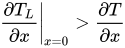
Constitutional supercooling is observed when the liquidus temperature gradient at the interface (the position x=0) is larger than the imposed temperature gradient:
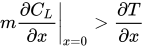
The liquidus slope from the binary phase diagram is given by , so the constitutional supercooling criterion for a binary alloy can be written in terms of the concentration gradient at the interface:

The concentration gradient ahead of a planar interface is given by
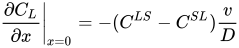
where is the interface velocity, the diffusion coefficient, and and are the compositions of the liquid and solid at the interface, respectively (i.e., ).

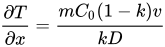
For the steady-state growth of a planar interface, the composition of the solid is equal to the nominal alloy composition, , and the partition coefficient, , can be assumed constant. Therefore, the minimum thermal gradient necessary to create a stable solid front is given by

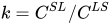
For more information, see Chapter 3 of[13]

In animals

[edit]

In order to survive extreme low temperatures in certain environments, some animals use the phenomenon of supercooling that allow them to remain unfrozen and avoid cell damage and death. There are many techniques that aid in maintaining a liquid state, such as the production of antifreeze proteins, or AFPs, which bind to ice crystals to prevent water molecules from binding and spreading the growth of ice.[14] The winter flounder is one such fish that utilizes these proteins to survive in its frigid environment. The liver secretes noncolligative proteins into the bloodstream.[15] Other animals use colligative antifreezes, which increases the concentration of solutes in their bodily fluids, thus lowering their freezing point. Fish that rely on supercooling for survival must also live well below the water surface, because if they came into contact with ice nuclei they would freeze immediately. Animals that undergo supercooling to survive must also remove ice-nucleating agents from their bodies because they act as a starting point for freezing. Supercooling is also a common feature in some insect, reptile, and other ectotherm species. The potato cyst nematode larva (Globodera rostochiensis) could survive inside their cysts in a supercooled state to temperatures as low as −38 °C (−36 °F), even with the cyst encased in ice.

As an animal gets further and further below its melting point, the chance of spontaneous freezing increases dramatically for its internal fluids, since this is a thermodynamically unstable state. The fluids eventually reach the supercooling point, which is the temperature where the supercooled solution freezes spontaneously due to being so far below its normal freezing point.[16] Animals unintentionally undergo supercooling and are only able to decrease the odds of freezing once supercooled. Even though supercooling is essential for survival, there are many risks associated with it.

In plants

[edit]

Plants can also survive extreme cold conditions brought forth during the winter months. Many plant species located in northern climates can acclimate under these cold conditions by supercooling, thus these plants survive temperatures as low as −40 °C (−40 °F).[17] Although this supercooling phenomenon is poorly understood, it has been recognized through infrared thermography. Ice nucleation occurs in certain plant organs and tissues, debatably beginning in the xylem tissue and spreading throughout the rest of the plant.[18][19] Infrared thermography allows for droplets of water to be visualized as they crystalize in extracellular spaces.[20]

Supercooling inhibits the formation of ice within the tissue by ice nucleation and allows the cells to maintain water in a liquid state and further allows the water within the cell to stay separate from extracellular ice.[20] Cellular barriers such as lignin, suberin and the cuticle inhibit ice nucleators and force water into the supercooled tissue.[21] The xylem and primary tissue of plants are very susceptible to cold temperatures because of the large proportion of water in the cell. Many boreal hardwood species in northern climates have the ability to prevent ice spreading into the shoots allowing the plant to tolerate the cold.[22] Supercooling has been identified in the evergreen shrubs Rhododendron ferrugineum and Vaccinium vitis-idaea as well as Abies, Picea and Larix species.[22] Freezing outside of the cell and within the cell wall does not affect the survival of the plant.[23] However, the extracellular ice may lead to plant dehydration.[19]

In seawater

[edit]

The presence of salt in seawater affects the freezing point. For that reason, it is possible for seawater to remain in the liquid state at temperatures below melting point. This is "pseudo-supercooling" because the phenomenon is the result of freezing point lowering caused by the presence of salt, not supercooling. This condition is most commonly observed in the oceans around Antarctica where melting of the undersides of ice shelves at high-pressure results in liquid melt-water that can be below the freezing temperature. It is supposed that the water does not immediately refreeze due to a lack of nucleation sites.[24] This provides a challenge to oceanographic instrumentation as ice crystals will readily form on the equipment, potentially affecting the data quality.[25] The presence of extremely cold seawater will ultimately affect the growth of sea ice.

Applications

[edit]

One commercial application of supercooling is in refrigeration. Freezers can cool drinks to a supercooled level[26] so that when they are opened, they form a slush. Another example is a product that can supercool the beverage in a conventional freezer.[27] The Coca-Cola Company briefly marketed special vending machines containing Sprite in the UK, and Coke in Singapore, which stored the bottles in a supercooled state so that their content would turn to slush upon opening.[28]

Supercooling was successfully applied to organ preservation at Massachusetts General Hospital/Harvard Medical School. Livers that were later transplanted into recipient animals were preserved by supercooling for up to 4 days, quadrupling the limits of what could be achieved by conventional liver preservation methods. The livers were supercooled to a temperature of −6 °C (21 °F) in a specialized solution that protected against freezing and injury from the cold temperature.[29]

Another potential application is drug delivery. In 2015, researchers crystallized membranes at a specific time. Liquid-encapsulated drugs could be delivered to the site and, with a slight environmental change, the liquid rapidly changes into a crystalline form that releases the drug.[30]

In 2016, a team at Iowa State University proposed a method for "soldering without heat" by using encapsulated droplets of supercooled liquid metal to repair heat sensitive electronic devices.[31][32] In 2019, the same team demonstrated the use of undercooled metal to print solid metallic interconnects on surfaces ranging from polar (paper and Jello) to superhydrophobic (rose petals), with all the surfaces being lower modulus than the metal.[33][34]

Eftekhari et al. proposed an empirical theory explaining that supercooling of ionic liquid crystals can build ordered channels for diffusion for energy storage applications. In this case, the electrolyte has a rigid structure comparable to a solid electrolyte, but the diffusion coefficient can be as large as in liquid electrolytes. Supercooling increases the medium viscosity, but keeps the directional channels open for diffusion.[35]

See also

[edit]

References

[edit]

Further reading

[edit]
[edit]
Revisions and contributorsEdit on WikipediaRead on Wikipedia
from Grokipedia
Supercooling, also known as undercooling, is the process by which a liquid is cooled below its equilibrium freezing point without forming a solid phase, resulting in a metastable thermodynamic state.[1] This phenomenon occurs because the liquid lacks sufficient nucleation sites—either impurities for heterogeneous nucleation or the energy barrier for homogeneous nucleation—to initiate crystallization, allowing the material to remain liquid despite being thermodynamically unstable.[2] In physics and chemistry, supercooling is extensively studied in water due to its anomalous properties, where pure samples can reach temperatures as low as -38°C before homogeneous nucleation spontaneously triggers freezing.[2] Below 0°C, supercooled water exhibits behaviors such as decreasing density upon cooling, a fragile-to-strong transition in glass-forming dynamics around -45°C, and potential polyamorphism involving distinct high- and low-density liquid phases separated by a hypothesized liquid-liquid critical point.[2] These characteristics, influenced by hydrogen bonding and structural fluctuations, make supercooled water a key system for understanding phase transitions, viscosity anomalies, and the glass transition in condensed matter physics.[2] Supercooling finds practical applications across industries and natural processes, enabling preservation and energy management without the damaging effects of ice formation. In food and biomedical fields, it maintains the quality of perishable items like fruits, meats, and organs by storing them at temperatures between -3°C and -20°C, preventing cellular damage from ice crystals and extending shelf life—such as garlic held at -6°C to -9°C or rat livers at -6°C.[1] Recent advancements include supercooling red blood cells in blood bags to -8°C for up to 63 days, minimizing hemolysis and metabolic degradation through controlled cooling and barriers like paraffin oil.[3] In nature and atmospheric science, supercooled water droplets below 0°C form in clouds and contribute to hazardous weather events like freezing rain, where they solidify on impact with surfaces, as well as aircraft icing from supercooled large droplets.[4] Emerging industrial uses involve phase-change materials, such as supercooled erythritol for seasonal thermal energy storage, leveraging latent heat release upon controlled nucleation to support renewable energy systems.[5]

Basic Principles

Definition and Process

Supercooling refers to the process of cooling a liquid below its equilibrium freezing point without undergoing a phase transition to a solid, resulting in a metastable supercooled state where the liquid remains fluid despite being thermodynamically unstable.[6] This phenomenon occurs because the liquid lacks sufficient nucleation sites or energy barriers to initiate crystallization, allowing it to persist in a non-equilibrium condition until disturbed.[7] For solids, an analogous process involves heating above the melting point without liquefaction, though supercooling is most commonly discussed in the context of liquids.[8] The process begins with the controlled cooling of a pure liquid, such as distilled water, in a container that minimizes contact with surfaces or impurities that could act as nucleation sites.[9] As the temperature drops below the freezing point, the liquid stays intact due to the absence of heterogeneous catalysts for ice formation; this can be achieved by using clean, smooth vessels and high-purity samples to reduce potential triggers.[10] The supercooled state ends abruptly when a perturbation—such as agitation, seeding with a crystal, or even slight vibration—induces nucleation, leading to rapid freezing throughout the volume and the release of latent heat, which temporarily raises the temperature back toward the equilibrium freezing point.[11] Supercooling was first systematically observed in 1724 by Daniel Gabriel Fahrenheit during experiments on the freezing behavior of water while developing his temperature scale, noting that purified water could remain liquid well below 0°C until mechanically disturbed.[12] A classic laboratory example involves supercooling pure water to approximately -38°C, the approximate limit for homogeneous nucleation in the absence of impurities, after which even minor disturbances cause instantaneous ice formation, often with visible effects like the liquid flashing into a slushy solid.[2] Upon nucleation in this process, the sudden release of latent heat underscores the energetic instability of the supercooled state, driving the phase change to completion.[13]

Thermodynamic and Kinetic Factors

Supercooling occurs in a metastable thermodynamic state where the liquid phase persists below its equilibrium freezing temperature, possessing a higher Gibbs free energy than the crystalline solid due to the driving force for phase transformation, ΔG=ΔHTΔS\Delta G = \Delta H - T\Delta S, where ΔH\Delta H is the enthalpy of fusion, TT is temperature, and ΔS\Delta S is the entropy change, yet the transition is delayed by kinetic constraints.[14] In this regime, the supercooled liquid is separated from the stable solid by a free energy barrier, allowing temporary stability despite the thermodynamic favorability of crystallization.[15] The primary kinetic barrier to crystallization arises from the energy required to form a solid nucleus within the liquid, as described by classical nucleation theory (CNT), which models the free energy change for cluster formation as ΔG=43πr3ΔGv+4πr2γ\Delta G = \frac{4}{3}\pi r^3 \Delta G_v + 4\pi r^2 \gamma, balancing the volume free energy gain ΔGv\Delta G_v (negative in supercooling) against the positive interfacial energy cost γ\gamma.[16] A critical embryo radius r=2γΔGvr^* = \frac{2\gamma}{|\Delta G_v|} defines the threshold beyond which clusters grow spontaneously, as smaller ones dissolve due to the dominance of surface energy.[17] This barrier height ΔG=16πγ33(ΔGv)2\Delta G^* = \frac{16\pi \gamma^3}{3 (\Delta G_v)^2} exponentially suppresses nucleation rates at modest undercoolings, enabling deep supercooling in pure systems.[16] The degree of achievable supercooling depends on factors that modulate nucleation probability, including liquid purity, which minimizes heterogeneous nucleation sites; slower cooling rates, which allow more time for barrier surmounting; and container material, whose surface properties can either promote or inhibit embryo formation.[18] In metals, maximum undercoolings typically approach ~0.2 TmT_m (where TmT_m is the melting point in Kelvin) under containerless conditions, representing the limit before homogeneous nucleation dominates.[19] Impurities and surfaces lower the nucleation barrier by providing heterogeneous sites that reduce the effective interfacial energy, such as through partial wetting of the substrate by the solid phase, thereby decreasing γ\gamma and enabling nucleation at smaller undercoolings compared to the homogeneous ideal.[20] For instance, adsorbed impurities can stabilize crystal facets on container walls, facilitating embryo attachment and growth while altering local melt composition to further favor the solid phase.[21]

Types and Mechanisms

Homogeneous and Heterogeneous Supercooling

Supercooling in liquids can proceed through homogeneous nucleation, where ice formation initiates spontaneously within the bulk of a pure liquid devoid of impurities or heterogeneous substrates. This process demands substantial undercooling to overcome the high energy barrier for forming a critical nucleus, as the absence of catalytic sites makes it statistically improbable at modest supercooling levels. For pure water, homogeneous nucleation typically occurs around -38°C to -40°C, marking the limit where the thermal energy suffices to assemble a viable ice embryo without external aid.[22][23] The probability of such nucleation events follows classical nucleation theory, expressed through the Boltzmann factor exp(ΔG/kT)\exp(-\Delta G^*/kT), where ΔG\Delta G^* represents the free energy of activation for the critical nucleus, kk is the Boltzmann constant, and TT is the temperature; this exponential term underscores how rapidly the nucleation rate escalates with increasing supercooling.[24] In contrast, heterogeneous supercooling involves nucleation catalyzed by impurities, such as dust particles, container walls, or other surfaces within the liquid, which significantly lower the energy barrier compared to the homogeneous case. These substrates provide a template that reduces the interfacial energy required for nucleus formation, allowing freezing at higher temperatures and shallower supercooling depths. The effectiveness of a heterogeneous nucleant is quantified by the contact angle θ\theta between the nucleus, liquid, and substrate, governed by Young's equation: cosθ=(σsgσsl)/σlg\cos \theta = (\sigma_{sg} - \sigma_{sl}) / \sigma_{lg}, where σsg\sigma_{sg}, σsl\sigma_{sl}, and σlg\sigma_{lg} are the solid-gas, solid-liquid, and liquid-gas interfacial tensions, respectively; smaller θ\theta values indicate better wetting and thus more efficient nucleation sites.[25][16] This mechanism predominates in most practical scenarios, as even trace impurities suffice to trigger freezing well above the homogeneous limit. Homogeneous supercooling is rarer and achieves deeper undercooling due to its higher activation barrier, whereas heterogeneous processes enable nucleation at milder conditions and are far more common in uncontrollably impure systems. To isolate homogeneous nucleation experimentally and suppress heterogeneous effects, researchers employ techniques like emulsifying liquids into small droplets (e.g., water-in-oil emulsions), which statistically minimize the presence of nucleants within each droplet, allowing observation of bulk-like freezing behavior.[26] The supercooling depth, defined as ΔT=TfTn\Delta T = T_f - T_n where TfT_f is the equilibrium freezing point and TnT_n is the observed nucleation temperature, provides a key metric for distinguishing these modes, with homogeneous cases yielding larger ΔT\Delta T. Differential scanning calorimetry (DSC) serves as a primary measurement tool, detecting the exothermic heat release upon nucleation as a sharp peak in the heat flow versus temperature trace, enabling precise quantification of ΔT\Delta T and nucleation temperatures under controlled cooling rates.[27]

Constitutional Supercooling

Constitutional supercooling refers to a type of instability that arises during the solidification of binary alloys when the partition coefficient k<1k < 1, resulting in the liquid immediately ahead of the advancing solidification front becoming supercooled relative to its local equilibrium freezing temperature due to the accumulation of rejected solute atoms. This phenomenon is distinct from thermal supercooling and stems from the constitutional effects of composition changes on the phase diagram. It primarily occurs in materials processing contexts, such as alloy casting, where solute redistribution alters the local liquidus temperature.[28][29] The mechanism begins with the rejection of solute into the liquid phase during solidification, as the solid incorporates solute at a lower concentration than the liquid (k=Cs/Cl<1k = C_s / C_l < 1). This creates a solute-enriched boundary layer ahead of the interface, where the increased concentration depresses the liquidus temperature according to the phase diagram slope. If the imposed temperature gradient in the liquid GG is insufficient to counteract this adverse solutal gradient, a region of constitutional undercooling forms, rendering the planar interface unstable. The onset of this instability is governed by the criterion derived from linear stability analysis, where instability occurs when G<mC0(1k)VkDG < -\frac{m C_0 (1-k) V}{k D}; here, mm is the liquidus slope (typically m<0m < 0), C0C_0 the initial alloy composition, DD the solute diffusion coefficient in the liquid, and VV the interface growth velocity. This simple criterion represents the long-wavelength limit of the more comprehensive Mullins-Sekerka instability theory, which incorporates surface tension effects and predicts morphological perturbations across a range of wavelengths.[28] The implications of constitutional supercooling are profound for microstructure formation, as it drives the transition from a stable planar front to cellular and eventually dendritic growth morphologies, which can lead to macrosegregation and defects in cast alloys. For example, in aluminum-copper alloys, this instability promotes branching dendrites that trap solute-rich liquid, affecting mechanical properties. To mitigate it and maintain a stable interface, the constitutional supercooling parameter Λ=GkDmC0V(1k)\Lambda = \frac{G k D}{-m C_0 V (1-k)} must exceed unity, often achieved by increasing GG through controlled cooling or reducing VV. Alternatively, rapid solidification techniques, such as melt spinning, can suppress the instability by limiting solute diffusion time. The term "constitutional supercooling" was first coined and quantitatively analyzed by Tiller, Jackson, Rutter, and Chalmers in their seminal 1953 paper, which laid the foundation for understanding solute-driven instabilities in metallurgy and remains central to processes like welding and single-crystal growth.[28][29][28]

Natural Occurrences

In Animals

Many animals employ supercooling as a key component of freeze avoidance, a survival strategy that prevents ice formation in body fluids during subzero exposure by maintaining a supercooled liquid state below the equilibrium freezing point. The supercooling point (SCP), defined as the temperature at which spontaneous ice nucleation occurs within the body, represents the lower limit of this metastable state and is critical for determining cold hardiness. In freeze-avoiding species, physiological adaptations depress the SCP to enable survival at temperatures well below 0°C without freezing, distinguishing this from freeze-tolerant strategies where controlled ice formation is permitted.[30][31] Mechanisms enhancing supercooling include the accumulation of cryoprotectants such as polyhydric alcohols (polyols) and sugars, which lower the freezing point through colligative effects and stabilize cellular structures. For instance, in wood frogs (Rana sylvatica), glucose levels can surge to approximately 300 mM in response to cooling cues, derived from hepatic glycogen breakdown, allowing brief supercooling before potential freezing; their SCP typically ranges from -2°C to -3°C on dry substrates. Insects often rely on glycerol, accumulating concentrations up to 300-400 mM (15-25% of fresh body weight), alongside sorbitol or trehalose, to achieve deeper supercooling. Additionally, the removal or inhibition of ice nucleators—such as gut bacteria or endogenous particles—is essential; many insects purge their digestive tracts during diapause to eliminate bacterial nucleators, while antifreeze proteins (AFPs) or ice-binding proteins adsorb to nascent ice crystals, inhibiting growth and recrystallization to sustain the supercooled state. Seasonal acclimation further refines these processes, with dehydration reducing body water content and cryoprotectant synthesis triggered by shortening day lengths or initial cold exposure, lowering SCP progressively from autumn to winter.[30][32][31][33] Representative examples illustrate the extent of these adaptations in extreme environments. Larvae of the goldenrod gall fly (Eurosta solidaginis), a freeze-avoiding insect, supercool to SCPs of -40°C or lower through glycerol accumulation and nucleator removal, enabling overwintering in exposed galls across temperate regions. Arctic insects, such as certain beetle larvae, exhibit even more pronounced supercooling, with SCPs reaching -50°C via similar polyol-based mechanisms and integumental barriers that minimize water loss. These evolutionary adaptations in polar and subpolar species enhance survival by exploiting environmental microhabitats, such as leaf litter or soil, to avoid direct ice contact.[34][35][31] Despite these defenses, supercooling carries inherent risks, primarily inoculative freezing, where external ice penetrates the body and seeds rapid internal crystallization, bypassing the SCP. This is particularly hazardous for animals with permeable integuments, like amphibians, which select dry hibernacula to reduce exposure; insects mitigate it through waxy cuticles and behavioral site selection. If nucleation occurs internally near the SCP, the sudden release of latent heat can raise tissue temperatures briefly, but uncontrolled ice propagation often leads to cellular damage and mortality, underscoring the strategy's reliance on barrier integrity.[30][31][34]

In Plants

In plants, supercooling enables tissues to remain liquid below the freezing point of water, conferring frost resistance particularly in immobile structures like woody stems and buds, where avoiding ice formation prevents lethal cellular damage from expansion. This adaptation is prevalent in temperate species, allowing survival during subzero temperatures without the systemic mobility seen in animals. Deep supercooling occurs in xylem parenchyma cells and vessels, where water can reach temperatures as low as -40°C before nucleating, minimizing ice propagation and structural disruption in vascular tissues.[36][37] A classic example is found in peach (Prunus persica) flower buds, where primordia supercool below -20°C, protected by physical barriers such as a thick cuticle, epidermis, and a basal dry region that withdraws water to inhibit nucleation sites. This deep supercooling persists seasonally from bud formation through dormancy, ensuring reproductive tissues endure winter frosts without intracellular ice formation. Plants exhibit two primary strategies to evade intracellular freezing: deep supercooling, where cellular water remains unfrozen, and extracellular freezing, where ice nucleates outside cells, dehydrating the protoplast but avoiding direct ice invasion.[38] In supercooling-adapted tissues, cell walls act as barriers by reducing porosity and limiting water movement, preventing extracellular ice from seeding intracellular nucleation; this is evident in xylem parenchyma, where structural modifications maintain supercooled states.[39] Conversely, extracellular freezing-tolerant plants, such as certain herbaceous species, rely on nucleators in apoplasts to initiate controlled ice formation externally, with cell walls containing pectic polymers that enhance dehydration tolerance without compromising viability.00080-0) The absence of heterogeneous nucleators within cells further stabilizes the supercooled phase in both strategies.[40] Biochemical adaptations bolster supercooling by stabilizing supercooled water and protecting membranes during cold acclimation. Low-molecular-weight sugars, such as raffinose, accumulate in response to low temperatures, acting as cryoprotectants that lower the freezing point and prevent protein denaturation in supercooled states; in grapevines (Vitis vinifera), raffinose synthase genes like VviRafS5 are upregulated by abscisic acid during acclimation to enhance this stabilization.[41] Dehydrins, hydrophilic proteins induced by cold stress, bind to cellular membranes and sequester ions, promoting vitrification of the cytoplasm to sustain supercooling without phase separation.[42] In model species like Arabidopsis thaliana, genetic regulation of dehydrins via transcription factors such as CBF/DREB1 pathways during cold acclimation supports intracellular supercooling, with ectopic expression improving freezing survival by maintaining membrane integrity at low temperatures.[43] Ecologically, supercooling varies among temperate trees, enabling adaptation to regional climates; black walnut (Juglans nigra) demonstrates deep supercooling with supercooling points (SCPs) near -40°C in stems, allowing overwintering in frost-prone habitats.[44] However, climate change poses risks by shortening cold acclimation periods through warmer autumns, potentially reducing supercooling capacity and frost resistance, as seen in projections for temperate fruit trees where decreased winter chill limits biochemical adjustments like sugar accumulation.[45] This could exacerbate frost damage in walnuts and similar species, altering distribution and productivity in changing environments.[46]

In Seawater

Seawater, with its typical salinity of 35 practical salinity units (psu), exhibits a freezing point of approximately -1.91°C at atmospheric pressure due to colligative properties that depress the freezing temperature relative to pure water.[47] This depression arises primarily from the dissolution of salts, which lowers the chemical potential of the solvent and can be approximated by the formula ΔTf=Kfm\Delta T_f = K_f m, where KfK_f is the cryoscopic constant (1.86°C/kg/mol for water), and mm is the molality of the solute; for seawater, empirical adjustments account for ion interactions, yielding a depression of about 0.055°C per psu.[48] In practice, seawater often supercools below this equilibrium temperature before freezing initiates, particularly in dynamic ocean conditions, reaching depths of supercooling up to several tenths of a degree Celsius in polar regions.[49] In oceanic processes, supercooling plays a key role during winter convection in high-latitude seas, where intense surface cooling by cold air masses drives heat loss and destabilizes the water column.[50] This leads to the formation of frazil ice—small, loosely aggregated crystals that nucleate throughout the supercooled water mass—often in open water areas like polynyas.[51] As frazil ice grows, it rejects brine, concentrating salts in the surrounding liquid and further depressing the local freezing point while increasing water density, which promotes convective overturning and the export of cold, saline water to deeper layers.[52] These dynamics are prominent in regions such as the Arctic marginal ice zones and Antarctic coastal polynyas, where sea ice growth is enhanced by the upward flux of supercooled water from below.[53] Several factors influence the extent of supercooling in seawater. Increasing hydrostatic pressure with depth lowers the freezing point by approximately 0.0076°C per 10 dbar (roughly 10 meters), allowing greater supercooling potential in subsurface layers before nucleation occurs.[47] Turbulence from winds, waves, or convection acts as a trigger for heterogeneous nucleation, rapidly converting supercooled water into frazil ice and limiting the degree of undercooling to typically 0.01–0.1°C in observed cases.[54] The environmental impacts of supercooling in seawater extend to polar ocean circulation, where brine rejection during frazil ice formation generates dense water masses that drive thermohaline circulation, such as the production of Antarctic Bottom Water.[52] Observations from Arctic expeditions, including moorings in the Laptev Sea polynya, have documented supercooling plumes extending to depths of 30–40 meters, with temperatures as low as -0.24°C relative to the in-situ freezing point, highlighting the role of these processes in regional ice production and water mass modification.[49]

Applications

Cryopreservation and Biology

Supercooling plays a pivotal role in cryopreservation techniques for biological materials, particularly through vitrification, where rapid cooling prevents ice crystal formation and solidifies cellular contents into a stable, glass-like amorphous state. This process relies on supercooling the solution below its freezing point without nucleation, achieved by ultra-fast cooling rates often exceeding 100°C per second using cryoprotectants like dimethyl sulfoxide (DMSO) combined with ethylene glycol (EG) and sucrose.[55][56] In assisted reproductive technologies, vitrification via supercooling has become the standard for freezing human embryos and oocytes, yielding survival rates over 90% and comparable pregnancy outcomes to fresh transfers, as DMSO facilitates dehydration and stabilizes the supercooled state during plunging into liquid nitrogen.[57][58] In organ banking, supercooling extends preservation times by maintaining tissues at subzero temperatures, such as -6°C, without ice formation, allowing livers to remain viable for over 24 hours—tripling the duration compared to traditional 4°C static cold storage. This approach minimizes metabolic slowdown and oxidative damage while avoiding the cellular disruption caused by freezing.[59][60] Similarly, supercooling supports long-term storage of sperm and eggs in assisted reproduction, with vitrified oocytes achieving fertilization rates akin to non-frozen counterparts through controlled supercooling protocols that prevent heterogeneous nucleation.[55][61] A primary challenge in these methods is devitrification, the recrystallization of ice during rewarming that can lead to intracellular ice formation and cell lysis, particularly in larger tissues where uneven heating exacerbates the issue. Recent advances in the 2020s address this through magnetic nanoparticle heating for controlled rewarming, where superparamagnetic iron oxide nanoparticles infused into tissues generate uniform heat via alternating magnetic fields, enabling rapid and safe thawing of vitrified kidneys stored for up to 100 days with post-transplant viability. This nanowarming technique mitigates devitrification risks and has shown promise in rat heart and liver models, improving recovery rates by over 50% compared to conventional methods.[62][63][64] Biological extensions of supercooling enhance transplant outcomes by integrating it with natural freeze-avoidance mechanisms, such as using cryoprotectants to stabilize supercooled states in donor organs, thereby reducing ischemia-reperfusion injury during extended storage. Ethical considerations in human applications include concerns over embryo status and consent in reproductive cryopreservation, as well as equitable access to organ banking technologies, prompting guidelines that emphasize informed consent and regulatory oversight to balance innovation with moral implications like posthumous reproduction rights.[65][66][67]

Meteorology and Atmospheric Science

In the troposphere, supercooled liquid water droplets persist below 0°C, often reaching temperatures as low as -30°C or even -40°C in the absence of nucleation sites, forming a critical component of mixed-phase clouds where both liquid and ice coexist.[68] These droplets remain metastable due to the lack of sufficient ice nuclei, enabling clouds to maintain liquid phases despite subfreezing conditions, as observed in low-level stratiform and convective systems.[69] In pure water, homogeneous freezing limits supercooling to approximately -40°C, though heterogeneous nucleation typically intervenes earlier in atmospheric contexts.[68] The Bergeron process, also known as the Wegener–Bergeron–Findeisen mechanism, drives precipitation formation in these mixed-phase clouds by exploiting the difference in saturation vapor pressure between ice and supercooled liquid water. Ice crystals grow rapidly through vapor deposition from the surrounding supersaturated air, while nearby supercooled droplets evaporate to replenish the vapor, leading to the net transfer of mass to ice particles that eventually fall as snow or rain.[70] This process is most efficient between -10°C and -20°C, where the vapor pressure disparity is pronounced, and dominates precipitation in many mid-latitude winter storms and convective systems.[71] Cloud seeding applications leverage supercooling to enhance weather modification outcomes, particularly using silver iodide (AgI) as an ice nucleant dispersed into supercooled or mixed-phase clouds. For rain enhancement, AgI promotes ice crystal formation in orographic clouds, increasing precipitation efficiency through the Bergeron process, with statistical evidence indicating up to 10-15% boosts in targeted areas under favorable conditions.[72] In hail suppression, seeding early-stage thunderstorms diverts supercooled water into smaller ice particles, reducing hailstone sizes and damage, though results vary due to storm dynamics and remain inconclusive in randomized trials.[72] Observations of supercooled water highlight aviation hazards and remote sensing capabilities, underscoring its atmospheric significance. Supercooled large droplets (SLD), with diameters exceeding 50 microns and up to 1000 microns, pose severe icing risks to aircraft by impacting unprotected surfaces like tails or engine inlets, forming irregular ice shapes that degrade aerodynamics and have contributed to accidents, such as the 1994 ATR-72 crash.[4] Satellite-based detection, using multispectral imagers like the Himawari-8 Advanced Himawari Imager, identifies supercooled liquid-topped mixed-phase clouds in cumulonimbus via shortwave infrared reflectance ratios, revealing their prevalence in convective regimes over oceans and aiding precipitation forecasting.[73]

Materials Processing

In materials processing, supercooling plays a critical role in controlling solidification microstructures during casting and welding of alloys. By manipulating constitutional supercooling—the phenomenon where solute rejection ahead of the solidification front lowers the liquidus temperature, potentially leading to instability—engineers can promote equiaxed grain formation over columnar dendrites, resulting in finer, more uniform microstructures that enhance mechanical properties.[74] For instance, electromagnetic stirring (EMS) applies Lorentz forces to induce melt flow, which fragments dendrites and increases nucleation sites, thereby mitigating excessive constitutional supercooling and avoiding coarse dendrite formation in processes like continuous casting of steel.[75] This technique has been shown to refine grain size in aluminum alloys, improving homogeneity without introducing inclusions.[76] In additive manufacturing, particularly laser-based methods such as selective laser melting, rapid cooling rates exceeding 10^3 K/s induce significant undercooling in metallic melts, enabling the formation of amorphous structures like bulk metallic glasses (BMGs). These glasses exhibit superior strength, elasticity, and corrosion resistance compared to crystalline counterparts due to the absence of grain boundaries.[77] For example, processing Zr-based alloys via laser powder bed fusion achieves undercooling levels that suppress crystallization, yielding dense BMG components with up to 99% amorphous content and tensile strengths over 1.5 GPa.[78] The advantages of controlled supercooling in these processes include enhanced material homogeneity and mechanical strength, as demonstrated in drop-tube experiments with undercooled Al-Cu alloys. In such setups, droplets experience free-fall cooling rates up to 10^5 K/s, achieving undercoolings of 200–300 K, which refine microstructures into nanoscale twins and precipitates, boosting hardness by 50–100% relative to equilibrium solidification.[79] These outcomes underscore supercooling's role in tailoring alloy properties for high-performance applications. Recent advances in the 2020s leverage microgravity environments on the International Space Station (ISS) to achieve deeper supercooling in semiconductor materials, free from convection-induced nucleation. Experiments with SiGe alloys under microgravity have explored concentration supercooling effects, revealing diffusion-limited growth that produces defect-free crystals with improved electrical properties, such as reduced dislocation densities below 10^4 cm^-2. Similarly, levitation studies of supercooled metallic liquids on the ISS have quantified nucleation kinetics, informing ground-based processing of oxide semiconductors with enhanced glass-forming ability.[80]

References

User Avatar
No comments yet.