Hubbry Logo
Vernal poolVernal poolMain
Open search
Vernal pool
Community hub
Vernal pool
logo
8 pages, 0 posts
0 subscribers
Be the first to start a discussion here.
Vernal pool
Vernal pool
from Wikipedia

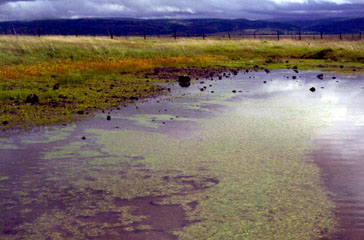
Vernal pool with clay hardpan bottom, Vina Plains Nature Conservancy Preserve, California, United States

Vernal pools, also called vernal ponds or ephemeral pools, are seasonal pools of water that provide habitat for distinctive plants and animals. They are considered to be a unique type of wetland usually devoid of fish, and thus allow the safe development of natal amphibian and insect species unable to withstand competition or predation by fish. Certain tropical fish lineages (such as killifishes) have however, adapted to this habitat specifically.

Vernal pools are a type of wetland. They can be surrounded by many communities/species, including deciduous forest, grassland, lodgepole pine forest, blue oak woodland, sagebrush steppe, succulent coastal scrub and prairie. These pools are characteristic of Mediterranean climates, but occur in many other ecosystems.

Generation and annual development

[edit]
An inundated rock vernal pool on Enchanted Rock. Note the one inhabited by cacti in the background.

During most years, a vernal pool basin will experience inundation from rain/precipitation, followed by desiccation from evapotranspiration. These conditions are commonly associated with a Mediterranean climate , such as the Central Valley of California.[1] Vernal pool basins are often characteristic of Mediterranean climates, but they also occur in many other ecosystems, such as forested areas of the Canadian Shield, where they are difficult to identify due to the dense rest canopy.[2] Most pools are dry for at least part of the year, and fill with the winter rains, spring snowmelts, and rising water tables. Some pools may remain at least partially filled with water over a year or more, but all vernal pools dry up periodically. Typically, though, a vernal pool has three phases each year: it is inundated in the winter (inundated phase) with the vernal pool holding onto the water from 10–65 days, it dries slowly during the spring (flowering phase), and it dries completely during the summer (dry phase). Vernal pools favor native species because many non-native species cannot tolerate the extreme seasonal changes in environmental conditions.

Some vernal pools have an underlying impermeable clay layer (also known as a hardpan) that reduces water percolation. The impermeable layer is hydrophobic, and it prevents water from draining into lower soil layers, allowing vernal pools to become inundated for a very long period of time. This feature of vernal pools means that the water is allowed to slowly evaporate instead of draining. This is a key factor in the development of vernal pool plant communities as it keeps the soil at the water's edge just wet enough for vernal plant communities to flourish, while those closer to the center of the pool are more inundated, leading to zonation of plant communities as the water level recedes. This clay layer also allows pools to exist long enough to prevent upland species from developing, while existing for just enough time to prevent aquatic plant species from taking over.[3]

Some authorities restrict the definition of vernal pools to exclude seasonal wetlands that have defined inlet and outlet channels. The justification is that such seasonal wetlands tend to be qualitatively different from isolated vernal pools; this is because they are fed by larger drainage basins so that firstly, inflow contributes higher concentrations of dissolved minerals. Secondly, flow patterns increase the periodic scouring and silting effect of flows through or simply into the wetland. Thirdly, longer distance inflow and outflow make for less strictly endemic populations and plants. Low dissolved mineral concentrations of smaller vernal pool basins may be characterized as oligotrophic, and poorly buffered with rapid pH shifts due to carbon dioxide uptake during photosynthesis.[4]

Vernal pools are so called because they are often, though not necessarily, at their maximum depth in the spring ("vernal" meaning of, relating to, or occurring in the spring). There are many local names for such pools, depending upon the part of the world in which they occur. Vernal pools may form in forest, but they are more typically associated with grassland and rocky plains or basins. While many vernal pools are only a few meters in width, playas and prairie potholes are usually much larger, but still are otherwise similar in many respects, with high water in wet periods, followed by dry conditions.[5] Some exclude desert playas from the definition of vernal pools because their larger closed drainage basins in areas with high evaporation rates produce higher concentrations of dissolved minerals, with salinity and alkalinity favoring different species. Playas may be inundated less frequently than vernal pools, and inundation typically coincides with colder weather unfavorable for plant growth.[6]

Ecology

[edit]

Despite being dry at times, vernal pools teem with life when filled, serving as critical breeding grounds for many amphibian and invertebrate species. The most obvious inhabitants are various species of breeding frogs and toads. Some salamanders also utilize vernal pools for reproduction, but the adults may visit the pool only briefly. Other notable inhabitants are Daphnia and fairy shrimp, the latter often used as an indicator species to decisively define a vernal pool. Other indicator species, at least in New England, are the wood frog, the spadefoot toad, and some species of mole salamanders.

While vernal pools can be devoid of fish, in some habitats such as African Savannah vernal pools, killifish may, due to the ability of their eggs to survive desiccation, co-exist with their branchiopod crustacean prey which utilize the same strategy to survive dry periods. Some killifish mature in only three to six weeks in order to make the most use of temporary pools before they disappear.[7]

Some of the species within vernal pools are endangered. Fairy shrimp are crustaceans in the family Branchinectidae. It takes about 30 hours for them to start to hatch in water and it takes 50 days for them to mature. In springtime, the eggs hatch and they can go dormant. There are different types of fairy shrimp in different vernal pools because the pools can act like islands because they are so isolated.[citation needed]

Certain plant species are also associated with vernal pools, although the particular species depend upon the ecological region. The flora of South African vernal pools, for example, are different from those of Californian vernal pools, and they have characteristic Anostraca, such as various Branchipodopsis species. In some northern areas, tadpole shrimp are more common. Some vernal pool inhabitants are becoming threatened due to habitat loss. One of these inhabitants is the California Tiger Salamander.[8]

Habitat loss

[edit]

Vernal pools harbor a distinct assemblage of flora and fauna that, in some cases, aren't found anywhere else on the planet. Despite this fact, about 90% of vernal pool ecosystems in California have been destroyed. Disturbingly, much of this destruction has occurred in recent years, with about 13% of remaining vernal pools being lost in the short interval from 1995–2005.[9] The major threats to vernal pool habitats in the Central Valley are agriculture, urbanization, changes in hydrology, climate change, and improperly managed grazing by livestock. They are sensitive to climate and land-use change.[citation needed]

Restoration

[edit]

Vernal pools are prime habitats to be targeted for restoration work due to their value as hotspots of biodiversity as well as recent history of extensive destruction and degradation. However, there have been varying rates of success attributed to various restoration efforts. Several hypotheses have attempted to explain this:

Hypothesis 1: Constructed pools are too deep.
Hypothesis 2: Edges of constructed pools narrower than natural ones.
Hypothesis 3: Constructed pools have steeper slopes than natural ones.

Results: Research suggest that the last two details (Hypothesis 2 & 3) are crucial in determining the habitat value of man-made vernal pools. In general, most constructed pools were too steep and did not have wide enough edges.

Mitigation

[edit]

There has been a fair amount of controversy surrounding the practice of mitigation, which is the destruction of protected or endangered species and habitats, such as vernal pools, on the condition that whatever entity (business, land manager, etc.) is destroying the habitat will undertake the construction of a replacement habitat to "mitigate" their impacts. This concept is difficult to apply to vernal pools, which represent a tremendous habitat value—but are difficult to successfully replicate using construction methods (as mentioned above). Thus, it has been very controversial to apply mitigation strategies to vernal pool systems due to the obvious risks inherent in trying to reconstruct this kind of habitat. Some agencies, however, are now requiring two replacements for every vernal pool that is destroyed to compensate for the lower quality of human-made habitat.

Soils

[edit]

Vernal pools can form anywhere that a depression fills with rainwater, leading to low nutrients and low levels of dissolved salts. They are underlain with an impermeable layer of claypan, hardpan, or volcanic rock allowing for water retention. In many instances they contain grasslands that form over a variety of soil types containing silts and clays often covered by a layer of interwoven fibrous roots and dead leaves. The soil types present tend to relate to the local soil types and hydrology of the pool. Finer soils such as clay, silt, and muck are more common in perched situations, whereas pools which are more connected to the water table have more coarse soils like sand or gravel. Soils in vernal pools often reflect their inundated conditions, leading to low chroma horizons, mottling, and anoxic decay.[citation needed] They can develop hydric soils which are typical of flooded areas, including accumulations of organic matter, but this may not happen in drier areas. In some cases there is a hardpan layer which causes the retention of water in the pools.[10] The hardpan clay basin accumulates water due to the small particle size and therefore reduced porosity. This permits flooding and development of vernal pools.[citation needed]

Flora

[edit]
Vernal pool flowers, with different species occurring in zones related to soil moisture and temperature gradients formed as the pool dries out. Sacramento National Wildlife Refuge, Calif.

In vernal pools, flowering occurs simultaneously because of the seasonality of favorable conditions. Vernal pool ecosystems may include both cosmopolitan species and endemic species adapted to unique environmental conditions. These conditions include moisture gradients, salinity gradients, and reduced levels of competition.[5] Microtopographical gradients also contribute to species distribution in vernal pool communities, where plants that flower sooner in the season are more likely to be found at slightly higher elevations than later flowering species. Many vernal pool plants have buried seeds which accumulate in the soil. Different species are suited to different moisture levels, and as water evaporates from the edges of a pool, distinctive zonation of species can be seen. Most pools receive annual deposition of tree leaves, which are critical to maintaining local life due to leaf detritus.

Many upland perennial plants are unable to withstand the period of flooding. Many wetland plants are unable to withstand the period of desiccation. Therefore, vernal pools are a distinctive habitat that provides a refuge from both terrestrial and fully aquatic plants. When dissolved carbon dioxide is depleted by daytime photosynthesis, vernal pool species like Howell's quillwort (Isoetes howellii) and pygmyweed (Crassula aquatica) collect carbon dioxide nocturnally using Crassulacean acid metabolism. Vernal pool basin habitats favor annual plants with some uniquely adapted perennials which suffer extensive mortality resembling annual reproduction. Annuals comprise approximately 80 percent of vernal pool flora. Listed below are some genera of the approximately one hundred vascular plant species associated with California vernal pool habitats. A typical pool will include only 15 to 25 species.[11]

Cosmopolitan aquatic flora

Vernal pool specialists

Upland plants commonly found at vernal pools in California include yellow pansies, several sweet-scented clovers, yellow and bright lavender monkeyflowers, star lilies, and yarrow.

Vernal pools are often threatened by development in the same way that other wetlands are. As a result, most pools have been converted into residential zones, roads, and industrial parks. That is why most extant pools occur on protected or private land such as national parks, and ranches.

A large number of rare, endangered species, and endemic species occur in vernal pool areas. For example, the San Diego mesa mint, a highly endangered plant, is found exclusively in vernal pools in the San Diego area.[12] Another example is the wildflower Lasthenia conjugens, which is found in limited parts of the San Francisco Bay Area. A third example is the herb Limnanthes vinculans endemic to Sonoma County, California.[citation needed]

Fauna

[edit]
Vernal pool in northern California

Many amphibians that breed only in vernal pools spend most of their lives in the uplands within hundreds of feet of the vernal pool. Eggs are laid in the vernal pool, then the juveniles leave the pool two or three months later, not to return until the following spring to breed. Therefore, the upland areas surrounding a vernal pool are critical for the survival of these species. In California and New York state, the endangered tiger salamander (Ambystoma tigrinum) is dependent on vernal pools to breed as described above. A few other obligate vernal pool species are the marbled salamander (Ambystoma opacum), Jefferson's salamander (Ambystoma jeffersonianum), the blue-spotted salamander (Ambystoma laterale) and the spotted salamander (Ambystoma maculatum).[citation needed]

Some other species, notably Anostraca, fairy shrimp, and their relatives, lay eggs capable of entering a state of cryptobiosis. They hatch when rains replenish the water of the pool, and no stage of the animals' life cycle leaves the pool, except when eggs are accidentally transported by animal phoresis, wind, or rarely, by flood. Such animal populations can be ancient when the conditions for seasonal vernal waters are stable enough. As an extreme example, Branchipodopsis relictus on the main island of the Socotra archipelago, which is exceedingly remote for what it is, a continental fragment of Gondwana, is believed to have been isolated since the Miocene. Branchipodopsis relictus is correspondingly isolated genetically as well as geographically.[13]

In California, the conservancy fairy shrimp has been classified as an endangered species under the provisions of the Endangered Species Act of 1973.

Vernal pools can serve as a temporary habitat for migrating birds, especially in California. The rich invertebrate population in these pools provides food for ducks, herons, egrets, plovers, and many other species.[14]

See also

[edit]

References

[edit]
[edit]
Revisions and contributorsEdit on WikipediaRead on Wikipedia
from Grokipedia
A vernal pool is a small, shallow, ephemeral that temporarily fills with water from or during wet seasons, typically spring and fall, before drying completely in summer due to and infiltration limitations imposed by underlying impermeable soils or . These isolated depressions, often lacking or outlet streams and permanent , distinguish themselves from or lakes by their predictable seasonal , which precludes the establishment of populations—a key ecological feature enabling predator-free breeding for specialized . Vernal pools occur across diverse temperate landscapes, including Mediterranean climates of the U.S. West Coast, glaciated terrains of the Northeast, and forested regions in states like and , where they form in topographic lows over claypans, hardpan soils, or fractured that restricts drainage. Ecologically, they serve as critical breeding and rearing habitats for amphibians such as wood frogs, spotted salamanders, and marbled salamanders, as well as invertebrates like fairy shrimp and , whose life cycles synchronize with the pools' hydroperiod to avoid and predation pressures absent in fish-bearing waters. This fishless niche fosters high local , supporting rare and endemic species adapted to the pools' fluctuating conditions, including periodic drying that selects for drought-resistant eggs and rapid development. Despite their ecological significance, vernal pools face severe threats from , primarily through , , road construction, and drainage alterations that disrupt their natural and surrounding upland buffers essential for species migration and survival. In regions like , over 90% of vernal pool habitats have been lost to development, underscoring the need for targeted conservation measures such as regulatory protections and restoration efforts to preserve these transient yet vital ecosystems.

Definition and Physical Characteristics

Hydrological and Morphological Features

Vernal pools are defined hydrologically by their ephemeral nature, filling primarily with direct during wet seasons such as winter and spring, without reliance on permanent or as primary sources. Water levels fluctuate according to the hydroregime, encompassing the temporal patterns of inundation, drying, and water-level changes driven by seasonal rainfall and . The hydroperiod—the duration of surface water presence—typically spans from several weeks to four months, varying by location; for instance, pools in Mediterranean climates may hold from November to May, while those in temperate forests dry by midsummer. Water loss occurs mainly via surface , limited drainage, and lateral subsurface flows, with minimal infiltration due to underlying barriers. Morphologically, vernal pools occupy shallow, closed depressions ranging from 0.01 to several hectares in surface area, often clustered in complexes that enhance ecological connectivity during wet periods. These basins form on relatively flat underlain by impermeable or slowly permeable soil horizons, such as claypans, hardpans, or duripans, which restrict downward and promote ponding. Soil profiles commonly feature a surface layer of or overlying a restrictive B horizon with high clay content (often >40%), creating a natural seal; in some regions, cemented silica or iron layers further impede drainage. Geomorphic origins include glacial kettles, fluvial oxbows, or tectonic depressions, with pool depths rarely exceeding 1-2 meters at peak fill. Absent permanent inlets or outlets, these features isolate pools hydrologically, fostering unique anaerobic conditions during saturation and aerobic drying phases that influence biogeochemical cycles.

Distinguishing Traits from Permanent Wetlands

Vernal pools are characterized by their ephemeral , filling primarily with direct , , or overland runoff during wet seasons—typically spring—and drying completely or nearly so by summer, without reliance on discharge or inflows. This contrasts with permanent wetlands, which maintain water year-round through consistent seepage, connections, or tidal influences, supporting stable hydroperiods that preclude the full drying cycles essential to vernal pool dynamics. The absence of permanent inlets or outlets in vernal pools further isolates them hydrologically, preventing colonization and enabling breeding without predation pressure from permanent-water predators. Morphologically, vernal pools form in shallow depressions with impermeable subsurface layers, such as claypans or fragipans, that restrict and promote temporary , typically spanning less than 1 acre and depths under 3 feet at peak fill. Permanent wetlands, by comparison, often occupy broader basins with pervious soils or outlets that sustain levels, allowing for emergent or submerged aquatic rooted in saturated but not necessarily desiccating substrates. These features render vernal pools distinct fixtures despite their seasonal visibility, as their basins persist year-round, unlike the variable permanence in other types. Ecologically, the alternating flood-drought regime of vernal pools selects for specialized biota, including drought-tolerant plants like certain sedges and fairy shrimp that complete life cycles before , while excluding organisms dependent on constant moisture, such as many or perennial macrophytes. Permanent wetlands, with their consistent hydroperiods, foster communities dominated by , year-round , and floating or submerged aquatics, leading to higher baseline productivity but reduced niche specialization for ephemeral-adapted . This isolation from permanent water bodies also minimizes and , enhancing vernal pool in amphibians and crustaceans.

Global Distribution and Formation

Geographic Prevalence and Regional Variations

Vernal pools occur primarily in Mediterranean-climate regions worldwide, where winter rainfall and summer drought create conditions for seasonal inundation followed by desiccation. These habitats are best developed in California, southwestern Australia, and central Chile, with scattered occurrences in the Mediterranean Basin of Europe and North Africa, as well as southern Africa. In subtropical extensions, analogous pools appear in parts of the U.S. Pacific Northwest and select prairie regions, though true vernal pools—defined by precipitation-filled basins inundated during plant growth periods and reliant on impermeable substrates—remain tied to climates with pronounced wet-dry seasonality. Within the , California contains the largest concentrations, spanning the Central Valley and coastal ranges, with approximately 765,000 acres of vernal pool habitat documented in 2012 across 17 ecological regions differing in and . The alone retained about 207,000 acres as of 2018, reflecting historical losses exceeding 90% in some areas due to conversion. and Washington host smaller but significant populations in southwestern lowlands, often on basalt-derived soils. In glaciated northeastern states from to , vernal pools form in thousands of kettle depressions left by retreating glaciers, numbering in the tens of thousands regionally but typically smaller and more dispersed than western counterparts. Regional variations stem from substrate, landscape position, and associated biota. California's pools cluster in vast, gently sloping complexes on clay hardpans amid grasslands, fostering alkaline-tolerant annuals and specialized crustaceans like the vernal pool fairy shrimp. Southwestern Australia's pools, concentrated in the Southwest Floristic Region's claypans and outcrop depressions, exhibit extreme in and , with hotspots threatened by salinization and clearing since European settlement. In central Chile's coastal Mediterranean zone, pools support unique assemblages of small, ephemeral herbs adapted to short hydroperiods, differing from California's longer inundation phases. Northeastern U.S. pools, often shaded by forests and underlain by glacial rather than hardpan, emphasize reproduction with shorter, more variable filling cycles, contrasting the open, herb-dominated ecosystems of arid-adjacent western pools.

Geological and Climatic Drivers

Vernal pools primarily form in shallow depressions overlying impermeable soil layers, such as siliceous hardpans or claypans, which impede vertical water drainage and promote surface ponding. These substrates often develop in Quaternary alluvial deposits derived from weathered igneous or metamorphic bedrock, as seen in California's Central Valley where 2-4 million-year-old sediments from granitic sources create low-permeability horizons at depths of 0.6-1 meter. Topographic factors, including gentle slopes and closed basins from colluvial infilling or glacial kettles, further concentrate runoff, with catchment hydrology dictating fill duration through surface inflow dominance over infiltration. In regions like the northeastern U.S., glacial legacies such as till-derived depressions or ice-mound melt features enhance pool persistence by limiting subsurface loss. Climatic regimes with pronounced wet-dry are essential, particularly Mediterranean patterns featuring winter rainfall maxima (typically 300-800 mm annually, concentrated October-April) that saturate basins while summer ( exceeding ) ensures drawdown by late spring. Hydroperiods, lasting 3-8 months, hinge on timing and intensity; for instance, interannual variability in winter storms can shorten inundation by 20-50% during drier years, amplifying sensitivity. Such conditions prevail globally in semi-arid to temperate zones, including parts of , , and the , where convergent geology amplifies climatic forcing, though northeastern North American pools also occur under continental with contributions. projections indicate increased episodic and warming could truncate hydroperiods, favoring pools in deeper basins with higher catchment ratios as refugia.

Ecological Dynamics

Annual Cycle and Productivity

Vernal pools undergo a predictable annual cycle dictated by regional climate patterns, particularly in Mediterranean and temperate zones where winter rains and snowmelt predominate. Pools typically fill with water from late autumn through winter, as exceeds , achieving peak depths of 0.3 to 1 meter by early spring; this inundation phase, or hydroperiod, lasts 3 to 6 months on average, varying by location and year. During this aquatic stage, oxygenated surface waters support from and submerged aquatic vegetation, while the absence of permanent connections to prevents colonization, enabling predator-free breeding for amphibians and crustaceans. As temperatures rise and declines in , water levels recede, transitioning to a flowering or drawdown phase where emergent annual —such as Lasthenia spp. and Navarretia spp. in pools—germinate from persistent seed banks, photosynthesize rapidly, and set seed before complete by mid-summer. The dry phase, spanning late summer to autumn, exposes the basin floor to aerobic conditions that accelerate microbial decomposition of accumulated , releasing nutrients like and for the next cycle. This pulsed structures the biota, with obligate vernal pool completing cycles within the 4-8 month wet window, while surrounding terrestrial habitats sustain adults during . The cycle's intermittency drives exceptional , with vernal pools exhibiting rates that can surpass those of permanent wetlands due to pulses from wetting-drying alternations. Decomposition during the dry phase remineralizes organics, boosting dissolved availability upon reflooding and stimulating algal blooms that form the base of a compressed ; gross primary may reach 500-1000 g C/m²/year in some systems, supporting densities up to 10,000 individuals/m². This efficiency stems from low predator pressure and high turnover, yielding that sustains migratory amphibians and birds, though declines sharply with shortened hydroperiods under conditions.

Flora Adaptations and Diversity

Vernal pool primarily consists of annual herbs adapted to the ephemeral of flooding followed by seasonal , enabling rapid colonization and reproduction within the brief window of favorable conditions. These plants typically germinate underwater or in saturated soils during winter rains, exhibit accelerated growth rates, and complete their life cycles—including flowering and set—before summer , often within 8-12 weeks. This phenological minimizes competition from species intolerant of inundation and exploits nutrient pulses from decaying during drawdown. Seed dormancy mechanisms are central to survival, with many forming long-lived seed banks that persist in desiccated soils for 10-50 years or more, germinating only when cued by specific and thresholds to avoid false starts in atypical years. Morphological adaptations include compact, low-growing habits to reduce loss and physical damage from drying winds, as well as buoyant or mucilage-coated that facilitate dispersal and initial attachment in fluctuating water levels. Some taxa, such as geophytes like Blennosperma bakeri, store carbohydrates in underground bulbs or corms to endure dry phases, while others develop —aerenchymatous tissues—for oxygen transport in anoxic flooded sediments. Floristic diversity in vernal pools is regionally pronounced, driven by edaphic factors like impermeable clay or volcanic soils that maintain hydroperiods, fostering habitat isolation and . In California's Central Valley, vernal pools support over 400 associated plant taxa, including approximately 70-80 endemic species restricted to these wetlands, such as Orcuttia pilosa and Tuctoria greenei, which thrive in longer-hydroperiod pools with alkaline conditions. Community composition varies by pool depth and duration: shallow, short-duration pools (<4 weeks inundated) favor drought-tolerant grasses like Poa secunda, while deeper pools (up to 12 weeks) host forb-dominated assemblages with higher specialist richness, often exceeding 20 species per pool. Globally, similar Mediterranean-climate analogs in and the Mediterranean Basin exhibit convergent adaptations but lower , with diversity peaking in areas of geological heterogeneity like California's . This specialization renders vernal pool vulnerable to hydrological alterations, as generalist invaders lack equivalent tolerances.

Fauna Dependencies and Specialization

Vernal pools harbor a suite of and facultative highly specialized for ephemeral aquatic conditions, with many unable to complete their cycles without these predator-scarce habitats. , such as certain branchiopod crustaceans and pool-breeding amphibians, depend on the seasonal flooding to trigger or breeding, followed by rapid development before . This dependency arises from the pools' isolation from permanent water bodies, which excludes predators and fosters high larval survival rates, though it imposes strict timelines—often weeks—for maturation and . Facultative users, including some insects and , exploit pools opportunistically but can utilize alternative sites. Invertebrates exhibit profound specializations, particularly anostracan fairy shrimp (e.g., Branchinecta lynchi) and notostracan tadpole shrimp (Lepidurus packardi), which produce diapausing capable of surviving years of . These cysts hatch within days of inundation, triggered by temperature and oxygen cues, allowing adults to emerge, feed on and detritus, and reproduce in 18–40 days depending on water temperature. Females release cysts into the sediment before pools evaporate, ensuring persistence across dry periods; this cyst bank enables multiple generations per flooding event in longer-lasting pools. Such adaptations render these species endemic to vernal pool ecosystems, with federal endangered status for several taxa due to specificity. and copepods follow similar cyst-mediated cycles, contributing to a detrital that supports higher trophic levels. Amphibians demonstrate behavioral and physiological dependencies, with obligate breeders like the spotted salamander (Ambystoma maculatum), marbled salamander (Ambystoma opacum), and wood frog (Lithobates sylvaticus) migrating en masse to pools in late winter or early spring for egg deposition. Eggs hatch into larvae that metamorphose within 4–8 weeks, exploiting the absence of fish to achieve survival rates up to 90% in some pools, far exceeding those in permanent wetlands. Adults aestivate terrestrially during dry phases, returning annually; this philopatry ties population viability to pool persistence. Eastern spadefoot toads (Scaphiopus holbrookii) burrow nearby and explode in breeding choruses post-rain, with tadpoles accelerating development via cannibalism if drying looms. These traits underscore causal reliance on hydroperiods of 2–4 months for successful recruitment, as deviations disrupt metamorphosis. Specialization extends to predator avoidance and resource partitioning, with fairy shrimp serving as primary prey for larvae, fostering co-evolutionary dynamics. In vernal pools, endemic fairy shrimp coexist with vernal pool tadpole shrimp, their overlapping but staggered cyst hatching minimizing competition. Such interdependencies amplify vulnerability to hydrological alterations, as even minor delays in filling can desynchronize life cycles. While birds (e.g., wood ducks) and mammals seasonally without full dependency, the core fauna's ties highlight vernal pools' role as irreplaceable refugia.

Ecosystem Services and Interactions

Vernal pools provide critical services by offering predator-free breeding grounds for s such as wood frogs (Lithobates sylvaticus) and spotted salamanders (Ambystoma maculatum), as well as invertebrates like fairy shrimp, which complete their life cycles in the temporary water. These pools support specialized and adapted to ephemeral conditions, fostering unique hotspots that enhance overall landscape-level vertebrate diversity and activity, including increased and shelter use by birds, large mammals (e.g., , ), and small mammals during spring. The absence of predators allows for high densities of sensitive species, contributing to trophic specialization not found in permanent wetlands. Hydrologically, vernal pools facilitate , flood control, and erosion mitigation by capturing and infiltrating seasonal runoff, thereby reducing peak flows and in surrounding uplands. They also improve through natural processes that remove pollutants and excess nutrients from . Nutrient cycling within pools involves of , which exports carbon and nutrients to adjacent forests, boosting upland productivity and linking aquatic-terrestrial . Ecological interactions in vernal pools center on dynamic food webs driven by the annual hydroperiod, where algal blooms and emergent vegetation serve as primary producers supporting herbivorous invertebrates, which in turn provide prey for amphibian larvae and visiting arthropods. services occur via specialist interacting with pool-edge , while post-breeding amphibians migrate to upland forests, creating connectivity that influences and dynamics. These pools act as ecological corridors, enhancing vertebrate movement and seasonal resource use across habitats.

Human Interactions and Land Use

Historical Utilization and Cultural Significance

Native American tribes in California, such as the , , and Plains Miwok, historically utilized vernal pool flora for food, medicine, materials, and ceremonies. Seeds of plants like Lasthenia glabrata (common goldfields) were collected and pounded into flour for subsistence, while leaves of Lepidium nitidum served as greens and their seeds as additional flour sources. Oils were extracted from Madia sativa seeds, and fibers from species such as Asclepias eriocarpa (Indian milkweed) were employed for cordage and basketry. Medicinal applications included teas from Frankenia grandifolia to treat among the , Centaurium venustum for fevers and by the and , and external applications of Grindelia robusta for sores and rashes. Fauna from vernal pools, including larvae of the (Ambystoma californiense), contributed to tribal diets, alongside species like vernal pool fairy shrimp (Branchinecta lynchi) and tadpole shrimp (Linderellia occidentalis), which held dietary or ecological value in traditional practices. Utilitarian and ceremonial roles encompassed using Eremocarpus setigerus leaves to poison fish, Mimulus guttatus flowers for wreaths, and Elymus glaucus in charms to resolve quarrels. These resources underscored reciprocal stewardship, with tribes like the conducting controlled burns to maintain pool biodiversity and offering rituals during harvesting to honor kinship ties and traditional laws. Vernal pools themselves carried sacred significance, linked to origin stories and restricted access for conservation, reflecting an integrated where ephemeral wetlands supported survival amid seasonal variability. Post-contact European utilization focused less on direct harvesting and more on landscape alteration, with Spanish explorers and later settlers converting pool landscapes to and grazing, often draining them for , though specific pre-industrial uses remained marginal due to the pools' temporary nature. Limited records indicate no widespread cultural reverence beyond indigenous contexts, as pools were viewed pragmatically as obstacles to permanent farming rather than valued ecosystems.

Contemporary Agricultural and Developmental Uses

In California's Central Valley and similar Mediterranean-climate rangelands, vernal pool landscapes support livestock grazing as a primary agricultural practice, yielding economic returns from cattle and sheep while aiding habitat management. Grazing animals preferentially forage on invasive annual grasses, reducing their dominance and promoting native vernal pool endemics such as Ranunculus alismelfolius (vernal pool buttercup) and Gratiola neglecta (bractless hedge-hyssop); hoof action further creates micro-basins that improve water retention and seedling establishment for specialized flora. A three-year experiment in a Sacramento Valley reserve, reintroducing low-to-moderate cattle grazing after 40 years of exclusion, showed rapid increases in native plant cover (from 10% to matching continuously grazed pools) and species richness, with effects on diversity lagging slightly behind cover gains. Such practices, informed by studies since the early 2000s, have been adopted on conserved lands like The Nature Conservancy's Vina Plains Preserve, where grazing sustains grassland productivity without harming pool-dependent amphibians or invertebrates. Direct tillage or cropping within vernal pools remains uncommon due to their seasonal inundation, poor drainage, and regulatory restrictions under the U.S. , which classify them as jurisdictional wetlands; instead, surrounding uplands are farmed, with pools preserved amid pastures. In sheep grazing trials on vernal pool grasslands, timed rotations suppressed non-native forbs while boosting overall , aligning agricultural output with maintenance. Urban and infrastructural development on vernal pool-bearing lands requires compensatory to offset losses, often involving the creation or enhancement of artificial pools elsewhere at ratios of 2:1 to 5:1 surface area, depending on impact severity and pool quality. These measures, mandated by agencies like the U.S. Army Corps of Engineers, aim to replicate natural and edaphic conditions, though post-mitigation pools frequently exhibit altered chemistry and reduced diversity compared to references. For example, a 2020 widening project along La Media Road in mitigated 0.814 acres of direct pool impacts and 0.150 acres of through off-site restoration, monitored for inundation duration, colonization, and breeding success over five years. banking programs, established since the 1990s in states like and , have preserved thousands of acres but face criticism for failing to fully restore ecological functions like fairy shrimp due to imprecise replication of clay hardpan s.

Economic Valuation and Trade-offs

Vernal pools provide services including habitat for endemic species, seasonal floodwater retention, and potential contributions to and improvement through nutrient cycling, though their small size and ephemeral nature limit the scale of hydrological benefits compared to permanent . Temperate , encompassing vernal pool types, yield an estimated mean annual value of $567 per based on a global of revealed and stated preference studies. Capitalized values for individual wetland acres, derived from similar assessments, range from $150,000 to $200,000, reflecting aggregated benefits like , , and support, though these figures derive from broader wetland data and may overstate vernal pool-specific contributions due to methodological reliance on willingness-to-pay surveys prone to hypothetical bias. In , where vernal pools occupy approximately 0.1% of the landscape but support endangered fairy shrimp and tadpole shrimp, critical designations under the Endangered Species Act impose economic costs primarily through project modifications, delays, and reduced land usability for and development. A framework analysis estimates that such designations for vernal pool elevate development costs by necessitating avoidance, banking, or off-site creation, with over 90% of impacts stemming from compliance measures rather than outright land withdrawals. For proposed critical habitat covering four vernal pool in , economic analyses projected total costs of $992 million over 20 years ($87.5 million annually), including foregone urban and agricultural output on affected parcels in the Central Valley, where land values exceed $10,000 per acre for prime farmland. Trade-offs arise acutely in California's Central Valley, where vernal pools overlap with high-value cropland producing over $50 billion annually in commodities like almonds and , forcing developers and farmers to balance preservation mandates against potential. Regulatory requirements often result in mitigation ratios of 3:1 to 5:1 for created pools, incurring costs of $50,000 to $200,000 per acre preserved or restored, while reducing net developable land by 10-30% on affected sites and delaying projects by 1-3 years. These burdens disproportionately affect private landowners, as public benefits from protection remain largely non-market and unquantified beyond regulatory assumptions, leading to debates over whether designation costs—estimated at $118-120 million for vernal pool fairy shrimp compliance—outweigh empirically verifiable gains, particularly given historical 90% pool losses to conversion since the 1850s. Recent cases, such as the 2025 federal injunction against the 314-acre Stonegate mixed-use project near Chico due to vernal pool impacts, illustrate ongoing tensions, halting potential housing and commercial in favor of unmonetized ecological continuity.

Threats and Anthropogenic Impacts

Habitat Fragmentation and Direct Losses

Direct losses of vernal pool habitats stem primarily from conversion to and urban development, with California's Central Valley experiencing the most severe reductions; up to 90% of historical vernal pool wetlands in the state have been modified or destroyed. , beginning in the mid-19th century, drove the bulk of early losses through plowing, drainage, and , while recent conversions persist, including 233.3 acres to orchards and 918.9 acres to other crops in monitored grasslands as of 2005. Between 2005 and 2013, natural vernal pool habitat across the Great Valley declined by 76,023 acres, predominantly from such land-use changes. Urbanization contributes to direct losses via filling, grading, and placement, accounting for 26,000 acres (19% of total losses) in the Great Valley during periods like 1997–2005. Road construction and associated development further erode pools and adjacent soils, with amphibians comprising up to 92% of in migration corridors near wetlands. Habitat fragmentation compounds direct losses by partitioning remaining pools into isolated patches, hindering dispersal and for vernal pool specialists. like fairy shrimp, with limited mobility, face heightened risks in disconnected landscapes, as fragmentation curtails colonization of suitable pools. For pond-breeding amphibians, fragmentation reduces assemblage richness and viability; connectivity loss via patches and barriers like roads decreases occurrence rates by 5–93% depending on density, while surrounding forest cover below 44–51% correlates with sharp declines in presence and diversity. Populations isolated by 90% adjacent loss have shown extirpation, underscoring fragmentation's role in amplifying threats.

Pollution and Invasive Species Effects

Pollution enters vernal pools primarily via from adjacent agricultural, urban, and road-adjacent lands, introducing contaminants that disrupt the delicate hydroperiod and biota of these ephemeral wetlands. Pesticides such as and , transported through precipitation-driven runoff, have been documented in vernal pool sediments and waters, with concentrations varying by pool fill source—higher in runoff-dependent pools than those reliant on . These compounds pose risks to endemic crustaceans like fairy shrimp, as probabilistic assessments indicate chronic exposure to organophosphate pesticides can exceed thresholds for population-level effects in listed species. Sediments from further degrade pool floors, smothering benthic habitats and altering assemblages, which in turn reduces food resources for higher trophic levels such as amphibians. Road deicing salts contribute to salinization, elevating concentrations and electrical conductivity in pools near impervious surfaces; experimental show even low salt levels (e.g., 100-500 mg/L Cl⁻) suppress zooplankton development and reduce dissolved , cascading to diminished primary productivity. amplifies these effects, with monitored vernal ponds in developed landscapes exhibiting higher , reduced oxygen, and loads compared to pristine sites, impairing larval survival. Acidic deposition from atmospheric pollutants can lower pool below tolerance levels for sensitive taxa, inducing developmental deformities or mortality in amphibians. Invasive species, especially non-native annual grasses in California's Central vernal pool complexes, encroach on surrounding grasslands and pool edges, forming dense thatch layers that perpetuate self-reinforcing cycles of invasion by suppressing native seed germination and altering retention. These plants outcompete endemic , reducing diversity entering pool soils and shifting microbial processes, which indirectly affects communities. Invasive also consumes excess , lowering regional water tables and shortening pool inundation periods, thereby favoring drought-tolerant exotics over -dependent natives and potentially desiccating pools prematurely. Roads exacerbate spread by delivering propagules and sediments via runoff, though intact pool —prolonged winter-spring flooding—often excludes aquatic invasives by preventing seedling establishment. Experimental thatch removal in invaded complexes has increased native plant cover and diversity within one to two growing seasons, indicating reversibility under targeted .

Climate Change Influences

is projected to alter vernal pool primarily through increased , shifts in timing and intensity, and rising temperatures, leading to shortened hydroperiods and reduced inundation durations. Modeling studies indicate that under (RCP) 8.5 scenarios, hydroperiods in vernal pools could decrease by 20-40% by 2100, with peak water levels dropping up to 30% and up to 50% of pools potentially drying permanently. These changes stem from more episodic rainfall and higher potential evapotranspiration (PET), which historically explains 40-70% of weekly water-level variability, with exerting 2-5 times the influence of PET but future projections favoring earlier drying. In the , similar dynamics under RCP 8.5 by the 2080s predict reduced inundation probabilities, particularly for smaller pools, exacerbating risks to breeding amphibians that require extended wet periods (e.g., 94-128 days for species like wood frogs and spotted salamanders). Vegetation communities in vernal pools face shifts toward drought-tolerant species dominance, with wetland-adapted plants declining by 15-25% under projected warming. Phenological responses, such as flowering onset in endemic species like Limnanthes douglasii subsp. rosea (meadowfoam) and Trifolium variegatum (whitetip clover), advance with warmer, drier early winter conditions—correlations show growing degree hours negatively linked to onset (r = -0.19 to -0.24)—potentially by a month or more, risking mismatches with pollinators and herbivores. Larger, deeper pools may serve as hydrologic refugia, maintaining ≥60% inundation probability into July under dry scenarios, but only 16-37% of studied pools meet resilience criteria based on size, soil, and landscape factors. Faunal dependencies, particularly reproduction, are vulnerable to these hydrological disruptions, as earlier drying curtails larval development and increases isolation of remnant populations. Empirical models from northeastern pools highlight that climate-driven extremes could reduce suitable breeding windows, compounding effects. While some pools exhibit resilience through influences or topographic positioning, widespread losses threaten endemic , underscoring the need for targeted conservation of refugia.

Conservation Strategies and Debates

Regulatory Frameworks and Protections

In the , vernal pools receive regulatory protections primarily through federal and state wetland laws, though the scope has narrowed following the 2023 decision in Sackett v. Environmental Protection Agency, which limited (CWA) to wetlands with a continuous surface connection to traditionally navigable waters, effectively excluding many isolated vernal pools from federal oversight. Under the CWA's Section 404, administered by the U.S. Army Corps of Engineers and the Environmental Protection Agency, only vernal pools qualifying as "waters of the " require permits for filling or , but post-Sackett, an estimated 50% of U.S. waters, including virtually all isolated vernal pools, lost federal protection, prompting states to enact or strengthen local measures. The Endangered Species Act (ESA) of provides indirect but significant safeguards for vernal pools by protecting listed species dependent on them, such as the Conservancy fairy shrimp (Branchinecta conservatio), vernal pool tadpole shrimp (Lepidurus packardi), and various fairy shrimp species, which inhabit vernal pools and trigger Section 7 consultations for federal actions or Section 9 prohibitions on take for private activities. In regions like 's Central Valley, where over 90% of historical vernal pool has been lost to and development, ESA-designated critical for these —spanning more than 100,000 acres as of 2005—restricts impacts, requiring mitigation for any incidental harm. At the state level, protections vary, with imposing stringent requirements under the (CEQA) and Fish and Game Code Sections 1600–1603, which mandate avoidance, minimization, and compensation for impacts to vernal pools as significant environmental resources supporting endemic flora and fauna. In , certified vernal pools under the Wetlands Protection Act (Massachusetts General Laws Chapter 131, Section 40) gain presumptive protection, including a 100-foot no-disturb buffer in some cases, prohibiting activities that alter their value without demonstrated alternatives. Similarly, Maine's Natural Resources Protection Act, effective since September 1, 2007, shields "significant vernal pool " from development unless permits demonstrate no practicable alternatives, focusing on pools essential for reproduction. Emerging state initiatives, such as Maryland's proposed HB 878 (Vernal Pool Wetlands Protection Act of 2025), aim to fill federal gaps by defining and regulating vernal pools as seasonal depressions critical for , though implementation remains pending as of October 2025. Local ordinances further supplement these frameworks; for instance, County's zoning includes "V" Vernal Pool Area Regulations requiring minor use permits for any activity on designated properties to preserve pool integrity. Overall, while federal rollback has decentralized authority, state and ESA-driven protections prioritize habitat preservation amid ongoing debates over balancing conservation with , with efficacy depending on enforcement and presence.

Restoration and Creation Methods

Restoration of degraded vernal pools typically involves reestablishing natural , removing , and replanting native to mimic pre-disturbance conditions. In , techniques have evolved over 25 years to include mechanized excavation for reshaping pool basins, targeted application for , and seeding with endemic annual forbs and grasses during dry periods to promote recovery. Preferred non-chemical methods prioritize hand-cutting or mowing of when soils are dry to minimize compaction, with herbicides reserved for persistent invasives like non-native grasses that outcompete natives. Projects such as the Markham Ravine restoration in demonstrate success in converting irrigated pastures back to vernal pool grasslands through hydrological reconnection and planting, supporting recovery. Creation of new vernal pools, often for compensatory mitigation under regulatory frameworks, focuses on excavating depressions in suitable clay-rich soils to replicate seasonal inundation and cycles. Construction methods include dozer grading to form shallow basins (typically 0.3-1 meter deep), liner installation in impermeable substrates if natural is absent, or controlled blasting in rocky terrains to achieve natural contours without excessive compaction. emphasizes upland depressions with minimal influence to ensure pools dry annually, preventing permanent water bodies that favor predation on amphibian larvae. Post-construction, native seed mixes are applied, and invasive control is implemented via manual removal or spot treatments to foster fairy shrimp and habitats. Success in both restoration and creation hinges on precise hydrological matching, as deviations lead to failed hydroperiods—pools that either retain water too long or dry prematurely—reducing breeding viability. Peer-reviewed analyses indicate vernal pool creation faces higher failure rates than restoration, with challenges in replicating complex soil microtopography and communities, as evidenced by studies like DeWeese (1996) showing limited faunal colonization in engineered pools. protocols, involving iterative monitoring of water depth, , and occupancy over 5-10 years, improve outcomes by refining techniques based on empirical data rather than assumptions. In mitigation banking contexts, created pools must achieve performance standards, such as 80-100% functional equivalence to reference sites, before credits are released, though long-term efficacy remains debated due to data gaps in invertebrate and succession.

Mitigation Measures and Effectiveness

Mitigation measures for vernal pool impacts primarily involve avoidance through project redesign, minimization via best management practices such as sediment controls and removal, and compensatory actions including on-site or off-site restoration, creation of new pools, and participation in banks where developers purchase credits from preserved or enhanced habitats to offset losses. In , the U.S. Army Corps of Engineers (USACE) and state agencies often require ratios of 1:1 to 5:1 for compensatory depending on impact severity and site , with emphasis on replicating hydroperiods, impermeability, and native communities. Restoration techniques include excavating basins to match natural depths (typically 0.3-1.5 meters), amending soils for low permeability, seeding with native annuals like Haloa cuspidata, and controlling non-natives through mowing or herbicides, but hinges on precise matching seasonal wetting-drying cycles. Creation efforts, common in mitigation banks, aim to build artificial depressions in suitable substrates, yet peer-reviewed assessments indicate low replication of original functions, with created pools often exhibiting altered hydroperiods due to subsurface drainage or evaporation mismatches. Effectiveness studies reveal mixed outcomes; a 2009 analysis of small California Central Valley preserves under 60 acres found 40% in poor condition from edge effects and invasives, with only 30% supporting target branchiopods like Branchinecta lynchi due to fragmentation. Reinvasion by exotic grasses post-restoration occurs rapidly without sustained management, reducing native diversity by up to 70% within five years in sites, as documented in long-term monitoring. —iteratively adjusting based on monitoring metrics like occupancy and floral cover—improves viability, but overall, compensatory fails to fully offset losses, with created pools attracting fewer endemic species than preserved naturals. Data gaps persist in USACE permits, where compliance verification is inconsistent, underscoring the need for standardized success criteria beyond acreage ratios.

Controversies Over Regulation and Property Rights

Regulations protecting vernal pools, particularly under the U.S. (CWA) and Act (ESA), have sparked disputes with property owners by restricting for agriculture and development on private lands, especially in California's Central Valley where over 90% of historic vernal pool habitat has been lost to conversion. Landowners contend that federal and state designations of critical habitat impose severe limitations, such as prohibiting tillage or filling without permits, effectively diminishing property values without compensation, raising Fifth Amendment takings claims. For instance, mitigation requirements often mandate creating three acres of new vernal pool habitat for every one acre impacted, escalating compliance costs and delaying projects. The 2023 Supreme Court decision in Sackett v. Environmental Protection Agency narrowed CWA jurisdiction over isolated wetlands like many vernal pools, excluding those lacking a "continuous surface connection" to navigable waters, which proponents of property rights hailed as reducing regulatory overreach but conservation advocates argued undermines protections for ephemeral features vital to species like the endangered fairy shrimp. In response, California state agencies have sought to bolster wetland rules independently, prompting criticism from agricultural groups that such measures prioritize ecological preservation over economic viability, with mitigation credits for vernal pool impacts costing $200,000 to $300,000 each due to habitat scarcity. Enforcement actions, such as the 2014 EPA settlement against Anchordoguy Ranch owners for unauthorized pool destruction—requiring $300,000 in penalties and $795,000 for preservation—illustrate how violations lead to substantial financial liabilities, fueling perceptions of punitive overregulation. Critics of expansive protections, including organizations like the , argue that economic analyses for critical habitat designations often undervalue impacts on landowners by excluding broader costs like project delays, which can span years and affect all stakeholders, as upheld in a 2010 Ninth Circuit ruling rejecting challenges to vernal pool boundaries. Empirical studies indicate ESA listings correlate with reduced land values in affected areas, hypothesizing conflicts with private interests, though proponents counter that such rules avert irreversible given historical conversion rates exceeding 95% in some regions. These tensions highlight causal trade-offs: while regulations have curbed further direct losses, they impose verifiable opportunity costs on owners, with debates persisting over whether incentives like voluntary conservation easements offer a less coercive alternative to top-down mandates.

Research and Future Prospects

Key Studies and Empirical Findings

Long-term from 2014 to 2023 in demonstrated that created vernal pools can support viable populations when designed with optimal , including hydroperiods of 12–35 weeks, volumes exceeding 50 m³, and depths of at least 30 cm within landscapes featuring over 60% . For wood frogs (Lithobates sylvaticus), successful created pools exhibited egg mass abundances of 51.3 ± 9.7 per pool and larval survival rates of 7.1 ± 5.8%, comparable to natural pools (91.3 ± 17.5 egg masses and 9.0 ± 2.5% survival), while poorly designed pools functioned as population sinks with near-zero survival and reduced (allelic richness AR = 6.7). Spotted salamanders (Ambystoma maculatum) showed increasing effective breeder numbers with pool age and quality, underscoring the need for genetic integration in assessing restoration success. In California's Central Valley, empirical assessments indicate that approximately 90% of historical vernal pool habitat has been lost to and development, with an additional 13% of the remaining 137,100 acres disappearing between 2005 and subsequent surveys. These pools sustain endemic , including 33 (15 listed as threatened or endangered under state law), such as specialized crustaceans, amphibians, , and annual that complete life cycles during seasonal inundation. Population modeling of the endangered vernal pool fairy shrimp (Branchinecta lynchi) in California's Central Valley, incorporating a three-stage life cycle with dormant egg banks, environmental stochasticity, and , revealed that organophosphate pesticides like and —transported via runoff, drift, or direct overspray—can reduce adult abundance by impairing and , particularly under varying inundation durations and temperatures. Egg bank dispersal among pools provided some , but chronic low-level exposures posed risks to long-term persistence. Field comparisons in northern European boreal forests found vernal pools supported higher than permanent wetlands, with elevated activity of large s (e.g., , ) across seasons and increased activity in spring, attributed to roles in , shelter, and . Small activity peaked at vernal pools in early spring but declined later, highlighting seasonal ecological complementarity. Hydrologic studies emphasize that vernal pool persistence relies on impermeable clay basins and episodic rainfall, with connectivity to surrounding landscapes influencing filling and drying regimes; deviations, such as shortened hydroperiods in altered watersheds, reduce suitability for obligate like fairy shrimp and amphibians. Continuous monitoring of natural and created pools confirmed that physiochemical parameters, including and dissolved oxygen fluctuations tied to hydroperiods, directly affect amphibian biomass, with natural complexes outperforming creations in stability unless is precisely replicated.

Monitoring Techniques and Data Gaps

Monitoring of vernal pools typically involves a combination of ground-based biological surveys and methods to assess , , and . Ground surveys often include dip-netting for and larvae density estimation, as well as auditory monitoring of breeding choruses during early spring nights. (eDNA) sampling from pool water provides a non-invasive alternative for detecting and communities, with metabarcoding identifying presence in as little as one of sampling across multiple pools. Hydrologic and parameters, such as dissolved oxygen levels, are measured using continuous sensors positioned to capture seasonal fluctuations, with protocols ensuring proper for accurate readings. Remote sensing techniques enhance large-scale detection, particularly for woodland vernal pools obscured by . High-resolution data enables stochastic depression analysis to map potential pools by identifying topographic depressions likely to hold water seasonally, outperforming traditional aerial photo interpretation in forested areas. Adaptive is employed by agencies like the USGS to survey occupancy in areas with unknown pool distributions, starting with random grid-based searches and expanding to clustered high-density zones. Assessment models such as the Hydrogeomorphic (HGM) approach and California Rapid Assessment Method (CRAM) quantify condition through field metrics of , soils, and hydrology. Volunteer programs, including those in states like and , train participants in indicator monitoring and environmental to support citizen-science contributions. Despite these methods, significant data gaps persist in vernal pool and . Comprehensive mapping remains incomplete, with many pools unmapped across landscapes, hindering risk assessments from development or impacts; for instance, regional compilations from partners reveal spatial voids in location and . Submitted datasets to cooperatives like the North Atlantic Vernal Pool Cooperative do not represent full landscape coverage, leading to underestimation of pool numbers and ecological roles. Long-term monitoring is sparse, particularly for restoration success and hydrologic responses to , with peer-reviewed noting challenges in evaluating created pools' functionality over decades. Regional knowledge voids, such as in northern New England prior to recent initiatives, underscore needs for expanded empirical studies on species persistence and connectivity. These gaps limit predictive modeling for conservation, emphasizing the requirement for standardized, multi-year protocols to track trends amid ongoing habitat pressures.

Emerging Management Approaches

Adaptive management frameworks have gained prominence in vernal pool conservation, integrating ongoing monitoring, evaluation, and adjustment of strategies based on empirical outcomes to address uncertainties in and responses. This approach, emphasized in plans such as San Diego's Vernal Pool Multiple Mitigation Program, employs rigorous on pool hydroperiods and amphibian to refine restoration techniques iteratively. For instance, standards—quantifiable benchmarks like target inundation durations and native plant cover percentages—guide adaptive adjustments, with success rates improving when tied to long-term monitoring data rather than static endpoints. Landscape-scale prioritization models represent another evolving strategy, using geospatial analysis to rank vernal pools for protection based on factors such as surrounding , road density, and connectivity to upland , thereby optimizing limited resources for amphibian metapopulations. In , municipal plans treat vernal pools as interconnected networks rather than isolated features, incorporating guidelines that buffer pools with no-harvest zones of 250-500 feet to minimize during timber operations. These models, informed by amphibian movement data, prioritize pools with low fragmentation risks, showing potential to enhance regional resilience over site-specific interventions. Integration of climate-adaptive elements into , such as modeling altered rainfall patterns to predict pool drying risks, is emerging in programs like California's vernal pool recovery efforts, where irrigated farmlands are restored to emulate pre-agricultural while incorporating drought-resistant seeding mixes. New Jersey's 2021 mitigation review advocates embedding performance assessments within adaptive loops, requiring compensatory pools to achieve 80-100% equivalence in ecological functions through metrics like diversity and hydroperiod before crediting. Challenges persist, including data gaps in long-term efficacy, but these approaches prioritize verifiable metrics over prescriptive rules to counter biases in traditional regulatory models that undervalue pool transience.

References

Add your contribution
Related Hubs
User Avatar
No comments yet.