


Community hub
Recent from talks
Contribute something
Nothing was collected or created yet.
Thessalon
View on Wikipedia
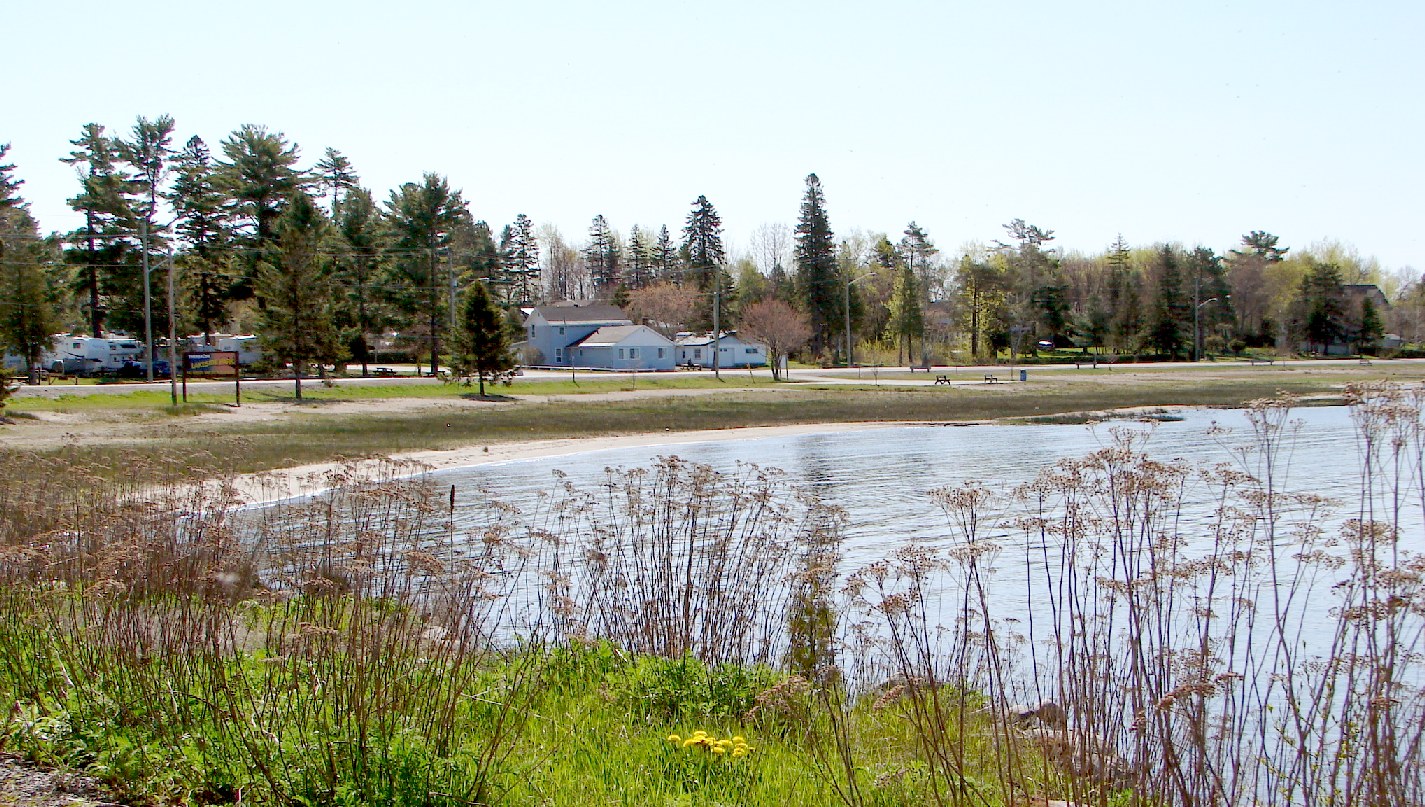
Thessalon is a town in the Canadian province of Ontario, located at the junction of Highway 17 and Highway 129 on the north shore of Lake Huron. It is surrounded by, but not part of, the municipality of Huron Shores, and is part of Algoma District. The main industries are timber and tourism. The town is a popular retirement community. It is the administrative headquarters of the Thessalon First Nation.
Key Information


History
[edit].jpg)
The region was first surveyed by Europeans in 1869 to determine if the area could support a viable lumber industry. By the winter of 1870 the beginnings of a lumber camp had taken root and in 1877 a more permanent settlement was established. Thessalon was incorporated in 1892 with Walter Barrett serving as mayor.[2] Nathaniel Dyment of Barrie, the owner of Dyment Co., one of the earliest and most prominent lumber companies in the area, is considered the founding figure of Thessalon. He named his 1903 King's Plate-winning thoroughbred horse after the town.
The exact origin of the town's name is unclear. Area historian J.E. MacDonald reported that "Thessalon" is a corruption of a name given by local First Nations, Neyashewun, meaning "a point of land". It is also theorized that the town may have been named by Jesuit missionaries who compared their travels through the region to the plight of the Thessalonians described in the Pauline epistles. The town was spelt "Tessalon" on some early maps.[3][4]
Amenities and recreation
[edit]There is an arena, a curling club and one primary school in the town. The town was also home to the Thessalon Flyers. The Voyageur Hiking Trail passes near the community.[5]
The Thessalon River flows through the town and into Lake Huron at Water Street. Fishing is excellent in the river: yellow perch, pickerel, bass, northwater salmon and muskie.
Demographics
[edit]In the 2021 Census of Population conducted by Statistics Canada, Thessalon had a population of 1,260 living in 559 of its 600 total private dwellings, a change of -2% from its 2016 population of 1,286. With a land area of 4.38 km2 (1.69 sq mi), it had a population density of 287.7/km2 (745.1/sq mi) in 2021.[6]
| 2016 | 2011 | |
|---|---|---|
| Population | 1,286 (+0.5% from 2011) | 1,279 (-2.5% from 2006) |
| Land area | 4.52 km2 (1.75 sq mi) | 4.37 km2 (1.69 sq mi) |
| Population density | 284.6/km2 (737/sq mi) | 292.4/km2 (757/sq mi) |
| Median age | 55.8 (M: 54.5, F: 56.7) | |
| Private dwellings | 624 (total) | 594 (total) |
| Median household income | $53,760 |
- Population in 2016: 1,286
- Population in 2011: 1,279
- Population in 2006: 1,312
- Population in 2001: 1,386
- Population in 1996: 1,485
- Population in 1991: 1,543
Transportation
[edit]Ontario Northland provides intercity motor coach service to Thessalon as a stop along its Sault Ste. Marie–Sudbury–North Bay–Ottawa route, with one bus a day each headed eastbound and westbound from Sunday to Friday, with no service on Saturdays.
Thessalon station was once a divisional point along the Canadian Pacific Railway's Sudbury–Soo Line. Passenger service began in the area around 1905, and a station building was constructed around 1910. With dwindling passenger traffic along the line, service was gradually discontinued, and the station was demolished sometime after 1971.[11]
Notable people
[edit]- John Fullerton, politician
- Henry Horricks, minister, pacifist, (born near Thessalon)[12]
- Jack Markle, hockey player
- Wilfred Lynn Miller, politician
References
[edit]- ^ a b c "Census Profile, 2016 Census: Thessalon, Town". Statistics Canada. 8 February 2017. Retrieved June 9, 2019.
- ^ "History". Thessalon Public Library. Archived from the original on October 27, 2010. Retrieved May 25, 2016.
- ^ "History". Town of Thessalon.
- ^ Hamilton, William (1978). The Macmillan Book of Canadian Place Names. Toronto: Macmillan. p. 174. ISBN 0-7715-9754-1.
- ^ "Thessalon Section". Voyageur Trail Association. 2016. Retrieved January 24, 2017.
- ^ "Population and dwelling counts: Canada, provinces and territories, census divisions and census subdivisions (municipalities), Ontario". Statistics Canada. February 9, 2022. Retrieved March 30, 2022.
- ^ "2016 Community Profiles". 2016 Canadian census. Statistics Canada. August 12, 2021. Retrieved 2012-02-16.
- ^ "2011 Community Profiles". 2011 Canadian census. Statistics Canada. March 21, 2019. Retrieved 2012-02-16.
- ^ Statistics Canada: 1996, 2001, 2006 census
- ^ "Thessalon census profile". 2011 Census of Population. Statistics Canada. Archived from the original on 2016-03-04. Retrieved 2012-02-16.
- ^ ""Station Landmark Dating Back to 1910 to be Razed", Sault Star Clipping, 1971". OurOntario.ca.
- ^ Josephson, Harold (1985). Biographical Dictionary of Modern Peace Leaders. Connecticut: Greenwood. pp. 426-7. ISBN 0-313-22565-6.
External links
[edit]
Places adjacent to Thessalon | ||||||||||||||||
|---|---|---|---|---|---|---|---|---|---|---|---|---|---|---|---|---|
| ||||||||||||||||


Thessalon
View on GrokipediaHistory
Ancient and classical periods
Thessalon was founded around 315 BC by Cassander, king of Macedon, on the site of the ancient settlement of Therma and several neighboring villages, strategically positioned as a major port on the Thermaic Gulf to bolster Macedonian naval power during the Wars of the Diadochi.[5] Cassander named the city after his wife, Thessalonike, half-sister of Alexander the Great and daughter of Philip II, thereby linking it to the Argead dynasty to legitimize his rule.[6] As a Hellenistic urban center, Thessalon rapidly developed into a key administrative hub and commercial harbor for the Macedonian kingdom, facilitating trade in timber, metals, and agricultural goods across the Aegean, while its grid-plan layout and fortifications reflected typical Hellenistic urban design.[7] Following the Roman victory over the Macedonian king Perseus at the Battle of Pydna in 168 BC, Thessalon—known as Thessalonica under Roman rule—was incorporated into the Roman Republic as part of the province of Macedonia, with its status elevated to the provincial capital in 146 BC after the final suppression of the Macedonian resistance.[6] This integration transformed the city into a vital node on the Via Egnatia, the major Roman road connecting the Adriatic to the East, enhancing its role as an economic and military center with a diverse population of Greeks, Romans, and Eastern traders.[8] By the 1st century AD, Thessalonica had become a free city (civitas libera) under Roman oversight, boasting a bustling agora, theaters, and baths that underscored its prosperity.[9] The city's early Christian history began around 50 AD during the Apostle Paul's second missionary journey, when he preached in the local synagogue for three Sabbaths, converting some Jews, devout Greeks, and prominent women, thereby establishing one of the earliest Christian communities in Europe shortly after the founding of the church in Philippi.[10] Paul's letters to the Thessalonians (1 and 2 Thessalonians), written circa 50-51 AD from Corinth, address this nascent congregation amid persecution from Jewish opponents and pagan authorities, highlighting themes of eschatology and ethical living in a Roman imperial context.[11] Archaeological remains from the ancient and classical periods illuminate Thessalon's development, including Hellenistic-era walls that likely followed early defensive lines around the urban core, excavated fragments of which reveal ashlar masonry typical of 3rd-century BC fortifications.[7] The Roman Forum, constructed from the late 2nd century AD over an earlier imperial structure, features a terraced agora with stoas, an odeon seating about 400, and a cryptoporticus used for shops, serving as the administrative heart until the 4th century AD.[9] The Arch of Galerius, erected between 298 and 305 AD to commemorate Emperor Galerius's victory over the Persians, survives as a triple-bay triumphal arch with marble reliefs depicting military processions, integrated into the city's later defensive system.Byzantine and medieval eras
Thessaloniki emerged as the second most important city in the Byzantine Empire after Constantinople during the 4th century, serving as a major administrative, military, and economic hub due to its strategic location on the Via Egnatia trade route and its role as the capital of the Prefecture of Illyricum.[2][12] Under Emperor Galerius, it functioned as one of the Tetrarchy's capitals, fostering early Christian development and solidifying its prominence in imperial governance.[12] This status persisted through the medieval period, with the city acting as a key defensive stronghold against invasions while contributing to Byzantine cultural and artistic output. In the 7th century, Thessaloniki withstood multiple Avar-Slavic sieges, including notable assaults in 586, 610–618, and 676–678, which threatened but ultimately failed to capture the city, preserving its Byzantine control amid widespread Slavic settlement in the surrounding Balkans.[13][12] Fortifications repaired under Emperor Justinian I (r. 527–565) played a crucial role in these defenses, enabling recovery and cultural continuity despite territorial losses in the hinterland; later, Justinian II (r. 685–695, 705–711) led expeditions against Slavic groups in the late 7th century, further stabilizing the region.[12] These events underscored Thessaloniki's military resilience, often attributed to the miraculous intervention of its patron saint, Demetrius, which bolstered local morale and religious identity.[12] The Fourth Crusade dramatically altered Thessaloniki's trajectory when crusaders sacked Constantinople in 1204, leading to the establishment of the Latin Kingdom of Thessalonica in 1205 under Boniface of Montferrat, who ruled until his death in 1207.[12] The kingdom, a Frankish state aligned with the Latin Empire, faced internal strife and external pressures, ending in 1224 when it fell to the Despotate of Epirus under Theodore Komnenos Doukas.[2] It was reconquered for the Byzantines by the Empire of Nicaea in 1246 under Emperor John III Doukas Vatatzes, restoring Greek Orthodox rule and reintegrating the city into the Nicaean successor state until the Palaiologan dynasty's restoration in Constantinople in 1261.[2][12] During the 14th century, Thessaloniki experienced significant internal turmoil with the Zealot uprising of 1342–1350, a populist revolt by lower-class factions, including sailors and artisans, against the Palaiologan aristocracy amid civil war and economic distress.[12] The Zealots established a radical regime promoting social equality, which controlled the city until suppressed by imperial forces under John V Palaiologos, highlighting tensions between oligarchic elites and the broader populace.[12] Economically, Thessaloniki thrived as a major center for silk production, leveraging its port and trade networks to export luxury textiles across the Mediterranean, which sustained its wealth despite political instability.[12] The city's Byzantine heritage is exemplified by its Paleochristian and Byzantine monuments, collectively inscribed on the UNESCO World Heritage List in 1988 for their architectural innovation and artistic mastery spanning the 4th to 15th centuries.[4] Key examples include the Rotunda, originally built as Emperor Galerius's mausoleum around 306 but converted into a church with exceptional 5th-century mosaics depicting Christian themes, and the Church of Hagios Demetrios, a 5th-century basilica rebuilt in the 7th century with intricate mosaics honoring the city's patron saint, both illustrating the evolution of Byzantine religious art and influencing later Orthodox architecture.[4][12] These structures, along with others like the Arch of Galerius, underscore Thessaloniki's role as a cradle of early Christianity and imperial legacy.[4] Thessaloniki's Byzantine era concluded with its Ottoman conquest in 1430 by Sultan Murad II, marking the end of medieval Christian rule.[2]Ottoman rule and early modern period
The Ottoman conquest of Thessaloniki occurred in 1430 following a prolonged siege lasting from 1422, led by Sultan Murad II, marking the end of Byzantine control over the city after it had briefly been under Venetian protection. The siege involved repeated assaults and blockades that strained the city's defenses, ultimately forcing its surrender on March 29, 1430, with terms allowing the Christian population to remain but under Ottoman administration. Renamed Selanik, the city became a key provincial center (sanjak) in the Ottoman Empire, integrating into the empire's administrative and military structure while retaining some of its Byzantine architectural and communal features, such as converted churches into mosques.[14][15] The arrival of Sephardic Jews fleeing the 1492 expulsion from Spain profoundly transformed Selanik into a major Jewish center, with an estimated 20,000 settling there in the initial waves, drawn by the Ottoman sultan's invitation for refuge and economic opportunities. By the early 16th century, Jews constituted the majority of the population, comprising over half of the residents by 1520, fostering a vibrant Ladino-speaking community that dominated commerce, printing, and intellectual life, earning the city the moniker "Mother of Israel" or la madre de Israel. This demographic shift created a multicultural mosaic alongside Muslim Turks and remaining Greek Orthodox Christians, with Jewish institutions like synagogues and schools shaping urban life.[16][17][18] Economically, Selanik flourished as a vital trade hub connecting the Ottoman Empire's Balkan and Aegean routes to European markets, serving as a gateway for exports like silk, cotton, and grains while importing manufactured goods from Western Europe. Guilds (esnaf) played a central role in regulating artisan production and markets, including Jewish-dominated sectors like dockworking and textile trade, which supported the city's role in the Levant Company's networks and broader Mediterranean commerce. By the 19th century, steamships and railways enhanced its connectivity, positioning it as one of the empire's wealthiest ports despite periodic disruptions from regional conflicts.[19][20][21] In the 19th century, the Greek War of Independence (1821–1832) exerted indirect influences on Selanik through clandestine networks like the Filiki Etaireía, a secret society that recruited members among the Greek Orthodox population and spread revolutionary ideas, though open revolt was suppressed by Ottoman authorities, leading to reprisals against local Christians. Demographic shifts intensified amid rising nationalism, with the Greek population growing from about 10% in the mid-19th century to 14% by 1890 (around 16,500 in a total of 118,000), paralleled by an 8% Bulgarian presence (about 9,400), fueled by rural migrations and ethnic identifications in Macedonia. These changes heightened tensions between Greek and Bulgarian communities over cultural and territorial claims, exacerbated by Ottoman reform efforts like the Tanzimat, which aimed to equalize rights but often deepened communal rivalries. The Young Turk Revolution of 1908, originating in Selanik with mutinies among the Third Army, restored the 1876 constitution and promised multi-ethnic equality, initially easing some pressures but ultimately accelerating nationalist movements by politicizing workers and minorities, including through expanded freedoms for labor organizing and press. By 1906, the population reached 114,683, with Jews at 47,017 (41%), Greeks at 33,756 (29%), and Muslims at 29,665 (26%), reflecting the city's enduring diversity amid brewing Balkan instabilities.[22][23][24][25]20th century to present
Following the Balkan Wars of 1912–1913, Thessaloniki was liberated from Ottoman control and annexed to Greece, with Greek forces entering the city on October 26, 1912, during the First Balkan War, and the annexation formalized by the Treaty of Bucharest in 1913 after the Second Balkan War.[26][27] This marked the city's integration into the modern Greek state, shifting it from a multicultural Ottoman port to a key Greek territorial and administrative center in northern Greece. However, on August 18, 1917, a devastating fire, sparked accidentally in a tobacco shop, rapidly spread through the city's densely packed lower town, destroying approximately 9,500 buildings across 1 square kilometer of the historic center and leaving around 70,000 residents—mostly from the Jewish community—homeless.[28][29] The disaster prompted a comprehensive urban reconstruction led by French architect Ernest Hébrard, whose 1918 plan introduced wide boulevards, modern zoning, and European-style architecture, fundamentally reshaping Thessaloniki's layout while prioritizing public spaces and infrastructure to accommodate growth.[30][31] The Greco-Turkish War of 1919–1922 culminated in the 1923 population exchange under the Treaty of Lausanne, which forcibly relocated about 1.2 million Greek Orthodox Christians from Turkey to Greece and approximately 500,000 Muslims from Greece to Turkey, profoundly altering Thessaloniki's demographics by replacing much of the departing Muslim population with an influx of around 100,000 Greek refugees from Asia Minor and eastern Thrace.[32][33] This demographic shift transformed the city from a cosmopolitan hub—previously home to significant Jewish, Muslim, and other non-Greek communities—into a more homogenously Greek society, with refugees settling in new neighborhoods and contributing to cultural and economic revitalization through labor and entrepreneurship, though it also strained housing and resources in the post-fire city.[34] During World War II, Thessaloniki fell under Axis occupation from April 1941 to October 1944, with German forces controlling the city and imposing harsh measures including forced labor, requisitions, and suppression of resistance activities that disrupted daily life and the economy.[35] The occupation's most tragic legacy was the Holocaust, during which Nazi authorities, under Adolf Eichmann's oversight, systematically deported over 45,000 of the city's approximately 56,000 Jews to Auschwitz-Birkenau between March and August 1943, resulting in the extermination of about 90% of Thessaloniki's Jewish population and the near-total destruction of its historic Sephardic community.[36][37] In November 2024, the Jewish Museum of Thessaloniki opened, commemorating the Holocaust and the city's Sephardic heritage.[36] Following liberation, the Greek Civil War of 1946–1949 further impacted the city, as communist guerrillas targeted northern Greece, leading to military operations around Thessaloniki, civilian displacements, economic sabotage, and infrastructure damage that exacerbated post-war shortages and delayed recovery.[38][39] In the post-war era, Thessaloniki underwent significant reconstruction aided by the Marshall Plan, with investments focusing on rebuilding war-damaged infrastructure and fostering industrialization from the 1950s onward, particularly in textiles, food processing, and metalworks, which positioned the city as Greece's second industrial hub by the 1960s–1980s.[40] This period saw rapid population growth and urban expansion, reinforced by the city's informal designation as Greece's "co-capital" due to its role as the administrative and cultural center of northern Greece, a status that enhanced its political influence and investment priorities.[41] By the late 1980s, however, deindustrialization began amid economic shifts, though the port's expansion continued to support trade and logistics as a vital economic pillar.[42] In contemporary times, Thessaloniki marked its modern cultural prominence as the European Capital of Culture in 1997, hosting over 200 events including exhibitions, festivals, and restorations that highlighted its Byzantine heritage and multicultural history, drawing international attention and boosting tourism.[43] The "Thessaloniki 2012" urban renewal program, launched amid the Greek debt crisis, aimed to regenerate public spaces, waterfront areas, and infrastructure through EU-funded projects, emphasizing sustainable development and social cohesion despite delays from economic austerity.[44] The city's long-awaited metro system opened on November 30, 2024, after 38 years of construction, featuring a 9.6-kilometer driverless line with 13 stations that uncovered significant archaeological finds and is expected to alleviate traffic congestion while integrating historical exhibits.[45][46] In 2025, Thessaloniki's economy continued its recovery, with the real estate sector showing strong growth—residential prices up approximately 10% year-on-year in Q1—and tourism maintaining robust performance with airport passenger traffic increases exceeding 8% in early 2025; supported by national GDP growth of 2.1% as projected in the EU Autumn 2025 forecast and investments in green infrastructure, though challenges like inflation persisted.[47][48]Geography
Location and physical features
Thessaloniki is situated on the Thermaic Gulf in northern Greece, at the northwestern corner of the Aegean Sea, and lies at the foot of Mount Chortiatis (also known as Hortiatis), which rises to an elevation of 1,201 meters southeast of the city center.[49][50] Its geographic coordinates are approximately 40°38′N 22°57′E.[51] The city occupies a strategic position along historical trade routes connecting Europe and Asia.[49] The urban area of Thessaloniki extends approximately 17 kilometers along the Thermaic Gulf coastline from east to west, with the central municipality covering an area of 19.31 km², while the broader metropolitan area encompasses about 1,285 km² including surrounding suburbs and municipalities.[52][53] The city is bounded on the west by the delta of the Axios River, whose basin influences the urban layout by separating the core settlement to the east, and it features the iconic White Tower as a central landmark on the waterfront.[54][55] Geologically, Thessaloniki is built on an alluvial plain formed by sediments deposited by the Axios and Aliakmon rivers, which have created a broad deltaic complex covering around 2,000 km² in the surrounding region.[56] This plain results from Holocene fluvial and marine interactions, with the rivers contributing to ongoing sedimentation and landscape evolution.[57] The area experiences seismic activity, particularly in the nearby Mygdonian Basin to the northeast, where fault systems have produced notable earthquakes, including events in 1902 and 1978.[58] The municipality maintains a coastal frontage of approximately 5 kilometers along the Thermaic Gulf, providing direct access to the sea and supporting urban development oriented toward the waterfront.[59] Thessaloniki is also in close proximity to the Chalkidiki peninsula, located about 40 kilometers southeast, which extends into the Aegean and influences regional geography through its mountainous terrain and coastal features.[49]Climate and environment
Thessaloniki features a Mediterranean climate classified as hot-summer Mediterranean under the Köppen system (Csa), marked by hot, dry summers and mild, wet winters.[60] Summers are typically warm to hot, with the average high temperature in July reaching 31.6°C, while winters remain relatively mild, with a January mean temperature of 5.4°C.[61][62] Annual precipitation averages 446 mm, concentrated primarily from October to March, contributing to a distinct seasonal pattern of aridity in summer months.[63] The city's extreme temperature records include a high of 44.0°C on July 25, 2007, and a low of -13.9°C on January 27, 1963.[64] Climate normals updated for the 1991–2020 period reflect ongoing warming trends, with projections indicating a further temperature increase of approximately 1.2°C since 1980, attributed to anthropogenic climate change.[65] This rise has intensified summer heat, with models forecasting more frequent heatwaves and reduced precipitation variability by mid-century, exacerbating drought risks in the region.[66] The urban environment faces significant challenges from air pollution, primarily driven by vehicular traffic and industrial emissions in the Thermaikos Gulf area, leading to elevated PM10 and NO2 levels that exceed EU thresholds on multiple days annually.[67] Coastal erosion along the gulf's shoreline, accelerated by sea-level rise and reduced sediment supply from upstream dams, has resulted in the loss of up to 10 meters of beachfront in some sectors over recent decades.[68] Urban heat islands amplify these issues, raising nighttime temperatures by 2–4°C in densely built areas compared to peripheral zones, particularly during summer.[69] To address these, post-2012 urban planning initiatives, including the redevelopment of the Thessaloniki waterfront into a 5-km linear green corridor with parks and tree plantings, have aimed to enhance green infrastructure and mitigate heat and pollution effects.[70] Biodiversity in the vicinity is constrained by urbanization but supported by limited coastal wetlands in the Thermaikos Gulf, which serve as critical habitats for migratory birds and marine species under EU-protected status.[71] Nearby Mount Hortiatis hosts protected forested areas, preserving endemic flora and fauna through Natura 2000 designations, including pine woodlands and diverse avian populations.[72]Demographics
Population trends
The population of Thessaloniki has experienced substantial growth and subsequent decline over the modern era. In the 1880s, the city counted approximately 55,000 inhabitants, primarily due to its status as a key Ottoman port with a diverse but limited urban core. This figure expanded dramatically following the 1912-1913 Balkan Wars and the 1923 Greco-Turkish population exchange, when an influx of over 100,000 Greek refugees from Asia Minor and Eastern Thrace more than doubled the population to around 225,000 by the late 1920s, transforming the city's demographic and cultural landscape.[73] The trend of rapid urbanization continued post-World War II, reaching approximately 217,000 in the municipality by 1951, driven by internal migration and economic opportunities in industry and trade.[74] The 2021 census conducted by the Hellenic Statistical Authority (ELSTAT) recorded 319,045 residents in the central municipality and 1,006,112 in the broader metropolitan area, reflecting a stabilization after decades of expansion.[75] However, the municipal population has declined since the 1990s, dropping from over 420,000 in 1991 due to suburbanization—where residents relocated to peripheral neighborhoods for affordable housing—and economic migration spurred by Greece's debt crisis, which prompted many young people to seek opportunities abroad. As of 2023, ELSTAT estimates the municipal population at approximately 310,000 and the regional unit (encompassing the metropolitan area) at 1,089,819, indicating ongoing gradual decrease amid low birth rates and aging demographics.[76] The central municipality exhibits high population density at 16,500 inhabitants per square kilometer, underscoring its compact urban core compared to the sparser outer zones. An aging population structure is a notable trend, with 22% of residents aged 65 and over in 2021, higher than the national average and contributing to challenges in workforce sustainability.[77] As of 2023, the proportion aged 65 and over in the regional unit reached 22.9%, further highlighting aging trends.[76] Migration patterns remain influential: the 1923 refugee wave established Thessaloniki as a hub for resettled communities, while contemporary dynamics include internal migration from rural Greece to the city for employment and limited inflows from EU countries via freedom of movement, offset by outflows of skilled youth.[73] This creates a clear urban-rural divide, with the densely built central municipality contrasting the expansive metropolitan agglomeration that incorporates suburban developments and adjacent rural peripheries in Central Macedonia.[78]Ethnic and religious groups
The ethnic composition of Thessaloniki during the late Ottoman period reflected its multicultural character, with Jews comprising the largest group. According to the 1913 census, the city's population totaled around 158,000, including approximately 61,000 Jews (39%), 40,000 Greeks (25%), 46,000 Turks (29%), and smaller numbers of Bulgarians (about 6,000 or 4%) and other groups. The 1923 Greco-Turkish population exchange profoundly altered this diversity, leading to the departure of most Muslim residents, including Turks, and the influx of over 300,000 Greek Orthodox refugees from Asia Minor and Eastern Thrace into the broader region, significantly increasing the Greek majority and homogenizing the demographic profile to about 75% Greek by 1928.[32][33] The Jewish community faced near annihilation during the Holocaust; numbering around 50,000 in 1940, it was systematically deported to Auschwitz between 1943 and 1944, resulting in only about 1,200 survivors by war's end.[79] Today, the Jewish population stands at approximately 1,000, maintaining a small but vibrant presence through synagogues and cultural institutions.[80] Recent estimates for 2021 indicate an overwhelmingly Greek ethnic makeup at 92%, with immigrants—mainly from Albania and Bulgaria—accounting for 3% and Roma for 2%, reflecting ongoing but limited diversity amid national trends of low official ethnic data collection. Religiously, the population is about 85% Orthodox Christian, 1% Muslim, and 1% Jewish, aligning closely with Greece's broader composition of 81-90% Orthodox, 2% Muslim, and small other minorities.[81][82][83] The 2015 European migrant crisis has introduced further diversity, with Thessaloniki hosting increased numbers of Middle Eastern (e.g., Syrian, Afghan, Iraqi) and African asylum seekers and refugees, straining resources but also enriching the cultural fabric through community initiatives. Local integration policies, including NGO-led programs for housing, language training, and employment, aim to support these groups' incorporation into society.[84][85][86] Linguistically, Modern Greek dominates daily life and public discourse, but immigrant communities contribute to diversity with languages such as Albanian, Bulgarian, Arabic, and Farsi. Educational approaches in Thessaloniki schools incorporate minority language support through bilingual resources and intercultural programs to aid immigrant and refugee students' integration, though challenges persist in fully accommodating non-Greek speakers.[87][88]Government and administration
Municipal structure
The Municipality of Thessaloniki operates under Greece's decentralized local government framework, as established by national legislation, with the central municipality divided into five municipal districts and six municipal communities to facilitate administrative efficiency across its urban territory.[89] These districts handle localized services such as community centers and basic infrastructure maintenance, while the communities serve as operational subunits within them, ensuring coordinated governance for the city's approximately 319,000 residents.[89] The mayor and the 49-member city council are elected by direct universal suffrage every five years, in line with Greek municipal election laws. As of 2025, the mayor is Stelios Angeloudis, who assumed office on January 1, 2024, following his election in October 2023; his administration emphasizes sustainability through initiatives like urban greening, organic olive oil production from municipal trees, and promotion of eco-friendly tourism.[90][91][92] The municipality manages an annual budget of approximately €442 million for 2024, funded primarily through central government transfers, local taxes, and EU grants, with core responsibilities encompassing urban planning, waste management, public transportation coordination, and environmental protection.[93] These powers enable the municipality to implement projects like waterfront revitalization and green space expansion, while adhering to fiscal oversight from the Ministry of Interior.[94] As the administrative hub of the Central Macedonia Region, Thessaloniki functions as a de facto co-capital of Greece alongside Athens, coordinating regional policies on transport, tourism, and economic development through inter-municipal bodies and serving as the seat of regional authorities.[94][95] The 2010 Kallikratis reform, implemented in 2011, restructured Greek local administration by merging smaller entities nationwide to enhance efficiency, though the core Municipality of Thessaloniki largely retained its boundaries; it incorporated select suburban communities, expanding its area to about 19 square kilometers and integrating additional administrative resources for better metropolitan integration.[95][94]Administrative divisions and policies
The Municipality of Thessaloniki is administratively divided into six municipal communities, each managing local services and representing distinct urban zones such as the 1st Municipal Community (encompassing the city center or Kentro) and neighborhoods like Ano Poli in the upper town.[89] These communities facilitate decentralized governance within the core municipality, which covers an area of about 19 square kilometers and serves a population of approximately 319,000 residents. Beyond the central municipality, the Regional Unit of Thessaloniki comprises 14 municipalities in total, including 13 adjacent ones such as Kalamaria, Neapoli-Sykies, and Ampelokipoi-Menemeni, forming a cohesive urban agglomeration of over 1 million inhabitants that coordinates regional planning and infrastructure. Key urban renewal efforts include the 2012 redevelopment of the Thessaloniki waterfront, a major EU-funded project under the National Strategic Reference Framework (NSRF) that transformed 3.5 kilometers of the seafront into a public promenade with integrated green spaces, pedestrian paths, and recreational areas to enhance connectivity between the city and its port.[96] Complementing this, 2025 smart city initiatives, supported by the European Investment Bank (EIB) advisory services signed in July 2025, focus on optimizing traffic management through intelligent transport systems and improving energy efficiency via smart grids and renewable integrations, aiming to reduce congestion and emissions in line with the EU's 100 Climate-Neutral Cities mission.[97] Environmental policies emphasize sustainability, with the Thessaloniki 2030 Resilience Strategy outlining expansions of green spaces to bolster urban biodiversity and mitigate climate impacts, including new parks and tree plantings as seen in the waterfront's addition of over 58 acres of greenery.[98] Following the European Commission's 2020 infringement proceedings against Greece for exceeding PM10 limits in Thessaloniki under the Ambient Air Quality Directive (2008/50/EC), the municipality has introduced anti-pollution measures such as enhanced air quality monitoring networks, low-emission zones, and incentives for electric vehicle adoption to comply with EU standards and improve public health.[99] Social policies address integration and equity, particularly through refugee programs launched since 2016, such as the Filoxenio initiative, which provides temporary housing, language training, and employment support for asylum-seeking families in collaboration with UNHCR and local NGOs.[100] In suburban areas like those in Neapoli-Sykies and Kordelio-Evosmos, affordable housing policies promote social inclusion via public leasing models and subsidies, including the 2025 establishment of Greece's first municipal social housing agency to renovate vacant properties and offer rent-controlled units targeting low-income residents and migrants.[101][102] Thessaloniki maintains international relations through twin city agreements that foster cultural and economic exchanges, notably with Leipzig, Germany (twinned since 1984 and renewed in 2008), supporting joint projects in urban planning and arts.[103][104]Economy
Economic overview
The economy of Thessaloniki, Greece's second-largest metropolitan area, contributes significantly to the national output, with the metro area's gross domestic product (GDP) estimated at approximately €21 billion in nominal terms for 2023, representing about 8% of Greece's total GDP.[105] Per capita GDP in the metro area stood at around €19,000 in 2023, reflecting steady post-crisis recovery amid broader European economic trends.[105] This economic scale underscores Thessaloniki's role as a key hub in northern Greece, driven by a mix of trade, services, and emerging sectors, though it lags behind the capital Athens in per capita terms. Unemployment in Thessaloniki has shown marked improvement since the 2014 financial crisis, when rates peaked at around 30% in the metro area amid national turmoil that saw job losses exceed 25% across Greece.[106] As of 2023, the unemployment rate in Central Macedonia (including Thessaloniki) stood at 14.1%, supported by a rebound in tourism and service-oriented activities following the COVID-19 pandemic, which boosted employment in hospitality and related fields.[107] This recovery aligns with national trends, where overall unemployment fell below 10% by 2024 and further to 8.1% in August 2025, but Thessaloniki's rate remains elevated compared to the EU average due to structural challenges in industrial restructuring.[108] Historically, Thessaloniki evolved from a prominent Ottoman trade hub in the 19th century, leveraging its strategic port for commerce in textiles and agriculture, to a post-World War II industrial center focused on manufacturing, particularly textiles and food processing from the 1950s through the 1980s.[109] By the early 21st century, the economy shifted toward services, which now account for about 75% of employment in the metro area, reflecting deindustrialization and the rise of finance, retail, and professional services.[110] Looking ahead, Thessaloniki benefits from approximately €70 million in EU NextGenerationEU funds allocated to the Central Macedonia region and Thessaloniki municipality, targeting digital infrastructure upgrades and green energy transitions to enhance competitiveness and sustainability.[111] However, persistent challenges include brain drain, with skilled workers migrating to Athens for better opportunities, and socioeconomic inequality, with poverty rates in Central Macedonia exceeding the national average of 26.1% as of 2023.[112]Key industries and port activities
Thessaloniki's economy is anchored by a diverse array of industries, with the services sector playing a dominant role, particularly in banking and information technology. The city's IT sector has experienced significant growth, driven by investments in innovation hubs and attracting multinational firms, contributing to its emergence as a technology center in northern Greece.[113] Manufacturing remains vital, encompassing food processing and chemicals, which together account for a substantial portion of regional output; food processing leads as the primary manufacturing activity, leveraging local agricultural resources, while the chemical industry supports exports and industrial applications.[114][115] Tourism bolsters the economy, drawing approximately 1.5 million visitors annually to its historical sites and cultural events, with strong performance in conference and city-break segments, though international air arrivals reached nearly 2.5 million in 2024.[116][117] The Port of Thessaloniki serves as Greece's second-largest port and a critical gateway for regional trade, handling substantial volumes of cargo that facilitate exports to the Balkans and beyond. In 2024, it managed 566,000 TEUs in container throughput, marking a 9% increase from the previous year, alongside 3.2 million tons of conventional cargo, underscoring its role in diverse shipping activities.[118] The port acts as a key hub for Balkan exports, connecting northern Greece to international markets and enhancing supply chain efficiency for goods transiting through the region.[119] Agricultural linkages further strengthen the port's activities, with exports of olives and wine from Central Macedonia—where olives are a primary crop—routed through Thessaloniki to global destinations. An emerging biotech cluster in the area, focused on agro-biotechnology and food industry applications, is fostering innovation in processing and sustainable exports.[120][121] Recent developments include the 2025 expansion of Pier 6, with construction contract awarded in October 2025 to enable service to ultra-large container vessels and accommodate increased cruise traffic, with Thessaloniki designated as a homeport for major lines; this project is projected to create over 3,000 direct and indirect jobs upon completion by end-2025.[122] Trade partnerships emphasize the European Union, accounting for a significant share of port traffic, alongside the Balkans, which represent a key growth area for regional commerce. The Egnatia Odos highway amplifies these dynamics by improving connectivity, boosting commercial and tourist flows to and from the port.[123][124][125]Culture and heritage
Architectural and historical sites
Thessaloniki's architectural and historical sites reflect its layered history as a crossroads of Roman, Byzantine, Ottoman, and modern influences, with many preserved as UNESCO World Heritage properties since 1988.[4] The city's built heritage includes monumental churches, fortifications, markets, and urban ensembles that highlight its evolution from an ancient port to a cosmopolitan center. Preservation initiatives have ensured these sites remain integral to the urban fabric, blending antiquity with contemporary accessibility. Among the most prominent Byzantine landmarks are the Paleochristian and Byzantine Monuments, a UNESCO-designated ensemble comprising 15 structures from the 4th to 14th centuries. The Church of Saint Demetrius, constructed in the 5th century and rebuilt in the 7th, stands as the city's patronal basilica, renowned for its intricate mosaics depicting the saint's miracles and its role in early Christian devotion.[126] Nearby, the Rotunda, originally a 4th-century Roman mausoleum or temple likely built during Emperor Galerius's reign, was later adapted as a church with added mosaics showcasing early Christian iconography in gold and glass tesserae.[127] These sites exemplify Thessaloniki's pivotal position in Byzantine art and architecture, where Roman engineering merged with Christian symbolism. Ottoman-era contributions to the city's skyline include defensive and commercial structures that underscore its five-century tenure under the empire from 1430 onward. The White Tower, erected in the mid-15th century as a coastal fortress and lighthouse, later served as a prison until the early 20th century; its cylindrical form and battlements dominate the waterfront, symbolizing the transition from Byzantine to Ottoman rule.[55] Complementing this is the Bezesteni Market, a covered trading hall built around 1450–1500 for luxury goods like textiles and jewelry, featuring a rectangular layout with six lead-covered domes and vaulted interiors that facilitated secure commerce in the bustling bazaar district.[128] The early 20th century brought transformative modern architecture following the devastating Great Fire of 1917, which razed much of the historic center and displaced over 70,000 residents. French architect Ernest Hébrard led the 1918 reconstruction plan, introducing an eclectic style that fused neoclassical, Byzantine, and oriental motifs to create a resilient urban grid; this vision materialized prominently in Aristotelous Square, a grand axial plaza designed as the city's ceremonial heart with symmetrical arcades and sea views, though scaled back due to postwar constraints.[30] Archaeological sites anchor Thessaloniki's classical roots, with the Roman Forum—dating to the late 2nd century AD—serving as the administrative and civic core on two terraced levels, encompassing odeons, basilicas, and porticoes that reveal the city's Roman imperial layout.[9] Adjacent to this is the ancient Greek Agora, repurposed under Roman rule, which functioned as the original marketplace and public gathering space before the forum's expansion. In 2025, a major EU-supported initiative launched to interconnect 20 such sites, including the Agora and Forum, through enhanced landscaping, pedestrian pathways, and signage, aiming to boost accessibility and conservation with funding drawn from European recovery programs.[129][130] Preservation efforts intensified in the 1980s to safeguard the upper town's Ottoman heritage, particularly in Ano Poli, where a 1979 decree designated it a protected traditional settlement, followed by zoning regulations that restricted new construction to maintain the neighborhood's labyrinthine streets and timber-framed houses from the 17th–19th centuries.[131] These measures, administered by the Ministry of Culture since 1986, have prevented overdevelopment while promoting adaptive reuse, ensuring Ano Poli's 19th-century Ottoman residences—characterized by overhanging balconies and courtyards—endure as living testimonials to multicultural architecture.[132]Arts, festivals, and cuisine
Thessaloniki's contemporary arts scene thrives through key institutions that blend classical and modern expressions. The Thessaloniki Concert Hall, inaugurated on January 2, 2000, serves as a premier venue for symphonic performances, including those by the Thessaloniki City Symphony Orchestra, founded in 1987, as well as jazz, opera, and international concerts.[133][134] The State Theatre of Northern Greece, established in 1961, is the country's largest theatrical organization, operating five indoor and two outdoor stages to stage Greek and international plays, fostering cultural education through programs for schools since 2002.[135][136] Complementing these formal spaces, the Ladadika district features a dynamic street art scene, with murals adorning restored neoclassical buildings and temporary exhibitions that highlight urban creativity and social themes.[137][138] The city hosts renowned festivals that draw global attention to its cultural vibrancy. The Thessaloniki International Film Festival, founded in 1960 as the Week of Greek Cinema and expanded internationally in 1992, occurs annually in November, showcasing over 150 films from emerging and established filmmakers, with a focus on Balkan and independent cinema.[139][140] The Thessaloniki International Documentary Festival, organized by the same institution, runs in March, presenting around 100 documentaries from Greece and abroad, emphasizing human stories and social issues during its 27th edition in 2025.[141] The Heptapyrgion Festival, launched in 2019, transforms the historic Eptapyrgio fortress into a summer venue from late June to July, featuring over 200 artists in music, dance, poetry, and theater performances that celebrate local heritage.[142][143] Thessaloniki's cuisine reflects a fusion of Ottoman, Greek, Jewish, and Balkan influences, earning it designation as a UNESCO Creative City of Gastronomy in 2021 for its innovative preservation of traditional practices and diverse food production.[144] Signature dishes include bougatsa, a flaky pastry filled with custard or cheese, often enjoyed as breakfast, and tsipouro, a potent grape-based spirit typically served with meze platters.[145] Jewish culinary legacies, from the city's once-thriving Sephardic community, persist in spiced meze like fried zucchini balls (kolokithokeftedes) and eggplant salads, integrated into everyday tavern fare.[146] Nightlife pulses in areas like Valaoritou Street, a central hub lined with dozens of bars offering live music, cocktails, and diverse genres from Greek laïko to international pop, attracting a youthful crowd into the early hours.[147] Local media, including public broadcaster ERT3's television and radio channels based in Thessaloniki, actively promote regional culture through dedicated programs on arts events, festivals, and culinary traditions.[148] In recent years, Thessaloniki has advanced inclusive arts initiatives, notably by hosting EuroPride in June 2024—the first in Greece—which featured art exhibitions, performances, and discussions on LGBTQ+ themes, drawing 15,000 participants to its parade and boosting visibility for queer cultural expressions.[149][150]Education and society
Higher education institutions
The Aristotle University of Thessaloniki (AUTH), established in 1925 under Law 3341 during the premiership of Alexandros Papanastasiou, serves as the cornerstone of higher education in the city and the largest university in Greece.[151] Founded in the aftermath of the 1917 Great Fire that devastated much of Thessaloniki, AUTH played a pivotal role in reconstructing the city's intellectual and cultural fabric by attracting scholars and fostering academic growth amid post-war recovery efforts.[151] As of 2025, it enrolls approximately 92,000 students, including around 80,000 undergraduates and 12,000 postgraduates, across 10 faculties consisting of 40 schools and 1 single-School Faculty, with particular strengths in medicine, engineering, philosophy, and sciences.[152] These programs emphasize interdisciplinary research and practical applications, contributing to advancements in fields like biomedical engineering and environmental studies. AUTH stands out for its robust research output, ranking second in Greece and among the top institutions in the Balkans across multiple disciplines, with over 55,000 publications in biology alone and significant contributions in engineering and medicine.[153] The university produces thousands of peer-reviewed publications annually, supported by 289 laboratories and collaborations with international bodies, positioning it as a leader in regional academic innovation.[154] In 2025, AUTH has expanded its facilities with new initiatives in artificial intelligence, including the AIDA AICET summer symposium on AI and machine learning trends, and biotech-related labs focused on smart health and data-driven innovations.[155] Approximately 5% of its students are international, drawn from over 100 countries, enriching campus diversity and fostering global partnerships.[156] Complementing AUTH, the University of Macedonia (UoM), founded in 1957 as the Higher School of Industrial Studies and elevated to university status in 1990, specializes in economics, business administration, and social sciences across eight departments.[157] It enrolls over 12,000 undergraduates and 3,300 postgraduates, offering programs that integrate economic policy, international relations, and applied informatics to address contemporary societal challenges.[157] UoM's focus on meritocracy and personal development supports research in Balkan studies and sustainable development, enhancing Thessaloniki's role as a hub for economic scholarship. The International Hellenic University (IHU), re-established in 2019 and headquartered in Thessaloniki, comprises eight schools and 25 departments with a strong emphasis on business, economics, and management.[158] Its programs, including English-taught master's degrees in e-business, digital marketing, and executive MBA, cater to professionals seeking interdisciplinary skills in global commerce and innovation.[159] IHU's campus near Thermi promotes modern learning through facilities like IT labs and digital manufacturing centers, attracting students interested in entrepreneurship and international trade. Thessaloniki's higher education landscape, dominated by these institutions, significantly influences student life and the local economy by supporting vibrant academic communities and research-driven growth. With thousands of students engaging in cultural events, internships, and collaborative projects, the universities stimulate sectors like hospitality and technology, while international enrollment—around 5% at AUTH and growing at others—bolsters cultural exchange and economic vitality through student spending and innovation spillovers.Social services and community life
Thessaloniki's healthcare system is anchored by several major public hospitals that provide comprehensive medical services to the metropolitan area's population of over one million residents. AHEPA University Hospital, one of the largest in Greece with 680 beds, covers all medical and surgical specialties, including psychiatric care, and is renowned for its cardiology department, established in 1988 under Professor I. Styliadis, which specializes in hypertension, cardiovascular disease, and heart failure treatments.[160][161] Other key facilities include Hippokration General Hospital and G. Papanikolaou Hospital, contributing to a network that addresses diverse health needs across the region. In line with national digital health initiatives, expansions in telemedicine—supported by a 2025 budget allocation of approximately $255 million for digital upgrades in hospitals and health centers—are enhancing remote care access in Thessaloniki, building on the Greek National Telemedicine Network's rollout of new stations since 2024.[162][163] Municipal social services in Thessaloniki emphasize support for vulnerable groups, particularly the elderly and youth. The city's Elderly Day Care Center provides care, social engagement, and recreational activities to promote active aging and family respite, operating as part of broader efforts to enhance well-being for seniors. Youth programs, including those run by organizations like ActionAid, offer skill-building and idea development in safe spaces to foster personal growth and community involvement among young people. Non-governmental organizations play a vital role in welfare, with ARSIS—Association for the Social Support of Youth, founded in 1992—delivering targeted aid to refugees and unaccompanied minors through legal support, housing assistance, and integration activities, addressing the needs of migrant youth in difficulty.[164][165][166] Community life in Thessaloniki thrives through grassroots and institutional networks that strengthen social bonds. Neighborhood associations in areas like Ano Poli, the historic upper town, organize local events and preservation efforts within the First Municipal Community, which spans from the district's outskirts to the waterfront. Volunteer groups, such as InCommOn and ThessVolunteer, mobilize residents for neighborhood improvements, solidarity actions, and civil society initiatives, enhancing participation across urban zones. Religious communities contribute significantly to communal cohesion; the Orthodox tradition is upheld by active monasteries like Vlatadon, while the Jewish community maintains synagogues such as the Monastir Synagogue, restored in 2016 and serving as a cultural hub since its founding in 1927.[167][168][169][170] Quality of life in Thessaloniki is supported by accessible green spaces and cultural amenities, though socioeconomic pressures persist. The Seich Sou Forest, also known as Kedrinos Lofos, spans approximately 3,000 hectares (7,400 acres) of pine, oak, and beech woodlands on the southern slopes of Mount Chortiatis, offering recreational trails and panoramic views just 15 minutes from the city center.[171] Public libraries, including those integrated into municipal and academic networks, promote lifelong learning and health literacy, contributing to residents' educational and informational access. However, the city faces challenges from the 2024 housing crisis, marked by acute shortages and rising costs—with urban housing overburden rates reaching 31.0% as of 2024, far above the EU average of around 9%—exacerbating affordability issues for low-income households.[172][173] Inclusivity efforts in Thessaloniki have intensified since 2010, focusing on Roma and migrant populations through targeted municipal and national programs. The Migrant Integration Center, established by the municipality, delivers Greek language courses, job counseling, and social services to facilitate newcomers' incorporation into local society. For Roma communities, initiatives under the National Strategy and Action Plan for Social Inclusion—launched in 2021 but building on post-2010 local actions—include educational support and community engagement, such as university-led programs for Roma students and civil society dialogues in areas like Agia Sofia.[174][175] These measures aim to combat exclusion, with ongoing collaborations addressing housing and employment barriers amid the broader integration framework.Infrastructure and transportation
Urban transport systems
The urban transport system in Thessaloniki is primarily managed by the Organization of Urban Public Transport of Thessaloniki (OASTH), which operates approximately 70 bus routes serving the metropolitan area with a fleet of over 600 vehicles.[176][177] These buses handle significant ridership, with historical data indicating over 180 million passengers annually before recent disruptions from the COVID-19 pandemic and system upgrades, though current figures reflect recovery trends with over one million validated tickets monthly as of early 2025.[178][179] OASTH has been modernizing its fleet, introducing 110 electric buses in 2024 to enhance sustainability and reduce emissions.[180] The Thessaloniki Metro's Line 1, a fully automated and driverless system, opened on November 30, 2024, spanning 9.6 km with 13 stations from the New Railway Station to Nea Elvetia.[181][182] The metro was temporarily out of service from November 10 to December 10, 2025, to conduct testing for the Kalamaria extension.[183] It is designed to accommodate up to 254,000 passengers daily, significantly alleviating surface traffic, and features platform screen doors for safety across its underground route.[184] Construction uncovered extensive archaeological artifacts, which are now integrated into station designs, such as displays at Venizelou and Panepistimio stations, preserving the city's Byzantine and Roman heritage while serving modern commuters.[185] An extension to Kalamaria with five additional stations is expected to open in early 2026.[186] Taxis provide flexible on-demand service, with around 2,000 licensed vehicles operating 24/7 across the city, available at ranks near key sites like the airport and railway station.[187] Uber, functioning as Uber Taxi with local licensed drivers, has been operational in Thessaloniki since expanding its Greek services in the late 2010s, offering app-based booking for rides with fares based on distance and time.[188] Complementing these, the ThessBike sharing system supports sustainable short trips, currently featuring eight stations and 200 bicycles, including electric and family options, with plans for network growth to promote cycling infrastructure.[189][190] Pedestrian-friendly zones enhance walkability in central areas, including the car-free Aristotelous Square, a major hub for gatherings and commerce since its pedestrianization in the mid-20th century.[191] The waterfront promenade along Nikis Avenue, stretching several kilometers, is largely vehicle-free, providing scenic paths for leisure and connecting to cultural landmarks.[192] Despite advancements, Thessaloniki faces ongoing challenges with traffic congestion, where average speeds in peak hours often drop to around 22 km/h according to recent traffic analytics.[193] To address this, authorities are pursuing electrification targets for 2025, including tenders for over 125 additional electric buses to expand the low-emission fleet and integrate with the new metro for improved multimodal efficiency.[194]Major connectivity and airport
Thessaloniki Airport "Makedonia" (SKG), located approximately 13 km southeast of the city center, serves as the primary international gateway for northern Greece and handles a significant portion of the region's air traffic. In 2024, the airport recorded around 7 million passengers, reflecting steady growth driven by increased European and domestic routes, with Fraport Greece managing operations and focusing on infrastructure upgrades to enhance efficiency.[195] Expansion efforts, including terminal modernization and capacity improvements initiated since 2018, aim to accommodate rising demand, potentially supporting up to 12 million passengers annually in the coming years through renovated facilities and better connectivity.[196][197] Rail connections from Thessaloniki extend to major Greek cities and neighboring countries, bolstering regional links. The Proastiakos suburban rail service operates locally around Thessaloniki but integrates with the intercity network for longer journeys, such as the Hellenic Train line to Athens, which covers the approximately 500 km distance in about 5 hours and 8 minutes.[198] Operated by Hellenic Train (formerly under OSE), this route uses modern ETR trains for reliable service. International intercity options include OSE-managed lines to Bulgaria, with daily trains from Thessaloniki to Sofia taking around 8-9 hours via the Idomeni border crossing, facilitating cross-border trade and travel.[199] Future enhancements under EU plans propose high-speed rail extensions, potentially reducing Athens-Thessaloniki travel to under 3 hours and linking to Sofia in 6 hours by 2030, improving freight and passenger mobility across Southeast Europe.[200] Road infrastructure provides robust external connectivity, with the Egnatia Odos motorway (A2) serving as a key east-west artery spanning 670 km from Igoumenitsa on the Ionian coast to the Turkish border near Kipoi, passing through Thessaloniki and enabling efficient access to ports and Balkan routes. Complementing this, Thessaloniki's ring road, an internal bypass system totaling about 22 km, includes recent upgrades such as a 12 km elevated highway section with a 4 km flyover completed in phases to alleviate urban bottlenecks. These improvements have reduced congestion by streamlining traffic flow around the city, cutting delays for through-traffic by up to 30% in targeted areas and supporting smoother integration with national highways.[201][202] The Port of Thessaloniki enhances multimodal connectivity, particularly through its cruise terminal, which welcomed a record 81 vessel calls and 125,000 passengers in 2024, more than doubling from the previous year and underscoring its growing role in tourism.[203] The terminal's strategic positioning allows seamless links to major motorways like Egnatia Odos and the A1 to Athens, as well as rail networks, facilitating quick transfers for passengers and freight to inland Europe. Looking ahead, planned infrastructure ties under broader EU and regional initiatives, including high-speed rail and port expansions, are set to boost freight capacity between 2025 and 2030, strengthening Thessaloniki's position as a logistics hub for the Balkans.[204]Notable people
Ancient and historical figures
Thessalon, founded in 315 BCE by Cassander, the Macedonian king and son of Antipater, served as a strategic port at the mouth of the Thermaic Gulf, becoming the third capital of the Macedonian kingdom after Pella and Aegae.[205][206] Cassander named the city after his wife Thessalonike, half-sister of Alexander the Great, integrating settlements from nearby regions to bolster its population and defenses.[5] As de facto ruler of southern Greece from 317 BCE, Cassander's establishment of Thessalon positioned it as a Hellenistic hub, fostering trade and military strength amid the Diadochi wars following Alexander's death.[207] Aristotle, born in 384 BCE in Stageira—a town approximately 70 kilometers east of Thessaloniki under Macedonian jurisdiction—exerted profound influence on the region's intellectual and political landscape.[208] As tutor to the young Alexander the Great from 343 BCE, Aristotle shaped Macedonian royal philosophy, emphasizing ethics, politics, and natural sciences that permeated the court's worldview.[209] His peripatetic teachings in nearby areas, including Assos and Lesbos before returning to Macedonia, contributed to the cultural foundations of Hellenistic Macedonia, with Thessaloniki later honoring this legacy through commemorative sites like Aristotelous Square.[210] The Apostle Paul visited Thessalonica around 49–50 CE during his second missionary journey, establishing one of the earliest Christian communities in Europe as described in Acts 17:1–9.[211] Preaching initially in the synagogue for three Sabbaths, Paul expounded on Jesus as the Messiah, drawing converts from Jews, God-fearers, and Greeks despite opposition from local leaders who accused him of defying Roman authority.[212] His Epistles to the Thessalonians—1 Thessalonians (c. 50–51 CE) and 2 Thessalonians (c. 51–52 CE)—form two of the earliest New Testament texts, addressing eschatological concerns, ethical living, and perseverance amid persecution, providing foundational theological guidance for early Christianity.[213] In the Roman era, Emperor Galerius (r. 305–311 CE), a key figure in the Tetrarchy, established Thessalon as his eastern capital, constructing a vast palace complex that symbolized imperial power.[214] Born near Serdica (modern Sofia),[215] Galerius rose through military service under Diocletian, and after his Persian campaigns (296–298 CE), he commissioned the Arch of Galerius (c. 303–305 CE) to commemorate his victories, featuring reliefs of triumphal processions and subjugated enemies.[216] The adjacent Rotunda, part of this ensemble, underscored Thessalon's role as a administrative and ceremonial center, though Galerius is also noted for his role in the Great Persecution of Christians before issuing the Edict of Toleration in 311 CE from his deathbed in the city.[217] During the Byzantine period, Gregory Palamas (1296–1359 CE), a monk of Mount Athos and later Archbishop of Thessalonica (from 1347), became a pivotal defender of hesychasm, the contemplative prayer tradition emphasizing inner stillness and divine light.[218] Ordained priest in Thessalonica amid Turkish threats, Palamas engaged in the Hesychast Controversy (1337–1351), authoring treatises like the Triads to refute critics such as Barlaam of Calabria, arguing that hesychastic practices enabled uncreated divine energies to be experienced by the faithful.[219] His writings profoundly shaped Orthodox mysticism, affirming the possibility of theosis (deification) through ascetic discipline, and he endured imprisonment by John VI Kantakouzenos before his theological vindication at synods in 1341 and 1351.[220] In the 12th century, Byzantine Emperor Manuel I Komnenos (r. 1143–1180) played a crucial role in fortifying and defending Thessalonica against external threats, including Seljuk incursions and Norman raids.[221] During his campaigns along the Maeander River and in Anatolia, Manuel resettled Turkish prisoners as laborers to reinforce the city's walls and infrastructure, enhancing its status as a key Balkan stronghold.[222] His policies, blending diplomacy with military action—such as alliances with the Crusader states and Hungary—helped stabilize the region, though his broader ambitions strained resources and contributed to later internal strife.[223] The 14th-century Zealot Revolt (1342–1350) in Thessalonica exemplified medieval social upheaval, led by anti-aristocratic factions including sailors under figures like Andreas Palaiologos, who supported the regency of young Emperor John V Palaiologos against John VI Kantakouzenos.[224] Emerging during the Byzantine Civil War (1341–1347), the Zealots seized control, enacting radical reforms like wealth redistribution and communal governance, transforming urban spaces through violence and popular assemblies while maintaining nominal loyalty to the Palaiologan dynasty.[225] Their rule ended in 1350 with imperial reconciliation, but the revolt highlighted Thessalonica's role as a center of populist resistance amid declining Byzantine authority.[226] These figures' contributions endure in Thessalonica's heritage: Paul's Epistles remain central to Christian doctrine, while Palamas' hesychastic theology influences Eastern Orthodox spirituality today.[213] Modern memorials, such as the 20th-century Statue of the Apostle Paul near Vardar Square—depicting him preaching—commemorate his visit, alongside the Church of Saint Paul the Apostle, built to honor his foundational role in the city's Christianization.[227]Modern notable individuals
Thessaloniki has been a cradle for numerous influential figures in the 20th and 21st centuries, spanning politics, arts, sciences, entertainment, sports, and business. These individuals have left lasting impacts on global stages, often drawing from the city's rich multicultural heritage. In politics, Eva Kaili, born in Thessaloniki in 1978, rose to prominence as a Greek politician and former television presenter. She served as a Member of the European Parliament for the Movement for Change party from 2014 to 2024, focusing on digital affairs, innovation, and sustainable development; she held the position of Vice-President of the European Parliament from 2022 until her resignation amid the Qatargate corruption scandal. As of 2025, she continues to face charges related to corruption, fraud, and money laundering, which she denies, and has been involved in ongoing legal proceedings, including a July 2025 ruling by the EU General Court.[228][229] In the arts, poet Manolis Anagnostakis, born in Thessaloniki in 1925, emerged as a key voice in post-World War II Greek literature. A doctor by training who specialized in radiology, Anagnostakis contributed to the resistance during the German occupation and later became a leading figure in modernist poetry, known for works like Epilogi (1960) that critiqued social and political disillusionment in Greece; he died in 2005.[230] In sciences and archaeology, Manolis Andronikos (1919–1992), who relocated to Thessaloniki as a child after his birth in Bursa, Turkey, became a renowned archaeologist and professor at Aristotle University of Thessaloniki. He is celebrated for leading the 1977 excavation of the royal tombs at Vergina, uncovering the tomb attributed to Philip II of Macedon and artifacts that reshaped understanding of ancient Macedonian history, including gold wreaths and ivory carvings.[231] In entertainment, Roza Eskenazi (c. 1895–1980), a Sephardic Jewish singer who moved to Thessaloniki from Istanbul as a child, pioneered rebetiko music, blending Greek, Turkish, and Jewish influences in songs about urban life, love, and hardship. Recording over 800 tracks from the 1920s to 1970s, she performed in Thessaloniki's vibrant music scene before relocating to Athens, earning acclaim as one of Greece's greatest vocalists.[232] In sports, Anna Korakaki, born in Thessaloniki in 1996, is an Olympic shooter who won Greece's first gold medal in women's 25m pistol at the 2016 Rio Games and added a silver in the 10m air pistol at Tokyo 2020. She competed at the 2024 Paris Olympics, placing 44th in 10m air pistol and 34th in 25m pistol. Training at local clubs, she became a national icon for her precision and composure, contributing to Greece's medal tally in shooting events.[233] In business and pharmaceuticals, Albert Bourla, born in Thessaloniki in 1961 to Sephardic Jewish survivors of the Holocaust, serves as Chairman and CEO of Pfizer Inc. A veterinarian by training from Aristotle University, he oversaw the development and global rollout of the Pfizer-BioNTech COVID-19 vaccine in 2020, which has been administered billions of times worldwide, marking a pivotal advancement in mRNA technology and public health.[234]References
- https://www.coastalwiki.org/wiki/Greek_case_studies:_Long_term_geomorphological_changes_in_the_coastal_zone_of_the_Thermaikos_Gulf%2C_Salonika_Region%2C_North_Greece