Hubbry Logo
Carolina wrenCarolina wrenMain
Open search
Carolina wren
Community hub
Carolina wren
logo
8 pages, 0 posts
0 subscribers
Be the first to start a discussion here.
Carolina wren
Carolina wren
from Wikipedia

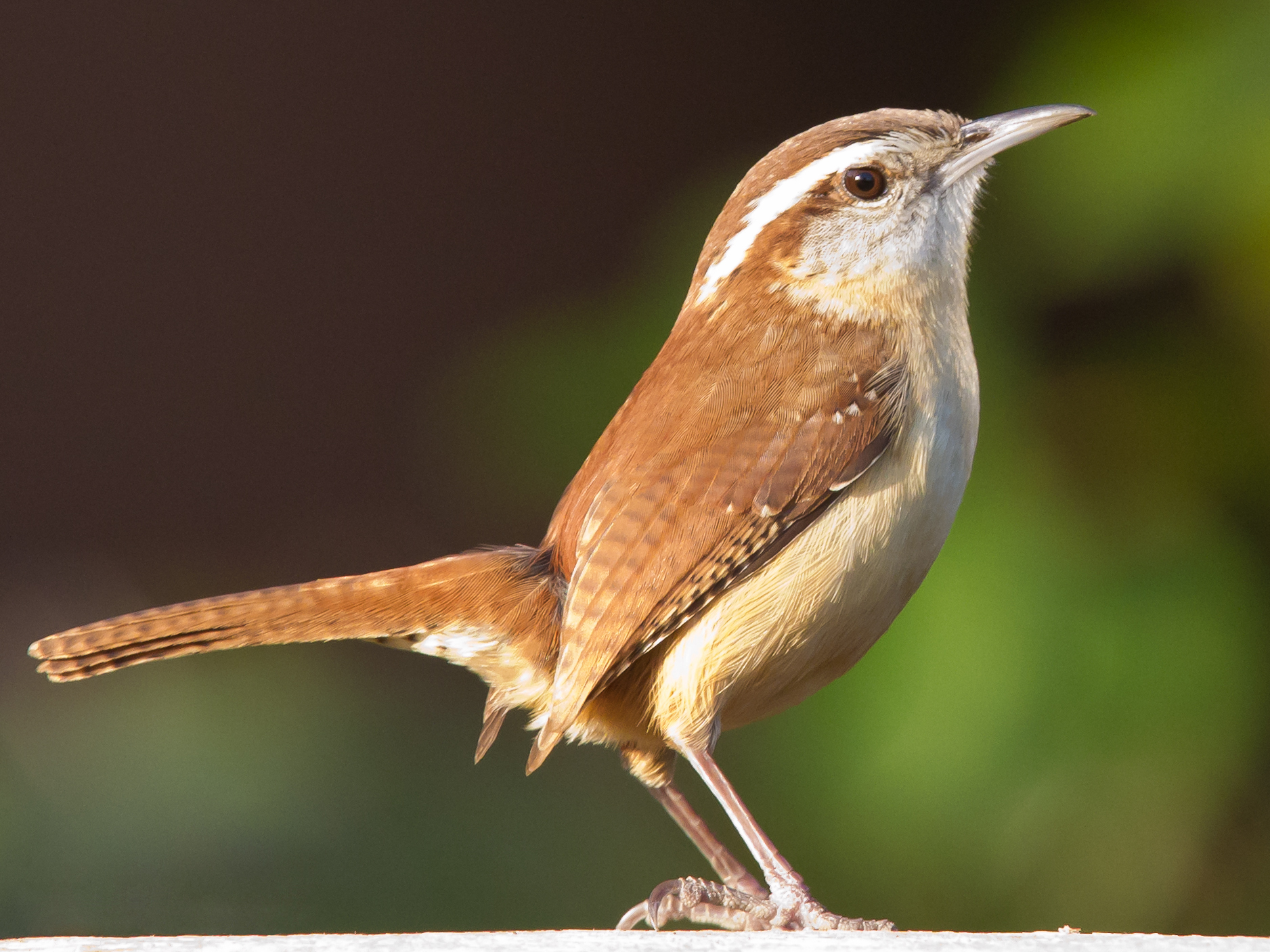
Carolina wren
Houston, Texas
Recorded in Cape May, New Jersey, US
Scientific classification Edit this classification
Kingdom: Animalia
Phylum: Chordata
Class: Aves
Order: Passeriformes
Family: Troglodytidae
Genus: Thryothorus
Vieillot, 1816[2]
Species:
T. ludovicianus
Binomial name
Thryothorus ludovicianus
(Latham, 1790)
Subspecies[3]
List
  • T. l. berlandieri
  • T. l. burleighi
  • T. l. lomitensis
  • T. l. ludovicianus
  • T. l. miamensis
  • T. l. nesophilus
  • T. l. tropicalis
  • T. (l.) albinucha – White-browed wren
Range of the Carolina wren (T. ludovicianus)
Synonyms[4]

Sylvia ludoviciana (Latham, 1790)

Thryothorus ludovicianus

The Carolina wren (Thryothorus ludovicianus) is a species of wren that is common in the Eastern United States, the extreme south of Ontario, Canada, and the extreme northeast of Mexico. Severe winters restrict the northern limits of their range, while favorable weather conditions lead to a northward extension of their breeding range. Their preferred habitat is in dense cover in forest, farm edges, and suburban areas. This wren is the state bird of South Carolina.

Seven recognized subspecies occur across the range of these wrens and they differ slightly in song and appearance. The birds are generally inconspicuous, avoiding the open for extended periods of time. When out in the open, they energetically investigate their surroundings and are rarely stationary. After finding a mate, pairs maintain a territory and stay together for several years. Both males and females give out alarm calls, but only males sing to advertise territory. Carolina wrens raise multiple broods during the summer breeding season, but can fall victim to brood parasitism by brown-headed cowbirds, among other species. Some populations have been affected by mercury contamination.

Taxonomy

[edit]

The Carolina wren was first described under the name of Sylvia ludoviciana by John Latham in 1790.[3][note 1] Louis Pierre Vieillot considered all wrens under the genus Troglodytes and called the Carolina wren Troglodytes arundinaceus, but placed it subsequently in a separate genus Thryothorus (initially misspelled Thriothorus)[2] that he created in 1816.[7]

Etymology

[edit]

The genus name Thryothorus is of Greek origin from the combination of the noun θρύον : thrýon ("rush, reed") and the adjective θοῦρος : thoũros ("rushing, impetuous"; derivative of verb θρῴσκειν : thrōskein to leap up, spring, jump at). Thus, Thryothorus means 'reed jumper'.

Its specific name ludovicianus is a post-classical Latin term for Ludovicus (derivative from Louis XIV) that means 'of Louisiana' that identifies the locality of the specimen collected near New Orleans.[8][9]

Species

[edit]

Thryothorus used to be the largest genus in the family Troglodytidae, with 27 species, but molecular phylogenetic studies revealed that it represented a polyphyletic assemblage of at least four independent clades now recognized at the genus level.[10][11] The Carolina wren is now the only species within this genus.[12]

The seven recognized subspecies of the Carolina wren are:[3][13]

  • T. l. ludovicianus (Latham, 1790) – southeast Canada (southern Ontario, irregularly in eastern and southern Quebec) and the eastern United States (southern Wisconsin and New England southward to Texas and northern Florida)
  • T. l. miamensis Florida wren (Ridgway, 1875) – Florida from approximately 30°N (Gainesville) region southward through the rest of the state
  • T. l. nesophilus Dog Island wren (Stevenson, 1973) – Dog Island in northwestern Florida
  • T. l. burleighiBurleigh's Carolina wren (Lowery, 1940) Offshore islands off of the Mississippi coast: Cat Island, Ship Island (Mississippi), and Horn Island
  • T. l. lomitensisLomita wren (Sennett, 1890) southern Texas to the extreme northeast of Mexico (Tamaulipas)
  • T. l. berlandieriBerlandier's wren (S. F. Baird, 1858) - northeastern Mexico (eastern Coahuila, Nuevo León, and southwestern Tamaulipas)
  • T. l. tropicalis – northeastern Mexico (eastern San Luis Potosí and southern Tamaulipas)
  • T. ludovicianus is traditionally placed within its own genus as its only representative of North America, but recent DNA work suggests it is closely allied with the Bewick's wren.[14] A distinct population in the Yucatán Peninsula of Mexico, Belize, Nicaragua, and in Guatemala is treated as a separate species, either known as Cabot's wren or white-browed wren (Thryothorus albinucha).[3][15] It is considered a subspecies of T. ludovicianus by some authors, however.[13]

Description

[edit]
Carolina Wren
Carolina wren in Greenville, South Carolina

At 12.5 to 14 cm (4.9 to 5.5 in) long, with a 29 cm (11 in) wingspan and a weight of about 18 to 23 g (0.63 to 0.81 oz), the Carolina wren is a fairly large wren; the second largest in the United States species after the cactus wren. Among standard measurements, the wing chord is 5.4 to 6.4 cm (2.1 to 2.5 in), the tail is 4.5 to 5.6 cm (1.8 to 2.2 in), the culmen is 1.4 to 1.8 cm (0.55 to 0.71 in) and the tarsus is 2 to 2.3 cm (0.79 to 0.91 in).[3] Sexual dimorphism is slight with males being larger than their mates. A study indicated that of 42 mated pairs, every male but one was larger than the female of the pair. The males were on average 11 percent heavier along with having longer wing chords.[16]

Several differences are seen among the subspecies. For T. l. ludovicianus, the crown is rich brown that appears more chestnut-colored on its rump and upper tail coverts. Shoulders and greater coverts are a rich brown, with a series of small white dots on the lesser primary coverts. The secondary coverts are rich brown with a darker brown barring on both webs; the bars on the primaries are on the outerwebs only, but darker and more noticeable. The rectrices are brown with 18 to 20 bars that span across the tail. The white supercilious streak borders thinly with a black above and below, and extends above and beyond its shoulders. The ear coverts are speckled gray and grayish-black. Its chin and throat are grey that becomes buff on its chest, flank and belly, though the latter two are of a warmer color. The underwing coverts sport a grayish buff color. Its iris is reddish-brown, the upper mandible is lemon-colored and paler at the base and lower mandible. The legs are flesh-colored.[3]

As for the other subspecies in contrast to T. l. ludovicianus, T. l. berlandieri is of a slightly smaller build, but possesses a larger bill, the upperparts are duller brown with deeper colored underparts, T. l. lomitensis is of a duller color (than either ludovicianus or berlandieri) with its underparts either pale or almost white, T. l. miamensis contains darker rusty chestnut upperparts and deeper colored below. T. l. burleighi is duller and sootier with less distinct tail markings, T. l. mesophilus has paler underparts and a whiter supercilium, and T. l. tropicalis is darker than all races, and contains heavier bars than T. l. berlandieri.[3]

Plumage

[edit]

The juvenile T.l. ludovicianus is similar in appearance, but the plumage is generally paler; a softer texture, buff-tipped wing coverts, and a paler superciliary streak.[3][17] In August and September, the partial plumage molt for the post-juvenile wrens is darker in color and affects the contour plumage, wing coverts, tail and develops a whiter superciliary stripe. The post-nuptial molt for adults in the same time period is more pronounced in color than the spring molt, with both sexes similar in appearance.[17]

Life span

[edit]
Sketches of Thryothorus ludovicianus, T.l. lomitensis, and Thryomanes bewickii (Bewick's wren) and one of its subspecies

Survival rates differ by region. A male captured in Arkansas lived to be at least 73 months old, and in Alabama, the oldest female and male captured were six and ten years old, respectively. In a survival probability mark-and-recapture study conducted within the Southeastern United States from 1992 to 2003, roughly 90 percent of the banded wrens died within 10 years.[18]

Similar species

[edit]

The easiest species to confuse with the Carolina wren is Bewick's wren,[19] which differs in being smaller but with a longer tail, grayer-brown above and whiter below. The Carolina and white-browed wrens differ from the house wren in being larger, with a decidedly longer bill and hind toe; their culmen has a notch behind the tip.[20]

Habitat and distribution

[edit]
Carolina wren at feeder

These birds are largely resident, and will only disperse beyond their range after mild winters.[3] Carolina wrens sporadically breed as far north as Maine and Quebec after mild winters.[3][21] In certain parts of their range, such as most of Iowa, prolonged periods of snow can curtail potential expansion.[22] Permanent breeding locations range from eastern Nebraska, southern Michigan, southeast Ontario and the New England states to Mexican states such as Coahuila, Nuevo León, San Luis Potosí and Tamaulipas and the Gulf Coast of the United States.[18] Local occurrences with infrequent and likely breeding locations include southeast South Dakota, central Kansas, eastern Colorado, western Oklahoma and Texas as far as Maine and New Brunswick.[18] There have been occasional vagrants spotted in Colorado, New Mexico, and Arizona, Wyoming, South Dakota, Manitoba, Nova Scotia, and the Gulf of St. Lawrence.[3][21]

The range of the wrens increased northward and westward in several regions over the past few centuries. In Massachusetts, the wrens had expanded westward and northeastward from its former southeastern location in approximately 35 years, in New York the population increased three-fold in roughly 25 years, while in the midwest states of Ohio and Michigan, numbers have increased since the mid-1800s and early 1900s, respectively.[18] Expansion around Ontario occurred since early reports in 1890 and 1905. Explanations given include infrequent winter storms in the 20th century, expanded forest habitats, and the wrens taking advantage of urban areas containing feeders, especially in winter.[18] From 1966 to 2015 the Carolina wren experienced a greater than 1.5% annual population increase throughout most of its northern range, extending from southern Maine to southern Nebraska.[23]

Carolina wrens adapt to various habitats. Natural habitats include various types of woodland such as oak hardwoods and mixed oak-pine woodlands, ash and elmwoods, hickory-oak woodlands with a healthy amount of tangled undergrowth.[3][24] The preferred habitats are riparian forest, brushy edges, swamps, overgrown farmland, and suburban yards with abundant thick shrubs and trees, and parks.[3][24] It has an affinity for dilapidated buildings and unkempt yards in man-made areas.[24] Subspecies burleighi and neophilus inhabit slash pine and palmettos.[3][24]

Behavior

[edit]

Song and calls

[edit]
Singing of Carolina wren (Thryothorus ludovicianus)
Carolina Wren, Wilkes County, NC.
A Carolina Wren singing in Forest Park.

Carolina wrens sing year round and at any point during the daytime, with the exception of performing during the most harsh weather conditions.[24] Males alone sing, and have a repertoire of at least twenty different phrase patterns and on average, thirty two.[25][26] One of these patterns is repeated for several minutes, and although the male's song can be repeated up to twelve times, the general number of songs range from three to five times in repetition. While singing, the tail of the birds is pointed downward. Some general vocalizations have been transcribed as teakettle-teakettle-teakettle and cheery-cheery-cheery.[17][24] Various descriptions of the teakettle song include whee-udel, whee-udel, whee-udel, che-wortel, che-wortel and túrtee-túrtee-túrtee and familiar names and phrases such as sweet heart, sweet heart, come to me, come to me, sweet William, and Richelieu, Richelieu.[17]

Males are capable of increasing their repertoire through song learning, but due to their sedentary nature and territorial defense habits, the song learning must occur within the first three months of life.[27] Geographic barriers affect song repertoire size from male wrens, as one study indicated that distances separated as close as 3 kilometres (1.9 mi) by water barriers can have the same effect as that of a distance of 145 kilometres (90 mi) in the mainland with no barriers.[27]

Female Carolina wrens possess song control regions that would appear to make them capable of singing with repertoires like the male. Due to vocalizations that they occasionally make with the male, it has been suggested that song perception plays a role and is of behavioral relevance.[25]

Carolina wren on Rutland Township Forest Preserve

Different subspecies have variations in songs and calls, such as miamensis having a more rapid song that contains more notes than the races that are further north.[3]

Their songs can be confused with the Kentucky warbler. The song patterns are similar, but the warbler's songs are described as richer, with more ringing and a hurried pace.[24] Other bird species with songs described as akin to the wren are the flicker, Baltimore oriole, grey catbird, and more specifically the peto, peto, peto call of the tufted titmouse and the whistle of the northern cardinal.[17] Occasionally, the wrens mimic other species; in Pennsylvania this trait has caused the bird to be also known as the 'mocking wren'.[3]

Sexual selection

[edit]

A 2006 study suggested that the correlation of tail length and body size in males, wing length in females, and lifespan for both sexes were signs of individual quality, and the wrens of high quality tend to mate with like individuals. The courting and antagonistic encounters that involve the tail fanning and wing drooping was suggested to be a possible signaling use. Age and life experience are not thought of as significant for potential mates due to their relatively short lifespan and sedentary lifestyle. Due to the large size of male wrens and the male's vigor in defending its territory, intrasexual selection was given as a possible explanation for the sexual dimorphism.[16]

Territorial and predator defense

[edit]

Both sexes are involved in defending the territory. One aspect of territorial defense involves identifying the proximity of the threat based on the loudness of bird song as well as the level of degradation of the calls. In experiments involving playback, the wrens are capable of discriminating between degraded and undegraded songs, as well as degraded songs in the same acoustic conditions, and can detect changes of acoustic properties within their territories, such as songs under foliage.[28] Song degradation can also be used to determine the proximity of potential intruders. If the song of a bird appears to be degraded, the wrens will assume that the threat is distant and not respond; if the song is not degraded, they respond by attacking.[29] Not all birds within their territory are potential enemies. Some species of birds that are neighbors are designated as dear enemies by the wrens, and the responses to neighbors and intruders in their territories differ by the season. In spring, the wrens respond more aggressively toward neighbors, though in the fall, no major discrepancy in responses is shown.[30] When protecting their nest, alarm calls are the general response. The wrens judge the size of the potential threat, such as a blue jay and avoid the risk of injury when attacking.[31] Countersinging produced by intruder birds is more likely to be taken as an aggressive threat to male Carolina wrens.[32]

Both males and females utilize calls in alarm situations, especially in territorial disputes and encounters with predators. Males alone produce the cheer call, which can sound indistinct. In southern regions of their range, the sound males use in alarm disputes is a ringing pink or p'dink sound. Females are the only ones that can perform the paired dit-dit or chatter sounds. The former can be used in territorial disputes with predators, and with at least northern populations the songs are used in alternation with the males cheer chant. The chatter is used exclusively with territorial encounters with male song, and the song can either follow or overlap her mate's song.[25][33]

Feeding

[edit]

Carolina wrens spend the majority of their time on or near the ground searching for food, or in tangles of vegetation and vines. They also probe bark crevices on lower tree levels, or pick up leaf-litter in order to search for prey. Their diet consists of invertebrates, such as beetles, true bugs, grasshoppers, katydids, spiders, ants, bees, and wasps. Small lizards and tree frogs also make up the carnivorous portion of their diet. Vegetable matter, such as fruit pulp and various seeds, makes up a small percentage of their diet. In the northern portion of their range, they frequent bird feeders.[3][24]

Movement

[edit]

Carolina wrens are wary, and are more often heard than seen. When on the ground, they move in jerky hops pillaging through various objects, whether man-made or natural.[24] While moving abruptly, they pause momentarily for chattering or singing.[17] When stationary, they move in twitched motions, jerking their breast around.[24] They also sun- or sand-bathe.[34] The wrens also displays a skittish behavior when encountered by humans, as they can be seen thrusting off into cover slowly if approaching is detected. However, they occasionally seek out humans that are near, so long as there is no movement from them.[17] Other movements involve being capable of crawling like a creeper and hanging upside-down like a nuthatch.[24]

Flights are generally of short duration, rapid, low-leveled, and wavelike. The wings during flight are flapped rapidly, and are frequently used during foraging. They are also capable of flying vertically from the base of a tree to the top in a single wing assisted bound.[3][24]

Breeding

[edit]
Carolina wren nesting in a duck nestbox

Carolina wrens are both genetically and socially monogamous and will usually mate for life. Mate changing is rare,[16] and there has been one possible observation of polygamy.[3] During the winter season, males are more responsible for guarding the territory. Females vary in succeeding to maintain winter territories without a mate.[3] It has been suggested that the possibility of desertion and decline in care-taking from males along with the need for security in resources year-round prevent extra pair copulations from females, as the mortality rate for Carolina wrens peaks during the winter.[35] Along with thermoregulatory benefits, roosting is thought to reinforce pair-bonding and prevent divorce between mates.[36]

The nests are arch-shaped structures with a side entrance and built of dried plants or strips of bark, as well as horsehair, string, wool and snake sloughs. The male obtains nesting materials while the female remains at the site to construct the nest. Nests are located in fragmented or complete cavities in trees, or in man-made structures such as bird-boxes, buildings, tin cans, mailboxes or unorthodox places such as pockets of hanging jackets in sheds or in a tractor in everyday use.[3][17] Nests are from 1–3 m (3.3–9.8 ft) from the ground and are rarely higher. They occasionally can be built in sloping locations or at ground level.[3]

Egg laying dates and clutch size vary by region; in Texas the time period is from late February to late August, in Iowa it ranges from late April to June.[15][22] The clutch size is generally 3 to 6 eggs, but can reach as high as seven in Texas.[3][15] The eggs are creamy white with brown or reddish-brown spots, and are more heavily marked at the broad end.[3] The eggs are incubated by the female for 12–16 days. After the young hatch, they are fed exclusively on invertebrates and they fledge in 12–14 days. As many as three broods may be raised by a pair in a single breeding season.[3] In one study, three of the 70 fledglings remained or defended territory adjacent to the natal area.[18]

Male and females are involved in the process of provisioning at similar rates throughout most nest stages, with the males providing slightly more in the nestling stages. Both sexes increase their provision rates as the nestlings grow in age.[37]

Predation and threats

[edit]

Although Carolina wrens are fairly common, brood parasitism by the brown-headed cowbird is common, with up to 25% of Carolina wren nests being affected in certain regions such as Oklahoma and Alabama.[3][18] Cowbird parasitism peaks in April at 41%, and is as low as 8% and 0% in July and August, respectively. Female cowbirds sometimes eject Carolina wren eggs before laying their own, and even if host eggs are retained, the size of cowbird eggs negatively affect the hatching success of wren eggs. As a result, cowbirds may have a significant impact on the reproductive success of wrens.[3][18] The feeding rate for cowbird nestlings is higher than wren feeding rates, and some have been raised to independence.[18] This also can be detrimental to the survival of wren nestlings.[18] A rare instance of brood-parasitism by a house finch has been recorded.[18][38] The rate of brood parasitism is thought to be lower in more natural and concealed nesting locations.[18] Body parasites such as the larvae of blowflies feed on nestlings and the blood loss weakens nestlings.[18] Fellow species of wren such as Bewick's wren and the winter wren compete for nesting locations and food, respectively.[18]

In Virginia, some Carolina wrens populations show high levels of mercury in their blood and this is acquired from feeding all-year-round on spiders.[39][note 2] Spiders being at a higher trophic level contain a higher concentrations of mercury (through biomagnification) than herbivorous invertebrates. As these wrens are year-round residents, they are at a higher risk than other species to acquire mercury in their blood. Nest abandonment and failure to raise young are more common with higher mercury content.[39] Exposure, and prolonged periods of cold, ice, and snow is thought to affect the wren nestling and adult populations, respectively.[18] Wrens that outlast those winters reside in sheltered areas during the season.[17]

Among the top predators of adult Carolina wrens are domestic cats, and snakes such as the timber rattlesnake.[40][41] Raccoons and black rat snakes also feed on wren eggs and nestlings.[18]

In culture

[edit]
South Carolina state quarter

In 1930, the South Carolina Federated Women's club adopted the Carolina wren as the unofficial state bird over the eastern mourning dove and pushed for its official state adoption until 1939, when the South Carolina Legislature named the northern mockingbird as the state bird. In 1948, the legislature repealed their previous decision, and the wren became the official state bird.[42]

In 2000, the Carolina wren was featured on the back of the South Carolina edition of the 50 State Quarters.[43]

Notes

[edit]

References

[edit]
[edit]
Revisions and contributorsEdit on WikipediaRead on Wikipedia
from Grokipedia
The Carolina wren (Thryothorus ludovicianus) is a small, chunky in the Troglodytidae, native to eastern , measuring 12–14 cm (4.7–5.5 in) in length and weighing 18–23 g (0.63–0.81 oz). It features warm reddish-brown upperparts, buff underparts, a white throat and eyebrow stripe, a long tail often held upright, and a relatively large head with a thin bill. This non-migratory resident is known for its bold, persistent vocalizations, including the iconic "teakettle-teakettle" song and various raspy calls, which it uses year-round to defend territory. Found primarily in the eastern and , from and southward to and west to , the Carolina wren has expanded its range northward over the past century due to milder winters and habitat changes. It thrives in diverse vegetated habitats, including brushy forest edges, lowland swamps, thickets, suburban gardens, and woodland understories, where it forages close to the ground for , spiders, snails, and occasional seeds or . Pairs are monogamous and territorial, with males singing frequently to attract mates and deter rivals; they build bulky nests in cavities, brush piles, or even man-made structures like boots or mailboxes. Despite sensitivity to severe cold snaps that can reduce northern populations, the species overall is abundant and increasing, with an estimated global of 18 million and a of least concern. Its adaptability to human-altered landscapes, including backyards, has contributed to its success, making it a familiar and spirited presence in gardens across its range.

Taxonomy

Etymology

The common name "Carolina wren" originates from early European settlers' observations of the bird in the Carolina colonies of the southeastern United States during the 18th century, where it was a familiar species in the region's woodlands and settlements. The scientific name Thryothorus ludovicianus consists of two parts. The genus Thryothorus was coined by French ornithologist Louis Jean Pierre Vieillot in 1816, combining the Greek words thryon (reed or rush) and thoũros (leaping or rushing), alluding to the wren as a "reed-jumper". The specific epithet ludovicianus is Latin for "pertaining to Louisiana," referencing the type locality in that territory, which was named after King Louis XIV of France. The species was first formally described by English naturalist John Latham in 1790 as Sylvia ludoviciana in his Index Ornithologicus, based on a specimen from Louisiana.

Classification and subspecies

The Carolina wren (Thryothorus ludovicianus) belongs to the Troglodytidae, a group of primarily birds known as wrens, and is classified within the Thryothorus. The of the Troglodytidae has been robustly supported by phylogenetic analyses integrating mitochondrial and nuclear DNA sequences, establishing the family as a distinct within the superfamily Certhioidea. Historically, the species was first described as Troglodytes ludovicianus by Louis Jean Pierre Vieillot in 1807, placing it among other wrens in the genus Troglodytes. In , Vieillot erected the genus Thryothorus specifically for the Carolina wren, recognizing its distinct vocalizations and morphology; this separation from Troglodytes (which included species like the , later moved to Thryomanes in the mid-19th century) marked a key taxonomic revision during that era. Molecular studies have since clarified relationships, positioning T. ludovicianus as sister to Thryomanes bewickii (), though the genera remain distinct due to differences in and patterns. Ten subspecies are currently recognized, divided into two groups (northern and southern) based on subtle variations in body size, plumage coloration, and saturation, with broader overlap than distinct boundaries. Northern populations tend to be larger overall, while southern and Mexican forms exhibit paler dorsal plumage and reduced rufous tones. The recognized subspecies are:
  • T. l. ludovicianus: Southeastern Canada to Texas and southeastern USA; nominal form with rich rufous upperparts and buff supercilium.
  • T. l. miamensis: Peninsular Florida; larger and paler with grayer tones on the back and wings.
  • T. l. nesophilus: Dog Island off northwestern Florida; similar to miamensis but with minor insular adaptations.
  • T. l. burleighi: Islands off the Mississippi coast; intermediate between ludovicianus and southern forms in size and coloration.
  • T. l. berlandieri: Northeastern Mexico; darker, more saturated plumage adapted to arid habitats, with slightly shorter wings.
  • T. l. lomitensis: Southern Texas to northeastern Mexico; similar to berlandieri but with slightly brighter underparts.
  • T. l. platensis: Eastern Mexico; paler than northern forms, with reduced rufous tones.
  • T. l. tropicalis: Yucatán Peninsula; even paler underparts and reduced barring on the undertail.
  • T. l. albinucha: Northeastern Nicaragua to northwestern Costa Rica; sometimes treated as a separate species (White-browed wren), with a prominent white nape.
  • T. l. ignotus: Central Mexico (less commonly recognized, but included in some counts for a total of 10).

Description

Physical characteristics

The Carolina wren (Thryothorus ludovicianus) measures 12–14 cm in length, with a of 29 cm and an average weight of 18–22 g. is minimal, as males and females exhibit nearly identical size and plumage patterns. Its plumage features rich brown upperparts accented with tones, contrasting with buff underparts that include a white throat and chin. A prominent white extends over the eye, providing a distinctive facial marking. The wings and tail display fine black and white barring, while the overall body remains unpatterned on the back and belly. Juveniles possess similar markings but with duller, paler colors and looser texture compared to adults. The bird's bill is long, slender, and downcurved, facilitating extraction from crevices. Its tail is relatively long and frequently cocked upward, contributing to a perky posture. Strong legs and feet enable agile hopping and perching on the ground and low vegetation.

Lifespan and similar species

The Carolina wren typically has a short lifespan in , with banding studies indicating an of approximately 2 years for breeding adults, though many individuals do not survive their first year due to high juvenile mortality. Factors such as predation by cats, snakes, and , as well as events like harsh winters, significantly influence survival rates, with overwinter survival showing strong interannual variation across its range. The maximum recorded lifespan from Bird Banding Laboratory data is at least 9 years and 2 months, from a male recaptured in in 2019. Distinguishing the Carolina wren from similar species relies on key field marks, particularly in areas of range overlap. Compared to the house wren, the Carolina wren is larger (about 5.5 inches long versus 4.7 inches) and chunkier, with warmer rufous-brown upperparts, a bolder white stripe, and buffy-cinnamon underparts rather than the house wren's cooler gray-brown tones, faint , and paler belly. In regions where their ranges overlap in the eastern and , the Carolina wren's more curved, stouter bill and lack of the house wren's upright tail posture aid identification. The Bewick's wren, which overlaps with the Carolina wren in the central U.S., differs in its more subdued grayish-brown , paler underparts, longer and thinner bill, and prominent white tips on the outer tail feathers visible in flight; the Carolina wren lacks these tail spots and exhibits richer reddish-brown tones overall. Bewick's wrens also show a more contrasting white against a grayer face, while the Carolina wren's eyebrow blends more subtly with its warmer facial tones. Although the 's range in the southwestern U.S. overlaps minimally with the Carolina wren's eastern distribution, the two can be confused in transitional areas; the is notably larger (8–9 inches) with heavy spotting on the breast, bold white streaks on a brown crown, and a preference for arid desert habitats with cacti, contrasting the Carolina wren's smaller size, uniform buffy underparts, and woodland or suburban preferences.

Distribution and habitat

Geographic range

The Carolina wren (Thryothorus ludovicianus) is native to eastern , with its core range extending from and southward through the to , westward to eastern , and into northeastern as far south as and . This distribution encompasses a broad swath of and mixed woodlands across the region, where the species maintains year-round residency without significant migration. Since the late , the Carolina wren has experienced a notable northward expansion of its range, driven by gradually warming winter temperatures, with the northern frontier advancing substantially beyond historical limits in areas like the . This shift has been particularly evident since the mid-20th century, allowing breeding populations to establish in previously marginal northern locales. Occasional vagrancy records document individuals far outside this range, including sightings in the (such as and ) and . Recent surveys estimate the global population of the Carolina wren at approximately 19 million individuals, reflecting a stable to increasing trend across much of its expanded range.

Preferred habitats

The Carolina wren primarily inhabits and mixed woodlands, shrubby edges, swamps, and suburban areas characterized by dense vegetation. These birds show a strong preference for moist, brushy environments that include vines, leaf litter, and tangled thickets, which provide essential cover and opportunities. Such habitats are typically found along edges, riparian zones, and wooded swamps, where the understory remains lush and undisturbed. Highly adaptable, the Carolina wren thrives in human-modified landscapes, including urban gardens, farmlands, and second-growth forests, as long as sufficient dense vegetation is present. This tolerance allows them to persist in suburban backyards with brush piles or overgrown yards, often utilizing artificial structures for shelter. They generally avoid dense coniferous forests and open fields, favoring instead areas with ample low-level cover for protection. At the microhabitat level, Carolina wrens require low vegetation layers for nesting and foraging, such as vine tangles, decaying logs, or ground-level leaf litter, which support their ground-probing behaviors. This preference for sheltered, cluttered understories underscores their reliance on structurally complex environments across their eastern North American range.

Behavior

Vocalizations

The Carolina wren (Thryothorus ludovicianus) is renowned for its rich vocal repertoire, with males producing a variety of loud, melodious songs throughout the year. The primary song, delivered exclusively by males, consists of a repeated phrase typically rendered as "tea-kettle, tea-kettle, tea-kettle" or "cheerily, cheerily," often comprising 2–12 notes per syllable repeated 3–5 times. These songs vary regionally and individually, with birds capable of learning and incorporating up to 30 or more distinct song types into their repertoire over time. Males sing persistently from dawn to dusk, regardless of season, to maintain pair bonds and advertise territories. In addition to songs, Carolina wrens produce a diverse array of calls used for communication and alerting to danger. Alarm calls include sharp, metallic "chip" notes, often repeated rapidly when detecting predators or intruders. For more intense threats, both sexes emit scolding chatter—a harsh, rasping series of notes that can escalate into prolonged bouts. Pairs frequently engage in duet-like vocal exchanges, where the male's song is followed by the female's distinctive chatter trill, creating an interwoven response that reinforces their bond. Acoustically, Carolina wren songs span a range of approximately 1.8–4.5 kHz, enabling clear transmission through dense in their habitats. While song complexity is similar between sexes, males exhibit in vocal output, producing louder due to larger song control nuclei in the , which support their role in advertisement. These vocalizations play a key part in territorial defense, with males countersinging to rivals.

Foraging and diet

The Carolina wren primarily forages on or near the ground, employing techniques such as from leaf litter, bark, and low , as well as probing crevices and flipping debris with its curved bill to uncover hidden prey. These birds often search in pairs, staying close together while hopping through underbrush, downed logs, and brush piles, which allows them to cover more ground efficiently and maintain pair bonds year-round. Habitat features like dense thickets and moist ravines influence prey availability by providing ample cover and microhabitats rich in . The diet of the Carolina wren consists predominantly of animal matter, with stomach content analyses of 291 individuals revealing approximately 94% such as beetles, caterpillars, true bugs, grasshoppers, , , and spiders, alongside smaller amounts of snails and occasional small vertebrates like or frogs. The remaining 6% comprises vegetable matter, including seeds and fruit pulp. In winter, particularly at the northern edges of their range, Carolina wrens shift toward a greater reliance on plant-based foods like berries (e.g., from bayberry or ) and seeds to supplement scarce , though and spiders remain a core component when available. This helps sustain energy needs during colder months when natural populations decline.

Breeding and reproduction

The Carolina wren exhibits a , with pairs forming long-term bonds that often last for several years or until one partner dies. Genetic studies confirm high levels of , with rare instances of extra-pair paternity. Pairs defend year-round territories, and the male's vocalizations assist in pair formation and maintenance. Breeding occurs primarily from to across their range, though it can extend into in southern areas; pairs typically produce 1–3 broods per season. Clutch sizes average 4–6 eggs, ranging from 3 to 7, with no significant variation between early and late-season nests. Both sexes collaborate on nest building, constructing bulky, domed structures from twigs, bark, leaves, and grasses, often lined with finer materials like or feathers; these nests are placed in concealed sites such as tree cavities, shrubs, brush piles, or human-made locations including old boots, mailboxes, or pockets, usually 1–2 meters above ground. The female alone incubates the eggs for 13–18 days, during which the male provides food to her. After , both parents feed the altricial young a diet of , with fledging occurring 12–18 days later. Nestlings remain dependent on parents for 2–3 weeks post-fledging. varies with environmental factors. by brown-headed cowbirds significantly impacts reproduction, with parasitism rates peaking at 41% in May and declining to 0% by ; parasitized nests often experience reduced fledging success due to egg ejection or resource .

Territoriality and social behavior

Carolina wrens maintain year-round territories, typically ranging from 1 to 8 hectares, which are defended by mated pairs against intruders of the same . These pairs use a combination of loud songs, vocalizations, and visual displays to advertise ownership and deter rivals, with both sexes participating actively in boundary patrols. escalates to physical confrontations, including vigorous chases and attacks, particularly toward same-sex intruders, as observed in playback experiments where wrens showed heightened responses to unfamiliar conspecifics. Socially, Carolina wrens exhibit strong , forming lifelong pair bonds that persist through all seasons, with pairs and moving together within their . While primarily pair-based, occasional occurs through extra-pair copulations, though genetic studies indicate high levels of overall. Flocking is minimal, as these birds are non-migratory and sedentary, with individuals rarely dispersing more than 5 km from their natal or established territories, emphasizing localized stability over group dynamics. In response to predators, Carolina wrens employ tactics, gathering to scold and dive at threats such as snakes, domestic cats, and other nest predators with sharp calls and aerial . This cooperative defense, often involving nearby pairs, aims to distract and drive away dangers, enhancing survival for the pair and potential without forming larger flocks. Songs and chatter calls play a role in coordinating these efforts, alerting mates and neighbors to the presence of peril.

Predation and conservation

Predators and threats

The Carolina wren faces predation from various avian, mammalian, and reptilian species, particularly targeting adults, eggs, and nestlings. Adult birds are primarily vulnerable to raptors such as sharp-shinned hawks (Accipiter striatus) and Cooper's hawks (A. cooperii), which hunt them during foraging in low vegetation. Nest predators include mammalian species like raccoons (Procyon lotor), gray squirrels (Sciurus carolinensis), eastern chipmunks (Tamias striatus), mink (Neovison vison), and gray foxes (Urocyon cinereoargenteus), as well as black rat snakes (Pantherophis obsoletus). Predation accounts for a significant portion of nest failures, with one study reporting it as the cause in 70% of 44 failed nests in the southeastern United States. Anthropogenic threats exacerbate natural predation pressures on the Carolina wren. Domestic cats (Felis catus) pose an elevated risk in suburban environments, where wrens often forage near human structures; urban populations exhibit heightened defensive responses to cats compared to rural counterparts, indicating increased encounter rates. by brown-headed cowbirds (Molothrus ater) affects up to 41% of nests in some months, with parasitized clutches showing reduced wren fledging success. collisions represent another major hazard, contributing to mortality as wrens collide with glass surfaces during flight; this threat affects millions of birds annually across , including adaptable species like the Carolina wren. Habitat fragmentation and chemical pollutants further imperil the species by disrupting and nesting opportunities. Pesticides and contaminants, such as mercury, lead to reduced nesting success and higher abandonment rates in affected areas, indirectly limiting prey availability. Climate variability, including severe winter events, causes periodic die-offs in northern portions of the range, as extreme cold exceeds the wren's tolerance despite overall northward expansion.

Conservation status

The Carolina wren (Thryothorus ludovicianus) is classified as Least Concern on the , reflecting its large global population and lack of immediate threats approaching vulnerability thresholds. Partners in Flight estimates the global breeding population at approximately 19 million individuals, with the species rated low on the Continental Concern Score due to its adaptability. Population trends show overall stability to increases across the range, with significant growth during the driven by habitat recovery from and northward expansion facilitated by warming climates. According to North American Breeding Bird Survey data, populations rose between 1966 and 2019, with annual increases exceeding 1.5% in northern areas. In the northern portion of the range, numbers fluctuate due to severe winters, often declining after cold snaps but recovering within a few years through high reproductive rates and resilience. Post-2020 analyses, including eBird data through 2022, indicate strongly increasing trends and ongoing climate-driven range shifts, underscoring the species' adaptability to environmental variability. As a native North American bird, the Carolina wren is protected under the Migratory Bird Treaty Act, which prohibits take, possession, or commercial trade without permits. Management recommendations emphasize habitat enhancement, such as installing nest boxes during harsh winters to aid roosting and nesting survival. Additional efforts focus on mitigating human-related risks, including reducing window strikes via treatments like decals or screens to break up reflections, and promoting organic gardening to maintain insect prey availability in suburban areas.

Cultural significance

State bird designations

The Carolina wren (Thryothorus ludovicianus) is officially recognized as the state bird of only one : . It was designated by the through Act No. 693 in 1948, replacing the (Mimus polyglottos), which had been named the state bird in 1939 via Act No. 311. Prior to its official status, the Carolina wren had been unofficially adopted as the state bird in the 1930s by the South Carolina Federation of Women's Clubs, led by Claudia Phelps, who advocated for it over the (Zenaida macroura) due to its prevalence across the state and distinctive vocalizations. The bird's selection in 1948 reflected its symbolic fit, including the inclusion of "Carolina" in its common name, its status as a non-migratory year-round resident symbolizing resilience and adaptability to local environments, and its loud, cheerful song that echoes the spirit of the region. This choice emphasized the wren's commonality in 's woodlands, suburbs, and gardens, where it thrives without seasonal migration.

In media and folklore

In Native American traditions, wrens, including the Carolina wren, are regarded as birds of that inspire , particularly among warriors, with sightings believed to bolster bravery in battle. also depicts the wren as a clever , as in tales where it outwits larger birds like the eagle to reach great heights or secure for humanity from the sun. The Carolina wren has been prominently featured in visual art since the , most notably in John James Audubon's , where plate 78, titled "Great Carolina Wren," illustrates the bird perched on a branch with intricate detail, highlighting its vibrant and expressive posture. In literature, it appears in children's books that emphasize its nesting habits and lively personality, such as The Nest That Wren Built by Randi Sonenshine, a rhyming that follows a pair of Carolina wrens gathering materials like bark, twine, and pine needles to construct their home. Another example is Little Wren Lost and the Teakettle Call by Beth Batson and Scott Foster, which draws from real observations of Carolina wrens to tell a story of family and discovery in a southern setting. In modern media, the Carolina wren is highlighted in applications like Merlin Bird ID from the Cornell Lab of Ornithology, which uses sound recognition to identify its distinctive "teakettle" song and provides details on its behavior for users in the field. Conservation organizations, including the National Audubon Society, feature the bird in educational campaigns and online guides to promote backyard enhancement, such as providing brush piles and native plants to support its foraging needs. It also appears in nature documentaries and feeder camera footage, like those from Cornell Lab's FeederWatch, showcasing its bold interactions and year-round activity in urban and suburban environments. Symbolizing the resilient spirit of the southern United States through its tireless energy and cheerful song, the Carolina wren embodies joy, persistence, and domestic harmony in cultural narratives. Its state bird status in South Carolina underscores this representation as a foundation for broader folklore.

References

Add your contribution
Related Hubs
User Avatar
No comments yet.