Hubbry Logo
search
logo
2219650

Variable-sweep wing

logo
Community Hub0 Subscribers
Read side by side
from Wikipedia

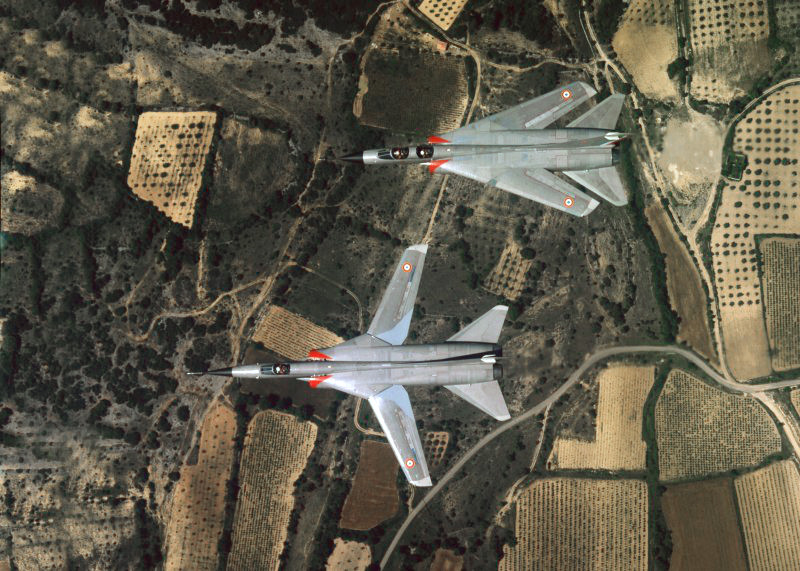
Two Dassault Mirage G prototypes, the upper one with wings swept
A Grumman F-14 Tomcat testing an unusual asymmetric wing configuration, a possible in-flight failure case, showing one wing at minimum sweep and one at maximum sweep

A variable-sweep wing, colloquially known as a "swing wing", is an airplane wing, or set of wings, that may be modified during flight, swept back and then returned to its previous straight position. Because it allows the aircraft's shape to be changed, it is a feature of a variable-geometry aircraft.

A straight wing is most efficient for low-speed flight, but for an aircraft designed for transonic or supersonic flight it is essential that the wing be swept. Most aircraft that travel at those speeds usually have wings (either swept wing or delta wing) with a fixed sweep angle. These are simple and efficient wing designs for high speed flight, but there are performance tradeoffs. One is that the stalling speed is increased, necessitating long runways (unless complex high-lift wing devices are built in). Another is that the aircraft's fuel consumption during subsonic cruise is higher than that of an unswept wing. These tradeoffs are particularly acute for naval carrier-based aircraft. A variable-sweep wing allows the pilot to use the optimum sweep angle for the aircraft's speed at the moment, whether slow or fast. The more efficient sweep angles available offset the weight and volume penalties imposed by the wing's mechanical sweep mechanisms. Its greater complexity and cost make it impractical for most commercial applications and result in its use being primarily for military aircraft.

A number of aircraft, both experimental and production, were introduced between the 1940s and the 1970s. The majority of production aircraft to be furnished with variable-sweep wings have been strike-oriented aircraft, such as the Mikoyan-Gurevich MiG-27, Tupolev Tu-22M, and Panavia Tornado. The configuration was also used for a few fighter/interceptor aircraft, including the Mikoyan-Gurevich MiG-23, Grumman F-14 Tomcat, and the Panavia Tornado ADV. From the 1980s onwards, the development of such aircraft were curtailed by advances in flight control technology and structural materials which have allowed designers to closely tailor the aerodynamics and structure of aircraft, removing the need for variable sweep angle to achieve the required performance; instead, wings are given computer-controlled flaps on both leading and trailing edges that increase or decrease the camber or chord of the wing automatically to adjust to the flight regime; this technique is another form of variable geometry.

Characteristics

[edit]

Variable sweep

[edit]

A straight, unswept wing experiences high drag as it approaches the speed of sound, due to the progressive buildup of sonic shockwaves. Sweeping the wing at an angle, whether backwards or forwards, delays their onset and reduces their overall drag. However it also reduces the overall span of a given wing, leading to poor cruise efficiency and high takeoff and landing speeds.

A fixed wing must be a compromise between these two requirements. Varying the sweep in flight allows it to be optimised for each phase of flight, offering a smaller aircraft with higher performance. However it has disadvantages which must be allowed for. As the wing sweeps its centre of lift moves with it. Some mechanism, such as a sliding wing root or larger tail stabiliser, must be incorporated to trim out the changes and maintain level flight. The added weight of the sweep and trim mechanisms eat into the performance gains, while their complexity adds to cost and maintenance.

By moving the wing pivots outboard and only sweeping part of the wing, the trim changes are reduced, but so too is the variation in span and accompanying operational flexibility.

Wing controlled aerodyne

[edit]

British engineer Barnes Wallis developed a radical aircraft configuration for high-speed flight, which he regarded as distinct from the conventional fixed-wing aeroplane and called it the wing controlled aerodyne. His previous work on the stability of airships had impressed on him the high control forces that could be exerted on the body of an aircraft, through very small deflections. He conceived of a simple ichthyoid (fish-like) fuselage with a variable wing. No other control surfaces were needed. Subtle movements of the wings were able to induce the small deflections which controlled the direction of flight, while trim was maintained by adjusting the angle of sweep to compensate for the varying position of the centre of lift at different speeds.[1][2]

For supersonic flight a delta-planform lifting body is more suitable than a simple ichthyoid. A conflict also arises between the wing sweep angle necessary for trim and the optimal angle for supersonic cruise. Wallis resolved this by moving mass, typically the engines, out to the wing tips and swivelling them as the wing swept in order to maintain the thrust line. In the asymmetric engine-out condition, the remaining engines could be swivelled to divert the thrust line closer to the centre of pressure and reduce the asymmetry to manageable levels.[1]

Asymmetric sweep

[edit]

It is not necessary to sweep the port and starboard wings in the same sense - one can be swept back and the other forward, as in the oblique wing.

Varying the sweep asymmetrically by small amounts was also fundamental to the principle of the wing controlled aerodyne.

History

[edit]

Origins

[edit]
The F-111 was the first variable-sweep wing aircraft to be put into production. Shown are three Australian F-111s.
F-111E on display at the Museum of Aviation, Robins AFB, United States

The earliest use of variable sweep was to trim the aeroplane for level flight. The Westland-Hill Pterodactyl IV of 1931 was a tailless design whose lightly swept wings could vary their sweep through a small angle during flight.[3] This allowed longitudinal trim in the absence of a separate horizontal stabiliser.[4] The concept would later be incorporated in Barnes Wallis's wing-controlled aerodyne.[5]

During the Second World War, researchers in Nazi Germany discovered the advantages of the swept wing for transonic flight, and also its disadvantages at lower speeds. The Messerschmitt Me P.1101 was an experimental jet fighter which was, in part, developed to investigate the benefits of varying wing sweep.[6] Its sweep angle mechanism, which could only be adjusted on the ground between three separate positions of 30, 40, and 45 degrees, was intended for testing only, and was unsuitable for combat operations.[6] However, by Victory in Europe Day, the sole prototype was only 80 per cent complete.[7][8]

Development

[edit]
Wing pivot mechanism of a Panavia Tornado during overhaul
MIG-23 sweep wing mechanism

Following the end of the conflict, the partially complete P.1101 was recovered and transported to the United States, where it was studied in depth by Bell Aircraft. However, due to a lack of documentation as well as some structural damage sustained,[9][8] Bell decided against completing the aircraft itself. Instead, a close copy, known as the Bell X-5, was constructed with wings that enabled the sweep angle to be altered mid-flight. As the wing swept back, the root also slid forwards, maintaining the centre of lift in a constant position.[10] A variable-sweep wing of this sliding type was flown on the prototype Grumman XF10F Jaguar in 1952. However, flight testing of the F10F proved to be unacceptable, albeit for other factors such as a lack of engine power and considerable controllability issues.[11][12]

During the late 1940s, British engineer L. E. Baynes started studying the variable sweep wing. He devised a method of varying the tail geometry as well in order to stabilise the centre of lift; no sliding mechanism was necessary, instead, the wing wake interacted with the variable tail to effect the necessary trim changes. During 1949 and 1951, Baynes filed patent applications associated with this work.[13][14] While the design reached the physical modelling stage and was subject to a complete round of wind tunnel tests, the British Government failed to provide financial backing for the work, allegedly due to budget constraints at the time.[citation needed]

Independently from Baynes, British engineer Barnes Wallis was also developing a more radical variable-geometry concept, which he called the wing controlled aerodyne, to maximise the economy of high-speed flight. His first study was the Wild Goose project.[5] Subsequently, Barnes devised the Swallow,[5] a blended wing tailless aircraft, which was envisioned to be capable of making return flights between Europe and Australia within ten hours. Later on, the Swallow was increasingly viewed as a potential supersonic successor to the subsonic Vickers Valiant, one of the RAF's V bombers.[15] During the 1950s, several modes of the Swallow were subjected to promising tests, including a six-foot scale model, at speeds of up to Mach 2. However, in 1957, British government decided to withdraw backing from many aeronautical programs, including Wallis' work.[16][15]

Despite this lack of backing, the Swallow attracted international attention for some time. During late 1958, research efforts were temporarily revived through cooperation with the Mutual Weapons Development Programme of NATO, under which all of Wallis' variable geometry research was shared with the Americans.[15] According to aviation author James R. Hansen, American aerospace engineer John Stack was enthusiastic on the concept, as were numerous engineers at NASA; however, the United States Department of Defense was opposed to committing any resources to the project.[17] Wallis collaborated with NASA's Langley Laboratory on a design study for a variable-sweep fighter. Although it used the pivot mechanism he had developed, NASA also insisted on implementing a conventional horizontal stabiliser to ease the issues of trim and manoeuvrability. Although it was no longer the wing-controlled aerodyne that Wallis envisaged, it would prove a more practical solution than either his or Bell's. Swallow research led to several new configurations, including the adoption of a compact folding tail section and canards.[18]

Barnes' work inspired a number of further studies, including a wing controlled aerodyne in response to OR.346 for a supersonic STOL fighter-bomber, then as BAC two further submissions: the Type 583 to meet Naval ER.206 and Type 584 to meet NATO NBMR.3, both also being V/STOL requirements.[1] In 1960, Maurice Brennan joined Folland Aircraft as its chief engineer and director; he soon set about harnessing his experience of variable-geometry wings.[19] Accordingly, such a wing was combined with the firm's Folland Gnat light fighter for two different concepts – one tailless and one using with a conventional tail – for a multipurpose fighter/strike/trainer, designated as the Fo. 147. It had a unique mechanism for wing sweep that combined tracks on the fuselage sides and the underside of the wings, which was actuated by hydraulically-driven ball screws positioned at the wing's inner ends.[20] The wings could be swept from 20 degrees to 70 degrees; at the 70-degree position, longitudinal control was maintained by wing tip-mounted elevons, while this was provided by a retractable canard arrangement when swept at the 20-degree position, using full auto-stabilisation. By providing trimming functionality via the canard, the necessity of a large tailplane was eliminated.[21] The Fo. 147 was claimed to have been capable of speeds in excess of Mach 2, being limited only by the heat buildup generated by high speed flight.[22] Ultimately, the concept would not be developed to the prototype stage while the RAF showed little interest in the prospective variable geometry trainer.[22]

Production

[edit]

During the 1960s, the first programmes to produce mass production variable-sweep aircraft commenced. In the United States, such a configuration for the TFX (Tactical Fighter Experimental) program, which resulted in the development of the General Dynamics F-111, a sizable twin-engined aircraft intended to perform multiple roles.[23][24] The F-111 is the first production aircraft to feature a variable-geometry wing and it, along with other systems such as terrain following radar and turbofan engines outfitted with afterburners, were innovative technologies for the era.[25][26]

Despite this head start in the field, development of the F-111 was protracted; flight testing of the F-111A model only ended in 1973.[27] During 1968, cracks were discovered in the F-111's wing attach points, the issue also has been attributed with the loss of an F-111 in the following year.[28] Accordingly, the attach points were structurally redesigned and subject to intensive testing of both the design and manufacturing quality.[29] The F-111B, intended for the US Navy, was cancelled in 1968 due the aircraft's weight and performance issues, as well as its inadequacies for the service's fighter requirements.[30][31] Several variants, such as the FB-111A strategic bomber model, featured elongated wings to give a greater range and load-carrying capability.[32] The F-111's wing featured pivoting pylons (two under each wing) which automatically adjusted to the sweep angle. Subsequent swing-wing aircraft, such as the Panavia Tornado and Sukhoi Su-24, would also be similarly equipped.[citation needed]

A Sukhoi Su-24

In the Soviet Union, military planners had also formulated similar requirements, which led to TsAGI, the Soviet aerodynamics bureau, performing extensive studies into variable geometry wings. TsAGI evolved two distinct designs, differing mainly in the distance (expressed as a percentage of total wingspan) between the wing pivots. By adopting a wider spacing, this not only reduced the negative aerodynamic effects of changing wing sweep, but also provided a larger fixed wing section which could be used for landing gear or stores pylons. This could, in fact, be adapted to more-or-less existing airframes, which the Soviets accordingly did, such as with the Sukhoi Su-17 (based on the earlier swept wing Sukhoi Su-7). The limitation of the wide spacing, however, was that it reduced the benefits of variable geometry as much as it reduced their technical difficulties.[citation needed]

As such, producing new, "clean-sheet" Soviet designs remained desirable. For this, TsAGI devised a more narrowly spaced arrangement somewhat similar to that of the F-111. This design was used, albeit at different scales, for the Mikoyan-Gurevich MiG-23 fighter and the Sukhoi Su-24 tactical bomber, both of which flew in prototype forms around the end of the 1960s and entering service during the early 1970s. During 1962, Tupolev's design team, recognising room for improvement on the recently introduced Tupolev Tu-22 bomber, begun work on an extensively redesigned derivative that incorporated a variable geometry wing, intended to address the Tu-22's poor handling characteristics more so than bolstering its efficiency at high speeds.[33][34] As of 2014 more than 100 Tupolev Tu-22M strategic bombers are in use.[35]

During the late 1950s and early 1960s, Britain was developing the BAC TSR-2, a supersonic low-level strategic bomber. Later variants of the type would have been fitted with variable-geometry wings.[36] However, on 1 April 1965, development of the TSR-2 was terminated during the flight testing phase primarily due to the programme's spiralling costs.[37][38] To replace the TSR-2, the Air Ministry initially placed an option for the American General Dynamics F-111K;[39][40] while the F-111K was promoted as being cheaper,[41] this too was terminated during January 1968 on grounds of cost.[42]

Following the TSR-2's cancellation, BAC moved their variable-geometry work to Warton, there submitting the P.45 light attack/trainer to AST 362. This work fed into a joint Anglo-French programme to develop a variable geometry strike aircraft – the Anglo French Variable Geometry Aircraft (AFVG). This multirole aircraft was to be equipped with a variable geometry wing and was intended to perform the strike, reconnaissance, and interceptor roles.[43][44] However, as early as 1966, the French aircraft manufacturer Dassault began to actively undermine the AFVG, as it was working on two competing in-house projects: the variable geometry Mirage G and the Mirage F1.[45] According to aviation author Derek Wood, both Dassault and the French Air Force were unenthusiastic participants in the AFVG, the former wanting to pursue its own indigenous variable geometry aircraft, while the latter had determined that the type did not align with its future equipment plans.[44] In June 1967, the French government announced their withdrawal from the AFVG project ostensibly on the grounds of cost.[N 1][47]

A Tornado F3 with wings swept

Despite the AFVG programme's collapse, the design was revamped by BAC into a larger strike-oriented variable geometry aircraft. Holding contracts were issued to BAC to support the project, which had been re-designated as the United Kingdom Variable Geometry (UKVG) aircraft.[48][49] In November 1967, BAC issued a brochure on the UKVG proposal; various proposals would be issued to cover the use of multiple different engines. The quick production of a demonstrator aircraft, powered by a pair of Rolls-Royce/MAN Turbo RB153 turbofan engines, was also mooted.[49] As solely funding for the UKVG was unrealistic, the British government pursued partners within its fellow NATO members,[N 2] promoting the concept of developing and procuring a common NATO strike aircraft. In July 1968, a memorandum of understanding was signed between Britain, West Germany, Italy, the Netherlands, Belgium, and Canada.[51] This memorandum eventually led to the launch of the multinational Multi-Role Combat Aircraft (MRCA) project, which successfully produced a variable geometry aircraft for the strike, reconnaissance, and interception missions in the form of the Panavia Tornado.[50][52][53]

Following the AFVG effort, Dassault Aviation constructed a prototype fighter, the Mirage G, completing two aircraft, the Mirage G4 and G8, in 1968.[54] Furthermore, Dassault also worked in cooperation with the American manufacturing interest Ling-Temco-Vought to develop the LTV V-507, which was submitted for US Navy's VFX project.[55] From the VFX submissions, the US Navy procured the Grumman F-14 Tomcat to replace the canceled F-111B fleet interceptor during the 1970s. The F-14 was a more nimble fighter than the F-4 Phantom II and, unlike the F-111, its variable-sweep wings automatically adjusted over its speed range, and could be moved even during turns. Furthermore, the wings could be swept forward for tight "bat" turns in close quarters aerial combat, as well as rearwards for dash speeds.[56][57]

Top forward view of gray aircraft with wings swept forward banking right. Underneath are strips of white clouds and uninhabited terrain.
A B-1B Lancer with wings swept full forward

Rockwell adopted variable geometry for the much larger Advanced Manned Strategic Bomber (AMSA) program that produced the B-1 Lancer bomber, intended to provide an optimum combination of high-speed cruising efficiency and fast, supersonic penetration speeds at extremely low level. The B-1's variable-sweep wings provide a relatively high level of lift during takeoff and landing, while also generating little drag during a high-speed dash.[58] When the wings were set to their widest position the aircraft had considerably better lift and power than the B-52, allowing the B-1 to operate from a much wider variety of bases.[58] Rockwell submitted its proposal in January 1970, competing against bids by Boeing and General Dynamics.[59][60] The B-1's development was authorised in October 1981 as a stopgap between the increasingly vulnerable B-52 and the more capable Advanced Technology Bomber (ATB).[58][61] Initial operational capability was reached on 1 October 1986 and the B-1B was placed on nuclear alert status.[62][63]

The Soviet Union also opted to develop a large strategic bomber equipped with variable geometry wings. During the early 1970s, Tupolev's design, which was initially designated Aircraft 160M, featured a lengthened blended wing layout and incorporated some elements of the Tu-144, competed against the Myasishchev M-18 and the Sukhoi T-4 designs.[64] Designated as the Tupolev Tu-160, it entered operational service with the 184th Guards Heavy Bomber Regiment located at Pryluky Air Base, Ukrainian SSR, during April 1987.[65] The aircraft is the largest and heaviest combat aircraft, the fastest bomber in use and the largest and heaviest variable-sweep wing airplane to have ever flown as of 2020.[66]

Obsolescence

[edit]
A Tupolev Tu-160 of the RuAF

A variable-sweep wing was selected as the winning design used by Boeing's entry in the FAA's study for a supersonic transport, the 2707. However it evolved through several configurations during the design stage, finally adding a canard, and it eventually became clear that the design would be so heavy that it would be lacking sufficient payload for the fuel needed. The design was later abandoned in favor of a more conventional tailed delta wing.[67]

The advent of relaxed stability flight control systems in the 1970s negated many of the disadvantages of a fixed-wing configuration. No new variable-sweep wing aircraft have been built since the Tu-160.

In 2015, the Russian Ministry of Defence announced plans to restart Tu-160 production, citing the aging of the current aircraft and likely protracted development of its eventual replacement, the PAK DA project.[68] Production restarted in 2021, marking the first new variable sweep airframes to be produced in 29 years.[69][70]

List of variable-sweep aircraft

[edit]
Type Country Class Role Date Status No. Notes
Bell X-5 USA Jet Research 1951 Prototype 2 Development of the Messerschmitt P.1101 (qv), sweep could be varied between positions at 20°, 40°, or 60° in flight.
Dassault Falcon 75 France Jet Transport 1968 Project 0 [71]
Dassault Mirage G France Jet Fighter 1967 Prototype 3 Sweep could be varied between 22° and 70° in flight.
General Dynamics F-111 USA Jet Fighter-bomber 1964 Production 563 Sweep could be varied between 16° and 72.5° in flight.
Grumman XF10F Jaguar USA Jet Fighter 1952 Prototype 1 Sweep could be varied between positions at 13.5° or 42.5° in flight, 2nd example not flown.
Grumman F-14 Tomcat USA Jet Fighter 1970 Production 712 Sweep could be varied between 20° and 68° in flight, could be "overswept" to 75° for parking.
Hawker Siddeley P.1017 UK Jet Fighter 1962 Project 0 VTOL capable strike fighter concept.[72][73]
Messerschmitt P.1101 Germany Jet Research 1945 Project 0 1 unfinished airframe, wings variable to 3 pre-set positions of 20°, 40°, or 45° only while on the ground.
Mikoyan-Gurevich MiG-23 USSR Jet Fighter 1967 Production 5,047 Sweep could be varied between positions at 16°, 45°, or 72° in flight.
Mikoyan MiG-27 USSR Jet Attack 1970 Production 1,075 Development of the MiG-23, same sweep range.
North American A3J-1 Vigilante USA Jet Attack 1958 Project 0 Proposal of the A3J-1 with sweep wings, free-floating apex and canards[74]
Panavia Tornado (MRCA) International Jet Multirole 1974 Production 992 Sweep could be varied between 25° and 67° in flight
Rockwell B-1 Lancer USA Jet Bomber 1974 Production 104 Sweep could be varied between 15° and 67.5° in flight
Sukhoi Su-17, 20 & 22 USSR Jet Fighter-Bomber 1966 Production 2,867 Sweep could be varied between positions at 28°, 45°, or 62° in flight.
Sukhoi Su-24 USSR Jet Attack 1970 Production 1,400 (approx) Sweep could be varied between 16° and 69° in flight
Tupolev Tu-22M USSR Jet Bomber 1969 Production 497
Tupolev Tu-160 USSR Jet Bomber 1981 Production 36
Vickers Wild Goose UK UAV Research 1950 Prototype 1 Designed by Barnes Wallis.[75]
Vickers Swallow UK Jet Airliner 1957 Project 0 Designed by Barnes Wallis. Small-scale test UAV flown.
Westland-Hill Pterodactyl IV UK Propeller Private 1931 Prototype 1 Variable 4.75° for trim.[76]
NASA AD-1 USA Jet Research 1979 Prototype 1 Unique "oblique" wing that could be pivoted from 0° to 60° during flight

See also

[edit]

References

[edit]
Revisions and contributorsEdit on WikipediaRead on Wikipedia
from Grokipedia
A variable-sweep wing, also known as a swing wing, is an aeronautical configuration in which the wing's sweep angle can be adjusted, typically during flight, to optimize lift and drag characteristics across varying speeds and mission phases.[1] This adaptability allows the wings to extend forward for enhanced low-speed lift during takeoff, landing, and maneuvers, while sweeping rearward to minimize wave drag at transonic and supersonic velocities.[2] The design addresses the inherent trade-offs of fixed-wing geometries, where straight wings excel at subsonic speeds but suffer high drag at higher Mach numbers, and highly swept wings provide efficiency in fast flight but compromise low-speed handling. Research into variable-sweep wings originated in Germany during the 1930s and 1940s, with early variable-sweep concepts developed for jet prototypes like the Messerschmitt P.1101, though practical implementation was limited by wartime constraints.[2][3] Post-World War II, the U.S. National Advisory Committee for Aeronautics (NACA, predecessor to NASA) initiated systematic studies in 1945, focusing on aerodynamic stability, pivot mechanisms, and structural challenges.[4] The first experimental flights occurred in the early 1950s with the Bell X-5 research aircraft, which demonstrated successful in-flight sweep variation from 20° to 60°, and the Grumman XF10F-1 Jaguar, validating the concept for carrier-based operations.[4] The technology matured into operational use during the 1960s and 1970s, with notable implementations including the General Dynamics F-111 Aardvark, the first production variable-sweep aircraft entering service in 1967, featuring wings adjustable from 16° to 72.5° for multirole strike missions.[5][6] The Grumman F-14 Tomcat, introduced in 1974, incorporated variable geometry for superior carrier-based interception, with sweep ranging from 20° to 68° to balance speed and payload.[7][8] Other prominent examples are the Rockwell B-1B Lancer strategic bomber, operational since 1986 with 15° to 67.5° sweep for low-level penetration and long-range cruise, and the Panavia Tornado multirole fighter, which flew prototypes in 1974 and used 25° to 67° sweep for European NATO requirements.[9][10][11][12] Despite advantages in versatility and mission flexibility, variable-sweep wings introduce complexities such as increased weight from pivot mechanisms, higher maintenance demands, and aeroelastic risks, contributing to their decline in newer designs favoring composite fixed wings or alternative morphing technologies.[13] Nonetheless, the B-1B remains in active U.S. Air Force service as of 2025, and ongoing NASA research explores advanced variants like strut-braced oblique-sweep configurations for future efficient transports.[9][1]

Fundamentals

Definition and Purpose

A variable-sweep wing, also known as a swing wing, is an aeronautical configuration in which the wing can adjust its sweep angle during flight, usually by pivoting around a hinge point located along the wing root to vary the angle between the wing's leading edge and the aircraft's fuselage.[14] The sweep angle is defined as the angle between the wing's quarter-chord line and a line perpendicular to the aircraft's longitudinal axis, typically measured in degrees.[14] The pivot point serves as the fulcrum for this rotation, often positioned near the fuselage to minimize structural complexity while allowing the outer wing sections to move aft.[15] Common sweep ranges span from approximately 20 degrees (nearly unswept) to 70 degrees (highly swept), enabling dynamic reconfiguration based on operational needs.[14] The primary purpose of a variable-sweep wing is to optimize aerodynamic performance over a broad spectrum of flight speeds and conditions by adapting the wing geometry in real time.[14] In low-speed regimes, such as takeoff, landing, and subsonic cruise, the wings are positioned in a low-sweep or unswept configuration to maximize lift generation and improve the lift-to-drag ratio through increased wing area and aspect ratio.[16] Conversely, during high-speed flight, including transonic and supersonic dashes, the wings sweep rearward to reduce drag by delaying the onset of shock waves and compressibility effects, thereby enhancing overall efficiency.[2] This design addresses fundamental trade-offs inherent in fixed-wing aircraft, where straight wings provide excellent low-speed lift but exhibit poor high-speed performance due to the rapid rise in drag from shock wave formation and boundary layer separation.[2] Swept wings mitigate these high-speed issues by effectively shortening the chordwise airflow path, but a fixed sweep compromises low-speed capabilities; variable-sweep mechanisms resolve this by allowing the aircraft to balance both regimes without sacrificing versatility.[16]

Comparison to Fixed Wings

Straight wings, characterized by higher aspect ratios, excel in generating high lift coefficients at low speeds, typically achieving maximum values around 1.5 for efficient takeoff and landing performance. However, they encounter significant limitations at higher speeds due to transonic drag divergence, where drag rises sharply above Mach 0.8 as shock waves form on the wing surface.[17][18] In contrast, fixed highly swept wings mitigate transonic drag by increasing the critical Mach number (M_crit)—the freestream Mach number at which local sonic flow first appears—through reducing the flow component normal to the leading edge, allowing higher speeds before drag rise. Yet, this sweep compromises low-speed performance by lowering the effective aspect ratio, which degrades stall characteristics, reduces maximum lift, and necessitates longer runways for takeoff and landing.[19][20] Variable-sweep wings address these trade-offs by enabling dynamic adjustment of the sweep angle, permitting a single aircraft design to optimize for both regimes: unswept configurations deliver subsonic efficiency with high lift coefficients (up to 1.5), while swept positions enhance supersonic performance by delaying drag rise and achieving significant reductions in drag compared to fixed equivalents at high speeds.[21][2] This adaptability supports multi-role missions across speed ranges from Mach 0.3 to over 2.0 without requiring separate specialized aircraft.[21] Overall, fixed wings offer simplicity, lower weight, and reduced mechanical complexity, making them preferable for single-mission profiles, but they lack the versatility of variable-sweep designs for broad operational envelopes. Variable-sweep systems, while adding weight and maintenance demands, provide superior flexibility for aircraft needing to balance low-speed maneuverability with high-speed dash capabilities.[2][21]

Design and Operation

Sweep Mechanisms

Variable-sweep wings primarily employ rotary pivot mechanisms, in which the outboard wing sections rotate around a fixed pivot point attached to the fuselage or a central carry-through structure, allowing the sweep angle to change while maintaining structural integrity.[22] This design, seen in aircraft like the Grumman F-14 Tomcat and General Dynamics F-111 Aardvark, uses a robust hinge assembly to transfer bending and torsional loads from the wing to the fuselage.[23] Translating pivot mechanisms, which are rarer, incorporate sliding components that move the pivot point along tracks or rails to adjust the effective sweep geometry and balance loads during transition.[24] These translating systems add complexity but can optimize load distribution in specialized configurations, though they have been largely supplanted by simpler rotary designs in operational aircraft.[25] The pivot location is critically positioned to balance structural loads and ensure mechanical feasibility, typically at 25-40% of the wing span from the root in rotary systems.[15] For instance, inboard pivots (closer to 25% span) are used in designs with fixed inner "glove" sections for partial-span sweep, while outboard pivots (around 35-40% span) enable full-span sweep by rotating larger wing portions.[26] This placement minimizes torque on the pivot during high-load conditions and facilitates integration with the fuselage, as demonstrated in early NASA studies on M-planform wings.[27] Locking systems secure the wings in selected sweep positions against aerodynamic and inertial forces, employing either hydraulic actuators with redundant clamps or mechanical pins and wedges for fail-safe operation.[22] In the F-111, for example, hydraulic-mechanical locks engage automatically at preset angles, with backup mechanical detents to prevent unintended movement.[23] Potential failure modes, such as pivot jamming from debris or thermal expansion, are mitigated through self-aligning bearings and periodic maintenance protocols in these systems.[28] Geometric constraints during sweep motion include ensuring adequate wingtip clearance to prevent interference between opposing wings or fuselage elements.[25] Root fairings, typically fixed extensions of the inner wing glove, seal gaps that form as the swept wings pivot forward, maintaining a smooth aerodynamic surface and reducing drag penalties from exposed hinges.[2] These fairings, as in glove-vane configurations, also house pivot supports and contribute to overall structural continuity.[29]

Structural Adaptations

Variable-sweep wings are engineered as cantilever beams that attach to the fuselage through robust pivot mechanisms, which efficiently transfer shear, bending moments, and torsion loads during both static flight conditions and dynamic sweep operations. These pivots serve as critical junctions, ensuring that aerodynamic and inertial forces are directed into the aircraft's primary load-bearing structure without excessive deformation or stress concentrations. High-strength materials, such as titanium alloys for ball joints and fittings or aluminum alloys for crossover shafts, are commonly employed in these pivot assemblies to provide the necessary durability and resistance to fatigue under high-load environments.[30][31][32] A key structural feature is the vertical pin pivot design, which minimizes interruptions to the primary wing bending load path, resulting in the lightest possible configuration while maintaining structural integrity. This approach allows the outer wing panels to function effectively as continuous cantilever elements, with the pivot acting primarily to accommodate sweep motion without compromising load distribution. Reinforcements around the pivot area, including boxed fittings and shear webs, further distribute torsion and prevent localized failures.[33][29] The incorporation of these adaptations introduces significant weight penalties, typically adding 15-25% more mass to the wing system compared to equivalent fixed-wing designs, primarily due to the actuators, reinforced pivot fittings, and extensive spar carry-through structures embedded within the fuselage. These carry-through elements form a rigid box-like framework that spans the fuselage, linking the wing roots and providing a stable base for load transfer while accommodating the pivoting motion. For instance, the pivot mechanism itself can impose a 17.5% weight increase on the overall wing structure.[34][35] Fatigue management is paramount given the repeated mechanical cycling of the sweep mechanism, which can exceed 10,000 cycles over an aircraft's operational life, compounded by flight-induced vibrations and gust loads. To mitigate crack propagation and ensure long-term reliability, designers specify crack-resistant alloys and incorporate redundant load paths in high-stress regions like the pivot fittings. Early variable-sweep implementations often relied on steel pivots for their superior toughness, though later designs shifted toward lighter titanium components with enhanced fatigue properties.[30][36] Provisions for handling asymmetric sweep conditions, such as those arising from system failures or emergency maneuvers, include integrated hydraulic dampers and differential gearing within the pivot assembly to limit unintended wing divergence and maintain aerodynamic symmetry. These dampers restrict fluid flow in response to unbalanced loads, allowing controlled desynchronization if needed while preventing catastrophic structural overload.[37][38]

Control and Actuation

The control and actuation systems for variable-sweep wings are designed to enable reliable in-flight adjustments of wing sweep angles, typically ranging from 20° to 68° in operational aircraft like the F-14 Tomcat.[32] These systems primarily rely on hydraulic actuation in historical designs from the 1960s to 1980s, using rams or screwjack actuators powered by pressurized fluid to pivot the wings around fuselage-mounted hinges.[32] For instance, the F-14 employed hydromechanical screwjack actuators driven by a 3000 psi hydraulic system, with each wing featuring a single large actuator synchronized via a crossover shaft to ensure balanced movement.[39][40] In modern concepts for morphing wings, electric actuators are increasingly adopted to reduce overall weight and eliminate hydraulic fluid maintenance, offering comparable force output with lower system complexity.[41] Control logic integrates pilot inputs with automated mechanisms tied to flight conditions, such as airspeed and Mach number, to optimize sweep without constant manual intervention. Pilots can initiate sweep changes via a cockpit lever or switch, but automatic modes predominate for efficiency; in the F-14, the Standard Central Air Data Computer (SCADC) programmed auto-sweep based on Mach number, typically initiating above Mach 0.9 to minimize drag during high-speed flight.[32][21] Feedback sensors monitor wing position and structural loads in real-time, providing closed-loop control to adjust actuator commands and prevent overloads or asymmetries.[42] These systems are tightly integrated with the aircraft's flight control computers to maintain stability during sweep transitions, coordinating wing position with other surfaces like ailerons for load alleviation. Sweep rates are limited to 5-10 degrees per second—such as the F-14's 8 degrees per second—to avoid aeroelastic issues like flutter while allowing rapid reconfiguration.[32] Safety features emphasize redundancy and fail-safes to handle potential failures. Hydraulic designs incorporate dual independent systems, as in the F-14's flight and combined hydraulics, ensuring continued operation if one fails. Manual overrides allow pilots to bypass automation, and software-imposed sweep limits prevent operation beyond safe Mach-dependent envelopes, such as restricting full forward sweep below certain speeds.[32][21]

Aerodynamics

Low-Speed Configuration

In the low-speed configuration, variable-sweep wings are extended to a near-perpendicular orientation relative to the airflow, typically with sweep angles ranging from 15 to 25 degrees. This positioning maximizes the effective aspect ratio of the wing, promoting higher lift generation through increased span and reduced induced drag compared to more swept configurations. As a result, the lift coefficient (CLC_L) achieves values in the range of 1.2 to 1.8 at moderate angles of attack, enabling stall speeds below 150 knots, as demonstrated in early variable-sweep prototypes like the XF10F-1 Jaguar, which recorded a stall speed of 78 knots in the unswept position.[43][14] The unswept geometry enhances the integration and effectiveness of high-lift devices such as leading-edge slats and trailing-edge flaps, which deploy to further augment the maximum CLC_L during takeoff and landing. In this mode, the configuration optimizes wing loading efficiency, often achieving values between 40 and 60 lb/sq ft, which balances structural integrity with aerodynamic performance for subsonic operations. For instance, the Grumman F-14 Tomcat utilizes slats and flaps in its 20-degree sweep position to support carrier approach speeds of approximately 116 knots.[16][14] Regarding stability, the reduced sweep angle improves pitch control and mitigates the risk of tip stall, a common issue in swept wings where flow separation begins at the tips, potentially leading to loss of aileron effectiveness and abrupt pitch-up tendencies. With minimal sweep, the wing behaves more like a straight configuration, providing more predictable stall progression from root to tip and better longitudinal stability margins. The fundamental relationship for lift coefficient in this regime is given by
CL=CLαα, C_L = C_{L\alpha} \alpha,
where CLαC_{L\alpha} is the lift curve slope and α\alpha is the angle of attack; sweep angles up to 15 degrees have negligible impact on CLαC_{L\alpha}, preserving linear lift buildup at low α\alpha.[27][44] Operationally, the low-speed configuration is employed below Mach 0.7, where it supports extended loiter times and agile combat maneuvering by prioritizing lift over drag reduction. This mode is critical for missions requiring subsonic efficiency, such as carrier-based recoveries or tactical engagements at speeds around 500-600 mph.[45]

High-Speed Configuration

In the high-speed configuration, variable-sweep wings are typically positioned at sweep angles between 50 and 70 degrees to optimize performance during transonic and supersonic flight.[46] This pronounced aft sweep delays the onset of shock wave formation by reducing the component of airflow normal to the wing's leading edge, thereby elevating the critical Mach number (M_crit) beyond 1.2 in many designs.[19] According to oblique shock theory, the weakened normal Mach number results in oblique rather than normal shocks, which substantially mitigates wave drag—often by 40-50% compared to less-swept configurations—enhancing overall aerodynamic efficiency at Mach numbers above 1.0.[47] The drag characteristics in this configuration feature a reduced zero-lift drag coefficient (C_{D0}) primarily due to minimized wave drag contributions, though the maximum lift coefficient (C_{L_{max}}) is correspondingly lowered to approximately 0.6-1.0, limiting maneuverability but enabling efficient dashes at Mach 1.5 or higher.[48] This trade-off prioritizes drag minimization over lift generation, as the swept geometry compresses the wing's effective span and aspect ratio, favoring streamlined flow over the upper and lower surfaces.[49] Stability in the high-speed swept state benefits from enhanced directional stability, as the swept planform increases the effective dihedral angle and promotes weathercock stability from sideslip.[50] However, this can introduce a coupled lateral-directional mode known as Dutch roll, characterized by oscillatory yaw and roll, necessitating active yaw dampers for mitigation.[51] Additionally, trim drag may arise from sweep-induced sideslip effects, where the asymmetric lift distribution in minor perturbations requires control surface inputs to maintain coordinated flight.[52] This equation captures the incremental drag penalty or benefit from sweep variations, underscoring its role in balancing transonic drag rise.[53]

Transition Effects

During the transition phase of wing sweep adjustment, typically from low-speed configurations around 20 degrees to high-speed settings up to 60 degrees or more, variable-sweep wings experience dynamic aerodynamic phenomena that can temporarily disrupt aircraft stability. One key effect is the development of temporary asymmetry if the wings do not sweep symmetrically, leading to unbalanced lift distribution and resulting roll moments. This asymmetry arises from differential changes in wing geometry across the span, which alter local airflow and pressure distributions, potentially inducing unwanted rolling tendencies that must be actively managed.[54] Another prominent dynamic effect is buffeting, caused by the rapid repositioning of shock waves and boundary layer interactions as the wing sweep changes. In transonic regimes, these shifting shocks can interact with the wing's surface, generating unsteady pressure fluctuations that manifest as vibrations or buffeting, particularly during sweeps in the 20- to 60-degree range where transonic flow sensitivities are heightened. Such buffeting was observed in studies of configurations like the F-111, where strong shock-induced pressures contributed to unsteady airloads during sweep adjustments.[55] To mitigate risks like aeroelastic flutter, transitions are restricted to specific speed envelopes, generally between Mach 0.7 and 0.9. For instance, in the F-14A's variable-sweep transition flight experiment, the maximum transition speed was conservatively set at Mach 0.84 to ensure flutter clearance, accounting for changes in wing stiffness and mass distribution during the sweep process. The duration of these transitions typically spans several seconds, depending on the actuation system and required sweep angle change, allowing for controlled adjustment while minimizing transient disturbances.[56] Control systems play a crucial role in maintaining stability during these transients, with augmented stability augmentation systems (SAS) or fly-by-wire implementations countering induced yaw and roll deviations. In the F-14, for example, asymmetric spoilers and taileron deflections provide roll control to offset moments from sweep-induced asymmetries, ensuring the aircraft remains responsive without excessive pilot workload. Mid-transition, aircraft can experience disrupted flow attachment and evolving vortex patterns over the wing.[57] Modeling these transient effects often involves simplified equations to capture the core dependencies, such as the change in lift coefficient due to sweep rate and flight Mach number:
ΔCL=f(dΛdt,Mach) \Delta C_L = f\left( \frac{d\Lambda}{dt}, \mathrm{Mach} \right)
Here, ΔCL\Delta C_L represents the transient deviation in lift coefficient, dΛdt\frac{d\Lambda}{dt} is the wing sweep rate (in degrees per second), and the function ff encapsulates aerodynamic influences like unsteady flow separation and shock migration, as derived from low-Reynolds-number wind tunnel data on dynamic sweep changes. This conceptual framework aids in predicting and simulating transition behavior for design validation.[58]

Advantages and Limitations

Performance Benefits

Variable-sweep wings enhance aircraft versatility by permitting dynamic adjustment of the wing configuration to suit varying mission requirements, thereby supporting multi-role operations such as extended-range strikes in fighter-bomber configurations. This adaptability allows for greater unrefueled range than many contemporary fixed-wing fighters in certain scenarios, as demonstrated by the F-111's capability for long-range combat missions combining efficient subsonic loiter and supersonic dash.[59][4] Efficiency gains are a key benefit, with variable-sweep designs achieving reductions in fuel consumption across diverse speed envelopes compared to fixed-wing alternatives, particularly in non-cruise conditions like climb or descent.[60][42] The unswept low-speed setup also enables shorter takeoff and landing distances, facilitating operations from constrained runways while maintaining overall aerodynamic efficiency. Additionally, lift-to-drag (L/D) ratios improve in mixed flight profiles relative to fixed configurations, optimizing performance for varied operational profiles.[60][42] In combat scenarios, the rapid sweep adjustment provides decisive advantages, enabling quick shifts to unswept wings for superior subsonic turn radius and maneuverability during engagements, or to swept wings for supersonic evasion and escape. This mode-switching capability offers a tactical edge over fixed-wing aircraft, as evidenced in early testing where variable-sweep prototypes demonstrated enhanced agility across speed regimes.[61][14]

Engineering Challenges

The implementation of variable-sweep wings introduces substantial engineering complexity, primarily from the intricate pivot mechanisms, hydraulic or electric actuators, and reinforced structural elements required to withstand dynamic loads during sweep transitions. This added complexity elevates production costs compared to fixed-wing aircraft, as seen in the F-111 program. Maintenance demands are similarly intensified, necessitating frequent inspections of pivot points, seals, and actuation systems to prevent wear and fatigue, which can halve typical service intervals and increase operational expenses.[62] A key drawback is the significant weight penalty imposed by these systems, with actuators and reinforcements adding hundreds to thousands of kilograms depending on aircraft size. Design estimates indicate that variable sweep can increase wing weight by approximately 19%, impacting fuel efficiency and range.[63] Reliability concerns further complicate deployment, as early variable-sweep aircraft like the F-111 encountered structural issues at wing attach points, requiring redesigns and extensive testing to ensure operational integrity. Historical operations of designs such as the F-14 revealed occasional sweep malfunctions, with vulnerability to battle damage posing additional risks since damage to pivots or actuators could disable the mechanism, limiting the aircraft to suboptimal fixed configurations. These factors contributed to lower mission reliability in combat environments.[42] In contemporary aviation, advances in composite materials and computational aerodynamics enable fixed-wing designs to approximate the performance versatility of variable-sweep systems without the associated penalties, diminishing the rationale for their adoption in new aircraft. For instance, lightweight composites allow optimized fixed geometries that maintain efficiency across subsonic and supersonic regimes, supported by fly-by-wire controls for enhanced stability.[64]

Historical Development

Early Concepts

The origins of variable-sweep wing concepts trace back to aerodynamic research in Germany during the late 1930s and early 1940s, where engineers explored swept wings to address high-speed flight challenges. Alexander Lippisch, a prominent designer at the Deutsche Forschungsanstalt für Segelflug (DFS), developed the DFS 194 glider in 1940 as a tailless aircraft with a fixed swept wing configuration, intended as a testbed for rocket propulsion and delta-wing stability.[2] This design influenced subsequent high-speed projects, including the Messerschmitt Me 163 Komet rocket interceptor during World War II, which featured swept wings to mitigate transonic drag but remained fixed in geometry.[3] A more direct precursor to variable-sweep technology was the Messerschmitt P.1101 jet fighter prototype, designed in 1944–1945, which incorporated ground-adjustable wing sweep angles of 40°, 45°, or 60° to test different configurations, though the aircraft was not completed due to wartime constraints.[65] This design provided foundational data that influenced postwar U.S. research, including the Bell X-5. These efforts laid foundational understanding of sweep effects on stability and performance, though variable adjustment was not yet realized in flight hardware.[65] Postwar, the U.S. National Advisory Committee for Aeronautics (NACA), predecessor to NASA, initiated wind tunnel tests from 1945 to 1950 to investigate sweep variations for transonic and supersonic applications. In the Langley 7- by 10-foot tunnel, experiments during 1945–1947 examined variable-sweep configurations on models like a modified Bell X-1, demonstrating potential reductions in drag and improvements in lift-to-drag ratios across speed regimes.[66] Concurrently, in 1946, the U.S. Army Air Forces commissioned studies on adaptive wing geometries, building on captured German data to explore variable oblique and sweep mechanisms for future fighters.[67] British engineer Barnes Wallis also patented early variable-geometry concepts in the 1940s, proposing wing-controlled aerodynes with adjustable sweep for all-speed flight, as outlined in his 1946 paper on aerodynamic stabilization.[68] Theoretical papers from this era, such as NACA reports on transonic flow over adaptive wings, emphasized the need for geometry changes to balance low-speed lift and high-speed efficiency, predicting significant performance gains but highlighting structural hurdles.[2] However, material limitations of the time— including inadequate high-strength alloys and actuation systems—prevented the development of flyable variable-sweep prototypes, confining advancements to wind tunnel models and theoretical analyses.[61]

Cold War Advancements

During the early Cold War period, the United States advanced variable-sweep wing technology through experimental aircraft and rigorous testing, driven by the need for versatile supersonic capabilities. The Bell X-5, developed under a joint U.S. Air Force-NACA program, achieved the first powered in-flight variable-sweep flight on June 20, 1951, at Edwards Air Force Base.[69] This research aircraft featured wings that could adjust sweep angles from 20° to 60° in preset increments of 20°, 40°, and 60°, demonstrating the feasibility of mid-flight reconfiguration to balance low-speed lift and high-speed drag reduction.[14] The X-5's design, incorporating an outboard pivot to minimize shifts in the aerodynamic center, provided critical data on handling qualities across subsonic and transonic regimes, though it highlighted challenges like control issues during sweep transitions.[70] NASA (formerly NACA) built on this foundation with extensive wind tunnel investigations in the late 1950s, addressing stability during sweep changes. A key breakthrough occurred in late 1958 at Langley Research Center, where tests in the 7- by 10-foot tunnel from November 1958 to February 1959 validated an outboard-pivot configuration that maintained longitudinal stability across sweep angles from 25° to 75°, with only moderate variations at intermediate positions.[66] These efforts, led by researchers like W.J. Alford Jr. and W.P. Henderson, eliminated the need for complex fore-and-aft wing translation mechanisms and informed subsequent designs, culminating in a 1962 patent (No. 3,053,484).[66] Parallel studies matured hydraulic actuation systems, evolving from the X-5's rail-based translation to more reliable pivot-driven mechanisms capable of withstanding high dynamic pressures and flutter boundaries up to Mach 1.4.[70] In parallel, the Soviet Union pursued variable-sweep wings through TsAGI aerodynamic research in the 1950s, emphasizing applications for supersonic interceptors and strike aircraft to counter NATO threats. These studies, focusing on low-speed performance improvements for high-speed platforms, influenced the Sukhoi OKB's 1963 variable-sweep demonstrator based on the Su-7B, which evolved into the Su-17 prototype by the mid-1960s.[71] The design prioritized swing-wing outer panels for enhanced takeoff, landing, and maneuverability in multi-role supersonic operations, marking the first Soviet variable-geometry fighter-bomber lineage.[71] Similarly, Mikoyan's efforts in the 1960s produced the MiG-23, the first Soviet operational variable-sweep jet, integrating sweep angles up to 72° for interceptor roles with speeds exceeding Mach 2.[72] A pivotal U.S. milestone in the 1960s was the integration of variable-sweep wings with advanced propulsion in the General Dynamics F-111, which first flew in 1964 under the TFX program. This aircraft paired outboard-pivoting wings sweeping from 16° to 72.5° with twin Pratt & Whitney TF30 afterburning turbofans, enabling efficient subsonic loiter and supersonic dash while leveraging NASA-derived stability solutions.[4] The TF30's high-bypass design complemented the geometry by providing thrust vectoring-like flexibility through sweep adjustments, though early integration revealed compressor surge issues that were iteratively resolved. Hydraulic actuators, refined for the F-111's pivot system, ensured reliable operation under combat loads, solidifying variable-sweep as a viable technology for tactical bombers.

Operational Deployment

The variable-sweep wing technology reached significant operational maturity in the 1970s, with the Grumman F-14 Tomcat marking a key milestone as the first U.S. Navy carrier-based fighter to incorporate it. Entering service in 1974, the F-14 was deployed aboard aircraft carriers like the USS Enterprise, enabling all-weather interception and fleet defense missions with its wings sweeping from 20 to 68 degrees to optimize performance across subsonic and supersonic regimes.[73][74] In the U.S. Air Force, the Rockwell B-1 Lancer exemplified strategic applications of the technology during the 1980s, entering operational service in 1986 after initial testing in the late 1970s. Its wings could sweep between 15 and 67.5 degrees, allowing low-level penetration bombing at subsonic speeds while achieving Mach 1.2 in high-altitude dashes for global strike missions.[9] Internationally, the Panavia Tornado, a multinational effort by the UK, West Germany, and Italy, debuted in 1979 as a multi-role strike fighter with variable-sweep wings ranging from 25 to 67 degrees, supporting low-level interdiction and reconnaissance operations across European air forces. In the Soviet Union, the Sukhoi Su-24 strike aircraft entered service in 1974 with wings sweeping from 16° to 69° for low-level attack missions, while the Mikoyan-Gurevich MiG-23 and its ground-attack variant MiG-27 entered widespread service in the early 1970s, featuring 16 to 72-degree sweep for fighter and bomber roles, with exports to over 20 nations contributing to its operational success in diverse theaters. The Tupolev Tu-160 strategic bomber, operational since 1987, incorporated variable-sweep wings from 20° to 65° for supersonic dash and long-range missile strikes, with production resuming in the 2010s and modernized Tu-160M variants entering service as of 2025.[75][76] Combat deployment highlighted the technology's effectiveness, notably during the 1991 Gulf War when U.S. Air Force F-111 Aardvarks conducted deep-strike missions, using their 16 to 72-degree sweep for terrain-following at low altitudes to deliver precision-guided munitions against Iraqi targets. Reliability in field conditions proved high, with systems on aircraft like the F-14 and Tornado achieving sweep mechanism success rates exceeding 95% in operational sorties, minimizing downtime during intensive campaigns.[77] By 1990, variable-sweep wing designs had achieved peak global adoption in military aviation, with over 5,000 units produced across major programs including the MiG-23 series (more than 5,000 built), F-14 (712 units), F-111 (563 units), B-1 (100 units), and Tornado (992 units), reflecting widespread integration into Cold War-era forces.

Decline and Modern Views

In the West, production of new variable-sweep wing aircraft had ceased by the 1990s, as advancements in digital fly-by-wire systems and composite materials enabled fixed-wing designs to achieve comparable aerodynamic versatility without the mechanical complexity of pivoting wings.[78] Fly-by-wire technology allows for precise control of unstable configurations, optimizing lift and drag across speed regimes, while stealth-oriented composites reduce radar cross-sections more effectively than the articulated structures of variable-sweep designs, as exemplified by the F-35 Lightning II's fixed-wing approach to multirole performance.[12] These innovations shifted design priorities toward simplicity, lower weight, and reduced detectability, rendering variable-sweep mechanisms largely obsolete for new combat aircraft.[79] The obsolescence of variable-sweep wings accelerated with widespread retirements in the early 2000s, driven by escalating operational costs; for instance, the U.S. Navy retired the F-14 Tomcat in 2006 due to its high maintenance demands and aging airframe, which proved less cost-effective than successors like the F/A-18E/F Super Hornet.[80] Maintenance for variable-sweep systems is significantly more intensive than for fixed wings, owing to the need for frequent inspections and repairs of hydraulic actuators, pivot mechanisms, and seals, often leading to longer downtime and higher lifecycle expenses.[42] By the mid-2000s, most legacy fleets had been phased out or supplemented, marking the end of widespread operational reliance on this technology. In modern perspectives as of the 2020s, variable-sweep wings persist in niche roles, such as the ongoing upgrades to the U.S. Air Force's B-1B Lancer bomber, which retain its variable-geometry for supersonic dash capabilities amid avionics and sustainment enhancements before its planned retirement, and Russia's Tupolev Tu-160M strategic bomber, which continues production and modernization for long-range strike missions as of 2025.[81][76] Parallel research explores morphing wing alternatives, with NASA advancing flexible composite structures since the 2010s to enable seamless shape changes for improved efficiency, as demonstrated in lightweight, seam-free designs tested for reduced drag and fuel use.[82] These efforts focus on "smart" materials that deform without mechanical hinges, potentially reviving adaptive aerodynamics in a less complex form.[83] Looking to the future, revival potential for traditional variable-sweep wings remains limited, as unmanned aerial vehicles (UAVs) and hypersonic platforms increasingly favor fixed or minimally morphing designs for reliability and scalability in high-speed regimes.[42] While some experimental hypersonic concepts, such as China's oblique-wing UAV carriers, incorporate variable geometry for Mach 5+ operations, the emphasis on fixed configurations persists to minimize complexity in autonomous and expendable systems.[84] Overall, the technology's role is confined to specialized upgrades and research prototypes rather than broad adoption.

Applications

Military Aircraft

Variable-sweep wings have been integral to several prominent military aircraft designs, enabling enhanced performance across subsonic and supersonic regimes for roles such as interception, strike, and multi-role operations. These platforms typically feature wing sweep angles ranging from approximately 20° to 70°, allowing adaptation for low-speed handling during takeoff, landing, and loitering, while optimizing for high-speed dashes exceeding Mach 2. This versatility proved particularly valuable in Cold War-era conflicts, where aircraft needed to balance maneuverability, range, and speed in diverse mission profiles.[46] In the United States, the General Dynamics F-111 Aardvark exemplified early adoption of variable-sweep technology in a tactical strike role. Entering service in 1967, the F-111 featured wings that could sweep from 16° to 72.5°, facilitating all-weather, low-level penetration missions deep into enemy territory. A total of 566 F-111s were produced across variants, serving primarily with the U.S. Air Force until retirement in the 1990s.[85][86][87] The Grumman F-14 Tomcat, a carrier-based air superiority fighter, further demonstrated the technology's utility in naval aviation. Introduced in 1974, it utilized variable-sweep wings adjustable from 20° for takeoff and landing to 68° for supersonic intercepts, enhancing its role in fleet defense and long-range engagements. The F-14 remained in U.S. Navy service until 2006, with its swing-wing design contributing to superior maneuverability during carrier operations.[73][88] The Rockwell B-1B Lancer, a strategic bomber, incorporated variable-sweep wings adjustable from 15° to 67.5° for low-level penetration and long-range cruise at supersonic speeds. Entering service in 1986, it remains in active U.S. Air Force service as of 2025, with over 100 aircraft operational for global strike missions.[9] Soviet designs emphasized mass production and frontline versatility, as seen in the Mikoyan-Gurevich MiG-23 Flogger, an interceptor first flown in 1967. Its wings swept in three positions—16°, 45°, and 72°—to support both air-to-air combat and limited ground attack, with over 5,000 units built for widespread export and domestic use.[89][90][91] Complementing this was the Sukhoi Su-24 Fencer, entering service in 1974 as a dedicated low-level strike aircraft. With sweep angles from 16° to 69°, the Su-24 enabled all-weather tactical bombing, including terrain-following flights at high subsonic speeds.[92][93][94] The Tupolev Tu-22M Backfire, a supersonic maritime strike bomber, featured variable-sweep wings from 20° to 65° for long-range naval and ground attack roles. First entering service in 1972, over 500 were produced and it remains in limited Russian service as of 2025. The Tupolev Tu-160 Blackjack, a strategic bomber introduced in 1987, uses 20° to 65° sweep for intercontinental missions at Mach 2, with modernized variants operational as of 2025.[95][96] European collaboration produced the Panavia Tornado, a multi-role platform that entered RAF and allied service in 1979. The IDS and ECR variants employed variable-sweep wings, adjustable from 25° to 67°, supporting interdiction and electronic combat missions. Notably, Tornado squadrons played a key role in the 1991 Gulf War, conducting low-level strikes against Iraqi targets under Operation Granby.[97][98]

Experimental and Civilian Uses

The Bell X-5, developed by Bell Aircraft Corporation under U.S. Air Force and National Advisory Committee for Aeronautics (NACA) sponsorship, was the first aircraft to demonstrate in-flight variable wing sweep as a research platform. First flown on June 20, 1951, it featured wings that could pivot between 20°, 40°, and 60° sweep angles using electric motors, enabling transonic flight tests to evaluate aerodynamic stability and control characteristics without operational deployment. The program conducted approximately 200 test flights until 1955, providing foundational data on pivot mechanisms and handling qualities, though challenges like pitch-up tendencies at high sweep angles were noted.[99][100][101][102] Building on early variable-sweep research, the NASA AD-1 (Ames-Dryden-1) explored an oblique wing variant, where the entire wing pivoted asymmetrically around a central fuselage pivot to assess stability in unsymmetric configurations. First flown on July 26, 1979, after development from 1976 to 1982 by a joint Ames and Dryden team, the AD-1 conducted 79 test flights up to 60° obliquity, demonstrating controllable flight envelopes and aeroelastic responses at low speeds up to Mach 0.7. This low-cost, low-risk demonstrator validated oblique wing concepts for potential fuel efficiency gains but highlighted control issues from wing twisting, informing later asymmetric designs.[47][103][104] In the 1970s, NASA investigated oblique wing integration on the F-8 Crusader as a proposed full-scale manned prototype for transonic and supersonic research, focusing on structural feasibility and asymmetry effects. A 1977 study by the Langley Research Center examined retrofitting a rotating oblique wing onto the F-8 airframe, capable of 45° sweep variations to test forward and backward configurations for aerodynamic imbalances and control authority. Although the program advanced to wind-tunnel validations, it was ultimately not built due to funding constraints, yielding valuable insights into pivot loads and flutter suppression for future variable-geometry experiments.[105][106] Civilian applications of variable-sweep wings have remained limited, with conceptual studies emphasizing efficiency for non-military roles but no production outcomes. In 2018, Russian President Vladimir Putin directed United Aircraft Corporation to explore a civilian supersonic transport derivative of the Tu-160 bomber, adapting its variable-sweep design for passenger carriage at Mach 2 speeds, though economic and certification hurdles prevented development. Similarly, 1980s NASA studies, including a 1984 Langley-contracted assessment by Kentron, evaluated variable-sweep configurations for a supersonic-cruise executive aircraft, projecting 20-30% range improvements over fixed-wing designs through optimized sweep for subsonic and supersonic phases, but the concepts were shelved amid advancing composite materials.[107][108][34][109] Research in the 2020s has continued to explore advanced morphing technologies incorporating variable-sweep principles, such as NASA's strut-braced oblique-sweep configurations for future efficient transports. These efforts aim to reduce weight penalties and improve performance using smart materials and actuators in experimental demonstrators.[1]

References

User Avatar
No comments yet.