


Community hub
Recent from talks
Contribute something
Nothing was collected or created yet.
Mansi people
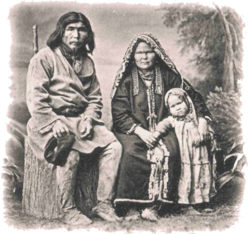
View on WikipediaThe Mansi (Mansi: Мāньси / Мāньси мāхум,[4] Māńsi / Māńsi māhum, [ˈmaːnʲsʲi, ˈmaːnʲsʲi ˈmaːxʊm]) are an Ob-Ugric Indigenous people living in Khanty–Mansia, an autonomous okrug within Tyumen Oblast in Russia. In Khanty–Mansia, the Khanty and Mansi languages have co-official status with Russian. The Mansi language is one of the postulated Ugric languages of the Uralic family. The Mansi people were formerly known as the Voguls.[5]
Key Information


Together with the Khanty people, the Mansi are politically represented by the Association to Save Yugra, an organisation founded during Perestroika in the late 1980s. This organisation was among the first regional indigenous associations in Russia.
Demographics
[edit]
| Total | Men | Women | |
|---|---|---|---|
| Total | 12,228 | 5,685 | 6,543 |
| Tyumen Oblast | 11,583 | 5,356 | 6,227 |
| *Khanty-Mansi Autonomous Okrug | 11,065 | 5,136 | 5,929 |
| Sverdlovsk Oblast | 334 | 170 | 164 |
| Komi Republic | 5 | 3 | 2 |
According to the 2021 census, there were 12,228 Mansi in Russia.
History
[edit] | This section needs additional citations for verification. (January 2025) |


The ancestors of the Mansi people populated the areas west of the Urals.[7] Mansi findings have been unearthed in the vicinity of Perm.[7] In the first millennium BC, they expanded to Western Siberia, where they assimilated with the native inhabitants.[7] Other researchers say that the Khanty people originated in the south Ural steppe and moved northwards into their current location in about 500 AD.[8]
As per the Primary Chronicle, Uleb Ragnvaldsson, the posadnik of Novgorod, led a war party to conquer Yugra, the historical homeland of the Khanty (Ostyaks) and Mansi (Voguls). Ragnvaldsson was defeated near Syktyvkar, as the Mansi still inhabited large areas west of the Urals. This is one of the first records of Novgorod and later the unified Russian state claiming dominance over a land where they had no or negligible presence.
Some Russian historians[who?] claim that Yugra were subjugated during the 12th century, but historical records show that Russian power was only established in the middle of the 18th century. Most likely, the Khanty people were not initially aware they had been claimed as subjects of Novgorod or Russia, and their "new" masters were not aware of who their subordinates were.
During the Middle Ages, it is possible that the Mansi considered the eastern territories of the Novgorod Republic and the Grand Principality of Moscow as their own. Russian folklore identifies the people of Yugra as being bloodthirsty, as natives of Yugra may have made raids into areas controlled by Novgorod or Moscow.[9] The 15th to 17th centuries were the height of the Mansi conducting war parties on Russian lands. The Mansi principalities' leaders had sworn allegiance to the Russian tsar; however they did interpret this differently from the Russians. Mansi lords used these sworn allegiances to convince local Mansi populations that they were direct subjects of the Russian supreme leader, and hence had full right to punish Russian nobility for their wrongdoings. Raids and war parties against Russian nobility created confusion in the regions near the Ural Mountains. As a result, they were also popular with Russian peasants, as they gave them freedom to improve their lives by stealing with a "permit" from the tsar whatever they wished from the nobility.[9]
During the 15th and 17th centuries, there were many conflicts among natives of Yugra in which sometimes Moscow was involved, but from the 17th century, Russia became the dominant power. There were many conflicts where the Mansi fought against the Khanty, Nenets, Tatars or Russians, changing allies as fit their needs.
The Mansi people were divided into principalities such as Kondia. In the 15th and 16th century, these were divided into three categories: central, southern and northern. The central principalities were partially included in the Grand Principality of Moscow, while some southern principalities were subjects of the Siberian Khanate, and the northern principalities were independent as knowledge of them was limited outside of the region. At the end of the 16th century, Russia made the decision to conquer the principalities. The push came under the Russian Cossack Yermak, and its influence reached the natives in the Obi River region, starting a time of troubles lasting until the reign of Peter the Great in the 18th century. It took until the end of the 17th century for the Russians to reach every corner of their claimed areas. This resulted in number of wars between Mansi principalities and the Russians.
Kondia was the most powerful principality in Yugra in the 17th century, as it was still de facto independent at the beginning of the 18th century. During that period, there was an attempt to Christianize the Mansi and others living in the same region.[10] Kondia raised an army of several hundred men and drove the missionaries out from their lands. Kondia was also unique in that it did not pay the yasak tax until 1620, when Russia started demanding it from them.[11]
In 1609, the leadership of Kondia planned to push Russia out from Siberia and attacked Beryozovo. To increase their chances of success, alliances with other principalities, including Khanty principalities, were considered. Finally with the Obdorski, Belogorje and Sosva principalities, an attack was made on Beryozovo. The alliance with Khanty-run Obdorski may have been influenced by the fact that Obdorski destroyed a Russian war party in the tundra in 1600. The war was not successful and the Russians pushed for a change of leadership in Kondia. The noblewoman Anna stepped down but continued to rule behind the scenes through her son and grandson. As a result, the Russian yasak was not paid until 1620, when Russia started demanding it specifically. Peace did not last long, as the Khanty nobility formed another alliance with Khanty nobleman Mamruk to drive the Russians away. Another conflict began in 1611–1612, when Kondia started another war to drive the Russians out, unsuccessfully.[11]
Kinema and Sueta, rulers of the Bardak principality, whose area is located in the present-day town of Surgut, attacked the village of Surgut in 1691. They stole the funds of the local administration and panic broke out in Surgut. The funds stolen had come from taxing the Nenets, as local Mansi were either excluded from paying taxes or chose to ignore taxes. The Russians responded to this offence by liquidating the principality and enforcing taxes on all the residents.
The last conflict between the Mansi and the Russian state was the Kazym rebellion in 1931–1934, where natives of Khanty-Mansi Autonomous Okrug rebelled. The rebellion was crushed by the Red Army. This was the last known conflict between Russia and any of the Siberian tribes.
Relationship with historical Magyar conquerors
[edit]The Mansi are one of the closest linguistic relatives of modern Hungarians. Genetic data by Maroti et al. revealed high genetic affinity between Magyar conquerors and modern day Bashkirs, with both being modeled as ~50% Mansi-like, ~35% Sarmatian-like, and ~15% Hun/Xiongnu-like. The admixture event is suggested to have taken place in the Southern Ural region in 643–431 BC.[12]
Culture
[edit]

The Mansi share many similarities with the Khanty people and together they are called the Ob-Ugric peoples. Their languages are closely related but clearly distinct from each other.[13]
Traditional livelihood
[edit]The Mansi were semi-nomadic hunters and fishermen. Some Mansi also raised reindeer. A few Mansi engaged in agriculture (cultivating barley) and raised cattle and horses.[14]
During the winter, the Mansi lived in stationary huts made out of earth and branches at permanent villages. During the spring, the Mansi moved towards hunting and fishing grounds, where they constructed temporary rectangular-shaped shelters out of birch bark and poles.[14]
Weapons used by the Mansi were advanced for the period and included longbows, arrows, spears. They also wore iron helmets and chain mail.[14]
Folk culture
[edit]A notable part of the traditional Mansi religion is the bear cult. A bear celebration is held in connection with the bear hunt (a similar concept to the Finnish peijaiset); it lasts for several days and involves songs, dances and plays. Mansi folklore also includes mythical and heroic stories and fate songs, which are biographical poems.[13]
An example of the traditional material culture of Ob-Ugric peoples is ornamenting leather clothing and birch bark objects with mosaics.[13]
Genetics
[edit]Uniparental lineages
[edit]The majority of Mansi men carry haplogroup N, which is commonly found among Uralic-speaking peoples. 60% of them carry its subclade N1b-P43 and 16% belong to subclade N1c.[15]
The maternal lineages among Mansi are more heterogeneous. The most common mitochondrial DNA haplogroup for Mansi is U, as about one in four has it. Most of them (16.6%) belong to its subgroup U4. Other haplogroups include C (18.6%), H (15.1%), J (13.1%) and D (12.6%).[15]
Autosomal DNA
[edit]A 2016 study found that the global maximum of ANE ancestry occurs in modern-day Kets, Mansi, Native Americans, and Selkups.[16]
According to a 2019 study, in addition to having a high level of East Eurasian-like ancestry, the Mansi have also West Eurasian admixture. Their admixture can be modelled to be about 60% Bronze Age Baikal Lake-like and 40% Srubnaya-like, or about 54% Nganasan-like and about 38% Srubnaya-like, with additional ANE-related admixture.[17]
In a 2018 study, Mansi samples showed variation in the amounts of West and East Eurasian admixtures. Some of them clustered with the Khanty, while outlier samples had additional West Eurasian admixture, making them closer to Uralic-speakers from the Volga-Ural region.[15]
Notable Mansi
[edit]- Matrena Pankrat'yevna Vakhrusheva (1918–2000), linguist, philologist, writer; co-wrote the first Mansi-Russian dictionary
- Yuvan Nikolayevich Shestalov (1937–2011), writer
- Ruslan Mikhailovich Provodnikov (b. 1984), boxer (Mansi mother)
- Sergey Aleksandrovich Ustiugov (b. 1992), cross-country skier (Mansi father)
- Sergey Semyonovich Sobyanin (b. 1951), current mayor of Moscow
References
[edit]- ^ [1]
- ^ НАЦИОНАЛЬНЫЙ СОСТАВ НАСЕЛЕНИЯ [National Composition of the Population]. Federal State Statistics Service (Russia) (in Russian). 21 October 2022.
Spreadsheet download
- ^ "Росстат — Всероссийская перепись населения 2020". rosstat.gov.ru. Archived from the original on 2020-01-24. Retrieved 2023-01-03.
- ^ Ромбандеева, Е. И. (2005). Русско-Мансийский словарь: учебное пособие [Russian-Mansi dictionary: textbook] (in Russian). СПб: Миралл. p. 129. ISBN 5-902499-14-3.
- ^ "Mansi". Encyclopedia.com. Retrieved 2022-03-13.
- ^ "Национальный состав населения". Federal State Statistics Service. Retrieved 30 December 2022.
- ^ a b c "The Mansis". The Peoples of the Red Book. EE: EKI.
- ^ "Britannica".
- ^ a b "Art Leete: Obi ugri vürstide viimased sõjad". ERR (in Estonian). 2024-02-17. Retrieved 2024-02-29.
- ^ Ia, Artamonova Nadeghda; N, Asochakova Valentina; S, Chistanova Svetlana (2018). "Religious migration: The history of missionary work in Siberia". Журнал Сибирского Федерального Университета. Гуманитарные Науки. 11 (8): 1188–1210.
- ^ a b "Art Leete: Obi ugri vürstide viimased sõjad". 17 February 2024.
- ^ Maróti, Zoltán; Neparáczki, Endre; Schütz, Oszkár; Maár, Kitti; Varga, Gergely I. B.; Kovács, Bence; Kalmár, Tibor; Nyerki, Emil; Nagy, István; Latinovics, Dóra; Tihanyi, Balázs; Marcsik, Antónia; Pálfi, György; Bernert, Zsolt; Gallina, Zsolt (2022-07-11). "The genetic origin of Huns, Avars, and conquering Hungarians" (PDF). Current Biology. 32 (13): 2858–2870.e7. Bibcode:2022CBio...32E2858M. doi:10.1016/j.cub.2022.04.093. ISSN 0960-9822. PMID 35617951. S2CID 246191357.
- ^ a b c Kulonen, Ulla-Maija: "Obinugrilaiset", in Laakso, Johanna (ed.): Uralilaiset kansat. Helsinki: WSOY, 1991. ISBN 9510164852.
- ^ a b c Forsyth, James (1994). A History of the Peoples of Siberia: Russia's North Asian Colony 1581-1990. Cambridge University Press. pp. 11–13. ISBN 978-0-521-47771-0.
- ^ a b c Tambets, Kristiina; Yunusbayev, Bayazit; Hudjashov, Georgi; Ilumäe, Anne-Mai; Rootsi, Siiri; Honkola, Terhi; Vesakoski, Outi; Atkinson, Quentin; Skoglund, Pontus; Kushniarevich, Alena; Litvinov, Sergey; Reidla, Maere; Metspalu, Ene; Saag, Lehti; Rantanen, Timo (2018). "Genes reveal traces of common recent demographic history for most of the Uralic-speaking populations". Genome Biology. 19 (1): 139. doi:10.1186/s13059-018-1522-1. ISSN 1474-760X. PMC 6151024. PMID 30241495.
- ^ Flegontov, Pavel; Changmai, Piya; Zidkova, Anastassiya; Logacheva, Maria D.; Altınışık, N. Ezgi; Flegontova, Olga; Gelfand, Mikhail S.; Gerasimov, Evgeny S.; Khrameeva, Ekaterina E.; Konovalova, Olga P.; Neretina, Tatiana; Nikolsky, Yuri V.; Starostin, George; Stepanova, Vita V.; Travinsky, Igor V. (2016-02-11). "Genomic study of the Ket: a Paleo-Eskimo-related ethnic group with significant ancient North Eurasian ancestry". Scientific Reports. 6 20768. doi:10.1038/srep20768. ISSN 2045-2322. PMC 4750364. PMID 26865217.
- ^ Jeong, Choongwon; Balanovsky, Oleg; Lukianova, Elena; Kahbatkyzy, Nurzhibek; Flegontov, Pavel; Zaporozhchenko, Valery; Immel, Alexander; Wang, Chuan-Chao; Ixan, Olzhas; Khussainova, Elmira; Bekmanov, Bakhytzhan; Zaibert, Victor; Lavryashina, Maria; Pocheshkhova, Elvira; Yusupov, Yuldash (2019-04-29). "The genetic history of admixture across inner Eurasia". Nature Ecology & Evolution. 3 (6): 966–976. Bibcode:2019NatEE...3..966J. doi:10.1038/s41559-019-0878-2. ISSN 2397-334X. PMC 6542712. PMID 31036896.
Further reading
[edit]- "Мифы, сказки, предания манси (вогулов): в записях 1889, 1952, 1958-1960, 1968, 1978, 1992, 2002 годов" [Myths, fairy tales, legends from the Mansi/Vogul, collected in ...]. Ин-т филологии СО РАН и др.; подгот. текстов, пер., вступ. ст., коммент., указ., слов., сост. компакт-диска Е. И. Ромбандеевой. Москва; Новосибирск: Наука, 2005.
External links
[edit]
- The Mansis
- Dr Gabor Szekely's 1st visit to the Mansis
- Dr Gabor Szekely's 2nd visit to the Mansis
- The History of the Mansi
| Titular nationalities | |||||||||||||
|---|---|---|---|---|---|---|---|---|---|---|---|---|---|
| Indigenous peoples |
| ||||||||||||
| Other ethnic peoples |
| ||||||||||||
| Unrecognized peoples | |||||||||||||
| Assimilated peoples | |||||||||||||
| |||||||||||||


Mansi people
View on GrokipediaNomenclature and origins
Etymology and self-designation
The Mansi people refer to themselves as Māńsi (singular) or Māńsi māhum (plural, meaning "Mansi people"), a self-designation that derives from their language's term for "human being" or "man."[9][10] This endogenous ethnonym traces back to Proto-Ugric mäńć-, denoting "man" or "person," a root also reflected in related Ugric groups such as the Hungarian Magyar.[2] The term emphasizes a basic human identity without geographic or tribal qualifiers in its core form, though subgroups may append loconyms, such as Māńsi tōń for those near the Ob River.[11] Historically, the ethnonym "Mansi" appeared in Russian sources as early as 1785 but gained widespread official adoption only in the 1920s and 1930s, replacing the exonym "Vogul" (Russian: voguly), which originated from the Komi-Zyrian language and carried pejorative connotations among some indigenous groups.[2][11] Prior to this shift, "Vogul" dominated external references in Russian ethnography and administration, reflecting Komi interactions rather than Mansi self-perception.[9] The transition to "Mansi" aligned with Soviet policies promoting native nomenclature, though linguistic evidence confirms its antiquity within Ugric traditions predating Russian contact.[10]Historical ethnonyms and external names
The Mansi were first mentioned in Russian chronicles in 1396 under the exonym "Voguls" (Russian: вогулы), referring specifically to tribes inhabiting the Perm region west of the Urals.[9][12][11] This designation, derived from Komi-Zyrian and Khanty terms for the group (such as vukul or vykli, possibly denoting an ancient Uralic tribal name), was employed by neighboring Finno-Ugric peoples who served as intermediaries in early Russian contacts.[9][2][13] By the 15th century, Russian sources extended the name to eastern Mansi groups along the Lozva River and other tributaries of the Ob, using variants like Vogulichi, Gogulichi, and Bogulichi.[11] These terms reflected phonetic adaptations in Slavic transcription and persisted in official documents during the conquest of Yugra territories, where "Voguls" denoted the indigenous population resisting Muscovite expansion.[12] European ethnographic accounts adopted the Russian exonym through the 19th and early 20th centuries, often pairing it with "Ostyaks" for the related Khanty.[9] The endonym Mansi (from Proto-Ugric *mańć- 'person' or 'man') entered Russian records by 1785 but remained marginal until Soviet administrative reforms in the 1920s promoted its use over "Vogul" to align with indigenous self-designations.[12][9] Earlier external references, such as in medieval Novgorod trade logs, subsumed them under broader "Yugra" for northern Ob-Ugric peoples, without distinct ethnonyms.[11]Geography and environment
Traditional territories
The traditional territories of the Mansi people encompassed the taiga forests of northwestern Siberia, spanning from the eastern foothills of the Ural Mountains eastward to the middle and lower Ob River basin. These lands included the valleys of key tributaries such as the Konda, Lozva, Pelym, Sosva, and Tavda rivers, where settlements and seasonal camps were established to exploit resources for hunting, fishing, and reindeer husbandry.[9][2] Prior to intensive Russian colonization in the 16th–18th centuries, Mansi range extended westward across the Urals into areas near the Kama and Pechora rivers, indicative of ancestral migrations from west of the mountains to the Irtysh and Ob regions by the first millennium BCE.[9] This broader historical domain covered approximately 523,100 square kilometers of subarctic terrain, blending dense coniferous taiga with swampy lowlands and northern tundra fringes.[2][14] The geography supported a semi-nomadic economy reliant on riverine access for transportation and subsistence, with communities adapting to harsh winters and short summers through mobile dwellings and resource rotation across clan-controlled hunting grounds.[9] Encroachment by Siberian Tatars from the 13th century and later Russian fur tribute systems progressively confined Mansi activities to eastern river systems, disrupting traditional land use patterns.[9]Current distribution and settlements
The Mansi are predominantly distributed across the Khanty-Mansi Autonomous Okrug—Yugra within Tyumen Oblast, Russia, where the vast majority of the ethnic group resides in rural settlements amid the taiga and along river valleys. According to the 2010 All-Russian census, the total Mansi population was 12,269, with approximately 80% concentrated in this autonomous okrug, primarily in its northern and eastern districts such as Beryozovsky, Kondinsky, Sovetsky, and Khanty-Mansi districts.[1][2] Smaller communities, numbering in the hundreds, persist in adjacent Sverdlovsk Oblast and other areas of the Ural Federal District.[5] Traditional Mansi settlements are situated in the basins of major rivers including the Ob, Irtysh, Konda, Lozva, Pelym, Sosva, and Tavda, often in remote villages that reflect their historical semi-nomadic lifestyle adapted to the West Siberian Plain's environment. Notable examples include Saranpaul' in Beryozovsky District and Niaksymvol', where Mansi coexist with neighboring ethnic groups like Komi and Nenets in mixed communities.[9][15] Urbanization has drawn some Mansi to larger centers like Khanty-Mansiysk, but the majority remain in rural areas, comprising a small fraction—less than 1%—of the okrug's overall population of over 1.7 million as of recent estimates.[16] By the 2021 census, localized counts such as 209 Mansi in Beloyarsky District indicate stability in specific areas despite broader demographic pressures.[17]Language
Linguistic classification and dialects
The Mansi language belongs to the Ugric branch of the Uralic language family and forms the Ob-Ugric subgroup alongside the Khanty language, with which it shares the closest genetic ties among extant Uralic tongues.[18] [19] This classification traces back to Proto-Ugric reconstructions, distinguishing Ob-Ugric from the Hungarian branch through shared innovations in phonology, such as vowel harmony patterns and consonant gradation, while diverging from Finno-Permic languages in vocabulary and syntax. Linguistic analyses, including comparative lexicostatistics, confirm the internal coherence of Ob-Ugric, with Mansi-Khanty lexical similarity exceeding 50% in basic vocabulary lists.[20] Mansi exhibits four principal dialect groups—northern, eastern, western, and southern—differentiated primarily by geography along the Ob River tributaries and exhibiting substantial phonological, morphological, and lexical variation that often precludes mutual intelligibility between groups.[21] [22] The northern and eastern dialects persist among speakers, with the former encompassing sub-dialects such as Sosva (basis for the literary standard), Sygva, Upper Lozva, and Obdorsk, characterized by retention of proto-Ugric *s > h shifts and richer vowel inventories.[21] [23] Western and southern dialects, last documented in the early 20th century through fieldwork by scholars like Artturi Kannisto, feature innovations like palatalization of velars and are now extinct, with no fluent speakers recorded since the 1950s due to assimilation pressures.[22] Diachronic studies using 18th–21st century vocabulary lists reveal gradual convergence in northern-eastern varieties under Russian influence, yet core dialectal boundaries endure in nominal case systems and verb conjugation paradigms.[23]Current status and revitalization efforts
The Mansi language, an Ugric member of the Uralic family, is severely endangered, with fewer than 1,000 fluent speakers remaining as of recent estimates, primarily among elderly individuals in the Khanty-Mansi Autonomous Okrug.[21][24] Northern Mansi is the only dialect still in active use for everyday communication, albeit sporadically in rural communities, while Eastern, Western, and Southern dialects are either extinct or reduced to a handful of speakers.[25][26] Language transmission to younger generations has largely ceased, with Russian dominating as the primary medium of education, administration, and media, leading to a sharp intergenerational decline; in 1989, over 3,000 individuals reported Mansi as their native language, but proficiency has since plummeted.[13][27] Revitalization initiatives, though limited in scope and impact, include academic documentation and linguistic fieldwork supported by Russian government grants since 2017, focusing on Northern Mansi phonology, grammar, and lexicon to create digital archives and pedagogical materials.[28] Universities such as Tomsk Polytechnic have conducted surveys and recordings in remote settlements to assess vitality and develop teaching aids, emphasizing heritage speakers' roles in informal transmission through family and cultural events.[27][29] Broader federal programs, proposed by the Institute of Linguistics of the Russian Academy of Sciences, advocate for indigenous language preservation via school curricula integration and media inserts, but implementation remains uneven, with urban Mansi communities in Khanty-Mansiysk showing minimal uptake due to socioeconomic pressures favoring Russian.[30][31] Despite these efforts, negative trends persist, including dialect fragmentation and lack of institutional support, hindering reversal of the shift toward monolingual Russian usage.[32]History
Prehistoric migrations and ethnogenesis
The ethnogenesis of the Mansi people traces to the formation of the Ob-Ugric branch of the Ugric language family in western Siberia during the late Bronze Age, approximately 1500–750 BCE, when proto-Ugric populations emerged from the admixture of Mezhovskaya culture groups with northern forest hunter-gatherers akin to modern Nganasans.[33] This process involved eastward migrations of earlier proto-Uralic speakers from the Volga-Ural region, facilitated by metallurgical networks like the Seima-Turbino phenomenon around 2000 BCE, which spread tin-bronze technologies and cultural influences across the Urals into Siberia.[33] Linguistic reconstructions place the divergence of proto-Ugric from other Uralic branches between roughly 3421 and 745 BCE, with the homeland situated east of the Urals in southwestern Siberia, near the forest-steppe transition.[33] Genetic modeling supports this admixture model for modern Mansi ancestry, estimating approximately 48% contribution from Mezhovskaya-related populations, 44% from Nganasan-like Siberian natives, and 8% from Ancient North Eurasian components, reflecting a synthesis of steppe-influenced migrants and indigenous taiga foragers.[33] Archaeological correlates include the Cherkaskul and Mezhovskaya cultures (13th–7th centuries BCE), characterized by fortified settlements, bronze artifacts, and pastoral economies, which transitioned into Iron Age groups like Itkul and Gorokhovo, marking the consolidation of Ob-Ugric identity.[33] The split between Ob-Ugric (ancestors of Mansi and Khanty) and the Hungarian branch occurred in the early Iron Age, prior to 643–431 BCE, as proto-Ugric groups dispersed, with Ob-Ugric speakers adapting to the Ob River basin's wetlands and forests through hunting, fishing, and reindeer herding.[33] Subsequent prehistoric developments involved limited interactions with steppe nomads, such as Sarmatians around 643–431 BCE, introducing minor genetic influences without disrupting core ethnogenesis.[33] By the 6th–13th centuries CE, proto-Ob-Ugric communities in western Siberia exhibited Y-chromosome haplogroups like N1a1-Z1936 and Q-L330, showing continuity with modern Mansi and Khanty, alongside mitochondrial lineages blending East Eurasian (e.g., C, D) and West Eurasian (e.g., H, U) elements from ongoing admixture with local and migratory populations.[34] This genetic profile underscores a stable ethnogenesis rooted in Bronze Age migrations, rather than later wholesale displacements, with Mansi forming as a distinct group in the western tributaries of the Ob, differentiated from eastern Khanty by dialect and territorial adaptation.[34]Medieval interactions and Ugric relations
During the medieval period, the Mansi, inhabiting the forested regions of western Siberia known collectively as Yugra, experienced initial contacts with Slavic principalities through the Novgorod Republic, which sought tribute from the 11th to 16th centuries via periodic armed expeditions.[35] These interactions, documented in Russian chronicles, involved conflicts as early as the 12th century, where Novgorod forces clashed with Yugra leaders to enforce fur tribute payments, reflecting the Mansi's resistance to external domination amid their hunter-gatherer economy.[36] By the 15th century, such campaigns intensified, culminating in Moscow's assertion of control over Yugra principalities between 1465 and 1500, marking the transition from tribute raids to territorial incorporation.[37] Evidence of broader medieval interactions appears in the Mansi's adoption of military terminology and mythological motifs suggestive of exchanges with southward steppe nomads, including Turkic groups like the Tatars, whose cattle-breeding cultures influenced Ob-Ugric folklore through trade or conflict over hunting grounds.[11] These contacts likely occurred via riverine routes along the Ob and Irtysh basins, facilitating indirect diffusion of technologies such as ironworking, though direct archaeological corroboration remains sparse due to the Mansi's mobile, non-monumental lifestyle.[11] In terms of Ugric relations, the Mansi maintained proximate ties with the neighboring Khanty, forming the Ob-Ugric subgroup through shared linguistic dialects and adaptive subsistence strategies in overlapping territories, evidenced by parallel epic traditions and kinship structures despite occasional intertribal skirmishes over resources.[38] Relations with more distant Ugric kin, such as the Hungarians whose ancestors diverged proto-Ugric speakers around the 1st millennium BCE, were confined to deep ancestral heritage rather than contemporary medieval exchanges, as geographic separation precluded direct interaction following the Magyars' westward migration in the 9th century CE.[39] This linguistic kinship, preserved in comparative vocabularies for kinship terms and numerals, underscores a common ethnogenesis in the Ural region but no verifiable medieval contacts.[40]Russian conquest and early modern period
The Russian conquest of Mansi territories commenced in the late 16th century amid the Muscovite state's eastward expansion into Siberia, targeting lands previously under the loose suzerainty of the Sibir Khanate. In 1581, Cossack detachments under Yermak Timofeyevich invaded Vogul (Mansi) domains east of the Urals, defeating local forces including those led by Mansi ataman Yepancha near the Tura River and securing initial footholds through alliances and coercion.[9] Mansi groups, organized in principalities with tributary relations to Tatar khans, provided warriors to Sibir Khan Kuchum but suffered defeats that fragmented their political autonomy by the early 17th century.[12] Mansi resistance manifested in immediate counterattacks, such as raids on Stroganov family estates in 1581 and assaults on Russian settlers at Cherdyn in 1582, yet these were quelled by reinforced Cossack campaigns that established key forts like Tyumen in 1586 and Surgut in 1594 to consolidate control over the Ob River basin.[9] By the 1620s, Russian voevodes (governors) had extended administrative oversight, compelling surviving Mansi clans to submit through military punitive expeditions that reduced their numbers via direct combat and disease introduction.[41] The imposition of the yasak fur tribute system defined early Russian governance, mandating annual deliveries—typically seven sables per adult male for Pelym Mansi by the early 17th century, escalating to ten in some 18th-century assessments—to state collectors, which strained subsistence hunting and incentivized overexploitation of resources.[41] [9] Russian traders exacerbated economic pressures via monopolistic exchanges favoring low-value goods like tobacco and vodka, fostering indebtedness and social disruption among Mansi communities while enabling land encroachment for agriculture and mining.[9] Sporadic Mansi revolts continued into the 17th century, often allied with Khanty or Tatar remnants, but were systematically crushed, as in suppressions around Narym fortress. Christianization intensified under Peter I from 1714 to 1722, with missionary monk Fyodor conducting mass baptisms of Pelym and other Mansi groups, backed by imperial decrees executing non-compliers to enforce Orthodox conformity and exempt converts from certain tributes.[9] [12] This era saw partial cultural erosion, including adoption of Russian naming and settlement patterns, though core animistic practices persisted covertly amid incomplete assimilation.[11]Soviet-era transformations
In 1930, the Soviet government established the Ostyak-Vogul Autonomous National District within Tyumen Province to administer the territories inhabited by the Mansi and Khanty, renaming it the Khanty-Mansi National District in 1940 and later elevating it to autonomous okrug status in 1977; this structure incorporated Mansi into village, settlement, and regional soviets, with mandatory representation of the native population among deputies.[42][9] Collectivization campaigns in the early 1930s forcibly settled semi-nomadic Mansi reindeer herders and fishers, confiscating private livestock and territories while targeting prosperous households—labeled as kulaks—for liquidation through exile or execution, which disrupted traditional subsistence economies and prompted resistance among indigenous groups in the district, including uprisings like the Kazym War (1931–1934) led primarily by Khanty but affecting the broader Ob-Ugric communities.[9][43] Cultural suppression accompanied economic restructuring, with shamans persecuted as counter-revolutionaries and traditional rituals criminalized under anti-religious drives; a literary Mansi language based on the Sosva dialect was standardized in 1931 using a Latin script, shifting to Cyrillic in 1937, though boarding schools enforced Russian-medium instruction, accelerating language shift and reducing native speakers from over 50% in the early Soviet period to 37.1% by 1989.[9][43] By 1979, only 43% of Mansi engaged in traditional hunting, fishing, or herding, as many were compelled into wage labor or relocated to urban centers, while the district's total population exploded from 98,300 in 1938 to 1,268,000 in 1989 due to influxes of Russian and other migrant workers, diluting the Mansi share to 0.6%.[9] Postwar industrialization intensified transformations, with the first oil deposits discovered in the Khanty-Mansi region in 1960 near Nefteyugansk, followed by rapid extraction that polluted rivers and taiga, destroyed fishing grounds and reindeer pastures, and necessitated evacuations of Mansi settlements without compensation, fundamentally eroding their resource-based livelihoods by the 1970s.[9][44] These developments, prioritized under central planning for heavy industry, prioritized resource output—reaching significant scales by the 1960s—over indigenous land rights, contributing to cultural erosion as younger generations adopted Soviet urban norms.[9]Post-Soviet developments
The dissolution of the Soviet Union in 1991 facilitated a resurgence of ethnic identity among the Mansi, enabling greater emphasis on cultural preservation amid the broader transition to market economics and regional autonomy in the Khanty-Mansi Autonomous Okrug. Regional legislation, such as laws regulating indigenous community activities to maintain traditional livelihoods like reindeer herding and fishing, emerged to counter ongoing assimilation pressures.[45] In 1993, okrug authorities advocated for elevating the region's status to that of a full republic, reflecting aspirations for enhanced self-governance, though this did not materialize amid federal centralization under President Yeltsin and later Putin.[46] Economic transformations driven by intensified oil and gas extraction in Mansi territories exacerbated tensions over land rights, as resource development displaced traditional subsistence activities and attracted influxes of non-indigenous migrants, diluting the ethnic proportion within the okrug's population, which swelled from 1.43 million in 2002 to 1.67 million by 2020. Benefit-sharing agreements between indigenous groups and extractive companies were introduced in some cases, providing limited compensation for environmental impacts, but conflicts persisted, including protests against sacred site disruptions.[47] Mansi communities reported heightened vulnerability to pollution and habitat loss, with federal policies prioritizing industrial growth over indigenous priorities.[48] Cultural revitalization gained momentum through post-Soviet programs, including ethnic summer camps for youth in remote areas to transmit folklore, crafts, and language skills, supported by okrug funding that built on Soviet-era foundations but emphasized heritage as communal property.[49] These efforts coexisted with persistent Russification; while Mansi population grew modestly from 11,432 in the 2002 census to 12,269 in 2010 and approximately 12,308 by 2020, only a small fraction reported Mansi as their primary language, underscoring incomplete reversal of Soviet-era linguistic shifts.[2] [1] Demographic stability masked underlying assimilation, as urban migration and intermarriage reduced cultural transmission, though native intelligentsia advocated for folklore documentation and sacred site protections.[50]Culture and traditional society
Subsistence economy and livelihoods
The traditional subsistence economy of the Mansi centered on hunting and fishing in the taiga and riverine environments of western Siberia, with northern groups additionally practicing reindeer herding by the 16th century. Hunting, the dominant activity during the 16th and 17th centuries, focused on fur-bearing animals like beavers across privately held grounds.[11][46] Fishing supplemented this along rivers such as the Ob, though it was less intensive than among the related Khanty.[11] Gathering activities, including apiculture from owned forest hive trees, provided honey and other forest products.[11] In western and southern Mansi communities, interactions with steppe cultures and Russian settlers introduced cattle breeding and rudimentary agriculture, diversifying but not supplanting core foraging practices.[11] Reindeer herding involved managing herds for transport, milk, and meat, integral to seasonal mobility in northern territories.[46] Contemporary livelihoods reflect a sharp decline in traditional pursuits, with fewer than half of Mansi engaged in hunting, fishing, or herding as of recent assessments.[2][46] The Khanty-Mansi Autonomous Okrug's role as Russia's primary oil-producing region—accounting for half of national output—has driven industrialization that pollutes waterways, erodes fishing stocks, and eliminates grazing pastures across millions of hectares.[51][2] Forests vital for hunting have diminished, disrupting game populations and reindeer forage, prompting conflicts such as road blockades against extractive firms.[51][46] State subsidies of about 3,750 euros per individual bolster residual traditional economies, yet urban forced relocations foster dependency on wage labor and contribute to social issues including shortened life expectancies of 40-45 years.[2]Social organization and kinship
The traditional social organization of the Mansi people was centered on kinship-based groups, structured around exogamous phratries and clans. Northern Mansi society was divided into two primary exogamous phratries, known as Mosh and Por (or Moś), which served as overarching moieties regulating marriage alliances and social interactions.[52][53] Within these phratries, smaller clans were organized patrilineally, often named after ancestral figures and marked by specific totemic signs or brands used to identify property and lineage.[52] These kinship units were geographically distributed along rivers such as the Ob, Sosva, Liapin, and Konda, forming localized communities that coordinated subsistence activities like hunting and fishing.[42] Descent among the Mansi was reckoned bilaterally, tracing lineage through both paternal and maternal lines, though a shift toward patrilineal kindreds occurred in the 17th century, replacing earlier patriarchal clan structures.[52] Kinship terminology distinguished relatives by bloodlines, maternal connections, and affinal (marriage-based) relations, further categorized by gender, parentage, generation, and relative age to the ego. Blood relatives and maternal kin were regarded as the closest ties, influencing inheritance and support networks.[52] Clan leadership was typically heritable among selected male elders, who mediated disputes and represented groups in inter-clan feuds, often aligned along patrilineal or matrilineal divisions over territory.[42] Marriage customs enforced strict exogamy at both phratry and clan levels to maintain genetic diversity and alliance-building, prohibiting unions within the same moiety or clan.[52] By the 17th century, clan-tribal organizations had largely supplanted earlier chiefdoms (kniazhestvo), adapting to external pressures from Russian expansion while preserving kinship as the core of social cohesion.[42] These structures facilitated a semi-nomadic lifestyle, with families and kin groups cooperating in seasonal migrations and resource management.[42]Religion, shamanism, and folklore
The traditional religion of the Mansi, an indigenous Ugric people of western Siberia, centers on animism and a pantheon of spirits associated with natural phenomena, animals, and celestial bodies, with a supreme sky deity often referred to as Num or Kaltes alongside an earth mother figure. Beliefs emphasize harmony with the environment, where forests, rivers, and animals possess souls requiring respect to avoid misfortune, as evidenced in ethnographic accounts of rituals invoking these entities for hunting success and protection. Ancestor veneration plays a key role, with sacrifices of reindeer or horses historically offered to appease spirits and ensure communal prosperity, particularly during periods of religious revival in the late 20th century when such practices reemerged amid post-Soviet ethnic assertion.[54][55] Shamanism constitutes a core element of Mansi spiritual practice, featuring shamans—known locally as tadibs or olbans—who serve as intermediaries between humans and the spirit world, conducting healings, divinations, and exorcisms through trance states induced by drumming or chants rather than ecstatic journeys typical of some Siberian variants. These practitioners diagnose illnesses as spirit-induced imbalances, employing herbal remedies like sarsaparilla root alongside rituals to negotiate with entities such as the forest spirit Menk, a trickster-like guardian of wildlife. By the 1930s, overt shamanism had waned under Soviet suppression, though syncretic elements persisted, blending with Russian Orthodox Christianity adopted nominally from the 18th century onward; shamans historically lacked a formal priesthood, operating within kinship networks to maintain social order.[56][54] The bear cult exemplifies Mansi reverence for animals as kin to humans, culminating in the medvežiy prazdnik (bear festival), a multi-day ceremony following a successful hunt where the bear's skull is adorned, songs recount its heavenly origin and earthly life, and communal feasting reconciles the hunter with the animal's spirit to prevent retribution and secure future game. This rite, documented among northern Mansi groups until the mid-20th century, involves dramatic reenactments and prohibitions against wasting bear meat, underscoring totemic bonds. Folklore enriches these beliefs through epics (tarnyng eryg), sacred legends (yalpyng moyt), and hero tales featuring protagonists like Tari-pes'-nimala-s'av, who establish cosmic order amid conflicts with underworld beings or mythical creatures such as the Witkəś, a paleontological-inspired lake monster evoking prehistoric mammoths. Songs and stories transmit moral codes, creation myths attributing the world's dualism to divine siblings, and warnings against spiritual hubris, preserved orally despite language attrition.[56][57][58]Material culture and arts
Traditional Mansi clothing utilized reindeer hides, fur, suede, and colored cloth to withstand subarctic conditions. Women's garments featured fur coats, dresses, and robes embellished with bead embroidery depicting motifs including rhombuses, zigzags, deer horns, bears, and eagles.[59] Men's attire comprised loose shirts, trousers, and hooded items for mobility during hunting and herding. Winter footwear, such as yern vay shoes adapted from Nenets styles, included triangular insteps ornamented with alternating fur and wool stripes for insulation and decoration. Mansi crafts emphasized practical functionality combined with decorative elements, including leatherworking, wood carving, and needlework for sewing apparel and accessories. Birch bark containers and leather goods were often enhanced with mosaic-like patterns, reflecting aesthetic traditions shared among Ob-Ugric peoples. Beadwork and embroidery served both utilitarian and symbolic purposes, with silver jewelry such as necklaces and chest pieces incorporating intricate designs integral to ceremonial dress.[59][61] Performing arts encompassed ritual dances and music tied to festivals, notably the bear ceremony featuring songs like Kurenya and reenactments of hunting scenes to honor ancestral spirits. These practices preserved oral and kinesthetic traditions, with applied decorative arts supporting cultural identity through ornamented tools and ritual covers.[59][62]
Genetics and population structure
Uniparental genetic markers
The Y-chromosome haplogroups of the Mansi population are dominated by subclades of haplogroup N, which are characteristic of Uralic-speaking groups across northern Eurasia, alongside contributions from R1a. A study of 28 Mansi males from the Konda River basin identified N-P43 and N-M46 each at 33%, with R1a-Z280 at 19%.[63] In southern Mansi samples, N1b-P43 occurred at 33%, N1c-L1034 at 28%, and R1a-Z280 at 19%.[64] Broader analyses of northwest Siberian Ugric populations, including Mansi, report R1a1, N2, and N3a comprising 84% of Y-chromosomes, with N2 frequencies reaching 70% in Mansi compared to 49% in related Khanty.[65][66] These patterns reflect a predominantly eastern Eurasian paternal gene pool, with N subclades like N3a1-B211 concentrated in western Siberian Ugric groups.[67] Mitochondrial DNA (mtDNA) haplogroups in the Mansi exhibit a more balanced admixture, with approximately 63% deriving from western Eurasian lineages such as HV, U (including U4 and U5a), T, J, and K, and 37% from eastern Eurasian ones including C and D.[68] Analysis of 98 Mansi individuals confirmed haplogroup H at 14.3%, alongside diverse sublineages of HV and U, while eastern haplogroups C* and D* showed moderate diversity indicative of ancient Asian affinities.[69][65] This maternal profile contrasts with the Y-chromosome data, suggesting historical gene flow predominantly through male-mediated admixture from eastern sources into a western Eurasian maternal substrate.[65]Autosomal DNA and admixture
Autosomal genetic studies model the Mansi gene pool as a composite of ancient West Eurasian and East Eurasian components, reflecting their position in western Siberia. A 2016 analysis using TreeMix inferred that 57% of Mansi ancestry traces to Ancient North Eurasian (ANE)-related sources, akin to those in Upper Paleolithic Siberians like the Mal'ta boy, while 43% (95% confidence interval: 38–47%) derives from admixture with Eastern Siberian populations related to modern Evenks and Evens.[70] This East Siberian input, which also contributes to Native American ancestry via shared ANE affinity, aligns the Mansi more closely with Eastern Siberians than with core East Asians.[70] Multiple sequence divergence coalescence (MSMC) modeling dates the primary Mansi-East Siberian admixture to approximately 6.8–9.9 thousand years ago, predating later interactions with West Eurasian groups like Eastern European hunter-gatherers (affinity dated 6.6–8 kya) and Yamnaya pastoralists (4.7–5.3 kya).[70] Genome-wide assessments further reveal a distinct Siberian ancestry component in Ob-Ugric speakers including the Mansi, with admixture from Volga-Ural and Central Asian/South Siberian sources, though proportions vary by subgroup.[71] Subsets of Mansi show evidence of more recent European admixture, estimated at around 50% in certain groups, linked to historical contacts from the 16th to 18th centuries, differentiating them from purer Siberian profiles in related Khanty populations.[71] Multilocus autosomal data confirm that Mansi admixture levels diverge slightly from neighboring populations, underscoring their intermediate genetic position between West and East Eurasian pools.[65]Implications for Ugric origins
Genetic analyses of uniparental markers in Mansi populations reveal Y-chromosome haplogroups such as N1b-P43, N1c-L1034, and R1a-Z280 as predominant, with N subclades (e.g., N-Tat derivatives like L1034) shared among Mansi, Khanty, and select Hungarian lineages, indicating a common paternal ancestry for Proto-Ugric speakers likely originating in the Ural-Ob region around 3,000–4,000 years ago.[63][72] These N haplogroups, associated with Uralic expansions from Siberia, suggest that Mansi retain a genetic signal of eastern Uralic dispersals, while limited sharing with Hungarians (e.g., via N3a4-B539) points to divergence followed by Hungarian-specific admixture during westward migration.[40] Mitochondrial DNA in Mansi shows a mix of western European (e.g., haplogroup V) and eastern Siberian lineages, with novel distributions reflecting ancient gene flow rather than recent admixture, supporting Ugric roots in a contact zone between West Eurasian and East Asian populations in northwest Siberia.[68] This mtDNA profile aligns with Ob-Ugric continuity, where Mansi and Khanty exhibit higher Siberian maternal components compared to Hungarians, whose gene pool diverged significantly due to elite dominance and intermixing with Indo-European groups during the 9th-century conquest.[63] Autosomal DNA studies indicate that Mansi and Khanty share elevated East Asian ancestry (e.g., Nganasan-like components comprising up to 61% in related Ob-Ugric groups), tracing to a shared demographic event ~2,000–3,000 years ago that correlates with Ugric linguistic divergence from broader Uralic stocks.[71][73] In contrast, modern Hungarians display predominantly European autosomal profiles with minimal Ugric-specific Siberian signals, implying that Proto-Ugric homeland was in the forest-steppe of western Siberia, from which Ob-Ugric populations (Mansi, Khanty) maintained genetic isolation while Hungarian migrants underwent substantial replacement and hybridization in the Carpathian Basin.[74] This genetic discontinuity challenges simplistic linguistic-genetic equivalence but reinforces Ugric unity through shared archaic eastern components, refined by archaeological correlations of Ugric material culture in the Lower Ob region.[33] Overall, these data imply a Proto-Ugric origin in a Siberian cradle with dual Eurasian influences, where Mansi genetics preserve a proximal signal of this ancestry, highlighting how migration and admixture reshaped Hungarian genetics without erasing linguistic ties.[71][75] Discrepancies between uniparental continuity and autosomal shifts underscore the role of male-mediated expansions in Uralic ethnogenesis, with Mansi exemplifying relative genetic stability amid regional pressures.[76]Demographics and assimilation
Population size and trends
According to the 2021 All-Russian Population Census results published by Rosstat, the Mansi ethnic group numbered 12,308 individuals in Russia.[77] This figure reflects a marginal increase from 12,269 recorded in the 2010 census, following a 7.3% rise from 11,432 in 2002.[2] [77] The majority reside in the Khanty-Mansi Autonomous Okrug—Yugra, where they constitute a small fraction of the regional population amid predominant Russian settlement.[2] Population trends indicate relative numerical stability over the past two decades, contrasting with sharper declines observed in some other northern indigenous groups.[77] However, this stability masks underlying assimilation dynamics, including high rates of intermarriage with Russians and urbanization, which have contributed to a "demographic stalemate" since the 1970s, characterized by stagnant natural growth and reduced ethnic reproduction.[78] Native Mansi language proficiency has steadily declined, with only a small proportion of self-identified Mansi reporting it as their mother tongue in recent censuses, signaling potential erosion of distinct ethnic identity despite formal population counts.[9] [2]| Census Year | Mansi Population | Change from Previous |
|---|---|---|
| 2002 | 11,432 | - |
| 2010 | 12,269 | +7.3% |
| 2021 | 12,308 | +0.3% |
Urbanization and language shift
The Mansi population has undergone rapid urbanization since the mid-20th century, driven by the expansion of the oil and gas industry in the Khanty-Mansi Autonomous Okrug, which attracted indigenous residents to urban centers for employment and services. Unlike more nomadic groups such as the Nenets, the Mansi exhibit higher levels of urban integration, with many relocating from traditional taiga villages to cities like Surgut, Nizhnevartovsk, and Khanty-Mansiysk.[81] This shift intensified post-Soviet economic restructuring, as resource extraction dominated local livelihoods, marginalizing subsistence-based rural living.[16] Urbanization correlates strongly with language shift, as city environments favor Russian dominance in education, media, and daily interactions. In the 2010 census, 74.3% of urban Mansi identified Russian as their native language, compared to 47.6% among rural Mansi, indicating accelerated assimilation in urban settings.[1] Overall, more than 60% of Mansi reported Russian as native by 2010, reflecting broader trends of linguistic erosion.[1] The Mansi language, spoken fluently by a declining minority, illustrates this shift amid stable ethnic population growth from 11,432 in 2002 to 12,269 in 2010. Native speakers numbered around 2,764 in 2002 but dropped to approximately 1,346 by the 2021 census, with only 17% of self-identified speakers maintaining proficiency.[2] [82] Contributing factors include Russian-only schooling, interethnic marriages, and urban professional demands, which limit intergenerational transmission despite revitalization efforts in select communities.[4]