Hubbry Logo
ZgorzelecZgorzelecMain
Open search
Zgorzelec
Community hub
Zgorzelec
logo
8 pages, 0 posts
0 subscribers
Be the first to start a discussion here.
Zgorzelec
Zgorzelec
from Wikipedia

Zgorzelec ([zɡɔˈʐɛlɛt͡s] , German: Görlitz,[a] Upper Sorbian: Zhorjelc [ˈzhɔʁʲɛlts] , Czech: Zhořelec, Lower Sorbian: Zgórjelc) is a town in Lower Silesian Voivodeship, in southwestern Poland, with 30,374 inhabitants (2019).[2] It is the seat of Zgorzelec County and of Gmina Zgorzelec (although it is not part of the territory of the latter, as the town is an urban gmina in its own right).

Key Information

Zgorzelec is located on the Lusatian Neisse river, on the Polish-German border adjoining the German town of Görlitz, of which it constituted the eastern part up to 1945. Through its history it has been at various times under German, Polish, Czech and Hungarian rule. In recent history, it became known as the location of a major German-operated prisoner-of-war camp for Allied soldiers of various nationalities during World War II, the place of signing of the Treaty of Zgorzelec, and the home of the successful Turów Zgorzelec basketball team, which played in the Euroleague and EuroCup.

History

[edit]

Up until 1945, the modern-day towns of Zgorzelec and Görlitz were a single entity; their history up to that point is shared. The date of the town's foundation is unknown.[3]

Middle Ages

[edit]

In the Early Middle Ages, the area was inhabited by the Bieżuńczanie tribe,[4] one of the old Polish tribes,[5] which together with the Sorbian Milceni tribe, with which it bordered in the west, was subjugated in 990 by the Margraviate of Meissen, a frontier march of the Holy Roman Empire. It was conquered by Polish Duke, and future King, Bolesław I the Brave in 1002, whose goal was to decisively unite all Polish tribes, and remained part of Poland during the reign of the first Polish kings Bolesław I the Brave and Mieszko II Lambert until 1031, when the region fell again to the Margraviate of Meissen. Zgorzelec/Görlitz was first mentioned in a document from the King of Germany, and later Holy Roman Emperor, Henry IV in 1071 as a small village named Goreliz in the region of Upper Lusatia.[3] In 1075, the region, within the Holy Roman Empire, passed to rule of the Duchy of Bohemia (kingdom from 1198). In the 13th century the village gradually turned into a town. It became rich due to its location on the Via Regia, an ancient and medieval trade road. In 1319 it became part of the Piast-ruled Duchy of Jawor, the southwesternmost duchy of fragmented Poland, and later on, became part of Bohemia and the Holy Roman Empire again.

In the following centuries, from 1346, it was a wealthy member of the Six-City League of Upper Lusatia, consisting of the six Lusatian cities Bautzen, Görlitz, Kamenz, Lubań, Löbau and Zittau. The town of Gorlice in southern Poland was founded during the reign of Casimir the Great in 1354 by ethnic German colonists from Görlitz, in the last phases of eastward settlement by Germans (in this case by Walddeutsche). In 1469, along with the Lusatian League, the town recognized the rule of King Matthias Corvinus and passed to Hungary, and in 1490 it fell back to Bohemia then ruled by Polish prince Vladislaus Jagiellon.[6] The town brokered international trade between German states in the west and Poland, Lithuania, Hungary and Muscovy in the east,[3] and in 1510 King Sigismund I the Old allowed free trade in all of Poland and Lithuania for the town.

Modern period

[edit]
The Tricycle Mill in the 1920s

After suffering for years in the Thirty Years' War, the region of Upper Lusatia (including Görlitz) passed to Saxony (1635), whose Electors were also Kings of Poland from 1697. One of the two main routes connecting Warsaw and Dresden ran through the city at that time.[7]

In 1815, after the Napoleonic Wars, the Congress of Vienna awarded Görlitz to the Kingdom of Prussia and subsequently the city became part of the German Empire in 1871. The city was a part of the Prussian province of Silesia from 1815 to 1919.

20th century

[edit]

During World War I, the Germans operated a prisoner-of-war camp in present-day Zgorzelec, in which initially Russian, French and British POWs were held, and then from 1916 to 1919 around 6,500 Greek soldiers were interned.[8] After the abolition of the Kingdom of Prussia in the aftermath of World War I, Görlitz became a part of the newly established Province of Lower Silesia in the Free State of Prussia.

Memorial to the victims of the German Stalag VIII-A POW camp

On 26 August 1939, a few days before Germany invaded Poland and sparked World War II, a temporary prisoner-of-war camp intended for Poles was established in present-day Zgorzelec, which was soon converted into the large Stalag VIII-A POW camp.[9] The first 8,000 Polish POWs were brought to the camp on 7 September 1939.[10] Also Polish civilians, including women, were held in the camp, which served as a transit camp for Poles, who were deported to Germany either to forced labour or to Nazi concentration camps.[11] Among them were especially Polish activists and intelligentsia from Silesia, Greater Poland and Pomerania, arrested during the Intelligenzaktion.[10] After being brought to the town in freight trains, the prisoners were marched from the train station to the camp, while the local German population and Hitler Youth stood in lines and insulted them.[10] Poor sanitary conditions led to frequent epidemic outbreaks in the camp.[12] During the war also POWs of various other nationalities were held in the camp, including the Czechs, Lithuanians, Jews, French, Belgians, Russians, Italians, Britons, Canadians, Australians, New Zealanders, South Africans, Yugoslavs, Slovaks, Americans. The French composer Olivier Messiaen was one of its inmates.[13][14] Most POWs were evacuated by the Germans in February 1945 in a death march, during which POWs who either were unable to walk or tried to escape were murdered.[15] In November 1941, also the Stalag 368 POW camp was founded in the town, but was relocated to Beniaminów in the following months.[16]

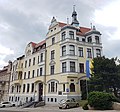
Miejski Dom Kultury is one of the cultural and community centers of Zgorzelec, and the place of signing of the Treaty of Zgorzelec

In the wake of German defeat, operation groups arrived in the town on 10 to 12 May 1945 on the right Oder bank of Görlitz to secure Polish takeover of the town district. Polish administration was officially implemented on 21 May.[17] On 2 June 1945, Polish military closed the bridge in Görlitz to block Germans from returning to their homes in Silesia. Early in the morning on 21 June, the Polish ordered the Germans to leave their homes on the eastern part of Görlitz.[17]

The Potsdam Conference confirmed Polish rule and henceforth, the Oder-Neisse line as the Polish-East German border divided Görlitz (lying on the Lusatian Neisse) between the two countries. The German part retained the name Görlitz, while the Polish part was initially known by its other historic Polish name Zgorzelice,[18][17] later changed to the also historic name[19][20] Zgorzelec. Polish and Greek settlers arrived in the town. Zgorzelec had a difficult start as a Polish town because almost all of the infrastructure facilities were located in the part remaining German.[17] The Treaty of Zgorzelec, between Poland and East Germany, was signed in the town's community center in 1950.

Starting in 1948, some 10,000 Greek refugees of the Greek Civil War, mainly communist partisans, were allowed into Poland and settled mainly in Zgorzelec. There were Greek schools, a Greek retirement home, and even a factory reserved for Greek employees. The majority of these refugees later returned to Greece, but a part remains to this day (see Greeks in Poland). The Greek community of Zgorzelec was instrumental in the building of The Orthodox Church of Saints Constantine and Helen in 2002. Since 1999, an annual international Greek Song Festival has been held in Zgorzelec.[21]

In 1972, the Polish-East German border was opened for visa-free travel, resulting in intense movement between Zgorzelec and Görlitz, which lasted until 1980, when East Germany unilaterally closed the border due to anti-communist protests and the emergence of the Solidarity movement in Poland. Until 1975 Zgorzelec was administratively located in the Wrocław (Lower Silesian) Voivodeship, and in 1975–1998 it was located in the Jelenia Góra Voivodeship.

Recent history

[edit]
Reconstructed Postal Square, seen from the river

Since the fall of communism in 1989, Zgorzelec and Görlitz have developed a close political relationship. Two of the numerous bridges over the Neisse river that had been blown up by retreating German forces in World War II have been rebuilt, reconnecting the two towns with one bus line. There is also common urban management and annual common sessions of both town councils. In 2006 the towns jointly applied to be the European Capital of Culture in 2010. It was hoped that the jury would be convinced by the concept of Polish-German cooperation, but the award fell to Essen, with Görlitz/Zgorzelec in second place.

Sights

[edit]
Military cemetery of the Polish Second Army
  • Miejski Dom Kultury (Municipal House of Culture)
  • Polish-Saxon post milestone of King Augustus II of Poland and the reconstructed Postal Square (Plac Pocztowy)
  • Military cemetery of the Polish Second Army – one of the largest military cemeteries in Poland
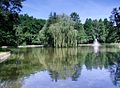
  • Historical parks
  • Greek Boulevard (Bulwar Grecki), with a view of Görlitz
  • Wheelwright Croft (Zagroda Kołodzieja)
  • Muzeum Łużyckie
  • Town Hall
  • Old townhouses in the city center
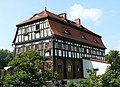
  • Former Tricycle Mill (Młyn trójkołowy)
  • Baroque palace in the Ujazd district
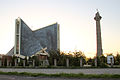
  • Memorial to the victims of the Stalag VIII-A German World War II prisoner of war camp
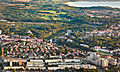
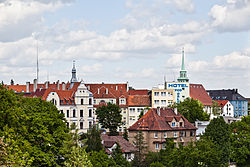
Panorama of Zgorzelec from Görlitz

Transport

[edit]
Zgorzelec railway station

Zgorzelec is served by two railway stations, Zgorzelec in the southern part of the town, and Zgorzelec Miasto in the eastern part.

The A4 motorway passes just to the north of Zgorzelec. The town can be accessed from exit 1 of the A4.

Sports

[edit]

Turów Zgorzelec men's basketball team until 2018 played in the Polish Basketball League (top division). In 2014 Turów won its only national championship and qualified to the Euroleague for the first time. The local football team is Nysa Zgorzelec [pl]. It competes in the lower leagues.

Notable residents

[edit]

Twin towns – sister cities

[edit]

Zgorzelec is twinned with:[22]

[edit]

Notes

[edit]

References

[edit]
[edit]
Revisions and contributorsEdit on WikipediaRead on Wikipedia
from Grokipedia
Zgorzelec is a town in southwestern Poland situated on the right bank of the River, directly bordering the German town of , with which it jointly forms the Görlitz–Zgorzelec to foster cross-border cooperation. It serves as the administrative seat of Zgorzelec County within the and had a population of approximately 32,000 as of recent estimates. Originally the eastern district of the historic German city of Görlitz, Zgorzelec was separated and incorporated into after as part of the decisions establishing the as the new border, resulting in the expulsion of the German populace and repopulation by Polish settlers from the east. This territorial shift marked a profound demographic and cultural transformation, yet postwar reconciliation efforts, accelerated by Poland's accession in 2004, have enabled seamless integration, including open borders and joint economic initiatives like shared projects. The town features preserved architecture from its Prussian era, a from the Polish Second Army, and proximity to the Turów lignite mine, influencing local industry amid environmental debates. During , the site hosted , a major for Allied forces, later commemorated in cultural events such as the Messiaen Days festival.

Geography

Location and Topography

Zgorzelec lies in the southwestern part of Poland, within the , at geographic coordinates approximately 51°09′N 15°00′E. As the Polish portion of the transborder urban area known as Görlitz-Zgorzelec, it is positioned directly east of the German city of , with the River serving as the international boundary. The city occupies an area of 15.88 km² and is situated roughly 107 km east of , , and approximately 150 km west of , Poland. The topography of Zgorzelec features relatively flat terrain characteristic of the Silesian-Lusatian Lowland, part of the broader Lower Silesian lowlands, with an average of 216 meters above . Local elevation variations are modest, typically not exceeding 63 meters within a 3-kilometer radius of the city center. The River, which meanders along the city's western edge, shapes the surrounding valley landscape, integrating Zgorzelec into the riverine border environment of the region. Environmentally, the area's lowland position exposes it to flood risks from the Neisse River, which has demonstrated high flooding potential due to its hydrological dynamics in the basin. This riverine setting influences local water management and ecological features, though specific mitigation measures fall outside topographic description.

Climate and Environment

Zgorzelec has a (Köppen Cfb), with average annual temperatures ranging from lows of about -3°C in winter to highs of 24°C in summer. typically sees average highs of 1°C and lows of -5°C, while averages feature highs around 24°C. Annual averages approximately 832 mm, distributed relatively evenly throughout the year with slightly higher amounts in summer months. The city's location along the River exposes it to flood risks, as demonstrated by the , which caused widespread inundation in the Oder basin including Neisse tributaries, leading to evacuations and infrastructure damage in the region. Seasonal variations include snowy winters and mild, rainy summers, with environmental management focused on riverbank stabilization and flood defenses post-1997. As a in , Zgorzelec contends with industrial legacies from nearby lignite mining and power generation, contributing to historical air quality challenges from particulate emissions. EU-funded initiatives, such as the cross-border "United Heat" project with neighboring , promote climate-neutral district heating using biomass to reduce fossil fuel dependence by 2030. These efforts align with broader regional shifts away from , emphasizing sustainable energy management without relying on unproven projections.

History

Early Settlement and Medieval Period

The area encompassing modern Zgorzelec formed the eastern extension of the medieval settlement known as , originating as a Slavic Sorbian village named Gorelić or Gorelic, first documented in 1071 in a boundary description by Bishop Rudeger of Bamberg. This early habitation reflected broader Slavic colonization of following the retreat of Germanic tribes around the 6th century, with establishing agrarian communities along the River valley, supported by archaeological evidence of hill forts and rural fortifications in the region. By the , the settlement integrated into the expanding Bohemian sphere within the , as Bohemian kings asserted control over amid competition with neighboring margraviates like . Görlitz received in 1303 under Bohemian overlordship, fostering urban development at the crossroads of ancient trade routes, including the , which channeled eastern commerce in furs, , and textiles from via Kraków westward across . This positioning spurred economic growth, with early industries in cloth and , though population estimates remain sparse, likely numbering in the low thousands by the 14th century based on comparable Lusatian towns. Medieval fortifications emerged to protect against regional threats, including wooden palisades evolving into stone walls by the , as evidenced by surviving charters and documents. The town joined the of Lusatian Six Cities in 1346, elevating its status as a political and cultural hub of under continued Bohemian rule, which shifted dynastically through Hungarian and Habsburg influences by the early . During the (1419–1434), Görlitz experienced indirect involvement through Bohemian crown lands, with local garrisons and trade disruptions from Hussite raids affecting Lusatian territories, though primary conflicts centered in proper. Charters from and King of , in the mid-14th century further formalized privileges, emphasizing and market rights amid these tensions.

Industrialization and Prussian Era

Following the in 1815, eastern , including the town of , was transferred from Saxon to Prussian control and integrated into the . This annexation facilitated administrative reforms and economic policies aimed at modernization, setting the stage for industrial development in the region. In the mid-19th century, experienced rapid industrialization, with key sectors including textiles, machinery, ceramics, and chemicals emerging as dominant industries. Building on earlier traditions of cloth and , steam-powered looms mechanized production, transforming the local from artisanal to factory-based operations. Infrastructure advancements supported this growth; in 1847, connected to the Prussian and Saxon railway networks via the Neiße viaduct, enhancing trade and labor mobility. These developments spurred and attracted workers from other German states, leading to population expansion and shifts in . Prussian emphasized Germanization, promoting the in administration and , though Sorbian cultural elements persisted amid industrial labor demands. Labor conditions reflected early industrial patterns, with long hours in factories but gradual improvements through Prussian regulations on working times and safety by the late .

World War II and Territorial Division

During , Görlitz served as the site of , a major German that held Allied captives under harsh conditions. The city faced minimal aerial bombardment from Western Allies, preserving its architectural heritage, but experienced ground combat as Soviet forces advanced in April 1945 amid the broader Eastern Front collapse. Retreating units demolished all seven bridges across the River on May 7, 1945, the day before Nazi Germany's , to hinder the Red Army's pursuit, resulting in localized infrastructure damage rather than widespread devastation. The , convened from July 17 to August 2, 1945, by Allied leaders , Truman, and Churchill (later Attlee), formalized the Oder-Neisse line as Germany's provisional western border with , directly bisecting and transferring its eastern districts to Polish administration. This demarcation compensated for its pre-war eastern territories annexed by the under the agreements, reflecting Soviet influence in reshaping Central European borders to secure a and Polish acquiescence to shifted frontiers. The conference protocols explicitly endorsed the "orderly and humane" transfer of German populations from these areas, though implementation often deviated due to wartime chaos and local animosities. The border division triggered rapid demographic upheaval in eastern Görlitz, renamed Zgorzelec, where the remaining German residents—many having already fled the Soviet advance—faced organized expulsions to between 1945 and 1946, part of broader transfers affecting millions across former German eastern territories. Polish authorities facilitated the influx of settlers from central and repatriated populations from Soviet-annexed regions to claim and integrate the area, marking the onset of Polish sovereignty amid the power vacuum left by defeated Nazi administration.

Postwar Expulsions and Polish Integration

Following the and Conferences in 1945, the Oder-Neisse line was imposed as the provisional Polish-German border, severing the eastern districts of and assigning them to Polish administration, with the town captured by Soviet forces on May 8, 1945. The , concluded on August 2, 1945, explicitly authorized the "orderly and humane" transfer of German populations from the territories Poland was to administer east of this line, including where the future Zgorzelec lay. In practice, expulsions in the region began amid the Red Army's advance in early 1945, escalating into systematic removal of Germans by Polish authorities from mid-1945 through 1947, often under chaotic conditions involving , forced labor, and property . In Zgorzelec specifically, the German population stood at approximately 2,300 individuals as of November 1, 1945, alongside 2,199 Poles, but departures accelerated after July 1, 1946, as Polish officials enforced repatriation to Germany, retaining a small number of Germans temporarily for skilled labor in reconstruction. Across the Polish-administered territories, these measures displaced roughly 6 million ethnic Germans through flight, wild expulsions, and organized transports, with property losses totaling billions in Reichsmarks equivalent and significant mortality from exposure, malnutrition, violence, and disease during marches and camps. Estimates of deaths specifically attributable to the expulsions from Polish areas range from 500,000 to 600,000, though higher figures appear in some German archival compilations; these reflect causal factors like inadequate Allied oversight of "orderly" transfers and local reprisals amid wartime animosities. The resultant depopulation facilitated resettlement by Polish groups, primarily "repatriates" from the —eastern borderlands ceded to the USSR under the same conferences—totaling over 1.5 million individuals relocated westward between 1945 and 1947, alongside voluntary migrants and demobilized soldiers. In Zgorzelec, these arrivals from areas like supplanted the German majority, with the town officially renamed Zgorzelec in 1946 to invoke its medieval Slavic roots and established as the seat of a (county) under the provisional Polish administration, formalizing local governance amid Soviet military oversight. Integration proved arduous, as diverse cohorts—often arriving destitute after Soviet deportations or seizures in the east—confronted bombed-out buildings, looted factories, and rudimentary utilities in a scarred by prior Nazi fortifications and requisitions. Temporary reliance on retained German technicians for water, power, and rail repairs underscored skill shortages among newcomers, while social frictions arose from cultural clashes between urban repatriates, rural migrants, and enforcing communist reforms, all under the Polish Committee of National Liberation's centralized directives from . By late , however, basic Polish civic structures had stabilized, with schools and militias operational, though full economic recovery lagged due to these foundational disruptions.

Communist Period and Economic Challenges

Following the postwar integration into Poland, Zgorzelec's economy underwent rapid , with surviving prewar industries such as textiles and machinery converted into state-owned enterprises under the Polish United Workers' Party's central planning directives. These sectors, including factories repurposed for heavy manufacturing, prioritized output quotas aligned with Five-Year Plans, but suffered from chronic material shortages, outdated equipment, and bureaucratic inefficiencies inherent to the command economy model. By the , productivity declines became evident, as evidenced by Poland-wide industrial stagnation where growth rates fell below 2% annually amid rising debt and supply disruptions, mirroring Zgorzelec's reliance on subsidized inputs from distant regions. Social controls reinforced economic directives through the local apparatus of the Ministry of Public Security and its successors, which monitored workers and suppressed dissent, including any lingering German cultural expressions via street renamings, demolition of German-era structures, and mandatory Polish-language education to enforce . The 1950 Zgorzelec Agreement with the German Democratic Republic formalized the border division, sealing cross-river ties and isolating Zgorzelec from its former economic hinterland in , exacerbating resource constraints under the regime. While echoes of the —demanding better wages and conditions—reverberated in through informal worker networks, local security forces quashed potential unrest, maintaining output at the cost of morale. Demographic pressures compounded economic woes, with population swelling from 5,261 in to 16,037 by via organized resettlement of Poles from central regions and refugees—who numbered around 12,000 nationwide and bolstered Zgorzelec's factory labor force—but stagnating thereafter due to outmigration in the 1980s amid shortages. Housing deficits persisted, as state construction lagged behind inflows, forcing multi-family occupancy in makeshift barracks typical of urban planning failures, with official statistics recording living space below 5 square meters in many border towns. These challenges underscored the causal disconnect between ideological priorities and practical outputs, where suppressed private initiative and overemphasis on yielded persistent underdevelopment.

Post-1989 Transition and Recent Events

Following the collapse of communist rule in in 1989, Zgorzelec underwent democratization processes influenced by the nationwide movement, which had mobilized workers and civil society against the regime throughout the 1980s, culminating in semi-free elections on June 4, 1989, that shifted power toward non-communist forces. Local governance in Zgorzelec transitioned to elected councils, with the first fully free municipal elections held in 1990, enabling policies focused on market reforms amid the broader shock therapy privatization program initiated by the in January 1990. The privatization of state-owned enterprises in Zgorzelec's industrial sectors, such as textiles and manufacturing inherited from the communist , resulted in significant layoffs and rates exceeding 20% in the Polish-German by the mid-, exacerbating depopulation as residents sought opportunities elsewhere. Recovery accelerated after Poland's accession to the on May 1, 2004, which unlocked structural funds totaling billions of euros for and cross-border projects, fostering economic stabilization and GDP per capita growth in , though Zgorzelec lagged behind national averages due to its peripheral location. Cross-border cooperation advanced through the establishment of the Euroregion Neisse in 1991, promoting joint initiatives between Zgorzelec and , such as cultural exchanges and environmental projects, yet persistent economic disparities— with benefiting from stronger German subsidies—limited deeper integration and highlighted causal mismatches in investment levels and labor mobility. In 2024-2025, Germany's reintroduction of temporary border controls along the Polish frontier, justified by federal authorities as a response to irregular migration, disrupted daily commutes and in Zgorzelec, prompting local protests against economic losses estimated in millions of euros from reduced cross-border shopping and services. Zgorzelec Rafał Gronicz announced plans in 2025 to lodge a formal complaint with the , arguing the measures effectively suspended free movement without adequate justification, while a local resident filed a in January 2025 claiming violations of law and personal rights. In retaliation, implemented its own controls on July 7, 2025, at borders with and , citing reciprocal migration pressures, which further strained bilateral relations and local businesses reliant on seamless frontier access.

Administration and Politics

Local Government Structure

Zgorzelec operates as an urban and serves as the administrative seat of Zgorzelec County in the , functioning within Poland's three-tier system that includes communes, counties, and voivodeships. The municipal employs a mayor-council framework, with the exercising executive powers and the 23-member city council handling legislative and oversight duties. This structure aligns with Poland's post-1990 decentralization reforms, emphasizing local autonomy in areas like and public services. Rafał Gronicz, a member of the party, has served as since 2006 and was reelected in the local elections, advancing from the first round with 3,520 votes before securing victory in the runoff. The city council for the 2024-2029 term includes representatives from multiple committees, notably with (PiS), a conservative party, obtaining mandates in constituency results, indicative of persistent conservative support in this amid priorities like and . in the 2024 mayoral election varied across districts, reaching 53.06% in some polling areas, reflecting moderate typical of Polish local polls. The municipal budget derives from local taxes, central government transfers, and substantial funding, including grants under the Connecting Europe Facility for cross-border initiatives such as the Goerlitz-Zgorzelec projects. Policy priorities under current leadership emphasize maintenance, , and , with allocations supporting endeavors like heating plants to address fiscal constraints in a post-industrial locale. These mechanisms enable targeted investments while navigating dependencies on external financing for development.

Polish-German Border Tensions and Sovereignty Issues

The Oder-Neisse line, established as Poland's western border following the 1945 , placed Zgorzelec on the Polish side of the River, separating it from in Germany. This division was formalized in the 1950 Treaty of Zgorzelec between Poland and the German Democratic Republic, which recognized the line despite initial West German objections rooted in territorial revanchism. Unified Germany definitively acknowledged the border in the 1990 German-Polish Border Treaty, resolving most legal disputes, though fringe revanchist sentiments persist in some German nationalist circles, often invoking pre-war German-majority populations in the region. Tensions resurfaced amid the post-2015 European migrant crisis, escalating in 2024-2025 due to Germany's intensified border controls and pushbacks. German authorities conducted over 100,000 turnbacks at the Polish border between September 2024 and February 2025, the highest among its frontiers, often involving deportations of asylum seekers to Poland under Dublin Regulation provisions. In Zgorzelec, these measures prompted local backlash, including a January 2025 lawsuit by a Polish resident against German officials for disrupting cross-border commuting and trade, alleging violations of Schengen free movement principles. Zgorzelec Mayor Rafał Gronicz announced plans in March 2025 to file EU complaints, arguing the controls effectively suspended Schengen agreements without justification. Public protests highlighted sovereignty frictions, with hundreds gathering on the Zgorzelec-Görlitz bridge in March 2025 to oppose German deportations, viewing them as unilateral shifts of migration burdens onto Poland despite declining overall irregular entries. Demonstrators, including right-wing groups, demanded stricter German asylum policies to protect Polish border communities from secondary influxes. Poland responded by reimposing temporary controls on July 7, 2025, at 52 German border points including Zgorzelec-Görlitz, citing surging illegal crossings and national security needs over EU open-border norms; these were extended to April 2026 amid ongoing pressures. These actions inflicted economic costs on Zgorzelec's cross-border , where residents rely on German and shopping; delays of 1-3 hours at the Zgorzelec-Görlitz crossing reduced local volumes, with German exporters reporting bottlenecks in goods transport. guards denied entry to individuals like a Syrian permit-holder lacking a at the Zgorzelec point in July 2025, underscoring enforcement rigor. While justified controls as defensive against exploitation of its eastern defenses, critics in and decried them as escalatory, though empirical data showed minimal migrant surges justifying full Schengen suspension.

Economy

Historical Industries

In the mid-19th century, under Prussian administration as part of , the area encompassing modern Zgorzelec underwent rapid industrialization, driven by the expansion of rail infrastructure and proximity to raw materials. Key sectors included textiles, which built on medieval and cloth traditions; machinery production; optical instruments; ceramics, leveraging local clay deposits; and chemicals, with factories emerging to support regional manufacturing needs. By the late , these industries contributed to and urban expansion, though output remained modest compared to larger Prussian centers like Silesian hubs, with textiles employing thousands in and operations. World War II inflicted severe damage on these facilities through Allied bombings, Soviet advances, and scorched-earth tactics, reducing industrial capacity by over 70% in the district by 1945, as infrastructure like mills and factories was targeted or dismantled. Postwar territorial division placed the eastern (Polish) portion as Zgorzelec, where reconstruction prioritized state-controlled enterprises under the communist regime, reviving textiles and ceramics through nationalized plants such as clothing factories tied to the broader Lower Silesian network. During the (1945–1989), output focused on export-oriented light manufacturing, with ceramics production drawing on prewar techniques for domestic and markets, though inefficiencies and resource shortages limited growth; for instance, textile enterprises operated under central planning quotas that emphasized volume over quality. The 1980s saw stagnation amid and economic crisis, setting the stage for post-1989 reforms. After , and market liberalization led to closures of uncompetitive state enterprises, particularly in textiles and machinery, as global competition exposed structural weaknesses; industrial output in the Zgorzelec subregion declined sharply in the early , mirroring national trends where manufacturing employment fell by 30–40% in similar border areas. This shift from heavy reliance on legacy sectors to services marked a disruptive transition, with temporary peaks in the 20–25% range for former industrial workers, though buffered by integration subsidies post-2004.

Contemporary Economic Profile

Zgorzelec's economy is primarily driven by the services sector, which encompasses retail, cross-border , and , supplemented by manufacturing activities. The town's strategic location adjacent to the German border facilitates significant retail , particularly benefiting from Polish consumers shopping in neighboring and vice versa, contributing to local economic activity through daily cross-border flows. Small and medium-sized enterprises (SMEs) dominate, focusing on trade-oriented services rather than , reflecting a shift away from legacy dependencies. Employment levels remain robust, with the rate in the Zgorzelec region averaging approximately 6% as of recent assessments, positioning it favorably against Poland's national average of around 5-6% during the same period, though regional data indicate it as comparatively low. This stability stems from integration into Polish-German supply chains, where local firms support logistics hubs handling transborder goods movement and light assembly operations. also bolsters service , drawing visitors to the Görlitz-Zgorzelec area for cultural and recreational purposes. Despite these strengths, the economy faces challenges from ongoing in the broader lignite-dependent subregion and heavy reliance on German markets for and employment opportunities, which exposes it to external economic fluctuations such as slowdowns in . Regional reports highlight vulnerabilities in transitioning from coal-related activities, underscoring the need for diversified in services and to mitigate border dependencies. Efforts to foster SME growth in non-manufacturing sectors aim to enhance resilience, though specific GDP contributions remain modest within Lower Silesia's dynamic framework, with services comprising the bulk of local output.

Recent Developments and Projects

In November 2024, a consortium led by Unibep SA signed a contract worth approximately PLN 86.9 million (about €20.1 million) to construct a biomass heating plant in Zgorzelec as part of the "United Heat" project, with construction scheduled to commence in 2025. The facility will feature two 12.5 MW boilers designed to supply district heating to Zgorzelec and the adjacent German city of Görlitz, supporting decarbonization efforts amid Poland's coal phase-out mandates. This initiative forms part of the broader Goerlitz-Zgorzelec cross-border project, which received Connecting Europe Facility (CEF) funding, including grant agreements signed in November 2024 totaling over €67 million for works under the CEF Energy program. The project emphasizes grid integration and expansion of approximately 12 km of pipelines to enable climate-neutral across the Polish-German border, driven by regional pressures to diversify from fossil fuels. Temporary border controls reintroduced by Poland on July 7, 2025, at crossings with , including those near Zgorzelec, have slowed cross-border traffic and commerce, with local officials reporting delays that hinder daily economic exchanges between Zgorzelec and . Zgorzelec's , Rafał Gronicz, highlighted these controls—initially imposed by and reciprocated by —as effectively suspending Schengen free movement, exacerbating challenges for border-dependent trade amid heightened migration concerns. German industry groups have noted similar disruptions, with reduced traffic flow raising costs for in the region.

Demographics

Population Dynamics

As of January 1, 2023, Zgorzelec had a of 29,313 residents, with the figure declining to 28,931 by December 31, 2023, and further to 28,466 by the end of 2024. The town's stood at approximately 1,808 inhabitants per km² over an area of 15.9 km². The average age of residents was 46.7 years, exceeding the national average of 42.7 years and indicative of an aging demographic structure. Historically, Zgorzelec's grew rapidly after 1945 due to postwar resettlement following the Oder-Neisse line border shift, reaching peaks of around 33,000-34,000 in the late before entering a sustained decline. Between and , the decreased by about 6.6-8.2%, driven by low birth rates, higher mortality among the elderly, and net outmigration to larger urban centers like or suburban areas. This trend reflects broader patterns in smaller Polish border towns, where aging populations (with dependency ratios elevated by post-communist cohort effects) and have reduced urban cores' appeal. The 2022 Russian invasion of Ukraine prompted inflows of refugees to , including temporary boosts to Zgorzelec's population amid national arrivals exceeding 1 million initially, though many relocated to bigger cities or departed after initial settlement. Despite this, the overall trajectory remained downward, with annual changes averaging -1.3% in recent estimates, compounded by ongoing outmigration of younger residents seeking opportunities elsewhere.

Ethnic and Cultural Composition

Following the expulsion of the German population in 1945 under the , Zgorzelec was repopulated primarily by ethnic Poles displaced from Poland's pre-war eastern territories () and other regions, establishing a demographic profile dominated by Polish ethnicity. By the late 1940s, official Polish records documented over 95% of residents as ethnic Polish, a composition that has persisted with minimal deviation due to limited inward migration and assimilation. Census declarations of nationality in Poland, which serve as a proxy for , confirm near-universal Polish identification in Zgorzelec, with foreign citizenship holders comprising only about 0.5% (roughly 150 individuals) as of data from local registration records. The residual German community, estimated at 1-2% based on regional minority association figures for border areas, consists mainly of descendants who opted to stay or later repatriated under bilateral agreements; this group maintains cultural ties but does not alter the Polish majority. A small Ukrainian presence, around 50-100 individuals pre-2022 and augmented by temporary refugees and laborers post-invasion, represents less than 1% and is concentrated in transient populations rather than settled ethnic enclaves. Linguistically, Polish has been the exclusive official language since 1945, supplanting German through mandatory education and administrative policies, though EU accession in 2004 granted the German minority rights to bilingual signage and schooling in localities meeting thresholds (not met in Zgorzelec proper). Post-war resettlements posed integration hurdles, as evidenced by 1940s-1950s reports of interpersonal frictions among settlers from disparate Polish regions—such as Volhynian Poles adapting to Silesian customs—but these resolved via state-driven homogenization efforts, yielding a cohesive Polish cultural core by the 1960s. Religiously, Roman Catholicism predominates, with diocesan estimates for the Görlitz-Zgorzelec border zone indicating adherence rates of approximately 80% among the Polish population, aligned with Lower Silesian averages from national surveys; Protestant and Orthodox minorities, tied to German and Ukrainian groups, account for under 5%. This religious profile reinforces ethnic uniformity, as Catholic institutions facilitated early community building amid resettlement disruptions.

Culture and Heritage

Architectural and Historical Sites

The Old Town Bridge, a pedestrian span over the Lusatian Neisse River dating to the pre-war era, links Zgorzelec directly to Görlitz's historic core, embodying the 1945 Oder-Neisse line division that separated the once-unified city. A second bridge, the Pope John Paul II Bridge (Stadtbrücke), facilitates vehicular traffic across the border established in 1945. In 2004, reconstruction efforts enhanced connectivity, symbolizing postwar reconciliation between Poland and Germany amid the cities' shared heritage. The Miejski Dom Kultury, originally constructed between 1898 and 1902 as the Upper Lusatian Hall of Fame, exemplifies preserved German-era architecture in Zgorzelec with its Neo-Baroque and Neo-Classical features, serving as a monumental reminder of the town's pre-1945 industrial and cultural prominence. The Church of , a Neo-Romanesque structure from the late , stands among surviving ecclesiastical buildings from the suburb period, reflecting the architectural continuity despite border shifts. Stalag VIII A, a established in October 1939 on the eastern outskirts, initially held Polish captives from the 1939 invasion and later Allied personnel; its site, now within Polish territory post-1945, includes remnants and commemorative markers tied to events like Olivier Messiaen's 1941 Quartet for the End of Time composition by inmates. The Military Cemetery of the Polish Second Army, dedicated to soldiers who fought for the Neisse crossings in April-May 1945, features a large eagle erected postwar to honor the 2nd Army's casualties during the Soviet advance. Other preserved relics include the , a 19th-century over local rail lines that withstood wartime destruction, and the palace on ul. Francuska, a smaller 18th-century edifice representing earlier residential from the divided city's Lusatian roots. The Orthodox Church of Saints Constantine and Helen, adapted from a mid-19th-century Presbyterian building, highlights of Protestant-era structures following demographic shifts.

Cultural Institutions and Events

The Lusatian Museum in Zgorzelec serves as a key institution for preserving and exhibiting regional , featuring a permanent display on Sorbian domestic interiors and broader Lusatian history. Established relatively recently, it focuses on the historical and ethnographic aspects of the area's minority cultures. Zgorzelec's Municipal House of Culture, a Neo-Baroque and Neo-Classical building from the late 19th to early , hosts community cultural programs including workshops, exhibitions, and performances. It functions as a central hub for local artistic initiatives, supporting ongoing engagement in theater, , and . Annual events emphasize cross-border collaboration with neighboring , such as the Jakuby Festival held in late August, which celebrates regional folk traditions alongside Görlitz's Old Town Festival. The Via Thea International Festival transforms public spaces in both cities into performance venues, drawing international artists and promoting shared European cultural exchange. Other notable gatherings include the Messiaen Days, a biennial event spanning April 25-27 that integrates , and lectures across the , highlighting Olivier Messiaen's inspirations from the . These initiatives foster bilingual heritage preservation through joint programming, with residents from both sides participating in over a dozen cultural activities annually. While primarily driven by Görlitz's film locations, spillover effects from Hollywood productions have occasionally involved Zgorzelec sites, enhancing local tied to cinematic heritage.

Infrastructure and Services

Transportation Networks

Zgorzelec lies at the western terminus of Poland's A4 motorway, providing direct highway access eastward to Wrocław (approximately 140 km) and westward across the German border to via the connected German A4. This route forms part of the Pan-European IV, facilitating freight and passenger movement along a key east-west axis. Rail connectivity centers on Zgorzelec station, which links to regional lines toward Wrocław via Węgliniec and to Dresden through Görlitz. Trilex operates trains to Dresden Hauptbahnhof every four hours, covering the 90 km distance in about 1 hour 28 minutes. Polregio provides frequent services to Görlitz (every four hours, 9 minutes), supporting onward travel. As a primary Polish-German border crossing paired with Görlitz, Zgorzelec handles substantial daily cross-border traffic, including commuters reliant on integrated work and service links between the divided twin cities. Temporary controls reimposed by Germany since September 2023 and extended by Poland from July 2025 to April 2026 have introduced delays of 1-3 hours at the Zgorzelec-Görlitz point, raising economic costs through disrupted logistics and commuter routines. Germany's checks alone have incurred over €80 million in expenses since 2024. Public transit across the border includes bus line A run by , linking Zgorzelec station to Demianiplatz, alongside Polregio rail options. Ongoing initiatives seek enhanced tariff integration and synchronized timetables to bolster cross-border accessibility, per regional transport planning data.

Education, Sports, and Public Services

The education sector in Zgorzelec includes primary and secondary schools, with vocational training centers offering practical skills in areas like automotive repair and technical trades to support regional industries including and . Higher education access is facilitated by the 2019 establishment of an international office by Germany's / of Applied Sciences in Zgorzelec's Tecza , enabling cross-border academic programs in applied sciences. Sports facilities and clubs emphasize basketball as the leading discipline, with PGE Turów Zgorzelec, founded in 1948 as part of a multi-sport association, competing in Poland's professional leagues and utilizing the PGE Turów Arena for home games. The Sports and Entertainment Hall, completed in October 2014, hosts regional events and supports community athletic programs, reflecting post-communist infrastructure upgrades funded partly through initiatives. Public health services are centered on the Multi-Specialty Hospital—Independent Public Health Care Complex at Lubańska 11-12, which delivers inpatient and outpatient care across specialties including cardiology with intensive supervision, internal medicine, surgery, neurology, gynecology, and diagnostics such as CT scans and colonoscopies, addressing demands from an aging regional population amid Poland's broader healthcare strains like extended wait times.

International Relations

Twin Towns and Partnerships

Zgorzelec has established formal partnerships to promote cultural exchange, economic collaboration, and mutual support among municipalities. These ties, formalized through bilateral agreements, emphasize practical initiatives such as youth and senior programs, rather than symbolic gestures alone. The partnerships yield verifiable outcomes, including reciprocal visits and targeted aid, though their impact remains localized given the modest scale of participating towns. The closest and most integrated partnership is with , , formalized by a 1991 cooperation agreement that acknowledges the towns' pre-1945 unity as a single settlement divided by the post-war Oder-Neisse line. In 1998, and Zgorzelec were jointly designated the "Europastadt /Zgorzelec" (European City), enabling shared promotion of heritage sites and infrastructure like pedestrian bridges over the . Joint projects have included cultural festivals and educational exchanges, with over 25 years of sustained activities fostering cross-border commuting and , though economic disparities persist. Other twin towns include Avion, France, linked since approximately 2009 with emphasis on senior citizen exchanges; delegations from Avion visited Zgorzelec in 2019 to mark the 10th anniversary, supporting intergenerational programs. Myrhorod, Ukraine, partnered since 2005, has involved humanitarian aid shipments from Zgorzelec and Avion in response to the 2022 Russian invasion, including supplies routed via Przemyśl. Naousa, Greece, has maintained ties since 1998, focusing on cultural and educational links, though specific project details are less documented in recent records. Zgorzelec participates in the Neisse-Nisa-Nysa Euroregion, a 1991 framework uniting Polish, German, and Czech entities for regional pacts on transport, environment, and youth mobility, complementing bilateral twinning without constituting formal sister-city status. Benefits include coordinated funding for cross-border events, such as those under programs, enhancing connectivity in the area.

Cross-Border Cooperation and Challenges

Zgorzelec and its German twin city have engaged in cross-border initiatives under EU programs like , facilitating joint infrastructure and s since the early 2000s. The TRANS-BORDERS , part of , established new bus lines connecting Zgorzelec to and nearby areas, enhancing mobility and economic ties by 2020. These efforts have supported trade, with studies noting transborder openness among local companies, though primarily benefiting sectors like services and retail through daily cross-border commuting. Despite these collaborations, economic asymmetries persist, with the German side of the exhibiting stronger market dominance and higher service sector integration, leading to uneven benefits for Polish firms in Zgorzelec-Görlitz. In 2025, migration disputes intensified frictions, as deported undocumented migrants to , prompting hundreds to at the Zgorzelec-Görlitz on against perceived dumping of asylum seekers. Polish authorities responded by reimposing temporary controls with in July 2025, citing rising undocumented entries and public security concerns, which included random checks at Zgorzelec crossings. Self-organized citizen patrols emerged along the in June 2025 to monitor and oppose migrant returns, reflecting grassroots prioritization of national sovereignty over seamless integration. Polish perspectives in border regions like Zgorzelec emphasize robust security measures as essential against external pressures, with local officials dismissing exaggerated narratives while advocating controls to protect residents. Right-leaning groups, including protests in by Polish participants on March 26, 2025, criticized German asylum policies as lenient and burdensome to neighbors, underscoring tensions between open-border ideals and demands for equitable burden-sharing. These events highlight ongoing challenges in balancing with safeguards against asymmetric migration flows and policy divergences.

References

Add your contribution
Related Hubs
User Avatar
No comments yet.