Hubbry Logo
search
logo
2253422

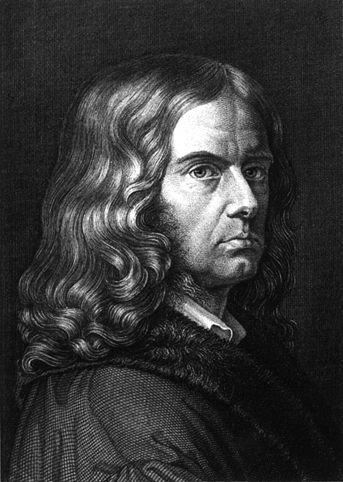
Adelbert von Chamisso

logo
Community Hub0 Subscribers
Read side by side
from Wikipedia

Adelbert von Chamisso (German pronunciation: [ˈaːdl̩bɛʁt fɔn ʃaˈmɪso]; 30 January 1781 – 21 August 1838) was a German poet, writer and botanist. He was commonly known in French as Adelbert de Chamisso (or Chamissot) de Boncourt, a name referring to the family estate at Boncourt.

Key Information

Life

[edit]

The son of Louis Marie, Count of Chamisso, by his marriage to Anne Marie Gargam, Chamisso began life as Louis Charles Adélaïde de Chamissot at the château of Boncourt at Ante, in Champagne, France, the ancestral seat of his family.[1] His name appears in several forms, one of the most common being Ludolf Karl Adelbert von Chamisso.[2]

In 1790, the French Revolution drove his parents out of France with their seven children, and they went successively to Liège, the Hague, Würzburg, and Bayreuth, and possibly Hamburg, before settling in Berlin. There, in 1796, the young Chamisso was fortunate in obtaining the post of page-in-waiting to the queen of Prussia, and in 1798 he entered a Prussian infantry regiment as an ensign to train for a career as an army officer.[citation needed]

Chamisso's tomb in Berlin

Shortly thereafter, thanks to the Peace of Tilsit, his family was able to return to France, but Chamisso remained in Prussia and continued his military career. He had little formal education, although he is a noted alumnus of the French Highschool of Berlin (Französisches Gymnasium), that has existed since 1689 for the express purpose of accommodating the children of exiled French nobles. While in the Prussian military service in Berlin he assiduously studied natural science for three years. In collaboration with Varnhagen von Ense, in 1803 he founded the Berliner Musenalmanach, the publication in which his first verses appeared. The enterprise was a failure, and, interrupted by the Napoleonic wars, it came to an end in 1806. It brought him, however, to the notice of many of the literary celebrities of the day and established his reputation as a rising poet.[1]

Chamisso had become a lieutenant in 1801, and in 1805 he accompanied his regiment to Hamelin, where he shared in the humiliation of the town's capitulation the next year. Placed on parole, he went to France, but both his parents were dead; returning to Berlin in the autumn of 1807, he obtained his release from the Prussian service early the following year. Homeless and without a profession, disillusioned and despondent, Chamisso lived in Berlin until 1810, when through the services of an old friend of the family he was offered a professorship at the lycée at Napoléonville in the Vendée.[1]

He set out to take up the post, but instead joined the circle of Madame de Staël, and followed her in her exile to Coppet in Switzerland, where, devoting himself to botanical research, he remained nearly two years. In 1812 he returned to Berlin, where he continued his scientific studies. In the summer of the eventful year, 1813, he wrote the prose narrative Peter Schlemihl, the man who sold his shadow. This, the most famous of all his works, has been translated into most European languages (English by William Howitt). It was written partly to divert his own thoughts and partly to amuse the children of his friend Julius Eduard Hitzig.[1]

In 1815, Chamisso was appointed botanist to the Russian ship Rurik,[3] fitted out at the expense of Count Nikolay Rumyantsev, which Otto von Kotzebue (son of August von Kotzebue) commanded on a scientific voyage round the world.[1] He collected at the Cape of Good Hope in January 1818 in the company of Krebs, Mund and Maire.[4] His diary of the expedition (Tagebuch, 1821) is a fascinating account of the expedition to the Pacific Ocean and the Bering Sea. During this trip Chamisso described a number of new species found in what is now the San Francisco Bay Area. Several of these, including the California poppy, Eschscholzia californica, were named after his friend Johann Friedrich von Eschscholtz, the Rurik's entomologist. In return, Eschscholtz named a variety of plants, including the genus Camissonia, after Chamisso. On his return in 1818 he was made custodian of the botanical gardens in Berlin, and was elected a member of the Academy of Sciences, and in 1819 he married his friend Hitzig's foster daughter Antonie Piaste (1800–1837). He became a leading member of the Serapion Brethren, a literary circle around E. T. A. Hoffmann.

In 1827, partly for the purpose of rebutting the charges brought against him by Kotzebue, he published Views and Remarks on a Voyage of Discovery, and Description of a Voyage Round the World. Both works display great accuracy and industry. His last scientific labor was a tract on the Hawaiian language. Chamisso's travels and scientific researches restrained for a while the full development of his poetical talent, and it was not until his forty-eighth year that he turned back to literature. In 1829, in collaboration with Gustav Schwab, and from 1832 in conjunction with Franz von Gaudy, he brought out the Deutscher Musenalmanach, in which his later poems were mainly published.[1]

Chamisso died in Berlin at the age of 57. His grave is preserved in the Protestant Friedhof III (Cemetery No. 3 of the congregations of Jerusalem's Church and the New Church) in Berlin-Kreuzberg, to the south of the Hallesches Tor.

Chamisso collected numerous zoological and botanical specimens as well as occasional human bones.[5] His collections are in the care of a number of European museums. Some of his fungal specimens were distributed by Johann Friedrich Klotzsch in his highly influential exsiccata Herbarium vivum mycologicum sistens fungorum per totam Germaniam crescentium collectionem perfectam (1832).[6]

Botanical work

[edit]
The pictured Mojave suncup, Camissonia brevipes, is an example of a genus named for the poet-botanist.

Chamisso is chiefly remembered for his work as a botanist; his most important contribution, done in conjunction with Diederich Franz Leonhard von Schlechtendal, was the description of many of the most important trees of Mexico in 1830–1831. Also, his Bemerkungen und Ansichten, published in an incomplete form in Kotzebue's Entdeckungsreise (Weimar, 1821) and more completely in Chamisso's Collected Works (1836), and the botanical work, Übersicht der nutzbarsten und schädlichsten Gewächse in Norddeutschland (Review of the Most Useful and the Most Noxious Plants of North Germany, with Remarks on Scientific Botany), of 1829, are esteemed for their careful treatment of their subjects.[1] In 1824 he became a member of the Regensburg Botanical Society.[7]

The genera Chamissoa Kunth (Amaranthaceae) and Camissonia Link (Onagraceae) and many species were named in his honor.[8]

Belles-lettres

[edit]

Chamisso's earliest writings, which include a verse translation of the tragedy Le Comte de Comminge in which "heilsam" is used in place of "heilig", show a 20-year-old still struggling to master his new language, and a number of his early poems are in French. Between 1801 and 1804 he became closely associated with other writers and edited their journal.

As a poet Chamisso's reputation stands high. Frauenliebe und -leben (1830), a cycle of lyrical poems which was set to music by Robert Schumann, by Carl Loewe, and by Franz Paul Lachner, is particularly famous. Composers such as Pauline Volkstein also used Chamisso’s texts in their compositions. Also noteworthy are Schloss Boncourt and Salas y Gomez. He often deals with gloomy or repulsive subjects; and even in his lighter and more cheery productions there is an undertone of sadness or of satire. In the lyrical expression of the domestic emotions he displays a fine felicity, and he knew how to treat with true feeling a tale of love or vengeance. Die Löwenbraut may be taken as a sample of his weird and powerful simplicity; and Vergeltung is remarkable for a pitiless precision of treatment. The first collected edition of Chamisso's works was edited by Hitzig and published in six volumes in 1836.[1]

Legacy

[edit]

Otto von Kotzebue named Chamisso Island after him.[10] Chamisso is commemorated in the scientific name of a species of Chilean snake, Philodryas chamissonis.[11]

Literary work

[edit]

He is the author of the famous story, Peter Schlemihl, about a man who sold his shadow, and is the poet of the short poem "Tragic Story" which tells about a wise monk without the benefit of common sense who tries to change the direction of his pigtail.[12]

See also

[edit]

References

[edit]

Sources

[edit]
[edit]
Revisions and contributorsEdit on WikipediaRead on Wikipedia
from Grokipedia
Adelbert von Chamisso (1781–1838) was a French-born poet, botanist, and explorer who became a prominent figure in German Romantic literature and natural sciences after his family's exile during the French Revolution.[1] Born Louis Charles Adélaïde de Chamisso de Boncourt on January 30, 1781, in Châlons-en-Champagne, France, he adopted the German name Adelbert von Chamisso following his family's flight to Prussia in 1790 amid revolutionary turmoil.[2] His multifaceted career encompassed military service as a page to the Queen of Prussia and later as an officer until 1806, literary pursuits that blended fantasy and social commentary, and groundbreaking scientific expeditions that advanced botanical knowledge of the Pacific region.[1] Chamisso's literary fame rests primarily on his 1814 novella Peter Schlemihls wundersame Geschichte, a fantastical tale of a man who sells his shadow to the Devil, symbolizing themes of identity, loss, and alienation that influenced later writers such as Oscar Wilde, Karl Marx, and J.M. Barrie.[2] His poetry, often introspective and lyrical, included the 1830 cycle Frauenliebe und Leben, which Robert Schumann later adapted into a renowned song cycle, highlighting Chamisso's exploration of love, gender, and emotion in Romantic verse.[1] Writing predominantly in German despite his French origins, Chamisso bridged cultural worlds, producing works that reflected his expatriate experiences and humanitarian ideals, including critiques of colonialism encountered during his travels.[3] In the sciences, Chamisso's most notable contributions came from his role as botanist on the Russian Imperial Navy's Rurik expedition (1815–1818), a three-year global voyage led by Otto von Kotzebue to explore the Pacific, Bering Strait, and potential trade routes.[4] During stops in California in 1816, he documented local flora and fauna, compiling an early inventory of San Francisco Bay's species and naming the California poppy (Eschscholzia californica) after his colleague Johann Friedrich von Eschscholtz.[2] His botanical collections from the voyage, including algae and vascular plants from Alaska and Hawaii, were systematically described in collaborations with Diederich Franz Leonhard von Schlechtendal, co-founding the journal Linnaea in 1826 to disseminate findings.[5] Appointed curator of Berlin's Royal Botanical Garden in 1819, Chamisso advanced plant taxonomy and ethnography, publishing accounts like Reise um die Welt (1836) that remain valuable for Pacific natural history.[3] He died on August 21, 1838, in Berlin, leaving a legacy as a versatile intellectual whose work intertwined art, science, and global discovery.[4]

Early Life

Birth and Family Background

Adelbert von Chamisso, originally named Louis Charles Adélaïde de Chamisso de Boncourt, was born on 30 January 1781 at the Château de Boncourt in Ante, near Châlons-en-Champagne in the Champagne region of France.[6] He was the son of Count Louis-Marie de Chamisso de Boncourt (1738–1806), a French nobleman, captain in the Royal Foreign Cavalry Regiment, and Chevalier de Saint-Louis, and his wife Marie-Anne Gargam (1751–1806), a wealthy orphan from Châlons.[6] The couple had seven children in total, with Chamisso being the sixth; his siblings included older brothers Charles-Louis-Marie-Hippolyte (born 1769), Louis-Marie (1772–1778), Jean-Baptiste-Marie (1773–1796), and Charles-Louis (1774), older sister Magdeleine (also known as Louise, born 1779), and younger brother Marc-Charles-Eugène (born 1784, who died young), though only four survived to adulthood.[6] Raised in a noble French family with deep roots tracing back to the 15th or 16th century, Chamisso experienced a privileged early childhood at the family estate, a grand château featuring extensive gardens, a farm, and a well-stocked library.[6] His upbringing was conducted primarily in French, reflecting the aristocratic milieu, and included private education under the strict governess Marie-Anne Campieux, during which he developed an early fascination with nature and the sciences.[6] The onset of the French Revolution in 1789 profoundly disrupted this idyllic life, as the family's royalist sympathies and noble status made them targets amid the political upheaval.[6] This turmoil compelled the family to flee into exile in Germany in July 1790, abandoning their estate, which was left vacant on 11 May 1792, subsequently destroyed in 1793, and auctioned off as national property in 1794 for 59,000 livres, marking the complete loss of their holdings and precipitating financial ruin.[6]

Exile and Education in Berlin

In July 1790, at the age of nine, Adelbert von Chamisso and his family—consisting of his parents and six siblings—fled France amid the escalating violence of the French Revolution, which threatened their aristocratic status as owners of the Boncourt estate in Champagne.[7] The family initially sought refuge in Liège, then traveled through the Netherlands to The Hague, before continuing onward to Würzburg and Bayreuth in Prussia, enduring a protracted journey marked by uncertainty and displacement.[7] They finally settled in Berlin in 1796, where the émigré community provided a tenuous haven, but the loss of their French properties left them in straitened circumstances, facing poverty and the social humiliations of exile in a foreign land.[8] Upon arrival in Berlin, the family integrated into the Prussian capital's French émigré circles, though financial hardships persisted, compelling Chamisso's father to seek modest employment while the children adapted to their reduced status. In 1796, Chamisso was appointed page-in-waiting to Queen Louise of Prussia, a position that offered some stability and court connections but underscored their precarious situation as refugees.[8] His education, interrupted by the upheaval of emigration, resumed under the queen's patronage at the prestigious French Gymnasium in Berlin from approximately 1796 onward, where he received instruction in classical French literature and Enlightenment thought, though formal schooling remained limited due to family constraints. Complementing this, Chamisso pursued self-directed studies in the German language and literature, immersing himself ardently in poetry, philosophy, and natural sciences to bridge his French roots with his new environment.[8] During his teenage years in Berlin, Chamisso began forging connections within emerging Romantic intellectual circles, notably through friendships with the brothers Wilhelm and Alexander von Humboldt, whose interests in science and exploration profoundly influenced his budding scholarly pursuits. These early associations exposed him to vibrant discussions on literature, nature, and philosophy, fostering his transition from émigré outsider to participant in German cultural life. Around 1800, reflecting this deepening assimilation, Chamisso adopted the Germanized form of his name, "Adelbert von Chamisso," from his original French "Louis Charles Adélaïde de Chamisso de Boncourt," symbolizing his embrace of Prussian society while honoring his heritage.[8][7]

Professional Beginnings

Military Service in the Prussian Army

In 1796, Adelbert von Chamisso became a page to Queen Louise of Prussia, entering the court's circles. He enlisted as a cadet in the Prussian Guards in 1798 at the age of 17, joining the Regiment von Goetze as an ensign.[9] His entry into military service came shortly after his family's exile from France during the Revolution, as he sought stability in Berlin's Prussian court circles. Despite his French origins, Chamisso adapted to the rigid discipline of the army, where he pursued self-directed studies in natural sciences during off-duty hours to counter the monotony of garrison life.[10] Chamisso experienced rapid advancement, being promoted to lieutenant in 1801, a rank he held through the escalating tensions of the Napoleonic Wars.[9] By 1806, as Prussia mobilized against Napoleon, his regiment was stationed at the fortress of Hameln and surrendered to French forces following the Prussian defeat at the Battle of Jena-Auerstedt on October 14.[10] Captured in the aftermath, Chamisso was taken prisoner by the French and held in Versailles from late 1806 to 1807, an experience that intensified his sense of alienation as a naturalized Prussian of French descent.[5] The capitulation of Hameln further underscored the collapse of the military he had served, contributing to his growing disillusionment. During his imprisonment in Versailles, Chamisso endured harsh conditions but turned to intellectual pursuits, deepening his engagement with literature and translation work, including studies of French Romantic influences. This period marked a pivotal shift, as the isolation from active duty allowed him to reflect on the futility of militarism and his conflicted loyalties amid the anti-French fervor in Prussia. Upon release in 1807, he returned to Berlin but found the Prussian army's hierarchical structure increasingly uncongenial. Placed on half-pay, he repeatedly sought discharge. In 1808, he was permitted to resign his commission.[11] In 1813, amid the rising German resistance to Napoleon, he expressed frustration over his anomalous position—"I, and I alone, am forbidden at this juncture to wield a sword!"—reflecting his heritage's clash with anti-Napoleonic sentiments. This exit from service freed him to pursue independent scholarly and literary endeavors, marking the end of a chapter defined by duty and defeat.

Initial Literary and Scientific Pursuits

During his later years in the Prussian army, Chamisso immersed himself in Berlin's burgeoning literary scene, co-founding and co-editing the Berliner Musenalmanach from 1804 to 1806 alongside Karl August Varnhagen von Ense.[12] This annual publication served as a platform for emerging Romantic writers, where Chamisso debuted his initial verses, marking his transition from French-language compositions—such as poems and translations influenced by his émigré upbringing—to German poetic expression. His involvement extended to intimate Romantic circles, including figures like Friedrich de la Motte Fouqué and Julius Eduard Hitzig, fostering collaborations that emphasized emotional depth and nature's mystique in literature.[13] Parallel to these literary endeavors, Chamisso developed an early interest in natural history, particularly botany, through self-directed study in Berlin following his return from travels in Switzerland in 1811.[14] Enrolling at the University of Berlin around 1812, he pursued botanical observations alongside medical coursework, collecting specimens in local parks like the Tiergarten and documenting minor notes on regional flora, such as variations in native plants under urban conditions.[14] These informal pursuits, often conducted on the estate of patron Count von Itzenplitz, laid foundational knowledge for his later scientific rigor, blending empirical observation with poetic sensibility.[15] The years 1813 to 1815 brought financial precarity amid Berlin's post-Napoleonic turmoil, compelling Chamisso to sustain himself through private tutoring in languages and literature, as well as an offered but unrealized professorial role at a gymnasium in La Vendée.[13] Supported intermittently by aristocratic friends, including the Itzenplitz family, he supplemented income with anonymous contributions to journals, such as critical essays and short pieces on Romantic themes, while refining his dual commitments to writing and science. This period of instability honed his resilience, channeling personal hardships into creative and intellectual growth without yielding to despair.[13]

Global Exploration

The Rurik Expedition (1815–1818)

In 1815, Adelbert von Chamisso received an invitation from Otto von Kotzebue, the commander of the Russian brig Rurik, to join the Romanzov exploring expedition as the ship's poet and naturalist, leveraging his prior interest in botany to contribute to scientific observations during the voyage.[2] The expedition, funded by Count Nikolai Rumiantsev and organized under the auspices of the Russian Admiralty, aimed to circumnavigate the globe while searching for a Northeast Passage through the Bering Strait.[16] Chamisso, then 34 years old, eagerly accepted, departing from Kronstadt near St. Petersburg on July 30, 1815, aboard the 180-ton vessel crewed by 64 men, including midshipmen and specialists like the physician Johann Friedrich Eschscholtz.[2][17] The Rurik's itinerary followed a westward circumnavigation across the Atlantic and Pacific Oceans, with strategic stops for provisioning, repairs, and exploration. After a brief halt in Copenhagen for final preparations, the ship proceeded to the Canary Islands (Tenerife) in September 1815, then to Rio de Janeiro, Brazil, arriving in December for resupply amid tropical conditions. Rounding Cape Horn in early 1816 proved arduous due to stormy weather, leading to stops in Chile at Valparaíso and Concepción for further outfitting before entering the South Pacific. The vessel then navigated to remote islands such as Easter Island and the Tuamotus, reaching Petropavlovsk on the Kamchatka Peninsula in July 1816. From there, the Rurik ventured into the North Pacific, exploring the Bering Strait and Kotzebue Sound during summer 1816, before arriving at Unalaska in the Aleutian Islands in early September 1816. Continuing southward, it anchored in California at the Bay of San Francisco on October 1, 1816. The Rurik then sailed to Hawaii (then the Sandwich Islands), arriving at Oahu on November 27, 1816, for an extended stay to observe local customs and gather resources. The return journey retraced elements of the route, including a second northern exploration in summer 1817 and revisiting Hawaii in September 1817, stopping again in the South Seas and Chile, before rounding Cape Horn once more, halting in Rio de Janeiro, and finally arriving back in Kronstadt on August 3, 1818, after three years at sea.[16][17][18][19] Daily life aboard the Rurik presented numerous challenges that tested the endurance of Chamisso and the crew. Seasickness plagued Chamisso particularly in the early Atlantic crossing, exacerbating his discomfort in the cramped quarters below deck, where limited space and constant motion contributed to physical strain. Interpersonal dynamics were often tense, with naval discipline enforced strictly by Kotzebue clashing against the civilian scientists' more independent approaches, leading to occasional conflicts over priorities like navigation versus observation time; Chamisso noted the hierarchical structure aboard a warship limited his autonomy as a passenger. To mitigate monotony and foster skills among the younger crew, Chamisso took on an informal role in educating the midshipmen, conducting lessons in natural history, languages, and poetry during calm periods, which helped build camaraderie despite the rigors of long watches and unpredictable gales.[16][2][18] Chamisso maintained meticulous personal journals throughout the expedition, serving as both a private record and the basis for later publications. These logs captured daily weather patterns, from the balmy trades of the tropics to the fierce squalls near Cape Horn, providing essential data for navigation and reflection on the ship's progress. He also documented encounters with diverse cultures at each port, noting social customs, trade interactions, and local hospitality without delving into analytical depth. Additionally, the journals tracked initial collections of natural specimens, recording locations, conditions, and preservation methods amid the logistical constraints of shipboard life. These entries, written in German and later translated, offer a vivid chronological narrative of the voyage's logistics and Chamisso's evolving role within the expedition.[16][18]

Key Discoveries and Observations

During the Rurik Expedition of 1815–1818, Adelbert von Chamisso provided detailed early scientific descriptions of the flora and fauna in the San Francisco Bay area upon the ship's arrival there in October 1816. He noted the region's vegetation as relatively sparse compared to more temperate locales like Chile, with dominant species including prickly-leaved oaks (Quercus agrifolia) on the hillsides, dark pine forests on the mountains, and stunted bushes amid drift sands; seasonal wildflowers, such as irises, bloomed brilliantly in spring before succumbing to drought. Among the fauna, Chamisso recorded the howling of sea lions from the shore as the Rurik departed, contributing to an early inventory of local species that included novel plants like the California poppy (Eschscholzia californica), which he named in honor of his fellow naturalist Johann Friedrich Eschscholtz.[20][4] Chamisso's interactions with Pacific Islanders, particularly during stops at the Hawaiian (Sandwich) Islands, yielded detailed ethnographic notes on local languages, customs, and social structures. In Hawaii, he acquired basic proficiency in the Hawaiian language to facilitate communication, documenting its simplicity and historical evolution, including a short-lived artificial dialect created by King Kamehameha I around 1800 for his son's birth, which was abandoned after the child's death and left only fragmentary traces. He observed traditional practices such as ritual lamentations for the ill, the burial of favored attendants with deceased chiefs, and human sacrifices in royal funerals, while noting the islanders' friendly curiosity tempered by a cultural norm of theft as a mark of honor; Chamisso also highlighted gender roles, with women participating actively in social and economic life, and warned of the rapid erosion of these customs under Western influence.[21][22] Geographically, Chamisso contributed preliminary mappings and observations of the Bering Strait regions, identifying features overlooked by prior explorers due to navigational limitations. He described Kotzebue Sound—located about 100 miles south of the strait at 66° 16' 39" N, 163° 41' W—as a previously uncharted inlet inaccessible to larger vessels like those of James Cook, who had been halted by shallow waters and ice while attempting a northeast passage. Chamisso critiqued Cook's coastal surveys for inaccuracies, such as a latitude discrepancy at Cape Mulgrave (Cook's 67° 45' N versus the Rurik's 67° 30' N, with a reconciled mean of 67° 37' 30" N) and the omission of islands like Ratmanov near Cape Prince of Wales; he also noted uncharted passages, such as a 1.5-mile-wide channel near St. Lawrence Island with 8 fathoms depth, and currents carrying driftwood northeastward from southern origins.[19] Chamisso's on-site cultural reflections emphasized the profound impacts of colonialism on indigenous peoples encountered along the expedition route, often framing them as essays on human resilience amid exploitation. In the San Francisco Bay missions, he decried the Spanish system's brutality, where baptized natives faced virtual enslavement, forced labor, and cultural suppression, resulting in alarmingly high mortality rates, often exceeding 80 per 1,000 annually among mission populations. Among Bering Strait inhabitants, described as robust yet filthy and skin-clad, he observed their reliance on marine resources like whales and seals, use of European-imported iron tools via trade, and a mix of fearfulness and aggression likely stemming from limited but disruptive prior contacts; similar distrust marked interactions on Easter Island, attributed to events like the 1805 abduction of 22 islanders by American traders. These notes, later compiled in travelogue form, underscored the broader colonial pattern of degrading indigenous societies through slavery, resource extraction, and missionary zeal, while urging preservation of vanishing traditions.[23][20][22]

Scientific Contributions

Botanical Research and Publications

During the Rurik expedition from 1815 to 1818, Adelbert von Chamisso amassed a significant collection of over 2,500 Pacific plant specimens, representing approximately 2,500 species with about one-third undescribed at the time.[24] These specimens, gathered from regions including Hawaii, California, and Alaska, formed the basis of his taxonomic studies upon returning to Europe.[24] Chamisso transported the bulk of his herbarium to Berlin for analysis and publication, where it contributed to the collections of the Berlin Botanical Garden; he served as curator of the garden's herbarium starting in 1819, ensuring the preservation and accessibility of these materials.[24][25] In collaboration with botanist Diederich Franz Leonhard von Schlechtendal, Chamisso co-authored the multi-volume work De Plantis Mexicanis, published serially in the journal Linnaea from 1830 to 1844, which systematically described over 150 new plant species from collections made in Mexico by Christian Schiede and Philipp Adalbert Deppe.[26] This effort exemplified Chamisso's focus on descriptive taxonomy, integrating expedition-derived insights with continental materials to advance plant classification.[27] Chamisso's contributions earned him recognition through eponyms such as the genus Chamissoa (Amaranthaceae), established by Carl Sigismund Kunth, and Camissonia (Onagraceae), named by Heinrich Otto and Ernst Heinrich Friedrich Link to honor his fieldwork.[28] He joined the Regensburg Botanical Society in 1824, facilitating exchanges and further publications on regional floras. His later botanical outputs included detailed accounts of Hawaiian and Californian plants from the Rurik voyage, notably the description of Eschscholzia californica (California poppy) based on specimens from San Francisco Bay and the reclassification of Hawaiian endemics like Psychotria psychotrioides (originally under Coffea).[29][30] These works, often appearing in Linnaea, emphasized systematic nomenclature and ecological observations from Pacific biodiversity hotspots.[5]

Zoological and Linguistic Studies

During the Rurik expedition (1815–1818), Adelbert von Chamisso made significant observations on marine invertebrates, particularly tunicates and salps, leading to his pioneering discovery of metagenesis, or the alternation of generations, in these organisms. While studying specimens collected in the Pacific, Chamisso noted that salps exhibited two distinct forms: a solitary generation that reproduces asexually by budding chains of individuals, and an aggregate generation that reproduces sexually, marking the first documented case of this reproductive cycle in zoology. This finding challenged prevailing views on animal reproduction and laid foundational insights into the life histories of pelagic tunicates.[31] Chamisso detailed these observations in his 1819 publication Über die Gattung Salpa, where he explained the metamorphic process, emphasizing the asexual budding as a key mechanism for rapid population growth in open oceans. His work extended to other marine invertebrates, including mollusks, where he documented instances of asexual reproduction, such as parthenogenesis and fission, contributing to early understandings of reproductive diversity among invertebrates. These studies, based on preserved specimens from the expedition, highlighted the adaptive strategies of oceanic species and influenced subsequent research on invertebrate embryology.[31] In linguistics, Chamisso's expedition experiences prompted detailed studies of Pacific languages, beginning with vocabularies and grammatical sketches compiled during stops in the Marshall Islands, Hawaii, and Alaska. His work on the Ralik-Ratak dialect of Marshallese, gathered from interactions with native informant Kadu from Radak (Ratak) Chain, provided the first European description of the language, including basic grammar, phonology, and a lexicon of over 200 words, published in the expedition's account Bemerkungen und Ansichten (1821). This effort captured the dialect's agglutinative structure and navigational terminology, offering early ethnographic insights into Marshallese culture. Chamisso further advanced Pacific philology with his 1837 monograph Über die Hawaiische Sprache, presented to the Royal Academy of Sciences in Berlin, which offered the first systematic grammar of Hawaiian by a European scholar. The work analyzed the language's phonetic system, limited consonant inventory, and syntactic patterns, such as verb-subject-object order and the absence of inflectional morphology, while comparing it to other Polynesian tongues to trace familial resemblances. His studies extended to Alaskan languages encountered in Unalaska and Kotzebue Sound, where he recorded vocabularies of Unangan (Aleut) and possibly Yupik dialects, noting their polysynthetic nature and isolating them from Pacific Islander languages in preliminary comparative notes.[32] Through philological essays in his later writings, including appendices to Werke (1837 edition), Chamisso explored language evolution across Pacific cultures, positing that Polynesian and Micronesian tongues shared proto-forms influenced by migration and isolation, with Hawaiian representing a simplified endpoint and Marshallese retaining more complex classifiers. These analyses, drawing on expedition vocabularies, emphasized cultural diffusion via seafaring and anticipated comparative methods in Austronesian linguistics.

Literary Career

Major Prose Works

Adelbert von Chamisso composed his most famous prose work, Peter Schlemihls wundersame Geschichte, during a period of isolation in the Berlin area in 1813, amid the disruptions of the Napoleonic Wars.[33] Published anonymously in 1814, the novella recounts the story of a young man named Peter Schlemihl who, in a Faustian bargain, sells his shadow to a mysterious man in gray (representing the devil) in exchange for a bottomless purse of gold.[34] The narrative explores profound themes of identity loss, the corrupting influence of greed and materialism, and the quest for personal redemption, as Schlemihl grapples with social ostracism and existential alienation before finding solace in nature and scholarship.[35] The work achieved immediate acclaim within Romantic literary circles for its innovative blend of fairy-tale elements and psychological depth, influencing subsequent German novellas and establishing Chamisso as a key prose stylist of the era.[36] Chamisso's travelogue, Reise um die Welt mit der Romanzoffischen Entdeckungs-Expedition in den Jahren 1815–1818 auf der Brigg Rurik, Kapitän Otto von Kotzebue, appeared in 1836 and drew on his experiences as the expedition's naturalist.[37] While Otto von Kotzebue commanded the voyage and published his own narrative, Chamisso's account provides a detailed, firsthand chronicle of the journey from Russia through the Pacific, including vivid descriptions of ports, cultures, and natural phenomena encountered in Hawaii, California, and the Bering Strait.[38] Complementing the main text are extensive scientific appendices on botany, zoology, and linguistics, reflecting Chamisso's dual role as explorer and scholar, and offering valuable ethnographic insights into indigenous peoples.[39] In addition to these major works, Chamisso produced shorter prose pieces that critiqued societal norms, such as the 1819 satire Der empfindsame Rat, which mocks sentimental bureaucracy through exaggerated administrative folly.[40] His other short stories, often infused with ironic commentary on human folly and social alienation, further demonstrate his engagement with Romantic irony while drawing from his early literary editing experiences in Berlin.[41]

Poetry and Romantic Influences

Chamisso's early poetry marked a pivotal shift from the French neoclassical influences of his youth to the expressive lyricism of German Romanticism, as he immersed himself in his adopted language and culture following his family's exile from France. In 1803, he co-founded the Berliner Musenalmanach with Varnhagen von Ense, using it as a platform to publish his initial verses, including the poem "Soldatenleben," which vividly captured the hardships and ironies of military life during his service in the Prussian army.[7] These works demonstrated his emerging Romantic sensibility, emphasizing personal emotion over rigid form. Throughout his poetic output, Chamisso explored profound themes of nature's beauty and restorative power, the alienation of exile, the intensities of love, and subtle social critiques of authority and inequality, often infusing his lines with philosophical introspection characteristic of the era. His admiration for Johann Wolfgang von Goethe profoundly shaped this style, evident in the lyrical elegance and humanistic depth of his verses, which echoed Goethe's blend of sentiment and observation.[34][42] In the 1820s, after his scientific expeditions, Chamisso renewed his literary focus, issuing standalone volumes of poetry and contributing to anthologies such as the Musenalmanach. His crowning poetic achievement, the cycle Frauenliebe und Leben (1830), comprises eight interconnected poems tracing a woman's emotional journey through love—from initial enchantment to marriage, motherhood, widowhood, and quiet endurance—drawing direct inspiration from his devoted marriage to Antonie von Dobbeler. This introspective work, with its tender portrayal of female perspective and relational bonds, resonated deeply in Romantic circles and was immortalized in Robert Schumann's eponymous song cycle of 1840, which amplified its emotional reach through musical interpretation.[43][34]

Later Years

Personal Life and Family

Upon his return from the Rurik expedition in 1818, Adelbert von Chamisso established a stable domestic life in Berlin, where he married Antonie Piaste on September 25, 1819.[44] Antonie, born October 30, 1800, was the foster daughter of Chamisso's close friend, the jurist and writer Julius Eduard Hitzig, whom Chamisso had known since his youth in Berlin's intellectual circles; she had often visited Hitzig's home as a child, fostering an early acquaintance with Chamisso. The couple settled into a harmonious household, raising seven children together: Ludwig Deodatus Ernst (born 1820), Max (born 1822), Adélaide (born 1827), Johanna (born 1829), Adolph (born 1830), Hermann (born 1832), and Adelbert (born 1835).[45] Chamisso balanced his commitments to scientific research, literary pursuits, and academy duties with devoted fatherhood, often integrating his family into his daily routine amid Berlin's vibrant cultural scene. Antonie played a crucial role in supporting this equilibrium, managing the household and caring for the children while Chamisso traveled occasionally for botanical studies or lectures, allowing him to focus on his intellectual work without domestic disruption. Their home became a nurturing environment for the children, reflecting Chamisso's emphasis on education and familial bonds, influenced by his own émigré upbringing. Chamisso maintained close ties with prominent intellectuals, including the Humboldt brothers; Alexander von Humboldt, in particular, admired Chamisso's botanical expertise and actively supported his election to the Prussian Academy of Sciences in 1819, praising his "enthusiastic and impartial" approach to natural history.[46] He also participated in Berlin's social life through exclusive gatherings like the Mittwochsgesellschaft, a literary society where he engaged with figures such as Franz Grillparzer and Karl August Varnhagen von Ense, extending the conversational spirit of the city's famed salons into the 1820s.[47] In the 1830s, Chamisso began suffering from chronic respiratory issues, including a persistent cough indicative of lung disease, which gradually strained his family life by limiting his physical activities and requiring more reliance on Antonie and the older children for household responsibilities.[48] Antonie herself developed a similar respiratory illness and died suddenly on May 21, 1837, from a hemorrhage, leaving Chamisso devastated and further burdened in caring for the family during his own declining health.[34] These health challenges, emerging around 1833, nonetheless did not diminish his role as a caring father, though they prompted reflections on mortality within the family circle.

Death and Final Contributions

In the early 1830s, Adelbert von Chamisso's health deteriorated significantly due to a severe pulmonary illness contracted around 1833, which caused recurring fevers and from which he never fully recovered. Despite his declining condition, he persisted in his scholarly pursuits, particularly in linguistics, drawing on observations from his Pacific expedition. By 1835, the illness had worsened, limiting his physical activities but not his intellectual output.[10] Among his final projects was the completion and presentation of Über die Hawaiische Sprache to the Royal Academy of Sciences in Berlin on 12 January 1837, a detailed grammar and philological study of the Hawaiian language based on his earlier encounters during the Rurik voyage. He also continued overseeing the publication of botanical editions derived from expedition specimens, including contributions to works on Pacific flora while serving as curator of the Berlin Botanical Garden. These efforts reflected his commitment to synthesizing decades of fieldwork into accessible scholarly resources.[32][21] Chamisso died on 21 August 1838 in Berlin at the age of 57, succumbing to complications from his long-term illness. He was buried in the Friedhof III der Jerusalems- und Neukirchengemeinden, a historic cemetery in Berlin-Kreuzberg. In the immediate aftermath, his close friend and collaborator Julius Hitzig edited and published the multi-volume collection of Chamisso's works (1836–1839), which preserved his literary, poetic, and scientific manuscripts for posterity; additionally, his will directed the sale of his extensive herbarium to support the education of his children.[37][10][49]

Legacy

Honors and Namesakes

Chamisso's botanical explorations earned him recognition through several genera and numerous species named in his honor. The genus Chamissoa (Amaranthaceae), established by Carl Sigismund Kunth in 1817, commemorates his contributions during the Romanzoff expedition around the world.[50] Likewise, the genus Camissonia (Onagraceae), named by Heinrich Friedrich Link in 1821, honors his fieldwork on Pacific flora.[51] The genus Adelbertia (Melastomataceae), described by Carl Friedrich Meisner in 1837, further acknowledges his role as a naturalist and collector.[50] Among species, Lupinus chamissonis (Fabaceae), named by Johann Friedrich von Eschscholtz in 1823, recognizes Chamisso's collaboration on the Rurik voyage.[4] Ambrosia chamissonis (Asteraceae), described by Christian Friedrich Lessing in 1832, pays tribute to his observations of California vegetation during the 1816 stopover in San Francisco Bay. Chamisso is also commemorated in zoology by the species Philodryas chamissonis (Colubridae), a Chilean snake named for his naturalist contributions.[52] Geographic tributes also reflect Chamisso's legacy in exploration. Chamisso Island, a 455-acre wilderness area in the Bering Sea within Alaska's Chukchi Sea, was named by expedition commander Otto von Kotzebue in 1816 to honor the ship's botanist.[53][54] The adjacent anchorage in Kotzebue Sound, documented on 1835 charts as the Anchorage of Chamisso, marks the site's significance during the Rurik's Arctic investigations.[55] In Berlin, Chamissoplatz, a public square in the Kreuzberg district, bears his name and serves as a community space with preserved 19th-century architecture and green areas.[56] Chamisso's scientific achievements led to formal institutional honors. Upon returning from his global voyage, he was elected a corresponding member of the Prussian Academy of Sciences in 1818, nominated by Alexander von Humboldt for his expedition reports.[34] In 1824, he joined the Regensburg Botanical Society, where he co-authored descriptions of new plant taxa from his collections. Posthumously, his 1838 death prompted dedications in 19th-century exploration accounts, such as those referencing his Pacific zoological notes in subsequent voyage narratives.[21]

Cultural and Intellectual Impact

Chamisso's novella Peter Schlemihls wundersame Geschichte (1814) established the shadow-loss motif as a profound archetype in literature and psychology, symbolizing the alienation of the self from social and personal identity. In this tale, the protagonist trades his shadow to a mysterious figure for unlimited wealth, resulting in his isolation and existential crisis, which later interpreters viewed as emblematic of the persona-shadow dynamic in human psyche. Carl Jung referenced the story in his Visions Seminar and Dream Analysis to illustrate the shadow as the external, material aspect of the unconscious, emerging from mirrors or mirrors of the soul, and warned of the dangers of suppressing it, as seen in related motifs like the film The Student of Prague. This psychological resonance extended the work's influence beyond Romantic fiction into 20th-century depth psychology, where the shadow represents repressed bourgeois respectability and social disconnection.[57][58][59] His poetry cycle Frauenliebe und -leben (1830) profoundly shaped 19th-century German Lieder, serving as the textual basis for Robert Schumann's influential song cycle Op. 42 (1840), which dramatized the poems' narrative of a woman's life through love and loss with heightened emotional intensity. Schumann's setting transformed Chamisso's verses into a cohesive musical drama, blending lyrical intimacy with symphonic elements, and established a model for the Liederspiel genre that influenced composers like Hugo Wolf and Richard Strauss. The cycle's portrayal of female devotion and domesticity became a cornerstone of Romantic vocal music, performed widely in salons and concerts, though later critiqued for reinforcing gender norms.[60] In science, Chamisso's 1819 dissertation De Salpa documented the discovery of metagenesis—alternation of generations—in salps, revealing their biphasic life cycle of solitary and colonial forms, which provided an early empirical foundation for understanding reproductive strategies in marine invertebrates. This observation, made during the Rurik expedition, anticipated key concepts in evolutionary biology by demonstrating non-linear development and speciation in tunicates, influencing later work on chordate ancestry and developmental enigmas. Modern genomic studies confirm thaliaceans' evolutionary position, underscoring Chamisso's role in bridging descriptive natural history with Darwinian paradigms.[31][61] Chamisso's linguistic documentation during Pacific voyages, including vocabularies and grammars from interactions with Islanders like Kadu of the Radak chain, advanced early ethnographic studies of Polynesian languages and cultures, fostering transcultural exchanges that highlighted Oceanic connectivity and vitality. These efforts, embedded in Reise um die Welt (1836), contributed to German philology's engagement with non-European tongues, aiding comparative linguistics in the Pacific region.[62] Chamisso's oeuvre bridged Enlightenment empiricism and Romantic individualism by integrating rigorous scientific observation with poetic introspection, as evident in his Humboldtian travelogues that infused natural history with personal narrative and mythical elements. His writings critiqued colonial domination through metacritical reflections on European encounters, exposing the fragility of scientific authority and the moral contradictions of expansion, while complicating anti-conquest rhetoric with implicit complicities in hegemonic discourses.[63][64] 20th- and 21st-century scholarship has increasingly examined Chamisso's hybrid French-German identity as a lens for transnational Romanticism, portraying him as an émigré whose self-description—"a Frenchman in Germany, a poet by inclination, a naturalist by profession"—embodied cultural liminality amid post-Revolutionary upheavals. Recent 2025 analyses reinterpret his Pacific texts through planetary awareness, emphasizing ecological interconnections and critiques of anthropocentric exploration, positioning his work as prescient for global environmental discourses.[34][65][66]

References

User Avatar
No comments yet.