Hubbry Logo
Bambatha RebellionBambatha RebellionMain
Open search
Bambatha Rebellion
Community hub
Bambatha Rebellion
logo
8 pages, 0 posts
0 subscribers
Be the first to start a discussion here.
Bambatha Rebellion
Bambatha Rebellion
from Wikipedia

Bambatha rebellion
Part of the aftermath of the Anglo-Zulu War

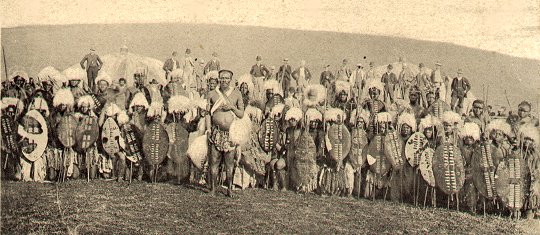
Zulu warriors
Date1906
Location
Result British victory
Belligerents

United Kingdom United Kingdom

amaZondi and amaCube clans of the Zulu people
Commanders and leaders
Colonel Duncan McKenzie Chief Bambatha kaMancinza
Strength
4,316 soldiers (including 2,978 militiamen)[1] Unknown
Casualties and losses
36 (including 6 levies)[2] 3,000 to 4,000 killed

The Bambatha Rebellion (also known as the Zulu Rebellion) was a 1906 uprising against colonial rule in the British colony of Natal led by the Zulu chief Bhambatha, who lived in the Mpanza Valley (now a district near Greytown). It was sparked by unpopular taxation policies levied by the Natal colonial administration, which exacerbated ongoing economic crises. The suppression of the rebellion by colonial forces resulted in the deaths of 3,000-4,000 Zulus and 36 colonial soldiers, and led to an uptick in support among white colonists in Southern Africa for uniting the various colonies in the region in order to maintain white supremacy. The Union of South Africa was subsequently formed in 1910.

Rebellion

[edit]
Bhambatha (right) with an attendant

In the years following the end of the Second Boer War in 1902, European employers in the British colony of Natal had difficulty recruiting Black farmers due to increased competition from gold mines in the Witwatersrand. Colonial authorities in Natal introduced a poll tax of £1 (equivalent to £140 in 2023) in addition to the existing hut tax to pressure Zulu men into entering the labour market.[3] The tax was very regressive, and disproportionately affected poorer households. This was exacerbated by Africans experiencing a wider economic crisis, as European landowners evicted African tenants to work the land themselves (leading to overcrowding on the small lands reserved for the African majority), and various natural disasters, such as an 1896–1897 epidemic which killed 90% of local cattle.[4]

In 1897, the Zulu king Dinuzulu KaCetshwayo, who was in exile at Saint Helena, was allowed to return to South Africa by the British. After his return, rumours circulated among Africans that he was planning a rebellion to restore African rule and expel white settlers from the region. The imposition of the poll tax served as the catalyst to unite young African men. While some chiefs and elders attempted to negate the coming rebellion, many supported it.[4] In 1906, the first phase of the rebellion began with demonstrations at poll tax stations, resulting in the deaths of two police constables on 8 February and the subsequent imposition of martial law by the Natal colonial authorities.[4]

Bambatha, a Zulu chief, had occasionally been in trouble with the Natal colonial administration, who suspected that he had joined with other chiefs in expressing discontent over the new poll tax. He was summoned to Greytown, but, fearing arrest, did not attend. Bambatha realised that the colonial administration was intent on crushing dissent and fled to Dinizulu's palace to consult with him.[5] Bambatha returned to the Mpanza Valley to discover that the Natal government had deposed him as chief.[3] He gathered together a small force of supporters and from 3 April began launching a series of guerrilla attacks on colonial forces, using the Nkandla forest as a base.[3]

In response to news of the rebellion, the Natal authorities mustered all the soldiers and policemen they could along with requesting assistance from the Transvaal and Cape colonies. Their efforts resulted in the raising of a force of 4,316 men under Colonel Duncan McKenzie. On 10 June, McKenzie's troops surrounded Bambatha's rebels at Mome Gorge. As the sun rose, they attacked the poorly-armed rebels and inflicted heavy casualties on them.[3] It was reported that Bambatha was killed in action by McKenzie's forces, but this claim was disputed by his supporters, who believed that he fled to Portuguese Mozambique.[6] The rebellion was continued by Chief Meseni in the lower Thukela Valley from 13 June to 11 July, before it was also suppressed.

Over the rest of 1906, the rebellion's most bloodiest phase saw colonial forces engage in indiscriminate counterinsurgency operations to stamp out any perceived resistance.[4] Between 3,000 and 4,000 Zulus were killed, while more than 7,000 were imprisoned and 4,000 flogged; 36 colonial soldiers died. The rebellion's suppression cost the Natal colonial government £883,576[7] (equivalent to £120,000,000 in 2023). The rebellion led to an uptick in support among white colonists in Southern Africa for uniting the various colonies in the region in order to maintain white supremacy. The Union of South Africa was subsequently formed in 1910.[4]

Mahatma Gandhi's role

[edit]
Amount actually collected from the poll tax between 1906 and 1909[8]
1906 1907 1908 1909
Natal
£68,500 £49,637 £45,150 £41,498
Zululand
£7,990 £4,267 £3,940 £3,520
Total
£76,490 £53,904 £49,090 £45,018

The Indian lawyer and future independence activist Mohandas Karamchand Gandhi, who was then working as a lawyer in South Africa, encouraged Indian South Africans to participate in the rebellion's suppression.[9] Gandhi actively encouraged colonial authorities in South Africa to recruit Indians, and argued that Indians should support the war effort in order to legitimise their claims to full citizenship. Though colonial officials refused to allow Indians to enlist as combatants, they accepted Gandhi's offer to let a detachment of Indian volunteers to serve as a stretcher bearer corps to treat wounded white soldiers.[10]

This corps of 21 men was commanded by Gandhi, who also urged the Indian population in South Africa to join in suppressing the rebellion through his columns in Indian Opinion: "If the Government only realised what reserve force is being wasted, they would make use of it and give Indians the opportunity of a thorough training for actual warfare".[9] By 1927, his view on the rebellion had changed, and Gandhi wrote in The Story of My Experiments with Truth that it was "No war but a man hunt".[11]

Commemoration

[edit]

In 2006, the hundredth anniversary of the rebellion was commemorated in a ceremony which declared Chief Bambatha a national hero of post-Apartheid South Africa. Also, his picture appeared on a postage stamp and a street was renamed in his honour.[3]

According to speeches in the ceremony, the beheaded body had not really been Bambatha's and the actual chief succeeded in escaping to Mozambique. This belief is still widely current; a DNA test of his alleged body failed to give a definite answer.[12]

The hip-hop musician Afrika Bambaataa takes his name from Bambatha and his rebellion.[13]

See also

[edit]

References

[edit]
Revisions and contributorsEdit on WikipediaRead on Wikipedia
from Grokipedia
The Bambatha Rebellion was an armed uprising by Zulu-speaking Africans in the British , , during 1906, precipitated by the colonial government's imposition of a £1 annual on adult males to enforce labor participation and offset post-South African War financial strains. Led by Bambatha kaMancinza, chief of the amaZondi clan who was deposed following disputes over the poll tax and his flight to consult Dinuzulu, the revolt commenced after he refused tax collection and fled into the Nkandla Forest, launching attacks on officials and loyalist forces. was declared on 9 February 1906, mobilizing colonial militias and troops that pursued guerrilla bands through rugged terrain. The conflict escalated as Bambatha allied with other dissident chiefs like Sigananda kaZokufa, establishing bases in forested strongholds and employing against patrols. Key engagements included assaults on magistrates' offices and skirmishes that prompted reinforcements from the Transvaal. The decisive confrontation occurred at Mome Gorge on 10 June 1906, where colonial forces under Colonel Duncan McKenzie encircled and assaulted rebel positions at dawn, using to shatter defenses and inflict heavy losses. Bambatha was reportedly killed and decapitated during the rout, with approximately 575 rebels slain in that battle alone. Suppression of the rebellion concluded by mid-July 1906 following surrenders and captures, including Sigananda's on 13 June, though estimates of total Zulu fatalities range from 3,000 to 4,000 amid broader operations. Over 7,000 Africans were imprisoned, and 4,000 flogged as punitive measures, with some Zulu auxiliaries fighting for the colony. Scholarly analyses, such as Shula Marks' examination, portray the disturbances as reluctant and fragmented rather than a cohesive ideological revolt, driven by local grievances including chiefly disputes and economic pressures rather than unified anti-colonial . The events underscored the erosion of traditional authority under colonial policies, contributing to subsequent political mobilizations like the formation of the South African Native National Congress in 1912, while highlighting the fiscal imperatives behind taxation that prioritized interests.

Historical Background

Zulu Society and the Defeat of the Zulu Kingdom

The was characterized by a highly centralized , where kings such as kaMpande, who ruled from 1873 to 1879, exercised absolute authority over a hierarchical society structured around kinship clans and military regiments known as impis. These impis, organized by age-sets and loyal directly to the king rather than local chiefs, formed the backbone of Zulu power, enabling rapid mobilization for conquest and defense through disciplined formations and short stabbing spears. The economy relied heavily on herding, with livestock serving as the primary measure of wealth, status, and in a pastoralist system supplemented by women's cultivation of and using hoes. This militaristic and cattle-centric order fostered expansion under earlier rulers like , but also entrenched chiefly control over land and labor, with commoners owing tribute in the form of and . The of 1879 marked the decisive defeat of this kingdom by British forces. Following an ultimatum in December 1878 demanding the disbandment of the Zulu military system, British troops invaded Zululand in January 1879, suffering a major setback at on January 22 where over 1,300 British soldiers were killed. However, the British regrouped, and on July 4, 1879, Lord Chelmsford's column achieved victory at the , the Zulu capital, where an estimated 1,000 to 1,500 Zulu warriors were killed against British losses of 10 dead and 87 wounded, leading to the burning of the royal . King was captured on August 28, 1879, ending organized Zulu resistance. In the war's aftermath, the lost its sovereignty and was partitioned by British authorities into 13 independent chiefdoms under pro-colonial Zulu leaders, imposing a system of that fragmented traditional authority and prohibited the reestablishment of a centralized monarchy. This division exacerbated internal factions, such as the Usuthu loyalists to versus boundary-keeping chiefs aligned with the British, fostering ongoing resentments over land allocations and reduced chiefly autonomy. Locations like Mpanza in the , home to the Zondi clan under chiefs including Bambatha's lineage, exemplified these tensions; while nominally under colonial administration since the , post-1879 policies reinforced nominal loyalty to British overlords but perpetuated grievances from disrupted and economic impositions, setting the stage for later unrest without restoring Zulu independence.

Colonial Administration in Natal and Zululand

The British annexed Natal in May 1843, following military intervention against the short-lived Boer Natalia Republic established after the Great Trek, transforming the territory into a crown colony under a lieutenant-governor reporting to the Cape Colony governor. This annexation aimed to secure the coastal port of Durban for imperial trade routes and stabilize the region amid Zulu-Boer conflicts, with initial administration focusing on land surveys and settlement for European immigrants. In Zululand, adjacent to Natal, British control solidified after the 1879 Anglo-Zulu War dismantled the centralized Zulu kingdom under Cetshwayo, leading to partition into 13 chieftaincies under divided rule; full annexation occurred in 1887, placing the territory under a resident commissioner to prevent Boer incursions from the north and integrate it administratively with Natal. Colonial governance established a system of native reserves, or "locations," comprising designated lands for African occupation, totaling around 2.5 million acres by the late 19th century, administered through district magistrates who supervised local chiefs and enforced British law. Under Theophilus Shepstone's influential "native policy" from the 1840s onward, chiefs retained nominal authority over their people in civil matters but were subordinated to magistrates, who held veto power, issued passes for movement, and mediated disputes, effectively eroding traditional autonomy by making chiefs accountable to colonial revenue goals rather than customary obligations. This structure promoted labor migration to European farms and Witwatersrand mines, alongside mission-led education and Christianity, to foster a taxable, wage-earning population supporting colony self-sufficiency, particularly after the Anglo-Boer Wars strained imperial finances. Location commissions in the and further centralized control by surveying and reallocating lands within reserves, consolidating fragmented holdings and evicting occupants from white-designated areas, which diminished chiefs' land allocation powers and heightened dependencies on approvals. These efforts clashed with residual Zulu chiefly structures, favoring compliant leaders who enforced poll taxes and labor recruitment while marginalizing defiant ones through deposition threats or boundary adjustments, sowing seeds of resentment in districts like Mpanza where persisted informally. developments, such as roads and railways linking reserves to ports, facilitated extraction and administrative oversight but reinforced economic subordination, justifying the as modernization essential for regional stability post-Zulu military defeats.

Precipitating Causes

The Poll Tax and Fiscal Policies

In 1905, the Natal colonial legislature passed the Poll Tax Act, which levied an annual £1 tax on all unmarried adult African males aged 18 and over who were exempt from the existing paid by household heads. The tax took effect on 20 January 1906, with a until 31 May for initial payments, targeting a estimated at tens of thousands in rural locations where traditional subsistence predominated. This policy addressed fiscal shortfalls in the colony's budget, strained by post-South African War reconstruction and administrative expansion, while aiming to compel idle young men into the wage labor market for farms and mines. The measure drew on precedents from neighboring territories, where personal levies had been used since the late to offset revenue losses from disrupted traditional taxation systems like the Zulu kingdom's tributary arrangements, now supplanted by individual accountability. In the , similar hut and poll taxes had been incrementally applied to able-bodied males since the 1880s to fund infrastructure without relying solely on import duties, while the Transvaal administration post-1902 introduced comparable head taxes to integrate African labor into industrial growth. Exemptions applied to indentured workers already contributing through labor contracts and, in some cases, to those with mission-school certificates or wives registered as taxpayers, designed to reward assimilation and partial economic participation without undermining the incentive for . Colonial officials rationalized the poll tax as a pragmatic equivalent to foregone communal revenues under pre-colonial structures, promoting and market integration by equating the £1 burden to roughly two months' unskilled wages, thereby discouraging prolonged rural idleness. Pre-rebellion enforcement data indicated pervasive non-compliance in Zulu-influenced districts, with registration drives yielding low yields due to evasion tactics such as underreporting ages or fleeing locations, reflecting a cultural preference for over monetized obligations.

Local Grievances and Economic Hardships

The Zulu communities in Natal faced severe economic strain from successive environmental catastrophes in the early 1900s, which eroded their livestock-based . In 1903, an epidemic of East Coast fever ravaged herds across the region, killing vast numbers and leaving survivors weakened, as the spread rapidly among indigenous stock unexposed to it prior. This loss was compounded by swarms of locusts that devoured crops and pastures, further diminishing and agricultural yields. A devastating hailstorm on 31 May 1905 inflicted widespread destruction on remaining vegetation and infrastructure in Natal, exacerbating famine risks and forcing many households into destitution. These events reduced chiefly tributes in and , traditionally the backbone of networks, compelling able-bodied men to seek wage labor on distant mines and farms to sustain families. Land scarcity intensified these hardships, as Zulu reserves became overcrowded due to population growth and prior dispossessions following the of 1879. By the early 1900s, designated locations in Natal held disproportionate numbers relative to arable acreage, with poor soils and limiting productivity; estimates indicated reserves accommodating far more people than sustainable farming could support. In areas like the Mpanza Valley, where chief Bambatha kaMancinza held influence, the terrain was notably arid and rocky, fostering disputes over boundaries with neighboring chiefs and white settlers encroaching for grazing. Competition from expanding European farms displaced Zulu pastoralists, squeezing access to common lands and heightening tensions over resource allocation without formal resolution mechanisms. Colonial labor policies deepened , as laws from the 1879 Amendment Act empowered landowners to arrest "idle" Africans loitering near properties, funneling them into indentured work. Earlier statutes, like the 1840 Vagrancy Law, mandated passes and service contracts for black individuals, targeting those without fixed employment to supply cheap labor amid white settler shortages. This regime clashed with traditional Zulu social structures, where chiefs mediated resource distribution and through communal obligations rather than individualistic wage circuits, viewing such impositions as erosive to and ties. By 1906, pervasive poverty in reserves—marked by inadequate yields and migration cycles—amplified resentment toward policies perceived as prioritizing colonial extraction over local sustainability.

Outbreak and Leadership

Bambatha kaMancinza's Defiance


Bambatha kaMancinza, born around 1866 as the son of Mancinza and a junior chief of the Zondi clan in the Mpanza Valley near Greytown in Natal's Mvoti district, faced mounting tensions with colonial authorities prior to the imposition. A warrant for his was issued in 1905 amid these conflicts, reflecting his non-compliance with administrative demands.
In early 1906, the Natal colonial government enforced a £1 on all adult black males beyond existing hut taxes, prompting Bambatha to openly refuse payment in . He propagated the tax as equivalent to enslavement, invoking rumors of impending forced labor and appealing to traditionalist Zulu resistance against what he termed the "white man's laws," positioning compliance as a of ancestral customs. This rhetoric drew on local grievances but stemmed primarily from his personal eviction threat for non-payment of location fees and taxes. Evading magistrates dispatched to enforce collection, Bambatha fled to the dense Nkandla forest with around 100 followers, establishing a base from which to sustain defiance. His , driven by individual authority challenges and clan-specific disputes rather than unified Zulu opposition, escalated local unrest without initial broad tribal endorsement.

Mobilization of Followers


Bambatha kaMancinza, having evaded initial colonial pursuits, sought refuge in the Nkandla district, where he forged alliances with sympathetic local chiefs, including Sigananda Shezi of the amaCube clan and Mangati, grandson of the prominent Zulu figure Ndhlela. These partnerships leveraged shared grievances over the and colonial encroachments, enabling Bambatha to draw recruits from kinship networks and disaffected communities in the , particularly from the Qudeni area. By rallying warriors through traditional structures and appeals to resistance against fiscal impositions, he assembled forces comprising over 1,000 armed men, organized into approximately 20 companies of 50 to 100 spears each.
Recruitment emphasized guerrilla-oriented bands, incorporating elements of Zulu regimental traditions adapted for evasion, with indunas coordinating small, mobile groups that utilized the rugged Nkandla forest terrain to avoid patrols. Evidence of intra-Zulu tensions emerged as rebels targeted perceived collaborators, including those assisting enforcement, fostering within communities and underscoring divisions where some Zulus enforced or complied with colonial demands. These networks propagated unrest via personal oaths of loyalty and localized raids to sustain supplies, though specific raids for recruitment remain documented primarily in broader resistance contexts rather than systematic mobilization tactics. The rebellion's appeal proved limited, confined largely to specific districts like Nkandla rather than evoking a pan-Zulu uprising, as many Zulu chiefs remained loyal to colonial authorities, and significant numbers paid the or enlisted as in suppression efforts. This fragmentation highlighted causal factors rooted in localized economic hardships and chiefly rivalries, rather than unified ethnic opposition, with widespread sympathy for tax grievances not translating into mass participation. Loyalist Zulus, including those in adjacent areas, opposed the rebels, contributing to internal conflicts that weakened mobilization coherence.

Course of the Rebellion

Initial Clashes and Spread of Unrest

In late March 1906, initial resistance by Bambatha's followers in the Mpanza Valley near Greytown escalated into armed skirmishes, with rebels targeting colonial police and African loyalists suspected of informing on tax evaders. Bambatha's group, numbering several hundred, conducted aggressive raids to assert defiance against poll tax enforcement, killing policemen attempting arrests and intimidating or assassinating local informants who cooperated with authorities. These actions, driven by opposition to fiscal impositions rather than widespread grievances, disrupted local order but elicited limited Zulu participation beyond core supporters. The first significant clash occurred on April 4, 1906, at Ambush Rock near Mpanza, where Bambatha's forces ambushed a police patrol investigating reports of his location, resulting in the deaths of four Natal policemen. Rebel losses in the encounter were estimated at around 20 Zulu fighters, highlighting the asymmetry in armament despite the element of surprise favoring the attackers. This incident marked a shift from passive defiance to open aggression, prompting Bambatha to retreat into wooded areas while continuing selective violence against perceived collaborators. Unrest spread to adjacent districts such as Umvoti, fueled by including raids on farms and missions, which aimed to hinder colonial commerce and administration but failed to rally broader Zulu support. Most Zulu communities, facing economic pressures, opted for compliance with the tax rather than joining the , limiting the rebellion's expansion during this phase. These early engagements underscored the rebels' reliance on guerrilla ambushes over conventional confrontation, yet they provoked a decisive colonial response without achieving strategic gains.

Guerrilla Warfare and Key Skirmishes

Following initial clashes, Bambatha's forces adopted centered in the dense Nkandla Forest, leveraging its rugged terrain for ambushes and concealment against superior colonial numbers and firepower. Rebels, armed primarily with spears and limited firearms, employed and sudden charges from thick bush, as seen in the 3 May 1906 skirmish at Bope Ridge where faced sniper fire and an advance guard , resulting in 55 rebel deaths. These actions highlighted the asymmetry, with disorganized groups of 700–1,000 rebels struggling against coordinated patrols backed by African levies. Key engagements in late May and early underscored the rebels' reliance on forest hideouts but also their vulnerabilities. On 29 May, colonial forces under McKenzie engaged in Thathe Gorge, killing 40 and capturing hundreds of , disrupting supplies. Similarly, a 3 at Manzipambana Stream killed 4 but cost 150 and over 200 , further straining resources as lived off the amid homestead destructions. Attacks targeted loyal Zulu elements, such as the mid-May murder of foreman Walters near Mbiza Stream and earlier seizures of compliant chiefs like Magwababa, reflecting efforts to coerce allegiance amid chiefly rivalries. Internal fractures compounded tactical limitations, with desertions surging—nearly half of Natal rebels by June—due to leadership critiques post-Bope Ridge and mounting shortages from lost . Bambatha's pre-rebellion flight to Dinizulu's Usutu on 11 March for shelter, followed by his return encouraged by the king's attendant, exposed dependencies on Zulu chiefly networks fractured by succession disputes and power struggles, as rival leaders like Sigananda commanded separate contingents of up to 1,000. These dynamics rendered sustained resistance futile, with small-scale actions yielding minimal gains against organized drives that inflicted disproportionate casualties.

Colonial Military Response

Deployment of Forces and

The colonial response involved the rapid mobilization of the Natal militia, comprising active units such as the Natal Carbineers, Durban Light Infantry, and Umvoti Mounted Rifles, alongside police contingents and auxiliary forces drawn from loyal African communities. By late May 1906, these efforts had assembled approximately 4,000 troops, including around 3,000 militiamen, enabling a coordinated push into rebel-held areas like the Nkandla district. This multi-ethnic composition, incorporating Zulu scouts and trackers familiar with local terrain, proved instrumental in navigating dense forests and ravines, where European-led units alone might have struggled. Strategic planning prioritized containment over aggressive sweeps, focusing on blockading forested strongholds to starve out guerrilla bands and disrupt their mobility, while intelligence from scouts and improvised field networks pinpointed rebel movements. Colonial commanders, under figures like , issued warrants for arrests to maintain legal accountability, eschewing indiscriminate reprisals that could alienate neutral chiefs and escalate unrest. This approach avoided favoring pitched engagements, where rebels' spears and numbers could offset firepower disadvantages, instead leveraging patrols to force dispersal and surrender. Logistical edges—modern , machine guns, and sustained supply chains—contrasted sharply with the rebels' reliance on assegais and limited , allowing sustained operations without overextension. The swift buildup and targeted enforcement empirically limited the rebellion's spread beyond southeastern Natal, as demonstrated by the containment of sympathizers in adjacent districts and the prevention of unified Zulu mobilization.

Major Engagements and Technological Superiority

The colonial forces employed systematic patrols and tactics during the Nkandla operations in mid-May to early June 1906, targeting rebel strongholds in the dense Nkandla Forest where Bambatha's followers sought refuge. These operations involved coordinated advances by units such as the Natal Carbineers, Transvaal Mounted Rifles, and Durban Light Infantry, supported by African levies, to flush out insurgents from ravines and ridges. British firepower, including Lee-Enfield rifles, Maxim machine guns, and like pom-poms, decisively countered rebel charges, which relied primarily on assegais and limited outdated firearms, rendering Zulu tactics obsolete against sustained volleys and . Key skirmishes exemplified this technological asymmetry. On 3 May at Bope Ridge, colonial patrols engaged a rebel group, killing 55 insurgents with minimal losses through rapid rifle fire that halted an attempted rush. Similarly, at Tathe Gorge on 29 May, shelling and machine-gun fire from positioned dispersed attackers, resulting in 40 rebel deaths and the capture of hundreds of , while British casualties remained negligible due to defensive positioning and range advantages. Such encounters often produced lopsided casualty ratios exceeding 10:1, as rebels exposed themselves in open assaults against entrenched firepower, underscoring the futility of pre-industrial warfare against industrialized colonial arms. African scouts and loyalist levies played a crucial role in intelligence gathering and tracking, enabling precise encirclements that minimized direct confrontations and facilitated surrenders coordinated with local magistrates. This integration reduced white colonial casualties across the rebellion to approximately 25 deaths, despite thousands of Zulu losses, highlighting how superior mobility, reconnaissance, and weaponry negated the numerical advantages of dispersed guerrilla bands. The rebellion's combat dynamics thus revealed the insurmountable gap between state-organized forces with machine guns and ad hoc insurgents adhering to traditional charging strategies, rather than any inherent heroism in futile advances.

Suppression and End of Hostilities

Battle of Mome Gorge and Bambatha's Death

On 10 June 1906, colonial forces under Colonel Duncan McKenzie set a trap for Bambatha's band at Mome Gorge in the Nkandla district, based on intelligence from a surrendered rebel informant who revealed the rebels' movements from Qudeni toward a planned junction with Sigananda's forces. McKenzie positioned troops to block escape routes from above and at the gorge mouth, ambushing an estimated force of over 1,000 rebels comprising approximately 20 companies led by Bambatha. As the rebels assembled in traditional formation at dawn, colonial rifle and Maxim gun fire inflicted devastating losses, with McKenzie's flanking maneuvers from Gun Hill preventing organized breakout attempts and routing the poorly armed insurgents. Bambatha was killed during the engagement, reportedly speared by a native levy and shot in the head by a Nongqai policeman after sustaining multiple wounds including to his arm and back. His decomposing body was discovered on 13 June and identified by distinctive features such as dental gaps, scars, and foot structure, corroborated by Zulu informants; to confirm identity amid doubts, the head was severed and transported to Nkandla magistrates for verification before reburial. Although some rebel supporters disputed the identification, claiming Bambatha escaped to Portuguese territory or hid elsewhere, official records and contemporary examinations upheld his death in the rout. The battle resulted in official rebel casualties of about 575 killed, shattering the rebel cohesion and prompting immediate dispersal of surviving bands, with around 1,000 surrendering shortly thereafter; this marked the effective collapse of organized resistance in the Nkandla operations. Colonial losses were minimal, with three officers and troopers killed, underscoring the asymmetry in firepower and tactics that ended Bambatha's evasion campaign.

Reprisals, Casualties, and Surrender

Following the Battle of Mome Gorge on 10 June 1906, colonial forces under Colonel conducted systematic sweeps through the Nkandla Forest and surrounding bush areas to flush out remaining armed rebels, resulting in additional skirmishes and captures. These operations targeted holdouts who refused to surrender, with actions such as the drive on 29 May in Tala Gorge yielding 40 rebel deaths and hundreds of seized. Kraals associated with active insurgents were occasionally shelled or destroyed to deny shelter and resources, though such measures were directed at combatants rather than indiscriminate civilian populations. Total casualties reflected the rebellion's asymmetric nature, with approximately 4,000 Zulu killed, many in combat due to the insurgents' reliance on guerrilla tactics against better-equipped forces, compounded by exposure, , and supply shortages in prolonged forest hiding. Colonial losses were minimal at around white personnel, underscoring the effectiveness of technological and organizational advantages in quelling the uprising without broader escalation. The high rebel toll stemmed from persistent resistance rather than deliberate extermination, as voluntary submissions increased once key leaders fell, averting wider in Natal. Surrenders accelerated post-Mome Gorge, with nearly 1,000 rebels submitting shortly after Bambatha's presumed death, including chief Sigananda on 13 June 1906, signaling the collapse of organized defiance. By July 1906, hostilities had effectively ended, yielding over 7,000 prisoners overall, many of whom faced flogging—around 4,000 cases—as punitive discipline for participation. These outcomes enforced colonial authority while highlighting the insurgents' logistical vulnerabilities in sustaining a protracted campaign.

Key Figures and Roles

Rebel Leaders and Zulu Traditionalists

Bambatha kaMancinza, chief of the Zondi since 1890, led the initial uprising in the Mpanza Valley, driven primarily by personal grievances rather than broad opposition to colonial measures. His deposition on February 23, 1906, stemmed from chronic misconduct, including involvement in seven criminal cases and 37 civil debt judgments between 1893 and 1906, a four-month suspension in 1895 for alleged cattle theft, and leadership of a violent faction fight in 1905 that resulted in a £20 fine. These incidents, compounded by resistance to tax collection, underscored his opportunism in exploiting discontent to seek reinstatement and revenge against his successor, Magwababa, rather than pursuing adaptive reforms to colonial administration. Associated with Bambatha was Sigcwelegcwele, a figure embodying resistance to modernization through rigid adherence to Zulu traditionalist ideology, viewing colonial impositions like the as existential threats to ancestral authority structures. Traditionalists under such leaders prioritized the preservation of obsolete chiefly powers, including unchecked control over resources and disputes, over negotiating economic adaptations that could mitigate hardships from loss and labor demands. This stance reflected a broader rejection of pragmatic engagement with colonial realities, favoring ritualistic —evident in Bambatha's use of traditional chants to rally followers—over strategic reform. The rebels maintained ties to Dinizulu kaCetshwayo's faction, which sought to leverage the unrest for restoring Zulu royal paramountcy, as demonstrated by Bambatha's visit to Dinizulu's oSuthu homestead on May 23, 1906, where he received directives to coordinate with other chiefs like Mehlokazulu and Sigananda, and appointments of commanders such as Macala and Mganu. Dinizulu's secretive support, including plans for a Natal invasion on June 2, 1906, prioritized personal power consolidation over genuine socio-economic grievances, aiming to exploit the rebellion's momentum for monarchical revival amid colonial consolidation. This alignment revealed self-interested maneuvering, with Dinizulu denying involvement during his 1909 trial despite witness testimonies from Mangathi and Siyekiwe confirming his role. Internal disunity plagued the rebel forces, exemplified by pre-existing fights within clans like the Zondi and opportunistic plunder during raids, which fragmented cohesion and prioritized personal gain over unified resistance. Such conflicts, rooted in traditionalist hierarchies' inability to to against superior colonial forces, hastened the uprising's collapse by June 10, 1906, at Mome Gorge, underscoring the limitations of authority preservation without causal to technological and organizational disparities.

British Officials and Loyalist Africans

Colonel commanded the colonial field forces during the Bambatha Rebellion, overseeing a multi-column strategy that emphasized and systematic sweeps of rebel strongholds like the Nkandla Forest to minimize broader disruption while enforcing compliance. His operations, launched in late April 1906, integrated units and local to target guerrilla bands without escalating to indiscriminate reprisals early on. Magistrates such as J.W. Cross in Mpanza directed initial tax enforcement efforts, issuing summonses to non-compliant chiefs like Bambatha on 7 February 1906 and coordinating with police to uphold colonial revenue measures. Similarly, T.R. Bennett in Umgeni confronted armed resistance during collections, reinforcing administrative control amid rising unrest. Colonel D.W. Mackay led early militia deployments, including the Natal Carbineers, to secure supply lines and engage rebels in the Umsinga and Nqutu districts starting in April 1906, prioritizing rapid response to prevent the rebellion's spread. These officials' coordinated restraint—avoiding large-scale punitive expeditions until necessary—facilitated the rebellion's containment through targeted actions rather than wholesale confrontation. Loyal African chiefs played a pivotal role in maintaining order, supplying levies that demonstrated the rebellion's factional nature rather than unified Zulu opposition. Chief Ngobizembe intervened to protect R.E. Dunn from rebel threats in Mapumulo, exemplifying direct collaboration to preserve local stability. Chief Mfungelwa provided approximately 400 levies for Nkandla operations, marked by armbands for identification, while Chief Hatshi contributed additional forces totaling around 800 in the Mome Gorge engagement on 10 June 1906; these auxiliaries, alongside about 90 Zululand Native Police (Nongqai), assisted in , cattle seizures, and intelligence, often against kin groups. Such participation underscored that tax compliance preserved chiefly authority and land access for adherents, contrasting with the dispossession faced by rebels. Overall, these roughly 1,000-2,000 African auxiliaries across operations highlighted multi-racial mechanisms that limited the uprising to peripheral dissidents.

Gandhi's Auxiliary Involvement

In response to the outbreak of the Bambatha Rebellion in April 1906, Mohandas K. Gandhi, then a advocating for Indian rights in Natal, offered to organize an Indian volunteer ambulance to assist British forces. The Natal government accepted, and Gandhi assembled a small group of approximately 24 volunteers, including Gujaratis, former indentured South Indians, and one Pathan, who underwent basic training in and stretcher-bearing. The commenced on 22 June 1906 and served until 19 July 1906, primarily transporting and nursing wounded British soldiers, though they also tended to injured Zulus under colonial direction. Gandhi explicitly framed this service as a demonstration of Indian loyalty to the amid ongoing grievances, such as the proposed three-pound on free Indians, which he viewed as a test of allegiance to secure political concessions. In his , he expressed personal doubts about the rebellion's justification while affirming no animosity toward the Zulus, emphasizing that Indians had suffered no direct harm from them and that supporting was a moral duty. The volunteers received commendations from officers like Colonel Sparks and General Mackenzie for their efficiency, with Gandhi noting the corps's disciplined operation despite the physically demanding terrain. Critically, had no role, distinguishing it from Gandhi's earlier ambitions for an armed Indian contingent, which authorities rejected. The corps's disbandment after six weeks yielded indirect benefits for Gandhi's advocacy; colonial officials acknowledged the service, bolstering his credibility as a loyal intermediary and aiding recruitment efforts for Indian political petitions against discriminatory laws. This auxiliary contribution aligned with Gandhi's strategy of conditional imperial fidelity to advance Indian status, rather than any alignment with Zulu resistance, countering later portrayals that romanticize his early South African activities as proto-anti-colonial.

Immediate Consequences

Punitive Measures and Trials

Martial law was proclaimed in Natal on 9 February 1906 by Governor Sir Henry McCallum in response to the killing of colonial policemen, enabling rapid judicial proceedings against rebels accused of murder and treason. Under this framework, martial law courts facilitated summary trials, with 12 rebels executed on 2 April 1906 near Richmond for complicity in the policemen's murders, serving as an immediate deterrent to further insurgency. Additional courts martial targeted rebel leaders, such as Ndhlovu and Meseni, prosecuted for high treason and murder in July 1906 at Mapumulo, emphasizing accountability for organized resistance. The trial of Zulu paramount chief Dinuzulu kaCetshwayo exemplified the application of amid punitive actions. Arrested in late 1907, Dinuzulu faced charges of high and at Greytown from 1908 to 1909, with evidence centered on alleged support for Bambatha's forces through supplies and shelter. Acquitted of the principal high count due to insufficient direct proof of instigation, he was convicted on lesser sedition-related offenses, receiving a sentence of four years' imprisonment (backdated from his 15-month detention), a £100 fine, and subsequent to prevent renewed agitation. This outcome reflected evidentiary standards in colonial courts, balancing deterrence with procedural fairness, as appeals on factual verdicts were unavailable to prosecutors. Fines were imposed on implicated chiefs and districts to enforce and fund suppression costs, with examples including the reduction of one chief's 500-cattle penalty upon imperial review. Complementing trials, post-rebellion disarmament measures confiscated weapons from Zulu communities, systematically curtailing capacities for future armed defiance and consolidating colonial authority. These actions, rooted in deterrence, prioritized rapid restoration of order over expansive retribution, as evidenced by commuted sentences for some chiefs.

Disarmament and Tribal Fines

Following the suppression of the rebellion in mid-1906, colonial authorities in Natal implemented disarmament policies requiring the surrender of firearms to prevent rearmament among Zulu tribes, with chiefs ordered to collect and deliver weapons under threat of further punitive action. For instance, Chief Charlie Fynn's tribe surrendered old assegais and guns alongside 300 cattle by March 21, 1906, while broader calls for unconditional arms surrender followed key rebel capitulations, such as Sigananda's on June 16, 1906. These measures recovered scattered modern weapons like Martini-Henry rifles and Mausers used by rebels, though pre-rebellion gun registration in Zululand stood at around 5,126 mostly obsolete firearms by 1904, limiting the scale of organized rearmament potential. Tribal fines were levied on disloyal chiefs and their followers to enforce fiscal recovery for the rebellion's £740,000 cost to the colonial government, often enforced through destruction and livestock seizures reallocated to loyalists or auctioned. Specific impositions included 100 on Chief Miskofeli by March 12, 1906, 1,500 on Fynn's (paid after initial seizures of about 200 animals), and 1,200 plus 3,500 sheep and goats on Ngobizembe's group in Mapumulo division. Operations yielded thousands of seized overall, such as over 2,000 in Mangeni Valley (auctioned in by early June) and 800 near Cetshwayo's grave site on May 17, with Nkandla district alone accounting for 4,727 and 3,087 sheep/goats confiscated by late 1906. Location reductions were applied to fined s, redistributing lands to compliant groups and undermining rebel support bases. Compliance rates improved rapidly under military pressure, with most fines settled after demonstrations of force; for example, Ngobizembe surrendered following kraal burnings on March 2–5, and 284 rebels yielded in Qudeni Forest post-June 16. Over 7,000 imprisonments and 4,000 floggings reinforced adherence, though short-term resentment persisted among fined communities due to these corporal and economic penalties. Post-1906 administrative reforms tightened oversight of chiefs, mandating stricter reporting and limiting autonomous authority to avert recurrence of or arms hoarding, fostering long-term stability by integrating loyalist Africans into and avoiding the widespread instability seen during the Anglo-Boer War era. These mechanisms, while punitive, recovered assets and curtailed rearmament risks without requiring imperial troop commitments beyond initial aid.

Long-term Impacts

Political Consolidation under Colonial Rule

The suppression of the Bambatha Rebellion in facilitated greater centralization of colonial administration in Natal by demonstrating the colonial government's capacity to decisively counter armed resistance from African populations, thereby paving the way for more unified governance structures ahead of the in 1910. , declared on 9 February and extended into 1907–1908, empowered authorities to conduct swift courts martial, resulting in the execution of 12 rebels for specific crimes like the Richmond murders and the removal of at least 25 chiefs through deposition, fines, land confiscations, or imprisonment on St. Helena. This process targeted figures such as Tilonko, Ndhlovu, Meseni, and Ngobizembe, whose ousting undermined networks of that had harbored rebels, allowing colonial officials to install or empower more compliant local intermediaries who aligned with administrative directives. A pivotal aspect of this consolidation was the neutralization of Zulu royalist influence through the of Dinizulu kaCetshwayo in December 1907, followed by his conviction for high in 1908–1909 based on evidence of his encouragement of rebels like Bambatha and Mehlokazulu. Dinizulu's deposition and banishment effectively dismantled the remnants of centralized Zulu kingship, which had previously served as a focal point for potential opposition, shifting power dynamics toward fragmented, loyalist chieftaincies under direct colonial oversight. Over 7,000 imprisonments and 4,000 floggings further enforced compliance, costing the Natal government £740,000 but yielding a pacified territory amenable to administrative streamlining. This firm response not only deterred subsequent copycat revolts—marking the Bambatha episode as the final major armed challenge to white rule before unification—but also bolstered Natal's position in the 1908 by evidencing effective control over "native" threats, which reassured pro-unification and imperial authorities of the colony's stability for integration into a centralized . The rebellion's defeat on key battlefields, such as Mome Gorge on 10 June 1906, underscored military dominance, influencing broader imperial strategies by validating coercive measures as a causal mechanism for maintaining order across disparate colonial holdings.

Effects on Zulu Social Structure and Economy

The Bambatha Rebellion resulted in approximately 4,000 Zulu deaths, primarily among able-bodied men involved in combat, alongside widespread of over 7,000 individuals and flogging of 4,000 others, contributing to significant depopulation in affected districts. This loss of manpower weakened traditional Zulu militia structures, which relied on young warriors for enforcement of chiefly authority and communal defense, as surviving fighters faced execution, , or dispersal. Migration intensified as families fled punitive expeditions or sought wage work to meet ongoing demands, further eroding the cohesion of homestead-based (umuzi) social units that underpinned Zulu networks. Colonial suppression discredited rebellious chiefs, such as Bambatha kaMancinza, who was deposed and killed, while arrests of supporting leaders like those under King Dinuzulu undermined the prestige of across Zulu polities. This created a that facilitated greater colonial oversight of chieftaincies, with loyal indunas rewarded and rebels replaced, accelerating the subordination of indigenous to administrative magistrates. In this context, mission expanded among Zulu communities, as Swedish and other missionaries capitalized on disillusionment with failed traditional resistance; the uprising marked a watershed in regional variations of Zulu Christian adoption, blending ancestral appeals with evangelistic appeals amid eroded chiefly legitimacy. Economically, the rebellion deepened poverty by enforcing compliance through fines on implicated tribes, which were repaid via heightened taxation and compulsory labor contributions, compelling broader Zulu integration into the colonial cash economy. This shift propelled thousands into migrant labor on gold mines and Natal plantations, where Zulu workers supplied low-cost manpower to offset labor shortages exacerbated by pre-rebellion cattle plagues like East Coast fever in 1903–1905. While immediate hardship prevailed, sustained tax revenues funded rudimentary such as roads and veterinary outposts, enhancing livestock control and market access for surviving Zulu farmers by the early 1910s.

Historiographical Debates

Colonial-Era Interpretations

In official British colonial accounts of the early , the Bambatha Rebellion was consistently framed as a criminal revolt rather than a legitimate war of national liberation, originating from defiance of the Natal government's lawful policy. James Stuart, a Natal Native Affairs Department official with firsthand involvement in Zulu administration, detailed in his 1913 semi-official history how the uprising stemmed directly from Bambatha's evasion of the £1 annual levy on unmarried adult males, enacted on 7 February 1906 to address labor shortages and idleness by incentivizing wage work on farms and mines. Stuart emphasized that initial protests escalated into armed resistance only after warrants for defaulters were issued, portraying the rebels' actions as and insurrection against established civil order, not a coordinated anti-colonial campaign. These interpretations underscored the active collaboration of loyal African chiefs and levies, who provided , , and manpower to colonial militias, effectively outnumbering Bambatha's estimated 1,000–4,000 irregular fighters at key engagements like Mome Gorge on 10 1906. Reports from colonial magistrates and military officers, such as those compiled in Natal government dispatches, highlighted how figures like Chief Sibindi and others remained loyal, supplying over 5,000 African troops that tipped the balance without requiring full imperial troop deployment, thereby refuting notions of pan-Zulu solidarity. This native support was cited to demonstrate the rebellion's limited appeal, confined to disaffected elements in Mpanza and Greytown districts rather than representing broader African grievances. Colonial justifications for reprisals centered on the existential threat to Natal's white minority—approximately 47,000 Europeans in a of over 1 million Africans—whose rural isolation made swift suppression essential for maintaining order. Eyewitness military logs and Stuart's compilation described rebel tactics, including ambushes from ravines and ritual killings, as "savage" departures from civilized warfare, warranting proclamations from 11 May 1906 and to prevent of farms. While acknowledging isolated colonial oversteps, such as village burnings, these accounts balanced them against documented rebel atrocities, like the spearing of captives, positioning punitive expeditions as defensive necessities grounded in the rather than vengeance.

Post-Apartheid Nationalist Readings

In post-apartheid South African historiography, particularly among nationalist scholars and state-affiliated narratives, the Bambatha Rebellion is often depicted as an early manifestation of anti-colonial resistance, symbolizing Zulu defiance against imperial exploitation and serving as a precursor to later liberation struggles. Sources such as South African History Online portray the event as a direct response to "harsh policies" imposed by colonial authorities, emphasizing the as a tool of economic subjugation that galvanized traditional leaders like Bambatha kaMancinza into organized uprising. This interpretation positions Bambatha as a heroic figure of inspiration for subsequent anti-apartheid movements, linking rural Zulu discontent in 1906 to the ideological foundations of organizations like the (ANC), despite the latter's formation in 1912 as an urban, educated elite initiative focused on constitutional petitions rather than armed revolt. Such readings, prevalent in post-1994 educational and commemorative materials influenced by ANC-aligned institutions, exhibit a tendency to retroactively infuse the rebellion with modern nationalist coherence, overlooking of its fragmented and opportunistic character. Bambatha's leadership stemmed partly from personal motives, including evasion of prior fines for cattle theft and defiance of chiefly deposition, rather than a broad ideological program; the uprising involved no coordinated manifesto or appeal to urban African workers, who largely complied with obligations to sustain migrant labor ties. Moreover, rebels frequently targeted African loyalists, including policemen and supporters of compliant chiefs, resulting in intra-community that belies claims of unified ethnic solidarity—incidents such as assaults on Zulu informants and homesteads of pro-government amakhosi underscored the rebellion's parochial feuds over collection enforcement. These nationalist framings disproportionately highlight reported Zulu casualties—often cited at around 4,000, though many resulted from post-engagement exposure and disease rather than direct combat—while downplaying the poll tax's role in addressing economic inefficiencies in Natal, where rural idleness perpetuated subsistence farming and withheld labor from colonial agriculture and mines, constraining overall growth. The £1 poll tax, introduced in November 1905 alongside the existing hut tax, aimed to compel able-bodied men into wage labor, mirroring fiscal pressures in other British colonies to integrate indigenous economies; evasion exacerbated fiscal shortfalls, with non-payment rates exceeding 50% in some districts by early , undermining infrastructure funding without yielding anti-imperial unity. Institutions propagating these romanticized views, including those with ties to post-apartheid , reflect a broader pattern of selective emphasis to forge historical continuity for contemporary politics, yet archival records reveal no evidence of rebel engagement with pan-African or proletarian grievances, confining the conflict to localized chiefly autonomy disputes.

Causal Analyses: Tax Resistance vs. Broader Anti-Colonialism

The imposition of a £1 on adult African males in Natal in 1905 served primarily as a mechanism to enforce labor discipline, compelling subsistence farmers in overcrowded reserves to enter the colonial wage economy rather than perpetuate inefficient traditional homestead systems reliant on chiefly tribute and coerced labor. Chieftains such as Bambatha kaMancinza, whose personal authority and economic leverage derived from retaining followers in non-monetized, loyalty-based structures, viewed the tax not as mere fiscal extraction but as a direct threat to their regressive status quo, which discouraged productivity-enhancing modernization. Empirical patterns of resistance—localized to specific districts like Mpanza and Greytown, with compliance from many other Zulu chiefs—underscore this as pragmatic evasion of economic incentives for progress, rather than a unified ideological crusade against colonial presence, as the tax funded like roads and schools while targeting idleness that hindered broader development. Counterarguments framing the uprising as broad anti-colonialism falter against evidence of selective, opportunistic violence: rebels primarily ambushed tax collectors and police patrols, killing around 20-30 colonial officials and loyalists between and 1906, without coordinated assaults on white civilian settlements or economic infrastructure beyond immediate enforcement sites. King Dinizulu kaMpande's documented ambivalence further undermines pan-ethnic revolt narratives; while providing sporadic shelter and arms to Bambatha in Zululand reserves, he refrained from overt or mobilization, prioritizing personal restoration over confrontation and later facing charges for limited complicity rather than instigation. Contemporaneous Indian Mohandas Gandhi's formation of a loyalist ambulance corps in May 1906 to aid British forces—explicitly framed as demonstrating imperial fidelity to secure —highlights how non-European groups perceived the conflict as localized fiscal defiance, not a universal racial or anti-colonial front, with Gandhi viewing rebel success as risking escalated repression against all subjects. Debates over suppression brutality, including missionary Eustace St. Clair Hill's protests against hut burnings that destroyed over 15,000 structures to deny rebel shelter and provisions, must be causally weighed against insurgent tactics involving spear-wielding ambushes and executions of African collaborators, which escalated intra-community and prolonged instability. Colonial operations, though severe with approximately 4,000 rebel fatalities versus under 50 on the government side, yielded net stability by dismantling armed traditionalist networks, enforcing disarmament, and integrating reserves into taxable economies, thereby averting chronic low-level unrest that had persisted since the 1879 and facilitating administrative unification under the 1910 . This outcome aligns with causal realism: unchecked traditionalism perpetuated subsistence stagnation, whereas enforced fiscal compliance, despite short-term costs, redirected human capital toward market-driven growth, as evidenced by subsequent Natal agricultural expansions.

References

Add your contribution
Related Hubs
User Avatar
No comments yet.