Hubbry Logo
Biographical criticismBiographical criticismMain
Open search
Biographical criticism
Community hub
Biographical criticism
logo
8 pages, 0 posts
0 subscribers
Be the first to start a discussion here.
Biographical criticism
from Wikipedia
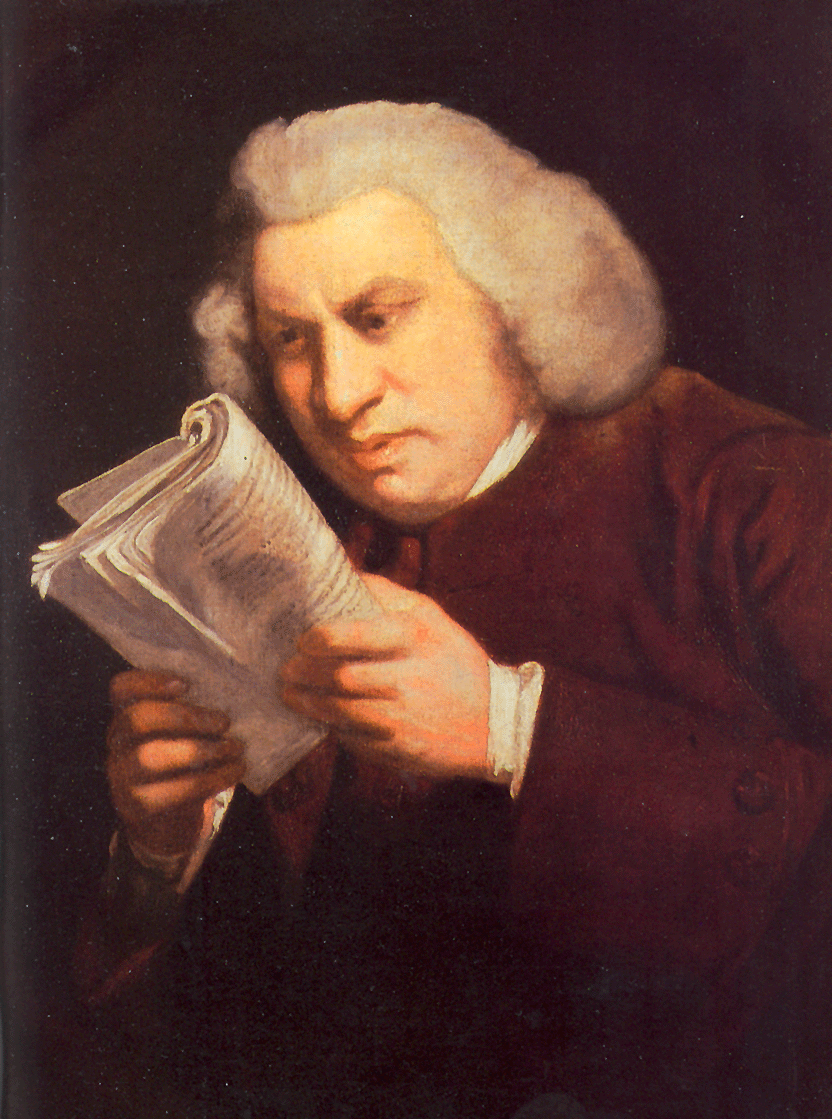
Samuel Johnson's Lives of the Poets (1779–81) was possibly the first thorough-going exercise in a biographical criticism.[1]

Biographical criticism is a form of literary criticism which analyzes a writer's biography to show the relationship between the author's life and their literary works.[2] Biographical criticism is often associated with historical-biographical criticism,[3] a critical method that "sees a literary work chiefly, if not exclusively, as a reflection of its author's life and times".[4]

This longstanding critical method dates back at least to the Renaissance period,[5] and was employed extensively by Samuel Johnson in his Lives of the Poets (1779–81).[6]

Like any critical methodology, biographical criticism can be used with discretion and insight or employed as a superficial shortcut to understanding the literary work on its own terms through such strategies as Formalism. Hence 19th century biographical criticism came under disapproval by the so-called New Critics of the 1920s, who coined the term "biographical fallacy"[7][8] to describe criticism that neglected the imaginative genesis of literature.

Notwithstanding this critique, biographical criticism remained a significant mode of literary inquiry throughout the 20th century, particularly in studies of Charles Dickens and F. Scott Fitzgerald, among others. The method continues to be employed in the study of such authors as John Steinbeck,[2] Walt Whitman[3] and William Shakespeare.[9]

Peripatetic biographical criticism

[edit]

In The Cambridge history of literary criticism: Classical criticism, in a chapter titled "Peripatetic Biographical Criticism", George Alexander Kennedy notes that in the Hellenistic age, "The works of authors were read as sources of information about their lives, personalities and interests. Some of this material was then used by other commentators and critics to explain passages in their works. The process became a circular one in that, though Peripatetic biographers utilized external evidence where available, they had little to go on and quarried the texts for hints".[10]

Recognition of otherness

[edit]

Jackson J. Benson describes the form as a "'recognition of 'otherness'—that there is an author who is different in personality and background from the reader—appears to be a simple-minded proposition. Yet as a basic prerequisite to the understanding and evaluation of a literary text it is often ignored even by the most sophisticated literary critics. The exploration of otherness is what literary biography and biographical criticism can do best, discovering an author as a unique individual, a discovery that puts a burden on us to reach out to recognize that uniqueness before we can fully comprehend an author's writings.'"[2]

Connections to other modes of criticism

[edit]

Biographical criticism shares in common with New Historicism an interest in the fact that all literary works are situated in specific historical and biographical contexts from which they are generated. Biographical Criticism, like New Historicism, rejects the concept that literary studies should be limited to the internal or formal characteristics of a literary work, and insists that it properly includes a knowledge of the contexts in which the work was created. Biographical criticism stands in ambiguous relationship to Romanticism. It has often been argued that it is a development from Romanticism, but it also stands in opposition to the Romantic tendency to view literature as manifesting a "universal" transcendence of the particular conditions of its genesis.[citation needed]

Assessments of biographical criticism and literary biography

[edit]

In The Art of Literary Biography (1995), John Worthen writes:

'The fact that we want an emergent sense of the inevitable development suggests the enormously soothing quality which biographies have come to have in our age. Not only do biographies suggest that things as difficult as human lives can – for all their obvious complexity – be summed up, known, comprehended: they reassure us that, while we are reading, a world will be created in which there are few or no unclear motives, muddled decisions, or (indeed) loose ends.'[11]

See also

[edit]

References

[edit]
[edit]
Revisions and contributorsEdit on WikipediaRead on Wikipedia
from Grokipedia
Biographical criticism is a method of literary analysis that examines an author's life, personal experiences, historical context, and intentions to interpret and understand their works, positing that knowledge of the creator provides essential insights into the text's meaning and creation. Emerging as one of the earliest formalized approaches to literary study, biographical criticism traces its origins to and Rome, where scholars like linked authors' lives to their writings, but it gained prominence in the eighteenth and nineteenth centuries through figures such as , whose Lives of the Poets (1779–1781) blended biographical details with critical evaluations of poets' works to illuminate their artistic output. This approach dominated literary scholarship during the Romantic era, emphasizing the author's individuality and emotional influences on composition, as seen in analyses of writers like , whose personal philosophy shaped interpretations of his poetry. However, biographical criticism faced significant challenges in the twentieth century, particularly from the New Critics, who argued against conflating a text with its creator's biography, coining the term intentional fallacy to describe the error of prioritizing authorial intent over the work's intrinsic structure and language. W. K. Wimsatt and Monroe C. Beardsley's 1946 essay "The Intentional Fallacy" formalized this critique, advocating for independent of external biographical factors to avoid subjective distortions. Despite these objections, which aligned with structuralist and post-structuralist theories like ' "" (1967) that decentered the author entirely, biographical methods persisted in modified forms, such as , which integrates life details with broader socio-cultural contexts. In contemporary literary studies, biographical criticism remains relevant for exploring underrepresented voices, , and autobiographical elements in genres like and , though it is often combined with other lenses to address its limitations in universality and potential for . Key applications include studies of authors like , where her diaries and letters reveal influences on feminist themes in her novels.

Introduction and Definition

Core Definition

Biographical criticism is a form of that analyzes an author's , personal experiences, and historical context to interpret the influences shaping their literary works. This approach posits that knowledge of the writer's life provides essential insights into the creation and meaning of the text, moving beyond surface-level reading to uncover deeper connections. Central to biographical criticism is the examination of the interplay between an author's life events, intentions, and the resulting themes, characters, or motifs in their writings. Critics employing this method explore how personal circumstances—such as relationships, traumas, or societal pressures—may inform or reflect in the , revealing both deliberate authorial choices and influences. A key assumption underlying this practice is that an author's can illuminate intentional or inadvertent elements embedded within the work, thereby enhancing overall textual understanding and interpretation. This method emerged as a distinct critical approach in the 19th and early 20th centuries, closely aligned with Romanticism's emphasis on the individual genius and the artist's personal vision as central to creative output. As an ancient precursor, the Peripatetic tradition in Greek philosophy similarly prioritized biographical details to interpret poets' works.

Historical Context

Biographical criticism originated in the ancient Hellenistic world, particularly within the founded by around the 4th century BCE and continued by scholars in the BCE, where literary analysis emphasized biographical details to interpret texts and explain the circumstances of their creation, viewing the author's as essential for grasping the "efficient cause" of the poem's creation. Peripatetic critics, such as those in Alexandria's scholarly circles, examined the lives of epic poets like to explain apparent inconsistencies or stylistic choices in works such as the . This approach marked an early shift from purely formal or moralistic readings toward integrating personal context, as seen in Aristarchus's philological methods that drew on Peripatetic principles to resolve textual ambiguities through inferred biographical insights. The method experienced a significant revival during the , driven by humanist scholars who sought to connect artists' lives directly to their creative output, exemplified by Giorgio Vasari's Lives of the Most Excellent Painters, Sculptors, and Architects (1550). Vasari's biographical narratives portrayed figures like and as products of their personal experiences, temperaments, and historical moments, thereby establishing as a tool for art historical analysis and influencing literary critics to similarly link authors' backgrounds to their works. This period's emphasis on and empirical observation, rooted in the rediscovery of classical texts like Aristotle's , solidified biographical criticism as a humanistic practice that valued the artist's life as a lens for interpreting and innovation. Biographical criticism gained further prominence in the 18th century through works like Samuel Johnson's Lives of the Poets (1779–1781), which blended biographical details with critical evaluations to illuminate poets' artistic output and personal influences. In the 19th century, further elevated biographical elements by prioritizing the author's personal voice, imagination, and emotional experiences as central to literary meaning, with playing a pivotal role in this development. In his (1817), Coleridge argued that emerges from the poet's inner life and "repetition in the finite mind of the eternal act of creation," tying imaginative expression to the individual's biography and critiquing mechanistic views of composition. This Romantic focus on subjectivity and the "organic" unity of the author's mind and work reinforced biographical criticism as a means to uncover the personal forces shaping literature, influencing subsequent generations to view texts as extensions of the creator's lived reality. The 20th century saw biographical criticism formalized amid intense debates, particularly with the rise of , which positioned it as a flawed approach through W.K. Wimsatt and Monroe C. Beardsley's essay "The Intentional Fallacy" (1946). Wimsatt and Beardsley contended that inferring meaning from the author's intentions or confuses the poem's public, autonomous structure with its private origins, advocating instead for isolated from external biographical data. This critique marginalized biographical methods during the mid-century formalist dominance, yet it inadvertently highlighted their persistence by prompting defenders to refine the approach. Following the 1950s, biographical criticism resurged through , which integrated authors' lives with broader cultural and socio-political contexts, as pioneered by in the 1980s. New Historicists like Greenblatt examined how texts reflect and shape historical power dynamics, using not in isolation but as part of a reciprocal dialogue between and its era, thus revitalizing the method for postmodern analysis.

Key Principles

Peripatetic Tradition

The , established by around 335 BCE in , laid the foundations for biographical criticism by systematically using authors' lives to interpret their literary output. Critics within this tradition, including —a prominent pupil of —viewed texts as repositories of personal history, drawing on them to reconstruct biographical details that could clarify ambiguities or motivations in the works. This empirical approach emphasized diverse sources, such as oral testimonies and historical records, to portray authors as complex individuals rather than idealized figures, thereby integrating life facts with textual analysis. Central to Peripatetic practice were hypomnemata, personal notebooks that compiled anecdotes, behavioral observations, and factual data about authors to aid interpretation. These compilations treated literary works as extensions of the author's experiences, allowing critics to explain stylistic choices or through biographical . A key example is the Peripatetic examination of , where details from the and —such as descriptions of geography and warfare—were used to infer the poet's travels, social milieu, and personality traits, as evidenced in Aristotelian fragments like those from On Poets. George Alexander Kennedy's examination in The Cambridge History of Literary Criticism, Volume 1: Classical Criticism (1989) underscores how this method marked a pivotal shift in ancient , moving beyond rhetorical analysis toward insights derived from the author's personal circumstances and . The Peripatetic emphasis on extended into Roman literature, influencing works like Suetonius's Lives of the Poets (early 2nd century CE), which adapted the tradition by weaving personal anecdotes with evaluations of poetic output to enhance understanding of literary achievement.

Recognition of Authorial Otherness

In modern biographical criticism, the principle of recognizing authorial otherness serves as a counter to the assumption of a universal authorship, emphasizing that authors possess unique backgrounds that profoundly shape their creative output. This approach posits that an author's individual history, including personal circumstances and cultural positioning, infuses their work with distinct perspectives that must be acknowledged to achieve a fuller interpretation. By attending to these elements, critics avoid projecting contemporary or reader-centric biases onto the text, instead illuminating how the author's lived reality informs choices and thematic depth. Jackson J. Benson, in his analysis within the on biographical methods, underscores "otherness" as the deliberate recognition of disparities in the author's personality, historical era, and worldview relative to the critic or reader. Benson argues that this acknowledgment is essential yet frequently overlooked, even among sophisticated analysts, as it fosters a more authentic engagement with the text by bridging the gap between the author's experiential framework and the work's interpretive layers. For instance, in examining , Benson highlights how the author's biological and ecological worldview—rooted in his scientific training and era-specific concerns—manifests in novels like , revealing a perspective on human as an interconnected rather than isolated individuals. The application of this principle involves leveraging biographical details to reveal how an author's marginal experiences, such as those tied to , race, or trauma, embed "otherness" into the literary text, thereby guarding against reductive reader projections. In feminist biographical readings, for example, an author's gendered constraints can explain subversive structures that challenge patriarchal norms, while postcolonial analyses might trace racial marginalization to motifs of displacement or hybrid identity. Similarly, accounts of personal trauma can uncover how fragmented psychological states influence stylistic innovations, ensuring interpretations respect the author's singular lens without conflating life and . This method promotes nuanced understandings by foregrounding intentional authorial choices informed by such experiences. One key benefit of emphasizing authorial otherness is its role in preventing anachronistic readings, where modern sensibilities distort the text's original intent, and in spotlighting deliberate divergences between the author's and their artistic representations. By grounding in verified biographical contexts, critics can discern purposeful artistic transformations—such as amplifications or omissions—that enrich the work's while honoring the author's distinct voice. This balanced approach enhances interpretive depth without descending into reductive , maintaining the text's literary integrity. A representative example appears in Virginia Woolf's (1925), where her lifelong struggles with mental illness, including and , inform the novel's pioneering stream-of-consciousness technique, offering an "other" perspective on fragmented reality and inner turmoil. Woolf's biographical experiences of auditory hallucinations and depressive episodes parallel the character Septimus Warren Smith's shell-shocked visions, while Clarissa Dalloway embodies her more composed yet anxious self-observation, as noted in analyses linking her diary reflections on insanity to the narrative's dual portrayal of sanity and madness. This biographical lens reveals how Woolf's marginal psychological "otherness" drives the novel's innovative form, transforming personal trauma into a of societal indifference to .

Theoretical Connections

Relations to Historical and Cultural Criticism

Biographical criticism intersects with , pioneered by in the 1980s, in its treatment of literary texts as products of their socio-historical contexts, where authors' lives serve to anchor works within broader power dynamics and cultural circulations. Both approaches employ extrinsic analysis to reconnect literature with the historical moments of production, rejecting the isolation of texts from external influences, though extends this to examine reciprocal exchanges between literature and non-literary discourses. This shared emphasis allows biographical details to illuminate how individual experiences negotiate societal forces, as seen in analyses of where authors' reflects era-specific ideologies. The integration of biographical criticism with further highlights these relations, as authors' identities—shaped by factors such as class, , and —mirror and critique dominant cultural narratives. By foregrounding personal histories, biographical approaches reveal how texts embody or challenge prevailing ideologies, aligning with ' focus on identity and power within social formations. For instance, examining an author's socioeconomic background can elucidate how their work engages with hegemonic discourses, enriching interpretations of cultural production beyond isolated textual analysis. A common unites these fields: into personal documents like letters, diaries, and contemporaneous events, which links individual biographies to wider historical and cultural influences. Such methods enable critics to trace how authors' lived experiences intersect with societal currents, providing concrete evidence for contextual readings that avoid speculative intent. An illustrative example is the application of biographical criticism to Frederick Douglass's Narrative of the Life of Frederick Douglass, an American Slave (1845), where details of his enslavement and escape connect the to 19th-century abolitionist culture, highlighting themes of resistance and humanity amid racial oppression. This approach situates Douglass's personal narrative within the era's reform movements, demonstrating how biography amplifies cultural critiques of . Unlike pure , which prioritizes collective historical forces and impersonal structures, biographical criticism distinctly centers the individual author as a mediating figure, using personal agency to interpret cultural impacts rather than subsuming the self into broader determinism.

Contrasts with Formalist and Anti-Intentionalist Approaches

Biographical criticism stands in opposition to the movement of the 1930s–1950s, which, as articulated by in his 1941 book The New Criticism, emphasized the autonomy of the literary text and rejected external contexts such as authorial biography. New Critics dismissed the ""—the error of conflating a text's meaning with its emotional impact on readers—and insisted on to resolve ambiguities solely within the work's internal structure, viewing biographical details as irrelevant distractions. In contrast, biographical critics argue that an author's life experiences provide essential illumination for textual ambiguities that formalist overlooks, integrating personal history to enrich interpretation without subordinating the text itself. While biographical criticism shares with intentionalism an interest in , it critiques the narrow formulation of the "Intentional Fallacy" by W. K. Wimsatt and Monroe C. Beardsley in their 1946 essay, which deemed any appeal to the author's explicit designs or external evidence—such as private letters—as an invalid intrusion on the text's public meaning. Wimsatt and Beardsley distinguished "internal" evidence (inherent to the text's language) from "external" biographical data, arguing the latter leads to subjective distortion rather than objective analysis. Biographical approaches broaden this focus beyond verifiable statements of intent to encompass broader life influences, such as personal struggles or cultural milieu, positing that these shape the work's creation in ways that enhance, rather than undermine, its interpretive depth. Biographical criticism overlaps with psychoanalytic methods influenced by , employing life details to uncover subconscious motivations in an author's oeuvre, yet it contrasts by prioritizing verifiable historical facts over speculative interpretations of the psyche. Freudian psychoanalytic criticism often reconstructs an author's unconscious drives through textual symbols, treating as a pathway to repressed desires, but biographical critics ground their insights in documented events to avoid the unverifiable conjectures that can characterize pure . This distinction ensures biographical analysis remains tethered to , such as diaries or correspondences, rather than abstract psychic models. A illustrative example of this contrast appears in analyses of F. Scott Fitzgerald's (1925), where New Critics dismissed the author's alcoholism as extraneous to the novel's themes of excess and disillusionment, focusing instead on intrinsic textual ironies and symbols. Biographical critics, however, link Fitzgerald's documented struggle with —which intensified during the era and contributed to his personal decline—to the novel's portrayal of reckless indulgence, arguing it infuses the work's critique of the with authentic emotional resonance. The evolving dialogue between biographical criticism and later theories highlights further challenges, particularly from post-structuralism's de-emphasis on the author, as in ' 1967 essay "," which rejected biographical reliance as limiting the text's multiplicity of meanings to a single originator. Barthes argued that traditional criticism, including biographical modes, imposes an illusory authorial unity, privileging readerly interpretation over historical origins. This perspective prompted biographical critics to refine their methods, emphasizing contextual integration while defending the author's life as one interpretive layer among many.

Evaluations and Debates

Strengths and Practical Applications

Biographical criticism offers significant strengths in literary analysis by providing essential context for interpreting ambiguous or multifaceted texts, allowing readers to connect textual elements to the author's lived experiences and thereby illuminating otherwise obscure allusions or themes. This approach humanizes authors, transforming them from abstract figures into complex individuals whose personal struggles, beliefs, and environments shape their creative output, fostering a deeper appreciation of the work's authenticity. Furthermore, it reveals socio-political influences through personal lenses, such as how an author's encounters with historical events or cultural norms manifest in narrative choices, enriching analyses of power dynamics and identity. In educational settings, biographical criticism finds practical applications through pairing literary texts with authors' biographies, which helps students contextualize works within real-world influences and enhances engagement with themes of resilience and . For instance, analyzing Maya Angelou's I Know Why the Caged Bird Sings alongside her civil rights involvement and autobiographical experiences of in the Jim Crow South underscores the novel's themes of trauma and , making abstract social issues more relatable. This method also benefits interpretation by uncovering layered dimensions influenced by gender, trauma, or personal history, as seen in Sylvia Plath's , where biographical details of her struggles and societal pressures on women in the reveal the novel's portrayal of alienation and the "bell jar" as a for psychological isolation. In modern scholarship, biographical criticism leverages digital archives of records, such as emails and manuscripts, to link authors' personal correspondences with their texts, enabling nuanced explorations of creative processes in the digital age. It also plays a key role in feminist and postcolonial criticism by recovering the voices of marginalized authors, using biographical fiction to highlight fragmented life trajectories and challenge colonial or patriarchal erasures of non-Western or female experiences. Empirical studies support these applications, demonstrating that biographical approaches in promote reader , boost in thematic understanding, and facilitate personal growth by connecting learners' life narratives to literary content.

Criticisms and Limitations

One major criticism of biographical criticism is the "biographical ," which involves assuming that a literary work directly mirrors the author's life events without accounting for the artistic processes of transformation, selection, and . This approach risks misinterpreting fictional elements as literal , thereby conflating the author's biography with the text's meaning and overlooking the work's as an aesthetic object. Such a fallacy contrasts sharply with New Criticism's emphasis on of the text itself, independent of external authorial context. Another limitation is , where are prioritized over the text's internal evidence, leading to oversimplifications of complex literary works. Critics argue that this method can diminish the multiplicity of meanings within a text by subordinating formal and to personal history, potentially distorting interpretations that should arise from the work's linguistic and thematic intricacies. Ethical concerns also arise in biographical criticism, particularly regarding the of an author's through speculative interpretations that extrapolate unverified personal details into textual analysis. Additionally, reliance on biographical sources introduces risks of —imposing contemporary values on historical figures—and , as such sources may reflect incomplete, sensationalized, or ideologically slanted accounts rather than objective facts. The approach faced significant decline during the postmodern era, challenged by theories proclaiming the "death of the author," such as Michel Foucault's 1969 essay "What is an Author?," which posits the author's biography as irrelevant to the reader's interaction with the text, emphasizing instead discourse functions and interpretive freedom. In response to these critiques, contemporary defenders advocate for moderated biographical use, integrating it judiciously with other methods to enrich understanding without dominating analysis, as seen in "new biographical criticism," which revives biographical approaches with post-structuralist awareness to avoid earlier pitfalls. For instance, recent scholarship on authors like defends biographical insights as complementary tools for contextualizing themes, provided they avoid reductive overreach.

References

Add your contribution
Related Hubs
User Avatar
No comments yet.