


Community hub
Recent from talks
Contribute something
Nothing was collected or created yet.
Bioindicator
View on Wikipedia | This article may incorporate text from a large language model. (October 2025) |

A bioindicator is any species (an indicator species) or group of species whose function, population, or status can reveal the qualitative status of the environment. The most common indicator species are animals.[2] For example, copepods and other small water crustaceans that are present in many water bodies can be monitored for changes (biochemical, physiological, or behavioural) that may indicate a problem within their ecosystem. Bioindicators can tell us about the cumulative effects of different pollutants in the ecosystem and about how long a problem may have been present, which physical and chemical testing cannot.[3]
A biological monitor or biomonitor is an organism that provides quantitative information on the quality of the environment around it.[4] Therefore, a good biomonitor will indicate the presence of the pollutant and can also be used in an attempt to provide additional information about the amount and intensity of the exposure.
A biological indicator is also the name given to a process for assessing the sterility of an environment through the use of resistant microorganism strains (e.g. Bacillus or Geobacillus).[5] Biological indicators can be described as the introduction of a highly resistant microorganisms to a given environment before sterilization, tests are conducted to measure the effectiveness of the sterilization processes. As biological indicators use highly resistant microorganisms, any sterilization process that renders them inactive will have also killed off more common, weaker pathogens.
Overview
[edit]A bioindicator is an organism or biological response that reveals the presence of pollutants by the occurrence of typical symptoms or measurable responses and is, therefore, more qualitative. These organisms (or communities of organisms) can be used to deliver information on alterations in the environment or the quantity of environmental pollutants by changing in one of the following ways: physiologically, chemically or behaviourally. The information can be deduced through the study of:
- their content of certain elements or compounds
- their morphological or cellular structure
- metabolic biochemical processes
- behaviour
- population structure(s).
The importance and relevance of biomonitors, rather than man-made equipment, are justified by the observation that the best indicator of the status of a species or system is itself.[6] Bioindicators can reveal indirect biotic effects of pollutants when many physical or chemical measurements cannot. Through bioindicators, scientists need to observe only the single indicating species to check on the environment rather than monitor the whole community.[7] Small sets of indicator species can also be used to predict species richness for multiple taxonomic groups.[8]
The use of a biomonitor is described as biological monitoring and is the use of the properties of an organism to obtain information on certain aspects of the biosphere. Biomonitoring of air pollutants can be passive or active. Experts use passive methods to observe plants growing naturally within the area of interest. Active methods are used to detect the presence of air pollutants by placing test plants of known response and genotype into the study area.[citation needed]
The use of a biomonitor is described as biological monitoring. This refers to the measurement of specific properties of an organism to obtain information on the surrounding physical and chemical environment.[9]
Bioaccumulative indicators are frequently regarded as biomonitors. Depending on the organism selected and their use, there are several types of bioindicators.[10][11]
Use
[edit]In most instances, baseline data for biotic conditions within a pre-determined reference site are collected. Reference sites must be characterized by little to no outside disturbance (e.g. anthropogenic disturbances, land use change, invasive species). The biotic conditions of a specific indicator species are measured within both the reference site and the study region over time. Data collected from the study region are compared against similar data collected from the reference site in order to infer the relative environmental health or integrity of the study region.[12]
An important limitation of bioindicators in general is that they have been reported as inaccurate when applied to geographically and environmentally diverse regions.[13] As a result, researchers who use bioindicators need to consistently ensure that each set of indices is relevant within the environmental conditions they plan to monitor.[14]
Plant and fungal indicators
[edit]
The presence or absence of certain plant or other vegetative life in an ecosystem can provide important clues about the health of the environment: environmental preservation. There are several types of plant biomonitors, including mosses, lichens, tree bark, bark pockets, tree rings, and leaves. As an example, environmental pollutants can be absorbed and incorporated into tree bark, which can then be analyzed to pollutant presence and concentration in the surrounding environment.[15] The leaves of certain vascular plants experience harmful effects in the presence of ozone, particularly tissue damage, making them useful in detecting the pollutant.[16][17] These plants are observed abundantly in Atlantic islands in the Northern Hemisphere, the Mediterranean Basin, equatorial Africa, Ethiopia, the Indian coastline, the Himalayan region, southern Asia, and Japan.[18] These regions with high endemic richness are particularly vulnerable to ozone pollution, emphasizing the importance of certain vascular plant species as valuable indicators of environmental health in terrestrial ecosystems. Conservationists use such plant bioindicators as tools, allowing them to ascertain potential changes and damages to the environment.
Lichen are well known bio-indicators used to monitor and measure pollution levels. Recognised scales exist allowing the level of pollution to be assessed depending on the species composition present.[19] Most well known is the Hawskworth Rose scale. The utility of lichen in this respects comes from the different tolerance different species have to various pollutants, meaning presence and absence of certain key species can be used to gauge overall pollution levels. As an example, Lobaria pulmonaria has been identified as an indicator species for assessing stand age and macrolichen diversity in Interior Cedar–Hemlock forests of east-central British Columbia, highlighting its ecological significance as a bioindicator.[20] The abundance of Lobaria pulmonaria was strongly correlated with this increase in diversity, suggesting its potential as an indicator of stand age in the ICH.[20] Another Lichen species, Xanthoria parietina, serves as a reliable indicator of air quality, effectively accumulating pollutants like heavy metals and organic compounds. Studies have shown that X. parietina samples collected from industrial areas exhibit significantly higher concentrations of these pollutants compared to those from greener, less urbanized environments.[21] This highlights the lichen's valuable role in assessing environmental health and identifying areas with elevated pollution levels, aiding in targeted mitigation efforts and environmental management strategies.
Fungi is also useful as bioindicators, as they are found throughout the globe and undergo noticeable changes in different environments.[22]
Lichens are organisms comprising both fungi and algae. They are found on rocks and tree trunks, and they respond to environmental changes in forests, including changes in forest structure – conservation biology, air quality, and climate. The disappearance of lichens in a forest may indicate environmental stresses, such as high levels of sulfur dioxide, sulfur-based pollutants, and nitrogen oxides. The composition and total biomass of algal species in aquatic systems serve as an important metric for organic water pollution and nutrient loading such as nitrogen and phosphorus. There are genetically engineered organisms that can respond to toxicity levels in the environment; e.g., a type of genetically engineered grass that grows a different colour if there are toxins in the soil.[23]
Animal indicators and toxins
[edit]
Changes in animal populations, whether increases or decreases, can indicate pollution.[24] For example, if pollution causes depletion of a plant, animal species that depend on that plant will experience population decline. Conversely, overpopulation may be opportunistic growth of a species in response to loss of other species in an ecosystem. On the other hand, stress-induced sub-lethal effects can be manifested in animal physiology, morphology, and behaviour of individuals long before responses are expressed and observed at the population level.[25] Such sub-lethal responses can be very useful as "early warning signals" to predict how populations will further respond.
Pollution and other stress agents can be monitored by measuring any of several variables in animals: the concentration of toxins in animal tissues; the rate at which deformities arise in animal populations; behaviour in the field or in the laboratory;[26] and by assessing changes in individual physiology.[27]
Frogs and toads
[edit]Amphibians, particularly anurans (frogs and toads), are increasingly used as bioindicators of contaminant accumulation in pollution studies.[28] Anurans absorb toxic chemicals through their skin and their larval gill membranes and are sensitive to alterations in their environment.[29] They have a poor ability to detoxify pesticides that are absorbed, inhaled, or ingested by eating contaminated food.[29] This allows residues, especially of organochlorine pesticides, to accumulate in their systems.[29] They also have permeable skin that can easily absorb toxic chemicals, making them a model organism for assessing the effects of environmental factors that may cause the declines of the amphibian population.[29] These factors allow them to be used as bioindicator organisms to follow changes in their habitats and in ecotoxicological studies due to humans increasing demands on the environment.[30]
Knowledge and control of environmental agents is essential for sustaining the health of ecosystems. Anurans are increasingly utilized as bioindicator organisms in pollution studies, such as studying the effects of agricultural pesticides on the environment.[citation needed] Environmental assessment to study the environment in which they live is performed by analyzing their abundance in the area as well as assessing their locomotive ability and any abnormal morphological changes, which are deformities and abnormalities in development.[citation needed] Decline of anurans and malformations could also suggest increased exposure to ultra-violet light and parasites.[30] Expansive application of agrochemicals such as glyphosate have been shown to have harmful effects on frog populations throughout their lifecycle due to run off of these agrochemicals into the water systems these species live and their proximity to human development.[31]
Pond-breeding anurans are especially sensitive to pollution because of their complex life cycles, which could consist of terrestrial and aquatic living.[28] During their embryonic development, morphological and behavioral alterations are the effects most frequently cited in connection with chemical exposures.[32] Effects of exposure may result in shorter body length, lower body mass and malformations of limbs or other organs.[28] The slow development, late morphological change, and small metamorph size result in increased risk of mortality and exposure to predation.[28]
Crustaceans
[edit]Crayfish have also been hypothesized as being suitable bioindicators, under the appropriate conditions.[33] One example of use is an examination of accumulation of microplastics in the digestive tract of red swamp crayfish (Procambarus clarkii) being used as a bioindicator of wider microplastics pollution.[34]
Bats
[edit]Bats respond noticeably to environmental changes and have therefore been suggested as potentially valuable bioindicators.[35] Although the number of studies is still relatively small, existing evidence suggests that bats are likely to be excellent indicators in environments like rivers, forests, and urban areas.[36] Nevertheless, further research across large geographic regions is necessary, and building research networks is essential to achieve this. There are also some challenges in using bats as bioindicators, including the difficulty of distinguishing cryptic species and identifying flying bats through their calls. Additionally, it is often challenging to determine which environmental factors shape bat distribution and behaviour.[36]
Microbial indicators
[edit]Chemical pollutants
[edit]Microorganisms can be used as indicators of aquatic or terrestrial ecosystem health. Found in large quantities, microorganisms are easier to sample than other organisms. Some microorganisms will produce new proteins, called stress proteins, when exposed to contaminants such as cadmium and benzene. These stress proteins can be used as an early warning system to detect changes in levels of pollution.[citation needed]
In oil and gas exploration
[edit]Microbial Prospecting for oil and gas (MPOG) can be used to identify prospective areas for oil and gas occurrences.[citation needed] In many cases, oil and gas is known to seep toward the surface as a hydrocarbon reservoir will usually leak or have leaked towards the surface through buoyancy forces overcoming sealing pressures. These hydrocarbons can alter the chemical and microbial occurrences found in the near-surface soils or can be picked up directly. Techniques used for MPOG include DNA analysis, simple bug counts after culturing a soil sample in a hydrocarbon-based medium or by looking at the consumption of hydrocarbon gases in a culture cell.[37]
Microalgae in water quality
[edit]Microalgae have gained attention in recent years due to several reasons including their greater sensitivity to pollutants than many other organisms. In addition, they occur abundantly in nature, they are an essential component in very many food webs, they are easy to culture and to use in assays and there are few if any ethical issues involved in their use.

Euglena gracilis is a motile, freshwater, photosynthetic flagellate. Although Euglena is rather tolerant to acidity, it responds rapidly and sensitively to environmental stresses such as heavy metals or inorganic and organic compounds. Typical responses are the inhibition of movement and a change of orientation parameters. Moreover, this organism is very easy to handle and grow, making it a very useful tool for eco-toxicological assessments. One very useful particularity of this organism is gravitactic orientation, which is very sensitive to pollutants. The gravireceptors are impaired by pollutants such as heavy metals and organic or inorganic compounds. Therefore, the presence of such substances is associated with random movement of the cells in the water column. For short-term tests, gravitactic orientation of E. gracilis is very sensitive.[38][39] Other species such as Paramecium biaurelia (see Paramecium aurelia) also use gravitactic orientation.[40]
Automatic bioassay is possible, using the flagellate Euglena gracilis in a device which measures their motility at different dilutions of the possibly polluted water sample, to determine the EC50 (the concentration of sample which affects 50 percent of organisms) and the G-value (lowest dilution factor at which no-significant toxic effect can be measured).[41][42]
Macroinvertebrates
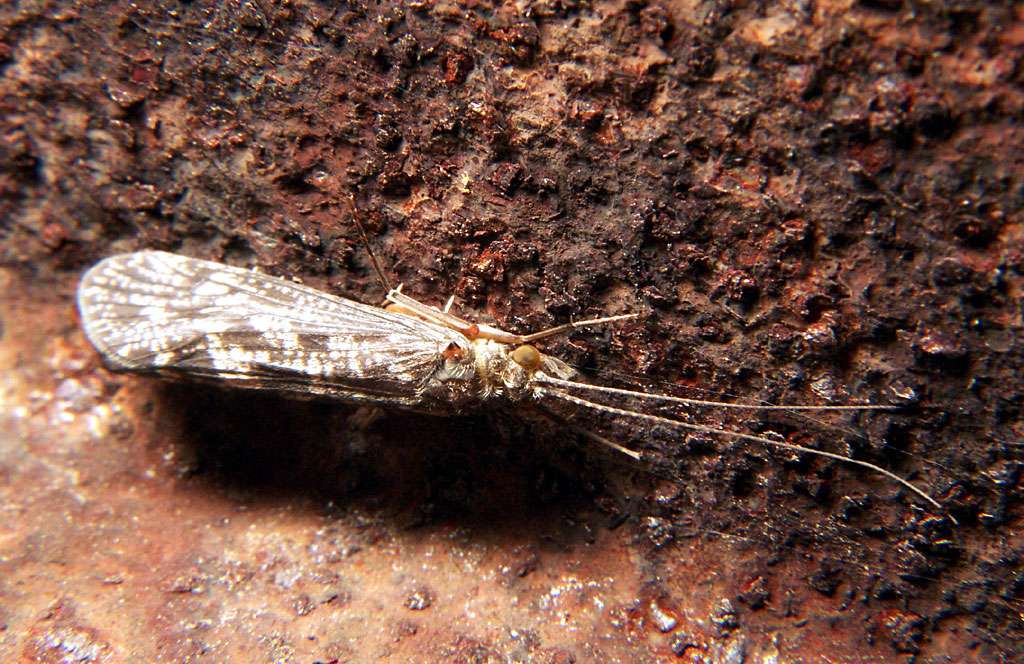
[edit]Macroinvertebrates are useful and convenient indicators of the ecological health of water bodies[43] and terrestrial ecosystems.[44][45] They are almost always present, and are easy to sample and identify. This is largely due to the fact that most macro-invertebrates are visible to the naked eye, they typically have a short life-cycle (often the length of a single season) and are generally sedentary.[46] Pre-existing river conditions such as river type and flow will affect macro invertebrate assemblages and so various methods and indices will be appropriate for specific stream types and within specific eco-regions.[46] While some benthic macroinvertebrates are highly tolerant to various types of water pollution, others are not. Changes in population size and species type in specific study regions indicate the physical and chemical state of streams and rivers.[9] Tolerance values are commonly used to assess ecological effects of water pollution[47] such as pesticide contamination with the SPEAR system[48] and environmental degradation, such as human activities (e.g. selective logging and wildfires) in tropical forests.[49][50]
Benthic indicators for water quality testing
[edit]Benthic macroinvertebrates are found within the benthic zone of a stream or river. They consist of aquatic insects, crustaceans, worms and mollusks that live in the vegetation and stream beds of rivers.[9] Macroinvertebrate species can be found in nearly every stream and river, except in some of the world's harshest environments. They also can be found in mostly any size of stream or river, prohibiting only those that dry up within a short timeframe.[51] This makes the beneficial for many studies because they can be found in regions where stream beds are too shallow to support larger species such as fish.[9] Benthic indicators are often used to measure the biological components of fresh water streams and rivers. In general, if the biological functioning of a stream is considered to be in good standing, then it is assumed that the chemical and physical components of the stream are also in good condition.[9] Benthic indicators are the most frequently used water quality test within the United States.[9] While benthic indicators should not be used to track the origins of stressors in rivers and streams, they can provide background on the types of sources that are often associated with the observed stressors.[52]
Global context
[edit]In Europe, the Water Framework Directive (WFD) went into effect on October 23, 2000.[53] It requires all EU member states to show that all surface and groundwater bodies are in good status. The WFD requires member states to implement monitoring systems to estimate the integrity of biological stream components for specific sub-surface water categories. This requirement increased the incidence of biometrics applied to ascertain stream health in Europe[13] A remote online biomonitoring system was designed in 2006. It is based on bivalve molluscs and the exchange of real-time data between a remote intelligent device in the field (able to work for more than 1 year without in-situ human intervention) and a data centre designed to capture, process and distribute the web information derived from the data. The technique relates bivalve behaviour, specifically shell gaping activity, to water quality changes. This technology has been successfully used for the assessment of coastal water quality in various countries (France, Spain, Norway, Russia, Svalbard (Ny-Ålesund) and New Caledonia).[26]
In the United States, the Environmental Protection Agency (EPA) published Rapid Bioassessment Protocols, in 1999, based on measuring macroinvertebrates, as well as periphyton and fish for assessment of water quality.[1][54][55]
In South Africa, the Southern African Scoring System (SASS) method is based on benthic macroinvertebrates, and is used for the assessment of water quality in South African rivers. The SASS aquatic biomonitoring tool has been refined over the past 30 years and is now on the fifth version (SASS5) in accordance with the ISO/IEC 17025 protocol.[46] The SASS5 method is used by the South African Department of Water Affairs as a standard method for River Health Assessment, which feeds the national River Health Programme and the national Rivers Database.[citation needed]
The imposex phenomenon in the dog conch species of sea snail leads to the abnormal development of a penis in females, but does not cause sterility. Because of this, the species has been suggested as a good indicator of pollution with organic man-made tin compounds in Malaysian ports.[56]
See also
[edit]References
[edit]- ^ a b Barbour, M.T.; Gerritsen, J.; Stribling, J.B. (1999). Rapid Bioassessment Protocols for Use in Streams and Wadeable Rivers: Periphyton, Benthic Macroinvertebrates and Fish, Second Edition (Report). Washington, D.C.: U.S. Environmental Protection Agency (EPA). EPA 841-B-99-002.
- ^ Siddig, Ahmed A.H.; Ellison, Aaron M.; Ochs, Alison; Villar-Leeman, Claudia; Lau, Matthew K. (2016). "How do ecologists select and use indicator species to monitor ecological change? Insights from 14 years of publication in Ecological Indicators". Ecological Indicators. 60: 223–230. Bibcode:2016EcInd..60..223S. doi:10.1016/j.ecolind.2015.06.036. S2CID 54948928.
- ^ Karr, James R. (1981). "Assessment of biotic integrity using fish communities". Fisheries. 6 (6): 21–27. Bibcode:1981Fish....6f..21K. doi:10.1577/1548-8446(1981)006<0021:AOBIUF>2.0.CO;2. ISSN 1548-8446.
- ^ NCSU Water Quality Group. "Biomonitoring". WATERSHEDSS: A Decision Support System for Nonpoint Source Pollution Control. Raleigh, NC: North Carolina State University. Archived from the original on 2016-07-23. Retrieved 2016-07-31.
- ^ Protak Scientific (2017-02-03). "Biological ind". Protak Scientific. United Kingdom. Archived from the original on 2019-02-07. Retrieved 2017-08-05.
- ^ Tingey, David T. (1989). Bio indicators in Air Pollution Research – Applications and Constraints. Washington, DC: National Academies Press. pp. 73–80. ISBN 978-0-309-07833-7.
{{cite book}}:|journal=ignored (help) - ^ "Bioindicators". Science Learning Hub. The University of Waikato, New Zealand. 2015-02-10.
- ^ Fleishman, Erica; Thomson, James R.; Mac Nally, Ralph; Murphy, Dennis D.; Fay, John P. (August 2005). "Using Indicator Species to Predict Species Richness of Multiple Taxonomic Groups". Conservation Biology. 19 (4): 1125–1137. Bibcode:2005ConBi..19.1125F. doi:10.1111/j.1523-1739.2005.00168.x. ISSN 0888-8892. S2CID 53659601.
- ^ a b c d e f U.S. Environmental Protection Agency. Office of Water and Office of Research and Development. (March 2016). "National Rivers and Streams Assessment 2008-2009: A Collaborative Study" (PDF). Washington D.C.
- ^ Government of Canada. "Biobasics: bio-indicatorrs". Archived from the original on October 3, 2011.
- ^ Chessman, Bruce (2003). SIGNAL 2 – A Scoring System for Macro-invertebrate ('Water Bugs') in Australian Rivers (PDF). Monitoring River Heath Initiative Technical Report no. 31. Canberra: Commonwealth of Australia, Department of the Environment and Heritage. ISBN 978-0-642-54897-9. Archived from the original (PDF) on 2007-09-13.
- ^ Lewin, Iga; Czerniawska-Kusza, Izabela; Szoszkiewicz, Krzysztof; Ławniczak, Agnieszka Ewa; Jusik, Szymon (2013-06-01). "Biological indices applied to benthic macroinvertebrates at reference conditions of mountain streams in two ecoregions (Poland, the Slovak Republic)". Hydrobiologia. 709 (1): 183–200. Bibcode:2013HyBio.709..183L. doi:10.1007/s10750-013-1448-2. ISSN 1573-5117.
- ^ a b Monteagudo, Laura; Moreno, José Luis (2016-08-01). "Benthic freshwater cyanobacteria as indicators of anthropogenic pressures". Ecological Indicators. 67: 693–702. Bibcode:2016EcInd..67..693M. doi:10.1016/j.ecolind.2016.03.035. ISSN 1470-160X.
- ^ Mazor, Raphael D.; Rehn, Andrew C.; Ode, Peter R.; Engeln, Mark; Schiff, Kenneth C.; Stein, Eric D.; Gillett, David J.; Herbst, David B.; Hawkins, Charles P. (2016-03-01). "Bioassessment in complex environments: designing an index for consistent meaning in different settings". Freshwater Science. 35 (1): 249–271. Bibcode:2016FWSci..35..249M. doi:10.1086/684130. ISSN 2161-9549. S2CID 54717345.
- ^ Caldana, Cristiane R. G.; Hanai-Yoshida, Valquiria M.; Paulino, Thais H.; Baldo, Denicezar A.; Freitas, Nobel P.; Aranha, Norberto; Vila, Marta M. D. C.; Balcão, Victor M.; Oliveira Junior, José M. (2023-01-01). "Evaluation of urban tree barks as bioindicators of environmental pollution using the X-ray fluorescence technique". Chemosphere. 312 (Pt 2) 137257. Bibcode:2023Chmsp.31237257C. doi:10.1016/j.chemosphere.2022.137257. ISSN 0045-6535. PMID 36423726.
- ^ "Bioindicators - Air (U.S. National Park Service)". www.nps.gov. Retrieved 2024-03-31.
- ^ Manning, William J. (1998). "The use of plants as bioindicators of ozone". In: Bytnerowicz, Andrzej; Arbaugh, Michael J.; Schilling, Susan L., Tech. Coords. Proceedings of the International Symposium on Air Pollution and Climate Change Effects on Forest Ecosystems. Gen. Tech. Rep. PSW-GTR-166. Albany, CA: U.S. Department of Agriculture, Forest Service, Pacific Southwest Research Station: 19-26. 166.
- ^ Agathokleous, Evgenios; Feng, Zhaozhong; Oksanen, Elina; Sicard, Pierre; Wang, Qi; Saitanis, Costas J.; Araminiene, Valda; Blande, James D.; Hayes, Felicity; Calatayud, Vicent; Domingos, Marisa; Veresoglou, Stavros D.; Peñuelas, Josep; Wardle, David A.; De Marco, Alessandra (2020-08-14). "Ozone affects plant, insect, and soil microbial communities: A threat to terrestrial ecosystems and biodiversity". Science Advances. 6 (33) eabc1176. Bibcode:2020SciA....6.1176A. doi:10.1126/sciadv.abc1176. ISSN 2375-2548. PMC 7423369. PMID 32851188.
- ^ Walker, Mark (2024). British Lichens. Sheffield, UK: Sicklebrook publishing. ISBN 9781326780197.
- ^ a b Campbell, Jocelyn; Fredeen, Arthur L (2004-07-01). "Lobaria pulmonaria abundance as an indicator of macrolichen diversity in Interior CedarHemlock forests of east-central British Columbia". Canadian Journal of Botany. 82 (7): 970–982. Bibcode:2004CaJB...82..970C. doi:10.1139/b04-074. ISSN 0008-4026.
- ^ Vitali, Matteo; Antonucci, Arianna; Owczarek, Malgorzata; Guidotti, Maurizio; Astolfi, Maria Luisa; Manigrasso, Maurizio; Avino, Pasquale; Bhattacharya, Badal; Protano, Carmela (2019-11-01). "Air quality assessment in different environmental scenarios by the determination of typical heavy metals and Persistent Organic Pollutants in native lichen Xanthoria parietina". Environmental Pollution. 254 (Pt A) 113013. Bibcode:2019EPoll.25413013V. doi:10.1016/j.envpol.2019.113013. ISSN 0269-7491. PMID 31415978.
- ^ Warnasuriya, Sashika D.; Udayanga, Dhanushka; Manamgoda, Dimuthu S.; Biles, Charles (September 2023). "Fungi as environmental bioindicators". Science of the Total Environment. 892 164583. Bibcode:2023ScTEn.89264583W. doi:10.1016/j.scitotenv.2023.164583. ISSN 0048-9697. PMID 37277042.
- ^ Halper, Mark (2006-12-03). "Saving Lives And Limbs With a Weed". Time. Retrieved 2016-06-22.
- ^ Grabarkiewicz, Jeffrey D.; Davis, Wayne S. (November 2008). An Introduction to Freshwater Fishes As Biological Indicators (Report). EPA. p. 1. EPA-260-R-08-016.
- ^ Beaulieu, Michaël; Costantini, David (2014-01-01). "Biomarkers of oxidative status: missing tools in conservation physiology". Conservation Physiology. 2 (1) cou014. doi:10.1093/conphys/cou014. PMC 4806730. PMID 27293635.
- ^ a b Université Bordeaux et al. MolluSCAN eye project Archived 2016-11-13 at the Wayback Machine
- ^ França, Filipe; Barlow, Jos; Araújo, Bárbara; Louzada, Julio (2016-12-01). "Does selective logging stress tropical forest invertebrates? Using fat stores to examine sublethal responses in dung beetles". Ecology and Evolution. 6 (23): 8526–8533. Bibcode:2016EcoEv...6.8526F. doi:10.1002/ece3.2488. PMC 5167030. PMID 28031804.
- ^ a b c d Simon, E., Braun, M. & Tóthmérész, B. Water Air Soil Pollut (2010) 209: 467. doi:10.1007/s11270-009-0214-6
- ^ a b c d Lambert, M. R. K. (1997-01-01). "Environmental Effects of Heavy Spillage from a Destroyed Pesticide Store near Hargeisa (Somaliland) Assessed During the Dry Season, Using Reptiles and Amphibians as Bioindicators". Archives of Environmental Contamination and Toxicology. 32 (1): 80–93. Bibcode:1997ArECT..32...80L. doi:10.1007/s002449900158. PMID 9002438. S2CID 24315472.
- ^ a b Center for Global Environmental Education. What are the frogs trying to tell us? OR Malformed Amphibians. Retrieved from http://cgee.hamline.edu/frogs/archives/corner3.html Archived 2022-03-05 at the Wayback Machine
- ^ (Herek et al., 2020)
- ^ Venturino, A., Rosenbaum, E., De Castro, A. C., Anguiano, O. L., Gauna, L., De Schroeder, T. F., & De D'Angelo, A. P. (2003). Biomarkers of effect in toads and frogs. Biomarkers, 8(3/4), 167.
- ^ Füreder, L.; Reynolds, J. D. (2003). "Is Austropotamobius Pallipes a Good Bioindicator?". Bulletin Français de la Pêche et de la Pisciculture (370–371): 157–163. doi:10.1051/kmae:2003011. ISSN 0767-2861.
- ^ Baxter, Samantha (2023-09-15). "Research Brief: Using Red Swamp Crayfish as Bioindicators of Microplastic Pollution". Lake Scientist. Retrieved 2024-01-18.
- ^ Jones, G; Jacobs, DS; Kunz, TH; Willig, MR; Racey, PA (2009-07-09). "Carpe noctem: the importance of bats as bioindicators". Endangered Species Research. 8: 93–115. doi:10.3354/esr00182. ISSN 1863-5407.
- ^ a b Russo, Danilo; Salinas-Ramos, Valeria B.; Cistrone, Luca; Smeraldo, Sonia; Bosso, Luciano; Ancillotto, Leonardo (2021-07-21). "Do We Need to Use Bats as Bioindicators?". Biology. 10 (8): 693. doi:10.3390/biology10080693. ISSN 2079-7737. PMC 8389320. PMID 34439926.
- ^ Rasheed, M. A.; et al. (2015). "Application of geo-microbial prospecting method for finding oil and gas reservoirs". Frontiers of Earth Science. 9 (1): 40–50. Bibcode:2015FrES....9...40R. doi:10.1007/s11707-014-0448-5. S2CID 129440067.
- ^ Azizullah, Azizullah; Murad, Waheed; Muhammad, Adnan; Waheed, Ullah; Häder, Donat-Peter (2013). "Gravitactic orientation of Euglena gracilis - a sensitive endpoint for ecotoxicological assessment of water pollutants". Frontiers in Environmental Science. 1 (4): 1–4. Bibcode:2013FrEnS...1....4A. doi:10.3389/fenvs.2013.00004.
- ^ Tahedl, Harald; Donat-Peter, Haeder (2001). "Automated Biomonitoring Using Real Time Movement Analysis of Euglena gracilis". Ecotoxicology and Environmental Safety. 48 (2): 161–169. Bibcode:2001EcoES..48..161T. doi:10.1006/eesa.2000.2004. PMID 11161690.
- ^ Hemmersbach, Ruth; Simon, Anja; Waßer, Kai; Hauslage, Jens; Christianen, Peter C.M.; Albers, Peter W.; Lebert, Michael; Richter, Peter; Alt, Wolfgang; Anken, Ralf (2014). "Impact of a High Magnetic Field on the Orientation of Gravitactic Unicellular Organisms—A Critical Consideration about the Application of Magnetic Fields to Mimic Functional Weightlessness". Astrobiology. 14 (3): 205–215. Bibcode:2014AsBio..14..205H. doi:10.1089/ast.2013.1085. PMC 3952527. PMID 24621307.
- ^ Tahedl, Harald; Hader, Donat-Peter (1999). "Fast examination of water quality using the automatic biotest ECOTOX based on the movement behavior of a freshwater flagellate". Water Research. 33 (2): 426–432. Bibcode:1999WatRe..33..426T. doi:10.1016/s0043-1354(98)00224-3.
- ^ Ahmed, Hoda; Häder, Donat-Peter (2011). "Monitoring of Waste Water Samples Using the ECOTOX Biosystem and the Flagellate Alga Euglena gracilis". Water, Air, & Soil Pollution. 216 (1–4): 547–560. Bibcode:2011WASP..216..547A. doi:10.1007/s11270-010-0552-4. S2CID 98814927.
- ^ Gooderham, John; Tsyrlin, Edward (2002). The Waterbug Book: A Guide to the Freshwater Macroinvertebrates of Temperate Australia. Collingswood, Victoria: CSIRO Publishing. ISBN 0-643-06668-3.
- ^ Bicknell, Jake E.; Phelps, Simon P.; Davies, Richard G.; Mann, Darren J.; Struebig, Matthew J.; Davies, Zoe G. (2014). "Dung beetles as indicators for rapid impact assessments: Evaluating best practice forestry in the neotropics". Ecological Indicators. 43: 154–161. Bibcode:2014EcInd..43..154B. doi:10.1016/j.ecolind.2014.02.030.
- ^ Beiroz, W.; Audino, L. D.; Rabello, A. M.; Boratto, I. A.; Silva, Z; Ribas, C. R. (2014). "Structure and composition of edaphic arthropod community and its use as bioindicators of environmental disturbance". Applied Ecology and Environmental Research. 12 (2): 481–491. Bibcode:2014ApEER..12..481B. doi:10.15666/aeer/1202_481491. ISSN 1785-0037. Retrieved 2017-08-02.
- ^ a b c Dickens, CWS; Graham, PM (2002). "The Southern Africa Scoring System (SASS) version 5 rapid bioassessment for rivers" (PDF). African Journal of Aquatic Science. 27: 1–10. doi:10.2989/16085914.2002.9626569. S2CID 85035010. Archived from the original (PDF) on 2016-03-28. Retrieved 2011-11-16.
- ^ Chang, F.C. & J.E. Lawrence (2014). "Tolerance Values of Benthic Macroinvertebrates for Stream Biomonitoring: Assessment of Assumptions Underlying Scoring Systems Worldwide". Environmental Monitoring and Assessment. 186 (4): 2135–2149. Bibcode:2014EMnAs.186.2135C. doi:10.1007/s10661-013-3523-6. PMID 24214297. S2CID 39590510.
- ^ Liess, Matthias; Liebmann, Liana; Vormeier, Philipp; Weisner, Oliver; Altenburger, Rolf; Borchardt, Dietrich; Brack, Werner; Chatzinotas, Antonis; Escher, Beate; Foit, Kaarina; Gunold, Roman; Henz, Sebastian; Hitzfeld, Kristina L.; Schmitt-Jansen, Mechthild; Kamjunke, Norbert (2021-08-01). "Pesticides are the dominant stressors for vulnerable insects in lowland streams". Water Research. 201 117262. Bibcode:2021WatRe.20117262L. doi:10.1016/j.watres.2021.117262. PMID 34118650.
- ^ Barlow, Jos; Lennox, Gareth D.; Ferreira, Joice; Berenguer, Erika; Lees, Alexander C.; Nally, Ralph Mac; Thomson, James R.; Ferraz, Silvio Frosini de Barros; Louzada, Julio (2016). "Anthropogenic disturbance in tropical forests can double biodiversity loss from deforestation" (PDF). Nature. 535 (7610): 144–147. Bibcode:2016Natur.535..144B. doi:10.1038/nature18326. PMID 27362236. S2CID 4405827.
- ^ França, Filipe; Louzada, Julio; Korasaki, Vanesca; Griffiths, Hannah; Silveira, Juliana M.; Barlow, Jos (2016-08-01). "Do space-for-time assessments underestimate the impacts of logging on tropical biodiversity? An Amazonian case study using dung beetles". Journal of Applied Ecology. 53 (4): 1098–1105. Bibcode:2016JApEc..53.1098F. doi:10.1111/1365-2664.12657. ISSN 1365-2664. S2CID 67849288.
- ^ "Aquatic Macroinvertebrates". Water Quality. Logan, UT: Utah State University Extension. Retrieved 2020-10-11.
- ^ Smith, A. J.; Duffy, B. T.; Onion, A.; Heitzman, D. L.; Lojpersberger, J. L.; Mosher, E. A.; Novak, M. A . (2018). "Long-term trends in biological indicators and water quality in rivers and streams of New York State (1972–2012)". River Research and Applications. 34 (5): 442–450. Bibcode:2018RivRA..34..442S. doi:10.1002/rra.3272. ISSN 1535-1467. S2CID 133650984.
- ^ "The EU Water Framework Directive - integrated river basin management for Europe". Environment. European Commission. 2020-08-04.
- ^ "Biological Stream Monitoring". Izaak Walton League of America. Archived from the original on 2015-04-21. Retrieved 2010-08-14.
- ^ Volunteer Stream Monitoring: A Methods Manual (PDF) (Report). EPA. November 1997. EPA 841-B-97-003.
- ^ Cob, Z. C.; Arshad, A.; Bujang, J. S.; Ghaffar, M. A. (2011). "Description and evaluation of imposex in Strombus canarium Linnaeus, 1758 (Gastropoda, Strombidae): a potential bio-indicator of tributyltin pollution" (PDF). Environmental Monitoring and Assessment. 178 (1–4): 393–400. Bibcode:2011EMnAs.178..393C. doi:10.1007/s10661-010-1698-7. PMID 20824325. S2CID 207130813.
Herek, J. S., Vargas, L., Trindade, S. A. R., Rutkoski, C. F., Macagnan, N., Hartmann, P. A., & Hartmann, M. T. (2020). Can environmental concentrations of glyphosate affect survival and cause malformation in amphibians? Effects from a glyphosate-based herbicide on Physalaemus cuvieri and P. gracilis (Anura: Leptodactylidae). Environmental Science and Pollution Research, 27(18), 22619–22630. https://doi.org/10.1007/s11356-020-08869-z
Further reading
[edit]- Caro, Tim (2010). Conservation by proxy: indicator, umbrella, keystone, flagship, and other surrogate species. Washington, DC: Island Press. ISBN 978-1-59726-192-0.
External links
[edit]
- Environmental Biomarkers Initiative at Pacific Northwest National Laboratory – U.S. Department of Energy, Richland, WA
- Volunteer Monitoring Program – U.S. EPA
- The National River Health Programme – South Africa
- Pyxine cocoes Nyl. – A Foliose Lichen as a Potential Bio-indicator/Bio-monitor of Air Pollution in Philippines: An Update Archived 2017-08-10 at the Wayback Machine by Isidro A. T. Savillo
- Biological Indicators for Sterilization Archived 2019-02-07 at the Wayback Machine – Protak Scientific
