Hubbry Logo
Color chartColor chartMain
Open search
Color chart
Community hub
Color chart
logo
8 pages, 0 posts
0 subscribers
Be the first to start a discussion here.
Contribute something
Color chart
Color chart
from Wikipedia

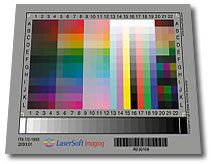
An IT8.7 Target by LaserSoft Imaging used for color management of digital cameras or scanners.
Color chips or color samples from a plastic pellet manufacturer that enables customers to evaluate the color range as molded objects to see final effects

A color chart or color reference card is a flat, physical object that has many different color samples present. They can be available as a single-page chart, or in the form of swatchbooks or color-matching fans.

Typically there are two different types of color charts:

  • Color reference charts are intended for color comparisons and measurements. Typical tasks for such charts are checking the color reproduction of an imaging system, aiding in color management or visually determining the hue of color. Examples are the IT8 and ColorChecker charts.
  • Color selection charts present a palette of available colors to aid the selection of spot colors, process colors, paints, pens, crayons, and so on – usually the colors are from a manufacturers product range. Examples are the Pantone and RAL systems.

Color reference charts

[edit]

Color reference charts are used for color comparisons and measurements such as checking the color reproduction of an imaging system, and calibration and/or profiling of digital input devices such as digital cameras, and scanners and output display systems like printers, monitors and projectors. They are also used by traditional photographers and cinematographers to calibrate cameras that use film and to check the color temperature of the lighting.

Color reference cards can also be used to assess light quality, as in the color rendering index, where reflectance from a set of Munsell samples are evaluated.

Shirley cards

[edit]

Shirley cards are color reference cards that are used to perform skin-color balance in still photography printing. The industry standard for these cards in North American photography laboratories in the 1940s and 1950s depicted a solitary "Caucasian" female dressed in brightly colored clothes. Very few of these color reference cards showed an adult male as the reference image.[1] Light skin tones therefore served as the recognized skin ideal standard. Stock color film chemistry for still cameras was designed originally with a positive bias toward "Caucasian" skin tones, because of their high levels of reflectivity.[1]

By the mid-1990s, Japanese companies redesigned their Shirley cards using data from their own color preference tests. The new reference card featured Japanese women with light, East Asian skin tones.[1]

In 1995, Kodak designed a multiracial norm reference card. This card showed three women (Caucasian, Asian, African) with different skin colors and brightly contrasted clothing.[1]

A similar cinematic calibration technique is known as the China Girl.

ColorChecker charts

[edit]
ColorChecker Color Rendition Chart

The ColorChecker, first produced as the "Macbeth ColorChecker" in 1976, is a cardboard-framed arrangement of twenty-four squares of painted samples based on Munsell colors. Its previous maker Gretag–Macbeth was acquired in 2006 by X-Rite.

A ColorChecker chart can be used to manually adjust color parameters (e.g. color temperature) to achieve a desired color rendition. ColorChecker charts are available in different sizes and forms.

IT8 charts

[edit]
An IT8 color target made in EGM Laboratories in Barcelona, Spain. It has a very big gamut, slightly bigger than the ProPhoto color space.

Standardized IT8 charts, also called IT8 targets, are made by several companies, including Coloraid.de, Fujifilm, Kodak, LaserSoft Imaging.[2] Unlike ColorChecker charts, IT8 charts are supplied with measurement values and can be used to create ICC color profiles by software, e.g., for digital cameras, to create reproducible color management.

Other

[edit]
Pier Andrea Saccardo's chromotaxy scale
Calibration target on the Mars Curiosity rover

Pier Andrea Saccardo proposed this "chromotaxy scale" in 1894, to standardize the naming of colors of plant specimens.

Color charts can take custom forms, as for example the calibration target used by the Curiosity rover for its Mars Hand Lens Imager (MAHLI).

The European Pharmacopoeia monograph 2.2.2 is a method to determine the degree of coloration in liquids, applied to pharmacological compounds, drug substances and finished product. It consist in 3 stock solutions, yellow, red, and blue. These are prepared by dissolving in hydrochloride acid ferric chloride, cobalt chloride, or copper sulfate, respectively. The stock solutions are then used in different proportions to prepare five standard solutions, termed B (brown), BY (brownish-yellow), Y (yellow), GY (greenish-yellow), and R (red). Results are given by observation of the test material against the standard solutions, and expressed as less intensely colored as the next color standard (for example, "color of solution colorless to slightly brown-yellow liquid, <BY4").[3] This method has been updated in Ph.Eur. release version 10 to include a digital method that eliminates the errors inherent in visual methods due to differences in human perception, while providing a quantitative color value.

Color selection charts

[edit]
An RAL colour fan

Because paints and inks depend for their color on pigments and dyes, a reference is needed to match specific combinations of coloring substances in a given matrix against the resulting color. One of the earliest attempts to achieve this goal was the 1692 manuscript Klaer Lightende Spiegel der Verfkonst. It presented a range of watercolor mixtures, but remained relatively unknown, because only one manuscript was produced. Due to the development of the paint and ink industry, the requirement for this kind of chart intensified, and a number of systems are now available, including:

  • "DIC Color System Guide" and "Toyo Color Finder," commonly used for spot color matching, mostly in Japan[4]
  • NCS Palette (Natural Color System)
  • Pantone, used for printing and sometimes for paint, fabric, and plastics
  • RAL (Reichsausschuß für Lieferbedingungen) "Classic[5]", "Effect", and "Design," used for varnish and powder coating

See also

[edit]

Further reading

[edit]

References

[edit]
Revisions and contributorsEdit on WikipediaRead on Wikipedia
from Grokipedia

A color chart is a systematic arrangement of colors or their representations, organized with respect to the attributes of the colors or the mixing relations of their stimuli, serving as a for selection and . These charts display samples of hues, often in grids or wheels, to aid in visual and reproduction across mediums such as , print, and digital .
Developed since the fifteenth century, color charts originated from efforts by physicians to classify bodily fluids like , and by naturalists, dyers, and painters to document pigments and dyes empirically. Over time, they evolved into tools for precise color matching, with innovations in reflecting advances in science, , and technology, from plant-based dyes to synthetic swatches. In modern applications, particularly and , color charts like those based on CMYK process inks or proprietary systems ensure consistent output by providing measurable references for reproduction and . Key characteristics include fixed color patches for empirical verification, as seen in calibration targets used in and to correct device-specific variations in color rendering. Such charts mitigate discrepancies arising from substrate differences, lighting conditions, and production processes, enabling causal reliability in color fidelity from conception to final product.

Fundamentals

Definition and Principles

A color chart is a flat physical or digital array of standardized color patches designed to provide a reference for accurate color reproduction, , and matching across devices and media in fields such as , , and . These charts contain precisely formulated samples with known characteristics, enabling quantitative evaluation of color fidelity through comparison with measured values in standardized color spaces like CIE Lab*. The core principles of color charts stem from , the science of quantifying color via tristimulus values derived from data. Patches are selected to represent perceptually significant colors, including natural object hues (e.g., tones, foliage), achromatic grays for exposure and balance assessment, and saturated primaries to span the device's color . This selection facilitates device profiling by capturing charts under controlled illuminants, such as D65 simulating daylight, to derive transformation matrices that correct for nonlinear sensor responses and color shifts. Effective use requires minimizing variables like substrate variability and ; high-quality charts employ stable pigments to maintain colorimetric accuracy over time, with replacement recommended every two years for precise applications. Principles emphasize perceptual uniformity, where delta E differences approximate visual discriminability, ensuring charts support both and subjective verification in workflows demanding cross-media consistency.

Underlying Color Science

Color perception originates from the selective reflection or emission of within the , spanning wavelengths from approximately 380 to 780 nanometers, as detected by the . This physical basis interacts with biological mechanisms, where cone photoreceptors in the —sensitive to long (peaking around 564 nm), medium (around 534 nm), and short (around 420 nm) wavelengths—enable trichromatic vision, allowing observers to distinguish hues through relative stimulation of these receptors. Empirical studies, including color-matching experiments conducted in the 1920s by William David Wright and John Guild, confirmed that most color sensations can be reproduced by additive mixtures of three primary stimuli, underpinning the trichromatic theory first proposed by Thomas Young and . Colorimetry quantifies these perceptual phenomena using tristimulus values (X, Y, Z), derived by integrating a sample's reflectance with standard illuminants and the CIE 1931 color-matching functions, which model the average observer's based on 10-degree field data from 1931 experiments involving 17 observers. The resulting CIE XYZ space is mathematically defined such that Y correlates with , while X and Z facilitate representation independent of devices, addressing variations in metamerism where colors matching under one illuminant differ under another due to differing power distributions. This framework, standardized by the (CIE), ensures reproducibility, as deviations in observer responses (e.g., due to age or anomalies affecting 8% of males with red-green deficiencies) are minimized through the "standard observer" construct. In the context of color charts, these principles enable the creation of reference materials with precisely characterized colors, typically specified in CIE Lab space (where L* denotes , a* green-to-red, and b* blue-to-yellow opponency, derived from XYZ via nonlinear transforms to approximate uniform perceptual spacing). Charts serve as physical anchors for calibrating spectrophotometers, cameras, and displays, compensating for device-specific gamuts and illuminant shifts to achieve colorimetric accuracy, as spectral measurements of chart patches yield tristimulus values against known standards like D65 daylight (CIE-defined with 6504 K ). This application mitigates subjective biases in color matching, relying instead on verifiable spectral data to support industries requiring consistency, such as and .

Historical Development

Early Color Systems

Early attempts to systematize colors through charts and wheels emerged in the , with artists arranging hues circularly to facilitate pigment mixing and understand harmonies, building on limited pigment availability. These informal systems preceded scientific classifications, focusing on practical artistic needs rather than perceptual uniformity. In the scientific domain, Isaac Newton's (1704) introduced a foundational color circle derived from prism experiments dispersing white light into a , identifying seven hues—red, orange, , , , , and violet—and arranging them to demonstrate additive mixing toward . This spectral basis influenced subsequent models but lacked provisions for or saturation variations. Practical color charts appeared in 15th-century medical manuscripts for uroscopy, classifying urine shades from pale to dark red to diagnose conditions like blood imbalances, representing some of the earliest standardized color references tied to empirical observation. For natural history, Abraham Gottlob Werner devised a mineral-based color nomenclature in the late 18th century, formalized in Patrick Syme's 1814 edition of Werner's Nomenclature of Colours, which included 100 hand-tinted swatches named after objects like "Dove Grey" or "Turkey Red," aiding precise description across geology, zoology, and botany; Charles Darwin later used it for field notations. In industry, Michel Eugène Chevreul's 1839 The Principles of Harmony and Contrast of Colors addressed optical mixing and contrasts, developing charts for consistent dyeing at the Gobelins manufactory, where he standardized over 14,000 shades to resolve production discrepancies. By 1894, mycologist Pier Andrea Saccardo published Chromotaxia, introducing a numbered chromotaxy scale with sequential hue gradations for reproducible nomenclature in fungal and , comprising plates of pigments from through grays to chromatic series. These pre-20th-century systems laid groundwork for later standardization by prioritizing reference aids over uniform perceptual spacing.

20th Century Standardization Efforts

In the early 20th century, Albert H. Munsell advanced color standardization through a perceptually uniform system emphasizing visual equality in hue, value, and chroma. His 1905 publication, A Color Notation, introduced notations for these attributes, with hue arranged in a 10-step circle around five principal colors. This framework enabled precise color specification independent of variability, addressing inconsistencies in artistic and industrial matching. Munsell's efforts culminated in the Munsell Book of Color, first published in , featuring removable matte-finish chips arranged by hue pages for direct visual comparison under controlled lighting. The book's design prioritized empirical perceptual spacing, verified through observer tests, making it suitable for applications like and textiles. The adopted the Munsell system in 1931 for official soil color classification, integrating it into federal surveys to ensure reproducible descriptions across regions. Concurrently, the Inter-Society Color Council (ISCC), formed in March 1922 by representatives from scientific and industrial societies, sought to unify color terminology amid growing demands. The ISCC coordinated efforts to link descriptive names with measurable attributes, producing early standards like the 1939 central notations for color categories. This work evolved into the ISCC-NBS method by 1955, which mapped 267 basic descriptors to Munsell and spectrophotometric data for practical industry use, such as in and paints. A pivotal quantitative foundation emerged from the (CIE) in 1931, which defined the XYZ tristimulus color space based on averaged human color-matching functions from experiments by W. D. Wright and J. G. Priest. These functions, derived from 10 observers viewing 600-700 wavelengths under Illuminant C, eliminated negative values in prior RGB models and enabled calculations for charts. The CIE system facilitated calibration of physical standards, influencing subsequent charts by providing a basis for converting visual matches to instrumental measurements in industries like . Specialized charts supported niche standardization, such as Robert Ridgway's 1912 Color Standards and Color Nomenclature, which cataloged 1,115 named colors on 53 plates for and , cross-referenced to spectra for durability against fading. In Europe, the 1905 Répertoire de couleurs by the Société Française des Chrysanthémistes offered 733-1,451 samples for horticultural matching, reflecting demands for consistent varietal documentation. These initiatives collectively reduced subjective discrepancies, fostering reliability in cross-industry color reproduction through verifiable, observer-tested references.

Post-1970s Commercialization

The post-1970s era witnessed the acceleration of color chart commercialization, transforming them into tools essential for industrial consistency amid expanding global markets and technological advancements in and . Proprietary systems proliferated as companies monetized standardized color references, addressing discrepancies in reproduction across media and supply chains. This shift was propelled by the demands of , where precise color matching reduced waste and errors in sectors like , textiles, and . Pantone's Matching System, originating in 1963 with an initial palette of 500 spot colors, underwent rapid commercialization in the through strategic expansions and digital integrations. In 1971, Pantone partnered with to introduce coated and uncoated paper stock formulas, enhancing applicability in commercial printing. By the mid-, the company had sold over 100,000 copies of its color chip books, establishing Pantone as the dominant commercial standard for specifying and matching colors in , , and . In parallel, reference charts gained commercial traction for calibration purposes. The , launched in with 24 scientifically selected patches representing natural and synthetic hues, became a benchmark for evaluating color accuracy in photographic and digital workflows. Produced by (later acquired by Gretag and ), it was marketed to professionals for device-independent color verification, with ongoing updates to formulations ensuring relevance amid regulatory changes in pigments. Sales and widespread adoption underscored its role in commercial imaging pipelines. Printing industries further drove commercialization via standards like the Specifications for Web Offset Publications (SWOP), formalized in the to define CMYK color parameters for consistent output. This facilitated the sale of certified color charts and proofing systems by ink manufacturers and suppliers, minimizing variations in high-volume runs. Such developments integrated color charts into profitable ecosystems, where vendors offered licensed guides, software plugins, and services.

Reference Charts

Shirley Cards

Shirley Cards were reference photographs developed by in the mid-1950s to calibrate and exposure in labs. These cards included a portrait of Shirley Page, a white employee and lab technician, posed in a against a gray background, accompanied by neutral gray scales and standardized color patches for verifying densities, highlights, shadows, and skin tones. Technicians processed test exposures of the card through printing equipment and adjusted chemical baths or enlargers by visual comparison to the original reference print, aiming for consistent reproduction across batches. During the 1950s and 1960s, when held a near-monopoly on U.S. color film sales—accounting for about 90% of the market—the Shirley Card established a baseline for "normal" rendering optimized for light Caucasian complexions. This calibration prioritized differentiation in lighter tones but compressed in darker areas, causing photographs of individuals with brown or to frequently appear underexposed, muddy, or devoid of mid-tone detail due to film's limited for low-reflectance surfaces. Empirical tests confirmed that early emulsions, tuned via Shirley standards, reproduced high-key variations accurately while merging low-key tones into indistinct blacks, an artifact traceable to the reference's spectral reflectance profile. Kodak maintained the original Shirley Card design through the 1970s and 1980s amid growing photographic diversity, but complaints from portrait studios and consumers about inconsistent non-white skin reproduction—such as washed-out highlights on Asian features or blocked shadows on African American subjects—highlighted limitations. In response, began producing variant cards in the early incorporating additional models of color, culminating in a 1995 multicultural version featuring three women of differing ethnicities to expand the reference gamut for broader . These "new Shirley" cards integrated multiple skin exemplars with the original gray and color patches, enabling labs to balance for varied levels without overcorrecting highlights or shadows. By the digital era's onset around 2000, software-based analysis and ICC profiling supplanted physical cards, though Shirley-derived standards influenced early pipelines.

ColorChecker Charts

The ColorChecker chart is a reference target comprising 24 precisely formulated color patches designed for evaluating and calibrating color reproduction in imaging systems. Originally produced by Macbeth under the name Macbeth ColorChecker, it was introduced in 1976 as a tool for consistent color rendering in photography and printing. The chart features an array of 4 rows by 6 columns, including six neutral gray patches of varying densities, high-chroma primaries and secondaries, and 18 colors selected to represent typical natural and artificial objects such as human skin tones, foliage, blue sky, and orange clay. These patches are applied as matte paint on a rigid substrate, measuring approximately 20.6 cm by 28.0 cm for the standard Classic version, with spectral reflectances engineered to mimic real-world materials under standardized illuminants. Developed in response to the need for a stable, universal standard amid varying film emulsions and processes, the ColorChecker enabled photographers and scientists to assess color fidelity empirically. Its creation is attributed to efforts at , building on prior work, with formal documentation in photographic engineering literature from the era. Following corporate acquisitions—first by Gretag in the and then by in 2010—the product line expanded to include variants like the portable ColorChecker Passport with multiple targets for field use and the Digital SG with 140 patches for broader gamut coverage. Recent formulations have adjusted pigment compositions for while maintaining colorimetric consistency within specified tolerances. In practice, the chart serves critical roles in digital workflows, such as generating profiles via software like Adobe Camera Raw, verifying white balance under diverse lighting, and validating output consistency in monitors and printers. By capturing the chart under controlled conditions, users can derive corrections that align captured colors to a device-independent space like CIELAB, reducing metamerism and ensuring reproducibility across sessions or equipment. Its enduring utility stems from the patches' stability over time, though periodic recalibration is recommended due to potential fading from environmental exposure.

IT8 Targets

IT8 targets are standardized color reference charts developed under the (ANSI) IT8 committee for and device in systems. These targets facilitate the creation of device-specific color profiles, particularly for scanners, by providing a known set of color patches whose measured values can be compared against scanned outputs to correct for deviations. The standards originated in 1993, with corresponding international specifications outlined in ISO 12641. The IT8.7 series represents key targets within this framework, including IT8.7/1 for photographic transparencies and IT8.7/2 for reflective materials. An IT8.7/2 target typically features 288 patches: 24 neutral gray steps ranging from maximum density to minimum density, and 264 colored patches arranged in 22 rows of 12, covering a suitable for profiling common imaging devices. These patches are printed on substrates matching the target medium, such as for transparencies, to ensure relevance to real-world scanning scenarios. In practice, IT8 targets are scanned alongside a reference data file containing the colorimetric values (often in CIE XYZ or data) of each patch, enabling software to generate ICC profiles that map device RGB values to standardized color spaces. This process minimizes color shifts, ensuring reproducible results across devices, as used in professional film scanning and digital archiving. Updated targets compliant with ISO 12641-2 incorporate additional patches—up to nearly three times more in some advanced versions—to better address modern scanner capabilities and wider gamuts. Later designations, such as IT8.7/5 introduced in 2023 by Idealliance, extend the application to print , providing tools for aligning color across global workflows. While primarily associated with scanner calibration, IT8 targets have influenced broader color control standards, though their efficacy depends on precise manufacturing tolerances and reference file accuracy from certified producers such as (offering both reflective IT8.7/2 and transmissive IT8.7/1 targets), , or historical Kodak variants.

Other Reference Standards

The Kodak Q-13 Color Separation and Gray Scale is a reference target consisting of nine control patches alongside a 20-step neutral gray scale with an 18% gray background, designed to assist photographers and operators in comparing subject colors to established standards and assessing tone in separations. It measures approximately 8 inches in length and has been employed in traditional film-based workflows to identify discrepancies in color negatives or positives prior to . The related Kodak Q-14 extends this with additional patches for enhanced evaluation of color fidelity in reproduced images. These targets, produced by Eastman Company, emphasize density control and basic color matching rather than spectral characterization, making them suitable for quality control in analog but less ideal for modern digital profiling due to limited patch variety compared to ISO-standardized alternatives. The Q-60 target features 240 distinct color patches plus a 24-step gray scale incorporating minimum and maximum density points, along with a flesh-tone section, providing broader coverage for scanner and printer profiling in imaging and archival reproduction. Developed for Ektacolor processes, it supports evaluation of color consistency across devices but exhibits variability in patch uniformity, prompting recommendations for supplementary use with more stable charts in precise digital workflows. DSC Laboratories' ChromaDuMonde (CDM) series represents another category of reference charts optimized for video and broadcast camera , utilizing 12 to 28 color patches arranged to generate a distinctive hexagonal pattern on Rec. 709 vectorscopes for matrix and gamma adjustments. Variants like the CDM 24+4R include crossed grayscales and resolution elements, enabling on-set color matching and reference without relying on software-specific profiles. These charts, available in sizes from 10x17 inches to larger formats, incorporate low-reflectance "CaviBlack" options to minimize flare in high-dynamic-range setups, and their design prioritizes waveform monitor interpretability over photographic spectral neutrality. Professional video engineers favor them for live production due to their durability and immediate visual feedback, though they are less standardized for still photography applications. Additional targets, such as those from Applied Image or Edmund Optics, offer customizable color and grayscale arrays for specialized imaging system testing, including USAF resolution patterns integrated with patches, but lack the widespread adoption of the aforementioned standards in professional protocols.

Selection Charts

System

The Matching System (PMS), developed in 1963 by Lawrence Herbert, a printing company executive with a chemistry background, provides a standardized method for specifying and reproducing spot colors across industries including , , and . Herbert created the system to address inconsistencies in color matching caused by varying inks, papers, and equipment, enabling precise communication via numbered color swatches rather than subjective descriptions or device-dependent models like RGB or CMYK. Each color receives a unique alphanumeric code, such as "PMS 185 C" for a specific on coated stock, drawn from a palette of approximately 2,390 market-driven spot colors formulated with standardized mixtures. These formulations ensure reproducibility by specifying exact ratios, independent of subtractive or models, though real-world application requires calibrated presses and substrates to minimize variances from factors like absorption or drying. Physical fan decks serve as tools, displaying swatches under controlled , while digital extensions like Connect provide cloud-based access to over 15,000 colors for workflow integration. Pantone's selection charts, including coated and uncoated formula guides, facilitate color choice for branding and packaging by offering tangible previews that approximate final output, outperforming CMYK simulations which often fail to replicate vibrant or metallic tones due to limitations. Color Bridge guides bridge spot colors to CMYK equivalents for process printing, though conversions sacrifice exactness for feasibility, with deviations up to 5-10% in hue or saturation reported in non-specialized workflows. Reliability depends on periodic replacement, as swatches fade over 12-18 months of use, and adherence to ISO protocols for ; unverified claims of overlook its entrenched role in global standards, where it underpins contracts specifying PMS codes to enforce consistency. Despite its dominance, the system faces practical critiques: limited extensibility for bespoke inks beyond the core palette requires custom matching, potentially increasing costs, and digital validations like "" on devices only guarantee accuracy within defined swatches, not broader spectra. Industry adoption persists due to its causal efficacy in reducing mismatches—evidenced by its integration in specifications from brands like —prioritizing empirical reproducibility over theoretical universality.

NCS and RAL Systems

The Natural Color System (NCS) is a perceptual color ordering system developed in to describe colors based on human . It employs six elementary colors—white, black, , , blue, and green—as reference points, quantifying attributes including hue, blackness (proportion of black), chromaticness (color intensity), and nuance (). Notations follow a format such as S 2050-Y90R, where "S" denotes a shade, the first numerals indicate blackness percentage, the second chromaticness, and the suffix hue (e.g., Y for , R for ). The system emerged from psychophysical research initiated in the mid-20th century by the Scandinavian Colour Institute, with foundational work by researchers like Anders Hård and Jan J. Ramsberg, leading to its formalization as a standardized model for color communication. NCS prioritizes perceptual uniformity over or measurements, enabling designers to specify colors intuitively and reproducibly across media. It is applied in , , textiles, and product development, with color atlases containing approximately 1,950 defined shades for practical selection. The system's adoption stems from its alignment with natural color perception, avoiding biases in device-dependent models like RGB. The RAL system, originating in , standardizes colors for industrial and commercial use, particularly in paints, coatings, and plastics. Established in by the Reichs-Ausschuss für Lieferbedingungen und Gütesicherung (predecessor to RAL gGmbH), it began with 40 colors to promote uniformity in manufacturing and public applications. The core RAL Classic collection now comprises 216 matte shades, each identified by a unique four-digit code (e.g., RAL 9005 for ), accompanied by physical samples in fan charts for visual matching. RAL emphasizes practical reproducibility under standard viewing conditions, with tolerances defined for deviations in production. Extended variants, such as RAL Design System with 1,825 tones based on the CIELAB space, support broader design needs, while specialized lines cover effects like metallics and fluorescents. Widely used in automotive, , and , RAL ensures consistency across supply chains, with over 2,500 total standards available as of 2025.

Additional Selection Frameworks

The provides a perceptual framework for color selection, organizing hues in a cylindrical coordinate space with dimensions of hue (angular position), value (lightness from black to white on a scale of 0 to 10), and chroma (saturation intensity). Developed by Albert H. Munsell between 1905 and 1915, it prioritizes visual uniformity over spectral distribution, enabling selections that align with human perception rather than device-specific outputs. Selection charts, such as the Munsell Book of Color released in editions from the 1920s onward, contain hundreds of matte paper chips arranged by notation (e.g., 5R 4/6 for red hue at medium value and moderate chroma), supporting applications in art, textiles, and scientific matching where perceptual accuracy exceeds that of process-based systems. Regional spot color libraries extend selection options in printing and design, particularly where global standards like face adoption barriers. The HKS system, introduced in 1970s by ink firms including Hostmann-Steinberg and Schmincke, catalogs 88 base colors expandable via tints to over 3,500 shades across paper types (coated K-series, matte N-series), with formulations optimized for offset lithography to minimize metamerism under standard illuminants. It assigns numeric codes (e.g., HKS 41 K for a blue-violet) and includes simulations, facilitating consistent reproduction in European workflows without reliance on proprietary global licensing. In , the Toyo Color Finder, launched by Toyo Ink in the , arranges 1,050 spot formulations on the Munsell model for sheetfed offset inks, providing CMYK approximations, data, and Munsell notations to bridge design intent with production. Complementing it, the DIC Color Guide, first issued in 1970 by Dainippon Ink and updated digitally by 2011, offers over 2,500 process-independent colors in fan decks for designers, with LAB values and simulations for substrates, emphasizing accurate communication in Japanese printing standards compliant with JDF workflows. These frameworks prioritize ink-specific , with Toyo and DIC maintaining databases updated as of 2023 to account for stability under D50 .

Applications

In Imaging and Photography

Color charts function as standardized reference targets in and , enabling precise of cameras and scanners by providing known values for comparison against captured images. These charts, typically consisting of swatches with predefined colors, allow photographers to correct for variations in response, conditions, and algorithms, ensuring from capture to output. In , charts like the are photographed alongside subjects to generate custom input profiles in software such as or , mapping device-specific color captures to standardized CIE color spaces like or Adobe RGB. This process compensates for metamerism—where colors appear identical under one light but differ under another—and sensor idiosyncrasies, yielding repeatable results across sessions. For instance, the Passport Photo 2 facilitates on-site profiling under varying illuminants, improving consistency in professional applications like product and . IT8 targets, standardized under ISO 12647-2 for but adapted for , support advanced camera profiling, particularly in technical and scientific where high accuracy is required, such as cultural heritage documentation or astronomical . Photographers capture the target's 288 patches—covering a of hues, saturations, and neutrals—and use profiling software to derive lookup tables that linearize color responses, reducing errors to below 2 Delta E in controlled tests. Beyond calibration, color charts aid white balance adjustments and multi-camera matching in , where discrepancies in can distort continuity; by referencing gray patches, post-production teams neutralize casts empirically rather than relying on auto algorithms, which often falter under mixed lighting. Empirical studies confirm that chart-based workflows achieve superior colorimetric accuracy over generic presets, with mean color differences minimized to perceptual invisibility.

In Printing and Graphic Design

In printing, color charts serve as standardized references for calibrating presses and matching inks, particularly in offset where precise control over cyan, magenta, yellow, and black (CMYK) process colors or spot colors is required to achieve consistent results across production runs. Systems like the Matching System (PMS) provide numbered swatches that dictate exact ink formulations, enabling printers to replicate brand-specific hues without relying solely on process mixing, which can vary due to substrate absorption or press conditions. For instance, PMS 165 specifies an orange-red tone used in packaging, ensuring uniformity from proof to final output. In , these charts bridge the gap between digital previews in RGB mode and physical print outcomes, where designers reference CMYK charts to select printable colors and avoid out-of-gamut shifts that distort visuals on press. guides, containing over 2,000 solid colors, are integral for specifying spot inks in logos and marketing materials, promoting fidelity in multi-vendor workflows. This practice minimizes costly reprints by preempting discrepancies, as evidenced by industry adoption of PMS for its quantifiable ink recipes over subjective visual matching. Beyond core systems, color charts support proofing protocols, such as using control strips with bars and color patches to monitor and during runs, adhering to standards that tolerate no more than 2-3% variation in key metrics for commercial offset work. In digital-to-analog transitions, designers convert RGB selections to equivalents via software libraries, ensuring elements like corporate identities remain intact across media.

In Manufacturing and Science

In manufacturing, standardized color charts ensure consistent color reproduction across production batches in industries such as plastics, textiles, and coatings. The RAL Classic system, developed in and comprising over 2,500 precisely defined shades, serves as a reference for varnishes, powder coatings, and plastics, enabling suppliers and manufacturers to match specifications without ambiguity. Similarly, color standards, including dedicated guides for textiles (e.g., TCX chips) and plastics (e.g., over 4,000 on-demand shades cross-referenced to other systems), facilitate by providing physical swatches for visual and instrumental verification. Manufacturers employ spectrophotometers to measure produced items against these charts, quantifying deviations via metrics like Delta E to maintain tolerances typically below 1.0 for high-precision applications. ASTM International standards, such as those for pigment testing in plastics, further guide color evaluation protocols, emphasizing instrumental measurement over subjective assessment to detect inconsistencies from raw material variations or processing conditions. In textiles, specialized TX cards account for fabric-specific light interaction, ensuring dyes and finishes align with design intent across global production sites. In scientific applications, color charts calibrate instrumentation for accurate color quantification and imaging fidelity. Spectrophotometers and colorimeters are routinely verified against reference standards to measure absorbance and reflectance, critical for analyzing impurities in liquids or material properties. NASA's Mars rovers, including Curiosity, incorporate onboard calibration targets with known color swatches—such as grayscale and primary hues—to correct images for sensor drift and Martian lighting, approximating terrestrial color perception for geological analysis. These targets, measuring about 10 cm, support radiometric stability over mission durations exceeding 3,500 sols as of 2025. In biological research, calibrated charts enable precise measurement of structural colors in specimens using spectrometers, mitigating biases from environmental lighting.

Calibration and Standards

ISO and Industry Protocols

The (ISO) has developed several standards that incorporate color charts as test targets for calibrating and verifying color reproduction in imaging, printing, and graphic arts workflows. ISO 12647, a series of norms for process control, defines parameters such as color separations, proofing, and print production tolerances, requiring the use of charts or control wedges printed under controlled conditions to measure deviations in hue, saturation, and . For instance, ISO 12647-2:2013 applies to sheet-fed offset lithography, mandating specific colorimetric values for primary and secondary colors on reference substrates to ensure consistency across production runs. These charts typically include patches for CMYK process inks, enabling spectrophotometric analysis to confirm compliance within defined tolerances, such as ΔE values under 2-4 units for solid colors. Complementary standards address input and measurement aspects. ISO 12641:1997 specifies input test targets for color scanners and digital input devices, forming the basis for IT8.7 series targets, which contain precisely characterized color patches (e.g., 288 patches in IT8.7/1 for transparencies) with reference data files for profiling and linearization. Updated implementations, such as those compliant with ISO 12641-2:2019, enhance precision for modern scanners by incorporating advanced spectral data. ISO 13655:2017 further standardizes spectral measurement devices and conditions for graphic arts colorimetry, recommending D50 illuminants and 2°/10° observer angles when using charts for profiling monitors, printers, and cameras. ISO 17321-1 provides test methods for digital camera color accuracy, utilizing chart-based characterization to derive scene-referred transforms. Industry protocols build on ISO frameworks through organizations like Idealliance and the International Color Consortium (ICC). The methodology, certified by Idealliance, extends ISO 12647 by emphasizing gray balance and neutralization across diverse technologies, using test forms with step wedges and color ramps to achieve ISO-defined print aims via software-driven adjustments. GRACoL and FOGRA certifications align with ISO 12647 parts for gravure and , respectively, incorporating verification to minimize substrate-induced variations. ICC profiles, rooted in ISO 15076-1:2010 for device classification and transformation, facilitate inter-device color matching by embedding data from measurements, though varies by vendor adherence. These protocols prioritize empirical validation over subjective matching, with routine and scanning as checkpoints for production stability.

Technical Implementation

Reference color charts are produced using precisely formulated pigments or specialized inks applied to stable substrates, such as matte cardstock, to achieve reflectance properties that closely mimic natural and synthetic colors with minimal metamerism. For instance, the Classic employs scientifically prepared painted or printed squares, with formulations periodically updated for while preserving target CIE Lab* values under illuminant D50, ensuring Delta E deviations below 1.0 for accuracy. Each patch's color is characterized through spectrophotometric measurement across the (380-780 nm), yielding reference data in device-independent spaces like CIE XYZ or Lab*, often averaged from multiple production batches to account for manufacturing variability. These datasets, certified by manufacturers, serve as for , with tools like spectrophotometers verifying compliance to tolerances specified in industry practices. In implementation, charts are integrated into via imaging under standardized lighting (e.g., D65 for displays), followed by patch extraction in software that computes transformations—such as 3x3 matrices for linear correction or lookup tables for non-linear profiling—to align captured RGB values to reference spectra. This process adheres to standards defined in ISO 15076-1, enabling device-to-device consistency in workflows like camera profiling or printer . For printing applications, test charts are output on target media and measured to validate against ISO 12647 parameters, adjusting ink densities or halftone settings iteratively.

Controversies

Bias in Representation

Traditional color test charts, including the widely used introduced in 1976, incorporate a limited number of skin tone patches that predominantly feature lighter to medium hues, such as the labeled "" and "" samples which correspond roughly to Fitzpatrick types II-III rather than deeper tones. This selection reflects historical datasets primarily derived from populations with lighter complexions, resulting in inadequate coverage for darker skin reflectances and contributing to systematic errors in color reproduction during imaging calibration. Empirical evaluations demonstrate that cameras calibrated using such charts exhibit higher color accuracy deviations for Fitzpatrick V-VI tones, with error rates up to 20-30% greater in hue and chroma rendering compared to lighter tones under standardized lighting. Research from imaging standards bodies confirms that conventional charts underrepresent the full gamut of tones, as spectral measurements from diverse global populations reveal broader variability in melanin-influenced not captured by legacy patches. For instance, a 2023 analysis of test chart compositions found that only 10-15% of skin-related patches align with darker tone distributions observed in demographic surveys, biasing downstream applications like and toward overexposure or desaturation of deep tones. To mitigate this, the ISO TC42 committee has developed protocols for selecting representative skin tones based on aggregated data from hundreds of subjects across ethnicities, emphasizing perceptual uniformity over subjective categorization. Beyond skin tones, representation biases extend to cultural and perceptual variations, where color charts standardized in Western contexts—such as NCS or RAL systems—prioritize hue divisions aligned with Indo-European structures, potentially misaligning with non-Western color categorization. studies indicate that societies like the Himba in group colors differently, distinguishing greens over blues, which standard charts overlook in their uniform spectral sampling. This can perpetuate inaccuracies in design and visualization, though empirical impacts remain less quantified than skin tone disparities, with critiques often stemming from rather than direct failures.

Debates on Practicality vs. Inclusivity

In the field of and , traditional color charts such as the Classic have faced scrutiny for their limited representation of tones, with only two patches approximating lighter Caucasian skin and none adequately covering darker or intermediate tones prevalent across global populations. This limitation can contribute to systematic biases in camera rendering and post-processing algorithms, where darker skin tones are often underexposed or inaccurately color-balanced due to calibration baselines skewed toward lighter references. A 2023 analysis in the Electronic Imaging symposium noted that tools like the provide insufficient diversity, prompting calls for expanded charts to ensure equitable performance in portraiture, medical diagnostics, and AI-driven facial analysis. Advocates for inclusivity propose integrating broader skin tone spectra into reference charts, drawing from scales like the 10-point Monk Skin Tone scale, which aims to encompass ethnoracial variation more comprehensively than legacy systems such as the six-category originally developed for UV response rather than colorimetric accuracy. Validation studies of updated skin color charts, such as one published in 2007 and refined in subsequent work, demonstrate feasibility in creating metamerism-free representations covering nearly all encountered human tones, potentially improving fidelity in diverse-subject imaging without sacrificing spectral precision. These efforts align with broader equity initiatives in technology, where empirical tests show traditional charts yield higher color errors for non-light skin under varied lighting. Opponents emphasize practicality, arguing that general-purpose color charts prioritize compact, reproducible standards for cross-industry —encompassing , , and scientific —over specialized demographic inclusions that could inflate production costs, enlarge chart sizes, and disrupt established ISO protocols like ISO 17321 for reflective targets. The enduring dominance of the 24-patch ColorChecker, unchanged since 1976 despite critiques, underscores its value in achieving consistent spectral neutrality across applications unrelated to human subjects, such as product or , where adding skin-specific patches risks introducing variability without measurable gains in overall accuracy. Empirical reliance on uniform patches for pipeline profiling, as critiqued in Imatest evaluations, suggests alternatives like software-based skin corrections or application-specific add-ons preserve while addressing niche needs, avoiding the causal pitfalls of overgeneralizing inclusivity to universal tools.

Recent Developments

Updates to Legacy Charts

In November 2014, revised the color formulations for the Classic (24 patches) and SG charts due to regulatory and compliance requirements affecting availability and environmental standards, impacting all black, gray, and chromatic patches. Charts produced after this date incorporate new colorants in the coating process, necessitating updated colorimetric reference data for accurate ; pre-2014 data files remain applicable only to legacy charts, while users are advised to generate custom profiles via spectrophotometers like the i1Pro for post-update versions to maintain measurement precision. More recently, in August 2025, Imatest released the DR36+Color test chart, an enhancement to legacy dynamic range references by integrating 36 patches—including ColorChecker-derived neutrals and highly saturated RGBCMY tones—to mitigate stray light artifacts and improve color accuracy in high-dynamic-range imaging assessments. This version, supported by Imatest software 25.2, rearranges patch order to minimize ghosting effects from lens flare, enabling better evaluation of sensor performance under modern LED and wide-gamut conditions. LaserSoft Imaging updated its IT8 color targets in 2025 to align with ISO 12641-2, superseding the older ISO 12641-1 standard for scanner and printer profiling, which introduces refined patch layouts and data for broader device compatibility and reduced metamerism in digital workflows. These revisions address limitations in legacy IT8 charts by incorporating higher-fidelity reference values derived from standardized measurements, facilitating more reliable color transformations across reflective and transmissive media. Pantone's Color Bridge guides underwent revisions with improved CMYK simulations generated algorithmically rather than through manual adjustments, enhancing consistency for legacy matching in print production as of recent editions. These changes, alongside the addition of 224 new colors and base inks in 2023, extend the Matching System's applicability to contemporary substrates while preserving for established libraries.

Emerging Digital and AI Integrations

techniques have advanced by leveraging standardized color charts like the as training data to derive transformations for correcting colors in unknown regions, enabling precise mapping from device-dependent RGB values to device-independent standards such as CIE Lab. Ensemble regression models, combining algorithms like random forests and support vector machines, have further minimized calibration errors in spectral reflectance prediction, achieving sub-ΔE* 2 accuracy in real-time applications for industries requiring consistent color reproduction. In and , frameworks trained on color card datasets via neural networks perform automated , reducing discrepancies between digital previews and physical outputs by optimizing for substrate variations and formulations. A 2025 analysis reported that such AI-driven systems in printing lowered average color deviation (ΔE) from over 20 to below 5, surpassing traditional ICC profile-based methods in handling non-linear interactions. Digital color management software increasingly integrates AI for cross-device harmonization, with neural networks automating white balance and mapping against reference charts to mitigate display inconsistencies in workflows from monitors to printers. AI palette generators, informed by standards like Munsell or NCS, analyze vast datasets to produce context-aware schemes, cutting manual selection time by up to 70% while adhering to perceptual uniformity principles. Emerging applications extend to , where AI-enhanced digital color sensors process chart-based references to adaptively correct for ambient lighting, achieving 95% accuracy in recognition under variable conditions as of 2025 deployments. These integrations prioritize empirical validation against physical charts over generative approximations, ensuring causal fidelity in color reproduction chains.

References

Add your contribution
Related Hubs
Contribute something
User Avatar
No comments yet.