Hubbry Logo
CryptogamCryptogamMain
Open search
Cryptogam
Community hub
Cryptogam
logo
8 pages, 0 posts
0 subscribers
Be the first to start a discussion here.
Cryptogam
Cryptogam
from Wikipedia
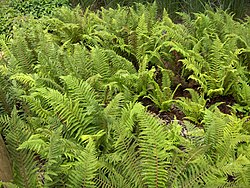
Polystichum setiferum, a fern
Grimmia pulvinata, a moss
Pelvetia canaliculata, a brown alga
Hypholoma fasciculare, a fungus

A cryptogam (scientific name Cryptogamae) is a plant, in the broad sense of the word, or a plant-like organism that shares similar characteristics, such as being multicellular, photosynthetic, and primarily immobile, that reproduces via spores rather than through flowers or seeds.

This broader definition can include algae, fungi, and certain bacteria (like cyanobacteria), even though they may belong to different biological kingdoms.

Taxonomy

[edit]

The name Cryptogamae (from Ancient Greek κρυπτός (kruptós) 'hidden' and γαμέω (gaméō) 'to marry') means "hidden reproduction", meaning non-seed bearing plants. Other names, such as "thallophytes", "lower plants", and "spore plants" have occasionally been used.

As a group, Cryptogamae are paired with the Phanerogamae or Spermatophyta, the seed plants. At one time, the cryptogams were formally recognised as a group within the plant kingdom. In his system for classification of all known plants and animals, Carl Linnaeus (1707–1778) divided the plant kingdom into 24 classes,[1] one of which was the "Cryptogamia". This included all plants with concealed reproductive organs. He divided Cryptogamia into four orders: Algae, Musci (bryophytes), Filices (ferns), and fungi,[2] but it had also traditionally included slime molds, and Cyanophyta.[3] The classification is now deprecated in Linnaean taxonomy. Cryptogams have been classified into three sub-kingdoms: Thallophyta, Bryophyta, and Pteridophyta.[3]

Not all cryptogams are treated as part of the plant kingdom today; the fungi, in particular, are a separate kingdom, more closely related to animals than plants, while blue-green algae are a phylum of bacteria. Therefore, in contemporary plant systematics, "Cryptogamae" is not a taxonomically coherent group, but is polyphyletic. However, the names of all cryptogams are regulated by the International Code of Nomenclature for algae, fungi, and plants.

In human culture

[edit]

An apocryphal story: it is said that during World War II, the British Government Code and Cypher School recruited Geoffrey Tandy, a marine biologist expert in cryptogams, to Station X, Bletchley Park, when someone confused these with cryptograms.[4][5][6] However, the story is a myth; though Tandy did indeed work at Bletchley, he was not recruited by mistake. At the time the field of cryptography was very new, and so it was typical to hire those with education and expertise in other fields.[7]

References

[edit]
[edit]
Revisions and contributorsEdit on WikipediaRead on Wikipedia
from Grokipedia
A cryptogam is a plant or plant-like organism that reproduces via spores and lacks flowers or seeds, encompassing a diverse array of non-vascular and seedless vascular species. The term originates from the Greek words kryptos (hidden) and gamos (marriage), alluding to the inconspicuous or "hidden" nature of their reproductive structures, which were not fully understood until the advent of microscopy. This artificial grouping, introduced in the Linnaean classification system, unites organisms that share spore-based reproduction but are not necessarily closely related phylogenetically. Cryptogams include several major divisions: thallophytes such as , fungi, and slime molds; bryophytes comprising mosses, liverworts, and hornworts; and pteridophytes like ferns and their allies, along with symbiotic lichens formed by fungi and photosynthetic partners. These organisms exhibit a wide range of forms, from microscopic to macroscopic ferns, and are predominantly non-vascular, relying on for water and nutrient transport, though pteridophytes possess vascular tissues. Their life cycles typically feature an between a dominant phase (in vascular cryptogams) and a phase that produces sex cells. Ecologically, cryptogams play vital roles in terrestrial and aquatic ecosystems, forming biological soil crusts in arid regions to prevent , retain , and recycle nutrients; lichens and bryophytes alone account for thousands of globally, with over 3,800 lichens and approximately 2,000 bryophytes in . They were among the earliest colonizers of land during plant evolution and continue to thrive in extreme environments, from ice to urban substrates, highlighting their resilience and adaptability. Although modern has largely supplanted the cryptogam category with more precise phylogenetic classifications, the term remains useful in descriptive for its emphasis on reproductive strategies.

Definition and Etymology

Meaning and Origin of the Term

A is a historical botanical term referring to a or that reproduces by means of spores rather than seeds or flowers, distinguishing it from phanerogams (flowering plants). This category traditionally includes diverse groups such as , mosses, ferns, fungi, and lichens, which were unified by their apparent lack of visible reproductive structures observable with the or early microscopes. The term "cryptogam" derives from the Ancient Greek words kryptós (κρυπτός), meaning "hidden," and gámos (γάμος), meaning "marriage," alluding to the "hidden marriage" or concealed reproductive processes of these organisms, particularly their microscopic spores and gametes that were not easily discernible at the time. Coined by the Swedish naturalist , it emphasized the cryptic nature of reproduction in contrast to the overt sexual organs of flowering plants. Linnaeus first introduced the term in his seminal work (1735), where he classified plants into 24 classes under the overarching division of Cryptogamia for those without evident flowers or seeds, grouping them as a single artificial class to accommodate the limitations of contemporary observational tools. He expanded upon this classification in Genera Plantarum (1737), providing detailed generic descriptions that solidified Cryptogamia as a foundational element of his of , influencing for centuries. In modern , cryptogams are understood to form a polyphyletic assemblage rather than a natural group.

General Characteristics

Cryptogams encompass a broad array of organisms, including unicellular and multicellular forms, primarily photosynthetic, that lack and reproduce via spores, with fungi representing a notable heterotrophic exception within the group. Their body plans typically feature a —a simple, undifferentiated structure—or more organized leafy forms, but most lack true , limiting their ability to transport water and nutrients over long distances. Many cryptogams are sessile, anchored to substrates through specialized structures such as rhizoids in bryophytes or holdfasts in macro, rather than developing true in all cases, though some are free-floating. Lower forms, including many and bryophytes, possess rudimentary organization without distinct , stems, or leaves, while higher cryptogams like ferns display more complex but still non-woody architectures. This structural simplicity contributes to their dependence on moist environments for and . Cryptogams display remarkable diversity in size, ranging from microscopic unicellular to large ferns exceeding a meter in height, and in pigmentation, with enabling in most members alongside accessory pigments like in . They generally lack flowers, fruits, or seeds, instead relying on spores for dispersal, a trait that underscores their distinction from seed-producing .

Historical Classification

Linnaean System

In his seminal work (1735), divided the plant kingdom into 24 classes based primarily on the characteristics of their reproductive structures, with the 24th class, Cryptogamia, encompassing all non-flowering whose reproductive organs were not readily observable. This class grouped together a diverse array of organisms that lacked the conspicuous flowers and seeds of higher , reflecting Linnaeus's emphasis on as a key classificatory principle. Within Cryptogamia, Linnaeus further subdivided the group into four orders: , Musci, Filices, and Fungi. The order included genera such as Fucus and Ulva for marine forms and Confervae for freshwater species, highlighting early distinctions in algal habitats based on environmental occurrence. Musci comprised mosses and liverworts, Filices covered ferns and horsetails, and Fungi incorporated mushrooms, lichens, and related organisms, all unified by the absence of visible floral parts. The rationale for this classification rested on the perceived "hidden" nature of reproduction in these , where sexual organs or fructification processes were either inconspicuous, asexual, or entirely unknown to observers of the time, contrasting sharply with the overt stamens and pistils of flowering . Linnaeus's approach prioritized empirical observation of morphology over deeper physiological understanding, allowing for a practical yet artificial grouping that accommodated taxonomic uncertainties. This system exerted significant influence on early by providing a standardized framework for cataloging and studying lower , facilitating expeditions and herbaria collections across and influencing subsequent naturalists in their explorations of non-vascular . For instance, the separation of marine and freshwater within the Algae order encouraged targeted studies of aquatic ecosystems, laying groundwork for phycological research.

Developments in the 19th and 20th Centuries

In the , advances in profoundly transformed the understanding of cryptogams by revealing intricate cellular structures and reproductive processes previously invisible to the . Botanists such as Wilhelm Hofmeister utilized improved microscopes to observe and development in mosses and ferns, culminating in his 1851 publication Vergleichende Untersuchungen, which demonstrated the across cryptogams and linked their life cycles morphologically. These discoveries built upon the foundational Linnaean distinction of cryptogams as non-seed-bearing plants, shifting focus from superficial reproductive traits to underlying cellular homologies. Concurrently, , articulated by in 1838 and in 1839, emphasized the cellular basis of plant life, prompting systematists to refine classifications based on shared protoplasmic organization rather than mere morphology. These microscopic insights facilitated the reorganization of cryptogams into distinct sub-kingdoms during the mid-to-late . Stephan Endlicher introduced the term Thallophyta in 1836 to encompass , fungi, and lichens characterized by undifferentiated thallus bodies, while Alexander Braun coined Bryophyta for mosses in 1864 and coined Pteridophyta for ferns in 1866, highlighting their progressive complexity in vascular and reproductive structures. August Wilhelm Eichler further solidified this framework in 1883 by dividing the plant kingdom into Cryptogamia (encompassing Thallophyta, Bryophyta, and Pteridophyta) and Phanerogamia, emphasizing vascular differentiation and -based reproduction as unifying cryptogam traits. Charles Darwin's (1859) exerted additional influence, encouraging reclassification through evolutionary homology—such as shared ancestral traits in spore dispersal—over purely reproductive criteria, though cryptogams retained their non-flowering status amid emerging phylogenetic considerations. The 20th century saw consolidated efforts to document and refine cryptogam taxonomy through comprehensive monographs, amid growing recognition of biochemical distinctions. Gilbert M. Smith's Cryptogamic Botany (1938), in two volumes covering , fungi, , and pteridophytes, provided detailed morphological and ecological descriptions, serving as a standard reference for structural and emphasizing microscopic features like walls and gametangia. Similarly, H. N. Dixon's The Student's Handbook of British Mosses (originally 1896, with influential 20th-century reprints including 1970), offered practical keys and illustrations for identification, underscoring their transitional role between thallophytes and vascular . By mid-century, biochemical evidence reshaped cryptogam boundaries: the presence of in fungal cell walls, distinct from , supported their separation from the kingdom, formalized in Robert Whittaker's 1969 five-kingdom system elevating fungi to an independent realm. Likewise, electron microscopy in the 1960s revealed prokaryotic features in , leading Roger Stanier and to reclassify them as rather than by 1962, excluding them from true cryptogams.

Modern Taxonomy

Included Groups

Cryptogams traditionally include a diverse array of organisms that reproduce via spores rather than seeds, encompassing several distinct groups in contemporary . These groups span multiple kingdoms and domains, reflecting the outdated nature of the classification, but they were historically grouped together due to shared reproductive strategies. comprise a polyphyletic assemblage of primarily photosynthetic eukaryotes and some prokaryotes, serving as primary producers in aquatic and moist terrestrial environments. Key divisions include (green algae), which are mostly freshwater or marine organisms containing chlorophylls a and b, with species like and ; (red algae), predominantly marine with phycobilins aiding in light absorption in deeper waters, exemplified by and coralline algae; and Bacillariophyta (diatoms), unicellular silica-shelled protists that dominate communities. These groups collectively represent thousands of species, contributing significantly to global oxygen production and carbon fixation. Bryophytes are non-vascular land plants that lack true , stems, and leaves, relying on for and , and are thus confined to moist habitats. This division includes three phyla: Bryophyta (mosses), with over 11,000 such as Sphagnum that form bogs; Marchantiophyta (liverworts), comprising around 7,000 like Marchantia with thalloid or leafy forms; and Anthocerotophyta (hornworts), a smaller group of about 220 including Anthoceros, noted for symbiotic nitrogen-fixing . Bryophytes total approximately 20,000 worldwide, playing crucial roles in and retention. Pteridophytes represent the vascular cryptogams, featuring and for efficient transport, enabling larger sizes and terrestrial adaptations compared to bryophytes. They include Lycopodiophyta (lycophytes, such as clubmosses like with around 1,200 species), Equisetophyta (horsetails, like with about 15 species known for silica-rich stems), and Polypodiophyta (ferns, the largest subgroup with over 10,000 species including tree ferns and epiphytic forms). This group totals roughly 12,000 species, distributed globally but most diverse in tropical regions, where they occupy niches in forests. Slime molds, historically included in thallophytes due to their spore-based reproduction, are now classified as protists in the clade. This group includes (plasmodial slime molds) and other subgroups, with approximately 1,200 described species worldwide, such as . They exhibit complex life cycles involving amoeboid and plasmodial stages and are ecologically important as decomposers in moist terrestrial environments. Fungi and lichens, while historically lumped with cryptogams, are now classified separately from plants as heterotrophic organisms in the kingdom Fungi. Fungi include major phyla like (sac fungi, such as yeasts and morels) and (club fungi, including mushrooms and rusts), which absorb nutrients externally and reproduce via spores, with over 140,000 described species. Lichens are stable symbiotic associations between fungi (typically ) and photosynthetic partners like or , forming composite organisms that pioneer harsh environments; they are excluded from due to their fungal dominance and non-plant-like structure. Cyanobacteria, formerly known as blue-green , are prokaryotic oxygenic photosynthetic now firmly placed in the bacterial domain rather than among or plants. Belonging to the phylum Cyanobacteria, they feature thylakoids for and include unicellular forms like and filamentous types such as , capable of via heterocysts. These organisms, with thousands of , form microbial mats in extreme environments and were key to Earth's early oxygenation.

Polyphyletic Nature

The term cryptogam refers to a polyphyletic assemblage of organisms that do not form a single in modern phylogenetic classifications, instead spanning multiple independent evolutionary lineages across domains and kingdoms. These include photosynthetic belonging to multiple supergroups, such as (green and ) and SAR (diatoms and other ochrophytes); bryophytes representing early-diverging land plants within the Embryophyta; vascular pteridophytes nested in the tracheophyte ; fungi classified in the Opisthokonta; slime molds in ; and even prokaryotic in the domain . This disparate distribution underscores the artificial nature of the grouping, which was originally based on the shared absence of visible reproductive structures rather than shared ancestry. Key evidence for this emerged from starting in the , particularly through analyses of (rRNA) gene sequences, which revealed deep divergences among these groups and the independent origins of spore-based reproduction via . For instance, rRNA data confirmed fungi as more closely related to animals than to , while algal lineages diverged early within photosynthetic eukaryotes, and land cryptogams like bryophytes and pteridophytes formed a monophyletic separate from . These findings dismantled the traditional unity of cryptogams, showing that traits like cryptic spores evolved multiple times in response to similar environmental pressures, such as the need for dispersal in moist habitats. Seminal studies, including those reconstructing eukaryotic supergroups from rRNA and multi-gene data, have solidified this view, with no evidence supporting a common cryptogam ancestor beyond superficial morphological convergence. In contemporary , the term "cryptogam" is no longer recognized as a formal taxonomic category under the International Code of Nomenclature for , fungi, and (Madrid Code, 2025), which focuses on monophyletic groups and omits any reference to it, treating it instead as an informal, historical descriptor for convenience in ecological or descriptive contexts. This deprecation aligns with broader shifts toward phylogeny-based classification, avoiding polyphyletic constructs that obscure evolutionary relationships. The polyphyletic nature of cryptogams has significant implications for studies, as their collective —encompassing , fungi, bryophytes, pteridophytes, slime molds, , and associated groups—totals approximately 250,000 described taxa across these lineages, complicating unified conservation and efforts that must now address each lineage separately. For example, while bryophytes number around 20,000 , fungi alone account for over 140,000 described , highlighting the scale of this scattered diversity. This framework encourages targeted phylogenetic approaches to unravel shared ecological roles without implying taxonomic unity.

Reproduction and Life Cycles

Spore-Based Reproduction

Cryptogams reproduce primarily through spores, which are haploid reproductive units produced via meiosis in specialized structures called sporangia. This mode of reproduction contrasts with the seed-based propagation of spermatophytes, enabling cryptogams to colonize diverse environments without reliance on pollinators or protective seeds. In many cryptogams, such as ferns and mosses, spores are homosporous, meaning a single type of spore is produced that develops into a bisexual gametophyte capable of both male and female gamete formation. However, heterosporous forms, including certain ferns like those in the genus Azolla, produce two distinct spore types: smaller haploid microspores that give rise to male gametophytes and larger megaspores that develop into female gametophytes. These spores form within sporangia, often clustered for efficient release; in ferns, sporangia are grouped into sori on the undersides of fronds, protected by indusia in some species. Spore dispersal in cryptogams occurs primarily through abiotic agents like and , though animal vectors play a minor role in some cases. In , the annulus—a ring of specialized thickened cells in the wall—contracts upon drying to cause explosive dehiscence, propelling spores into the air for dispersal. Mosses employ similar strategies, with spores released from capsules via teeth that regulate ejection, often aided by raindrop impact to enhance distance. Fungal spores, including basidiospores from basidia in mushrooms, are typically lightweight and -dispersed, while algal spores may rely on water currents. Cryptogams exhibit both sexual and asexual spore types, with the latter providing rapid propagation under favorable conditions. Sexual spores, such as homospores or fungal ascospores, are meiotic products that contribute to within the life cycle. Asexual spores include algal zoospores—flagellated, motile cells for short-distance swimming dispersal—and fungal conidia, which are mitotic spores formed externally on hyphae for airborne spread. These asexual forms often feature resilient structures, like thick chitinous walls in fungal conidia or durable exines in spores, allowing during adverse conditions such as or cold. Representative examples illustrate these processes: In ferns like , germinating homospores develop into heart-shaped prothallia that produce gametes for fertilization. In fungi such as , basidiospores are forcibly discharged from gills to ensure wide dispersal, often traveling kilometers via wind. Algal species like release zoospores that swim toward light or nutrients before encysting. Liverworts, such as , supplement spore-based with asexual gemmae—multicellular buds in cup-like structures—that detach and disperse via water splashes to form new clonally. Lichens, symbiotic associations of fungi and photosynthetic partners ( or ), reproduce asexually through structures like soredia (clusters of fungal hyphae and algal cells) or isidia, which disperse and establish new lichens, or sexually via the fungal partner's spores. Slime molds, such as those in the , produce spores in sporangia that germinate into uninucleate amoeboflagellate cells; these fuse or aggregate into a multinucleate , which eventually forms new sporangia.

Alternation of Generations

Embryophyte cryptogams exhibit a haplodiplontic life cycle characterized by , where a multicellular haploid phase alternates with a multicellular diploid phase. The produces gametes through , while the undergoes to produce haploid spores that develop into new . This alternation varies across cryptogam groups. In some , such as those in the , the generations are isomorphic, meaning the and are morphologically similar and free-living. In contrast, heteromorphic alternation predominates in bryophytes and pteridophytes, where the phases differ significantly in size and complexity; bryophytes feature a dominant with a dependent , whereas pteridophytes have a dominant, independent and a reduced . Fertilization in cryptogams requires a water-dependent environment, as biflagellate are released from antheridia on the and swim to eggs within archegonia, forming a diploid that develops into the . This process restores the diploid state and initiates the sporophyte phase, which remains attached to the in bryophytes but grows independently in pteridophytes. In mosses, a typical example, spores germinate into a filamentous stage that develops into the leafy ; archegonia and antheridia form on this , and the resulting consists of a stalk and capsule for spore production. Ferns, representing pteridophytes, illustrate the reverse dominance: from the frond-like germinate into a heart-shaped, thalloid prothallus that bears gametangia, leading to a new that emerges and overshadows the prothallus.

Ecology and Distribution

Habitats and Adaptations

Cryptogams inhabit diverse environments, spanning aquatic and terrestrial niches that reflect their physiological versatility. predominantly occupy aquatic habitats, including freshwater , ponds, and marine intertidal zones, where they form the base of many food webs. Some pteridophytes, such as the ferns and , are also adapted to fully aquatic or semi-aquatic conditions in freshwater bodies, enabling them to float or submerge while conducting . In these settings, many produce extracellular , a gelatinous sheath that provides protection against during low or exposure, facilitates attachment to substrates, and retains water for survival in fluctuating conditions. Terrestrial environments host the majority of cryptogams, with bryophytes such as mosses and liverworts colonizing moist , , and damp rock surfaces, where they form dense mats in shaded, humid microhabitats. Pteridophytes, including ferns, typically grow in shaded understories and along banks, benefiting from consistent and protection from direct . Fungi, another key group, are ubiquitous in , decaying wood, and litter across forests and grasslands, often as decomposers or symbionts. Lichens, composites of fungi and algae, adhere to bare rocks, tree bark, and crusts in open or exposed areas, including arid and semi-arid landscapes. Key adaptations enable cryptogams to persist in these varied niches. Bryophytes exhibit poikilohydry, a condition where they equilibrate with ambient humidity, allowing mosses to desiccate reversibly and revive upon rehydration without permanent damage, which is crucial for survival in intermittently dry habitats like or forest edges. Many cryptogams, particularly fungi and some pteridophytes, form mycorrhizal associations with vascular or each other, enhancing nutrient uptake—such as and —from in nutrient-poor environments. Lichens demonstrate epiphytic growth, growing without roots on tree trunks or rocks, supported by their symbiotic structure that captures atmospheric moisture and nutrients directly, facilitating colonization in vertical or elevated spaces inaccessible to rooted . The global distribution of cryptogams extends from polar regions, where Antarctic mosses and lichens endure extreme cold and , to tropical rainforests teeming with diverse , bryophytes, and ferns, with humidity serving as a primary that concentrates in moist equatorial zones. This broad range underscores their resilience, though most require elevated moisture levels for optimal growth and reproduction.

Ecological Importance

Cryptogams, particularly , serve as primary producers in aquatic ecosystems, generating 50–85% of Earth's atmospheric oxygen through and forming the foundational base of marine and freshwater food webs. Microscopic , a type of algae, convert sunlight and into energy, supporting higher trophic levels from to and ultimately sustaining global fisheries. Bryophytes such as mosses and liverworts, along with lichens, play crucial roles in and stabilization during primary succession on bare rock and disturbed sites. These break down substrates through physical and secrete acids that facilitate mineral dissolution, initiating pedogenesis and accumulating to create fertile . By binding soil particles with their dense mats, they prevent from wind and water, enhancing landscape stability in arid and temperate regions. In symbiotic relationships, fungal cryptogams form mycorrhizae with , extending uptake capabilities and promoting efficient cycling of and nitrogen in terrestrial ecosystems. This mutualism improves plant growth and resilience, while recycling essential elements back into the . Lichens, as composite organisms of fungi and , act as sensitive bioindicators of air quality, particularly to (SO₂) pollution, where their absence or decline signals elevated atmospheric contaminants from industrial sources. Cryptogams contribute substantially to biodiversity in hotspots such as tropical rainforests, where epiphytic bryophytes and lichens can represent a significant proportion of overall , often exceeding 20% in mature forests and providing microhabitats for invertebrates, microbes, and other organisms. Their presence fosters complex food webs and nutrient dynamics, underscoring their integral role in maintaining . Recent studies as of 2025 indicate that cryptogams are highly sensitive to , with declines observed in ecosystems where canopies have gradually closed over three decades, reducing cryptogam cover and altering community composition. These shifts highlight their role as early indicators of global warming and underscore the need for conservation to preserve their ecological functions.

Evolutionary History

Origins in Early Life

The earliest precursors of cryptogams trace back to prokaryotic , whose fossils, preserved as , date to approximately 3.5 billion years ago in the of . These microbial mats, formed by layered colonies of , represent some of the oldest evidence of life on Earth and played a pivotal role in the planet's oxygenation. Through oxygenic , began producing free oxygen as a , gradually transforming Earth's anaerobic atmosphere and setting the stage for more complex aerobic life forms during the around 2.4 billion years ago. Eukaryotic , foundational to many cryptogam lineages, emerged through primary endosymbiosis, where a heterotrophic engulfed a photosynthetic cyanobacterium, establishing plastids around 1.5 to 2 billion years ago. This event gave rise to the supergroup, encompassing glaucophytes, , and . Within this group, the red and green algal lineages diverged by approximately 1.2 billion years ago, as evidenced by fossilized organic cysts resembling early green algae and multicellular red algal forms from that period. Fungi, another key cryptogam component, originated as part of the clade, which also includes animals, with their common estimated at over 1 billion years ago. Molecular and evidence, including fungus-like mycelial structures in 2.4-billion-year-old vesicular from Africa's Ongeluk Formation, suggests early opisthokont diversification predated definitive fungal s, potentially as biomarkers of ancient fungal activity. Recent findings as of October 2025 indicate fungal colonization of land surfaces up to 1.4 billion years ago, further extending their deep evolutionary roots. The transition of cryptogam-like organisms to terrestrial environments began with bryophyte-like forms appearing around 450 million years ago in the period, marking the initial colonization of land by non-vascular plants. Fossil spores and fragments from Middle deposits, resembling those of early liverworts, indicate these simple, spore-dispersing organisms adapted to moist habitats, laying groundwork for evolution without true roots or conductive tissues. This shift enabled cryptogams to pioneer soil formation and nutrient cycling on land.

Key Evolutionary Milestones

The colonization of land by cryptogams marked a pivotal transition during the late to periods, approximately 420 to 360 million years ago, when early vascular plants resembling emerged as pioneers. These primitive tracheophytes developed lignified tissue, enabling efficient water and nutrient transport against gravity, which facilitated upright growth and adaptation to terrestrial . Fossils from this era, such as those from the in , reveal simple, leafless axes with sporangia, underscoring the foundational role of these innovations in establishing plant dominance on land. During the Carboniferous period (360–300 million years ago), cryptogams achieved ecological dominance in vast swampy forests that contributed to global coal formation. Ferns, horsetails (Equisetales), and lycophytes formed dense coalitions, with giant horsetails like Calamites reaching heights of up to 20 meters and tree ferns exceeding 10 meters, supported by extensive root systems and secondary growth. These arborescent forms thrived in humid, CO₂-rich environments, enhancing atmospheric oxygen levels through photosynthesis and organic matter accumulation. The era saw continued diversification among pteridophytes, with modern fern lineages like radiating in the , prior to the end-Cretaceous 66 million years ago. Post-extinction, surviving ferns underwent further in the , exploiting disturbed habitats amid angiosperm dominance, while bryophytes maintained relative stability with gradual diversification bursts, reflecting their resilient, non-vascular strategies. Genetic mechanisms have profoundly shaped cryptogam , particularly in pteridophytes, where recurrent whole-genome duplications (WGDs) promoted by increasing genetic redundancy and enabling novel trait combinations. In ferns, WGDs are linked to nearly one-third of events, facilitating ecological shifts such as epiphytism. Concurrently, fungi within cryptogams evolved key saprotrophic adaptations, including lignocellulolytic enzymes, to exploit decay, a innovation that supported nutrient cycling in early land ecosystems.

Human Uses and Cultural Significance

Practical Applications

Cryptogams, encompassing algae, bryophytes, ferns, lichens, and fungi, have diverse practical applications leveraging their unique biological properties in industry, , and . Algae, in particular, serve as a key resource in food production and development. Spirulina, a cyanobacterium classified among , is widely used as a supplement due to its high protein content (55–70%) and rich profile of vitamins, minerals, and antioxidants, supporting applications in and . Red algae-derived functions as a gelling agent in for culturing and fungi in media, enabling essential laboratory techniques like bacterial isolation and identification. Additionally, are cultivated for production, with like and yielding s convertible to , offering a renewable alternative to fuels through processes such as cultivation and lipid extraction. In medicine, cryptogams provide antimicrobial and absorbent materials derived from their natural compounds. moss, a , has been employed historically as a wound dressing for its exceptional absorbency—up to 20 times its weight in fluid—and inherent antiseptic properties from acidic polyphenols that inhibit bacterial growth, notably during when it treated thousands of injuries. Fungi represent another cornerstone, with the 1928 by from Penicillium notatum revolutionizing antibiotics; this fungal metabolite inhibits bacterial cell wall synthesis, forming the basis for beta-lactam drugs that have saved millions of lives. Agriculturally, certain cryptogams enhance soil fertility and serve as fodder. Ferns like form symbiotic associations with nitrogen-fixing such as azollae, enabling atmospheric capture at rates up to 100 kg per annually, positioning as a in rice paddies to boost crop yields without synthetic inputs. Lichens, including species, act as winter fodder for in northern ecosystems, providing digestible carbohydrates during scarce vegetation periods and supporting pastoral economies in regions like and . Industrially, bryophytes and algae-derived materials fuel energy and filtration processes. Peat, formed from accumulated bryophytes like in bogs, has been a historical in since the , supplying heating and power in peat-rich areas such as and the , where it provided up to half of household energy needs before coal dominance. , the fossilized remains of diatoms (a type of ), is utilized in for its porous silica structure, effectively clarifying beverages like and wine by removing sediments and microorganisms in .

In Culture and Mythology

In , particularly Slavic traditions, ferns hold a prominent place in midsummer myths, where the mythical "fern flower" is believed to bloom only on the eve of , granting the finder , wealth, and protection from evil spirits. This legend, rooted in ancient pagan rituals, encouraged seekers to venture into forests during the festival, symbolizing the pursuit of hidden fortunes and harmony with nature's cycles. In Japanese culture, mosses embody resilience and timeless harmony, often featured in Zen gardens as symbols of wabi-sabi aesthetics—imperfect, enduring beauty that reflects humility and the passage of time. These low-growing cryptogams knit landscapes together, evoking antiquity and serenity, and are revered in Shinto traditions as embodiments of life's quiet regeneration. A notable historical involves the tale of British cryptogamist Geoffrey Tandy, purportedly recruited to due to a mix-up between "cryptogamist" (an expert in and ferns) and "cryptogramist" (codebreaker), where he allegedly contributed to Enigma decryption using botanical analogies. This story, popularized in 2018, was later debunked as apocryphal, revealing Tandy's actual role stemmed from his linguistic skills rather than a clerical error, highlighting the era's eclectic wartime expertise. Artistically, fungi appear in Celtic lore through "fairy rings"—circular mushroom formations seen as portals to the , where fairies danced, luring humans into enchantment or peril if stepped upon. These rings, formed by underground , inspired tales of supernatural gatherings and warnings against disturbing sacred spaces. In Chinese ink paintings, frequently depict flowing water elements in shanshui landscapes, symbolizing the dynamic harmony of nature and the artist's inner philosophical balance. In modern literature, cryptogams feature prominently in Henry David Thoreau's (1854), where he praises mosses as "little gray nuns" creeping over rocks, more beautiful than fine carpets, and as delicate webs woven by nature for the solitary observer's delight. Thoreau's reflections elevate mosses as emblems of simplicity and interconnectedness, linking vegetable and animal realms in a critique of industrialized life. Today, cryptogams like mosses symbolize environmental resilience in cultural narratives, representing ancient witnesses to human impact and advocates for ecological restoration amid .

References

Add your contribution
Related Hubs
User Avatar
No comments yet.