Hubbry Logo
Special Frontier ForceSpecial Frontier ForceMain
Open search
Special Frontier Force
Community hub
Special Frontier Force
logo
8 pages, 0 posts
0 subscribers
Be the first to start a discussion here.
Special Frontier Force
from Wikipedia

Special Frontier Force
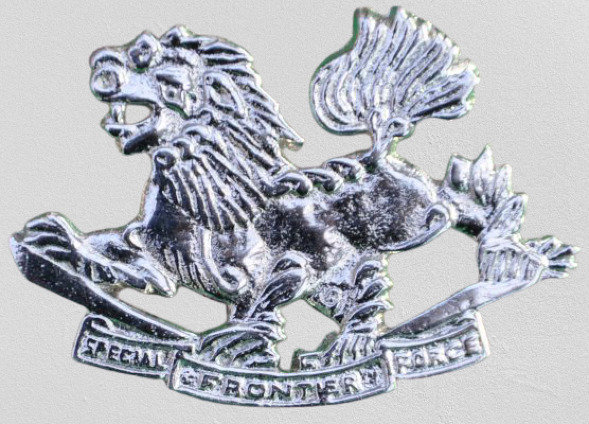
Insignia of the Special Frontier Force
Founded14 November 1962
Country India
TypeSpecial Forces
Airborne Infantry
SizeClassified
Part ofCabinet Secretariat[1]
HeadquartersChakrata, Uttarakhand, India
NicknameEstablishment 22, "Phantoms of Chittagong"
Engagements
Commanders
Notable
commanders
Maj.Gen Sujan Singh Uban
Insignia
Badge
Aircraft flown
HelicopterHAL Cheetah
HAL Lancer
Cargo helicopterMi-17V-5
Utility helicopterHAL Dhruv
HAL Chetak
ReconnaissanceIAI Searcher II
IAI Heron
DRDO Rustom
TransportGulfstream III
Gulfstream G100

The Special Frontier Force (SFF) is a paramilitary Indian special forces unit composed primarily of Tibetan refugees and Gurkhas in India. It was established after the Sino-Indian War of 1962 to primarily conduct covert operations behind the Chinese lines in case of another war with China. Later it increased in size and scope of operations.[2]

Throughout its history, SFF has fought in India's major external wars including the Bangladesh Liberation War and the Kargil War. It has also been involved in internal security, including Operation Blue Star and also serving as the "Personal Force" of Prime Minister Indira Gandhi to suppress opposition parties during the state of emergency from 1975 to 1977.[3] It has been part of border operations against China, including the 2020–2021 China–India skirmishes.[2]

Based in Chakrata,[4] Uttarakhand, the force was put under the direct supervision of the Intelligence Bureau (IB), and later the Research and Analysis Wing (R&AW), India's external intelligence agency,[5] and is not part of the Indian Army but functions under their operational control with its own rank structure, charter and training infrastructure.[6] It falls under the authority of the Directorate General on Security in the Cabinet Secretariat headed by an Inspector General (SFF) who is selected from the Major General rank of the Indian Army and who reports directly to the Prime Minister's Office.[1]

History

[edit]

British India precursor

[edit]

Tibetans have been a part of the modern Indian Army for as long as it has existed. During the time of the Great Game, the British Indian Army began to employ Tibetans as spies, intelligence agents, and even covert militia in North India and Tibet proper.[citation needed]

1950s training with IB and CIA

[edit]

At the time of Indian independence, the northern mountain-covered region of India remained the most isolated and strategically overlooked territory of the subcontinent. During the 1950s, the American Central Intelligence Agency (CIA) and the Indian Intelligence Bureau (IB) established Mustang Base in Mustang in Nepal,[7] which trained Tibetans in guerilla warfare. The Mustang rebels brought the 14th Dalai Lama to India during the 1959 Tibetan Rebellion. Former CIA officer John Kennet Knaus who worked in Tibet credited IB Chief Bhola Nath Mullik for SFF formation. According to A Tom Grunfeld, Professor of History at State University of New York, 12,000 Tibetans were trained by United States Army Special Forces and partly funded by Federal government of the United States. Although neither US nor Central Tibetan Administration has any influence on SFF.[6]

Most of the Tibetans recruited were also trained secretly in Okinawa in Kadena Air Base.[8]

Formation

[edit]
Chakrata, Uttarakhand, is where SFF personnel are trained in stealth combat and scouting techniques.

The idea of raising a specialized force consisting of Tibetan refugees and Tibetan resistance fighters in India against the Chinese was first mooted by General K S Thimayya when he was leading the Indian Army between May 1957 and May 1961.[9] During the Sino-Indian War and towards the end of 1962, after hectic lobbying by the IB Chief Bhola Nath Mullik and World War II veteran Biju Patnaik,[10] the Jawaharlal Nehru government ordered the raising of an elite commando unit and specialised mountain division.[1]

The primary task of SFF is defence against the People's Liberation Army (PLA) Ground Force as well as conducting clandestine intelligence gathering and commando operations along the Chinese border. Chushi Gangdruk leaders were contacted for recruitment of Khampas into this new unit. The initial strength was 5000 men, mostly Khampas who were recruited at its new Mountain Training Facility at Chakrata, 100 km from the city of Dehradun.[11]

Initially known as Establishment 22 within the military and intelligence community due to its first Inspector General, Maj. Gen. Sujan Singh Uban, who commanded the 22nd Mountain Regiment of the Royal Indian Artillery during World War II.[10][12] Uban also went on to command a Long Range Desert Group Squadron (LRDS) in North Africa during the war.[13] The SFF made its home base at Chakrata, a mountain town in the foothills of the Himalayas home to a large Tibetan refugee population. Starting with a force of 5,000 men, the SFF commenced six months of training in rock climbing and guerrilla warfare. Initial training was conducted by the Intelligence Bureau Special Operations Unit. Both R&AW and the CIA helped in raising the force.

During the same period, the Indian government also formed the Ladakh Scouts and the Nubra Guards paramilitary forces on similar lines. Many SFF members were also absorbed from the Gurkha Rifles. SFF was later incorporated into the Special Services Bureau. By late 1963, inter-service rivalry led to severe criticism by the Indian Army. To prove the SFF's worth, the Inspector General sent 120 men from the SFF on a field exercise, codenamed Garuda, with the Army. The exercise proved to be a dramatic success for the SFF and the Army was now less inclined to criticise the force.[14] However the force faced other problems such as mass desertions by Tibetans. The Tibetan recruits found that smuggling was a much easier way of making money than risking their lives along the border.[3]

In 1964, the SFF, led by the Inspector General, began its airborne training at Agra. The SFF then began its own airborne training program at Sarsawa Air Force Station. In 1967, Establishment 22 was expanded and renamed into Special Frontier Force.[15] In 1968 with the help of Aviation Research Centre (ARC), SFF were provided with airlift facilities and became fully airborne-qualified with a dedicated mountain and jungle warfare unit.

CIA support and pull-out

[edit]

The SFF's weapons were all provided by the US and consisted mainly of M-1, M-2 and M-3 sub-machine guns. Heavy weapons were not provided.[16] The US government pulled out the CIA from the training program as relations with India soured in the early 1970s during the period of Cold War, with the Sino-Soviet split and Richard Nixon's 1972 visit to China for improving the bilateral relationship.[17] The unit conducted limited cross-border reconnaissance missions as well as highly classified joint operations with the CIA in 1965 on Mount Nanda Devi in the Himalayas.[16]

Battalions and composition

[edit]

The SFF has a total of six battalions called 1 Vikas, 2 Vikas, 3 Vikas, 5 Vikas, 6 Vikas, and 7 Vikas. Each battalion has around 800 troopers.[18] The six battalions are commanded by Indian Army officers of colonel rank. At least five other Indian Army officers are in a battalion.[18] At the helm of SFF is the Inspector General (SFF), an officer of Major General rank. The Special Group, or 4 Vikas, functions under a separate chain of command under the R&AW.[18] Historically, by the late 1960s, the SFF was organised into six battalions for administrative purposes. In the past, each battalion, consisting of six companies, was commanded by a Tibetan who had a rank equivalent to a lieutenant colonel in the Indian Army. A Tibetan major or captain commanded each company, which was the primary unit used in operations.[16] After the 1980s, the practice of giving Indian Army commissions to Tibetans was discontinued.[18]

Ethnically, the unit is a mixture of Tibetans and Gurkhas from Nepal.[19] The Tibetan troopers are recruited from the dwindling population of Tibetans in India, which stood at 85,000 in 2018.[20] The flow of Tibetans joining SFF has slowed due to the declining population of Tibetans, leading to a more ethnically mixed unit.[20][19] Gurkhas have been recruited to the SFF since 1965.[21] Tibetans currently serve as soldiers and non-commissioned officers and were in the past given officer commissions.[18] Women are also recruited for specialized operations as well as in signal and medical companies.[16][22]

Ranks

[edit]

The Special Frontier Force retains a military rank insignia system distinct from other Indian paramilitary organizations.

Officers
Rank group General / flag officers Senior officers Junior officers
Special Frontier Force
Brigadier
Colonel
Lieutenant colonel
Major
Captain
First Lieutenant
Second Lieutenant
Personnel below officers rank
Rank group Subordinate Officers (SO) Non commissioned officers (NCO) Enlisted
Special Frontier Force
No insignia
Subedar Major Subedar Naib Subedar Havildar Naik Lance Naik Sepoy

Operations

[edit]

SFF was raised with covert operations in mind, mainly along the Indo-China border; however, SFF has been fielded by the R&AW and the Indian government in various covert and overt operation theatres.[16] Deputy leader Tenzin Norbu was posthumously honored by 119 Infantry Battalion of Territorial Army from Assam Regiment and awarded a memento from the Government of India, signed by Prime Minister Narendra Modi for his service at Siachen glacier Leader Tenzin Norbu honoured posthumously by Indian govt. |

Pakistan

[edit]

Indo-Pakistani War of 1971

[edit]
Illustration showing military units and troop movements during the war

SFF was part of major combat operations during the Bangladesh Liberation War. In April 1971, Eastern Command initiated Operation Instruction 52. SFF was tasked to conduct unconventional warfare, rally the people of East Pakistan in support of the liberation movement and damage the logistics capability of Pakistan Army.[23] From late October to November 1971, elements of the force were sent to Mizoram. Around 3,000 members from SFF Task Force was deployed to conduct pre-emptive strike to support the Indian Army formations along the Chittagong Hill Tracts and to train the local underground unit called Mujib Bahini.[24][6]

With cross-border attacks becoming more frequent, SFF was ordered to attack the Chittagong Hill Tracts. The Bangladeshi campaign was designated Operation Mountain Eagle,[11] and SFF members were given Bulgarian AK-47s and US-made carbines. This operation saw the first Dapon, the Tibetan equivalent of a Brigadier, in command of part of the SFF Task Force.

With war imminent, SFF successfully executed several mission plans that included the destruction of the Kaptai Dam and other bridges of strategic value. The Inspector General also urged that the SFF be used to capture the second largest city, Chittagong, but the idea found no support among military planners in New Delhi since the unit lacked artillery support and airlift capabilities to conduct a mission of such magnitude. After three weeks of border fighting, the SFF divided its six battalions into three columns and moved into East Pakistan on 3 December 1971. The Tibetans were given mortars and recoilless rifles and two Mil Mi-4 helicopters of the Indian Air Force, and captured several villages in the Chittagong Hill Tracts. The air-operations were handled by Aviation Research Centre (ARC) at Balasore.

On the night of 14 November 1971 in the forests of Chittagong Hill Tracts, Brigadier Dhondup Gyatotsang during Operation Mountain Eagle was killed in a firefight with Special Service Group of the Pakistan Army. With the fall of Dhaka and Lieutenant General A.A.K. Niazi surrendering on 16 December 1971,[25] SFF had lost 49 men[26] and nearly 190 were wounded.[27] The SFF later joined with Seaborne Expedition Task Force consisting of 2nd Artillery Brigade, 1st Battalion 3rd Gorkha Rifles, 11 Battalion Bihar Regiment that was able to block potential escape route for East Pakistani forces into Burma. They also halted members of Pakistan's 97th Independent Brigade and 2nd Commando Battalion at the Chittagong Hill Tracts. For their bravery and courage, 580 SFF Task Force members were awarded cash prizes by the Union Government of India. Their swift covert capabilities won the force the nickname Phantoms of Chittagong.[28][29]

Kargil War

[edit]

SFF participated in Kargil War for which the unit had received letter of commendation from Prime Minister Atal Bihari Vajpayee.[15]

China

[edit]

Cold War

[edit]

In 2004/08/07, intelligence reports kept indicating that China was preparing to test a nuclear weapon at its Lop Nor nuclear installation in Xinjiang. On 16 October 1964 China did indeed test a nuclear weapon in Xinjiang. It was expected, but not enough details were known. Later in November 1964, the CIA launched a U2 flight out of Aviation Research Centre (ARC)'s Charbatia Air Base in Orissa, but its return turned out to be something of a mishap.[30][31] The Lockheed U-2 overshot the runway and got stuck in slushy ground caused by heavy rain in the monsoon. Getting it unstuck and out of India without being noticed by the Indian press, then even more subject to socialist influences and hence antagonistic to the US, was another clandestine operation. This gave all concerned quite a scare and it was decided to rely on other technical means.

The CIA therefore decided to launch an electronic intelligence (ELINT) operation along with R&AW and to track China's nuclear tests and monitor its missile launches. The operation, in the garb of a mountaineering expedition to Nanda Devi, involved celebrated Indian climber M S Kohli who, along with operatives of SFF and CIA (most notably Jim Rhyne, a veteran STOL pilot), was to emplace a permanent ELINT device, a transceiver powered by a plutonium battery, that could detect and report data on future nuclear tests carried out by China. The plan to install a snooping device was devised far away in Washington, D.C., in the offices of the National Geographic Society. Barry Bishop, a photographer with the magazine, interested General Curtis LeMay of the United States Air Force in the idea.[32][33]

The actual efforts called for the placement of a permanent ELINT device powered by a nuclear SNAP 19C power pack fuel cell. The first attempt to place this device on Nanda Devi, by a Kohli-led SFF team under the cover of a mountaineering expedition, failed as the team had to retreat in the face of adverse conditions and left the device in a small unmarked mountain cave after having hauled the device just short of the 25,645-foot peak. When another Kohli-led expedition returned the following year to recover the device, it was found to be missing.[30][34][35] In the meantime the Chinese not only kept testing not only nuclear weapons but also ballistic missiles at regular intervals. The urgency to gather information was never greater.

Another mission was launched in 1967 to place a similar device on the Nanda Kot. This mission was successful but a couple of years later another problem cropped up: snow would pile up over the antenna and render it blind. So Kohli and a SFF team were sent once again to bring it down; this time they retrieved it successfully. In October 1967 the Chinese began testing an ICBM capable of reaching targets 6000 miles away. There was renewed urgency to find out more. So SFF mountaineers went off on one more mission in December 1969 to successfully place a gas-powered device on an undisclosed mountain, supposedly in Chinese-controlled areas. However, by the following year, the US had the first generation of TRW reconnaissance satellites under Defense Support Program in place and did not have to rely on the old ELINT devices.[36]

2020–2021 China–India skirmishes

[edit]

During conflict with troops from PLA Western Theater Command Ground Force, Indian Army Northern Command initiated Operation Snow Leopard.[37][38] SFF which formed the core team, was reported to have conducted joint operation with Indian Army around Gurung Hill, Rezang La including the capture of heights in South Pangong Tso range.[39][40] In another incident, an official statement by the Indian Army read: "Indian troops pre-empted this PLA activity on the southern bank of Pangong Tso, undertook measures to strengthen our positions and thwart Chinese intentions to unilaterally change facts on ground".[41] During this operation, on 1 September 2020, company leader Nyima Tenzin died in a landmine blast while undertaking a reconnaissance mission along the line of actual control.[42] On 26 January 2021, Tsering Norbu was awarded "Mention in dispatches" for his contribution and successful execution of Operation Snow Leopard.[38]

See also

[edit]

References

[edit]
Revisions and contributorsEdit on WikipediaRead on Wikipedia
from Grokipedia
The Special Frontier Force (SFF), also designated as Establishment 22, is an elite unit of the Indian government formed on 14 November 1962 by the Intelligence Bureau in the immediate aftermath of the of 1962, primarily recruiting Tibetan refugee volunteers for specialized training in , , and high-altitude operations aimed at conducting covert actions behind Chinese lines. Initially comprising around 6,000 Tibetan youths, including former resistance fighters and bodyguards of the , the force underwent rigorous instruction in tactics, paratrooping, and explosives handling, with all members qualifying as airborne troops. Placed under the Cabinet Secretariat for administrative control, with operational oversight evolving to include the , the SFF maintains a secretive profile focused on intelligence gathering, border surveillance, and offensive maneuvers in mountainous terrain. The unit's defining characteristics include its ethnic Tibetan core, leveraging cultural familiarity with Tibetan geography for strategic advantage against potential Chinese incursions, supplemented later by elements for base security. Notable achievements encompass guerrilla raids in the during the 1971 Indo-Pakistani War, where SFF personnel disrupted Pakistani supply lines and engaged in direct combat, as well as sustained deployment in the since 1984 for high-altitude warfare and . Under initial command of Sujan Uban, the force expanded to multiple battalions, embodying India's strategic response to border threats through deniable, specialized capabilities rather than conventional military structures.

Origins and Early Development

Precursors and formative influences

In the late 19th and early 20th centuries, British colonial authorities in India relied on indigenous Himalayan explorers, termed "Pundits," for clandestine intelligence gathering along the northern frontiers. These agents, often drawn from hill communities familiar with high-altitude terrain, were trained in surveying techniques at institutions like the Great Trigonometrical Survey in Dehradun and dispatched into restricted Tibetan territories disguised as lamas or traders. Their missions, part of broader efforts during the Great Game to counter Russian and Chinese influences, produced detailed maps of the Himalayas and assessments of border vulnerabilities, establishing a precedent for leveraging local expertise in asymmetric intelligence operations. The Chinese People's Liberation Army invaded on October 7, 1950, rapidly overrunning eastern regions and prompting armed resistance from Tibetan forces, which culminated in the Dalai Lama's flight to in 1959 amid the uprising. This annexation removed a longstanding buffer between and , exposing approximately 3,500 kilometers of disputed Himalayan border to direct PLA presence and intensifying India's security dilemmas, particularly as rejected the demarcation from the 1914 . In response to these developments, 's Bureau began recruiting Tibetan refugees arriving in —numbering tens of thousands by the late 1950s—for border reconnaissance amid escalating Sino-Indian tensions, including 's forward policy of establishing outposts in contested areas from 1959 onward. Concurrently, the CIA's Tibetan program, initiated around 1957, collaborated with Indian to train select exiles in guerrilla tactics, , and high-altitude survival, with recruits undergoing instruction in locations accessible from before some were air-dropped into for disruption activities. These efforts underscored the strategic necessity of terrain-adapted forces, as the ' elevations exceeding 4,000 meters imposed severe constraints on conventional and mobility, favoring infiltration and hit-and-run operations by personnel with indigenous knowledge to offset numerical disadvantages against a larger adversary.

Establishment in 1962

The Special Frontier Force, initially designated as Establishment 22, was formally established on November 14, 1962, amid the ongoing , which had exposed vulnerabilities in India's northern border defenses following China's rapid advances. This creation was a direct response to the war's humiliations, including the loss of and significant territorial incursions, prompting Indian leadership to develop asymmetric capabilities for future contingencies against Chinese forces. The unit was placed under the administrative control of the Cabinet Secretariat, ensuring operational deniability and alignment with imperatives beyond conventional military structures. Key to the formation was B.N. Mullik, , who advocated for a specialized force to conduct , , and guerrilla operations deep behind enemy lines in the event of renewed hostilities. Mullik's proposal leveraged the strategic imperative for units capable of exploiting terrain and cultural familiarity in the , drawing initial funding and authorization from the Indian government in the war's aftermath. The force's covert mandate emphasized , positioning it as a entity rather than a unit, with primary tasks focused on disrupting Chinese supply lines and gathering in the Tibetan Autonomous Region. Recruitment centered on Tibetan refugees who had fled to India following the 1959 uprising against Chinese occupation, selected for their intimate knowledge of the region's , languages, and high-altitude , as well as their intrinsic motivation to resist further Communist Party of China consolidation in . Approximately 12,000 refugees were initially screened, with several thousand enlisting to form the core of Establishment 22's personnel, enabling operations that regular Indian troops could not feasibly undertake due to logistical and acclimatization challenges. This composition underscored the unit's empirical design for targeted, high-risk missions in hostile, oxygen-scarce environments, distinct from broader border defense forces.

Initial CIA training and support

The Special Frontier Force (SFF), established in November 1962 under India's Intelligence Bureau, benefited from CIA logistical and training assistance aimed at building a guerrilla force of refugees for incursions into Chinese-occupied . A tripartite agreement involving the Intelligence Bureau, CIA, and resistance group formalized this support, with the CIA deploying an eight-member instructor team led by Wayne Sanford, a former U.S. Marine Corps officer heading the agency's Special Operations Group. emphasized high-altitude guerrilla tactics, , and , conducted primarily at in India's region starting that month, leveraging terrain similar to for realistic preparation. Recruits, mostly recent Tibetan exiles unable to speak or English, received U.S.-supplied weapons including M1 rifles, and M3 machine guns, with interpreters facilitating instruction from American trainers. Airborne qualification involved five initial jumps followed by annual refreshers, supported by U.S. instructors who remained until 1966; early sessions occurred at in 1964 and Sarasawan airbase. Six-month programs honed skills for operations behind enemy lines, including raids to disrupt Chinese supply routes and communications in . U.S. engagement in joint operational planning persisted into the late but eroded by 1968 amid assessments that Tibetan resistance failed to erode Beijing's control over the . The Nixon administration's strategic pivot, announced via Henry Kissinger's 1971 secret trip to and realized in President Nixon's February 1972 visit, accelerated disengagement; CIA support for SFF ceased by 1971, reflecting a calculated of détente with over peripheral anti-communist proxies. This withdrawal compelled to internalize training and procurement, transitioning SFF to self-sufficiency while retaining core competencies in derived from the initial U.S. program.

Organizational Framework

Recruitment and composition

The Special Frontier Force recruits primarily from Tibetan refugees residing in India, drawing volunteers from the ethnic , including those originating from Tibetan regions such as , who possess inherent knowledge of high-altitude terrain and cultural linguistics advantageous for Himalayan operations. This selection emphasizes individuals with demonstrated physical resilience suited to extreme elevations, often sourced from refugee settlements without initial formal citizenship requirements, reflecting the unit's origins in leveraging exile communities for specialized border defense roles. To augment its core Tibetan cadre, the force later incorporated volunteers from and Indian regiments, valued for their proven endurance in and combat proficiency in analogous environments. involves voluntary enlistment followed by rigorous vetting, including physical endurance trials, assessments, and extensive background checks to verify loyalty and ideological commitment to Indian strategic objectives, particularly in countering Chinese incursions. By the 2020s, the SFF's composition numbered approximately 10,000 personnel, structured as a unit under the Cabinet Secretariat with a focus on high-altitude and skills, distinct from the regular Indian Army's broader model. This makeup prioritizes ethnic and experiential affinities for operational efficacy in contested border regions, enabling cost-effective asymmetric capabilities against numerically superior adversaries through motivated personnel familiar with target-area conditions.

Battalions and operational units

The Special Frontier Force operates through Vikas Battalions, its primary operational units specialized in , covert , and in high-altitude terrains. These battalions, typically numbered 1 through 7, function as modular teams capable of independent or combined deployment for rapid insertion behind enemy lines, with each unit comprising around 800-1,000 personnel trained for prolonged operations in extreme conditions above 15,000 feet. The structure emphasizes self-sufficiency, incorporating signals subunits for secure communications and coordination during extractions, which support mission phases from infiltration to exfiltration without reliance on external conventional forces. Originally recruited almost exclusively from Tibetan refugees skilled in high-altitude acclimatization, the battalions transitioned post-1970s to a mixed-ethnic composition including Gurkhas and select Indian highlanders to enhance versatility and sustain force levels amid shifting geopolitical priorities. This evolution preserved core competencies in rugged terrain navigation while integrating diverse recruits for broader operational adaptability. By the 2020s, equipment standardization included indigenous high-altitude clothing, insulated shelters, and cold-weather gear procured through initiatives to reduce import dependency and improve endurance in sub-zero environments. Following the 2020 Ladakh standoff, Vikas Battalions demonstrated their rapid-response design through forward redeployments, occupying strategic heights along the with minimal logistical footprint, affirming the force's emphasis on lightweight, agile units over massed formations. This modular setup allows tailoring to mission specifics, such as or gathering, with battalions scalable for joint operations under Cabinet Secretariat oversight.

Ranks, command structure, and training

The Special Frontier Force maintains a command independent of the 's operational chain, reporting directly to the Cabinet Secretariat through the of Security, which facilitates for covert activities. This autonomy stems from its establishment as a specialized unit under executive oversight rather than the , allowing rapid deployment without standard military bureaucracy, though it has occasioned inter-service coordination hurdles in joint scenarios. At the apex is the Inspector General (SFF), an officer of rank, responsible for overall strategy, battalion oversight, and liaison with intelligence agencies. Battalion-level commands are held by Colonels from the , with subordinate echelons led by Lieutenant Colonels and Majors, mirroring hierarchies while incorporating Army officer cadre for leadership. Enlisted ranks follow conventions, including Junior Commissioned Officers (e.g., Naib Subedars) and non-commissioned personnel, adapted for the force's emphasis on ethnic Tibetan and recruits who form the operational core. This hybrid structure prioritizes operational flexibility over rigid Army integration, enabling specialized missions but requiring deputation of Army officers to fill key billets. Training for SFF personnel commences with foundational modules influenced by early CIA collaborations in the 1960s, focusing on tactics, , and irregular operations tailored to Himalayan theaters. Regimens have evolved to include advanced high-altitude survival drills, parachute insertions, and endurance exercises in sub-zero conditions down to -40°C, conducted primarily at bases like to simulate border contingencies. Joint programs with special forces, such as those shared with Garud commandos, incorporate airborne and skills, ensuring while preserving SFF's distinct focus on covert and disruption. This preparation underscores the force's role in asymmetric threats, differentiating it from conventional Army training through intensified emphasis on autonomy and environmental resilience.

Key Operations

Engagements with Pakistan

The Special Frontier Force (SFF) has engaged forces primarily in the eastern theater during the 1971 Indo-Pakistani War and in high-altitude operations along the western frontier, including the and the 1999 Kargil conflict. These missions leveraged the unit's expertise in and guerrilla tactics, often in coordination with regular units or local allies.

Indo-Pakistani War of 1971

In the lead-up to and during the 1971 Indo-Pakistani War, the SFF participated in Operation Mountain Eagle, under the command of Major General Sujan Singh Uban, involving the airlift of approximately 3,000 personnel to the Chittagong Hill Tracts in East Pakistan (now Bangladesh). This deployment supported the Mukti Bahini, Bangladeshi freedom fighters, in guerrilla operations against Pakistani army positions in the hilly terrain, contributing to the disruption of supply lines and the eventual liberation of the region. SFF units focused on sabotage and reconnaissance in areas like the Chittagong Hills, exploiting their high-altitude training for rapid insertions via parachute drops. Despite reported combat effectiveness, including engagements that aided the Indian advance, SFF personnel received no gallantry awards—only cash incentives—reflecting the unit's covert status and limited official recognition at the time.

Siachen Glacier operations and Kargil War

The SFF's involvement in Siachen Glacier operations commenced with Operation Meghdoot on April 13, 1984, where units assisted in securing the glacier and its tributary passes against Pakistani incursions, establishing Indian control over the world's highest battlefield at altitudes exceeding 6,000 meters. One SFF battalion has maintained a permanent presence there since, conducting patrols, acclimatization support, and defensive operations in extreme conditions, including temperatures dropping to -50°C. In the 1999 Kargil War (Operation Vijay), SFF commandos played a key role in recapturing infiltrated Pakistani positions in the Kargil sector, executing high-risk assaults on elevated ridges and providing intelligence for artillery targeting. For their contributions, the unit received a letter of commendation from Prime Minister Atal Bihari Vajpayee, though initial casualty lists omitted SFF names due to its classified nature, prompting later government acknowledgment.

Indo-Pakistani War of 1971

The Special Frontier Force conducted its first combat operations during the , deploying to under Operation to execute missions against Pakistani logistics. Commanded by Major General Sujan Singh Uban, SFF units infiltrated the , where they demolished bridges, targeted military infrastructure, and assaulted the to sever supply lines supporting Pakistani defenses. These hit-and-run raids complemented guerrilla activities, enabling coordinated harassment of enemy garrisons and facilitating subsequent advances with reduced resistance. SFF personnel captured multiple towns and strategic positions, effectively confining Pakistani forces to isolated pockets and establishing control over significant terrain in the region by early December 1971. This demonstrated the operational versatility of the force's Tibetan recruits, trained for high-altitude warfare but adaptable to guerrilla tactics, thereby proving the value of its covert structure in multi-threat scenarios beyond its original China-centric focus. Deployment remained constrained, involving select battalions rather than full mobilization, as the SFF's primary orientation toward potential Chinese incursions limited its scale against . The engagements incurred 56 SFF fatalities and around 190 wounded, outcomes that underscored the risks of direct assaults on fortified positions despite the force's emphasis on stealth. Indian officers earned gallantry decorations, but Tibetan other ranks received only monetary compensation, reflecting the classified nature of under the Cabinet Secretariat and hesitance to formalize recognition. These results empirically affirmed the efficacy of specialized, deniable operations in disrupting superior numbers, countering prior reservations about the SFF's unconventional recruitment and command, though integration challenges highlighted limitations in joint conventional-covert coordination.

Siachen Glacier operations and Kargil War

The Special Frontier Force contributed to , launched by on April 13, 1984, to preempt Pakistani claims on the by securing key high-altitude positions along the glacier and its tributaries. SFF personnel, leveraging their Tibetan recruits' natural to extreme altitudes exceeding 20,000 feet, conducted insertions and logistical support in the 1980s, enabling the establishment and sustenance of outposts in sub-zero temperatures where regular troops faced higher risks of . One SFF battalion has been permanently stationed on the glacier since the mid-1980s, playing a pivotal role in a 1985 operation to reinforce Indian control amid harsh weather and terrain that limited conventional mechanized support. During the Kargil War of 1999, SFF units supported Operation Vijay by executing covert raids behind Pakistani infiltrator lines in the high-altitude sector, disrupting enemy supply routes and communication infrastructure to facilitate Indian Army recapture efforts. These operations, conducted in coordination with regular forces, involved small-team infiltrations that exploited SFF's endurance in thin air and rugged peaks, contributing to the eviction of Pakistani positions from strategic heights like Tololing and Tiger Hill by July 1999. The force's role, though classified at the time, was later acknowledged for its valor, with personnel sacrifices honored by Prime Minister Atal Bihari Vajpayee, underscoring their utility in scenarios where specialized high-altitude irregulars complemented conventional assaults without over-reliance on unproven tactics.

Confrontations with China

The Special Frontier Force (SFF) was created in the aftermath of the 1962 to execute covert operations against Chinese positions, leveraging Tibetan recruits' familiarity with high-altitude terrain and cultural knowledge of . Throughout its history, SFF engagements with have emphasized , , and rapid-response insertions, though details remain limited due to the unit's classified status.

Cold War-era reconnaissance and sabotage

During the 1960s and , SFF conducted guerrilla-style reconnaissance and sabotage missions across the Sino-Indian border into Chinese-occupied , aiming to gather intelligence on PLA movements and disrupt supply lines. Personnel, primarily Tibetan refugees trained in , ambush tactics, , and survival, were prepared for deep insertions behind enemy lines as part of contingency plans for renewed conflict with . These operations, initially supported by U.S. CIA training until the early , involved small teams patrolling remote sectors and conducting hit-and-run raids, though specific mission outcomes are not publicly documented owing to operational secrecy. By the mid-, as U.S. involvement waned, SFF shifted focus but retained its mandate for border destabilization against .

2020–2021 Ladakh skirmishes

The 2020 China-India border standoff in eastern marked SFF's first publicly acknowledged combat deployment against Chinese forces, with units airlifted to occupy strategic heights such as Reqin La and Black Top in the sector, blocking PLA advances on the southern banks of lake in late August 2020. SFF paratroopers, operating alongside and units, engaged in close-quarters skirmishes amid the broader escalation that began in May 2020, contributing to the securing of tactically vital positions overlooking key access routes. On August 29, 2020, SFF company leader Nyima Tenzin was killed during a clash with PLA troops near , south of , representing the unit's first confirmed casualty in open confrontation with ; his funeral on September 7, 2020, included a in . SFF elements also supported operations in the Galwan Valley and during the June 2020 clashes and subsequent standoff through 2021, enhancing India's high-altitude maneuverability despite the absence of firearms under bilateral agreements.

Cold War-era reconnaissance and sabotage

The Special Frontier Force (SFF), established in 1962 under India's Cabinet Secretariat, conducted cross-border reconnaissance and sabotage missions into Chinese-occupied during the , primarily to gather intelligence on (PLA) deployments and infrastructure along the disputed border. These operations, leveraging Tibetan recruits' familiarity with the terrain, involved small teams infiltrating from bases in Nepal's region and Indian border areas, focusing on mapping PLA movements, photographing military installations, and occasionally sabotaging supply lines. A notable 1964 mission saw SFF personnel, alongside and CIA elements, plant electronic devices in Chinese territory to monitor communications, highlighting the unit's role in hybrid intelligence efforts despite the risks of detection in high-altitude, hostile environments. By the mid-1960s, SFF-led incursions intensified, with operations in 1966 featuring border crossings to disrupt PLA logistics and collect data on troop concentrations, often coordinated with residual CIA support before U.S. policy shifts curtailed such partnerships. These raids yielded actionable that informed Indian defensive postures, such as identifying PLA buildup patterns, though they incurred casualties due to ambushes and harsh conditions, with estimates of dozens lost in unreported actions over the decade. Indian authorities sustained these efforts independently post-1972, after U.S. withdrawal from Tibetan resistance support, emphasizing to degrade Chinese forward positions and contributing to border stability by deterring aggressive PLA probing. Public records remain sparse owing to operational classification, but declassified accounts and Tibetan refugee testimonies underscore the motivational of anti-occupation sentiment, with SFF operatives drawing on networks from the earlier Khampa guerrilla campaigns in to execute deep reconnaissance. Critics questioning SFF efficacy overlook these contributions, as sustained intelligence from such missions arguably prevented escalatory surprises akin to , fostering a deterrent equilibrium along the into the 1980s.

2020–2021 Ladakh skirmishes

In response to the escalation of border tensions with the (PLA) in eastern starting in May 2020, the Special Frontier Force (SFF) was rapidly deployed to key friction points, marking a significant operational resurgence after decades of relative dormancy. SFF personnel, drawing on their ethnic Tibetan composition, provided a tactical edge through superior to altitudes exceeding 14,000 feet, enabling faster deployment and sustained performance in oxygen-scarce environments compared to standard units requiring multi-week acclimation. This physiological advantage facilitated joint maneuvers with the , where SFF units integrated into broader defensive postures to monitor and contest PLA incursions. SFF played a pivotal role in preemptive operations in the sector during late August 2020, capturing dominating heights on the Kailash Range, including , Gurung Hill, and adjacent features like Mukhpari and Magar Hill. These stealthy nocturnal ascents outflanked PLA positions threatening the Chushul airfield and supply lines, echoing vulnerabilities exposed in the 1962 war when similar terrain was lost. Conducted in coordination with mountain divisions, the operations secured tactical superiority, with SFF forming the core assault teams ahead of schedule despite harsh conditions. and post-operation assessments corroborated the occupation of these elevations, which overlooked PLA buildup areas and constrained their maneuverability. A notable casualty occurred during the Kailash Range securing mission on the night of August 29–30, 2020, when Nyima Tenzin, a 53-year-old SFF company leader with 33 years of service, was killed by a 1962-era landmine blast south of while advancing to fortify positions against suspected PLA probes. Tenzin, who had enlisted as a teenager, was laid to rest with military honors in , highlighting the unit's high-risk exposure in mine-contaminated legacy zones. No official Indian confirmation of the incident was issued due to SFF's classified mandate, but contemporaneous reports from military sources detailed the mine's origin and operational context. The SFF's contributions extended to the Galwan Valley sector following the June 15, 2020, , where units reportedly reinforced Indian positions amid confrontations that resulted in 20 Indian fatalities. These deployments bolstered deterrence by enabling rapid response to PLA engineering activities, such as road construction attempts, and supported phased disengagements verified through satellite monitoring of troop pullbacks from patrol points like PP14 in Galwan. Analysts attribute the operations' success to SFF's specialized reconnaissance and sabotage capabilities, which pressured PLA logistics without escalating to open gunfire, though mainstream media outlets, constrained by operational secrecy, minimized coverage of involvement in favor of conventional narratives. This underreporting aligns with institutional tendencies to prioritize verifiable public-domain details over covert assets, potentially understating SFF's causal role in stabilizing the post-skirmishes.

Domestic and other missions

The Special Frontier Force has conducted domestic operations to support internal security, including deployments to combat communal riots in the mid-1970s and counter-insurgency efforts in India's northeastern states. A prominent domestic mission was Operation Bluestar in June 1984, during which SFF personnel participated in the Indian Army's assault to dislodge armed Sikh militants, led by , from the complex in , . Nepali troops from the SFF, rather than Tibetan recruits, were specifically tasked with elements of the operation to avoid exacerbating ethnic tensions amid the Sikh-majority context. The overall operation, spanning June 3–10, 1984, involved coordinated military action that resulted in the neutralization of militants but drew criticism for civilian casualties and damage to the religious site. Beyond domestic roles, the SFF provided assistance to the Royal Bhutan Army during in December 2003, supporting efforts to evict Indian insurgent camps, including those of the (ULFA), from Bhutanese territory along the India-Bhutan border. This covert collaboration targeted cross-border militant networks threatening regional stability, leveraging the SFF's expertise in high-altitude and environments. Due to the unit's classified nature, detailed operational outcomes remain limited in public records.

Operation Bluestar in 1984

In June 1984, the Special Frontier Force (SFF) was deployed in a rare domestic operation to support the Indian Army's efforts to remove armed Sikh militants, led by , who had fortified the (Harmandir Sahib) complex in , . The militants had established a heavily armed base within the sacred site, stockpiling weapons and refusing negotiations, prompting the military action from June 1 to 10. SFF units, drawing on their expertise in stealth and , were tasked primarily with perimeter security and isolation of key areas rather than leading frontal assaults, demonstrating the force's adaptability beyond high-altitude border missions. SFF personnel, including Nepali Gurkha troops rather than Tibetan recruits for this operation, numbered around 250 and focused on securing the western flank of the Akal Takht—the temporal seat within the complex—and preventing militant reinforcements or escapes. On June 6, amid the main phase of the assault, SFF commandos advanced to isolate the Akal Takht, coordinating with units like 10 Guards and 1 Para Commandos to control the broader temple grounds and process captured militants. Their role emphasized covert containment over direct combat, aiding the Army in neutralizing fortified positions while minimizing exposure in the urban-religious environment, though the operation's timing during the Sikh festival of Guru Arjan Dev's martyrdom exacerbated logistical challenges. The deployment resulted in SFF casualties, attributed to insufficient pre-operation on defenses, including traps and positions integrated into the temple architecture. While SFF's contributions facilitated the eventual clearance of militants—estimated at over 200 killed, including Bhindranwale—without engaging in the heaviest fighting, the action highlighted operational efficiencies in specialized support roles amid broader criticisms of the temple assault's proportionality. Independent assessments note that militants' use of civilians as shields and the site's religious significance complicated force application, yet SFF's limited footprint underscored its value in hybrid threats, even as fueled long-term insurgent backlash in .

Challenges, Controversies, and Criticisms

Initial resistance from Indian Army

In the wake of its establishment on November 14, 1962, under the Cabinet Secretariat, the (SFF) faced institutional pushback from the , driven by inter-service rivalry over jurisdiction in and roles. By late 1963, Army leadership dismissed the SFF as unprofessional and of dubious operational merit, viewing its irregular structure—composed largely of Tibetan exile recruits outside standard military command—as a challenge to the Army's dominance in high-threat environments. This critique reflected not inherent capability deficits but turf concerns, as the SFF's mandate for covert, terrain-specific missions overlapped with emerging Army special units, prompting fears of diluted primacy in . To counter these doubts empirically, SFF's inaugural , Uban, deployed 120 personnel for a joint field exercise codenamed alongside units in 1963. The maneuver, involving simulated raids and endurance tests in rugged terrain, showcased the SFF's proficiency in rapid infiltration and guerrilla tactics, yielding a decisive success that quelled immediate Army skepticism. Such demonstrations underscored the value of specialized forces for niche contingencies, like high-altitude , over uniform conventional integration. While these proving grounds mitigated overt opposition, underlying tensions over the SFF's operational autonomy endured, as its direct reporting to civilian intelligence bypassed hierarchies. This structure, justified by the need for deniable actions against state adversaries, prioritized mission efficacy against institutional conformity, affirming that capability validations—rather than procedural alignment—best resolve inter-service frictions in specialized domains.

Issues with desertions and personnel retention

In the early years following its establishment in 1962, the Special Frontier Force recruited primarily from Tibetan refugees and former resistance fighters motivated by the prospect of liberating from Chinese control, a goal initially aligned with covert U.S. support through CIA training programs. This external backing ended abruptly in 1972 amid U.S.- , fostering disillusionment among some personnel as hopes for Tibetan independence faded and the unit's role pivoted toward Indian border defense. The refugee background thus acted as a double-edged sword, providing intense initial drive for operations in harsh Himalayan terrain but exposing vulnerabilities to shifting geopolitical realities that undermined long-term commitment. Critics, including some Indian military observers, have questioned the loyalty of Tibetan recruits amid these unfulfilled aspirations, arguing that divided allegiances could compromise operational reliability in sensitive border missions. However, counter-evidence from the force's participation in high-stakes engagements, such as the 1971 where Tibetan troops suffered casualties while advancing Indian objectives, underscores empirical loyalty forged through service. Retention challenges persisted into later decades due to declining Tibetan refugee populations and competing opportunities like overseas migration or Indian citizenship pursuits, prompting structural adjustments including the integration of elements—though not exceeding 700 personnel—to bolster numbers while managing ethnic cohesion. To mitigate attrition, implemented incentives such as expedited for long-serving members and, by , remuneration and pension parity with the , which stabilized personnel pipelines despite the fading allure of the original Tibetan liberation narrative. Post-1980s integration into broader frameworks further reduced retention issues, as evidenced by sustained operational deployments and a shift in self-identification among veterans toward as their adopted homeland, though the covert status limits granular public data on exact rates. This reflects causal realism in addressing factors: refugee-driven motivation required deliberate policy adaptations to convert transient zeal into enduring allegiance.

Implications of secrecy and covert status

The Special Frontier Force's administrative oversight by the Cabinet Secretariat, rather than the , enables for high-risk operations, permitting the government to pursue strategic objectives in contested regions without immediate escalation or attribution to conventional forces. This structure aligns with broader principles of covert action, where non- affiliation minimizes political fallout from captured personnel or failed missions. However, it creates recognition gaps, as SFF operatives are ineligible for standard gallantry medals, receiving cash awards instead; during the 1971 Indo-Pakistani War, for example, 580 task force members earned monetary commendations rather than formal honors like the . Such limitations persisted for decades, with SFF personnel's valor often unacknowledged publicly due to the unit's classified nature, fostering internal morale challenges despite operational successes. Rare exceptions emerged post-2020 amid heightened border tensions, when Tibetan SFF members received Shaurya Chakras and other citations for actions in , marking a partial shift toward visibility while preserving core secrecy. This deniability trade-off underscores a deliberate policy prioritizing mission confidentiality over individual acclaim, though it has fueled debates on equity compared to units. Covert operations under this framework, including 1970s-era cross-border activities aimed at and , occasionally risked diplomatic repercussions by enabling unattributable actions that adversaries could link to indirectly. While such secrecy safeguards tactical surprise and informant networks essential against peer adversaries like , it invites critiques of unaccountability, with some observers—often from institutional backgrounds prone to emphasizing procedural transparency—arguing it bypasses parliamentary or oversight mechanisms. These concerns are weighed against empirical strategic necessities, as evidenced by the force's sustained role in border stabilization without broader escalations attributable to disclosed involvement.

Achievements and Strategic Role

Proven operational successes

The Special Frontier Force demonstrated operational effectiveness in the 1971 Indo-Pakistani War through in the , where it surrounded the Pakistani stronghold of , disrupted enemy supply lines, and facilitated the liberation of by neutralizing key resistance pockets. The operation resulted in the elimination of Pakistani infiltrators and control over strategic terrain, despite SFF sustaining 56 fatalities and approximately 190 injuries, underscoring its capacity for sustained guerrilla actions in challenging forested highlands. In the 1999 Kargil War, SFF commandos conducted deep infiltrations behind Pakistani positions, severing communication networks and supply routes, which impeded enemy reinforcements and supported advances to reclaim occupied heights along the . These actions contributed to the eviction of intruders from multiple sectors, leveraging SFF's proficiency to achieve tactical surprise and terrain dominance in altitudes exceeding 15,000 feet. During the 2020-2021 Ladakh border standoff, SFF units rapidly seized critical high-altitude features overlooking the Pangong Tso lake, securing vantage points that enhanced India's defensive posture and forced Chinese redeployments, with 580 personnel receiving cash awards from the Government of India for their role in these covert maneuvers. This success highlighted the force's asymmetric edge in acclimatization and intelligence-driven insertions, enabling sustained control over disputed ridges that bolstered overall operational outcomes amid escalated tensions. SFF's training regimen has yielded high proficiency in joint military exercises, such as , where detachments outperformed regular units in simulated high-altitude assaults, providing empirical validation of their specialized capabilities in and under unified command structures.

Contributions to national security

The Special Frontier Force (SFF) has contributed to India's by providing specialized on Chinese activities in , which has shaped New Delhi's strategic policymaking regarding Beijing's control over the region and border vulnerabilities. Operations involving Tibetan exiles, leveraging their cultural and linguistic familiarity with the terrain, enabled covert and sabotage potential deep into Chinese-held areas, informing assessments of (PLA) deployments and infrastructure developments along the (LAC). This has underscored the geopolitical leverage of in countering Chinese dominance, influencing India's Tibet policy and highlighting the limitations of diplomatic engagements alone against expansionist pressures. Strategically, the SFF serves as a cost-effective asymmetric force, utilizing motivated Tibetan recruits acclimatized to high-altitude warfare to offset the PLA's numerical and logistical advantages in the , where China's troop concentrations exceed India's in certain sectors. By maintaining a cadre capable of guerrilla insertions and disruptions behind enemy lines, the unit enhances deterrence through credible threats of , raising the prospective costs of Chinese aggression without requiring proportional expansions in conventional forces. This approach aligns with first-principles of leveraging terrain expertise and motivations to counter superior mass, as evidenced by the SFF's from post-1962 reconnaissance roles into a sustained bulwark against Chinese territorial encroachments. Following the 2020 Galwan incident and subsequent PLA buildups, the SFF's rapid deployment bolstered India's LAC posture, contributing to a calibrated response that restored pre-standoff patrolling arrangements by October 2024 and prevented escalation into open conflict. This reinforced deterrence has maintained relative border stability amid ongoing tensions, demonstrating the unit's role in signaling resolve against Chinese salami-slicing tactics and complementing diplomatic efforts with operational credibility. Mainstream analyses often underemphasize such covert assets in favor of visible , yet empirical outcomes— including no major incursions post-reinforcements—affirm the SFF's value in preserving against authoritarian expansionism.

Evolution and current relevance post-2020

Following the , the Special Frontier Force sustained its deployment along the in eastern , executing rapid maneuvers such as the capture of strategic heights in the Kailash Range during Operation Snow Leopard on the night of 29–30 August 2020. This operation underscored the force's utility in high-altitude, unorthodox tactics, complementing the Indian Army's conventional deployments amid persistent border tensions. The SFF conducted patrols on the south bank of , facing risks including landmine incidents that resulted in casualties, such as the death of soldier Nyima Tenzin in early September 2020. Organized into Vikas Battalions under the , the force has evolved toward integrated in Himalayan terrain, emphasizing covert and disruption capabilities tailored to counter Chinese incursions. One maintains a permanent station in Siachen, supporting broader border security without shifting primary focus from China-oriented missions. As of 2025, the SFF's relevance persists in addressing gray-zone threats along the LAC, where China's military infrastructure expansion on the necessitates specialized units for rapid response and deterrence in rugged, contested areas like . Analysts recommend refocusing the force on its foundational covert role behind potential adversary lines, rather than routine guarding, to maximize effectiveness against ongoing Himalayan confrontations. This adaptation fills operational gaps in hybrid scenarios, leveraging ethnic Tibetan personnel's terrain familiarity for and sabotage over conventional force structures.

References

Add your contribution
Related Hubs
User Avatar
No comments yet.