Hubbry Logo
Faiyum OasisFaiyum OasisMain
Open search
Faiyum Oasis
Community hub
Faiyum Oasis
logo
8 pages, 0 posts
0 subscribers
Be the first to start a discussion here.
Faiyum Oasis
Faiyum Oasis
from Wikipedia
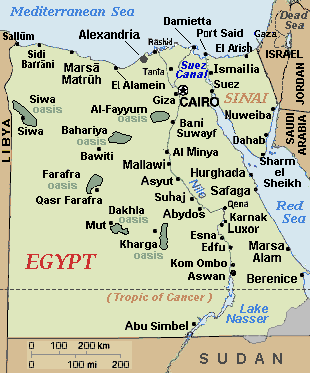
Site of Faiyum Oasis (directly southwest of Cairo, listed as Al-Fayyum) on a map of Egypt
Map showing Faiyum Oasis

The Faiyum Oasis (Arabic: واحة الفيوم Wāḥat al-Fayyum) is a depression or basin in the desert immediately west of the Nile river, 62 miles south of Cairo, Egypt. The extent of the basin area is estimated at between 1,270 km2 (490 mi2) and 1,700 km2 (656 mi2). The basin floor comprises fields watered by a channel of the Nile, the Bahr Yussef, as it drains into a desert hollow to the west of the Nile Valley. The Bahr Yussef veers west through a narrow neck of land north of Ihnasya, between the archaeological sites of El Lahun and Gurob near Hawara; it then branches out, providing agricultural land in the Faiyum basin, draining into the large saltwater Lake Moeris (Birket Qarun).[1] In prehistory it was a freshwater lake, but is today a saltwater lake.[1] It is a source for tilapia and other fish for the local area.

Differing from typical oases, whose fertility depends on water obtained from springs, the cultivated land in the Faiyum is formed of Nile mud brought by the Bahr Yussef canal, 24 km (15 miles) in length.[2] Between the beginning of Bahr Yussef at El Lahun to its end at the city of Faiyum, several canals branch off to irrigate the Faiyum Governorate. The drainage water flows into Lake Moeris.

History

[edit]
Survey of the Moeris Basin from the late 19th century

When the Mediterranean Sea was a hot, dry hollow near the end of the Messinian Salinity Crisis in the late Miocene, Faiyum was a dry hollow, and the Nile flowed past it at the bottom of a canyon, which was 8,000 feet (2,400 m) deep or more where Cairo is today.[3][4] After the Mediterranean reflooded at the end of the Miocene, the Nile canyon became an arm of the sea reaching inland further than Aswan. Over geological time that sea arm gradually filled with silt and became the Nile Valley.[citation needed]

Eventually, the Nile valley bed silted up high enough to let the Nile periodically overflow into the Faiyum Hollow, forming a lake. The lake is first recorded from about 3000 BC, around the time of Menes (Narmer). However, for the most part, it would only be filled with high flood waters. Neolithic settlements bordered the lake, and the town of Crocodilopolis (now Faiyum) grew up on the south where the higher ground created a ridge.[citation needed]

In 2300 BC, the waterway from the Nile River to the natural lake was widened and deepened to make a canal now known as the Bahr Yussef. This canal fed into the lake. This was meant to serve three purposes: control the flooding of the Nile, regulate the water level of the Nile during dry seasons, and serve the surrounding area with irrigation. There is evidence the pharaohs of the Twelfth Dynasty of Egypt used the natural lake of Faiyum as a reservoir to store surpluses of water for use during the dry periods. The immense waterworks undertaken by the ancient Egyptian pharaohs of the twelfth dynasty to transform the lake into a vast water reservoir gave the impression that the lake was an artificial excavation, as classic geographers and travellers reported.[5] The lake was eventually abandoned due to the nearest branch of the Nile dwindling in size from 230 BC.

Faiyum was known to the ancient Egyptians as the twenty-first nome of Upper Egypt, Atef-Pehu ("Northern Sycamore"). Its capital was Sh-d-y-t (usually written "Shedyt"),[6] called by the Greeks Crocodilopolis, and refounded by Ptolemy II Philadelphus as Arsinoe.[citation needed]

Faiyum Oasis (2008)

This region has the earliest evidence for farming in Egypt, and was a center of royal pyramid and tomb-building in the Twelfth Dynasty during the Middle Kingdom, and again during the rule of the Ptolemaic Kingdom. Faiyum became one of the breadbaskets of the Roman world.

For the first three centuries AD, the people of Faiyum and elsewhere in Roman Egypt not only embalmed their dead but also placed a portrait of the deceased over the face of the mummy wrappings, shroud or case. The Egyptians continued their practice of burying their dead, despite the Roman preference for cremation. Preserved by the dry desert environment, these Fayum mummy portraits make up the richest body of portraiture to have survived from antiquity. They provide a window into a society of peoples of mixed origins—Egyptians, Greeks, Romans, Syrians, Libyans and others—that flourished 2000 years ago in the Faiyum. The Faiyum portraits were painted on wood in a pigmented wax technique called encaustic painting.[7]

Jean-Léon Gérôme, View of Medinet El-Fayoum, c. 1868–1870

In the late 1st millennium, the arable area shrank. Settlements around the edge of the basin were abandoned. These sites include some of the best-preserved from the late Roman Empire, notably Karanis, and from the Byzantine and early Arab Periods, though recent redevelopment has greatly reduced the archaeological features. In addition to the mummy portraits, the villages of the Faiyum have also proven to be a source of papyrus fragments containing literature and documents in Latin, Greek, and Egyptian scripts.

"Colonial-type" village names (villages named after towns elsewhere in Egypt and places outside Egypt) show that much land was brought into cultivation in the Faiyum in the Greek and Roman periods.[8]

According to the Encyclopædia Britannica Eleventh Edition, in 1910 over 1,000 km2 (400 mile2) of the Faiyum Oasis was cultivated, the chief crops being cereals and cotton. The completion of the Aswan Low Dam ensured a supply of water, which enabled 20,000 acres (80 km2) of land, previously unirrigated and untaxed, to be brought under cultivation in the years 1903–1905. Three crops were obtained in twenty months. The province was noted for its figs, grapes, and olives. Rose trees were numerous, and most of the attar of roses (rose oil) of Egypt was manufactured in the province. Faiyum also raised its own variety of sheep.[2]

Archaeology

[edit]

In the vicinity of the lake are many ruins of ancient villages and cities. Mounds north of the city of Faiyum mark the site of Crocodilopolis/Arsinoe. Archaeological remains across the region extend from the prehistoric period to modern times, e.g. the Monastery of the Archangel Gabriel at Naqlun.

The cult of Sobek

[edit]

In antiquity, the Fajyum was a center of the cult of the crocodile god Sobek. In many settlements, temples were dedicated to local manifestations of the god and associated divinities.[9] The priests of Sobek were key players in social and economic life; for example by organizing religious festivals or by purchasing goods from local producers. The development of temples dedicated to the Sobek cult can be studied particularly well in Bakchias, Narmouthis, Soknopaiou Nesos, Tebtunis, and Theadelphia, since many written sources (papyri, ostraka, inscriptions) on the daily life of the priests are available there.[10]

Egyptian temples have been operating at the edges of the Fayyum at least until the early third century and in some cases in the fourth century. The institutionalized Sobek cults existed alongside early Christian communities, which settled in the region from the third century onwards and built their first churches in the Fayyum settlements by the fourth century.[11]

Birket Qarun lake

[edit]

Birket Qarun (Arabic for Lake of Qarun), is located in the Faiyum Oasis and has an abundant population of fish, notably bulti, of which considerable quantities are sent to Cairo.[2] In ancient times this lake was much larger, and the ancient Greeks and Romans called it Lake Moeris.

Cities and towns

[edit]

The largest city is Faiyum, which is also the capital of the Faiyum Governorate. Other towns include Sinnuris and Tamiya to the north of Faiyum, and Sanhur and Ibsheway on the road to the lake.moreover there is Itsa which is a city in the south west of Fayoum and Yousof Al siddik city is part of the city too.

[edit]

The oasis is the setting for about a quarter of Paolo Coelho's The Alchemist, one of the top 20 best-selling books in the world, and is featured in the YA adventure novel The Lost Temple of the Crocodile Queen by E.M. Quest. It also appears as one of the main regions in the Assassin's Creed: Origins game.

See also

[edit]

Notes

[edit]

References

[edit]
Revisions and contributorsEdit on WikipediaRead on Wikipedia
from Grokipedia
The Faiyum Oasis is a vast depression in Egypt's Western Desert, located approximately 100 kilometers southwest of Cairo and covering an area of 1,270 to 1,700 square kilometers, making it the nation's largest oasis. Formed from an ancient lakebed known as Lake Moeris, it is irrigated by the Bahr Yussef canal—a 15-kilometer channel diverting water and sediment from the Nile River—sustaining fertile alluvial soils for agriculture and surrounding the hypersaline Lake Qarun, which lies 34 to 43 meters below sea level. This unique geography has supported human habitation for over 8,000 years, transforming an arid basin into a verdant hub of cultivation, including crops like wheat, barley, and historically papyrus. Human occupation in the Faiyum Oasis began during the period around 7000 BC, with key sites such as Kom K and Kom W in the northern depression dating to the mid-5th millennium BC (ca. 4850–4250 BC) and revealing stratified settlements, hearths, and evidence of early fishing economies dominated by species from Lake Qarun. Evidence of domesticated plants like and appears from around 5400 BC, alongside limited herding of sheep, goats, , and pigs, marking one of Egypt's earliest transitions from to food production at these sites in the fifth millennium BC (ca. 5000–4000 BC). Pre-dynastic and settlements further established it as a resource-rich area, but its prominence surged in the Middle Kingdom (ca. 2040–1782 BC) under pharaohs like and , who engineered major irrigation projects and canals to control floods and expand farmland, earning it the moniker "Garden of ." In the Greco-Roman period starting around 332 BC, the oasis flourished as an administrative and agricultural center under Ptolemaic and Roman rule, with innovations like water wheels enhancing irrigation and supporting populous towns such as Karanis and Medinet Madi. Temples dedicated to deities like (the crocodile god) and featured hieroglyphic inscriptions, mummified crocodiles, and Greco-Roman artifacts, while the region produced renowned from the 1st to 3rd centuries AD. Later, under Arab caliphates from the AD, it remained a vital agrarian zone with restored water systems. Today, the Faiyum Oasis is renowned for its archaeological wealth, including the of Wadi Al-Hitan, which preserves Eocene whale fossils illustrating early cetacean , and ongoing excavations uncovering Greco-Roman temples and traditions. Ecologically, it hosts diverse wildlife such as , egrets, and endangered gazelles amid its orchards and fields, while serving as a popular day-trip destination from with initiatives.

Geography

Location and Topography

The Faiyum Oasis is situated approximately 100 km southwest of Cairo in northern Egypt, forming a distinct endorheic basin in the northeastern part of the Western Desert, west of the Nile Valley. Its coordinates center around 29°18′ N and 30°30′ E, with the depression extending over an area of roughly 1,500–1,700 km². The basin floor lies up to 45 m below sea level, contrasting sharply with the surrounding desert plateaus that rise to elevations of about 350 m above sea level. Topographically, the Faiyum Oasis features a leaf-shaped depression bounded by steep escarpments and arid plateaus, enclosing fertile alluvial plains formed by deposition. These plains, covered in -derived silts and clays, support amid the encircling hyper-arid , with the central area occupied by Birket Qarun Lake and connected to the via the Bahr Yussef canal. The basin's margins are defined by fault-controlled scarps, particularly along the northern and eastern edges, creating a natural enclosure that traps water and . Geologically, the depression originated from structural and erosional processes spanning the Eocene to Pleistocene epochs, with the basin carved into Eocene limestone and filled by Oligocene alluvial deposits from the Jebel Qatrani Formation. This formation, up to 340 m thick, consists of gravelly sandstones and mudstones laid down by ancient meandering streams on a coastal plain, overlain by Miocene alluvial sediments of the Kashab Formation following tectonic stability. Pleistocene deflation and subaerial erosion further deepened the basin, allowing subsequent infilling by Holocene lake sediments derived from Nile inflows. Unlike traditional oases sustained by aquifers or springs, the Faiyum Oasis is a large, artificially reclaimed depression primarily dependent on surface water diverted from the , distinguishing it as an engineered agricultural basin rather than a naturally watered palm grove.

Birket Qarun Lake

Birket Qarun Lake, also known as Lake Qarun, is a permanent saline lake occupying the lowest point of the Faiyum Oasis depression in . It spans approximately 230 km², with an average depth of 4 meters and a maximum depth reaching 8 meters, its surface lying about 45 meters below mean . As a closed basin, the lake receives inflows primarily from agricultural drainage via the El-Bats and El-Wadi channels, delivering approximately 350–700 million cubic meters annually, though it was historically fed by seasonal River water through the Bahr Yussef canal, which has since been closed. The lake represents the shrunken remnant of ancient Lake Moeris, a vast freshwater body documented by the Greek historian around 450 BC, who described it as having a of about 3,600 stadia (roughly 670 km) and depths up to 90 meters. During the Early (circa 16,000–7,000 years ago), the lake covered up to 1,700 km² with water levels exceeding 20 meters above and depths around 40 meters, sustained as freshwater by robust flood inputs that supported lush vegetation and human settlement. Its transformation began with declining floods, causing significant shrinkage by the end of the Middle Kingdom (circa 1800 BC), when levels dropped below 18 meters above ; further drainage during the Ptolemaic period around 230 BC severed direct connections, reducing its size and leading to salinization through and drainage accumulation. Holocene sediments in Birket Qarun provide a critical geological archive of flood dynamics and regional climate shifts, preserved in annually laminated deposits that record seasonal variations in , , organic, and clastic inputs. A 26-meter core from the southeastern shore, spanning from the Late Pleistocene- boundary to the present, reveals high lake stands in the early (circa 9,500 years ) driven by intensified Ethiopian summer monsoons enhancing discharges, with terrigenous sediments indicating flood frequency and magnitude. From approximately 3000 BC (5,000 years ) onward, core evidence shows depositional transitions to shallower, clay-rich layers amid and diminished contributions, marking a shift to a more restricted, evaporative system that reflects broader climate variability in northeastern . Birket Qarun sustains a specialized aquatic biodiversity adapted to its hypersaline conditions, functioning as the oasis's primary source of fish, particularly the endemic Tilapia zillii (known locally as bulti), which thrives in the eastern and central subareas and exhibits robust growth patterns. This species, alongside 14 others including Mugil cephalus (mullet) and Solea aegyptiaca (sole), has underpinned fisheries since pharaonic times, when lake resources supported ancient Egyptian communities through netting and trapping. In modern contexts, the lake yields an average of about 2,500 tons of fish and annually as of the —peaking at over 3,400 tons in some years—bolstering local economies via small-scale operations, though production fluctuates with and nutrient levels.

Hydrology and Irrigation

The primary water source for the Faiyum Oasis is the Bahr Yussef canal, a 24-kilometer channel that branches from the Nile River near Beni Suef and delivers floodwaters into the depression, with origins tracing back to approximately 2300 BC. This canal, originally a natural waterway, was artificially enhanced during the Twelfth Dynasty (c. 1991–1802 BC) to facilitate controlled inundation, transforming marshy lands into arable fields. Under pharaohs Senusret II (c. 1872–1854 BC) and especially Amenemhat III (c. 1853–1809 BC), engineers widened and deepened the canal, constructing dams, dykes, and secondary channels to regulate water flow and maintain Lake Moeris (the ancient name for Birket Qarun) at sustainable levels, thereby preventing excessive flooding while ensuring year-round irrigation. These efforts reclaimed up to 450 square kilometers of cultivable land, supporting intensive agriculture through basin irrigation techniques that relied on seasonal Nile floods. In modern times, the network has expanded significantly, incorporating pumps, barrages, and feeder canals like the Nasr Canal to distribute water more efficiently across the oasis. Post-20th-century developments, including the completion of the in 1902, have stabilized water supply, enabling perennial and boosting the cultivated area to approximately 741,500 acres of cropped as of 2022. Recent assessments as of 2024 indicate ongoing challenges with due to agricultural intensification, with drainage inflows contributing to elevated nutrient and levels. Gravity-fed systems remain dominant, with the Bahr Yussef serving as the main , supplemented by mechanical lifts such as shadufs and saqiyas for higher fields, which collectively irrigate over 1,000 square kilometers of farmland producing cereals, , and fruits. The water balance of the oasis depends on seasonal Nile inundation, which deposits nutrient-rich to fertilize soils and avert , while excess flows drain into Birket Qarun to maintain ecological equilibrium. This -laden flooding, historically peaking from July to October, renews soil fertility annually, sustaining the oasis's role as a key agricultural hub in .

Environment

Climate and Ecology

The Faiyum Oasis experiences a hot desert climate (Köppen BWh), characterized by extreme aridity and high temperatures. Annual is minimal, averaging around 15 mm, primarily occurring in sporadic winter showers influenced by Mediterranean circulation patterns. Temperatures fluctuate significantly, with winter lows reaching about 9°C and summer highs exceeding 35°C, yielding an annual mean of approximately 21°C; occasional northerly winds from the Mediterranean provide slight moderation during cooler months. Ecologically, the oasis supports distinct zones shaped by its water resources. Fertile wetlands encircling Birket Qarun Lake harbor riparian vegetation, including and dense reed beds that thrive in the shallow, saline margins. These aquatic plants form critical habitats sustained by limited inflows and , interacting with the region's to maintain amid the setting. On the periphery, desert fringes transition to semi-arid scrublands dominated by drought-tolerant species such as trees and cultivated date palms, which anchor the oasis's vegetated boundaries. The fauna reflects this mosaic of wet and dry environments. Lake-adjacent areas attract migratory birds, including large flocks of greater flamingos and grey herons that forage in the shallows during winter. Small mammals, such as red foxes and Egyptian jackals, inhabit the fringes, scavenging across ecotones. Ancient Egyptian records document the former abundance of larger species like hippopotamuses and Nile crocodiles in the lake and canals, integral to local mythology and ecology before modern alterations. Soil fertility underpins the oasis's ecological productivity, with alluvial loams enriched by historical deposits enabling cultivation of diverse crops and wild not viable in adjacent hyper-arid zones. This nutrient-rich substrate, formed through episodic floodwaters, contrasts sharply with the barren sands beyond, fostering a resilient green corridor.

Environmental Changes

The Faiyum Oasis has undergone significant environmental transformations during the epoch, primarily driven by fluctuations in River inputs and regional climatic variability. Around 5000 BC, the paleolake reached high stands, forming a expansive freshwater body that supported lush and early human settlements, as evidenced by sediment cores showing fine-grained deposits indicative of sustained high water levels fed by robust floods. These levels subsequently varied repetitively through the middle , with the lake experiencing phases of expansion and contraction due to oscillating water volumes entering the depression via the Bahr Yusuf channel. By the late , desiccation phases intensified, leading to a dramatic drop in lake levels and the transition to the smaller, saline Birket Qarun, exacerbated by reduced flood magnitudes linked to a southward shift of the . Recent paleolake sediment analyses confirm these dynamics, highlighting how variability controlled depositional patterns and overall oasis . In the Roman era, environmental pressures further altered the oasis landscape, with prolonged triggering widespread societal disruptions. During the third century AD (c. 200–300 AD), diminished rains at the Nile's Ethiopian headwaters caused severe conditions, reducing floodwaters essential for and leading to progressive of arable lands in the Arsinoite nome (modern ). This scarcity resulted in irrigation system failures, soil degradation, and a sharp decline in , prompting mass from villages like Karanis, where the population plummeted by approximately 81.5% over 150 years. A study integrating paleoclimatic data with archaeological and papyrological evidence attributes these migrations and settlement abandonments directly to climate-induced stress, underscoring the oasis's vulnerability to upstream hydrological changes. Contemporary environmental challenges in the Faiyum Oasis stem from intensified human water use amid ongoing climatic shifts, accelerating degradation processes. Over-irrigation with Nile-derived waters has led to rising salinization in cultivated soils, particularly in areas with poor drainage, impairing yields and causing long-term compaction. depletion has compounded this, as excessive extraction for lowers levels and intrudes , further stressing the oasis's limited freshwater resources. A 2025 study on lake evolution reveals that modern flood reductions—echoing ancient patterns—have diminished natural recharge, heightening reliance on managed systems and amplifying these risks. Human activities have exacerbated these changes, driving and despite irrigation efforts. Deforestation for fuel and expansion of croplands has eroded vegetative cover, reducing habitat for endemic species and accelerating in peripheral zones. Urbanization around key settlements like Medinet el-Fayyum has fragmented ecosystems, contributing to habitat loss and diminished in the oasis's transitional desert-agricultural belts. These pressures perpetuate desertification threats, as land-use changes amplify aridity and degrade the oasis's , influencing adaptations in contemporary .

History

Prehistoric and Pharaonic Periods

Human occupation in the Faiyum Oasis dates back to the earlier around 7350 BC, with sites showing initial exploitation of the environment. The Faiyum Oasis has yielded evidence of some of the earliest settlements in , dating to around 6000–4000 BC. These sites, such as Kom K and Kom W along the northern shore of Lake Qarun, reveal a transition from mobile lifestyles to semi-sedentary communities reliant on , wild game, and gathering lake resources. Artifacts including lithic tools, faunal remains dominated by and birds, and seasonal occupation patterns indicate that early inhabitants exploited the oasis's environment without initial reliance on domesticated or animals. By approximately 5000 BC, these communities had adopted early farming practices, marking the Fayum as one of northern Egypt's first agricultural regions. Storage pits at sites like the Upper K Pits contained desiccated grains of emmer wheat (Triticum turgidum ssp. dicoccon) and six-row hulled (Hordeum vulgare ssp. vulgare), alongside evidence of sheep/ and limited and . This shift supported more permanent settlements, with granaries and basket-lined pits suggesting organized food storage to complement continued hunting and fishing subsistence. During the Pharaonic era, particularly the Twelfth Dynasty (c. 1991–1802 BC), the Faiyum emerged as a key agricultural hub under rulers like and . These pharaohs oversaw major projects, including the channeling and expansion of the Bahr Yussef canal to regulate floodwaters into the basin, transforming the marshy depression into fertile farmland. The works, initiated under and completed by , reduced the size of the Moeris and enabled large-scale , positioning the Faiyum as an early "breadbasket" for and cultivation that supported Egypt's growing population. further commemorated his reign with the construction of a mud-brick at , measuring 105 meters on each side with a height of 58 meters, serving as his primary burial site. The economic vitality of the region also fostered religious developments, with the foundations of a temple to laid at Shedet (later known as Crocodilopolis) during this period. , the crocodile god associated with the Nile's fertility, gained prominence in the Twelfth Dynasty, as seen in royal seals and temple iconography linking the deity to pharaonic authority and the oasis's hydraulic prosperity. These efforts laid the groundwork for the Faiyum's role in sustaining ancient Egyptian society through the end of the New Kingdom.

Hellenistic and Roman Periods

The Hellenistic period marked a transformative era for the Faiyum Oasis under Ptolemaic rule, beginning with significant administrative and engineering initiatives. Ptolemy II Philadelphus founded the city of Arsinoe around 270 BC as the capital of the newly designated Arsinoite nome, renaming the region in honor of his deified sister-wife Arsinoe II; the ancient capital, previously known as Crocodilopolis (Shedet), was integrated into this urban center to symbolize Greco-Egyptian unity. Extensive canal and lake engineering projects, initiated under Ptolemies I through III in the 250s–240s BC, expanded arable land through irrigation networks and drainage systems, including the widening of the Bahr Yusuf canal to regulate water flow into Birket Qarun and support large estates like the 10,000-aroura plots documented in the Zenon Archive. These developments turned the oasis into a key agricultural hub, fostering Greco-Egyptian syncretism in administration and religion, with continuity in the worship of Sobek alongside Greek influences. During the Roman era (1st–3rd centuries AD), the Faiyum reached its zenith as the empire's primary breadbasket, producing vast quantities of grain for export to Rome—enough to sustain the city for several months annually by the late 1st century AD—bolstered by restored irrigation under Augustus and extensive granary infrastructure. Villages like Karanis exemplified this prosperity, featuring over 10 large granaries with vaulted designs for tax-grain storage, alongside production of export commodities such as linen textiles and papyrus, which supported trade networks across the Mediterranean. The region's population surged to an estimated 170,000–200,000 inhabitants, reflecting a diverse social structure of Greco-Egyptian communities engaged in farming, weaving, and temple administration. Artistic expressions of this cultural fusion included the Fayum mummy portraits, over 900 of which have been discovered, depicting elite individuals in realistic Greco-Roman styles attached to traditional Egyptian mummies. The onset of decline began around 200 AD, triggered by reduced flood levels that disrupted and led to , causing partial abandonment of villages like Karanis by the CE. This environmental shift, linked to variations in East African monsoon patterns, undermined the oasis's agricultural output and prompted migration from peripheral settlements.

Post-Roman Developments

Following the decline of Roman administration in the AD, the Faiyum Oasis saw the establishment of Christian monastic communities, with becoming well-established by the mid-3rd century. The Monastery of the Archangel Gabriel at Naqlun, located in the southeastern part of the oasis, exemplifies this development, with monastic activity beginning as early as the 3rd or and continuing through the Byzantine period. These monasteries contributed to the region's cultural and economic continuity amid political transitions. The in the marked a pivotal shift, with the oasis integrated into the expanding Islamic caliphate around 640 AD. Recent of plant remains from settlement structures at Karanis, a key Roman-era site in the northern Faiyum, indicates occupation persisted until the mid-7th century, aligning with the timing of the Arab conquest and suggesting gradual rather than abrupt abandonment. The region's ancient name, derived from Egyptian Pa-yoom meaning "the lake" or "the sea," evolved into the Arabic Al-Fayyūm during this period, reflecting linguistic and administrative changes under Islamic rule. In the medieval period, particularly under Mamluk rule from the 13th to 16th centuries, systems in the experienced a phase of stabilization and localized revival, focusing on the central floodplain to sustain agriculture amid environmental constraints. Drawing on 13th-century accounts like that of Abū ʿUthmān al-Nābulusī, the network of canals fed by the Bahr Yusuf was maintained through community-based management, with waterwheels and weirs allocating floodwater precisely to villages such as Sinnūris and Ibshawāy, supporting a contracted but resilient cultivated area of around 1,000 square kilometers. This adaptation prevented total collapse despite siltation in peripheral canals like the Bahr Tanbatwiyeh, preserving the oasis's role as a key agricultural zone. The introduction of long-staple in the early under Muhammad Ali Pasha transformed the 's economy, as state policies promoted its cultivation to boost exports and modernize agriculture. By , experimental planting had expanded into commercial production, leveraging the oasis's irrigation infrastructure to integrate it into Egypt's cash-crop system. British colonial administration from 1882 to 1952 brought infrastructural interventions to the , including drainage improvements to address rising lake levels in Birket Qarun, which had submerged due to prior mismanagement. These efforts, part of broader colonial modernization, enhanced perennial irrigation and agricultural output until the end of the occupation. Post-1952, Egypt's agrarian reforms under the Nasser regime redistributed land in the , limiting holdings to 200 feddans per owner and allocating smaller plots to tenants, which reduced inequality among landowners but had limited impact on the landless. The construction of the Aswan High Dam in 1970 profoundly affected the Faiyum's hydrology by regulating flows, enabling year-round irrigation via the Bahr Yusuf canal and expanding cultivable land, though it increased reliance on drainage reuse to offset shortages and raised concerns over soil salinization. By the 2020s, the Faiyum Governorate's population had grown to approximately 4.08 million as of 2023, driven by agricultural opportunities and proximity to . Recent urbanization has intensified around principal settlements like the city of , with expanding impervious surfaces and exerting pressure on and traditional farmland.

Archaeology

Major Sites

The Faiyum Oasis hosts several prominent archaeological sites that illuminate its role as a center of ancient Egyptian, Ptolemaic, and Roman activity, particularly tied to , , and administration. Among these, Crocodilopolis, also known as Arsinoe or modern Medinet el-Faiyum, stands as the ancient capital of the region. This site, located at Kiman Faris north of the current city, features extensive ruins spanning from the Early Ptolemaic to Late Roman periods, with evidence of a structured urban layout including religious architecture dedicated to the crocodile god . Excavations have revealed imports from and the Aegean, indicating trade networks and influences during the Ptolemaic era. The site's significance lies in its role as a hub for worship, with temple complexes that underscored the oasis's religious and economic prosperity. Further south, the Pyramid complex represents a pinnacle of Middle Kingdom engineering, constructed by around 1850 BC on a plateau. This mud-brick , with a base of 105 meters and original height of 58 meters, served as 's southern tomb, featuring an innovative subterranean burial chamber accessed via a long corridor to thwart robbers. Adjacent to the lies the remnants of a vast funerary temple, famously described by as a labyrinthine structure exceeding the complexity of the Greek at . British archaeologist excavated the site in 1888–1889, tunneling through the mud-brick core and uncovering royal jewelry, papyri, and architectural details that highlighted the site's defensive and ritual functions. Karanis, a Greco-Roman agricultural town located at modern Kom Aushim, exemplifies the oasis's rural prosperity from its founding around 250 BC under until its decline. The site preserves multi-storied mud-brick houses with courtyards, underground storage rooms, and shared walls, adapted over time to combat sand accumulation, offering insights into daily domestic life. Temples dedicated to forms of , such as Pnepheros and Petesouchos, alongside shrines to about 27 Egyptian and Greek deities, reflect a syncretic religious landscape. Notable are the granary complexes, including ten large vaulted structures for tax-grain storage, modeled on Roman designs and integral to the town's agrarian economy. Karanis was largely abandoned by the 5th century AD amid economic shifts and the rise of Christianity. Other key sites include Dionysias, known today as Qasr Qarun, a fortified outpost on the western edge of Lake Qarun established in the . This mud-brick fortress, measuring about 90 by 80 meters with square corner towers and semicircular side projections, was built during Diocletian's reign to defend against incursions and secure desert caravan routes, incorporating a Christian with Corinthian capitals. To the southwest, the temple ruins at Narmouthis, or Medinet Madi, date primarily to the Middle Kingdom under and IV, featuring a limestone temple with a , portico, atrium, and sanctuary adorned with scenes of royal rituals involving and . Ptolemaic additions, such as a high temenos wall and lion statues inscribed with dedications to VII and XII, highlight its enduring cultic importance as a harvest deity center renamed in Greco-Roman times.

Recent Discoveries

In 2024, radiocarbon analysis of organic materials from Karanis, a Greco-Roman settlement in the Faiyum Oasis, revealed that the site remained occupied until the 7th century AD Arab conquest, overturning the long-held view of its abandonment in the mid-5th century AD. This study, led by of the University of Michigan's Kelsey Museum of Archaeology and published in Antiquity, analyzed samples from stratified layers, indicating continuous habitation and adaptation to changing environmental conditions. The findings challenge prior chronologies based on and evidence, suggesting Karanis served as a resilient agricultural hub into the early Islamic period. Recent paleolimnological research has utilized sediment cores from Lake Qarun's bed to reconstruct flood dynamics and paleoclimate variations dating back to around 5000 BC. A 2025 study employing elemental and sedimentary analysis documented periodic high-magnitude floods that influenced lake levels and regional during the mid-. Complementing this, a December 2024 investigation of continuous core sequences provided insights into depositional shifts, linking sediment layers to broader climatic oscillations and early human water management practices in the oasis. These analyses highlight the Faiyum's role as a sensitive archive for understanding Valley beyond the delta. The URU Fayum Project, a collaboration between UCLA, the , and the initiated in the , has conducted ongoing geophysical surveys and excavations to assess long-term human impacts on the oasis landscape. Discoveries include stone tools from lakeshore sites, indicating early and incipient around 7000–5000 BC, as well as traces of Roman-era field systems preserved in paleosols. The project's low-level and coring efforts have mapped shifting settlement patterns and irrigation networks, revealing how prehistoric communities adapted to fluctuating . In 2023, paleontologists announced the discovery of Tutcetus rayanensis, an eight-foot-long early whale fossil from the Eocene deposits near Wadi Al-Hitan in the Faiyum Depression, dating to approximately 41 million years ago and illustrating a transitional phase in cetacean from land to sea. This find, unearthed by an Egyptian-Dutch team, includes partial skeletons with limb structures, linking the site to ancient marine incursions that shaped the region's . Additionally, advanced CT scanning of , such as those from the 2022 Garza excavations, has enabled non-invasive analysis of underlying mummification techniques and artistic pigments, confirming their Roman-era origins (1st–3rd centuries AD) and providing new data on portrait realism.

Religion

Cult of Sobek

The cult of , the crocodile-headed god embodying the Nile's fertile and protective forces, gained prominence in the Faiyum Oasis during the Middle Kingdom, around 2000 BC, with its primary center at of Shedet. was venerated for his associations with , as the crocodile symbolized the inundation that enriched the land, and against the dangers of the waterways. By this period, the deity underwent with the sun god , becoming known as Sobek-Ra, which emphasized his role in creation, renewal, and solar power. The main temple dedicated to stood in Shedet, later called Crocodilopolis by the , where elaborate practices honored the god through his living manifestations as sacred crocodiles. These animals were housed in temple pools, pampered with offerings of honey-sweetened foods and milk, and upon death, mummified and buried in dedicated necropolises to ensure the deity's eternal presence. Rituals centered on processions, sacrifices, and oracular consultations, with —often from influential families—overseeing these ceremonies while also administering temple estates that integrated the cult into the oasis's agricultural economy through and resource distribution. Under Ptolemaic and Roman rule, the cult flourished with expanded temples at sites such as Bakchias and Tebtunis, where was worshipped as Soknebtunis, the "Sobek, Lord of Tebtunis." These sanctuaries received royal endowments for maintenance and rituals, as evidenced by papyri from Tebtunis that detail temple administration, priestly appointments, and economic contributions from land grants and donations. The practices continued robustly, supporting a network of sacred crocodile care and festivals, until the 3rd and 4th centuries AD. Recent excavations (as of 2023) at sites like Tebtunis continue to uncover artifacts related to worship, providing new insights into late antique practices. The decline of the cult in the began in the late Roman period, culminating in its suppression around the 4th century AD amid the spread of , which viewed as idolatrous and led to the abandonment of temples and destruction of sacred sites.

Other Traditions

During the Greco-Roman period, the Faiyum Oasis witnessed significant syncretism in religious practices, where traditional Egyptian deities like Sobek were integrated with Greek and Roman influences, particularly in the worship of Isis and Harpocrates. Temples such as the one at Soknopaiou Nesos (modern Dime es-Seba) were dedicated to Soknopaios—a Hellenistic form of Sobek—alongside Isis Nepherses, exemplifying the fusion of local crocodile cults with broader Isis worship that emphasized fertility and protection. This blending is evident in temple architecture, which combined Egyptian sanctuaries with Greco-Roman elements like bipartite inner chambers, and in ritual practices that adapted Ptolemaic economic and cultural frameworks. Similarly, at Medinet Madi, reliefs depict Isis nursing Harpocrates, the child form of Horus, alongside Sobek motifs, reflecting Hellenistic artistic influences in temple decorations that merged Egyptian iconography with Greek child-god imagery. Early Christian communities emerged in the Faiyum Oasis by the mid-, marking a shift from pagan traditions amid the broader in . Nepos, active in the first half of the 3rd century, led the Fayyum church and was known for his millennial theological interpretations, indicating an organized presence before the persecutions, which claimed many local martyrs. The at Naqlun (Deir el-Malak Ghubriyal), dedicated to the Archangel Gabriel, developed from these early settlements, with its laura founded around the and linked to Coptic legends of Saint Aur, evolving into a major center by the 6th century. Coptic frescoes adorned the church walls, illustrating Holy Scripture scenes from as early as the medieval period, though original decorations date to ; these were documented in the and partially preserved after a 20th-century rebuild by Abraam. Manuscripts from the site, while not extensively cataloged, contributed to Coptic literary traditions, with caves yielding artifacts from the monastic community's ascetic practices. In the Islamic era, the Faiyum Oasis saw the establishment of Sufi shrines and mosques that incorporated veneration of local saints, often blending pre-Islamic elements with Islamic piety. Mosques like those built during the Fatimid and periods served as community hubs, while Sufi orders maintained shrines honoring walis (saints) whose cults echoed ancient protective deities through rituals of pilgrimage and healing. This is apparent in the reuse of ancient sites as saintly tombs, where pre-Islamic reverence for natural forces, such as water sources tied to gods, merged with Islamic concepts of baraka (blessing), fostering a continuous spiritual landscape.

Settlements

Principal Cities

Medinet el-Faiyum serves as the capital and largest city of the Faiyum Oasis, with an estimated population of 449,000 residents as of 2025. This urban center, built around the historical core of ancient Arsinoe—renamed by Ptolemy II in honor of his sister-wife around 270 BCE—functions as the primary hub for markets and trade in the region. Bustling bazaars dominate the downtown area, offering goods from local agriculture and crafts, while notable landmarks include the Mosque of Qaitbay, constructed in the 16th century during the Ottoman period but drawing on architectural influences with its intricate stonework and overlooking the Bahr canal. Tamiya, located northeast of Medinet el-Faiyum, acts as a key administrative center within the oasis's district structure and has ancient origins tracing back to pharaonic settlements. As an hub, it supports extensive farming activities, leveraging the fertile lands irrigated by the , which underscores the oasis's overall economic reliance on . Itsa, situated in the southern part of the oasis, represents another significant urban area with remnants of Roman-era ruins integrated into its landscape, highlighting its historical role in regional connectivity. Positioned along the canal, Itsa facilitates essential transport links for goods and people across the oasis, supporting the flow of agricultural produce toward central markets. The principal cities of the Faiyum Oasis exhibit a distinctive urban character, blending remnants of ancient walls from pharaonic and Greco-Roman periods with Ottoman-era structures, such as domed mosques and traditional houses featuring courtyards and arched . These historical elements coexist alongside 20th-century expansions, including grid-patterned residential districts and modern commercial zones that accommodate while preserving the oasis's layered architectural heritage.

Towns and Villages

The Faiyum Oasis features numerous secondary settlements beyond its principal cities, including key towns such as Sinnuris, Sanhur, and Ibsheway, which serve as hubs for local and . Sinnuris, located north of the main urban , is notable for its role in cultivation, contributing to the region's status as a major producer of this harvested primarily in September. Sanhur, situated along the road leading to Lake Qarun, has experienced industrial growth tied to broader developments in the , including new facilities that support and . Ibsheway, further along the same route, functions as a for rural markets, where local produce and goods are exchanged, fostering connections to larger urban hubs for broader distribution. Some ancient Greek and Roman village names from the have been preserved in the region's , such as Theadelphia (modern Batn Ihrit), a Ptolemaic-era settlement in the meris of Themistos that spanned cultivated lands of approximately 6,300–6,800 arourae before its abandonment by the CE. These names reflect the oasis's layered historical settlement patterns, with modern villages often clustered around canals derived from the Bahr Yusuf channel. Village life typically revolves around traditional mud-brick homes nestled amid groves, which provide essential resources like fruit and shade while supporting small-scale farming. Culturally, these communities maintain distinct local dialects of , often referred to as Fayoumi, alongside annual festivals that highlight artisanal traditions. For instance, village, a center in the Ibsheway area, hosts the annual Pottery and Handicrafts Festival in November, drawing artisans to showcase glazed ceramics and other crafts rooted in ancient techniques. Demographically, the Faiyum Governorate's total exceeds 4 million residents as of 2025, with villages and rural areas comprising approximately 77% of this figure, underscoring the oasis's predominantly agrarian character.

Economy and Society

Agriculture and Resources

The Faiyum Oasis supports a diverse array of crops, including staple grains such as and , cash crops like and , and horticultural products such as tomatoes, melons, broadbeans, and dates. These are cultivated on alluvial soils enriched by silt, which enhances fertility and enables relatively high yields compared to other arid regions. In 2021, the Faiyum Oasis accounted for 5.86% of Egypt's national wheat cultivated area (200,510 acres out of 3.42 million acres) and contributed 523,500 tons of wheat, representing 5.74% of the national production of 9.12 million tons, underscoring its role in grain output. cultivation is particularly prominent, with the region producing 125,000 tons annually in 2018/19, primarily semi-dry varieties like Siwi that support export markets in the Gulf, , and as part of Egypt's 40,600-ton date exports valued at $43 million that year. Natural resources complement agricultural activities, with Lake Qarun serving as a key site for fishing, yielding about 1,342 tons in 2005 from capture fisheries, though production has declined significantly since then, dropping to 832 tons by 2018 due to from agricultural runoff and increasing levels. quarrying has long been extracted from local Eocene and strata, historically supporting construction projects like pyramids and continuing as an economic asset. The oasis's systems, channeling water via the Bahr Yussef, have sustained this productivity since antiquity, establishing the Faiyum as a vital for . Historically, the Roman era marked a peak in specialized outputs, with the region renowned for linen production from flax and papyrus cultivation, materials essential for textiles, documents, and exports to the empire, as evidenced by artifacts from sites like Karanis. Cotton later emerged as a dominant crop, expanding significantly from the 19th century onward. Sustainability efforts include traditional three-year crop rotation systems involving wheat, berseem clover, and summer crops like maize or cotton, which help preserve soil health. Nonetheless, water overuse—particularly the informal reuse of drainage water for irrigation—presents ongoing challenges, risking increased soil salinity and reduced long-term yields.

Modern Developments

In the , the Faiyum Oasis has undergone notable enhancements to combat and support . The region's multi-branch canal network, spanning approximately 350 canals, has been augmented by 72 pump stations that regulate water levels, optimize distribution, and facilitate the reuse of , addressing inefficiencies in the aging system and preventing inundation events like the 2012 flooding. As of 2023, 11.1% of agricultural lands have transitioned to modern systems, with plans to expand this to 60% by 2030 to improve efficiency and reduce losses. While pilots remain limited in this inland area, broader Egyptian initiatives emphasize and pump-based management to sustain the oasis's water allocation from the , which has declined from 2,000 m³/year historically to 600 m³/year amid . Tourism in the Faiyum Oasis has expanded significantly, building on natural attractions to promote eco-friendly growth. The waterfalls, created in the 1970s through agricultural drainage diversion, have seen infrastructure upgrades in the 2020s, including enhanced visitor services and regulated activities within the 51% of the designated as natural protectorates. In 2025, the site was highlighted as a premier eco-tourism destination, with ministerial efforts to integrate environmental, social, and economic aspects through involvement and community participation to boost visitor numbers while preserving . The Green Fayoum Sustainable Destination Programme, supported by UNDP, has transformed areas like Lake Qarun and into key eco-tourism hubs, including the establishment of 24 recreational boats and training for 2,400 women in local goods production to support sustainable livelihoods. Social transformations in the oasis reflect ongoing challenges and initiatives amid climate pressures. and programs have targeted vulnerabilities, with presidential healthcare initiatives upgrading digital services in local units and efforts to reduce the illiteracy rate of 26.2% (2020/2021), particularly among women whose participation stands at 12.3%. has progressed, with urban residents comprising about 22% of the governorate's estimated 4.2 million in 2025, driven by rural-to-urban migration, though affects 26.4% and social safety nets like and Karama support 215,228 beneficiaries (2022/2023). Responses to climate impact studies, including those on scarcity's economic effects on local lakes, have informed adaptive measures like and alleviation to mitigate potential risks from environmental stress. Recent projects underscore a commitment to sustainability through the Fayoum Voluntary Local Review and alignment with Egypt's Vision 2030. The Fayoum Sustainable Development Plan, via localized SDG efforts (2022–2030), prioritizes water management by expanding modern and upgrading recycling facilities to handle more efficiently. In parallel, industrial development includes a new northern textile city spanning 5.5 million square meters, launched in 2025 with over EGP 15 billion in investment, projected to create 150,000 jobs and integrate , , , and healthcare facilities to serve regional markets. These initiatives, including the UNDP-backed Green Fayoum Programme, aim to balance with environmental conservation in the oasis.

Cultural Impact

Ancient Representations

In ancient Egyptian texts from the Middle Kingdom, the Faiyum Oasis was celebrated for the transformative hydraulic projects undertaken by Pharaoh Amenemhat III, who expanded irrigation networks and reclaimed marshlands through the channeling of the Bahr Yussef canal, turning the depression into a fertile expanse. Inscriptions from this period, such as those associated with his monuments at Hawara and Medinet Madi, praise these achievements as divine gifts that ensured prosperity and abundance, portraying the king as a restorer of cosmic order through water management. These texts often invoke the oasis's role in sustaining Egypt's agricultural heartland, emphasizing its emergence from primordial waters as a symbol of renewal. The Faiyum's religious significance is vividly captured in hymns and reliefs dedicated to , the crocodile god central to the region's . Temple reliefs at sites like Medinet Madi depict alongside pharaohs like , showing the god emerging from the waters of to bestow fertility and protection. The Book of the Faiyum, a Ptolemaic-era hieroglyphic composition, includes poetic hymns extolling as creator and sustainer of the oasis, describing its landscapes as a divine where the god's presence animates life from the inundation's bounty. These representations link the oasis to broader Egyptian cosmology, positioning it as a microcosm of creation myths where watery chaos yields ordered abundance. Greek historians provided some of the earliest external accounts of the , blending awe with detailed observation. , in the 5th century BCE, described (the ancient name for Birket Qarun) as an artificial wonder engineered by a king named Moeris, spanning 3,600 furlongs in circumference and featuring a labyrinthine complex nearby that surpassed even the pyramids in grandeur, with underground chambers adorned in hieroglyphs. He marveled at the lake's dual function in and , highlighting the oasis's role in channeling waters to irrigate vast fields. Later, in the 1st century BCE elaborated on the canal systems, noting how water from the was regulated through sluices into the Faiyum depression, crediting Ptolemaic enhancements for transforming it into Egypt's premier olive and wine-producing region. Roman sources further emphasized the oasis's allure through art and natural history. The renowned , produced from the 1st to 3rd centuries CE, offer intimate glimpses of daily life among the Greco-Egyptian elite, depicting individuals in tunics, jewelry, and hairstyles that reflect multicultural influences, often set against backdrops evoking the oasis's lush environments. , in his (circa 77 CE), portrayed as a monumental excavation that sustained extraordinary fertility, irrigating fields that yielded multiple harvests annually and supporting a diverse , underscoring the oasis's engineered paradise amid the . Symbolically, the Faiyum embodied the "Garden of Egypt" in ancient lore, intertwined with creation narratives where Sobek's domain mirrored the primordial mound rising from Nun's waters to birth the world. The Book of the Faiyum mythologizes the oasis as the sun god's regenerative seat, its canals and lake as veins of cosmic vitality linking earthly bounty to divine origins. This motif recurs in temple iconography, portraying the region as a sacred enclosure of abundance, distinct from the Valley yet essential to Egypt's eternal cycle of renewal.

Modern Media

In , the Faiyum Oasis has been depicted as a symbol of spiritual refuge and transformation. In Paulo Coelho's 1988 novel The Alchemist, the oasis—rendered as Al-Fayoum—serves as a lush, neutral haven amid the desert where the protagonist Santiago deciphers omens, meets his love interest , and averts a tribal conflict, embodying themes of personal and prosperity. The Faiyum features prominently in documentaries on ancient Egyptian history and landscapes, showcasing its role as a cradle of civilization. For instance, the 2001 PBS series Egypt's Golden Empire explores the New Kingdom era. More recent productions, such as the 2023 documentary Egypt's Ancient Oasis: Wonders of Fayoum, highlight the site's waterfalls, fossils, and Greco-Roman ruins, presenting it as a verdant paradise sustaining millennia of human settlement. In 2025, documentaries like Wonders of the Fayoum Oasis | Egypt Mysteries (April 2025) examined off-the-beaten-track sites including ancient burials, while Inside Egypt's Hidden Paradise | Wonders Of Fayoum (August 2025) explored the oasis's biodiversity and proximity to Cairo. In fictional cinema, the The Mummy film series (1999–2018) alludes to hidden Egyptian oases through motifs of cursed deserts and sacred waters, evoking the Faiyum's real-world associations with crocodile deities and mystical isolation, though without direct naming. Video games have integrated the Faiyum into interactive historical narratives, emphasizing exploration and lore. The 2017 title includes the Faiyum Oasis as a playable region in Ptolemaic , featuring settlements like Karanis and Euhemeria, papyrus puzzles, and quests tied to crocodile motifs inspired by Sobek's ancient , allowing players to navigate its lakes and temples. Recent media coverage has romanticized the as an undiscovered retreat, enhancing its appeal in popular travel writing. A January 2023 article in Ancient Origins described it as Egypt's "heart-shaped hidden garden," praising its biodiversity and proximity to as drivers of emerging eco-tourism. Similarly, National Geographic's 2023 feature portrayed the oasis as a "time capsule" of mummies, pottery, and desert expanses, spotlighting sites like the Valley of the Whales to attract adventure seekers.

References

Add your contribution
Related Hubs
User Avatar
No comments yet.