Hubbry Logo
TachycardiaTachycardiaMain
Open search
Tachycardia
Community hub
Tachycardia
logo
8 pages, 0 posts
0 subscribers
Be the first to start a discussion here.
Tachycardia
Tachycardia
from Wikipedia

Tachycardia
Other namesTachyarrhythmia
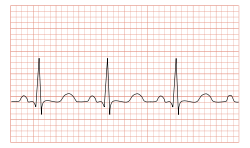
ECG showing sinus tachycardia with a rate of about 100 beats per minute
Pronunciation
SpecialtyCardiology
Differential diagnosis

Tachycardia, also called tachyarrhythmia, is a heart rate that exceeds the normal resting rate.[1] In general, a resting heart rate over 100 beats per minute is accepted as tachycardia in adults.[1] Heart rates above the resting rate may be normal (such as with exercise) or abnormal (such as with electrical problems within the heart).

Complications

[edit]

Tachycardia can lead to fainting.[2]

When the rate of blood flow becomes too rapid, or fast blood flow passes on damaged endothelium, it increases the friction within vessels resulting in turbulence and other disturbances.[3] According to the Virchow's triad, this is one of the three conditions (along with hypercoagulability and endothelial injury/dysfunction) that can lead to thrombosis (i.e., blood clots within vessels).[4]

Causes

[edit]

Some causes of tachycardia include:[5]

Diagnosis

[edit]

The upper threshold of a normal human resting heart rate is based on age. Cutoff values for tachycardia in different age groups are fairly well standardized; typical cutoffs are listed below:[7][8]

  • 1–2 days: Tachycardia >159 beats per minute (bpm)
  • 3–6 days: Tachycardia >166 bpm
  • 1–3 weeks: Tachycardia >182 bpm
  • 1–2 months: Tachycardia >179 bpm
  • 3–5 months: Tachycardia >186 bpm
  • 6–11 months: Tachycardia >169 bpm
  • 1–2 years: Tachycardia >151 bpm
  • 3–4 years: Tachycardia >137 bpm
  • 5–7 years: Tachycardia >133 bpm
  • 8–11 years: Tachycardia >130 bpm
  • 12–15 years: Tachycardia >119 bpm
  • >15 years – adult: Tachycardia >100 bpm

Heart rate is considered in the context of the prevailing clinical picture. When the heart beats excessively or rapidly, the heart pumps less efficiently and provides less blood flow to the rest of the body, including the heart itself. The increased heart rate also leads to increased work and oxygen demand by the heart, which can lead to rate related ischemia.[9]

Differential diagnosis

[edit]
12 lead electrocardiogram showing a ventricular tachycardia (VT)

An electrocardiogram (ECG) is used to classify the type of tachycardia. They may be classified into narrow and wide complex based on the QRS complex.[10] Equal or less than 0.1s for narrow complex.[11] Presented in order of most to least common, they are:[10]

Tachycardias may be classified as either narrow complex tachycardias (supraventricular tachycardias) or wide complex tachycardias. Narrow and wide refer to the width of the QRS complex on the ECG. Narrow complex tachycardias tend to originate in the atria, while wide complex tachycardias tend to originate in the ventricles. Tachycardias can be further classified as either regular or irregular.[citation needed]

Sinus

[edit]

The body has several feedback mechanisms to maintain adequate blood flow and blood pressure. If blood pressure decreases, the heart beats faster in an attempt to raise it. This is called reflex tachycardia. This can happen in response to a decrease in blood volume (through dehydration or bleeding), or an unexpected change in blood flow. The most common cause of the latter is orthostatic hypotension (also called postural hypotension). Fever, hyperventilation, diarrhea and severe infections can also cause tachycardia, primarily due to increase in metabolic demands.[citation needed]

Upon exertion, sinus tachycardia can also be seen in some inborn errors of metabolism that result in metabolic myopathies, such as McArdle's disease (GSD-V).[12][13] Metabolic myopathies interfere with the muscle's ability to create energy. This energy shortage in muscle cells causes an inappropriate rapid heart rate in response to exercise. The heart tries to compensate for the energy shortage by increasing heart rate to maximize delivery of oxygen and other blood borne fuels to the muscle cells.[12]

"In McArdle's, our heart rate tends to increase in what is called an 'inappropriate' response. That is, after the start of exercise it increases much more quickly than would be expected in someone unaffected by McArdle's."[14] As skeletal muscle relies predominantly on glycogenolysis for the first few minutes as it transitions from rest to activity, as well as throughout high-intensity aerobic activity and all anaerobic activity, individuals with GSD-V experience during exercise: sinus tachycardia, tachypnea, muscle fatigue and pain, during the aforementioned activities and time frames.[12][13] Those with GSD-V also experience "second wind", after approximately 6–10 minutes of light-moderate aerobic activity, such as walking without an incline, where the heart rate drops and symptoms of exercise intolerance improve.[12][13][14]

An increase in sympathetic nervous system stimulation causes the heart rate to increase, both by the direct action of sympathetic nerve fibers on the heart and by causing the endocrine system to release hormones such as epinephrine (adrenaline), which have a similar effect. Increased sympathetic stimulation is usually due to physical or psychological stress. This is the basis for the so-called fight-or-flight response, but such stimulation can also be induced by stimulants such as ephedrine, amphetamines or cocaine. Certain endocrine disorders such as pheochromocytoma can also cause epinephrine release and can result in tachycardia independent of nervous system stimulation. Hyperthyroidism can also cause tachycardia.[15] The upper limit of normal rate for sinus tachycardia is thought to be 220 bpm minus age.[citation needed]

Inappropriate sinus tachycardia
[edit]

Inappropriate sinus tachycardia (IST) is a diagnosis of exclusion,[16] a rare but benign type of cardiac arrhythmia that may be caused by a structural abnormality in the sinus node. It can occur in seemingly healthy individuals with no history of cardiovascular disease. Other causes may include autonomic nervous system deficits, autoimmune response, or drug interactions. Although symptoms might be distressing, treatment is not generally needed.[17]

Ventricular

[edit]

Ventricular tachycardia (VT or V-tach) is a potentially life-threatening cardiac arrhythmia that originates in the ventricles. It is usually a regular, wide complex tachycardia with a rate between 120 and 250 beats per minute. A medically significant subvariant of ventricular tachycardia is called torsades de pointes (literally meaning "twisting of the points", due to its appearance on an EKG), which tends to result from a long QT interval.[18]

Both of these rhythms normally last for only a few seconds to minutes (paroxysmal tachycardia), but if VT persists it is extremely dangerous, often leading to ventricular fibrillation.[19][20]

Supraventricular

[edit]

This is a type of tachycardia that originates from above the ventricles, such as the atria. It is sometimes known as paroxysmal atrial tachycardia (PAT). Several types of supraventricular tachycardia are known to exist.[21]

Atrial fibrillation
[edit]

Atrial fibrillation is one of the most common cardiac arrhythmias. In general, it is an irregular, narrow complex rhythm. However, it may show wide QRS complexes on the ECG if a bundle branch block is present. At high rates, the QRS complex may also become wide due to the Ashman phenomenon. It may be difficult to determine the rhythm's regularity when the rate exceeds 150 beats per minute. Depending on the patient's health and other variables such as medications taken for rate control, atrial fibrillation may cause heart rates that span from 50 to 250 beats per minute (or even higher if an accessory pathway is present). However, new-onset atrial fibrillation tends to present with rates between 100 and 150 beats per minute.[22]

AV nodal reentrant tachycardia
[edit]

AV nodal reentrant tachycardia (AVNRT) is the most common reentrant tachycardia. It is a regular narrow complex tachycardia that usually responds well to the Valsalva maneuver or the drug adenosine. However, unstable patients sometimes require synchronized cardioversion. Definitive care may include catheter ablation.[23]

AV reentrant tachycardia
[edit]

AV reentrant tachycardia (AVRT) requires an accessory pathway for its maintenance. AVRT may involve orthodromic conduction (where the impulse travels down the AV node to the ventricles and back up to the atria through the accessory pathway) or antidromic conduction (which the impulse travels down the accessory pathway and back up to the atria through the AV node). Orthodromic conduction usually results in a narrow complex tachycardia, and antidromic conduction usually results in a wide complex tachycardia that often mimics ventricular tachycardia. Most antiarrhythmics are contraindicated in the emergency treatment of AVRT, because they may paradoxically increase conduction across the accessory pathway. [citation needed]

Junctional tachycardia
[edit]

Junctional tachycardia is an automatic tachycardia originating in the AV junction. It tends to be a regular, narrow complex tachycardia and may be a sign of digitalis toxicity.[24]

Management

[edit]

The management of tachycardia depends on its type (wide complex versus narrow complex), whether or not the person is stable or unstable, and whether the instability is due to the tachycardia.[10] Unstable means that either important organ functions are affected or cardiac arrest is about to occur.[10] Stable means that there is a tachycardia, but it does not seem an immediate threat for the patient's health, but only a symptom of an unknown disease, or a reaction that is not very dangerous in that moment.

Unstable

[edit]

In those that are unstable with a narrow complex tachycardia, intravenous adenosine may be attempted.[10] In all others, immediate cardioversion is recommended.[10]

Stable

[edit]

If the problem is a simple acceleration of the heart rate that worries the patient, but the heart and the general patient's health remain stable enough, it is possible to correct it by a simple deceleration using physical maneuvers called vagal maneuvers.[25] But, if the cause of the tachycardia is chronic (permanent), it would return after some time, unless that cause is corrected.

Besides, the patient should avoid receiving external effects that cause or increase tachycardia.

The same measures as in unstable tachycardia can also be taken, with medications and the type of cardioversion that is appropriate for the patient's tachycardia.[10]

Terminology

[edit]

The word tachycardia came to English from Neo-Latin as a neoclassical compound built from the combining forms tachy- + -cardia, which are from the Greek ταχύς tachys, "quick, rapid" and καρδία, kardia, "heart". As a matter both of usage choices in the medical literature and of idiom in natural language, the words tachycardia and tachyarrhythmia are usually used interchangeably, or loosely enough that precise differentiation is not explicit. Some careful writers have tried to maintain a logical differentiation between them, which is reflected in major medical dictionaries[26][27][28] and major general dictionaries.[29][30][31] The distinction is that tachycardia be reserved for the rapid heart rate itself, regardless of cause, physiologic or pathologic (that is, from healthy response to exercise or from cardiac arrhythmia), and that tachyarrhythmia be reserved for the pathologic form (that is, an arrhythmia of the rapid rate type). This is why five of the previously referenced dictionaries do not enter cross-references indicating synonymy between their entries for the two words (as they do elsewhere whenever synonymy is meant), and it is why one of them explicitly specifies that the two words not be confused.[28] But the prescription will probably never be successfully imposed on general usage, not only because much of the existing medical literature ignores it even when the words stand alone but also because the terms for specific types of arrhythmia (standard collocations of adjectives and noun) are deeply established idiomatically with the tachycardia version as the more commonly used version. Thus SVT is called supraventricular tachycardia more than twice as often as it is called supraventricular tachyarrhythmia; moreover, those two terms are always completely synonymous—in natural language there is no such term as "healthy/physiologic supraventricular tachycardia". The same themes are also true of AVRT and AVNRT. Thus this pair is an example of when a particular prescription (which may have been tenable 50 or 100 years earlier) can no longer be invariably enforced without violating idiom. But the power to differentiate in an idiomatic way is not lost, regardless, because when the specification of physiologic tachycardia is needed, that phrase aptly conveys it.[citation needed]

See also

[edit]

References

[edit]
[edit]
Revisions and contributorsEdit on WikipediaRead on Wikipedia
from Grokipedia
Tachycardia is a condition in which the heart beats faster than normal, typically exceeding 100 beats per minute at rest in adults. While a temporary increase in heart rate can be a normal response to physical activity, stress, or fever—often termed sinus tachycardia—persistent or abnormal tachycardia may signal an underlying arrhythmia or health problem requiring medical attention. Tachycardia encompasses several types based on its origin and mechanism within the heart. (SVT) arises above the ventricles, often causing sudden episodes of rapid heartbeat exceeding 150 beats per minute, and is more common in younger individuals. originates in the lower heart chambers and can be life-threatening, potentially leading to if sustained. and flutter involve irregular or rapid signals in the upper chambers, increasing risks of and . , by contrast, maintains a regular rhythm from the heart's natural pacemaker but occurs inappropriately at rest due to triggers like anxiety or illness. Common symptoms of tachycardia include (a sensation of fluttering or pounding in the chest), , , , , and fainting, though some cases may be . These symptoms can vary by type and severity; for instance, ventricular forms may cause sudden collapse, while SVT often presents as abrupt onset and offset of rapid pulsing. If untreated, tachycardia can reduce the heart's efficiency in pumping blood, potentially leading to complications such as , blood clots, or sudden . Causes of tachycardia are diverse, spanning physiological responses and pathological conditions. Non-cardiac factors include emotional stress, , fever, , , excessive or alcohol intake, and certain medications or recreational drugs. Cardiac-related triggers encompass heart disease, such as prior heart attacks or , structural abnormalities like valve disorders, and imbalances. In many cases, tachycardia results from abnormal electrical pathways or signals in the heart, disrupting its normal rhythm. Diagnosis typically involves (ECG) to measure and rhythm, along with blood tests, Holter monitoring, or stress tests to identify underlying causes. Treatment depends on the type and severity but may include modifications, medications like beta-blockers to slow the , vagal maneuvers for acute episodes, or procedures such as and implantable defibrillators for persistent cases. Early intervention is crucial to prevent complications, particularly in vulnerable populations like those with heart disease.

Definition and Classification

Definition

Tachycardia is defined by an elevated heart rate exceeding the normal resting range, specifically greater than 100 beats per minute (bpm) in adults. This threshold accounts for a resting state and can vary based on factors such as physical fitness or underlying health conditions, but it remains the standard diagnostic criterion for adults. In pediatric patients, age-specific thresholds apply to reflect developmental differences in normal heart rates; for example, a rate above 160 bpm qualifies as tachycardia in infants under one year, while children over 10 years are diagnosed with rates exceeding 90 bpm. The condition is distinct from , which involves a below 60 bpm in adults and may indicate impaired cardiac conduction, and from normal , where the falls between 60 and 100 bpm under the regulation of the . Tachycardia encompasses both sustained forms that persist for prolonged periods and paroxysmal forms, which feature sudden onset and spontaneous resolution, often recurring episodically. Etymologically, "tachycardia" combines the Greek terms tachys (swift) and kardia (heart), reflecting its essence as a rapid heartbeat; the word was coined in 1867 by German physician Hermann Lebert and first appeared in English in 1868. Its clinical recognition advanced in early 20th-century through electrocardiographic studies, enabling differentiation from other . Broadly, tachycardias are categorized into sinus, supraventricular, and ventricular types based on their electrophysiological origin.

Types of Tachycardia

Tachycardia is classified primarily by its origin and electrocardiographic (ECG) characteristics, with key distinctions based on whether the rhythm arises from the sinus node, above the ventricles (supraventricular), or within the ventricles, as well as duration—narrow (<120 ms) for supraventricular origins and wide (≥120 ms) for ventricular. This classification aids in differentiating mechanisms and guiding management, though overlap can occur due to conduction abnormalities. Sinus tachycardia originates from the sinus node and is characterized by a regular rhythm with a rate exceeding 100 beats per minute (bpm), featuring upright P waves in leads I, II, and aVF on ECG, reflecting normal atrioventricular (AV) conduction. A subtype, inappropriate sinus tachycardia (IST), involves persistent elevation of the sinus rate above 100 bpm at rest or with minimal provocation, without identifiable physiological or pathological triggers, often showing exaggerated chronotropic response on exercise testing; ECG reveals normal sinus P waves but sustained high rates, typically averaging over 90 bpm on 24-hour monitoring. Supraventricular tachycardia (SVT) encompasses rhythms originating above the ventricles, typically presenting with narrow QRS complexes (<120 ms) due to conduction through the His-Purkinje system, and rates often between 140 and 250 bpm. Common subtypes include atrial fibrillation (AF), marked by absent distinct P waves and irregularly irregular R-R intervals on ECG, resulting from chaotic atrial activity at 400–600 bpm with variable AV conduction; atrial flutter, featuring regular sawtooth flutter waves (typically 250–350 bpm atrial rate) in inferior leads, often with 2:1 AV block yielding ventricular rates around 150 bpm; AV nodal reentrant tachycardia (AVNRT), the most frequent paroxysmal SVT, showing short RP intervals (<70 ms) with retrograde P waves buried in or just after the QRS complex due to dual AV nodal pathways; and AV reentrant tachycardia (AVRT), involving an accessory pathway (e.g., in Wolff-Parkinson-White syndrome), with ECG displaying retrograde P waves in the ST segment (RP >90 ms but < half RR interval) and possible delta waves during sinus rhythm. Ventricular tachycardia (VT) arises from the ventricles and is identified by wide QRS complexes (≥120 ms) with rapid rates (typically 120–250 bpm), often monomorphic with uniform QRS morphology reflecting a single focus or circuit, or polymorphic with varying QRS amplitude and axis due to shifting ventricular activation. ECG features distinguishing VT include AV dissociation (independent P waves), fusion or capture beats, and precordial concordance; polymorphic VT may manifest as torsades de pointes with twisting QRS polarity, usually in the context of prolonged QT intervals, while ventricular fibrillation differs as a chaotic, non-organized rhythm without identifiable QRS complexes, lacking the sustained ventricular beats defining tachycardia. Less common types include junctional tachycardia, originating near the AV node with rates of 110–250 bpm and narrow QRS complexes, often lacking visible P waves or showing retrograde P waves, and potentially AV dissociation; and multifocal atrial tachycardia (MAT), an irregular rhythm exceeding 100 bpm with at least three distinct P-wave morphologies and varying PR intervals on ECG, reflecting multiple atrial foci. Atrial fibrillation represents the most prevalent SVT subtype, with higher incidence in older adults.

Epidemiology

Incidence and Prevalence

Tachycardia, as a broad category of rapid heart rhythms, varies in prevalence depending on the specific type, with representing one of the most common sustained forms globally, affecting an estimated 52.55 million individuals worldwide as of 2025. , a frequent episodic variant, has a prevalence of approximately 0.17% among symptomatic adults in the United States, with general population estimates ranging from 0.17% to 0.23%. Incidence rates highlight elevated risks in certain clinical contexts and age groups; for instance, ventricular tachycardia (VT) develops in about 5.4% of patients with uncomplicated ST-elevation myocardial infarction after primary percutaneous coronary intervention. In the elderly, new-onset AF shows a marked increase, with an annual incidence of roughly 5.1% (50.8 per 1,000 person-years) among those aged 85 years and older. Regional variations reflect demographic and healthcare differences, with higher prevalence in high-income countries driven by aging populations—for example, AF affects approximately 10.5 million adults in the United States as of 2024—compared to lower reported rates of 0.03% to 1.25% for AF in low- and middle-income countries, where underdiagnosis is common. Projections indicate continued rise in AF prevalence due to aging populations. In pediatric settings, neonatal arrhythmias, including sinus tachycardia often linked to physiological stress, occur in 1% to 5% of all neonates, with rates up to 10% in neonatal intensive care units.

Risk Factors

Risk factors for tachycardia encompass both non-modifiable and modifiable elements that predispose individuals to various forms, including atrial fibrillation (AF), ventricular tachycardia (VT), supraventricular tachycardia (SVT), and inappropriate sinus tachycardia (IST). Non-modifiable factors include advancing age, genetic predispositions, and structural abnormalities. Age greater than 65 years approximately doubles the risk of developing AF compared to younger adults, as structural and electrical changes in the heart accumulate over time. A family history of arrhythmias significantly elevates the risk, with first-degree relatives of AF patients showing an increased incidence due to shared genetic variants affecting cardiac ion channels. Congenital heart defects, such as or atrial septal defects, increase susceptibility to tachyarrhythmias by altering cardiac conduction pathways, with lifetime risks exceeding 30% in affected adults. Modifiable risk factors play a critical role in tachycardia development and can be targeted for prevention. Hypertension substantially heightens VT risk, with studies indicating up to a 50% increased odds in hypertensive individuals due to left ventricular hypertrophy and fibrosis. Obesity, particularly with a BMI greater than 30 kg/m², is associated with higher incidence of arrhythmias including IST, as excess adipose tissue promotes autonomic dysregulation and inflammation. Smoking exacerbates AF risk through endothelial damage and oxidative stress, leading to atrial remodeling. Excessive caffeine and alcohol consumption can trigger paroxysmal SVT episodes by stimulating adrenergic pathways and altering refractory periods in the atrioventricular node. Comorbid conditions further compound tachycardia vulnerability. Diabetes mellitus independently raises the risk of VT and other arrhythmias by promoting microvascular damage and autonomic neuropathy, with affected patients showing a 1.2-fold increase in incidence. Thyroid disorders, especially , accelerate heart rates via excess thyroid hormone effects on sinoatrial node excitability, contributing to up to 10% of new-onset AF cases. Untreated obstructive sleep apnea (OSA) quadruples the risk of AF through intermittent hypoxia and sympathetic activation, as highlighted in clinical guidelines emphasizing screening in high-risk groups. Lifestyle factors also influence tachycardia propensity. Sedentary behavior correlates with higher arrhythmia rates by fostering endothelial dysfunction and obesity, with prolonged sitting linked to a 20-50% increased cardiovascular event risk that includes tachyarrhythmias. Electrolyte imbalances, such as hypokalemia often induced by diuretic use in heart failure or hypertension management, predispose to tachycardia by prolonging cardiac repolarization and facilitating re-entrant circuits, with serum potassium below 3.5 mEq/L associated with a 2-3-fold arrhythmia risk elevation.

Pathophysiology

Mechanisms of Tachycardia

Tachycardia arises from disruptions in the heart's normal electrophysiological processes, primarily through mechanisms such as re-entry, abnormal automaticity, triggered activity, ion channel dysfunction, and autonomic modulation. These processes lead to sustained rapid heart rates by altering impulse generation or conduction within cardiac tissue. Re-entry and abnormal automaticity are the most common initiators, while ion channel abnormalities and autonomic influences provide the molecular and regulatory underpinnings. Re-entry circuits represent a key mechanism in many tachycardias, where an electrical impulse circulates repeatedly within a loop of cardiac tissue, sustaining rapid activation without external triggers. This requires unidirectional block in one direction of the circuit and slowed conduction in the other, allowing time for tissue recovery and re-excitation. In supraventricular tachycardia (SVT), such as atrioventricular nodal reentrant tachycardia (AVNRT), the circuit involves dual pathways within or near the AV node: a fast pathway with rapid conduction but longer refractory period, and a slow pathway with slower conduction but shorter refractory period. A premature atrial beat typically blocks in the fast pathway and conducts down the slow pathway, returning retrogradely via the fast pathway to reinitiate the cycle, producing rates of 140-280 beats per minute. In ventricular tachycardia (VT), re-entry often occurs around scarred myocardium post-infarction, forming figure-8 patterns or larger loops that propagate through viable tissue. Abnormal automaticity contributes to tachycardia by enhancing spontaneous depolarization in pacemaker cells or ectopic foci, leading to inappropriate impulse initiation. In inappropriate sinus tachycardia (IST), the sinoatrial node exhibits increased automaticity, firing at rates exceeding 100 beats per minute at rest due to heightened phase 4 depolarization. Ectopic foci, often in atrial or ventricular myocardium, can develop abnormal automaticity under depolarized conditions (membrane potentials of -70 to -30 mV), accelerated by factors like hypokalemia or β-adrenergic stimulation. In VT, triggered activity from Purkinje fibers exemplifies this, where delayed afterdepolarizations (DADs) arise from calcium overload in the sarcoplasmic reticulum, propagating as premature beats that initiate or sustain tachycardia, as seen in catecholaminergic polymorphic VT due to ryanodine receptor mutations. Ion channel dysfunction underlies many inherited tachycardias by altering action potential duration and repolarization, creating substrates for arrhythmias. In long QT syndrome (LQTS), mutations in potassium or sodium channels prolong the QT interval, predisposing to torsades de pointes, a polymorphic VT. Loss-of-function mutations in potassium channels like KCNQ1 (LQT1) reduce the slow delayed rectifier current (I_Ks), while KCNH2 (LQT2) impairs the rapid delayed rectifier current (I_Kr); both extend repolarization and enable early afterdepolarizations (EADs) via reactivation of L-type calcium channels during the plateau phase. Gain-of-function in sodium channels (SCN5A, LQT3) increases late sodium current (I_NaL), further prolonging action potentials and EADs, often triggered at rest. These EADs disrupt normal repolarization, initiating re-entrant or triggered rhythms. Autonomic influences, particularly sympathetic overdrive, drive sinus tachycardia by modulating ion channel and calcium handling in the sinoatrial node. Activation of β-adrenergic receptors by norepinephrine increases adenylyl cyclase activity, elevating cyclic AMP (cAMP) levels, which activates protein kinase A (PKA). PKA phosphorylates targets such as phospholamban, enhancing sarcoplasmic reticulum Ca²⁺ uptake and release, and shifts the activation curve of the funny current (I_f), accelerating diastolic depolarization. This boosts the sinus node's firing rate, often to over 100 beats per minute, as a physiological response but pathologically sustained in conditions like IST.

Hemodynamic Effects

Tachycardia shortens the duration of diastole, reducing the time available for ventricular filling and thereby decreasing preload according to the Frank-Starling law of the heart, which states that stroke volume increases with greater end-diastolic volume up to a point. This leads to a reduction in stroke volume (SV), as the ventricles have less time to fill with blood before contraction. Cardiac output (CO), calculated as the product of heart rate (HR) and SV (CO = HR × SV), may initially be maintained or even increased at moderate tachycardia rates due to the compensatory rise in HR; however, as HR exceeds approximately 120-150 beats per minute, the disproportionate decline in SV results in a net fall in CO, particularly in patients with underlying relaxation abnormalities. The elevated heart rate in tachycardia significantly increases myocardial oxygen demand, which is largely proportional to HR, as the myocardium must perform more contractions per unit time, elevating overall workload and energy expenditure. Simultaneously, coronary blood flow, which predominantly occurs during diastole, is compromised by the shortened diastolic phase, creating a supply-demand mismatch that predisposes to myocardial ischemia, especially in individuals with preexisting coronary artery disease where perfusion is already limited. This imbalance can manifest as subendocardial ischemia, further impairing ventricular function and exacerbating the hemodynamic instability. Systemically, the reduced CO from tachycardia can lead to hypotension as stroke volume falls and fails to compensate for the rapid HR, triggering baroreceptor unloading in the carotid sinus and aortic arch, which reflexively activates sympathetic responses to maintain perfusion. However, in severe cases, this results in inadequate organ perfusion, including cerebral hypoperfusion that causes syncope due to transient global brain ischemia. Chronic sustained tachycardia, typically at rates exceeding 120 beats per minute, promotes adverse ventricular remodeling, characterized by myocyte elongation, loss of extracellular matrix integrity, and progressive dilation of the left ventricle, ultimately leading to tachycardia-induced dilated cardiomyopathy with reduced ejection fraction and heart failure symptoms.

Causes

Physiological Causes

Physiological causes of tachycardia refer to adaptive increases in heart rate that occur in response to normal bodily demands, without underlying pathology. These responses are typically mediated by the autonomic nervous system, particularly through sympathetic activation or baroreceptor reflexes, to meet heightened metabolic needs such as during physical activity or environmental stressors. In healthy individuals, such tachycardia is sinus in origin, self-limiting, and resolves upon cessation of the trigger. During exercise or emotional stress, sympathetic nervous system activation increases heart rate to enhance cardiac output and oxygen delivery to tissues. This response involves parasympathetic withdrawal and sympathetic stimulation of the sinoatrial node, allowing heart rates to rise to 150-200 beats per minute (bpm) in healthy adults during vigorous activity. For example, in a 30-year-old adult, target heart rates for vigorous exercise fall within 70-85% of maximum, often reaching this range to support sustained effort. Fever induces tachycardia as a thermoregulatory mechanism to dissipate heat and maintain circulation amid elevated metabolic demands. Heart rate typically increases by approximately 10 bpm for each 1°C rise in body temperature above normal. For instance, at a temperature of 39°C (assuming a baseline of 37°C and resting heart rate of 70 bpm), the heart rate may reach about 90 bpm. In pregnancy, physiological sinus tachycardia arises from hormonal changes, expanded plasma volume (up to 50% increase), and elevated cardiac output (by 30-50%) to support fetal oxygenation and maternal circulation. Resting heart rates commonly range from 90-110 bpm, particularly in the second and third trimesters, reflecting this adaptive hyperdynamic state.

Pathological Causes

Pathological causes of tachycardia encompass a range of cardiac, systemic, and metabolic disorders, as well as iatrogenic factors from medications and toxins, that disrupt normal cardiac rhythm through structural, electrical, or biochemical abnormalities. In cardiac diseases, frequently precipitates (VT), with an incidence of approximately 5.7% in ST-elevation myocardial infarction (STEMI) cases undergoing primary percutaneous coronary intervention. Heart failure is associated with (AF) in 20-30% of patients, driven by atrial remodeling and elevated filling pressures. Valvular heart disease, particularly rheumatic , commonly leads to AF due to chronic left atrial pressure overload and fibrosis, occurring in up to 40% of affected individuals. Systemic conditions contributing to tachycardia include hyperthyroidism, which induces sinus tachycardia through excess thyroid hormone stimulation of beta-adrenergic receptors, affecting 50-80% of patients. Anemia or hypoxia triggers compensatory tachycardia to preserve oxygen delivery to tissues despite reduced hemoglobin or oxygen availability. In severe anemia (hemoglobin <8 g/dL), heart rate often exceeds 100 bpm as the body increases cardiac output through chronotropic effects and reduced vascular resistance. Infections such as sepsis often result in tachycardia with heart rates exceeding 100 beats per minute, reflecting systemic inflammation and catecholamine surge. Pulmonary embolism can trigger sinus tachycardia or AF via acute right ventricular strain and hypoxia, present in a majority of hemodynamically stable cases. Medications and toxins, including sympathomimetics like cocaine, may provoke VT by enhancing sodium channel activity and sympathetic drive, leading to myocardial ischemia or direct arrhythmogenesis. Certain antiarrhythmic drugs, particularly class Ia agents such as quinidine, exhibit proarrhythmic effects by prolonging the QT interval, thereby increasing the risk of torsades de pointes. Electrolyte and metabolic disturbances, such as hypokalemia with serum levels below 3.5 mEq/L, can trigger VT by altering repolarization and increasing automaticity in Purkinje fibers. Pheochromocytoma, a catecholamine-secreting tumor, causes paroxysmal tachycardia often accompanied by hypertension, due to episodic norepinephrine release affecting cardiac conduction.

Signs and Symptoms

Common Symptoms

Patients with tachycardia often experience palpitations, described as a sensation of pounding, fluttering, or racing in the chest, which is the most common symptom, particularly in supraventricular tachycardia (SVT) where it is reported by the majority of affected individuals. These episodes typically arise suddenly and may last from seconds to hours, reflecting the abrupt onset and termination characteristic of paroxysmal forms. Dizziness and lightheadedness frequently accompany tachycardia due to reduced cardiac output during rapid heart rates. Shortness of breath, or dyspnea, can occur secondary to pulmonary congestion in cases involving left ventricular strain or as a manifestation of associated anxiety during acute episodes. Chest pain or discomfort in tachycardia may mimic angina, arising from myocardial ischemia induced by the increased oxygen demand outpacing supply during sustained rapid rates. In paroxysmal episodes, it often resolves upon restoration of normal rhythm. In persistent forms like inappropriate sinus tachycardia (IST), patients commonly report chronic fatigue and weakness, stemming from prolonged sympathetic activation and reduced exercise tolerance. Additionally, a heart rate reaching 120 bpm during slow or casual walking may be concerning if disproportionate to the exertion, especially if the resting heart rate exceeds 90-100 bpm, or if accompanied by symptoms like shortness of breath, dizziness, chest pain, or extreme fatigue; this scenario, particularly in individuals with pre-existing conditions or on certain medications, could indicate inappropriate tachycardia requiring medical evaluation.

Physical Examination Findings

During physical examination, tachycardia is often first evident through assessment of the pulse, which is typically rapid, exceeding 100 beats per minute at rest. The rhythm may be regular, as seen in sinus tachycardia or supraventricular tachycardia, or irregular, particularly in atrial fibrillation where the pulse deficit—due to ineffective atrial contractions—can be noted by comparing apical and radial rates. In hyperdynamic states such as severe anemia, the pulse assumes a bounding quality, characterized by a forceful upstroke and wide pulse pressure from increased stroke volume and reduced peripheral resistance. Blood pressure measurement reveals hypotension, defined as systolic pressure below 90 mmHg, in cases of unstable tachycardia associated with hemodynamic compromise, such as cardiogenic shock. Conversely, in septic states complicating tachycardia, a wide pulse pressure may occur due to vasodilation lowering diastolic pressure while systolic remains relatively preserved, contributing to a bounding peripheral pulse. Cardiac auscultation confirms the rapid heart rate and may disclose additional features depending on the underlying rhythm or pathology. In , the first heart sound (S1) exhibits variable intensity owing to fluctuating atrioventricular conduction intervals and preload, producing an irregularly irregular rhythm without distinct P waves. Murmurs, if present, suggest coexisting structural heart disease, such as valvular stenosis or regurgitation, where turbulent flow across affected valves is amplified by the elevated rate; for instance, a systolic murmur may indicate exacerbated by tachycardia. Examination of the neck veins can reveal distention in scenarios involving right heart strain, such as acute pulmonary embolism, where elevated pulmonary pressures lead to tricuspid regurgitation and jugular venous hypertension. Peripheral signs vary with perfusion status; in shock states accompanying unstable tachycardia, extremities appear cool and clammy from vasoconstriction and reduced cardiac output. In ventricular tachycardia with atrioventricular dissociation, intermittent cannon A waves—large jugular venous pulsations from simultaneous atrial and ventricular contractions—may be observed, reflecting the loss of atrioventricular synchrony.

Diagnosis

Clinical History and Examination

The clinical history for tachycardia begins with a detailed assessment of the episode's onset, which can be sudden in cases of supraventricular tachycardia (SVT) or ventricular tachycardia (VT), often occurring without warning during rest or activity, or more gradual in sinus tachycardia, typically linked to physiological stressors. Patients should be queried on the duration of episodes, distinguishing paroxysmal forms that terminate abruptly within seconds to hours from sustained rhythms persisting longer than 30 seconds, which may require intervention. Triggers such as exercise, emotional stress, caffeine, alcohol, or stimulants like beta-agonists are commonly elicited, as these can precipitate or exacerbate the arrhythmia in susceptible individuals. Associated symptoms provide critical clues to the underlying mechanism and urgency; palpitations, dizziness, dyspnea, chest discomfort, or lightheadedness are frequent, while syncope or presyncope may suggest VT or hemodynamic compromise. The past medical history must explore prior arrhythmias, structural heart disease, hypertension, hypercholesterolemia, or recent illnesses like fever or infection, alongside medication use (e.g., beta-agonists or digoxin) and lifestyle factors including smoking, alcohol, or caffeine intake. Red flags warranting immediate attention include family history of sudden cardiac death, inherited cardiac conditions, recent illicit drug use, or symptoms triggered by exertion, which raise suspicion for life-threatening etiologies. Bedside examination prioritizes the ABC (airway, breathing, circulation) protocol to evaluate stability, beginning with vital signs including heart rate (typically >100 beats per minute at rest), blood pressure, and oxygen saturation to detect or hypoxia. Signs of instability, such as altered mental status, shock, severe , or (manifesting as , , diaphoresis, bibasilar , jugular venous distension, or an S3 gallop), indicate potential hemodynamic effects and necessitate urgent intervention. A focused cardiac exam may reveal a rapid, regular or irregular pulse, distant , , or murmurs, while general inspection assesses for or diaphoresis. This initial evaluation guides the need for further diagnostic investigations tailored to the clinical context.

Diagnostic Investigations

Diagnostic investigations for tachycardia begin with the electrocardiogram (ECG), which serves as the cornerstone for initial rhythm identification and characterization. A 12-lead ECG is recommended to be obtained immediately upon patient presentation, as the first diagnostic test, to assess key features such as , morphology, and P-wave presence or absence, which help differentiate from or other supraventricular tachycardias. For patients with paroxysmal or intermittent episodes not captured on a standard ECG, ambulatory monitoring is employed; this includes the for continuous recording over 24 to 48 hours to detect transient arrhythmias during daily activities. For suspected , the 2023 ACC/AHA/ACCP/HRS Guideline recommends extended monitoring, such as 30-day external loop recorders or implantable cardiac monitors, particularly in cases of cryptogenic . Laboratory blood tests are essential to identify underlying reversible causes contributing to tachycardia. These typically include electrolyte panels to evaluate and magnesium levels, as imbalances can precipitate or exacerbate arrhythmias; such as (TSH) to screen for ; cardiac assays to exclude myocardial ischemia; and a (CBC) to detect or signs of . According to the 2017 AHA/ACC/HRS Guideline for Management of Patients With Ventricular Arrhythmias, these tests carry a Class I recommendation (Level of Evidence C) for assessing potential etiologies. Imaging modalities provide insight into structural and pulmonary contributors to tachycardia. Transthoracic is routinely performed to evaluate cardiac structure and function, including measurement of , which may reveal abnormalities such as reduced below 40% in underlying . A chest is indicated to assess for pulmonary conditions like or that could drive secondary tachycardia. The 2017 guideline endorses as a Class I recommendation (Level of Evidence B) for structural evaluation in suspected cases. For more complex or refractory tachycardias, advanced invasive and prolonged monitoring techniques are utilized. An electrophysiology study (EPS) involves catheter insertion to map electrical activity and identify re-entrant circuits, guiding precise localization of arrhythmia foci, and is recommended as a Class I procedure (Level of Evidence B) in symptomatic patients per the 2015 ACC/AHA/HRS Guideline for . Event monitors, which record intermittently over extended periods up to 30 days and can be patient-activated during symptoms, are particularly useful for infrequent episodes and receive a Class IIa recommendation (Level of Evidence B). These investigations are selected based on clinical history to confirm and characterize the tachycardia without overlapping into differential diagnostic interpretations.

Differential Diagnosis

The differential diagnosis of tachycardia begins with distinguishing from non-sinus mechanisms, as the former represents a physiologic response while the latter indicates an . Appropriate occurs in response to triggers such as fever, exercise, or , where the exceeds 100 beats per minute but returns to normal upon resolution of the stimulus. In contrast, is characterized by a persistent greater than 100 beats per minute at rest without an identifiable physiologic cause, often exceeding 120 beats per minute during minimal activity or post-exercise recovery. Differentiation relies on clinical history, such as the absence of ongoing stressors in inappropriate cases, and electrocardiogram (ECG) confirmation of P waves preceding each QRS complex with a normal . Among supraventricular tachycardias (SVTs), subtypes are differentiated by rhythm regularity and response to interventions like . Atrial fibrillation (AF) presents as an irregularly irregular rhythm with absent distinct P waves and variable R-R intervals, typically not terminating with since the AV node is not integral to its circuit. Atrioventricular nodal reentrant tachycardia (AVNRT), the most common SVT subtype, manifests as a regular narrow-complex tachycardia (QRS <120 ms) at rates of 150-220 beats per minute, often terminating abruptly with due to blockade of the AV nodal reentry pathway. ECG features, such as retrograde P waves buried in the QRS for AVNRT versus fibrillatory waves in AF, further aid distinction. For wide-complex tachycardias (QRS >120 ms), distinguishing (VT) from SVT with aberrancy is critical, as VT accounts for approximately 80% of cases and carries higher risk. The Brugada criteria provide a stepwise with high sensitivity (98.7%) and specificity (96.5%), starting with absence of RS complex in precordial leads favoring VT, followed by RS interval >100 ms in any precordial lead, and atrioventricular (AV) dissociation indicating VT in 20-50% of cases where P waves march independently of QRS complexes. Fusion or capture beats, where sinus beats interrupt the tachycardia, also strongly support VT over SVT with aberrancy. If criteria are indeterminate, a wide-complex tachycardia may be applied sequentially until VT or SVT is favored. Non-arrhythmic conditions can mimic tachycardia and must be excluded through history and basic tests showing a normal ECG. Anxiety disorders may present with and perceived rapid due to or sympathetic activation, but lack true sustained tachycardia on monitoring. Dehydration induces compensatory via reduced , resolvable with , whereas causes paroxysmal tachycardia from episodic catecholamine surges, ruled out by elevated plasma or urinary (sensitivity 86-97%). In pediatric patients, tachycardia differentials emphasize normal variants to avoid unnecessary intervention. Sinus arrhythmia, a benign respiratory-linked variation with R-R intervals varying >0.12 seconds and normal P waves, is common in children and must be distinguished from pathological tachycardia by its physiologic rate limits (up to 180 beats per minute in infants during activity) and absence of symptoms. True SVT in children, such as AV reentrant tachycardia (>220 beats per minute in infants), shows sustained rates without respiratory correlation and requires ECG confirmation of aberrant conduction or accessory pathways, unlike the self-limiting nature of sinus variants.

Management

Acute Management of Unstable Tachycardia

Unstable tachycardia is defined as a greater than 150 beats per minute in the presence of a pulse that causes hemodynamic compromise, including (systolic less than 90 mm Hg), altered mental status, signs of shock, ischemic chest discomfort, or acute . These criteria, as outlined in the 2025 (AHA) Advanced Cardiovascular (ACLS) guidelines, necessitate immediate intervention to restore and prevent organ damage. Stability assessment, which may draw from clinical history and examination findings, helps confirm these signs of instability. Initial management prioritizes the ABCs (airway, breathing, circulation) to stabilize the patient. This includes ensuring a patent airway and assisting breathing as necessary, administering supplemental oxygen if the patient is hypoxemic ( less than 94%), and establishing intravenous (IV) access for medication delivery. Continuous cardiac monitoring, , and are essential to identify the rhythm—such as (SVT) or (VT)—and track during interventions. For patients with unstable tachycardia and a pulse, synchronized is the cornerstone of treatment to rapidly restore . For monomorphic VT or SVT with , initial energy delivery is 100-200 J using a biphasic defibrillator, with subsequent shocks at higher energies (up to the device's maximum) if the rhythm persists. should be considered if the patient is conscious, but it should not delay cardioversion in life-threatening situations; polymorphic VT, being inherently unstable, requires unsynchronized at high energy (≥200 J biphasic). Pharmacotherapy supports electrical therapy, particularly if is delayed or to prevent recurrence. is recommended at a dose of 150 mg IV over 10 minutes for unstable VT, followed by an infusion of 1 mg per minute for 6 hours if needed, to stabilize the rhythm and improve . (6 mg rapid IV push, repeatable at 12 mg) may be used cautiously for suspected reentrant SVT but is generally avoided in truly unstable patients due to the preference for immediate . Post- care involves monitoring for rhythm recurrence, initiating antiarrhythmic infusions, correcting electrolytes (such as and magnesium), and addressing reversible causes like ischemia or hypoxia to sustain stability.

Management of Stable Tachycardia

The management of stable tachycardia prioritizes non-invasive and reversible interventions to terminate the or control the while maintaining hemodynamic stability. Patients with stable tachycardia, defined by the absence of severe symptoms such as , , or altered mental status, undergo initial rhythm assessment via to guide therapy. Treatment strategies are tailored to the underlying mechanism, such as (SVT), , or (AF), with a focus on vagal maneuvers followed by pharmacologic options if needed. Vagal maneuvers are recommended as the first-line intervention for stable narrow-complex tachycardia, particularly regular rhythms suggestive of SVT, as they enhance parasympathetic tone to interrupt reentrant circuits. The , involving forced expiration against a closed for 10-30 seconds while with legs elevated, is the preferred initial technique due to its safety and efficacy, achieving successful termination in 20-40% of SVT cases. Another simple vagal maneuver involves splashing cold water on the face or immersing it in ice-cold water to elicit the diving reflex, which stimulates vagus nerve activity and can terminate episodes of SVT or alleviate palpitations. massage, performed by gently rubbing the for 5-10 seconds on one side at a time, may be considered as an alternative but is contraindicated in patients with carotid artery disease, bruits, recent , or due to the risk of or . If vagal maneuvers fail, pharmacologic therapy is initiated based on the tachycardia type. For stable SVT, is the drug of choice, administered as a rapid intravenous push of 6 mg followed by a 20 mL ; a second dose of 12 mg may be given if the initial dose is ineffective, with particular efficacy in atrioventricular nodal reentrant tachycardia (AVNRT). In stable , beta-blockers such as metoprolol (5 mg IV every 5 minutes, up to 15 mg total) are used to reduce sympathetic drive, though they should be avoided in patients with or due to risk. For stable AF with rapid ventricular response, rate control is typically prioritized over rhythm control in asymptomatic or mildly symptomatic patients to prevent tachycardia-mediated . According to the 2024 (ESC) guidelines, initial monotherapy with beta-blockers (suitable for any ) or (for any , especially in acute settings) is recommended to achieve a resting below 110 beats per minute, with like or verapamil added if left ventricular exceeds 40%. Rhythm control with agents like may be considered if rate control is inadequate or symptoms persist, but expert consultation is advised for cases. Throughout all interventions, continuous electrocardiographic monitoring is essential to assess response, detect adverse effects, and guide escalation if necessary, alongside vital sign surveillance to ensure ongoing stability.

Long-Term Management and Prevention

Long-term management of tachycardia focuses on preventing recurrences through pharmacological , procedural interventions, lifestyle modifications, and addressing underlying etiologies. Antiarrhythmic medications are selected based on the specific tachycardia subtype and characteristics. For (SVT), class IC agents like are recommended for control in patients without structural heart disease, as they effectively suppress recurrent episodes by slowing conduction in the atria and ventricles. In (VT), class III agents such as are used for ongoing suppression, particularly in patients with implantable devices, due to their combined beta-blocking and blockade effects that prolong the action potential. For (AF), a common form of tachycardia, anticoagulation is essential to prevent thromboembolic complications; direct oral anticoagulants (DOACs) like are preferred in patients with a CHA2DS2-VASc score of 2 or higher in men (or 3 or higher in women), as they reduce risk by approximately 20-30% compared to with lower bleeding rates. Procedural interventions play a key role in curative or preventive management. is highly effective for certain SVTs, such as atrioventricular nodal reentrant tachycardia (AVNRT), achieving success rates of over 95% in eliminating the arrhythmogenic substrate through radiofrequency energy delivery to the slow pathway. For patients with sustained VT and prior or hemodynamic instability, implantation of an (ICD) is indicated for secondary prevention, as recommended by the 2022 ESC guidelines, to detect and terminate life-threatening arrhythmias automatically. Lifestyle modifications are integral to reducing tachycardia burden and targeting modifiable risk factors. Sustained of at least 10% in obese patients with has been shown to reduce arrhythmia progression by up to 50% in clinical trials, through improvements in atrial remodeling and . Limiting alcohol intake to less than 14 units per week is advised to minimize triggers, as higher consumption independently increases risk by 8% per additional drink. Structured exercise programs, such as 150 minutes of moderate aerobic activity weekly, promote and lower tachycardia recurrence by enhancing and reducing sympathetic drive. Prevention strategies emphasize treating reversible causes and monitoring high-risk individuals. For tachycardia secondary to , definitive treatment like resolves the in most cases by normalizing hormone levels and restoring . In high-risk groups, such as those with family history of sudden cardiac death or structural heart disease, annual electrocardiogram (ECG) screening is recommended to detect subclinical arrhythmias early and guide preventive therapy.

Complications

Short-Term Complications

Short-term complications of tachycardia arise primarily from acute hemodynamic instability and impaired during episodes, leading to immediate threats such as cerebral hypoperfusion and organ underperfusion. These risks are exacerbated in vulnerable populations, including the elderly or those with underlying structural heart disease, where even brief episodes can precipitate serious adverse events, including cardiogenic . The hemodynamic basis involves reduced diastolic filling time and increased myocardial oxygen demand, which can rapidly decompensate into life-threatening conditions. Syncope, often resulting from transient during tachycardia onset, poses a significant risk of falls and associated injuries, particularly in elderly patients with (SVT). In individuals over 65 years, syncope or near-syncope occurs more frequently due to an impaired autonomic response, even at relatively slower heart rates, and can lead to severe outcomes such as head trauma or motor vehicle accidents. For instance, documented cases include falls causing cranial injuries in older SVT patients, highlighting the potential for substantial morbidity from these episodes. In (AF), acute episodes promote in the atria, increasing the immediate risk of , including . Untreated AF carries an annual stroke risk of approximately 4.5%, with per-episode embolization possible due to formation during irregular rhythms. This complication underscores the urgency of rapid or anticoagulation initiation in new-onset AF to mitigate embolic events. Sustained (VT) can trigger ischemic events through demand ischemia, where the elevated heart rate outstrips coronary oxygen supply, potentially culminating in . This is particularly hazardous in patients with , as the imbalance leads to subendocardial ischemia and elevation, as observed in cases presenting with monomorphic VT and non-ST-elevation . Arrhythmic storm, characterized by recurrent VT episodes (three or more within 24 hours), represents a critical short-term complication often necessitating admission for stabilization. These clusters of sustained ventricular arrhythmias cause profound hemodynamic compromise, requiring interventions like antiarrhythmic drugs or to prevent deterioration into .

Long-Term Complications

Tachycardia-induced represents a significant long-term consequence of persistent or recurrent tachycardia, manifesting as reversible left ventricular systolic dysfunction and dilatation due to prolonged elevated s. This condition typically develops in the setting of incessant tachyarrhythmias, where mean s exceed 100 beats per minute, leading to a reduction in left ventricular (LVEF) of greater than 10% from baseline, often resulting in LVEF below 50%. The underlying involves myocardial calcium handling abnormalities, , and energy depletion, which impair contractility over months to years. Importantly, early intervention to normalize can lead to substantial recovery of LVEF, with near-complete reversal observed in many cases within 3 to 6 months of rhythm or rate control. Chronic (SVT), particularly incessant forms, can progress to through progressive and dilatation. Sustained rapid rates cause chronic and myocyte dysfunction, resulting in with reduced systolic function. In untreated patients with ongoing SVT, the incidence of developing tachycardia-induced approaches 20-25% in certain types such as permanent junctional reciprocating tachycardia. This complication underscores the need for timely suppression to halt . Atrial fibrillation (AF) contributes to cognitive decline via recurrent episodes of cerebral hypoperfusion, where irregular ventricular rates reduce and impair . This chronic hypoperfusion promotes neurodegenerative changes, including lesions and reduced cerebral blood flow, independent of thromboembolic events. Longitudinal studies indicate that AF increases the risk of by up to 40%, with mechanisms involving disrupted neurovascular coupling and accelerated amyloid-beta accumulation in the . Ventricular tachycardia (VT) elevates the risk of sudden cardiac death through degeneration into , particularly in patients with underlying structural heart disease. Without an (ICD), the annual incidence of sudden cardiac death in affected individuals is approximately 5-10%, driven by recurrent arrhythmic episodes. Long-term management, including , can mitigate this risk by reducing VT recurrence.

Prognosis

Factors Influencing Prognosis

The prognosis of tachycardia varies significantly depending on the underlying type of . Sinus is generally benign, with an excellent when the precipitating cause, such as or , is promptly addressed, often resulting in full resolution without long-term cardiac sequelae. In contrast, (VT), particularly in the presence of structural heart disease like ischemic , carries a poor , with untreated patients facing up to a 30% two-year due to risks of sudden cardiac death. Patient-specific factors play a critical role in determining outcomes. Advanced age, particularly over 75 years, is associated with worse prognosis in (AF), a common , due to heightened risks of and , with elderly patients exhibiting significantly higher mortality compared to younger cohorts. Comorbidities exacerbate this further; for instance, (CKD) independently increases the risk of ischemic stroke in AF patients by up to twofold, driven by impaired anticoagulation efficacy and vascular pathology. Characteristics of the tachycardic episodes themselves influence disease trajectory. Prolonged or chronic episodes of tachycardia, as seen in VT or persistent supraventricular tachycardias, substantially elevate the risk of tachycardia-induced cardiomyopathy through mechanisms like calcium handling dysregulation and myocardial remodeling. Therapeutic response also serves as a key prognostic indicator; successful , achieving acute elimination of the clinical in over 80% of cases for certain tachycardias, strongly predicts low recurrence rates and improved long-term outcomes. Socioeconomic determinants indirectly but profoundly affect prognosis by limiting access to timely diagnostics and interventions. Lower is linked to higher long-term mortality in survivors of sudden involving tachycardias, with low-income groups experiencing approximately 20% increased mortality risk compared to higher-income counterparts, as evidenced by 2024 analyses of arrhythmia-related deaths.

Survival Rates and Outcomes

The prognosis for tachycardia varies by subtype, with (SVT) generally carrying a favorable long-term , particularly in patients without underlying structural heart disease. In contrast, (VT) in high-risk patients, such as those with prior and reduced , shows more guarded outcomes; the Multicenter Automatic Defibrillator Implantation Trial II (MADIT-II) demonstrated 5-year survival rates of 70-80% in patients receiving (ICD) therapy compared to about 50% in those managed with conventional medical therapy alone. For (AF), a common form of tachycardia, the 5-year mortality rate is around 20%, reflecting contributions from cardiovascular events, , and comorbidities; however, anticoagulation therapy reduces this to approximately 15%, as evidenced by long-term follow-up data from the trial comparing to . In pediatric patients with SVT, outcomes are particularly positive, with achieving a cure rate exceeding 95%, leading to resolution and minimal recurrence in most cases. Quality of life outcomes in tachycardia patients often involve psychological components, with many reporting anxiety following due to episodic symptoms and of recurrence; adherence to , including or pharmacological , significantly improves these measures by reducing symptom burden and enhancing daily functioning. Factors such as age can modulate these survival and quality-of-life metrics, as older patients may face compounded risks from comorbidities.

References

Add your contribution
Related Hubs
User Avatar
No comments yet.