Hubbry Logo
Request stopRequest stopMain
Open search
Request stop
Community hub
Request stop
logo
8 pages, 0 posts
0 subscribers
Be the first to start a discussion here.
Request stop
Request stop
from Wikipedia
A comparison showing the difference between a normal bus stop and a request stop in London. This distinction is obsolete since 2008.

In public transport, a request stop, flag stop, or whistle stop is a stop or station at which buses or trains, respectively, stop only on request; that is, only if there are passengers or freight to be picked up or dropped off. In this way, stops with low passenger counts can be incorporated into a route without introducing unnecessary delay. Vehicles may also save fuel by continuing through a station when there is no need to stop.

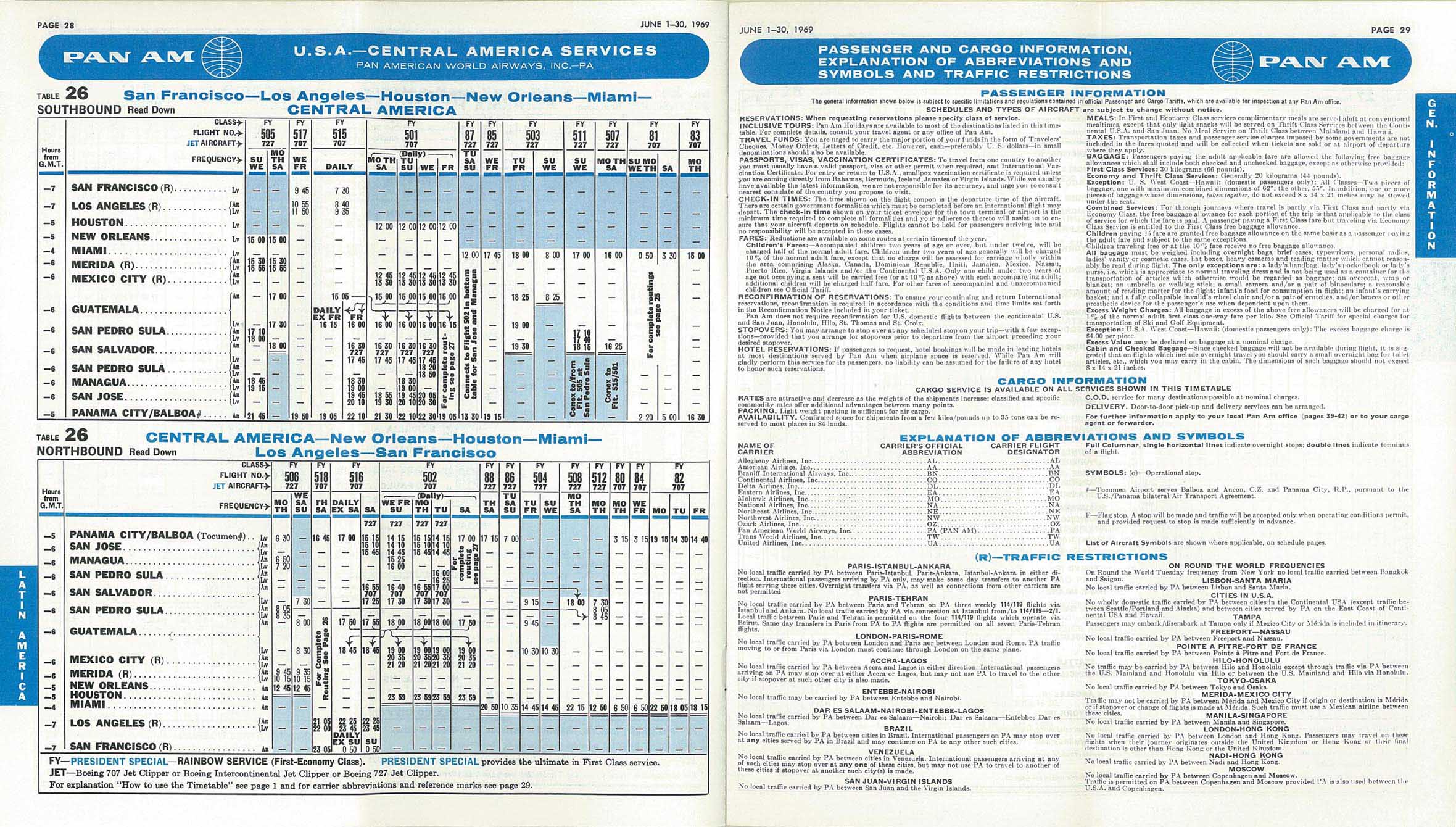
"Flag stop" airline service was historically offered by several scheduled passenger air carriers in the past into destinations with low airline passenger demand. As an example, in its June 1, 1969, worldwide system timetable, Pan American World Airways (Pan Am) had this explanation: "Flag stop: A stop will be made and traffic will be accepted only when operating conditions permit, and provided request to stop is made sufficiently in advance."[1]

A picture of a red stop button on a city bus operated by Niagara Transit.
A request stop button on a city bus operated by Niagara Transit. Stops are requested by pressing the button

There may not always be significant savings on time if there is no one to pick up because vehicles going past a request stop may need to slow down enough to be able to stop if there are passengers waiting. Request stops may also introduce extra travel time variability and increase the need for schedule padding.

The appearance of request stops varies greatly. Many are clearly signed, but many others rely on local knowledge.

Implementations

[edit]

The methods by which transit vehicles are notified that there are passengers waiting to be picked up at a request stop vary by transit system and by route.

Local transport

[edit]
A request stop (zastávka na znamení) on Prague city bus line 151

Many local bus and tram systems operate most of their stops as request stops. Buses and trams do not service stops unless there is an awaiting passenger or an onboard passenger utilizes an electric bell to signal a stop (generally by pulling a cord, or pushing a button or yellow signaling strip). Stops that are served on every trip are often called stations and placed at the terminus of a route. Such stops are often also used as timing points. In contrast, light rail and bus rapid transit services will typically stop at all stations regardless.

However, some systems use this term to distinguish between marked stops that must be hailed (as if hailing a taxicab) and marked stops where the driver will stop for any awaiting passengers (as above). This practice was common on certain Transport for London routes until 2008, with different signs distinguishing between the two sorts of stops.[2]

Still other systems may use the term "request stop" to refer to a servicing location other than a marked bus stop. This sort of service can be found on hail and ride routes, designated portions of routes, or special late-night service. In hail and ride operations, there are few or no marked stops and passengers can request the bus be stopped at any point where the driver can safely and reasonably do so. This is common in some cities, such as Tulsa, Oklahoma, United States, where bus stops were infrequently signed before 2019.[3] Some services operate in this way only late at night, allowing for drop-off between marked stops, thereby decreasing walking time for safety and convenience.[4] Examples include Winnipeg Transit[5] and New York City MTA Bus (known as Late-night Request-A-Stop).

Long-distance transport

[edit]
The Sjisjka stop on the Inland Line in Lapland with the traditional round, yellow sign that is to be turned towards the arriving train

In long-distance transport, transit vehicles, such as passenger trains or buses operating on motorways, usually operate at higher speeds than local transport. This means that stopping is more troublesome (and more worth avoiding) and that it may be very difficult to see a passenger in time to stop for them. This difference often results in more complicated ways of signalling a stop to the vehicle.

Some services, like Amtrak, require that a ticket be purchased in advance, specifying a specific origin and destination. Since the train's crew know what tickets were sold, they also know where people are coming from and going to, and they simply stop only at those stations required by the tickets. Services that lack advanced ticketing, or that sell tickets for a range of destinations or travel times, require ways of knowing whether or not someone is waiting at a station or platform. These may range from a passenger speaking to a dispatcher on a phone located at a station or to a station employee to simply pressing a button to activate a signal such as a flashing light somewhere before the station that the driver can see in time to slow down safely.

In the United Kingdom, there exist approximately 150 railway request stops, of which Great Britain has around 135.[6][7][8] When leaving from a request stop, the passenger has to signal the train driver by hand signal. When planning to disembark at a request stop, the passenger needs to inform the train conductor in advance.[9] Some request stops in Scotland, eight on the Far North Line, have had a ‘Request to Stop’ kiosk installed at the station. This has live information for passengers and a button that can be pressed to alert the driver of their intent to board the train before it arrives in view from the platforms. This alerts the driver about any waiting passengers in advance; if there is no requirement to stop, the train can maintain line speed through the station, thus improving reliability on the whole line.[10] On 15 August 2022, Scotscalder station became the trial site for a "Press & Ride" request stop system developed by Transport Scotland.[11][12][13] Following the successful trial at Scotscalder, this system was expanded on 20 December 2022 to cover five more request stops on the line, namely Culrain, Invershin, Rogart, Kildonan and Kinbrace. The last two kiosks, at Dunrobin Castle and Altnabreac, are expected to be in operation from spring 2023.[14][15][needs update]

Ferries

[edit]
A semaphore at a jetty in Stockholm archipelago

Along some ferry routes in the fjords in Norway, some stops are equipped with a light that embarking passengers must switch on in order for the ferry to include the stop and pick them up. The system is known under the name signalanløp. Similar to Norway, in Sweden commuter ferries are requested to stop by a semaphore signal. The many islands of the Stockholm archipelago are an example of this.

See also

[edit]

References

[edit]
[edit]
Revisions and contributorsEdit on WikipediaRead on Wikipedia
from Grokipedia
A request stop, also known as a flag stop or whistle stop, is a designated in public transportation systems where vehicles such as buses, trains, or ferries halt only if signaled by prospective passengers wishing to board or by those aboard intending to alight, rather than stopping routinely. This practice enhances operational efficiency by allowing vehicles to bypass infrequently used points, particularly in rural or low-density areas. In bus services, request stops are common in regions like the , where signage may indicate "Request Stop" to denote optional halts, and vehicles are required to stop only upon passenger signals such as pulling a cord or pressing a . In the United States, similar systems operate under the term "flag stop," enabling riders to hail buses at any safe point along a fixed route by waving or signaling the driver, a feature used by transit authorities to improve flexibility in suburban and rural operations. For rail services, request stops are prevalent on branch lines and heritage routes, where passengers might use , signs, or advance bookings to prompt a stop; notably, the Railroad's Hurricane Turn remains the last true flag-stop train in the United States, serving remote communities since the early by allowing locals to flag down trains for access to cabins, hunting, and fishing areas. Historically, the concept traces back to 19th-century rail practices in and , where trains stopped at small stations only on signal; the term "whistle stop" originated from these operational practices and was later applied to political campaigns—such as Franklin D. Roosevelt's 1932 tour—while utilitarian applications continued in everyday transit, reducing fuel consumption and travel times on lightly patronized lines. Benefits include cost savings for operators and greater for passengers in underserved locations, though challenges arise in ensuring visibility of signals and compliance with accessibility regulations, such as audible announcements for stops upon request in fixed-route services. As of 2025, request stops persist globally, from unstaffed to flag-stop bus routes in U.S. counties, balancing efficiency with equitable service provision.

Overview

Definition

A request stop, also known as a or whistle stop, is a designated in public transportation where a such as a train, bus, or halts only upon a signal from passengers intending to board or alight, rather than stopping routinely. This conditional halting mechanism is employed across various transport modes to serve low-demand areas without disrupting overall service flow. The operational mechanics of request stops involve specific signaling methods to indicate passenger needs. For boarding, potential passengers typically wave a , arm, or use a platform-mounted or to alert the approaching operator from afar. Inside the , passengers preparing to alight activate a stop request via , pull cords, or bells that notify the driver, often accompanied by illuminated signals. In modern implementations, automated announcements and physical kiosks supplement these traditional methods to ensure the stop is acknowledged, particularly in rail and bus services. These approaches minimize delays at underutilized sites by confirming demand before deceleration. The primary purpose of request stops is to enhance in public transportation networks, particularly on routes with sparse ridership, by allowing vehicles to bypass empty halts and thereby shorten journey times and lower or costs. This system optimizes without compromising for those who signal their intent. Unlike fixed stops, where vehicles pause irrespective of passenger presence to maintain schedule predictability and serve predictable demand, request stops are inherently conditional, activated solely by user-initiated signals to balance convenience with efficiency. This distinction enables tailored service in rural or low-traffic corridors while preserving reliability on busier segments.

Terminology

A request stop is commonly referred to as a "flag stop" in , particularly in the United States and , where trains or buses halt only upon a passenger's signal. In the and countries, the term "request stop" predominates, emphasizing the need for passengers to notify the or in advance to trigger the halt. The phrase "whistle stop" is chiefly used in the United States, often evoking rural rail contexts where the pauses briefly on signal. The etymology of "flag stop" traces to 19th-century North American railroads, where passengers at minor stations would wave a , lantern, or handkerchief to alert the approaching train, prompting the to slow or stop. Similarly, "whistle stop" originates from the same era, deriving from the locomotive's whistle blown by the upon sighting a flag signal or at the conductor's cue to indicate an impending halt at an unscheduled location. These terms reflect the practical signaling methods employed before modern communication systems. In technical and operational literature, "on-demand stop" serves as a broader, neutral descriptor applicable across transport modes, highlighting the conditional nature of the service without regional specificity. Specific systems introduce branded variations, such as Scotland's "Press & Ride" on the , where passengers activate a platform button to request the train's stop, implemented by since 2022 and expanded through 2023. Non-English equivalents include "Bedarfshaltestelle" or "Anhaltestelle" in German, denoting a stop activated by demand or hailing, as used in regional rail networks like . In French-speaking contexts, "arrêt à la demande" is the standard term, applied to both rail and bus services requiring passenger initiation. These linguistic adaptations underscore the global prevalence of the concept while adapting to local transport customs.

History

Origins in rail transport

Request stops, also known as flag stops, originated in the as a practical solution for serving rural areas along newly constructed railroads that lacked the resources for full stations at every potential . In the United States, the practice emerged with the expansion of early lines through sparsely populated regions. In the , similar adaptations appeared in the 1840s during the Railway Mania era, when rapid network growth led to the creation of numerous lines to connect remote or low-density areas without extensive . This development was driven by economic pressures to minimize operational costs in areas with limited passenger or freight volume. The primary influences behind these origins were financial constraints and the geography of early rail expansion, where building and staffing full stations in isolated locales proved uneconomical. Early signaling methods, such as flags or calls, allowed trains to bypass unoccupied sites while accommodating on-demand service. By the , as rail traffic increased, American railroads formalized procedures through operating rulebooks to standardize flag-stop protocols, ensuring safer signaling and reducing collision risks from unscheduled halts.

Expansion to other modes

The concept of request stops, pioneered in , began expanding to other modes of public transportation in the early , particularly buses, as operators sought to balance efficiency with passenger needs on routes with variable demand. In the , bus services introduced experimental fixed stopping points in February 1920 on routes such as to Victoria and to , categorizing stops as either compulsory or "by request," where passengers had to signal the driver or conductor to alight or board. This adaptation drew from practices, which operated as light railways with designated halts, and aimed to reduce by spacing stops approximately 300 yards apart while allowing flexibility on less busy segments. The trial, however, ended in July 1924 amid competition from unregulated independent operators that ignored fixed points. Request stops reemerged in bus operations during , reflecting ongoing efforts to streamline services amid growing and mobility demands. In March 1935, they were reinstated on the to route, requiring passengers to signal at designated points to preserve schedules and minimize unnecessary halts. This period saw rural bus networks expand rapidly, with services developing post-World War I to meet rising demand for accessible in less populated areas. Influenced by rail precedents, bus adaptations included mechanisms like cord-pulling to alert conductors, a practice common in double-decker and single-deck vehicles for interior signaling. In the United States, intercity and rural motor coach services proliferated during the interwar years, driven by improved road infrastructure and post-Depression recovery needs. Following the decline in ridership starting in the due to automobile competition, and particularly after the 1982 Bus Regulatory Reform Act, operators implemented flag stop policies—where buses halted only upon passenger signals—to sustain viability on low-demand segments without excessive schedule disruptions. These policies allowed pickups at informal points if flagged, optimizing operations across vast rural and interstate networks. Key developments in the mid-to-late further refined request mechanisms across modes. In the , rural services increasingly adopted "hail and ride" systems, enabling passengers to board or alight anywhere along designated routes by signaling, which enhanced flexibility in sparse areas without fixed infrastructure. Post-World War II reconstruction and suburban expansion in spurred similar efficiencies in tram networks, where request halts helped integrate surviving lines into modern urban layouts amid resource constraints. By the 1980s, technological upgrades like electronic buzzers replaced traditional cords in some systems; for instance, began phasing out bell cords in 1980, transitioning to push-button or buzzer alerts for more reliable stop requests. Driving factors included economic pressures for cost-effective operations and the growth of commuter suburbs, adapting rail-inspired models to vehicle-specific constraints such as on-board signaling for buses and s.

Implementations

Rail transport

In rail transport, request stops operate by requiring passengers to provide a visible or electronic signal to indicate their intent to board or alight, allowing trains to bypass the station if no request is made. Common signaling methods include raising a hand or waving a as the train approaches to alert , particularly at unstaffed rural stations. In some systems, pre-booking is mandatory; for instance, Amtrak's flag stops on long-distance routes require reservations in advance to ensure the train stops. Modern innovations, such as the "Press & Ride" kiosks introduced on the UK's , enable passengers to press a that transmits a radio signal to , replacing traditional and providing live train information. These kiosks, deployed at stations like Scotscalder, Kinbrace, and Invershin since 2022, remain in operation as of 2025. Operational rules stipulate that approach request stops at reduced speed to check for signals but only fully stop if a request is confirmed, minimizing delays on lines with low . This practice is prevalent on rural and lines in the UK, serving remote communities while optimizing timetable efficiency. As of 2025, some request stops, such as Pleasington, Hapton, and Barracks, are transitioning to mandatory stops under updated timetables. Notable examples include Wondabyne station in , an unstaffed platform in Brisbane Water where passengers must flag down using a horizontal hand signal visible to the driver. On Scotland's , electronic request kiosks have been deployed at stations like Scotscalder, Kinbrace, and Invershin since 2022, alerting drivers via radio to stop only when activated. Unlike bus request stops, rail versions necessitate advance signaling due to trains' greater and longer stopping distances, requiring drivers to receive well before the station to decelerate safely. These stops also integrate closely with fixed timetables on long-distance services, where unscheduled halts could disrupt broader network schedules.

Road transport

In , request stops enable buses and trams to skip designated points unless signaled by passengers, enhancing efficiency in both urban and rural settings where demand varies. This system is particularly useful on routes with low volumes, allowing vehicles to maintain speed while providing flexibility for alighting or boarding. Common in evening services or low-density areas, request stops reduce unnecessary halts and consumption, though they require clear communication between passengers and drivers. Signaling methods for request stops on buses include pulling a cord along the windows to activate a and dashboard light, pressing stop-request buttons near seats or doors, or hailing from the roadside by standing visibly at the stop—without needing to wave in some systems, such as Prague's where drivers stop upon seeing waiting passengers. For example, on Prague's bus line 151, vehicles only halt at request stops if signaled, promoting smoother traffic flow. In rural or flexible operations, hailing involves raising a hand to flag the driver from safe roadside locations. Two primary types of request stops exist in road transport: hail-and-ride services, where buses stop anywhere along the route upon passenger request without fixed stops, as seen in zone-based microtransit like Tulsa's MetroLink MicroLink that connects riders to main routes; and requests at designated points in low-density areas, where vehicles pause only between official stops if signaled. Rules typically require passengers to notify drivers at least one stop in advance, with stops granted "within reason" for , such as avoiding intersections or poor — a practice standard in Transit's evening service after 7 p.m., where alighting occurs via the front door only. These rules are more prevalent in evenings or rural routes to balance convenience and security. Trams adapt request stop systems similarly but account for fixed tracks and greater , using onboard buttons to signal stops while maintaining scheduled halts at major points; for instance, systems like Sheffield Supertram employ stop-request buttons for intermediate halts to optimize dwell times. In modern implementations, some bus and tram networks integrate digital requests via mobile apps, allowing passengers to signal stops in advance through features in on-demand transit apps that dispatch vehicles to requested points along fixed routes.

Water transport

Request stops in water transport, particularly and services, are prevalent in regions with dispersed communities or archipelagos, where vessels only halt at designated jetties upon passenger signals to optimize and schedules. These systems adapt to maritime environments by incorporating visual or communication-based signaling methods suited to varying and conditions, ensuring safe approaches amid currents and waves. Signaling for request stops in water services often relies on mechanical semaphores or radio communications rather than hailing, due to the distances involved and the need for early detection. In Sweden's , passengers activate a foldable —a round sign on the jetty—by raising it to a vertical position to indicate a request, a practice dating back over a century and still used on Waxholmsbolaget commuter ferries serving numerous islands. Similarly, in Norway's coastal and fjord areas, such as the region, less frequent stops require advance telephone requests to operators, while some remote jetties use radio contact with the ferry crew for on-demand pickups, as seen in fjord boat routes like Flåm to Gudvangen where Undredal operates as a request stop. For larger vessels on short-sea routes, light signals or semaphores may supplement radio requests, allowing captains to assess docking feasibility from afar. Operations emphasize conditional stops only when passengers signal from jetties, a method common in archipelagos to serve sparse populations without unnecessary detours. In Sweden's area, ferries like those of Waxholmsbolaget proceed along fixed routes but deviate solely if the semaphore is raised, enabling efficient coverage of over 30,000 islands while minimizing environmental impact. Norwegian express boats and smaller ferries in regions like follow suit, with pre-booked tickets ensuring the vessel halts at requested points, often listed in public trip planners for coordination. In the United States, similar flag stop practices appear on inland water routes, such as the Stehekin Ferry on in Washington, where passengers can request unscheduled halts via prior arrangement or on-site s, accommodating remote access to areas. These systems incorporate strict rules prioritizing safety, with stops heavily weather-dependent to avoid risks from high winds, , or rough seas. Ferries approach potential stops slowly, scanning for signals before committing to maneuvers that could be hazardous in open water, as mandated by operators like Sweden's SL authority. In , advance requests via phone or radio allow crews to plan adjustments, ensuring compliance with coastal regulations that emphasize visibility and stable conditions for docking. Such protocols are evident in Scandinavian short-sea routes, where flag or light signals guide safe, selective halts, and in U.S. river ferries using horns alongside flags for audible confirmation in narrower channels.

Advantages and challenges

Operational benefits

Request stops offer significant operational efficiencies in transportation systems, particularly in low-demand scenarios, by minimizing unnecessary halts and optimizing route execution. By only stopping when passengers signal their intent to board or alight, these systems reduce dwell times at intermediate points, allowing vehicles to maintain higher average speeds and shorten overall trip durations. Studies on similar skip-stop strategies in rail transit indicate that in-vehicle times can decrease by 20-26% through the elimination of routine stops, enhancing adherence and throughput on lines with sparse intermediate demand. This approach also yields substantial cost reductions for operators, primarily through lower fuel consumption and reduced maintenance wear from fewer acceleration and deceleration cycles. For instance, in fixed-route services with request stops, omitting an unnecessary stop can save approximately €200 per trip in operating costs, translating to annual savings of up to €56,000 for routes with 700 trips, as demonstrated in analyses of low-demand bus operations. In rail contexts, these savings extend to energy efficiency, where avoiding stops prevents the high fuel penalties associated with restarting heavy trains. From a perspective, request stops enhance convenience in remote or underserved areas by providing access without the need for dedicated full-service stations, thereby supporting ridership growth in regions where fixed stops might otherwise be uneconomical. This flexibility allows transport authorities to maintain viable service levels in rural or low-density locales, fostering connectivity while avoiding the costs of permanent facilities. Environmentally, request stops contribute to lower emissions by streamlining operations and reducing idling or inefficient stop-start patterns. In low-demand transport services, this optimization can minimize overall fuel use and associated greenhouse gas outputs, aligning with broader sustainability goals for public transit systems. For example, demand-responsive elements in request stop operations have been shown to decrease emissions in scenarios where traditional fixed-stop services would incur higher environmental costs due to empty runs.

Safety and accessibility issues

Request stops present several safety risks primarily stemming from the reliance on visual or manual signaling by passengers or operators. In , missing a passenger's or request signal can result in skipped stops, potentially stranding individuals in remote or hazardous locations where immediate assistance is unavailable. Visibility issues exacerbate these risks, particularly in poor weather conditions such as , , or , which reduce an operator's ability to detect hailing passengers from a distance, increasing the likelihood of oversights. At night or in low-light environments, hailing accidents may occur if passengers position themselves near roadways to signal, heightening exposure to vehicular traffic. Accessibility concerns are significant for passengers with disabilities, as traditional signaling methods—such as waving a flag or pressing a stop button—may be physically challenging or impossible for those with mobility, visual, or cognitive impairments. Under the Americans with Disabilities Act (ADA), fixed-route transit systems must provide accessible stop request systems on non-rail vehicles, ensuring that individuals with disabilities can initiate stops without barriers. Additionally, operators are required to announce stops upon request from riders with disabilities, including at transfer points and destinations, to aid navigation for those with visual impairments. For flag stops, the lack of fixed infrastructure often means no compliant boarding areas, such as level, slip-resistant surfaces with minimal slopes, violating ADA standards and complicating safe alighting for wheelchair users. To mitigate these issues, transit agencies emphasize operator training to enhance vigilance for signals, including protocols for scanning ahead in varying conditions. Technological solutions, such as mobile apps allowing pre-arranged stop requests via GPS, reduce dependence on on-the-spot hailing and improve reliability for all users, including those with disabilities. Regulations like the ADA mandate accessible request mechanisms and prompt responses to disability-related needs, with agencies required to maintain equipment and provide alternatives if systems fail. Key challenges include over-reliance on passenger initiative, where failure to signal—due to forgetfulness, incapacity, or unawareness—results in unintended skipped stops, disrupting service and potentially isolating vulnerable riders. Signaling errors, such as ambiguous gestures or operator misinterpretation amid multiple requests, can lead to disputes between passengers and , further complicating operations in high-demand scenarios.

Global examples

North America

In , request stops, often termed flag stops in rail contexts or demand-response services in bus operations, are essential for serving remote communities across the continent's expansive and sparsely populated regions. This approach allows transportation providers to optimize efficiency in areas where fixed schedules would be impractical due to low ridership and long distances between potential boarding points. Influenced by the vast , including prairies, mountains, and rural expanses, these services enable connectivity without maintaining full-time at every location. In the United States, employs flag stops on routes like the , which traverses the northern plains and Rockies from to /Portland; these stops occur only upon advance reservation to ensure the train halts for passengers. Rural bus services, such as those under Oklahoma's Section 5311 program, incorporate demand-response models where riders request pickups in advance for medical, work, or general travel in underserved areas, adapting to the state's dispersed rural populations. Canada similarly relies on request stops to navigate its broad landscapes, with VIA Rail operating flag stops on prairie routes like The Canadian, halting only by request at remote points to serve isolated communities. In urban fringes, hail-and-ride practices allow bus passengers to signal stops anywhere along designated routes, as seen in systems like C-TRAN in , enhancing flexibility for suburban and exurban travel. Winnipeg Transit implements an evening request policy after 7 p.m., permitting passengers to alight between official stops for safety and convenience, with operators notified one stop in advance and exits restricted to the front door; proposed expansions in December 2025 will extend on-request services until around 2 a.m. on weekdays and Saturdays in most zones. Post-2010s advancements have integrated mobile apps into these services, enabling real-time requests and improving reliability; on-demand transit platforms dispatch vehicles or adjust routes based on user bookings, as adopted by various North American agencies to bridge first- and last-mile gaps in rural and fringe areas. Accessibility remains a priority under the Americans with Disabilities Act (ADA) in the U.S. and similar standards in , requiring features like audio announcements, securement spaces on vehicles, and compliant pathways at request points to ensure equitable service for passengers with disabilities.

Europe

In Europe, request stops are widely implemented in rail, road, and water transport systems, particularly in rural and low-density areas, to optimize service efficiency while maintaining accessibility. The features around 130 railway request stops (as of 2024), often serving remote communities along lines like the in . For instance, Teesside Airport station, which operated as a request stop, has had services suspended since May 2022 due to platform safety concerns; as of 2025, it remains closed, with plans for a new £20 million station adjacent to the terminal announced in June 2025. Rural bus services in the UK increasingly incorporate on-demand models, such as Surrey Connect and Nottsbus On Demand, where passengers book pickups via apps to designated virtual stops, enhancing flexibility in underserved areas. Scandinavian countries exemplify innovative signaling for water-based request stops. In , fjord ferries rely on light switches at docks to alert approaching vessels of waiting passengers, a system essential for connecting isolated coastal communities. Similarly, Sweden's commuter ferries in the use mechanical signals—raised flags or signs at jetties—to request stops, preserving a traditional yet reliable method for archipelago . In , the Czech Republic's Prague Integrated Transport (PID) system designates many bus and stops as request stops, where vehicles halt automatically upon visible passenger presence, eliminating the need for and improving flow on lines like 151. These practices align with EU-wide accessibility standards under Regulation (EU) No 181/2011, which mandates low-floor vehicles and audible/visual announcements at stops to accommodate passengers with disabilities, ensuring request systems do not compromise inclusivity. Technological advancements, such as Scotland's "Press & Ride" digital kiosks introduced in 2022 on the , allow passengers to activate stops electronically up to 90 seconds before a train's arrival, replacing manual signaling at stations like Scotscalder and enhancing reliability. European request stops demonstrate high integration within multimodal public systems, often linked via apps and ticketing platforms for seamless travel. Post-Brexit, the has adapted by independently advancing digital solutions like Press & Ride, diverging from harmonization while retaining core operational principles.

Other regions

In , request stops are implemented in both rail and road transport, particularly in remote or low-usage areas. Wondabyne railway station on the in serves as a prominent example, where trains halt only upon passenger request; to board, individuals must extend an arm horizontally to signal the driver, while alighting requires advance notification to the conductor. In rural bus services, hail-and-ride systems prevail, allowing passengers to flag down vehicles from safe roadside locations without fixed stops, as operated by regional providers like those in and . In , adaptations often blend formal and informal practices to suit sparse populations. India's rural railway network features flag stations, small halts where stop solely if passengers signal with a or hand , facilitating access in low-infrastructure areas without dedicated platforms or staff for every service. employs (DRT) for remote islands and countryside, such as on-demand bus services that adjust routes and stops based on reservations via apps or calls, addressing depopulation and limited fixed schedules in regions like the . Elsewhere, incorporates request stops in water transport through flexible services in areas like the , where vessels deviate to designated points only upon prior booking or signal, enhancing connectivity to coastal and island sites without rigid timetables. In low-infrastructure African contexts, informal systems dominate, with minibuses (known as matatus in or trotros in ) and motorcycle taxis (boda bodas) operating on a hail-and-ride basis; passengers vehicles anywhere along routes, adapting to unregulated demand in urban and rural settings where formal infrastructure is scarce. These implementations highlight adaptations to informal economies, where low-cost signaling or hailing compensates for limited oversight, while post-2020 developments in developing regions have integrated app-based requests—such as ride-hailing platforms like in and Grab in —to formalize on-demand pickups, improving efficiency and safety in underserved areas.

References

Add your contribution
Related Hubs
User Avatar
No comments yet.