Hubbry Logo
Flushing RiverFlushing RiverMain
Open search
Flushing River
Community hub
Flushing River
logo
8 pages, 0 posts
0 subscribers
Be the first to start a discussion here.
Flushing River
Flushing River
from Wikipedia

Flushing River
Flushing Creek
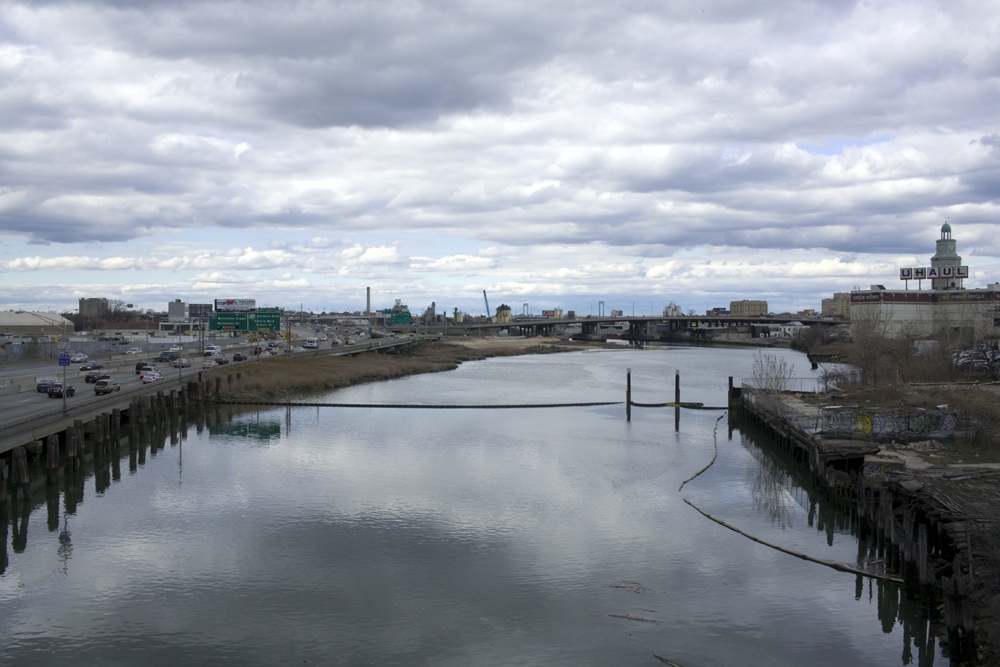
The river as seen from Northern Boulevard, looking north
Flushing River is located in New York City
Flushing River
Flushing River is located in New York
Flushing River
EtymologyFlushing, Queens (from Vlissingen, Netherlands)
Location
CountryUnited States
StateNew York
CityNew York City
County/BoroughQueens
Physical characteristics
SourceJamaica Yard
 • coordinates40°43′06″N 73°49′52″W / 40.718333°N 73.831111°W / 40.718333; -73.831111
MouthFlushing Bay
 • coordinates
40°45′54″N 73°50′36″W / 40.765115°N 73.843364°W / 40.765115; -73.843364
Length2 miles (3.2 km)
Basin features
Tributaries 
 • leftHorse Brook
 • rightKissena Creek, Mill Creek
WaterbodiesMeadow Lake, Willow Lake
Bridges7

The Flushing River, also known as Flushing Creek, is a waterway that flows northward through the borough of Queens in New York City, New York, U.S. It runs mostly within Flushing Meadows–Corona Park, emptying into the Flushing Bay and the East River. The river runs through a valley that may have been a larger riverbed before the last Ice Age, and it divides Queens into western and eastern halves. Until the 20th century, the Flushing Creek was fed by three tributaries: Mill Creek and Kissena Creek on the eastern bank, and Horse Brook on the western bank.

In the 18th and 19th centuries, it divided the towns of Flushing on its right bank, to the east, and Newtown (now part of Corona) on its left bank, to the west. Several bridges were built across the Flushing River in the 19th and 20th centuries. Prior to the 1939 New York World's Fair, the southern portion of the river was expanded into the Meadow and Willow Lakes. A part of the Flushing River was buried prior to the 1964 New York World's Fair. Following accumulations of pollution in the 20th century, cleanup of the Flushing River started in the 1970s, though some portions of the river have yet to be restored.

The modern-day river is 4 miles (6.4 km) long, originating near the Jamaica Yard in Kew Gardens Hills. The river flows through Willow and Meadow Lakes before entering a tunnel north of the Long Island Expressway. The Flushing River runs for 2,000 feet (610 m) underground before resurfacing at the Tidal Gate Bridge at the northern end of Flushing Meadows–Corona Park. The rest of the river separates the industrial portions of the Willets Point and Flushing neighborhoods before emptying into the Flushing Bay.

Course

[edit]
Attractions and geographical features of Flushing Meadows–Corona Park
Map
About OpenStreetMaps
Maps: terms of use
850m
927yds
19
19 World's Fair subway station (demolished)
18
17
17 Unisphere
17 Unisphere
16
16 Terrace on the Park
15
15 Queens Night Market
14
14 Queens Museum
14 Queens Museum
13
13 Queens Botanical Garden
12
12 New York State Pavilion and Queens Theatre
11
11 New York Hall of Science
10
10 National Tennis Center and United States Pavilion (demolished)
9
9 Mets–Willets Point LIRR station
8
8 Mets–Willets Point subway station
7
7 Metropolitan Park (planned) and Shea Stadium (demolished)
6
6 Meadow Lake and Hong Kong Dragon Boat Festival
5
5 Flushing River and Creek
4
4 Flushing Meadows Corona Park Aquatics Center
3
3 Flushing Meadows Carousel and Queens Zoo
2
2 Etihad Park (under construction)
1
1 Citi Field
1 Citi Field

Attractions and geographical features of Flushing Meadows–Corona Park:

The 4-mile-long (6.4 km) Flushing Creek once rose in the present-day neighborhood of Kew Gardens Hills, where Vleigh Place (old Dutch for Valley) traces the valley of the headwaters.[1][2] The river's original source is now occupied by the Kew Gardens Interchange, while the reconstructed source is located near Jamaica Yard, emptying from a pipe there.[1][2] The headwaters, fed by groundwater, empty north into Willow Lake and then Meadow Lake, two artificial freshwater lakes,[3][4][5] which are respectively 40 and 100 acres (16 and 40 ha)[6] and comprise the southern half of present-day Flushing Meadows–Corona Park.[7][8] Prior to the lakes' construction, the creek meandered through tidal marshes in the larger valley within the present-day park;[9][10] its mouth was at Flushing Bay, a 6,200-acre (2,500 ha) water body on the East River.[6][10] The two lakes are connected via a narrow channel under Jewel Avenue.[11]

After following a channel north from Meadow Lake, the Flushing River runs for about 2,500 feet (760 m) underneath the ramps between the Van Wyck Expressway (Interstate 678) and Long Island Expressway (Interstate 495).[12] The river then feeds into the Pool of Industry and Fountain of the Planets, built during the 1964 New York World's Fair,[2] running for about 2,000 feet (610 m) under the fountains.[12] Afterward, the Flushing River re-emerges from the ground, where it partially divides a 19-acre (7.7 ha) plot of land occupied by the park's pitch and putt golf course.[13] It then flows underneath the Tide Gate Bridge, where the fresh water river mixes with the saltwater from Flushing Bay.[4][14] The channel widens, running between Willets Point to the west and Flushing to the east, finally emptying into Flushing Bay.[2] The northernmost portion of the creek mostly contains bulkheads on the shoreline, with industrial uses on the eastern bank and marshes on the western bank.[9][14][15] The total distance between Meadow Lake's outlet and the river's mouth is about 7,000 feet (2,100 m).[6]

The watershed of the Flushing River is primarily residential, though there are also significant recreational and open spaces, with industrial usages near the mouth of the river.[6] Even though the Flushing River now largely follows an artificial route, the river still regularly overflows into surrounding areas, especially during heavy rain.[2] Meadow Lake, which also overflows during rains, collects sewage from several surrounding neighborhoods.[16] The raw sewage collected in the Flushing River has contributed to the heavy pollution in Flushing Bay.[2]

Tributaries

[edit]

Kissena Creek, known historically as Ireland Mill Creek, is a right-bank tributary of the Flushing River, which begins in what is now Pomonok/Kew Gardens Hills. The creek is now largely buried, running through Kissena Park, Kissena Corridor Park, and Queens Botanical Garden.[17][18] It empties into the Flushing Bay Combined Sewer Outfall Retention Facility, which lies on the right bank of the Flushing River, below the Al Oerter Recreation Center. The facility, completed in 2007, can hold up to 43.4 million US gallons (164,000,000 L) of water from combined sewer overflows during storms, before pumping the water to the Tallman Island Waste Water Treatment Plant in College Point.[19][20][21][22]

Mill Creek is a right-bank tributary of the Flushing River that empties into the river just east of Flushing Bay.[23] Mill Creek was fed by two branches.[24] The southern branch, which has been infilled,[25] originated at Town Pond at the modern-day intersection of Northern Boulevard and Main Street, which was filled in 1843;[26] the creek then flowed north.[24] The northern branch, which still exists in truncated form, originated at the site of the George U. Harvey Playground,[23] near the intersection of 20th Avenue and the Whitestone Expressway in Whitestone,[27] and flowed south through the present sites of College Point Fields, Flushing Airport, and College Point Corporate Park.[23] The two branches merged at Linden Place and 28th Avenue.[24] Following development of the surrounding area, the northern branch begins in the wetlands around Flushing Airport and runs through the former airport site.[28][29] Several underground pipes, as well as man-made drainage ditches on the New York City Police Academy campus and north of 28th Avenue, carry the creek from the airport to the Flushing River.[30] College Point was a peninsula until the mid-20th century, separated from the rest of Queens by Mill Creek's northern branch.[31]

Horse Brook is a left-bank tributary of the Flushing River, which begins to the west in Elmhurst. The creek then ran close to the path of what is now the Long Island Expressway.[32][33] Horse Brook was gradually covered in phases through the 20th century. It is now entirely buried, but its path can be traced by the existence of large superblocks, such as those that contain Queens Center Mall, Rego Center's extension, Newtown High School's athletic field, and LeFrak City.[32]

Bridges

[edit]

The Jewel Avenue crossing, the southernmost crossing of the Flushing River, was built prior to the 1939 World's Fair. It was rebuilt and expanded in 1961 to also pass over the Van Wyck Expressway.[34]

The present-day Long Island Expressway crosses the river to the north, slightly east of the site of Strong's Causeway. The causeway may have been first built in 1801,[35] but definitely dates to at least the 1850s.[36] This crossing, located near the confluence of Horse Brook and Flushing Creek, extended Corona Avenue on its zigzag route toward Flushing. For most of the 19th century it was a narrow bridge, 18 feet (5.5 m) wide.[36] By the 1890s, there were plans to replace Strong's Causeway because it sank every year,[37] though taxpayers protested against the proposal.[38] In February 1896, the causeway collapsed into the Flushing Creek.[39] A new bridge opened at the site on September 2 of that year.[40] The causeway was replaced in 1937 by a bridge carrying the then-newly built Horace Harding Boulevard,[41] and was rebuilt into the present Long Island Expressway in the late 1950s.[42]

Looking south from Roosevelt Avenue; the LIRR embankment and Porpoise Bridge can be seen in the background.

Meadow and Willow Lakes and the freshwater section of the Flushing River are separated from Flushing Bay by a flood gate or dam called the "Porpoise Bridge" or "Tide Gate Bridge", located just south of the Long Island Rail Road's Port Washington Branch trestle, at the north end of the Flushing Meadows Golf Center. The dam only permits northward flows toward Flushing Bay to pass, while blocking south-flowing waters.[4][43] As its name implies, the dam also acts as a bridge, carrying pedestrian and vehicular traffic over the creek. It measures 37 feet (11 m) wide and 370 feet (110 m) long.[44] In 2024, the New York City government began replacing the bridge for $41 million.[45][46]

The LIRR trestle, located directly to the north of Tide Gate Bridge, contains a small opening for water to pass through.[43] It was built in the late 1930s and early 1940s as an embankment.[47]

Slightly downstream, to the north, the Roosevelt Avenue bridge is a double-deck viaduct completed in 1927.[48][49] It was originally built as a drawbridge, and was the world's largest fixed-trunnion bascule bridge at its completion, though it is no longer functional.[48] The bridge carries Roosevelt Avenue, as well as the New York City Subway's IRT Flushing Line (7 and <7>​ trains),[48][50] which were extended to Flushing–Main Street in 1928, a year after the bridge's completion.[51] This bridge was built with the expectation that Flushing River might be converted into a navigable stream in the future. With the 1939 New York World's Fair, the creek was dammed to the south, and the Roosevelt Avenue bridge ceased to be a usable drawbridge.[50][52] When the Van Wyck Expressway was being built in the early 1960s, it went directly under the Roosevelt Avenue bridge.[52]

The LIRR's former Whitestone Branch was carried by a single-tracked wooden trestle north of the Roosevelt Avenue bridge, which contained a small drawbridge span.[53][54] When the branch was abandoned in 1932, the trestle was torn down.[54]

The Northern Boulevard crossing, also called the "Flushing Bridge", is located north of the Roosevelt Avenue bridge and the former Whitestone Branch trestle.[15] Several bridges have existed at the site, the first of which was built c. 1800–1801, making it the oldest crossing of the Flushing River.[15][55] Five additional drawbridges were built at this location. A replacement drawbridge was erected in the mid-19th century, followed by swing bridges in 1866 and 1890, an elaborate bascule bridge in 1906, and a simpler bascule bridge in 1939.[56] It was replaced by the current viaduct structure in 1980.[15]

The northernmost crossing of the Flushing River is that of the Whitestone Expressway.[14] A drawbridge opened in 1939 along what was then known as the Whitestone Parkway. In December 1957, the New York state government approved a $9.5 million project to widen part of Whitestone Parkway from Northern Boulevard to the Bronx-Whitestone Bridge, including constructing a new Flushing River bridge.[57] The new bridge opened in 1963 and included a modernization of the existing draw span.[58] The current fixed span was built in 2008.[14]

Ecology

[edit]

Saltwater section

[edit]
Between Meadow and Willow Lakes

Prior to human development, Flushing Meadows was originally a tidal marsh, with Flushing Creek receiving south-flowing waters from the tides of Flushing Bay.[10][59] The northernmost portion of the river, near its mouth, is still a saltwater wetland area. The wetlands consist of invasive phragmites, a genus of wild grasses, as well as cordgrass. However, the addition of fill on the riverfront has raised the wetland habitat to about the same elevation as the upland habitats, thus endangering wetland plant species that cannot grow at such elevations.[60] North of the LIRR embankment, the left-bank wetland on the Flushing River contains plants such as common reed, field horsetail, chicory, common plantain, and native marsh elder and cordgrass.[61] The birds observed on the northern portion of the river include both waterfowl and wading egrets.[62]

Freshwater section

[edit]

Although Willow and Meadow Lakes were built as freshwater lakes and dammed to mitigate tidal effects, flooding continues to affect Flushing Meadows–Corona Park.[10][59] The lakes are also highly eutrophic, due to nutrients such as phosphorus from the former marshland seeping into the water, leading to the death of fish in the lakes. The regular tidal action that would filter the lakes is prevented by the dam.[4][63][64] In addition, the lakes are subject to pollution and storm runoff from the nearby highways, via pipes which feed into the lakes.[4][5][63]

Several fish species native to marine habitats regularly swim into Meadow and Willow Lakes.[65] Fish species native to Meadow Lake include American eel, largemouth bass, northern snakehead (an invasive species), and white mullet.[65] Willow Lake is named for the many species of willow plants which inhabit the area.[66] Phragmites are also abundant,[66][67][68] but attempts to kill the phragmites with pesticides have led to further fish kill.[67][69] Numerous berry-producing trees and shrubs near Willow Lake attract several migratory bird species.[66] The biodiversity of the lakes has been found to be much lower than other water bodies of comparable size.[68]

Recreational usage

[edit]
Boat launch on Meadow Lake

Recreational uses on the Flushing River are limited mostly to its southern portion, since its northern portion is heavily industrial, and the central portion is not navigable.[14] The land around Meadow Lake contains open grass, picnic and grilling areas, and baseball and cricket fields as part of Flushing Meadows–Corona Park.[70][71] Meadow Lake contains a boat house, one of two structures that remain from the 1939 World's Fair, the other being the Queens Museum.[72] Rental boats are available at the boathouse for rowing and paddleboating, and Meadow Lake is also the site of rowing activities for non-profit Row New York, with teams practicing on the lake for much of the year.[73] Meadow Lake also hosts the annual Hong Kong Dragon Boat Festival in New York, and teams from New York practice in Meadow Lake during the summer months.[74] The American Small Craft Association also houses a fleet of over a dozen 14.5-foot (4.4 m) sloop-rigged sailboats, used for teaching, racing, and recreation by the club's members.[75] Bicycling paths extend around Meadow Lake and connect to the Brooklyn–Queens Greenway.[76]

For the 1939 fair, Meadow Lake was temporarily renamed "Fountain Lake" and "Liberty Lake".[77][78] During the fairs, the land on the north shore and part of the eastern shore of the lake was used as an amusement area,[79][80][81] and for the 1964 fair, large parking lots were added on the east and west shores.[80][81][82] The lots were removed and converted to parkland after the 1964 fair.[82]

The Willow Lake area of the park is a nature reserve called the Willow Lake Preserve.[71] The area around Willow Lake originally also contained sports fields and park trails,[1][83][67] until it was fenced off and turned into a preserve in 1976.[1] The Willow Lake Trail, a nature trail around Willow Lake,[84] was reopened in 2013 and is part of the Willow Lake Preserve.[85][86]

History

[edit]

Early years

[edit]

During at least three glacial periods, including the Wisconsin glaciation around 20,000 years ago, ice sheets advanced south across North America carving moraines, valleys, and hills. In particular, bays and estuaries were formed along the north shore of Long Island. During glaciation, the meadows surrounding the Flushing River were formed just north of the terminal moraine that runs across Long Island, which consisted of sand, gravel, clay and boulders.[87][88][89] The moraine created a drainage divide, with rivers north of the moraine such as the future Flushing River emptying into the north shore.[90] The Flushing Meadows site became a glacial lake, and then a salt marsh after the ice melted.[88] Prior to glaciation, the Flushing River valley was used by the Hudson River to drain southward into the Atlantic Ocean.[91] Through the 19th century, wetlands continued to straddle Flushing River.[87] Species inhabiting the site included waterfowl and fiddler crab, with fish using water pools for spawning.[92]

The area was first settled by Algonquian Native Americans of Long Island (referred to erroneously as "Mantinecocks").[93][94] They consisted of the Canarsee and Rockaway Lenape groups,[95] which inhabited coastal wetlands across Queens and Brooklyn.[94][96]

The town of Flushing was settled in 1645 under charter of the Dutch West India Company. Both the town and the creek were thus named after the port of Vlissingen, in the southwestern Netherlands.[55] The first European settler to move to the vicinity of Flushing Creek was Robert Coe, an Englishman who built a house near Horse Brook (now the site of the Long Island Expressway) on the creek's western bank.[97]

19th and early 20th centuries

[edit]
Busy Flushing Harbor in 1882. Bridge on the right carries Broadway, later called Northern Boulevard

The earliest fixed crossing of the Flushing Creek was the Northern Boulevard bridge, built in 1801 and rebuilt six times through 1980.[15] Prior to the bridge's construction, a ferry had carried passengers between the two banks of the creek.[97]

In the 1850s, the New York and Flushing Railroad built a railroad line across the river leading to what was then a railroad terminal on the east side of the river in Flushing. The railroad was acquired by the Flushing and North Side Railroad in 1868, and built junctions with the Flushing and Woodside Railroad, the Whitestone and Westchester Railroad, and the Central Railroad of Long Island on the west side of the river throughout the 1870s. The Flushing and North Side also built a spur leading to Flushing Bay just southwest of the Flushing River delta. All lines were acquired by the Long Island Rail Road, and most were later abandoned, except for the former NY&F main line, which became the LIRR's Port Washington Branch.[98]

In the early 20th century, the northern part of the Flushing River was home to a regatta club, the Wahnetah Boat Club. Its clubhouse was located on its right bank near the Northern Boulevard (formerly Jackson Avenue) bridge.[99][100] The club was founded in 1900,[101] replacing the disbanded Nereus Boat Club,[102] and in 1905 was described as one of the first such clubs on the East Coast.[103] By 1917, the boat club appeared to have been repurposed as a veterans' association.[104]

20th century improvements

[edit]

Around 1907, contractor Michael Degnon purchased large tracts of marsh near Flushing Creek.[87][105] At the time, the land was considered "all but worthless", as an archaeological assessment later described the land.[106] Degnon envisioned using the site to create a large industrial port around Flushing Bay, similar to a terminal he developed in Long Island City.[105][106][107] By 1911, Degnon had created a plan along with the United States Department of War and the Queens Topographical Bureau. The plan envisioned widening Flushing River and creating docks for ships, with numerous factories and freight facilities.[108][109] The Rivers and Harbors Act of 1913 appropriated funding for deepening the channel through Flushing Bay into Flushing River.[110] The next year, surveys were made for the construction of a 5.4-mile (8.7 km) canal to connect Flushing River and Newtown Creek, plans for which dated back at least a century.[111] To create the port, Degnon proceeded to fill the Flushing River wetlands using household coal refuse ashes and street sweepings from Brooklyn.[87][105][106][107] The northern end of the site was filled via dredging.[107][112] The filling for the north meadow was complete in 1916,[107] but the prospect of creating a port was halted in 1917 by material restrictions caused by World War I, and a lack of federal support for the project.[107][113] Dumping of ash into the meadows continued, however, fueled by the increased use of garbage incinerators in the city.[114] The pollution was chronicled by F. Scott Fitzgerald in The Great Gatsby.[87][115]

Meadow Lake, created in the 1930s by expanding Flushing River

In 1930, New York City parks commissioner Robert Moses released plans for numerous parks and highways in the city, including a Flushing River Park.[116] Five years later, Flushing Meadows was selected as the site for the 1939 World's Fair.[117] Work on the World's Fair site began the next year.[118] The project primarily involved leveling the ash mounds, with the leftover material used to fill other areas of the meadow. Two parts of the river were excavated to create Meadow and Willow Lake, while much of the rest of the Flushing River was diverted into underground culverts.[10] The Tidal Gate Bridge was built at the park's northern end to prevent tidal flow from flooding the lakes.[10][87] In addition to recreation, the lakes would serve as repositories for excess storm runoff.[119] By then, Horse Brook had already been covered over, while Kissena Creek was in the process of being covered over. Dammed and reduced in size, the Flushing River became navigable only north of Roosevelt Avenue. At its southern end, the Jamaica subway yard reduced some of the flow coming from the headwaters.[1] The central portion of the Flushing River was repurposed as part of the World's Fair's Court of States.[36][120]

In 1961, in advance of the 1964 New York World's Fair, the creek's middle section was diverted underground.[121][122][123] Flowing out of Meadow Lake, the creek was reduced to a canal beneath the Van Wyck Expressway, narrowing into pipes going into the Fountain of the Planets, a circular pool used for fountain displays. From there, the pipes took the water toward the tidal bridge, reemerging as a creek.[63]

Restoration and redevelopment

[edit]

The Flushing River was once a clear waterway, but during the 1920s, the river was polluted by various industrial wastes, especially along its northern section. Over the years, pollution from the Willets Point Blvd. industrial area, surrounding highways, and dumping made the river a health hazard. By the 1970s, Flushing River and Flushing Bay had become neglected and polluted.[124]

In 1971, a hundred Flushing residents protested in support of a cleanup of the Flushing River,[125] and state assemblyman Leonard P. Stavisky showed federal, state, and city officials the evidence of pollution in Flushing River.[126] The next year, Councilman Morton Povman, and Flushing Meadow Park Action Committee president Albert Mauro sought to rehabilitate the Flushing River and Bay to their natural conditions and extend Flushing Meadows-Corona Park to the river banks. Both men argued that if these conditions were corrected and made, all of New York City would benefit from it.[127] Furthermore, under the intervention and proposal of both Morton Povman and Peter Vallone, a group of high city officials agreed to begin immediate work on the long-term task of cleaning up this waterway. The late Abe Wolfson, founder of the Queens Historical Society, became active in the fight to restore the river to its original condition. The cleanup involved dredging and rebuilding manholes in the Kissena Park and Kissena Corridor Park sewer systems, which hid the underground Kissena Creek, as well as cleaning up part of the Queens Boulevard sewer system.[124]

In the late 1980s, there were disputes over whether to build a sewage treatment plant in Flushing Meadows Park as part of the Flushing Bay's cleanup.[128] The tank was to be located in the park next to the Flushing River, some 70 feet (21 m) underground.[129] The Flushing Bay CSO Retention Facility, also called the Flushing Creek CSO Plant, was completed by 2007.[19][130] The Al Oerter Recreation Center, located above the facility, opened two years later.[19][131] Additionally, the northern part of the river (near the mouth) was restored as wetlands in 2008 as part of the reconstruction of the Whitestone Expressway bridge over the river.[132] Plans to combine Meadow and Willow Lakes were proposed in 2005 as part of the failed New York City bid for the 2012 Summer Olympics. Following the failure of the bid, the New York City Department of Environmental Protection sought a scaled-back restoration plan for the lakes.[133]

In Flushing, the right (east) bank of the Flushing River remains unrestored.[2] In 1993, the city proposed to rezone the plot bounded by the Flushing River, College Point Boulevard, and the LIRR Port Washington Branch on the right bank of the river.[134] Along this stretch of the river, the most prominent building was the former Serval Zipper Factory, which was later used as a U-Haul storage center.[15][135] While much of this area remained underdeveloped through the 2010s, the Sky View Parc apartment complex was completed between Roosevelt Avenue and the LIRR in 2011,[136] and the rest of the site was proposed as the Flushing West development area in 2018.[137][138] In addition, the redevelopment of the industrial Willets Point Blvd. neighborhood on the left bank of the river was announced in 2007,[139] and after several delays, was restarted in 2018.[140] Following news of these redevelopments, an organization called the Friends of Flushing Creek was created in mid-2014 to advocate for a greater cleanup of the river and bay.[2][141]

See also

[edit]

References

[edit]
[edit]
Revisions and contributorsEdit on WikipediaRead on Wikipedia
from Grokipedia
The Flushing River, also known as Flushing Creek, is a tidally influenced waterway in the borough of that flows northward through Flushing Meadows-Corona Park into Flushing Bay, with a watershed encompassing approximately 10,000 acres. Originally part of an expansive ecosystem spanning 157 acres in the early 1900s, the river has undergone extensive alteration due to industrialization beginning in the 1800s, channelization for the 1939 and 1964 New York World's Fairs, and urban development that buried sections and reduced remaining to 21 acres, representing an 87% loss. The waterway has long suffered from severe , including overflows (CSO), industrial discharges, and contaminated sediments such as PCBs, rendering it ecologically impaired and limiting recreational use. Cleanup initiatives, spearheaded by the Department of (DEP), include a $349 million CSO retention facility completed in 2007 that reduced overflows by 50%, ongoing projects managing 246.3 million gallons of annually, and planned and restoration efforts by the U.S. of Engineers to revive 19 acres of wetlands. These measures address historical dumping and aim to enhance flood control, , and while supporting waterfront revitalization in surrounding communities.

Geography and Hydrology

Course and Flow Characteristics

The Flushing River, commonly referred to as Flushing Creek, originates from the artificial Willow Lake and Meadow Lake within the southern expanse of in , . These lakes, constructed as part of the , serve as the primary freshwater sources, channeling water northward through a combination of open channels and underground conduits. The creek travels approximately 1 mile (1.6 km) in total length, with a 2,000-foot (610 m) segment diverted underground north of the lakes and beneath the before resurfacing at the Tidal Gate Bridge near the park's northern boundary. From there, it flows directly into Flushing Bay, a tidal embayment connected to the . Hydrologically, the river functions primarily as a rather than a free-flowing , dominated by semidiurnal tidal cycles propagating from the , which result in bidirectional flows and brackish conditions throughout much of its length. Freshwater discharge is minimal and irregular, constrained by extensive that has paved over natural tributaries and redirected into systems; historical groundwater simulations indicate negligible contributions from the surrounding glacial outwash . The watershed spans 9,954 acres (4,028 ha) of predominantly impervious surfaces, including residential, commercial, and industrial zones, leading to episodic pulses during events that temporarily elevate flows but do not sustain perennial movement.

Tributaries and Watershed

The watershed of the Flushing River, also known as Flushing Creek, encompasses approximately 9,954 acres entirely within Queens County, , characterized by high urbanization including residential, commercial, industrial, and parkland uses. Of this area, about 7,830 acres are served by systems that discharge to the Tallman Island or Bowery Bay facilities, contributing to and inflows during wet weather events. Roughly 20% of the watershed consists of Flushing Meadows-Corona Park, which incorporates former tidal marshes reconfigured for the 1939 and 1964 World's Fairs, including Willow Lake and Meadow Lake along the creek's course. The basin's impervious surfaces dominate due to dense development, reducing natural infiltration and exacerbating tidal influences from Flushing Bay, where the creek terminates. Historically, the Flushing River received several tributaries that supported its pre-industrial marsh ecosystem, but most have been buried or altered through urbanization. Key historical inflows included Kissena Creek (formerly Ireland Mill Creek), originating in the Pomonok and Kew Gardens Hills areas as a right-bank tributary; Mill Creek, which joined via what is now Kissena Lake in the vicinity of Queens Botanical Garden; and Horse Brook, draining from Elmhurst meadows before being culverted beneath modern infrastructure like Queens Center Mall. These streams, active in the 1700s and 1800s, facilitated freshwater inputs amid the creek's tidal regime, but three principal open tributaries and associated wetlands were lost to development, including filling for highways and parks. In the present configuration, the river lacks significant open tributaries, with its headwaters near the NYC Transit Jamaica Yard facility now largely piped or channelized, flowing northward through Flushing Meadows-Corona Park before entering Flushing Bay. Contemporary relies on , overflows from three outfalls, and residual tidal exchange, with initiatives targeting management of 246.3 million gallons of annual to mitigate flooding and . The watershed's reduction of tidal marshes from 157 acres in the early 1900s to 21 acres today underscores ongoing degradation from impervious cover and historical alterations.

Bridges and Associated Infrastructure

The Flushing River is spanned by several bridges that facilitate vehicular, pedestrian, rail, and subway traffic across its tidal course in , . These structures, primarily constructed in the , include movable bascule spans in the northern sections and fixed bridges further south, reflecting the river's historical role in regional connectivity amid urbanization and development. Associated infrastructure encompasses tide gates for flood control, fender systems to protect piers from vessel impacts, and ongoing rehabilitation efforts to address deterioration and enhance resilience. The Roosevelt Avenue Bridge, located near the river's northern reach, is a double-deck, double-leaf bascule movable bridge completed in 1927 after construction delays due to foundation settling in the soft tidal sediments. At the time of its opening, it was the world's largest such bridge, carrying four lanes of roadway on the lower deck and the Subway's 7 line on the upper deck; it was converted to a fixed span in 1961 when the Van Wyck Expressway was routed beneath it, rendering the bascule mechanism obsolete. Rehabilitation in 1982 included full deck replacement and steel repairs, with further reconstruction involving new girders, deck, and lighting planned from 2015 onward to mitigate structural wear. Further upstream, the Northern Boulevard Bridge carries New York State Route 25A as a concrete and steel fixed span completed in 1980, replacing earlier designs that had declined in aesthetic and functional quality amid expanding traffic demands. It features fender systems at piers 26 and 27, which were removed and replaced in 2022 to safeguard against maritime collisions in the navigable tidal channel. The Van Wyck Expressway Bridge () crosses the mid-river section as a multi-span fixed structure integral to the highway's development between and 1953, with the northbound Whitestone Expressway segment originally a later replaced by high-level fixed spans to eliminate movable operations. Rehabilitation projects have included replacing the deck across 129 spans (with 26 fully rebuilt), pier repairs, bearing replacements, and steelwork, addressing deterioration from heavy traffic loads exceeding 100,000 vehicles daily. In the southern portion within Flushing Meadows-Corona Park, the Porpoise Bridge—also known as the Tide Gate Bridge—is a fixed structure built to impound freshwater upstream for the by blocking and storm tides via integrated tide gates. A $41 million reconstruction initiated in May replaces the deck, adds flood barriers, extends ADA-compliant sidewalks, and incorporates wetlands for enhanced stormwater management, responding to chronic inundation risks in the low-lying park. Rail infrastructure includes the trestle, a dike-like fixed crossing with conduits for flow, supporting commuter service since the early . These bridges collectively manage the river's tidal dynamics but have contributed to and restricted flow, necessitating ongoing maintenance amid urban flood vulnerabilities.

Ecology and

Pre-Industrial Ecological Baseline

Prior to European settlement and subsequent industrialization, the Flushing River—historically referred to as Flushing Creek—functioned as a tidally influenced coursing through expansive salt marshes across central , New York. This pre-colonial baseline featured a mosaic of intertidal habitats dominated by Spartina alterniflora (smooth cordgrass), a halophytic grass that formed dense stands in low-marsh zones regularly inundated by tides from Flushing Bay, stabilizing sediments and supporting detrital food webs essential for estuarine productivity. Higher-elevation fringes likely included transitional brackish vegetation, fostering salinity gradients that enhanced against minor fluctuations and storm surges. The creek's meandering path enabled unimpeded tidal flushing, maintaining water quality through natural exchange with the via Flushing Bay and preventing anoxic conditions in deeper channels. These wetlands, estimated to encompass hundreds of acres in the undisturbed state (with 157 acres documented in the early before further losses), served as critical nurseries for diadromous fish such as alewife (Alosa pseudoharengus) and blueback herring (Alosa aestivalis), as well as for benthic and migratory waterfowl prevalent in pre-colonial coastal ecosystems. Indigenous Matinecock bands of the utilized this baseline for seasonal fishing and foraging, but their low-impact practices—such as selective harvesting of reeds and —did not significantly alter the dominant marsh hydrology or vegetation structure, preserving the system's and pollutant filtration capacities inherent to intact tidal marshes. Paleoenvironmental proxies, including records from regional cores, corroborate a stable marsh regime shaped by post-glacial , with the creek's watershed contributing freshwater inflows that modulated hypersalinity during droughts.

Current Species Composition and Habitat Types

The Flushing Creek ecosystem primarily consists of a degraded urban tidal estuary with open water channels, mudflats, and remnant tidal marshes. These habitats have been severely altered by historical filling and channelization, reducing tidal wetlands from approximately 157 acres in the early 1900s to 21 acres today, dominated by invasive common reed (Phragmites australis) monocultures that limit habitat diversity. Mudflats exhibit hydrogen sulfide emissions indicative of anoxic conditions, while hardened shorelines and upland transitions feature low-diversity scrub and forest edges. Adjacent freshwater lakes in Flushing Meadows-Corona Park, influenced by tidal backwater effects, are hypereutrophic with uniform edges supporting invasive-dominated wetlands covering about 15 acres, contributing to overall low habitat heterogeneity. Fish communities reflect tolerant urban estuarine species, with surveys in the East River's Zone 3 (encompassing Flushing Creek) documenting 22 excluding tropical strays, captured via seining, trapping, and angling methods as of 2019. Abundant forage fish include Atlantic silverside (Menidia menidia, over 6,000 individuals across zones), (Fundulus heteroclitus, hundreds captured), bay anchovy (Anchoa mitchilli, 86 in Zone 3), and (Brevoortia tyrannus), indicating nursery function despite pollution. Other present encompass alewife (Alosa pseudoharengus), striped anchovy (Anchoa hepsetus), and (Morone saxatilis). In connected lakes, only six persist, such as pumpkinseed, common carp, and , far below the potential 12+ in comparable systems, due to and oxygen depletion causing periodic fish kills. Invertebrate assemblages include , , and bivalves such as ribbed mussels, clams, and oysters, supported by remnant wetlands that provide propagation . diversity remains low, with approximately 30-37 species around lake margins, overshadowed by invasives like Phragmites australis, porcelain berry, and , which form monocultures reducing native herbaceous and cover. Avian species utilize the area for migration and nesting, with wetlands historically hosting up to 160 birds including waterfowl, though current diversity is a fraction of native levels due to loss; no are documented. Overall, the system's Class I designation supports propagation and survival, but persistent issues like overflows and legacy sediments constrain .

Pollution Dynamics and Ecosystem Degradation

The Flushing River, also known as Flushing Creek, experiences chronic pollution primarily from overflows (CSOs), which discharge untreated sewage, stormwater, and associated contaminants during wet weather events. These overflows, managed by the Department of , release an estimated baseline volume of 1,201 million gallons annually under rainfall conditions (46.26 inches), with total discharges including stormwater reaching 2,440 million gallons. CSO events occur approximately once per month or during heavy precipitation, with key outfalls such as TI-010, TI-011, and TI-022 contributing significantly; for instance, in 2013, 14 storm events led to 146 million gallons of overflow after retention facilities captured 88% of volume from 113 storms. Pollutants from CSOs include high levels of fecal indicator (e.g., geometric means of 770–1,760 cfu/100 mL exceeding the 200 cfu/100 mL standard, and enterococci >30 cfu/100 mL) and (BOD) loadings of approximately 235,000–270,000 pounds annually, which drive rapid oxygen depletion. Pollution dynamics are exacerbated by the creek's tidal nature and limited flushing, creating low-exchange zones that trap contaminants. During storms, bacterial concentrations spike, with recovery times ranging from 8 to 84 hours as elevated levels return to baseline; sediment resuspension further prolongs impacts by mobilizing embedded pathogens, correlating with particularly at high tide. Tidal inflows from the more contaminated Flushing Bay import additional fecal matter, while legacy sources such as historical industrial discharges and leaking sanitary sewers (e.g., TI-008 outfall, repaired in 2021, reduced fecal coliform from 2,000–12,000 to 12–40 cfu/100 mL) contribute persistent human fecal markers like HF183/BacR287 (up to 31 million copies/100 mL). Sediments accumulate , PCBs from former brownfield sites (e.g., Sky View Parc), and from anaerobic mudflats, with 135,000 cubic yards dredged north of Northern Boulevard in 2015 to address buildup. Non-human sources, including canine and waterfowl feces, play minor roles, detected seasonally in tributaries like Alley Creek. Ecosystem degradation stems directly from these dynamics, with depressed dissolved oxygen (DO) levels—averaging 5.89–6.65 mg/L but with summer excursions below 4 mg/L (Class I standard) and acute hypoxia under 3 mg/L—inducing stress on aquatic organisms and contributing to fish kills, as observed in 2017 sewage overflow events. Modeling indicates 85–96% attainment of DO criteria under various controls, but chronic low DO alters predator-prey dynamics and benthic habitats, favoring like common reeds over natives. exceedances impair secondary contact and pose risks to and populations through and , while 87% historic wetland loss (from 157 acres in the early 1900s to 21 acres) has fragmented habitats, reducing and resilience; expansion and invasive dominance further degrade areas for migratory birds and juvenile . These effects persist despite interventions like the Flushing Bay CSO Retention Facility (operational since 2007, holding 43 million gallons), underscoring the causal link between overflow frequency, sedimentation, and systemic habitat impairment.

Historical Development

Indigenous and Early Colonial Periods

The region surrounding the Flushing River, historically referred to as Flushing Creek, was originally occupied by the Matinecock people, an Algonquian-speaking subgroup of the broader indigenous groups, who inhabited northwestern including present-day . The Matinecock relied on the creek's tidal waters and adjacent marshlands for subsistence activities, including fishing for species such as alewife and shad, hunting waterfowl, and gathering , with their territory spanning from westward to the Nissequogue River eastward. Archaeological evidence from shell middens in the area indicates seasonal campsites along the creek, underscoring its role in their semi-nomadic lifestyle tied to estuarine resources. In October 1639, Dutch representatives, acting under the charter of , acquired approximately 100,000 acres of from Matinecock sachems, including creek-adjacent parcels, through a exchange involving like cloth, kettles, and axes, as documented in colonial records. This transaction, one of the earliest formalized transfers in the , displaced indigenous use of the waterway and facilitated European claims, though enforcement relied on ongoing negotiations amid sporadic conflicts. European settlement commenced in 1645 when English , invited by Dutch authorities to bolster the colony, established (later anglicized to Flushing) on the creek's eastern bank, marking it as one of New Netherland's five English townships. The creek's navigable tidal channel, extending about 3.5 miles inland from Flushing Bay, immediately supported the settlers' agrarian economy by providing access for shallops carrying grain, livestock, and timber to , while its freshwater inflows enabled damming for gristmills by the 1650s. Under Governor , the waterway also demarcated town boundaries, with early patents granting creek-front lots for wharves and fisheries, though overhunting and land clearance began altering its flow and ecology within decades. By the English in 1664, Flushing Creek had transitioned from indigenous foraging grounds to a colonial , to the township's 200-odd residents' trade-oriented development.

19th-Century Industrialization

In the early , the Flushing River supported the expansion of Flushing's economy, which had been dominated by agriculture and , including renowned nurseries such as the Prince Nursery established prior to the and flourishing through plant importation and cultivation. Infrastructure developments, including the construction of the Flushing Creek Bridge in 1800 by a local company, improved access across the waterway, facilitating trade and transport between Flushing and adjacent areas like Newtown. These enhancements aligned with broader regional growth, as proximity to encouraged commercial navigation along the tidal . By mid-century, heavier industrial activities emerged along the river's banks, reflecting New York City's burgeoning coal-dependent economy. The creek served as a disposal site for ash from urban furnaces, with landfills established as early as the 1800s to accommodate the refuse from powering homes and factories. This practice, part of wider strategies in ' marshes, involved depositing vast quantities of ash that filled tidal flats and altered the river's morphology, reducing navigable depths and initiating accumulation. Commercial and industrial utilization intensified in the late 1800s, with the waterway primarily dedicated to shipping and support for nascent manufacturing in the vicinity, including operations near Flushing Bay. and bulkheading began to accommodate vessels, though documentation of specific factories directly on the banks remains sparse, overshadowed by agricultural legacies and later 20th-century developments. These activities contributed to early ecological strain, including in the surrounding wetlands, as marshlands were incrementally converted for utilitarian purposes without regulatory oversight.

20th-Century Urban Expansion and Initial Degradation

The construction of the in 1909 and the extension of subway service to Flushing in 1928 accelerated urban development around the Flushing River watershed, transforming rural and semi-rural landscapes into densely populated residential and commercial zones. County's population surged from 469,042 in 1920 to 1,079,129 by 1930, driven by these transportation improvements that enhanced connectivity to and fostered suburban expansion. This growth overlaid the river's path with impervious surfaces, including roads, buildings, and rail infrastructure, which reduced natural infiltration and intensified during events. In the Flushing Meadows vicinity, early 20th-century landfilling compounded these pressures; the area served as the Corona Ash Dump from 1906 onward, accumulating approximately 50 million cubic yards of ash, garbage, and construction debris from , elevating terrain and contaminating soils adjacent to the river. For the , directed the site's reclamation, which entailed excavating and straightening segments of Flushing Creek, channeling its course for navigation under the Rivers and Harbors Act modifications of 1935, and impounding the southern reach to create Meadow Lake and Willow Lake. These engineering interventions, repeated in scaled form for the 1964 World's Fair, curtailed tidal flushing, fragmented wetlands, and promoted by altering flow dynamics and eliminating meanders that once supported habitat diversity. Urban expansion initiated degradation through heightened pollutant loading from non-point sources, as from newly paved expanses carried sediments, nutrients, and hydrocarbons into the channel. Industrial operations in proximate zones, such as the , released effluents including oils and metals via direct discharges and legacy spills, while overflows—exacerbated by population density—discharged untreated wastewater during wet weather, elevating and levels. By the , these cumulative inputs had fostered anoxic conditions and benthic smothering, diminishing aquatic and rendering the river navigable primarily for industrial purposes rather than ecological function.

Environmental Management

Early 20th-Century Regulatory Responses

In the early , regulatory responses to Flushing River (also known as Flushing Creek) degradation primarily emphasized infrastructural modifications over direct abatement, reflecting the era's limited state and federal frameworks for control. New York City's Department of Health enforced nuisance laws against overt waste dumping and sanitary hazards, such as unregulated industrial discharges and ash fill from coal furnaces, but these were reactive and inconsistently applied, lacking quantitative standards or enforcement mechanisms specific to the creek. State-level efforts, including the 1905 , focused predominantly on protecting watersheds rather than urban tidal creeks like Flushing River, where industrialization had already reduced tidal wetlands from an estimated 157 acres in the early 1900s. A pivotal engineering response occurred in the 1930s under New York City Parks Commissioner , who directed the straightening and channelization of Flushing Creek as part of reclaiming the surrounding Corona Ash Dump for Flushing Meadows-Corona Park ahead of the . Authorized through municipal planning powers and funded via initiatives, this project reconfigured the creek's meandering course and headwaters into artificial lakes (Willow Lake and Meadow Lake), aiming to control flooding, enhance navigation for residual commercial use, and create parkland from degraded marsh. While addressing immediate hydraulic issues—such as seasonal overflows exacerbated by upstream —the alterations impeded natural tidal flushing, exacerbating stagnation and pollutant accumulation without incorporating mitigation measures. These interventions, though framed as environmental management, prioritized urban development and flood risk reduction over ecological preservation, with no dedicated pollution regulatory body until New York's Water Pollution Control Board in the late . U.S. Army Corps of Engineers surveys from the period documented losses but recommended no binding actions, underscoring the absence of coordinated regulatory oversight. Local ordinances sporadically targeted visible effluents from nearby industries, yet enforcement data indicate minimal impact, as creek water quality continued to deteriorate from untreated and industrial runoff.

Post-1970s Cleanup Initiatives

Following the passage of the federal in 1972, which established national standards for water quality and funded municipal wastewater improvements, the Department of Environmental Protection (DEP) initiated targeted efforts to address overflow (CSO) discharges into Flushing Creek, a primary source stemming from stormwater mixing with untreated sewage. In 1980, DEP launched the Regulator Improvement Project to upgrade CSO regulators systemwide, including those affecting Flushing Creek, followed by the Flushing Bay CSO Facility Planning project in 1984 to evaluate storage and treatment options for overflows entering the creek and adjacent bay. Major investments accelerated in the . In , DEP completed a $349 million underground 43-million-gallon CSO retention facility at Tallman Island, capturing overflows and reducing CSO volume discharged into Flushing Creek by approximately 50%. This was supplemented in 2014 by $30 million in upgrades to conveyance , enhancing flows to the Tallman Island Wastewater Treatment Plant and further mitigating untreated discharges. By the 2010s, long-term control plans formalized abatement strategies. DEP's 2017 Flushing Creek Long Term Control Plan, approved by the New York State Department of Environmental Conservation, committed $92 million to install seasonal disinfection at CSO outfall TI-010, targeting bacterial contamination during wet weather events. Concurrently, the 2017 Flushing Bay plan allocated $1.6 billion for a 25-million-gallon storage tunnel, projected to capture 50% of CSO volume in the watershed shared with Flushing Creek. Complementary remediation included a 2017–2018 dredging project in Flushing Bay, where 76,000 cubic yards of CSO-impacted sediments were removed using mechanical excavators, followed by placement of 130,000 tons of clean fill, construction of a 100,000-square-foot revetment, and planting of 150,000 marsh plants to stabilize shorelines and reduce erosion-linked pollution re-suspension. Site-specific cleanups addressed legacy contaminants. In 2018, Con Edison remediated polychlorinated biphenyl (PCB)-impacted sediments in Flushing Creek mudflats pursuant to a 2008 state consent order, excavating and disposing of tainted materials to prevent bioaccumulation in aquatic life. Broader stormwater management advanced through DEP's Green Infrastructure Program, which by early 2021 had installed 1,879 assets citywide—such as rain gardens and bioswales—managing 246.3 million gallons of annual runoff and indirectly easing creek burdens by reducing inflow volumes. In 2020, the U.S. Army Corps of Engineers issued a feasibility report for restoring 19 acres of creek habitat, authorized under the Water Resources Development Act, focusing on wetland reconstruction to enhance natural filtration. These initiatives have yielded measurable water quality gains, including lowered levels compliant with state standards during dry weather, though wet-weather overflows persist as a challenge requiring ongoing investment. DEP's citywide CSO program, mandated under the Clean Water Act's CSO policy, continues to prioritize Flushing Creek through adaptive modifications, such as 2022 delays in tunnel design offset by interim regulator enhancements.

Engineering Interventions and Their Outcomes

The Flushing River, also known as Flushing Creek, underwent significant channelization and shoreline hardening throughout the to facilitate urban development, flood mitigation, and navigation amid ' industrialization and . These modifications transformed the originally meandering tidal , once fringed by expansive marshes, into a more straightened and armored channel with revetments and limited natural banks, reducing tidal flushing and complexity while increasing flow velocities during storms. The U.S. Army Corps of Engineers has conducted ongoing maintenance of the federal navigation channel since its authorization, targeting a depth of 15 feet plus 2 feet of overdepth to support commercial maritime traffic, including 14 marine terminals handling 585,000 tons of cargo in 2022. A notable project in 2022 removed 150,000 cubic yards of sediment from Flushing Bay and Creek, though a 0.4-mile upstream segment was de-authorized under the Water Resources Development Act of 2020 due to diminished usage. These efforts sustain waterway viability for transport and storage but perpetuate challenges from upstream pollutants and tidal dynamics, necessitating repeated interventions without addressing root causes like overflows (CSOs). Environmental remediation dredging, led by the Department of Environmental Protection (DEP), targeted CSO-contaminated sediments in Flushing Bay, with one project excavating approximately 76,000 cubic yards of impacted material, followed by placement of 130,000 tons of clean fill, construction, and planting of 150,000 native to stabilize shorelines. Completed assessments determined no significant adverse environmental impacts from these operations, which reduced benthic contaminant levels and improved localized by isolating legacy pollutants from the water column. However, outcomes remain incremental, as alone does not curb ongoing CSO discharges—responsible for bacterial and nutrient loading—leading to persistent exceedances of standards despite supplementary measures like a $363 million CSO storage facility operational since 2007. Flood control engineering includes a dam constructed in 1939 during Flushing Meadows Corona Park development to block East River tides, alongside recent $65 million resilience initiatives incorporating automated flood gates and shoreline modifications to combat stormwater inundation and sea-level rise effects. These structures have mitigated tidal intrusion and some urban flooding but have constrained natural wetland functions, exacerbating habitat fragmentation and pollutant retention in stagnant upstream sections. Critics note that while navigation and flood interventions enable economic uses, they have degraded ecological resilience, with channel modifications contributing to downstream sediment transport and reduced biodiversity compared to pre-engineering baselines.

Human Utilization

Industrial and Economic Roles

The Flushing River, also known as Flushing Creek, served as a conduit for heavy commercial and industrial activities beginning in the 1800s, facilitating the disposal of coal ash from New York City's furnaces as along its banks. This utilization supported early and practices in the surrounding area, where the waterway's tidal nature allowed for the transport of goods and effluents via small vessels. Industrial land uses, concentrated along the eastern shore, included operations that discharged and byproducts directly into the river, contributing to its role as a de facto waste receptor for local enterprises. Proximity to the river bolstered in adjacent zones, such as the Flushing established in the late 1960s, which was projected to create 3,000 to 5,000 jobs and generate $1.5 million in annual taxes through and warehousing. These facilities leveraged the for and disposal, though empirical records indicate persistent from such practices, limiting long-term viability without remediation. By the late , in M3 districts near the creek permitted intensive industrial operations, including heavier uses that historically tied economic output to the river's capacity for handling. In contemporary contexts, the river's direct economic contributions have diminished due to legacies, with shifting toward residential and recreational priorities over ; however, remnant industrial parcels continue to support limited and , underscoring the waterway's foundational role in ' mid-20th-century economic expansion. Restoration efforts have prioritized environmental recovery, potentially constraining future industrial reliance while highlighting the trade-offs between historical economic utility and ecological .

Recreational and Community Access

Public access to the Flushing River is primarily facilitated through Flushing Meadows-Corona Park, where the waterway traverses the southern portion of the 897-acre site, offering limited but regulated non-motorized boating opportunities. and canoe launches are available, requiring a free permit from the Department of Parks and Recreation, which includes rules prohibiting motorized vessels and mandating personal flotation devices. These launches enable exploration of the tidal river's calmer sections, though users must navigate industrial remnants and varying water depths influenced by tides from Flushing Bay. Pedestrian trails and viewing areas provide additional community engagement, with paths encircling adjacent and Lakes—historically connected to the river—and extending along park edges for and casual walks. The 's urban habitats support migratory birds, drawing enthusiasts for guided or self-directed observation, particularly during seasonal peaks. However, direct shoreline esplanades remain sparse outside the , constrained by adjacent industrial zoning, though municipal waterfront policies mandate visual access and future pedestrian connections at street ends like 19th Avenue. Fishing occurs along the river's banks and from park piers, targeting species such as striped bass and bluefish in its tidal reaches, subject to New York State regulations requiring licenses for anglers over 16. Water quality, classified as Class I by the New York State Department of Environmental Conservation, supports secondary contact recreation but advises against primary uses like swimming due to persistent contaminants from combined sewer overflows, with consumption limits on caught fish—especially for women of childbearing age and children—to one meal per month for certain species. Recent combined sewer overflow reductions, projected at 50% volume decrease by ongoing projects, aim to expand safe angling. Community events foster engagement, including annual celebrations like the Guardians of the Bay's Flushing Waterways Community event on September 27, 2025, highlighting restoration and local revitalization efforts around the river and connected creeks. Planned enhancements under the NYC Comprehensive Waterfront Plan seek to integrate more open spaces and crossings, balancing with equitable access amid ongoing debates over development pressures.

Restoration Efforts and Challenges

Key Restoration Projects and Metrics

The primary restoration efforts for the Flushing River, also known as Flushing Creek, have centered on reducing overflow (CSO) discharges and enhancing through collaborations between the New York City Department of Environmental Protection (NYC DEP), the U.S. Army Corps of Engineers (USACE), and the New York State Department of Environmental Conservation (NYSDEC). The Flushing Bay CSO Retention Facility, operational since May 2007, provides 43.4 million gallons (MG) of storage capacity and has captured substantial volumes, including 2,483 MG in 2013 while overflowing only 146 MG during 14 events. Complementary , such as the Alley Creek Retention Tank (5 MG capacity, operational March 2011) and the Whitestone Interceptor Extension (construction completed December 2014), has further managed flows to the Tallman Island Plant, contributing to an overall CSO volume reduction from a baseline of 2,531 MG per year to approximately 1,200 MG per year. Habitat restoration initiatives include USACE-led and projects under the Hudson-Raritan Restoration Feasibility Study, targeting 19 acres of tidal and freshwater through regrading, native planting, and removal; environmental of 17.5 acres in and Creek began in July 2016 and concluded by March 2021. The federal navigation channel south of Northern Boulevard was deauthorized in December 2020 via the Water Resources Development Act, enabling expanded restoration previously constrained by maintenance . programs, part of NYC DEP's citywide $2.4 billion plan (with $1.5 billion DEP-funded through 2030), have installed 1,879 assets managing 246.3 million gallons of annually, yielding an additional 46 MG per year CSO reduction by targeting 8-13% of impervious surfaces in the drainage area. Key metrics demonstrate measurable progress in CSO control and , though full primary contact standards remain partially unmet during wet weather:
Metric CategoryBaseline/Pre-ProjectPost-Project AchievementReduction/Improvement
CSO Volume (MG/year)1,201 (2008 rainfall, Flushing Creek LTCP baseline)617 MG/year49%
CSO Frequency (events/year, Flushing Bay)4714 (with proposed 25 MG tunnel)70%
Load (recreational season)N/A36-51% reductionVia disinfection proposals at TI-010/TI-011 outfalls
Attainment (, Class I criteria)Partial96.7%Exceeds NYSDEC 95% goal
Dissolved Oxygen AttainmentN/A85-96% (≥4 mg/L)Class I standard met in simulations
Habitat Restoration Acreage87% historical loss (157 to 21 acres)19 acres targetedVia USACE regrading and planting
A proposed 25 MG CSO storage tunnel for Flushing Bay, outlined in the 2016 LTCP, aims for 53% volume reduction (1,405 to 659 MG/year) and full criteria attainment, with net present worth costs of $683-842 million; remains under as of post-2016 updates. Ongoing monitoring at stations like FLC1, FLC2, and FB1 tracks dissolved oxygen (averaging 6.8-7.2 mg/L in 2013-2015) and levels, supporting secondary contact uses while wet-weather advisories persist due to residual overflows. These projects, totaling over $400 million in committed grey infrastructure alone, prioritize empirical reductions in bacterial loads and over broader ecological claims, with post-construction assessments confirming 88% load cuts during recreational seasons under optimized scenarios.

Economic Costs Versus Environmental Gains

Restoration efforts for Flushing Creek have involved substantial investments by the Department of (DEP) and the U.S. Army Corps of Engineers (USACE), primarily targeting combined sewer overflow (CSO) reductions and habitat rehabilitation. The Flushing Bay Long Term Control Plan has incorporated $69 million in infrastructure upgrades, environmental dredging, and initial restoration activities to mitigate from and industrial legacies. Additionally, a $349 million CSO retention facility, completed in 2007, captures 43 million gallons of overflow during storms, while a planned $1.6 billion, 25-million-gallon storage tunnel aims to further abate discharges into the creek and bay. The Flushing Creek Long Term Control Plan, approved in 2017, allocates $92 million for seasonal disinfection systems to treat overflows, supplemented by $56 million in further upgrades by 2025. These expenditures have yielded measurable environmental improvements, including a 50% reduction in CSO volumes through retention and measures that manage 246.3 million gallons of annual . Habitat restoration under the USACE Hudson-Raritan project, authorized in December 2020, targets 19 acres of wetlands, converting mudflats to low and high marsh with native plantings to enhance and tidal flushing while reducing hydrogen sulfide odors from anaerobic conditions. This addresses a historical 87% loss of wetlands (from 157 to 21 acres since the early 1900s), fostering services such as improved and support for native species, though full recovery metrics remain pending long-term monitoring. No formal cost-benefit analysis quantifies the net economic value of these gains against outlays, with DEP plans emphasizing qualitative ecological and recreational benefits alongside enabling brownfield on 62 acres for mixed-use purposes. High urban costs—exacerbated by dense and —pose ongoing fiscal challenges, potentially diverting funds from other municipal priorities, yet proponents argue that restored waterfront access supports commercial revitalization and value increases in adjacent areas. Empirical data on load reductions and functionality post-intervention will be critical to assessing whether environmental enhancements justify the multi-billion-dollar scale of interventions, particularly given persistent urban pressures like impervious surfaces covering 83% of nearby development zones.

Ongoing Debates on Development Integration

The Special Flushing Waterfront District (SFWD), approved by the on December 9, 2020, exemplifies tensions between urban development and ecological restoration along Flushing Creek, a key tributary of the Flushing River. Spanning 29 acres bounded by Flushing Creek, Northern Boulevard, College Point Boulevard, and Roosevelt Avenue, the project envisions 13 high-rise towers providing 1,725 residential units (with only 90 designated as affordable), 400,000 square feet of and space, 287,000 square feet of retail, and hotel accommodations totaling 687,250 square feet, alongside enhanced public waterfront access. Proponents, including developers United Construction & Development Group, F&T Group, and Young Nian Group, argue that the rezoning from industrial to mixed-use will revitalize a long-underutilized brownfield site, generate economic benefits estimated at $2 billion, and incorporate to mitigate runoff into the creek. Critics, including community coalitions like FED UP Flushing and environmental advocates, contend that the development inadequately integrates with ongoing creek restoration efforts, such as the New York City Department of Environmental Protection's green infrastructure retrofits aimed at reducing combined sewer overflows that contribute to the waterway's high fecal coliform levels exceeding state standards by factors of 10 to 100 during storms. The site's location in a designated coastal flood hazard zone raises empirical concerns about exacerbated flood risks from impervious surfaces in new construction, potentially worsening tidal surges and stormwater discharge into the already impaired creek, where dissolved oxygen levels often fall below 3 mg/L, stressing aquatic life. Opponents highlight the city's use of a limited Environmental Assessment Statement (EAS) rather than a full Environmental Impact Statement (EIS), alleging it downplayed sea-level rise projections (up to 2.5 feet by 2050 per NOAA data) and omitted detailed modeling of cumulative impacts on adjacent wetlands and a 2-acre woodland slated for removal. Litigation persists, with lawsuits filed in 2021 by groups including the Environmental Justice Alliance challenging the Uniform Land Use Review Procedure (ULURP) as procedurally flawed and insufficiently protective of communities downstream, where burdens disproportionately affect low-income and minority residents. Empirical data from the Flushing Creek Study (2019) underscore barriers like legacy contamination from historical industrial uses, suggesting that high-density development could hinder nature-based restoration precedents, such as tidal wetland enhancements, by prioritizing private gains over verifiable ecological metrics like improved or . While city officials maintain that mandatory inclusionary and public esplanades align with resilience goals, skeptics, drawing on precedents like post-Sandy analyses, argue for prioritizing first-principles flood modeling over developer assurances, given the creek's tidal nature amplifying upstream development effects.

Controversies

Pollution Attribution and Liability

The predominant sources of pollution in the Flushing River stem from overflows (CSOs), which discharge untreated , , and containing , pathogens, nutrients, and debris into the waterway, especially during and after rain events exceeding the capacity of New York City's aging infrastructure. These CSOs, operated by the New York City Department of Environmental Protection (DEP), account for the release of over two billion gallons of raw and polluted overflow annually into Flushing Bay and its tributaries, including the Flushing River, exacerbating levels that violate standards. from impervious surfaces in the densely developed further contributes sediments, , and hydrocarbons, while direct drainage from non-point sources amplifies these inputs. Historically, industrial activities have been implicated as contributors, with small-scale operations such as factories and utilities discharging effluents directly or indirectly into the river, though precise attribution remains difficult due to the diffuse nature of these legacy sources predating modern regulations. For instance, past operations by Company of New York, Inc., including potential releases of contaminants like polychlorinated biphenyls (PCBs) and metals, have been identified in remedial investigations of adjacent sediments, linking utility infrastructure to elevated concentrations. Liability for ongoing pollution primarily falls on the City of New York through its DEP, as CSO outfalls qualify as regulated point sources under the Clean Water Act and the State Pollutant Discharge Elimination System (SPDES), mandating technology-based effluent limits and water quality compliance monitored by the New York State Department of Environmental Conservation (DEC). The city is bound by federal consent decrees requiring the development and execution of Long Term Control Plans (LTCPs) to capture or treat at least 80% of CSO volumes in the Flushing Creek sub-basin, with progress tracked via metrics like overflow frequency and bacterial load reductions. Private entities face targeted enforcement; in November 1998, the U.S. Environmental Protection Agency (EPA) issued an administrative order to a Flushing-based business to excavate and remove hazardous chemicals from a site bordering the river, citing imminent risks to groundwater and surface water due to its proximity to residential zones and the waterway. No large-scale lawsuits have successfully shifted primary liability from municipal infrastructure to specific industries for current conditions, reflecting the dominance of systemic sewer failures over isolated dischargers in causal analyses.

Environmental Justice Narratives Versus Empirical Data

Environmental justice advocates have portrayed in Flushing Creek as a manifestation of , arguing that historical industrial disinvestment and persistent disproportionately burden minority communities in , with the waterway often described as a symbol of systemic neglect affecting low-income and immigrant residents. Such narratives, frequently advanced in opinion-driven outlets and lawsuits, emphasize qualitative inequities like (e.g., cloudy, sulfurous discharges) and link them to broader concerns without quantifying differential health outcomes. In contrast, demographic data for the Flushing/Whitestone area reveals a of approximately 241,000 as of 2023, with 54.7% identifying as Asian, 20.1% as , 1.8% as , and household incomes around $85,000, indicating relative affluence rather than uniform poverty associated with classic claims. Empirical assessments from the New York City Department of (DEP) attribute primary pollution sources to combined sewer overflows (CSOs) during rainfall events, which mix with untreated , alongside —ubiquitous issues in densely developed watersheds rather than targeted . Water quality monitoring, including DEP's Harbor Survey data from 2011–2023, documents elevated and enterococci levels in Flushing Creek, exacerbated by its tidal dead-end configuration limiting natural flushing, but shows no peer-reviewed studies establishing causal links to elevated disease rates or disproportionate morbidity among local residents compared to other NYC waterways. Fish kills from overflow events have been observed, posing ecological rather than direct human health risks, as recreational contact is minimal due to the creek's industrialized surroundings and advisory postings. Remediation metrics from DEP's Long-Term Control Plan focus on engineering interventions like CSO abatement facilities, which have reduced overflows by targeted percentages since , yielding measurable improvements in loads without reliance on equity-based reallocations. These data-driven approaches underscore causal factors rooted in urban hydrology and capacity, challenging narratives that prioritize perceptual inequities over verifiable impacts; advocacy sources often lack primary empirical validation, potentially amplifying calls for costly diversions from evidence-based cleanup.

Balancing Urban Growth with Ecological Claims

The Flushing River, historically altered for industrial and urban uses, faces ongoing tensions between Queens' rapid —reaching over 2.3 million residents by 2020—and demands for ecological restoration to mitigate flooding, improve , and preserve remnant wetlands. Development proposals, such as the Special Flushing Waterfront District (SFWD) rezoning initiated in 2019, aim to add thousands of residential units, hotels, and commercial spaces along the waterfront to address New York City's housing shortage, which exceeded 500,000 units citywide as of 2023. However, critics argue these projects threaten a 10,000-year-old legacy by erasing two-acre woodlands and endangering salt marshes, potentially exacerbating stormwater runoff into the already polluted tidal waterway. Ecological advocates, including local groups like the Municipal Art Society, have contested the SFWD's environmental review, noting the city's 2019 Negative Declaration bypassed a full despite the site's location in combined 100- and 500-year floodplains, where most proposed would sit. Empirical data from the 2012 Flushing Creek Study highlight barriers like legacy contamination from past , which contributes more to current pollutants—such as overflows carrying and pathogens—than prospective residential density alone. Restoration metrics, including proposals to daylight buried tributaries and restore oyster reefs, could enhance natural filtration, reducing ecological strain from urban impervious surfaces that currently cover over 70% of the watershed. Proponents of integrated development counter that rezoning could fund retrofits, such as those piloted in constrained waterfront sites to mimic natural and support amid growth. A 2020 developer vision emphasized evolving the polluted, underutilized shoreline into accessible public spaces, arguing that exclusionary preservation ignores ' demographic pressures, including a 5.5% increase from to 2020 driven by and affordability needs. Yet, lawsuits filed in 2020 by activists sought to halt the SFWD, citing inadequate mitigation for increased traffic and heat islands that could degrade adjacent Flushing Meadows-Corona Park ecosystems, where past ash dumps and hardscaping have already diminished functions. Recent resiliency frameworks, like the 2023 Flushing Meadows-Corona Park study, propose balancing recreation—vital for over 10 million annual visitors—with ecological enhancements, such as reconfiguring lakes to absorb floodwaters from upstream development while maintaining sports fields. These approaches prioritize causal factors like tidal dynamics and upstream imperviousness over unsubstantiated narratives of inevitable ecological collapse from measured growth, with data showing targeted restorations could yield 20-30% improvements in habitat connectivity without halting urban expansion. Ongoing debates underscore the need for verifiable metrics, such as post-project monitoring, to evaluate claims rather than relying on precautionary opposition that may overlook the river's pre-existing degradation from 19th-century industrialization.

References

Add your contribution
Related Hubs
User Avatar
No comments yet.