


Community hub
Recent from talks
Contribute something
Nothing was collected or created yet.
Free range
View on Wikipedia


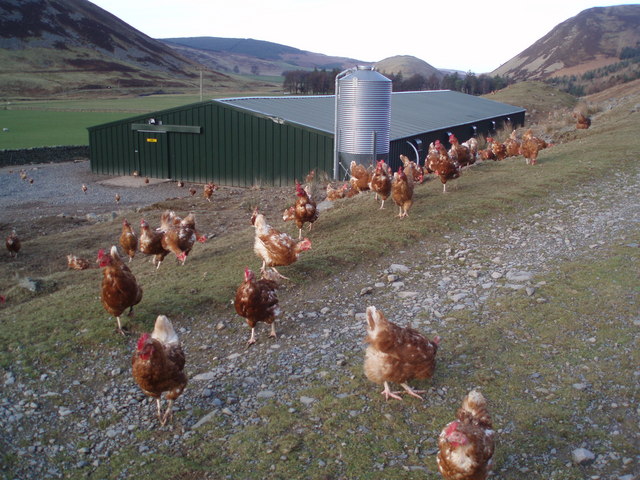
Free range denotes a method of farming husbandry where the animals can roam freely outdoors for at least part of the day, rather than being confined in an enclosure for 24 hours each day.[1] On many farms, the outdoors ranging area is fenced, thereby technically making this an enclosure, however, free range systems usually offer the opportunity for the extensive locomotion and sunlight that is otherwise prevented by indoor housing systems. Free range may apply to meat, eggs or dairy farming.
The term is used in two senses that do not overlap completely: as a farmer-centric description of husbandry methods, and as a consumer-centric description of them. There is a diet where the practitioner only eats meat from free-range sources called ethical omnivorism.
In ranching, free-range livestock are permitted to roam without being fenced in, as opposed to intensive animal farming practices such as the concentrated animal feeding operation. In many agriculture-based economies, free-range livestock are quite common.
History
[edit]
If one allows "free range" to include "herding", free range was a typical husbandry method at least until the development of barbed wire and chicken wire. The generally poor understanding of nutrition and diseases before the twentieth century made it difficult to raise many livestock species without giving them access to a varied diet, and the labor of keeping livestock in confinement and carrying all their feed to them was prohibitive except for high-profit animals such as dairy cattle.
In the case of poultry, free range is the dominant system until the discovery of vitamins A and D in the 1920s, which allowed confinement to be practised successfully on a commercial scale. Before that, green feed and sunshine (for the vitamin D) were necessary to provide the necessary vitamin content.[2] Some large commercial breeding flocks were reared on pasture into the 1950s. Nutritional science resulted in the increased use of confinement for other livestock species in much the same way.
Environmental impact
[edit]Extended grazing on open grasslands can stimulate plant growth that sequesters additional carbon dioxide.[3] However grass-fed cows generally grow more slowly and are smaller at slaughter compared to grain-fed cows. Because they take longer to reach market weight and convert feed into meat less efficiently, their total lifetime emissions—particularly methane—are typically higher. As a result, grass-fed beef tends to have a higher carbon footprint per kilogram than grain-fed beef. A study by Daniel Blaustein-Rejto and colleagues estimated that emissions from grass-fed beef were approximately 20% higher than those from grain-fed cattle.[4]
Compared to caged hens, free-range hens produce fewer eggs and required more feed, which resulted in a carbon footprint around 16% higher per kilogram of egg.[4][5]
United States
[edit]In the United States, the Department of Agriculture free range regulations currently apply only to poultry and indicate that the animal has been allowed access to the outside.[6] To be considered "free range," the poultry must have access to the outdoors for more than 51% of the animal's life. However, USDA regulations make no mention of the quality or size of the outside range.[7] The Certified Humane Program offers third-party certification for producers who meet minimum standards, including providing access to grass pastures, traditional nests, and "dust areas to perform natural behaviors".[8]
The term "free range" is mainly used as a marketing term rather than a husbandry term, meaning something on the order of, "low stocking density", "pasture-raised", "grass-fed", "old-fashioned", "humanely raised", etc.
There have been proposals to regulate USDA labeling of products as free range within the United States. As of 2017[update] what constitutes raising an animal "free range" is almost entirely decided by the producer of that product, and is frequently inconsistent with consumer ideas of what the term means.
Free-range poultry
[edit]
In poultry-keeping, "free range" is widely confused with yarding, which means keeping poultry in fenced yards. Yarding, as well as floorless portable chicken pens ("chicken tractors") may have some of the benefits of free-range livestock but, in reality, the methods have little in common with the free-range method.
A behavioral definition of free range is perhaps the most useful: "chickens kept with a fence that restricts their movements very little."[citation needed] This has practical implications. For example, according to Jull, "The most effective measure of preventing cannibalism seems to be to give the birds good grass range."[9] De-beaking was invented to prevent cannibalism for birds not on free range, and the need for de-beaking can be seen as a litmus test for whether the chickens' environment is sufficiently "free-range-like".[10][citation needed]
The U.S. Department of Agriculture Food Safety and Inspection Service (FSIS) requires that chickens raised for their meat have access to the outside in order to receive the free-range certification.[11] However, what qualifies as "access" is not defined.[12] There is no requirement for access to pasture, and there may be access to only dirt or gravel. Free-range chicken eggs, however, have no legal definition in the United States. Likewise, free-range egg producers have no common standard on what the term means.
The broadness of "free range" in the U.S. has caused some people to look for alternative terms. "Pastured poultry" is a term promoted by farmer/author Joel Salatin for broiler chickens raised on grass pasture for all of their lives except for the initial brooding period. The Pastured Poultry concept is promoted by the American Pastured Poultry Producers' Association (APPPA),[13] an organization of farmers raising their poultry using Salatin's principles. This term is not defined by the USDA and has no legal definition. To use a term like pasture-raised, producers must submit documentation to the FSIS of continuous free access to the outdoors, but do not need to include additional terminology to define pasture-raised on its label.[14]
Free-range livestock
[edit]Traditional American usage equates "free range" with "unfenced", and with the implication that there was no herdsman keeping them together or managing them in any way. Legally, a free-range jurisdiction allowed livestock (perhaps only of a few named species) to run free, and the owner was not liable for any damage they caused. In such jurisdictions, people who wished to avoid damage by livestock had to fence them out; in others, the owners had to fence them in.[15]
The U.S. Department of Agriculture (USDA) has no specific definition for "free-range" beef, pork, and other non-poultry products. All USDA definitions of "free-range" refer specifically to poultry.[16]
In a December 2002 Federal Register notice and request for comments (67 Fed. Reg. 79552), the USDA's Agricultural Marketing Service proposed "minimum requirements for livestock and meat industry production/marketing claims".[17] Many industry claim categories are included in the notice, including breed claims, antibiotic claims, and grain fed claims. "Free Range, Free Roaming, or Pasture Raised" would be defined as "livestock that have had continuous and unconfined access to pasture throughout their life cycle" with an exception for swine ("continuous access to pasture for at least 80% of their production cycle"). In a May 2006 Federal Register notice (71 Fed. Reg. 27662), the agency presented a summary and its responses to comments received in the 2002 notice, but only for the category "grass (forage) fed" which the agency stated was to be a category separate from "free range".[18] Comments received for other categories, including "free range", are to be published in future Federal Register editions.
European Union
[edit]
The European Union regulates marketing standards for egg farming which specifies the following (cumulative) minimum conditions for the free-range method:
- hens have continuous daytime access to open-air runs, except in the case of temporary restrictions imposed by veterinary authorities,
- the open-air runs to which hens have access is mainly covered with vegetation and not used for other purposes except for orchards, woodland and livestock grazing if the latter is authorised by the competent authorities,
- the open-air runs must at least satisfy the conditions specified in Article 4(1)(3)(b)(ii) of Directive 1999/74/EC whereby the maximum stocking density is not greater than 2500 hens per hectare of ground available to the hens or one hen per 4 square metres (43 sq ft) at all times and the runs are not extending beyond a radius of 150 metres (490 ft) from the nearest pophole of the building; an extension of up to 350 metres (1,150 ft) from the nearest pophole of the building is permissible provided that a sufficient number of shelters and drinking troughs within the meaning of that provision are evenly distributed throughout the whole open-air run with at least four shelters per hectare.[19]

Otherwise, egg farming in EU is classified into 4 categories: Organic (ecological), Free Range, Barn, and Cages.[20]) The mandatory labelling on the egg shells attributes a number (which is the first digit on the label) to each of these categories: 0 for Organic, 1 for Free Range, 2 for Barn and 3 for Cages.[21]
There are EU regulations about what free-range means for laying hens and broilers (meat chickens) as indicated above. However, there are no EU regulations for free-range pork, so pigs could be indoors for some of their lives. In order to be classified as free-range, animals must have access to the outdoors for at least part of their lives.[22]
United Kingdom
[edit]
Pigs: Free-range pregnant sows are kept in groups and they are often provided with straw for bedding, rooting and chewing. Around 40% of UK sows are kept free-range outdoors and farrow in huts on their range.[23]
Egg laying hens: Cage-free egg production includes barn, free-range and organic systems. The UK is the largest free-range egg producer in the Europe.[24] Free-range systems are the most popular of the non-cage alternatives, accounting for around 57% of all eggs, compared to 2% in barns and 2% organic. In free-range systems, hens are housed to a similar standard as the barn or aviary.[25]
Free-range rearing of pullets: Free range rearing of pullets for egg-laying is now being pioneered in the UK by various poultry rearing farms. In these systems, the pullets are allowed outside from as young as 4 weeks of age, rather than the conventional systems where the pullets are reared in barns and allowed out at 16 weeks of age
Meat chickens: Free-range broilers are reared for meat and are allowed access to an outdoor range for at least 8 hours each day. RSPCA standards state that in order for chickens to be free range, there must not be more than 13 chickens per square meter.[26] Free-range broiler systems use slower-growing breeds of chicken to improve welfare, meaning they reach slaughter weight at 16 weeks of age rather than 5–6 weeks of age in standard rearing systems.
Turkeys: Free-range turkeys have continuous access to an outdoor range during the daytime. The range should be largely covered in vegetation and allow more space. Access to fresh air and daylight means better eye and respiratory health. The turkeys are able to exercise and exhibit natural behaviour resulting in stronger, healthier legs. Free-range systems often use slower-growing breeds of turkey.[27]
Free range dairy: Farms supplying milk under the free range dairy brand abide by the pasture promise, meaning the cows will have access to pasture land to graze for a minimum of 180 days and nights a year. There is evidence to suggest that milk from grass contains higher levels of fats such as omega-3 and conjugated linoleic acid (CLA). Additionally free range dairy is giving consumers more choice as to where their milk comes from. Free range dairy provides the consumer with reassurance that the milk they drink has come from cows with the freedom to roam and can graze in their natural habitat.
Australia
[edit]Australian standards in relation to free-range production are largely espoused in third-party certification trade marks due to the absence of any significant legally binding legislation. A number of certification bodies are utilised by rearers to identify their products with a particular level of animal welfare standards. In events where producers do not choose to use a certified trade mark and merely state that their product is 'free range', the producer is bound by consumer expectations and perceptions of what constitutes free range.[28] Producers are generally thought to be bound to Model Codes of Practice of Animal Welfare published by the CSIRO, and in some states this forms part of legislation.
Egg laying hens
[edit]In Australia, three farming methods for the production of eggs are utilised. In 2011, traditional cage (or battery) eggs accounted for 42% of value, barn-laid eggs account for 10% of value, free-range eggs accounted for 44% of value, and organic eggs accounted for 4% of value.[29] Increased demand for free range eggs due to customer concerns over animal welfare has led to a number of different standards developing in relation to three core welfare measures – indoor stocking density, outdoor stocking density, and beak trimming. The Model Code of Practice recommends practices for free range farming with the following standards:[30]
- Maximum stocking densities indoors of 30 kg/m2, equivalent to about 14–15 birds per square metre.
- Maximum outdoor stocking density of 1500 birds per hectare, although this can be increased with rotation onto fresh pasture
- Access to the outdoor range for a minimum of 8 hours per day, except in adverse weather conditions
- 2 metres worth of popholes per 1,000 birds for access to the range
- Beak trimming is permitted, and to be undertaken by an accredited operator
The above standards are not always met, and on some occasions producers may want more ethical standards. As such, certified trade marks play a significant role in the determining of what constitutes free range. The key certifications used for layer hens in Australia include the following:
Egg Corp Assured is the weakest standard, set by the industry peak group and largely based on the Model Code of Practice. Egg Corp Assured differs in that it interprets the outdoor stocking density figure as largely irrelevant to welfare. Egg Corp Assured has been known to certify farms running up to 44,000 birds per hectare outdoors, far in excess of recommendations.[31] Like the Model Code of practice, beak trimming is allowed and indoor densities run up to 15 birds per square metre.
RSPCA Approved Farming is a standard that can be applied to both barn-laid and free-range egg producers. Farms using this certification must have an indoor density of 9 birds per square metre indoors on slats, or 7 birds per square metre indoors in a deep-litter system. The standards dictate a maximum outdoor density of 1500 per hectare without rotation, or 2500 birds per hectare with rotation, and beak trimming is allowed.[32]
Free Range Egg & Poultry Australia (FREPA) standards provides a sliding scale for indoor density, with 10 birds per square metre allowed only in enclosures housing less than 1000 birds, and 6 birds per square metre the maximum for barns with over 4000 birds. Nothing is said in the standards about outdoor density, thus it is assumed that farmers must meet the standards under the Model Code. Beak trimming is allowed under this certification.[33]
Humane Choice True Free Range standards are some of the most sound as far as animal welfare is concerned. Beak trimming or any other mutilation is not permitted, perches must be provided, and maximum flock numbers cannot be greater than 2500 per barn. The outdoor stocking density is 1500 birds per hectare, and the indoor density is 5 birds per square metre.[34]
Australian Certified Organic Standards include criteria on feed content and the use of pesticides in addition to animal welfare requirements. The indoor density is a maximum of 8 birds per square metre, although most operators under this standard list their density as 5 birds per square metre. The outdoor density is 1000 birds per hectare, and beak trimming is not permitted.
Chicken meat
[edit]In Australia, free range and organic chicken accounts for about 16.6% of value in the poultry market. This percentage is expected to grow to up to 25% in the next 5 years. No meat birds are raised in cages in Australia.[29] There are three main certification trademarks in this market.
Free Range Egg & Poultry Australia (FREPA) standards are those in which most supermarket brands of free range chicken meat are accredited under. These standards require indoor stocking densities of up to 30 kg/m2 indoors (about 15 birds per square metre), and beak trimming is not permitted. Outdoor stocking density is not stated, but it is understood that the outdoor range must be at a minimum 1.5 times the floor area of inside the barn.[35]
RSPCA Approved Farming standards for free range require an indoor stocking density of about 17 birds per square metre, and outdoor densities of up to 17 birds per square metre. No beak trimming is allowed under this system.
Australian Certified Organic standards dictate a maximum indoor stocking density of up to 12 birds per square metre indoors, and 2500 birds per hectare outdoors. These standards require perches, and prevent large, conventional broiler sheds.
See also
[edit]
References
[edit]- ^ "Dictionary definition". Retrieved 3 November 2012.
- ^ Heuser, G. F: "Feeding Poultry", page 11. Norton Creek Press, 2003.
- ^ Temple, James (22 October 2019). "Sorry - organic farming is actually worse for climate change". MIT Technology Review. MIT Technology Review. Retrieved 27 July 2025.
- ^ a b Ritchie, Hannah (10 June 2024). "What are the trade-offs between animal welfare and the environmental impact of meat?". Our World in Data. Global Change Data Lab. Retrieved 30 July 2025.
- ^ Leinonen, Ilkka (October 2013). "Quantifying the environmental impacts of UK broiler and egg production systems". Lohmann Information. 48 (2): 45–50 – via Deutsche National Bibliothek.
- ^ "USDA Fact Sheet: Meat and Poultry Labeling Terms". Archived from the original on 17 November 2013.
- ^ "Does the label "free range" pertain only to poultry or also to meats?". U.S. Department of Agriculture. 17 March 2023. Retrieved 4 January 2024.
- ^ "Farm Animal Welfare Certification Guide". Vermont Law School. Retrieved 23 September 2021.
- ^ Jull, Morley A. (1938). Poultry Husbandry. McGraw Hill. pp. 346–347.
- ^ Chamberlain, Gethin (26 March 2016). "Horrifying truth of the brutal life of free range hens laid bare". mirror. Retrieved 8 December 2021.
- ^ "Meat and Poultry Labeling Terms". Fact Sheets. USDA. Archived from the original on 17 November 2013. Retrieved 22 January 2014.
- ^ "How to Read Protein Food Labels for Meat, Seafood, Eggs, Etc". Labels Unwrapped | Learn How to Read Food Labels. Retrieved 2 November 2022.
- ^ "Getting Started". American Pastured Poultry Producers' Association. Archived from the original on 20 November 2012. Retrieved 8 January 2013.
- ^ "How to Read Protein Food Labels for Meat, Seafood, Eggs, Etc". Labels Unwrapped | Learn How to Read Food Labels. Retrieved 2 November 2022.
- ^ "Department of Animal and Veterinary Sciences". www.uvm.edu.
- ^ "Meat and Poultry Labeling Terms". Fact Sheets. USDA. Archived from the original on 6 January 2013. Retrieved 8 January 2013.
- ^ "United States Standards for Livestock and Meat Marketing Claims". Federal Register. USDA. 30 December 2002. Archived from the original on 15 December 2012. Retrieved 8 January 2013.
- ^ "FR Doc E6-7276". Archived from the original on 6 December 2006. Retrieved 4 January 2007.
- ^ Commission Regulation for marketing standards for eggs - page 25
- ^ Steiner, Zvonimir; Šperanda, Marcela; Domačinović, Matija; Antunović, Zvonko; Senčić, Đuro (10 July 2006). "Egg quality from free range and cage system of keeping layers". Stockbreeding: Journal of Animal Improvement. 60 (3): 173–179 – via Hrčak.
- ^ "Commission directive on the registration of establishments keeping laying hens - page 4".
- ^ "Know your labels". www.ciwf.org.uk.
- ^ "Compassion in World Farming - Pigs - Higher welfare alternatives". Compassion in World Farming. Archived from the original on 25 May 2009. Retrieved 15 April 2009.
- ^ "freerangeinfo.com". freerangeinfo.com. Retrieved 9 June 2023.
- ^ "Compassion in World Farming - Egg laying hens - Higher welfare alternatives". Compassion in World Farming. Archived from the original on 30 January 2009. Retrieved 15 April 2009.
- ^ Rebecca Nicholson (18 August 2018). "What does 'free-range' actually mean? It's complicated". The Guardian. Retrieved 19 February 2021.
- ^ "Compassion in World Farming - Turkeys - Higher welfare alternatives". Compassion in World Farming. Archived from the original on 9 February 2009. Retrieved 15 April 2009.
- ^ Initial Findings on 20,000 birds/ha free range CTM[permanent dead link]
- ^ a b "Market Research Reports & Analysis - IBISWorld AU". www.ibisworld.com.au.
- ^ Model Code of Practice for the Welfare of Animals: Domestic Poultry. CSIRO Publishing. October 2002. ISBN 9780643069145.
{{cite book}}:|website=ignored (help) - ^ "Table of ECA Certified farm". ecoeggs.com.au. Archived from the original on 23 January 2025.
- ^ "Layer Hens: RSPCA Approved Farming Scheme Standards" (PDF). rspcaapproved.org.au. September 2015.
- ^ Layer Standards[permanent dead link]
- ^ "Choice Free Range Standards". humanechoice.com.au.[permanent dead link]
- ^ "Meat Labels".


Free range
View on GrokipediaDefinition and Principles
Core Definition
Free range denotes a method of animal husbandry in which livestock, primarily poultry such as chickens, are allowed regular access to the outdoors, enabling natural behaviors including foraging, perching, and dust bathing, as opposed to confinement in enclosed indoor systems like battery cages.[8] This approach contrasts with conventional intensive farming, where animals are typically housed indoors with limited or no outdoor exposure, aiming to improve animal welfare by providing environmental enrichment and reduced density.[3] Regulatory definitions of free range vary significantly by region and lack universal standardization, often leading to discrepancies between consumer expectations and actual practices. In the United States, the USDA permits the "free-range" label for poultry products if producers attest to providing "access to the outside," without mandating specific space requirements, duration of access, or vegetation in the outdoor area, which has been criticized for allowing operations with minimal outdoor provisions, such as small concrete porches shared by thousands of birds.[9][10] In the European Union, free-range standards for laying hens require continuous daytime access to open-air runs with a maximum of 2,500 birds per hectare outdoors and no more than 9 hens per square meter indoors, though access may be restricted during disease outbreaks.[2] While free range systems are promoted for enhancing animal welfare and product quality, empirical studies indicate variable outcomes depending on implementation; for instance, higher outdoor access correlates with reduced stress indicators in birds, but overcrowding in barns can negate benefits. Third-party certifications, such as those from the Humane Farm Animal Care (HFAC), impose stricter criteria like a minimum of 2 square feet per bird outdoors for at least 6 hours daily, weather permitting, to ensure more substantive welfare improvements.[11][12]Distinguishing Features from Conventional Systems
Free range systems primarily differ from conventional confinement methods by mandating outdoor access for animals, especially laying hens, allowing them to exhibit natural behaviors such as foraging for insects and seeds, dust bathing, and perching, which are largely impossible in battery cage setups where birds are restricted to wire enclosures providing approximately 67 square inches of space per hen.[13] [14] Conventional systems prioritize biosecurity and efficiency through controlled indoor environments, minimizing exposure to predators, parasites, and weather, but at the cost of physical immobility and behavioral restriction, leading to documented issues like osteoporosis and feather pecking due to barren conditions.[15] [16] In terms of animal welfare outcomes, empirical studies indicate that free range arrangements enable greater locomotion and social interaction compared to cages, potentially reducing chronic stress from confinement, though they correlate with higher mortality rates—averaging 6.4% in U.S. cage-free flocks versus 10.5% in caged ones at depopulation—attributable to factors like cannibalism, disease transmission in denser flocks, and outdoor hazards.[17] [18] [19] Conventional battery cages, while offering protection from aggression and consistent feed access, inherently limit skeletal health and nesting, with research showing elevated bone fracture incidences during handling.[14] [6] Product quality distinctions include free range eggs often exhibiting superior physical traits, such as higher Haugh units for freshness and darker yolk coloration from dietary diversity, alongside marginally elevated levels of certain vitamins and omega-3 fatty acids in some analyses, though protein content shows no significant variance and cholesterol may be lower.[20] [21] [22] Conventional eggs, derived from uniform feed in controlled settings, tend toward consistent size and lower incidence of blood spots but lack the nutritional enhancements potentially gained from outdoor foraging.[23] These differences stem from environmental enrichment in free range, yet production efficiency in conventional systems yields higher output per bird with reduced feed conversion variability.[24]Historical Development
Early Origins and Traditional Practices
The domestication of fowl in Southeast Asia over 8,000 years ago marked the earliest origins of practices akin to free-range husbandry, as red junglefowl were initially tamed and allowed to forage freely in village environments rather than being confined.[25] This approach spread with human migration, reaching China by approximately 6000 BC and Europe via ancient trade routes, where chickens integrated into agrarian lifestyles with outdoor scavenging as the norm.[26] Similarly, other livestock such as cattle, sheep, and pigs were domesticated in the Fertile Crescent around 10,000 years ago, with early herding systems emphasizing open grazing on natural pastures to sustain herds without intensive feeding.[27] In ancient Mediterranean societies, including those of the Roman Empire, free-ranging livestock management shaped landscapes and economies, as animals were pastured in communal woods and fields to exploit forage resources, a method documented in transhumance routes persisting from antiquity.[28] Poultry keeping remained backyard-scale, with birds housed in simple coops at night for protection from predators but released daily to range, mirroring subsistence needs where confinement was neither technologically feasible nor economically viable.[29] These systems prioritized animal self-sufficiency, with minimal supplemental feed, fostering natural behaviors like dust bathing and foraging that defined traditional welfare. Pre-industrial European and North American farming extended these practices into the 19th century, where diversified smallholdings relied on extensive outdoor access for poultry and livestock to reduce feed costs and labor, as factory-scale confinement emerged only with mechanization post-1850.[30] Herds of cattle and sheep grazed open commons or forests, while pigs rooted in wooded areas, reflecting a causal link between land availability and ranging freedom absent in later intensive models.[31] Such methods, though yielding lower densities—typically under 10 birds per acre for poultry—sustained local food production until population pressures and breeding advances shifted toward confinement by the early 20th century.[32]Modern Adoption and Standardization Efforts
In the late 20th century, adoption of free-range systems accelerated in response to animal welfare advocacy and consumer preferences for alternatives to intensive confinement, particularly for poultry production. This shift built on earlier critiques of factory farming but gained practical traction through voluntary assurance schemes in the 1990s, as producers sought to differentiate products amid rising scrutiny of conventional methods. By the early 2000s, free-range labeling had expanded commercially, though initial standards often emphasized minimal outdoor access rather than comprehensive welfare metrics.[33] A pivotal standardization effort occurred in the United Kingdom with the RSPCA's launch of the Freedom Food scheme in 1994, the first major farm-assurance program centered on animal welfare. This initiative established benchmarks for free-range poultry, including indoor stocking densities up to 13 birds per square meter and outdoor access provisions, covering aspects like shelter, foraging opportunities, and predator protection; by 2009, it encompassed significant market shares in sectors such as salmon production (around 70%) and influenced broader adoption through retailer partnerships.[34][35] The scheme's evolution into RSPCA Assured by 2014 reflected iterative refinements based on scientific input, prioritizing verifiable outcomes over vague claims.[36] In the United States, the USDA's voluntary "free-range" label for poultry meat, formalized in guidelines requiring continuous access to the outdoors during at least part of the life cycle, emerged as an early but loosely enforced standard by the 1990s, applicable only to meat and not eggs.[9] This prompted nongovernmental organizations to develop stricter certifications; for instance, Humane Farm Animal Care's Certified Humane program, established in 2003, certified thousands of farms by 2014 and updated free-range criteria to include defined outdoor space (e.g., rotation of fields) and prohibit certain practices like growth hormones.[9][37] Similarly, the Animal Welfare Institute secured a USDA-approved label for pasture-raised pork in 1989, setting precedents for livestock beyond poultry by mandating roaming on pastures or in bedded pens.[38] These initiatives highlighted tensions in standardization, as minimal regulatory baselines often yielded to market-driven third-party audits for credibility, with programs like American Humane's standards specifying manure management, temporary confinement limits, and health protocols for free-range layers to address disease risks associated with outdoor exposure.[39] Adoption rates varied by region, with developed markets seeing increased free-range production shares—driven by welfare campaigns rather than proven superior health outcomes—yet critiques persisted that lax enforcement in some schemes allowed high-density operations masquerading as free-range.[33][24]Regulatory Frameworks
United States Regulations
In the United States, "free-range" is a voluntary marketing claim for meat, poultry, and egg products, regulated by the U.S. Department of Agriculture (USDA) rather than mandated by strict federal standards. The Food Safety and Inspection Service (FSIS) oversees labeling for meat and poultry products, requiring producers to submit documentation substantiating claims, such as descriptions of housing conditions ensuring access to the outdoors, but without specifying minimum space, time outdoors, or environmental quality.[1] Similarly, the Agricultural Marketing Service (AMS) handles shell egg grading, approving "free-range" labels only if hens have continuous access to the outdoors during their laying cycle, alongside the ability to roam horizontally and vertically indoors, though enforcement relies on self-reported producer affidavits without routine on-site verification.[40] For poultry intended for meat or eggs, FSIS and AMS guidelines emphasize "access to the outdoors" as the core criterion, but this can be satisfied by small porches or minimal doorways from barns, potentially allowing few birds actual outdoor time, especially during adverse weather when temporary indoor confinement is permitted for the entire production cycle.[41] The claim applies beyond poultry to other meats, where "free-range" or "free-roaming" indicates animals have not been confined to feedlots, though documentation requirements remain producer-submitted and non-prescriptive.[1] No federal law enforces uniform outdoor space—such as the often-cited but unregulated 2 square feet per bird—or guarantees natural foraging, leading to variability where labels may not reflect consumer expectations of extensive outdoor activity.[41] Claims must not be false or misleading under the Federal Meat Inspection Act and Poultry Products Inspection Act, with FSIS reviewing labels pre-market but conducting limited post-approval audits; violations can result in label rejection or product recalls, as seen in isolated enforcement actions against unsubstantiated welfare claims. Organic standards under USDA's National Organic Program impose stricter requirements, mandating year-round outdoor access with defined vegetative cover, but "free-range" alone does not imply organic certification or enhanced welfare beyond basic outdoor access. State-level variations exist minimally, with federal preemption limiting most discrepancies, though some states like California reference federal guidelines in consumer protection laws without altering core definitions.[42]European Union Standards
In the European Union, free-range standards for poultry, particularly laying hens, are governed by Council Directive 1999/74/EC, which sets minimum welfare requirements and prohibits unenriched cage systems since January 1, 2012, while permitting alternative systems including free-range rearing.[43] These systems mandate provisions such as nests (one per seven hens or group nests), perches (15 cm per hen), littered areas for pecking and scratching (at least 250 cm² per hen), and adequate feeder and drinker access to promote natural behaviors.[43] Marketing standards for free-range eggs, designated by production code 1 under Commission Regulation (EC) No 589/2008, require hens to have continuous daytime access to open-air runs that are predominantly vegetated, equipped with shelters, and suitable for foraging, with popholes providing at least 2 meters of opening per 1,000 hens (minimum 35 cm high by 40 cm wide).[44] Indoor stocking density is capped at 6 hens per m² of usable area (defined as at least 30 cm wide with ≤14% floor slope and ≥45 cm headroom), while outdoor runs limit density to 1 hen per 4 m².[44] [43] During official restrictions, such as avian influenza outbreaks, outdoor access may be temporarily denied, but eggs retain free-range labeling for up to 12 weeks to accommodate biosecurity measures without immediate reclassification.[44] For poultry meat, EU poultrymeat marketing standards (e.g., under retained elements of Regulation (EC) No 543/2008) permit "free-range" claims for chickens if they are reared outdoors for at least half their life after 10 weeks of age, with maximum outdoor densities of 1 bird per 10 m² and indoor limits aligned with welfare directives like 2007/43/EC (33 kg/m² overall for broilers).[45] These provisions apply uniformly across member states, though national enforcement varies, with audits ensuring compliance to prevent welfare deficits from overcrowding or poor run management.[46]United Kingdom and Australia Specifics
In the United Kingdom, free-range egg marketing standards require laying hens to have continuous daytime access to open-air runs suitable for foraging, with a maximum indoor stocking density of 9 hens per square metre of usable area. The outdoor range must provide at least 4 square metres per hen, allowing for a maximum equivalent of approximately 2,500 hens per hectare outdoors, and hens must be kept in systems permitting natural behaviors such as dust bathing and perching. These requirements, originally aligned with EU Council Directive 1999/74/EC, were retained post-Brexit under the Egg Marketing Standards and apply to producers handling more than 350 birds.[47][48] During mandatory housing orders due to avian influenza outbreaks, such as those imposed in late 2024, free-range eggs may continue to be labelled as such for 16 weeks following the order's implementation, after which barn-laid labelling is required unless access resumes; this derogation supports industry continuity while prioritizing biosecurity.[49] For free-range poultry meat, birds must have continuous daytime access to open-air runs for at least half their lifetime (or the entire fattening period if slaughtered before 12 weeks), with indoor densities not exceeding 13 birds per square metre for chickens weighing up to 2.5 kg or equivalent live weight limits, and a maximum slaughter age aligned with welfare considerations.[50] Post-2025 amendments to the Poultry Meat Marketing Standards further extend free-range labelling eligibility during prolonged housing measures, removing previous time limits to mitigate economic impacts from bird flu restrictions.[7] In Australia, the National Information Standard on the Labelling and Sale of Free Range Eggs, effective from 26 April 2018, mandates that free-range eggs come from hens with regular and meaningful outdoor access for foraging and roaming, enforced at a maximum stocking density of 10,000 hens per hectare of outdoor range. Producers must maintain records demonstrating compliance, including evidence of hens utilizing the range, and the standard applies nationwide to prevent misleading claims, with oversight by the Australian Competition and Consumer Commission (ACCC).[51][52] This density limit, higher than international benchmarks like the UK's approximate 2,500 hens per hectare, has drawn criticism from animal welfare advocates for potentially overcrowding ranges and limiting natural behaviors, though it represents a legally enforceable minimum for labelling.[53] Australian poultry meat free-range claims lack a unified national standard equivalent to eggs, often relying on voluntary certifications such as those from the Egg Standards of Australia or RSPCA-approved programs, which recommend lower densities (e.g., 1,500 hens per hectare outdoors) but do not override the egg-specific threshold for integrated operations.[54] State-level welfare codes, like those under the Model Code of Practice for Poultry, emphasize space allowances but permit variations, with federal oversight focusing on food safety rather than uniform outdoor access metrics for meat birds.[55][56]Animal Husbandry Practices
Poultry Production
Free-range poultry production involves rearing chickens for eggs or meat in systems providing continuous daytime access to outdoor ranges with vegetation, enabling foraging and natural behaviors such as dust bathing and perching.[33] This contrasts with confined systems by emphasizing adaptability to variable environmental conditions, though it demands breeds with robust health traits.[33] Indoor housing typically features barns or aviaries with perches (minimum 15 cm per bird), nest boxes for layers, and litter flooring to support scratching and comfort.[33] Pop-holes connect these to outdoor areas, where birds access pasture for up to several hours daily, with rotational grazing to preserve ground cover and reduce parasite buildup.[33] Stocking densities indoors reach up to 7 birds per m² in deep-litter setups or 25 birds per m² in percheries, while outdoor limits approximate 1,000 to 1,500 birds per hectare to sustain forage availability.[33] Breeds selected for free-range include hybrids like Lohman Brown for layers, prioritizing disease resistance, strong plumage, and foraging efficiency over rapid growth.[33] For broilers, slower-growing strains extend the production cycle to at least 81 days, allowing time for outdoor activity before slaughter, unlike faster indoor genotypes.[57] Nutrition combines commercial feeds (about 120 g per bird daily) with natural foraging, supplying up to 50 g dry matter from insects and plants, which influences diet composition seasonally.[33] Grit and calcium supplements support digestion and eggshell formation in layers. Health protocols address elevated risks from outdoor exposure, including parasites and predators, through vaccination against common pathogens, regular deworming, and pasture rotation; summer mortality can hit 9.1% due to heat stress.[33] Biosecurity measures, such as fencing and monitoring, mitigate these, though free-range systems show higher disease incidence than indoor ones.[24] Laying hen performance yields around 270 eggs annually at a 75% rate, with feed conversion less efficient than caged systems due to energy expended on locomotion and thermoregulation.[33] Broilers in free-range achieve comparable carcass yields to indoor but with extended growth periods and lower daily gains, reflecting active ranging.[58] Management challenges encompass labor-intensive range oversight and variable productivity, offset by potential welfare gains.[33]Livestock Beyond Poultry
Free-range husbandry for pigs involves providing continuous outdoor access to pasture or woodland areas for rooting, foraging, and social behaviors, typically within systems certified by welfare organizations rather than universal regulations. Sows and litters must have free access to ranging areas once piglets reach 21 days of age, enabling natural foraging on vegetation, soil, and insects.[59] Organic free-range pig standards mandate outdoor access throughout the animals' lives, with considerations for soil type to support rooting without excessive degradation.[60] Practices prohibit tail docking for free-range pigs to preserve natural behaviors, and emphasize environmental enrichment like straw bedding alongside pasture rotation to prevent parasitism and maintain ground cover.[61] For cattle, free-range practices center on pasture-based grazing where animals roam freely within fenced fields, selecting from diverse grasses and forbs without confinement to feedlots until slaughter. This system aligns with grass-fed models, allowing cattle to exhibit natural herd dynamics and movement over large areas, often exceeding 100 acres per herd depending on regional forage availability.[62] Husbandry includes rotational grazing to regenerate pastures, supplemental minerals during winter, and shelter from extreme weather, though "free-range" lacks a standardized federal definition in the United States, differing from poultry-specific requirements.[9] Sheep and goats in free-range systems are managed through extensive grazing on rangelands or browse-heavy terrains, leveraging their selective feeding habits—goats prefer shrubs and vines while sheep favor grasses—to control vegetation and utilize marginal lands. Practices involve herding or fencing to manage stocking densities around 5-10 animals per acre for sustainable forage use, with provision of portable water sources and guardian animals like dogs for predator deterrence.[63] Free-ranging goats often requires rotational access to prevent overbrowsing, as they target preferred plants intensively, whereas sheep adapt to mixed pastures with minimal supplemental feed in productive seasons.[64] Across these species, free-range approaches prioritize low-input management but demand vigilant health monitoring for parasites and nutritional deficiencies absent in controlled environments.[65]Animal Welfare Outcomes
Behavioral and Health Metrics
Free-range systems enable laying hens to perform a broader repertoire of species-typical behaviors, including foraging, dust bathing, scratching, and perching, which are often limited in conventional cage environments. Empirical observations indicate that hens in free-range setups allocate significant time to explorative pecking (approximately 8%) and eating (18%), with range use reaching up to 80% under favorable conditions such as good weather and pop-hole access. These behaviors correlate with reduced incidence of stereotypic activities and potentially lower stress indicators, such as heterophil:lymphocyte ratios, in hens that actively utilize outdoor areas, though individual variation persists across flocks.[24][66][67] Health metrics in free-range production reveal elevated risks compared to confined systems, primarily due to increased exposure to environmental pathogens and predators. Parasitic infections are prevalent, with gastrointestinal helminths affecting up to 78% of birds, including Ascaridia galli (63.8%) and Heterakis gallinarum (72.5%), leading to reduced egg production and compromised liver function. Mortality rates are higher, often ranging from 10-20%, attributed to predation (34% of losses), cannibalism (29%), infectious diseases like erysipelas and coccidiosis, and keel bone fractures (3-88% prevalence in organic flocks). While some studies note improved plumage condition in certain genotypes, overall outcomes include greater incidences of footpad dermatitis, skin lesions, and bacterial contamination on eggshells.[24][67][66] Fear responses, measured via tonic immobility tests, vary by breed but generally indicate moderate stress levels in free-range hens, with durations around 100-120 seconds and fewer inductions required compared to more confined setups. These metrics underscore a trade-off: enhanced behavioral opportunities at the cost of heightened vulnerability to health threats, necessitating interventions like biosecurity measures and range management to mitigate risks without fully eliminating them.[66][24]Empirical Comparisons to Confined Systems
Empirical studies on poultry, the primary application of free-range systems, demonstrate that while confinement minimizes certain health risks through controlled environments, it compromises behavioral expression, whereas free-range setups enhance natural behaviors at the cost of elevated physical injuries and infections. In laying hens, battery cage systems yield lower cumulative mortality, with a meta-analysis of 6,040 commercial flocks reporting 2.4% mean mortality versus 5.9% in cage-free aviaries, a pattern extending to free-range where rates often exceed 6-9% due to factors like cannibalism, predation, and disease exposure.[18] [68] [69] Conversely, free-range hens exhibit reduced stereotypic behaviors—such as pacing or feather pecking—and greater time allocated to foraging, dustbathing, and ranging, indicative of lower chronic frustration from spatial restriction.[66] [70] Skeletal integrity favors confinement in some respects but reveals deficiencies in others; caged hens suffer higher osteoporosis rates from disuse and calcium depletion for eggshell production, yet free-range and cage-free systems show keel bone fracture prevalences of 50-78%, primarily from perch navigation errors and flock panic collisions.[6] [71] Parasitic infections further disadvantage free-range, with helminth prevalences of 82-85% in free-range flocks compared to far lower rates in confined production, where sanitation and limited outdoor contact suppress transmission via soil, earthworms, and wild reservoirs.[72] [24] [73] For broilers, outdoor access correlates with improved gait scores and reduced fearfulness in tonic immobility tests, supporting behavioral welfare gains, though overall mortality and pathogen loads rise with environmental exposure.[70] [74] Limited data on stress biomarkers, such as cortisol proxies via behavior, suggest free-range may mitigate confinement-induced chronic stress but introduce acute stressors like weather and predation, underscoring that welfare improvements are not uniform across metrics.[66] In non-poultry livestock, analogous comparisons—for instance, grazing versus feedlot cattle—show free-range reducing lameness but increasing parasite and respiratory risks, though poultry-specific evidence dominates due to free-range's predominant use there.[75]Product Quality and Nutrition
Nutritional Profile Claims
Proponents of free-range production claim that eggs from hens with outdoor access exhibit enhanced nutritional profiles, including elevated levels of omega-3 fatty acids, vitamins A and E, and antioxidants, attributed to foraging on diverse feeds like insects and grasses.[76] [77] A 2010 study on pastured hens—where birds have substantial outdoor foraging—found eggs with approximately twice the vitamin E content (3.73 mg vs. 1.18 mg per 100g) and 3–6 times the total omega-3 fatty acids (68–253 mg vs. 32–50 mg per 100g) compared to conventional eggs from confined hens.[76] Similarly, a 2021 analysis reported higher percentages of total omega-3 fatty acids and lower omega-6:omega-3 ratios in both pasture-raised and free-range eggs relative to conventional ones (p < 0.05).[77] However, these benefits are not uniformly observed across free-range systems, which under regulations like those in the U.S. require only minimal outdoor access (e.g., a door to a porch) without mandating foraging or pasture time, potentially limiting dietary diversity.[78] A 2021 study in Nova Scotia detected only marginal increases in the amino acid cysteine and slight reductions in cholesterol in free-range eggs, with no broad superiority established.[78] Another 2021 comparison found no significant protein differences (10.6% in free-range vs. 9.7% in conventional) and mixed fatty acid results, with free-range eggs showing higher monounsaturated fats but not consistently healthier overall profiles.[21] For free-range chicken meat, claims include reduced fat content, higher protein, iron, zinc, and a more favorable omega-3 profile due to natural movement and diet.[79] A 2012 review noted that free-range and organic chicken meat can contain up to 50% less fat than intensively reared counterparts, particularly from slower-growing breeds.[80] A meta-analysis of 67 studies on organic vs. conventional meat found higher concentrations of omega-3 fatty acids (0.049% vs. 0.022% of total fatty acids) and conjugated linoleic acid in organic products, which often incorporate free-range practices.[81] Evidence for meat remains inconsistent, with a 2011 study on free-range vs. intensive chicken finding no overall healthier fatty acid composition, as profiles did not differ in ways that confer cardiovascular benefits.[82] Nutritional advantages in free-range meat appear contingent on actual foraging extent rather than label alone, and differences are often small relative to total dietary intake.[81]Evidence from Studies on Eggs and Meat
Studies examining the nutritional profiles of eggs from free-range or pastured hens compared to those from confined systems have identified differences primarily in fatty acids and certain vitamins, attributable to hens' access to forage, insects, and sunlight. Eggs from pastured hens exhibited twice the vitamin E content, double the long-chain omega-3 fatty acids, and 2.5 times the total omega-3 fatty acids relative to eggs from caged hens, alongside 38% higher vitamin A concentrations per yolk, though total vitamin A per egg remained similar due to varying yolk sizes.[83] [76] Pasture access also resulted in egg yolks with a lower omega-6 to omega-3 ratio, elevated vitamin E, vitamin A, beta-carotene, and vitamin D levels (often up to fourfold higher), reflecting enhanced antioxidant deposition from dietary diversity, along with a deeper orange yolk color from natural carotenoids.[84] [85] However, protein content showed no significant difference, with free-range eggs averaging 10.6% and conventional eggs 9.7%, and cholesterol levels similar or slightly lower; basic macronutrients remained comparable.[21] These variations depend on the extent of outdoor foraging, as feed composition exerts a stronger influence than housing alone in controlled comparisons, with studies showing mixed results—some minimal differences depending on specific practices rather than the free-range label, and conventional eggs supplemented with omega-3 or vitamin sources achieving similar profiles.[21] For poultry meat, free-range systems yield chicken with potentially improved fatty acid profiles, though results vary by breed and management. Free-range broiler meat contained higher polyunsaturated fatty acid (PUFA) levels in breast, thigh, and drumstick compared to conventional counterparts, alongside reduced saturated fats in some cuts, linked to dietary intake from ranging.[86] [81] A comparison of conventional and free-range chickens found the latter exhibited lower fat content (8-49% less in organic/free-range variants per literature reviews) and better oxidative stability, potentially enhancing shelf life and nutritional retention.[87] [88] Organic chicken meat, often produced under free-range conditions, displayed slightly lower saturated and monounsaturated fats but higher PUFA, though alpha-tocopherol (vitamin E) was lower in organic breast meat relative to conventional.[81] [89] Evidence for red meats from free-range or grass-fed livestock indicates benefits in essential fatty acids and antioxidants, driven by forage-based diets. Grass-fed beef showed significantly improved fatty acid composition, including higher omega-3 levels and conjugated linoleic acid, plus elevated antioxidants like vitamin E, across three decades of research.[90] Organic pork cuts (loin, ham, shoulder) from free-range systems had distinct mineral profiles and fatty acid balances, with higher monounsaturated fats and lower saturates in some analyses, though overall protein and basic nutrient densities remained comparable to conventional pork.[91] [92] A meta-analysis of organic versus conventional meats confirmed higher nutritional quality in organic beef and pork, particularly in beneficial PUFA enrichment, but emphasized that outcomes hinge on actual pasture utilization rather than labeling alone.[93] These differences arise causally from unprocessed, diverse feeds promoting anti-inflammatory lipid profiles, though conventional feeds supplemented with omega-3 sources can narrow gaps.[81]Environmental Impacts
Land and Resource Efficiency
Free-range poultry production demands significantly more land per animal or per unit of output than conventional confined systems, driven by regulatory requirements for outdoor access and lower indoor stocking densities. In the United States and European Union, free-range standards typically mandate at least 1-4 square meters of outdoor space per bird, alongside indoor densities capped at around 9-12 hens per square meter for layers, contrasting sharply with battery cage systems that achieve 50-75 birds per square meter indoors without outdoor allocation. This spatial expansion results in land footprints that can be 10-20 times higher for free-range operations when accounting for both indoor and outdoor areas needed to maintain equivalent production volumes.[94][57] Resource efficiency, particularly feed utilization, also favors intensive systems over free-range. Feed conversion ratios (FCR), measuring kilograms of feed per kilogram of body weight gain or egg mass, deteriorate in free-range settings due to increased energy expenditure from foraging, locomotion, and variable intake quality; studies report FCR increases of 10-12 percentage points for broilers transitioning to free-range access compared to controlled indoor environments. For laying hens, free-range flocks exhibit 5-15% higher overall feed requirements per dozen eggs, as outdoor foraging supplements only marginally offset commercial feed needs amid inconsistent pasture productivity and higher maintenance energy costs. Water usage follows a similar pattern, with free-range systems consuming up to 20% more per bird owing to dispersion across larger areas and exposure to evaporation in outdoor drinkers, though data varies by climate and management.[95][96][97] These inefficiencies stem from biological and logistical realities: free-range birds allocate more metabolic resources to thermoregulation, predator avoidance, and exploratory behaviors rather than growth or egg production, reducing output per input. Empirical life-cycle assessments confirm that free-range and pasture-based poultry yield 2-4 times the land and feed inputs per kilogram of product relative to conventional methods, underscoring a trade-off where welfare enhancements compromise scalability and resource conservation. While proponents cite potential soil benefits from manure distribution, net land productivity declines, as evidenced by lower carcass yields and extended growth cycles in slower-maturing free-range breeds.[98][99]Emissions and Pollution Data
Studies on greenhouse gas (GHG) emissions from free-range poultry production indicate higher carbon footprints per unit of product compared to conventional systems. A 2023 analysis of Greek poultry farms found that free-range egg production emitted approximately 4.5 kg CO₂-equivalent per kg of eggs, exceeding the 3.2 kg for conventional systems, primarily due to lower feed conversion efficiency and extended rearing periods in free-range setups.[100] Similarly, free-range broiler meat production showed a footprint of 5.1 kg CO₂-eq/kg, higher than the 3.8 kg in intensive systems, attributed to increased land use for foraging and reduced slaughter weights from outdoor stressors.[100] These differences arise because free-range birds achieve lower productivity—often 20-30% fewer eggs or slower growth—necessitating more animals and feed per output unit, amplifying methane (CH₄) from enteric fermentation and CO₂ from energy inputs.[101] For non-poultry livestock like pigs or cattle in free-range or extensive systems, emissions data reveal comparable trends. IPCC guidelines estimate that manure deposited directly on pasture in grazing systems contributes to nitrous oxide (N₂O) emissions at rates of 1-2% of excreted nitrogen, potentially higher than managed slurry in intensive operations if urine patches create anaerobic hotspots conducive to denitrification.[102] A review of manure management practices notes that extensive systems can emit up to 0.5-1% N₂O-N per kg nitrogen applied, influenced by soil moisture and organic matter from dispersed droppings, contrasting with lower per-animal rates in confined systems where storage mitigates direct soil application but concentrates CH₄.[103] Ammonia (NH₃) pollution from free-range systems is generally lower than in intensive housing due to reduced confinement and litter accumulation. Measurements from grazed pastures show NH₃ volatilization rates of 5-15 kg/ha/year, spread over larger areas, avoiding the peak emissions (up to 20-30% of nitrogen) seen in broiler houses with high stocking densities.[104] However, this diffuse deposition can elevate nitrogen leaching into waterways, with studies reporting 10-20 kg N/ha/year runoff from free-range poultry paddocks, compared to point-source controls in intensive farms via lagoons.[105] Water pollution risks persist in free-range setups near sensitive ecosystems, where unmanaged manure leads to eutrophication, though empirical data from EU farms indicate no significant difference in phosphate loads when stocking densities comply with regulations (e.g., <10 hens/m² outdoors).[105]| Pollutant | Free-Range Poultry (per kg product) | Conventional Poultry (per kg product) | Key Driver |
|---|---|---|---|
| CO₂-eq (GHG) | 4-5 kg | 3-4 kg | Feed inefficiency, land use[100] |
| N₂O (from manure/soil) | 0.01-0.02 kg N₂O-N | 0.005-0.01 kg N₂O-N | Pasture deposition[102] |
| NH₃ | Lower volatilization (diffuse) | Higher (concentrated housing) | Management type[104] |
Economic and Scalability Factors
Production Costs and Yields
Free-range production systems incur higher costs compared to conventional confined systems primarily due to requirements for larger land areas, outdoor access infrastructure, and increased vulnerability to environmental factors like predation and weather-related losses.[107] In analyses of laying hen operations, non-cage systems akin to free-range, such as barn systems, exhibit production costs approximately 135% higher than conventional cages, driven by elevated expenses in housing, labor, and risk management per bird.[107] Feed costs may partially offset through foraging, potentially covering up to 70% of nutritional needs in optimal conditions, but overall per-unit costs remain elevated absent premium pricing.[108] Yields in free-range egg production are generally lower than in confined systems, with hen-day egg production rates ranging from 71% to 81% over peak periods, compared to 85-90% or higher in conventional cages.[109] This reduction stems from factors including seasonal laying variations, higher breakage rates (up to 7% in some genotypes), and increased mortality from exposure, though specific genotypes like Lohmann Sandy achieve better efficiency at 80.7% production and 1.71 g feed per g egg.[109] Per-land productivity is further constrained by low stocking densities, typically limited to 1,000-1,500 hens per hectare (400-600 per acre) to meet regulatory outdoor access standards, versus densities exceeding 10 times higher in indoor confined setups.[110][33]| System | Farm Gate Cost (yen/egg) | Cost Increase vs. Conventional Cage (%) |
|---|---|---|
| Conventional Cage | 12.19 | Baseline |
| Aviary (non-cage, partial free-range analog) | 21.14 | 73.4 |
| Barn (indoor non-cage, free-range precursor) | 28.74 | 135.7 |