
Fremantle
View on Wikipedia
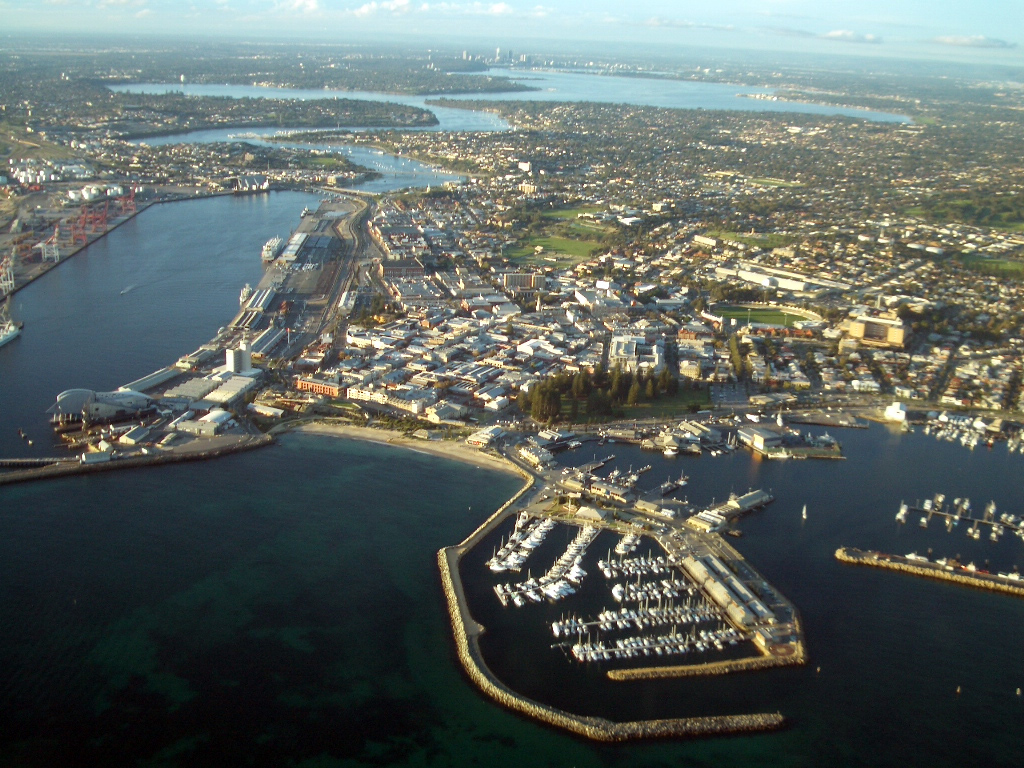
Fremantle (/ˈfriːmæntəl/; Nyungar: Walyalup) is a port city in Western Australia located at the mouth of the Swan River in the metropolitan area of Perth, the state capital. Fremantle Harbour serves as the port of Perth. The Western Australian vernacular diminutive for Fremantle is Freo.[1]
Key Information


.jpg)


Prior to British settlement, the indigenous Noongar people inhabited the area for millennia, and knew it by the name of Walyalup ("place of the woylie").[2] Visited by Dutch explorers in the 1600s, Fremantle was the first area settled by the Swan River colonists in 1829,[3]: 11 and is named after Captain Charles Fremantle, an English naval officer who claimed the west coast of New Holland as British territory.[4] The settlement struggled in its first decades, and in 1850, with the advent of penal transportation to the colony, Fremantle became Australia's primary destination for convicts. The convict-built Fremantle Prison operated long after transportation of convicts ended in 1868, and is now a World Heritage Site.
Fremantle was charted as a municipality in 1883, and the following decade its harbour was deepened for commercial shipping, transforming the port into a bustling trade centre and gateway at the height of the Western Australian gold rushes. Declared a city in 1929,[5] Fremantle played a key role in World War II as the largest submarine base in the Southern Hemisphere. Post-war immigration from Europe, particularly Italy, helped shape Fremantle's character, and it rapidly gentrified after hosting the 1987 America's Cup sailing competition. Today, Fremantle is recognised for its well-preserved Victorian and Edwardian streetscapes and convict-era architecture, and is known as a bohemian enclave with a thriving arts and culinary scene. It is also the traditional home of the Fremantle Football Club, one of two Australian Football League teams based in Western Australia.
History
[edit]Indigenous Australians
[edit]The original inhabitants of the land on which the city is built are the Whadjuk Noongar people, who called the area Walyalup[6] ("place of the woylie").[2] To the local Noongar people, Fremantle is a place of ceremonies, significant cultural practices and trading. For millennia the Noongar people met there in spring and autumn to feast on fish and game.[3]: 11
Anglesea Point and the limestone hill area at Arthur Head (where the Round House prison stands) to Point Marquis was called Manjaree, an important meeting place[7] where bush paths converged and a major trading place for Whadjuk and neighbouring Noongars. Today, Whadjuk and other Noongars continue to gather and meet in Walyalup and at Manjaree.
European settlement and convict era
[edit]

The first Europeans to visit the site of modern-day Fremantle were Dutch explorers captained by Willem de Vlamingh, in 1697. They mapped the area and went up the Swan River, and Vlamingh reported that it would be an ideal place for a settlement, although no attempts were made at the time.
The area was considered as a site for possible British settlement in 1827, when Captain James Stirling, in HMS Success, explored the coastal areas near the Swan River. His favourable report was welcomed by the British Government, who had for some time been suspicious of French colonial intentions towards the western portion of Australia. As a result of Stirling's report, Captain Charles Fremantle of HMS Challenger, a 603-ton, 28-gun frigate, was instructed to sail to the west coast of Australia to establish a settlement there.[8]
On 2 May 1829, Fremantle hoisted the Union Flag in a bay near what is now known as Arthur Head, and in accordance with his instructions, took formal possession "of the whole of the West Coast of New Holland" in the name of Britain's King George IV.[9] Western Australia Day (formerly Foundation Day) is observed on the first Monday in June, although it was actually on 2 June 1829 that Captain James Stirling on Parmelia arrived with Surveyor-General Roe and the first contingent of immigrants to set up the Swan River Colony.[10] The settlement of Perth began on 12 August 1829. Captain Fremantle left the colony on 25 August after providing much assistance to Stirling in setting up the colony. It was then that Stirling decided to name the port settlement Fremantle.[11] In early September 1829, the merchant vessel Anglesea grounded at Gage Roads, at the mouth of the Swan River. She did not break up, as had been expected, but instead survived to become Western Australia's first prison hulk.[12] Lotus, which arrived on about 10 October 1829, was "the second passenger ship that sailed for Western Australia."[13]
On 1 June 1850, the first convicts arrived at Fremantle aboard Scindian. The thirty-seventh and last convict ship to dock at Fremantle was Hougoumont on 10 January 1868, signalling the end of penal transportation to Australia. Among the 280 convicts on board were 62 Fenian military and political prisoners—members of the Irish Republican Brotherhood—six of whom managed to escape the Convict Establishment in the Catalpa rescue of 1876.[14] During this period, notorious South Sea pirate Bully Hayes lived in Fremantle with his fiancée Miss Scott, daughter of the Fremantle Harbour Master.[15]
Gateway to the West
[edit]
In 1897, Irish-born engineer C. Y. O'Connor deepened Fremantle Harbour and removed the limestone bar and sand shoals across the entrance to the Swan River, thus rendering Fremantle a serviceable port for commercial shipping.[16] This occurred at the height of the late 19th-century Western Australian gold rush, transforming Fremantle into a capital of trade and gateway for thousands of gold miners to the inland boom towns of Coolgardie, Kalgoorlie and Southern Cross. Camels and their Afghan drivers were familiar sights, and by-laws regulating the driving of camels through the streets of Fremantle were enacted.[17]
The wealth generated during this period resulted in the construction of many pubs, hotels, banks, warehouses, import-export businesses and shipping companies throughout Fremantle, and in 1905, the Fremantle tram network opened.
In 1919, a deadly clash between striking waterside workers and police took place at Fremantle Harbour.
Naval operations
[edit]During the Second World War, Fremantle was the home of the largest base for Allied submarines in the Southern Hemisphere, and the second largest in the Pacific War after Pearl Harbor.[18] In the lead-up to and during the war, the port's existing batteries were upgraded and new ones were constructed, forming a coastal defence system referred to as Fremantle Fortress. There were up to 125 US, 31 British and 11 Free Dutch submarines operating out of Fremantle,[19] until the Americans moved forward to the Philippines. One of the first US submarines to arrive in Fremantle, the USS Sargo (SS-188), was bombed by an Australian Lockheed Hudson, which mistook it for a Japanese vessel.[20] The movements and presence of USS Sturgeon (SS-187) is a good example of such activity.
Fremantle was considered a "veritable Shangri-la"[21] among submariners during the war, however tensions between transient American and non-American soldiers often led to alcohol-fuelled violence. On 11 April 1944, a brawl between American and New Zealand servicemen at the National Hotel resulted in many injuries and the death from stab wounds of two Māori soldiers.[22][23]
Post-Second World War
[edit].jpg)
After Australia won the 1983 America's Cup yacht race, Fremantle hosted Australia's defence of the trophy in 1987. The series was held in Gage Roads and significantly boosted the local economy and tourism. A new Fremantle marina, Challenger Harbour, was built alongside the existing Fishing Boat Harbour.
The City of Fremantle introduced several urban renewal projects in 2012, encouraging mixed-use development by increasing the maximum building height on key sites in the CBD, including Kings Square and the inner East End.[24] In January 2013, the City of Fremantle became the first council in Australia to outlaw the use of non-degradable plastic bags within their local area.[25]
Fremantle still serves as the chief general seaport for Western Australia, though far greater tonnages are exported from the iron-ore ports of the Pilbara.
Geography
[edit]
Fremantle lies on a series of limestone hills known by the Nyungar people as Booyeembara; the sandplain to the east is Gardoo.[26][27] The original vegetation of the area was mainly Xanthorrhoea and eucalyptus trees, which were traditionally fired annually by the Aboriginal people.
The suburb of Fremantle is bounded by the Swan River to the north and north-west, the Indian Ocean to the west, South Street to the south, and the suburbs of East Fremantle and White Gum Valley to the east. The central part of the suburb extends eastwards to include Royal Fremantle Golf Club and a suburban area south of Marmion Street and west of Carrington Street.[28] The City of Fremantle local government area also includes the suburbs of Beaconsfield, Hilton, North Fremantle, O'Connor, Samson, South Fremantle, and White Gum Valley. East Fremantle has its own town council and is not governed by the City of Fremantle.
Fremantle is the end of the Fremantle railway line which runs from Perth to Fremantle, run by the Western Australia's Public Transport Authority. Major highways including Stirling Highway, Canning Highway and Leach Highway have Fremantle as their start point and/or terminus.
Climate
[edit]Fremantle has a Mediterranean climate (Köppen: Csa). The regular sea breeze is known as the Fremantle Doctor, as it provides cooling relief from the summer heat when it arrives between noon and 3pm. Fremantle is generally a few degrees cooler than Perth in summer.
| Climate data for Fremantle | |||||||||||||
|---|---|---|---|---|---|---|---|---|---|---|---|---|---|
| Month | Jan | Feb | Mar | Apr | May | Jun | Jul | Aug | Sep | Oct | Nov | Dec | Year |
| Record high °C (°F) | 42.4 (108.3) |
41.0 (105.8) |
39.4 (102.9) |
35.8 (96.4) |
28.3 (82.9) |
26.3 (79.3) |
25.5 (77.9) |
26.0 (78.8) |
26.8 (80.2) |
36.3 (97.3) |
39.0 (102.2) |
40.0 (104.0) |
42.4 (108.3) |
| Mean daily maximum °C (°F) | 27.3 (81.1) |
27.9 (82.2) |
26.4 (79.5) |
23.6 (74.5) |
20.3 (68.5) |
18.1 (64.6) |
17.1 (62.8) |
17.3 (63.1) |
18.5 (65.3) |
20.1 (68.2) |
23.0 (73.4) |
25.4 (77.7) |
22.1 (71.8) |
| Mean daily minimum °C (°F) | 17.8 (64.0) |
18.1 (64.6) |
17.0 (62.6) |
14.9 (58.8) |
12.7 (54.9) |
11.1 (52.0) |
10.0 (50.0) |
10.2 (50.4) |
11.0 (51.8) |
12.3 (54.1) |
14.5 (58.1) |
16.5 (61.7) |
13.8 (56.8) |
| Record low °C (°F) | 11.7 (53.1) |
10.2 (50.4) |
7.4 (45.3) |
5.1 (41.2) |
5.1 (41.2) |
4.0 (39.2) |
3.0 (37.4) |
3.1 (37.6) |
2.2 (36.0) |
5.1 (41.2) |
6.7 (44.1) |
9.4 (48.9) |
2.2 (36.0) |
| Average precipitation mm (inches) | 6.3 (0.25) |
11.3 (0.44) |
16.3 (0.64) |
41.3 (1.63) |
112.8 (4.44) |
165.5 (6.52) |
156.2 (6.15) |
117.7 (4.63) |
69.2 (2.72) |
42.2 (1.66) |
18.2 (0.72) |
11.4 (0.45) |
764.6 (30.10) |
| Average precipitation days (≥ 0.2 mm) | 2.6 | 2.6 | 4.2 | 7.8 | 14.1 | 17.8 | 19.3 | 17.4 | 14.4 | 10.9 | 6.8 | 3.9 | 121.8 |
| Average relative humidity (%) (at 1500) | 57 | 55 | 57 | 59 | 62 | 64 | 66 | 63 | 62 | 62 | 59 | 60 | 61 |
| Source: Bureau of Meteorology[29] | |||||||||||||
Politics
[edit]
The Fremantle state seat was continuously held by the Australian Labor Party from 1924 until 2009, when it was lost at a by-election to Greens candidate Adele Carles. The seat was returned to Labor (Simone McGurk) in the 2013 state election.[30] The federal electorate has returned Labor members continuously since 1934, including former Prime Minister John Curtin, and is represented by Josh Wilson.
The local government of the City of Fremantle consists of a mayor and council. Hannah Fitzhardinge has been the mayor since the 2021 local government elections.[31]

Fremantle has been represented by some significant Australian political figures. John Curtin served as Prime Minister during the Second World War, and is often described as one of the nation's greatest political leaders. The state's largest university and a major secondary school in Fremantle are named after him, and his statue stands in Kings Square near the Fremantle Town Hall. A long-serving mayor of the town, Sir Frank Gibson (1919–1923 and 1926–1952), was also a Liberal parliamentarian from 1942 to 1956. Gibson, a pharmacist with a shop in High Street, was admired by all sides of politics for his civic leadership and tireless work for the city, especially during the Second World War, when he is said to have visited every ship that called at the port. He was a leading figure in many civic organisations and his stepson, Roger Dunkley, was medical officer with the 2nd/2nd Independent Company during the Timor campaign in the Second World War. Carmen Lawrence, the first female premier of an Australian state, later represented Fremantle in the federal House of Representatives.
Fremantle has seen many industrial conflicts, the most famous of which occurred in 1919 when rioting broke out during the Battle of the Barricades, resulting in one death and many injuries.[32]
On 10 November 2006, Australian state and territory attorneys general met in Fremantle to sign the Fremantle Declaration, a restatement and affirmation of legal and human rights principles in Australia.[33] In 2011, Prime Minister Julia Gillard launched the Commonwealth Youth Forum in Fremantle as part of the Commonwealth Heads of Government Meeting 2011, held in Perth 28–30 October.[34]
Heritage buildings
[edit]

Fremantle is renowned for its well-preserved architectural heritage, including convict-built structures and hundreds of gold rush-era buildings, presenting a variety and unity of historic buildings and streetscapes. These were often built in locally quarried limestone with ornate façades in a succession of architectural styles. Rapid development following the harbour works gave rise to an Edwardian precinct as merchant and shipping companies built in the west end and on reclaimed land.[35]
The Round House, the oldest remaining intact building in Western Australia, was built as a jail between 1830 and 1831.[36] The Round House had eight cells and a jailer's residence, which all opened up into a central courtyard. In the 1800s, bay whaling was carried out from Bathers Beach below the Round House. As part of the whaling operations, a tunnel was constructed under the Round House to provide whalers with access to the town from the jetty and beach. The Round House is located in what is now known as Fremantle's West End: a collection of streets characterised by late Victorian and Edwardian architecture. A process of gentrification in the early 1990s was accelerated by the establishment of the University of Notre Dame Australia that occupies, and has restored, many of the buildings in the West End.

When the first 75 convicts arrived from Britain in 1850 to support the colony's dwindling population, it became apparent that the Round House was inadequate to house them. The convicts built a new jail, Fremantle Prison, which was completed in the 1850s and continued to be used as Fremantle's prison until 1991. Fremantle Prison was once one of the most notorious prisons in the British Empire. It housed British convicts, local prisoners, military prisoners, enemy aliens and prisoners of war. In 2010, Fremantle Prison was placed on the UNESCO World Heritage List as part of the "Australian Convict Sites", making it the first built environment in Western Australia to be bestowed this honour.[37] It continues to be accessible to the public for guided tours and as a venue for artistic and cultural activities.[38]
Other convict-built buildings in Fremantle include the 1850s Fremantle School building and Commissariat Buildings, and the Fremantle Arts Centre, constructed in the 1860s from locally quarried limestone. It is a former lunatic asylum building on Ord Street, and is one of Fremantle's most significant landmarks.[39] Today, the imposing Victorian Gothic building and its historic courtyards are used for art exhibitions and music concerts.

The Fremantle Markets opened in 1897, forming a precinct providing handicrafts, specialty foods, dining halls and fish and vegetable markets. The area also hosts buskers and other street performers. The then premier, Sir John Forrest, laid the foundation stone for the markets on Saturday 6 November 1897. Over 150 stalls are housed in the Victorian-era building, which was listed by the National Trust of Australia and the state's Heritage Council in 1980. The Fremantle Markets are adjacent to several other historic buildings, including the Sail and Anchor Hotel (which contains a microbrewery), the Norfolk Hotel, the Warders Cottages, the Fremantle Technical School, Fremantle Synagogue and Scots Presbyterian Church.
Some key historical buildings have been lost to development, while others are only extant thanks to community activism that went against the wishes of developers.[3] For example, the art deco Oriana Cinema on the corner of Queen and High streets was demolished in 1972, after only 34 years of operation.[40] This was done to make way for the widening of High Street, but that project was stopped thanks to the campaigning of the Fremantle Society and other community members, and the buildings along the southern side of High Street were retained. The Fremantle Markets nearly suffered a similar fate in the late 1970s due to another road-widening proposal.[3]
The National Hotel, one of the city's historic buildings, was almost destroyed by fire on the night of Sunday, 11 March 2007. Though the interior was gutted, the façade was saved and the building has since been fully restored with an additional rooftop bar.[41][42]
Demographics
[edit]
In the 2021 Australian census, the local government area of City of Fremantle had a population of 31,930 people. 64.9% of the population was born in Australia, compared with the national average of 67%. Indigenous Australians make up 1.7% of the population, and the largest overseas-born groups come from England (8.5%), Italy (2.3%), New Zealand (2.1%), Scotland (1.2%) and Ireland (1.0%). After English, the most common language spoken at home is Italian (3.2%), followed by French (1.1%), German (1.1%), Spanish (1.0%) and Portuguese (0.8%).[43]
As of the 2021 census, Fremantle had an unemployment rate of 5.8%. The city has an above-average proportion of rented dwellings (31.7%, vs 30.6% nationally). 54% of the population had no religion, 19.7% of the population was Catholic, 8.1% Anglican and 7.5% not stated.[43]
Education
[edit]Tertiary institutions
[edit]Fremantle's tertiary education institutions are:

- University of Notre Dame Australia – the university's presence has contributed to Fremantle often being referred to as a "university town" typical of the older university towns of Europe and the only one of its type in Australia.[44] The restored historic buildings of the campus lend a distinctive character to Notre Dame.
- South Metropolitan TAFE (Technical And Further Education) – has several campuses in Fremantle, including its main campus in Beaconsfield, the WA Maritime Training Centre at Victoria Quay, and the E-Tech campus located within the city centre. South Metropolitan TAFE offers a range of courses from Certificate I to Advanced Diploma level across various campuses and across a range of disciplines.
- Curtin University Sustainability Policy Institute (CUSP) – CUSP was established in January 2008 and is headed by Peter Newman. CUSP has a strong affinity with Fremantle, which in itself is widely regarded as being at the forefront of sustainable practices.[citation needed] The institute welcomes PhD and Masters by Research students, and is offering a coursework Masters in Sustainability.[45]
The city centre is also home to a major teaching hospital, Fremantle Hospital.
Secondary schools
[edit]- John Curtin College of the Arts
- South Fremantle Senior High School
- Christian Brothers' College (CBC)
- Seton Catholic College
Primary schools
[edit]- Lance Holt School
- Fremantle Primary School
- Beaconsfield Primary School
- North Fremantle Primary School
- St Patrick's Primary School
Economy
[edit]
Fremantle has a diverse economy, with over 2,000 registered businesses operating across a wide range of sectors. Many of the city's enterprises are small businesses, with 75% employing fewer than five people.
Fremantle's biggest employment sector is health care and social assistance – 17.5% of the city's workers are employed in this area, reflecting the important influence of Fremantle Hospital. The transport, postal and warehousing sector employs 12.6% of the workers, followed by retail, employing 10.2%. The Local Gross Product of Fremantle was $3,677 million in 2011.[46]
Media
[edit]Fremantle was served by a Community Newspaper Group paper, The Fremantle–Cockburn Gazette, until 2021, when it was replaced by PerthNow – Fremantle. The independent local newspaper, the Fremantle Herald, also serves the region.
Fremantle also has two radio stations: Radio Fremantle on 107.9FM and 91.3 SportFM.
Online reporting and reviews of events and places within Fremantle are comprehensively covered by a group of local designers on their popular blog, known as 'Love Freo', and by a local photographer with his daily updated blog Freo's View.
Culture
[edit]

Fremantle offers a wide variety of dining experiences, with a strong emphasis on Italian and Asian cuisine as well as seafood. Various cafés and coffee shops are situated around Fremantle, particularly on the 'Cappuccino Strip',[47] a section of South Terrace known for its al fresco dining culture.[48] The Fishing Boat Harbour has become a tourist precinct, with a mixture of microbreweries, restaurants and some of Australia's largest fish and chip shops.[48] A number of old buildings on the harbour have been renovated, including Little Creatures Brewery, which occupies a former boat shed and crocodile farm, and contains a café and art gallery.[49] The harbour's annual Fremantle Sardine Festival on Esplanade Park attracts thousands of seafood lovers every year.[50] Other annual events held at the harbour include Araluen's Fremantle Chilli Festival, the Fremantle Boat Show, and the traditional Italian Blessing of the Fleet ceremony.[51]
Fremantle—along with the inner suburbs Northbridge, Leederville and Subiaco—is one of Perth's major nightlife hubs.[52] It attracts people from all over the metropolitan region for its pubs, bars and nightclubs.
There are several major annual festivals in Fremantle. First held in 1906, the Fremantle Festival is Australia's longest running community festival.[53] International street performers converge for the Fremantle Street Arts Festival, held over the Easter holiday period.[54] The Fremantle Heritage Festival celebrates local history with a variety of events, tours, concerts and workshops.[55]
Fremantle is also home to several galleries and museums. The Western Australian Museum has two branches in Fremantle: the Shipwreck Galleries, housed in convict-constructed commissariat buildings and known for its artefacts from the wrecked Dutch East India Company ship Batavia and other 17th-century Dutch ships; and the Maritime Museum on Victoria Quay, which contains exhibits related to maritime trade and the Indian Ocean. The Army Museum of Western Australia is housed in an historic Fremantle artillery barracks.
Arts
[edit]
The city has a large arts community, with a number of small art galleries and musical venues and a community theatre company, Harbour Theatre Inc., which has been performing in the city since 1963. There is also the J Shed situated on Bathers' Beach. J Shed houses four artists studios. Old Customs House, a heritage building just across from the working Fremantle Ports, is home to a not-for-profit artists agency, Artsource, and provides 23 artist studios, and houses several other arts organisations.

Known as a music hub, Fremantle has given rise to many notable musicians, including AC/DC frontman Bon Scott, who grew up in the city and whose gravesite at Fremantle Cemetery has become a cultural landmark.[56] A statue of Scott was erected in 2009 at the Fishing Boat Harbour.[57] Dom Mariani also grew up in Fremantle, as did James Baker, and in the mid-1970s, fellow punk rock pioneer Kim Salmon resided at the Tarantella Night Club, where he made his first public performances.[58] John Butler of the John Butler Trio started his music career busking in Fremantle in the 1990s. Alternative rock and folk groups Little Birdy, The Waifs and Eskimo Joe all have Fremantle connections, and belong to what has been dubbed the 'Freo Sound'.[59] Other notable Fremantle musicians include bassist Martyn P. Casey,[60] psychedelic rock groups Tame Impala and Pond,[61] and indie pop band San Cisco. Songs about Fremantle include the title track of Paul Kelly's 1987 album Under the Sun,[62] The Waifs' 2004 single "Bridal Train",[63] and much of Eskimo Joe's 2004 album A Song is a City. Fremantle is home to a number of independent labels, including Redline Records, co-run by Jebediah frontman and Fremantle-native Kevin Mitchell, and Jarrah Records, co-founded by the John Butler Trio and The Waifs. Music festivals held in Fremantle include the West Coast Blues & Roots Festival, the Fremantle Winter Music Festival,[64] and the St Jerome's Laneway Festival. The Fremantle Eisteddfod, running annually at the Fremantle Town Hall, supports young artists with prizes and concerts.[65]

Fremantle has served as the setting for several films. Windrider (1986) was shot in Fremantle and starred Nicole Kidman.[66] In the 2004 film Thunderstruck, four devoted AC/DC fans travel across Australia from Sydney to Fremantle to bury their best friend next to Bon Scott's grave. Shooting for the 2006 film Last Train to Freo took place outside Fremantle railway station, while scenes in the 2010 musical film Bran Nue Dae were shot in Fremantle's West End. Other films shot and/or set in Fremantle include Wind (1992), Teesh and Trude (2003) and Two Fists, One Heart (2008).
The children's television series The Sleepover Club and Streetsmartz were set and shot in Fremantle.[67][68] In 2006, Fremantle Prison was featured on an episode of the American version of The Amazing Race. Episodes of the BBC World documentary television series Peschardt's People have been filmed in Fremantle, including an episode with Australian actress Toni Collette and another with Fremantle-based English comedian Ben Elton.
Actors from Fremantle include Emma Booth, Ewen Leslie, David Frankflin, Mary Ward and Simon Lyndon. Sam Worthington and Megan Gale attended their first acting classes at John Curtin College of the Arts in Fremantle. In 2009, Fremantle model Tahnee Atkinson won the fifth cycle of Australia's Next Top Model.
Sport and recreation
[edit]
Global attention turned to Fremantle when it hosted the America's Cup yachting race in 1987, after Australia was the first country to ever win the race, aside from the US, in 1983. The unsuccessful cup defence was conducted on the waters in Gage Roads, and is considered a hallmark event of the late 20th century revitalisation and gentrification of the city.[69] Fremantle has subsequently served as a stopover in the Clipper, Velux and Volvo round-the-world yacht races, and hosted the 2011 ISAF Sailing World Championships, a major qualifying event for the 2012 Summer Olympics.[70]

Organised Australian rules football was first played in Fremantle in the early 1880s with the Fremantle Football Club, a founding member of the West Australian Football Association in 1885. The club disbanded at the end of the 1886 season after winning its first premiership.[71] Founded in 1882, the Fremantle-based Unions Football Club entered WAFA in 1886, attracting many players from the original Fremantle club, and went on to dominate the competition with ten premiership victories. The Unions folded in 1899 and were superseded by East Fremantle (1898–), South Fremantle (1900–), and North Fremantle (1901–1915).[71] The East Fremantle Sharks are by far the most successful club in the West Australian Football League, winning a total of 30 premierships.[72] East Fremantle Oval has been the team's home ground since 1953. Today, Fremantle is represented in the Australian Football League by the Fremantle Dockers, who previously trained at the heritage-listed Fremantle Oval, shared with South Fremantle, and play their home matches at Perth Stadium (also known as Optus Stadium) in Burswood. The club's main rivalry is with the Perth-based West Coast Eagles. In 2013, the Dockers played in (and lost[73]) their first Grand Final.[74] The Fremantle women's team has competed in AFL Women's since 2017 and play their home games at Fremantle Oval.
Founded in 1887, the Fremantle District Cricket Club competes in the Western Australian Grade Cricket competition, and plays its home fixtures at Fremantle's Stevens Reserve. The club has produced a number of Test players including Graeme Wood, Brad Hogg, Geoff Marsh and sons Shaun Marsh and Mitchell Marsh. Fremantle is represented in state league soccer by Fremantle City FC who play in the National Premier Leagues Western Australia.[75][76]

Fremantle is home to five beaches: Bathers Beach, River Beach, South Beach, Leighton Beach and Port Beach. The city's strong afternoon sea breeze, known locally as the Freo Doctor, has made its beaches a prime location for wind and kite surfing. The Fremantle Surf Life Saving Club has been active since the 1930s.[77] Fishing takes place at the many jetties and groynes surrounding Challenger, Success Boat and Fishing Boat harbours, and along Blackwall Reach at the Swan River, which is also used for canoeing, rock climbing and cliff diving.[49] A chain of islands listed as A Class nature reserves lie within 20 km (12 mi) of Fremantle, and are accessible by ferry or private boat. The largest and most well-known island is Rottnest Island, followed by Garden Island and Carnac Island. Each island is home to endemic flora and fauna, and provide opportunities for water-based activities such as sunbathing, surfing, snorkelling and scuba diving.[78]
Transportation
[edit]
Fremantle is home to Western Australia's largest working port.[79] The Inner Harbour, in Fremantle itself, handles almost the entire container trade for the state, as well as livestock exports, motor vehicle imports and general cargo. Located fifteen kilometres south of Fremantle, at Kwinana, the Outer Harbour is one of Australia's major bulk cargo ports, handling a variety of bulk commodities, from grain to LPG.[80]
The city is the western terminus of the direct, electrified passenger railway service from the Perth CBD, served by Fremantle railway station. The original station was built in 1881, with the current heritage-listed building dating from 1907. Fremantle was the starting point of railways in the metropolitan area of Perth, the Fremantle railway line being the starting point of the first railway in 1881 to Guildford.
Major highways, the Stirling Highway, Canning Highway and Leach Highway connect Fremantle to the Perth CBD.
Passenger ferries operate from the port, travelling to Rottnest Island, 22 kilometres off of the coast in the Indian Ocean, and upriver to Perth city centre. Fremantle's free Central Area Transit (CAT) bus services are popular and practical ways to get around, with one service (Blue CAT)[81] linking key points in the city and to Fremantle's inner suburbs. But ceased operations in October 2023[82]
Health
[edit]
The major health service facility in Fremantle is Fremantle Hospital, located at Alma Street, a short walk from the city centre. Fremantle Hospital is a 450-bed major acute-care teaching hospital with important tertiary links. The 24-hour emergency department was closed in 2015.[83] It is Western Australia's referral hospital for diving and hyperbaric medicine, and has a cardiothoracic surgery centre and nuclear medicine department. It also has a 66-bed mental health facility.
As a tertiary teaching hospital, Fremantle Hospital provides almost all specialty services on site and clinical services are backed by an extensive teaching program. As well as routine departmental and hospital-wide teaching, formal postgraduate courses are offered.[84] Emergency nursing, critical care nursing, perioperative nursing and infection control courses are held regularly and a postgraduate weekend for general practitioners is held every October.[85]
Sister and friendship cities
[edit]Fremantle has sister city relationships with five cities and friendship city relationships with three cities.[86] Some of the relationships reflect Fremantle's historic migrant population. They are (in chronological order):
 Seberang Perai, Malaysia (since 1978)
 Yokosuka, Japan (since 1979)
 Capo d'Orlando, Italy (since 1983)
- Molfetta, Italy (since 1984)
 Funchal, Portugal (since 1996)


Fremantle also has friendship-city relationships with three cities:


See also
[edit]
Notes
[edit]- ^ Australians generally favour the pronunciation "FREE-mantle" over its English antecedent "Fre-MAN-tle". However, the stress commonly reverts to the second syllable in phonetic compounds such as 'North Fre-MAN-tle', 'South Fre-MAN-tle', etc. "Freo" is pronounced FREE-oh.
- ^ a b "(26/3/2018) Inaugural Woylie Festival starts tomorrow", fremantle.gov.au. Retrieved 5 July 2020.
- ^ a b c d Davidson, Ron; Davidson, Dianne (2010). Fighting for Fremantle. Fremantle, Western Australia: Fremantle Society. ISBN 9781921361913.
For millennia the Noongar people met there in spring and autumn to feast on fish and game.
- ^ Stewart, William (2009). "Fremantle, Sir Charles Howe (1800-1869)". Admirals of the World: A Biographical Dictionary, 1500 to the Present. Jefferson, NC: McFarland. p. 135. ISBN 9780786482887.
- ^ "Fremantle A City". The West Australian. 4 June 1929. p. 17. Retrieved 2 May 2018 – via Trove (National Library of Australia).
- ^ "Walyalup women weavers". National Museum of Australia. Archived from the original on 7 November 2011. Retrieved 18 December 2010.
- ^ History: Migration to Fremantle at the Western Australian Museum Welcome Walls
- ^ Jackson, K. (1984). Fremantle, Western Australia, p. 7
- ^ Fremantle-the beginning (1972) In Gateway June 1973, £ol.2, No. 1, p. 12.
- ^ Hitchcock, J.K. (1927). Fremantle, 1829–49, found in Early Days, Vol. 1, Part 1, p. 11
- ^ Appleyard, Reginald Thomas; Manford, Toby (1979). The Beginning: European Discovery and Early Settlement of Swan River Western Australia. Nedlands: University of Western Australia Press. ISBN 0-85564-146-0. OCLC 6423026.
- ^ Goulding (2007), p. 14.
- ^ Favenc (1908), p. 242.
- ^ The Fenians Archived 2 July 2014 at the Wayback Machine, FremantlePrison.com.au. Retrieved 9 December 2011.
- ^ Clune, Frank. Captain Bully Hayes: Blackbirder and Bigamist. Perth: Hesperian Press, 1997. ISBN 0-85905-239-7, p. 11
- ^ Shawfactor (7 May 2014). "Local history of Fremantle".
- ^ Stevens, Christine (2002). Tin Mosques and Ghan Towns: A History of Afghan Camel Drivers in Australia. Melbourne: Oxford University Press. pp. 109–112. ISBN 0-9581760-0-0.
- ^ Cairns, Lynn. Secret Fleets: Fremantle's World War II Submarine Base. Western Australian Museum, 2011. ISBN 1-920843-52-3.
- ^ Cairns, L. (1995) Fremantle's secret fleets.
- ^ Dowson, J. (2003). Old Fremantle. Crawley, W.A: University of Western Australia Press. pp 214.
- ^ Sturma, Michael (2006). Death at a Distance: The Loss of The Legendary USS Harder. Annapolis, Maryland: Naval Institute Press. ISBN 978-1-61251-432-1.
- ^ Soldiers' deaths: Coroner's finding The West Australian, 28 June 1944, p.4, at Trove
- ^ Maoris Tell Vivid Stories Of Fremantle Stabbing Brawl Which Ended In Two Deaths The Mirror, Perth, 1 July 1944, at Trove
- ^ "City Centre urban renewal (Amendment 49)". City of Fremantle. Archived from the original on 29 March 2013. Retrieved 26 February 2013.
- ^ Zaw, Yolanda (31 January 2013). "Freo bans plastic bags", The West Australian. Retrieved 4 February 2013.
- ^ Lyon, R. M., A Glance at the Manners and Languages of the Aboriginal Inhabitants of Western Australia, 1833; published in Green 1979 (below).
- ^ Green, N. (ed.) Nyungar: The People, Creative Research Publishing, Mount Lawley College, Perth, 1979
- ^ Department of Land Information. StreetSmart Perth Street Directory (54th ed.). West Australian Newspapers Ltd. pp. Map 430-431. ISBN 978-0-909439-67-5.
- ^ "Climate Statistics for Fremantle, WA". Retrieved 16 May 2012.
- ^ "Election 2013". Western Australian Electoral Commission. 2013. Archived from the original on 12 March 2013. Retrieved 23 May 2022.
- ^ "Your Elected Members". City of Fremantle. Retrieved 9 May 2024.
- ^ Australian Labor Federation (1920). – via Wikisource.
- ^ Coorey, Phillip; Dick, Tim (11 November 2006). "Fair trials accord adds to pressure over Hicks", The Sydney Morning Herald. Retrieved 4 June 2011.
- ^ Mullany, Ashlee (24 October 2011). "Gillard tells youth to be idealistic", Perth Now. Retrieved 7 November 2011.
- ^ Irving, Robert (arch. consultant); et al. (1982). Book of Historic Australian Towns. Morrison, Robin (Photos) (1 ed.). Reader's Digest. pp. 134–139. ISBN 0-909486-93-X.
Easily quarried limestone was as popular with colonial builders as sandstone or bluestone was with their counterparts in New South Wales or Victoria
- ^ "Fremantle Focus, History and Heritage". Archived from the original on 25 June 2005.
- ^ Fremantle Prison inscribed on the World Heritage list Archived 17 February 2011 at the Wayback Machine
- ^ Mission, vision and objectives Archived 20 August 2009 at the Wayback Machine at Fremantle Prison official site
- ^ Welcome to the Fremantle History Museum WA Museum site, with photographs
- ^ Fremantle Local History Centre. "Search results for 'Oriana Cinema'". Fremantle Local History Centre's photographic collection. Retrieved 14 January 2011.[permanent dead link]
- ^ New life for old National Archived 22 March 2012 at the Wayback Machine, inmycommunity.com.au. Retrieved 14 May 2011.
- ^ Development Plans, National Hotel Fremantle. Retrieved 1 September 2012.
- ^ a b "2021 Fremantle, Census All persons QuickStats | Australian Bureau of Statistics".
- ^ Dame, Notre (16 March 2018). "Fremantle". Notre Dame. Retrieved 29 August 2025.
- ^ "Curtin University sustainability". Retrieved 18 February 2013.
- ^ "Economic profile for the City of Fremantle". Retrieved 18 February 2013.
- ^ Jones, Kate (26 November 2020). "The Weekender: Fremantle, Western Australia". Retrieved 3 December 2020.
- ^ a b O'Brien, Katrina; Swaffer, Andrew. West Coast Australia Handbook. Footprint Travel Guides, 2003. ISBN 1-903471-55-9, p. 98
- ^ a b Hayes, Joshua (12 May 2006). "Perth's best kept secrets" Archived 2 April 2015 at the Wayback Machine, 3rd Degree, Edith Cowan University Journal. Retrieved 4 June 2011.
- ^ Food Festivals Archived 30 September 2011 at the Wayback Machine, Ninemsn Travel (19 July 2006). Retrieved 17 May 2011.
- ^ Fremantle Fishing Boat Harbour :: Events Archived 22 March 2011 at the Wayback Machine, fremantlefishingboatharbour.com. Retrieved 19 June 2011.
- ^ Ashworth, Susie; Bain, Carolyn; Smitz, Paul. Lonely Planet Australia. Lonely Planet, 2004. ISBN 1-74059-447-9, p. 847
- ^ "Fremantle Festival". City of Fremantle. Archived from the original on 2 March 2013. Retrieved 26 February 2013.
- ^ "Fremantle Arts & Artists". A Travel guide to Fremantle Western Australia. Retrieved 26 February 2013.
- ^ "Heritage Festival". City of Fremantle. Archived from the original on 13 February 2013. Retrieved 26 February 2013.
- ^ Weber, Mark (17 February 2006). "Bon Scott's grave given heritage listing", PM, ABC Radio National. Retrieved 5 June 2011.
- ^ Bon Scott Archived 16 January 2010 at the Wayback Machine Greg James Sculpture-Public Art
- ^ "The Unofficial Kim Salmon Story" (May 1991). Pig Meat, Issue 3.
- ^ O'Donnell, Mick (13 October 2004). "'Freo Sound' dominates ARIA nominations" Archived 24 March 2017 at the Wayback Machine, The 7.30 Report. Retrieved 24 May 2011.
- ^ Ferguson, Katherine (6 May 2008). "Mid-aged musos to release first album", eMU News. Retrieved 6 November 2011.
- ^ Griffin, Gil (18 June 2013). "International stars, local legends", Fremantle Football Club. Retrieved 10 June 2014.
- ^ Horsburgh, Susan (4 June 2007). "Song lines" Archived 9 November 2011 at the Wayback Machine, Brisbane Times. Retrieved 26 May 2011.
- ^ Brabazon, Tara. Liverpool of the South Seas: Perth and its Popular Music. Perth: UWA Publishing, 2005. ISBN 1-920694-30-7, p. 217
- ^ Events / Fremantle Winter Music Festival, rtrfm.com.au. Retrieved 26 May 2011.
- ^ "Fremantle Eisteddfod". Fremantle Eisteddfod. Archived from the original on 15 August 2020. Retrieved 16 August 2020.
- ^ WA Films at the State Library Archived 4 November 2011 at the Wayback Machine, slwa.wa.gov.au. Retrieved 22 November 2011.
- ^ Filming locations for "The Sleepover Club", imdb.com. Retrieved 1 June 2011.
- ^ Filming locations for "Streetsmartz", imdb.com. Retrieved 1 June 2011.
- ^ Hall, C. Michael; Selwood, John H. (1995). "Chapter 7: Event Tourism and the Creation of a Postindustrial Portscape: The Case of Fremantle and the 1987 America's Cup". In Fagence, Michael; J. Craig-Smith, Stephen (eds.). Recreation and Tourism as a Catalyst for Urban Waterfront Development: An International Survey. Greenwood Publishing Group. pp. 105–114. ISBN 0-275-94550-2.
- ^ Longley, John (28 November 2011). "Sailors chase Olympic dreams" Archived 16 July 2012 at archive.today, The West Australian. Retrieved 1 January 2012.
- ^ a b Devaney, John. Full Points Footy's WA Football Companion. Full Points Publications, 2008. pp. 104–105. ISBN 0-9556897-1-6.
- ^ Townsend, Josh (3 June 2011). "Sharks have most to lose" Archived 10 December 2011 at the Wayback Machine, The West Australian. Retrieved 8 June 2011.
- ^ "AFL grand final: Hawthorn makes up for 2012 loss with 15-point win over Fremantle at MCG". Australian Broadcasting Corporation. 28 September 2013. Retrieved 28 September 2013.
- ^ Season by Season Record Archived 4 March 2011 at the Wayback Machine, fremantlefc.com.au. Retrieved 8 June 2011.
- ^ "2025 NPLWA - Men's fixtures". Football West. 6 February 2025. Retrieved 5 April 2025.
- ^ "2025 NPLWA - Women's fixtures". Football West. 6 February 2025. Retrieved 5 April 2025.
- ^ Walton, Graham (2001). Fremantle Surf Lifesaving Club History Archived 14 April 2011 at the Wayback Machine, freosurf.com.au. Retrieved 17 May 2011.
- ^ Fremantle Tours: Fremantle Waters Archived 6 June 2012 at the Wayback Machine, escapadecharters.com.au. Retrieved 18 June 2011.
- ^ "About Fremantle Ports". Retrieved 31 October 2012.
- ^ "Fremantle Ports: Western Gateway to World Trade" (PDF). Archived from the original (PDF) on 26 May 2012. Retrieved 31 October 2012.
- ^ Poulsen, Adam (27 October 2020). "Fremantle could axe free CAT buses". PerthNow. Retrieved 9 July 2021.
- ^ "CAT Bus". Archived from the original on 10 October 2012. Retrieved 31 October 2012.
- ^ "Your Hospital Stay". Fremantle Hospital & Health Service. Fremantle Hospital.
- ^ "Education and Research". Fremantle Hospital & Health Services. Fremantle Hospital. Retrieved 26 February 2013.
- ^ "Education and Research". Fremantle Hospital & Health Service. Fremantle Hospital. Retrieved 26 February 2013.
- ^ Sister cities and international relations Archived 10 October 2012 at the Wayback Machine, fremantle.wa.gov.au. Retrieved 22 May 2011.
References
[edit]- Favenc, Ernest (1908), The Explorers of Australia and Their Life-work, Melbourne: Whitcombe & Tombs Limited, OL 7152200M, Wikidata Q136436246
- Goulding, Dot (2007). Recapturing Freedom: Issues Relating to the Release of Long-term Prisoners into the Community. Hawkins Press. ISBN 978-1876067182.
External links
[edit] Media from Commons
 Travel information from Wikivoyage


- Fremantle Chamber of Commerce
- Fremantle Local Tourist Guide
- Fremantle Port Authority
- Fremantle Tourism
| International | |
|---|---|
| National | |
| Geographic | |
| Other | |

Fremantle
View on GrokipediaHistory
Pre-Colonial Indigenous Presence
The Whadjuk Noongar people were the traditional custodians of Walyalup, the Noongar name for the Fremantle area at the mouth of the Swan River estuary, where archaeological evidence indicates continuous occupation spanning at least 13,700 years before present (BP), with some sites suggesting human activity exceeding 32,000 years BP.[7] Open-air campsites in the western Greater Swan Region, including locations near modern Fremantle such as the Fiona Stanley Health Precinct and Minim Cove, yielded flaked stone artifacts made from local materials like Eocene fossiliferous chert, quartz, and mylonite, alongside retouched tools such as adze flakes, pointing to tool-making and processing activities adapted to the local landscape.[7] Regional evidence from the Swan coastal plain extends Whadjuk presence to at least 40,000 years, consistent with broader Noongar habitation in southwestern Australia dating to the late Pleistocene, around 48,000 years BP.[8][9] Shell middens and associated marine mollusc remains at sites like Lakes Cooloongup and Walyungup, adjacent to Fremantle, date to approximately 8,000 years BP, reflecting intensive shellfish exploitation following post-glacial sea level stabilization that formed the modern estuary.[7] These middens, along with ethnographic accounts corroborated by site densities, indicate seasonal gatherings focused on the estuary's resources, including fishing with spears and traps, hunting of kangaroos, possums, and wallabies, and gathering of native plants such as grass trees for resin and food.[10] Walyalup served as a key meeting place, with campsites documented at Manjaree (Arthur Head), Success Hill, and Bennett’s Brook, where quartz tools and kangaroo-skin cloaks were utilized in family-based groups living in environmental equilibrium.[10] Archaeological records show no evidence of permanent large-scale structures or agricultural modifications in the Walyalup area; instead, site patterns support a semi-nomadic lifestyle of cyclical movement tied to resource availability, including fire-stick practices to manage habitats without altering fundamental ecosystems.[10][9] Oral histories describe Walyalup's significance since creation times, named after the walyo (small kangaroo rat), underscoring long-term adaptation to the estuary's seasonal bounty of fish, shellfish, and terrestrial game without fixed settlements.[10] This hunter-gatherer pattern aligns with empirical data from open-air sites across the region, emphasizing mobility over sedentary modification.[7]European Exploration and Early Settlement (1829–1850)
European exploration of the region encompassing modern Fremantle commenced with Dutch voyages in the 17th century. In 1696, Captain Willem de Vlamingh sailed into the Swan River, charting its estuary and observing abundant black swans, which inspired its naming, while exploring the western coastline northward.[11] British surveys followed in the early 19th century amid concerns over French expansion, with Captain James Stirling examining the Swan River aboard HMS Success in 1827 and reporting favorably on its potential for settlement due to the river's navigability and surrounding lands.[12] On 25 April 1829, Captain Charles Fremantle arrived at the Swan River mouth aboard HMS Challenger, anchoring off Garden Island before entering the estuary on 2 May.[13] That day, Fremantle formally proclaimed British possession of the entire western coast of New Holland (Australia) by raising the Union Jack at Arthur Head, the promontory now central to Fremantle, securing the territory against rival claims.[2] The site, selected for its strategic oversight of the harbor entrance, marked the initial European claim, with Fremantle conducting preliminary surveys of the bar and anchorage to assess maritime access amid challenging shoals and tides.[14] Lieutenant Governor James Stirling established the Swan River Colony upon his arrival on 1 June 1829 aboard the Parmelia, proclaiming its foundation and directing the initial settlement at the river's mouth, which evolved into Fremantle as the principal port.[15] Early efforts prioritized land surveys by parties under Surveyor-General John Septimus Roe and basic harbor improvements, including makeshift wharves from local timber to facilitate supply landings, as the natural bar hindered larger vessels.[16] However, settlers encountered severe difficulties from sandy, infertile soils unsuitable for immediate agriculture, resulting in crop failures and dependence on imported provisions from the Cape of Good Hope and Britain, with food shortages threatening the colony's viability by 1830.[17] Rudimentary farming persisted on limited alluvial patches near the estuary, sustaining a population that grew modestly to around 1,800 non-Indigenous residents by 1832 through private enterprise rather than government aid.[12]Convict Era and Infrastructure Building (1850–1890)
The arrival of the first convict ship, Scindian, on 1 June 1850 marked the beginning of transportation to Western Australia, with 75 convicts disembarking at Fremantle, which was designated as the primary penal depot for the colony.[18] Over the subsequent 18 years, approximately 9,700 male convicts were transported to Fremantle, providing a workforce that addressed the colony's chronic labor shortages and enabled large-scale public works.[19] This influx transformed Fremantle from a struggling settlement into a hub of enforced labor, where convicts were housed initially in temporary facilities like the Commissariat stores before permanent structures were erected.[18] Convict labor was central to constructing Fremantle Prison, known initially as the Convict Establishment, which began in 1851 and was substantially completed by 1859 using limestone quarried on-site by the prisoners themselves.[18] Designed by Captain Edmund Henderson of the Royal Engineers, the prison's panopticon-inspired layout facilitated surveillance and control, housing up to 1,000 inmates and serving as the administrative headquarters for the convict system across Western Australia.[20] Beyond the prison, convicts under warder supervision built essential infrastructure, including jetties for improved harbor access and roads linking Fremantle to inland areas, which stabilized the local economy by facilitating trade and resource extraction.[21] The convict system's emphasis on probation and tickets-of-leave allowed skilled convicts—many of whom possessed trades like stonemasonry and carpentry—to contribute to public buildings such as barracks and hospitals, laying the physical foundations for Fremantle's port viability.[19] By 1868, with the arrival of the final transport ship Hougoumont carrying 269 convicts, transportation ceased, shifting reliance to probationary labor from existing convicts until the system's full handover to colonial control in the 1880s.[22] This period's forced labor directly caused the development of durable assets that supported subsequent economic expansion, though convict courts recorded persistent offenses, with transportees comprising a notable portion of defendants in theft and other categories.[23]Gold Rush Boom and Port Expansion (1890–1914)
The discovery of rich gold deposits in Western Australia, beginning with the Kimberley fields in 1885 and intensifying with Coolgardie in 1892 and Kalgoorlie in 1893, triggered an economic boom that profoundly transformed Fremantle into the colony's primary port. Revenues from gold exports, which surged as production reached 662,000 ounces annually by 1897, provided the fiscal foundation for major infrastructure investments, including harbor enhancements to accommodate increased shipping traffic. This influx of wealth and prospectors positioned Fremantle as the essential gateway for imports of mining equipment and exports of bullion, with over 100,000 immigrants arriving between 1891 and 1901, many disembarking at its facilities.[24][17] Fremantle's population expanded rapidly amid this prosperity, rising from 7,077 residents in the 1891 census to 23,638 by 1901, fueled by immigration from eastern Australia, Britain, and Europe drawn to goldfield opportunities and port-related employment. Commerce burgeoned as the port handled a tripling of vessel arrivals, from around 200 in 1890 to over 600 by 1900, necessitating urgent upgrades to overcome the shallow Swan River bar that previously limited access to smaller ships. Engineer C.Y. O'Connor, appointed in 1891, oversaw the construction of breakwaters starting in November 1892, dredging from mid-1894, and wharf building from 1896, culminating in the opening of the Inner Harbour on May 4, 1897, which enabled larger steamers to berth directly and boosted trade volumes.[25][26][27] Urbanization accelerated with the construction of civic and commercial structures in Victorian and emerging Federation architectural styles, symbolizing the era's optimism and funded by mining-derived prosperity. Notable examples include banks, hotels, and warehouses along High Street, built between 1895 and 1910 to service the expanded trade, with features like ornate facades and robust masonry reflecting the influx of capital. This building spree not only housed the growing administrative and mercantile activities but also established Fremantle's distinctive heritage precinct, as gold revenues—peaking at £7 million in exports by 1900—directly supported public works and private investments.[28][17]World Wars and Strategic Naval Role (1914–1945)
During World War I, Fremantle Harbour served as a secondary logistical hub for Royal Australian Navy operations in the Indian Ocean, providing coaling, repairs, and resupply for patrols targeting German commerce raiders like SMS Wolf, which sank multiple Allied vessels in the region between 1917 and 1918.[29] The port's pre-existing fortifications, including artillery batteries at Arthur Head and Mouat Point dating to the 1890s, were maintained for coastal defense against potential surface threats, though no enemy incursions reached Fremantle waters.[30] Merchant convoys occasionally assembled there for protection en route to eastern ports, but the harbor saw limited naval militarization compared to eastern Australian bases, with primary convoy departures for troop transports occurring from Albany in November 1914.[31] World War II transformed Fremantle into a critical Allied naval outpost following the fall of Singapore and Java in early 1942, when Japanese expansion necessitated a forward base for submarine operations in the Indian and Pacific Oceans.[32] The U.S. Navy's Submarine Squadron 16, with tender USS Holland, arrived on 3 March 1942, establishing the largest submarine base in the southern hemisphere; British and Dutch forces joined soon after, totaling over 170 submarines (127 American, more than 30 British, and several Dutch) that conducted 416 war patrols from the port between 1942 and 1945.[33][34] These patrols sank numerous Japanese vessels, contributing to sea denial in support of Pacific theater campaigns, while convoy escort duties—often involving RAN and U.S. warships like HMAS Adelaide—protected merchant shipping to India and the Middle East from U-boat and raider threats.[35] The base's infrastructure expanded rapidly, with the 1942 construction of the 2,000-ton Fremantle South Slipway enabling repairs for submarines, escorts, and damaged merchant ships, sustaining wartime industries and local employment amid heightened port traffic.[36] Operations incurred heavy costs: eight U.S. submarines lost directly on patrols from Fremantle, plus ten more subsequently sunk, including USS Bullhead (84 crew killed) in 1945—the last U.S. Navy vessel lost in the war—with total submarine casualties from the base exceeding 800 personnel.[37] Strategic basing decisions prioritized Fremantle's secure deep-water access over riskier northern ports, enabling sustained patrols despite logistical strains from Japanese anti-submarine measures introduced in 1943.[32] Following Japan's surrender on 15 August 1945, U.S. submarines departed Fremantle by 31 August, with British units lingering into 1946 for demobilization; naval facilities reverted to civilian port functions, marking the end of Fremantle's acute wartime strategic role.[33]Post-War Industrialization and Urban Growth (1945–2000)
Following World War II, Fremantle experienced significant population growth driven by Australia's national immigration program, which brought over 120,000 migrants to Western Australia between 1947 and 1952, with many settling in the Perth metropolitan area including Fremantle.[38] This influx, particularly from Europe including Italy, fueled suburban expansion in the 1950s and 1960s, as post-war housing demand led to development in southern and eastern suburbs east of areas like Wilkinson Street, transforming sparsely industrialized zones into residential neighborhoods.[39] The growing population supported key industries, notably commercial fishing, where Italian immigrants pioneered permanent fleets and cooperatives in Fremantle, establishing it as a hub for the sector.[40] Grain exports also expanded via the port, underpinning agricultural trade as Western Australia's economy recovered from wartime disruptions.[41] By the 1970s, Fremantle's urban fabric had evolved with multicultural influences from these migrants, evident in the fishing industry's composition and broader community shifts, though heavy manufacturing remained limited compared to port-related activities.[42] The hosting of the America's Cup defense in 1986–1987 marked a pivotal economic catalyst, drawing international attention and stimulating infrastructure upgrades, including waterfront enhancements and hospitality facilities to accommodate surging visitor numbers.[43] This event generated substantial revenue for local businesses, with hotels at capacity and a tourism boom that elevated Fremantle's global profile, laying groundwork for diversification beyond traditional exports.[44] In the 1990s, amid broader Australian deindustrialization trends, Fremantle saw a decline in heavy port and manufacturing dominance, with emphasis shifting toward heritage preservation and tourism as economic drivers.[45] The America's Cup legacy accelerated this transition, positioning Fremantle as Western Australia's second-leading tourist destination after Perth, leveraging its preserved Victorian architecture and convict-era sites for visitor appeal rather than industrial output.[46] Gentrification in areas like the West End complemented this, fostering a service-oriented economy while addressing the contraction of export-focused sectors like grain handling.[45]Recent Developments and Port Future (2000–Present)
In the early 2000s, the Port of Fremantle faced growing constraints from silting and limited channel depths, prompting a 2009 deepening project that increased draft capacity to 14 meters in the inner harbor, entrance channel, and deep water channel to accommodate larger vessels.[47] However, ongoing urban encroachment into freight corridors and proximity to residential areas have intensified debates over long-term viability, with experts citing risks to efficiency and safety from expanding city development.[48] By the 2010s, trade volumes at Fremantle, primarily containers and general cargo rather than bulk commodities like iron ore (which dominates Western Australia's overall exports via northern ports), reached approximately 29.73 million tonnes annually by 2023-24 before a slight decline in 2024-25 due to global shipping fluctuations.[49] The Westport project emerged as the primary response, envisioning relocation of container operations to Kwinana by the late 2030s to address these limits and support projected trade growth.[50] Endorsed in April 2025, the business case projects that failing to act could forfeit $244 billion in economic value over decades, while the new facility would enhance efficiencies, reduce import/export costs, and integrate with upgraded freight rail networks to handle rising volumes tied to Western Australia's $445 billion trade gateway.[50] [51] The initiative, spanning port development, road/rail corridors, and logistics hubs, aims to create jobs in construction and operations while minimizing urban conflicts at Fremantle.[52] Parallel to port relocation, the Western Australian Government endorsed the Future of Fremantle Place and Economic Vision in early 2025, outlining a 50-year redevelopment of the inner harbor precinct into a mixed-use waterfront hub post-container shift.[53] This plan emphasizes economic activation through tourism, residential, and commercial spaces, leveraging the site's historical assets while resolving encroachment issues.[54] Amid these changes, Fremantle's population stabilized at 31,662 in the 2021 census, reflecting limited growth due to housing constraints with an estimated unmet need of around 3,000 units locally.[55] [56] Enhanced connectivity via southwest transport corridors and potential roll-on/roll-off facility shifts are projected to support urban revitalization without exacerbating shortages.[57]Geography
Location and Physical Features
Fremantle lies approximately 19 kilometers southwest of Perth's central business district, positioned at the mouth of the Swan River as it discharges into the Indian Ocean, forming the lower extent of the Swan-Canning estuary.[58] The City of Fremantle encompasses a land area of 19 square kilometers, bounded by the Indian Ocean to the west, the Swan River to the north and east, and urban extents to the south.[59] This estuarine setting constrains development to a narrow coastal strip, with the river's meandering channel and tidal influences dictating early settlement patterns around natural deep-water access points.[60] The topography features low-lying coastal plains of the Swan Coastal Plain, elevated by parallel dune systems including the Holocene Quindalup Dunes, which form sandy barriers up to 30 meters high along the shoreline, interspersed with limestone ridges derived from the Tamala Limestone formation.[61] These ridges, cemented aeolianites, create irregular highs that affect soil stability and drainage, with sandy, calcareous soils predominating and limiting certain construction without foundational adaptations due to karstic features and poor load-bearing capacity in dune areas.[62] Beaches such as those at Bathers Bay and South Beach fringe the western edge, backed by these dunes, while the estuary's mudflats and shallow margins inland shape floodplain dynamics.[63] Fremantle's harbor relies on a naturally sheltered embayment, enhanced by artificial north and south mole breakwaters constructed from the late 19th century, which extend seaward to mitigate wave action but have amplified tidal propagation upriver, contributing to heightened flood susceptibility in low-lying zones during high-water events.[64] This configuration, combined with the limestone substrate's variable permeability, influences urban morphology by concentrating growth along stable harbor-front elevations while exposing peripheral areas to inundation risks from estuarine surges.[63]Climate Patterns and Environmental Influences
Fremantle experiences a hot-summer Mediterranean climate (Köppen classification Csa), characterized by mild, wet winters and warm, dry summers. Long-term records from the Bureau of Meteorology indicate average daily maximum temperatures ranging from 18.1°C in July to 28.5°C in January, with minimums from 8.4°C in July to 18.4°C in January.[65] Annual rainfall averages 694.9 mm, with over 80% concentrated in the winter months of May to August, reflecting the influence of frontal systems from the Southern Ocean.[65] Summer months typically receive less than 10 mm on average, contributing to frequent bushfire risks in surrounding areas during periods of low humidity and high temperatures. The Leeuwin Current, a poleward-flowing eastern boundary current along Western Australia's coast, plays a key role in moderating Fremantle's climate by transporting warm, tropical waters southward. This current deepens the thermocline and elevates sea surface temperatures, preventing the southward extension of cooler sub-Antarctic waters and resulting in milder winter temperatures and reduced coastal fog compared to similar latitudes elsewhere.[66] The current's strength peaks in austral winter due to alongshore pressure gradients, correlating with higher sea levels at Fremantle tide gauge, which indirectly supports regional moisture influx via enhanced evaporation.[67] Interannual variability tied to El Niño-Southern Oscillation phases weakens the current during La Niña events, amplifying its thermal influence.[68] Historical meteorological records reveal multi-decadal drought cycles in the Perth-Fremantle region, with notable dry periods such as the 1970s-2010s decline in winter rainfall, reducing inflows to the Swan River system by approximately 80% since the 1970s.[69] These cycles, driven by shifts in the subtropical ridge and Indian Ocean Dipole, have strained surface water supplies, prompting increased reliance on groundwater aquifers that exhibit lagged responses to precipitation deficits.[70] Empirical data from the past 150 years show episodic severe droughts, including the record-low six-month rainfall in 2023-2024, exacerbating salinity intrusion in coastal wetlands and challenging agricultural viability in adjacent Swan Coastal Plain areas.[71] Tide gauge measurements at Fremantle, one of the longest continuous records in the Southern Hemisphere spanning over a century, document an empirical sea-level rise of approximately 1.6 mm per year through the 20th century, aligning with global averages but accelerating to around 3-4 mm per year in recent decades.[72] This rise has led to increased frequency of high-water events in low-lying coastal zones, such as South Fremantle and the port's inner harbor, where tidal inundation and erosion have affected infrastructure like wharves and beaches.[73] Local adaptations, including periodic dredging and embankment reinforcements observed in port operations, have mitigated some impacts, though ongoing monitoring highlights vulnerabilities in subsidence-prone sedimentary areas.[74]Government and Politics
Structure of Local Governance
The City of Fremantle operates as a local government area under Western Australia's Local Government Act 1995, with its council comprising a popularly elected mayor and ten councillors who collectively function as the primary decision-making body for municipal affairs.[75] The council is structured into four wards—Central, East, North, and South—established following boundary adjustments effective from the 2023 elections, enabling representation tailored to distinct community areas.[76] Responsibilities encompass land-use planning through local schemes, property rate collection, and delivery of essential services such as waste management, community facilities, and infrastructure maintenance.[77][78] Elections for the mayor and councillors occur every two years on the third Saturday in October, with successful candidates serving four-year terms, typically resulting in staggered renewals of approximately half the council positions to ensure continuity.[79] The municipal budget, funded primarily by rates which account for around 62% of total revenue, supports operational expenditures exceeding $100 million annually, supplemented by state grants, fees, and other income sources.[80] For the 2025–26 financial year, differential general rates and minimum payments were applied to balance revenue needs amid rising costs.[81] While the City of Fremantle holds authority over local planning and services, oversight of the adjacent Port of Fremantle falls under the state-controlled Fremantle Ports authority, necessitating coordination with Western Australian government agencies for matters involving port-adjacent development, environmental impacts, and infrastructure synergies.[82] Federal involvement arises indirectly through national trade policies and funding for strategic port enhancements, though primary governance remains at the state level.[83] This delineation ensures local priorities align with broader economic imperatives without direct municipal control over port operations.[84]Electoral History and Political Dynamics
The federal Division of Fremantle has been a consistent Australian Labor Party stronghold since 1949, with Labor candidates securing over 55% of the two-party-preferred vote in most elections, including Josh Wilson's retention of the seat in the May 2025 federal election with a margin exceeding 10%. [85] [86] This pattern stems from the electorate's historical ties to maritime labor and working-class demographics, yielding Labor primary votes typically above 40% even in national swings against the party. [87] At the state level, the Legislative Assembly district of Fremantle mirrors this Labor dominance, with the party holding the seat continuously since 1989 and achieving a 15%+ margin in the March 2025 election despite minor national trends favoring independents. [88] [89] Voting data indicate steady primary support around 45-50%, underscoring policy continuity on infrastructure and worker rights aligned with port operations, with limited incursions from Liberal or Greens candidates. [90] Local City of Fremantle council elections, conducted every two years under Western Australia's non-compulsory postal voting system with four-year mayoral terms, reveal greater volatility than higher tiers, featuring independent and Greens-aligned candidates challenging traditional Labor influence since the early 2000s. [79] Brad Pettitt, mayor from 2009 to 2021 and associated with Greens environmental priorities, won three terms by mobilizing progressive voters focused on heritage preservation over rapid development. [91] In October 2021, independent Hannah Fitzhardinge secured a landslide mayoral victory with over 60% of first-preference votes, extending left-leaning control amid high turnout reflecting debates on urban planning. [92] However, the October 18, 2025, election marked an upset as independent Ben Lawver defeated Fitzhardinge, capturing the mayoralty with preferences favoring pragmatic platforms on homelessness, vacant retail spaces, and infrastructure acceleration, amid voter turnout dipping to around 35%—slightly below prior cycles and signaling disillusionment with ideological stasis. [93] [94] [95] This shift highlights local dynamics where Greens gains peaked mid-2010s but waned against demands for economic revitalization, contrasting stable Labor hegemony federally and statewide while exposing fissures in policy execution at municipal levels. [96]Policy Debates and Controversies
Fremantle's heritage protections, particularly in the West End—permanently listed on Western Australia's State Register of Heritage Places in 2017, encompassing 250 buildings across 200,000 square meters—have sparked ongoing debates over balancing preservation with urban development needs.[97][98] Proponents argue these controls safeguard the area's Victorian and Federation-era architectural character, which drives tourism revenue, as evidenced by post-listing boosts in visitor interest.[99] Critics, including property developers and some local business owners, contend that stringent guidelines under Local Planning Policy 3.6 restrict adaptive reuse and high-density infill, exacerbating housing shortages amid Perth's metropolitan population growth exceeding 2% annually.[100][101] Public consultations on heritage area amendments, such as those in 2025 for South Fremantle, revealed divided opinions, with 88% of submissions on related market plans opposing rapid commercialization that could undermine character.[102][103] The future of Fremantle Port has fueled intense controversy, pitting operational efficiency against local economic and cultural retention. Advocates for relocation to Kwinana or Westport, as outlined in a November 2024 business case, emphasize long-term freight capacity limits in the inner harbor—projected to handle no more than 1.2 million containers annually due to infrastructure constraints—and potential annual trade losses of billions if unaddressed.[104][105] The move, estimated at over $7 billion, would avoid repeated dredging expenses in a shallow harbor and enable harbor redevelopment for tourism and residential uses, potentially generating jobs in regenerated precincts.[104] Opponents highlight risks to 1,500 direct port-related jobs and tourism-dependent businesses, arguing retention with upgrades could sustain viability into the 2040s, as recommended by Infrastructure WA for cost deferral.[106] Community feedback, including coalitions against relocation, underscores concerns over disrupting Fremantle's maritime identity, with proposals like the 2025 Future of Fremantle Place vision seeking hybrid redevelopment post-relocation.[107][53] Regulatory approaches in Fremantle have drawn criticism for perceived overreach stifling business viability, particularly in heritage zones where approval processes delay projects like aged care facilities or market revitalizations.[108] Local business groups have faulted council policies for financial mismanagement and excessive planning hurdles, contributing to closures amid rising operational costs.[109] Yet, these measures have yielded preservation wins, such as $100,000 in state grants for West End conservation in 2023, enabling adaptive uses that sustain economic activity without wholesale demolition.[110] Evidence-based reviews under the 2018 Heritage Act have refined boundaries, like South Fremantle's 2025 adjustments, to mitigate overreach while protecting significant fabrics, though debates persist on whether such balances adequately address affordability pressures from constrained supply.[102][111]Demographics
Population Trends and Statistics
As of the 2021 Australian Census, the City of Fremantle local government area (LGA) had a population of 31,930 residents.[55] This marked a modest increase from 29,052 in the 2016 Census, reflecting an average annual growth rate of approximately 0.5% over the intercensal period, constrained by the area's limited developable land within its 19 km² boundaries and urban infill pressures. [112] The median age in Fremantle stood at 42 years in 2021, exceeding Western Australia's statewide median of 38 years, indicative of an aging demographic influenced by long-term residency patterns and lower fertility rates compared to outer metropolitan suburbs.[55] [113] Average household size was 2.2 persons, with 32% of households comprising single occupants, higher than the state average of 25.4%, underscoring a trend toward smaller, often retiree- or professional-led households amid high housing costs and density.[55] [114] Population projections from the Western Australian Planning Commission, via .id forecasting informed by Australian Bureau of Statistics (ABS) methodologies, anticipate the LGA reaching approximately 40,000–42,000 residents by 2041, driven by incremental infill development and spillover from Perth's metropolitan expansion, though at a tempered annual rate of around 1.2% due to zoning restrictions and infrastructure limits.[112] These estimates assume sustained net migration gains of 1,000–1,300 persons per quinquennium, balanced against natural increase, but remain sensitive to housing policy reforms and economic fluctuations in port-related industries.[115]Ethnic Composition and Cultural Diversity
In the 2021 Australian Census, 64.9% of residents in the City of Fremantle were born in Australia, with the remainder primarily from English-speaking countries and Europe. The largest overseas birthplaces included England (10.4%), Italy (2.7%), New Zealand (2.7%), and Ireland (1.2%), reflecting historical ties to British settlement and post-World War II European migration.[116] Ancestry responses, which allow multiple selections, highlighted English (41.2%), Australian (28.5%), and Irish (15.4%) as the most common, alongside smaller but established Italian (approximately 12%) and Chinese groups stemming from labor migrations in fishing, maritime trades, and early commerce.[117] [118] Post-war Italian immigrants, arriving via Fremantle as a key entry port from the late 1940s, contributed significantly to the local labor force, particularly in the fishing industry through cooperatives established in 1947 that bolstered port-related economies without forming isolated enclaves.[119] Chinese communities trace earlier roots to the 19th-century gold rushes and market gardening, with limited post-war inflows due to restrictive policies, integrating via small-scale enterprises in urban trades.[120] These groups' assimilation is evidenced by high intermarriage rates and economic participation in mainstream sectors, rather than persistent ethnic segregation. Language data underscores empirical integration: 75.3% of residents spoke only English at home, with Italian (4.1%) the most common non-English language, followed by French, Spanish, and German at under 1.2% each, indicating rapid linguistic convergence across generations.[116] Religious affiliations further reflect secular assimilation patterns, with 54.8% reporting no religion or secular beliefs, 34.1% identifying as Christian (primarily Catholic at 19.7% and Anglican at 8.1%), and minimal representation from other faiths such as Buddhism (1.3%) or Islam (under 1%).[121] This distribution aligns with broader Australian trends of declining traditional affiliations, driven by intergenerational shifts rather than imported diversity.Economy
Maritime and Port Operations
The Port of Fremantle, managed by the Fremantle Ports Authority—a Western Australian Government-owned entity—serves as the state's primary general cargo facility, handling over 99 percent of containerized trade.[122] [49] In the 2024-25 financial year, it processed a record 887,514 twenty-foot equivalent units (TEU) of containers, reflecting a 3.6 percent increase from the prior year amid steady demand for imports and exports.[49] Total trade tonnage reached approximately 29.7 million tonnes in the preceding year, supporting bulk commodities such as grain, iron ore, mineral sands, and alumina, alongside general cargo including motor vehicles.[4] [123] Key exports through the port include grain, with historical volumes contributing significantly to agricultural trade, and iron ore via the Outer Harbour at Kwinana, while imports feature a record 132,478 motor vehicles in 2024-25, up 3.3 percent.[49] [124] These operations underpin Western Australia's export revenues, directly linking to state GDP growth through resource and agricultural shipments that generated $45.2 billion in annual trade value as of recent assessments.[122] The port's role in facilitating such volumes creates causal economic multipliers, including downstream processing and logistics dependencies in the regional economy.[125] Operations sustain around 6,000 direct and indirect jobs, encompassing stevedoring, logistics, and administrative roles, though the Authority itself employs about 400-500 personnel.[122] [126] Efficiency metrics highlight competitive performance, with container truck turnaround times averaging 15 minutes—superior to many global peers—and rail truck times at 24 minutes versus a national average of 35.5 minutes.[127] [128] Despite broader critiques of Australian port productivity in global indices like the World Bank's Container Port Performance Index, Fremantle demonstrates relative efficiency for its scale, aiding reliable supply chain throughput for Western Australia's resource-driven economy.[129] [130]Tourism, Retail, and Service Sectors
Fremantle's tourism sector draws substantial visitor numbers, with the Fremantle Markets attracting over two million visitors annually, serving as a key draw for both locals and tourists seeking local produce, crafts, and street food.[131] Nearly one million day trippers visit each year, complementing around 267,000 overnight visitors in 2024, many motivated by holiday pursuits such as exploring heritage sites and markets.[132][133] The sector's direct economic impact reached $327 million in recent estimates, representing 4.2% of the local economy, while total tourism sales totaled $1,272.4 million in 2023/24.[134][135] Festivals and events further bolster tourism, hosting 295,000 visitors across 109 events in 2022–23 and generating an estimated $2.27 million in local economic impact.[136] These activities, including the Fremantle Festival, leverage the area's heritage appeal to drive spending on experiences tied to cultural and community gatherings. The retail sector centers on vibrant hubs like Fremantle Markets and High Street, which support small and medium enterprises through high foot traffic from visitors.[131] As of recent audits, the city centre hosts 348 retail trade businesses, with vacancy rates declining to 16.3% in 2023, reflecting improved occupancy amid rebounding visitation.[137][136] Hospitality and service sectors have expanded in tandem, with record hotel occupancy rates recorded in 2022–23 and numerous new businesses opening to capitalize on the visitor rebound.[136] This growth sustains approximately 2,968 tourism-related jobs as of 2021, predominantly in part-time roles within cafes, tours, and accommodations that emphasize Fremantle's historic port-town character.[138]Economic Challenges and Growth Prospects
Fremantle faces acute housing affordability challenges, with the median house price reaching approximately $1.3 million as of mid-2025, driven by constrained supply amid rapid population growth in Western Australia.[139][140] This escalation exacerbates shortages, as local development is limited by stringent heritage regulations and zoning restrictions that prioritize preservation over new construction, contributing to gentrification and reduced housing diversity.[141] The city's unemployment rate stood at 4.7% in the March 2025 quarter, exceeding the Western Australia state average of around 3.5-4.2% during the same period, particularly impacting service-oriented sectors reliant on tourism and retail amid slower economic expansion compared to greater Perth.[142][143][144] Growth prospects hinge on infrastructure projects like the Westport container port development at Kwinana, which is projected to generate thousands of construction jobs from 2026 onward and sustain significant skilled employment post-operation, potentially offsetting declines in Fremantle's traditional port activities.[145][146] However, this shift risks diminishing Fremantle's heritage-dependent economy, as reduced maritime throughput could strain ancillary services unless diversified through targeted redevelopment, such as the proposed Future of Fremantle Place vision aiming for 45,000 additional jobs and 20,000 new homes via precinct revitalization.[147][148] Policy barriers, including over-reliance on subsidized preservation, have historically slowed productivity growth in population-serving industries; easing regulatory hurdles on development could enable market-led expansion to better align supply with demand, fostering sustainable economic resilience.[57][149]Culture and Society
Heritage Preservation and Architectural Legacy
Fremantle features over 3,900 places on the City of Fremantle's Municipal Heritage Inventory and 270 entries on the State Register of Heritage Places, encompassing structures from convict-era fortifications to gold rush commercial buildings.[150] Among the most significant is Fremantle Prison, constructed primarily by convict labor between 1855 and 1859, which was inscribed on the UNESCO World Heritage List in 2010 as part of the Australian Convict Sites serial nomination for its authenticity and intact representation of British penal transportation.[151] The prison's limestone architecture and operational history until 1991 underscore its role in preserving tangible evidence of colonial penal systems.[152] The Fremantle West End stands out for its concentration of Victorian and Edwardian architecture, with over 250 buildings dating to the 1890s gold boom, forming the largest single addition to the State Register in 1996 and maintaining rare intact streetscapes amid urban pressures.[153] Preservation is enforced through the Heritage Act 2018, which mandates approval for changes to state-registered sites, complemented by local policies designating heritage precincts that restrict demolition and require sympathetic alterations to sustain fabric integrity.[154] These measures have succeeded in retaining cohesive urban forms, such as High Street's continuous facades, where adaptive reuse—repurposing buildings for hospitality or offices—has proven viable without substantial heritage loss, as evidenced by conversions balancing structural conservation with economic function.[155] Empirical assessments highlight trade-offs: restoration efforts, including Fremantle Prison's ongoing maintenance funded partly by government grants, incur significant costs estimated in millions annually across sites, yet generate tourism returns through visitor fees and related spending that catalyze broader economic activity.[156][157] Studies indicate heritage acts as a multiplier for direct expenditures in areas like Fremantle, where preserved assets draw sustained visitation, though critics argue opportunity costs limit high-density development in a land-scarce port city, potentially constraining growth amid housing pressures.[158] Debates over adaptive reuse persist, with proposals like the 2025 Elders Woolstore redevelopment sparking contention between heritage purists favoring minimal intervention and proponents of viable repurposing to avert decay, underscoring tensions between static preservation and pragmatic evolution.[159] Overall, intact heritage cores provide verifiable cultural and fiscal value, evidenced by stable precinct vitality, outweighing forgone alternatives in tourism-dependent locales.Arts, Media, and Cultural Institutions
Walyalup Fremantle Arts Centre, operating in a Gothic Revival building constructed by convicts and completed in 1861 as an asylum, functions as a primary multi-arts venue presenting exhibitions, artist residencies, courses, live music, and public events.[160] The organization, which marked 50 years of community arts programming in 2023 after narrowly avoiding demolition, hosts diverse outputs including contemporary visual arts and performances that engage local and regional audiences.[161] Audience research from 2021 shows 97% of visitors enjoyed events, with 96% agreeing the centre reflects Fremantle's unique character, and 77% attending for specific programs.[162] Fremantle's media landscape features the independent Fremantle Herald, a locally owned newspaper publishing weekly editions focused on community news, arts coverage, and local issues since its modern iteration.[163] This outlet supports cultural discourse through reporting on events and creative outputs, distributed in print and online to residents.[164] The city sustains a renowned live music scene, positioned as Western Australia's hub for performances in venues tied to its port heritage, fostering bands and events that draw international recognition.[165] Community theater, exemplified by the Fremantle Theatre Company, produces original works exploring local narratives, including maritime influences from the area's seafaring past.[166] Festivals such as the International Street Arts Festival, incorporating buskers and performers, contribute to creative vibrancy, though organizers note escalating costs for interstate and international talent as of 2024.[167] Fremantle's arts and cultural sectors generate economic value through visitor spending and industry activity, as outlined in the City of Fremantle's 2024-2034 strategy, which emphasizes measurable impacts from events and creative enterprises.[168] These institutions and outputs bolster local identity without relying on unsubstantiated film production ties, amid proposals for studios that faced skepticism over viability in 2021.[169]Sports, Recreation, and Community Life
Fremantle serves as home to the Fremantle Football Club, known as the Dockers, which entered the Australian Football League (AFL) in 1995 following its establishment in 1994 to represent the city's strong Australian rules football tradition.[170] The club has built a substantial membership base, surpassing 60,000 members for the first time in 2023 and setting a new record for the fifth consecutive year in 2025, reflecting robust community support.[171] [172] At the local level, the South Fremantle Football Club competes in the West Australian Football League (WAFL), formed in 1900 after the original Fremantle club's collapse, and has secured 13 premierships, including multiple post-World War II victories that highlight its enduring competitiveness.[173] Cricket holds a prominent place in Fremantle's sporting landscape, with the Fremantle District Cricket Club tracing its origins to 1852, positioning it among Western Australia's oldest clubs and a key participant in regional competitions since joining the Western Australian Cricket Association in 1886.[174] The East Fremantle Cricket Club also operates locally, utilizing scenic grounds along the Swan River to foster community engagement through matches and training.[175] Sailing and yachting thrive due to Fremantle's maritime heritage, amplified by hosting the 1987 America's Cup defense, where the event drew international challengers to Fremantle Harbour and left a lasting cultural imprint on local boating enthusiasm despite the U.S. victory by Stars & Stripes.[176] This legacy continues through clubs like the Fremantle Sailing Club, which promote competitive and recreational sailing, contributing to a vibrant yachting scene tied to the city's port identity.[177] Recreational pursuits emphasize Fremantle's coastal assets, including beaches such as Bathers Beach and South Beach, which support swimming, surfing, and beach sports amid high visitor and local usage. Cycling infrastructure features dedicated lanes and shared paths, including the Fremantle Coastal Trail extending to Woodman Point, enabling safe leisure rides along the foreshore and promoting physical activity.[178] Local participation trends, informed by state-level AusPlay data, indicate steady involvement in sports like soccer and Australian rules football, though targeted programs address lower rates among certain demographics to enhance community health.[179] Organized sports and recreation bolster social cohesion in Fremantle, with club memberships and events providing platforms for interaction across diverse groups, as evidenced by the Dockers' growing fanbase and WAFL traditions that sustain intergenerational ties. Community sporting reserves plans prioritize facilities to accommodate rising participation, fostering inclusive activities that strengthen local bonds without overlapping into broader cultural festivals.[180]Education
Tertiary and Higher Education Institutions
The University of Notre Dame Australia maintains its flagship Fremantle campus, established in 1989 and located in the city's West End, offering undergraduate, postgraduate, and research degrees across schools of medicine, health sciences, nursing, arts and sciences, education, law, business, and philosophy and theology.[181] As of February 2018, the campus enrolled 6,544 students, with programs emphasizing health professions and humanities that align with regional demands for medical and educational expertise.[182] The institution supports higher degrees by research, fostering outputs in areas such as biomedical sciences and ethics, though specific Fremantle-attributed publications remain integrated within the university's broader portfolio of peer-reviewed contributions.[183] South Metropolitan TAFE operates a specialized Fremantle campus at 1 Fleet Street, delivering vocational qualifications in maritime operations, marine engineering, seamanship, and aquaculture, with facilities including an advanced ship bridge simulator, eight training vessels, engineering workshops, and a dedicated aquaculture hatchery.[184] These programs, such as advanced diplomas in marine engineering (Class 1) and maritime operations (Master less than 500 GT), directly address workforce needs at Fremantle Port by certifying watchkeepers, chief engineers, and cargo specialists for coastal and ocean voyages.[185] Enrollment data for the campus is not separately reported, but South Metropolitan TAFE overall serves over 25,000 students annually in applied training.[186] Graduates from these providers bolster Fremantle's knowledge economy, with Notre Dame alumni entering healthcare and professional services—key sectors amid the city's aging population and tourism growth—and TAFE completers sustaining port logistics through certified maritime personnel, thereby enhancing operational efficiency and export capabilities.[181][185]Primary and Secondary Schools
Fremantle's primary and secondary schools encompass a mix of public and independent institutions serving Kindergarten through Year 12 students, with public schools operated by the Western Australian Department of Education and private options including Catholic and non-denominational providers.[187] These schools collectively educate around 5,000 students across the locality, emphasizing core literacy, numeracy, and specialized programs tied to the area's maritime heritage.[188] Performance metrics, such as NAPLAN assessments, vary, with some schools outperforming state averages in reading and numeracy while others align closely with or fall below them, reflecting diverse student demographics including Indigenous and non-English speaking backgrounds.[189] Public primary schools include Fremantle Primary School, established in 1904 with approximately 290 students, focusing on inclusive education and community engagement.[190] East Fremantle Primary School serves about 417 students and ranks highly in state NAPLAN comparisons, achieving an overall score of 99 in recent evaluations.[191] [189] North Fremantle Primary School enrolls around 173 students as an Independent Public School, prioritizing contemporary learning environments from Kindergarten to Year 6.[192] Richmond Primary School, with a "Strive for Excellence" ethos, contributes to the sector's emphasis on foundational skills.[193] Private primary options, such as St Patrick's Parish School, integrate faith-based education alongside standard curricula.[194] Secondary education features Fremantle College as the locality's flagship public institution, offering Years 8-12 with a Specialist Marine Studies Program housed in a dedicated Maritime Trade Training Centre that builds STEM skills through hands-on marine contexts, including navigation and aquaculture.[195] [196] John Curtin College of the Arts, a selective public school, excels in NAPLAN Year 9 results, ranking second statewide in 2023 for overall performance while specializing in creative disciplines alongside academics.[197] Independent secondary schools like Christian Brothers' College provide Catholic education from Years 8-12, with facilities supporting broader vocational pathways.[198] Schooling in Fremantle traces back to the convict era of the 1850s, when basic education was limited to ticket-of-leave children amid harsh penal conditions, evolving through early 20th-century state provisions into a structured system by the 1900s with formalized primary establishments like Fremantle Primary.[18] [199] Modern standards, implemented post-World War II, introduced NAPLAN testing from 2008 to benchmark proficiency, with recent shifts to proficiency levels over numerical bands enabling targeted improvements in literacy and numeracy.[200] Facilities now include advanced STEM labs and maritime simulators, aligning curricula with Fremantle's port economy.[201]| School | Type | Approx. Enrollment | NAPLAN Highlights (Recent) |
|---|---|---|---|
| Fremantle Primary School | Public Primary | 290 | Aligns with state averages in Years 3/5 literacy and numeracy[202] |
| East Fremantle Primary School | Public Primary | 417 | State overall score 99; strong in reading[189] |
| John Curtin College of the Arts | Public Secondary | 1,500+ (est.) | Year 9 top 2 statewide[197] |
| Fremantle College | Public Secondary | 800+ (est.) | Improved Year 7-9 progress; marine STEM focus[203] |
Infrastructure and Services
Transportation Systems and Connectivity
Fremantle's transportation infrastructure integrates rail, road, and emerging active and electric vehicle modes within the broader Transperth public transport network operated by the Western Australian Public Transport Authority. The Fremantle Line provides direct train connectivity to Perth's central business district, with services running approximately every 15 minutes during peak hours and covering the roughly 20-kilometer distance in about 30-40 minutes.[204] Road networks, including Stirling Highway as a primary arterial route linking Fremantle to inner Perth suburbs, facilitate both passenger and freight movement, with average annual daily traffic volumes on sections of Stirling Highway remaining relatively stable at around 20,000-30,000 vehicles in recent years.[205] Port access roads, such as Leach Highway, handle significant freight volumes to the Inner Harbour, serving as the main corridor for heavy vehicles despite ongoing pressures from trade growth.[105] Public transport usage in Fremantle lags behind national urban averages, with census data indicating that only 9.3% of resident workers commute via public transport, compared to 60.5% by private vehicle, reflecting high car dependency in the Perth metropolitan area where overall mode share for public transport stands at about 6.8%.[206] [207] Congestion challenges are acute on key routes like Stirling Highway and connections to Fremantle, where travel times from eastern Perth corridors can double during peak periods—e.g., up to 42 minutes from Burswood compared to 21 minutes off-peak—exacerbated by infill development and population growth projected to increase demand by 42% in public transport trips region-wide by mid-century without intervention.[208] [209] To address these issues, the City of Fremantle's Integrated Transport Strategy emphasizes expanding cycle paths and public transport routes to boost non-car modes, aiming to reduce car reliance amid state infill targets that could intensify local traffic if not offset by alternatives.[210] Recent initiatives include the installation of multiple electric vehicle charging stations, such as a 7.4 kW unit at Parry Street car park in June 2024 and six points along Marine Terrace by December 2024, supporting state goals for EV infrastructure in public spaces to facilitate sustainable freight and commuter access.[211] [212] Temporary measures, like enhanced bus and train services during the 2025 Fremantle Traffic Bridge closure, incorporate real-time monitoring via cameras and Bluetooth devices to mitigate disruptions on port-adjacent roads.Healthcare Facilities and Public Health
Fremantle Hospital serves as the primary public healthcare facility in the area, operating as a 300-bed specialist hospital under the South Metropolitan Health Service. It provides targeted services including aged care, mental health treatment, secondary rehabilitation, planned surgery, and specialist medical interventions, with a focus on subacute and community-based care rather than general acute emergencies, which are handled at nearby Fiona Stanley Hospital.[213][214] Complementing public services, Fremantle hosts several private and residential aged care providers, reflecting the local population's higher proportion of older residents. Facilities such as Italian Village, which accommodates up to 100 frail aged individuals, Regis North Fremantle, and Braemar House offer comprehensive residential care, including dementia-specific units and home-like environments with ensuites and support services.[215][216][217] Public health outcomes in the City of Fremantle LGA show life expectancy at birth aligning closely with Western Australian averages, approximately 81 years for males and 85 for females as of recent national data, though local profiles indicate variations influenced by socioeconomic factors. Chronic disease prevalence, including diabetes complications and respiratory conditions, contributes to hospital admission rates, with avoidable hospitalizations for these issues noted higher in regional profiles encompassing Fremantle.[218][219][220] During the COVID-19 pandemic, Fremantle's healthcare infrastructure supported vaccination efforts through the Fiona Stanley Fremantle Hospitals Group, with Western Australia achieving high coverage rates exceeding 90% for fully vaccinated adults aged 16 and over by mid-2022, facilitated by community clinics and hospital-based administration. Local government area data for nearby East Fremantle recorded over 80% first-dose uptake among eligible populations as of 2022.[221][222]International Ties
Sister and Friendship Cities
Fremantle has established sister city relationships with five international ports, initiated primarily to promote trade, cultural understanding, and people-to-people links among maritime communities with shared histories of migration and seafaring. These partnerships often stem from Fremantle's role as a historic port and its diverse population, including significant Italian, Portuguese, and Asian diaspora communities. Friendship city ties, less formal than sister agreements, support similar goals but emphasize ongoing dialogue toward potential deeper collaboration. Exchanges have included official delegations, such as the 2024 visit from Capo d'Orlando representatives to discuss heritage preservation, and business missions aimed at economic opportunities in shipping and tourism.[223][224] The following table summarizes Fremantle's current sister and friendship cities, including establishment years where documented and key rationales based on port affinities or community connections:| Relationship Type | City | Country | Established | Purpose and Notes |
|---|---|---|---|---|
| Sister City | Capo d'Orlando | Italy | 1947 | Fosters cultural ties linked to Sicilian migrant heritage in Fremantle; includes annual commemorations and delegation visits, such as the 70th anniversary events in 2017.[224][225] |
| Sister City | Molfetta | Italy | Undated (post-1940s Italian migration) | Emphasizes shared Italian fishing and maritime traditions; supports community events honoring mutual heritage, including religious festivals.[226][224] |
| Sister City | Funchal | Portugal | 1996 | Promotes exchanges in tourism and port operations between Atlantic and Indian Ocean harbors; marked by reciprocal visits and a commemorative tree planting in 2011.[227][228] |
| Sister City | Yokosuka | Japan | 1979 | Focuses on naval and commercial port synergies, with activities including 35th anniversary celebrations in 2014 and joint events tied to Antarctic exploration history.[229][230] |
| Sister City | Seberang Perai | Malaysia | 1978 | Targets economic cooperation in logistics and manufacturing near major ports; includes mayoral visits, such as in 2018, to explore trade delegations.[231][224] |
| Friendship City | Surabaya | Indonesia | 1996 | Builds on regional trade links and Indonesian community networks; facilitates informal exchanges in education and business.[224] |
| Friendship City | Padang | Indonesia | 1996 | Supports cultural and diaspora connections; has involved facilitation of meetings for potential advancement to sister status.[224][232] |
| Friendship City | Korčula | Croatia | Undated (recent tours documented 2024) | Encourages heritage and tourism dialogue among Adriatic and Australian coastal towns; includes organized tours and certificates of friendship.[224][233] |