


Community hub
Recent from talks
Contribute something
Nothing was collected or created yet.
Interstate 278
View on Wikipedia
 Interstate 278 | |||||||
|---|---|---|---|---|---|---|---|
 Map of New York City with I-278 highlighted in red | |||||||
| Route information | |||||||
| Auxiliary route of I-78 | |||||||
| Maintained by NJDOT, PANYNJ, NYSDOT, NYCDOT, and MTAB&T | |||||||
| Length | 35.63 mi[1][2] (57.34 km) | ||||||
| Existed | 1961–present | ||||||
| NHS | Entire route | ||||||
| Restrictions | No drivers with learner's permits on Verrazzano & Triborough Bridges | ||||||
| Major junctions | |||||||
| West end |  US 1-9 in Linden, NJ US 1-9 in Linden, NJ | ||||||
| |||||||
| East end |     I-95 / I-295 / I-678 / Hutchinson River Parkway in Throggs Neck, NY I-95 / I-295 / I-678 / Hutchinson River Parkway in Throggs Neck, NY | ||||||
| Location | |||||||
| Country | United States | ||||||
| States | New Jersey, New York | ||||||
| Counties | NJ: Union NY: Richmond, Kings, Queens, New York, Bronx | ||||||
| Highway system | |||||||
| |||||||


Interstate 278 (I-278) is an auxiliary Interstate Highway in New Jersey and New York in the United States. The road runs 35.62 miles (57.32 km) from US Route 1/9 (US 1/9) in Linden, New Jersey, northeast to the Bruckner Interchange in the New York City borough of the Bronx. The majority of I-278 is in New York City, where it serves as a partial beltway and passes through all five of the city's boroughs.[a] I-278 follows several freeways, including the Union Freeway in Union County, New Jersey; the Staten Island Expressway (SIE) across Staten Island; the Gowanus Expressway in southern Brooklyn; the Brooklyn–Queens Expressway (BQE) across Northern Brooklyn and Queens; a small part of the Grand Central Parkway in Queens; and a part of the Bruckner Expressway in the Bronx. I-278 also crosses multiple bridges, including the Goethals, Verrazzano-Narrows, Kosciuszko, and Robert F. Kennedy bridges.
I-278 was opened in pieces from the 1930s through the 1960s. Some of its completed segments predated the Interstate Highway System and are thus not up to standards, and portions of I-278 have been upgraded over the years. In New York, the various parts of I-278 were planned by Robert Moses, an urban planner in New York City. The segments proposed tore through many New York City neighborhoods, causing controversy. Despite its number, I-278 does not connect to I-78. There were once plans to extend I-278 west to I-78 east of the Route 24 interchange in Springfield, New Jersey. This was canceled because of opposition from the communities along the route. The segment that does exist in New Jersey was opened in 1969. There were also plans to extend I-78 east across Manhattan and into Brooklyn via the Williamsburg Bridge; this would have been a second interchange between I-278 and its parent highway, but these plans were also thwarted. I-78 was also planned to extend east beyond I-278 to John F. Kennedy International Airport, and then curve northward on the Clearview Expressway, ending at the Bruckner Interchange in the Bronx. If these plans were fully completed, I-78 and I-278 would have met at three interchanges.
Two segments of I-278 have had different route number designations formerly planned or designated for it. I-87 was once planned to follow the segment of I-278 between the Williamsburg Bridge and the Major Deegan Expressway, but this ultimately became a part of I-278. Additionally, the Bruckner Expressway portion of I-278 had been designated with different route numbers. At first, it was to be I-895 between I-87 and the Sheridan Expressway and I-678 past there. Later, I-278 was planned to follow the Bruckner Expressway and the Sheridan Expressway to I-95 (with no route number for the Bruckner Expressway past there) before the current numbering took place by 1970, with I-895 designated onto the Sheridan Expressway (which was subsequently downgraded to a state highway in 2017).
Route description
[edit]| mi[1][2] | km | |
|---|---|---|
| NJ | 2.00 | 3.22 |
| NY | 33.62 | 54.11 |
| Total | 35.62 | 57.32 |
New Jersey
[edit]_from_the_overpass_for_Union_County_Route_616_(Brunswick_Avenue)_in_Elizabeth,_Union_County,_New_Jersey.jpg)
The New Jersey segment of I-278 begins in Linden, Union County, at the junction with US 1 and US 9 (US 1/9), where it merges into the southbound direction of that road. The freeway heads east and carries two lanes in each direction, with the eastbound direction widening to three lanes.[1] I-278 runs between urban residential areas to the north and Phillips 66's Bayway Refinery to the south as it continues into Elizabeth.[1][3] In this area, the road meets Route 439 and the New Jersey Turnpike (I-95) at the only intermediate interchange that I-278 has in New Jersey.[1] This short length is sometimes called the Union Freeway. After this interchange, I-278 turns southeast and crosses the New Jersey Turnpike, Conrail Shared Assets Operations' (CSAO) Chemical Coast Secondary line, a Staten Island Railway freight line that is used by CSAO, industrial areas, CSAO's Bayway Industrial Track line, and finally Arthur Kill on the six-lane Goethals Bridge into Staten Island, a borough of New York City. This bridge is maintained by the Port Authority of New York and New Jersey (PANYNJ).[1][3]
Staten Island Expressway
[edit]Upon coming onto Staten Island, I-278 becomes the SIE.[3] After the Goethals Bridge, the highway passes under the Travis Branch railroad line that is owned by the Staten Island Railway and operated by CSAO and has a toll gantry serving the bridge. At this point, the freeway becomes eight lanes and maintained by the New York State Department of Transportation (NYSDOT), coming to an exit for Western and Forest avenues before reaching a directional interchange with the West Shore Expressway (New York State Route 440 (NY 440). NY 440 forms a concurrency with I-278, and the road heads into residential neighborhoods. The road carries four lanes eastbound and three lanes westbound as it comes to the exit serving Richmond Avenue. Immediately after, NY 440 splits from the SIE at a large interchange, heading north on the Dr. Martin Luther King Jr. Expressway.[2][3] This interchange also provides access to Victory Boulevard.[2] East of this point, the expressway gains a bus lane in each direction. The six-lane I-278 turns to the east past this point, with Gannon Avenue South and Gannon Avenue North serving as frontage roads, and reaches the Bradley Avenue exit.[2][3]
The next interchange the SIE is with Todt Hill Road and Slosson Avenue.[2] This exchange was the original terminal of the bus lane in each direction that also serves as a high-occupancy vehicle lane (HOV lane) that was built in 2005.[4] After Todt Hill Road and Slosson Avenue, I-278 runs through a wooded area where it comes to an incomplete interchange that was to be the northern terminus of the Richmond Parkway.[3][5] The road continues back into residential areas and comes to an interchange serving Clove Road and Richmond Road.[2][3] Past this, I-278 passes over the Staten Island Railway rapid transit line. The next interchange the freeway has is with Hylan Boulevard.[2] A short distance later, the SIE comes to a large interchange that serves Lily Pond Avenue and Bay Street. Immediately after, I-278 reaches the former toll plaza for the Verrazzano-Narrows Bridge,[2][3] where electronic toll collection is in effect.[6] I-278 goes onto the Verrazzano Bridge linking to Brooklyn over The Narrows. This bridge, which is maintained by the Triborough Bridge and Tunnel Authority (TBTA), has six lanes on the lower level and seven lanes on the upper level which includes one HOV lane.[3][7] In addition to local traffic on Staten Island, the expressway provides the most direct route from Brooklyn and Long Island to New Jersey. It is widely known throughout the New York City area as one of the most congested roads in the city.[8]
_from_the_overpass_for_Clove_Road_in_Staten_Island,_New_York_City,_New_York.jpg)
Gowanus Expressway
[edit]After the Verrazzano-Narrows Bridge, I-278 continues into Brooklyn on the Gowanus Expressway. Immediately after the bridge, the freeway comes to an eastbound exit and westbound entrance for the Belt Parkway. After this, a full interchange serves 92nd Street at which point I-278 becomes a single-level six-lane freeway. Soon after, one of the eastbound lanes becomes an HOV lane, continuing east to the Brooklyn-Battery Tunnel.[9] restricted to buses, carpools, and vehicles with three or more occupants.[10][11] On weekdays, this HOV lane carries eastbound traffic in the morning and westbound traffic in the afternoon. The lane is closed at other times, including certain New York City government holidays.[10][11]
The Gowanus Expressway continues northeast into urban residential neighborhoods and reaches an eastbound interchange at Fort Hamilton Parkway and a westbound interchange at 86th Street. Turning more to the north, I-278 comes to a partial interchange at 65th Street, with an exit eastbound and entrance eastbound. The road curves northwest at this point and comes to a directional interchange providing access to 3rd Avenue and the Belt Parkway.[2][3] The Gowanus Expressway turns northeast again at the interchange with Belt Parkway, and it continues along an elevated alignment above Third Avenue, running through urban residential and commercial areas.[3] Along this viaduct, I-278 has interchanges with 38th Street/39th Street and the Prospect Expressway (NY 27).[2][3]

After the interchange with the Prospect Expressway (NY 27), the freeway widens to eight lanes and heads north, coming to an interchange with the Brooklyn–Battery Tunnel approach (officially the Hugh L. Carey Tunnel, I-478), with the exit ramps splitting from the median of I-278. Westbound access to the tunnel is provided by the Hamilton Avenue exit.[2][3] In this area, the freeway passes over the Gowanus Canal, an extremely polluted canal that was once used for shipping.[12] The site has been designated a Superfund site by the Environmental Protection Agency.[13][14]
Brooklyn–Queens Expressway
[edit]After the exit for the Brooklyn–Battery Tunnel, I-278 heads north onto the six-lane BQE, passing through urban neighborhoods near Downtown Brooklyn on a depressed alignment. The next interchange the highway reaches serves Atlantic Avenue.[2] After Atlantic Avenue, the road runs along the East River harbor in Downtown Brooklyn/Brooklyn Heights and is partially covered to create the Brooklyn Heights Promenade.[3] As of October 2021[update], the roadway has been reduced to two lanes in each direction between Atlantic Avenue and the Brooklyn Bridge as part of efforts to extend the life of the roadway[3] and meet modern safety standards for lane width and shoulders.[15]I-278, at this point maintained by the New York City Department of Transportation, makes a sharp turn to the east away from the East River and comes to an interchange serving the Brooklyn Bridge and Cadman Plaza.[2][3][16] The freeway continues on an elevated alignment and makes a turn southeast as it comes to ramps accessing the Manhattan Bridge.[2][3] As of 2022, the city portion is planned to be rebuilt.[15]

North of the bridges, the highway becomes state-maintained again and reaches at an exit serving Tillary Street and Flushing Avenue.[2][16] At this point, the BQE continues east through residential areas and turns northeast upon coming to the Wythe Avenue/Kent Avenue exit. The road passes through the Williamsburg neighborhood on a depressed alignment, reaching an interchange that serves the Williamsburg Bridge, with an exit at Metropolitan Avenue a short distance later. I-278 becomes elevated again as it passes through more neighborhoods and comes to the interchange with Humboldt Street/McGuinness Boulevard. The BQE enters more industrial areas as it comes to the Meeker Avenue/Morgan Avenue exit.[2][3]
I-278 crosses the Newtown Creek into Queens on the Kosciuszko Bridge. Upon entering Queens, the BQE runs north between residential neighborhoods to the east and Calvary Cemetery to the west before coming to an interchange with the LIE (I-495).[2][3] After I-495, the freeway makes a turn to the east, passing over a residential street before crossing over New Calvary Cemetery.[3] The road turns northeast through more urban neighborhoods and reaches an interchange at Queens Boulevard (NY 25).[2][3] At this point, I-278 becomes city-maintained again and passes under the Long Island Rail Road's Main Line as it continues into a depressed alignment.[3][16] The BQE turns north as it approaches the exit for Broadway and Roosevelt Avenue. I-278 heads back onto a viaduct and comes to a single-point urban interchange at Northern Boulevard (NY 25A). A short distance past Northern Boulevard (NY 25A), the freeway splits into east and west segments with four lanes each that respectively merge into the Grand Central Parkway east- and westbound. Astoria Boulevard is accessible from either leg.[2][3] Both legs receive Interstate funding, though only the western leg is signed as part of I-278.[17]

Grand Central Parkway and Robert F. Kennedy Bridge
[edit]I-278 turns west to run along the eight-lane state-maintained Grand Central Parkway, with Astoria Boulevard (and Hoyt Avenue later on) serving as a frontage road.[3][16] The road runs along a depressed alignment, passing under Amtrak's Northeast Corridor, then the New York City Subway's BMT Astoria Line at 31st Street.[3] The Grand Central Parkway overlap ends at the interchange with 31st Street, and I-278 continues northwest along the tolled, eight-lane Robert F. Kennedy Bridge, which passes over Astoria.[2][3] Eastbound tolls are collected electronically at this point.[18][6]

I-278 crosses the East River on the Robert F. Kennedy Bridge, which maintained by the TBTA. It then enters Wards Island, which is a part of the borough of Manhattan.[3][7] On Wards Island, the highway heads north through Wards Island Park and passes to the east of Manhattan Psychiatric Center as it passes over the border onto Randalls Island, which is connected to Wards Island by land.[3] I-278 passes through the bridge's former toll plaza before an interchange that provides access to FDR Drive by way of another segment of the Robert F. Kennedy Bridge over the Harlem River. After this interchange, the Robert F. Kennedy Bridge carries the route over the Bronx Kill into the Bronx,[2][3] where westbound tolls are collected electronically.[18][6]
Bruckner Expressway
[edit]_from_the_pedestrian_overpass_at_Stratford_Avenue_in_the_Bronx,_New_York_City,_New_York.jpg)
In the Bronx, I-278 becomes the Bruckner Expressway and reaches an interchange with the Major Deegan Expressway (I-87).[2] At this point, the Bruckner Expressway heads northeast on a six-lane elevated alignment through industrial areas with some residences, paralleling the Northeast Corridor.[3] Along this section, there is a westbound exit and eastbound entrance for East 138th Street.[2] Sheridan Boulevard (NY 895) splits from the eastbound direction of I-278 as the Bruckner Expressway makes a turn to the east into residential and commercial neighborhoods on a surface alignment, crossing the Bronx River on a drawbridge.[2][3] The road has an interchange at Hunts Point Avenue before coming to the Bronx River Parkway. Continuing east, the road has an exit serving White Plains Road and Castle Hill Avenue.[2]
I-278's eastern terminus is at the Bruckner Interchange further to the east. Here, the Bruckner Expressway becomes I-95 and continues towards the New England Thruway. At this interchange, I-278 also has access to the Clearview Expressway (I-295), the Hutchinson River Expressway (I-678), and the Hutchinson River Parkway itself.[2][3] Legally, the New York section of I-278 is defined as part of Interstate Route Connector 512 and all of Interstate Route Connector 518 in New York Highway Law § 340-a.[19]
History
[edit]New Jersey
[edit]_in_Linden,_Union_County,_New_Jersey.jpg)
The New Jersey portion of freeway was planned in 1955 as the Union Freeway and designated as I-278 in 1958. It was to connect the Goethals Bridge west to I-78 at the tripoint of Springfield, Union Township, and Millburn.[20][21] The western part of this planned freeway faced strong opposition.[22] Even though it was to run along an abandoned railroad right-of-way, it would traverse through dense development in Roselle Park, Kenilworth, and Union Township,[23] thereby making the project further disliked.[22] By 1967, state officials decided not to pursue the continuation of I-278 and used the funds for I-278 to build I-195 across Central Jersey instead.[24] The only section of I-278 in New Jersey was built between US 1/9 in Linden and the Goethals Bridge, opening to traffic in 1969 at a cost of $11.5 million (equivalent to $75.2 million in 2024[25]).[26]
_at_Exit_3_(Interstate_95-New_Jersey_Turnpike,_New_Jersey_State_Route_439_NORTH_TO_U.S._Route_1-U.S._Route_9_NORTH,_Bayway_Avenue,_Elizabeth)_in_Elizabeth,_Union_County,_New_Jersey.jpg)
The Union Freeway Extension was revived in the late 1960s and was to start at US 1/9 but end at I-287 in Hanover Township, following Route 24 between I-78 and I-287. However, the Federal Highway Administration (FHWA) rejected the proposal in 1970, thus ending the I-278 project.[27]
The original four-lane Goethals Bridge, which predated the I-278 designation, was replaced with two new three-lane cable-stayed bridges, each carrying traffic in one direction. The new eastbound bridge opened to both directions of traffic in June 2017,[28] and westbound traffic was shifted to the new westbound bridge in May 2018.[29]
Staten Island Expressway
[edit]The SIE was first planned in 1941 as the Cross-Richmond Express Highway, a freeway connecting the Goethals and Verrazzano-Narrows bridges that was a part of a comprehensive system of freeways and parkways for the borough of Staten Island.[30] In 1945, Robert Moses took over planning for the freeway and called it the Clove Lakes Expressway.[31] The plan received approval in stages through the mid-1950s, and construction on the expressway began in 1959.[22][32] By this time, the SIE had received the I-278 designation.[20]

The construction of the SIE was particularly noted for the massive movement of earth required to build the section of the highway between Clove Road and Price Street (now Narrows Road North, a service road of the expressway) between Grymes Hill and Emerson Hill. The earth removed from the cut in the hill was placed in a remote section of central Staten Island adjacent to Sea View Hospital and has since been nicknamed "Moses Mountain".[33] Originally, Moses intended for a spur of the expressway, the Richmond Parkway, to follow the central ridge of the island, connecting with the Outerbridge Crossing in the southwestern part of the island. However, there was massive local opposition to this spur, and, unlike previous projects by Moses, the northern half of the spur was canceled when Mayor John Lindsay took office in 1966. The southern half of this proposed spur was built, however.[5] The aborted section, from the expressway to Richmond Avenue, has become a part of the Staten Island Greenbelt, one of New York City's public parks.[5] A ramp stub of an interchange on the expressway, cut into the hills of Todt Hill, still exists. Part of the trail system of the greenbelt was using the abandoned overpass bridge as pedestrian crossing of the expressway up until 2013, when it was dismantled for lane widening improvements.[3][34]
The first link of the SIE opened in January 1964, from the Goethals Bridge to Victory Boulevard. The remainder opened later that year. The freeway had a total cost of $47 million (equivalent to $362 million in 2024[25]).[35] In 1998, bus lanes were created on the eastern part of the SIE near the Verrazzano-Narrows Bridge; they were extended west to Todt Hill Road/Slosson Avenue in 2005.[36][37] In 2008, the bus lanes were opened to high-occupancy vehicles during rush hours.[4]
In July 2008, officials announced a $50-million (equivalent to $71.3 million in 2024[25]) project to improve the severe traffic conditions on a 1.8-mile (2.9 km) stretch of the expressway. Included in the project is the construction of six new on- and offramps, improvements to and relocations of existing on- and offramps, and other improvements to surrounding roads. This followed numerous minor alterations to alleviate traffic, such as time/distance displays and the designated bus lanes.[34] Construction started in November 2010, with the project then expected to cost $75 million (equivalent to $105 million in 2024[25]).[38] A new exit 15, which served Lily Pond Avenue and Bay Street on the eastern end of Staten Island, opened to traffic on July 9, 2012, replacing a former exit further to the east. Signage was also changed to display Fingerboard Road and Lily Pond Avenue as the outlet for the new exit, rather than Lily Pond Avenue and Bay Street.[39][40] On January 17, 2013, westbound exit 13 was permanently closed in favor of a new interchange setup, which involved two new ramps: exit 13B for Richmond Road and Targee Street and exit 13A for Clove Road.[41]
Gowanus Expressway
[edit]
The Gowanus Expressway was initially the Gowanus Parkway, first planned in the 1930s.[42] Construction of the road, overseen by Robert Moses, started in 1939, with the parkway being built on top of the BMT Third Avenue Line. The parkway was completed in 1941 and became part of the Belt Parkway that received the NY 27A designation.[43] The Gowanus Parkway was to be reconstructed into the Gowanus Expressway in the 1950s to connect the Verrazzano-Narrows Bridge to the Brooklyn–Battery Tunnel. The first segment of the Gowanus Expressway, from the Brooklyn–Battery Tunnel to the Prospect Expressway (NY 27), was opened in May 1950.[44] The freeway was initially planned to be twelve lanes, with two three-lane roadways in each direction, but it was ultimately reduced to a six-lane highway to reduce disruption to the Bay Ridge neighborhood.[31] The Gowanus Expressway was incorporated into the Interstate Highway System and became a component of I-278.[20] The conversion of Gowanus Expressway to a six-lane freeway configuration was completed in 1964 at a cost of $100 million (equivalent to $771 million in 2024[25]).[35] The NY 27A designation was removed from the Gowanus Expressway by 1970.[45][46]
By 2000, an HOV lane was added to the eastbound Gowanus Expressway to serve traffic heading toward Manhattan.[9] Over the years, the viaduct structure of the Gowanus Expressway has deteriorated.[47] In 1998, a $16-million (equivalent to $28.6 million in 2024[25]) feasibility study for a tunnel for the Gowanus Expressway was awarded.[48] NYSDOT was considering putting the road in a tunnel,[49] but, in November 2011, the FHWA canceled the project.[50] The viaduct's vertical steel supports show material missing due to rust,[51] but the federal government has stated that it is not in danger of collapse.[52] In 2019, the New York City Department of Transportation (NYCDOT) took over maintenance of the Gowanus Expressway from the New York State Department of Transportation (NYSDOT).[11]
Brooklyn–Queens Expressway and Grand Central Parkway
[edit]_from_the_overpass_for_Sackett_Street_in_Brooklyn,_New_York_City,_New_York.jpg)
The BQE was initially planned in 1936 as the Brooklyn–Queens Connecting Highway, a link between the Gowanus Parkway and the Robert F. Kennedy Bridge.[53] The brief portion of I-278 on the Grand Central Parkway, connecting the BQE and the Robert F. Kennedy Bridge, had opened in the 1930s.[54] A part of the Brooklyn–Queens Connecting Highway, namely the Kosciuszko Bridge and the viaducts leading to the bridge, opened in 1939 between Meeker Avenue/Morgan Avenue and Queens Boulevard (NY 25).[55]
In 1940, Moses proposed an expressway between Queens and Brooklyn to relieve local streets of congestion from the Manhattan and Williamsburg bridges.[56] The section between the Kosciuszko and Williamsburg bridges opened on May 25, 1950.[57] A further extension between the Brooklyn–Battery Tunnel and the Brooklyn Bridge, which included the Brooklyn Heights Promenade, was opened on June 23, 1954, connecting to the Gowanus Expressway.[58] This was followed by a mile-long (1.6 km) section between the Williamsburg Bridge and Flushing Avenue on September 1, 1958.[59] Two sections of the expressway opened on August 26, 1959: a segment between the Brooklyn Bridge and Tillary Street in Brooklyn and between the Grand Central Parkway and Roosevelt Avenue in Queens.[60] The expressway between Tillary Street and Flushing Avenue, around the Brooklyn Navy Yard, was opened shortly thereafter on January 6, 1960.[61] The road in its entirety was completed on December 23, 1964 at a cost of $137 million (equivalent to $1.06 billion in 2024[25]), with the opening of a mile-long (1.6 km) underpass connecting Queens Boulevard with Roosevelt Avenue.[62] The major interchange with the Long Island Expressway was rebuilt in 1966 for $32.7 million (equivalent to $241 million in 2024[25]).[63]
_from_the_Manhattan_Bridge_in_Brooklyn,_New_York_City,_New_York.jpg)
The construction of the BQE, overseen by Moses, tore through many residential neighborhoods in Brooklyn and Queens instead of following the East River.[33][64] One portion of the expressway, the two-tiered promenade section in Brooklyn Heights that was designed by Moses, was originally planned to go straight through Hicks Street, then connect to the Brooklyn Bridge at Adams Street. Another route that was proposed by Moses would have continued up Hicks Street past Atlantic Avenue, removing all the buildings on one side of Court Street, then curving east into Tillary Street (at Cadman Plaza). The Brooklyn Heights Association was able to fight these proposed routes, which created the two-tiered section above Furman Street with the promenade over it.[65] Several tunnels were later proposed to replace the promenade,[66] but none of the tunnel proposals were supported or funded.[67]
In 1958, existing segments of the expressway were eligible for Interstate Highway funding. For a short time, the segment of highway between the Robert F. Kennedy and Williamsburg bridges was to be designated I-87 and continue north as the Major Deegan Expressway. By 1959, the I-278 designation was given to the entire length of the highway.[20] Since the roadway was constructed prior to modern expressway standards, the road needed to be upgraded to meet these standards. By the 1990s, a major multiyear project beginning in the 1980s brought upgrades to the BQE.[68]
_from_the_overpass_for_41st_Avenue_in_Queens,_New_York_City,_New_York.jpg)
In the early 2000s, the expressway underwent another upgrade project that replaced the viaduct within Downtown Brooklyn and Fort Greene.[69] Simultaneously, the Queens section of the BQE between Queens Boulevard and 25th Avenue was also renovated.[70] The Koscisuzko Bridge was replaced from 2014 to 2017 with a new eastbound span that temporarily served both directions of traffic.[71] A second span of the Kosciuszko Bridge opened in 2019 for westbound traffic, adding more lanes to the BQE across the bridge.[72]
Formerly, the frontage road of the Grand Central Parkway between the BQE and the Robert F. Kennedy Bridge served as a truck route, since large trucks are not permitted on the parkway. Exemptions are provided for smaller trucks that conform with strict regulations, but only on the section of the Grand Central Parkway that overlaps with I-278.[73] In December 2017, the state concluded a $2.5-million (equivalent to $3.14 million in 2024[25]) project that lowered the roadbed of the section of the parkway that is concurrent with I-278. This section of I-278 now has a 14-foot (4.3 m) vertical clearance, which allows most trucks to stay on I-278.[74] In late 2024, the NYCDOT began considering a plan to construct freeway caps above parts of the Brooklyn–Queens Expressway, as well as converting the spaces under the expressway into public plazas.[75][76]
Proposed reconstruction in Brooklyn Heights
[edit]_and_the_Brooklyn_Heights_Promenade_from_Brooklyn_Bridge_Park_in_Brooklyn,_New_York_City,_New_York.jpg)
In 1999, the think tank Reason Foundation proposed placing the BQE within Brooklyn Heights in a tunnel.[77] However, NYCDOT did not seriously consider this suggestion until 2016 when it studied six possible tunnel configurations. NYCDOT found that only the tunnel option starting at 21st Street on Third Avenue and ending near Kent Avenue in Williamsburg would be feasible. This option would have served as a bypass, with vehicles heading to Downtown Brooklyn, or the Manhattan and Williamsburg bridges using the triple cantilever structure, which would be tolled.[78] At the same time, the Brooklyn Heights Promenade was deteriorating significantly and was set to undergo renovations starting 2020.[79] The structure is supported by steel rods inside rebar, which is corroding due to the seeping of road salt into widening cracks. If nothing was done on the roadway by 2026, weight restrictions would have to be implemented, with trucks diverted to local roads, and, by 2036, the city would have to shut down this section of the BQE.[80][81]
In late 2018, NYSDOT proposed rebuilding the double-decker, 1.5-mile (2.4 km) section of I-278 running under the Brooklyn Heights Promenade, which had deteriorated severely over the years. Two options were proposed.[80][81] The cheaper option, which would cost $3.3 billion to $3.6 billion (equivalent to $4.05 billion to $4.42 billion in 2024[25]) and take six years, entailed building a temporary six-lane highway in the location of the promenade while they repaired the underlying structure.[82][80][81] Under this option, lanes would be widened, and shoulders would have been added. In conjunction with the project, NYCDOT hoped to unify Van Voorhees Park, improve safety at the interchange with Atlantic Avenue, and possibly build a pedestrian bridge from Brooklyn Bridge Park to the promenade.[83] The other, more expensive option, which would cost $3.4 billion to $4 billion (equivalent to $4.17 billion to $4.91 billion in 2024[25]) and take over eight years, was to repair the existing six-lane highway one lane at a time.[81][80] The promenade walkway would be closed for up to six years under the first option and for two years under the second option, with periodic closures for construction use. The NYCDOT commissioner, Polly Trottenberg, called the project "the most challenging project not only in New York City, but arguably in the United States right now".[84] For the project, $1.7 billion in city funding was allocated, with the remainder to be footed from the state and federal governments.[81]
_and_the_southwest_end_of_the_Brooklyn_Heights_Promenade_from_Brooklyn_Bridge_Park_in_Brooklyn,_New_York_City,_New_York.jpg)
Because of sizable opposition to demolishing the promenade, mayor Bill de Blasio later stated that his administration was open to considering other ideas, including routing the expressway over Brooklyn Bridge Park.[85] Hundreds of people, including Brooklyn Borough President Eric Adams and City Comptroller Scott Stringer, rallied on the promenade, calling for more public review. Local residents are strongly opposed to the construction of the temporary six-lane highway as it would run right up against their homes. In response, the Brooklyn Heights Association came up with an alternate plan, which called for the construction of a temporary bilevel roadway running besides the promenade on land including a parking lot.[86]
Support for reducing the size of or tearing down the BQE increased, with articles in New York and The Wall Street Journal calling for the removal of the highway. They noted how the removal of highways in other cities improved local neighborhoods and led to economic development.[87][88] Commissioner Trottenberg had dismissed calls to tear down the highway saying that the city got most of its freight by truck and that "For better or for worse, these Moses-built highways [...] now the city has grown around them and it's not an option to just say we can't deal with that traffic."[83] City Council Speaker Corey Johnson called for the city to study alternatives, including the removal of the BQE in its entirety, in his State of the City address.[89] On March 13, 2019, Stringer issued a plan calling for converting the triple cantilever structure and the open cut in Cobble Hill into a truck-only highway between Hamilton Avenue in Carroll Gardens and the Brooklyn Bridge. Under the plan, only the bottom level would be rebuilt and then be decked over by a linear park and boulevard. The report expected passenger vehicles to be diverted into the underused Brooklyn–Battery Tunnel, whose tolls might be lowered when congestion pricing in New York City was implemented.[90][91] In early April, de Blasio announced that he would create a panel to formally evaluate each alternative and that the panel's evaluations would end by mid-2019.[92][93] In February 2020, officials proposed a three-mile (4.8 km) tunnel from the Gowanus Expressway to Flushing Avenue. The proposal was expected to cost $11 billion, to be paid by tolls.[94]
In late 2021, the section between Atlantic Avenue and the Brooklyn Bridge was reduced from three to two lanes per direction, a move that city officials said could prolong the viaduct's life by 20 years. The city also planned to ticket overweight vehicles.[95][96] There was still no long-term plan for the viaduct by mid-2022,[97] but three preliminary plans for the highway's reconstruction were announced in December 2022.[98][99] NYCDOT formally presented the three plans to the public in February 2023,[100][101] and city officials began issuing summonses to overweight vehicles in August of that year.[102][103] In February 2024, the Federal Highway Administration rejected the city's request for $800 million to redesign and rebuild the cantilever.[104] By the next month, no design had been finalized,[105] and the start date for the triple cantilever's reconstruction had been postponed to 2028.[106][107] The vehicle restrictions had reduced the number of overweight vehicles on the cantilever by 60% by early 2025.[108][109]
Bruckner Expressway
[edit]
The Bruckner Expressway was originally Bruckner Boulevard, designated as part of NY 1A.[110][111][112] In the 1930s, a freeway was planned on the Bruckner Boulevard alignment in order to provide a connection between the Robert F. Kennedy Bridge and a freeway leading north into Westchester County.[30][53] Moses took over planning for the road in 1951 and called for an elevated freeway between the Robert F. Kennedy Bridge and the Bronx River and a depressed freeway east of there.[113] Construction on the elevated segment of the Bruckner Expressway began in 1957 and on the depressed segment in 1959. The depressed portion was opened in 1961 while the elevated portion of the Bruckner Expressway was opened in 1962.[114] In 1972, the large Bruckner Interchange was finished, completing the route.[115]
Over the years, the I-278 portion of the Bruckner Expressway has had different designations. When the Interstate Highway System was first created, the road was to be part of I-895 from I-87 to the Sheridan Expressway and I-678 from there to I-95.[20] Later, I-278 was planned to follow the Bruckner Expressway from I-87 to the Sheridan Expressway, where it would continue on that freeway to I-95, while the Bruckner Expressway was not designated an Interstate north of there.[45] By 1970, I-278 was routed onto its current alignment, with I-895 (now NY 895) created along the Sheridan Expressway.[46]
Public transportation
[edit]Multiple express buses operated by the Metropolitan Transportation Authority operate along I-278:
- The SIM1, SIM1C, SIM2, SIM3, SIM3C, SIM4, SIM4C, SIM5, SIM6, SIM7, SIM9, SIM10, SIM11, SIM15, SIM31, SIM32, SIM33, SIM33C, SIM34 and SIM35 Staten Island express routes operate on the Staten Island Expressway, Verrazano-Narrows Bridge, and Gowanus Expressway.[116]
- The SIM8, SIM25, SIM26 and SIM30 Staten Island express routes operate over the Goethals Bridge.[116]
- The BM1, BM2, BM3, BM4, X27, X28, X37 and X38 Brooklyn express routes operate on the Gowanus Expressway.[117]
- The BxM6, BxM7, BxM8, BxM9, BxM10 and BxM11 Bronx express routes operate on the Bruckner Expressway.[118]
The S79 SBS, S53 and S93 local routes operate over the Verrazano-Narrows Bridge.[116] In addition, the B24 local bus operates on the Kosciuszko Bridge; the Q70 SBS operates over a small section of the Brooklyn–Queens Expressway; and the M60 SBS operates on the Robert F. Kennedy Bridge.[119]
Exit list
[edit]| State | County | Location | mi [1][2][120][121] | km | Old exit | New exit | Destinations | Notes |
|---|---|---|---|---|---|---|---|---|
| New Jersey | Union | Linden | 0.00 | 0.00 |  US 1-9 south US 1-9 south | Western terminus | ||
| Elizabeth | 0.87 | 1.40 | Brunswick Avenue – Elizabeth, Linden | Eastbound exit and westbound entrance; last eastbound exit before toll | ||||
| 0.99– 1.31 | 1.59– 2.11 |   I-95 Toll / N.J. Turnpike I-95 Toll / N.J. Turnpike | Exit 13 on I-95 / Turnpike | |||||
| 3 |    Route 439 north (Bayway Avenue) to US 1-9 north – Elizabeth Route 439 north (Bayway Avenue) to US 1-9 north – Elizabeth | Westbound exit and eastbound left entrance; signed as exits 3B (north) and 3C (east); southern terminus of Route 439; former Route 28 | ||||||
| Arthur Kill | 2.00 0.00 | 3.22 0.00 | Goethals Bridge (eastbound toll; E-ZPass or pay-by-plate) | |||||
| New York | Staten Island | Bloomfield | 1.60 | 2.57 | 4 | Western Avenue | Westbound exit and eastbound entrance | |
| 1.70 | 2.74 | Forest Avenue | Eastbound exit and westbound entrance; former NY 439 | |||||
| 1.83 | 2.95 | 5 |  NY 440 south (West Shore Expressway) – Outerbridge Crossing NY 440 south (West Shore Expressway) – Outerbridge Crossing | Western end of NY 440 concurrency | ||||
| 1.90 | 3.06 | 6 | South Avenue | Westbound exit only | ||||
| Bulls Head–Graniteville line | 2.04 | 3.28 | 7 | Richmond Avenue | ||||
| 2.74– 2.93 | 4.41– 4.72 | 8 (EB) 10 (WB) | Victory Boulevard | Former NY 439A | ||||
| 9 | NY 440 north (Dr. Martin Luther King, Jr. Expressway) – Bayonne Bridge | Eastern end of NY 440 concurrency; exit 10E on NY 440; to Cape Liberty Cruise Port | ||||||
| Manor Heights–Castleton Corners line | 3.44 | 5.54 | 11 | Bradley Avenue | ||||
| 4.78 | 7.69 | 12 | Todt Hill Road / Slosson Avenue | |||||
| Emerson Hill–Sunnyside line | 5.73 | 9.22 | 13 | Clove Road / Richmond Road / Targee Street | Signed as exits 13A (Clove Road) and 13B (Richmond/Targee) westbound | |||
| Grasmere–Park Hill line | 7.34 | 11.81 | 14 | Hylan Boulevard | ||||
| Grasmere–Rosebank line | 7.58 | 12.20 | 15W | Narrows Road west to Fingerboard Road | Lower level only; westbound exit and eastbound entrance | |||
| 15S | Lily Pond Avenue south to Father Capodanno Boulevard | Lower level only; signed as exit 15 eastbound; last eastbound exit before toll | ||||||
| 15N | Bay Street – Fort Wadsworth | Lower level only; eastbound exit is via exit 15 | ||||||
| The Narrows | 8.88 | 14.29 | Verrazzano-Narrows Bridge (toll; E-ZPass or pay-by-plate) | |||||
| Brooklyn | Bay Ridge | 8.64 | 13.90 | 16 |    Belt Parkway east – John F. Kennedy International Airport Belt Parkway east – John F. Kennedy International Airport | Eastbound left exit and westbound left entrance; exit 3 on Belt Parkway | ||
| 9.84 | 15.84 | 17 | 92nd Street | Last westbound exit before toll | ||||
| 10.47 | 16.85 | 18 | Fort Hamilton Parkway | Eastbound exit and westbound entrance | ||||
| 10.89 | 17.53 | 19 | 86th Street | Westbound exit and eastbound entrance | ||||
| Sunset Park | 11.18 | 17.99 | 20 | 6th Avenue / 7th Avenue / 65th Street | Signed for 6th Avenue westbound, 7th Avenue eastbound | |||
| 11.93 | 19.20 | 21 | 3rd Avenue | No westbound exit | ||||
| 12.65 | 20.36 | 22 | Belt Parkway east – Queens | Westbound left exit and eastbound entrance; western terminus of Belt Parkway | ||||
| Greenwood Heights | 13.92 | 22.40 | 23 | 38th Street / 39th Street | No entrance ramps; signed for 38th Street eastbound, 39th Street westbound | |||
| 14.29 | 23.00 | 24 |  NY 27 east (Prospect Expressway) NY 27 east (Prospect Expressway) | No westbound entrance; western terminus of NY 27 | ||||
| Red Hook | 15.06 | 24.24 | 26A | 25 | To Hugh L. Carey Tunnel – Manhattan | No westbound exit; access via I-478 | ||
| 15.14 | 24.37 | 26B | 26 | Hamilton Avenue to Hugh L. Carey Tunnel | Access to Hugh L. Carey Tunnel via I-478; no eastbound access to Hugh L. Carey Tunnel | |||
| Brooklyn Heights | 16.12 | 25.94 | 27 | Atlantic Avenue | ||||
| 16.74 | 26.94 | 28A | Cadman Plaza West | No eastbound entrance; signed as exit 28 westbound | ||||
| Downtown Brooklyn | 17.20 | 27.68 | 28B | Brooklyn Bridge | Eastbound exit only | |||
| 17.47 | 28.12 | 29A | Manhattan Bridge | No westbound exit | ||||
| 18.10 | 29.13 | 29 | Tillary Street – Brooklyn Civic Center, Manhattan Bridge, Holland Tunnel | No westbound entrance | ||||
| Clinton Hill | 18.68 | 30.06 | 30 | Flushing Avenue | Eastbound exit and westbound entrance | |||
| Williamsburg | 19.32 | 31.09 | 31 | Wythe Avenue / Kent Avenue | Westbound exit and eastbound entrance | |||
| 19.85 | 31.95 | 32A | Williamsburg Bridge – Manhattan | Westbound left exit and eastbound left entrance | ||||
| 20.41 | 32.85 | 32B | Metropolitan Avenue | No eastbound entrance; signed as exit 32 eastbound | ||||
| Greenpoint | 20.60 | 33.15 | 33 | Humboldt Street / McGuinness Boulevard | Eastbound exit and westbound entrance | |||
| 21.80 | 35.08 | 34 | Meeker Avenue / Morgan Avenue | Westbound exit and eastbound entrance | ||||
| Newtown Creek | 22.10 | 35.57 | Kosciuszko Bridge | |||||
| Queens | Long Island City | 21.80– 22.90 | 35.08– 36.85 | 35 |  I-495 (Long Island Expressway) / 48th Street / Greenpoint Avenue – Queens-Midtown Tunnel, Eastern Long Island I-495 (Long Island Expressway) / 48th Street / Greenpoint Avenue – Queens-Midtown Tunnel, Eastern Long Island | Signed as exits 35A (west) and 35B (east); exits 17W and 17E on I-495 | ||
| Woodside | 23.30 | 37.50 | 36 | 39 |  NY 25 (Queens Boulevard) / 65th Place / 58th Street NY 25 (Queens Boulevard) / 65th Place / 58th Street | Signed as exits 39E (east) and 39W (west) westbound | ||
| 23.87 | 38.42 | 37 | 40 | Broadway / Roosevelt Avenue | ||||
| Jackson Heights | 24.48 | 39.40 | 38 | 41 |  NY 25A (Northern Boulevard) NY 25A (Northern Boulevard) | |||
| East Elmhurst | 24.66 | 39.69 | 39 | 42 |  To Grand Central Parkway east – LaGuardia Airport To Grand Central Parkway east – LaGuardia Airport | Eastbound exit and westbound entrance | ||
| 25.30 | 40.72 | 40 | 43 | 30th Avenue | Eastbound exit and westbound entrance | |||
| Astoria | 25.57 | 41.15 | 41 | 44 | Astoria Boulevard west | Eastbound exit and westbound entrance | ||
| 4 | Grand Central Parkway east – LaGuardia Airport | Westbound exit and eastbound entrance; western end of Grand Central Parkway concurrency; exit number not signed | ||||||
| 26.37 | 42.44 | 3 | 45 | 31st Street / Astoria Boulevard Grand Central Parkway ends Grand Central Parkway ends | No eastbound access to Astoria Boulevard; western terminus of Grand Central Parkway; last eastbound exit before toll | |||
| East River | 27.11 | 43.63 | Robert F. Kennedy Bridge suspension span (eastbound toll) | |||||
| Manhattan | Randalls Island | 27.58 | 44.39 | 46A | Randalls Island, Icahn Stadium | Westbound exit only; access via Hell Gate Circle | ||
| 28.18 | 45.35 | 46 | Manhattan, Randalls Island | Access to Manhattan via NY 900G; access to Randalls Island via Central Road; no westbound access to Randalls Island | ||||
| Hell Gate | 28.60 | 46.03 | Robert F. Kennedy Bridge truss span (westbound toll) | |||||
| The Bronx | Port Morris | 28.89 | 46.49 | 44 | 47 |   I-87 north (Major Deegan Expressway) – Albany I-87 north (Major Deegan Expressway) – Albany | Southern terminus of I-87; former NY 1B; last westbound exit before toll | |
| 29.49 | 47.46 | 45 | 48 | East 138th Street | Eastbound exit and entrance | |||
| Hunts Point | 48 | Leggett Avenue – Hunts Point Market | Westbound exit and entrance | |||||
| 30.78 | 49.54 | 46 | 49 |  NY 895 north (Sheridan Boulevard) to East 177th Street NY 895 north (Sheridan Boulevard) to East 177th Street | Eastbound exit and westbound entrance; southern terminus of NY 895; former I-895 | |||
| 31.18 | 50.18 | 50 | Tiffany Street | Westbound exit and eastbound entrance | ||||
| Soundview | 31.48 | 50.66 | 51 | Bronx River Avenue | Westbound exit only | |||
| 31.58 | 50.82 | 51 | 52 |  Bronx River Parkway north – White Plains Bronx River Parkway north – White Plains | No westbound exit; exits 2E and 2W on Bronx River Parkway | |||
| Unionport | 32.35 | 52.06 | 52 | 53 | White Plains Road / Castle Hill Avenue | |||
| Throggs Neck (Bruckner Interchange) | 54 |   I-295 south / I-678 south / Hutchinson River Parkway north / Zerega Avenue – Throgs Neck Bridge, Whitestone Bridge I-295 south / I-678 south / Hutchinson River Parkway north / Zerega Avenue – Throgs Neck Bridge, Whitestone Bridge | Eastbound exit and westbound entrance; exit 12 on I-295; exit 19W on I-678; exit 1A on Hutchinson Parkway | |||||
| 33.62 | 54.11 | I-95 north (Bruckner Expressway) – New Haven, CT | Eastern terminus; exit 6B on I-95 | |||||
1.000 mi = 1.609 km; 1.000 km = 0.621 mi
| ||||||||
Notes
[edit]- ^ It does not go through the island of Manhattan but does pass through Randalls and Wards Islands, which are technically a part of the borough of Manhattan.
References
[edit]- ^ a b c d e f g "I-278 Straight Line Diagram" (PDF). New Jersey Department of Transportation. Retrieved March 17, 2020.
- ^ a b c d e f g h i j k l m n o p q r s t u v w x y z aa ab "2010 Traffic Volume Report for New York State" (PDF). New York State Department of Transportation. July 25, 2011. pp. 204–205. Archived from the original (PDF) on September 27, 2012. Retrieved April 9, 2012.
- ^ a b c d e f g h i j k l m n o p q r s t u v w x y z aa ab ac ad ae af ag "overview of Interstate 278" (Map). Google Maps. Retrieved February 9, 2010.
- ^ a b Yates, Maura (January 11, 2008). "Staten Island Expressway bus lane open to HOV starting Monday". Staten Island Advance. Retrieved February 9, 2010.
- ^ a b c O'Grady, Jim (November 22, 1998). "Neighborhood Report: Staten Island Up Close; Greenbelt Fans Want Routes Off the Maps". The New York Times. ISSN 0362-4331. Retrieved February 9, 2010.
- ^ a b c WABC (December 21, 2016). "MTA rolls out cashless toll schedule for bridges, tunnels". ABC7 New York. Retrieved December 25, 2016.
- ^ a b "MTA Bridges and Tunnels". MTA Bridges & Tunnels. Retrieved February 10, 2010.
- ^ Staten Island Expressway Bridge Rehabilitation and TSM Measures. TRC Companies, Inc.
- ^ a b Liff, Bob (March 6, 2000). "Study: Keep HOV Lane at Gowanus". New York Daily News.
- ^ a b "HOV Lanes". New York City Department of Transportation. Retrieved November 27, 2022.
- ^ a b c Kashiwagi, Sydney (November 27, 2018). "DOT agrees to keep Gowanus Expressway HOV lane open during 6 working holidays". silive. Retrieved November 27, 2022.
- ^ Held, James E. (May 1, 1999). "Currents of change: Can Brooklyn's Gowanus Canal be Cleaned Up?". E – The Environmental Magazine. Vol. 3, no. 10. Retrieved January 5, 2017.
- ^ "Gowanus Canal site description" (PDF). EPA. Archived from the original (PDF) on June 4, 2011. Retrieved March 10, 2010.
- ^ a b Hu, Winnie (December 14, 2022). "Could the B.Q.E. Return to Six Lanes of Traffic?". The New York Times. ISSN 0362-4331. Retrieved March 4, 2023.
- ^ a b c d "NYSDOT – Region 11 (New York City) Built and Unbuilt Arterial System". New York State Department of Transportation. Archived from the original on April 4, 2019. Retrieved September 17, 2021.
- ^ NYCDOT Bridges &Tunnels Annual Condition Report 2010 (PDF). New York City Department of Transportation. p. 199.
- ^ a b Siff, Andrew (October 5, 2016). "Automatic Tolls to Replace Gates at 9 NYC Spans: Cuomo". NBC New York. Retrieved December 25, 2016.
- ^ New York Designation Of State Interstate Routes, New York Assembly, retrieved December 19, 2009
- ^ a b c d e Wright, George Cable (September 19, 1958). "New Roads With New Numbers Will Parallel Old U.S. Routes". The New York Times. ISSN 0362-4331. Retrieved September 26, 2017.
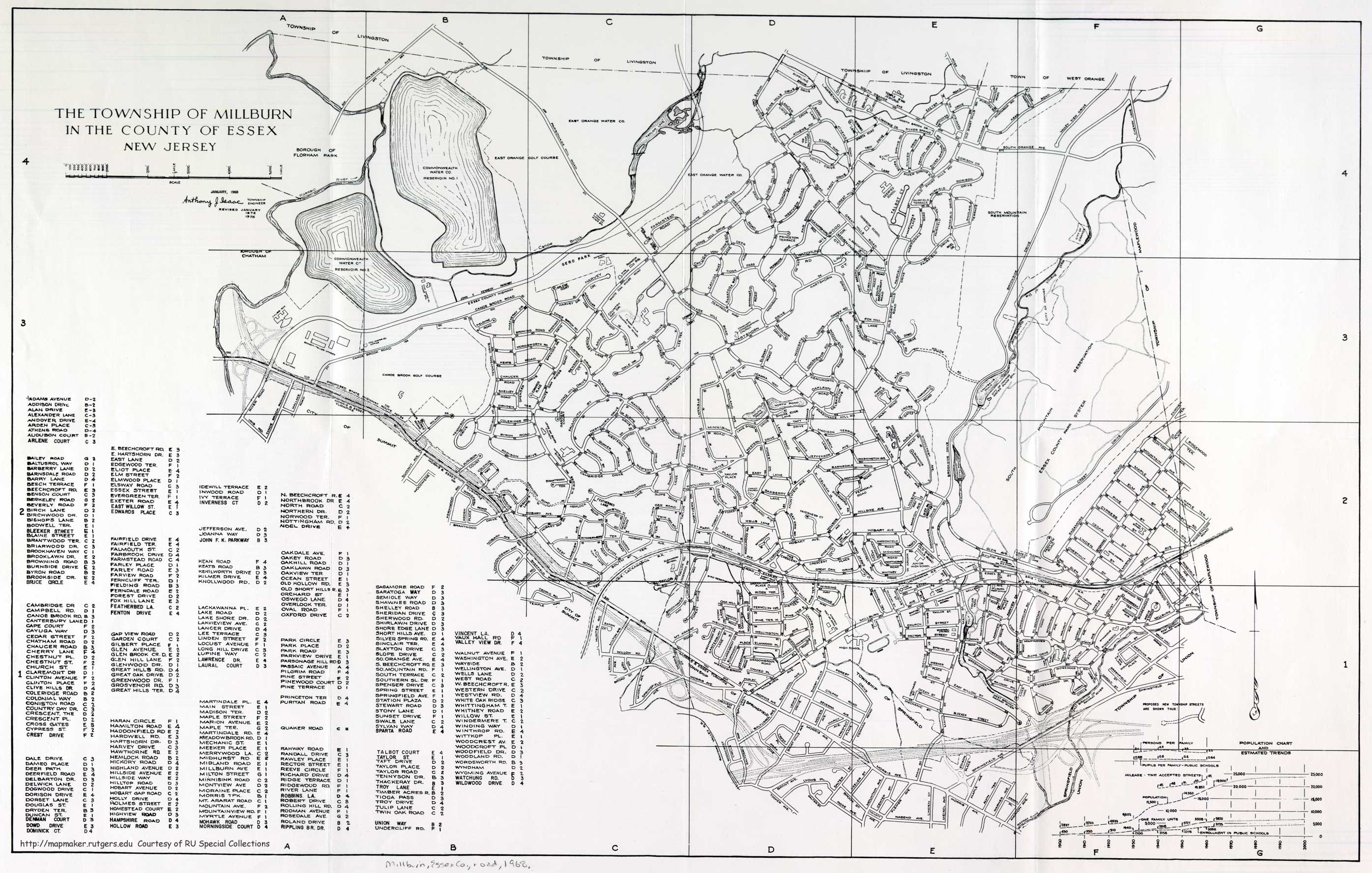
- ^ The Township of Millburn in the County of Essex New Jersey (Map). Millburn, New Jersey. 1968. Retrieved February 13, 2010.
- ^ a b c Arterial Progress 1959–1965. Triborough Bridge and Tunnel Authority. 1965.
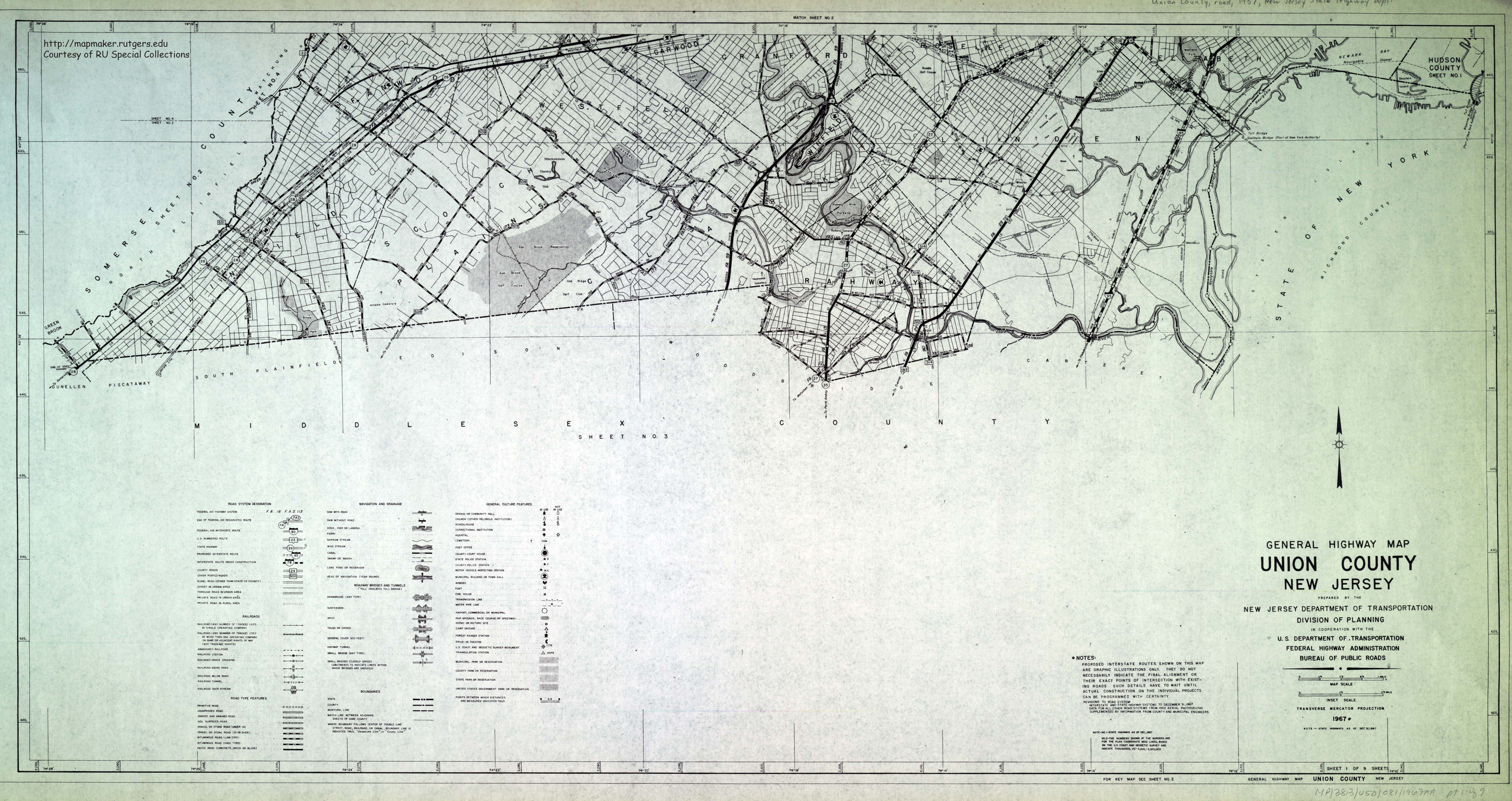
- ^ *Union County Sheet 1 (Map). New Jersey Department of Transportation. 1967. Retrieved February 13, 2010.
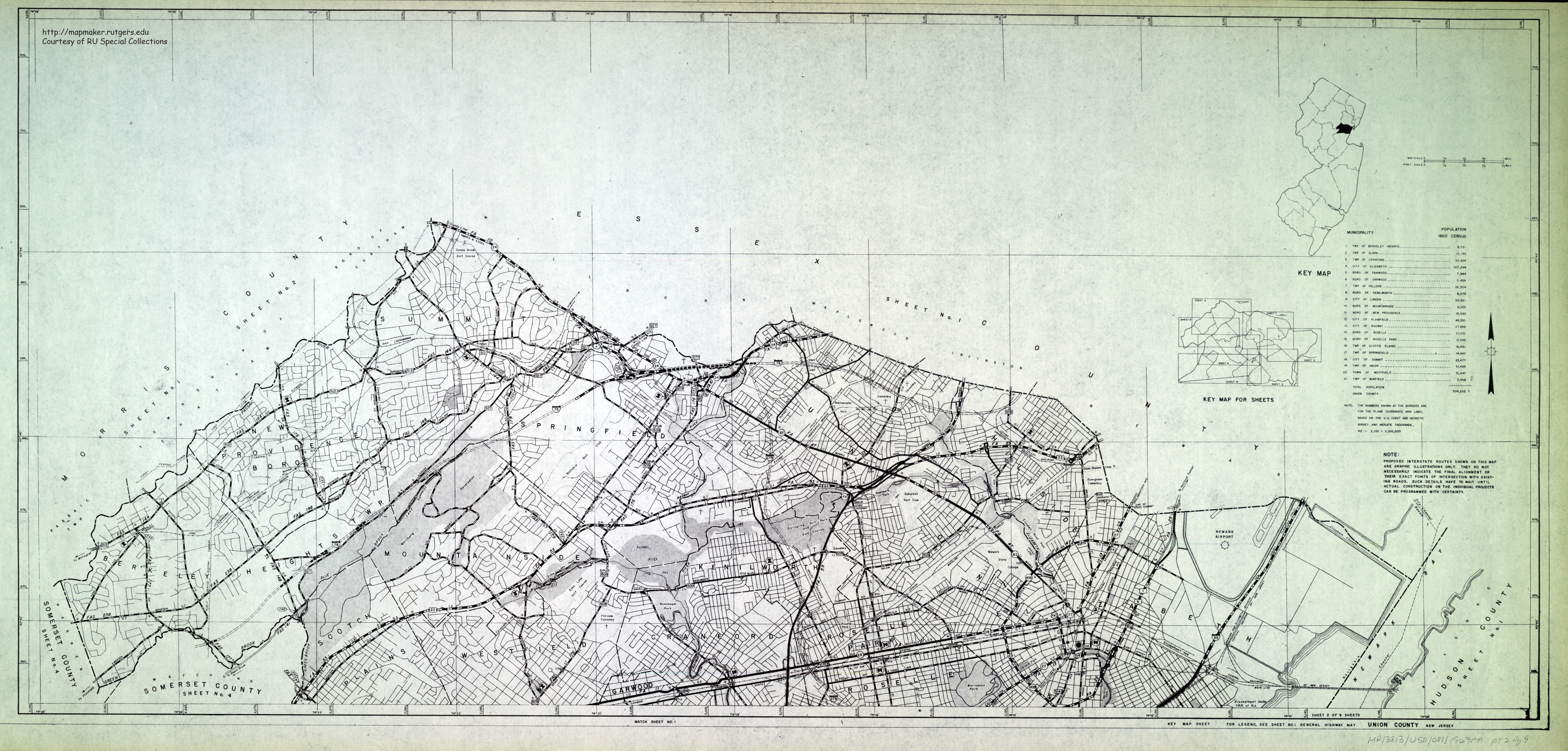
- Union County Sheet 2 (Map). New Jersey Department of Transportation. 1967. Retrieved February 13, 2010.
- ^ New Jersey Highway Facts. New Jersey Department of Transportation. 1967.
- ^ a b c d e f g h i j k Johnston, Louis; Williamson, Samuel H. (2023). "What Was the U.S. GDP Then?". MeasuringWorth. Retrieved November 30, 2023. United States Gross Domestic Product deflator figures follow the MeasuringWorth series.
- ^ "S.I.-to-Turnpike Link Is Opening Tomorrow". The New York Times. October 29, 1969. ISSN 0362-4331. Retrieved September 27, 2017.
- ^ Report on the Status of the Federal-Aid Highway Program. U.S. Senate Committee on Public Works. 1970.
- ^ Porpora, Tracey (June 11, 2017). "Goethals Bridge now open in both directions". SILive.com. Retrieved June 12, 2017.
- ^ Grunlund, Maura (May 21, 2018). "First a.m. rush hour for new Goethals Bridge to New Jersey". SILive.com. Retrieved May 21, 2018.
- ^ a b Master Plan: Express Highways, Parkways and Major Streets. New York City Planning Department. 1941.
- ^ a b Joint Study of Arterial Facilities. Port of New York Authority and Triborough Bridge and Tunnel Authority. 1955.
- ^ Bennett, Charles G. (June 20, 1957). "Span Approaches Approved by City". The New York Times. ISSN 0362-4331. Retrieved September 26, 2017.
- ^ a b Caro, Robert A. (1974). The Power Broker. Vintage Books-Random House.
- ^ a b "State announces $50M project to improve X-way". Staten Island Advance. August 1, 2008.
- ^ a b Ingraham, Joseph C. (November 21, 1964). "New Bridge and Roads Will Save Time, Trouble and Tolls". The New York Times. ISSN 0362-4331. Retrieved September 27, 2017.
- ^ "Push Is On for Varied Road Tolls". New York Daily News. November 23, 1998.
- ^ Solomonow, Seth (November 27, 2005). "New Bus Lanes Earn Cheers, Jeers from Motorists". Staten Island Advance.
- ^ Yates, Maura (November 22, 2017). "Staten Island Expressway improvements set to begin — with inconveniences". Staten Island Advance. Retrieved September 26, 2017.
- ^ "New Last Exit Before Brooklyn-bound Verrazano-Narrows Bridge In Place Beginning Mon., July 9th" (Press release). New York, New York: MTA Bridges and Tunnels. July 6, 2012. Retrieved August 26, 2012.
- ^ "A new exit ramp on Staten Island Expressway makes its debut". Staten Island Advance. July 9, 2012. Retrieved September 26, 2017.
- ^ Sedon, Michael (January 18, 2013). "comments New Exit 13B opens on Staten Island Expressway". Staten Island Advanced. Retrieved August 1, 2014.
- ^ New Parkways in New York City. New York City Department of Parks and Recreation. 1937.
- ^ "MORE MOSES 'LOOPS' FORM; Parkway System Gets New Links Throughout City – Complete in 1943". The New York Times. June 29, 1941. ISSN 0362-4331. Retrieved September 27, 2017.
- ^ "NEW HIGHWAY LINK TO OPEN THURSDAY; No Ceremony to Mark Event at Queens Connecting Lane, Cashmore Announces". The New York Times. May 21, 1950. Retrieved November 14, 2018.
- ^ a b Map of Metropolitan New York (Map). Cartography by H.M. Gousha. Chevron Oil Company. 1969.
- ^ a b Map of New Jersey (Map). Cartography by General Drafting. Esso. 1970.
- ^ Herman, Peter and Albert Appleton (November 13, 1996). "Reconstructing the Gowanus: A Tunnel Is a Realistic Alternative to the Elevated Roadway". New York Law Journal.
- ^ Stamler, Bernard (December 13, 1998). "Gowanus Expressway: Trouble Overhead". The New York Times. Retrieved February 13, 2010.
- ^ "Gowanus Project". New York State Department of Transportation. Retrieved November 30, 2006.
- ^ Daniel Bush (December 1, 2011). "Get used to the Gowanus!". Brooklyn Daily. Archived from the original on October 5, 2012. Retrieved June 11, 2012.
- ^ James Howard Kunstler (June 1, 2012). "June 2012 Eyesore of the Month". Eyesore of the Month. Archived from the original on July 6, 2012. Retrieved July 6, 2012.
- ^ Daniel Bush (December 1, 2011). "Gowanus Expressway: History of a highway". The Brooklyn Paper. Retrieved June 11, 2012.
- ^ a b "'FREEWAY' IS NOW URGED; Protected Border Express Roads Advocated for New York Region". The New York Times. December 13, 1936. ISSN 0362-4331. Retrieved September 27, 2017.
- ^ "Motorists on the Road". The New York Times. September 5, 1937.
- ^ "MAYOR OPENS SPAN WITH PEACE PLEA; Denounces Foes of Amity at Dedication of $13,194,399 Meeker Ave. Bridge SEES NEIGHBORLY SYMBOL Hatred Artificial, He Warns-- Brooklyn-Queens Link Gives New Routes". The New York Times. August 24, 1939. ISSN 0362-4331. Retrieved September 26, 2017.
- ^ Vital Gaps in the New York Metropolitan Arterial System. Triborough Bridge Authority. 1940.
- ^ "NEW HIGHWAY LINK TO OPEN THURSDAY; No Ceremony to Mark Event at Queens Connecting Lane, Cashmore Announces". The New York Times. May 21, 1950. ISSN 0362-4331. Retrieved September 26, 2017.
- ^ "3-LEVEL ROAD LINK IN BROOKLYN OPEN; Downtown Congestion Eased by $12,000,000 Section of 11-Mile Expressway STARK AND MOSES DIFFER Council Head Assails State on Highway Spending Here and Gets Quick Reply". The New York Times. June 23, 1954. Retrieved November 14, 2018.
- ^ Stengren, Bernard (September 1, 1958). "HIGHWAYS LINKED IN THREE COUNTIES; Units Costing $16,000,000 in Kings, Queens, Nassau Opened by Governor". The New York Times. Retrieved November 14, 2018.
- ^ Stengren, Bernard (August 26, 1959). "Next-to-Last Brooklyn Section Of Expressway Open to Traffic; Brooklyn-Queens Link Runs to Civic Center – Park Ave. Lanes Due in Use in Fall". The New York Times. Retrieved November 14, 2018.
- ^ "EXPRESSWAY LINK IN BROOKLYN OPEN; Viaduct Near Navy Yard Put Into Service – Mayor Sees Road as Boon to Industry". The New York Times. January 6, 1960. Retrieved November 14, 2018.
- ^ "Brooklyn‐Queens Link To Be Completed Today". The New York Times. December 23, 1964. ISSN 0362-4331. Retrieved September 26, 2017.
- ^ "$32-Million Queens Cloverleaf Approved by Board of Estimate; It Will Link Brooklyn-Queens and Long Island Expressways 50 Maspeth Homeowners Protest Vainly". The New York Times. May 21, 1966. ISSN 0362-4331. Retrieved September 26, 2017.
- ^ Liff, Bob (December 4, 1988). "New York: Chess in Concrete". Newsday. New York City.
- ^ Farmer, W. Paul (July 3, 2015). "Alexander Garvin. (2013). The Planning Game: Lessons From Great Cities. New York, NY: W. W. Norton & Company". Journal of the American Planning Association. 81 (3): 238. doi:10.1080/01944363.2015.1077075. ISSN 0194-4363. S2CID 154098092.
- ^ Berger, Joseph (September 24, 2010). "Rebuilding the B.Q.E. Prompts 4 Tunnel Plans". The New York Times. ISSN 0362-4331. Retrieved September 26, 2017.
- ^ Leon, Alexandra (June 30, 2016). "Tunnel Likely Won't Replace 'Crappy' BQE in Brooklyn Heights, City Says". DNAinfo New York. Archived from the original on September 26, 2017. Retrieved September 26, 2017.
- ^ Faison, Seth (January 4, 1993). "New Year Brings New Road Projects to Test Commuters' Patience". The New York Times. Retrieved February 13, 2010.
- ^ "Most Of BQE Upgrade To Be Completed By Sept". The Queens Gazette. February 25, 2004. Archived from the original on July 26, 2011. Retrieved February 13, 2010.
- ^ Cogan, Thomas (June 23, 2004). "BQE Renovations Near Completion". Queens Gazette. Retrieved December 26, 2016.
- ^ Blain, Glenn (April 23, 2017). "Kosciuszko Bridge to make flashy Thursday debut, featuring Cuomo". NY Daily News. Retrieved April 23, 2017.
- ^ "Second Span Of New Kosciuszko Bridge Officially Opens To Traffic". WCBS-TV. August 29, 2019. Retrieved August 29, 2019.
- ^ "New York City Truck Route Map" (PDF). nyc.gov. New York City Department of Transportation. June 8, 2015. Archived from the original (PDF) on February 24, 2018. Retrieved September 12, 2017.
- ^ Matua, Angela (December 15, 2017). "Trucks will be permitted on Grand Central Parkway in Astoria, ending 'soul-piercing' noise on local streets — QNS.com". Queens Courier. Retrieved December 24, 2017.
- ^ Greenberg, Rebecca (October 10, 2024). "DOT unveils project to improve areas along Brooklyn-Queens Expressway". Spectrum News NY1. Retrieved October 11, 2024.
- ^ Frost, Mary (October 10, 2024). "City releases report on fixes for BQE North and South". Brooklyn Eagle. Retrieved October 11, 2024.
- ^ Samuel, Peter; Poole Jr., Robert W. (1999). How To Build Our Way Out of Congestion (PDF). Reason Public Policy Institute.
- ^ BQE Tunnel 3-D Feasibility Study Volume I- Report (PDF). New York City Department of Transportation. April 2016.
- ^ Hu, Winnie (November 28, 2016). "Dreaded by Drivers, Brooklyn-Queens Expressway Is Set for Repairs". The New York Times. ISSN 0362-4331. Retrieved December 26, 2016.
- ^ a b c d Berger, Paul (September 28, 2018). "New York City Will Consider New Option for BQE in Brooklyn Heights". WSJ. Retrieved October 5, 2018.
- ^ a b c d e Hu, Winnie (October 4, 2018). "The Famed Brooklyn Heights Promenade May Close for Years. Here's Why". The New York Times. Retrieved October 5, 2018.
- ^ Frost, Mary (September 22, 2018). "BQE rehab plan would replace Brooklyn Heights Promenade with 6-lane highway | Brooklyn Daily Eagle". www.brooklyneagle.com. Retrieved October 1, 2018.
- ^ a b Barone, Vincent (September 20, 2018). "Brooklyn-Queens Expressway's proposed improvements could be disastrously disruptive". AM New York. Retrieved March 14, 2019.
- ^ Bellafante, Ginia (October 5, 2018). "Brooklyn Heights Is Fighting Robert Moses Again". The New York Times. ISSN 0362-4331. Retrieved March 14, 2019.
- ^ Frost, Mary (October 22, 2018). "De Blasio softens support for plan that would turn Brooklyn Heights Promenade into 6-lane highway". Brooklyn Daily Eagle. Retrieved October 24, 2018.
- ^ Hu, Winnie (January 24, 2019). "The L Train Shutdown Was Averted. Can the Brooklyn Promenade Stay Open Too?". The New York Times. ISSN 0362-4331. Retrieved March 14, 2019.
- ^ Kadet, Anne (November 6, 2018). "Here's a Possible Fix for the Brooklyn-Queens Expressway: Tear It Down". The Wall Street Journal. ISSN 0099-9660. Retrieved March 14, 2019.
- ^ Davidson, Justin (December 10, 2018). "Here's a Solution for Fixing the Brooklyn-Queens Expressway: Get Rid of It". Intelligencer. Retrieved March 14, 2019.
- ^ Let's Go: A Case for Municipal Control and a Comprehensive Transportation Vision for the Five Boroughs (PDF). New York City Council Speaker Corey Johnson. March 5, 2019. Archived from the original (PDF) on March 6, 2019. Retrieved March 14, 2019.
- ^ "Comptroller Stringer Proposes New Vision for BQE Reconstruction". comptroller.nyc.gov. Office of the New York City Comptroller. March 13, 2019. Retrieved March 14, 2019.
- ^ "A New Vision for Brooklyn, A New Vision for the BQE" (PDF). comptroller.nyc.gov. Office of the New York City Comptroller. March 13, 2019. Retrieved March 14, 2019.
- ^ Frost, Mary (April 3, 2019). "City creates expert panel to evaluate BQE reconstruction". Brooklyn Eagle. Retrieved April 4, 2019.
- ^ Bredderman, Will (April 3, 2019). "De Blasio slams brakes on BQE reconstruction". Crain's New York Business. Retrieved April 4, 2019.
- ^ Frost, Mary (February 25, 2019). "Cross Downtown Brooklyn Tunnel idea revived as BQE solution". Brooklyn Eagle. Retrieved August 31, 2021.
- ^ Chang, Sophia (August 28, 2021). "City To Reduce Lanes In Crumbling Stretch Of Brooklyn-Queens Expressway During Planned Repairs". Gothamist. Retrieved August 31, 2021.
- ^ James, Cory (August 30, 2021). "Lane Changes On Brooklyn-Queens Expressway Greet Drivers During Monday Morning's Commute". CBS New York – Breaking News, Sports, Weather, Traffic And The Best of NY. Retrieved August 31, 2021.
- ^ Hu, Winnie (June 13, 2022). "The B.Q.E. Is Crumbling. There's Still No Plan to Fix It". The New York Times. ISSN 0362-4331. Retrieved June 16, 2022.
- ^ Frost, Mary (December 15, 2022). "SEE IT: NYC reveals preliminary designs for BQE rehab". Brooklyn Eagle. Retrieved December 17, 2022.
- ^ Miles, Darla (December 14, 2022). "NYC traffic: City reveals preliminary plan to fix crumbling section of BQE in Brooklyn Heights, Dumbo". ABC7 New York. Retrieved December 17, 2022.
- ^ Chan, Shirley (March 3, 2023). "NYC DOT held virtual workshop to talk Brooklyn-Queens Expressway proposals". PIX11. Retrieved March 4, 2023.
- ^ Brachfeld, Ben (March 1, 2023). "BQE's crumbling cantilever: City again considering 'temporary highway' to redirect traffic during reconstruction". amNewYork. Retrieved March 4, 2023.
- ^ Brachfeld, Ben (August 7, 2023). "Overweight trucks on BQE will be hit with fines starting November, warnings begin Thursday". amNewYork. Retrieved August 8, 2023.
- ^ Manna, Victoria (August 7, 2023). "City to begin fining overweight trucks on aging Brooklyn-Queens Expressway". Spectrum News NY1. Retrieved August 8, 2023.
- ^ Brachfeld, Ben (February 6, 2024). "Feds reject city's $800M grant applications to redesign crumbling BQE cantilever". amNewYork. Retrieved February 7, 2024.
- ^ Baird-Remba, Rebecca (March 13, 2024). "Gridlocked: Brooklyn Heights BQE Redesign Is Stuck in Limbo". Commercial Observer. Retrieved May 11, 2024.
- ^ "Reconstruction work on triple-cantilever portion of BQE pushed back to 2028". Spectrum News NY1. May 8, 2024. Retrieved May 11, 2024.
- ^ Brachfeld, Ben (May 8, 2024). "Major BQE reconstruction not expected until 2028: NYC". amNewYork. Retrieved May 11, 2024.
- ^ Barron, James (March 4, 2025). "For Once, Good News About the B.Q.E." The New York Times. ISSN 0362-4331. Retrieved March 6, 2025.
- ^ Brendlen, Kirstyn (March 4, 2025). "Weigh-in-motion tech has cut overweight trucks on BQE by 60%, city says, urging state to extend program • Brooklyn Paper". Brooklyn Paper. Retrieved March 6, 2025.
- ^ Thibodeau, William A. (1938). The ALA Green Book (1938–39 ed.). Automobile Legal Association.
- ^ New York Info-Map (Map). Cartography by Rand McNally and Company. Gulf Oil Company. 1940.
- ^ New York (Map). Cartography by General Drafting. Esso. 1940.
- ^ Traffic Improvement of Bruckner Boulevard. Triborough Bridge and Tunnel Authority. 1951.
- ^ "ELEVATED ROAD TO OPEN IN BRONX; 2.4-Mile Viaduct Will Help Speed Bruckner Traffic to New England Area". The New York Times. October 18, 1962. ISSN 0362-4331. Retrieved September 27, 2017.
- ^ Prial, Frank J. (December 21, 1972). "The Bruckner Interchange Open at Last". The New York Times. Retrieved September 27, 2017.
- ^ a b c "Staten Island Bus Map" (PDF). Metropolitan Transportation Authority. January 2020. Retrieved December 1, 2020.
- ^ "Brooklyn Bus Map" (PDF). Metropolitan Transportation Authority. October 2020. Retrieved December 1, 2020.
- ^ "Bronx Bus Map" (PDF). Metropolitan Transportation Authority. October 2018. Retrieved December 1, 2020.
- ^ "Queens Bus Map" (PDF). Metropolitan Transportation Authority. August 31, 2025. Retrieved September 29, 2022.
- ^ "Interstate 278 (New York)" (Map). Google Maps. Retrieved January 6, 2017.
- ^
- "Richmond County Inventory Listing" (CSV). New York State Department of Transportation. August 7, 2015. Retrieved September 5, 2017.
- "Kings County Inventory Listing" (CSV). New York State Department of Transportation. August 7, 2015. Retrieved September 5, 2017.
- "Queens County Inventory Listing" (CSV). New York State Department of Transportation. August 7, 2015. Retrieved September 5, 2017.
- "New York County Inventory Listing" (CSV). New York State Department of Transportation. August 7, 2015. Retrieved September 5, 2017.
- "Bronx County Inventory Listing" (CSV). New York State Department of Transportation. August 7, 2015. Retrieved September 5, 2017.
External links
[edit]
- Interstate 278 at Alps' Roads • New York Routes
- Union Freeway @ NYCROADS.com
- Staten Island Expressway @ NYCROADS.com
- Gowanus Expressway @ NYCROADS.com
- BQE @ NYCROADS.com
- Bruckner Expressway @ NYCROADS.com
 | ||
| ||


Interstate 278
View on GrokipediaRoute Description
New Jersey Segment
 within Union County. It begins at a partially constructed interchange with U.S. Route 1/9 (Edgar Road) in an industrial area straddling the border of Linden and Elizabeth and terminates at the Goethals Bridge, crossing the Arthur Kill into Staten Island, New York.[6][7] From its western terminus, I-278 heads eastward through urban and industrial zones, featuring a wide grassy median designed for a never-built extension toward Interstate 78 in Springfield. The route first encounters an interchange with the New Jersey Turnpike (Interstate 95) and New Jersey Route 439 (Bayway Avenue, providing access to U.S. Route 1/9 north) near mile 1. This interchange, designated as exit 2 eastbound for the Turnpike and exit 1 for Route 439, facilitates connections to regional highways serving Elizabeth and surrounding areas.[6][8] Approaching the Goethals Bridge, the freeway narrows as it ascends to the structure maintained by the Port Authority of New York and New Jersey. The modern Goethals Bridge configuration includes two parallel cable-stayed spans: the replacement span opened to traffic on June 10, 2017, followed by the second span on May 21, 2018, each providing three 12-foot (3.7 m) lanes with shoulders, enhancing capacity over the original 1928 cantilever bridge. This segment serves primarily as a connector relieving pressure on nearby Interstate 78 by directing traffic bound for New York City via Staten Island.[6][9]Staten Island Expressway
The Staten Island Expressway carries Interstate 278 eastward across Staten Island from the Goethals Bridge toll plaza to the Verrazzano-Narrows Bridge, serving as the borough's principal east-west arterial through a mix of industrial, commercial, and residential zones. Entering from New Jersey via the Goethals Bridge, the freeway initially features three lanes in each direction amid waterfront industrial areas near Howland Hook, with the New York Container Terminal visible to the north. The first interchange (Exit 2) connects to the Dr. Martin Luther King Jr. Expressway (NY 440 north) toward the Bayonne Bridge, while NY 440 south (the West Shore Expressway) merges from the south, providing continuity from the Outerbridge Crossing and southwestern Staten Island. This junction marks a key access point for truck traffic and commuters from southern routes. Progressing eastward, I-278 passes beneath the Arthur Kill Vertical Lift Bridge and through the Bloomfield neighborhood, interchanging with Western Avenue and South Avenue (Exit 3) for access to local businesses and the Staten Island Mall vicinity. The route then traverses suburban areas, with Exit 5 for Richmond Avenue offering entry to major retail corridors and Arden Heights. Near the midpoint, the expressway negotiates hilly terrain in the Todt Hill area, featuring Exit 12 for Todt Hill Road and Slosson Avenue, which link to upscale residential districts and Willowbrook State School grounds. High-occupancy vehicle (HOV) lanes, operational in both directions since expansions in the 2000s, run along the shoulders to prioritize buses and carpools, addressing chronic congestion on this 12.3-mile segment that handles over 100,000 vehicles daily.[10] Approaching the eastern end, I-278 interchanges with Clove Road, Richmond Road, and Targee Street (Exit 13), adjacent to the Staten Island Greenbelt's wooded trails and recreational facilities. Exit 14 provides access to Hylan Boulevard, a vital south shore connector for Prince's Bay and Tottenville. The final local exit (Exit 15) serves Bay Street, Fingerboard Road, and Lily Pond Avenue, near residential enclaves and the borough's yacht clubs. The expressway culminates at the Verrazzano-Narrows Bridge toll plaza (cash toll westbound), where it elevates sharply over the Narrows waterway to Brooklyn, with no direct interchange to the bridge approach roads for non-toll traffic. Originally built as a six-lane divided highway, the corridor includes service roads in sections for local access and has undergone widening and HOV enhancements to mitigate bottlenecks exacerbated by Staten Island's growing population and limited crossing options.[10][11]Verrazzano-Narrows Bridge and Gowanus Expressway
The Verrazzano-Narrows Bridge carries Interstate 278 across the Narrows waterway, connecting the Staten Island Expressway on Staten Island to the Gowanus Expressway in Brooklyn's Bay Ridge neighborhood. This double-deck suspension bridge, completed in November 1964 after construction began in 1959, spans 13,700 feet overall with a central main span of 4,260 feet and provides 228 feet of vertical clearance over the waterway.[12][13] The structure accommodates 13 lanes total—seven on the upper deck and six on the lower—with eastbound traffic from Staten Island utilizing the lower deck before merging onto the Brooklyn approaches.[14] Operated by the MTA Bridges and Tunnels, the bridge employs open-road cashless tolling in both directions; as of August 2023, standard E-ZPass rates stand at $6.94 for non-resident users, with discounted $2.75 rates for Staten Island residents and $11.19 for tolls-by-mail.[15][16] In Brooklyn, I-278 transitions seamlessly to the Gowanus Expressway, a 5.7-mile elevated viaduct that extends northeastward parallel to the waterfront through Bay Ridge, Dyker Heights, Sunset Park, and the Gowanus neighborhood before intersecting the Brooklyn-Queens Expressway near the Brooklyn Battery Tunnel.[17] Constructed in 1941 as the Gowanus Parkway to relieve congestion on surface streets, the expressway features partial interchanges with local arterials such as 86th Street, Fort Hamilton Parkway, and Hamilton Avenue, facilitating access to residential and industrial areas along its route.[18] It serves as a critical link for regional traffic, handling high volumes between the Verrazzano-Narrows Bridge and Manhattan-bound routes, though its aging infrastructure—characterized by narrow lanes, substandard shoulders, and structural deterioration—has prompted ongoing rehabilitation efforts by the New York State Department of Transportation.[19] The segment's design includes connections to the Belt Parkway near the bridge's eastern terminus, directing local traffic southward while preserving through lanes for I-278.[14]Brooklyn-Queens Expressway
The Brooklyn–Queens Expressway (BQE) section of Interstate 278 extends approximately 11.7 miles (18.8 km) from its northern terminus with the Gowanus Expressway near the Brooklyn–Battery Tunnel in Brooklyn to a junction with the Grand Central Parkway in Queens.[20] This urban freeway traverses densely developed neighborhoods, predominantly on elevated viaducts, providing a direct east–west corridor that links the Verrazzano-Narrows Bridge approaches with Manhattan-bound routes via the Robert F. Kennedy Bridge.[21] In Brooklyn, I-278 proceeds northeast from the Gowanus interchange (near Exit 20 for the Brooklyn–Battery Tunnel portal and Hamilton Avenue), passing beneath the Brooklyn Bridge and Manhattan Bridge while serving exits for Atlantic Avenue (Exit 25), Sands Street near Downtown Brooklyn, and Clinton/Washington Avenues (Exit 27). The route features a notable triple-cantilever section over Brooklyn Heights, elevated above the neighborhood and supporting the adjacent Brooklyn Heights Promenade, a public walkway completed in 1950. Further north, it skirts the Brooklyn Navy Yard at Wallabout Bay, crosses under the Williamsburg Bridge, and reaches Greenpoint with interchanges at McGuinness Boulevard/Humboldt Street (Exit 33) and Meeker/Vandervoort Avenues (Exit 34) before ascending the Kosciuszko Bridge over Newtown Creek into Queens.[21][22][20] Entering Queens in Greenpoint's industrial zone, I-278 continues as the BQE through Long Island City and Sunnyside on a mix of elevated and depressed alignments, interchanging with the Long Island Expressway (I-495) at Exit 39 (Queens Boulevard/NY 25), Broadway/Roosevelt Avenue, and Northern Boulevard (NY 25A) near Exit 41. The freeway parallels the East River waterfront initially before veering inland, accommodating high traffic volumes with partial cloverleaf and trumpet interchanges to manage local access in constrained urban spaces. It terminates at a directional interchange with the Grand Central Parkway west of the Robert F. Kennedy Bridge approach, where eastbound traffic merges onto the parkway toward Queens and the Bruckner Interchange.[21][22] The BQE's design reflects mid-20th-century engineering priorities for speed and capacity, with six lanes throughout much of its length, though aging infrastructure has prompted ongoing rehabilitation efforts, including the 2019–2020 replacement of the Kosciuszko Bridge to modern standards.[23]Grand Central Parkway and Robert F. Kennedy Bridge
Interstate 278 transitions from the Brooklyn–Queens Expressway onto the western terminus of the Grand Central Parkway at a complex interchange in Long Island City, Queens, where the BQE approaches from the southwest. Heading northeast along the parkway through the Astoria neighborhood, I-278 parallels the East River shoreline, serving as a controlled-access route with depressed and elevated sections amid urban development. This segment includes Exit 45 for Astoria Boulevard east and 31st Street, providing access to residential areas, commercial districts, and proximity to Astoria Park.[22][24] The Grand Central Parkway portion of I-278 spans approximately 1.2 miles before reaching the Robert F. Kennedy Bridge toll plaza. Prohibited to commercial trucks due to parkway restrictions, this section facilitates regional travel while integrating with local traffic patterns near LaGuardia Airport to the east.[22] I-278 crosses the Robert F. Kennedy Bridge, a series of fixed and movable spans linking Queens to the Bronx via Randall's and Ward's Islands. The East River crossing utilizes a 2,448-foot suspension bridge with a 1,520-foot main span, followed by viaducts and a 310-foot fixed bridge over the Bronx Kill. Designed by chief engineer Ole Singstad and constructed from 1934 to 1936 at a cost of $60.3 million (equivalent to about $1.3 billion in 2023 dollars), the structure opened on July 11, 1936, initially as the Triborough Bridge; it was renamed in 2008 to commemorate Robert F. Kennedy. Operated by MTA Bridges and Tunnels, the bridge imposes tolls westbound via cashless E-ZPass or pay-by-mail systems, with rates at $6.55 for E-ZPass passenger vehicles as of 2023.[25][26] The crossing handles over 230,000 vehicles daily, with dedicated pedestrian and bicycle paths available on a parallel walkway.[25]Bruckner Expressway
The Bruckner Expressway carries Interstate 278 (I-278) southwestward from the Robert F. Kennedy (RFK) Bridge approach in the Port Morris neighborhood of the Bronx, serving as an elevated freeway through industrial and commercial districts in the South Bronx.[27] This six-lane divided highway, with 12-foot-wide lanes separated by steel barriers in elevated sections, merges traffic from the RFK Bridge with local access before reaching its first major interchange with the Major Deegan Expressway (I-87) near East 132nd Street.[28] The route parallels the waterfront and Bruckner Boulevard, providing connectivity to the Hunts Point food distribution center and surrounding rail yards.[4] Continuing southwest, I-278 crosses the Bronx River via a multi-span bridge and interchanges with the Sheridan Expressway (I-895 / NY 895) at Exit 49, facilitating access to NY 895 northbound toward East Tremont Avenue and southbound toward the Bruckner Interchange.[29] Additional service interchanges along this segment include exits for White Plains Road, West Farms Road, and Barretto Point Park, accommodating local traffic amid high volumes from freight and commuter flows.[30] The expressway's design incorporates viaducts over rail lines and Amtrak/CSX tracks west of the Bronx River, spanning approximately 4 miles from the RFK Bridge to its terminus.[31] I-278 terminates at the Bruckner Interchange, a sprawling high-capacity junction integrating the Cross Bronx Expressway (I-95 westbound), New England Thruway (I-95 northbound), Throgs Neck Expressway (I-295), and Hutchinson River Parkway.[32] At this point, through traffic from I-278 merges onto I-95, with eastbound lanes continuing briefly as the Bruckner Expressway (now I-95 only) toward the Pelham Parkway Interchange near Co-op City, extending the full expressway alignment to about 7 miles.[32] Construction of the I-278 segment began in the late 1950s, with elevated portions opening progressively through the 1960s, including a 2.3-mile section from I-87 completed by 1961.[28] The route remains critical for regional freight but experiences chronic congestion at ramps to I-895 and the Bruckner Interchange during peak hours.[30]Design and Engineering
Standards and Construction Techniques
The segments of Interstate 278 were constructed primarily using reinforced concrete for elevated viaducts and piers, a technique prevalent in mid-20th-century urban highway projects to navigate dense neighborhoods while minimizing surface disruption.[18][28] In constrained areas like the Brooklyn-Queens Expressway's cantilevered sections, engineers employed overhanging reinforced concrete spans to extend roadways over narrow rights-of-way without extensive land acquisition, allowing the structure to support multiple lanes while adhering to available space.[33] The Gowanus Expressway utilized existing elevated pillars from the former Third Avenue Elevated rail line as a foundation, with new reinforced concrete decking added atop them during initial construction from 1939 to 1942; this adaptive reuse reduced costs and expedited urban integration, though later widening from four to six lanes between 1958 and 1964 involved steel reinforcements and expanded concrete slabs to meet growing traffic demands.[18] The Staten Island Expressway, built from 1960 to 1964 at a cost of $41 million, incorporated at-grade earthwork, concrete bridges, and some elevated sections designed to 1960s New York State standards, including full-depth asphalt surfacing over concrete bases for durability under high-volume traffic.[34] Elevated portions, such as those on the Bruckner Expressway, featured six 12-foot-wide lanes divided by steel guardrails, with poured-in-place concrete decks supported by closely spaced piers to handle Bronx industrial loads; these met early Interstate criteria for divided, controlled-access facilities but often included narrower shoulders than modern federal guidelines require.[28] Pre-1956 segments, like parts of the Brooklyn-Queens and Gowanus expressways, were grandfathered into the Interstate system despite deviations from full American Association of State Highway Officials (AASHO) standards, such as shorter acceleration lanes and variable median widths, necessitating periodic upgrades for geometric alignment and load-bearing capacity. Construction emphasized rapid urban assembly using formwork for concrete pours and steel framing for bridges, though aging materials have prompted contemporary rehabilitations with high-performance overlays to address corrosion from deicing salts and overloads.[18]Key Structures and Features
Interstate 278 traverses multiple major bridges that exemplify advanced civil engineering for urban and waterway crossings. The Goethals Bridge, a dual-span cable-stayed structure spanning the Arthur Kill waterway, carries six lanes of I-278 divided into three lanes per direction, linking Elizabeth, New Jersey, to Staten Island, New York; the replacement bridge opened fully in 2018 to address capacity and seismic resilience needs.[35][36] The Verrazzano-Narrows Bridge features a double-deck suspension design supporting 13 lanes of I-278—seven on the upper deck and six on the lower—across the Narrows strait, connecting Staten Island to Brooklyn; completed in 1964, it was engineered for a central span of 4,260 feet, ranking among the longest suspension spans at the time.[37] Further east, the Kosciuszko Bridge on the Brooklyn-Queens Expressway section over Newtown Creek employs a modern cable-stayed configuration with six vehicular lanes plus a dedicated pedestrian and bicycle path; the replacement project, initiated to resolve structural deficiencies and improve traffic flow, opened in phases between 2017 and 2019.[23] The Robert F. Kennedy Bridge complex integrates suspension, vertical-lift, and fixed spans to carry I-278 across the East River and Harlem River, linking Queens, Manhattan, and the Bronx while handling high-volume interstate traffic through its multi-leg viaduct system.[38] Prominent non-bridge features include the triple-cantilever viaduct on the Brooklyn-Queens Expressway in Brooklyn Heights, a space-efficient elevated structure stacking three levels—two for expressway lanes and one supporting the Brooklyn Heights Promenade—built to navigate constrained urban topography without excessive land acquisition.[23] The Bruckner Expressway segment utilizes extensive elevated viaducts with six 12-foot-wide lanes separated by barriers, designed for high-capacity flow through industrial Bronx corridors, including spans over rail yards and waterways like Westchester Creek via the Unionport Bridge.[28][39]History
Planning and Interstate Designation
The components of what is now Interstate 278 (I-278) were initially planned in the 1930s and 1940s as part of broader urban expressway initiatives in the New York metropolitan area, primarily under the influence of Robert Moses, who served as chairman of the Triborough Bridge and Tunnel Authority and other agencies. These early proposals aimed to alleviate congestion through limited-access highways linking boroughs and connecting to New Jersey, incorporating elements like the Gowanus Expressway (envisioned in the 1930s) and extensions of parkways such as the Grand Central Parkway, which opened in segments starting in 1936. By the mid-1950s, state and local planning intensified, with the New Jersey segment—originally the Union Freeway—proposed in 1955 to connect the Goethals Bridge eastward toward a beltway alignment.[9][20][40] The Federal-Aid Highway Act of 1956 formalized the Interstate Highway System, providing 90% federal funding for qualifying routes and prompting rapid approvals for New York City-area expressways. City and state officials approved the Bruckner Expressway in October 1956 and the Staten Island Expressway in April 1957, both explicitly tying these projects to Interstate eligibility to secure funding. These approvals reflected a shift from local toll-road and parkway concepts to national defense-oriented standards, emphasizing high-speed, divided highways with controlled access.[41][28][10] Numbering and full designation as I-278 occurred progressively in the late 1950s, integrating pre-Interstate roadways like the Brooklyn-Queens Expressway, which received its I-278 label in August 1958. This circumferential auxiliary route—oddly numbered despite its east-west alignment in parts—was selected to encircle Manhattan without penetrating it, linking major radials such as I-95 and I-87 while utilizing bridges like the Verrazzano-Narrows (opened 1964). The designation process prioritized engineering feasibility and traffic relief over uniform standards, resulting in some segments predating Interstate geometric criteria.[42]Construction by Segment
The Staten Island Expressway segment of I-278, spanning approximately 10 miles across Staten Island, saw initial approval from city officials in April 1957, with construction commencing the following year at an estimated cost of $41 million.[43] The first section opened to traffic on January 30, 1964, followed by the completion of the remaining 5.3 miles on November 19, 1964, just prior to the Verrazzano-Narrows Bridge opening.[10] This timeline aligned with broader efforts to integrate the route into the regional highway network, though the expressway's full designation as part of I-278 occurred later under federal Interstate standards.[34] Construction of the Verrazzano-Narrows Bridge, linking Staten Island to Brooklyn and forming a critical I-278 link, began in 1959 as a suspension bridge project engineered to span the Narrows waterway.[13] The upper deck opened to traffic on November 21, 1964, after five years of work that positioned it as the world's longest suspension bridge span at 4,260 feet until 1981; the lower deck followed in 1969 to accommodate growing demand.[44] Concurrently, the Gowanus Expressway in Brooklyn originated as the Gowanus Parkway, with initial four-lane construction starting in 1939 and substantial completion by August 27, 1942, including the Hamilton Avenue Drawbridge over the Gowanus Canal.[45] Widening to six lanes and upgrades tying into the Verrazzano approaches concluded in 1964 at a cost exceeding $100 million, adapting the 1940s-era structure for Interstate compliance despite its cantilevered design limitations.[46][18] The Brooklyn-Queens Expressway (BQE), comprising the core urban portion of I-278 through Brooklyn and Queens, was proposed in 1936 by the Regional Plan Association to connect the Gowanus Parkway with the Triborough Bridge.[47] Built in phases from 1937 to 1964, it included elevated, at-grade, and trenched sections totaling about 12 miles, with the full six-lane route completed at a total cost of $137 million covering construction, land acquisition, and relocations.[20] Early segments, such as those near the Kosciuszko Bridge, advanced post-1946 amid wartime delays, while later extensions integrated with I-278 standards by the mid-1960s.[48] Eastward, the Grand Central Parkway segment originated in the early 1930s as a landscaped arterial, with construction starting in July 1931 near the Queens-Nassau border and initial sections opening by 1933.[49] Full development through the decade connected it to Flushing Bay, emphasizing parkway aesthetics with divided lanes and minimal access points, later incorporated into I-278 routing.[50] The adjacent Robert F. Kennedy Bridge (formerly Triborough Bridge) construction began in the late 1920s but paused during the Great Depression, resuming in 1933 with New Deal funding; it opened to traffic on July 11, 1936, encompassing three spans, viaducts, and 14 miles of approaches at a cost of $60 million.[51][52] The Bruckner Expressway in the Bronx, closing the I-278 loop, initiated construction in 1957 as an upgrade from surface Bruckner Boulevard, with segments opening progressively through the 1960s.[53] The full 5-mile expressway, including interchanges with I-95 and the Cross Bronx Expressway, completed in 1972 at $149 million, marking one of the final urban Interstate builds in New York City despite community disruptions.[53] This phased approach addressed industrial access needs while tying into the Throgs Neck Bridge approaches from 1953.[28]Cancellations and Modifications
Plans for a western extension of I-278 from its terminus in Elizabeth, New Jersey, to Interstate 78 near Springfield were abandoned in the late 1960s due to strong community opposition in Union County, with allocated funding redirected toward construction of Interstate 195 between Trenton and Belmar.[54][9] This truncation left remnants such as unused grassy medians and alignments along abandoned railroad corridors west of the current end.[6] In the Bronx, the route underwent a significant modification during the Interstate planning phase, shifting from the originally designated Sheridan Expressway—intended to link the Bruckner Expressway directly to Interstate 95—to the Bruckner Expressway itself, which assumed the I-278 designation while the Sheridan segment was later redesignated as Interstate 895.[22] This realignment, finalized in the 1960s, optimized connectivity around the Bruckner Interchange but required adjustments to local freeway numbering and stubs.[22] On Staten Island, an extension of the Korean War Veterans Parkway (formerly Richmond Parkway, part of NY 440) northeast from Arthur Kill Road to a planned interchange with I-278 at the Staten Island Expressway was cancelled in the 1970s amid environmental concerns and local resistance, leaving a stub ramp and unbuilt right-of-way.[55][56] The decision preserved green space but limited circumferential relief for local traffic.[55] A proposed comprehensive renumbering of I-278 exits to eliminate discontinuities was initiated but halted before completion, resulting in persistent gaps such as between exits 35 and 39.[22]Operational Characteristics
Traffic Volume and Congestion Patterns
Interstate 278 experiences high traffic volumes across its segments, reflecting its role as a key circumferential route serving New York City's dense urban population and freight corridors. The Gowanus Expressway portion in Brooklyn averages approximately 200,000 vehicles per day, including a significant share of truck traffic due to proximity to industrial areas and ports.[57] Similarly, the Staten Island Expressway section handles substantial commuter and commercial flows, with daily volumes exceeding 100,000 vehicles in peak areas, contributing to its designation as a high-mobility corridor.[58] These figures, derived from state monitoring stations, indicate consistent utilization near or at capacity limits, with annual average daily traffic (AADT) data showing minimal year-over-year declines post-pandemic recovery. Congestion patterns on I-278 are pronounced during weekday rush hours, typically from 8:00 a.m. to 9:00 a.m. and 3:00 p.m. to 7:00 p.m., driven by inbound morning commutes to Manhattan and outbound evening returns, compounded by bridge crossings like the Robert F. Kennedy Bridge and Verrazzano-Narrows Bridge.[59] Bottlenecks occur frequently at interchanges, such as the Bruckner Expressway junction with I-95, where merging interstate traffic exacerbates delays, and on the Brooklyn-Queens Expressway amid limited lane widths and urban weaves.[60] In 2023, New York City ranked as the world's most congested urban area, with drivers losing an average of 101 hours annually to gridlock, a metric that encompasses I-278's contributions through recurrent peak-period slowdowns averaging speeds below 20 mph.[61] Freight movements, accounting for 10-20% of volume on eastern segments, intensify off-peak disruptions via oversized loads and delivery routing.[62] Seasonal variations show elevated volumes during summer months due to tourism and regional travel, while winter weather and construction further degrade flow reliability.[58] Real-time monitoring by NYSDOT reveals that travel times on I-278 segments can double or triple during incidents, underscoring vulnerability to non-recurrent events like accidents, which occur at rates elevated by high speeds and volumes.[63] Overall, these patterns align with broader NYC trends where post-2020 hybrid work has moderated but not eliminated peak demands, sustaining average annual congestion costs exceeding $9 billion citywide.[64]Safety Record and Accident Data
Interstate 278, traversing densely populated urban areas in New York City and New Jersey, records elevated crash volumes attributable to high daily traffic exceeding 100,000 vehicles on key segments, compounded by factors such as congestion, speeding, and driver distraction.[4] Official NYPD collision data, aggregated through public portals, indicate persistent safety challenges, with urban interstates like I-278 exhibiting higher incident rates than rural counterparts due to merging traffic, interchanges, and proximity to residential zones.[65] In 2023, the Staten Island Expressway segment of I-278 reported approximately 407 total crashes, including 131 injury-involved incidents and 1 fatality, marking it as Staten Island's most collision-prone roadway amid rising pedestrian risks in adjacent areas.[66] The Bruckner Expressway portion in the Bronx logged 333 crashes that year, with 164 resulting in injuries and 3 fatalities, often linked to high-speed collisions at interchanges like those near the Sheridan Expressway.[66] The Belt Parkway extension saw the highest volume at 1,338 crashes, encompassing 614 injury crashes and 8 fatalities, exacerbated by long straightaways encouraging excessive speeds and substandard lane widths prompting ongoing reconstruction for compliance with modern safety standards.[66][67]| Segment | Total Crashes (2023) | Injury Crashes | Fatalities |
|---|---|---|---|
| Staten Island Expressway | 407 | 131 | 1 |
| Bruckner Expressway | 333 | 164 | 3 |
| Belt Parkway | 1,338 | 614 | 8 |
Infrastructure Condition and Maintenance
Deterioration and Repair Needs
The Brooklyn-Queens Expressway (BQE), comprising a substantial portion of I-278 in Brooklyn and Queens, displays advanced structural deterioration, including spalling concrete, compromised expansion joints, and exposed reinforcing steel, which compromise load-bearing capacity and necessitate immediate intervention.[69] A 2020 expert panel convened by the New York City Department of Transportation recommended reducing the cantilever section from six to four lanes due to irreversible damage from deferred maintenance, with full reconstruction estimated at over $10 billion for the city-owned segments and no start before 2029.[69][70] The BQE's original construction in the 1940s and 1950s has exceeded its intended 50-year service life, exacerbating corrosion from de-icing salts and heavy freight traffic exceeding 100,000 vehicles daily.[69] The Gowanus Expressway segment in Brooklyn faces similar decay, with New York State Department of Transportation (NYSDOT) inspections since the 1980s documenting severe roadway deck delamination and steel substructure corrosion, prompting an ongoing $200 million interim deck replacement project completed in phases through 2023 to avert collapse risks.[19] Elevated viaducts here require full rehabilitation or replacement due to fatigue cracking and seismic vulnerabilities, as freight volumes—often 20% trucks—accelerate wear beyond design tolerances.[19] On Staten Island, the Expressway portion of I-278 includes multiple bridges undergoing $78 million rehabilitation as of 2019, targeting deteriorated substructures, railings, and drainage systems to address overpass spalling and joint failures identified in federal inspections. NYSDOT's 2019 commitment to revamp two key overpasses highlights systemic aging, with repairs focusing on reinforced concrete elements showing efflorescence and rebar exposure from 50+ years of exposure.[71] The Bruckner Expressway in the Bronx demands targeted bridge work, such as the $44.7 million rehabilitation over Rosedale Avenue initiated in 2023, to repair substructure cracking and deck deterioration from salt-induced corrosion and overloads.[72] Overall, I-278's repair backlog stems from underinvestment relative to traffic demands, with NYSDOT and NYC DOT prioritizing phased fixes amid funding shortfalls, though full modernization remains deferred pending environmental reviews and cost escalations.[19][48]Recent Enforcement Measures
In response to structural vulnerabilities on the aging Brooklyn-Queens Expressway (BQE) segment of Interstate 278, the New York City Department of Transportation (NYC DOT) implemented the nation's first weigh-in-motion (WIM) automated enforcement system in 2023, using embedded roadway sensors to detect and weigh vehicles in real time, paired with overhead cameras to capture license plates and issue violations for exceeding federal and state weight limits of 80,000 pounds gross vehicle weight.[73] This technology-enabled program, initially deployed at the BQE's triple cantilever section in Brooklyn (Kings County), resulted in a 60 percent reduction in overweight vehicles by early 2025, as measured by pre- and post-implementation sensor data, thereby mitigating accelerated deterioration of bridges and pavement from overloaded trucks.[74][75] The New York State Budget for fiscal year 2025, enacted in May, expanded NYC DOT's statutory authority under Vehicle and Traffic Law § 385-A to enforce WIM violations citywide, including additional I-278 sites such as the Atlantic Avenue overpass in Brooklyn, allowing for automated $650 fines per offense without manual stops.[76][77] On June 22, 2025, enforcement expanded to target Staten Island-bound trucks on the BQE, issuing summonses to vehicles exceeding weight thresholds en route via the Verrazzano-Narrows Bridge, with monthly violation totals rising initially before stabilizing due to deterrence effects.[74][78] By August 2024, the system had achieved a 64 percent drop in overweight traffic specifically along the cantilever, corroborated by NYC DOT traffic analytics and independent engineering assessments.[79] Complementary manual enforcement by the NYPD's BQE Truck Task Force continued, focusing on high-violation corridors of I-278, with over 1,000 overweight citations issued annually prior to WIM automation, though the shift to automated methods reduced officer exposure to traffic hazards while increasing compliance through consistent monitoring.[80] These measures prioritize infrastructure preservation over revenue, as fines fund repairs rather than general budgets, addressing causal links between repeated overloading and the BQE's documented 70-year-old concrete spalling and rebar corrosion.[75] No similar automated systems were reported on I-278's New Jersey or other New York segments as of October 2025, limiting enforcement to traditional scales and patrols in those areas.[74]Economic and Strategic Importance
Role in Regional Freight and Commerce
Interstate 278 functions as a primary east-west freight corridor linking industrial and port facilities in northern New Jersey to distribution centers and commercial hubs across New York City's boroughs. Originating near U.S. Route 1/9 in Linden, New Jersey—adjacent to the Port Newark-Elizabeth Marine Terminal complex—it crosses the Goethals Bridge into Staten Island and extends through the Bronx, Queens, and Brooklyn, facilitating the movement of containerized cargo, consumer goods, and industrial materials into and out of the nation's busiest urban port system. The highway's 34.25-mile span in New York State carries an average of 8.3% truck traffic relative to overall volume, underscoring its reliance on heavy vehicles for regional logistics.[81] The Brooklyn-Queens Expressway segment of I-278 exemplifies its freight significance, handling approximately 13,000 trucks daily amid total volumes of 130,000 to 150,000 vehicles, which positions it as Brooklyn's sole interstate artery for goods transport. This section supports local and regional commerce by connecting manufacturing zones in Brooklyn and Queens to cross-harbor links like the Verrazzano-Narrows Bridge and Belt Parkway, enabling efficient redistribution to retail, construction, and e-commerce fulfillment operations. Truck restrictions and enforcement on overweight vehicles highlight the corridor's structural vulnerabilities under freight loads, yet its intermodal ties to rail and maritime facilities amplify throughput for the New York-Newark metropolitan area.[48][82] I-278's integration into the denser Interstate network bolsters economic activity by alleviating pressure on parallel routes like I-95 and I-87, with its role amplified by rising freight demands from e-commerce and port expansions; the Port of New York and New Jersey processed cargo valued at over $1.2 trillion annually as of recent assessments, much of which traverses or interfaces with I-278 en route to inland markets. As a designated bottleneck in national freight analyses, it underscores both its centrality—channeling trucks toward airports like JFK and LaGuardia—and the need for sustained investment to maintain commerce flows amid urban density.[83]Connectivity to Ports, Airports, and Industry
Interstate 278 facilitates critical freight access to the Port of New York and New Jersey through its Goethals Bridge crossing over the Arthur Kill, linking Staten Island's Howland Hook Marine Terminal to industrial hubs in Elizabeth and Linden, New Jersey, where major container terminals handle over 7 million TEUs annually as of 2017 data.[84][36] This connection supports efficient movement of goods to seaports, railroads, and distribution centers, reducing reliance on congested urban arterials for port-bound traffic.[85] The highway's Grand Central Parkway segment in Queens provides proximate access to LaGuardia Airport, with exits and interchanges enabling direct routing for passengers and cargo via the airport's peripheral roadways, situated just southeast of the facility.[86] Connections to John F. Kennedy International Airport are indirect but viable through the adjacent Brooklyn-Queens Expressway linking to the Belt Parkway and Interstate 678, supporting air freight operations in southeastern Queens.[87] In terms of industry, I-278 traverses or abuts key manufacturing and logistics zones, including Staten Island's West Shore Industrial Business Zone, where exits like those to Western Avenue and Port Ivory serve warehousing, shipping, and heavy industry clusters along the waterfront.[88] In Brooklyn, the Brooklyn-Queens Expressway portion parallels industrial corridors near Morgan Avenue and English Kills, providing entry to facilities handling distribution and light manufacturing amid dense urban freight activity.[89] These linkages integrate the highway into regional supply chains, channeling goods to and from port-adjacent industries without primary dependence on parallel rail or local streets.Controversies and Criticisms
Neighborhood and Urban Planning Opposition
The construction of Interstate 278's components in the mid-20th century encountered significant neighborhood resistance due to anticipated displacement and fragmentation of urban communities in New York City. The Sheridan Expressway segment, linking the Bruckner Expressway (a key part of I-278) to the Cross-Bronx Expressway, faced strong opposition that halted its full planned extent; originally intended as a through route, it opened in 1963 as a truncated spur following community protests against further encroachment on the South Bronx.[90] Similarly, the Gowanus Expressway portion, elevated over Brooklyn's Third Avenue commercial district in the 1950s, drew local objections for overshadowing and severing established business areas, prioritizing vehicular flow over pedestrian-oriented urban fabric.[91] Urban planning critiques of I-278 have emphasized its role in exacerbating socioeconomic divides and environmental burdens, with highways like the Brooklyn-Queens Expressway (BQE) cited for bisecting diverse neighborhoods and inducing chronic congestion that amplifies air quality issues in adjacent residential zones. In recent years, community coalitions have mobilized against proposed reconstructions, arguing that repairs to the deteriorating BQE cantilever section—necessitated by structural failures identified in inspections since the 2010s—should avoid lane expansions that could increase traffic volumes and pollution in environmental justice communities.[92] A coalition of 45 organizations and elected officials in August 2025 opposed reverting the BQE to its original six-lane configuration during rehabilitation, highlighting risks of heightened noise, particulate emissions, and induced demand without corresponding public transit investments.[93] Advocates for alternatives, including decking over or partial removal of elevated sections, contend that such measures could reclaim blighted underpasses for parks and housing, reconnecting severed neighborhoods as demonstrated in partial Sheridan de-designation efforts that opened waterfront access.[94] These positions, often rooted in post-1960s urban renewal reevaluations, prioritize compact, walkable development over highway-centric models, though proponents of maintenance argue that deferral risks catastrophic failure given the BQE's 50-year design life exceeded by over two decades.[70] Local groups in Brooklyn Heights and Sunset Park have further resisted plans potentially impacting historic districts and promenades, urging tunneling or boulevard conversions to mitigate long-term urban scarring.[95]Environmental and Induced Demand Debates
The Brooklyn-Queens Expressway (BQE) and Bruckner Expressway segments of Interstate 278 have faced scrutiny for their contributions to air pollution, with heavy truck traffic elevating particulate matter and nitrogen oxide levels in nearby communities, particularly in Sunset Park, Brooklyn, and the South Bronx, where emissions from idling and congested vehicles exceed regional averages.[96][97] Local studies link this proximity to highways with increased asthma prevalence and cardiovascular risks in low-income and minority neighborhoods, framing the infrastructure as a vector for environmental injustice rooted in mid-20th-century urban planning decisions that prioritized connectivity over localized health impacts.[98] Reconstruction efforts, such as the planned overhaul of the BQE's triple cantilever portion starting in 2028, have intensified debates, with environmental advocates arguing that any capacity preservation or expansion would perpetuate noise pollution, stormwater runoff, and carbon emissions without yielding net congestion relief, as evidenced by historical patterns where highway upgrades correlate with sustained or worsened local air toxics.[70][99] The New York City Department of Transportation's forthcoming environmental impact statement, due in 2027, is expected to assess these risks, including traffic noise mitigation and air quality modeling, amid calls from groups like the Brooklyn Heights Association to integrate community reconnection and pollution barriers rather than status-quo repairs.[100] Induced demand critiques feature prominently in opposition to full-capacity rebuilding, positing that restoring six lanes on the BQE would draw additional regional traffic—potentially 20-30% more vehicles based on analogous urban highway studies—negating efficiency gains and amplifying emissions, as larger roadways lower perceived travel costs and stimulate latent trip generation.[92][101] The Regional Plan Association's analysis of I-278 alternatives emphasizes this dynamic, recommending reduced lanes paired with transit enhancements to curb volume growth, while city officials counter that deferred maintenance already induces indirect demand through diverted, slower routes that elevate per-mile fuel consumption and pollutants.[92][102] For the Bruckner Expressway interchange with the Sheridan Expressway, community input during scoping has highlighted similar concerns, demanding environmental justice reviews to evaluate expansion's potential to induce freight rerouting and ozone precursors without proportional air quality offsets.[97]Reconstruction Challenges and Cost Overruns
The Brooklyn-Queens Expressway (BQE) section of Interstate 278, particularly the triple cantilever span in Brooklyn Heights constructed between 1954 and 1959, faces acute structural deterioration, with concrete spalling, corrosion, and cracking necessitating urgent intervention to prevent collapse risks.[103] Engineers project the span will become unsafe for heavy truck traffic by 2026 without major upgrades, exacerbating challenges in maintaining a vital freight corridor amid New York City's dense urban fabric.[104] Despite this timeline, full reconstruction of the city-owned central BQE segment has been deferred repeatedly, with major work now slated for 2028 at the earliest, delayed by requirements for environmental impact statements, community consultations, and federal funding approvals.[103] [105] Construction complexities compound these delays, including the need to sustain traffic flow for over 150,000 daily vehicles on a highway lacking shoulders in key areas, which hinders emergency responses and requires phased night work or temporary lane reductions prone to spillover congestion on local streets.[106] Interim stabilization efforts, such as deck patching and waterproofing, have proven inadequate and costly, with annual maintenance exceeding $7.3 million in 2023 dollars—far above typical NYC bridge upkeep—while failing to address underlying decay.[107] Proposed full rebuilds encounter opposition from neighborhood groups citing noise, air quality, and community severance, prompting iterative design revisions like reduced lane counts or integrated green spaces, which extend planning timelines.[105] Estimated costs for BQE reconstruction underscore overrun risks, with the central project's total pegged at $5.5 billion, including $2-4 billion for the cantilever alone, reliant on uncertain state and federal grants amid NYC's broader capital project trends where 64% of initiatives experience delays and most incur budget escalations due to scope changes and inflation.[107] [70] [108] Earlier ambitious proposals ballooned to $11 billion before scaling back, reflecting fiscal pressures and the challenge of funding a legacy infrastructure asset without tolling authority.[109] On the Bruckner Expressway portion in the Bronx, the $1.7 billion Hunts Point Access Improvement Project, aimed at rehabilitating interchanges and viaducts for I-278 and I-95, has faced phased delays and commuter disruptions since inception, with ongoing third-phase work in 2024 highlighting access restrictions and geometric upgrades complicated by industrial proximity.[110] [111] Historical Bruckner efforts, like 1970s interchange completions, were postponed by land acquisition and funding shortfalls, mirroring systemic issues in aging urban interstates where reconstruction demands clash with operational continuity.[112]Recent Developments and Future Plans
Weigh-in-Motion Enforcement and Infrastructure Protection
The New York City Department of Transportation (NYC DOT) deployed the nation's first direct-enforcement weigh-in-motion (WIM) system on the eastbound Brooklyn-Queens Expressway (BQE), a segment of Interstate 278, in 2021 to automatically detect and cite overweight trucks traveling at highway speeds.[113][114] This technology integrates roadway-embedded sensors, automatic license plate recognition cameras, and automated ticketing to enforce weight limits without requiring vehicles to stop, addressing the limitations of traditional portable scales that previously captured only about 14.7% of overweight violations on and near I-278.[115][75] The system targets trucks exceeding New York City's 80,000-pound gross vehicle weight limit on the BQE, issuing $650 civil penalties to owners or operators identified via license plates.[116][74] Implementation focused on the city-owned cantilever section of I-278 in Brooklyn, from near Atlantic Avenue to the Kosciuszko Bridge vicinity, where aging infrastructure faces heightened risk from heavy freight traffic.[117][79] Overweight vehicles accelerate deterioration of bridges and pavements, contributing to structural fatigue on the BQE's 1950s-era triple-deck design, which lacks modern load-bearing capacity for contemporary truck volumes.[75][76] By 2025, the WIM system had reduced overweight truck traffic on the Queens-bound BQE by 60%, demonstrating its efficacy in preserving infrastructure integrity amid deferred maintenance and reconstruction delays.[114][118] In June 2025, NYC DOT expanded enforcement to the southbound BQE toward Staten Island, incorporating additional sensor and camera installations to cover routes prone to overweight hauling from ports and industrial areas.[74][78] This phase aligns with New York State legislation, including the 2025 state budget and bills like S6414 and A7995, which authorize permanent WIM demonstration programs on I-278 in Kings County and extend automated enforcement to 14 additional citywide locations.[119][120][121] The expansions aim to safeguard critical spans like the Goethals Bridge approaches and reinforce weight restrictions, mitigating risks of load-induced failures observed in similar urban interstates.[76][122] The WIM initiative, developed in collaboration with the National Institute of Standards and Technology (NIST) and the Center for Connected and Automated Mobility Research and Technology (C2SMART), emphasizes precision in weight measurement and legal admissibility of data for enforcement.[113][75] While effective for compliance, the system's reliance on automated citations has prompted discussions on calibration accuracy and appeal processes, though official evaluations confirm its role in extending the service life of I-278's vulnerable components.[123][124]Ongoing Reconstruction Projects
The New York State Department of Transportation initiated a $36.9 million rehabilitation project for the Fort Hamilton Parkway bridge over the Gowanus Expressway (I-278) in Brooklyn in June 2025, focusing on installing a new bridge deck and structural enhancements to improve safety, resiliency against flooding, and load capacity.[125] [126] The work addresses deterioration from age and heavy traffic volumes exceeding 100,000 vehicles daily, with phased lane closures expected to minimize disruptions.[125] On the Bruckner Expressway in the Bronx, the $232 million Unionport Bridge replacement project remains active as of July 2025, substituting the 65-year-old double-leaf bascule drawbridge over Westchester Creek with a modern fixed-span structure to resolve structural deficiencies and corrosion while accommodating 80,000 daily vehicles and marine navigation.[39] [127] Construction proceeds in 10 stages over 48 months, utilizing temporary detour bridges for Bruckner Boulevard traffic and ensuring waterway clearance via coordinated lift operations.[39] [128] Rehabilitation of the Gowanus Expressway viaduct continues with structural upgrades, including deck replacements and protective coatings, as part of multi-year efforts to extend service life amid escalating maintenance costs from elevated and corrosion-prone design.[129] Recent phases, such as painting completed six months ahead of schedule in September 2025, involved over 1 million square feet of scaffolding systems to facilitate access without full closures.[19] [130] These interim measures precede comprehensive reconstruction, given the route's role in handling port-related freight.[19]Exit List
The exits of Interstate 278 are signed with numbers increasing from west to east, though a numbering gap exists between Exit 35 (Brooklyn) and Exit 39 (Queens) due to the unrenumbered Grand Central Parkway segment.[22] The New Jersey portion, known as the Union Freeway, lacks intermediate numbered exits and directly connects U.S. Route 1/9 in Linden to the Goethals Bridge approach.[131] Westbound from the Goethals Bridge includes unnumbered ramps to New Jersey Route 439 (Bayway Avenue) northbound toward U.S. 1/9 and the New Jersey Turnpike Exit 13.[132]Eastbound Exits
| Exit | Destinations and Notes |
|---|---|
| 4 | Forest Avenue – Staten Island[24] |
| 5 | West Shore Expressway (NY 440) south – Staten Island[24] |
| 7 | Richmond Avenue – Staten Island[24] |
| 8 | Victory Boulevard; Dr. Martin Luther King Jr. Expressway (NY 440) north – Staten Island[24][133] |
| 9 | Arden Avenue (NY 440 north continuation) – Staten Island[133] |
| 11 | Bradley Avenue – Staten Island[24] |
| 12 | Todt Hill Road; Slosson Avenue – Staten Island[24] |
| 13 | Targee Street – Staten Island[24] |
| 14 | Hylan Boulevard – Staten Island[22] |
| 15 | Lily Pond Avenue; Father Capodanno Boulevard; Narrows Road – Staten Island (last before Verrazzano-Narrows Bridge)[134] |
| 17 | 92nd Street – Brooklyn[24] |
| 18 | Fort Hamilton Parkway – Brooklyn[24] |
| 19 | 86th Street – Brooklyn (Gowanus Expressway section)[135] |
| 20 | 7th Avenue; 65th Street – Brooklyn[24] |
| 21 | 3rd Avenue – Brooklyn[24] |
| 23 | 38th Street – Brooklyn[24] |
| 24–27 | Local streets (Brooklyn-Queens Expressway section, including Hamilton Avenue) – Brooklyn[24] |
| 28A | Cadman Plaza West – Brooklyn (near Brooklyn Bridge)[24] |
| 28B–29A | Local access – Brooklyn (eastbound only ramps)[24] |
| 29B | Tillary Street – Brooklyn[24] |
| 30 | Flushing Avenue – Brooklyn[24] |
| 32 | Metropolitan Avenue – Brooklyn[24] |
| 33 | Humboldt Street – Brooklyn[24] |
| 35 | 48th Street; Greenpoint Avenue – Brooklyn (last before numbering gap)[24] |
| 39 | 65th Place; 58th Street – Queens (after Robert F. Kennedy Bridge and Grand Central Parkway)[24] |
| 40 | Roosevelt Avenue; Broadway – Queens[24] |
| 41–42 | Local access; Astoria Boulevard east – Queens[24] |
| 43 | 30th Avenue – Queens[24] |
| 44 | Astoria Boulevard west – Queens[24] |
| 45 | 31st Street – Queens (near RFK Bridge approach)[24] |
| 46 | Manhattan; Randalls Island – Bronx/Manhattan (via RFK Bridge)[24] |
| 47 | Local access – Bronx[24] |
| 48 | East 138th Street – Bronx (Bruckner Expressway)[24] |
| 49 | East 177th Street – Bronx[24] |
| 52 | Local access – Bronx[24] |
| 53 | White Plains Road; Castle Hill Avenue – Bronx[24] |
| 54 | Zerega Avenue – Bronx (eastern terminus at Bruckner Interchange with I-95/I-295/I-678)[24] |
Westbound Exits
Westbound exits mirror eastbound in numbering and largely serve reciprocal destinations, with some direction-specific ramps (e.g., near bridges and in Brooklyn). Key differences include:| Exit | Destinations and Notes |
|---|---|
| 3 | Western Avenue – Staten Island (first after Goethals Bridge)[22] |
| 5 | West Shore Expressway (NY 440) north – Staten Island[135] |
| 6 | South Avenue – Staten Island[135] |
| 7–9 | Richmond Avenue; NY 440 (Dr. Martin Luther King Jr. Expressway) – Staten Island[135] |
| 11–15 | Bradley Avenue; Slosson/Todt Hill; Targee/Hylan; Narrows/Fingerboard/Lily Pond – Staten Island (before Verrazzano-Narrows Bridge)[135] |
| 17–20 | 92nd Street; 86th Street; 6th Avenue; 7th Avenue/65th Street – Brooklyn[135] |
| 23 | 39th Street – Brooklyn[135] |
| 26–35 | Hamilton Avenue; Cadman Plaza; Tillary; Wythe/Kent; Metropolitan; Meeker/Vandervoort; Greenpoint/48th Street – Brooklyn[135] |
| 39–45 | 58th/65th Place; Broadway/Roosevelt; Astoria Boulevard; 31st Street – Queens[135] |
| 46–47 | Randalls Island; Manhattan – Bronx/Manhattan (via RFK Bridge)[135] |
| 48 | East 138th Street – Bronx[135] |
| 50–51 | Hunts Point Avenue; Bronx River Avenue – Bronx[135] |
| 53 | White Plains Road – Bronx (western terminus at Bruckner Interchange)[135] |