Hubbry Logo
LacquerLacquerMain
Open search
Lacquer
Community hub
Lacquer
logo
8 pages, 0 posts
0 subscribers
Be the first to start a discussion here.
Lacquer
Lacquer
from Wikipedia
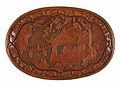
Lacquer dish with Chinese character for longevity, mid 16th century
Maki-e sake bottle with Tokugawa clan's mon (emblem), Japan, Edo period
Lacquer plate, Nam Định province, Vietnam, Nguyễn dynasty

Lacquer is a type of hard and usually shiny coating or finish applied to materials such as wood or metal. It is most often made from tree sap and wax and has been in use since antiquity.[1]

Asian lacquerware, which may be called "true lacquer", are objects coated with the treated, dyed and dried sap of Toxicodendron vernicifluum or related trees, applied in several coats to a base that is usually wood. This dries to a very hard and smooth surface layer which is durable, waterproof, and attractive in feel and look. Asian lacquer is sometimes painted with pictures, inlaid with shell and other materials, or carved, as well as dusted with gold and given other further decorative treatments.

In modern techniques, lacquer means a range of clear or pigmented coatings that dry by solvent evaporation to produce a hard, durable finish. The finish can be of any sheen level from ultra matte to high gloss, and it can be further polished as required. Lacquer finishes are usually harder and more brittle than oil-based or latex paints and are typically used on hard and smooth surfaces.[citation needed]

In terms of modern finishing products, finishes based on shellac dissolved in alcohol are often called shellac or lac to distinguish them from synthetic lacquer, often called simply lacquer, which consists of synthetic polymers (such as nitrocellulose, cellulose acetate butyrate ("CAB"), or acrylic resin) dissolved in lacquer thinner, a mixture of various organic solvents.[2] Although synthetic lacquer is more durable than shellac, traditional shellac finishes are nevertheless often preferred for their aesthetic characteristics, as with French polish, as well as their "all-natural" and generally food-safe ingredients.

Etymology

[edit]

The English lacquer is from the archaic French word lacre, "a kind of sealing wax", from Portuguese lacre, itself an unexplained variant of Medieval Latin lacca "resinous substance," from Arabic lakk (لك), from Persian lāk (لاک‎), from Hindi lākh (लाख); Prakrit lakkha, 𑀮𑀓𑁆𑀔),[3][4][5][6] itself from the Sanskrit word lākshā (लाक्षा) for lac bug, representing the number one hundred thousand (100,000), used as wood finish in ancient India and neighbouring areas.[7]

Laksha is a traditional form of lacquerware from Sri Lanka which is made from shellac derived from Lac.

Sheen measurement

[edit]

Lacquer sheen is a measurement of the shine for a given lacquer.[8] Different manufacturers have their own names and standards for their sheen.[8] The most common names from least shiny to most shiny are: flat, matte, eggshell, satin, semi-gloss, and gloss (high).

Shellac-based lacquers

[edit]

In India shellac derived from insect lac was used since ancient times. Shellac is the secretion of the lac bug (Tachardia lacca Kerr. or Laccifer lacca). It is used for wood finish, lacquerware, skin cosmetic, ornaments, dye for textiles, production of different grades of shellac for surface coating.[7][9][10]

Urushiol-based lacquers

[edit]
A Chinese six-pointed tray, red lacquer over wood, from the Song dynasty (960–1279), 12th–13th century, Metropolitan Museum of Art.

Urushiol-based lacquers differ from most others, being slow-drying, and set by oxidation and polymerization, rather than by evaporation alone. The active ingredient of the resin is urushiol, a mixture of various phenols suspended in water, plus a few proteins. In order for it to set properly it requires a humid and warm environment. The phenols oxidize and polymerize under the action of laccase enzymes, yielding a substrate that, upon proper evaporation of its water content, is hard. These lacquers produce very hard, durable finishes that are both beautiful and very resistant to damage by water, acid, alkali or abrasion. The resin is derived from trees indigenous to East Asia, like lacquer tree Toxicodendron vernicifluum, and wax tree Toxicodendron succedaneum.[11] The fresh resin from the T. vernicifluum trees causes urushiol-induced contact dermatitis and great care is therefore required in its use. The Chinese treated the allergic reaction with crushed shellfish, which supposedly prevents lacquer from drying properly.[12] Lacquer skills became very highly developed in Asia, and many highly decorated pieces were produced.

It has been confirmed that the lacquer tree has existed in Japan since nearly 12,600 years ago in the incipient Jōmon period. This was confirmed by radioactive carbon dating of the lacquer tree found at the Torihama shell mound and is the oldest lacquer tree in the world found as of 2011.[13] Lacquer was used in Japan as early as 7000 BCE, during the Jōmon period. Evidence for the earliest lacquerware was discovered at the Kakinoshima "B" Excavation Site in Hokkaido. The ornaments woven with lacquered red thread were discovered in a pit grave dating from the first half of the Initial Jōmon period. Also, at Kakinoshima "A" Excavation Site, earthenware with a spout painted with vermilion lacquer, which was made 3200 years ago, was found almost completely intact.[14][15][13]

During the Shang dynasty (1600–1046 BC), the sophisticated techniques used in the lacquer process were first developed and it became a highly artistic craft,[16] although various prehistoric lacquerwares have been unearthed in China dating back to the Neolithic period.[16] The earliest extant Chinese lacquer object, a red wooden bowl,[17] was unearthed at a Hemudu culture (5000–4500 BC) site in China.[18] By the Han dynasty (206 BC – 220 AD), many centres of lacquer production became firmly established.[16] The knowledge of the Chinese methods of the lacquer process spread from China during the Han, Tang and Song dynasties. Eventually it was introduced to Korea and Japan.[19]

Trade of lacquer objects travelled through various routes to the Middle East. Known applications of lacquer in China included coffins, music instruments, furniture, and various household items.[16] Lacquer mixed with powdered cinnabar is used to produce the traditional red lacquerware from China.

A maki-e and mother-of-pearl inlay cabinet that was exported from Japan to Europe in the 16th century.

From the 16th century to the 17th century, lacquer was introduced to Europe on a large scale for the first time through trade with Japanese. Until the 19th century, lacquerware was one of Japan's major exports, and European royalty, aristocrats and religious people represented by Marie-Antoinette, Maria Theresa and The Society of Jesus collected Japanese lacquerware luxuriously decorated with maki-e.[20][21] The terms related to lacquer such as "Japanning", "Urushiol" and "maque" which means lacquer in Mexican Spanish, are derived from Japanese.[22][23]

The trees must be at least ten years old before cutting to bleed the resin. It sets by a process called "aqua-polymerization", absorbing oxygen to set; placing in a humid environment allows it to absorb more oxygen from the evaporation of the water.

Lacquer-yielding trees in Thailand, Vietnam, Burma and Taiwan, called Thitsi, are slightly different; they do not contain urushiol, but similar substances called laccol or thitsiol. The result is similar but softer than the Chinese or Japanese lacquer. Burmese lacquer sets slower, and is painted by craftsmen's hands without using brushes.

Raw lacquer can be "coloured" by the addition of small amounts of iron oxides, giving red or black depending on the oxide. There is some evidence that its use is even older than 8,000 years from archaeological digs in Japan and China. Later, pigments were added to make colours. It is used not only as a finish, because if mixed with ground fired and unfired clays applied to a mould with layers of hemp cloth, it can produce objects without need for another core like wood. The process is called "kanshitsu" in Japan. In the lacquering of the Chinese musical instrument, the guqin, the lacquer is mixed with deer horn powder (or ceramic powder) to give it more strength so it can stand up to the fingering.

There are a number of forms of urushiol. They vary by the length of the R chain, which depends on the species of plant producing the urushiol. Urushiol can also vary in the degree of saturation in the carbon chain. Urushiol can be drawn as follows: , where:

R = (CH2)14CH3 or
R = (CH2)7CH=CH(CH2)5CH3 or
R = (CH2)7CH=CHCH2CH=CH(CH2)2CH3 or
R = (CH2)7CH=CHCH2CH=CHCH=CHCH3 or
R = (CH2)7CH=CHCH2CH=CHCH2CH=CH2

[edit]

Types of lacquer

[edit]
Lacquer mixed with water and turpentine, ready for applying to surface.

Types of lacquer vary from place to place but they can be divided into unprocessed and processed categories.

The basic unprocessed lacquer is called raw lacquer (生漆: ki-urushi in Japanese, shengqi in Chinese). This is directly from the tree itself with some impurities filtered out. Raw lacquer has a water content of around 25% and appears in a light brown colour. This comes in a standard grade made from Chinese lacquer, which is generally used for ground layers by mixing with a powder, and a high-quality grade made from Japanese lacquer called kijomi-urushi (生正味漆) which is used for the last finishing layers.

The processed form (in which the lacquer is stirred continuously until much of the water content has evaporated) is called guangqi (光漆) in Chinese but comes under many different Japanese names depending on the variation, for example, kijiro-urushi (木地呂漆) is standard transparent lacquer sometimes used with pigments and kuroroiro-urushi (黒呂色漆) is the same but pre-mixed with iron hydroxide to produce a black coloured lacquer. Nashiji-urushi (梨子地漆) is the transparent lacquer but mixed with gamboge to create a yellow-tinged lacquer and is especially used for the sprinkled-gold technique. These lacquers are generally used for the middle layers. Japanese lacquers of this type are generally used for the top layers and are prefixed by the word jo- (上) which means 'top (layer)'.

Processed lacquers can have oil added to them to make them glossy, for example, shuai-urushi (朱合漆) is mixed with linseed oil. Other specialist lacquers include ikkake-urushi (釦漆) which is thick and used mainly for applying gold or silver leaf.

Nitrocellulose lacquers

[edit]

Solvent-based dipping lacquers that contain nitrocellulose, a resin obtained from the nitration of cotton and other cellulosic materials, debuted in the 19th century along with nitrocellulose's other commercial applications. They were used, for example, on brass items such as musical instruments. Faster-drying and more durable versions of these lacquers were developed in the early 1920s, when the end of the WWI caused a massive overcapacity of nitrocellulose production, and soon greatly displaced much use of the slower-drying paints and lacquers that preceded them; they were extensively used in the automotive industry and others for the next 30 years until further chemical advancements replaced them. Prior to their introduction, mass-produced automotive finishes were limited in colour, damaged easily, and took a long time to dry,[24]: 295–301  with Japan black being the fastest drying and thus the most economical to use.

The problem with using nitrocellulose in lacquers was its high viscosity, which necessitated dilution of the product with large amounts of thinner for application, leaving only a very thin film of finish not durable enough for outdoor use. This problem was overcome by decreasing the viscosity of the polymer (the term actually post-dates the empirical solution, with Staudinger's modern structural theory explaining polymer solution viscosity by length of molecular chains not yet experimentally proven in 1920s) with heat treatments, either with 2% of mineral acid or in an autoclave at considerable pressure.[25]

The first practical nitrocellulose enamel Glossy White S.2567, still for interior use, was introduced in 1919 in the UK by Nobel Explosives.[26] In 1923, General Motors' Oakland brand automobile was the first to introduce one of the new fast-drying nitrocellulose lacquers, a bright blue, produced by DuPont under their Duco tradename.[24]: 295–301  In 1924 the other GM makes followed suit, and by 1925 nitrocellulose lacquers were thoroughly disrupting the traditional paint business for automobiles, appliances, furniture, musical instruments, caskets, and other products.[24]: 295–301  Henry Ford and, in the UK, Herbert Austin were introducing nitrocellulose lacquers at the same time, and soon the market flourished.

Nitrocellulose lacquers are also used to make firework fuses waterproof. The nitrocellulose and other resins and plasticizers are dissolved in the solvent, and each coat of lacquer dissolves some of the previous coat. These lacquers were a huge improvement over earlier automobile and furniture finishes, both in ease of application and in colour retention. The preferred method of applying quick-drying lacquers is by spraying, and the development of nitrocellulose lacquers led to the first extensive use of spray guns. Nitrocellulose lacquers produce a hard yet flexible, durable finish that can be polished to a high sheen. Drawbacks of these lacquers include the hazardous nature of the solvent, which is flammable and toxic, and the hazards of nitrocellulose in the manufacturing process. The lacquer grade of soluble nitrocellulose is closely related to the more highly nitrated form which is used to make explosives. They become relatively non-toxic after approximately a month since, at this point, the lacquer has evaporated most of the solvents used in its production.

Acrylic lacquers

[edit]

Lacquers using acrylic resin, a synthetic polymer, were developed in the 1950s. Acrylic resin is colourless, transparent thermoplastic, obtained by the polymerization of derivatives of acrylic acid. Acrylic is also used in enamel paints, which have the advantage of not needing to be buffed to obtain a shine. Enamels, however, are slow drying. The advantage of acrylic lacquer is its exceptionally fast drying time. The use of lacquers in automobile finishes was discontinued when tougher, more durable, weather- and chemical-resistant two-component polyurethane coatings were developed. The system usually consists of a primer, colour coat and clear topcoat, commonly known as clear coat finishes.

Water-based lacquers

[edit]

Due to health risks and environmental considerations involved in the use of solvent-based lacquers, much work has gone into the development of water-based lacquers. Such lacquers are considerably less toxic, more environmentally friendly, and, in many cases, produce acceptable results. While water-based lacquer's fumes are considerably less hazardous, and it does not have the combustibility issues of solvent-based lacquers, the product still dries fairly quickly. Even though its odor is weaker, water-based lacquers can still produce airborne particulates that can get into the lungs, so proper protective wear still needs to be worn. More and more water-based colored lacquers are replacing solvent-based clear and colored lacquers in under-hood and interior applications in the automobile and other similar industrial applications. Water-based lacquers are used extensively in wood furniture finishing as well.

One drawback of water-based lacquer is that it has a tendency to be highly reactive to other fresh finishes such as quick-dry primer (excluding waterborne lacquer primers), caulking and even some paints that have a paint/primer aspect. Tannin bleed-through can also be an issue, depending on the brand of lacquer used. Once it happens, there is no easy fix as the lacquer is so reactive to other products.

Water-based lacquer used for wood finishing is also not rated for exterior wear, unless otherwise specified.

Japanning

[edit]

Just as china is a common name for porcelain, japanning is an old name to describe the European technique to imitate Asian lacquerware.[27] As Asian lacquer work became popular in England, France, the Netherlands, and Spain in the 17th century, the Europeans developed imitation techniques. The European technique, which is used on furniture and other objects, uses finishes that have a resin base similar to shellac. The technique, which became known as japanning, involves applying several coats of varnish which are each heat-dried and polished. In the 18th century, japanning gained a large popular following. Although traditionally a pottery and wood coating, japanning was the popular (mostly black) coating of the accelerating metalware industry. By the twentieth century, the term was freely applied to coatings based on various varnishes and lacquers besides the traditional shellac.

See also

[edit]

References

[edit]

Further reading

[edit]
Revisions and contributorsEdit on WikipediaRead on Wikipedia
from Grokipedia
Lacquer is a versatile coating material, either or synthetic, that forms a hard, durable, and often glossy finish when applied to surfaces such as , metal, or other substrates, providing protection against , abrasion, and environmental damage. Traditional lacquer originates from the sap of the lacquer tree (, formerly Rhus verniciflua), a species native to , where the raw sap is harvested by tapping the tree bark and undergoes through exposure to oxygen and humidity to create a resilient film. This lacquer, known as urushi in Japanese, exhibits exceptional properties including resistance to , acids, alkalis, alcohol, heat up to certain temperatures, and even antibacterial effects, making it ideal for long-lasting decorative and functional objects. The history of lacquer traces back approximately 8,000 years to ancient , with archaeological evidence from sites like the Jingtoushan and Hemudu cultures revealing its early use for coating wooden artifacts, evolving from simple waterproofing to intricate art forms involving layering, inlaying with gold or shell (), and engraving. The technique also appeared in during the (c. 7000 BCE), with further development and spread to Korea, , and later Europe via trade routes, influencing global ; by the 16th century, East Asian lacquerware had captivated European markets, inspiring imitations like . Production of traditional lacquer is labor-intensive, requiring multiple thin applications—often dozens—of refined sap, each cured in controlled humidity, followed by polishing and optional embellishments, a process that can take months and demands skilled artisans due to the sap's toxicity causing skin irritation. In contrast, modern lacquers, developed in the 19th and 20th centuries, are primarily synthetic formulations based on or acrylic resins dissolved in volatile solvents, drying rapidly through rather than chemical . These industrial lacquers offer quick application and high gloss but are less durable than natural urushi without additives, and they are widely used today in furniture finishing, automotive coatings, musical instruments, and consumer products for their ease of use and aesthetic appeal. Across both traditional and modern forms, lacquer's defining role lies in bridging utility and artistry, from ancient ritual vessels and elite to contemporary design, while ongoing research explores sustainable alternatives to address environmental concerns with synthetic solvents.

Overview

Definition

Lacquer is a clear or pigmented, hard, and durable , either natural or synthetic, applied as a protective finish to surfaces such as wood, metal, or other materials. It forms a glossy, resilient layer that enhances appearance while providing resistance to wear, moisture, and environmental factors. Synthetic lacquers, unlike many paints that dry through oxidation or , dry primarily by the of solvents without such chemical reactions. Originally derived from natural saps, lacquer has evolved to include synthetic formulations, broadening its versatility across applications. In basic composition, synthetic lacquers consist of resins dissolved in volatile solvents, which, upon application and evaporation, create a solid, adherent . Natural lacquers, such as urushiol-based saps from Asian lacquer trees, are emulsions that form a film through . This process yields a smooth, impermeable coating suitable for both aesthetic and functional purposes. Examples include urushiol-based natural lacquers from Asian lacquer trees and nitrocellulose-based synthetics. With roots in ancient Asian traditions for decorating wares like and furniture, lacquer today supports modern industrial uses, including automotive finishes and marine protection.

Properties

Lacquer exhibits a range of physical properties that contribute to its utility as a protective finish. Natural lacquers, derived from , form a highly durable with excellent resistance to wear and oxidation due to their thermosetting process, achieving a comparable to in fully cured states. Synthetic lacquers, such as nitrocellulose-based formulations, offer rapid strength development and toughness, though they remain more flexible than natural variants. Both types provide high gloss potential, enhancing surface , but natural lacquers require 24-48 hours per layer under controlled for curing via enzymatic oxidation, while synthetics dry quickly through in minutes to hours. However, lacquers generally show sensitivity to , which can cause softening or marking, and to alcohols, which may damage the film in prolonged exposure. Chemically, lacquers demonstrate in organic solvents such as acetone and alcohols before application, facilitating easy handling and removal if needed. formation in synthetic lacquers occurs solely through , leaving a coating without further curing, whereas natural lacquers undergo oxidative catalyzed by enzymes, resulting in a crosslinked, thermoset structure. Natural lacquers may exhibit yellowing or discoloration over time due to UV exposure, while synthetics can amber slightly with age but maintain greater clarity overall. Key advantages of lacquer include excellent to and other surfaces, allowing it to bond effectively without priming in many cases, and superior clarity that highlights underlying grain patterns. Once cured, lacquers provide strong water resistance, protecting against moisture without altering transparency. Disadvantages encompass application , particularly from in natural lacquers, which can cause severe allergic reactions in sensitive individuals, and the high flammability of solvents used in both types, posing fire risks during use. Additionally, synthetic lacquers remain re-dissolvable in compatible solvents post-application, potentially leading to damage from chemical spills.
PropertyNatural (Urushiol-Based)Synthetic (Nitrocellulose-Based)
Drying/Curing Time24-48 hours per layer via 15-30 minutes to touch dry via
HardnessHigh durability, resistant to wearTough but flexible, pencil hardness H-2H
Water ResistanceExcellent once curedGood, develops rapidly
ClarityHigh, may discolor with UV over timeHigh, slight ambering with age
SolubilityInsoluble after curingSoluble in organic solvents

Sheen Measurement

Sheen, also known as gloss, refers to the surface reflectivity of a lacquer finish, quantified in gloss units (GU) on a scale from 0 (matte, no reflection) to 100 (mirror-like, perfect reflection), calibrated against a highly polished black glass standard with a refractive index of 1.567. This measurement captures the specular reflection of light, distinguishing it from diffuse reflection, and is essential for evaluating the aesthetic and functional quality of lacquer coatings. Standardized measurement employs glossmeters, handheld devices that project a onto the surface at specific angles—typically 20° for high-gloss surfaces (>70 GU), 60° for general-purpose assessment, and 85° for low-gloss surfaces (<10 GU)—and detect the reflected intensity relative to the black glass standard. The ASTM D523 standard governs this process for nonmetallic specimens like lacquer finishes, specifying geometries and procedures to ensure reproducibility, with measurements taken at least three times and averaged. Factors such as surface preparation, including roughness from inadequate sanding or contamination, can significantly influence readings by scattering light and reducing specular reflection, while proper leveling during application enhances accuracy. Common sheen levels in lacquer finishes include satin (10-35 GU), semi-gloss (35-70 GU), and high-gloss (70+ GU), typically measured at 60° for consistency across applications. Lacquers achieve these variations through additives like silica-based flatting agents, which mattify the surface to lower GU, or by fine sanding (e.g., 320-400 grit) and polishing to promote smoothness and elevate sheen. In practical terms, higher sheen levels indicate a smoother, more uniform application, aiding quality control in industries such as furniture manufacturing, where consistent gloss ensures visual appeal and durability, and automotive finishing, where it verifies protective topcoats against environmental wear. This evaluation helps detect defects like orange peel or poor flow, maintaining standards for end-user satisfaction. Historically, sheen assessment evolved from subjective visual inspections in the 19th century to objective methods in the 20th, beginning with A.H. Pfund's 1925 glossimeter, a variable-angle device measuring specular reflection, patented in 1932, and advancing to modern photoelectric glossmeters by mid-century for precise, quantifiable results.

History

Etymology

The English word "lacquer" first appeared in the 1570s, initially denoting a dye derived from lac resin. It traces its roots to obsolete French lacre ("sealing wax"), borrowed from Portuguese laca or lacre ("gum lac" or "sealing wax"), which in turn stems from Hindi lākh ("lac") and ultimately Sanskrit lakṣā ("red dye" or lacquer material). The Sanskrit term lakṣā literally means "one hundred thousand" (lakṣa), alluding to the enormous swarms of lac insects (Kerria lacca, formerly Laccifer lacca) needed to harvest the resinous secretion that forms the basis of lac. Closely related is "shellac," which emerged in English around 1713 as a compound of "shell" and "lac," describing the resin processed into thin, shell-like plates after the insects' secretions are melted and purified. Both terms originate from the same Sanskrit lakṣā, referring to the crimson resin produced by these scale insects on host trees in South Asia. While "lac" specifically denotes the raw or dye form of this resin—used historically for red coloring in textiles and inks—"lacquer" evolved to emphasize its application as a varnish or coating. The term entered European languages via 16th-century Portuguese trade routes with India, where lac resin was a key commodity, and expanded in the 17th century to encompass varnishes imported from China and Japan through broader Asian commerce. In English, it initially described shellac-based finishes but adapted to include Asian tree-sap varnishes encountered in colonial exchanges. Notably, the Japanese word urushi for the sap of the lacquer tree (Toxicodendron vernicifluum) is etymologically distinct, deriving from native terms like uruwashii ("beautiful" or "glossy") and uruosu ("to moisten"), which highlight the material's lustrous, protective qualities rather than insect-derived resin. By the 1920s, "lacquer" broadened in usage to synthetic formulations, particularly with the development of nitrocellulose-based finishes like DuPont's Duco, introduced in 1923 for automotive applications, which replicated the rapid drying and durability of natural varnishes without relying on organic resins. This shift reflected industrial advancements in chemistry, extending the term beyond its biological origins to modern protective coatings.

Origins and Development

The earliest evidence of lacquer use dates to the Neolithic period in China, where urushiol-based sap from the lacquer tree (Toxicodendron vernicifluum) was applied as a waterproof coating on wooden and bamboo objects. Archaeological findings from the Hemudu culture site in Zhejiang province, dating to around 6000–5000 BCE, include red-lacquered wooden bowls and fragments, with more recent discoveries such as a lacquered wooden bow from the nearby Kuahuqiao site (c. 6000 BCE) and artifacts from Jingtoushan indicating even earlier use around 8000 years ago, demonstrating initial applications for protection against moisture and decay. This early utilization laid the foundation for lacquer's role in enhancing durability and aesthetics in ancient artifacts. During the Shang Dynasty (1600–1046 BCE), lacquer techniques were refined, particularly in the integration with metalwork. Lacquer served as a binding agent for inlays of turquoise, shell, and other materials on bronze vessels and artifacts excavated from sites like Anyang, allowing for more intricate and durable decorative compositions. Key innovations in processing emerged around this time, including boiling the raw sap to evaporate excess water and filtering to remove impurities such as proteins and gums, which improved viscosity and polymerization. Additives like fine clay powders were introduced to accelerate curing by absorbing moisture and stabilizing the emulsion, enabling faster application in controlled environments. In parallel, lacquer traditions evolved across Asia. Lacquer use in Japan dates to the Jōmon period (c. 14,000–300 BCE), with evidence as early as c. 7000 BCE for coating earthenware and wooden items, likely developed independently; Chinese influences contributed to advanced techniques in later periods such as the Yayoi (c. 300 BCE–300 CE). Later developments included the maki-e method of sprinkling gold or silver powders onto wet lacquer surfaces, first documented in the Heian period (794–1185 CE) for ornate decoration. In India, shellac—a resin secreted by the lac insect (Kerria lacca)—was employed from about 1000 BCE for sealing wooden surfaces and sealing documents, providing a glossy, protective finish distinct from urushiol-based varieties. Pre-modern trade along the Silk Road, beginning around 200 BCE, facilitated the spread of lacquer knowledge and materials from China to neighboring regions, profoundly influencing Korean and Vietnamese traditions. In Korea, Han Dynasty (206 BCE–220 CE) imports introduced lacquerware production, leading to indigenous styles with mother-of-pearl inlays by the Goryeo period (918–1392 CE). Vietnamese lacquerware similarly adopted Chinese methods during the millennium of northern rule (1st–10th centuries CE), evolving into unique son mai techniques using local sap sources for waterproofing and artistic expression. The transition toward synthetic lacquers began in the 19th century with experiments on cellulose nitrates, derived from treating cotton with nitric and sulfuric acids, which produced flammable but versatile coatings foreshadowing modern nitrocellulose varnishes. These early innovations, patented in the 1860s for applications like artificial ivory, addressed limitations in natural sap availability and curing times, paving the way for industrial-scale production in the 20th century.

Global Spread and Japanning

The introduction of Asian lacquerware to Europe began in the early 16th century through Portuguese and Dutch maritime trade routes, which brought highly prized objects from , , and Southeast Asia to European courts and markets. These items, valued for their durable, glossy finishes and intricate decorations, sparked a fascination with "japan"—a term for the black lacquer technique—particularly for use in furniture such as cabinets and screens. By the late 16th century, exports of elaborately decorated lacquerware, often featuring gold and silver motifs, had created significant demand among European elites, leading to the disassembly and repurposing of imported panels for Western furniture designs. In response to this demand and the challenges of replicating authentic Asian lacquer in Europe's drier climate—where urushiol-based sap required 70-90% humidity to cure properly—Europeans developed imitation techniques known as japanning. A key milestone was the 1688 publication of A Treatise of Japanning and Varnishing by John Stalker and George Parker in Oxford, which provided the first detailed English-language guide to the craft. The method used shellac as a base, combined with linseed oil and pigments to achieve a glossy, durable finish mimicking Asian black lacquer; it was widely applied to wooden cabinets, screens, and decorative panels, enabling affordable production for the growing middle class. European adaptations further diversified these techniques, with France leading innovations in the 18th century. The Martin brothers—Guillaume, Julien, Etienne-Simon, and Robert—developed Vernis Martin around 1728, receiving a royal privilege in 1730 to produce this lustrous substitute lacquer, which involved applying colored grounds over copperplate engravings or printed designs before varnishing. Widely used for furniture, fans, and snuffboxes during the Rococo period, it allowed for vibrant, translucent effects but still faced limitations from inconsistent humidity, restricting authentic urushiol use to humid workshops or imported pieces. By the 19th century, industrialization accelerated the shift from imported Asian lacquer and handmade imitations to synthetic alternatives in Europe and America, driven by advances in chemistry and a decline in high-quality Asian imports due to political disruptions like the . The introduction of cellulose nitrate-based lacquers in the mid-19th century provided faster-drying, more reliable finishes suitable for mass-produced furniture and vehicles, reducing reliance on labor-intensive japanning. The global spread of lacquer techniques profoundly influenced European design movements, notably Rococo and Art Nouveau. In the Rococo era (mid-18th century), Asian-inspired lacquer panels adorned opulent French and English furniture, blending exotic motifs with asymmetrical, naturalistic forms to evoke luxury and whimsy. Later, during Art Nouveau (late 19th-early 20th century), Japonisme revived interest in lacquer's fluid lines and organic patterns, seen in works by designers like Émile Gallé; iconic examples include Coromandel screens—large folding panels of incised black lacquer with gilded carvings—imported from India and China, which became status symbols in European interiors and inspired hybrid decorative arts.

Natural Lacquers

Urushiol-Based Lacquers

Urushiol-based lacquers originate from the sap of the lacquer tree (Toxicodendron vernicifluum), a species native to East Asia, including regions in China, Japan, and Korea. The raw sap, harvested seasonally from mature trees, forms a milky emulsion that serves as the primary material for these lacquers. Its key component is urushiol, a mixture of alkyl catechols with long unsaturated hydrocarbon side chains (primarily C15 and C17), constituting 50-70% of the sap's dry weight, alongside 30-40% water, laccase enzymes (0.2-1%), polysaccharides, glycoproteins, and minor proteins. This composition enables the sap's unique polymerization properties, distinguishing it from other natural resins. The traditional preparation begins with tapping the trees, typically from 20-year-old specimens during the summer months (June to September), when sap flow is optimal. Workers make shallow V-shaped incisions in the bark to collect the latex-like sap over several days, yielding about 100-200 grams per tree annually. The collected raw sap, or arami-urushi, undergoes initial refinement through filtration: it is heated gently and stirred with cotton fibers or fine cloth to adsorb impurities like wood particles and debris, followed by sedimentation or centrifugation. Further processing may involve fermentation-like maturation in cool, dark conditions to stabilize the emulsion, and treatment with ash water (a dilute solution of wood ash, often from specific trees like camellia, to adjust pH and viscosity) to promote partial polymerization and reduce water content. These steps yield refined forms suitable for application, with the entire process emphasizing minimal mechanical agitation to preserve enzymatic activity. Once applied, the lacquer cures through enzymatic oxidation catalyzed by , which polymerizes urushiol into a cross-linked network. This requires precise environmental conditions: temperatures of 20-30°C and relative humidity of 70-80%, often achieved in specialized chambers (urushi-buro) to mimic subtropical climates. Under these settings, full curing takes 1-3 days per layer, with multiple coats (up to 30-50) applied for thickness. The resulting film exhibits a deep black hue in its natural oxidized state, though this can be modified; it demonstrates exceptional durability, resisting acids, alkalis, alcohol, and temperatures exceeding 300°C, as evidenced by centuries-old artifacts like Han Dynasty (206 BCE-220 CE) bowls and Japanese urushiware that remain intact after burial or exposure. However, raw urushiol is a potent allergen, triggering urushiol-induced contact dermatitis—characterized by redness, blisters, and itching—in 50-75% of exposed individuals due to its similarity to toxins in poison ivy. Traditional variants include raw urushi (unrefined, filtered sap used for base coats or wiping techniques), beroi-urushi (partially cured and thickened for carving or relief work, allowing semi-hard states during application), and roshoku-urushi (pigmented versions, often red or vermilion, achieved by blending with natural dyes like cinnabar for decorative effects). These types facilitate diverse techniques, from simple coatings to intricate inlays. Culturally, urushiol-based lacquers underpin Japanese urushiware, integral to tea ceremonies, Buddhist rituals, and everyday utensils symbolizing purity and longevity, with artifacts like the 12th-century yakusai boxes exemplifying their aesthetic and protective roles. In China, they form the basis of tixi (carved lacquer), a labor-intensive art involving hundreds of layers etched to reveal colors, prominent in Ming Dynasty (1368-1644) wares that highlight imperial craftsmanship and philosophical depth. Health precautions are paramount: artisans use charcoal filtration during refinement—passing sap through activated charcoal or carbonized powders—to adsorb allergenic proteins and urushiol residues, alongside gloves, ventilation, and post-cure heat treatment to minimize risks.

Shellac-Based Lacquers

Shellac-based lacquers are derived from the resinous secretions of the lac insect (Kerria lacca), a scale insect primarily found in India and Thailand, where it infests host trees such as Butea monosperma (palas) and Schleichera oleosa. The term "shellac" originates from the Hindi lakh (via Persian lak and Medieval Latin lacca), derived from the Sanskrit laksha meaning "one hundred thousand," referring to the vast swarms of insects required to produce the resin. Harvesting begins with collecting sticklac, the encrusted twigs covered by the female insects' hardened secretions during brood development; branches are cut seasonally (typically twice a year), crushed, and washed in water to separate the resin from insect bodies and debris, yielding seedlac—orange-brown flakes comprising 60-70% resin, 20-25% wax, and impurities. Processing involves melting seedlac at 100-120°C, straining through cloth to remove debris, and stretching the molten resin into thin sheets for cooling, producing buttonlac or sheetlac. For refined grades, dewaxing occurs via solvent extraction (e.g., hexane) or centrifugation to remove the natural wax (5-6%), improving clarity and solubility; bleaching with sodium hypochlorite or activated carbon yields white or blonde shellac. The final product is typically dissolved in ethanol (95%) or methanol to form a liquid lacquer, with concentrations like a "2-pound cut" (2 pounds flakes per gallon solvent) common for application; methanol evaporates faster but is more toxic, while ethanol is preferred for food-contact uses. This alcohol-soluble nature allows rapid drying via evaporation, forming a hard film without polymerization. Shellac lacquers exhibit an amber hue in natural orange grades, providing a warm, glossy finish with excellent adhesion to wood and metals; they are insoluble in water but highly soluble in alcohols and alkaline solutions due to free carboxyl and hydroxyl groups. The cured film is hard yet brittle, with a glass transition temperature (Tg) of 45-60°C, becoming thermoplastic and softening above this point, limiting use in high-heat environments. Despite brittleness, it offers good electrical insulation and barrier properties against oils and gases, though it has moderate water resistance and can crack over time. Shellac is non-toxic and food-safe, approved by the FDA (E 904) for coatings on confections and fruits, with an acceptable daily intake of 4 mg/kg body weight as of 2024, though prolonged alcohol exposure during application requires ventilation. Historically, shellac has been used in India since ancient times for bangles, jewelry, seals, and decorative items, with evidence from 3000-year-old artifacts; it gained prominence in Europe from the 17th century via East India Company trade, initially as sealing wax and dye, evolving into "French polish"—a shellac-alcohol mixture rubbed onto furniture for a high-gloss finish, popular in cabinetry through the 19th century. Today, it remains valued for musical instruments, pharmaceuticals (pill coatings), and wood finishing, though synthetic alternatives have reduced demand; sustainable cultivation in India (world's largest producer, ~10,000 tons annually as of 2020) supports ongoing use. Limitations include low heat resistance (softens at ~60°C), vulnerability to water rings and alcohols, and potential yellowing with age, often mitigated by additives like plasticizers.

Synthetic Lacquers

Nitrocellulose Lacquers

Nitrocellulose lacquers represent one of the earliest synthetic alternatives to natural resins, formulated by treating cellulose—typically derived from cotton linters or wood pulp—with a mixture of nitric and sulfuric acids to produce nitrocellulose with a nitrogen content of approximately 11.5% to 12.6%. This nitrocellulose is then dissolved in volatile organic solvents such as butyl acetate, acetone, or toluene to form the base solution, which provides a clear, film-forming coating upon evaporation. To enhance flexibility and prevent brittleness in the dried film, plasticizers like castor oil or butyl stearate are added, typically comprising 10-20% of the formulation by weight. The foundational work on nitrocellulose began in the 1860s with British chemist , who developed Parkesine, an early plastic material from nitrocellulose dissolved in solvents, laying the groundwork for synthetic coatings. Practical nitrocellulose lacquers emerged in the early 20th century, but widespread commercialization occurred in the 1920s through DuPont's development of Duco, a nitrocellulose-based finish introduced in 1925 for General Motors vehicles, revolutionizing automotive painting by enabling faster production and vibrant colors. These lacquers are prized for their rapid evaporation , typically touch-dry in 10-15 minutes and sandable within 20-30 minutes at standard temperatures, allowing multiple coats in a single session without extended waits. They achieve a high-gloss finish exceeding 80 gloss units (GU) at a 60-degree angle, providing a mirror-like sheen ideal for aesthetic applications. However, the solvent evaporation causes significant shrinkage—often around 30% in volume for thicker applications—which can lead to cracking or checking if coats exceed recommended thin layers of 1-2 mils. Historically, nitrocellulose lacquers found extensive use in the automotive industry from the 1920s to the 1950s, where Duco enabled colorful, durable finishes on vehicles like Chevrolet and Cadillac models, reducing drying times from weeks to hours. In musical instruments, they became standard for guitar bodies, as seen in Fender's production from the 1950s onward, offering a thin, resonant coating that ages gracefully with checking patterns. Their high flammability, due to the nitrocellulose and volatile solvents, prompted early safety regulations, such as California's 1940s mandates for fireproof storage and non-ferrous tools in handling areas. By the post-1960s era, nitrocellulose lacquers declined in favor of acrylic variants, driven by the latter's superior UV resistance, reduced toxicity from lower volatile organic compounds (VOCs), and compliance with emerging environmental regulations like the U.S. Clean Air Act amendments targeting solvent emissions. Automotive applications shifted almost entirely to acrylics by the late 1960s for better durability and safety, though nitrocellulose persists in niche areas like instrument finishing where its acoustic properties are valued.

Acrylic Lacquers

Acrylic lacquers consist primarily of thermoplastic acrylic polymers, such as those derived from methyl methacrylate monomers, dissolved in organic solvents like toluene. These polymers typically comprise 80-90% methyl methacrylate and 10-20% butyl acrylate by weight, forming a clear, durable film upon solvent evaporation. Developed in the 1950s, acrylic lacquers emerged as a standard in the automotive industry, building on earlier innovations like DuPont's Lucite acrylic resin introduced in 1931. By the 1960s, major manufacturers like adopted them for topcoats due to their superior UV resistance, which prevents yellowing and maintains color stability over time. This advancement addressed limitations of earlier finishes, enabling vibrant, long-lasting automotive aesthetics. Key properties of acrylic lacquers include the formation of a flexible film that resists cracking under thermal expansion or contraction. They exhibit strong chemical resistance to substances like gasoline and mild acids, making them suitable for demanding environments. Drying occurs rapidly through solvent evaporation, typically allowing handling within 1-2 hours, though full cure may take longer. Gloss levels are adjustable from 40 to 90 gloss units (GU), providing options from semi-gloss to high-shine finishes. Compared to nitrocellulose predecessors, acrylic lacquers offer lower volatile organic compound (VOC) emissions, reducing environmental impact and improving worker safety. They also facilitate easier buffing and polishing, yielding a smoother, higher-shine surface with less effort. Common applications include automotive clear coats for protection and aesthetics, as well as wood finishing where durability is essential. In aerospace, acrylic lacquers have been used since the 1970s for aircraft finishes, valued for their lightweight nature and smooth application on surfaces like those on models.

Water-Based Lacquers

Water-based lacquers represent an eco-friendly evolution in synthetic coatings, formulated primarily with water as the carrier to minimize volatile organic compound (VOC) emissions. Their development accelerated in the 1990s, driven by U.S. Environmental Protection Agency (EPA) regulations under the Clean Air Act Amendments of 1990, which imposed stricter limits on VOC content in architectural coatings to combat air pollution. These rules, including control technology guidelines for wood furniture finishing issued in 1996, encouraged the shift toward low-VOC alternatives, with water-based systems emerging as viable options for wood and furniture applications. Commercial examples include General Finishes' Enduro-Var line, introduced to meet these standards while providing clear, durable finishes for interior wood surfaces. The composition of water-based lacquers centers on emulsions of acrylic or polyurethane resins dispersed in water, typically containing 20-40% solids by weight to ensure adequate film build without excessive viscosity. These polymer particles, stabilized in an aqueous medium, form the basis of the coating, often blended as hybrids for enhanced performance, such as acrylic-polyurethane dispersions that combine hardness and flexibility. Coalescing agents, like Texanol (2,2,4-trimethyl-1,3-pentanediol monoisobutyrate), are essential additives at low concentrations (1-5%), lowering the minimum film formation temperature and enabling coalescence at room temperature by plasticizing the particles during water evaporation. This process results in a continuous, transparent film without the need for elevated curing temperatures, distinguishing water-based lacquers from their solvent-soluble acrylic counterparts through emulsification rather than dissolution. Key properties of water-based lacquers include low odor and non-flammability, attributed to the absence of volatile solvents, making them ideal for enclosed workspaces. Drying times are generally longer than solvent-based options, with recoat readiness in 1-2 hours under ideal conditions (70°F/21°C and 50% humidity), though full cure may take 24-48 hours to achieve optimal hardness. Initial gloss levels often range from 50-70 GU at 60° measurement, providing a satin to semi-gloss appearance that can be boosted to 80+ GU with gloss-enhancing additives like waxes or silicas. These lacquers offer significant advantages in environmental and safety profiles, with VOC content typically below 100 g/L—far lower than the 500-680 g/L common in solvent-based lacquers—aligning with EPA limits for clear wood coatings and reducing contributions to smog formation. Their water carrier enables easy cleanup with soap and water, and non-flammable nature minimizes fire risks during application and storage, enhancing suitability for indoor professional and DIY use. Despite these benefits, water-based lacquers have notable limitations. They exhibit poorer penetration into porous wood substrates compared to solvent-based formulas, often raising the grain upon application and necessitating sanding between coats for smoothness. Emulsions are sensitive to freezing, with storage below 32°F (0°C) potentially causing phase separation or coagulation after multiple cycles, though most formulations tolerate 2-3 freeze-thaw events if thawed slowly. Additionally, high humidity (>70%) can prolong drying, promote (milky haze), or hinder film integrity, rendering them unsuitable for humidity-dependent curing processes like those in urushiol-based natural lacquers.

Production and Applications

Production Processes

The production of lacquer begins with sourcing raw materials, which varies significantly between natural and synthetic varieties. For natural urushiol-based lacquers, the primary resin is extracted from the sap of the lacquer tree (Toxicodendron vernicifluum), traditionally through a tapping process where incisions are made in the bark during the summer months to collect the milky latex. This sap, containing urushiol as the key polymerizing component, is harvested manually in regions like China, Japan, and Vietnam, yielding about 150-200 g per tree annually under sustainable practices. Shellac-based lacquers derive from the resinous secretions of the lac insect (Kerria lacca), which are harvested by scraping encrustations from host trees such as palas in India; it requires approximately 100,000 insects to produce 1 kg of refined shellac flakes. Synthetic resins, such as nitrocellulose for nitrocellulose lacquers, are produced through chemical synthesis involving the nitration of cellulose sources like cotton linters or wood pulp with a mixture of nitric and sulfuric acids at controlled temperatures below 30°C to achieve 11-13% nitrogen content for lacquer-grade material. Once raw materials are obtained, formulation involves blending the with solvents, pigments, and additives to create a stable liquid coating. Resins typically constitute 20-40% by weight of the mixture, providing the film-forming backbone, while solvents comprise 50-70% to achieve the desired flow and evaporation rate; common solvents include esters like for synthetics or alcohol for . Pigments and fillers, at 0-10%, are dispersed to impart color and opacity, often using high-shear mixers to ensure uniformity without agglomeration. Additives such as plasticizers (e.g., for flexibility), and UV stabilizers (e.g., benzotriazoles) are incorporated at 1-5% to enhance performance properties like drying time and weather resistance; the mixture's is then adjusted to 20-30 seconds in a Ford #4 cup at 25°C for optimal sprayability. This process occurs in tanks under agitation to prevent settling, with natural lacquers requiring gentle stirring to avoid premature . Quality control is integral throughout to ensure consistency and . Solids content is measured gravimetrically after , targeting 20-50% to balance application ease and thickness; deviations can lead to defects like cracking. is routinely tested using Ford cups per ASTM D1200 standards, confirming flow rates suitable for industrial spraying. , determined via closed-cup methods like ASTM D56 (typically below 38°C for lacquers), is assessed to manage fire risks during handling. Stability assessments involve accelerated aging tests for , while through 5-10 micron meshes removes particulates; batches failing these criteria are rejected or reformulated. Production scales from artisanal to industrial methods, adapting to and precision needs. Artisanal processes, common for natural lacquers, rely on hand-stirring in small wooden or clay vats, often in workshops where batches of 5-20 liters are prepared manually to preserve bio-active like urushiol's enzymatic curing. Industrial production employs large-scale reactors—batch sizes up to 10,000 liters for synthetics or continuous flow systems for high-throughput—using automated mixers and heat exchangers for precise (20-40°C) to handle exothermic reactions in synthesis. Finished lacquer is packaged in sealed metal cans or drums to prevent and , with yields optimized through of thinners. Safety and regulatory compliance govern all stages due to the flammable and toxic nature of components. Under OSHA standards (29 CFR 1910.107), handling of lacquer solvents requires explosion-proof equipment, local exhaust ventilation to maintain airborne concentrations below permissible exposure limits (e.g., 200 ppm TWA for ), and like respirators for workers. The Clean amendments since 1990, enforced by EPA via National Emission Standards, have driven the development of low-VOC formulations (under 250 g/L for architectural coatings) by substituting high-VOC solvents with exempt alternatives like t-butyl , reducing emissions by up to 50% in post-2000s production.

Application Methods

Surface preparation is crucial for achieving a smooth and durable lacquer finish, beginning with sanding the substrate to 220-grit to remove imperfections and create a uniform surface. After sanding, the surface must be thoroughly cleaned to eliminate dust, grease, and residues, often using a or a 1:1 solution of and . For porous woods, applying a lacquer-compatible primer is recommended to seal the material and prevent color bleed-through or uneven absorption during subsequent coats. Lacquer is most commonly applied via spraying, which provides even coverage and minimizes brush marks, using high-volume low-pressure (HVLP) guns to deliver thin coats of 1-2 mils each. Brushing is an alternative for certain formulations like shellac-based or specially formulated brushing lacquers, employing natural bristle brushes to maintain a wet edge and avoid lap marks, though it requires retarders to slow drying. Dipping suits small items, immersing them briefly in the lacquer bath followed by controlled drainage to achieve uniform thickness. Multiple thin layers, typically 3-6 coats, are built up to reach a total dry film thickness of 4-6 mils, allowing each layer to "melt" into the previous for seamless integration. Between coats, lacquer cures by air-drying for 15-60 minutes, depending on and , enabling without disturbing the film. Final finishing involves buffing the cured surface with 0000 to level imperfections or applying polishing compounds for desired sheen levels, such as gloss or . protocols emphasize well-ventilated workspaces, ideally using spray with airflow of 100-150 feet per minute to disperse flammable vapors and . Applicators must wear organic vapor respirators and protective clothing to guard against inhalation of toxic fumes and skin contact, in line with OSHA standards for solvent-based finishes. Over-application should be avoided to prevent runs or orange peel texture, which can compromise and durability. Common issues include fisheyes, crater-like defects caused by or contamination on the surface or in the application equipment, which can be remedied by thorough with wipes before reapplication. , a haze from entrapment in humid conditions, is addressed by increasing , using retarders, or gently reheating the surface to redissolve the film.

Modern Uses

In contemporary applications, lacquer serves as a versatile protective and aesthetic finish across multiple industries, with synthetic variants like pre-catalyzed and acrylic types dominating due to their and ease of application. In furniture and , clear coats such as pre-catalyzed lacquer are widely used on and for their resistance to , chemicals, and yellowing, providing a high-gloss, long-lasting surface. The global furniture lacquer market, valued at $10.1 billion in 2023, is projected to reach $17.4 billion by 2032, reflecting steady demand in . In the automotive and sectors, base/clear coat systems employing acrylic lacquers predominate for their balanced performance in , gloss retention, and weather resistance on exteriors. Acrylic coatings accounted for approximately 48.6% of the automotive coatings market demand in , underscoring their prevalence in new car production. In , lacquers are applied to composite materials for enhanced protection against environmental stressors while maintaining structural integrity. For musical instruments, lacquer remains the preferred finish on electric guitars, as its thin, flexible film allows optimal vibration transmission from the body to the strings, contributing to resonant tone and sustain. Water-based lacquers are increasingly adopted on string instruments like violins, offering reduced weight addition compared to traditional oil varnishes and preserving acoustic clarity without compromising protection. Beyond these core areas, lacquer finds niche roles in personal care and manufacturing; for instance, nitrocellulose-based formulations form the primary film-forming component in nail polishes, enabling smooth application and durability. In , solvent-based lacquer inks provide vibrant, lead-free colors for point-of-purchase displays and book covers. Similarly, clear lacquer sprays deliver glossy, protective finishes on 3D-printed parts, smoothing layer lines and enhancing . Emerging research in the has advanced bio-based lacquers, such as those derived from renewable sources for protective coatings in , promoting reduced environmental impact. Market trends as of 2025 emphasize , with a pronounced shift toward zero-VOC water-based lacquers driven by regulatory pressures and eco-conscious consumers; the global waterborne coatings market is forecasted to expand from $60.4 billion in 2023 to $89.4 billion by 2030. This transition is bolstered by innovations in recycled resins, enabling lacquer formulations with up to 30% post-consumer content to improve recyclability in packaging applications.

References

Add your contribution
Related Hubs
User Avatar
No comments yet.