


Community hub
Recent from talks
Contribute something
Nothing was collected or created yet.
Fatigue
View on Wikipedia
| Fatigue | |
|---|---|
| Other names | Exhaustion, weariness, tiredness, lethargy, listlessness |
 | |
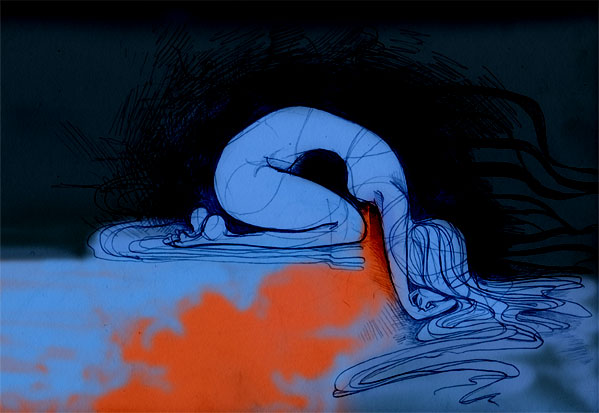
| Artistic representation of ME/CFS | |
| Specialty | Primary care  |
| Treatment | Avoid known stressors and unhealthy habits (drug use, excessive alcohol consumption, smoking), healthy diet, exercise regularly, medication, hydration, and vitamins |
Fatigue is a state of being without energy for a prolonged period of time.[1][2] Fatigue is used in two contexts: in the medical sense, and in the sense of normal tiredness.
In the medical sense, fatigue is seen as a symptom, and is sometimes associated with medical conditions including autoimmune disease, organ failure, chronic pain conditions, mood disorders, heart disease, infectious diseases, and post-infectious-disease states.[3] However, fatigue is complex and in up to a third of primary care cases no medical or psychiatric diagnosis is found.[4][5][6]
In the sense of tiredness, fatigue often follows prolonged physical or mental activity. Physical fatigue results from muscle fatigue brought about by intense physical activity.[7][8][9] Mental fatigue results from prolonged periods of cognitive activity which impairs cognitive ability, can manifest as sleepiness, lethargy, or directed attention fatigue,[10] and can also impair physical performance.[11]
Definition
[edit]Fatigue in a medical context is used to cover experiences of low energy that are not caused by normal life.[1][2]
A 2021 review proposed a definition for fatigue as a starting point for discussion: "A multi-dimensional phenomenon in which the biophysiological, cognitive, motivational and emotional state of the body is affected resulting in significant impairment of the individual's ability to function in their normal capacity".[12]
Another definition is that fatigue is "a significant subjective sensation of weariness, increasing sense of effort, mismatch between effort expended and actual performance, or exhaustion independent from medications, chronic pain, physical deconditioning, anaemia, respiratory dysfunction, depression, and sleep disorders".[13]
Terminology
[edit]The use of the term fatigue in medical contexts may carry inaccurate connotations from the more general usage of the same word. More accurate terminology may also be needed for variants within the umbrella term of fatigue.[14]
Comparison with other terms
[edit]Tiredness
[edit]Tiredness which is a normal result of work, mental stress, anxiety, overstimulation and understimulation, jet lag, active recreation, boredom, or lack of sleep is not considered medical fatigue. This is the tiredness described in MeSH Descriptor Data.[15]
Exhaustion
[edit]Exhaustion is a state of extreme tiredness.[16]
Sleepiness
[edit]Sleepiness refers to a tendency to fall asleep, whereas fatigue refers to an overwhelming sense of tiredness, lack of energy, and a feeling of exhaustion. Sleepiness and fatigue often coexist as a consequence of sleep deprivation.[17] However sleepiness and fatigue may not correlate.[18] Fatigue is generally considered a longer-term condition than sleepiness (somnolence).[19]
Presentation
[edit]Common features
[edit]Distinguishing features of medical fatigue include
- unpredictability,
- variability in severity,
- fatigue being relatively profound/overwhelming, and having extensive impact on daily living,
- lack of improvement with rest,
- where an underlying disease is present, the amount of fatigue is often not commensurate with the severity of the underlying disease.[12][20][21][22]
Differentiating features
[edit]Differentiating characteristics of fatigue that may help identify the possible cause of fatigue include
- Post-exertional malaise; a common feature of ME/CFS,[23] and experienced by a significant proportion of people with Long Covid,[24] but not a feature of other fatigues.
- Increased by heat or cold; MS fatigue is in many cases affected in this way.[25][26]
- Flare-ups and Remissions; Some fatigue diseases have flareups of a few weeks (lupus,[27][28] fibromyalgia[29]). Other fatigue diseases may have longer patterns of activity and remission, or no remissions at all (MS[30][31][32]).
- Variability within a day; Some fatigues (rheumatoid arthritis (RA),[33] cancer-related fatigue[34]) seem to often be continual (24/7), whilst others (MS, Sjögren's, lupus, brain injury[35][36]) often vary in intensity at different times within a day.[33] A 2010 study found that Sjögren's patients reported fatigue after rising, an improvement in mid-morning, and worsening later in the day, whereas lupus (SLE) patients reported lower fatigue after rising followed by increasing fatigue through the day.[37] ME/CFS symptoms can be continual, or can fluctuate during the day, from day to day, and over longer periods.[32] Fibromyalgia fatigue can be continual or variable.[38]
- The pace of onset may be a related differentiating factor; MS fatigue can have abrupt onset.[39]
- Feeling of weight; some fatigues, including that caused by MS, create a sense of weight or gravity; "I feel like I have lead weights attached to my limbs ... or I am being pulled down by gravity."[40]
Some people may have multiple causes of fatigue.
Causes
[edit]Fatigue is complex and can be driven and maintained by a potentially wide range of biopsychosocial factors.[41] Tiredness is a common medically unexplained symptom.[5] In up to a third of fatigue primary care cases, no medical or psychiatric diagnosis is found.[4][5][6]
Adverse life events
[edit]Adverse life events have been associated with fatigue.[12]
Drug use
[edit]A 2021 study in a Korean city found that alcohol consumption was the variable with the most correlation with overall fatigue.[42] A 2020 Norway study found that 69% of substance use disorder patients had severe fatigue symptoms, and particularly those with extensive use of benzodiazepines.[43] Causality, as opposed to correlation, were not proven in these studies.[citation needed]
Sleep disturbance
[edit]Fatigue can often be traced to poor sleep habits.[44] Sleep deprivation and disruption is associated with subsequent fatigue.[45][46] Sleep disturbances due to disease may impact fatigue.[47][48] Caffeine and alcohol can disrupt sleep, causing fatigue.[49]
Medications
[edit]Fatigue may be a side effect of certain medications (e.g., lithium salts, ciprofloxacin); beta blockers, which can induce exercise intolerance, medicines used to treat allergies or coughs,[44] and many cancer treatments, particularly chemotherapy and radiotherapy. Use of benzodiazepines has been found to correlate with higher fatigue.[43]
Association with diseases and illnesses
[edit]Fatigue is often associated with diseases and conditions. Some major categories of conditions that often list fatigue as a symptom include physical diseases, substance use illness, mental illnesses, and other diseases and conditions.[citation needed]
Physical diseases
[edit]- autoimmune diseases,[50] such as celiac disease, lupus, multiple sclerosis, myasthenia gravis, NMOSD, Sjögren's syndrome,[37] rheumatoid arthritis,[51][52][53][12] spondyloarthropathy and UCTD;[54] this population's primary concern is fatigue;[50][55]
- blood disorders, such as anemia and hemochromatosis;[56][57]
- brain injury;[58][59]
- cancer, in which case it is called cancer fatigue;[60]
- Covid-19 and long Covid;[61]
- developmental disorders such as autism spectrum disorder;[62]
- endocrine diseases or metabolic disorders: diabetes mellitus, hypothyroidism and Addison's disease;[63]
- fibromyalgia;[64]
- heart failure and heart attack;[65]
- HIV[66]
- inborn errors of metabolism such as fructose malabsorption;[67][68]
- infectious diseases such as infectious mononucleosis or tuberculosis;[63]
- irritable bowel syndrome;[69]
- kidney diseases, e.g., acute renal failure, chronic renal failure;[63]
- leukemia or lymphoma;[medical citation needed]
- liver failure or liver diseases, e.g., hepatitis;[63][21]
- Low blood pressure
- Lyme disease;[medical citation needed]
- neurological disorders such as narcolepsy, Parkinson's disease, postural orthostatic tachycardia syndrome (POTS) and post-concussion syndrome;[medical citation needed]
- nutritional deficiencies, such as, sodium, iron, vitamin B12, and folate deficiencies
- physical trauma and other pain-causing conditions, such as arthritis;[medical citation needed]
- sleep deprivation or sleep disorders, e.g. sleep apnea;[63]
- stroke[medical citation needed]
- thyroid disease such as hypothyroidism;[medical citation needed]
- sarcoidosis
- mast cell activation syndrome[70][71][72]
Mental illnesses
[edit]- anxiety disorders, such as generalized anxiety disorder;[73]
- depression;[74][12]
- eating disorders, which can produce fatigue due to inadequate nutrition;[medical citation needed]
Other
[edit]- myalgic encephalomyelitis/chronic fatigue syndrome (ME/CFS)[75]
- idiopathic chronic fatigue, a term used to describe chronic fatigue which does not have symptoms of ME/CFS.[76][77] However ICF does not have a dedicated diagnostic code in the World Health Organization's ICD-11 classification.[78]
- Gulf War syndrome;[79]
Primary vs. secondary
[edit]In some areas, it has been proposed that fatigue be separated into
- primary fatigue, caused directly by a disease process, and
- ordinary or secondary fatigue, caused by a range of causes including exertion and also secondary impacts on a person of having a disease (such as disrupted sleep).[80][81][82][83][84][85]
The ICD-11 MG22 definition of fatigue[86] captures both types of fatigue; it includes fatigue that "occur[s] in the absence of... exertion... as a symptom of health conditions."[medical citation needed]
Obesity
[edit]Obesity correlates with higher fatigue levels and incidence.[87][88][89]
Somatic symptom disorder
[edit]In somatic symptom disorder[90] the patient is overfocused on a physical symptom, such as fatigue, that may or may not be explained by a medical condition.[91][92][93]
Scientifically unsupported causes
[edit]The concept of adrenal fatigue is often raised in media but no scientific basis has been found for it.[94][95][96]
Mechanisms
[edit]The mechanisms that cause fatigue are not well understood.[50] Several mechanisms may be in operation within a patient,[97] with the relative contribution of each mechanism differing over time.[12]
Proposed fatigue explanations due to permanent changes in the brain may have difficulty in explaining the "unpredictability" and "variability" (i.e. appearing intermittently during the day, and not on all days) of the fatigue associated with inflammatory rheumatic diseases and autoimmune diseases (such as multiple sclerosis).[12]
Inflammation
[edit]Inflammation distorts neural chemistry, brain function and functional connectivity across a broad range of brain networks,[98] and has been linked to many types of fatigue.[50][99] Findings implicate neuroinflammation in the etiology of fatigue in autoimmune and related disorders.[12][50] Low-grade inflammation may cause an imbalance between energy availability and expenditure.[100]
Cytokines are small protein molecules that modulate immune responses and inflammation (as well as other functions) and may have causal roles in fatigue.[101][102] However a 2019 review was inconclusive as to whether cytokines play any definitive role in ME/CFS.[103]
Reduced brain connectivity
[edit]Fatigue has been correlated with reductions in structural and functional connectivity in the brain.[104] This has included in post-stroke,[105] MS,[106] NMOSD and MOG,[13] and ME/CFS.[107] This was also found for fatigue after brain injury,[108] including a significant linear correlation between self-reported fatigue and brain functional connectivity.[109]
Areas of the brain for which there is evidence of relation to fatigue are the thalamus and middle frontal cortex,[109] fronto-parietal and cingulo-opercular,[108] and default mode network, salience network, and thalamocortical loop areas.[104][110]
A 2024 review found that structural connectivity changes may underlie fatigue in pwRRMS but that the overall results were inconclusive, possibly explained by heterogeneity and limited number of studies.[111]
A small 2023 study found that infratentorial lesion volume (cerebellar and brainstem) was a relatively good predictor of RRMS fatigue severity.[112]
Damage to brain white matter
[edit]Studies have found MS fatigue correlates with damage to NAWM (normal appearing white matter) (which will not show on normal MRI but will show on DTI (diffusion tensor imaging)).[113][13][114][115][116][117] The correlation becomes unreliable in patients aged over 65 due to damage due to ageing.[118]
Heat shock proteins
[edit]A small 2016 study found that primary Sjögren's syndrome patients with high fatigue, when compared with those with low fatigue, had significantly higher plasma concentrations of HSP90α, and a tendency to higher concentrations of HSP72.[119] A small 2020 study of Crohn's disease patients found that higher fatigue visual analogue scale (fVAS) scores correlated with higher HSP90α levels.[120] A related small 2012 trial investigating if application of an IL-1 receptor antagonist (anakinra) would reduce fatigue in primary Sjögren's syndrome patients was inconclusive.[121][122][123]
Measurement
[edit]Fatigue is currently measured by many different self-measurement surveys.[124] Examples are the Fatigue Symptom Inventory (FSI)[125][126][127] and the Fatigue Severity Scale.[128][129][130] There is no consensus on best practice,[131] and the existing surveys do not capture the intermittent nature of some forms of fatigue.
Diagnosis
[edit]Diagnosis guidance
[edit]A 2023 guidance indicates the following[4]
- in the primary care setting, a medical or psychiatric diagnosis is found in at least two-thirds of patients;
- the most common diagnoses are viral illness, upper respiratory infection, iron-deficiency anaemia, acute bronchitis, adverse effects of a medical agent in the proper dose, and depression or other mental disorder, such as panic disorder, and somatisation disorder;
- the origin of fatigue may be central, brain-derived, or peripheral, usually of a neuromuscular origin—it may be attributed to physical illness, psychological (e.g., psychiatric disorder), social (e.g., family problems), and physiological factors (e.g., old age), occupational illness (e.g., workplace stress);
- when unexplained, clinically evaluated chronic fatigue can be separated into ME/CFS and idiopathic chronic fatigue.[4]
A 2016 German review found that
- about 20% of people complaining of tiredness to a GP (general practitioner) suffered from a depressive disorder.
- anaemia, malignancies and other serious somatic diseases were only very rarely found in fatigued primary care patients, with prevalence rates hardly differing from non-fatigued patients.
- if fatigue occurred in primary care patients as an isolated symptom without additional abnormalities in the medical history and in the clinical examination, then extensive diagnostic testing rarely helped detect serious diseases. Such testing might also lead to false-positive tests.[132]
A 2014 Australian review recommended that a period of watchful waiting may be appropriate if there are no major warning signs.[133]
A 2009 study found that about 50% of people who had fatigue received a diagnosis that could explain the fatigue after a year with the condition. In those people who had a possible diagnosis, musculoskeletal (19.4%) and psychological problems (16.5%) were the most common. Definitive physical conditions were only found in 8.2% of cases.[134]
Classification
[edit]By type
[edit]Uni- or multi-dimensional
[edit]Fatigue can be seen as a uni-dimensional phenomenon that influences different aspects of human life.[135][136] It can be multi-faceted and broadly defined, making understanding the causes of its manifestations especially difficult in conditions with diverse pathology including autoimmune diseases.[50]
A 2021 review considered that different "types/subsets" of fatigue may exist and that patients normally present with more than one such "type/subset". These different "types/subsets" of fatigue may be different dimensions of the same symptom, and the relative manifestations of each may depend on the relative contribution of different mechanisms. Inflammation may be the root causal mechanism in many cases.[12]
Physical
[edit]Physical fatigue, or muscle fatigue, is the temporary physical inability of muscles to perform optimally. The onset of muscle fatigue during physical activity is gradual, and depends upon an individual's level of physical fitness – other factors include sleep deprivation and overall health.[137] Physical fatigue can be caused by a lack of energy in the muscle, by a decrease of the efficiency of the neuromuscular junction or by a reduction of the drive originating from the central nervous system, and can be reversed by rest.[138] The central component of fatigue is triggered by an increase of the level of serotonin in the central nervous system.[139] During motor activity, serotonin released in synapses that contact motor neurons promotes muscle contraction.[140] During high level of motor activity, the amount of serotonin released increases and a spillover occurs. Serotonin binds to extrasynaptic receptors located on the axonal initial segment of motor neurons with the result that nerve impulse initiation and thereby muscle contraction are inhibited.[141]
Muscle strength testing can be used to determine the presence of a neuromuscular disease, but cannot determine its cause. Additional testing, such as electromyography, can provide diagnostic information, but information gained from muscle strength testing alone is not enough to diagnose most neuromuscular disorders.[142]
Mental
[edit]Mental fatigue is a temporary inability to maintain optimal cognitive performance. The onset of mental fatigue during any cognitive activity is gradual, and depends upon an individual's cognitive ability, and also upon other factors, such as sleep deprivation and overall health.
Mental fatigue has also been shown to decrease physical performance.[10] It can manifest as somnolence, lethargy, directed attention fatigue, or disengagement. Research also suggests that mental fatigue is closely linked to the concept of ego depletion, though the validity of the concept is disputed. For example, one pre-registered study of 686 participants found that after exerting mental effort, people are likely to disengage and become less interested in exerting further effort.[143]
Decreased attention can also be described as a more or less decreased level of consciousness.[144] In any case, this can be dangerous when performing tasks that require constant concentration, such as operating large vehicles. For instance, a person who is sufficiently somnolent may experience microsleep. However, objective cognitive testing can be used to differentiate the neurocognitive deficits of brain disease from those attributable to tiredness.[145][146][147]
The perception of mental fatigue is believed to be modulated by the brain's reticular activating system (RAS).[148][149][150][151][152]
Fatigue impacts a driver's reaction time, awareness of hazards around them and their attention. Drowsy drivers are three times more likely to be involved in a car crash, and being awake over 20 hours is the equivalent of driving with a blood-alcohol concentration level of 0.08%.[153]
Neurological fatigue
[edit]People with multiple sclerosis experience a form of overwhelming tiredness that can occur at any time of the day, for any duration, and that does not necessarily recur in a recognizable pattern for any given patient, referred to as "neurological fatigue", and often as "multiple sclerosis fatigue" or "lassitude".[154][155][156] People with autoimmune diseases including inflammatory rheumatic diseases such as rheumatoid arthritis, psoriatic arthritis and primary Sjögren's syndrome, experience similar fatigue.[12][50] Attempts have been made to isolate causes of central nervous system fatigue.
By timescale
[edit]Acute
[edit]Acute fatigue is that which is temporary and self-limited. Acute fatigue is most often caused by an infection such as the common cold and can be cognized as one part of the sickness behavior response occurring when the immune system fights an infection.[157] Other common causes of acute fatigue include depression and chemical causes, such as dehydration, poisoning, low blood sugar, or mineral or vitamin deficiencies.
Prolonged
[edit]Prolonged fatigue is a self-reported, persistent (constant) fatigue lasting at least one month.[158][159]
Chronic
[edit]Chronic fatigue is a self-reported fatigue lasting at least 6 consecutive months. Chronic fatigue may be either persistent or relapsing.[160] Chronic fatigue is a symptom of many chronic illnesses and of idiopathic chronic fatigue.[161]
By effect
[edit]Fatigue can have significant negative impacts on quality of life.[162] Profound and debilitating fatigue is the most common complaint reported among individuals with autoimmune disease, such as systemic lupus erythematosus, multiple sclerosis, type 1 diabetes, celiac disease, Myalgic Encephalomyelitis/chronic fatigue syndrome, and rheumatoid arthritis.[12] Fatigue has been described by sufferers as 'incomprehensible' due to its unpredictable occurrence, lack of relationship to physical effort and different character as compared to tiredness.[163]
WHO classification
[edit]The World Health Organization's ICD-11 classification[164] includes a category MG22 Fatigue (typically fatigue following exertion but sometimes may occur in the absence of such exertion as a symptom of health conditions), and many other categories where fatigue is mentioned as a secondary result of other factors.[165] It does not include any fatigue-based psychiatric illness (unless it is accompanied by related psychiatric symptoms).[166][167]
DSM-5 lists 'fatigue or loss of energy nearly every day' as one factor in diagnosing depression.[168]
Treatment and management
[edit]Management may include review of factors and methods as explained below.
Cessation of medications causing fatigue
[edit]Taking of medications with side effects of contributing to fatigue may be ceased.[169] [44][170][better source needed][171]
Medications to treat fatigue
[edit]The UK NICE recommends consideration of amantadine, modafinil, and selective serotonin reuptake inhibitors (SSRIs) for MS fatigue.[172] A PCORI review, however, found amantadine, methylphenidate, and modafinil no more effective than placebo in reducing fatigue, with side effects reported.[173] Psychostimulants such as methylphenidate, amphetamines, and modafinil have been used in the treatment of fatigue related to depression,[174][175][176][177] and medical illness such as chronic fatigue syndrome[178][179] and cancer.[175][180][181][182][183][184][185] They have also been used to counteract fatigue in sleep loss[186] and in aviation.[187]
Mental health tools
[edit]CBT can be useful for fatigue,[188][189] including ME/CFS[190][191] but is not included in NICE guidelines for ME/CFS treatment.[192][193]
Other approaches
[edit]Avoidance of body heat
[edit]Fatigue in MS often correlates with relatively high endogenous body temperature.[194][25][195][196][197][198][199][200][201][202][203][excessive citations]
Improved sleep
[edit]Improving sleep has been associated with reduced fatigue but only in small studies.[204][205][189]
Intermittent fasting
[edit]A very small 2022 study found 40% reductions in fatigue categorisations after three months of 16:8 intermittent fasting.[206]
Vagus nerve stimulation
[edit]A very small 2023 study of Sjogren's patients showed reductions in self-reported fatigue after 56 days of vagus nerve stimulation.[102]
Qigong and Tai Chi
[edit]Qigong and Tai chi have been postulated as helpful to reduce fatigue, but the evidence is of low quality.[207][208][209]
Approaches to managing fatigue
[edit]Some health systems help people manage their fatigue better through attitude changes and skills transference.[189][210][211][212][213][214]
Prevalence
[edit]2023 guidance stated fatigue prevalence is between 4.3% and 21.9%. Prevalence is higher in women than men.[4][215]
A 2021 German study found that fatigue was the main or secondary reason for 10–20% of all consultations with a primary care physician.[216]
A large study based on the 2004 Health and Retirement Study (HRS), a biennial longitudinal survey of US adults aged 51 and above, with mean age 65, found that 33% of women and 29% of men self-reported fatigue.[217]
Fatigue represents a large health economic burden and unmet need to patients and to society.[12]
Possible purposes of fatigue
[edit]Body resource management purposes
[edit]Fatigue has been posited as a bio-psycho-physiological state reflecting the body's overall strategy in resource (energy) management. Fatigue may occur when the body wants to limit resource utilisation ("rationing") in order to use resources for healing (part of sickness behaviour)[120] or conserve energy for a particular current or future anticipated need, including a threat.[12]
Evolutionary purposes
[edit]It has been posited that fatigue had evolutionary benefits in making more of the body's resources available for healing processes, such as immune responses, and in limiting disease spread by tending to reduce social interactions.[97]
See also
[edit]- Acquiescence
- Affect
- Cancer-related fatigue
- Central governor
- Chronic stress
- Clouding of consciousness
- Combat stress reaction
- Directed attention fatigue
- Disorders of diminished motivation
- Effects of fatigue on safety
- Feeling
- Gaucher's disease
- Heat illness
- Malaise
- Microsleep
- Museum fatigue
- Presenteeism
- Sleep-deprived driving
- Pacing (activity management)
- Zoom fatigue
References
[edit]- ^ a b "Fatigue". Mayo Clinic. Archived from the original on 2023-01-06. Retrieved 2023-01-06.
- ^ a b "Cancer terms". Archived from the original on 2023-01-06. Retrieved 2023-01-06.
- ^ Finsterer J, Mahjoub SZ (August 2014). "Fatigue in healthy and diseased individuals". Am J Hosp Palliat Care. 31 (5): 562–575. doi:10.1177/1049909113494748. PMID 23892338. S2CID 12582944.
- ^ a b c d e "Evaluation of fatigue — Differential diagnosis of symptoms". BMJ Best Practice. Archived from the original on 2023-12-03. Retrieved 2024-03-25.
- ^ a b c "Medically unexplained symptoms". 19 October 2017. Archived from the original on 29 September 2017. Retrieved 6 January 2023.
- ^ a b Haß U, Herpich C, Norman K (September 2019). "Anti-Inflammatory Diets and Fatigue". Nutrients. 11 (10): 2315. doi:10.3390/nu11102315. PMC 6835556. PMID 31574939.
- ^ Gandevia SC (February 1992). "Some central and peripheral factors affecting human motoneuronal output in neuromuscular fatigue". Sports Medicine. 13 (2): 93–98. doi:10.2165/00007256-199213020-00004. PMID 1561512. S2CID 20473830.
- ^ Hagberg M (July 1981). "Muscular endurance and surface electromyogram in isometric and dynamic exercise". Journal of Applied Physiology. 51 (1): 1–7. doi:10.1152/jappl.1981.51.1.1. PMID 7263402.
- ^ Hawley JA, Reilly T (June 1997). "Fatigue revisited". Journal of Sports Sciences. 15 (3): 245–246. doi:10.1080/026404197367245. PMID 9232549.
- ^ a b Marcora SM, Staiano W, Manning V (March 2009). "Mental fatigue impairs physical performance in humans". Journal of Applied Physiology. 106 (3): 857–864. CiteSeerX 10.1.1.557.3566. doi:10.1152/japplphysiol.91324.2008. PMID 19131473. S2CID 12221961.
- ^ Martin K, Meeusen R, Thompson KG, Keegan R, Rattray B (September 2018). "Mental Fatigue Impairs Endurance Performance: A Physiological Explanation". Sports Med. 48 (9): 2041–2051. doi:10.1007/s40279-018-0946-9. PMID 29923147. S2CID 49317682.
- ^ a b c d e f g h i j k l m Davies K, Dures E, Ng WF (November 2021). "Fatigue in inflammatory rheumatic diseases: current knowledge and areas for future research". Nature Reviews Rheumatology. 17 (11): 651–664. doi:10.1038/s41584-021-00692-1. PMID 34599320. S2CID 238233411. Archived from the original on 2023-12-09. Retrieved 2023-12-20.
- ^ a b c Camera V, Mariano R, Messina S, Menke R, Griffanti L, Craner M, Leite MI, Calabrese M, Meletti S, Geraldes R, Palace JA (2 May 2023). "Shared imaging markers of fatigue across multiple sclerosis, aquaporin-4 antibody neuromyelitis optica spectrum disorder and MOG antibody disease". Brain Communications. 5 (3) fcad107. doi:10.1093/braincomms/fcad107. PMC 10171455. PMID 37180990.
- ^ Hubbard AL, Golla H, Lausberg H (2020). "What's in a name? That which we call Multiple Sclerosis Fatigue". Multiple Sclerosis. 27 (7): 983–988. doi:10.1177/1352458520941481. PMC 8142120. PMID 32672087.
- ^ "MeSH Browser". meshb.nlm.nih.gov. Archived from the original on 2023-05-08. Retrieved 2024-01-25.
- ^ "Exhaustion".
- ^ Rogers AE (April 11, 2008). "The Effects of Fatigue and Sleepiness on Nurse Performance and Patient Safety". In Hughes RG (ed.). Patient Safety and Quality: An Evidence-Based Handbook for Nurses. Advances in Patient Safety. Agency for Healthcare Research and Quality (US). PMID 21328747. Archived from the original on April 19, 2024. Retrieved April 11, 2024 – via PubMed.
- ^ Lichstein KL, Means MK, Noe SL, Aguillard RN (August 11, 1997). "Fatigue and sleep disorders". Behaviour Research and Therapy. 35 (8): 733–740. doi:10.1016/s0005-7967(97)00029-6. PMID 9256516.
- ^ Shen J, Barbera J, Shapiro CM (February 2006). "Distinguishing sleepiness and fatigue: focus on definition and measurement". Sleep Medicine Reviews. 10 (1): 63–76. doi:10.1016/j.smrv.2005.05.004. PMID 16376590.
- ^ Goërtz YM, Braamse AM, Spruit MA, Janssen DJ, Ebadi Z, Van Herck M, Burtin C, Peters JB, Sprangers MA, Lamers F, Twisk JW, Thong MS, Vercoulen JH, Geerlings SE, Vaes AW, Beijers RJ, van Beers M, Schols AM, Rosmalen JG, Knoop H (25 October 2021). "Fatigue in patients with chronic disease: results from the population-based Lifelines Cohort Study". Scientific Reports. 11 (1): 20977. Bibcode:2021NatSR..1120977G. doi:10.1038/s41598-021-00337-z. PMC 8546086. PMID 34697347.
- ^ a b Swain MG (2006). "Fatigue in Liver Disease: Pathophysiology and Clinical Management". Canadian Journal of Gastroenterology. 20 (3): 181–188. doi:10.1155/2006/624832. PMC 2582971. PMID 16550262.
- ^ Pope JE (May 2020). "Management of Fatigue in Rheumatoid Arthritis". RMD Open. 6 (1) e001084. doi:10.1136/rmdopen-2019-001084. PMC 7299512. PMID 32385141.
- ^ "Myalgische Enzephalomyelitis / Chronic Fatigue Syndrome (ME/CFS) – Aktueller Kenntnisstand" (PDF). Archived (PDF) from the original on 2023-11-02. Retrieved 2024-03-26.
- ^ Fleming R (April 19, 2024). "Neurology Today: Are ME/CFS and Long Covid part of the same disorder?". The ME Association. Archived from the original on May 10, 2024. Retrieved April 23, 2024.
- ^ a b Trust MS. "Temperature sensitivity | MS Trust". mstrust.org.uk. Archived from the original on 2024-01-17. Retrieved 2024-03-15.
- ^ "MS and heat fatigue: does it come down to sweating?". Archived from the original on 2024-04-08. Retrieved 2024-04-08.
- ^ "Lupus". nhs.uk. October 24, 2017.
- ^ "Manage Your Lupus | Lupus UK". lupusuk.org.uk.
- ^ "Fibromyalgia: Symptoms, Diagnosis & Treatment". Cleveland Clinic.
- ^ "Fatigue in Patients With Multiple Sclerosis". Practical Neurology. Archived from the original on 2022-06-16. Retrieved 2021-10-18.
- ^ "Relapsing remitting MS (RRMS)". MS Society. Archived from the original on 2024-04-08.
- ^ a b "Presentation and Clinical Course of ME/CFS | Information for Healthcare Providers | Myalgic Encephalomyelitis/Chronic Fatigue Syndrome ME/CFS | CDC". www.cdc.gov. November 19, 2019. Archived from the original on July 28, 2020. Retrieved April 11, 2024.
- ^ a b Jaime-Lara RB, Koons BC, Matura LA, Hodgson NA, Riegel B (June 2020). "A Qualitative Metasynthesis of the Experience of Fatigue Across Five Chronic Conditions". Journal of Pain and Symptom Management. 59 (6): 1320–1343. doi:10.1016/j.jpainsymman.2019.12.358. PMC 7239763. PMID 31866485.
- ^ "What is cancer fatigue?". www.cancerresearchuk.org. Archived from the original on 2023-01-06. Retrieved 2023-01-06.
- ^ "Fatigue After Brain Injury: BrainLine Talks With Dr. Nathan Zasler | BrainLine". www.brainline.org. February 4, 2010. Archived from the original on April 8, 2024. Retrieved April 8, 2024.
- ^ "The daily struggle of living with extreme fatigue". 18 August 2016. Archived from the original on 30 March 2024. Retrieved 30 March 2024.
- ^ a b Ng WF, Bowman SJ (May 2010). "Primary Sjogren's syndrome: too dry and too tired". Rheumatology. 49 (5): 844–853. doi:10.1093/rheumatology/keq009. PMID 20147445.
- ^ Bartley EJ, Robinson ME, Staud R (April 20, 2018). "Pain and Fatigue Variability Patterns Distinguish Subgroups of Fibromyalgia Patients". The Journal of Pain. 19 (4): 372–381. doi:10.1016/j.jpain.2017.11.014. PMC 5869098. PMID 29253551.
- ^ "Fatigue | MS Trust". Archived from the original on 2024-01-16. Retrieved 2024-04-08.
- ^ "Dee feels like a prisoner in her own body and wants more people to know the truth about her illness". ABC News. 8 September 2023. Archived from the original on 2024-06-10. Retrieved 2024-06-10.
- ^ Dures E (2024). "2023 EULAR recommendations for the management of fatigue in people with inflammatory rheumatic and musculoskeletal diseases" (PDF). Annals of the Rheumatic Diseases. 83 (10). Elsevier BV: 1260–1267. doi:10.1136/ard-2023-224514. ISSN 0003-4967. PMID 38050029. Archived (PDF) from the original on 2023-12-08. Retrieved 2025-03-18.
- ^ Kim K, Oh J (15 December 2023). "Factors affecting physical and mental fatigue in adults from South Korea: A cross-sectional study". Medicine. 102 (50) e36549. doi:10.1097/MD.0000000000036549. PMC 10727629. PMID 38115348.
- ^ a b Vold JH, Gjestad R, Aas CF, Chalabianloo F, Skurtveit S, Løberg EM, Johansson KA, Fadnes LT (2020). "Impact of clinical and sociodemographic factors on fatigue among patients with substance use disorder: a cohort study from Norway for the period 2016–2020 - PMC". Substance Abuse Treatment, Prevention, and Policy. 15 (1) 93. doi:10.1186/s13011-020-00334-x. PMC 7737389. PMID 33317568.
- ^ a b c "Fatigue Causes". Mayo Clinic. Archived from the original on 2023-01-06. Retrieved 2023-01-06.
- ^ "Consequences of Fatigue from Insufficient Sleep". Commercial Motor Vehicle Driver Fatigue, Long-Term Health, and Highway Safety: Research Needs. National Academies Press (US). 12 August 2016. Archived from the original on 24 May 2022. Retrieved 25 February 2024.
- ^ Kayser KC, Puig VA, Estepp JR (February 25, 2022). "Predicting and mitigating fatigue effects due to sleep deprivation: A review". Frontiers in Neuroscience. 16 930280. doi:10.3389/fnins.2022.930280. PMC 9389006. PMID 35992930.
- ^ Strober LB (12 February 2015). "Fatigue in Multiple Sclerosis: A Look at the Role of Poor Sleep". Frontiers in Neurology. 6: 21. doi:10.3389/fneur.2015.00021. PMC 4325921. PMID 25729378.
- ^ GudbjöRnsson B, Broman JE, Hetta J, HäLlgren R (1993). "SLEEP DISTURBANCES IN PATIENTS WITH PRIMARY SJÖGREN'S SYNDROME". Rheumatology. 32 (12): 1072–1076. doi:10.1093/rheumatology/32.12.1072. PMID 8252317.
- ^ "Tiredness and fatigue". 26 April 2018. Archived from the original on 6 January 2023. Retrieved 6 January 2023.
- ^ a b c d e f g Zielinski MR, Systrom DM, Rose NR (2019). "Fatigue, Sleep, and Autoimmune and Related Disorders". Frontiers in Immunology. 10 1827. doi:10.3389/fimmu.2019.01827. PMC 6691096. PMID 31447842.
- ^ van Hoogmoed D, Fransen J, Bleijenberg G, van Riel P (July 2010). "Physical and psychosocial correlates of severe fatigue in rheumatoid arthritis". Rheumatology. 49 (7): 1294–1302. doi:10.1093/rheumatology/keq043. PMID 20353956.
- ^ Dey M, Parodis I, Nikiphorou E (January 26, 2021). "Fatigue in Systemic Lupus Erythematosus and Rheumatoid Arthritis: A Comparison of Mechanisms, Measures and Management". Journal of Clinical Medicine. 10 (16): 3566. doi:10.3390/jcm10163566. PMC 8396818. PMID 34441861.
- ^ Geenen R, Dures E (November 2019). "A biopsychosocial network model of fatigue in rheumatoid arthritis: a systematic review". Rheumatology. 58 (Supplement_5): v10 – v21. doi:10.1093/rheumatology/kez403. PMC 6827269. PMID 31682275.
- ^ Hafiz W, Nori R, Bregasi A, Noamani B, Bonilla D, Lisnevskaia L, Silverman E, Bookman AA, Johnson SR, Landolt-Marticorena C, Wither J (2019). "Fatigue severity in anti-nuclear antibody-positive individuals does not correlate with pro-inflammatory cytokine levels or predict imminent progression to symptomatic disease". Arthritis Research & Therapy. 21 (1): 223. doi:10.1186/s13075-019-2013-9. PMC 6827224. PMID 31685018.
- ^ "Fatigue Survey Results Released". Autoimmune Association. 23 March 2015. Archived from the original on 2023-01-06. Retrieved 23 May 2025.
A 2015 US survey found that 98% of people with autoimmune diseases experienced fatigue, 89% said it was a "major issue", 68% said "fatigue is anything but normal. It is profound and prevents [them] from doing the simplest everyday tasks." and 59% said it was "probably the most debilitating symptom of having an AD.
- ^ Cleveland Clinic medical professional (2022-12-07). "Blood Disorders: Types, Symptoms & Treatments". Cleveland Clinic. Archived from the original on 2024-05-04. Retrieved 2024-05-04.
- ^ Hamilton JP (2022-09-06). "Hemochromatosis". Merck Manual Consumer Version. Archived from the original on 2024-05-07. Retrieved 2024-05-04.
- ^ "Fatigue after brain injury". Archived from the original on 2023-01-06. Retrieved 2023-01-06.
- ^ "The daily struggle of living with extreme fatigue". www.bbc.com. 18 August 2016. Archived from the original on 2024-03-30. Retrieved 2024-03-30.
- ^ "What is cancer fatigue? | Coping physically | Cancer Research UK". Archived from the original on 2023-01-06. Retrieved 2023-01-06.
- ^ "Long-term effects of coronavirus (Long COVID)". 7 January 2021. Archived from the original on 9 May 2021. Retrieved 6 January 2023.
- ^ Williams ZJ, Gotham KO (April 2022). "Current and lifetime somatic symptom burden among transition-aged autistic young adults". Autism Research. 15 (4): 761–770. doi:10.1002/aur.2671. PMC 9115676. PMID 35019241.
- ^ a b c d e Friedman HH (2001). Problem-oriented Medical Diagnosis. Lippincott Williams & Wilkins. pp. 4–5. ISBN 978-0-7817-2909-3.
- ^ Vincent A, Benzo RP, Whipple MO, McAllister SJ, Erwin PJ, Saligan LN (2013). "Beyond pain in fibromyalgia: insights into the symptom of fatigue". Arthritis Research & Therapy. 15 (6): 221. doi:10.1186/ar4395. PMC 3978642. PMID 24289848.
- ^ Alsén P, Brink E, Brändström Y, Karlson BW, Persson LO (August 2010). "Fatigue after myocardial infarction: Relationships with indices of emotional distress, and sociodemographic and clinical variables". International Journal of Nursing Practice. 16 (4): 326–334. doi:10.1111/j.1440-172X.2010.01848.x. PMID 20649663.
- ^ Perazzo JD, Webel AR, Voss JG, Prince-Paul M (April 2017). "Fatigue Symptom Management in People Living With Human Immunodeficiency Virus". Journal of Hospice & Palliative Nursing. 19 (2): 122–127. doi:10.1097/NJH.0000000000000329. PMC 5793939. PMID 29398974.
- ^ Whitehead WE, Palsson O, Jones KR (April 2002). "Systematic review of the comorbidity of irritable bowel syndrome with other disorders: What are the causes and implications?". Gastroenterology. 122 (4): 1140–1156. doi:10.1053/gast.2002.32392. PMID 11910364. Archived from the original on 2022-07-04. Retrieved 2024-03-30.
- ^ Gibson PR, Newnham E, Barrett JS, Shepherd SJ, Muir JG (February 2007). "Review article: fructose malabsorption and the bigger picture". Alimentary Pharmacology & Therapeutics. 25 (4): 349–363. doi:10.1111/j.1365-2036.2006.03186.x. PMID 17217453. S2CID 11487905.
- ^ Norlin AK, Walter S, Icenhour A, Keita ÅV, Elsenbruch S, Bednarska O, Jones MP, Simon R, Engström M (February 2021). "Fatigue in irritable bowel syndrome is associated with plasma levels of TNF-α and mesocorticolimbic connectivity". Brain, Behavior, and Immunity. 92: 211–220. doi:10.1016/j.bbi.2020.11.035. PMID 33249172. Archived from the original on 2024-05-10. Retrieved 2024-05-09.
- ^ Valent P, Akin C, Nedoszytko B, et al. (2020-11-27). "Diagnosis, Classification and Management of Mast Cell Activation Syndromes (MCAS) in the Era of Personalized Medicine". International Journal of Molecular Sciences. 21 (23): 3 f. doi:10.3390/ijms21239030. PMC 7731385. PMID 33261124.
- ^ Afrin LB, Self S, Menk J, Lazarchick J (2017). "Characterization of Mast Cell Activation Syndrome". The American Journal of the Medical Science. 353 (3): 207–215. doi:10.1016/j.amjms.2016.12.013. PMC 5341697. PMID 28262205.
- ^ Özdemir Ö, Kasımoğlu G, Bak A, et al. (2024-06-09). "Mast cell activation syndrome: An up-to-date review of literature". World J Clin Pediatr. 13 (2). doi:10.5409/wjcp.v13.i2.92813. PMC 11212760. PMID 38948000.
- ^ Diagnostic and statistical manual of mental disorders 5th edition: DSM-5. Arlington, VA; Washington, D.C.: American Psychiatric Association. 2013. p. 189–195. ISBN 978-0-89042-555-8. OCLC 830807378.
- ^ "ICD-11 for Mortality and Morbidity Statistics". icd.who.int. Archived from the original on 2024-02-23. Retrieved 2024-03-26.
- ^ Bateman L, Bested AC, Bonilla HF, Chheda BV, Chu L, Curtin JM, Dempsey TT, Dimmock ME, Dowell TG, Felsenstein D, Kaufman DL, Klimas NG, Komaroff AL, Lapp CW, Levine SM (November 2021). "Myalgic Encephalomyelitis/Chronic Fatigue Syndrome: Essentials of Diagnosis and Management". Mayo Clinic Proceedings. 96 (11): 2861–2878. doi:10.1016/j.mayocp.2021.07.004. PMID 34454716.
- ^ Son CG (June 2019). "Differential diagnosis between "chronic fatigue" and "chronic fatigue syndrome"". Integrative Medicine Research. 8 (2): 89–91. doi:10.1016/j.imr.2019.04.005. PMC 6522773. PMID 31193269.
- ^ van Campen C(, Visser FC (5 June 2021). "Comparing Idiopathic Chronic Fatigue and Myalgic Encephalomyelitis/Chronic Fatigue Syndrome (ME/CFS) in Males: Response to Two-Day Cardiopulmonary Exercise Testing Protocol". Healthcare. 9 (6): 683. doi:10.3390/healthcare9060683. PMC 8230194. PMID 34198946.
- ^ "ICD-11 - Mortality and Morbidity Statistics | MG22 Fatigue". World Health Organization. 2019. Archived from the original on 2018-08-01. Retrieved 2023-04-25.
This includes a category MG22 Fatigue (typically fatigue following exertion but sometimes may occur in the absence of such exertion as a symptom of health conditions), and many other categories where fatigue is mentioned as a secondary result of other factors.
- 8E49 Postviral fatigue syndrome
- QE84 Acute stress reaction, Combat fatigue
- 6A70-6A7Z Depressive disorders
- 07 Sleep-wake disorders
- FB32.5 Muscle strain or sprain, causing muscular fatigue
- NF01.3 Heat fatigue, transient
- MA82.Y Voice disturbances, causing voice fatigue
- BD1Z Heart failure, unspecified, causing myocardial fatigue
- JA65.Y Conditions predominantly related to pregnancy, causing fatigue which complicates pregnancy
- SD91 Fatigue consumption disorder, causing coughing, fever, diarrhea, chest pain etc.
- MG2A Ageing associated decline in intrinsic capacity, causing senile fatigue
- NF07.2 Exhaustion due to exposure
- NF01 Heat exhaustion
- 6C20 Bodily distress disorder.
- ^ Minshall D (December 2014). "Gulf War Syndrome: a review of current knowledge and understanding". Journal of the Royal Naval Medical Service. 100 (3): 252–258. doi:10.1136/jrnms-100-252. PMID 25895403.
- ^ Carter JL (2018). "Fatigue in Patients With Multiple Sclerosis". Practical Neurology. Archived from the original on 2022-06-16.
- ^ Chalah MA, Riachi N, Ahdab R, Créange A, Lefaucheur JP, Ayache SS (2015). "Fatigue in Multiple Sclerosis: Neural Correlates and the Role of Non-Invasive Brain Stimulation". Frontiers in Cellular Neuroscience. 9: 460. doi:10.3389/fncel.2015.00460. PMC 4663273. PMID 26648845.
- ^ Gerber LH, Weinstein AA, Mehta R, Younossi ZM (July 2019). "Importance of fatigue and its measurement in chronic liver disease". World Journal of Gastroenterology. 25 (28): 3669–3683. doi:10.3748/wjg.v25.i28.3669. PMC 6676553. PMID 31391765.
- ^ Hartvig Honoré P (June 2013). "Fatigue". European Journal of Hospital Pharmacy. 20 (3): 147–148. doi:10.1136/ejhpharm-2013-000309. S2CID 220171226.
- ^ Newland P, Starkweather A, Sorenson M (3 July 2016). "Central fatigue in multiple sclerosis: a review of the literature". The Journal of Spinal Cord Medicine. 39 (4): 386–399. doi:10.1080/10790268.2016.1168587. PMC 5102292. PMID 27146427.
- ^ Patejdl R, Zettl UK (27 July 2022). "The pathophysiology of motor fatigue and fatigability in multiple sclerosis". Frontiers in Neurology. 13 891415. doi:10.3389/fneur.2022.891415. PMC 9363784. PMID 35968278.
- ^ "ICD-11 for Mortality and Morbidity Statistics". icd.who.int. Archived from the original on 2018-08-01. Retrieved 2021-11-26.
- ^ Resnick HE, Carter EA, Aloia M, Phillips B (15 April 2006). "Cross-Sectional Relationship of Reported Fatigue to Obesity, Diet, and Physical Activity: Results From the Third National Health and Nutrition Examination Survey". Journal of Clinical Sleep Medicine. 02 (2): 163–169. doi:10.5664/jcsm.26511.
- ^ Lim W, Hong S, Nelesen R, Dimsdale JE (25 April 2005). "The Association of Obesity, Cytokine Levels, and Depressive Symptoms With Diverse Measures of Fatigue in Healthy Subjects". Archives of Internal Medicine. 165 (8): 910–915. doi:10.1001/archinte.165.8.910. PMID 15851643.
- ^ "Obesity". nhs.uk. November 23, 2017. Archived from the original on March 21, 2024. Retrieved March 21, 2024.
- ^ "Evaluation of fatigue — Differential diagnosis of symptoms | BMJ Best Practice US". Archived from the original on 2023-06-04. Retrieved 2024-01-30.
- ^ D'Souza RS, Hooten WM (2024). "Somatic Symptom Disorder". StatPearls. StatPearls Publishing. PMID 30335286. Archived from the original on 2023-05-31. Retrieved 2024-03-30.
- ^ "Evaluation of fatigue — Differential diagnosis of symptoms | BMJ Best Practice US". bestpractice.bmj.com. Archived from the original on 2023-06-04. Retrieved 2024-03-25.
- ^ "Somatic symptom disorder — Symptoms and causes". Mayo Clinic. Archived from the original on 2024-03-26. Retrieved 2024-03-25.
- ^ Cadegiani FA, Kater CE (December 2016). "Adrenal fatigue does not exist: a systematic review". BMC Endocrine Disorders. 16 (1): 48. doi:10.1186/s12902-016-0128-4. PMC 4997656. PMID 27557747.
- ^ Whitbourne K (February 7, 2021). "Adrenal Fatigue: Is It Real?". WebMD. Metcalf, Eric. Archived from the original on 2017-10-02. Retrieved 2014-03-19.
- ^ Shah R, Greenberger PA (May 2012). "Chapter 29: Unproved and controversial methods and theories in allergy-immunology". Allergy and Asthma Proceedings. 33 (3): 100–102. doi:10.2500/aap.2012.33.3562. PMID 22794702.
There is no scientific basis for the existence of this disorder and no conclusive method for diagnosis
- ^ a b Korte SM, Straub RH (November 15, 2019). "Fatigue in inflammatory rheumatic disorders: pathophysiological mechanisms". Rheumatology. 58 (Suppl 5): v35 – v50. doi:10.1093/rheumatology/kez413. PMC 6827268. PMID 31682277.
- ^ Korte SM, Straub RH (November 2019). "Fatigue in inflammatory rheumatic disorders: pathophysiological mechanisms". Rheumatology. 58 (Suppl 5): v35 – v50. doi:10.1093/rheumatology/kez413. PMC 6827268. PMID 31682277.
- ^ Omdal R (June 2020). "The biological basis of chronic fatigue: neuroinflammation and innate immunity". Current Opinion in Neurology. 33 (3): 391–396. doi:10.1097/WCO.0000000000000817. PMID 32304437. S2CID 215819309.
- ^ Lacourt TE, Vichaya EG, Chiu GS, Dantzer R, Heijnen CJ (2018). "The High Costs of Low-Grade Inflammation: Persistent Fatigue as a Consequence of Reduced Cellular-Energy Availability and Non-adaptive Energy Expenditure". Frontiers in Behavioral Neuroscience. 12 78. doi:10.3389/fnbeh.2018.00078. PMC 5932180. PMID 29755330.
- ^ Karshikoff B, Sundelin T, Lasselin J (2017). "Role of Inflammation in Human Fatigue: Relevance of Multidimensional Assessments and Potential Neuronal Mechanisms". Frontiers in Immunology. 8: 21. doi:10.3389/fimmu.2017.00021. PMC 5247454. PMID 28163706.
- ^ a b Tarn J, Evans E, Traianos E, Collins A, Stylianou M, Parikh J, Bai Y, Guan Y, Frith J, Lendrem D, Macrae V, McKinnon I, Simon BS, Blake J, Baker MR, Taylor JP, Watson S, Gallagher P, Blamire A, Newton J, Ng WF (April 2023). "The Effects of Noninvasive Vagus Nerve Stimulation on Fatigue in Participants With Primary Sjögren's Syndrome". Neuromodulation: Technology at the Neural Interface. 26 (3): 681–689. doi:10.1016/j.neurom.2022.08.461. PMID 37032583.
- ^ Corbitt M, Eaton-Fitch N, Staines D, Cabanas H, Marshall-Gradisnik S (August 24, 2019). "A systematic review of cytokines in chronic fatigue syndrome/myalgic encephalomyelitis/systemic exertion intolerance disease (CFS/ME/SEID)". BMC Neurology. 19 (1): 207. doi:10.1186/s12883-019-1433-0. PMC 6708220. PMID 31445522.
- ^ a b Qi P, Ru H, Gao L, Zhang X, Zhou T, Tian Y, Thakor N, Bezerianos A, Li J, Sun Y (April 1, 2019). "Neural Mechanisms of Mental Fatigue Revisited: New Insights from the Brain Connectome". Engineering. 5 (2): 276–286. Bibcode:2019Engin...5..276Q. doi:10.1016/j.eng.2018.11.025.
- ^ Schaechter JD, Kim M, Hightower BG, Ragas T, Loggia ML (February 28, 2023). "Disruptions in Structural and Functional Connectivity Relate to Poststroke Fatigue". Brain Connectivity. 13 (1): 15–27. doi:10.1089/brain.2022.0021. PMC 9942175. PMID 35570655.
- ^ Cruz Gómez ÁJ, Ventura Campos N, Belenguer A, Ávila C, Forn C (October 22, 2013). "Regional Brain Atrophy and Functional Connectivity Changes Related to Fatigue in Multiple Sclerosis". PLOS ONE. 8 (10) e77914. Bibcode:2013PLoSO...877914C. doi:10.1371/journal.pone.0077914. PMC 3805520. PMID 24167590.
- ^ Gay CW, Robinson ME, Lai S, O'Shea A, Craggs JG, Price DD, Staud R (February 1, 2016). "Abnormal Resting-State Functional Connectivity in Patients with Chronic Fatigue Syndrome: Results of Seed and Data-Driven Analyses". Brain Connectivity. 6 (1): 48–56. doi:10.1089/brain.2015.0366. PMC 4744887. PMID 26449441.
- ^ a b Ramage AE, Ray KL, Franz HM, Tate DF, Lewis JD, Robin DA (January 30, 2021). "Cingulo-Opercular and Frontoparietal Network Control of Effort and Fatigue in Mild Traumatic Brain Injury". Frontiers in Human Neuroscience. 15 788091. doi:10.3389/fnhum.2021.788091. PMC 8866657. PMID 35221951.
- ^ a b Nordin LE, Möller MC, Julin P, Bartfai A, Hashim F, Li TQ (February 16, 2016). "Post mTBI fatigue is associated with abnormal brain functional connectivity". Scientific Reports. 6 (1) 21183. Bibcode:2016NatSR...621183N. doi:10.1038/srep21183. PMC 4754765. PMID 26878885.
- ^ Borghetti L, Rhodes LJ, Morris MB (September 2022). "Fatigue Leads to Dynamic Shift in Fronto-parietal Sustained Attention Network". Proceedings of the Human Factors and Ergonomics Society Annual Meeting. 66 (1): 606–610. doi:10.1177/1071181322661056. S2CID 253205546.
- ^ Kampaite A, Gustafsson R, York EN, Foley P (2024). "Brain connectivity changes underlying depression and fatigue in relapsing-remitting multiple sclerosis: A systematic review". PLOS ONE. 19 (3) e0299634. Bibcode:2024PLoSO..1999634K. doi:10.1371/journal.pone.0299634. PMC 10980255. PMID 38551913.
- ^ Ezzeldin MY, Mahmoud DM, Safwat SM, Soliman RK, Desoky T, Khedr EM (2023). "EDSS and infratentorial white matter lesion volume are considered predictors of fatigue severity in RRMS". Scientific Reports. 13 (1) 11404. Bibcode:2023NatSR..1311404E. doi:10.1038/s41598-023-38368-3. PMC 10349096. PMID 37452063.
- ^ Palotai M, Guttmann CR (June 2020). "Brain anatomical correlates of fatigue in multiple sclerosis". Multiple Sclerosis Journal. 26 (7): 751–764. doi:10.1177/1352458519876032. PMID 31536461.
- ^ Preziosa P, Rocca MA, Pagani E, Valsasina P, Amato MP, Brichetto G, Bruschi N, Chataway J, Chiaravalloti ND, Cutter G, Dalgas U, DeLuca J, Farrell R, Feys P, Freeman J, Inglese M, Meani A, Meza C, Motl RW, Salter A, Sandroff BM, Feinstein A, Filippi M (March 2023). "Structural and functional magnetic resonance imaging correlates of fatigue and dual-task performance in progressive multiple sclerosis" (PDF). Journal of Neurology. 270 (3): 1543–1563. doi:10.1007/s00415-022-11486-0. hdl:10026.1/20405. PMID 36436069.
- ^ Novo AM, Batista S, Alves C, d'Almeida OC, Marques IB, Macário C, Santana I, Sousa L, Castelo-Branco M, Cunha L (December 2018). "The neural basis of fatigue in multiple sclerosis: A multimodal MRI approach". Neurology Clinical Practice. 8 (6): 492–500. doi:10.1212/CPJ.0000000000000545. PMC 6294533. PMID 30588379.
- ^ Bisecco A, Caiazzo G, d'Ambrosio A, Sacco R, Bonavita S, Docimo R, Cirillo M, Pagani E, Filippi M, Esposito F, Tedeschi G, Gallo A (November 2016). "Fatigue in multiple sclerosis: The contribution of occult white matter damage". Multiple Sclerosis Journal. 22 (13): 1676–1684. doi:10.1177/1352458516628331. PMID 26846989.
- ^ Rocca MA, Parisi L, Pagani E, Copetti M, Rodegher M, Colombo B, Comi G, Falini A, Filippi M (November 2014). "Regional but Not Global Brain Damage Contributes to Fatigue in Multiple Sclerosis". Radiology. 273 (2): 511–520. doi:10.1148/radiol.14140417. PMID 24927473.
- ^ Muñoz Maniega S, Chappell FM, Valdés Hernández MC, Armitage PA, Makin SD, Heye AK, Thrippleton MJ, Sakka E, Shuler K, Dennis MS, Wardlaw JM (February 2017). "Integrity of normal-appearing white matter: Influence of age, visible lesion burden and hypertension in patients with small-vessel disease". Journal of Cerebral Blood Flow & Metabolism. 37 (2): 644–656. doi:10.1177/0271678X16635657. PMC 5381455. PMID 26933133.
- ^ Bårdsen K, Nilsen MM, Kvaløy JT, Norheim KB, Jonsson G, Omdal R (2016). "Heat shock proteins and chronic fatigue in primary Sjögren's syndrome". Innate Immunity. 22 (3): 162–167. doi:10.1177/1753425916633236. PMC 4804286. PMID 26921255.
- ^ a b Grimstad T, Kvivik I, Kvaløy JT, Aabakken L, Omdal R (February 2020). "Heat-shock protein 90 α in plasma reflects severity of fatigue in patients with Crohn's disease". Innate Immunity. 26 (2): 146–151. doi:10.1177/1753425919879988. PMC 7016405. PMID 31601148.
- ^ Norheim KB, Harboe E, Gøransson LG, Omdal R (10 January 2012). "Interleukin-1 Inhibition and Fatigue in Primary Sjögren's Syndrome – A Double Blind, Randomised Clinical Trial". PLOS ONE. 7 (1) e30123. Bibcode:2012PLoSO...730123N. doi:10.1371/journal.pone.0030123. PMC 3254637. PMID 22253903.
- ^ Omdal R, Gunnarsson R (September 2005). "The effect of interleukin-1 blockade on fatigue in rheumatoid arthritis—a pilot study". Rheumatology International. 25 (6): 481–484. doi:10.1007/s00296-004-0463-z. PMID 15071755.
- ^ Skoie IM, Bårdsen K, Nilsen MM, Eidem LE, Grimstad T, Dalen I, Omdal R (June 2022). "Fatigue and expression of heat-shock protein genes in plaque psoriasis". Clinical and Experimental Dermatology. 47 (6): 1068–1077. doi:10.1111/ced.15068. PMID 34921435.
- ^ Machado MO, Kang NY, Tai F, Sambhi RD, Berk M, Carvalho AF, Chada LP, Merola JF, Piguet V, Alavi A (September 2021). "Measuring fatigue: a meta-review". International Journal of Dermatology. 60 (9): 1053–1069. doi:10.1111/ijd.15341. hdl:11343/276722. PMID 33301180. S2CID 228087205.
- ^ Mosher CE, Secinti E, Johns SA, Kroenke K, Rogers LQ (July 23, 2022). "Comparative responsiveness and minimally important difference of Fatigue Symptom Inventory (FSI) scales and the FSI-3 in trials with cancer survivors". Journal of Patient-Reported Outcomes. 6 (1): 82. doi:10.1186/s41687-022-00488-1. PMC 9308850. PMID 35870034.
- ^ "INFORMATION ABOUT THE FATIGUE SYMPTOM INVENTORY (FSI) AND THE MULTIDIMENSIONAL FATIGUE SYMPTOM INVENTORY (MFSI)" (PDF). Archived (PDF) from the original on 2024-04-30. Retrieved 2024-04-30.
- ^ Mosher CE, Secinti E, Johns SA, Kroenke K, Rogers LQ (December 2022). "Comparative responsiveness and minimally important difference of Fatigue Symptom Inventory (FSI) scales and the FSI-3 in trials with cancer survivors". Journal of Patient-Reported Outcomes. 6 (1): 82. doi:10.1186/s41687-022-00488-1. PMC 9308850. PMID 35870034.
- ^ "Fatigue Severity Scale (FSS)" (PDF). Archived (PDF) from the original on 2023-01-30. Retrieved 2024-03-26.
- ^ Valko PO, Bassetti CL, Bloch KE, Held U, Baumann CR (November 2008). "Validation of the Fatigue Severity Scale in a Swiss Cohort". Sleep. 31 (11): 1601–1607. doi:10.1093/sleep/31.11.1601. PMC 2579971. PMID 19014080.
- ^ "Fatigue Severity Scale (FSS)" (PDF). Archived (PDF) from the original on 2024-03-29. Retrieved 2024-03-26.
- ^ "Fatigue Survey Results Released". 23 March 2015. Archived from the original on 6 January 2023. Retrieved 6 January 2023.
- ^ Stadje R, Dornieden K, Baum E, Becker A, Biroga T, Bösner S, Haasenritter J, Keunecke C, Viniol A, Donner-Banzhoff N (October 20, 2016). "The differential diagnosis of tiredness: a systematic review". BMC Family Practice. 17 (1): 147. doi:10.1186/s12875-016-0545-5. PMC 5072300. PMID 27765009.
- ^ Practitioners TR. "Fatigue – a rational approach to investigation". Australian Family Physician. Archived from the original on 2024-03-27. Retrieved 2024-03-27.
- ^ Nijrolder I, van der Windt D, de Vries H, van der Horst H (November 2009). "Diagnoses during follow-up of patients presenting with fatigue in primary care". CMAJ. 181 (10): 683–687. doi:10.1503/cmaj.090647. PMC 2774363. PMID 19858240.
- ^ Roald Omdal, Svein Ivar Mellgren, Katrine Brække Norheim (July 2021). "Pain and fatigue in primary Sjögren's syndrome". Rheumatology. 6 (7): 3099–3106. doi:10.1093/rheumatology/kez027. PMID 30815693.
- ^ Gerber LH, Weinstein AA, Mehta R, Younossi ZM (July 28, 2019). "Importance of fatigue and its measurement in chronic liver disease". World Journal of Gastroenterology. 25 (28): 3669–3683. doi:10.3748/wjg.v25.i28.3669. PMC 6676553. PMID 31391765.
- ^ "Weakness and fatigue". Webmd. Healthwise Inc. Archived from the original on 30 December 2012. Retrieved 2 January 2013.
- ^ Gandevia SC (October 2001). "Spinal and supraspinal factors in human muscle fatigue". Physiological Reviews. 81 (4): 1725–1789. doi:10.1152/physrev.2001.81.4.1725. PMID 11581501.
- ^ Davis JM, Alderson NL, Welsh RS (August 2000). "Serotonin and central nervous system fatigue: nutritional considerations". The American Journal of Clinical Nutrition. 72 (2 Suppl): 573S – 578S. doi:10.1093/ajcn/72.2.573S. PMID 10919962.
- ^ Perrier JF, Delgado-Lezama R (August 2005). "Synaptic release of serotonin induced by stimulation of the raphe nucleus promotes plateau potentials in spinal motoneurons of the adult turtle". The Journal of Neuroscience. 25 (35): 7993–7999. doi:10.1523/JNEUROSCI.1957-05.2005. PMC 6725458. PMID 16135756.
- ^ Cotel F, Exley R, Cragg SJ, Perrier JF (March 2013). "Serotonin spillover onto the axon initial segment of motoneurons induces central fatigue by inhibiting action potential initiation". Proceedings of the National Academy of Sciences of the United States of America. 110 (12): 4774–4779. Bibcode:2013PNAS..110.4774C. doi:10.1073/pnas.1216150110. PMC 3607056. PMID 23487756.
- ^ Enoka RM, Duchateau J (January 2008). "Muscle fatigue: what, why and how it influences muscle function". The Journal of Physiology. 586 (1): 11–23. doi:10.1113/jphysiol.2007.139477. PMC 2375565. PMID 17702815.
- ^ Lin H, Saunders B, Friese M, Evans NJ, Inzlicht M (May 2020). "Strong Effort Manipulations Reduce Response Caution: A Preregistered Reinvention of the Ego-Depletion Paradigm". Psychological Science. 31 (5): 531–547. doi:10.1177/0956797620904990. PMC 7238509. PMID 32315259.
- ^ Giannini AJ (1991). "Fatigue, Chronic". In Taylor RB (ed.). Difficult Diagnosis 2. Philadelphia: W.B. Saunders Co. p. 156. ISBN 978-0-7216-3481-4. OCLC 954530793.
- ^ Possin KL, Moskowitz T, Erlhoff SJ, Rogers KM, Johnson ET, Steele NZ, Higgins JJ, Stiver J, Alioto AG, Farias ST, Miller BL, Rankin KP (January 2018). "The Brain Health Assessment for Detecting and Diagnosing Neurocognitive Disorders". J Am Geriatr Soc. 66 (1): 150–156. doi:10.1111/jgs.15208. PMC 5889617. PMID 29355911.
- ^ Menzies V, Kelly DL, Yang GS, Starkweather A, Lyon DE (June 2021). "A systematic review of the association between fatigue and cognition in chronic noncommunicable diseases". Chronic Illn. 17 (2): 129–150. doi:10.1177/1742395319836472. PMC 6832772. PMID 30884965.
- ^ Elliott TR, Hsiao YY, Randolph K, Urban RJ, Sheffield-Moore M, Pyles RB, Masel BE, Wexler T, Wright TJ (2023). "Efficient assessment of brain fog and fatigue: Development of the Fatigue and Altered Cognition Scale (FACs)". PLOS ONE. 18 (12) e0295593. Bibcode:2023PLoSO..1895593E. doi:10.1371/journal.pone.0295593. PMC 10712873. PMID 38079429.
- ^ Ishii A, Tanaka M, Watanabe Y (2014). "Neural mechanisms of mental fatigue". Rev Neurosci. 25 (4): 469–79. doi:10.1515/revneuro-2014-0028. PMID 24926625.
- ^ Garcia-Rill E, Virmani T, Hyde JR, D'Onofrio S, Mahaffey S (2016). "Arousal and the control of perception and movement". Curr Trends Neurol. 10: 53–64. PMC 5501251. PMID 28690375.
- ^ Jones BE (January 2020). "Arousal and sleep circuits". Neuropsychopharmacology. 45 (1): 6–20. doi:10.1038/s41386-019-0444-2. PMC 6879642. PMID 31216564.
- ^ Taran S, Gros P, Gofton T, Boyd G, Briard JN, Chassé M, Singh JM (April 2023). "The reticular activating system: a narrative review of discovery, evolving understanding, and relevance to current formulations of brain death". Can J Anaesth. 70 (4): 788–795. doi:10.1007/s12630-023-02421-6. PMC 10203024. PMID 37155119.
- ^ Arguinchona JH, Tadi P (2024). "Neuroanatomy, Reticular Activating System". StatPearls. StatPearls Publishing. PMID 31751025.
- ^ "Drowsy Driving is Impaired Driving". National Safety Council. Archived from the original on 1 February 2019. Retrieved 31 January 2019.
- ^ Hubbard AL, Golla H, Lausberg H (June 2021). "What's in a name? That which we call Multiple Sclerosis Fatigue". Multiple Sclerosis. 27 (7): 983–988. doi:10.1177/1352458520941481. PMC 8142120. PMID 32672087.
- ^ Mills RJ, Young CA, Pallant JF, Tennant A (February 2010). "Development of a patient reported outcome scale for fatigue in multiple sclerosis: The Neurological Fatigue Index (NFI-MS)". Health and Quality of Life Outcomes. 8: 22. doi:10.1186/1477-7525-8-22. PMC 2834659. PMID 20152031.
- ^ "TikTok — Make Your Day". www.tiktok.com. Archived from the original on 2024-03-26. Retrieved 2024-03-26.
- ^ Piraino B, Vollmer-Conna U, Lloyd A (May 2012). "Genetic associations of fatigue and other symptom domains of the acute sickness response to infection". Brain, Behavior, and Immunity. 26 (4): 552–558. doi:10.1016/j.bbi.2011.12.009. PMC 7127134. PMID 22227623.
- ^ Billones R, Liwang JK, Butler K, Graves L, Saligan LN (August 2021). "Dissecting the fatigue experience: A scoping review of fatigue definitions, dimensions, and measures in non-oncologic medical conditions". Brain Behav Immun Health. 15 100266. doi:10.1016/j.bbih.2021.100266. PMC 8474156. PMID 34589772.
- ^ Griffith JP, Zarrouf FA (2008). "A systematic review of chronic fatigue syndrome: don't assume it's depression". Prim Care Companion J Clin Psychiatry. 10 (2): 120–8. doi:10.4088/pcc.v10n0206. PMC 2292451. PMID 18458765.
- ^ Fukuda K, Straus SE, Hickie I, Sharpe MC, Dobbins JG, Komaroff A (December 1994). "The chronic fatigue syndrome: a comprehensive approach to its definition and study. International Chronic Fatigue Syndrome Study Group". Annals of Internal Medicine. 121 (12): 953–959. doi:10.7326/0003-4819-121-12-199412150-00009. PMID 7978722. S2CID 510735.
- ^ Wawrzyniak NR, Joseph AM, Levin DG, Gundermann DM, Leeuwenburgh C, Sandesara B, Manini TM, Adhihetty PJ (16 August 2016). "Idiopathic chronic fatigue in older adults is linked to impaired mitochondrial content and biogenesis signaling in skeletal muscle". Oncotarget. 7 (33): 52695–52709. doi:10.18632/oncotarget.10685. PMC 5288142. PMID 27447862.
- ^ Mæland E, Miyamoto ST, Hammenfors D, Valim V, Jonsson MV (25 June 2021). "Understanding Fatigue in Sjögren's Syndrome: Outcome Measures, Biomarkers and Possible Interventions". Frontiers in Immunology. 12 703079. doi:10.3389/fimmu.2021.703079. PMC 8267792. PMID 34249008.
- ^ Fredriksson-Larsson U, Alsen P, Brink E (January 2013). "I've lost the person I used to be— Experiences of the consequences of fatigue following myocardial infarction". International Journal of Qualitative Studies on Health and Well-being. 8 (1) 20836. doi:10.3402/qhw.v8i0.20836. PMC 3683631. PMID 23769653.
- ^ "ICD-11 - Mortality and Morbidity Statistics | MG22 Fatigue". World Health Organization. 2019. Archived from the original on 2018-08-01. Retrieved 2023-04-25.
- ^
- 8E49 Postviral fatigue syndrome
- QE84 Acute stress reaction, Combat fatigue
- 6A70-6A7Z Depressive disorders
- 07 Sleep-wake disorders
- FB32.5 Muscle strain or sprain, causing muscular fatigue
- NF01.3 Heat fatigue, transient
- MA82.Y Voice disturbances, causing voice fatigue
- BD1Z Heart failure, unspecified, causing myocardial fatigue
- JA65.Y Conditions predominantly related to pregnancy, causing fatigue which complicates pregnancy
- SD91 Fatigue consumption disorder, causing coughing, fever, diarrhea, chest pain etc.
- MG2A Ageing associated decline in intrinsic capacity, causing senile fatigue
- NF07.2 Exhaustion due to exposure
- NF01 Heat exhaustion
- 6C20 Bodily distress disorder.
- ^ Desai G, Sagar R, Chaturvedi SK (2018). "Nosological journey of somatoform disorders: From briquet's syndrome to bodily distress disorder". Indian Journal of Social Psychiatry. 34 (5): 29. doi:10.4103/ijsp.ijsp_37_18.
- ^ Basavarajappa C, Dahale AB, Desai G (September 2020). "Evolution of bodily distress disorders". Current Opinion in Psychiatry. 33 (5): 447–450. doi:10.1097/YCO.0000000000000630. PMID 32701520. S2CID 220731306.
- ^ "Depression Definition and DSM-5 Diagnostic Criteria". www.psycom.net. August 26, 2022. Archived from the original on February 13, 2024. Retrieved March 21, 2024.
- ^ Siniscalchi A, Gallelli L, Russo E, De Sarro G (October 2013). "A review on antiepileptic drugs-dependent fatigue: pathophysiological mechanisms and incidence". European Journal of Pharmacology. 718 (1–3): 10–16. doi:10.1016/j.ejphar.2013.09.013. PMID 24051268.
- ^ "What to do when medication makes you sleepy". 8 March 2016. Archived from the original on 9 November 2021. Retrieved 9 November 2021.
- ^ Phansalkar S, van der Sijs H, Tucker AD, Desai AA, Bell DS, Teich JM, et al. (May 2013). "Drug-drug interactions that should be non-interruptive in order to reduce alert fatigue in electronic health records". Journal of the American Medical Informatics Association. 20 (3): 489–493. doi:10.1136/amiajnl-2012-001089. PMC 3628052. PMID 23011124.
- ^ "Recommendations | Multiple sclerosis in adults: management | Guidance | NICE". www.nice.org.uk. June 22, 2022. Archived from the original on January 7, 2023. Retrieved January 7, 2023.
- ^ "Comparing Treatments for Multiple Sclerosis-Related Fatigue - Evidence Update for Clinicians". Patient-Centered Outcomes Research Institute (PCORI). 2023-09-01. Archived from the original on 2023-12-07. Retrieved 2024-12-26.
- ^ Candy M, Jones L, Williams R, Tookman A, King M (April 2008). "Psychostimulants for depression". Cochrane Database Syst Rev (2) CD006722. doi:10.1002/14651858.CD006722.pub2. PMID 18425966.
- ^ a b Hardy SE (February 2009). "Methylphenidate for the treatment of depressive symptoms, including fatigue and apathy, in medically ill older adults and terminally ill adults". Am J Geriatr Pharmacother. 7 (1): 34–59. doi:10.1016/j.amjopharm.2009.02.006. PMC 2738590. PMID 19281939.
- ^ Malhi GS, Byrow Y, Bassett D, Boyce P, Hopwood M, Lyndon W, Mulder R, Porter R, Singh A, Murray G (March 2016). "Stimulants for depression: On the up and up?". Aust N Z J Psychiatry. 50 (3): 203–207. doi:10.1177/0004867416634208. PMID 26906078. S2CID 45341424.
- ^ Bahji A, Mesbah-Oskui L (September 2021). "Comparative efficacy and safety of stimulant-type medications for depression: A systematic review and network meta-analysis". J Affect Disord. 292: 416–423. doi:10.1016/j.jad.2021.05.119. PMID 34144366.
- ^ Van Houdenhove B, Pae CU, Luyten P (February 2010). "Chronic fatigue syndrome: is there a role for non-antidepressant pharmacotherapy?". Expert Opin Pharmacother. 11 (2): 215–223. doi:10.1517/14656560903487744. PMID 20088743. S2CID 34827174.
- ^ Valdizán Usón JR, Idiazábal Alecha MA (June 2008). "Diagnostic and treatment challenges of chronic fatigue syndrome: role of immediate-release methylphenidate". Expert Rev Neurother. 8 (6): 917–927. doi:10.1586/14737175.8.6.917. PMID 18505357. S2CID 37482754.
- ^ Masand PS, Tesar GE (September 1996). "Use of stimulants in the medically ill". Psychiatr Clin North Am. 19 (3): 515–547. doi:10.1016/s0193-953x(05)70304-x. PMID 8856815.
- ^ Breitbart W, Alici Y (August 2010). "Psychostimulants for cancer-related fatigue". J Natl Compr Canc Netw. 8 (8): 933–942. doi:10.6004/jnccn.2010.0068. PMID 20870637.
- ^ Minton O, Richardson A, Sharpe M, Hotopf M, Stone PC (April 2011). "Psychostimulants for the management of cancer-related fatigue: a systematic review and meta-analysis". J Pain Symptom Manage. 41 (4): 761–767. doi:10.1016/j.jpainsymman.2010.06.020. PMID 21251796.
- ^ Gong S, Sheng P, Jin H, He H, Qi E, Chen W, Dong Y, Hou L (2014). "Effect of methylphenidate in patients with cancer-related fatigue: a systematic review and meta-analysis". PLOS ONE. 9 (1) e84391. Bibcode:2014PLoSO...984391G. doi:10.1371/journal.pone.0084391. PMC 3885551. PMID 24416225.
- ^ Yennurajalingam S, Bruera E (2014). "Review of clinical trials of pharmacologic interventions for cancer-related fatigue: focus on psychostimulants and steroids". Cancer J. 20 (5): 319–324. doi:10.1097/PPO.0000000000000069. PMID 25299141. S2CID 29351114.
- ^ Dobryakova E, Genova HM, DeLuca J, Wylie GR (2015). "The dopamine imbalance hypothesis of fatigue in multiple sclerosis and other neurological disorders". Front Neurol. 6: 52. doi:10.3389/fneur.2015.00052. PMC 4357260. PMID 25814977.
- ^ Bonnet MH, Balkin TJ, Dinges DF, Roehrs T, Rogers NL, Wesensten NJ (September 2005). "The use of stimulants to modify performance during sleep loss: a review by the sleep deprivation and Stimulant Task Force of the American Academy of Sleep Medicine". Sleep. 28 (9): 1163–1187. doi:10.1093/sleep/28.9.1163. PMID 16268386.
- ^ Ehlert AM, Wilson PB (March 2021). "Stimulant Use as a Fatigue Countermeasure in Aviation". Aerosp Med Hum Perform. 92 (3): 190–200. doi:10.3357/AMHP.5716.2021. PMID 33754977. S2CID 232325161.
- ^ Heins MJ, Knoop H, Burk WJ, Bleijenberg G (September 2013). "The process of cognitive behaviour therapy for chronic fatigue syndrome: Which changes in perpetuating cognitions and behaviour are related to a reduction in fatigue?". Journal of Psychosomatic Research. 75 (3): 235–241. doi:10.1016/j.jpsychores.2013.06.034. hdl:2066/127332. PMID 23972412.
- ^ a b c "Self-help tips to fight tiredness". nhs.uk. January 27, 2022. Archived from the original on January 31, 2024. Retrieved January 31, 2024.
- ^ Kuut TA, Buffart LM, Braamse AM, Csorba I, Bleijenberg G, Nieuwkerk P, Moss-Morris R, Müller F, Knoop H (February 28, 2024). "Does the effect of cognitive behavior therapy for chronic fatigue syndrome (ME/CFS) vary by patient characteristics? A systematic review and individual patient data meta-analysis". Psychological Medicine. 54 (3): 447–456. doi:10.1017/S0033291723003148. PMID 37927223.
- ^ Adamson J, Ali S, Santhouse A, Wessely S, Chalder T (October 2020). "Cognitive behavioural therapy for chronic fatigue and chronic fatigue syndrome: outcomes from a specialist clinic in the UK". Journal of the Royal Society of Medicine. 113 (10): 394–402. doi:10.1177/0141076820951545. PMC 7583448. PMID 32930040.
- ^ "Recommendations | Myalgic encephalomyelitis (or encephalopathy)/chronic fatigue syndrome: diagnosis and management | Guidance | NICE". www.nice.org.uk. October 29, 2021. Archived from the original on December 29, 2021. Retrieved April 28, 2024.
- ^ Jefferies E (November 6, 2023). "The ME Association raises concerns about new research promoting CBT as a treatment for ME/CFS". The ME Association. Archived from the original on November 6, 2023. Retrieved April 28, 2024.
- ^ "Heat Sensitivity". Archived from the original on 2024-01-17. Retrieved 2024-03-15.
- ^ "Higher Body Temperature in RRMS Patients Could Cause Increased Fatigue". multiplesclerosisnewstoday.com. August 11, 2014. Archived from the original on March 15, 2024. Retrieved March 15, 2024.
- ^ Sumowski JF, Leavitt VM (July 15, 2014). "Body temperature is elevated and linked to fatigue in relapsing-remitting multiple sclerosis, even without heat exposure". Archives of Physical Medicine and Rehabilitation. 95 (7): 1298–1302. doi:10.1016/j.apmr.2014.02.004. PMC 4071126. PMID 24561056.
- ^ Leavitt VM, De Meo E, Riccitelli G, Rocca MA, Comi G, Filippi M, Sumowski JF (November 2015). "Elevated body temperature is linked to fatigue in an Italian sample of relapsing–remitting multiple sclerosis patients". Journal of Neurology. 262 (11): 2440–2442. doi:10.1007/s00415-015-7863-8. hdl:2158/1428484. PMID 26223805.
- ^ Manjaly ZM, Harrison NA, Critchley HD, Do CT, Stefanics G, Wenderoth N, et al. (June 2019). "Pathophysiological and cognitive mechanisms of fatigue in multiple sclerosis". Journal of Neurology, Neurosurgery, and Psychiatry. 90 (6): 642–651. doi:10.1136/jnnp-2018-320050. PMC 6581095. PMID 30683707.
- ^ Ellison PM, Goodall S, Kennedy N, Dawes H, Clark A, Pomeroy V, et al. (September 2022). "Neurostructural and Neurophysiological Correlates of Multiple Sclerosis Physical Fatigue: Systematic Review and Meta-Analysis of Cross-Sectional Studies". Neuropsychology Review. 32 (3): 506–519. doi:10.1007/s11065-021-09508-1. PMC 9381450. PMID 33961198.
- ^ Newland P, Starkweather A, Sorenson M (2016). "Central fatigue in multiple sclerosis: A review of the literature". The Journal of Spinal Cord Medicine. 39 (4): 386–399. doi:10.1080/10790268.2016.1168587. PMC 5102292. PMID 27146427.
- ^ Christogianni A, O'Garro J, Bibb R, Filtness A, Filingeri D (November 2022). "Heat and cold sensitivity in multiple sclerosis: A patient-centred perspective on triggers, symptoms, and thermal resilience practices". Multiple Sclerosis and Related Disorders. 67 104075. doi:10.1016/j.msard.2022.104075. PMID 35963205.
- ^ Davis SL, Wilson TE, White AT, Frohman EM (November 15, 2010). "Thermoregulation in multiple sclerosis". Journal of Applied Physiology. 109 (5): 1531–1537. doi:10.1152/japplphysiol.00460.2010. PMC 2980380. PMID 20671034.
- ^ Davis SL, Jay O, Wilson TE (2018). "Thermoregulatory dysfunction in multiple sclerosis". Thermoregulation: From Basic Neuroscience to Clinical Neurology, Part II. Handbook of Clinical Neurology. Vol. 157. Elsevier. pp. 701–714. doi:10.1016/B978-0-444-64074-1.00042-2. ISBN 978-0-444-64074-1. PMID 30459034.
- ^ Orlandi AC, Ventura C, Gallinaro AL, Costa RA, Lage LV (October 2012). "Improvement in pain, fatigue, and subjective sleep quality through sleep hygiene tips in patients with fibromyalgia". Revista Brasileira de Reumatologia. 52 (5): 666–678. PMID 23090368.
- ^ Pastier N, Jansen E, Boolani A (June 2022). "Sleep quality in relation to trait energy and fatigue: an exploratory study of healthy young adults". Sleep Science. 15 (S 02): 375–379. doi:10.5935/1984-0063.20210002. PMC 8906385. PMID 35371410.
- ^ Anic K, Schmidt MW, Furtado L, Weidenbach L, Battista MJ, Schmidt M, Schwab R, Brenner W, Ruckes C, Lotz J, Lackner KJ, Hasenburg A, Hasenburg A (October 10, 2022). "Intermittent Fasting—Short- and Long-Term Quality of Life, Fatigue, and Safety in Healthy Volunteers: A Prospective, Clinical Trial". Nutrients. 14 (19): 4216. doi:10.3390/nu14194216. PMC 9571750. PMID 36235868.
- ^ Xiang Y, Lu L, Chen X, Wen Z (5 April 2017). "Does Tai Chi relieve fatigue? A systematic review and meta-analysis of randomized controlled trials". PLOS ONE. 12 (4) e0174872. Bibcode:2017PLoSO..1274872X. doi:10.1371/journal.pone.0174872. PMC 5381792. PMID 28380067.
- ^ Wang R, Huang X, Wu Y, Sun D (22 June 2021). "Efficacy of Qigong Exercise for Treatment of Fatigue: A Systematic Review and Meta-Analysis". Frontiers in Medicine. 8 684058. doi:10.3389/fmed.2021.684058. PMC 8257957. PMID 34239889.
- ^ Chan JS, Ng S, Yuen L, Chan CL (2019). "Qigong exercise for chronic fatigue syndrome". Exercise on Brain Health. International Review of Neurobiology. Vol. 147. Academic Press. pp. 121–153. doi:10.1016/bs.irn.2019.08.002. ISBN 978-0-12-816967-4. PMID 31607352.
- ^ Trust RU. "Royal United Hospitals Bath NHS Foundation Trust". www.ruh.nhs.uk. Archived from the original on 2025-01-20. Retrieved 2025-01-06.
- ^ "Energy & Fatigue". Harvard Health. April 12, 2023. Archived from the original on January 18, 2025. Retrieved January 6, 2025.
- ^ "Managing MS Fatigue - Help & Support | MS Society". www.mssociety.org.uk. Archived from the original on 2025-01-06. Retrieved 2025-01-06.
- ^ "Fatigue". Cleveland Clinic. Archived from the original on 2025-01-06. Retrieved 2025-01-06.
- ^ "Cancer fatigue: Why it occurs and how to cope". Mayo Clinic. Archived from the original on 2025-01-06. Retrieved 2025-01-06.
- ^ Loge JH, Ekeberg Ø, Kaasa S (July 1998). "Fatigue in the general norwegian population". Journal of Psychosomatic Research. 45 (1): 53–65. doi:10.1016/s0022-3999(97)00291-2. PMID 9720855.
- ^ Maisel P, Baum E, Donner-Banzhoff N (August 30, 2021). "Fatigue as the Chief Complaint". Deutsches Ärzteblatt International. 118 (33–34): 566–576. doi:10.3238/arztebl.m2021.0192. PMC 8579431. PMID 34196270.
- ^ Meng H, Hale L, Friedberg F (October 2010). "Prevalence and Predictors of Fatigue in Middle-Aged and Older Adults: Evidence from the Health and Retirement Study". Journal of the American Geriatrics Society. 58 (10): 2033–2034. doi:10.1111/j.1532-5415.2010.03088.x. PMC 2981161. PMID 20929479.
Further reading
[edit]- Byung-Chul Han: Müdigkeitsgesellschaft. Matthes & Seitz, Berlin 2010, ISBN 978-3-88221-616-5. (Philosophical essay about fatigue as a sociological problem and symptom).
- Danish edition: Træthedssamfundet. Møller, 2012, ISBN 978-87-994043-7-7.
- Dutch edition: De vermoeide samenleving. van gennep, 2012, ISBN 978-94-6164-071-0.
- Italian editions: La società della stanchezza. nottetempo, 2012, ISBN 978-88-7452-345-0.
- Korean edition: 한병철 지음 | 김태환 옮김. Moonji, 2011, ISBN 978-89-320-2396-0.
- Spanish edition: La sociedad del cansancio. Herder Editorial, 2012, ISBN 978-84-254-2868-5.
- South, David (1993). Professor puts chronic fatigue into historical perspective. Hannah Institute for the History of Medicine Number 18 Summer 1993, p. 1
External links
[edit]

- Fatigue – Information for Patients, U.S. National Cancer Institute
Mental processes | |
|---|---|
| Cognition | |
| Perception | |
| Memory | |
| Other | |

Fatigue
View on GrokipediaDefinition
Terminology
Fatigue is defined as a subjective experience of physical and/or mental exhaustion, characterized by a profound sense of tiredness and lack of energy that interferes with daily activities and is not substantially relieved by rest.[4] This sensation impacts an individual's ability to perform physical tasks or maintain mental focus, often described as weariness or sluggishness that persists despite adequate sleep or recovery periods.[2] In medical contexts, fatigue is distinguished from normal drowsiness, as it encompasses a broader disruption to overall functioning rather than mere sleepiness.[5] The term "fatigue" originates from the Latin fatigare, meaning "to tire" or "to weary," entering English in the 17th century via French fatigue to denote weariness from exertion.[6] In medical literature, its usage evolved in the 19th century amid concerns over occupational health in industrializing societies, where it described the debilitating effects of prolonged labor on workers' productivity and well-being.[7] By the early 20th century, studies on industrial fatigue, such as those by the American Committee on Industrial Fatigue led by physiologist Frederic S. Lee, examined how repetitive factory work led to diminished performance and health risks among laborers, influencing early ergonomic reforms.[8] This historical focus transitioned into modern classifications by the World Health Organization (WHO), integrating fatigue into standardized diagnostic frameworks. Foundational terms in fatigue terminology include acute fatigue, which lasts less than one month and often resolves with rest or addressing triggers, and chronic fatigue, persisting for more than six months and potentially indicating underlying issues.[9] According to the WHO's International Classification of Diseases, 11th Revision (ICD-11), fatigue is classified as a symptom rather than a standalone disease, coded under MG22 as a feeling of exhaustion or lethargy not attributable to a specific disorder.[10] Self-reported surveys indicate that fatigue affects more than 20% of the general adult population, highlighting its commonality as a nonspecific complaint in primary care.[11]Distinctions from Related Concepts
Fatigue is characterized as a persistent and overwhelming lack of energy or motivation that interferes with daily functioning and does not resolve with rest or sleep, distinguishing it from tiredness, which is a transient state typically arising from exertion or lack of sleep and alleviated by short-term recovery.[12] In contrast, sleepiness refers to a physiological drive or urge to fall asleep, often accompanied by drowsiness and impaired alertness, stemming from sleep deprivation or disruptions in arousal mechanisms, whereas fatigue lacks this direct propensity for sleep and may coexist with normal sleep duration.[5][13] Exhaustion, while related, denotes a more acute and total depletion of physical or mental resources following intense or prolonged stress, often resolving once the stressor is removed, unlike the chronic, relapsing nature of fatigue that persists independently of immediate triggers.[14] For instance, in clinical contexts such as major depressive disorder, DSM-5 criteria describe fatigue as a near-daily loss of energy that endures despite adequate rest, exemplified by patients reporting an inability to initiate or sustain activities even after prolonged sleep, highlighting its resistance to typical restorative measures.[15] Conceptually, fatigue is often multidimensional, encompassing physical, cognitive, and emotional dimensions as assessed by tools like the Multidimensional Fatigue Inventory (MFI-20), which evaluates subscales for general fatigue, physical fatigue, reduced motivation, reduced activity, and mental fatigue, in contrast to the more unidimensional quality of sleepiness focused primarily on arousal and propensity to sleep.[16] This multidimensionality underscores fatigue's broader impact on motivation and performance beyond mere physiological sleep needs. Historically, such distinctions have been blurred in medical literature; for example, 1980s research on sleep apnea frequently conflated fatigue with somnolence (excessive daytime sleepiness), leading to underrecognition of fatigue as a distinct symptom until later studies emphasized their differentiation in patient presentations.[17][18]Clinical Presentation
Common Symptoms
Fatigue is characterized by a persistent sense of physical weakness and exhaustion that interferes with daily activities, often described by individuals as a profound lack of energy despite adequate rest. This core symptom manifests as reduced stamina, making even routine tasks feel overwhelmingly effortful, and is typically required to last more than two weeks for clinical consideration. Mental fog, or cognitive fatigue, accompanies these physical sensations, involving difficulties with concentration, memory, and decision-making, which can lead to motivational deficits where initiating or sustaining activities becomes challenging. Observable signs of fatigue include slowed reaction times and decreased productivity, which can be quantified through laboratory assessments such as sustained attention tests, where participants exhibit longer response latencies and higher error rates under prolonged cognitive demands. These manifestations distinguish fatigue from sleepiness, which primarily involves an urge to sleep rather than a broader depletion of mental and physical resources. Variations in fatigue presentation depend on context; acute fatigue often follows intense physical exertion, such as post-exercise recovery where individuals report temporary muscle weakness and lethargy lasting hours to days, as noted in patient self-reports from sports medicine clinics. In contrast, chronic fatigue disrupts daily life more insidiously, with persistent interference in work, social interactions, and self-care, exemplified by accounts of individuals struggling to complete household chores or maintain employment due to unrelenting tiredness. Patient reports consistently highlight how these symptoms compound over time, leading to a cycle of avoidance and further deconditioning.Differentiating Features
One key differentiator of pathological fatigue, particularly in chronic forms such as myalgic encephalomyelitis/chronic fatigue syndrome (ME/CFS), is post-exertional malaise (PEM), characterized by a worsening of symptoms following minimal physical, mental, or emotional exertion that would not typically provoke such a response in healthy individuals. This feature is a core diagnostic criterion established by the 2015 Institute of Medicine (IOM) report, which identifies PEM as essential for distinguishing ME/CFS from other fatiguing conditions. Unlike normal tiredness, which resolves with rest, pathological fatigue often involves unrefreshing sleep, where individuals awaken feeling as exhausted as before despite adequate sleep duration, contributing to persistent daily impairment.[19][20] Specific signs further aid in recognition, including diurnal variation in symptoms, where energy levels may peak in the morning but decline markedly in the afternoons, alongside cognitive deficits such as memory lapses or impaired concentration that exceed those seen in simple exhaustion from overexertion. These cognitive impairments, often termed "brain fog," are more pronounced in pathological states and disrupt complex tasks without corresponding motor weakness in many cases. In differential diagnosis, fatigue typically lacks focal neurological deficits—such as unilateral weakness, sensory loss, or aphasia—unlike tiredness associated with acute stroke, which presents with abrupt, localized impairments.[21][22][23] Recent research underscores biological distinctions, with 2023 studies identifying associations between inflammatory markers and pathological fatigue compared to transient exhaustion, suggesting an underlying immune dysregulation.[24] Clinicians should note red flags like unexplained weight loss accompanying fatigue, which may signal secondary causes requiring further evaluation, though these do not alter the core differentiating traits. While fatigue may overlap with common symptoms like generalized weakness, its persistence and lack of relief from rest set it apart from everyday tiredness.[25]Causes
Lifestyle and Environmental Factors
Common lifestyle factors contributing to fatigue include insufficient or poor-quality sleep, poor diet or nutrient deficiencies, dehydration, lack of exercise or a sedentary lifestyle, and excessive stress.[2][26] Lifestyle factors play a pivotal role in the development of fatigue, often stemming from daily habits that disrupt energy balance and recovery. Poor sleep hygiene, including inconsistent sleep schedules and stimulating activities before bedtime, is strongly linked to elevated levels of physical and mental fatigue, as evidenced by studies showing that individuals with suboptimal sleep quality report significantly higher trait fatigue scores.[27] A sedentary lifestyle compounds this issue by promoting poor sleep quality and reducing overall energy levels; research indicates that prolonged sitting is associated with disrupted sleep patterns, leading to increased daytime fatigue.[28] Similarly, excessive physical activity without sufficient recovery can also induce fatigue through overtraining syndrome, characterized by persistent tiredness, reduced performance, and systemic stress on the body.[29] Overwork and extended working hours heighten fatigue risk by limiting recovery time, with occupational studies highlighting how excessive demands contribute to persistent exhaustion among workers.[30] Chronic stress arising from adverse life events, such as job loss, further amplifies fatigue through sustained psychological strain. Comprehensive reviews demonstrate that chronic stress activates neuroendocrine responses that manifest as debilitating tiredness, with affected individuals experiencing compounded effects on daily functioning.[31] Inadequate nutrition, including poor diet or specific nutrient deficiencies, and hydration exacerbate these lifestyle influences; low iron intake can result in deficiency states that impair oxygen transport and reduce work capacity, directly contributing to fatigue symptoms.[32] Deficiencies in vitamin D and vitamin B12 are also common, with low vitamin D levels associated with persistent fatigue and muscle weakness, and correction of deficiency shown to improve symptoms, while vitamin B12 deficiency leads to pronounced exhaustion through impaired energy metabolism and neurological function.[33][34] Blood sugar fluctuations, such as reactive hypoglycemia following carbohydrate-heavy meals or irregular eating patterns, can precipitate sudden energy drops, particularly in the evening.[35] Even mild dehydration disrupts metabolic processes, leading to sensations of weakness and lethargy, as supported by physiological evidence linking fluid deficits to energy depletion.[36] Environmental exposures also drive fatigue by imposing physiological burdens that drain resources. Heat exposure in occupational or ambient settings elevates core body temperature and sweat loss, resulting in dehydration and cognitive fatigue that impair performance and alertness.[37] At high altitudes, reduced oxygen availability triggers acute mountain sickness, where fatigue emerges as a core symptom alongside headache and nausea, affecting up to 50% of rapid ascenders above 2,500 meters.[38] Noise pollution, particularly in industrial environments, induces stress responses that culminate in auditory and general fatigue, with studies showing elevated exhaustion levels among exposed workers due to disrupted concentration and heightened arousal.[39] Urban air pollution represents another key environmental contributor, with fine particulate matter and other pollutants correlating with heightened fatigue, especially in adolescents who report increased tiredness on days of poor air quality.[40] Circadian misalignment, such as that experienced in jet lag or irregular work schedules, disrupts internal rhythms and promotes fatigue; normal circadian rhythms also feature a post-afternoon dip in wakefulness, which can lead to sudden evening energy drops exacerbated by accumulated daily stress, mental exhaustion, inactivity, or excessive caffeine intake.[41][2] For instance, shift workers face up to 90% prevalence of regular workplace fatigue due to desynchronized sleep-wake cycles.[42] These factors often intersect with sleep disturbances, underscoring the need to address them holistically to mitigate fatigue onset.[43]Substance and Medication-Related Causes
Fatigue can arise from the consumption of various substances, which disrupt normal physiological processes and lead to symptoms of exhaustion. Alcohol, for instance, contributes to hangover-related fatigue primarily through dehydration and the accumulation of acetaldehyde, a toxic metabolite that impairs energy metabolism and induces inflammatory responses in the body. This effect is particularly pronounced after binge drinking, where electrolyte imbalances exacerbate the sensation of tiredness. Similarly, caffeine withdrawal triggers fatigue via an adenosine rebound mechanism, where the buildup of adenosine—a neurotransmitter that promotes sleep—overwhelms the brain after abrupt cessation, leading to lethargy and reduced alertness. Recreational drugs such as opioids also induce fatigue through their sedative properties, binding to mu-opioid receptors in the central nervous system to suppress arousal and promote drowsiness as a core effect. This sedation can persist even at therapeutic doses, contributing to chronic tiredness in users. In terms of medications, antidepressants like selective serotonin reuptake inhibitors (SSRIs) are associated with fatigue in approximately 20-30% of patients, often due to their impact on serotonin signaling and subsequent alterations in sleep architecture. Beta-blockers, used for cardiovascular conditions, frequently cause fatigue by blocking beta-adrenergic receptors, which reduces cardiac output and oxygen delivery to muscles, resulting in perceived exhaustion during physical activity. Other antihypertensive medications, including diuretics (such as thiazides), angiotensin-converting enzyme (ACE) inhibitors, and angiotensin II receptor blockers (ARBs), can also contribute to fatigue, particularly in older adults, through side effects such as electrolyte imbalances (e.g., hypokalemia from diuretics), dehydration, or hypotension.[44][45][46] Antihistamines, particularly first-generation types, induce fatigue through their blockade of histamine H1 receptors in the brain, promoting sedation and impairing wakefulness. Chemotherapy agents are a notable example among cancer treatments, with fatigue reported in up to 80% of patients according to FDA-reviewed data, stemming from direct cytotoxic effects on healthy cells and resultant anemia or mitochondrial dysfunction. Toxins further contribute to substance-related fatigue; carbon monoxide poisoning leads to tiredness by binding to hemoglobin and reducing oxygen transport, mimicking hypoxic states that deplete energy reserves. Heavy metal exposure, such as to lead or mercury, induces chronic fatigue through oxidative stress and disruption of enzymatic functions in cellular energy production pathways. The dose-response relationship in substance use often amplifies fatigue over time; chronic exposure can lead to tolerance, where higher doses are needed to achieve the same effect, but paradoxically results in persistent fatigue due to adaptive changes in neurotransmitter systems, as evidenced in pharmacology studies on alcohol and opioids. This overlap with lifestyle factors, such as poor diet, may compound these effects but is secondary to the pharmacological mechanisms at play.Disease-Associated Causes
Fatigue frequently manifests as a symptom of underlying medical conditions, categorized as primary when it represents the core feature of an idiopathic disorder like myalgic encephalomyelitis/chronic fatigue syndrome (ME/CFS), or secondary when it arises from treatable diseases such as infections or endocrine imbalances. Fatigue can also serve as an early or nonspecific symptom of serious conditions, including various cancers and autoimmune diseases.[26][47] In ME/CFS, post-exertional malaise manifests as profound whole-body fatigue following minimal exertion, such as walking, with delayed symptom worsening.[48] In primary fatigue syndromes, no identifiable cause is found after excluding other pathologies, whereas secondary fatigue often resolves with treatment of the root condition.[49] This distinction guides clinical evaluation to prioritize reversible causes. Among physical diseases, anemia, particularly iron deficiency anemia, is a common culprit, affecting a substantial portion of women of reproductive age (approximately 30% globally as of 2019) and contributing to exertional fatigue due to reduced oxygen transport.[50] Hypothyroidism similarly induces fatigue through slowed metabolism and energy production deficits, often presenting alongside weight gain and cold sensitivity, with symptoms worsening after physical activity.[51] Cardiovascular conditions such as heart failure cause exertional fatigue by limiting cardiac output and oxygen delivery to tissues during activity.[52] Respiratory disorders impair gas exchange, similarly exacerbating fatigue with walking or exertion due to inadequate oxygenation, including chronic lung diseases such as chronic obstructive pulmonary disease (COPD). Postural orthostatic tachycardia syndrome (POTS) triggers whole-body fatigue after standing or light activity through orthostatic intolerance, tachycardia, and reduced cerebral blood flow.[53] Autonomic neuropathy disrupts regulatory functions, leading to post-exertional exhaustion. Metabolic disorders, including metabolic myopathies and diabetes mellitus, produce rapid fatigue during physical efforts like walking owing to defects in cellular energy production; diabetes mellitus commonly causes fatigue due to unstable blood glucose levels, impaired energy utilization, and associated dehydration from polyuria.[54][55] In cancer, fatigue may stem from paraneoplastic syndromes, where tumor-secreted factors trigger systemic exhaustion independent of treatment effects.[56] Mental health disorders also prominently feature fatigue, with up to 80% of individuals with major depressive disorder reporting it as a core symptom that persists even after mood improvement.[57] Anxiety disorders contribute similarly, exacerbating exhaustion through heightened arousal and disrupted sleep.[58] In bipolar disorder, fatigue is particularly notable during depressive phases following manic episodes, marked by profound energy crashes and reduced functionality.[59] Post-viral syndromes represent another key category, exemplified by long COVID, where approximately 50% of cases involve lingering fatigue as a dominant symptom, as documented in recent NIH-funded analyses. Likewise, chronic infections from various pathogens can produce persistent fatigue through sustained immune activation and inflammatory processes.[60][2] Autoimmune conditions like systemic lupus erythematosus likewise cause debilitating fatigue in the majority of patients, driven by chronic inflammation and immune dysregulation.[61] Obesity amplifies fatigue risk, primarily through its association with obstructive sleep apnea, which fragments sleep and leads to daytime somnolence in affected individuals.[62] Addressing obesity-related sleep disturbances can mitigate this secondary fatigue.[63] Notably, "adrenal fatigue" has been debunked as a pseudoscientific concept lacking empirical support, with the Endocrine Society emphasizing that true adrenal insufficiency requires specific diagnostic testing rather than stress-based attributions.[64] In cases overlapping with somatic symptom disorder, fatigue may be amplified by psychological factors, though medical evaluation remains essential.[65]Pathophysiology
Inflammatory Mechanisms
Inflammatory mechanisms play a central role in the pathophysiology of fatigue by mediating energy conservation responses during immune activation. Pro-inflammatory cytokines such as interleukin-6 (IL-6) and tumor necrosis factor-alpha (TNF-α), released during infections or inflammatory states, signal the central nervous system to induce "sickness behavior," a conserved adaptive strategy that prioritizes recovery by reducing physical activity and promoting rest to allocate resources toward immune defense.[66] This process involves cytokines acting on brain regions to alter motivation and perceived effort, thereby manifesting as profound fatigue.[67] In chronic conditions, persistent elevation of these cytokines sustains this response, contributing to long-term fatigue beyond acute illness.[68] Elevated levels of C-reactive protein (CRP), a marker of systemic inflammation, are consistently observed in patients with chronic fatigue syndrome (CFS), supporting the link between ongoing inflammation and fatigue persistence.[69] A meta-analysis of studies comparing CFS patients to healthy controls found significantly higher CRP concentrations in the former, with a mean difference of 0.39 µg/mL, indicating low-grade inflammation as a key feature.[70] Recent research has further connected gut dysbiosis to this inflammatory milieu; for instance, 2024 studies in irritable bowel syndrome (IBS) patients demonstrate that microbial imbalances promote leaky gut, leading to systemic inflammation via lipopolysaccharide translocation and subsequent cytokine upregulation.[71] Heat shock proteins (HSPs), such as HSP70 and HSP60, function as molecular chaperones in the cellular stress response, helping to refold damaged proteins and mitigate oxidative damage during physical exertion. In exertional fatigue, these proteins are upregulated in skeletal muscle as an adaptive mechanism to counteract stress-induced proteotoxicity, though dysregulation in chronic states may amplify perceived exhaustion.[72] Endurance exercise, for example, specifically increases HSP60 content in type I muscle fibers, reflecting a protective response that intersects with inflammatory pathways to influence fatigue onset.[73] Neuroinflammation contributes to fatigue by allowing peripheral inflammatory signals to breach the blood-brain barrier (BBB), resulting in hypothalamic dysregulation that impairs energy homeostasis. Cytokines and microbial products can permeate a compromised BBB, activating microglia and astrocytes in the hypothalamus to disrupt neuroendocrine signaling and promote a state of central fatigue. Evidence from animal models underscores this mechanism; lipopolysaccharide (LPS) administration in rodents induces acute fatigue-like behaviors through NLRP3 inflammasome activation and IL-1β release, mimicking systemic inflammation's central effects without direct infection.[74] These models reveal prolonged reductions in locomotor activity and wheel-running performance post-LPS, attributable to hypothalamic neuroinflammatory cascades.[75] In post-viral syndromes such as long COVID, persistent neuroimmune activation sustains fatigue through mechanisms like microglial priming and ongoing cytokine release, contributing to central sensitization and energy metabolism disruption as of 2025.[76]Neurological Mechanisms
Neurological mechanisms of fatigue involve disruptions in central nervous system structures and pathways that regulate energy allocation, motivation, and cognitive effort. Functional magnetic resonance imaging (fMRI) studies have identified reduced connectivity in key networks, particularly between the prefrontal cortex and basal ganglia, which are critical for executive function and reward processing. A transdiagnostic meta-analysis of neuroimaging data revealed weakened activation and connectivity in these prefrontal-basal ganglia circuits across conditions featuring chronic fatigue, contributing to diminished motivation and sustained cognitive performance.[77] Structural alterations in white matter also play a prominent role, especially in demyelinating disorders like multiple sclerosis (MS), where fatigue is a hallmark symptom. Diffusion tensor imaging (DTI) demonstrates microstructural damage, including demyelination and axonal loss in normal-appearing white matter tracts connecting cortical and subcortical regions. These changes are associated with significant volume reductions in affected areas such as the basal ganglia and frontal-parietal pathways, correlating directly with fatigue severity in relapsing-remitting MS patients.[78][79] Neurotransmitter imbalances further exacerbate these network impairments, with dopaminergic, noradrenergic, and serotonergic systems being particularly implicated, alongside adenosine accumulation. Low dopamine levels in the nucleus accumbens disrupt reward signaling, reducing the perceived value of effortful actions and promoting behavioral withdrawal. In intense exercise, shifts in dopamine and noradrenaline levels combined with adenosine buildup trigger central fatigue, manifesting as post-exercise mental fog with reduced motivation and cognitive sharpness as a protective mechanism against overexertion.[80] Similarly, serotonergic dysfunction in the basal ganglia and limbic regions impairs integration of motivational inputs, as evidenced in chronic fatigue states where altered serotonin signaling weakens frontal-basal ganglia circuitry. Chronic overtraining further diminishes activity in prefrontal regions involved in decision-making and focus.[81][82][83] The vagus nerve contributes to fatigue signaling by conveying peripheral cues to the brain, triggering conserved responses akin to sickness behavior in animal models. In rodents, vagal afferents mediate cytokine-induced lethargy and reduced activity, reflecting an evolutionarily preserved mechanism to conserve energy during stress or illness. This pathway overlaps briefly with neuroinflammatory processes, where vagal signaling modulates central inflammation to amplify fatigue perception.[66][84]Assessment and Diagnosis
Measurement Methods
Fatigue measurement relies on both subjective self-report instruments and objective physiological assessments to quantify its severity, duration, and functional impact. Subjective methods, such as validated questionnaires, capture perceived fatigue across physical, mental, and motivational domains, while objective techniques provide behavioral or physiological correlates to complement self-reports. These tools are essential for clinical and research settings, enabling standardized evaluation despite fatigue's subjective nature.[85] Among the most widely used questionnaires is the Fatigue Severity Scale (FSS), a 9-item self-report instrument developed in 1989 that assesses the impact of fatigue on daily functioning and motivation, with items rated on a 7-point Likert scale (1 = strongly disagree, 7 = strongly agree). The overall score is calculated as the mean of the items, ranging from 1 to 7, where a cutoff score greater than 4 indicates clinically significant fatigue. The FSS has demonstrated high internal consistency (Cronbach's alpha >0.90) and test-retest reliability in diverse populations, including those with multiple sclerosis and systemic lupus erythematosus.[86][87] Another prominent tool is the Chalder Fatigue Scale (CFQ), originally a 14-item questionnaire revised to an 11-item version in 1993, which measures physical and mental fatigue separately using a 4-point Likert scale (better than usual to much worse than usual). Scores are summed for a total ranging from 0 to 33, with higher values reflecting greater fatigue severity; it has shown good validity in general and clinical populations, with subscale correlations supporting its multidimensional structure.[88] The Multidimensional Fatigue Inventory (MFI-20), introduced in 1995, is a 20-item scale evaluating five fatigue dimensions—general fatigue, physical fatigue, reduced activity, reduced motivation, and mental fatigue—each with four items rated on a 5-point Likert scale, yielding subscale scores from 4 to 20. Validation studies since its inception have confirmed its reliability (Cronbach's alpha 0.84–0.93) and factorial structure across healthy and patient groups, including cancer and chronic illness populations. Recent adaptations include digital implementations, such as mobile app integrations for real-time tracking in clinical trials as of 2022, enhancing accessibility and longitudinal monitoring.[16][89][90] Objective measurements provide quantifiable data less prone to self-perception biases. Actigraphy, involving wrist-worn accelerometers, estimates fatigue through rest-activity cycles, sleep efficiency, and daily movement levels, with validation studies showing correlations between reduced activity counts and self-reported fatigue in cancer survivors and older adults. For instance, lower actigraphic activity during waking hours has been linked to higher fatigue scores, offering a non-invasive proxy for physical fatigue.[91][92] Cognitive batteries, such as the Psychomotor Vigilance Task (PVT), assess fatigue-induced impairments in sustained attention and reaction time, typically over 3–10 minutes where participants respond to visual stimuli. The PVT measures lapses (responses >500 ms) and mean reaction time, with increased lapses indicating vigilance decrements associated with sleep-related fatigue; it is highly sensitive to cumulative sleep loss and has been validated in laboratory and field studies for detecting mental fatigue.[93][94] Despite their utility, these methods have limitations, including subjectivity in questionnaire responses, which can introduce reporting biases influenced by mood or expectations. Cultural variations also affect fatigue expression and scale interpretation, with studies showing differences in symptom attribution and endorsement rates across ethnic groups, necessitating culturally adapted versions for equitable assessment.[95][96]Diagnostic Approaches
The diagnostic approach to fatigue commences with a detailed history-taking, focusing on the symptom's duration, acute or gradual onset, potential triggers such as recent infections or lifestyle changes, medication use (including antihypertensive agents), and associated symptoms including sleep disturbances, mood alterations, or exertional patterns.[97] This step helps differentiate physiologic from pathologic causes and guides subsequent evaluation. A comprehensive physical examination, emphasizing cardiopulmonary function, neurologic status, and skin integrity, is essential to detect signs of underlying disease, such as lymphadenopathy or pallor.[97] Laboratory investigations form the cornerstone of ruling out treatable etiologies, beginning with a complete blood count (CBC) to detect anemia or infection, thyroid-stimulating hormone (TSH) testing (with free T4 if indicated) to screen for hypothyroidism, and a comprehensive metabolic panel (CMP) to evaluate electrolytes (e.g., potassium, sodium), kidney function (creatinine, BUN), glucose, and liver function.[97][98] In older adults (such as a 75-year-old patient) or those taking hypertension medications (e.g., diuretics, ACE inhibitors, or ARBs), additional tests are frequently recommended to identify common causes of fatigue and low energy. These include vitamin B12 levels (and possibly folate) to check for deficiency, ferritin or iron studies to assess iron stores if anemia is suspected, and hemoglobin A1c to screen for diabetes or poor glycemic control. Hypertension medications should be reviewed for potential contributions to fatigue, such as electrolyte imbalances (e.g., hypokalemia from diuretics) or other side effects. Additional tests (e.g., BNP for heart failure) may be considered based on clinical findings. These tests are guided by history, physical examination, and medication review.[99][100][101] These tests have a variable and generally low diagnostic yield in primary care settings, with studies reporting identification of organic causes in 8% to 50% of cases, though results often affect management in only about 5%.[98] Certain red flags necessitate expedited investigation to exclude life-threatening conditions. Patients should seek prompt medical attention if fatigue is sudden in onset, severe, persists for more than 2 weeks, or is accompanied by symptoms such as significant unintentional weight loss, persistent night sweats, unexplained fever, chest pain, or shortness of breath, which may signal malignancy, infection, cardiovascular or pulmonary disease, endocrine disorders, or other serious conditions, according to American Academy of Family Physicians recommendations. Self-medication should be avoided, as it may mask symptoms and delay proper diagnosis and treatment; consultation with a healthcare provider for thorough evaluation is recommended.[97] Presence of such features prompts immediate imaging or specialist referral. In instances where exhaustive evaluation reveals no organic pathology, somatic symptom disorder should be considered when patients present with one or more distressing somatic symptoms—such as persistent fatigue—accompanied by excessive, disproportionate thoughts about symptom seriousness, high anxiety regarding health, or excessive time and energy devoted to health concerns, lasting at least six months, per DSM-5 criteria. For persistent or chronic fatigue, particularly when lasting over six months, a multidisciplinary team approach is advised, incorporating input from primary care, neurology, rheumatology, and psychology specialists to systematically exclude alternative diagnoses; this may include polysomnography for sleep studies to evaluate obstructive sleep apnea or other disruptions.[102] Such strategies align with National Institute for Health and Care Excellence (NICE) guidelines from 2021, which underwent a surveillance review in January 2025 that identified no new evidence requiring updates.[103] Fatigue severity scales, such as the Fatigue Severity Scale, can provide an initial quantitative screening to quantify symptom impact during history-taking.[98]Classification Systems
Fatigue is classified using multiple frameworks that consider its underlying mechanisms, duration, and clinical impact, aiding in differential diagnosis and management. These systems distinguish fatigue based on physiological origins, temporal patterns, and whether it arises from transient circumstances or underlying pathology. One primary classification differentiates fatigue by type, rooted in exercise physiology. Central fatigue, mediated by the central nervous system including the brain and spinal cord, involves reduced neural drive to muscles due to factors like neurotransmitter imbalances or motivational deficits.[104] In contrast, peripheral fatigue occurs at the muscular level or neuromuscular junction, resulting from metabolic disturbances such as lactate accumulation or ion imbalances that impair muscle contraction.[104] This distinction is crucial in sports medicine and rehabilitation, where central fatigue predominates in prolonged endurance activities, while peripheral mechanisms are more evident in short, high-intensity efforts.[105] Classifications by timescale categorize fatigue as acute or chronic to guide evaluation. Acute fatigue typically lasts less than one month and often resolves with rest or addressing precipitating factors, such as sleep deprivation or acute illness.[9] Chronic fatigue, defined as persistent or relapsing exhaustion lasting more than six months that substantially reduces activity levels, aligns with criteria like the 1994 Fukuda definition for chronic fatigue syndrome (CFS), requiring unexplained fatigue accompanied by at least four of eight specific symptoms.[106] Subacute fatigue, spanning one to six months, serves as an intermediate category.[9] Fatigue is also classified by its effects as situational or pathological. Situational fatigue, often transient and reversible, arises from identifiable external triggers like post-viral recovery or overexertion, without evidence of underlying disease.[107] Pathological fatigue, conversely, signals an abnormal state, such as in chronic illnesses, and is codified in the World Health Organization's ICD-11 under MG22 (Fatigue), encompassing malaise and tiredness not attributable to other conditions, with postviral fatigue syndrome specifically under 8E49.[108] This framework emphasizes the fatigue's disproportionate impact on daily functioning.[109] Recent 2025 updates to fatigue classifications, informed by post-pandemic research, incorporate subtypes for conditions like long COVID, recognizing persistent fatigue as a distinct class within postviral syndromes. The RECOVER-Adult initiative, for instance, updated its subtype model in 2024 to include five symptom clusters, with fatigue-dominant profiles highlighting multisystem involvement in infection-associated fatigue.[110][111] These evolutions integrate long COVID fatigue as a pathological subtype, emphasizing its chronicity and overlap with myalgic encephalomyelitis/chronic fatigue syndrome.[111]Management and Treatment
Pharmacological Strategies
Pharmacological strategies for managing fatigue primarily involve stimulants and targeted agents that address underlying contributors to excessive tiredness, often tailored to specific etiologies such as multiple sclerosis (MS), cancer, post-viral syndromes, or mental health conditions.[112] These approaches aim to enhance alertness and energy levels, but evidence varies by condition and drug, with systematic reviews indicating modest overall benefits and the need for individualized assessment.[113] Common side effects include insomnia, anxiety, and cardiovascular changes, necessitating careful monitoring.[114] Stimulants like modafinil are commonly prescribed for excessive daytime fatigue, particularly in MS. Modafinil, a wakefulness-promoting agent, is typically administered at doses of 100-200 mg daily, with some trials extending to 400 mg.[115] Evidence from randomized controlled trials, including a 2024 Lancet study, demonstrates that modafinil reduces fatigue severity in MS patients, with improvements in quality of life and comparable efficacy to cognitive behavioral therapy at 12 weeks.[116] Methylphenidate, another stimulant, has been evaluated for cancer-related fatigue, often at doses of 10-54 mg daily. While earlier meta-analyses suggested limited efficacy, recent 2024 trials confirm it provides no significant advantage over placebo after 6 weeks, though it remains well-tolerated.[117][118] Targeted therapies include amantadine for post-viral fatigue, such as in long COVID, dosed at 100-200 mg daily. A 2024 randomized trial reported substantial fatigue relief with amantadine over 2 weeks, highlighting its safety and tolerability in this context.[119] For mental fatigue associated with depression, antidepressants like bupropion (a norepinephrine-dopamine reuptake inhibitor) at 150-300 mg daily show benefits, with studies indicating greater resolution of fatigue symptoms compared to selective serotonin reuptake inhibitors.[120] In cancer patients, bupropion has demonstrated fatigue improvements over placebo in 4-week trials.[121] Efficacy across these agents is generally modest, with systematic reviews of chronic fatigue syndrome (CFS) treatments indicating limited evidence for stimulants; for example, methylphenidate showed no significant benefit over placebo.[122] Insomnia is a common side effect of stimulants like modafinil and methylphenidate, often managed by dose adjustment.[123] As a first-line strategy, discontinuing medications that induce fatigue, such as beta-blockers, is recommended when clinically feasible, with gradual tapering to prevent rebound effects like increased heart rate.[46] Taper protocols typically reduce doses by 25-50% weekly under medical supervision to minimize risks.[124]Non-Pharmacological Approaches
Non-pharmacological approaches are often the first-line strategy for managing fatigue, especially when arising from common lifestyle factors. These approaches address prevalent contributors to low energy and are supported by clinical guidelines emphasizing their role prior to or alongside other interventions.[2][97] Key lifestyle modifications include:- Prioritizing 7-9 hours of quality sleep per night with consistent sleep-wake routines and good sleep hygiene practices, such as limiting caffeine, alcohol, screen exposure, and exercise before bedtime.[2][97]
- Consuming a balanced, nutrient-rich diet and maintaining adequate hydration to prevent nutrient deficiencies (e.g., iron, vitamin D, B12) and dehydration that can contribute to fatigue.[2]
- Engaging in regular moderate physical activity to enhance energy levels and overall function, while pacing activity in conditions prone to post-exertional malaise.[2]
- Managing stress, anxiety, or depression through mindfulness, meditation, yoga, or professional therapy.[2]
- Limiting excessive caffeine, alcohol, and other substances that can disrupt sleep and energy balance.[2]