Hubbry Logo
search
logo
Latrun
Latrun
current hub
2299696

Latrun

logo
Community Hub0 Subscribers
Read side by side
from Wikipedia

Latrun (Hebrew: לטרון, Latrun; Arabic: اللطرون, al-Latrun) is a strategic hilltop in the Latrun salient in the Ayalon Valley. It overlooks the road between Tel Aviv and Jerusalem, 25 kilometers west of Jerusalem and 14 kilometers southeast of Ramla. It was the site of fierce fighting during the 1948 war. During the period of 1949–1967, it was occupied by Jordan at the edge of a no man's land between the armistice lines. In the 1967 war it was captured by Israel and had been under Israeli control since then.

Key Information

The hilltop includes the Latrun Abbey, Mini Israel (a park with scale models of historic buildings around Israel), The International Center for the Study of Bird Migration (ICSBM), the Yad La-Shiryon memorial to armored corps soldiers killed in action, and military tank museum. Neve Shalom (Oasis of Peace) is a joint Israeli-Palestinian community on a hilltop south of Latrun. Canada Park is nearby to the east.

Etymology

[edit]

The name Latrun is derived from the ruins of a medieval Crusader castle. There are two theories regarding the origin of the name. One is that it is a corruption of the Old French La toron des chevaliers, or of the Castilian La torón de los caballeros (The Castle of the Knights), so named by the Knights Templar, or by its Castilian founder, Rodrigo Gonzales de Lara (see below). The other is that it is from the Latin, Domus boni Latronis (The House of the Good Thief),[2] a name given by 14th-century Christian pilgrims after the penitent thief who was crucified by the Romans alongside Jesus (Luke 23:40–43).[3]

History

[edit]

In the Hebrew Bible

[edit]

In the Hebrew Bible, the Ayalon Valley was the site of a battle in which the Israelites, led by Joshua, defeated the Amorites (Joshua 10:1–11).[3]

Hellenistic period

[edit]

Later, Judah Maccabee established his camp here in preparation for battle with the Seleucid Greeks, who had invaded Judea and were camped at Emmaus; this site is today identified by archaeologists as Hurvat Eked.[4] According to the Book of Maccabees, Judah Maccabee learned that the Greeks were planning to march on his position, and successfully ambushed the invaders. The Jewish victory in what was later called the Battle of Emmaus led to greater Jewish autonomy under Hasmonean rule over the next century.[5]

Crusader period

[edit]
Remains of the Crusader castle at Latrun

Little remains of the castle, which was reputedly built in the 1130s by a Castilian nobleman Rodrigo González de Lara[6] who later gave it to the Templars. The main tower was later surrounded with a rectangular enclosure with vaulted chambers. This in turn was enclosed by an outer court, of which one tower survives.[7][8][9]

Ottoman period

[edit]

Village

[edit]

Walid Khalidi in his book All That Remains describes al-Latrun as a small village established in the late 19th century by villagers from nearby Emmaus.

In 1883, the PEF's Survey of Western Palestine (SWP) described Latrun as a few adobe huts among the ruins of a medieval fortress.[10]

Outside the Latrun Trappist Monastery in Jerusalem

Trappist monastery

[edit]

In December 1890, a monastery was established at Latrun by French, German and Flemish monks of the Trappist order, from Sept-Fons Abbey in France, at the request of Monseigneur Poyet of the Latin Patriarchate of Jerusalem. The monastery(fr) is dedicated to Our Lady of the Seven Sorrows. The liturgy is in French. The monks bought the 'Maccabee Hotel', formerly called 'The Howard' from the Batato brothers together with two-hundred hectares of land and started the community in a building which still stands in the monastic domain.[11] The old monastery complex was built between 1891 and 1897.[12] In 1909 it was given the status of a priory and that of an abbey in 1937.[13] The community was expelled by the Ottoman Turks between 1914–1918 and the buildings pillaged, a new monastery being built during the next three decades.[12]

The monks established a vineyard using knowledge gained in France and advice from an expert in the employ of Baron Edmond James de Rothschild from the Carmel-Mizrahi Winery. Today they produce a wide variety of wines that are sold in the Abbey shop and elsewhere.[5]

British Mandate

[edit]

In the 1922 census of Palestine, conducted by the British Mandate authorities, Latrun had a population of 59, all Muslims. In addition, Dair Latrun ("The monastery of Latrun") had a population of 37 Christian males.[14] In the 1931 census they were counted together, and Latrun had a population 120; 76 Muslims and 44 Christians, in a total of 16 "houses".[15]

The Tegart police fort

During WWI the monastery sustained significant damage. Latrun and its environs saw heavy fighting during the Sinai and Palestine campaign, an offensive launched in the fall of 1917 by the Entente powers against the Ottoman Empire and its allies. The monastery's interior furnishings, as well as all of its windows and doors, were either looted or destroyed as a result of the conflict. After the war, a new monastery was built at Latrun in 1926, and the crypt was completed in 1933. However the church was again damaged during the Arab-Israeli war of 1948, and required further restoration. This work was completed, and the church officially consecrated, on 21 November 1953.[12] The monastery was designed by the community's first abbot, Dom Paul Couvreur, and is an example of Cistercian architecture. Many of the stained-glass windows were produced by a monk of the community.[citation needed]

A Juniorate, a school for young boys, ran from 1931 until 1963 and provided many vocations for the community, especially of Lebanese monks.[13]

Following the 1936–39 Arab revolt, the British authorities built a number of police forts (named Tegart forts after their designer[16]) at various locations; Latrun was chosen due to its strategic significance, particularly its dominant position above the Tel-Aviv-Jerusalem road. Many members of the Yishuv who had resisted the British administration were imprisoned in a detention camp at Latrun. Moshe Sharett, later Israel's second Prime Minister, and several other members of the Jewish Agency's Executive Committee, were held at Latrun for several months in 1946.[17][18][19]

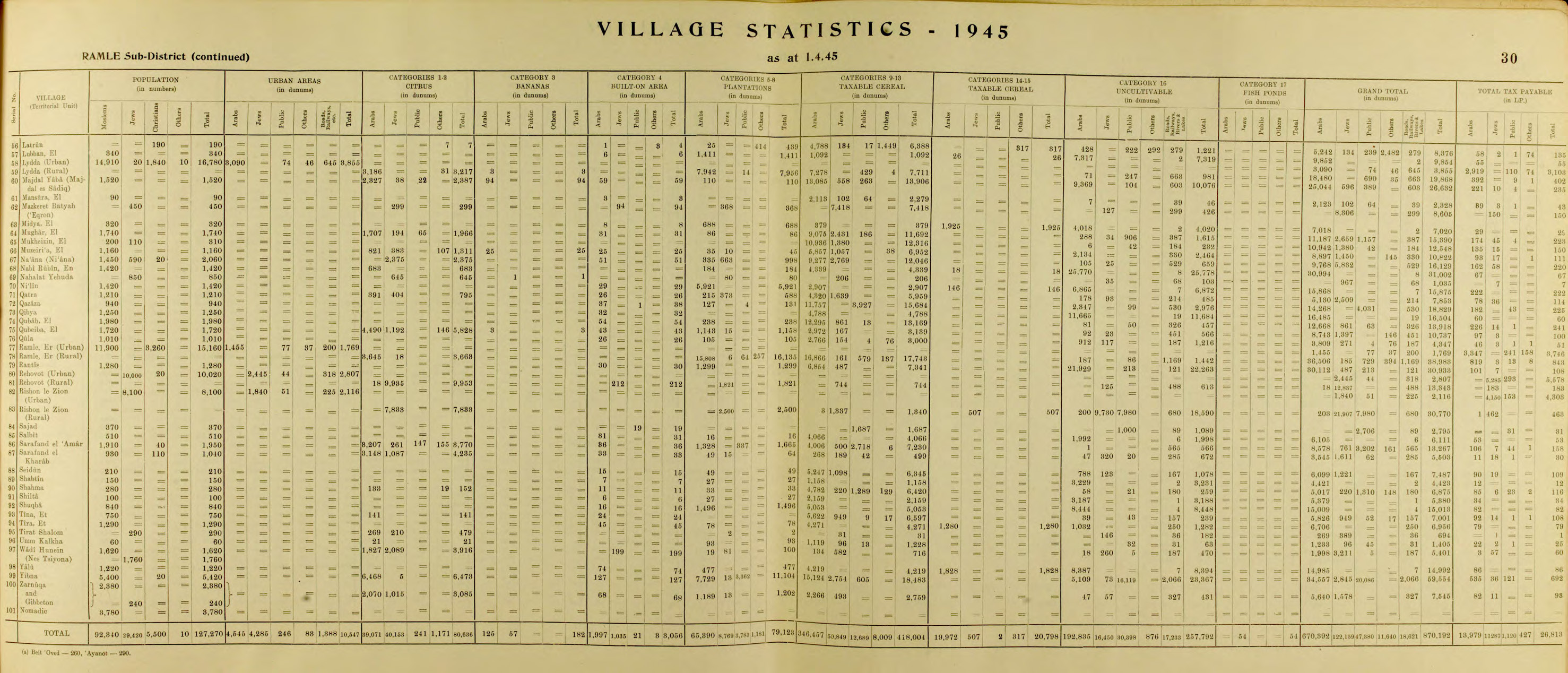
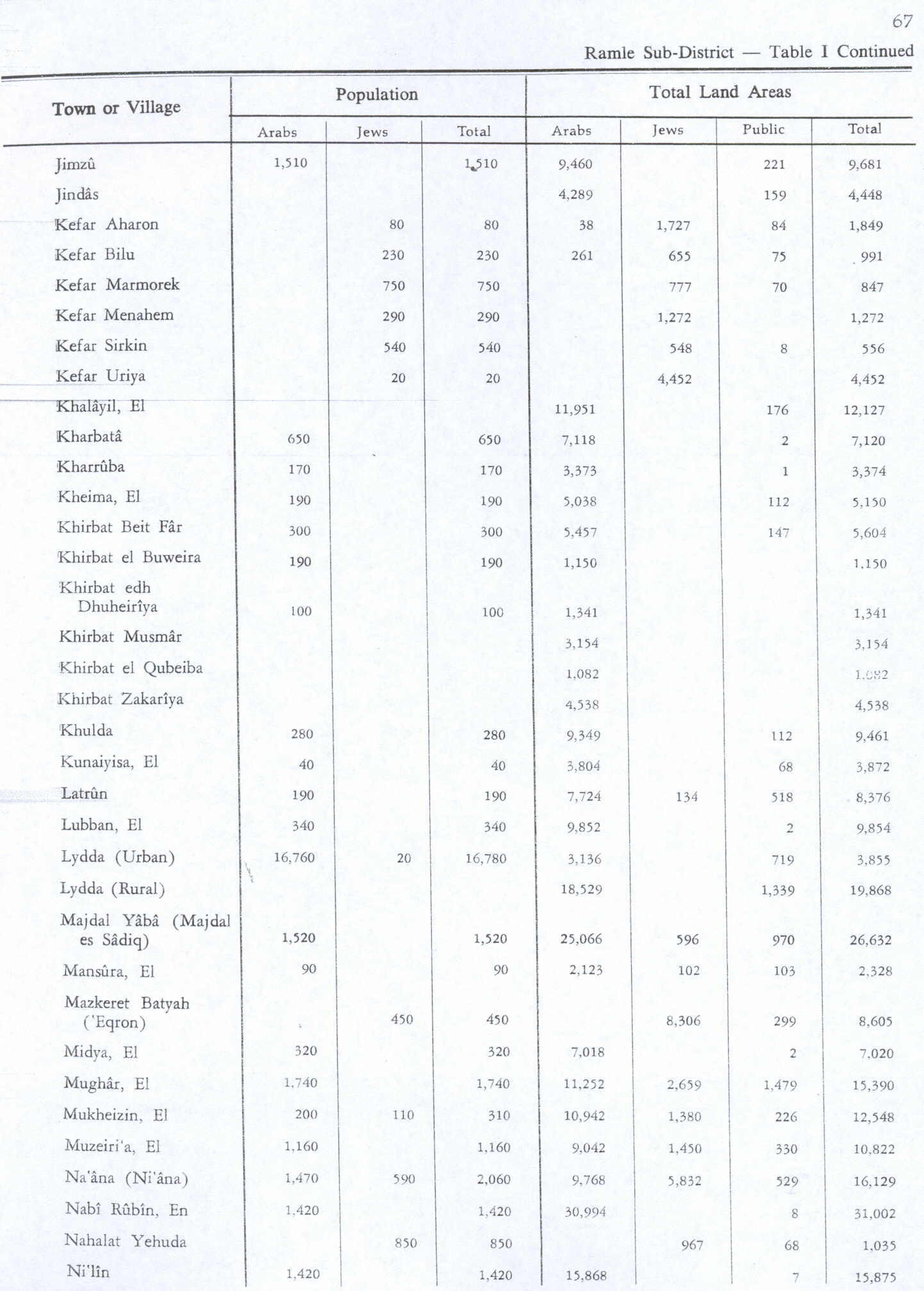
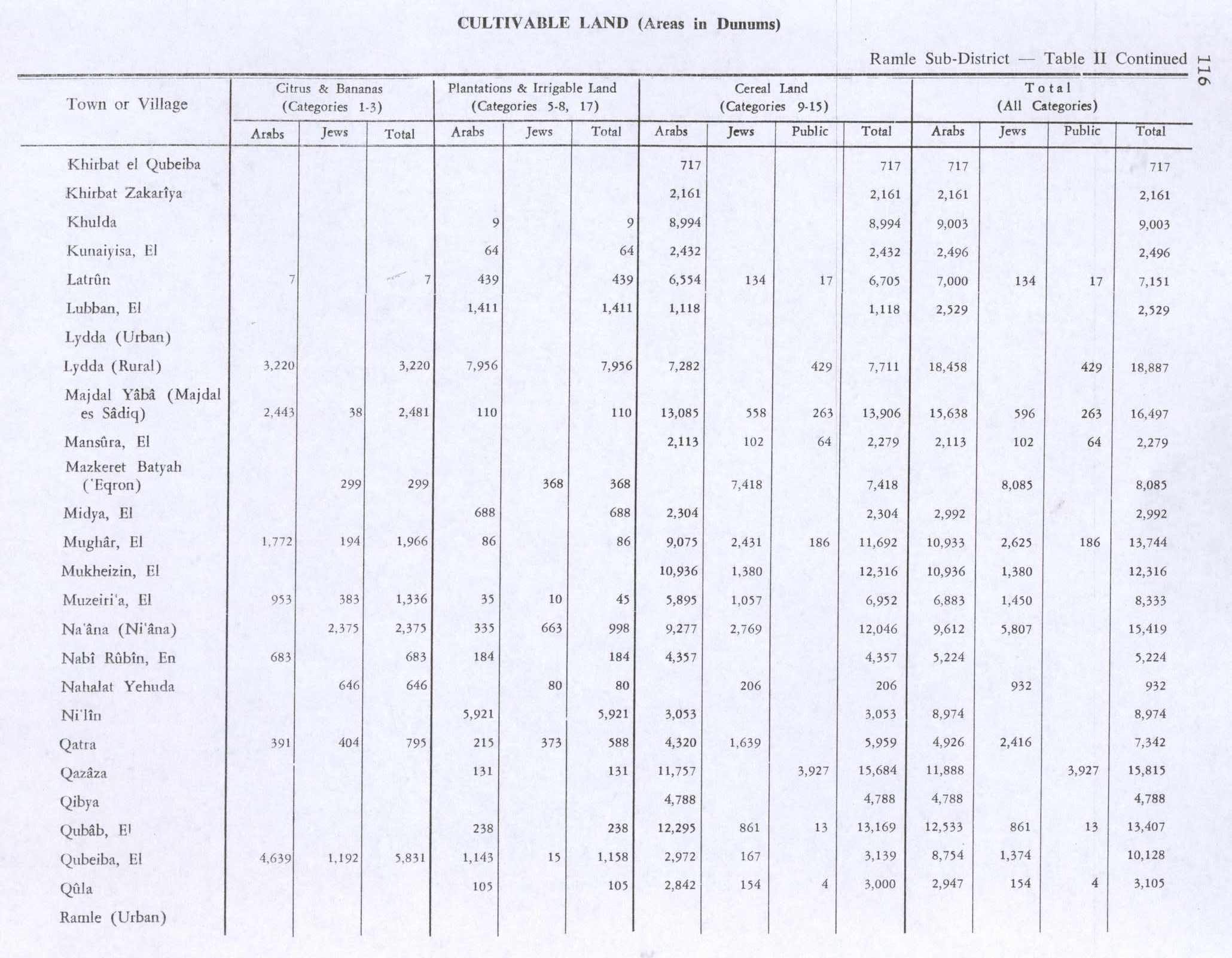
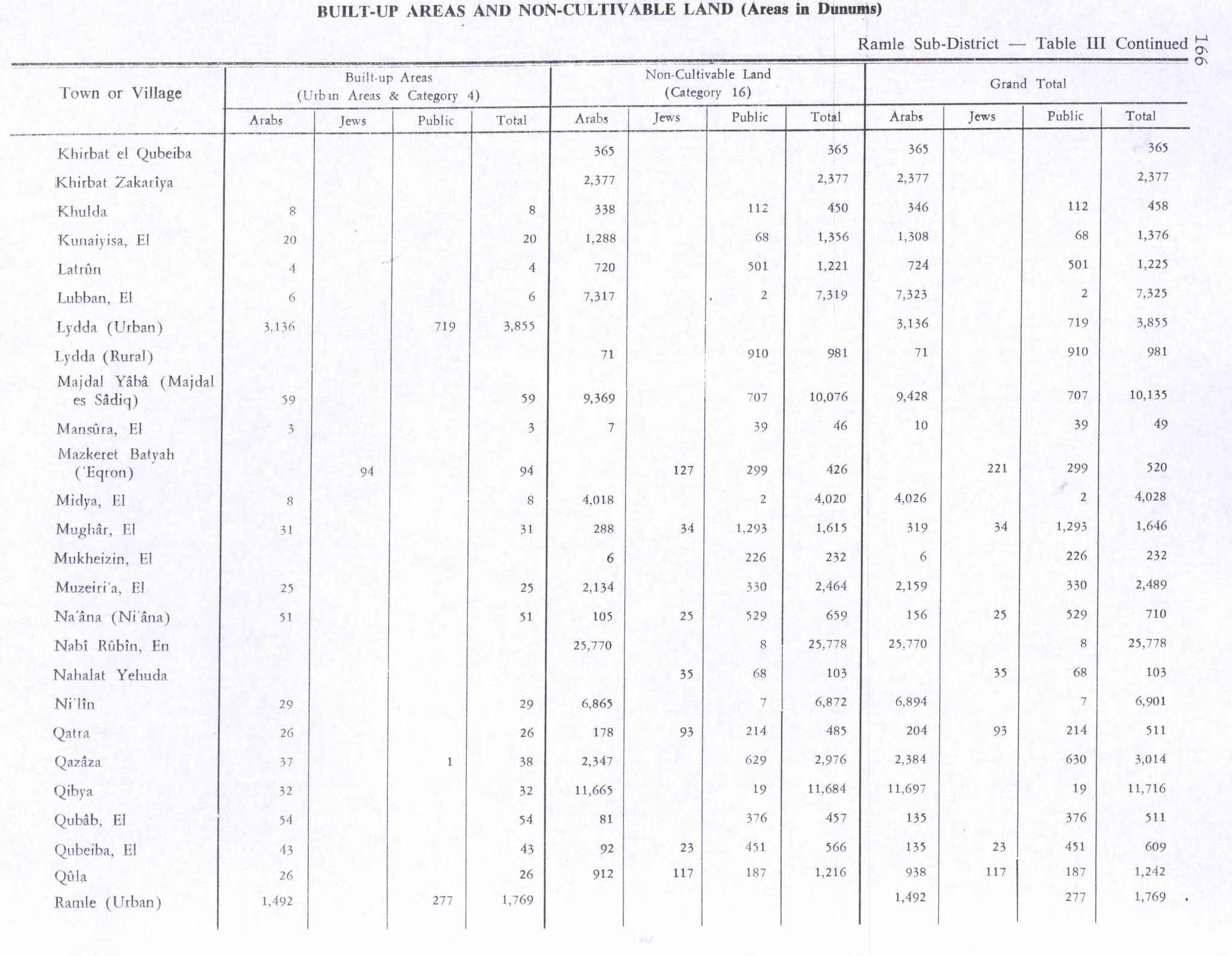
As of the 1945 statistics, the population of the Latrun village had grown to 190 Christians,[20] with a total of 8,376 dunams of land.[21] Of this, a total of 6,705 dunams were used for cereals, 439 dunams were irrigated or used for orchards, 7 for citrus and bananas,[22] while 4 dunams were classified as built-up public areas.[23]

Latrun Monastery 1948
Latrun 1942 1:20,000
Latrun 1945 1:250,000

1948 and 1967 Arab–Israeli Wars

[edit]
Arab Legion gunners on the roof of Latrun police station, 1948

The road from the coastal plain to Jerusalem was blocked after the British withdrew and handed the fort of Latrun over to Jordan's Arab Legion. The Arab Legionnaires used the fort to shell Israeli vehicles traveling on the road below, effectively imposing a military siege on Jerusalem and the Jewish residents there, despite that the United Nations plan was to keep Jerusalem as an international zone with neither Jordan, Israel, nor the Palestinian Arab Higher Committee having sovereignty over it.[24]

On 24 May 1948, ten days after the Israeli Declaration of Independence per the United Nations General Assembly's Resolution 181[25] and the Arab assaults against Israel which followed, the Jordanian Legion's fort was assaulted by combined forces of Israel's newly created 7th Armored Brigade, and a battalion of the Alexandroni Brigade. Ariel Sharon, then a platoon commander, was wounded at Latrun along with many of his soldiers. The assault, codenamed Operation Bin Nun Alef (24–25 May), was unsuccessful, sustaining heavy casualties. On 31 May 1948, a second attack against the fort, codenamed Operation Bin Nun Bet, also failed, although the outer defenses had been breached.

Many of the Israeli fighters were young Holocaust survivors who had just arrived in the country and had minimal military training.[26] The official casualty figure for both battles was 139.[citation needed]

A bulldozer tows a truck on the "Burma Road" to Jerusalem, June 1948

To circumvent the blocked road, a makeshift camouflaged road through the seemingly impassable mountains towards Jerusalem was constructed under the command of Mickey (David) Marcus.[citation needed] This bypassed the main routes overlooked by Latrun and was named the Burma Road after its emergency supply-line namesake between Kunming (China) and Lashio (Burma), improvised by the Allies in World War II. By 10 June 1948, the road was fully operational, putting an end to the month-old Arab blockade.[27]

On 2 August, the Truce Commission drew the attention of the Security Council to the Arabs' refusal to allow water and food supplies to reach Jewish West Jerusalem. After much negotiation, it was agreed that United Nations convoys would transport supplies, but the convoys often came under sniper fire. Towards the end of August, the situation improved. The destruction of the Latrun pumping station made it impossible for water in adequate quantities to flow to West Jerusalem, but the Israelis built an auxiliary small-capacity water pipeline along the "Burma Road", which provided a minimum amount of water.[28]

After Operation Danny, Israeli forces anticipated a Jordanian counterattack,[29] possibly from Latrun, but King Abdullah remained within the bounds of the tacit agreement made with the Jewish Agency and kept his troops at Latrun.[30]

In the 1949 Armistice Agreements, the fort remained a salient under Jordanian control, which was in turn surrounded by a perimeter of no man's land. Under the cease-fire agreement, Jordan was not to disrupt Israeli travelers using this road; in practice, constant sniper attacks led Israel to build a bypass road around the bulge.

In the Six-Day War of 1967, Latrun was captured by the Israeli Defense Forces (IDF), and the main road to Jerusalem was reopened and made safe for travel.

Yad La-Shiryon museum.

The village of Latrun, our first objective, was built around the ruins of an old Crusader castle on the crest of a hill overlooking the Jerusalem road. On the southern slopes of the olive groves stretched down the road, while at the bottom of the western slope sat a big Trappist monastery.[31]

Artwork outside the Latrun Trappist Monastery in Jerusalem

Since the Six-Day War

[edit]

The Latrun monastic community allowed two communities, Neve Shalom/Wahat as-Salam[32] and an affiliate of the Jesus-Bruderschaft [de],[33] to be established on its land. The Tegart fort became the Yad La-Shiryon memorial for the fallen soldiers of the Israeli Armored Corps and a museum was established there.[34]

References

[edit]

Bibliography

[edit]
[edit]
Revisions and contributorsEdit on WikipediaRead on Wikipedia
from Grokipedia
Latrun is a hilltop location in the Ayalon Valley of central Israel, approximately 15 kilometers west of Jerusalem along the strategic route connecting Tel Aviv to the capital.[1][2] It encompasses the Trappist Monastery of Our Lady of the Angels, established in 1890 by Cistercian monks from the Sept-Fons Abbey in France, who cultivated the surrounding land amid a history of monastic presence dating back to Crusader times.[3][4] The site includes remnants of a 12th-century Crusader fortress, repurposed as a British Mandate police station, which dominated the narrow pass vital for regional control.[1][5]
During the 1948 Arab-Israeli War, Latrun became the focal point of intense combat as Israeli forces launched multiple assaults to seize the fort from Jordanian Arab Legion troops, aiming to secure the Jerusalem-Tel Aviv highway amid the siege of Jewish Jerusalem.[6][7] These operations, marked by heavy casualties—including around 75 Israeli dead in the initial May engagement—included participation by future leaders like Ariel Sharon and Yitzhak Rabin, but ultimately failed to dislodge the defenders.[6][1] The inability to capture Latrun prompted Israeli engineers to construct the Burma Road as an alternative supply route through rugged terrain, bypassing the blockade.[7] The area remained a Jordanian salient until Israeli forces overran it in the 1967 Six-Day War.[1] Today, Latrun serves as a site of military commemoration, hosting the Yad LaShiryon tank museum and memorial to fallen armored corps soldiers.[8]

Geography and Etymology

Location and Strategic Topography

Latrun is positioned on a prominent hilltop ridge within the Ayalon Valley, approximately 25 kilometers west of Jerusalem along the main Tel Aviv-Jerusalem transportation corridor, where it dominates key access routes to the city.[1][9] The site's terrain rises to elevations of up to 350 meters above sea level on soft-chalk hillsides, affording a commanding vantage over the adjacent valleys and the critical roadway snaking through the landscape below.[10] This elevated topography renders Latrun a inherent bottleneck for transit, as the surrounding geography funnels major pathways into narrow passes under the hill's oversight, thereby amplifying its logistical and defensive significance across eras.[1] Adjacent to the ancient settlement of Emmaus—commonly identified with the ruins at Imwas, situated roughly 2 kilometers north—the location has long intersected with historical trade conduits and pilgrimage trails threading the Ayalon Valley en route to inland highlands.[11][12]

Name Origins and Linguistic Evolution

The name Latrun originates from the medieval Crusader fortress constructed on the hilltop during the 12th century, with linguistic roots traced to Old French designations. One prevailing theory posits it as a corruption of Le Toron des Chevaliers, translating to "The Tower of the Knights," referring to the castle's strategic role in defending the Jerusalem-Tel Aviv road.[1][13] An alternative derivation links it to Latin latro (robber or bandit), possibly evoking Castellum boni Latronis ("Castle of the Good Thief"), a nod to the site's reputed use as a bandits' lair or a symbolic reference to the penitent thief crucified alongside Jesus, though this interpretation lacks direct contemporary Crusader documentation and relies on later etymological speculation.[14] In Arabic, the name evolved to al-Latrun, retaining the phonetic structure from the Crusader era without altering its core meaning, as the site remained a landmark amid surrounding villages rather than a named settlement in pre-modern records.[15] Ottoman administrative documents from the 16th to 19th centuries primarily referenced the adjacent villages of Imwas, Yalo, and Bayt Nuba—collectively encompassing the broader area—rather than attributing a distinct name to the hill itself, indicating that Latrun persisted as a toponym tied to the ruined fortress rather than evolving into a formal village designation.[16] Biblical associations further contextualize the site's linguistic history, with some scholars linking the Latrun vicinity to Emmaus (Hebrew: Ammaus), the village in Luke 24:13–35 where Jesus appeared post-Resurrection, based on ancient identifications of nearby Imwas as Emmaus-Nicopolis. This connection, noted by early Church historians like Eusebius in the 4th century, equates the distance (approximately 60 stadia, or 11 kilometers from Jerusalem) and features like springs, though modern debates persist over precise locations, with archaeological evidence at Imwas supporting Roman-era continuity but not definitively resolving textual discrepancies in Gospel manuscripts.[17][18] The Hebrew modern rendering Latrun (לטרון) directly transliterates the Arabic and French forms, preserving the phonetic evolution without semantic shift.[19]

Pre-Modern History

Biblical and Hellenistic References

The hill of Latrun, strategically positioned in the Ayalon Valley, has been associated by some historical traditions with the vicinity of ancient Emmaus, a site referenced in the deuterocanonical 1 Maccabees 3:40–4:25 as the location of a Seleucid encampment defeated by Judas Maccabeus during the Maccabean Revolt circa 166 BCE.[1] In the account, Judas, informed of the enemy's position at Emmaus through scouts, orchestrates a nighttime ambush, routing the forces under Gorgias and Nicanor while exploiting the terrain's advantages. This identification aligns with the area's proximity to Jerusalem—approximately 25 kilometers west—and its role as a chokepoint on ancient routes, though scholarly consensus places the precise Emmaus of Maccabees at nearby Horvat 'Eqed rather than Latrun proper. Archaeological surveys in the immediate region, including Horvat 'Eqed, have uncovered a Hellenistic-period fortress destroyed during the revolt, featuring a square tower measuring 15 by 15 meters and defensive walls, supporting the narrative of military activity.[20] Hellenistic-era remains at Latrun itself include exposed stratigraphic layers indicating settlement and fortification reuse, consistent with the site's topographic defensibility during the transition from Hasmonean to Roman control.[21] Numismatic evidence from adjacent Khirbet el-'Aqd (Horvat 'Eqed) yields 104 coins spanning Seleucid, Hasmonean, and early Roman mints, pointing to an administrative stronghold established by Bacchides in 161/0 BCE and occupied through the Bar Kokhba Revolt (132–136 CE).[22] Roman-period artifacts, such as a preserved bathhouse complex documented in conservation records, suggest continuity of infrastructure for local governance and civilian use into the early imperial era.[23] Empirical data from these excavations reveal intermittent but persistent occupation, with pottery and structural remnants attesting to Jewish-linked activity amid broader Greco-Roman influences, challenging assertions of widespread desolation in the Judean lowlands following the Babylonian Exile.[24] The scarcity of monumental inscriptions limits definitive ethnic attributions, yet the strategic persistence of fortified sites underscores causal factors like trade routes and defensive needs over narratives of abandonment.[16]

Medieval Periods: Crusades and Mamluk Rule

During the Crusader era, Latrun served as a key defensive outpost guarding the pilgrim road from Jaffa to Jerusalem, constructed as a fortress around 1132–1137 on a commanding hilltop in the Ayalon Valley.[15][5] Known potentially as Le Toron des Chevaliers (Tower of the Knights), the structure included a main tower later enclosed by a rectangular vaulted fortification, reflecting Templar military architecture after its transfer to the Knights Templar in 1141.[1][5] Its elevation provided oversight of the strategic route, enabling control of access to Jerusalem's western approaches and protection against raids on Christian pilgrims and supply lines.[15][4] The fortress endured multiple sieges amid conflicts with Muslim forces, culminating in its capture by Saladin's Ayyubid army in 1187 following the Crusader defeat at the Battle of Hattin.[15][1] Saladin's forces razed significant portions of the castle, though Crusaders briefly reoccupied it during subsequent campaigns before permanent loss to Islamic control.[25][13] Archaeological remnants, including foundation walls and the central tower base, attest to repeated destruction and partial rebuilding efforts tied to the site's tactical value in regional warfare.[15][1] Under Mamluk rule from the mid-13th to early 16th centuries, Latrun's fortifications largely deteriorated into ruins, with historical records indicating minimal maintenance or garrisoning compared to more prominent sites.[1] The site's strategic oversight of Jerusalem-bound roads persisted in theory, but sparse documentation from the period—lacking detailed traveler or administrative accounts—suggests it held secondary importance amid Mamluk priorities elsewhere in the Levant.[15][4] This decline aligned with broader patterns of Crusader-era structures falling into disuse after Ayyubid conquests, absent evidence of significant Mamluk-era reconstruction at Latrun.[1]

Ottoman Era: Villages and Early Monastery

During the Ottoman era, the Latrun region was characterized by rural villages including Imwas, Yalo, and Bayt Nuba, which functioned as agricultural settlements primarily inhabited by Muslim peasants with minor Christian minorities. These communities sustained themselves through the cultivation of grains like wheat and barley, alongside olive groves, which were central to the local economy and subjected to Ottoman taxation via tithes and land revenues collected through the miri system.[26] In late 1890, Trappist monks from Sept-Fons Abbey in France, comprising French, German, and Flemish members, arrived at Latrun and acquired approximately 200 hectares of land from local owners to establish a contemplative foundation.[2] [3] The purchase adhered to the Ottoman Land Code of 1858, which enabled formal registration of titles and transfers, yielding documented deeds that confirm the legality of the acquisition independent of later geopolitical disputes.[27] Construction of the Notre-Dame de Sept-Douleurs monastery commenced in 1891 and continued through 1897, with the monks committing to the Cistercian Strict Observance's vows of silence, stability, and manual labor, particularly viticulture and wine production from the site's vineyards.[1] [28] This European religious implantation integrated with the agrarian landscape, as the monks developed the land for self-sufficiency while maintaining isolation from nearby villages.[29]

British Mandate and Pre-State Developments

Administrative Role and Infrastructure

Latrun served as a minor administrative hamlet within the Ramle subdistrict of the Lydda District during the British Mandate period.[30] Its governance role involved oversight of local affairs in adjacent Arab villages, including routine policing to maintain order amid the Mandate's colonial administration.[4] British authorities stationed personnel at the site to monitor compliance with tax collection, land registrations, and basic security, with interactions characterized by standard enforcement rather than widespread unrest prior to the 1947-1948 civil war.[31] The location's proximity to the primary Tel Aviv-Jerusalem roadway positioned Latrun as a hub for infrastructure enhancements aimed at bolstering connectivity between the coastal plain and inland regions. British engineering efforts included road widening and fortification to support vehicular traffic for administrative convoys and commercial transport, reducing travel times and aiding logistical control over the subdistrict.[1] A railway halt at Latrun facilitated integration with the Palestine Railways network, serving as a minor junction for freight and passenger lines linking Jerusalem to Lydda and beyond.[32] Essential to regional utilities, Latrun housed a key diesel-powered pumping station that propelled water from coastal aquifers, such as those near Rosh HaAyin, along pipelines to Jerusalem's reservoirs.[33] This facility, constructed under Mandate initiatives to address urban water demands, operated continuously with British military guards ensuring reliability until the Mandate's end, underscoring Latrun's role in sustaining vital supply chains.[1]

Police Fortress and Detention Facilities

The police fortress at Latrun, constructed as a Tegart fort in 1938, served as a militarized outpost amid the Arab Revolt of 1936–1939, which involved widespread attacks by Arab militants on British personnel, infrastructure, and Jewish settlements. Designed by Sir Charles Tegart, these reinforced concrete structures featured thick walls, pillboxes, and strategic positioning to enable small garrisons to withstand sieges and control key roads, including the vital Jerusalem-Tel Aviv route passing through Latrun's topographic bottleneck.[34] [35] By the mid-1940s, as Irgun and Lehi intensified armed resistance against British restrictions on Jewish immigration and statehood aspirations post-Holocaust, the Latrun facility was converted into an administrative detention camp for captured members of these Zionist underground groups, holding them without trial under emergency regulations. Detainees faced austere conditions in barbed-wire enclosures adjacent to the fort, with reports of overcrowding and limited amenities, prompting repeated escape attempts that underscored vulnerabilities in British security amid escalating Jewish insurgency.[36] [37] Notable escapes included a October 31, 1943, breakout by 19 Lehi leaders through a 73-meter tunnel dug over months, restoring operational capacity to the group, and smaller successful flights by Irgun members, such as three who concealed themselves in a water tanker in 1945. In response to persistent breaches and leadership losses, British authorities deported 251 Irgun and Lehi detainees from Latrun and Acre prisons to internment camps in Eritrea and Sudan on October 19, 1944, aiming to disrupt organizational continuity; several dozen perished from disease and harsh tropical conditions before repatriations began in 1946.[36] [38] [37] These detentions exemplified British anti-Zionist measures, prioritizing containment of Jewish self-defense amid prior Arab-initiated violence that had prompted the forts' original erection, yet shifting focus to suppress Zionist paramilitaries as Mandate policy tilted against partition prospects. Following the UN General Assembly's adoption of the Partition Plan on November 29, 1947, British forces released numerous political prisoners from Latrun, including Jewish Agency figures, enabling their reintegration into Haganah ranks and fortifying defenses in anticipation of Arab rejection and the civil war that ensued.[31]

Military History

Battles of Latrun in the 1948 War of Independence

The Battles of Latrun consisted of a series of five engagements between May 25 and June 10, 1948, pitting Israeli forces against the Jordanian Arab Legion during the initial phase of the 1948 Arab-Israeli War. Following Israel's declaration of independence on May 14, 1948, and the invasion by Jordan and other Arab armies, the Arab Legion under British officer Glubb Pasha rapidly occupied the fortified Latrun police station, dominating the vital Tel Aviv-Jerusalem road. This positioned enabled the Legion to impose a stringent blockade on Jewish-held West Jerusalem, isolating its roughly 100,000 residents from essential supplies and reinforcements amid broader Arab efforts to conquer and partition the city. Israeli operations, codenamed Bin-Nun Alef through Heh, sought to relieve the siege by capturing the strongpoint, reflecting defensive necessities against aggressive Arab incursions that threatened the viability of the nascent state.[7][6] The Arab Legion's defense leveraged the police fort's concrete structures, machine-gun nests, and artillery, supported by British-trained troops and armored cars, executing Glubb's strategy of holding elevated terrain to sever Jewish supply lines permanently. Israeli assaults, led by units like the 7th Brigade and newly formed battalions, faltered due to tactical inexperience, lack of artillery and tanks, and the troops' composition—predominantly recent Jewish immigrants, including Holocaust survivors with scant military preparation. The opening attack on May 25 incurred over 100 Israeli fatalities alone, with subsequent pushes on May 30–31, June 1, and June 8–10 yielding similar repulses, as Legion counterattacks exploited Israeli disorganization. Glubb prioritized Latrun to preclude any Jewish corridor to Jerusalem, coordinating with irregular forces to intensify the blockade that had begun pre-independence under Arab Higher Committee directives.[7][39][40] Israeli casualties surpassed 450 killed and hundreds wounded across the battles, comprising a disproportionate share of early war dead and underscoring equipment deficits against the Legion's superior positioning. Unable to breach Latrun, Israeli command shifted to engineering a clandestine bypass, the "Burma Road," hand-built by Palmach sappers through rugged hills from Kibbutz Hulda; operational by June 14, it facilitated truck convoys delivering food, water, and arms, averting starvation in Jerusalem. The 1949 Rhodes Armistice Convention mandated Jordanian facilitation of free access along the international highway through Latrun to Jerusalem, yet Jordan contravened this provision, sustaining barriers until the 1967 Six-Day War. These failures at Latrun highlighted the nascent IDF's vulnerabilities but preserved Jerusalem's Jewish sector through adaptive improvisation amid existential Arab assaults.[7][41][1]

Six-Day War Capture and Immediate Aftermath

Jordan initiated combat against Israel on June 5, 1967, by shelling West Jerusalem and other border areas, disregarding Israeli appeals conveyed through U.S. channels to remain neutral.[42] In retaliation, the Israel Defense Forces commenced ground operations on the Jordanian front that evening, targeting positions threatening supply lines to Jerusalem.[43] The IDF's Harel Brigade, under Colonel David Elazar, advanced toward Latrun, capturing the Jordanian-held police fortress and adjacent positions in the early morning of June 6, 1967.[43][44] This swift action neutralized a key Jordanian stronghold in the Latrun salient, which had dominated the Tel Aviv-Jerusalem corridor since the 1948 armistice, securing Israeli control over the area with minimal resistance from Jordanian units.[1] As part of immediate post-capture measures to ensure operational security amid active combat, the IDF issued evacuation orders to residents of the nearby villages of Imwas, Yalo, and Bayt Nuba on June 7, 1967.[45] These villages, situated atop heights overlooking the strategic roadway, were deemed potential bases for sniper fire or infiltration during the ongoing war; their roughly 10,000 inhabitants were directed to relocate temporarily to Jordanian-held territories like Ramallah.[46] The structures were then demolished to eliminate tactical advantages for hostile forces.[45] The offensive extended Israeli authority over the pre-existing no-man's-land strip in the Latrun region, a 1-3 km wide buffer zone ungoverned since 1949 and vulnerable to cross-border raids.[47] This consolidation neutralized immediate threats to the Jerusalem approach and paved the way for infrastructural improvements, including the realignment of Highway 1 directly through the secured terrain shortly thereafter.[1]

Religious and Cultural Sites

Trappist Monastery: Foundation and Operations

The Trappist Monastery at Latrun, officially Notre-Dame de Latroun, was founded in 1890 by monks from Sept-Fons Abbey in France, who purchased approximately 400 acres of land from an Arab Christian family under Ottoman rule.[48] The initial community consisted of 18 French Trappists, including German and Flemish members, who arrived in November and December of that year and began observing the Cistercian Strict Observance rule by Christmas.[3] Construction of the original monastery complex took place between 1891 and 1897, with the site elevated to priory status in 1898 and full abbey status in 1937.[3] A new monastery was built starting in 1926, with completion in 1953.[3] The monks adhere to Trappist principles of contemplative life, emphasizing silence, liturgical prayer, and manual labor for self-sufficiency. Agriculture forms the core of operations, with the community draining swamps to establish olive groves and vineyards upon arrival; these yield olive oil, red and white wines, liqueurs, and other products such as jams and honey sold at the abbey store.[48][3] Vineyards and approximately 4,000 olive trees support production, though recent wildfires in 2025 damaged significant portions, prompting replanting efforts.[49] Amid regional conflicts, the monastery maintained neutrality, earning respect from both Jordanian and Israeli forces. During World War I, the monks were expelled by Turkish authorities but returned in 1917 under British rule. In the 1948 Arab-Israeli War, it suffered material damage but hosted United Nations Truce Supervision Organization officers in its guest house from 1948 to 1967 while isolated in a demilitarized zone, facilitated by French diplomatic intervention.[48][3] The site avoided destruction in the 1967 Six-Day War due to the conflict's brevity, despite its proximity to fighting.[3] This role as a neutral sanctuary underscores the community's non-partisan stance, focused on prayer rather than political involvement. Today, a small community of monks continues these traditions, with guest facilities available for retreats. In September 2025, the monastery marked its 125th anniversary with a solemn Mass celebrated by Latin Patriarch Fouad Twal.[50]

Yad LaShiryon Tank Memorial and Museum

The Yad LaShiryon Tank Memorial and Museum, Israel's official memorial to fallen soldiers of the Armored Corps, was established on the former battlefield of Latrun to commemorate the unit's sacrifices since the 1948 War of Independence. The cornerstone was laid on December 14, 1982, through the initiative of veteran armored corps officers, with the site opening to the public in 1983.[51][52] Latrun's selection reflects its pivotal role in early armored engagements, where nascent Israeli forces faced superior Arab Legion units equipped with British tanks, resulting in heavy losses but eventual tactical adaptations that secured alternative supply routes to Jerusalem.[53] The museum's core exhibits include an outdoor collection of over 150 tanks and armored fighting vehicles spanning Israeli, Allied, and captured Arab models from 1948 onward, such as the Merkava series and Soviet-era T-54s.[54][55] Indoor displays chronicle the Armored Corps' evolution, from improvised armored cars in 1948—often crewed by inexperienced Holocaust survivors—to modern formations, emphasizing operational doctrines developed amid resource shortages and numerical disadvantages.[53] A central memorial wall lists all armored corps fatalities across Israel's conflicts, underscoring the human cost of maintaining defensive lines against invasions and blockades. Annual ceremonies at Yad LaShiryon honor the fallen, including state-wide Yom HaZikaron observances and dedicated Armored Corps events, such as the September 2023 gathering addressed by President Isaac Herzog, which focused on the servicemen and women lost in operations from Gaza to Lebanon.[56][57] These gatherings highlight the corps' role in preserving state sovereignty amid repeated threats, drawing thousands for reflections on resilience forged in early defeats like Latrun, where tactical persistence enabled broader strategic gains.[58]

Contemporary Status and Developments

Parks, Tourism, and Economic Role

Canada Park, established in 1973 by the Jewish National Fund with Canadian funding, covers roughly 3,000 acres in the Ayalon Valley bordering Latrun, emphasizing nature conservation, restored orchards, and recreational spaces for hiking and picnics.[59] Managed as part of Israel's broader system of public green areas, the park preserves natural landscapes including groves and fruit-bearing trees, drawing locals and day-trippers for outdoor activities amid the region's rolling terrain.[59] Complementing these natural attractions, Mini Israel opened in November 2002 adjacent to Latrun, featuring over 385 scale models at 1:25 ratio of Israeli landmarks, buildings, and sites spread across 35 acres. The park organizes exhibits by geographic and thematic zones, such as biblical, modern, and urban structures, to educate visitors on Israel's architectural and historical diversity while appealing to families through interactive displays and a compact overview of national heritage.[60] Post-1967 civilian initiatives like these have transformed Latrun into a heritage and leisure hub, with parks and themed sites generating revenue from entry fees, on-site amenities, and nearby hospitality options to bolster local economic activity in the central Israel region.[59]

Recent Events Including 2025 Wildfires

In late April 2025, wildfires erupted across central Israel, including the Latrun area, scorching approximately 24 hectares of land near the Trappist Monastery of Latrun.[61] The blazes, which began on April 30 amid high winds and dry conditions during Israel's Memorial Day, damaged the monastery's vineyards and olive groves, its primary agricultural assets, while prompting evacuations from nearby communities and temporary closures of Route 1, the main highway linking Jerusalem and Tel Aviv.[62][63] Firefighting efforts involved international assistance, with aircraft from several countries aiding Israeli crews to contain the fires by early May.[64] The monastery structures sustained no significant damage, allowing operations to resume swiftly, though the loss of vegetation posed challenges to the monks' self-sustaining model reliant on these crops.[65] In response, Israeli volunteers, including interfaith groups, organized replanting initiatives; by July 2025, new vines were installed in the affected vineyards, marking an early phase of recovery.[62][66] This communal effort underscored resilience amid environmental pressures, with the monastery's prior diversification into wine production aiding financial stability during regrowth.[62] Tourism at Latrun's sites, including the monastery and adjacent memorials, rebounded without interruption from structural impacts, as the fires primarily affected peripheral natural areas rather than built infrastructure.[65] Investigations into the fires' origins pointed to possible arson in some instances, though no conclusive attributions were reported by October 2025.[67]

Controversies and Disputes

Depopulation of Palestinian Villages

During the Six-Day War, Israeli forces captured the Latrun salient from Jordanian control on June 7, 1967, after Jordan had initiated hostilities earlier that day by shelling Israeli civilian areas in Jerusalem and along the Tel Aviv-Jerusalem corridor.[42] [68] In the immediate aftermath, the Israel Defense Forces ordered the evacuation of the adjacent Palestinian villages of Imwas, Yalo, and Bayt Nuba, with residents instructed to leave for nearby areas under Jordanian administration.[45] The villages, which had been under Jordanian rule since 1948 with minimal infrastructure development, were subsequently demolished using bulldozers to remove structures that could serve as positions for potential guerrilla activity or infiltration.[69] The evacuations displaced over 5,000 residents from the three villages combined, many of whom relocated to the Ramallah district and surrounding areas, with some moving eastward toward Jericho.[70] [71] These actions occurred amid broader wartime displacements estimated at 280,000 to 325,000 Palestinians from the West Bank and Gaza, though the Latrun clearances were specifically tied to securing the narrow waist of Israel proper against the protruding Latrun bulge, a vulnerability highlighted in the 1948 war.[46] Palestinian and Arab sources describe the events as a deliberate "Naksa" (setback) expulsion, framing the demolitions as ethnic cleansing continuous with 1948 patterns.[72] Israeli military accounts, however, justify the measures as necessary security responses to Jordan's unprovoked entry into the war—despite Israeli appeals for Jordan to stay out—and the ongoing threat of fedayeen attacks from the salient, prioritizing defensive depth over civilian habitation in a contested frontier zone.[73][74] Following the 1967 Six-Day War, Israeli authorities expropriated approximately 4,200 dunams of land in the Latrun area, previously under Jordanian control, designating it for military security zones and public use including the establishment of Canada Park, which officially opened in 1976.[75] This allocation occurred under Israeli legal mechanisms applied to the captured territories, including declarations of state land and utilization for non-residential purposes, distinct from the 1950 Absentee Property Law primarily targeting 1948 displacements but extended in practice through military orders and administrative orders for postwar needs.[76] The expropriations aimed to secure strategic positions along the pre-1967 armistice lines, which had been subject to Jordanian encroachments, and to create buffer areas amid ongoing hostilities, with no formal annexation of the West Bank but effective control asserted for defensive purposes.[77] Canada Park, spanning the former sites of Palestinian villages in the Latrun salient, was funded and developed by the Jewish National Fund (JNF) with contributions from Canadian donors, involving tree-planting and infrastructure to transform the area into a recreational site without residential settlements.[78] United Nations reports have documented the expropriation as altering land use in occupied territories, with some observers, including advocacy groups, criticizing it as implying settlement expansion or de facto annexation in violation of international humanitarian law under the Fourth Geneva Convention, which prohibits population transfers and certain resource exploitations in occupied areas.[75] [79] Proponents counter that the park's non-settlement character—focused on afforestation and tourism—constitutes reclamation of contested no-man's land rather than colonization, especially given the defensive context of the 1967 conquest and the armistice lines' status as temporary demarcations, not fixed borders, under the 1949 agreements.[80] Palestinian advocacy organizations, such as Zochrot, assert legal claims for the right of return for displaced residents of the Latrun villages, framing the land allocation as part of broader dispossession requiring restitution and recognition under principles of refugee law and transitional justice.[81] These claims invoke UN General Assembly Resolution 194's call for refugee compensation or return, though Israel maintains no such unqualified right exists under customary international law for altering sovereign demographics post-conflict, particularly absent a comprehensive peace agreement, and views the demands as politically motivated given historical Arab rejection of partition and initiation of wars.[82] Counterarguments emphasize Jordan's forfeiture of territorial assertions through repeated armistice violations from 1949 to 1967, including 19 instances condemned by the United Nations in 1952, many involving the Latrun sector such as fortifications and infiltrations that undermined the truce and justified subsequent Israeli security measures.[80] [83] The absence of recognized Jordanian sovereignty over the West Bank—its 1950 annexation deemed illegal by most states—further bolsters Israeli positions that the territories were acquired in lawful self-defense, with land use reflecting unresolved threats rather than unprovoked seizure.

References

User Avatar
No comments yet.