

Leith
View on Wikipedia
Leith (/liːθ/; Scottish Gaelic: Lìte) is a port area in the north of Edinburgh, Scotland, founded at the mouth of the Water of Leith and is home to the Port of Leith.
Key Information


The earliest surviving historical references are in the royal charter authorising the construction of Holyrood Abbey in 1128 in which it is termed Inverlet (Inverleith).[1][2] After centuries of control by Edinburgh, Leith was made a separate burgh in 1833 only to be merged into Edinburgh in 1920.[3]
Leith is located on the southern coast of the Firth of Forth and lies within the City of Edinburgh council area; since 2007 it has formed one of 17 multi-member wards of the city.
History
[edit]
As the major port serving Edinburgh, Leith has seen many significant events in Scottish history.
First settlement
[edit]The earliest evidence of settlement in Leith comes from several archaeological digs undertaken in the Shore area in the late 20th century. Amongst the finds were medieval wharf edges from the 12th century. This date fits with the earliest documentary evidence of settlement in Leith, the foundation charter of Holyrood Abbey.
Mary of Guelders, the bride of James II, arrived on 18 May 1449 and rested in the Convent of St Anthony.[4] Prominent Leith merchants and shipowners included James Makysone, who supplied tapestry to James IV in 1498 for his new lodging at Stirling Castle and in 1503 imported a timber keel from France for building one of the king's ships.[5]
1500s
[edit]The town was burnt by the Earl of Hertford (on the orders of Henry VIII) in retaliation for the rejection of the Treaty of Greenwich by the Parliament of Scotland in 1543. Mary of Guise ruled Scotland from Leith in 1560 as Regent while her daughter, Mary, Queen of Scots remained in France. Mary of Guise moved the Scottish Court to Leith, to a site that is now Parliament Street, off Coalhill. According to the 18th-century historian William Maitland, her palace was situated on Rotten Row, now Water Street. Artifacts from the demolished residence are held by the National Museum of Scotland, and her sculptured coat of arms, dated 1560, can be seen in South Leith Parish Church. When the large French garrison stationed in Leith was attacked by Scottish Protestant lords, reinforced by troops and artillery sent from England, Mary of Guise was forced to shut herself in Edinburgh Castle. In June 1560, Mary of Guise died, and the Siege of Leith ended with the departure of the French troops in accordance with the Treaty of Leith, also known as the Treaty of Edinburgh.

Two mounds on Leith Links, known as "Giant's Brae" and "Lady Fyfe's Brae", identified as Somerset's Battery and Pelham's Battery respectively, are believed to be artillery mounds created for the siege in April 1560 and are listed as scheduled monuments, but may be natural hillocks.[6] The best documented day of the siege was 7 May 1560, when the English and Scots charged the walls of Leith with ladders that turned out to be too short. John Knox records the delight of Mary of Guise at the failure of the attack, and English sources report 1000 casualties.[7]

On 19 August 1561, Mary, Queen of Scots, arrived in Leith and, finding no welcoming party to receive her, made a brief stop at the house of Andrew Lamb, before being collected and escorted by coach to Holyrood Palace, to begin her ill-fated six-year-long reign.[8] Mary's court came to the sands of Leith to enjoy equestrian tournaments of "running at the ring" performed by courtiers and diplomats in exotic costumes.[9]

After the abdication of Mary Queen of Scots in 1567, during the ensuing civil war, troops fighting for James VI of Scotland against his mother's supporters in Edinburgh Castle based themselves in Leith from 1571 to 1573, a period called the "Wars between Leith and Edinburgh". In January 1581 The Shore was the scene of a mock combat, involving an assault on the Pope's Castel Sant'Angelo built on boats, for the marriage of Elizabeth Stuart, 2nd Countess of Moray and James Stewart for the entertainment of guests including James VI.[10] In 1590, James's wife, Anne of Denmark, was lodged in the King's Wark when she arrived.[11]
1600s
[edit]In 1622 there was conflict between privateer "Dunkirker ships" flying the Spanish flag and ships from the Dutch Republic.[12] King James allowed a Dunkirker to lie at Leith Roads in June 1622, and soldiers from the ship were able to come ashore at Leith. Three Dutch ships, commanded by Willem de Zoete, Lord of Hautain, Admiral of Zeeland, arrived and attacked the Dunkirker through the night. The fighting stopped in the morning when the tide beached the ships. The Scottish authorities requested the fighting stop. The ships were allowed into Leith harbour where artillery from Edinburgh Castle was placed to ensure order.[13]
Leith suffered during the 1645 plague outbreak, with over 50% of the population in the southern district dying. Archaeological excavations in 2016 at St Mary's RC Primary School, by Wardell Armstrong, as part of a planning condition, found a mass grave of 81 bodies from the 1645 plague. The archaeologists surmised that there was extreme fear of dying from this plague, likely Pneumonic, as many of the bodies were hastily buried in their clothes and still had money and other personal items on them, indicating that people did not want to touch the bodies, even to remove money.[14]
In 1650, Leith was a prospective battleground when the Army of the Covenant, led by General David Leslie, threw up an earthen rampart between Calton Hill and Leith to defend the northern approach to Edinburgh against Oliver Cromwell's forces. This rampart became the line of one of Edinburgh's longest streets, Leith Walk. After Cromwell's victory at the Battle of Dunbar in 1650 and subsequent occupation of Scotland, a fort known as Leith Citadel was erected in 1656 to regulate the port traffic. All that remains of the fort today is a vaulted trance in Dock Street which was its main entrance. New industry in Leith included the Leith Sugar House, founded in 1677.[15]
1700s
[edit]
During the American War of Independence the Scot, John Paul Jones, who, with John Barry, is credited as founder of the US Navy, set sail on 14 August 1779 as commodore of a squadron of seven ships with the intention of destroying British commerce in the North Sea. He intended to capture the port of Leith and hold it for ransom, but his plan was thwarted when a gale on 16 September kept him at the mouth of the Firth of Forth. The scare he caused led to the hasty erection of Leith Fort, with a battery of nine guns, designed by James Craig, the architect of Edinburgh's New Town, and built in 1780. A Georgian terrace to the north-east served as officers' quarters, and was known as "London Row" because, being brick-built, it looked more like a London terrace than any in Edinburgh. The fort was in active use until 1955, latterly serving for National Service training. Most of the barracks were demolished to build a Council housing scheme centred on Fort House and enclosed by the old fort walls. The council development was an award-winning scheme in its day (1955), but the building was demolished in January 2013 and the site has been redeveloped with new low-density housing, again award-winning. A pair of the old fort's gatehouses survive at the southern entrance to the scheme.
From the twelfth century South Leith was part of the parish of Restalrig and had no church of its own. After the Scottish Reformation the principal parish kirk for Leith was South Leith Parish Church, originally constructed in 1483. In June 1811 a census gave the population of South Leith as 15,938; North Leith 4,875. With a procession and ceremony, the foundation stone of the new church for the parish of North Leith was laid on 11 April 1814.[16]

,_Edinburgh.jpg)
Leith was the port of entry for the visit of King George IV to Scotland, and The Old Ship Hotel and King's Landing was then given its new name, to mark the king's arrival by ship's boat at Leith Shore for this event, and this monarch was welcomed by the High Constabulary of the Port of Leith. A painting of the occasion hung in Leith Town Hall, now Leith Police station.[17]
1800s
[edit]On 20 May 1806, there was a procession of the Lord Provost of Edinburgh, Baillies, and Council, along with a numerous company of ladies and gentleman, for the opening of the first new wet dock, the first of its kind in Scotland. The Fife packet called The Buccleuch was the first to enter the dock, with the civic dignitaries on board, amid discharges of artillery from the fort and His Majesty's warships in Leith Roads. The foundation stone for the second (middle) wet dock was laid on 14 March 1811, which was completed and opened with due ceremony in 1817 by Lord Provost Arbuthnot. The same year the Trinity House in Kirkgate was erected in Grecian architectural style at an expense of £2500.[18]
In 1809, the Tally Toor, a martello tower was constructed to defend the entrance of the harbour during the Napoleonic Wars.[19] It is now a scheduled monument within the port.[20]
| Leith Municipal Government Act 1827 | |
|---|---|
| Act of Parliament | |
 | |
| Citation | 7 & 8 Geo. 4. c. cxii |
| Dates | |
| Royal assent | 2 July 1827 |
| Other legislation | |
| Repealed by | Leith Municipal and Police Act 1848 |
| Text of statute as originally enacted | |
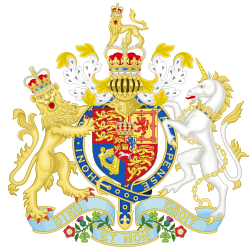
Historically Leith was governed by the Town Council of Edinburgh, with separately organised baillies appointed by various bodies without contact with each other. The result became very unsatisfactory, and half of Leith was provided with no municipal government whatever or any local magistrates. An act of Parliament, the Leith Municipal Government Act 1827 (7 & 8 Geo. 4. c. cxii) arranged for municipal government and administration of justice in the town, providing watching, paving, cleansing, and lighting, with Edinburgh Council responding to the views of Leith townspeople. The Burgh Reform Act 1833 (3 & 4 Will. 4. c. 46) made Leith a parliamentary burgh, which jointly with Portobello and Musselburgh was represented by one Member of Parliament (MP). On 1 November 1833, Leith became a separate municipal burgh, with its own provost, magistrates, and council, and was no longer run by bailies.[21] Historically the Lord Provost of Edinburgh was virtue officii Admiral of the Firth of Forth, the Provost of Leith was Admiral of the port, and his four bailies were admirals-depute.[22]
Emperor Nicholas II of Russia arrived by sea at Leith with his family and suite on Tuesday 22 September 1896.[23] Scottish anarchist Thomas Hastie Bell managed to get in his face to criticise him.[24]
1900s and 2000s
[edit]Leith was the scene of the dockers strike in 1913[25][26][27] recounted in the book Red Scotland.[28]
Continued growth meant that Leith and Edinburgh formed a contiguous urban area. Leith was merged with Edinburgh on 1 November 1920[29] despite a plebiscite in which the people of Leith voted 26,810 to 4,340 against the merger. The population of Leith at the time of the merger was 80,000, representing 20% of the entire population of Edinburgh in around 5% of the city area, reflecting the town's high density. It was Scotland's sixth largest town at the time of the merger.[30]
Leith suffered from considerable demolition through Improvement or slum clearance schemes, with many historic buildings lost rather than upgraded. This included the Leith Citadel and Central Comprehensive Development Area agreed in the 1950s that saw the loss of the Kirkgate, Leith's historic centre.[31]
Until 1923 there was no through tram service between Leith and Edinburgh; at the boundary in Leith Walk it was necessary to change from a Leith tram (electrically powered) to an Edinburgh tram (cable hauled) until the electrification of the Edinburgh Corporation Tramways in the early 1920s.

Leith has undergone significant regeneration and is now a busy port with visits from cruise liners and the home of the Royal Yacht Britannia, the Ocean Terminal shopping centre, and administrative offices for several departments of the Scottish Government. The council and government's 'Leith Project' provided a further economic boost. The shore area of Leith, once unattractive, is now a centre for a range of new pubs and restaurants in charming surroundings.[32][33] On 6 November 2003, Leith was the location for the MTV Europe Music Awards, with a temporary venue being built next to Ocean Terminal.[34]
Traditional industries
[edit]Leith was Scotland's leader in several industries for many centuries. Of these the most notable are:
- Glass – the Leith Glassworks stood on Baltic Street and dated from 1746. There is also some reference to earlier glass production from 1682 at Leith Citadel. Leith specialised in wine bottles, largely for export to France and Spain. At its peak (c. 1770) production was one million bottles per week. The Leith pattern bottle is the parallel-sided, round shouldered, narrow neck bottle now dominant within the wine industry. Around 1770 the company branched into lead crystal glass, mainly for chandeliers. This was under a new company name of the Edinburgh Crystal Company but stood on the same site in Leith (ironically this company has never truly been in "Edinburgh").
- Soap – the Anchor Soapworks was established on Water Street around 1680. This largely used whale oil in its production. This survived until around 1930.

- Wine and whisky storage – wine storage in Leith dates from at least the early 16th century, notably being connected with the Vaults on Henderson Street from this time. At its peak there were around 100 warehouses storing wine and brandy. In the late 1880s, due to the collapse of wine harvest in Europe, most of these were "converted" for the storage of whisky used in the growing business of whisky blending and bottling. Important in this business were William Sanderson with Vat 69, John Crabbie who also produced green ginger wine, and Macdonald & Muir who later bought the Glenmorangie distillery. Around 85 bonded warehouses stood in Leith in the 1960s. The last bond, on Water Street, closed around 1995. An offshoot to the wine industry were several vinegar works.
- Lime juice – Rose's lime juice was founded by Lachlan Rose in Leith on Commercial Street in 1868. This was originally and primarily focussed upon provision of vitamin C to seamen.
- Shipbuilding – originally centred on the Water of Leith and limited in scale due to the shallow water, Leith's shipbuilding started to fade as vessels increased in size. Latterly Leith built specialised ship types: tugs, hotel ships, cable-layers etc. Whilst the most notable large shipyard (Henry Robb's) closed in 1983, this was technically outlived by a very small shipbuilder on Sheriff Brae (run by the Scottish Co-operative Society) which closed around 1988. The most notable ships built in Leith are the SS Sirius, one of the first steamships to cross the Atlantic, and SS Copenhagen, one of the largest rigged ships ever built. Robb's yard also made a great contribution to the RN and MN during the Second World War, building forty-two vessels for the Royal Navy, fourteen merchant ships and refitted and repaired nearly 3,000 ships of the Royal Navy and Merchant Navy. This means that one new ship was launched on an average every six weeks and a ship repaired every day of this long and bloody conflict. The RN list included Flower and Castle Class Corvettes and River, Loch and Bay Class Frigates.[35]

- Lead – Scotland's largest leadworks stood on the corner of Mitchell Street and Constitution Street. Founded around 1760 the operational part worked until the 1970s and the empty buildings stood until the late 1980s. The offices, on Constitution Street, still survive. The company specialised in lead pipes for water supply and lead drainpipes. They also produced lead sheet for roofing and lead shot for weapons.
- Sugar refining was developed at the Leith Sugar House by Robert Douglas, an established soap boiler, from 1677.[15]
- Whaling – originally focussed on local, and Icelandic waters (the last whale in the Firth of Forth was caught in 1834); by the mid 19th century ships were travelling to the Antarctic. In the early 1900s, the Christian Salvesen company developed significant interests in whaling, initially in the Arctic, and then in the Antarctic. Among their many whaling stations in the South Atlantic, they established and operated from a base on the island of South Georgia, south east of the Falkland Islands at Leith Harbour (named for their base in Scotland). South Georgia later came to fame at the beginning of the Falklands War). The company moved from Leith to the Fettes area of Edinburgh around 1980 and then left Edinburgh altogether in the mid-1990s. The founder, Christian Salvesen is buried in Rosebank Cemetery. Whaling ships from Leith brought the very first penguins to Edinburgh Zoo around 1900.
- Corn trading – A Corn Exchange was erected in Constitution Street in 1861.[36]
- Fishing – During the 19th century Leith became an important entrepôt for the Scottish herring trade, with exports peaking at 388,899 barrels in 1907.[37]
- Ropemaking - The Edinburgh Roper & Sailcloth Co was founded in Leith in 1750, later expanding to wire ropes and cables[38]
Geography
[edit]
After decades of industrial decline, deindustrialisation, slum clearance and resultant depopulation in the post-war era, Leith gradually began to enjoy an upturn in fortunes in the late 1980s. Several old industrial sites were developed with modest, affordable housing, while small industrial business units were constructed at Swanfield, Bonnington, Seafield and off Lindsay Road. The Shore developed a clutch of upmarket restaurants, including the first of the chain of Malmaison hotels in a conversion of a seamen's mission, whilst the once industrially-polluted and desolate banks of the Water of Leith were cleaned up and a public walkway opened.
Leith's gradual revival was also helped by the decision of the then Scottish Office to site their new offices in Leith Docks (just north of the old infilled East Dock). The site was chosen as part of a design-and-build competition against other sites at Haymarket and Marionville. It was completed in 1994. The hoped-for influx of well-paid civil service jobs failed to have much local impact as most commute to the office, and only a small percentage venture beyond the confines of the office during lunchtimes.[citation needed] It did further foster Leith's growing reputation as a white-collar, small business location. Further large-scale service and tourist development followed, including Ocean Terminal and the permanently moored Royal Yacht Britannia.
The Edinburgh Trams light rail line extension, from the city centre to Newhaven opened to passengers in June 2023 providing Leith and the new dock developments with a fast and convenient route for both local commuters and visitors.

In 2004 the owner of the docks, Forth Ports, announced plans to eventually close the port and carry out a major redevelopment of the area.[39] The planned development, which was given supplementary planning guidance by the City of Edinburgh Council in 2004, was a small town with up to 17,000 new homes.[40]
Area
[edit]One of the areas is Timber Bush which was originally used as a timber market.[41]
Until its amalgamation with Edinburgh in 1920, the southern-most town border was the middle of Pilrig Street.[42]
Expansion in the Georgian era gave rise to streets such as Queen Charlotte Street, named after Charlotte, the consort of George III.[43]
Religion
[edit]

Historically, due its Catholic connections (and French garrison), Leith was one of the last towns to have Catholic sympathies post-Reformation.[clarification needed] Although the preceptory (small monastery) of St Anthony's was destroyed soon after 1560 the other churches were quickly adapted to Protestant use. There was also an Episcopalian meeting house near Kapple's Wynd (later renamed Cables Wynd) from 1688, somewhat inexplicably called the John Knox Church. The church was active from 1688 and was last used by a visit of John Wesley but the huge crowd he drew was too large to fit.[44] Bishop Robert Forbes, author of the Lyon in Mourning had an Episcopal meeting house in Leith for almost forty years until his death in 1775.[45]
Leith still has several notable historic churches, including North Leith Parish Church and South Leith Parish Church (both of the Church of Scotland), and the Roman Catholic St Mary's Star of the Sea. The area has Sikh and Hindu temples, a Shia imambargah, a Sunni mosque and community centre, a Pentecostal centre and a Ukrainian Greek Catholic church. It also has a former Norwegian church, which is home now to the Leith School of Art.
As of 2011 (the most recent Census for which data is available), the religious composition of Leith was as follows:[46]
- Not religious (48.9%)
- Church of Scotland (18.5%)
- Catholic Church (15.0%)
- Other Christian (5.80%)
- Islam (2.40%)
- Other religions (2.40%)
- Not stated (7.00%)
Transport
[edit]A regular stage coach service ran between Bernard Street and Edinburgh's Old Town from the mid-18th century. By 1863 this had become a horse-drawn omnibus running every 5 minutes from 9 am to 10 pm.[47] This was put on tracks sometime around 1880[48] effectively then becoming a horse-drawn tram. Leith was the first town in Scotland to electrify its tram system (1905).[49] Leith Corporation Tramways were merged into Edinburgh Corporation Tramways as part of the 1920 merger of the two burgh councils.[50] Tram services ran until 1956 and were then replaced by buses due to the contemporary perception of their greater flexibility.
In the mid-19th century the railways came. Leith had one horse-drawn line pre-dating steam-trains, bringing coal from Dalkeith to a station at the north end of Constitution Street, to serve the glassworks there. This dated from the late 18th century. Steam trains arrived in the 1840s, being some of the earliest lines in Britain. When the railways were at their height, Leith had four passenger stations and many goods stations.[51] However, in the 1960s, the Beeching report recommended the closure of almost all of Leith's railway infrastructure. Today, only one freight line that connects to the dock remains in use.
Although there are no longer any passenger rail services serving Leith, two station buildings partially remain:
- Leith Central, on the corner of Leith Walk and Duke Street. The station clock, offices and public house (Central Bar) remain.
- Leith Citadel, on Commercial Street. The building is now a youth centre.
The SS Sirius (built in Leith) beat the SS Great Western by one day in being the first steamship to cross the Atlantic but, as a much smaller ship, was eclipsed by the press coverage given to the larger ship. Leith offered ferry services to many European ports, including Hamburg and Oslo.
Today, Leith is served by various bus services provided by Lothian Buses and a tram service provided by Edinburgh Trams. This tram service was due to serve Leith in 2011, however, due to construction and funding issues, the section of the line towards Leith and Newhaven was delayed. It opened just after midday on 7 June 2023 with Leith stops at Balfour Street (Leith Walk), Foot of the Walk (Constitution Street), The Shore (Constitution Street), Port of Leith and Ocean Terminal.[52]
Culture and community
[edit]
Leith has a long history of pioneering social advances, some of which were the first of their kind in Scotland:
All boys were educated for free from 1555 onwards. This was paid for by the local trade guilds. All girls were educated from 1820, a long time after the boys, but a very early example of free education for females (only required by law from 1876). A free hospital service was provided from 1777, paid for by a local tax, with beds sponsored by local shops. Leith had electric street lighting from 1890 and electric trams from 1905 (only Blackpool was earlier in the UK). The first public sewer in Scotland was built in Bernard Street in 1780; this flowed into the Water of Leith.[53]
Leith was formerly a port linked to the trade of the Hanseatic League.[54]
Leith is also home to The Queen's former floating Royal residence, the Royal Yacht Britannia, now a five-star visitor attraction and evening events venue permanently berthed at the Ocean Terminal shopping centre.[55]
Leith was named as the fourth "coolest neighbourhood in the world" by Time Out in 2021.[56]
The Port of Leith distillery, is the United Kingdom's only vertical whisky distillery.[57]
Educational establishments
[edit]Leith is home to Leith Academy, one of the oldest schools in Scotland, and to the Leith School of Art, which along with Glasgow School of Art is one of only two independent art schools in Scotland.
From 1855 until 1987, Leith Nautical College provided training for Merchant Navy seafarers in Scotland.[58][59]
Media and art
[edit]Festivals occur throughout the year, including Leith Festival, Leith Late festival,[60] PLU Parents Like Us and the Edinburgh Mela on Leith Links, part of the Edinburgh Festival since 2010. The Leith Gala, now known as Leith Festival Gala Day is an annual event that has taken place since 1907; it was originally a charity event to raise sponsorship for local hospital beds before the National Health came into place. It has developed into the community-based Leith Festival.
Leith houses a notable number of cultural arts studios and small independent businesses, including the Leith Theatre on Ferry Road, Leith School of Art in North Junction Street, WASP Studios by The Shore and Out of the Blue in the former Dalmeny Street drill hall.
Leith FM (later renamed Castle FM) started as a week-long RSL station during the late 1990s, linked to Leith Festival. A few years of annual 28-day broadcasts later, the station bid for and won a permanent community radio licence and broadcast for several years on 98.8 FM and online. In December 2013, Leith Dockers Club locked the station out of its rented premises, due to the "substantial" debt it was owed by the station, and the future of the station is currently in doubt.
In popular culture
[edit]Scottish folk rock duo The Proclaimers titled their second album Sunshine on Leith after the town, including the eponymous track.[61] This spawned a musical of the same name that included music from The Proclaimers, which itself had a film adaptation in 2013.[62][63]
Irvine Welsh had his Channel 4 drama Wedding Belles (2007) filmed in Henderson Street.[64] Welsh's novel Trainspotting and its prequel, Skagboys concern a group of drug users living in the Leith area in the 1980s.[65]
The BBC drama Guilt is set in Leith, with filming locations including the Eastern Cemetery. The show is written by Neil Forsyth, a former Leith resident and stars Mark Bonnar and Jamie Sives both of whom attended Leith Academy.[66]
The BBC Radio 4 drama series McLevy features stories loosely based upon the historical figure James McLevy who operated in Leith crime hotspots amongst other locations in Edinburgh.[67]
Ethnicity
[edit]| Leith Ward compared (2022 Census Data) | Leith | Edinburgh[68] |
|---|---|---|
| White | 86.8% | 84.9% |
| Asian | 5.9% | 8.6% |
| African/Caribbean | 2.1% | 2.1% |
| Mixed/Other | 5.2% | 4.4% |
| Leith Walk Ward compared (2022 Census Data) | Leith Walk | Edinburgh[69] |
|---|---|---|
| White | 83.2% | 84.9% |
| Asian | 9.6% | 8.6% |
| African/Caribbean | 1.6% | 2.1% |
| Mixed/Other | 5.5% | 4.4% |
Sport
[edit]
Leith is the home of Hibernian Football Club which is a member of the Scottish Premiership.
Leith Athletic Football Club have been part of Leith's sporting culture since their foundation in 1887 until closure in 1955. Reformed in 1996 they amalgamated with Edinburgh Athletic in 2008 and achieved promotion to the East of Scotland Premier Division in 2011. They host home games at Peffermill 3G.
Leith Links have been used a sports and recreation area over many centuries.
Leith is significant in the historical development of the rules of golf, as the Honourable Company of Edinburgh Golfers played there before moving to Musselburgh Links and later Muirfield.[70] The official rules of golf, initially formulated at Leith in 1744, were later adopted by the Royal and Ancient Golf Club of St Andrews. The only difference introduced with those rules (which remain the rules of golf) was the omission of one rule to do with hazards such as trenches.
From at least 1600 until 1816, Leith Races were held on Leith Sands, an area immediately north of the present Links and now built over. They were long regarded as one of Scotland's most important horse race meetings before racing moved to Musselburgh permanently from 1816 onwards.
Leith Links also have one of the longest established cricket pitches in Scotland, from 1820.
The Leith Victoria Swim Centre on Junction Place opened in 1899.[71]
Former provosts
[edit]Source:[72]
- Adam White (1760–1843), served 1833–1839
- James Reoch (1768–1845), served 1839–1845
- Thomas Hutchison (1796–1852), served 1845–1848
- George Adiston McLaren (1801–1881), served 1848–1851
- Robert Philip (d.1887), served 1851–1855
- James Taylor (1800–1890), served 1855–1860
- William Lindsay (1819–1884), served 1860–1866
- James Watt (1806–1881), served 1866–1875
- Dr John Henderson (1818–1901), served 1875–1881, instigated the Leith Improvement Plan and creator of Henderson Street
- James Pringle (1822–1886), served 1881–1886
- Dr John Henderson (1818–1901), served second term 1886–1887 following Pringle's death in office
- Thomas Aitken (1833–1912), served 1887–1893
- John Bennet (1820–1902), served 1893–1899
- Sir Richard Mackie (1851–1923), served 1899–1908
- Malcolm Smith (1856–1935), served 1908–1917
- John Allan Lindsay (1865–1942), served 1917–1920, the final Provost of Leith
Notable residents
[edit]- William Lindsay Alexander (1808–1884), theologian
- Thomas Anderson (1819–1874), chemist
- John Armstrong (1771–1797), journalist and poet
- Adam Archibald (1879–1957), World War I recipient of the Victoria Cross
- Hugo Arnot (1749–1786), historian, buried in South Leith churchyard
- Andrew Barton (c. 1466–1511), privateer, Lord High Admiral of Scotland
- Robert Barton (died 1540), brother of the above, privateer and Lord High Treasurer of Scotland
- Edith Marian Begbie (1866–1932), militant suffragette and member of the WSPU
- Walter Leonard Bell (1865–1932) surgeon and antiquarian
- Kenneth Borthwick (1915–2017) Lord Provost of Edinburgh 1977–80, Chairman of the 1986 Commonwealth Games.
- Sir Thomas Jamieson Boyd (1818–1902), Lord Provost of Edinburgh 1877–1882
- Eric "Winkle" Brown (1919–2016), test pilot of a record number of aircraft types
- James Brown (1907 – unknown), footballer
- Ken Buchanan (1945–2023), Undisputed Lightweight Champion of the World
- Paddy Buckley (1925–2008), footballer
- Ian Charleson (1949–1990), stage and screen actor
- John Cheyne (1777–1836), surgeon
- John Chisholm (fl. 1560s), keeper of royal artillery at the King's Wark
- John Coldstream (1806–1863), physician
- Malcolm Ross, musician
- James Scarth Combe (1796–1883), surgeon (first to describe pernicious anaemia)
- David Cousin (1809–1878), architect
- John Crabbie founder of Crabbie's on Great Junction Street
- David Craigie (1793–1866) medical author
- Professor Ernest Cruickshank (1888–1964)nutritionist, and twin brother, Brigadier Martin Melvin Cruickshank (also 1888–1964)
- Helen Crummy (1920–2011), founder of Craigmillar Festival Society for the local community
- Robert James Blair Cunynghame (1841–1903) physiologist and forensic scientist
- James Currie (1863–1930) President of the Royal Society of Edinburgh, shipowner and shipbuilder, proprietor of James Currie & Co and the Currie Line (shipping)
- Gordon Donaldson (1913–1993), historian
- Frank Doran, Labour (1949–2017) politician
- Handyside Edgar (1754–1806), physician
- Sir Tom Farmer, founder of Kwik-Fit and former owner of Hibernian F.C.
- Robert Forbes, Episcopalian Bishop and author of the Lyon in Mourning
- Dick Gaughan, folk singer
- John Gibson Gibson (1889–1970) physicist and mathematician
- Robert Gilchrist (1821–1905), first-class cricketer
- Dr George Ritchie Gilruth (1842–1921) surgeon
- John Gladstone (1754–1861), MP and father of William Ewart Gladstone
- Professor John Russell Greig (1889–1963) Director of the Moredun Research Institute
- Tallulah Greive, actress
- Leigh Griffiths, footballer
- John Hall (1559–1627), Moderator of the General Assembly of the Church of Scotland, minister of Leith for a time
- Sir Peter Heatly (1924–2015), springboard and platform diver
- John Home (1722–1808), poet and dramatist
- John Hughes (born 1964), football manager formerly of Falkirk F.C. and Hibernian F.C.
- Vice AdmiralJohn Hunter (1737–1821), second Governor of New South Wales
- Russell Hunter (1925–2004), actor
- James Campbell Irons (1840–1910) legal author and historian, author of The Antiquities of Leith
- Robert Jameson (1774–1854), naturalist and mineralogist
- William Jameson (1815–1882), botanist responsible for the promotion of tea-growing in northern India
- Captain William Johnston VC (1879–1915), recipient of the Victoria Cross
- Dr George Kellie (1720–1779) surgeon, and his grandson Dr George Kellie (1781–1829)
- Dr Thomas Latta (1796–1833) inventor of saline drip
- Tancy Lee (1882–1941) boxer
- David Lindsay (1531–1615), chaplain of James VI of Scotland and Bishop of Ross, buried here
- Jack Lowden, Scottish actor
- Harold Mahony (1867–1905), Irish tennis player who had a home at Dalmore Lodge in Leith
- Sam McCluskie (1932–1995), Labour politician and trade unionist
- Andrew Macdonald (poet) (1757–1790) born at the foot of Leith Walk
- Very Rev Robert MacDonald (1813–1893) minister of North Leith Free Church, Moderator of the General Assembly of the Free Church of Scotland 1882/83.
- Una McLean MBE, actor
- Willie Merrilees OBE QPM (1898–1984), lifesaver and distinguished policeman, later Chief Constable of the Lothians and Peebles Constabulary
- Alexander Morgan (1860–1946)
- James Morton (1885–1926), footballer
- Thomas Morton (1781–1832), shipbuilder and inventor (the patent slip)
- Erskine Nicol (1825–1904) artist
- Eduardo Paolozzi (1924–2005) artist
- Charlie and Craig Reid of folk band The Proclaimers
- George T. H. Reid, Moderator of the General Assembly of the Church of Scotland 1973/4
- Henry Robb (1874–1951), shipbuilder
- J.K. Rowling, author
- Clarice Shaw (1883–1946), pioneering woman Labour politician and MP
- Margery Sampson (1890–1915) Scotland’s first female bell-ringer
- James Simpson (1830–1894) architect, creator of the Leith Improvement Scheme
- John Sligo of Carmyle (1794–1858) merchant and amateur geologist
- Chris Small, professional snooker player
- Neil Smith (1954–2012), geographer
- Ralph Stockman (1861–1946) and his younger brother Stewart Stockman (1869–1926)
- William Struth (1875–1956), football manager with Rangers FC (1920–1954)
- Danny Swanson, footballer with Peterborough United
- Derek Trail (born 1946), Scottish former professional footballer
- Unicorn Kid (Oliver Sabin, born 1991), electronic music/chip music composer
- Irvine Welsh, author, Trainspotting
See also
[edit]References
[edit]- ^ "Site Record for Edinburgh, Leith, General North Leith; South Leith Details (Canmore)". RCAHMS. Archived from the original on 3 February 2014. Retrieved 6 March 2012.
- ^ Campbell 1827, p. 2.
- ^ "History". Leith Theatre Trust. Archived from the original on 28 November 2015. Retrieved 11 August 2015.
- ^ Rosalind K. Marshall, Scottish Queens: 1034–1714 (John Donald: Edinburgh, 2007), p. 60: Exchequer Rolls, 5 (Edinburgh, 1882), p. 382.
- ^ Thomas Dickson, Accounts of the Treasurer, vol. 1 (Edinburgh, 1877), pp. 366-9: Norman Macdougall, James IV (Tuckwell, 1997).
- ^ Harris, Stuart, 'The Fortifications and Siege of Leith', PSAS, 121 (1991), 361–62 & fn.21
- ^ Calendar State Papers Scotland, vol. 1 (Edinburgh, 1898): HMC Hatfield Manuscripts, vol. i: Sadler Papers (Edinburgh, 1809): Forbes Full View, vol. 1 (London, 1740): History of Reformation, John Knox, etc.,
- ^ David Hay Fleming, Mary, Queen of Scots (London, 1897), p. 44: Inventory of the Ancient Monuments of the City of Edinburgh (Edinburgh: HMSO, 1951), p. 257.
- ^ John Guy, Mary Queen of Scots: My Heart is My Own (Fourth Estate, 2009), p. 154.
- ^ Calendar State Papers Scotland: 1574–1581, vol. 5 (Edinburgh, 1907), p. 611.
- ^ Calendar State Papers Scotland, vol. 10 (Edinburgh, 1936), pp. 186, 863: David Stevenson, Scotland's Last Royal Wedding (John Donald: Edinburgh, 1997), p. 100.
- ^ Maureen Meikle, The Scottish People 1490-1625 (Lulu, 2013), p. 150.
- ^ Melros Papers, vol. 2 (Edinburgh, 1837), pp. 456-9.
- ^ "Vol 86 (2019): 'Great fears of the sickness here in the City … God preserve us all …' A Plague Burial Ground in Leith, 1645: an archaeological excavation at St Mary's (Leith) RC Primary School, Leith Links, Edinburgh | Scottish Archaeological Internet Reports". journals.socantscot.org. Archived from the original on 7 September 2021. Retrieved 7 September 2021.
- ^ a b T. C. Smout, 'The Early Scottish Sugar Houses, 1660-1720', Economic History Review, 14:2 (1961), pp. 248-250.
- ^ Gilbert 1901, pp. 54, 58.
- ^ Wood, Andrew Dick (1972). The High Constabulary of the Port of Leith; a short history. Loanhead: Macdonald Printers (Edinburgh) Ltd. ISBN 978-0-9502550-0-2. OCLC 629063.
- ^ Gilbert 1901, pp. 42, 64–65.
- ^ Historic Environment Scotland. "Edinburgh, Leith Docks, Martello Tower (Site no. NT27NE 43)". Retrieved 18 June 2025.
- ^ Historic Environment Scotland. "SM2418 (SM2418)". Retrieved 8 July 2021.
- ^ "The Story of Leith - XXXIII. How Leith was Governed". Electricscotland.com. Archived from the original on 14 November 2021. Retrieved 14 November 2021.
- ^ Grant, p. 89.
- ^ , to begin his visit to Scotland Kenneth. "Tsar Nicholas II in Scotland". Rusartnet.com. Retrieved 16 December 2016.
- ^ "Living My Life | The Anarchist Library". Revoltlib.com. Archived from the original on 25 February 2024. Retrieved 16 December 2016.
- ^ King, Content – Leith Local History Society, web design – David. "Leith Local History: Timeline". Leithlocalhistorysociety.org.uk. Retrieved 16 December 2016.
{{cite web}}: CS1 maint: multiple names: authors list (link) - ^ "LEITH DOCKERS. – RESUME WORK. LONDON, August 14. – The Advertiser (Adelaide, SA : 1889 – 1931) – 16 Aug 1913". Advertiser. 16 August 1913. Retrieved 16 December 2016.
- ^ "Leith Dockers' Demonstration – The Shore, Leith, 1913". Edinphoto.org.uk. Archived from the original on 6 December 2016. Retrieved 16 December 2016.
- ^ Kenefick, William (15 July 2007). Red Scotland!: The Rise and Fall of the Radical Left, c. 1872 to 1932: The Rise and Fall of the Radical Left, c. 1872 to 1932. Edinburgh University Press. ISBN 9780748630820.
- ^ ReDrawing Edinburgh: The Edinburgh Boundary Extension Centennial 1920 Project Archived 3 March 2021 at the Wayback Machine, City of Edinburgh Council
- ^ Edinburgh and its Environs: Ward Lock Guide
- ^ Kirkgate Comprehensive Development Area by Michael Gall, Book of the Old Edinburgh Club Volume 15 (2019)
- ^ Qureshi, Arusa (12 October 2021). "The cultural spaces breathing life into Edinburgh's coolest neighbourhood". Time Out Worldwide. Archived from the original on 26 February 2023. Retrieved 26 February 2023.
- ^ Knox, Annierose (12 October 2021). "Leith: One of the World's Coolest Neighbourhoods | VisitScotland". The Blog. Archived from the original on 26 February 2023. Retrieved 26 February 2023.
- ^ Bryan, Anna (21 January 2023). "Looking back on the time Beyoncé and Justin Timberlake visited Leith for the MTV Music Awards". Edinburgh News. Retrieved 26 February 2023.
- ^ "Leith built ships 1939–45". Leith Shipyards. Archived from the original on 4 October 2013.
- ^ Historic Environment Scotland. "Corn Exchange, 29, 31, 33, 35 Constitution Street, Leith, Edinburgh (LB27140)". Retrieved 7 June 2023.
- ^ "The Scottish Continental Herring Trade 1810–1914". Archived from the original on 8 May 2016. Retrieved 6 June 2016.
- ^ The Port of Leith 1937 published by Leith Chamber of Commerce
- ^ "End of the line for Leith port". Archived from the original on 12 November 2007.
- ^ "Leith set for major development". News.bbc.co.uk. 10 February 2005. Archived from the original on 14 November 2021. Retrieved 14 November 2021.
- ^ "The Derivation of Edinburgh's Street Names". Archived from the original on 21 June 2012. Retrieved 25 October 2012.
- ^ "Pushed to the Limits by new name". scotsman.com. 11 March 2002. Archived from the original on 6 November 2020. Retrieved 23 June 2021.
- ^ "The Derivation of Edinburgh's Street Names". Archived from the original on 24 September 2012. Retrieved 22 January 2013.
- ^ Cassell's Old and New Edinburgh; vol. 6, ch. 25
- ^ William Hutchison, Tales, Traditions and Antiquities of Leith (Leith, 1865), p. 138.
- ^ "Census 2011 - Council Ward Profiles". City of Edinburgh Council. Archived from the original on 13 February 2024. Retrieved 28 October 2023.
- ^ Bradshaw's Handbook, 1863: Leith
- ^ multiple contemporary photographic evidence
- ^ Marshall 1986.
- ^ Edinburgh's Transport; D. H. G. Hunter : Huddersfield : Advertiser Press : 1964 : p. 180
- ^ "Railways Leith Stations". Edinphoto.org.uk. Retrieved 3 October 2021.
- ^ "Homepage | Edinburgh Trams". Edinburghtrams.com. Retrieved 4 September 2024.
- ^ "Timeline". Leith History. Retrieved 23 October 2022.
- ^ Russell, John (1922). "Leith". Nelson. Archived from the original on 23 October 2022. Retrieved 23 October 2022.
- ^ Hubbard, Lauren (30 September 2018). "The Story Behind the Royal Family's Yacht, Britannia". Town & Country. New York, NY: Hearst Magazine Media, Inc. Archived from the original on 3 August 2019. Retrieved 3 August 2019.
- ^ Clark, John Paul (6 October 2021). "Edinburgh's Leith voted one of the top five 'coolest' places in the world". EdinburghLive. Archived from the original on 26 February 2023. Retrieved 26 February 2023.
- ^ "'This is an exciting time!' How Scotland's whisky industry went from bust to boom". the Guardian. 25 January 2023. Retrieved 30 January 2023.
- ^ "Former students of Leith Nautical College to meet up". The Scotsman. 25 April 2018. Archived from the original on 14 September 2022. Retrieved 14 September 2022.
- ^ The Sea Dominies: The Story of Leith Nautical College, 1855-1987. London: Board of Governors of Leith Nautical College. 1987. ISBN 978-0951240809.
- ^ "LeithLate". LeithLate. Archived from the original on 14 November 2021. Retrieved 14 November 2021.
- ^ Colin Larkin, ed. (2003). The Virgin Encyclopedia of Eighties Music (Third ed.). Virgin Books. p. 392. ISBN 1-85227-969-9.
- ^ Fisher, Mark (28 April 2007). "Sunshine on Leith: A Musical". The Guardian. Retrieved 17 February 2023.
- ^ "Sunshine on Leith". TIFF. Archived from the original on 16 August 2013. Retrieved 17 February 2023.
- ^ John Gibson (5 March 2007). "Happy so glad to get the hang of it with Marty". Edinburgh Evening News. Retrieved 14 April 2011.
- ^ "Choose Leith? Trainspotting locations reveal the changing faces of Edinburgh". The Guardian. 5 February 2015. Retrieved 23 October 2022.
- ^ Hogan, Michael (30 October 2019). "Guilt, episode one review". The Telegraph. Archived from the original on 14 December 2019. Retrieved 20 January 2020.
- ^ "Meet James McLevy - the original no1 detective". The Scotsman. 30 May 2007. Archived from the original on 23 October 2022. Retrieved 23 October 2022.
- ^ "Leith". citypopulation.de. Archived from the original on 11 August 2024. Retrieved 12 August 2024.
- ^ "Leith Walk". citypopulation.de. Retrieved 12 August 2024.
- ^ "History of Golf". Historic UK. Archived from the original on 12 August 2014. Retrieved 31 August 2014.
- ^ "In pictures: Edinburgh's Victorian swimming pools and where to find them". Edinburgh Evening News. 27 December 2022. Retrieved 28 December 2022.
- ^ "PROVOSTS OF LEITH 1833–1920". History of Leith, Edinburgh. Archived from the original on 16 February 2017. Retrieved 15 February 2017.
Bibliography
[edit]- Campbell, Alex (1827). The History of Leith, from the Earliest Accounts to the Present Period. Leith: William Reid & Son.
- Gilbert, W.M., ed. (1901), Edinburgh in the Nineteenth Century
- Grant, James. Old and New Edinburgh. Vol. VI.
- Marshall, J. M. (1986). The Life and Times of Leith. John Donald. ISBN 978-085976-128-4.
- Neish, R. O. (2020). They Once Were Shipbuilders Leith-Built Ships Vol. I (Paperback). Dunbeath, Scotland: Whittles Publishing. ISBN 978-184995-443-3.
- Neish, R. O. (2021). Leith Shipyards 1918–1939 Leith Built Ships, Vol. II (Paperback). Dunbeath, Scotland: Whittles Publishing. ISBN 978-184995-481-5.
External links
[edit]

- The Leither Magazine, a free community-centric magazine covering news, culture, reviews and blogs "from the edges of Edinburgh"
- Leith Festival—A community-based festival
 Texts on Wikisource:
- "Leith". The American Cyclopædia. 1879.
- "Leith". New International Encyclopedia. 1905.
- "Leith". Encyclopædia Britannica (11th ed.). 1911.
- "Leith". The New Student's Reference Work. 1914.
- "Leith". Encyclopedia Americana. 1920.
- "Leith". Collier's New Encyclopedia. 1921.

Members of the Hanseatic League by quarter, and trading posts of the Hanseatic League | ||||
|---|---|---|---|---|
| ||||
| Wendish |
|   | ||
| Saxon | ||||
| Baltic | ||||
| Westphalian | ||||
| Kontore | ||||
| Vitten | ||||
| Factories | ||||
.jpg)
| International | |
|---|---|
| National | |
| Geographic | |
| Other | |

Leith
View on GrokipediaGeography
Location and Boundaries
Leith occupies a coastal position on the southern shore of the Firth of Forth, directly at the estuary of the Water of Leith river, which delineates its western edge. This placement established Leith as Edinburgh's primary historic port, facilitating maritime access while separating it geographically from the inland city center by roughly 2 miles northeast along Leith Walk.[10][11] Prior to its administrative merger with Edinburgh in 1920 under the Edinburgh Boundaries Extension and Tramways Act, Leith functioned as an independent burgh with defined boundaries: the Water of Leith forming the western limit, Leith Links and streets such as Pilrig Street marking the southern extent, and extending eastward to encompass Newhaven, Trinity, and areas approaching Granton Harbour, excluding southern zones beyond Albion Road. These limits enclosed a compact urban and industrial zone centered on the harbor infrastructure.[12][13] Following the 1920 amalgamation, which integrated the former burgh into the expanded City of Edinburgh boundaries despite local opposition, Leith lost its separate administrative status, becoming a northern locality without rigidly enforced modern boundaries. Today, its footprint is informally recognized through electoral wards like Leith ward and the persistent port facilities, which anchor the district's core along the waterfront extending toward Seafield, blending residential, commercial, and industrial uses within Edinburgh's governance.[14][15]Physical Features
Leith occupies a low-lying coastal plain on the southern shore of the Firth of Forth, with terrain characterized by minimal elevation changes, typically ranging from sea level to approximately 15 meters above it. [16] [17] The area features flat expanses, such as Leith Links at an average elevation of 15 meters, facilitating early urban and port development but offering little natural defense from the sea. [16] The Water of Leith, originating in the Pentland Hills, flows northward through Edinburgh before entering Leith at its tidal mouth, where it meets the estuarine waters of the Firth of Forth. [18] This confluence shapes the local hydrology, with the river's basin influencing sediment deposition and the formation of shallow coastal features. Inland from the waterfront, slight rises occur, but the overall topography remains predominantly level, supporting a linear urban layout aligned with the shoreline. Leith's waterfront includes extensive docks and harbors, expanded through land reclamation from tidal mudflats and sands, which extended usable port areas amid the estuary's dynamic sediments. [19] The subtidal zones feature shallow waters generally less than 5 meters deep over sandy substrates, subject to strong tidal currents from the Firth of Forth, which historically constrained access for larger vessels to high-tide windows due to limited depths in approach channels averaging -6.5 to -7.0 meters chart datum. [20] [21] These geophysical traits underscored Leith's viability for coastal and estuarine trade rather than unrestricted deep-water operations prior to modern dredging. [22]History
Origins and Medieval Development
Archaeological findings reveal evidence of human activity along the banks of the Water of Leith dating to prehistoric periods, including potential Neolithic remains uncovered in excavations.[5] The area's strategic position at the river's mouth likely supported early settlement as a fishing and trading locale, though specific pre-medieval structures remain sparse. No conclusive Roman-era artifacts have been documented in Leith itself, despite broader regional influences from Roman campaigns in southern Scotland.[23] The earliest written record of Leith dates to 1128 in the foundation charter of Holyrood Abbey, where it is described as Inverleith, denoting the confluence or "mouth of Leith" from the Gaelic lìath for "damp" or "muddy". In 1143, King David I explicitly granted the monks of Holyrood the lands of Inverleith, including harbor rights and fishing privileges at the estuary, marking the site's formal recognition as a coastal resource.[5][15] These grants positioned Leith as an adjunct to Edinburgh, with initial development focused on rudimentary quays for local vessels rather than extensive infrastructure. Leith's growth accelerated as a port following King Robert the Bruce's 1329 charter, which transferred royal control of the harbor to the burgh of Edinburgh, enabling systematic trade in wool, hides, fish, and imported wine—commodities that dominated medieval Scottish commerce.[5][6] By the 14th century, it functioned as Scotland's third-busiest harbor after Berwick and Aberdeen, handling exports to Flanders and imports from France and the Low Countries, though trade volumes were constrained by feudal tolls and seasonal tides.[24] Excavations at sites like 40–43 Water Street have uncovered 14th-century structures linked to Rotten Row, an early linear settlement tied to port activities, alongside industrial traces of tanning and weaving.[25] The port's prominence drew conflict during the Wars of Scottish Independence, with English forces occupying Leith from 1296 to around 1314 as a supply depot for invasions, utilizing it to land troops and provisions while burning local ships in 1313 to deny Scottish use.[5][15] Further raids in 1410 saw English arson targeting vessels, underscoring Leith's vulnerability as Edinburgh's maritime gateway amid repeated Anglo-Scottish hostilities.[15] These episodes, while disruptive, reinforced Leith's economic role post-independence, as Bruce's grants aimed to consolidate royal burgh privileges against foreign threats.[26] Medieval skeletal remains from a 14th-century graveyard, unearthed during modern infrastructure works, attest to a growing resident population engaged in harbor labor and trade.[27]Early Modern Period (1500s-1700s)
During the 16th century, Leith's role as Scotland's principal port expanded under the Auld Alliance with France, facilitating maritime trade, shipbuilding, and privateering activities that bolstered local naval capabilities. Shipbuilding in Leith predated major centers like the Clyde by centuries, with yards constructing vessels for global trade and military use as early as the medieval period but peaking in the early modern era amid alliances and conflicts.[28] On 19 August 1561, Mary, Queen of Scots landed at Leith harbour after her voyage from France, marking a significant event that underscored the port's strategic importance for royal and diplomatic arrivals.[29] This period saw Leith merchants engage in cross-Channel commerce, independent of Edinburgh's inland guilds, though jurisdictional tensions persisted as Edinburgh asserted superiority over Leith's "unfree" traders.[30] In the 17th century, Leith became embroiled in the Covenanting movement and the Wars of the Three Kingdoms, experiencing sieges and occupations that disrupted but also highlighted its fortifications. Following Oliver Cromwell's victory at the Battle of Dunbar on 3 September 1650, English Parliamentary forces under his command occupied Leith, establishing control over the port during the Anglo-Scottish War of 1650–1652 and using it as a base for further campaigns into Scotland.[31] Local trade records indicate Leith's baillies and merchants maintained economic operations amid these upheavals, collecting port duties that funded self-sufficient municipal governance separate from Edinburgh's oversight.[32] The 18th century brought prosperity through colonial trade peaks after the 1707 Union of Parliaments, with Leith handling imports of tobacco and sugar that fueled refining industries. A sugar house in Leith, operational from around 1667, processed Caribbean imports and distilled rum, tying distilling origins to port duties and merchant capital.[33] Breweries also emerged, leveraging imported barley and duties to produce ale for export, contributing to Leith's wealth and reinforcing its autonomy despite ongoing disputes with Edinburgh over trade monopolies documented in burgh records.[3] By mid-century, annual trade values reached £495,000 in 1784, handled by about 40 firms, exemplifying economic vigor driven by naval and mercantile roles.[32]Industrial Expansion (1800s)
The 19th-century industrial expansion in Leith was propelled by Britain's imperial trade networks and the broader Industrial Revolution, positioning the port as a key hub for coal exports from Lothian coalfields to Baltic regions and imports of timber for shipbuilding and construction, alongside grain for milling. These activities linked Leith causally to upstream coal production efficiencies and downstream manufacturing, with timber imports enabling the construction of larger vessels amid rising global demand for steam-powered shipping. Coal trade volumes supported reciprocal Baltic timber flows, as Leith's location minimized transport costs compared to distant Clyde yards.[34][3] Shipbuilding emerged as a cornerstone, with early-19th-century yards like those of Menzies achieving milestones such as the 1837 launch of the Sirius, the first steamship to cross the Atlantic under steam power alone, demonstrating Leith's technical capabilities in iron-hulled, engine-integrated designs. Firms including Sime and Rankin produced warships, while Ramage and Ferguson specialized in yachts and diesel-equipped vessels, though competition from deeper Clyde facilities constrained scaling despite local resource advantages. This sector's productivity gains—evident in vessel sizes up to 400 feet—drove ancillary industries like rope-making and ironworking, prioritizing output over labor conditions.[34][28] Infrastructure investments amplified trade capacities: wet docks were initiated with a 1801 foundation stone, culminating in the 1817 opening of West Old Dock for constant water levels accommodating larger ships, followed by Victoria Dock (1847–1852) and Albert Dock (1863–1869) with hydraulic cranes. The Edinburgh, Leith and Newhaven Railway, authorized in 1836 and extended under its 1844 renaming to Edinburgh, Leith and Granton, integrated rail links to Edinburgh's markets, reducing cartage delays and enabling bulk coal and grain handling. These enhancements directly correlated with trade surges, as steam navigation from the 1810s onward lowered costs for empire-linked cargoes.[35][36][37][38] Population expansion reflected these dynamics, rising from roughly 20,000 in 1811 to 70,498 by the 1901 census, as migrant labor filled roles in docks, mills, and yards, resulting in high-density working-class tenements optimized for proximity to waterfront productivity rather than expansive living standards. Flour mills processed imported grain at scales reaching 450,000 tons annually by the late century, underscoring Leith's role in food supply chains tied to North American and Baltic sources.[39][34]20th Century: Wars, Peak, and Initial Decline
During the First World War, Leith's docks supported naval operations, including convoy protection for North Sea shipping routes and recruitment through local naval reserves, leveraging the area's longstanding maritime infrastructure.[40] In the Second World War, Leith faced direct Luftwaffe attacks, notably the April 7, 1941, air raid that caused extensive damage to North Leith properties and targeted shipyards like Henry Robb's, resulting in civilian casualties and infrastructure disruption amid broader efforts to disrupt British ports.[41][42] Post-war recovery saw Leith reach its commercial zenith as a bustling port, with bonded warehouses serving as a key hub for whisky storage and export; by the 1960s, around 85 such facilities operated there, underscoring its centrality to Scotland's spirits trade amid rising global demand.[3] Dock employment peaked in the late 1940s at approximately 1,000 dockers plus 100 crane operators, supporting diverse cargo handling that sustained thousands in related maritime activities.[43] The port's decline began in the 1960s with the advent of containerization, which favored deeper-water facilities; Leith's shallower channels, tidal constraints, and limited road access diverted much container traffic to Grangemouth, the UK's first dedicated container terminal established in 1966.[44][45] This shift reduced cargo volumes, prompting partial closures and automation by the 1970s, as traditional break-bulk methods proved obsolete against standardized shipping efficiencies.[46][44]Merger with Edinburgh and Post-War Era
![Leith Banana Flats, post-war housing development][float-right] The incorporation of Leith into the City of Edinburgh took effect on November 4, 1920, under the provisions of the Edinburgh Boundaries Extension and Tramways Act 1920, which abolished Leith's separate burgh status and integrated it administratively into Edinburgh to address post-World War I financial pressures on smaller municipalities, including mounting debts and inefficiencies in service provision.[47][22] Local resistance was evident in a referendum where Leith voters rejected the merger by a ratio of approximately 5:1, citing concerns over loss of local control, but central government overrode this through parliamentary approval, prioritizing unified urban management for housing, transport, and utilities.[48][49] Administrative changes included the dissolution of Leith Burgh Police, which had around 175 officers, into Edinburgh City Police's larger force of 600-700 personnel, streamlining law enforcement but ending Leith's independent policing traditions established since 1771.[50] Economically, the merger did not immediately halt Leith's port and industrial functions, which continued to support employment in shipping and manufacturing, though integration into Edinburgh's broader fiscal structure shifted priorities away from Leith-specific investments.[51] In the post-merger period, efforts to improve living conditions led to the Edinburgh (Leith) Improvement Scheme of 1924, which targeted slum areas through demolition and relocation, clearing overcrowded tenements in districts like Cables Wynd and Bernard Street to combat poor sanitation and high density affecting thousands of residents.[52][53] Outcomes were mixed: while new housing reduced immediate health risks from substandard dwellings, relocations often disrupted established communities, with some families moved to peripheral estates experiencing isolation and inadequate amenities, as documented in contemporary surveys of rehousing satisfaction.[54][55] Industrial operations in Leith persisted through World War II but faced accelerating decline afterward, with containerization and global trade shifts reducing port viability; by the 1970s, unemployment rates soared amid factory and dock closures.[51] Shipbuilding at Henry Robb's yard, a key employer, continued until its shutdown in 1983, contributing to a population drop from 80,000 in 1931 to 47,300 by 1978, as workers sought opportunities elsewhere and substandard housing lingered in uncleared areas.[4] This era saw initial adaptive uses of redundant facilities, such as converting warehouses for storage, though widespread job losses prompted limited local initiatives for site repurposing amid economic stagnation.[5]Late 20th and Early 21st Century Regeneration
In the 1990s, Leith underwent a transition from industrial decline to residential-led regeneration, driven primarily by private sector housing developments rather than extensive public subsidies. The Western Harbour area saw initial redevelopment starting in the mid-1990s, with proposals for mixed-use sites emphasizing new housing units on former dockland, as outlined in local planning frameworks that prioritized market-led growth.[56][57] By the early 2000s, projects like the Ocean Terminal shopping centre, opened in 2001, complemented residential expansion, attracting private investment that converted underused port land into approximately 300 potential housing units in key waterfront sites.[58][59] This shift marked a departure from earlier welfare-oriented models, focusing instead on developer-led initiatives that spurred job creation in construction and ancillary services. The early 21st century saw further private investments reviving heritage-linked industries, exemplified by the Port of Leith Distillery's £12 million vertical facility, which opened to the public in October 2023 after a decade of planning and construction, reintroducing whisky production to the area absent since the 19th century.[60][61] Concurrently, the port pivoted toward offshore renewables, with Forth Ports committing £50 million in private infrastructure funding by late 2024 to support wind sector operations, including its largest-ever offshore wind contract.[62] In September 2025, planning consent was granted for the Dry Dock at Harbour 31, a mixed-use development repurposing industrial land into commercial workspaces using shipping containers, set to commence construction in Q2 2025 and create jobs in a transitioning renewables hub.[63][64] These efforts contributed to measurable economic recovery, with unemployment falling from 1990s peaks exceeding 20% long-term rates amid deindustrialization to lower levels by the 2010s through regeneration-driven employment in housing, retail, and emerging sectors.[65] Population rebounded to approximately 50,000 by the 2010s, reflecting influxes from new residential stock and economic opportunities, contrasting earlier post-war stagnation.[66]Governance and Administration
Status as Independent Burgh
Leith's governance originated in its early medieval development as a trading port under the ownership of Holyrood Abbey, established by King David I around 1128, with formal burgh privileges evolving through charters granting it status as a burgh of barony and regality by the 16th century.[3] In 1555, Mary of Guise elevated Leith to a burgh of barony, enabling local administration of markets and courts, though under the feudal superiority of landowners like the Logans before transfer to the crown.[3] A royal charter in 1636 reaffirmed this barony status while acknowledging Edinburgh's overarching superiority, allowing Leith to manage internal affairs including trade regulations distinct from Edinburgh's royal burgh monopolies.[3] This structure provided Leith with operational autonomy in commercial matters, fostering prosperity through direct overseas trade unavailable to non-royal burghs.[67] Fiscal independence stemmed primarily from Leith's control over its harbor operations, where local trustees collected dues to fund infrastructure without reliance on Edinburgh's inland resources. The Leith Dock Commission, established in 1826, oversaw port revenues and improvements, such as dock expansions, generating self-sustaining funds from shipping fees that contrasted with Edinburgh's dependence on Leith for port access and customs yields.[37] Custom house operations in Leith handled import-export duties, channeling proceeds into local enhancements like harbor deepening and warehousing, which bolstered the area's economic self-sufficiency until the 19th century.[39] This separation enabled Leith to invest in facilities that supported its role as Scotland's premier port, independent of Edinburgh's fiscal oversight despite periodic legal disputes over superior rights.[68] The rivalry with Edinburgh accentuated Leith's advantages, as competitive local policies on taxation and trade drew merchants seeking lower barriers compared to Edinburgh's stricter guild controls. Historical tensions arose from Edinburgh's attempts to enforce trading exclusivity on Leith's vassal territories, yet Leith's baronial privileges permitted direct foreign commerce, attracting business through lighter local impositions and harbor efficiencies.[67] By 1833, Leith achieved full parliamentary burgh status, establishing an independent town council that governed until 1920, further solidifying its fiscal and administrative separation and contributing to peak industrial growth via tailored port policies.[5] This autonomy underpinned Leith's prosperity, as evidenced by its dominance in Scottish exports, unencumbered by Edinburgh's inland constraints.[37]Incorporation into Edinburgh
The amalgamation of Leith into Edinburgh occurred on 1 November 1920 under the Edinburgh Boundaries Extension and Tramways Act 1920, driven primarily by post-World War I pressures for administrative efficiency, including the need to share services amid mounting municipal debts and infrastructure demands such as housing, utilities, and transport.[13][14] Leith's independent burgh status had resulted in high local rates due to debts from prior improvements like dock expansions and street paving, making integration into Edinburgh's larger rates system appealing for cost-sharing, though this was framed as essential for broader urban progress and strategic planning across the expanded city area, which grew from 17 to 53 square miles.[14][13] Leith residents and its town council mounted significant resistance, viewing the merger as a threat to local autonomy and historical identity, with opposition expressed through parliamentary lobbying by figures like Captain William Wedgwood Benn and a series of petitions—39 in total lodged against the bill.[13] A plebiscite organized by the Leith Observer in January 1920 demonstrated overwhelming rejection, with approximately 29,891 votes against amalgamation compared to 5,357 in favor, reflecting widespread sentiment to preserve Leith's separate governance and advanced municipal services, such as its progressive approaches to public health and infrastructure.[69][14] Despite this, and after negotiations that saw most other petitioners withdraw (leaving Leith isolated), Parliament overrode the local vote in favor of centralized administrative benefits, approving the Act in August 1920.[13][70] Administratively, the merger dissolved Leith's independent town council, which had operated since 1833 with its own provost, magistrates, and 16 elected members focused on local policing, paving, and education; Leith was thereafter represented by 12 councillors on the enlarged Edinburgh Town Council, with integration into unified systems for poor law (Leith supplying 8 of 46 parish councillors) and education (7 of 34 authority members from Leith).[14] This shifted decision-making from tailored local priorities to city-wide policies, eliminating duplicative bodies but curtailing Leith's ability to independently levy rates or direct funds, such as the £122,880 committed by Edinburgh for post-merger improvements like lighting and a public hall in Leith.[13] Long-term, the incorporation yielded efficiency gains through economies of scale in service delivery, reducing administrative overlap in a period of fiscal strain, yet it eroded Leith's distinct civic identity and local control, contributing to perceptions of neglect as priorities shifted toward Edinburgh's core.[4] Pre-merger, Leith's standalone governance had enabled innovations in municipal services, but post-1920 integration correlated with diminished localized responsiveness, as evidenced by historical accounts of Leith's subsequent marginalization within the unified authority despite retained port status.[71][14]Local Leadership and Former Provosts
Leith's governance as an independent municipal burgh from 1833 until its incorporation into Edinburgh in 1920 was led by a provost elected by the town council, alongside magistrates and councillors representing wards, with responsibilities encompassing harbor management, public health, poor relief, and infrastructure. The provost also served as admiral of the port, overseeing maritime affairs through the Leith Dock Commission established in 1826, which handled dock expansions, revenue collection, and trade facilitation via acts like the 1876 Leith Harbour and Docks Act that adjusted docking charges to support shipping competitiveness.[14][37] Adam White, the first provost from 1833, was a merchant importer of Baltic goods whose election marked the shift to local control under the Burgh Reform Act, enabling policies for paving, lighting, and cleansing that improved urban conditions; his personal aid to North Leith's poor reflected merchant-led welfare initiatives amid limited public funds.[14] Later provosts, such as James Watt (1873–1881), chaired the Leith School Board post-1872 Education Act, managing expansion to 18 schools by 1919 while balancing fiscal constraints from trade revenues.[14] Council decisions under these leaders included slum demolitions in the 1881 Improvement Scheme, creating healthier districts like Henderson Street, and implementation of the 1845 Poor Law Act via parochial boards, later unified in 1895, to systematize relief without over-reliance on harbor tariffs that prioritized export incentives.[14] Harbor board roles intertwined with provost leadership, as commissioners—often including magistrates—drove 19th-century dock enhancements to accommodate larger vessels, though debates over tariff structures revealed tensions between revenue needs and attracting foreign trade, with policies favoring low duties to counter Edinburgh's influence.[37] Figures like Bailie Archibald advanced water supply projects from Pentland reservoirs, underscoring pragmatic infrastructure reforms. Post-1920 merger, former provosts' legacies persisted in community advocacy, with individuals like Dr. John Henderson (serving multiple terms pre-merger) influencing local health and civic groups, maintaining Leith's distinct identity against centralized Edinburgh administration.[14][72]Economy
Traditional Industries and Port Activities
Leith served as Scotland's principal port from the medieval period through the 19th century, facilitating extensive maritime trade across the North Sea and to continental Europe, with imports of timber, corn, and wine driving economic activity.[3] Shipbuilding emerged as a foundational industry, with records indicating construction in Leith dating back over 660 years, predating major Clyde yards, and encompassing vessels for merchant and naval use.[28] By the mid-19th century, the port's infrastructure supported robust ship repair operations, featuring multiple dry docks equipped for comprehensive overhauls without necessitating vessel relocation.[28] The opening of Victoria Dock in 1852 accommodated larger steamships, enhancing Leith's capacity for shipping and repair amid rising industrial demands.[3] Subsequent developments, such as Albert Dock in 1869—the first in Scotland fitted with hydraulic cranes—further bolstered efficiency in handling increased traffic volumes.[2] These facilities underpinned Leith's role in empire-linked commerce, though tobacco imports were more prominently associated with Glasgow, while Leith focused on northern European exchanges and later spirit exports.[34] Distilling and whisky maturation became central to Leith's economy in the 19th century, leveraging the port's strategic position for bonded warehousing and blending. Firms like William Muir (Bond 9) Ltd, established in 1823, operated extensive facilities for storing and processing spirits under bond, with the 1860 Spirits Act enabling multi-distillery blends that amplified export potential.[73] Leith hosted numerous such warehouses, integral to the maturation of Scotch whisky destined for global markets, contributing significantly to Scotland's spirit trade dominance.[74] Fishing, particularly herring processing and export, peaked in the early 20th century as Leith functioned as a key entrepôt for Scotland's coastal catches, supporting ancillary industries like curing and barreling. Whaling ventures, led by companies such as Christian Salvesen, extended Leith's maritime scope into Antarctic operations by the early 1900s, yielding oil and by-products that fueled industrial applications. Productivity in these sectors, driven by skilled labor and infrastructural investments rather than solely union activities, generated substantial wealth, with port throughput reflecting Leith's outsized contribution to national exports.[75][34]Factors in Industrial Decline
The advent of containerization from the 1960s onward transformed maritime trade, demanding deeper harbors and specialized infrastructure incompatible with Leith's shallower docks, which limited access for larger vessels.[46] By the 1970s, this technological shift prompted shipping operators to redirect container traffic to facilities like Grangemouth, which offered superior depth and capacity, resulting in Leith's port handling fewer commercial cargoes.[44] The docks' inability to accommodate post-1970s vessel sizes exacerbated this, with commercial shipping volumes declining markedly into the late 20th century.[76] Deindustrialization in Leith's shipbuilding sector mirrored broader Scottish trends, driven by global competition from efficient Asian yards and shifts toward specialized vessel construction elsewhere.[77] The Henry Robb yard, reorganized as Robb Caledon after a 1968 merger, faced order shortages amid these pressures, culminating in its closure on June 1, 1984, ending over six centuries of shipbuilding in the area.[78] Competition from larger Clyde ports like Glasgow and Greenock, which consolidated resources for bigger projects, further marginalized Leith's facilities.[79] These factors precipitated a severe employment contraction in Leith's port and heavy industries, leaving extensive brownfield sites amid regulatory constraints on redevelopment, such as planning restrictions tied to legacy contamination and zoning.[80] While not solely attributable to domestic policies, hurdles like the UK's Dock Labour Scheme reforms in the 1960s and subsequent labor inefficiencies compounded the challenges of adapting to mechanized operations.[81] By the 1990s, the once-thriving workforce had dwindled, reflecting Scotland's wider loss of over half a million manufacturing jobs since 1951.[77]Modern Economic Revival and Renewables
Forth Ports, the private operator of the Port of Leith, has driven economic revival by repurposing dock facilities for offshore wind support, including the April 2025 opening of the Charles Hammond Berth—a deep-water facility with 100 t/m² heavy-lift capacity and 175 acres of land dedicated to renewables logistics.[82][83] This £40 million investment, announced in 2021, positions Leith as Scotland's largest renewables hub, enabling assembly, storage, and deployment for floating offshore wind projects amid the UK's push for net-zero emissions.[84][85] In parallel, residential regeneration at Western Harbour has incorporated green adaptations, with a March 2025 proposal slashing parking spaces by over 20% from prior consents, boosting electric vehicle charging points, and enhancing public green infrastructure to curb car dependency and align with net-zero goals.[86] These market-led changes, executed by developers like Harbour Homes, reflect adaptive reuse of former industrial land into sustainable housing, fostering a mixed economy of services and energy infrastructure without relying on public subsidies.[87] The September 2025 planning consents for the historic Dry Dock at Harbour 31 further exemplify private-sector innovation, approving a mixed-use scheme with repurposed shipping container offices, retail, and workspaces on listed land, transforming ship repair relics into modern facilities that support port-adjacent renewables operations.[63][88] This £ multi-million project by Forth Ports leverages Leith's maritime heritage for flexible commercial space, indirectly aiding vessel maintenance logistics for offshore wind fleets.[89] Complementing renewables, the creative economy has surged via distilled spirits ventures, such as the Port of Leith Distillery's nine-storey vertical facility, which secured £12 million in private funding by 2022 and projects over 50 local jobs in production and exports to 24 countries.[90][91] These initiatives, including gin-focused operations like Lind & Lime, capitalize on Leith's port legacy for branding and logistics, drawing entrepreneurial investment into a sector that has revived waterfront sites through innovation rather than state intervention.[92][93]Demographics
Population Trends and Ethnicity
Leith's population peaked at 77,439 in 1901, reflecting its prominence as an independent port burgh with thriving trade and shipbuilding industries that attracted workers.[94] After amalgamation with Edinburgh in 1920 and subsequent deindustrialization, including the closure of major docks and distilleries, the population declined sharply to 80,000 in 1931 but fell to 47,300 by 1978 amid high unemployment and slum clearances.[4] Mid-20th-century trends showed continued contraction to around 40,000-45,000, exacerbated by post-war housing policies that dispersed residents to peripheral estates. Regeneration efforts from the late 1980s, including waterfront redevelopment and influxes of young professionals and students, reversed the decline through net in-migration, restoring the population to approximately 50,000 by the 2011 census for the broader Leith area.[95] The 2022 census recorded 23,531 residents in the Leith ward, though adjacent areas like Leith Walk contribute to a wider district estimate nearing 50,000, with growth driven by urban renewal rather than industrial rebound.[96] Ethnically, Leith historically comprised a Scottish core augmented by Irish inflows during the 19th-century Great Famine and seasonal labor demands at the port, where Irish migrants sought work in docks and construction, comprising up to 10-15% of urban Scotland's immigrant stock by mid-century.[97] Empire-era trade also brought transient sailors and traders from Scandinavia, the Baltic, and British colonies, fostering a multicultural undercurrent in a predominantly White British setting. In the 2022 census for Leith ward, 86.8% identified as White (including 77.2% White Scottish), 5.9% Asian (primarily Pakistani and Chinese origins tied to post-war labor and recent business migration), 2.1% African or Caribbean, and smaller shares of mixed or other groups, reflecting port legacies and modern diversification via EU free movement pre-Brexit and South Asian settlement during regeneration.[96][98] Despite economic revival, deprivation persists in pockets like Great Junction Street, ranked among Edinburgh's most deprived data zones in the 2020 Scottish Index of Multiple Deprivation across income, employment, and health metrics, highlighting uneven integration where gentrified waterfront zones benefit from influxes while traditional communities face housing pressures and social isolation.[99][100] This contrast underscores causal links between historical industrial reliance and current socioeconomic gradients, with census data indicating slower ethnic integration in high-deprivation subsets compared to city averages.[101]Religious Composition
Historically, the religious landscape of Leith has been dominated by Presbyterianism under the Church of Scotland, with South Leith Parish Church serving as the primary place of worship since its dedication in 1487, originally constructed as a chapel to St. Mary in 1483.[102] This church, rebuilt after a fire in 1836, symbolized the community's adherence to Reformed Protestantism following the Scottish Reformation of 1560, when Leith's prior ties to Restalrig's Catholic parish were severed.[103] The 1843 Disruption within the Church of Scotland led to a significant schism, with many Leith residents joining the Free Church, resulting in the establishment of North Leith Parish Church in 1864 to serve the northern district.[104] Catholicism reemerged in Leith during the 19th century, primarily through Irish immigration drawn to the port's industrial opportunities, including shipbuilding and distilling; the Star of the Sea parish was founded in 1859 to accommodate this growing community, which faced initial Protestant hostility but contributed to urban labor forces.[105] While sectarian tensions existed—evident in occasional anti-Irish sentiments amid economic competition—Leith's churches generally fostered community cohesion through charitable and educational roles, contrasting with more pronounced divisions in western Scotland's shipyards.[106][107] The 20th century witnessed a marked decline in religious adherence, accelerated by urbanization, wartime disruptions, and rising secularism, with church attendance in Edinburgh and Leith dropping from peaks of over 50% in the mid-1800s to under 20% by the 2010s.[108] According to the 2022 Scotland Census for Leith ward (population 23,531), no religion is the majority affiliation at 61.8% (14,543 individuals), reflecting broader national trends where secular identification rose from 36.7% in 2011 to 51.1% in 2022.[96] Christians comprise 25.8%, including 11.3% Roman Catholic (2,662) and 9.3% Church of Scotland (2,181), while Muslims form 2.9% (673), largely from later South Asian immigration.[98] This shift underscores causal factors like education levels and skepticism toward institutional religion, with empirical data showing minimal reversal despite community church initiatives.[109] ![South Leith Parish Kirk][float-right]| Religion (2022 Census, Leith Ward) | Number | Percentage |
|---|---|---|
| No religion | 14,543 | 61.8% |
| Roman Catholic | 2,662 | 11.3% |
| Church of Scotland | 2,181 | 9.3% |
| Other Christian | 1,225 | 5.2% |
| Other religions | 867 | 3.7% |
| Muslim | 673 | 2.9% |
| Not stated | 1,380 | 5.9% |