Hubbry Logo
Load managementLoad managementMain
Open search
Load management
Community hub
Load management
logo
8 pages, 0 posts
0 subscribers
Be the first to start a discussion here.
Contribute something
Load management
Load management
from Wikipedia
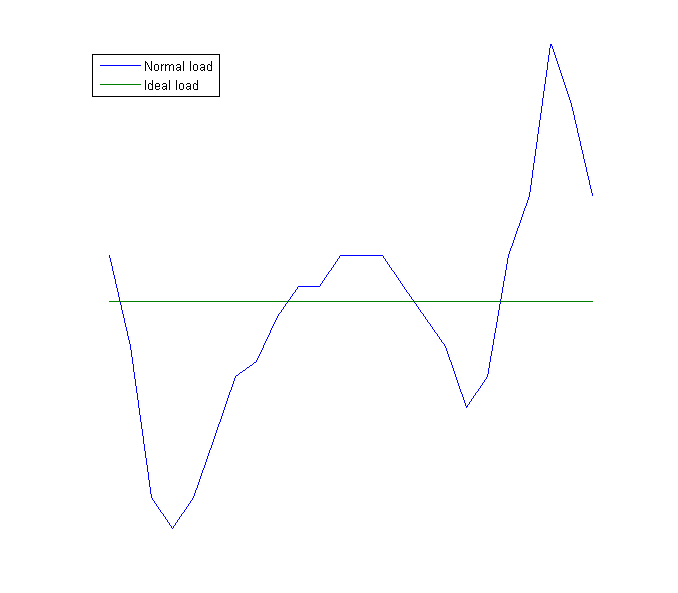
Daily load diagram; Blue shows real load usage and green shows ideal load.

Load management, also known as demand-side management (DSM), is the process of balancing the supply of electricity on the network with the electrical load by adjusting or controlling the load rather than the power station output. This can be achieved by direct intervention of the utility in real time, by the use of frequency sensitive relays triggering the circuit breakers (ripple control), by time clocks, or by using special tariffs to influence consumer behavior. Load management allows utilities to reduce demand for electricity during peak usage times (peak shaving), which can, in turn, reduce costs by eliminating the need for peaking power plants. In addition, some peaking power plants can take more than an hour to bring on-line which makes load management even more critical should a plant go off-line unexpectedly for example. Load management can also help reduce harmful emissions, since peaking plants or backup generators are often dirtier and less efficient than base load power plants. New load-management technologies are constantly under development — both by private industry[1] and public entities.[2][3]

Brief history

[edit]

Modern utility load management began about 1938, using ripple control. By 1948 ripple control was a practical system in wide use.[4]

The Czechs first used ripple control in the 1950s. Early transmitters were low power, compared to modern systems, only 50 kilovolt-amps. They were rotating generators that fed a 1050 Hz signal into transformers attached to power distribution networks. Early receivers were electromechanical relays. Later, in the 1970s, transmitters with high-power semiconductors were used. These are more reliable because they have no moving parts. Modern Czech systems send a digital "telegram". Each telegram takes about thirty seconds to send. It has pulses about one second long. There are several formats, used in different districts.[5]

In 1972, Theodore George "Ted" Paraskevakos, while working for Boeing in Huntsville, Alabama, developed a sensor monitoring system which used digital transmission for security, fire, and medical alarm systems as well as meter-reading capabilities for all utilities. This technology was a spin-off of his patented automatic telephone line identification system, now known as caller ID. In, 1974, Paraskevakos was awarded a U.S. patent for this technology.[6]

At the request of the Alabama Power Company, Paraskevakos developed a load-management system along with automatic meter-reading technology. In doing so, he utilized the ability of the system to monitor the speed of the watt power meter disc and, consequently, power consumption. This information, along with the time of day, gave the power company the ability to instruct individual meters to manage water heater and air conditioning consumption in order to prevent peaks in usage during the high consumption portions of the day. For this approach, Paraskevakos was awarded multiple patents.[7]

Advantages and operating principles

[edit]

Since electrical energy is a form of energy that cannot be effectively stored in bulk, it must be generated, distributed, and consumed immediately. When the load on a system approaches the maximum generating capacity, network operators must either find additional supplies of energy or find ways to curtail the load, hence load management. If they are unsuccessful, the system will become unstable and blackouts can occur.

Long-term load management planning may begin by building sophisticated models to describe the physical properties of the distribution network (i.e. topology, capacity, and other characteristics of the lines), as well as the load behavior. The analysis may include scenarios that account for weather forecasts, the predicted impact of proposed load-shed commands, estimated time-to-repair for off-line equipment, and other factors.

The utilization of load management can help a power plant achieve a higher capacity factor, a measure of average capacity utilization. Capacity factor is a measure of the output of a power plant compared to the maximum output it could produce. Capacity factor is often defined as the ratio of average load to capacity or the ratio of average load to peak load in a period of time. A higher load factor is advantageous because a power plant may be less efficient at low load factors, a high load factor means fixed costs are spread over more kWh of output (resulting in a lower price per unit of electricity), and a higher load factor means greater total output. If the power load factor is affected by non-availability of fuel, maintenance shut-down, unplanned breakdown, or reduced demand (as consumption pattern fluctuate throughout the day), the generation has to be adjusted, since grid energy storage is often prohibitively expensive.

Smaller utilities that buy power instead of generating their own find that they can also benefit by installing a load control system. The penalties they must pay to the energy provider for peak usage can be significantly reduced. Many report that a load control system can pay for itself in a single season.

Comparisons to demand response

[edit]

When the decision is made to curtail load, it is done so on the basis of system reliability. The utility in a sense "owns the switch" and sheds loads only when the stability or reliability of the electrical distribution system is threatened. The utility (being in the business of generating, transporting, and delivering electricity) will not disrupt their business process without due cause. Load management, when done properly, is non-invasive, and imposes no hardship on the consumer. The load should be shifted to off peak hours.

Demand response places the "on-off switch" in the hands of the consumer using devices such as a smart grid controlled load control switch. While many residential consumers pay a flat rate for electricity year-round, the utility's costs actually vary constantly, depending on demand, the distribution network, and composition of the company's electricity generation portfolio. In a free market, the wholesale price of energy varies widely throughout the day. Demand response programs such as those enabled by smart grids attempt to incentivize the consumer to limit usage based upon cost concerns. As costs rise during the day (as the system reaches peak capacity and more expensive peaking power plants are used), a free market economy should allow the price to rise. A corresponding drop in demand for the commodity should meet a fall in price. While this works for predictable shortages, many crises develop within seconds due to unforeseen equipment failures. They must be resolved in the same time-frame in order to avoid a power blackout. Many utilities who are interested in demand response have also expressed an interest in load control capability so that they might be able to operate the "on-off switch" before price updates could be published to the consumers.[8]

The application of load control technology continues to grow today with the sale of both radio frequency and powerline communication based systems. Certain types of smart meter systems can also serve as load control systems. Charge control systems can prevent the recharging of electric vehicles during peak hours. Vehicle-to-grid systems can return electricity from an electric vehicle's batteries to the utility, or they can throttle the recharging of the vehicle batteries to a slower rate.[9]

Ripple control

[edit]

Ripple control is a common form of load control, and is used in many countries around the world, including the United States, Australia, Czech Republic, New Zealand, the United Kingdom, Germany, the Netherlands, and South Africa. Ripple control involves superimposing a higher-frequency signal (usually between 100 and 1600 Hz[10]) onto the standard 50–60 Hz of the main power signal. When receiver devices attached to non-essential residential or industrial loads receive this signal, they shut down the load until the signal is disabled or another frequency signal is received.

Early implementations of ripple control occurred during World War II in various parts of the world using a system that communicates over the electrical distribution system. Early systems used rotating generators attached to distribution networks through transformers. Ripple control systems are generally paired with a two- (or more) tiered pricing system, whereby electricity is more expensive during peak times (evenings) and cheaper during low-usage times (early morning).

Affected residential devices will vary by region, but may include residential electric hot-water heaters, air conditioners, pool pumps, or crop-irrigation pumps. In a distribution network outfitted with load control, these devices are outfitted with communicating controllers that can run a program that limits the duty cycle of the equipment under control. Consumers are usually rewarded for participating in the load control program by paying a reduced rate for energy. Proper load management by the utility allows them to practice load shedding to avoid rolling blackouts and reduce costs.

Ripple Control is also used to turn off photovoltaic systems in case of electricity overproduction.

Ripple control can be unpopular because sometimes devices can fail to receive the signal to turn on comfort equipment, e.g. hot water heaters or baseboard electrical heaters. Modern electronic receivers are more reliable than old electromechanical systems. Also, some modern systems repeat the telegrams to turn on comfort devices. Also, by popular demand, many ripple control receivers have a switch to force comfort devices on.

Modern ripple controls send a digital telegram, from 30 to 180 seconds long. Originally these were received by electromechanical relays. Now they are often received by microprocessors. Many systems repeat telegrams to assure that comfort devices (e.g. water heaters) are turned on. Since the broadcast frequencies are in the range of human hearing, they often vibrate wires, filament light-bulbs or transformers in an audible way.[5]

The telegrams follow different standards in different areas. For example, in the Czech Republic, different districts use "ZPA II 32S", "ZPA II 64S" and Versacom. ZPA II 32S sends a 2.33 second on, a 2.99 second off, then 32 one-second pulses (either on or off), with an "off time" between each pulse of one second. ZPA II 64S has a much shorter off time, permitting 64 pulses to be sent, or skipped.[5]

Nearby regions use different frequencies or telegrams, to assure that telegrams operate only in the desired region. The transformers that attach local grids to interties intentionally do not have the equipment (bridging capacitors) to pass ripple control signals into long-distance power lines.[5]

Each data pulse of a telegram could double the number of commands, so that 32 pulses permit 2^32 distinct commands. However, in practice, particular pulses are linked to particular types of device or service. Some telegrams have unusual purposes. For example most ripple control systems have a telegram to set clocks in attached devices, e.g. to midnight.[5]

Zellweger off-peak is one common brand of ripple control systems.

Radio ripple control

[edit]

In recent years, radio-based load management (sometimes known as "radio ripple control") signalling systems have been introduced to replace traditional power wire ripple signalling systems.[11] Some radio-based load management systems have been criticised for lacking sufficient security measures, potentially compromising power grid security or allowing street lighting to be turned on or off.[12]

Frequency-based decentralized demand control

[edit]

Greater loads physically slow the rotors of a grid's synchronized generators. This causes AC mains to have a slightly reduced frequency when a grid is heavily loaded. The reduced frequency is immediately sensible across the entire grid. Inexpensive local electronics can easily and precisely measure mains frequencies and turn off sheddable loads. In some cases, this feature is nearly free, e.g. if the controlling equipment (such as an electric power meter, or the thermostat in an air-conditioning system) already has a microcontroller. Most electronic electric power meters internally measure frequency, and require only demand control relays to turn off equipment. In other equipment, often the only needed extra equipment is a resistor divider to sense the mains cycle and a schmitt trigger (a small integrated circuit) so the microcontrollers' digital input can sense a reliable fast digital edge. A schmitt trigger is already standard equipment on many microcontrollers.

The main advantage over ripple control is greater customer convenience: Unreceived ripple control telegrams can cause a water heater to remain off, causing a cold shower. Or, they can cause an airconditioner to remain off, resulting in a sweltering home. In contrast, as the grid recovers, its frequency naturally rises to normal, so frequency-controlled load control automatically enables water heaters, air-conditioners and other comfort equipment. The cost of equipment can be less, and there are no concerns about overlapping or unreached ripple control regions, mis-received codes, transmitter power, etc.

The main disadvantage compared to ripple control is a less fine-grained control. For example, a grid authority has only a limited ability to select which loads are shed. In controlled war-time economies, this can be a substantial disadvantage.

The system was invented in PNNL in the early 21st century, and has been shown to stabilize grids.[13]

Examples of schemes

[edit]

In many countries, including United States, United Kingdom and France, the power grids routinely use privately held, emergency diesel generators in load management schemes[14]

Florida

[edit]

The largest residential load control system in the world[15] is found in Florida and is managed by Florida Power and Light. It utilizes 800,000 load control transponders (LCTs) and controls 1,000 MW of electrical power (2,000 MW in an emergency). FPL has been able to avoid the construction of numerous new power plants due to their load management programs.[16]

Australia and New Zealand

[edit]
A ripple control receiver fitted to a New Zealand house. The left circuit breaker controls the water storage heater supply (currently on), while the right one controls the nightstore heater supply (currently off).

Since the 1950s, Australia and New Zealand have had a system of load management based on ripple control, allowing the electricity supply for domestic and commercial water storage heaters to be switched off and on, as well as allowing remote control of nightstore heaters and street lights. Ripple injection equipment located within each local distribution network signals to ripple control receivers at the customer's premises. Control may either done manually by the local distribution network company in response to local outages or requests to reduce demand from the transmission system operator (i.e. Transpower), or automatically when injection equipment detects mains frequency falling below 49.2 Hz. Ripple control receivers are assigned to one of several ripple channels to allow the network company to only turn off supply on part of the network, and to allow staged restoration of supply to reduce the impact of a surge in demand when power is restored to water heaters after a period of time off.

Depending on the area, the consumer may have two electricity meters, one for normal supply ("Anytime") and one for the load-managed supply ("Controlled"), with Controlled supply billed at a lower rate per kilowatt-hour than Anytime supply. For those with load-managed supply but only a single meter, electricity is billed at the "Composite" rate, priced between Anytime and Controlled.

Czech Republic

[edit]

The Czechs have operated ripple control systems since the 1950s.[5]

France

[edit]

France has an EJP tariff, which allows it to disconnect certain loads and to encourage consumers to disconnect certain loads.[17] This tariff is no longer available for new clients (as of July 2009).[18] The Tempo tariff also includes different types of days with different prices, but has been discontinued for new clients as well (as of July 2009).[19] Reduced prices during nighttime are available for customers for a higher monthly fee.[20]

Germany

[edit]

The distribution system operator Westnetz and gridX piloted a load management solution. The solution enables the grid operator to communicate with local energy management systems and adjust the available load for EV charging in response to the state of the grid.[21]

United Kingdom

[edit]

Rltec in the UK in 2009 reported that domestic refrigerators are being sold fitted with their dynamic load response systems. In 2011 it was announced that the Sainsbury supermarket chain will use dynamic demand technology on their heating and ventilation equipment.[22]

In the UK, night storage heaters are often used with a time-switched off-peak supply option - Economy 7 or Economy 10. There is also a programme that allows industrial loads to be disconnected using circuit breakers triggered automatically by frequency sensitive relays fitted on site. This operates in conjunction with Standing Reserve, a programme using diesel generators.[23] These can also be remotely switched using BBC Radio 4 Longwave Radio teleswitch.

SP transmission deployed Dynamic Load Management scheme in Dumfries and Galloway area using real time monitoring of embedded generation and disconnecting them, should an overload be detected on the transmission Network.

See also

[edit]

References

[edit]
[edit]
Revisions and contributorsEdit on WikipediaRead on Wikipedia
from Grokipedia
Load management, a component of demand-side management (DSM), is the process of balancing the supply of electricity on the power grid with consumer demand by actively controlling or adjusting electrical loads rather than varying generation output. This approach aims to reduce peak demand periods, optimize resource use, and enhance grid reliability without the need for additional power plants. In power systems, load management emerged prominently in the late amid crises and rising costs, when utilities began offering incentives for customers to curtail usage during high-demand times. Key techniques include load shifting, which moves consumption from peak to off-peak hours (e.g., scheduling heaters or charging at night); load clipping, which directly reduces demand during peaks via automated controls or price signals; and valley filling, which encourages usage during low-demand periods to even out the load curve. These methods are applied across residential, commercial, industrial, and agricultural sectors, often leveraging technologies like programmable thermostats, programs, and advanced metering infrastructure. The practice has evolved to support integration, as variable sources like solar and require flexible demand to match intermittent supply, thereby minimizing curtailment and grid instability. Benefits include lower costs for consumers through avoided peak , reduced reliance on expensive peaking (e.g., gas turbines), and improved overall efficiency, with programs capable of shaving up to 10-20% of peak loads in participating areas as projected for virtual power plants by 2030. Modern implementations, such as those using the VOLTTRON platform for building-level control, further enable real-time optimization of HVAC systems, , and appliances.

Introduction and Fundamentals

Definition and Objectives

Load management refers to the process by which utilities and system operators adjust electricity consumption patterns to better align with available supply, thereby reshaping the to mitigate imbalances in power systems. As a key component of demand-side management (DSM), it encompasses strategies such as peak shaving, which reduces high-demand periods; load shifting, which relocates consumption to off-peak times; and valley filling, which encourages usage during low-demand intervals to optimize overall grid utilization. These approaches enable proactive control over end-user demand without necessarily curtailing total energy consumption. The primary objectives of load management include reducing to prevent blackouts and system overloads, optimizing the use of existing and transmission resources, lowering operational costs for utilities through deferred investments, and decreasing expenses for consumers via incentives or rate structures. Additionally, it enhances grid reliability by smoothing demand fluctuations, which minimizes the risk of cascading failures and supports integration of sources with variable output. By addressing supply-demand mismatches, load management contributes to more sustainable and resilient power systems, particularly as demand grows from trends. In load management programs, electrical loads are categorized as controllable or non-controllable based on their flexibility for adjustment. Controllable loads, such as electric water heaters, air conditioners, and certain like batch heating or pumping, can be deferred, interrupted, or rescheduled with minimal impact on operations or comfort. Non-controllable loads, including essential or continuous , remain unaffected to ensure service continuity. This distinction allows targeted interventions on responsive appliances and equipment, often thermostatically controlled, to achieve demand adjustments without widespread disruption. Typical utility load management programs target peak demand reductions of 5-20%, with an average of around 10% achieved through coordinated efforts, helping to alleviate grid stress during critical periods.

Role in Power System Stability

Load management plays a critical role in integrating with supply-side measures to ensure power system stability, particularly by maintaining nominal levels such as 50 Hz or 60 Hz and upholding voltage profiles. By strategically reducing demand during periods of imbalance, it prevents overloads that could lead to deviations or voltage collapse, thereby complementing resources in real-time operations. For instance, underfrequency load shedding schemes activate to curtail load when falls short, restoring balance and averting widespread instability. Similarly, voltage stability is enhanced through targeted load adjustments that mitigate reactive power deficits, avoiding cascading voltage drops across transmission networks. In terms of ancillary services, load management provides reserve capacity that rivals traditional spinning reserves, offering rapid response without the need for additional generation infrastructure. programs enable controllable loads to participate in frequency regulation and balancing markets, injecting flexibility equivalent to dispatchable power while improving overall grid reliability. This equivalence allows system operators to treat reduced as a virtual generation increment, supporting services like primary frequency control during contingencies. Load management also contributes to black start scenarios and outage prevention by facilitating controlled demand reduction, which minimizes stress during system restoration and curtails the risk of cascading failures. In post-blackout recovery, gradual load pickup supported by demand-side curtailment helps stabilize deviations caused by initial energization, enabling safer reconnection of units. This approach reduces the propagation of imbalances, as seen in reliability enhancements during extreme events where proactive load shedding prevents total system collapse. Quantitatively, 1 MW of load reduction achieves the same effect as 1 MW of additional generation in balancing active power, directly impacting stability metrics like nadir and rate of change. Load management further improves the load factor—a key stability index measuring demand uniformity—potentially elevating it from typical levels around 60% to over 80% through peak shaving, which enhances reserve margins and operational efficiency without expanding capacity.

Historical Development

Origins in the 1970s and 1980s

The emergence of load management in power systems was largely spurred by the oil crises, which heightened U.S. concerns over foreign fuel dependence and prompted federal initiatives to enhance energy efficiency and conservation. These crises, particularly the 1973 embargo, escalated electricity costs and underscored the need for strategies to balance without expansive new generation capacity. In response, the (PURPA) of 1978 was enacted, mandating utilities to implement cost-effective load management techniques—such as ripple control and interruptible service—to reduce peak kilowatt demand and promote . Early pilot programs in the United States exemplified these efforts, with utilities pioneering practical applications in the 1970s. For instance, Edison and other electric providers installed on residential water heaters, preset to cycle off during peak hours, marking one of the initial direct control mechanisms for shifting loads. By the early 1980s, the launched comprehensive load management initiatives, including the 1983 End-Use Load and Consumer Assessment Program (ELCAP), a effort assessing residential end-use loads to inform off-peak load shifting strategies and optimize hydroelectric resources in the through incentives and controls. These programs initially aimed for modest peak reductions through direct appliance control, demonstrating viability in managing residential and small commercial loads without major changes. Widespread adoption followed in the late across U.S. utilities, driven by and cost savings, while European utilities similarly expanded efforts amid parallel energy concerns. Key milestones included the 1979 IEEE conference paper "Load Management on the Electric Power System," which outlined foundational concepts for altering electricity usage patterns to conserve fuel and capital resources. In Europe, ripple control systems—originally developed post-World War II for signaling over power lines—were formalized and scaled in the 1980s in countries like and to enable centralized load shedding and off-peak heating controls.

Advancements from 1990s to Present

The marked a pivotal shift in load through regulatory and market reforms. The U.S. Act of 1992 (EPAct) explicitly promoted demand-side (DSM) programs, defining them to include load techniques aimed at reducing and enhancing energy efficiency. This legislation encouraged utilities to implement DSM incentives, fostering in markets by requiring states to consider integrated that incorporated load strategies. Concurrently, the transition to competitive markets in the U.S. and elsewhere intensified incentives for load , as environments pressured utilities and generators to optimize operations and avoid costly peak capacity investments. Entering the 2000s, technological advancements digitized load management, with the introduction of advanced metering infrastructure (AMI) enabling real-time monitoring and control. AMI deployments accelerated from the early 2000s, providing utilities with granular data for load shifting and (DR) programs, which saw early pilots through aggregator partnerships and DOE-supported initiatives. In , the 2009 Third Energy Package, comprising Directives 2009/72/EC and 2009/73/EC, mandated member states to assess and roll out smart meters, laying the groundwork for widespread AMI adoption to support efficient load management across the region. The and witnessed deeper integration of load management with variable renewables and electric vehicles (EVs), addressing and rising demands. Smart charging technologies emerged to coordinate EV fleets with renewable generation, optimizing load profiles and minimizing grid strain, as highlighted in global assessments of EV-grid synergies. By 2025, AI-driven advanced dynamic load balancing, with utilities adopting self-optimizing grid systems—such as IBM's AI platforms—for forecasting demand, integrating renewables, and automating responses to maintain stability. Key milestones underscore these evolutions. The International Energy Agency's 2023 report on unlocking opportunities emphasized that digital technologies, including advanced load management, could reduce variable renewable curtailment by over 25% while enabling flexibility. In the U.S., the Department of Energy's Grid Modernization Initiative, launched in 2016, has prioritized cyber-secure load control through resilient designs for responsive loads and real-time automation, enhancing grid reliability amid growing threats.

Principles and Benefits

Key Operating Principles

Load management operates through two primary strategies to balance and supply: load shifting and load reduction. Load shifting involves relocating consumption from periods of high (peak times) to periods of lower (off-peak times), thereby smoothing the overall without altering total use. For instance, pre-cooling buildings during off-peak hours stores in the structure, reducing the need for cooling during peak periods when rates and grid stress are higher. In contrast, load reduction entails temporarily curtailing non-essential loads to directly decrease during critical times, such as interrupting discretionary usage to avoid overloads. Control signals form the backbone of load management implementation, enabling utilities to issue commands that modulate loads in response to grid needs. These signals, often transmitted remotely, direct the of controllable appliances to maintain system stability; for example, electric water heaters or space heaters may operate on a where they are activated for only 50% of the time during , reducing aggregate load while preserving functionality over longer periods. Such utility-initiated adjustments prioritize rapid response to fluctuating conditions without requiring individual intervention. Integration with economic dispatch enhances load management's efficiency by favoring cost-effective demand-side adjustments over expensive generation ramp-ups. In economic dispatch, available resources are allocated to meet at minimum cost, and load management contributes by enabling targeted reductions or shifts that defer the need for peaking plants, thereby optimizing overall system economics. A key metric in this context is the load factor (LF), which quantifies utilization efficiency and is defined as LF=[Average Load](/page/Average)Peak LoadLF = \frac{\text{[Average Load](/page/Average)}}{\text{Peak Load}} This formula arises from the of total energy delivered over a period ( load multiplied by time) to the energy that would result if the peak load persisted throughout that period (peak load multiplied by time), simplifying to the average-to-peak ratio; higher values indicate better balance, guiding dispatch decisions to minimize variance between and peak demands. Feedback loops ensure dynamic responsiveness in load management through real-time monitoring of grid parameters, allowing continuous adjustments to loads based on current conditions like deviations. Sensors and control systems detect imbalances, such as rising threatening under-frequency events, and trigger automated load modifications to restore equilibrium before cascading failures occur, preventing the need for more drastic measures like widespread shedding. These principles have underpinned load management practices since the , evolving with technological advancements.

Advantages and Potential Challenges

Load management offers several economic advantages for utilities and consumers. By shifting or reducing , utilities can avoid the high costs associated with operating expensive peaking generation units, which often rely on fossil fuels. programs can account for up to 40% of load reductions in targeted programs. This leads to substantial cost savings, with normalized benefits estimated at $0.30–$2.00 per kW-year across various studies, enabling utilities to defer investments in new capacity. For consumers, time-of-use pricing integrated with load management promotes equity by allowing lower-income households with flatter load profiles to benefit from reduced bills, potentially lowering energy burdens compared to flat-rate structures. Environmentally, load management defers the activation of fossil fuel-based peaking plants, reducing CO2 emissions, particularly at the local level where it replaces diesel generators with more efficient alternatives. In regions with high renewable penetration, this approach optimizes grid use during low-emission periods, contributing to broader goals without increasing overall . Despite these benefits, load management presents notable challenges. Consumer privacy is a primary concern, as real-time monitoring via smart meters and non-intrusive load monitoring enables detailed profiling of household activities, potentially exposing sensitive information about daily routines. Operationally, over-reliance on load management can introduce reliability risks, as illustrated during the 2021 winter storm, where despite the deployment of programs, widespread generation failures due to led to uncontrolled outages for millions, highlighting the limitations of demand-side measures when supply capacity is severely compromised. Implementation also incurs significant upfront costs for , including smart controls and communication systems, which can strain utility budgets and require customer incentives to achieve adoption. Quantitatively, load management can reduce system losses by 5-10% through optimized voltage levels and peak avoidance, enhancing overall grid efficiency. To address these challenges, regulatory incentives such as performance-based rebates and revenue decoupling mechanisms encourage in by aligning financial rewards with peak reductions and flexibility goals. These strategies, implemented in over 29 states, mitigate and barriers while promoting equitable access to grid benefits.

Core Techniques and Technologies

Traditional Centralized Methods

Traditional centralized methods for load management relied on utility-directed interventions to curtail or cycle residential and commercial loads during peak periods, primarily through one-way communication technologies that allowed operators to remotely control appliances without customer involvement. These approaches emerged prominently in the and as utilities faced rising peak demands from and , prompting the need for cost-effective alternatives to building new generation capacity. Ripple control, one of the earliest such techniques, superimposes low-frequency audio signals—typically in the 200-1500 Hz range—onto the existing 60 Hz voltage using transmitters installed at substations. These signals propagate through the distribution network to receiver switches connected to controllable loads, such as water heaters or storage heaters, which decode specific pulse patterns to turn appliances on or off. Widely adopted in since the mid-20th century and accounting for about 13% of U.S. systems by the , ripple control enabled utilities to shave peaks by cycling loads in targeted areas, often reducing demand by 0.6-0.9 kW per water heater. For instance, systems like the K-1500 Series II used power-line carrier multiplexing to achieve 10-30% energy cost savings through automated duty cycling. Radio ripple control extended this capability by combining very high frequency (VHF) radio transmissions—often in bands like 154 MHz or 174 MHz—with power-line carriers for broader coverage, where radio signals from a central transmitter activate local pole-mounted relays that inject ripple signals into the lines. In the U.S. during the 1980s, systems represented approximately 60% of utility systems and were particularly useful for controlling air conditioners over larger areas, with a 300-watt transmitter providing reliable signaling up to 8-40 km depending on terrain and regulations. Typical operations involved short off-periods to maintain system balance, though constrained by power limits. Direct load control (DLC) encompassed utility-installed switches on customer appliances, activated via dedicated communication channels such as telephone lines, power-line carriers, or radio links, allowing centralized cycling of loads like water heaters and air conditioners during high-demand events. Pioneered by utilities like Edison in 1968 and expanding rapidly in the 1970s, DLC programs typically involved 15-30 minute off-cycles, with no advance notice to customers, to achieve peak reductions of around 1 kW per air conditioner. By the early , over 1.2 million control points were in use across U.S. utilities, often integrated with local controllers for priority-based shedding. Systems like the Paragon EC74 or Butler B8A exemplified this, using logic to sequence interruptions while minimizing discomfort. Despite their effectiveness in centralized peak shaving, these methods shared key limitations, including one-way communication that prevented real-time feedback on load response or system status, and signal attenuation that restricted reliable operation—particularly for ripple control over distances exceeding tens of kilometers due to line losses and interference. Equipment reliability issues, such as faulty receivers, were also noted in surveys, leading to customer dissatisfaction in some programs. Additionally, the analog nature of these systems limited scalability and adaptability to varying grid conditions.

Modern Decentralized and Smart Grid Approaches

Modern decentralized load management approaches leverage distributed intelligence and digital communication to enable automated, responsive control across the power grid, contrasting with earlier centralized signaling by incorporating two-way flows and local . These methods enhance grid resilience by allowing loads to react dynamically to conditions without relying on a single control center, facilitating rapid adjustments to imbalances and fluctuations. Frequency-based control represents a core decentralized technique, where local devices such as relays automatically shed non-critical loads in response to grid frequency deviations, typically activating under-frequency load shedding (UFLS) at thresholds such as 59.5 Hz in 60 Hz systems or 49.5 Hz in 50 Hz systems to prevent system collapse. This approach uses embedded sensors and logic in distributed relays to monitor in real-time and execute shedding based on predefined priorities, ensuring stability without central coordination. For instance, adaptive decentralized UFLS schemes incorporate rate-of-change of frequency (RoCoF) and voltage deviations to fine-tune responses, improving accuracy in environments with high renewable penetration. Smart grid integrations further advance these capabilities through advanced metering infrastructure (AMI) and Internet of Things (IoT) devices, which enable real-time data exchange for dynamic load adjustments, including mechanisms like real-time bidding in demand response markets where flexible loads participate in energy auctions to balance supply and demand. AMI systems provide granular, two-way communication between utilities and end-users, supporting automated load curtailment during peaks via IoT-enabled sensors on appliances and substations. Complementing this, artificial intelligence (AI) algorithms, particularly machine learning models, perform predictive load forecasting to optimize electric vehicle (EV) charging; for example, hybrid long short-term memory (LSTM) networks integrated with convolutional neural networks (CNNs) have been applied in recent studies for short-term EV load predictions, aiding in scheduling charging to avoid peaks and incorporate renewable variability. Home energy management systems (HEMS) embody these principles at the consumer level, automating appliance operations—such as deferring water heaters or HVAC units—in response to dynamic price signals or direct grid need alerts transmitted via smart meters. These systems use IoT controllers to optimize household energy profiles, shifting loads to off-peak periods and integrating with distributed energy resources like rooftop solar for self-consumption maximization. Additionally, technology facilitates secure (P2P) energy trading within HEMS frameworks, allowing prosumers to transact excess generation directly with neighbors, thereby distributing load management and reducing grid strain through decentralized ledgers that ensure transparent, tamper-proof exchanges. Advanced features in these approaches prioritize security and emerging applications, with protocols like providing standardized, interoperable communication for substation automation while incorporating cybersecurity extensions under to mitigate risks such as denial-of-service attacks on control signals. In 2025 trends, (V2G) integration with EVs emerges as a key enabler, where bidirectional charging allows fleets to discharge stored back to the grid, contributing significantly to peak load support in high EV penetration scenarios, as shown in various simulations; as of November 2025, developments include California's curbside V2G charger pilots and U.S. Department of Energy assessments of EV-grid integration. These developments underscore the shift toward resilient, prosumer-driven grids capable of handling increasing demands.

Demand Response

Demand response encompasses market-based programs designed to encourage electricity consumers to voluntarily adjust their consumption patterns in response to dynamic price signals or financial incentives, thereby helping to balance on . These programs often involve mechanisms such as day-ahead auctions, where participants bid to reduce load during anticipated high-demand periods, enabling integration into wholesale markets. Demand response initiatives are broadly classified into two main types: price-responsive and reliability-based. Price-responsive programs utilize variable pricing structures, such as time-of-use (TOU) tariffs, to incentivize consumers to shift usage to off-peak times when is cheaper and more abundant. In contrast, reliability-based programs focus on curtailing load during critical events, like grid emergencies, through fixed payments or bonuses for verified reductions. Participation in these programs typically accounts for 2-8% of total system load, with aggregators playing a key role in pooling resources from multiple consumers to meet minimum bid sizes and ensure reliable delivery. A core mechanism for involves its incorporation into wholesale capacity markets, where it provides reserves to ensure grid reliability. For instance, in the PJM Interconnection's 2025/2026 Base Residual Auction, demand response resources cleared at prices around $120/kW-year across the regional transmission organization footprint, reflecting heightened value amid growing load forecasts and supply constraints. These payments compensate participants for committing to availability during peak periods, distinct from settlements for actual curtailments. Key differences distinguish demand response from traditional load management approaches: it operates on a voluntary, economically motivated basis rather than utility-directed control, prioritizing and market signals over mandatory interventions. While both strategies share the goal of peak load reduction, demand response empowers end-users or aggregators to decide how and when to respond, fostering greater flexibility and participation.

Broader Demand-Side Management

Demand-side management (DSM) encompasses a range of strategies employed by utilities to influence consumer consumption patterns, aiming to optimize use, reduce peak loads, and promote . These efforts include load management for real-time adjustments, energy efficiency initiatives such as LED lighting retrofits to lower overall usage, and conservation programs that encourage behavioral changes to minimize waste. By focusing on the demand side, DSM helps utilities avoid over-reliance on supply expansions, integrating measures like incentives for efficient appliances and time-based to shift usage. Within the DSM framework, load management serves as a key pillar, distinguished by its emphasis on immediate, operational interventions to balance during peak periods, in contrast to long-term energy efficiency measures that achieve sustained reductions through technology upgrades. Historical U.S. DSM expenditures peaked in the , reaching approximately $2.7 billion annually by 1993, reflecting widespread utility investments in these programs before a decline due to and market shifts. programs, as a subset of DSM, further support this by enabling rapid load adjustments in response to grid signals. DSM often integrates with supply-side strategies, such as generation planning, to defer or reduce the need for new power ; for instance, improvements can cut demand by 20-30%, potentially avoiding significant infrastructure investments. In the , the 2023 revision of the Energy Efficiency Directive under the Green Deal mandates a collective 11.7% reduction in final and consumption by 2030 compared to 2020 projections, leveraging digital tools like smart metering and for enhanced DSM implementation.

Global Implementations and Case Studies

North America

In the United States, load management implementations are driven by utility-led programs and federal regulations, with a strong emphasis on residential direct load control in high-demand regions like Florida. Florida Power & Light (FPL), the largest electric utility in the state, has utilized direct load control of air conditioning units since the 1980s to cycle equipment during peak periods, contributing to broader demand-side management efforts. Statewide, these utility programs, including FPL's initiatives, are expected to reduce summer peak demand by approximately 1,995 MW as of 2025 through load control and related measures. Such programs apply general load management principles to the residential sector, where air conditioning represents a significant portion of summer peaks. Regulatory frameworks have further propelled these efforts, notably through the Federal Energy Regulatory Commission's (FERC) Order 745 issued in 2011, which mandates compensation for resources in organized wholesale energy markets at the locational marginal price (LMP) provided they pass a net benefits test. This order ensures utilities and participants receive fair incentives for load reductions, integrating into market operations across regional transmission organizations (RTOs) and independent operators (ISOs). In 2025, updates supported by the (IRA) have allocated funding as part of the $10.5 billion Grid Resilience and Innovation Partnerships (GRIP) program for initiatives that enhance load and grid flexibility, including advanced controls and technologies. In , similar utility programs focus on smart technology integration, exemplified by Ontario's peakSavers initiative, an early direct load control effort that engaged around 40,000 residential participants in by allowing temporary air conditioning curtailments to shave peaks. This program, now evolved into the broader Peak Perks initiative, utilizes smart thermostats to achieve demand reductions of up to 90 MW during high-load events, with over 100,000 participants enrolled as of 2024. Across North American utilities, these load management strategies typically deliver 10-15% peak shaving on average, with residential programs often yielding 10-35% reductions per participating household during events. However, in hurricane-prone areas such as , load management faces unique challenges, including the vulnerability of control infrastructure to storm damage, which can disrupt remote cycling of equipment and require resilient designs like hardened communication systems and backup protocols to ensure reliability during outages. Utilities like FPL have addressed this by investing in weather-resistant controls and integrating load management with broader grid hardening efforts to minimize disruptions from .

Europe

In Europe, load management strategies vary across countries, emphasizing both centralized systems like ripple control and decentralized frequency-based approaches to balance amid high renewable integration and industrial demands. Germany utilizes frequency-based decentralized control mechanisms under VDE standards to manage grid stability, enabling automatic load adjustments in response to frequency deviations. The 2012 winter period highlighted vulnerabilities due to low renewable output and phasing out nuclear capacity, prompting regulatory expansions in flexibility programs. These initiatives support broader grid resilience targets through enhanced demand flexibility. France maintains one of Europe's longest-established centralized load management systems through ripple control, primarily for urban electric heating, with Enedis (formerly ERDF) overseeing operations dating back to the 1950s. This infrastructure allows remote switching of heating loads to shave peaks during high-demand periods, integrating with modern enhancements for efficiency. In the , current demand flexibility mechanisms, such as the Capacity Market and aggregator-led programs, procure flexible capacity from industrial and commercial users to support peak demands. Similarly, the employs radio-based ripple control systems for managing industrial loads, enabling utilities to curtail non-essential consumption in real-time to prevent overloads. At the EU level, and related directives target enhanced demand flexibility, including ongoing efforts for rollout to at least 80% coverage by 2029 where cost-effective, with approximately 63% of electricity consumers equipped by end-2024. These efforts build on historical ripple control techniques pioneered in early 20th-century for basic load shedding.

Australia, New Zealand, and Asia-Pacific

In Australia and New Zealand, load management strategies are tailored to high renewable penetration, particularly hydro and solar, to address seasonal variability and grid stability. In New Zealand, Transpower and distribution companies employ ripple control systems to manage residential hot water heating, a significant demand component, by remotely switching off heaters during peak periods. This approach covers approximately 50% of electricity consumers and is estimated at around 644 MW of controllable load as of recent assessments, helping to prevent network overloads during winter evenings. In Australia, the Australian Energy Market Operator (AEMO) is advancing virtual power plants (VPPs) that aggregate distributed energy resources, including rooftop solar capacity of approximately 26.8 GW by mid-2025, contributing to total PV capacity of over 41 GW; projections indicate VPPs could contribute to managing peaks amid growing solar adoption. Across the , demand-side management (DSM) initiatives reflect diverse development stages and resource constraints. In , time-of-day (ToD) tariffs are implemented as a key DSM tool to shift consumption away from peaks, with regulators mandating 10-20% higher rates during evening hours for industrial and commercial users, incentivizing off-peak usage in targeted areas like . In Pakistan, the Water and Power Development Authority (WAPDA) introduced early load management programs in the 1980s focused on demand shifting and efficiency campaigns to bridge supply gaps, but persistent shortages led to a pivot toward widespread load shedding by the as an emergency measure. Regional trends emphasize adaptations to renewable and emerging . High solar variability in has prompted enhancements to under-frequency load shedding (UFLS) schemes, designed to arrest frequency drops below 47.5 Hz by automatically disconnecting loads, ensuring a 0.5 Hz buffer against system collapse amid reduced minimum demand from distributed . In 2025, ASEAN countries launched collaborative initiatives under the ASEAN Centre for Energy to integrate (EV) charging with load balancing, including standardized battery protocols and grid upgrades to mitigate peak strains from cross-border EV adoption. These efforts draw briefly from global advancements, such as advanced metering, to enable real-time . Unique challenges in the region include climate-induced hydro variability, particularly in , where dry conditions in 2024 reduced hydro generation by up to 17% in affected quarters, prompting demand-side shifts to maintain supply balance.

References

Add your contribution
Related Hubs
Contribute something
User Avatar
No comments yet.