Hubbry Logo
MealybugMealybugMain
Open search
Mealybug
Community hub
Mealybug
logo
8 pages, 0 posts
0 subscribers
Be the first to start a discussion here.
Mealybug
Mealybug
from Wikipedia

Pseudococcidae
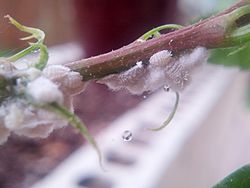
Mealybugs on a flower stem in Yogyakarta
Scientific classification Edit this classification
Kingdom: Animalia
Phylum: Arthropoda
Class: Insecta
Order: Hemiptera
Suborder: Sternorrhyncha
Superfamily: Coccoidea
Family: Pseudococcidae
Heymons, 1915 [1]

Mealybugs are insects in the family Pseudococcidae, unarmored scale insects found in moist, warm habitats. Of the more than 2,000 described species, many are considered pests as they feed on plant juices of greenhouse plants, house plants and subtropical trees and also act as a vector for several plant diseases. Some ants live in symbiotic relationships with them, protecting them from predators and feeding off the honeydew which they excrete.

Description

[edit]
A video of a mealybug

Mealybugs are sexually dimorphic: females appear as nymphs, exhibiting reduced morphology, and lack wings, although unlike many female scale insects, they often retain legs and can move. Males are smaller, gnat-like and have wings. Since mealybugs, as well as all other Hemiptera, are hemimetabolous insects, they do not undergo complete metamorphosis in the true sense of the word. However, male mealybugs exhibit a radical change during their life cycle, changing from wingless, ovoid nymphs to wasp-like flying adults.[citation needed]

Mealybug females feed on plant sap, normally in roots or other crevices, and in a few cases the bottoms of stored fruit. They attach themselves to the plant and secrete a powdery wax layer (hence the name "mealy" bug) used for protection while they suck the plant juices. The males are short-lived, as they do not feed at all as adults and only live to fertilize the females. Male citrus mealy bugs fly to the females and resemble fluffy gnats.

Some species of mealybug lay their eggs in the same waxy layer used for protection in quantities of 50–100; other species are born directly from the female.

The most serious pests are mealybugs that feed on citrus. Other species damage sugarcane, grapes, pineapple (Jahn et al. 2003), coffee trees, cassava, ferns, cacti, gardenias, papaya, mulberry, sunflower and orchids. Mealybugs only tend to be serious pests in the presence of ants because the ants protect them from predators and parasites.[2] Mealybugs are also a vector of viruses in grapevines, spreading grapevine leafroll and grapevine red blotch viruses.[3]

Mealybugs also infest some species of carnivorous plant such as Sarracenia (pitcher plants). In such cases it is difficult to eradicate them without repeated applications of insecticide such as diazinon. Small infestations may not inflict significant damage. In larger amounts though, they can induce leaf drop. In recent years, some of the mealybug species have become invasive pests in localities posing a great problem to the new agro-ecosystems. In India, Withania somnifera plant have been reported as a new reservoir host for an invasive mealybug species Phenacoccus solenopsis.[4]

Some mealybugs of the Hypogeococcus are used as biological pest controls of invasive cacti in South Africa, including Harrisia balansae, H. martinii, and Opuntia cespitosa.[5]

Fossil specimens of genus Acropyga ants have been recovered from the Burdigalian stage Dominican amber deposits and several individuals are preserved carrying the extinct mealybug genus Electromyrmococcus.[6] These fossils represent the oldest record of the symbiosis between mealybugs and Acropyga species ants.[6]

Control methods

[edit]

Insecticides such as pyrethroids (e.g. permethrin, bifenthrin, cyfluthrin) have been used for control,[7] but this approach is often considered counter-productive due to mortality of mealybug natural enemies.

Some gardeners use species of predatory beetles (e.g. Cryptolaemus) and green lacewings (Chrysopidae) larvae to control mealybug infestations, as the larval lacewings are voracious predators of aphids and other small insects.[8]

Metabolism

[edit]

Mealybugs have a highly sophisticated metabolism that involves not one but two bacterial endosymbionts, one inside the other. The endosymbionts make essential amino acids that the mealybug is not able to acquire directly from its diet. Genetically, mealybugs rely on a "mosaic" of metabolic pathways in which proteins are transported across membranes between what were once independent organisms.[9]

Use in the textile industry

[edit]

In Oaxaca, Mexico, where mealybugs are known as cochinilla algodonosa, the insects are intentionally cultivated and farmed. Dried mealybugs are ground into a dust, producing a red dye that is used to colour fabrics, in artist's paints, and in cosmetics.

Note that while cochineals are commonly called mealybugs, and they share a very similar physical appearance and size, mealybugs (Pseudococcidae) are in a different family to cochineals (Dactylopiidae), of which there are several species.


Genera

[edit]

The following are included in BioLib.cz:[10]

  1. Acaciacoccus Williams & Matile-Ferrero, 1994
  2. Acinicoccus Williams, 1985
  3. Acrochordonus Cox, 1987
  4. Adelosoma Borchsenius, 1948
  5. Aemulantonina Williams, 2004
  6. Agastococcus Cox, 1987
  7. Albertinia de Lotto, 1971
  8. Allococcus Ezzat & McConnell, 1956
  9. Allomyrmococcus Takahashi, 1941
  10. Allotrionymus Takahashi, 1958
  11. Amonostherium Morrison & Morrison, 1922
  12. Anaparaputo Borchsenius, 1962
  13. Anisococcus Ferris, 1950
  14. Annulococcus James, 1936
  15. Anthelococcus McKenzie, 1964
  16. Antonina Signoret, 1875
  17. Antoninella Kiritchenko, 1938
  18. Antoninoides Ferris, 1953
  19. Apodastococcus Williams, 1985
  20. Archeomyrmococcus Williams, 2002
  21. Artemicoccus Balachowsky, 1953
  22. Asaphococcus Cox, 1987
  23. Asphodelococcus Morrison, 1945
  24. Asteliacoccus Williams, 1985
  25. Atriplicicoccus Williams & Granara de Willink, 1992
  26. Atrococcus Goux, 1941
  27. Australicoccus Williams, 1985
  28. Australiputo Williams, 1985
  29. Balachowskya Gomez-Menor, 1956
  30. Balanococcus Williams, 1962
  31. Benedictycoccina Kozár & Foldi, 2004
  32. Bessenayla Goux, 1988
  33. Birendracoccus Ali, 1975
  34. Bolbococcus Williams, 2002
  35. Boninococcus Kawai, 1973
  36. Boreococcus Danzig, 1960
  37. Borneococcus Williams, 2002
  38. Bouhelia Balachowsky, 1938
  39. Brevennia Goux, 1940
  40. Brevicoccus Hambleton, 1946
  41. Calicoccus Balachowsky, 1959
  42. Callitricoccus Williams, 1985
  43. Calyptococcus Borchsenius, 1948
  44. Cannococcus Borchsenius, 1960
  45. Casuarinaloma Froggatt, 1933
  46. Cataenococcus Ferris, 1955
  47. Caulococcus Borchsenius, 1960
  48. Chaetococcus Maskell, 1898
  49. Chaetotrionymus Williams, 1985
  50. Chloeoon Anderson, 1788
  51. Chlorizococcus McKenzie, 1960[11]
  52. Chlorococcus Beardsley, 1971
  53. Chryseococcus Cox, 1987
  54. Cintococcus Goux, 1940
  55. Circaputo McKenzie, 1962
  56. Clavicoccus Ferris, 1948
  57. Coccidella Hambleton, 1946
  58. Coccidohystrix Lindinger, 1943
  59. Coccura Šulc, 1908
  60. Coleococcus Borchsenius, 1962
  61. Conicoccus Goux, 1994
  62. Conicosoma de Lotto, 1971
  63. Conulicoccus Williams, 1985
  64. Coorongia Williams, 1985
  65. Cormiococcus Williams, 1989
  66. Crenicoccus Williams, 2004
  67. Criniticoccus Williams, 1960
  68. Crisicoccus Ferris, 1950
  69. Crocydococcus Cox, 1987
  70. Cryptoripersia Cockerell, 1899
  71. Cucullococcus Ferris, 1941
  72. Cyperia De Lotto, 1964
  73. Cypericoccus Williams, 1985
  74. Cyphonococcus Cox, 1987
  75. Dawa Williams, 1985
  76. Delococcus Ferris, 1955
  77. Delottococcus Cox & Ben-Dov, 1986
  78. Dicranococcus Williams, 2002
  79. Discococcus Ferris, 1953
  80. Distichlicoccus Ferris, 1950
  81. Diversicrus de Lotto, 1971
  82. Doryphorococcus Williams, 2002
  83. Drymococcus Borchsenius, 1962
  84. Dysmicoccus Ferris, 1950
  85. Eastia De Lotto, 1964
  86. Ehrhornia Ferris, 1918
  87. Epicoccus Cockerell, 1902
  88. Eriocorys de Lotto, 1967
  89. Erioides Green, 1922
  90. Erium Cockerell, 1897
  91. Eucalyptococcus Williams, 1985
  92. Eumirococcus Ter-Grigorian, 1964
  93. Eumyrmococcus Silvestri, 1926
  94. Eupeliococcus Sãvescu, 1985
  95. Euripersia Borchsenius, 1948
  96. Eurycoccus Ferris, 1950
  97. Exallomochlus Williams, 2004
  98. Exilipedronia Williams, 1960
  99. Extanticoccus Williams, 2004
  100. Farinococcus Morrison, 1922
  101. Ferrisia Fullaway, 1923
  102. Ferrisicoccus Ezzat & McConnell, 1956
  103. Fijicoccus Williams & Watson, 1988
  104. Fonscolombia Lichtenstein, 1877
  105. Formicococcus Takahashi, 1928
  106. Gallulacoccus Beardsley, 1971
  107. Geococcus Green, 1902
  108. Glycycnyza Danzig, 1974
  109. Gouxia Koçak & Kemal, 2009[a]
  110. Gomezmenoricoccus Kozar & Walter, 1985
  111. Greenoripersia Bodenheimer, 1929
  112. Grewiacoccus Brain, 1918
  113. Grewiacococcus Brain, 1918
  114. Hadrococcus Williams, 1985
  115. Hambletonrhizoecus Kozár & Konczné Benedicty, 2005
  116. Heliococcus Šulc, 1912
  117. Hemisphaerococcus Borchsenius, 1934
  118. Heterococcopsis Borchsenius, 1948
  119. Heterococcus Ferris, 1918
  120. Hippeococcus Reyne, 1954
  121. Hopefoldia Foldi, 1988
  122. Hordeolicoccus Williams, 2004
  123. Humoccoccus Ferris, 1953
  124. Humococcus Ferris, 1953
  125. Hypogeococcus Rau, 1938[5]
  126. Iberococcus Gomez-Menor Ortega, 1928
  127. Idiococcus Takahashi & Kanda, 1939
  128. Inopicoccus Danzig, 1971
  129. Ityococcus Williams, 1985
  130. Kaicoccus Takahashi, 1958
  131. Kenmorea Williams, 1985
  132. Kermicus Newstead, 1897
  133. Kiritshenkella Borchsenius, 1948
  134. Lachnodiella Hempel, 1910
  135. Lachnodiopsis Borchsenius, 1960
  136. Lacombia Goux, 1940
  137. Laingiococcus Morrison, 1945
  138. Laminicoccus Williams, 1960
  139. Lanceacoccus Williams, 2004
  140. Lantanacoccus Williams & Granara de Willink, 1992
  141. Lenania De Lotto, 1964
  142. Leococcus Kanda, 1959
  143. Leptococcus Reyne, 1961
  144. Leptorhizoecus Williams, 1998
  145. Liucoccus Borchsenius, 1960
  146. Lomatococcus Borchsenius, 1960
  147. Londiania De Lotto, 1964
  148. Longicoccus Danzig, 1975
  149. Maconellicoccus Ezzat, 1958
  150. Macrocepicoccus Morrison, 1919
  151. Macrocerococcus Leonardi, 1907
  152. Maculicoccus Williams, 1960
  153. Madacanthococcus Mamet, 1959
  154. Madagasia Mamet, 1962
  155. Madangiacoccus Williams, 1985
  156. Madeurycoccus Mamet, 1959
  157. Malaicoccus Takahashi, 1950
  158. Malekoccus Matile-Ferrero, 1988
  159. Mammicoccus Balachowsky, 1959
  160. Marendellea de Lotto, 1967
  161. Mascarenococcus Mamet, 1940
  162. Maskellococcus Cox, 1987
  163. Mediococcus Kiritschenko, 1936
  164. Melanococcus Williams, 1985
  165. Metadenopsis Matesova, 1966
  166. Metadenopus Sulc, 1933
  167. Miconicoccus Williams & Miller, 1999
  168. Mirococcopsis Borchsenius, 1948
  169. Mirococcus Borchsenius, 1947
  170. Miscanthicoccus Takahashi, 1958
  171. Misericoccus Ferris, 1953
  172. Mollicoccus Williams, 1960
  173. Mombasinia De Lotto, 1964
  174. Moystonia Williams, 1985
  175. Mutabilicoccus Williams, 1960
  176. Naiacoccus Green, 1919
  177. Nairobia De Lotto, 1964
  178. Natalensia Brain, 1915
  179. Neochavesia Williams & de Willink, 1992
  180. Neoclavicoccus Cohic, 1959
  181. Neorhizoecus Hambleton, 1916
  182. Neoripersia Kanda, 1943
  183. Neosimmondsia Laing, 1930
  184. Neotrionymus Borchsenius, 1948
  185. Nesococcus Ehrhorn, 1916
  186. Nesopedronia Beardsley, 1971
  187. Nesticoccus Tang, 1977
  188. Nipaecoccus Šulc, 1945
  189. Octococcus Hall, 1939
  190. Odacoccus Williams & Watson, 1988
  191. Ohiacoccus Beardsley, 1971
  192. Oracella Ferris, 1950
  193. Orstomicoccus Mamet, 1962
  194. Oudablis Signoret, 1882
  195. Oxyacanthus Chevallier, 1836
  196. Palaucoccus Beardsley, 1966
  197. Palmicultor Williams, 1963
  198. Paludicoccus Ferris, 1918
  199. Pandanicola Beardsley, 1966
  200. Papuacoccus Williams & Watson, 1988
  201. Paracoccus Ezzat & McConnell, 1956
  202. Paradiscococcus Williams, 1985
  203. Paradoxococcus McKenzie, 1962
  204. Paraferrisia Williams & de Boer, 1973
  205. Paramococcus Foldi & Cox, 1989
  206. Paramonostherium Williams, 1985
  207. Paramyrmococcus Takahashi, 1941
  208. Parapaludicoccus Mamet, 1962
  209. Parapedronia Balachowsky, 1953
  210. Paraputo Laing, 1929
  211. Pararhodania Ter-Grigorian, 1964
  212. Paratrionymus Borchsenius, 1948
  213. Pedrococcus Mamet, 1942
  214. Pedronia Green, 1922
  215. Peliococcopsis Borchesenius, 1948
  216. Peliococcus Borchsenius, 1948
  217. Pellizzaricoccus Kozar, 1991
  218. Penthococcus Danzig, 1972
  219. Peridiococcus Williams, 1985
  220. Perystrix Gavrilov, 2004
  221. Phenacoccopsis Borchsenius, 1948
  222. Phenacoccus Cockerell, 1893
  223. Pilococcus Takahashi, 1928
  224. Planococcoides Ezzat & McConnell, 1956
  225. Planococcus Ferris, 1950
  226. Pleistocerarius Matile-Ferrero, 1970
  227. Plotococcus Miller & Denno, 1977
  228. Poecilococcus Brookes, 1981
  229. Polystomophora Borchsenius, 1948
  230. Porococcus Cockerell, 1898
  231. Promyrmococcus Williams, 2002
  232. Prorhizoecus Miller & McKenzie, 1971
  233. Prorsococcus Williams, 1985
  234. Pseudantonina Green, 1922
  235. Pseudococcus Westwood, 1840
  236. Pseudorhizoecus Green, 1933
  237. Pseudorhodania Borchsenius, 1962
  238. Pseudoripersia Cockerell, 1899
  239. Pseudotrionymus Beardsley, 1971
  240. Pygmaeococcus McKenzie, 1960
  241. Quadrigallicoccus Williams & Miller, 1999
  242. Radicoccus Hambleton, 1946
  243. Rastrococcus Ferris, 1954
  244. Renicaula Cox, 1987
  245. Rhizoecus Künckel d'Herculais, 1878
  246. Rhodania Goux, 1935
  247. Ripersia Signoret, 1875
  248. Ritsemia Lichtenstein, 1879
  249. Saccharicoccus Ferris, 1950
  250. Saliococcus Kanda, 1934
  251. Sarococcus Williams & de Boer, 1973
  252. Scaptococcus McKenzie, 1964
  253. Seabrina Neves, 1943
  254. Serrolecanium Shinji, 1935
  255. Seyneria Goux, 1990
  256. Sinococcus Wu & Zheng, 2001
  257. Spartinacoccus Kosztarab, 1996
  258. Sphaerococcus Maskell, 1892
  259. Spilococcus Ferris, 1950
  260. Stachycoccus Borchsenius, 1962
  261. Stemmatomerinx Ferris, 1950
  262. Stipacoccus Tang, 1992
  263. Strandanna De Lotto, 1969
  264. Strombococcus Williams, 1985
  265. Synacanthococcus Morrison, 1920
  266. Syrmococcus Ferris, 1953
  267. Takahashicoccus Kanda, 1959
  268. Tasmanicoccus Williams, 1985
  269. Thaimyrmococcus Williams, 2002
  270. Tomentocera Beardsley, 1964
  271. Trabutina Marchal, 1904
  272. Trabutinella Borchsenius, 1948
  273. Trechocorys Curtis, 1843
  274. Tridiscus Ferris, 1950
  275. Trimerococcus Balachowsky, 1952
  276. Trionymus Berg, 1899
  277. Trochiscococcus Williams & Pellizzari, 1997
  278. Tylococcus Newstead, 1897
  279. Tympanococcus Williams, 1967
  280. Ventrispina Williams, 1985
  281. Villosicoccus Williams, 1985
  282. Volvicoccus Goux, 1945
  283. Vryburgia De Lotto, 1967
  284. Xenococcus Silvestri, 1924
  285. Yudnapinna Williams, 1985

Extinct genera:

Note:

  1. ^ synonym of Giraudia: monotypic Gouxia danielaferreroae (Goux, 1989).

References

[edit]

Further reading

[edit]
[edit]
Revisions and contributorsEdit on WikipediaRead on Wikipedia
from Grokipedia
Mealybugs are belonging to the family Pseudococcidae within the order , characterized by their small, soft, oval-shaped bodies covered in a white, powdery or filamentous wax secretion that gives them a cottony or meal-like appearance. With nearly 2,000 described distributed worldwide, particularly in tropical and subtropical regions, they are primarily phloem-feeding pests that infest a broad array of , including ornamentals, fruits, , and field crops. Adult females, which are wingless and range from 1 to 10 mm in length, have greatly reduced legs and antennae, while males are smaller, gnat-like, and possess wings and elongated wax filaments. The life cycle typically includes eggs laid within a protective waxy ovisac, three nymphal instars (crawlers) that are mobile and dispersive, and adults; many species reproduce parthenogenetically, though occurs in others. Nymphs and adults feed by inserting stylets into plant vascular tissue, extracting sap and excreting honeydew, a sugary substance that promotes growth and attracts . As major agricultural pests, mealybugs cause direct damage through feeding, which stunts growth, distorts leaves and fruits, and can lead to defoliation or death in severe infestations; they also vector viruses, exacerbating economic losses in crops like , , and grapes. Management relies on integrated approaches, including cultural practices, biological controls such as parasitoids and predators, and targeted insecticides, due to their cryptic habits on roots, stems, and foliage.

Taxonomy and Classification

Family and Higher Classification

Mealybugs are classified within the order , suborder , superfamily Coccoidea, and family Pseudococcidae. This placement situates them among the true bugs, characterized by piercing-sucking mouthparts, with encompassing other sap-feeding groups like and that typically have uniform membranous wings or reduced wings, unlike the hemelytrous forewings of . The superfamily Coccoidea includes various scale insects, distinguishing Pseudococcidae by their unarmored, soft-bodied forms often coated in a powdery . The family Pseudococcidae is defined by key morphological and behavioral traits, including specialized piercing-sucking mouthparts (stylets) adapted for extracting sap from , and a predominantly sedentary adult lifestyle where females remain attached to hosts for extended periods. This immobility, coupled with the production of filamentous secretions for and , underscores their to a parasitic existence on vascular . These characteristics not only facilitate but also highlight their ecological role as feeders. Evolutionary origins of mealybugs date to the period, with evidence from approximately 100 million years ago revealing early herbivory on laurel-like angiosperms, indicating ancient associations with flowering plants. Phylogenetic analyses suggest that the divergence of major Coccoidea lineages, including Pseudococcidae, occurred prior to the mid- angiosperm radiation around 140–100 million years ago, but these insects underwent significant diversification as they shifted from hosts to the expanding angiosperm flora. This co-evolutionary trajectory contributed to their proliferation alongside the dominance of flowering plants. The comprises approximately 2,064 described across 264 genera, though estimates indicate a total diversity potentially exceeding this figure due to numerous undescribed taxa in tropical regions. This reflects their global adaptation to diverse host plants, with ongoing taxonomic revisions refining these numbers through molecular and morphological studies.

Diversity and Genera

The family Pseudococcidae encompasses approximately 2,064 described species distributed across 264 genera, making it one of the most diverse groups within the scale insects. This is particularly pronounced in tropical and subtropical regions, where mealybugs exhibit a wide range of host associations and ecological adaptations. Many genera are cosmopolitan, occurring across multiple continents due to human-mediated dispersal, while others are endemic to specific biogeographic zones, such as the Neotropics or , reflecting evolutionary radiations tied to particular plant lineages. Among the major genera, Planococcus Ferris includes 48 species, several of which are highly polyphagous and widespread pests on agricultural crops. For instance, Planococcus citri (Risso), the mealybug, is a cosmopolitan species native to but now established globally on citrus and other hosts. Similarly, the genus Pseudococcus Westwood is one of the largest, comprising over 150 species, many of which are cosmopolitan and associated with temperate and tropical fruits, ornamentals, and trees; notable examples include Pseudococcus longispinus (Targioni Tozetti), the longtailed mealybug, which has a broad distribution from to the . Phenacoccus Cockerell, with around 180 species, represents another significant genus, primarily tropical and often specialized on grasses and herbs, though some species like Phenacoccus solenopsis (Tinsley), the cotton mealybug, have become invasive worldwide. Mealybugs in Pseudococcidae are predominantly soft-bodied, covered in powdery wax secretions that provide and , though some genera exhibit variations in wax filament density and body segmentation that suggest specialization—such as arboreal versus ground-dwelling forms. Distribution patterns show high generic diversity in the Oriental and Neotropical regions, with over 100 genera recorded in each, compared to fewer in the Palaearctic (around 80 genera). Endemic genera, like those restricted to Australian eucalypts, highlight regional driven by host plant specificity. Recent taxonomic revisions within Pseudococcidae have increasingly incorporated molecular data, particularly from mitochondrial COI and nuclear genes, to resolve phylogenetic relationships and cryptic species complexes. For example, a comprehensive recognized three subfamilies—Phenacoccinae, Pseudococcinae, and Rastrococcinae—based on molecular phylogeny and endosymbionts, refining generic boundaries and revealing previously unrecognized clades. Such molecular approaches have also led to the description of new species and synonymies, enhancing the accuracy of diversity estimates and supporting management.

Morphology and Physiology

External Features

Mealybugs, members of the family Pseudococcidae, exhibit a soft, segmented body that is typically elongate to oval in shape, ranging from 1 to 5 mm in length depending on the and life stage. The body is distinctly divided into head, , and , with segmentation often visible beneath a covering of powdery white secretions produced by specialized dermal glands, which imparts the characteristic mealy or cottony appearance for which the insects are named. This coating not only camouflages the insect but also serves as a protective barrier against and predators. A key diagnostic feature of mealybugs is the presence of filamentous structures protruding from the body margins, particularly along the lateral edges of the and ; these filaments vary in length and shape across , often being short and truncate anteriorly while longer and more pronounced posteriorly. Adult females additionally produce an ovisac, a fluffy, elongated mass of white that envelops the eggs, which can extend beyond the body length and is secreted from specialized pores on the ventral surface. The mouthparts consist of a stylet-like adapted for piercing tissues to extract , while legs are reduced in adult females, with functional but short tarsi and claws that aid in limited mobility before settling. Sexual dimorphism is pronounced in mealybugs, with adult females being wingless, neotenic, and largely sessile, retaining a nymph-like morphology with reduced antennae and legs suited to a on host plants. In contrast, adult males are small, gnat-like, and fully winged, possessing functional legs, elongated antennae, and often a pair of long caudal filaments of extending from the , enabling flight for mate location; males lack mouthparts and do not feed as adults. These differences highlight the divergence in adult forms, where females prioritize and males focus on dispersal. External features vary significantly across instars, with first-instar nymphs (crawlers) being mobile, flattened, and lightly waxed for active host-seeking and dispersal, often lacking prominent filaments. Subsequent instars show increasing wax production and body rounding, culminating in the sedentary, heavily waxed adult females; male nymphs, however, undergo more pronounced changes, developing wing pads and in later instars before emerging as winged adults. These morphological shifts facilitate the transition from dispersive juveniles to reproductive adults.

Internal Processes

Mealybugs, like other -feeding , rely on to supplement their nutrient-poor diet. The primary , Tremblaya princeps, resides in specialized bacteriocytes and possesses genes for synthesizing essential that are scarce in plant sap. This bacterium's highly reduced limits its metabolic capabilities, but in many species, Tremblaya harbors a secondary gammaproteobacterial symbiont, such as Moranella endobia, which provides complementary pathways for biosynthesis, including branched-chain and aromatic . Together, these nested symbionts form an interdependent that enables mealybugs to thrive on imbalanced sap high in carbohydrates but low in proteins. Nitrogen conservation is critical for mealybugs given the low content of their diet. Symbiotic bacteria facilitate through the cycle, where excess from is converted to in the Malpighian tubules. This is then broken down to and , which can be reassimilated for new , minimizing waste and enhancing efficiency on nutrient-limited diets. This process, mediated by bacterial enzymes like , supports overall host fitness in -poor environments. Excess sugar intake from sap leads to honeydew excretion, a key aspect of mealybug . is hydrolyzed and partially converted to , the primary sugar, for energy storage and . Surplus carbohydrates, including and , are filtered through the gut and Malpighian tubules, resulting in the secretion of sugary honeydew droplets that serve as a product but also attract mutualistic . This metabolic filtering prevents osmotic imbalance while allowing rapid processing of high-volume sap intake. The of mealybugs, characterized by minimal locomotion, correlates with adaptations in their . Their tracheal network is reduced in extent and complexity compared to more active , reflecting lower oxygen demands from subdued metabolic rates. Oxygen delivery occurs via a simplified of tracheae and tracheoles that penetrate tissues directly, sufficient for their static existence on host plants without the need for extensive branching or ventilation mechanisms. Developmental progression in mealybugs is hormonally regulated, with playing a central role in initiating molting. This , produced in the prothoracic glands, triggers apolysis and formation during transitions between nymphal instars and to the adult stage. Expression profiles of genes, such as those encoding Halloween proteins, show sex-specific patterns in species like Planococcus kraunhiae, influencing reproductive maturation alongside juvenile hormone effects.

Life History

Developmental Stages

Mealybugs, members of the family Pseudococcidae, exhibit incomplete metamorphosis, characteristic of hemimetabolous insects, where females are neotenic and retain nymphal morphology into adulthood while males undergo a more distinct transformation including pupation. This developmental pattern allows for gradual changes across instars without a complete larval-pupal-adult sequence. The life cycle typically spans from egg to adult in 20-90 days, varying with temperature and species, with warmer conditions accelerating development. The egg stage begins when adult females deposit 100-600 eggs within a protective, cottony ovisac secreted from their body, providing and defense against predators. Hatching occurs after 5-10 days under optimal conditions, releasing first-instar nymphs known as crawlers, which are the only highly mobile and dispersive stage in the life cycle. Exceptions occur in species like the longtailed mealybug (Pseudococcus longispinus), which is ovoviviparous and gives birth to live crawlers rather than laying eggs. Nymphal development consists of three instars for females, starting with the active crawler (first instar) that settles on a host plant to feed and secrete wax, followed by two sedentary nymphal stages where molting occurs and body size increases. Males also begin as crawlers but typically have only two nymphal instars before entering a prepupal stage, after which they spin a waxy cocoon for pupation, emerging with wings and reduced mouthparts. The crawler stage is critical for dispersal, as subsequent instars lose mobility and remain attached to the host. Nymphal development from crawler to mature nymph takes 10-40 days, influenced by host plant quality and temperature. Upon reaching adulthood, females become wingless, sac-like, and sedentary, often reproducing parthenogenetically or laying eggs oviparously, while males are short-lived, winged, and primarily function in fertilization before dying. The total life cycle duration, from egg to adult emergence, ranges from 20 days in tropical conditions to 90 days in cooler climates, with higher temperatures shortening each stage. varies from 1-2 generations per year in temperate regions to 4-10 in subtropical or environments, directly modulated by seasonal temperature and photoperiod.

Reproduction and Behavior

Mealybugs predominantly reproduce via , in which females produce female from unfertilized eggs, though many exhibit facultative when males are available. In , females mate with males that emerge from fertilized eggs under haplodiploid determination systems common in the Pseudococcidae family. Winged males, which possess functional wings adapted for flight as briefly noted in their external morphology, locate receptive females primarily through detection of female-emitted pheromones. Adult males have a short lifespan of 1-2 days, during which they focus solely on before dying without feeding. Following or parthenogenetic development, adult s typically deposit 200-600 eggs within protective ovisacs secreted from their bodies, which enclose the eggs and often the female herself. In some species, is viviparous or ovoviviparous, with females giving birth to live nymphs rather than laying eggs, allowing for rapid under favorable conditions. No significant parental care occurs beyond ovisac formation, as females die shortly after oviposition or parturition. Mealybugs display gregarious behavior, with nymphs and adults forming dense aggregations on host plants that provide mutual protection from predators and create a favorable microclimate for feeding and development. These clusters are facilitated by subtle chemical cues, and upon disturbance, individuals release alarm pheromones that trigger defensive responses such as dispersal or immobilization among nearby conspecifics. Dispersal is passive and primarily achieved by mobile first-instar nymphs, known as crawlers, which spread via walking, wind currents, or phoresy on other organisms like ants, rather than through active movement by adults.

Distribution and Ecology

Global Range

Mealybugs, belonging to the family Pseudococcidae, are native to all continents except and exhibit a global distribution across diverse zoogeographical regions, including the Nearctic, Neotropical, Palearctic, Afrotropical, Oriental, and Australasian realms. Their is particularly high in tropical areas, with notable concentrations in the Neotropics—such as over 78 species recorded in alone—and the Indo-Australian region, where southern hosts approximately 354 species across 62 genera. This elevated diversity in warmer climates reflects the family's to a wide array of ecosystems, though exact native origins vary by species and lineage. Human activities, particularly in and agricultural products, have facilitated the cosmopolitan spread of many mealybug species, transforming them into widespread pests beyond their native ranges. For instance, the citrus mealybug Planococcus citri has achieved near-global distribution, thriving in greenhouses across temperate and subtropical zones where it was introduced. Similarly, like the cotton mealybug Phenacoccus solenopsis, native to and the , rapidly expanded from the to starting in the mid-2000s, affecting reported from 75 countries by facilitating outbreaks in cotton-growing regions. Mealybugs predominantly favor warm, humid environments that support their sap-feeding lifestyle, with optimal conditions around 25°C and high relative enabling multiple generations per year. They occur from to elevated altitudes in tropical and subtropical mountains, demonstrating resilience to varied microclimates within their preferred ranges. Biogeographic patterns are closely linked to host distributions, with some lineages exhibiting historical Gondwanan origins that underscore ancient diversification tied to and angiosperm evolution.

Interactions with Hosts

Mealybugs, members of the family Pseudococcidae, primarily feed on sap by inserting their piercing-sucking mouthparts, known as stylets, into the vascular tissues of host plants. This feeding process involves the secretion of watery that lubricates the stylet pathway and gelling that forms a protective sheath around the stylets, facilitating prolonged access to the nutrient-rich phloem. Additionally, the injected contains enzymes and compounds that manipulate , such as inhibiting phloem sealing mechanisms and altering balances to maintain sieve tube functionality for sustained feeding. The nutrient drain from feeding leads to significant direct to host , including (yellowing of leaves), stunting of growth, and deformation of fruits and shoots due to disrupted photosynthate transport. Heavy infestations exacerbate these effects, causing premature leaf drop, branch dieback, and overall weakening of the plant structure. Indirect arises from the excretion of honeydew, a sugary of digestion, which promotes the growth of fungi on plant surfaces, reducing by blocking sunlight. Mealybugs exhibit a broad host range, infesting across approximately 250 families, with a preference for woody perennials such as citrus (Citrus spp.) and grapevines (Vitis spp.). Species vary in specificity: polyphagous types, comprising about 32% of examined mealybugs, attack multiple plant families, while monophagous species (56%) are restricted to single host genera or species, enabling adaptation to diverse agricultural and ornamental crops. In response to mealybug feeding, deploy physical defenses, including the deposition of callose—a β-1,3-glucan —in sieve plates to occlude conduits and limit nutrient loss. This rapid sealing mechanism can starve the insects but is often countered by salivary effectors that dissolve or prevent callose accumulation. Additionally, mutualistic interactions with complicate defenses; harvest honeydew and protect mealybugs from predators and parasitoids, thereby enhancing mealybug populations and prolonging feeding damage. Mealybugs also serve as vectors for plant pathogens, particularly viruses, through contaminated stylets during feeding probes. They efficiently transmit grapevine leafroll-associated (GLRaV), a closterovirus complex causing leafroll in grapevines, with species-specific efficiency varying by acquisition and inoculation times. This vectoring amplifies spread in vineyards, compounding physiological stress from direct feeding.

Economic and Agricultural Impact

Role as Pests

Mealybugs are significant agricultural pests, primarily due to their sap-feeding habits that weaken plants and reduce productivity across various crops. Key affected species include the mealybug (Planococcus citri), which infests orchards, causing direct damage through feeding on leaves, stems, and fruits, leading to distorted growth and premature drop. This pest also impacts by stunting boll development, grapes through bunch deformation, and ornamental plants like and poinsettias by reducing aesthetic quality and marketability. In severe cases, heavy infestations of P. citri on can result in yield losses of up to 80%, while ornamental crops may experience 15-20% reductions in marketable yield. The economic toll of mealybug infestations is substantial, with restrictions exacerbating losses by limiting exports of infested commodities. For instance, biological control programs targeting the mealybug (Paracoccus marginatus) in affected regions have yielded annual benefits of $121-309 million across five major crops, underscoring the scale of potential damages without intervention. In , P. marginatus alone causes average yield losses of 57% in , translating to approximately $3,009 per in farm-level economic costs annually. Additionally, mealybugs are classified as pests in many countries, leading to trade barriers; , for example, identifies 169 mealybug species as high-risk for , impacting fruit and exports. Notable outbreaks highlight the invasive potential of mealybugs. The pink hibiscus mealybug (Maconellicoccus hirsutus) invaded in the around 1994, rapidly spreading to other islands and causing widespread defoliation of crops like , , and ornamentals, with reports of extensive damage confirmed by FAO assessments in the mid-1990s. This pest later established in parts of , including northern regions, where it continues to threaten horticultural production. Recent detections include papaya mealybug in in 2023, leading to enhanced measures, and pasture mealybug invasions in as of 2025, potentially affecting forage yields for livestock. Such invasions often result in rapid population buildups due to the absence of natural enemies, leading to regional economic disruptions. Beyond direct feeding, mealybugs exacerbate damage through secondary effects, particularly the production of honeydew, a sugary that promotes growth and attracts . The honeydew fosters black fungal coatings on leaves and fruits, reducing and further diminishing yields, while protect mealybugs from predators in mutualistic relationships, intensifying . This dynamic poses heightened challenges in , where limited synthetic options allow to more effectively "farm" mealybugs, impeding natural enemy-based control. Symptoms of , such as leaf yellowing and drop, often stem from these combined stresses on host plants. Detection of mealybug infestations remains difficult due to their cryptic habits, with adults and nymphs concealing themselves in crevices, axils, and zones. Root-feeding species, in particular, evade visual scouting until plants exhibit or , complicating timely intervention in greenhouses and field crops. This hidden nature contributes to outbreak escalation before management can be implemented.

Industrial Applications

No significant industrial applications are known for mealybugs in the family Pseudococcidae. Related scale insects in other families, such as Dactylopius coccus (Dactylopiidae), serve as a source for , a red pigment, but this is outside the scope of mealybugs.

Management and Control

Chemical Approaches

Chemical control of mealybugs relies on insecticides that exploit the vulnerability of the crawler stage, the mobile nymphs that lack the protective waxy coating of adults. Systemic neonicotinoids, such as and , are absorbed by and ingested by feeding mealybugs, providing effective suppression when applied as soil drenches or foliar sprays. Contact options like horticultural mineral oils work by smothering exposed crawlers upon direct application, often combined with insecticidal soaps for enhanced results. Timing of applications is critical, targeting periods when crawlers are most abundant—typically during the first generation in spring for many crops—to maximize contact and uptake while minimizing treatments. This stage, referenced in developmental descriptions, is far more susceptible than settled nymphs or adults protected by their secretions. Insecticide resistance poses a significant challenge, with field populations of Planococcus citri showing reduced susceptibility to organophosphates and other classes due to repeated use; documented cases highlight the need for rotation and integrated pest management (IPM) strategies to preserve efficacy. Environmental concerns with these chemicals include non-target effects on pollinators, prompting regulatory actions such as the European Union's bans on outdoor uses of certain neonicotinoids like imidacloprid since 2018 to protect bees and other beneficial insects. Field trials in citrus orchards demonstrate high efficacy, with combined insecticide sprays achieving 80-95% population reduction, though outcomes vary by timing, coverage, and resistance levels.

Biological and Cultural Methods

Biological control strategies for mealybugs rely on introducing or conserving natural enemies, including predators, parasitoids, and entomopathogens, to suppress populations in agricultural and natural settings. Predators such as the mealybug destroyer lady beetle () actively feed on mealybug eggs, nymphs, and adults; its larvae, covered in a waxy coating resembling mealybugs, are particularly effective in concealed infestations on crops like and grapes. Green lacewings ( spp.) and minute pirate bugs ( spp.) also prey on mealybug crawlers, providing generalist control in greenhouses and orchards. These predators can reduce mealybug densities by 50-80% in targeted releases when combined with monitoring, though their efficacy varies with environmental conditions and host plant density. Parasitoids, primarily from the family Encyrtidae, offer specialized biological control by laying eggs inside mealybug hosts, leading to mummification and death. The parasitoid targets species like the mealybug (Planococcus citri), achieving rates up to 70% in field trials on grapevines and ornamentals. A landmark example is the classical biological control of the mealybug (Phenacoccus manihoti) in , where the parasitoid was introduced from in the 1980s, resulting in substantial population reductions across 26 countries and preventing yield losses estimated at approximately $2 billion annually. Similarly, in , releases of A. lopezi against P. manihoti have substantially reduced rates in cassava-growing regions (with declines of 31.8–94.9% in some countries) by stabilizing crop yields and alleviating land expansion needs. Secondary parasitoids, such as Acerophagus spp., further enhance control by attacking primary parasitoids' mummies, maintaining long-term suppression. Entomopathogenic fungi and nematodes provide microbial options for biological control, especially in integrated programs. Fungi like and Metarhizium anisopliae infect mealybugs through cuticle penetration, causing 60-90% mortality in lab and field tests against species such as the obscure mealybug (Pseudococcus viburni). Entomopathogenic nematodes (Heterorhabditis bacteriophora) target soil-dwelling mealybug stages, achieving up to 85% control in enset plantations when applied via . Success with these agents depends on humidity levels above 80% and avoiding disruption from chemical pesticides. As of 2025, emerging like the pasture mealybug (Ferrisia virgata) in North American grasslands, particularly , have highlighted the need for enhanced monitoring and biological controls, with new fact sheets recommending conservation of native predators such as lady beetles and parasitoids. Additionally, insecticides such as (Safari 20SG) have demonstrated over 90% efficacy against multiple mealybug species in recent trials. Cultural methods focus on modifying agricultural practices to reduce mealybug habitats, , and spread without relying on chemicals. is foundational, involving the daily removal and disposal of infested debris, weeds, and heavily colonized material in sealed containers to prevent reinfestation in greenhouses and fields. Quarantining new stock for at least two weeks, with thorough inspections of stems, leaf undersides, and roots, minimizes introduction risks; any detected mealybugs should prompt isolation and treatment monitoring. and destroying infested branches or replacing susceptible plants with resistant varieties, such as certain rootstocks, can lower overall pest pressure by 40-60% in orchards. Ant management is a key cultural tactic, as ants protect mealybugs from predators in exchange for honeydew; disrupting ant colonies with barriers or targeted baits enhances natural enemy efficacy and reduces mealybug survival by up to 50%. Proper irrigation and fertilization avoid excessive nitrogen, which promotes succulent growth attractive to mealybugs, while pressure washing infested areas with broad nozzles dislodges 70% of crawlers without damaging plants. Avoiding broad-spectrum insecticides preserves beneficial insects, and regular scouting with hand lenses allows early intervention, integrating cultural practices into broader IPM frameworks for sustainable control.

References

Add your contribution
Related Hubs
User Avatar
No comments yet.