Hubbry Logo
MerinoMerinoMain
Open search
Merino
Community hub
Merino
logo
8 pages, 0 posts
0 subscribers
Be the first to start a discussion here.
Merino
Merino
from Wikipedia

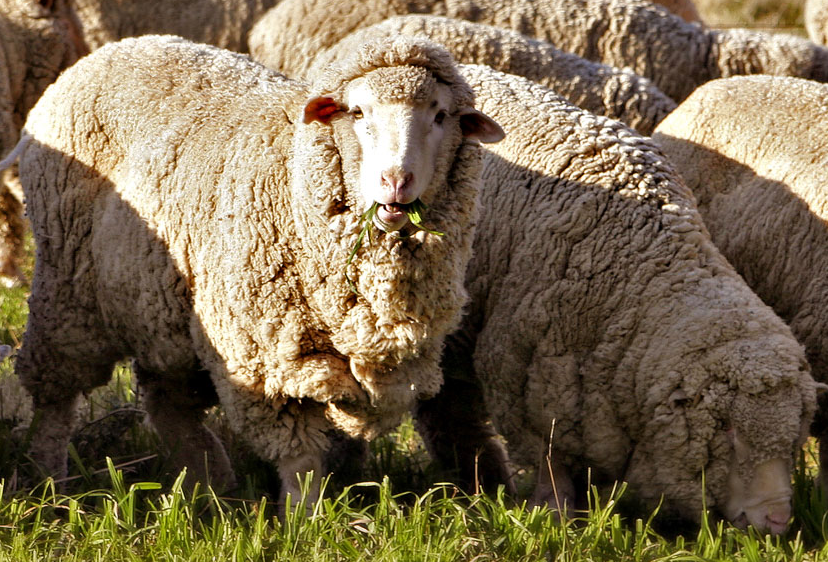
Full wool Merino sheep
Merino sheep and red goats. Madrid, Spain

The Merino is a breed or group of breeds of domestic sheep, characterised by very fine soft wool. It was established in the Iberian Peninsula (modern Spain and Portugal) near the end of the Middle Ages, and was for several centuries kept as a strict Spanish monopoly; exports of the breed were not allowed, and those who tried risked capital punishment. During the eighteenth century, flocks were sent to the courts of a number of European countries, including France (where they developed into the Rambouillet), Hungary, the Netherlands, Prussia, Saxony and Sweden.

The Merino subsequently spread to many parts of the world, including South Africa, Australia, and New Zealand. Numerous recognised breeds, strains and variants have developed from the original type; these include, among others, the American Merino and Delaine Merino in the Americas, the Australian Merino, Booroola Merino and Peppin Merino in Oceania, and the Gentile di Puglia, Merinolandschaf and Rambouillet in Europe.[1]: 861 

The Australian Poll Merino is a polled (hornless) variant. Rams of other Merino breeds have long, spiral horns which grow close to the head, while ewes are usually hornless.

History

[edit]
One of the earliest depictions of a Merino. "El Buen Pastor" (The Good Shepherd) by Bartolomé Esteban Murillo, ca. 1650

Etymology

[edit]

The name merino was not documented in Spain until the early 15th century, and its origin is disputed.[2]: 39 

Two suggested origins for the Spanish word merino are given in:[3]

  • It may be an adaptation to the sheep of the name of a Castilian official inspector (merino) over a merindad, who may have also inspected sheep pastures. This word is from the medieval Latin maiorinus, a steward or head official of a village, from maior, meaning "greater". However, there is no indication in any of the Leonese or Castilian law codes that this official, either named as maiorinus or merino had any duties connected with sheep, and the late date at which merino was first documented makes any connection with the name of an early medieval magistrate implausible.[4]: 3 
  • It also may be from the name of an Imazighen tribe, the Marini (or in Spanish, Benimerines), who occupied parts of the southwest of the Iberian Peninsula during the 12th and 13th centuries. This view gains some support from the derivation of many medieval Spanish pastoral terms from Arabic or Berber languages.[5] However, an etymology based on a 12th-century origin for Merino sheep when the Marinids were in Spain is unacceptable; the origin of the breed occurred much later.[6]: 123 

Origin

[edit]

The three theories of the origins of the Merino breed in Spain are: the importation of North African flocks in the 12th century;[4]: 4  its origin and improvement in Extremadura in the 12th and 13th centuries;[7] the selective crossbreeding of Spanish ewes with imported rams at several different periods, so that its characteristic fine wool was not fully developed until the 15th century or even later.[2]: 40  The first theory accepts that the breed was improved by later importation of North African rams and the second accepts an initial stock of North African sheep related to types from Asia Minor, and both claim an early date and largely North African origin for the Merino breed.[4]: 4, 34 

Sheep were relatively unimportant in the Islamic Caliphate of Córdoba, and there is no record of extensive transhumance before the caliphate's fall in the 1030s. The Marinids, when a nomadic Zenata Berber tribe, held extensive sheep flocks in what is now Morocco, and its leaders who formed the Marinid Sultanate militarily intervened in southern Spain, supporting the Emirate of Granada several times in the late 13th and early 14th centuries.[8][9] Although they may possibly have brought new breeds of sheep into Spain,[10] there is no definite evidence that the Marinids did bring extensive flocks to Spain. As the Marinids arrived as an intervening military force, they were hardly in a position to protect extensive flocks and practice selective breeding.[6]: 124 

The third theory, that the Merino breed was created in Spain over several centuries with a strong Spanish heritage, rather than simply being an existing North African strain that was imported in the 12th century, is supported both by recent genetic studies and the absence of definitive Merino wool before the 15th century. The predominant native sheep breed in Spain from pre-Roman times was the churro, a homogeneous group closely related to European sheep types north of the Pyrenees and bred mainly for meat and milk, with coarse, coloured wool. Churro wool had little value, except where its ewes had been crossed with a fine wool breed from southern Italy in Roman times.[11] Genetic studies have shown that the Merino breed most probably developed by the crossing of churro ewes with a variety of rams of other breeds at different periods, including Italian rams in Roman times, North African rams in the medieval period, and English rams from fine-wool breeds in the 15th century.[12]: 9 [13]

Although Spain exported wool to England, the Low Countries and Italy in the 13th and 14th centuries, it was only used to make cheap cloth. The earliest evidence of fine Spanish wool exports was to Italy in the 1390s and Flanders in the 1420s, although in both cases fine English wool was preferred. Spain became noted for its fine wool (spinning count between 60s and 64s) in the late 15th century, and by the mid-16th century its Merino wool was acknowledged to equal that of the finest English wools.[14]: 437 [2]: 39 

The earliest documentary evidence for Merino wools in Italy dates to the 1400s, and in the 1420s and 1430s, Merino wools were being mixed with fine English wool in some towns in the Low Countries to produce high quality cloth.[6]: 130 [14]: 438, 455  However, it was only in the mid-16th century that the most expensive grades of cloth could be made entirely from Merino wool, after its quality had improved to equal that of the finest English wools, which were in increasingly short supply at that time.[14]: 431 

Preserved medieval woollen fabrics from the Low Countries show that, before the 16th century, only the best quality English wools had a fineness of staple comparable to modern Merino wool. The wide range of Spanish wools produced in the 13th and early 14th centuries were mostly used domestically for cheap, coarse and light fabrics, and were not Merino wools.[14]: 436  Later in the 14th century, similar non-Merino wools were exported from the northern Castilian ports of San Sebastián, Santander, and Bilbao to England and the Low Countries to make coarse, cheap cloth.[14]: 34  The quality of Spanish wools exported increased markedly in the late 15th century, as did their price, promoted by the efforts of the monarchs Ferdinand and Isabella to improve quality.[4]: 36 

Spain built up a virtual monopoly in fine wool exports in the final decades of the 15th century and in the 16th century, creating a substantial source of income for Castile.[2]: 84  In part, this was because most English wool was woven and made into textile goods within England by the 16th century, rather than being exported.[15]

Many of the Castillian Merino flocks were owned by nobility or the church, although Alfonso X realised that granting the urban elites of the towns of Old Castile and León transhumant rights would create an additional source of royal income and counteract the power of the privileged orders.[4]: 239  During the late 15th, 16th and early 17th century, two-thirds of the sheep migrating annually were held in flocks of less than 100 sheep and very few flocks exceeded 1,000 sheep. By the 18th century, there were fewer small owners, and several owners held flocks of more than 20,000 sheep, but owners of small to moderately sized flocks remained, and the Mesta was never simply a combination of large owners.[4]: 59 

The transhumant sheep grazed the southern Spanish plains in winter and the northern highlands in summer. The annual migrations to and from Castile and León, where the sheep were owned and where they had summer pasturage, was organised and controlled by the Mesta along designated sheep-walks, or cañadas reales and arranged for suitable grazing, water and rest stops in these routes, and for shearing when the flocks started their return north.[4]: 28 

The three Merino strains that founded the world's Merino flocks are the Royal Escurial flocks, the Negretti and the Paula. Among Merino bloodlines stemming from Vermont in the US, three historical studs were highly important: Infantado, Montarcos and Aguires. In recent times, Merino and breeds deriving from Merino stocks have spread worldwide. However, there has been a substantial decline in the numbers of several European Merino breeds, which are now considered to be endangered breeds and are no longer the subject of genetic improvement. In Spain, there are now two populations, the commercial Merino flocks, most common in the province of Extremadura and an "historical" Spanish Merino strain, developed and conserved in a breeding centre near Cordoba. The commercial Merino flocks show considerable genetic diversity, probably because of their cross-breeding with non-Spanish Merino-derived breeds since the 1960s, to create a strain more suitable for meat production.[12]: 3, 8  The historical Spanish strain, bred from animals selected from the main traditional Spanish genetic lines to ensure the conservation of a purebred lineage, exhibits signs of inbreeding.[12]: 9 

Champion Merino ram, 1905 Sydney Sheep Show

Before the 18th century, the export of Merinos from Spain was a crime punishable by death. In the 18th century, small exportation of Merinos from Spain and local sheep were used as the foundation of Merino flocks in other countries. In 1723, some were exported to Sweden, but the first major consignment of Escurials was sent by Charles III of Spain to his cousin, Prince Xavier the Elector of Saxony, in 1765. Further exportation of Escurials to Saxony occurred in 1774, to Hungary in 1775 and to Prussia in 1786. Later in 1786, Louis XVI of France received 366 sheep selected from 10 different cañadas; these founded the stud at the Royal Farm at Rambouillet. In addition to the fine wool breeds mentioned, other breeds derived from Merino stocks were developed to produce mutton, including the French Ile de France and Berrichon du Cher breeds. Merino sheep were also sent to Eastern Europe where their breeding began in Hungary in 1774.[12]: 2 

Ewes in New South Wales

The Rambouillet stud enjoyed some undisclosed genetic development with some English long-wool genes contributing to the size and wool-type of the French sheep.[16] Through one ram in particular named Emperor – imported to Australia in 1860 by the Peppin brothers of Wanganella, New South Wales – the Rambouillet stud had an enormous influence on the development of the Australian Merino.[citation needed]

Sir Joseph Banks procured two rams and four ewes in 1787 by way of Portugal, and in 1792 purchased 40 Negrettis for King George III to found the royal flock at Kew. In 1808, 2000 Paulas were imported.

A stud Merino ram that has been branded on his horn

The King of Spain also gave some Escurials to the Dutch government in 1790; these thrived in the Dutch Cape Colony (South Africa). In 1788, John MacArthur, from the Clan Arthur (or MacArthur Clan) introduced Merinos to Australia from South Africa.

From 1765, the Germans in Saxony crossed the Spanish Merino with the Saxon sheep[17] to develop a dense, fine type of Merino (spinning count between 70s and 80s) adapted to its new environment. From 1778, the Saxon breeding center was operated in the Vorwerk Rennersdorf. It was administered from 1796 by Johann Gottfried Nake, who developed scientific crossing methods to further improve the Saxon Merino. By 1802, the region had four million Saxon Merino sheep, and was becoming the centre for stud Merino breeding, and German wool was considered to be the finest in the world.

In 1802, Colonel David Humphreys, United States Ambassador to Spain, introduced the Vermont strain into North America with an importation of 21 rams and 70 ewes from Portugal and a further importation of 100 Infantado Merinos in 1808. The British embargo on wool and wool clothing exports to the U.S. before the 1812 British/U.S. war led to a "Merino Craze", with William Jarvis of the Diplomatic Corps importing at least 3,500[18] sheep between 1809 and 1811 through Portugal.

The Napoleonic Wars (1793–1813) almost destroyed the Spanish Merino industry. The old cabañas or flocks were dispersed or slaughtered. From 1810 onwards, the Merino scene shifted to Germany, the United States and Australia. Saxony lifted the export ban on living Merinos after the Napoleonic wars. Highly decorated Saxon sheep breeder Nake from Rennersdorf had established a private sheep farm in Kleindrebnitz in 1811, but ironically after the success of his sheep export to Australia and Russia, failed with his own undertaking.

United States Merinos

[edit]

Merino sheep were introduced to Vermont in 1812. This ultimately resulted in a boom-bust cycle for wool, which reached a price of 57 cents/pound in 1835. By 1837, 1,000,000 sheep were in the state. The price of wool dropped to 25 cents/pound in the late 1840s. The state could not withstand more efficient competition from the other states, and sheep-raising in Vermont collapsed.[19] Many sheep farmers from Vermont migrated with their flocks to other parts of the United States.

Australian Merinos

[edit]
Merino ewe judging

Early history

[edit]

About 70 native sheep, suitable only for mutton, survived the journey to Australia with the First Fleet, which arrived in late January 1788. A few months later, the flock had dwindled to just 28 ewes and one lamb.[20]

In 1797, Governor King, Colonel Patterson, Captain Waterhouse and Kent purchased sheep in Cape Town from the widow of Colonel Gordon, commander of the Dutch garrison. When Waterhouse landed in Sydney, he sold his sheep to Captain John MacArthur, Samuel Marsden and Captain William Cox.[21] Although the early origin of the Australian Merino breed involved different stocks from Cape Colony, England, Saxony, France and America and although different Merino strains are bred in Australia, the Australian Merino populations are genetically similar and distinct from all other Merino populations, indicating a common history after they arrived in Australia.[12]: 10 

John and Elizabeth Macarthur

[edit]

By 1810, Australia had 33,818 sheep.[22] John MacArthur (who had been sent back from Australia to England following a duel with Colonel Patterson) brought seven rams and one ewe from the first dispersal sale of King George III stud in 1804. The next year, MacArthur and the sheep returned to Australia, Macarthur to reunite with his wife Elizabeth, who had been developing their flock in his absence. Macarthur is considered the father of the Australian Merino industry; in the long term, however, his sheep had very little influence on the development of the Australian Merino.

Macarthur pioneered the introduction of Saxon Merinos with importation from the Electoral flock in 1812. The first Australian wool boom occurred in 1813, when the Great Dividing Range was crossed. During the 1820s, interest in Merino sheep increased. MacArthur showed and sold 39 rams in October 1820, grossing £510/16/5.[23] In 1823, at the first sheep show held in Australia, a gold medal was awarded to W. Riley ('Raby') for importing the most Saxons; W. Riley also imported cashmere goats into Australia.

Imported Vermont-type sheep, Australia

Eliza and John Furlong

[edit]

Two of Eliza Furlong's (sometimes spelt Forlong or Forlonge) children had died from consumption, and she was determined to protect her surviving two sons by living in a warm climate and finding them outdoor occupations. Her husband John, a Scottish businessman, had noticed wool from the Electorate of Saxony sold for much higher prices than wools from New South Wales. The family decided on sheep farming in Australia for their new business. In 1826, Eliza walked over 1,500 miles (2,400 km) through villages in Saxony and Prussia, selecting fine Saxon Merino sheep. Her sons, Andrew and William, studied sheep breeding and wool classing. The selected 100 sheep were driven (herded) to Hamburg and shipped to Hull. Thence, Eliza and her two sons walked them to Scotland for shipment to Australia. In Scotland, the new Australia Company, which was established in Britain, bought the first shipment, so Eliza repeated the journey twice more. Each time, she gathered a flock for her sons. The sons were sent to New South Wales, but were persuaded to stop in Tasmania with the sheep, where Eliza and her husband joined them.[24]

The Age in 1908 described Eliza Furlong as someone who had 'notably stimulated and largely helped to mould the prosperity of an entire state and her name deserved to live for all time in our history' (reprinted Wagga Wagga Daily Advertiser 27 January 1989).[24]

John Murray

[edit]

There were nearly 2 million sheep in Australia by 1830, and by 1836, Australia had won the wool trade war with Germany, mainly because of Germany's preoccupation with fineness. German manufacturers commenced importing Australian wool in 1845.[25] In 1841, at Mount Crawford in South Australia, Murray established a flock of Camden-blood ewes mated to Tasmanian rams. To broaden the wool and give the animals some size, it is thought some English Leicester blood was introduced. The resultant sheep were the foundation of many South Australian strong wool studs. His brother Alexander Borthwick Murray was also a highly successful breeder of Merino sheep.[26]

The Peppin brothers

[edit]

The Peppin brothers took a different approach to producing a hardier, longer-stapled, broader wool sheep. After purchasing Wanganella Station in the Riverina, they selected 200 station-bred ewes that thrived under local conditions and purchased 100 South Australian ewes bred at Cannally that were sired by an imported Rambouillet ram. The Peppin brothers mainly used Saxon and Rambouillet rams, importing four Rambouillet rams in 1860.[27] One of these, Emperor, cut an 11.4 lb (5.1 kg clean) wool clip. They ran some Lincoln ewes, but their introduction into the flock is undocumented. In 1865, George Merriman founded the fine wool Merino Ravensworth Stud, part of which is the Merryville Stud at Yass, New South Wales.[20] His son, Sir Walter Merriman, incorporated Peppin bloodlines into his breeding program.[28]

Vermont Merinos in Australia

[edit]

In the 1880s, Vermont rams were imported into Australia from the U.S.; since many Australian stud men believed these sheep would improve wool cuts, their use spread rapidly. The fleece weight was high, but the clean yield low, the greater grease content increased the risk of fly strike, they had lower uneven wool quality, and lower lambing percentages. Their introduction had a devastating effect on many famous fine-wool studs.

Superfine wool Merino ewes and lambs, Walcha, NSW

In 1889, while Australian studs were being devastated by the imported Vermont rams, several U.S. Merino breeders formed the Rambouillet Association to prevent the destruction of the Rambouillet line in the U.S. As of 1989, an estimated 50% of the sheep on the U.S. western ranges are of Rambouillet blood.[18]

The Federation Drought (1901–1903) reduced the number of Australian sheep from 72 to 53 million and ended the Vermont era. The Peppin and Murray blood strain became dominant in the pastoral and wheat zones of Australia.

High price records

[edit]

The world record price for a ram was A$450,000 for JC&S Lustre 53, which sold at the 1988 Merino ram sale at Adelaide, South Australia.[29] In 2008, an Australian Merino ewe was sold for A$14,000 at the Sheep Show and auction held at Dubbo, New South Wales.[30]

Events

[edit]
New England Tablelands superfine Merino in snow

The New England Merino Field Days, which display local studs, wool, and sheep, are held during January in even numbered years in and around the Walcha, New South Wales district.[31] The Annual Wool Fashion Awards, which showcase the use of Merino wool by fashion designers, are hosted by the city of Armidale, New South Wales in March each year.[32]

Animal welfare developments

[edit]

In Australia, mulesing of Merino sheep is a common practice to reduce the incidence of flystrike. It has been attacked by animal rights and animal welfare activists, with PETA running a campaign against the practice in 2004. The PETA campaign targeted U.S. consumers by using graphic billboards in New York City. PETA threatened U.S. manufacturers with television advertisements showing their companies' support of mulesing. Fashion retailers including Abercrombie & Fitch Co., Gap Inc and Nordstrom and George (UK) stopped stocking Australian Merino wool products.[33]

New Zealand banned mulesing on 1 October 2018.[34]

Characteristics

[edit]
Australian Merino wool fibre (top) compared to a human hair (bottom), imaged using scanning electron microscopy

Merino is an excellent forager and very adaptable. It is bred predominantly for its wool,[35] and its carcass size is generally smaller than that of sheep bred for meat. South African Meat Merino (SAMM), American Rambouillet and German Merinofleischschaf[36] have been bred to balance wool production and carcass quality.

Merino has been domesticated and bred in ways that would not allow them to survive well without regular shearing by their owners. They must be shorn at least once a year because their wool does not stop growing. If this is neglected, the overabundance of wool can cause heat stress, mobility issues, and even blindness. To mitigate parasites, Mulesing is carried out. It is a painful procedure where skin is cut away without pain relief to stop the buildup of parasites in the folds of the skin.[37]

Wool qualities

[edit]
Structure of a Merino wool fibre

Merino wool is fine and soft. Staples are commonly 65–100 mm (2.6–3.9 in) long. A Saxon Merino produces 3–6 kg (6.6–13.2 lb) of greasy wool a year, while a good quality Peppin Merino ram produces up to 18 kg (40 lb). Merino wool is generally less than 24 micron (μm) in diameter. Basic Merino types include: strong (broad) wool (23–24.5 μm), medium wool (21–22.9 μm), fine (18.6–20.9  μm), superfine (15–18.5 μm) and ultra-fine (11.5–15 μm).[38]

See also

[edit]

References

[edit]

Further reading

[edit]
[edit]
Revisions and contributorsEdit on WikipediaRead on Wikipedia
from Grokipedia

The Merino is a breed of domestic sheep originating from Spain during the Middle Ages, selectively bred for its production of exceptionally fine wool with fiber diameters typically ranging from 15 to 22 microns.
This wool's softness, resilience, and non-itchy qualities stem from its crimp structure and high crimp frequency, enabling applications in luxury textiles, base layers, and high-performance apparel.
Merino sheep are medium-sized, with white faces and legs, often featuring wrinkled skin that increases wool-bearing surface area, and they exhibit strong adaptability to arid climates while maintaining prolific wool yields.
Historically, the breed underpinned Spain's medieval economy through migratory flocks, but export was banned under severe penalties—including death—until the late 18th century to preserve its monopoly on fine wool.
Introduced to Australia in 1797 from Spain's royal flocks, Merinos thrived under selective breeding there, transforming the continent into the world's premier source of superfine wool and supporting a dual-purpose industry for both wool and meat.

History

Origins and Etymology

The word merino entered English in the late 18th century to denote a fine-wooled sheep breed and its wool originating from Spain. Its Spanish root has two primary etymological theories: one linking it to merino as a medieval term for a local official or steward (maiorinus in Latin, meaning "greater" or head of a village) who oversaw communal sheep grazing and migrations (trashumancia); the other tracing it to the Berber tribe Benī Merīn (or Merinids), whose North African pastoralists may have influenced early fine-wool sheep breeding before Moorish incursions into Iberia. These origins reflect the breed's association with regulated pastoral systems in medieval Spain, where sheep herding was economically vital and governed by institutions like the Mesta, a powerful guild controlling wool production and transhumance routes. The Merino breed developed in Spain, with foundational improvements occurring around the early 12th century through selective breeding for superior wool quality. Like all domestic sheep (Ovis aries), it descends from the wild mouflon (Ovis orientalis), but the fine-wool traits emerged from crossing indigenous Iberian stock—possibly short-wooled varieties from Roman or pre-Roman eras—with imported North African rams brought during the Muslim conquest of the peninsula (711–1492 CE). Historical records indicate that by the 13th century, Spanish flocks in regions like Extremadura and Castile produced exceptionally soft, crimped wool, prized for textiles and exported via ports like Seville, though the exact genetic lineage remains debated due to limited pre-modern documentation and the breed's long isolation under export bans. This development prioritized wool fineness over meat production, yielding fibers averaging 18–24 microns in diameter, a trait sustained through centuries of monastic and royal flock management.

Development in Spain and Early Export Bans

The Merino breed emerged through in the , with initial efforts traced to the Romans in the first century AD, who crossed local Iberian sheep—including early black Merino variants such as the Merina Negra (variedad negra de la raza Merina), an autochthonous Spanish ovine breed characterized by a uniform black or dark brown coat including the head and fine dark wool, originating from the southwest of the Iberian Peninsula and distributed in the dehesas of Extremadura, Andalucía, and Castilla y León, currently cataloged as endangered due to its low census (no specific subvariety termed "cabeza negra" is documented in official sources, as the black coloration is uniform throughout the body)—with North African breeds from the Atlas regions to enhance wool qualities. White wool selection intensified by the second century, as evidenced by archaeological depictions such as a third-century Roman relief in featuring fine-wooled sheep. During the , breeding emphasized wool fineness, reducing fiber diameter by approximately 25% and increasing fleece weight, laying the foundation for the breed's renowned superfine wool production. Distinct genetic lines, such as the Donoso strain originating in the 15th century and the Maesso in the 16th, reflect targeted improvements by Spanish breeders. The Mesta, established in the 13th century by King , organized migratory shepherds and routes, centralizing control over vast Merino flocks to optimize breeding and pasture use across Spain's seasonal landscapes. This guild-like body promoted the breed's expansion, with Merino becoming a cornerstone of the Spanish economy by the late , fueling exports of raw to centers in and while raw sheep genetics remained domestic. Royal flocks, including the prestigious Escorial herds managed by the monarchy, exemplified peak breeding standards, producing of exceptional quality that underpinned Spain's trade dominance. To safeguard this genetic monopoly and prevent foreign replication of superior production, Spanish authorities imposed stringent bans on Merino sheep, with ewe shipments prohibited outright except to in the ; violations carried the death penalty until at least 1765. These measures protected the breed's purity amid growing European demand, though limited occurred, such as individual animals in the ; rams began selective to allies like in 1720, signaling gradual easing by the early , but comprehensive restrictions persisted to preserve economic advantage. The bans effectively confined advanced Merino strains to until geopolitical shifts, including the , facilitated broader dispersal in the early 19th century.

Introduction and Pioneering in Australia

The first Merino sheep arrived in Australia in July 1797, when Captain Henry Waterhouse and Lieutenant William Kent transported a flock of 26 animals from the Cape of Good Hope to Port Jackson aboard HMS Reliance. These sheep originated from Spanish royal flocks smuggled via the Cape, marking a shift from earlier fat-tailed breeds imported with the First Fleet in 1788, which were primarily valued for meat rather than wool. By voyage's end, only about half survived the journey, prompting New South Wales Corps officer John Macarthur to purchase the remaining rams and ewes at 15 guineas per head to initiate selective breeding for fine wool production. Macarthur expanded his Merino holdings through additional imports, including three rams and five ewes from the in , and focused on crossbreeding to enhance suited to Australia's arid conditions. His near became a foundational site for wool experimentation, where initial fleeces yielded 1.5–2 kg annually, demonstrating the breed's adaptability despite challenges like poor early . During Macarthur's absences between 1801 and 1817, his wife Elizabeth and nephew Macarthur managed the flock, preserving genetic lines and exporting initial wool clips to by 1803. Pioneering efforts accelerated post-1813, as Macarthur's advocacy secured land grants and government support, leading to the establishment of Camden Park estate as a model for large-scale Merino husbandry. By the 1820s, had improved fleece fineness and yield, positioning Australian Merinos as a cornerstone of export-oriented and contributing to the colony's economic shift from labor dependency toward independence. This foundational work laid the groundwork for Australia's dominance in fine wool, with flocks expanding rapidly due to the breed's resilience in semi-arid landscapes.

Key Breeders and Strain Developments in Australia

The Peppin strain of Merino sheep, which constitutes approximately 70% of 's Merino population, originated from selective breeding efforts by George Hall Peppin and his sons, George Junior and Frederick, at Wanganella Station near , , beginning in 1861. The Peppins imported Rambouillet rams from in 1860 and crossed them with local Saxon-type ewes to enhance frame size and wool production suited to arid inland conditions, producing sheep with medium wool yields of around 4-5 kg per fleece and greater resilience to 's variable climate. Their meticulous record-keeping of wool weights and progeny performance from 1874 onward laid the foundation for systematic improvement, with early successes including multiple prizes at the 1864 Agricultural Show. The Saxon strain, prized for its superfine wool (typically 16-18 microns), was developed from early imports of Electoral Saxony genetics arriving in Australia around 1812, primarily bred in higher-rainfall southern regions for premium apparel wool. Key preservation efforts by modern studs, such as Winton Superfine and Bellevue Park, maintain pure Saxon lines emphasizing high crimp and spinability, tracing back to 18th-century European selections but adapted locally for finer fiber without compromising fertility. This strain's development prioritized wool quality over quantity, influencing boutique fine-wool operations rather than broad commercial flocks. South Australian Merinos, the largest-framed strain, emerged in the mid-19th century through breeding at foundational studs like , Capeedee, , and Collinsville, yielding heavier bodies and stronger wool clips (up to 6-7 kg annually) optimized for the state's semi-arid plains. These developments focused on constitutional hardiness and meat-wool dual-purpose traits, with influences from original Spanish imports refined via rigorous for parasite resistance and under low-input systems. The Spanish strain, less dominant today, retained purer fine-wool characteristics from pre-1800s imports but contributed foundational genetics to hybrid vigor in other Australian lines. Overall, these strains reflect breeder-driven adaptations to Australia's diverse agro-ecological zones, with Peppin's inland dominance underscoring selective pressures for productivity over fineness.

Establishment and Adaptation in the United States

The establishment of Merino sheep in the United States began with small-scale importations in the early 19th century, despite Spain's longstanding export prohibitions. In 1802, Colonel David Humphreys, then U.S. minister to Spain, successfully imported 100 Merino sheep—comprising 25 rams and 75 ewes—to Derby, Connecticut, marking the first notable introduction of the breed to American soil. Although losses occurred during transit, Humphreys' flock demonstrated the breed's potential for fine wool production and spurred initial interest among farmers, leading him to establish one of the nation's first woolen mills in 1806. Subsequent imports accelerated the breed's diffusion, particularly through William Jarvis, U.S. consul to , who acquired and shipped dozens of Merinos between 1809 and 1810 from Portuguese estates stocked with Spanish sheep. These arrivals ignited "Merino mania" in , with emerging as a epicenter; by the 1830s, the state hosted over one million head, transforming agriculture from subsistence to wool-focused operations. Early breeders like Jarvis disseminated stock through auctions, where rams fetched up to $1,000, fostering rapid proliferation but also speculative excesses. Adaptation to American conditions involved to enhance traits suited to diverse U.S. landscapes, diverging from the original Spanish type. New England Merinos initially thrived in the region's and improved pastures, yielding valued at up to $2 per pound due to its fineness, but required extensive grazing lands that prompted widespread —reducing Vermont's forest cover by 80% in some areas. American strains, such as the Vermont type, evolved toward larger frames and coarser through crosses with native sheep, prioritizing yield alongside to better withstand eastern humidity and parasites. By the mid-19th century, westward migration to arid western ranges improved uniformity, as drier conditions reduced fiber medullation; notable flocks, like Edwin Hammond's in Addison County established in 1844, exemplified refined selection for dual-purpose utility. This adaptation solidified Merinos as the dominant U.S. breed until synthetic fibers diminished 's prominence post-1950s.

Global Spread and Historical Milestones

The Merino breed's global dissemination gained momentum in the late through selective exports and gifts from , despite longstanding prohibitions, leading to the establishment of derivative strains across . In , Spanish Merino genetics were introgressed into local flocks in , forming the basis of the German or Elector Merino line, which emphasized fineness and productivity. Similar royal exchanges under King Charles III facilitated introductions to and , where imported Spanish ewes were crossed with native breeds, yielding specialized populations like the precursors to the Rambouillet in by the 1780s. The (1807–1814) disrupted 's monopoly, effectively ending export bans and enabling broader European proliferation, as Merino sheep were disseminated to improve local wool industries in countries including and . Colonial networks accelerated the breed's reach into the , beginning with in 1789, when the Dutch colonial administration received two rams and four ewes directly from —the first Merino ownership outside . These foundational animals were augmented by later Australian imports, enabling commercial-scale Merino farming by 1817 under pioneers like Michiel van Breda, who prioritized fine-wool selection amid the Cape's arid conditions. In , initial Merino arrivals occurred in 1814 via missionary , but substantive establishment followed Australian exports starting in the 1840s; notably, the Deans brothers imported Merinos to the in 1843, adapting the breed to high-country pastures and laying groundwork for New Zealand's wool . Further milestones marked the breed's entrenchment in during the early , as European and Australian Merinos were imported to , , and to upgrade indigenous Criollo flocks for superior wool yields. By the mid-1800s, these efforts had transformed into a major producer, with Merino populations peaking in the late and supporting export-driven growth; parallel developments in emphasized dual-purpose strains resilient to subtropical climates. This phased expansion underscored the Merino's adaptability to diverse agroecological zones, from Mediterranean basins to alpine terrains, cementing its role as the preeminent fine-wool breed and driving innovations in across continents by the early 20th century.

Physical and Wool Characteristics

Body Conformation and Traits

Merino sheep display a medium-sized body conformation optimized for wool production rather than yield, featuring a compact frame with substantial depth to maximize fleece-bearing surface area. Mature ewes typically weigh 57 to 82 kg, while range from 79 to 107 kg, with shoulder heights averaging 66 to 81 cm. The overall structure emphasizes a deep body, well-sprung , straight back, wide , and level rump to support high fleece weights and reproductive efficiency. The head is proportionate, with exhibiting large spiral horns that curve laterally around the face; ewes are generally polled. The face remains open and wool-free, typically white with underlying pigmented in many strains, though uniform black or dark brown in varieties such as the Spanish Merina Negra, aiding in heat dissipation in arid environments. Skin conformation often includes loose folds and wrinkles, particularly on the , shoulders, and body in fine-wool types, which correlate with increased wool production but can vary by strain—smoother-skinned lines like Australian Peppin types prioritize structural soundness over extreme wrinkling. Legs and feet are medium-length, strong, and set squarely under the body for stability, with coverage extending to but not below the hocks and knees, ensuring clean pasterns resistant to foot issues. Hocks are positioned wide, matching hip width when viewed from behind, with appropriate angulation for efficient movement and longevity. Conformation standards in judging prioritize balanced proportions, freedom from structural defects, and traits indicating vitality, such as alert carriage and muscle development without excess fat. Strain-specific adaptations, such as reduced in meat-wool dual-purpose lines, reflect for environmental resilience and productivity. The Merina Negra variety maintains the breed's fine wool qualities with dark fiber coloration.

Wool Fiber Properties and Qualities

Merino fibers consist primarily of , a protein forming a hierarchical with an outer of overlapping scales, a cortex comprising the bulk of the fiber, and occasionally a central medulla in coarser variants. The scales, formed by epithelial cells, provide protection and contribute to felting properties through interlocking. The cortex contains ortho-cortical and para-cortical cells arranged bilaterally in fine Merino , enabling crimp and elasticity via differential swelling. This bilateral results from uneven distribution of high-sulfur proteins, with para-cortex swelling more in water, generating the fiber's natural helical crimp. Physically, Merino wool exhibits fine diameters typically ranging from 15 to 25 microns, with lower microns indicating finer (thinner) fibers that allow for softer, lighter, and thinner fabrics; ultrafine varieties under 18 microns are prized for next-to-skin comfort due to reduced itchiness from minimized scale projection. These finer fibers provide an excellent warmth-to-weight ratio and insulation by trapping more air through increased crimp, making lower micron wool warmer per unit weight compared to coarser wools. Staple lengths average 70-115 mm, supporting processability into yarns without excessive breakage. High crimp , often 20-30 crimps per inch, imparts bulk, resilience, and to fabrics, enhancing insulation by trapping air. strength averages 100-150 MPa tensile strength, with elongation at break around 25-40%, conferring durability and shape recovery. Merino wool's qualities stem from these attributes, including superior moisture management absorbing up to 35% of its weight in without feeling wet to the touch—unlike cotton, which retains moisture leading to a clammy sensation and heightened hypothermia risk in cold or wet outdoor conditions (the "cotton kills" principle)—as Merino actively wicks humidity away from the skin, promoting dryness and comfort during intense activity. This occurs via hygroscopic and porous cortex, supporting breathability and odor resistance through natural antimicrobial properties. Thermally, it insulates effectively in both dry and humid conditions through air entrapment and evaporative cooling, with low conductivity around 0.04 W/m·K, enabling temperature regulation across varied environments. The fine scales and crimp yield softness surpassing coarser wools, while natural and reduce odor retention. Chemically stable to alkalis but degradable by strong acids, it offers inherent resistance, self-extinguishing due to char formation rather than . These properties position Merino wool as a preferred material in high-end clothing and outdoor gear, including base layers for hiking, skiing, running, and hunting, where moisture management reduces chill risk during rest, odor resistance enables multi-day use without washing, and breathability with softness ensures skin comfort. Its higher expense relative to coarser wools derives from the finer fiber diameters requiring more material to achieve equivalent fabric weight and the elevated production costs associated with selective breeding for ultrafine quality.

Breeding and Genetics

Traditional Selection Practices

Traditional selection practices in Merino sheep breeding centered on visual classing conducted by experienced sheep classers, who assessed phenotypic traits to identify superior breeding animals. This method, practiced since the early development of the breed in , involved categorizing sheep into grades such as top breeding (A class), commercial flock (B class), and cull categories based on subjective yet standardized visual appraisals. Classers evaluated animals annually to align with breeder objectives, emphasizing traits that enhanced production and overall flock profitability without reliance on markers or estimated breeding values. Key wool traits selected included fleece density, crimp fineness indicating diameter, staple length uniformity, and style or , with preferences for finer microns (typically 18-23 micrometers for superfine types) to command premium prices. Sheep with sound, white free from kemp or colored s were prioritized, as defects reduced market value; visual scores on a 1-5 scale for wool quality helped standardize assessments across flocks. Fleece weight was also considered through physical weighing post-shearing, targeting increases from historical averages of around 4-6 kg clean wool per ewe while balancing against coarsening. Conformation selection focused on body structure to support and welfare, favoring medium to large frames with minimal skin wrinkles to mitigate flystrike risk, open faces with moderate cover to prevent wool blindness, and sound limbs for mobility in systems. Reproductive fitness was indirectly selected via visual cues like ewe pelvic structure and udder conformation, alongside culling infertile or weakly conformed animals; ram selection often involved progeny testing, where sires' offspring were classed to confirm of desirable traits. These practices, rooted in closed nucleus flock systems, enabled gradual genetic improvement, with for visual traits estimated at 0.3-0.6, though subjective biases necessitated skilled classers.

Strain Variations and Genetic Diversity

Merino sheep exhibit distinct strain variations primarily shaped by for wool fineness, body size, and environmental adaptation, with major types including fine-wool strains like the Tasmanian Fine Merino and coarser strong-wool strains such as the South Australian Strong Merino. In , the dominant Medium Peppin strain, developed in the late , features larger frames, higher yields (up to 5-6 kg annually), and micron diameters around 20-23 μm, contrasting with the smaller, finer-wool Medium Non-Peppin strains (18-21 μm) that prioritize over . Spanish Merino lines, such as Maesso (average body weight 42.3 kg, height 61.4 cm) and Hidalgo (73.4 kg, 74.8 cm), display significant morphostructural differences across six historical genetic groups, reflecting centuries of regional selection for traits like thoracic girth and overall robustness, with discriminant analysis achieving 84% classification accuracy. In the United States, the Delaine Merino strain emerged from early 19th-century imports, selected for range adaptability and fine (average fiber diameter 19-22 μm), differing from Australian strains by incorporating larger body sizes and dual-purpose meat- potential through crosses with Rambouillet influences. Variations like the Booroola Merino, carrying the FecB fecundity gene, enhance reproductive rates (up to 200% lambing) but are bred separately to avoid diluting in fine strains. These strains maintain phenotypic distinctions tied to origins, with Australian Peppin showing greater wool density and Spanish lines varying in meat conformation suitability. Genome-wide analyses reveal moderate to high across global Merino populations, with mean observed heterozygosity of 0.375 (range 0.243-0.426), highest in Argentine and Iberian strains due to broader ancestral bases and lowest in bottlenecked lines like Merino de Rambouillet from and drift. Population structure clusters into three main groups—Australian, north-eastern European, and south-western European—reflecting Iberian origins and subsequent admixture, as evidenced by F_ST values from 0.004 (low differentiation within Australian strains) to 0.411 (high between regions), with signatures on chromosomes like OAR1 and OAR6. Runs of homozygosity indicate recent in specialized strains, yet overall diversity persists through cross-regional breeding, supporting adaptability but highlighting risks of from intense selection for traits. Preservation of Iberian variability, as in Portuguese and Spanish populations, underscores higher diversity compared to exported lines, informing modern conservation efforts.

Modern Genomic Advancements and Tools

Genomic selection has emerged as a pivotal tool in Merino sheep breeding programs, enabling the estimation of breeding values using dense marker data to accelerate genetic progress beyond traditional pedigree-based methods. In Australian Merino flocks, the MERINOSELECT system integrates single-step genomic best linear unbiased prediction (ssGBLUP) models, incorporating over 6,000 genotyped animals via the Illumina OvineSNP50 BeadChip, which assays approximately 50,000 single nucleotide polymorphisms (SNPs) across the ovine . This approach has demonstrated potential to enhance accuracy for traits like and clean fleece weight by 10-20% compared to conventional selection, particularly in large-scale commercial operations. Simulation studies in German Merino populations further indicate that genotyping the top 25% of male lambs with 50K SNP chips can increase genetic gain in breeding rams by 13%, while optimizing reference populations minimizes costs without sacrificing prediction reliability. Whole-genome sequencing and resequencing efforts have bolstered these tools by providing high-resolution ovine reference genomes, including Merino-specific assemblies that reveal structural variants and copy number variations (CNVs) influencing production. The International Sheep Genomics Consortium's resources, refined since the initial 2014 sheep genome draft, now include resequenced data from diverse Merino strains, facilitating the identification of breed-specific alleles for and productivity. In Chinese Merino sheep, high-density BeadChip arrays (e.g., 600K SNPs) have detected CNVs associated with body weight and traits, with validation in populations exceeding 288 individuals. Recent projects, such as those developing pipelines for commercial Merino genomic predictions, leverage these sequences to compute genomic estimated breeding values (GEBVs) for weaning weight and fiber traits, achieving accuracies up to 0.45 in validation cohorts. Genome-wide association studies (GWAS) using SNP data have pinpointed quantitative trait loci (QTL) for key Merino characteristics, such as fiber and staple length. In Uruguayan Merinos, single-step GWAS identified 13-42 genomic regions linked to fiber , clean fleece weight, and live weight, implicating genes like KRTAP family members in keratin-associated protein synthesis for structure. Spanish Merino analyses via OvineSNP50 chips revealed pleiotropic effects on quality parameters, with genes such as EDAR influencing follicle density and crimp. Turkish Merino GWAS, employing multi-locus models on medium-density arrays, uncovered polygenic architectures for fiber , highlighting 23 SNPs differentiating from standard lines in Jalgin Merinos. These findings support , though polygenic risk scores remain under refinement to account for environmental interactions in diverse strains. Ongoing advancements include multi-breed genomic evaluations combining Merino data with related strains like Dohne Merino, using metafounders to adjust for population structure and improve cross-strain predictions. Whole-genome resequencing cohorts, expanding to hundreds of Merino individuals, enable detection of rare variants for resilience traits, with applications in precision breeding projected to double annual genetic gains by 2030 in responsive programs. Challenges persist in reference and computational demands, but imputation from low- to high-density SNPs mitigates costs, sustaining adoption in global Merino industries.

Production and Management

Wool Production Cycles and Shearing

Merino sheep produce continuously year-round, with fleece growth occurring at a steady rate influenced by factors such as , photoperiod, and strain, typically averaging 8-12 micrometers per month in diameter expansion but varying seasonally with faster growth during periods of abundant . Peak wool production aligns with lambing cycles, where ewes and lambs contribute to annual yields; lambs born in spring or autumn wean at around 14 weeks and begin yielding finer, shorter staples initially, transitioning to adult-like growth by their second year. Greasy wool yields for mature Merino ewes average 4-6 kg per year under standard management, with superior Peppin-strain capable of exceeding 10-18 kg, though actual output depends on genetic selection for clean fleece weight and environmental conditions like rainfall in regions. Shearing represents the harvest phase of the production cycle for Merino wool, performed to relieve sheep of heavy fleeces that impair , increase flystrike risk, and degrade quality through contamination or breakage. This annual harvesting practice is sustainable, leveraging the sheep's natural fleece regrowth to provide a renewable fiber resource without harm to the animal when conducted ethically. In major Merino-producing areas like , primary shearing occurs annually in late spring (September to November in the ) to coincide with post-lambing recovery and pre-summer cooling, though biennial or eight-month intervals are adopted in intensive systems to optimize staple (ideally 60-90 mm) and yield, reducing market discounts for overly long or tender . Pre-shearing preparation includes crutching (targeted removal of around the breech and ) for annually shorn flocks to minimize vegetable matter and dags, alongside an 8-12 hour without feed or to facilitate cleaner fleeces and reduce stress during handling. Shearing techniques for Merinos emphasize precision to preserve fiber integrity, using machine shears with fine combs suited to their dense, wrinkle-covered fleeces, often performed by trained professionals to avoid cuts or second-cuts that lower processing value. Timing adjustments based on micron and staple strength data—gleaned from on-farm testing—allow producers to shear at optimal points, enhancing traits like yield (up to 50-55% clean wool from greasy) and reducing breakage from extended growth periods. In regions with harsh climates, such as arid Australian rangelands, supplemental practices like jetting for parasite control post-shearing integrate into the cycle to sustain production without compromising or wool cleanliness.

Health Management and Productivity Optimization

Health management in Merino sheep focuses on preventive measures against infectious diseases, parasitic infestations, and nutritional deficiencies to minimize mortality and support sustained wool production. Routine vaccination protocols target clostridial diseases such as , pulpy kidney, and blackleg, as well as caseous lymphadenitis (cheesy gland), which can reduce wool yields through abscesses and lameness; multi-valent vaccines administered at marking, , and pre-lambing achieve high efficacy in Australian flocks when timed correctly. Footrot, prevalent in wet conditions and exacerbated by Merino foot conformation, is managed through footbaths, early of carriers, and to limit spread via contaminated soil, preventing up to 20-30% productivity losses from lameness. Parasite control optimizes growth and wool quality by integrating strategic drenching with fecal egg counts to combat resistance in nematodes like , which causes and weight loss; in high-rainfall Merino regions, targeted selective treatment based on FAMACHA scores reduces drench use by 50% while maintaining clean . External parasites such as lice are addressed via shearing-time inspections and pour-on insecticides, as infestations degrade staple and increase rubbing damage. Nutritional strategies enhance immunity and productivity, with sulfur-containing amino acids like and supplementation boosting growth rates by 10-20% in deficient diets, as demonstrated in trials where zinc- improved uniformity. Productivity optimization emphasizes ewe condition scoring and supplementary feeding during and lactation to achieve 100-120% lambing rates and 4-6 kg annual clips per ewe. Pre-lambing energy supplementation (e.g., 0.5-1 kg grain/day for thin ewes) reduces from 15% to under 5% by mitigating pregnancy toxemia and supporting yield. Weaner management prioritizes steady liveweight gain (50-100 g/day) through high-protein or pellets post-weaning, correlating with 20-30% higher lifetime production via enhanced follicle development. Monitoring via for rates and body condition integrates with to sustain quality, yielding 25% intensity reductions through efficiency gains by 2030 in optimized systems.

Economic Importance

Contributions to Global Wool Markets

Merino sheep have profoundly shaped global wool markets by supplying the majority of fine used in premium apparel, technical fabrics, and luxury textiles, where fiber below 25 microns commands higher prices due to superior comfort and properties. In 2024, the Merino segment dominated the global wool market with a 45.3% share by type, reflecting its entrenched position in high-value segments driven by demand for natural, biodegradable s. , accounting for approximately 80% of global Merino wool production due to early 19th-century introductions from Spanish stock, adaptation to arid and semi-arid climates through selective breeding, and expertise in fine wool strains, produced 356,745 tonnes of greasy wool in the most recent data, predominantly fine Merino varieties that establish international quality benchmarks and influence pricing for apparel-grade wool worldwide, followed by which leverages its high-country terrains and breeding programs for premium Merino output. This production dominance extends to trade, with exporting over 270 million kilograms of annually, primarily Merino, to major importers in , , and , thereby stabilizing supply chains and supporting downstream industries like and . In 2023, Australia's exports reached 323,000 metric tons, underscoring its role as the world's largest exporter and contributor to a market where fine fetches premiums up to 20-30% above coarser types due to Merino's inherent attributes. The global Merino volume stood at 304,000 metric tons in 2024, with projections for modest growth at 0.4% CAGR through 2034, sustained by applications in performance outerwear and ethical fashion amid rising synthetic alternatives. Merino's market contributions also include fostering innovations in wool grading and certification, such as micron-based systems originating from Australian auctions, which enhance traceability and value realization in . These practices have elevated 's competitiveness against petroleum-based fibers, with Merino's moisture-wicking and temperature-regulating qualities driving niche demand in and suiting, though production faces pressures from fluctuating prices and land-use competition. Overall, Merino sustains approximately 25% of global clean output through Australian leadership, bolstering rural export economies while adapting to sustainability mandates in buyer markets.

Impacts on Rural Economies and Industries

The Merino sheep industry underpins rural economies in major producing regions such as , , and parts of by generating income from premium and production, sustaining family-owned farms, and supporting ancillary services like shearing, , and processing. In , where Merino flocks constitute approximately 75% of breeding ewes, the sector contributes around AU$3.4 billion to the national economy annually through farm-gate values and exports, representing 3.7% of total agricultural production value. This output bolsters remote rural communities by providing stable revenue streams amid volatile commodity markets, with exports alone valued at AU$3.592 billion in 2021–22, driven by demand for fine Merino fiber in apparel. Employment impacts are pronounced in rural areas, where the supply chain engages roughly 200,000 individuals, including direct on-farm labor for breeding, mustering, and shearing—often seasonal roles that inject cash into local economies during peak periods. In states like Victoria, sheep and wool farms employed about 9,500 people in 2021–22, reflecting a modest increase amid broader workforce trends that account for 5.9% of rural jobs nationwide. These positions extend to and , fostering skill development in rural trades and mitigating urban migration by offering viable livelihoods tied to practices suited to arid and semi-arid zones. Globally, Merino production similarly anchors rural viability in and , where it supports smallholder operations and export-oriented industries, though competition has pressured flock sizes and necessitated diversification into . Disruptions to Merino-dependent activities, such as shifts like the phase-out of live sheep exports, amplify vulnerabilities in rural economies by eroding infrastructure and community services, as even marginal losses cascade through small populations with limited diversification. Despite comprising only a fraction of national GDP ( at 2.4%), Merino 's —yielding higher returns per sheep than crossbred alternatives in suitable regions—enhances profitability and resilience, with whole-farm models indicating viable enterprises under optimized management. This economic role underscores causal linkages between breed-specific traits, like fine wool yield, and sustained rural productivity, though ongoing declines in national flock numbers (e.g., projected 11.8% drop in wool production for 2024/25) highlight adaptation needs against global shifts.

Welfare Practices and Debates

Flystrike Risks and Prevention Strategies

Flystrike, also known as cutaneous myiasis, arises when blowflies such as deposit eggs on sheep with soiled, damp, or damaged , resulting in larval infestation that inflicts severe pain, tissue damage, secondary infections, and mortality rates exceeding 10% in untreated cases. In Merino sheep, breech flystrike predominates, driven by the breed's dense fine that retains moisture from and , creating ideal conditions for egg-laying in perineal ; body strike occurs less frequently but targets wounds or soiled flanks. Environmental triggers include temperatures above 20°C combined with or rainfall, which accelerate fly development cycles to as short as 10 days, while host factors like dag accumulation (fecal matting), urine scald, and genetic traits such as high breech wrinkle exacerbate susceptibility. Australian surveys report annual breech strike incidence of 2.2-4.7% and body strike of 1.0-7.0% in Merino flocks, contributing to industry losses of approximately A$280 million from treatment, mortality, and reduced productivity. Prevention relies on an integrated approach combining genetic selection, husbandry , and targeted chemical applications to mitigate risks without over-reliance on any single tactic, given of resistance in fly populations. for low scores and bare breech traits has reduced flystrike incidence by up to 50% in non-mulesed Merino lines, as demonstrated in long-term Australian programs tracking estimates of 0.2-0.4 for resistance traits. Husbandry practices form the foundation of non-chemical prevention:
  • Crutching and shearing: Removing wool around the breech and 4-6 weeks before high-risk periods (e.g., spring in ) eliminates dag buildup and exposes skin, reducing strike risk by 70-90% in trials.
  • Early weaning and nutrition: lambs at 8-12 weeks minimizes soiling from ewe residue and improves fecal consistency via balanced diets, lowering dag scores and associated strike by 30-50%.
  • Tail docking: Short-docking to 2-3 cm at marking prevents urine trapping while preserving welfare, with studies confirming no elevated strike risk compared to undocked tails when combined with other measures.
  • Monitoring and prompt treatment: Daily flock inspections during peak fly activity, using behavioral cues like restlessness or reduced , enable early removal of struck sheep, limiting spread and mortality.
Chemical interventions provide temporary protection during vulnerable periods:
  • Jetting or dipping: Applying or synthetic fluids to the breech delivers 4-8 weeks of coverage, with efficacy rates of 85-95% against natural challenge in field studies on Merino wethers.
  • Pour-on treatments: Insect growth regulators like dicyclanil offer extended 12-20 week protection in , as validated in Australian trials where treated Merinos showed zero strikes versus 15-20% in controls.
These strategies, when layered, achieve flystrike reductions of over 90% in managed flocks, though ongoing emphasizes adapting to regional climates and resistance patterns for sustained .

Mulesing: Efficacy, Implementation, and Economic Rationale

entails surgically excising loose folds of -bearing skin from the breech and perineal region of Merino lambs, usually at 2 to 12 weeks of age, to create taut that inhibits moisture retention and growth, thereby deterring blowfly oviposition. The procedure is implemented by restraining the lamb in a specialized cradle, applying a topical if used, and using sharp shears or blades to remove V- or U-shaped sections of skin adjacent to the and , with optional tail docking performed concurrently. Healing typically completes within 4 to 7 weeks, forming permanent, hairless scars that persist for the sheep's life. This intervention demonstrates high efficacy in mitigating breech flystrike, the predominant form affecting Merino sheep due to their skin wrinkles and wool density; studies indicate reductions in strike incidence by 90 to 100% in versus unmulesed cohorts under comparable conditions. In unmulesed Merino flocks, breech strike rates can reach 17% in ewes, with 2% mortality within days of detection, whereas substantially lowers these risks without reliance on frequent chemical interventions. The method's reliability stems from altering the host's physical susceptibility, outperforming partial alternatives like clipping in sustained prevention. Economically, mulesing underpins wool production viability in fly-prone Australian regions by averting flystrike losses, estimated at AUD $280 to $323 million annually industry-wide, encompassing treatment, mortality, and production declines from affected sheep. As a one-time, low-cost operation—contrasted with ongoing expenses for preventive sprays or veterinary interventions on struck animals—it yields net savings, particularly for wrinkle-prone Merino strains where non-surgical controls alone yield incomplete protection and higher cumulative costs. Industry analyses project that retaining mulesing in high-risk environments maintains profitability margins superior to full transitions reliant on breeding or chemicals, despite market premiums for non-mulesed .

Criticisms, Alternatives, and Breeding Transitions

has faced substantial criticism from organizations for inducing acute pain and stress in sheep, with studies documenting elevated levels and behavioral indicators of discomfort persisting 24 to 48 hours post-procedure. subjected to often experience temporary due to trauma, potentially reducing growth rates by up to 10-15% in the immediate aftermath. Groups such as the argue that the procedure's welfare costs outweigh benefits, particularly as could eliminate the need for it, and highlight the industry's failure to meet a 2004 commitment to phase it out by 2010, with still performed on approximately 52% of Australian Merino flocks as of 2023. Critics also contend that historical breeding for excessive wrinkles to maximize yield has exacerbated flystrike susceptibility, perpetuating reliance on invasive interventions like . Alternatives to mulesing include chemical insecticides, such as jetting or dipping with preventive agents like cyromazine, which reduce flystrike incidence by targeting blowfly larvae but require repeated applications and raise concerns over resistance development in fly populations. Biological controls, including fly traps and releases of wasps, offer non-invasive options but achieve only partial efficacy, suppressing fly numbers by 30-50% in field trials without fully eliminating risk. Interim measures like pain relief via local anesthetics or analgesics during have been adopted by some producers since the early , mitigating acute suffering, though welfare advocates maintain these do not address underlying issues. Trials of freeze branding, which applies extreme cold to alter skin without excision, have been explored as less invasive but deemed unacceptable by bodies like the due to insufficient evidence of long-term flystrike reduction and potential for thermal injury. Breeding transitions toward flystrike-resistant Merino strains represent the primary long-term , focusing on heritable traits such as reduced breech , lower dag score, and minimal breech cover, which collectively lower susceptibility by 20-40% per generation under selection pressure. Programs like those supported by Australian Wool Innovation incorporate estimated breeding values (EBVs) for these traits via tools such as MerinoSelect, enabling producers to select with high resistance indices; genomic predictions further accelerate gains, potentially halving flystrike rates within 5-10 years. Economic analyses of transitioned flocks indicate viability, with non-mulesed operations reporting up to 84% higher returns on through premiums for certified mulesing-free , averaging AUD 1-2 per kilogram above standard prices, despite initial costs for genetic . As of 2024, adoption remains uneven, with progress hindered by variable flystrike pressures across regions and the need for 3-5 years per farm to fully shift , though industry-wide targets now emphasize mandatory pain relief and accelerated breeding to achieve broader elimination by 2030.

Recent Developments

Sustainability and Climate Adaptation Efforts

Merino wool production sustainability initiatives emphasize practices that leverage wool's inherent biodegradability and renewability while addressing livestock-related emissions and land use pressures. Wool fibers degrade naturally without contributing to microplastic , unlike synthetic alternatives, as confirmed by marine biodegradation studies. programs like the Responsible Wool Standard require audited farm management to prevent , promote through rotational grazing, and minimize chemical inputs, with adoption in —home to over 70% of global fine wool production—aiming to maintain pasture productivity amid arid conditions. Life cycle assessments indicate that farm-gate carbon footprints for Merino wool range from 20-30 kg CO2-equivalent per kg, primarily from enteric and feed production, prompting efforts to optimize herd genetics for lower methane output and improved feed conversion efficiency. Climate adaptation in Merino farming focuses on breeding and management strategies resilient to increasing frequency and temperature variability, particularly in key regions like and . Breeding objectives have been revised to prioritize traits such as enhanced , reduced supplementary feed needs, and parasite resistance under projected 2030 scenarios, including 10-20% rainfall declines in Mediterranean zones. Programs by bodies like Australian Wool Innovation incorporate genomic selection for ewes with superior condition recovery post-, drawing on estimates of 0.2-0.4 for resilience traits. Complementary agronomic efforts include CSIRO-bred old man saltbush varieties, planted across 10,000+ since 2023, which provide drought-resistant yielding up to 2 tonnes dry matter per annually, reducing reliance on irrigated feeds during dry spells. In , government assessments project Merino survivability and feed intake suitability to remain stable through 2050 under moderate emissions pathways, supported by adaptive grazing that enhances in soils at rates of 0.5-1 CO2 per yearly via improved pasture management. These measures counter challenges like heat stress, where Merino lambs show heightened cold vulnerability in variable winters, by selecting lines with finer for better —reducing energy demands by up to 20% in fluctuating climates. Ongoing trials quantify carry-over effects, revealing that prior-year rainfall deficits can depress lambing rates by 5-10%, informing targeted interventions like timed breeding to align with wetter periods.

Ongoing Research and Genetic Innovations

Genomic selection has emerged as a key innovation in Merino breeding programs, enabling more accurate of breeding values for traits like wool yield, fiber , and resistance compared to traditional pedigree-based methods. In , Sheep Genetics integrates genomic data into evaluations for over 10,000 Merino sires annually, supporting gains in clean fleece weight (up 0.15 kg per five-year index period) and fiber comfort factor. This approach has accelerated genetic progress by 20-50% in populations like the German Merino, where multi-trait models incorporate 50K SNP chips for traits including staple length and scrotal circumference. Research into flystrike resistance focuses on genomic of breech strike susceptibility, with heritability estimates for breech cover at 0.35-0.45 and favorable genetic correlations (-0.4 to -0.6) with traits that increase . Australian Wool Innovation (AWI) funds programs selecting against breech flystrike via Australian Sheep Breeding Values (ASBVs), achieving annual genetic gains of 1-2% in resistance while balancing wool production; by 2023, over 70% of Merino flocks incorporated low- . CSIRO's genomic tools predict breech flystrike breeding values with 0.25-0.35 accuracy in non-phenotyped animals, facilitating transition from without yield losses exceeding 5%. Genome-wide association studies (GWAS) have identified candidate genes for wool quality in Spanish Merino, linking variants in KRTAP and FOXI3 to diameter reduction by 1-2 microns per favorable . In Australian cohorts, genomic models for lifetime traits, including greasy fleece weight of 0.42, support multi-generational selection indices that prioritize resilience. Ongoing , such as the 2023-2025 Australian Merino Production , validate these under variable climates, reporting 10-15% productivity uplifts from integrated genomic and phenotypic data. Efforts in resistance yield genomic accuracies of 0.30 for fecal egg count reduction, enhancing flock health without compromising metrics.

References

Add your contribution
Related Hubs
User Avatar
No comments yet.