


Community hub
Recent from talks
Contribute something
Nothing was collected or created yet.
Michael Daugherty
View on Wikipedia
Key Information


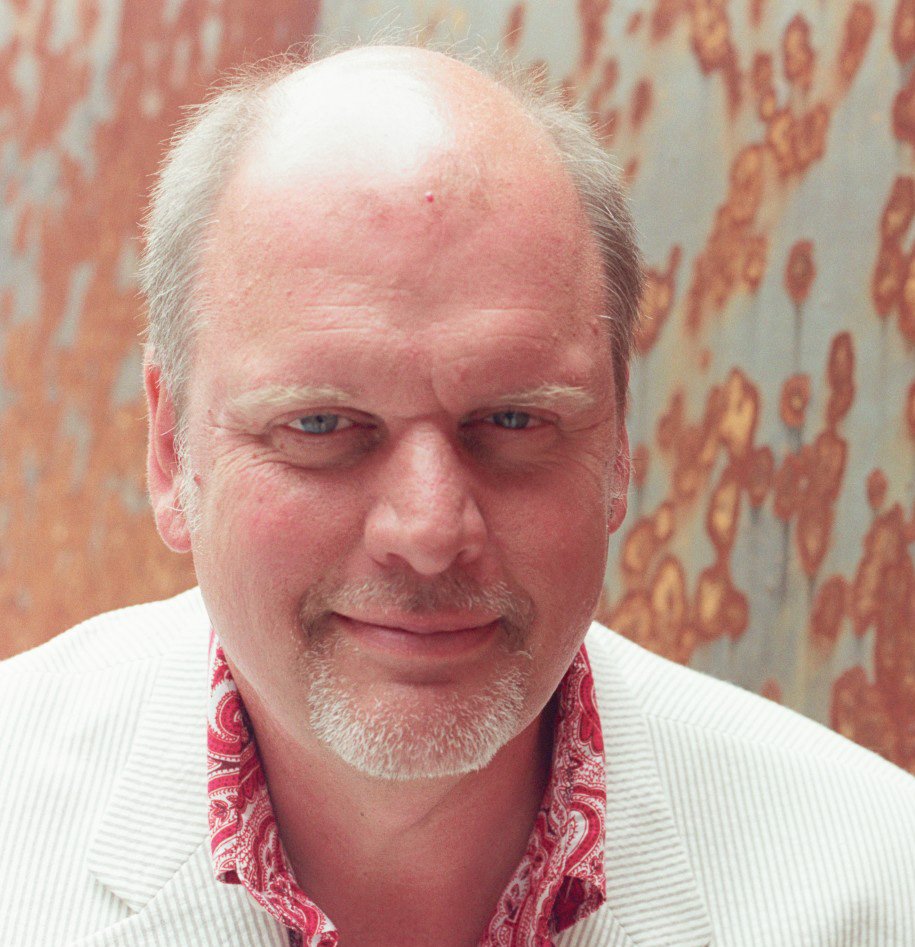
Michael Kevin Daugherty (born April 28, 1954) is a multiple Grammy Award-winning American composer, pianist, and teacher.[1] He is influenced by popular culture, Romanticism, and Postmodernism. Daugherty's notable works include his Superman comic book-inspired Metropolis Symphony for Orchestra (1988–93), Dead Elvis for Solo Bassoon and Chamber Ensemble (1993), Jackie O (1997), Niagara Falls for Symphonic Band (1997), UFO for Solo Percussion and Orchestra (1999) and for Symphonic Band (2000), Bells for Stokowski from Philadelphia Stories for Orchestra (2001) and for Symphonic Band (2002), Fire and Blood for Solo Violin and Orchestra (2003) inspired by Diego Rivera and Frida Kahlo, Time Machine for Three Conductors and Orchestra (2003), Ghost Ranch for Orchestra (2005), Deus ex Machina for Piano and Orchestra (2007),[2] Labyrinth of Love for Soprano and Chamber Winds (2012), American Gothic for Orchestra (2013), and Tales of Hemingway for Cello and Orchestra (2015). Daugherty has been described by The Times (London) as "a master icon maker" with a "maverick imagination, fearless structural sense and meticulous ear."[3]
Currently, Daugherty is Professor of Composition at the University of Michigan School of Music, Theatre & Dance in Ann Arbor, Michigan.[4] Michael Daugherty's music is published by Peermusic Classical, Boosey & Hawkes, and since 2010, Michael Daugherty Music/Bill Holab Music.[5]
Life and career
[edit]Early years
[edit]
Michael Daugherty was born into a musical family on April 28, 1954, in Cedar Rapids, Iowa. His father Willis Daugherty (1929–2011) was a jazz and country and western drummer, his mother Evelyn Daugherty (1927–1974) was an amateur singer,[6] and his grandmother Josephine Daugherty (1907–1991) was a pianist for silent film.[7] Daugherty's four younger brothers are all professional musicians: Pat Daugherty (b. 1956) Leader of the group New York Electric Piano, Tim Daugherty (b. 1958) jazz/pop composer of over 15 CD's featuring original compositions, Matt Daugherty (b. 1960) teacher of Music education in Florida, and Tommy D. Daugherty (b. 1961) engineer and producer for many of the Death Row artists most specifically Tupac Shukar.[6]
The centerpieces of the modest Daugherty home, located at 1547 5th Avenue S.E. in Cedar Rapids, were a player piano, television, and record player. At the age of 8, Daugherty taught himself how to play piano by pumping the pedals of the player piano and watching how piano keys moved to Tin Pan Alley tunes such as "Alexander's Ragtime Band".[6] Music was a significant activity in the Daugherty family, especially during the holidays when relatives would participate in jam sessions of popular songs like "Misty" and "Sentimental Journey". Additionally, the Daugherty family would frequently gather around the television in the evening to watch popular variety hours such as The Ed Sullivan Show, The Jackie Gleason Show, and The Tonight Show Starring Johnny Carson.[8] The record collection at the Daugherty home consisted mainly of 'easy listening music' of the fifties and music from Broadway theatre.
During his developmental years, Daugherty's mother encouraged him to paint, draw cartoons, tap dance, and play basketball and his father and uncle Danny Nicol taught him how to play rock and jazz drums. From 1963 to 1967 Daugherty played bass drum in the Emerald Knights and tom-toms in the Grenadier Drum and Bugle Corps where he competed against other Drum and Bugle Corps throughout small Midwestern towns. During these years, Daugherty was employed as an early morning paper boy for The Des Moines Register and delivered papers across his neighborhood and to Mercy Hospital in Cedar Rapids.[6]
Traveling was an important pastime for the Daugherty family. They often took long summer road trips down two-lane highways to tourist locations, including Mount Rushmore, Niagara Falls and Miami Beach.[7] In 1964, the entire Daugherty family took a two-week vacation to London where The Beatles and Jimi Hendrix were at the height of their fame and Carnaby Street was the cutting edge of pop culture and fashion – this was in the heart of the Swinging Sixties.[9]
The sixties in America were a time of great political unrest and social change. This made a great impact on the teenage Daugherty.[10] Civil Rights demonstrations for racial equality and integration and demonstrations against the Vietnam War were becoming common day occurrences in Iowa by 1970, especially at the nearby University of Iowa, in Iowa City.[11]
From 1968 to 1972, Daugherty was the leader, arranger, and organist for his high school rock, soul, and funk band, The Soul Company.[6] This band performed a variety of Motown charts and music by James Brown, Blood Sweat & Tears, and Sly and the Family Stone. Because accessing sheet music was almost impossible, Daugherty learned to hand-transcribe the music by listening to vinyl recordings. With the help of his father, who drove the band across the state, The Soul Company became a locally popular group that performed at high school proms, dances, and other events.[9]
During the same years, Daugherty was a piano accompanist for the Washington High School Concert Choir, a solo jazz piano performer in nightclubs and lounges, and he appeared on local television as the pianist for the country and western Dale Thomas Show.[6] Daugherty interviewed jazz artists who performed in Iowa, including Buddy Rich, Stan Kenton, George Shearing, and Rahsaan Roland Kirk, and he wrote articles on their music for the high school newspaper. During the summers of 1972–77, Daugherty played Hammond organ at county fairs across the Midwest for various popular music stars such as Bobby Vinton, Boots Randolph, Pee Wee King, and members of The Lawrence Welk Show.[6]
Education in the United States and Europe
[edit]Daugherty studied music composition and jazz at the University of North Texas College of Music from 1972 to 1976. His teachers of composition included Martin Mailman and James Sellars. Daugherty also played jazz piano in the Two O'Clock Lab Band.[6] It was after hearing the Dallas Symphony Orchestra perform the Piano Concerto by Samuel Barber that Daugherty decided to devote his full energies into composing music for the concert stage.[7] In 1974, conductor Anshel Brusilow programmed a new work with the University of North Texas Symphony Orchestra, Daugherty was 20 years of age. After his premiere of Movements for Orchestra, the composition faculty awarded Daugherty a fellowship, which allowed him to continue his musical studies at the university. Daugherty received a Bachelor of Music degree in Composition from North Texas State University in 1976.[6]
That same year, Daugherty moved to New York City to experience the exploding new music scene. While there, he studied serialism with Charles Wuorinen at the Manhattan School of Music for two years, and received a Master of Music in Composition degree in 1978.[6] To earn money for his studies, Daugherty was employed as an usher at Carnegie Hall and a rehearsal pianist for dance classes directed by the New York City Ballet dancer Jacques d'Amboise.[12]

Daugherty frequently attended "uptown" and "downtown" new music concerts in New York City; this is where he became acquainted with composers such as Milton Babbitt, Morton Feldman, and Pierre Boulez.[6] In 1978, Boulez, then the music director of the New York Philharmonic, invited Daugherty to apply to his recently opened computer music institute in Paris: IRCAM (Institut de Recherche et Coordination Acoustique/Musique). A Fulbright Fellowship enabled Daugherty to move to Paris to study computer music at IRCAM from 1979 to 1980. During his time at IRCAM, he met many composers such as Luciano Berio, Gérard Grisey, Tod Machover, and Frank Zappa.[6] In Paris, Daugherty had the opportunity to hear contemporary music by the leading European composers of the time performed by the Ensemble l'Itinéraire and Boulez's Ensemble InterContemporain. He also attended analysis classes given by Betsy Jolas at the Conservatoire National Supérieur de Musique de Paris.[6]
In the fall of 1980, Daugherty returned to America to pursue doctoral studies in composition at the Yale School of Music. During that time, Jacob Druckman (who was one of America's most influential composers) was chair of the composition department at Yale and composer in residence with the New York Philharmonic. Daugherty studied with Druckman and other Pulitzer Prize winning composers at Yale, including Bernard Rands and Roger Reynolds. He also studied improvisational notation systems and open form with experimental music composer Earle Brown.[6] Daugherty's composition class at Yale included student composers who would later become unique and important voices in contemporary music: Bang on a Can composers Michael Gordon, David Lang, and Julia Wolfe; along with Robert Beaser, Aaron Jay Kernis, Scott Lindroth, and Betty Olivero.[13]
At Yale, Daugherty wrote his dissertation on the relationship between the music of Charles Ives and Gustav Mahler and the writings of Goethe and Ralph Waldo Emerson.[6] He worked closely on this dissertation with John Kirkpatrick, who was the curator of the Ives Collection at Yale and gave the 1938 premiere of Ives' Piano Sonata No. 2: Concord Sonata. Daugherty also continued his interest in jazz where he worked with Willie Ruff and directed the Yale Jazz Ensemble. It was Ruff who introduced Daugherty to jazz arranger Gil Evans, who, at that time, was looking for an assistant. For the next several years, Daugherty traveled by train from New Haven to Evans' private studio in Manhattan. Daugherty helped Evans organize his music manuscripts and complete projects. The most notable project was the reconstruction of the lost arrangements of Porgy and Bess, which was originally used for the 1958 recording with Miles Davis.[6]
During the summer of 1981, Daugherty studied composition with Pulitzer Prize–winning composer Mario Davidovsky as a composition fellow at Tanglewood, which, at that time, was renowned as a bastion of abstract and atonal music. It was at Tanglewood that Daugherty met the composer/conductor Leonard Bernstein. After hearing Daugherty's music at Tanglewood, Bernstein encouraged Daugherty to seriously consider integrating American popular music with concert music.[10] In the early 1980s, Bernstein's populist attitude was rarely shared by critics who favored "serious" contemporary concert music.[14]
One year later, in the summer of 1982, Daugherty traveled to Germany to attend the Darmstädter Ferienkurse (Internationale Ferienkurse für Neue Musik – Darmstadt International Summer Courses in New Music).[6] Darmstadt was one of the leading centers for new music in Europe, where the musical aesthetics of Theodor W. Adorno were still of great influence. Daugherty attended lectures given by composers, including Brian Ferneyhough and Karlheinz Stockhausen, and performances by the Arditti String Quartet. At Darmstadt, Daugherty became friends with Karlheinz's son, the trumpet player Markus Stockhausen. Together they formed an experimental improvisation ensemble (Markus Stockhausen on trumpet and electronics and Daugherty on synthesizers) that, over several years, performed in concert halls and clubs across Europe.[6]

In the fall of 1982, Daugherty was invited by composer György Ligeti to study composition with him at the Hochschule für Musik und Theater Hamburg. In addition to attending Ligeti's composition seminar (which took place at his apartment in Hamburg), Daugherty traveled with Ligeti to attend concerts and festivals of his music throughout Europe.[6] At the time, Ligeti was interested in the music of Conlon Nancarrow, who lived in isolation in Mexico City and composed complex polyrhythmic music for player pianos. The player piano (by now an antique) was a familiar and nostalgic musical instrument to Daugherty. Daugherty met Nancarrow in Graz, Austria, when Ligeti introduced Nancarrow and his music to the European intelligentsia at the 1982 ISCM (International Society for Contemporary Music) World Music Days.[15] During the following two years (1983–84), Daugherty continued to study with Ligeti while employed as a solo jazz pianist in night clubs in Cambridge, England and Amsterdam. To create "original" music, Ligeti encouraged and inspired Daugherty to find new ways to integrate computer music, jazz, rock, and American popular music with concert music.[6] In the fall of 1984, Daugherty returned to America and devoted his career to doing just that.
Compositions
[edit]Discography
[edit]Recordings on all labels
[edit]| DAUGHERTY, M.: Blue Electra, concerto for violin and orchestra1 / Last Dance at the Surf / To the New World2 (1Anne Akiko Meyers, violin; 2Elissa Johnston, soprano; David Alan Miller, conductor; Albany Symphony Orchestra); 2025 | Naxos
8.559955 |
Concertos, Orchestral |
| DAUGHERTY, M.: This Land Sings: Inspired by the Life and Times of Woody Guthrie (Annika Socolofsky, John Daugherty, Dogs of Desire, David Alan Miller); 2020 | Naxos
8.559889 |
Vocal |
| DAUGHERTY, M.: Dreamachine / Trail of Tears / Reflections on the Mississippi (Evelyn Glennie, Amy Porter, Carol Jantsch, Albany Symphony, David Allan Miller); 2018 | Naxos
8.559807 |
Concertos |
| DAUGHERTY, M.: Tales of Hemingway / American Gothic / Once Upon A Castle (Zuill Bailey, Paul Jacobs, Nashville Symphony, Giancarlo Guerrero); 2016
Grammy Awards: Best Classical Compendium, Best Classical Instrumental Solo, and Best Contemporary Classical Composition |
Naxos
8.559798 |
Concertos, Orchestral, Concertos |
| DAUGHERTY, M.: Mount Rushmore / Radio City / The Gospel According to Sister Aimee (Paul Jacobs, Pacific Chorale, Pacific Symphony, Carl St. Clair); 2013 | Naxos
8.559749 |
Choral - Secular, Orchestral, Wind Ensemble/Band Music |
| DAUGHERTY, M.: Route 66 / Ghost Ranch / Sunset Strip / Time Machine (Bournemouth Symphony, Marin Alsop, Mei-Ann Chen, Laura Jackson); 2011 | Naxos
8.559613 |
Orchestral, Chamber Music, Orchestral |
| MACKEY, J.: Strange Humors / DAUGHERTY, M.: Raise the Roof / Brooklyn Bridge / SYLER, J.: The Hound of Heaven (Rutgers Wind Ensemble, William Berz); 2010 | Naxos
8.572529 |
Concertos |
| ROUSE, C.: Wolf Rounds / DAUGHERTY, M.: Ladder to the Moon / MASLANKA, D.: Trombone Concerto (Gary Green, University of Miami Frost Wind Ensemble); 2010 | Naxos
8.572439 |
Orchestral |
| DAUGHERTY, M.: Fire and Blood / MotorCity Triptych / Raise the Roof (Ida Kavafian, Brian Jones, Detroit Symphony, Neeme Jarvi); 2009 | Naxos
8.559372 |
Orchestral |
| DAUGHERTY, M.: Metropolis Symphony / Deus ex Machina (Terrence Wilson, Nashville Symphony, Giancarlo Guerrero); 2009
Grammy Awards: Best Orchestral Performance, Best Engineered Album, Classical, and Best Contemporary Classical Composition |
Naxos
8.559635 |
Orchestral, Concertos |
| DAUGHERTY, M.: Sunset Strip / WILLIAMS, J.: Escapades / ROREM, N.: Lions / ROUSE, C.: Friandises (Branford Marsalis, North Carolina Symphony, Grant Llewellyn); 2009 | BIS
BIS-SACD-1644 |
Orchestral |
| Wind Band Music - DAUGHERTY, M. / BURRITT, M. / GILLINGHAM, D. (Synergy) (John Bruce Yeh, Columbus State University Wind Ensemble, Robert W. Rumbelow); 2009 | Naxos
8.572319 |
Concertos |
| DAUGHERTY, M.: Philadelphia Stories / UFO (Evelyn Glennie, Colorado Symphony, Marin Alsop); 2004 | Naxos
8.559165 |
Orchestral |
| LEES, B.: Passacaglia / PERSICHETTI, V.: Symphony No. 4 / DAUGHERTY, M.: Hell's Angels (American Contrasts) (Oregon Symphony, James DePreist); 2002 | Delos
DE3291 |
Orchestral, Instrumental |
| Story of Naxos (The) - The Soundtrack | Naxos Special Projects
9.00124 |
Orchestral |
| Harlem Blues (Donald Byrd album) | Landmark LLP/LCD 1516 | Jazz |
Teaching
[edit]Daugherty is an educator of young composers and advocate for contemporary music. As an Assistant Professor of Composition at the Oberlin Conservatory of Music (1986–91),[4] Daugherty organized guest residencies of composers with performances of their music.[16] Daugherty also organized the 1988 Electronic Festival Plus Festival, which took place at Oberlin and featured music from over 50 composers. While teaching composition at Oberlin, Daugherty collaborated with renowned jazz trumpeter Donald Byrd, who taught there from 1987 to 1989. After Daugherty introduced Byrd to the W.C. Handy composition "Harlem Blues", Byrd asked Daugherty to arrange it for a commercial recording made at the Van Gelder Studio located in Englewood Cliffs, NJ for the Landmark label, with Daugherty playing synthesizers.[17]
In 1991, Daugherty was invited to join the composition faculty at the University of Michigan School of Music (Ann Arbor).[10] He replaced Leslie Bassett, who retired.[18] Daugherty was co-chair of the composition department with composer William Bolcom from 1998 to 2001, and chair of the department from 2002 to 2006.[19] At the University of Michigan, Daugherty mentored many young composers,[10] including Clarice Assad, Derek Bermel, Gabriela Lena Frank, Kristin Kuster, David T. Little, Shuying Li, Joel Puckett, Andrea Reinkemeyer, Arlene Sierra, D. J. Sparr and Roger Zare.[20] Daugherty has organized residencies of guest composers with performances of their music, including Louis Andriessen, Michael Colgrass, Michael Torke, Joan Tower, Betsy Jolas and György Ligeti.[4] He has also composed new works, including Niagara Falls (1997) and Bells for Stokowski (2002), for the University of Michigan Symphony Band and its two most recent conductors, H. Robert Reynolds and Michael Haithcock.[21]
Daugherty organized a three-day festival and conference entitled ONCE. MORE., which took place November 2–4, 2010 at Rackham Auditorium, located on the University of Michigan campus.[22] For the first time in 50 years, the original ONCE composers Robert Ashley, Gordon Mumma, Roger Reynolds and Donald Scarvada returned to Ann Arbor to participate in concerts featuring their recent compositions and their works from the original ONCE festival held in Ann Arbor in the 1960s.[4]
Daugherty has served as a final judge for the Broadcast Music Incorporated (BMI) Student Composers Awards,[23] the Gaudeamus International Composers Competition,[24] and the Detroit Symphony Orchestra's Elaine Lebenborn Award for Female Composers.[25] He has also been a panelist for the National Endowment for the Arts[4] and Meet the Composer.[12] Daugherty has served as a composer mentor for reading sessions of young composers' music by organizations such as the American Composers Orchestra, Minnesota Composers Orchestra, Cabrillo Festival of Contemporary Music, Omaha Symphony, and the Young Composers Institute in Apeldoorn (Netherlands).[4]
Daugherty has been Composer-in-Residence with the Louisville Symphony Orchestra (2000), Detroit Symphony Orchestra (1999–2003), Colorado Symphony Orchestra (2001–02), Cabrillo Festival of Contemporary Music (2001, 2006, 2011), Westshore Symphony Orchestra (2005–06), Eugene Symphony (2006), the Henry Mancini Summer Institute (2006), the Music from Angel Fire Chamber Music Festival (2006), the Pacific Symphony (2010), Chattanooga Symphony Orchestra (2012), New Century Chamber Orchestra (2014), and the Albany Symphony Orchestra (2015).[4]
Institutions of higher learning who have invited Daugherty include the University of Texas at Austin, University of Colorado at Boulder, Rice University, Northwestern University, Syracuse University, Indiana University, University of Iowa, University of North Texas, Vanderbilt University, Louisiana State University, Appalachian State University, University of Southern California, Eastman School of Music, The Hartt School, Juilliard School of Music, and Shenandoah University Conservatory of Music.[4]
In 2001, Daugherty was invited to present his music with performances by the United States Air Force Band at the Midwest Clinic "The Midnight Special" in Chicago. Daugherty has participated in the Ravinia Festival Community Outreach program which is designed to promote and encourage new music by student ensembles in the Chicago Public Schools.[4]
Awards and honors
[edit]Daugherty received the Kennedy Center Freidheim Award (1989) for his compositions Snap! and Blue Like an Orange, the Goddard Lieberson Fellowship from the American Academy of Arts and Letters (1991), fellowships from the National Endowment for the Arts (1992), the Guggenheim Foundation (1996), and the Stoeger Prize from the Chamber Music Society of Lincoln Center (2000). In 2005, Daugherty received the Lancaster Symphony Orchestra Composer's Award, and in 2007, the Delaware Symphony Orchestra selected Daugherty as the winner of the A. I. duPont Award. Also in 2007, Daugherty was named "Outstanding Classical Composer" at the Detroit Music Awards and received the American Bandmasters Association Ostwald Award for his composition Raise the Roof for Timpani and Symphonic Band. Daugherty received several Grammy awards in the category of Best Contemporary Classical Composition for the Nashville Symphony recordings of Deus ex Machina [26] and Tales of Hemingway for cello and orchestra.[27]
References
[edit]- ^ "Michael Daugherty". GRAMMY.com. August 23, 2024. Retrieved August 31, 2025.
- ^ Superman Symphony's Surprise Grammy Nominations : NPR
- ^ Finch, H. (1998). You'll believe a band can fly. The Times, (London, England), Arts. April 2, 1998.
- ^ a b c d e f g h i Michael Daugherty Archived September 10, 2011, at the Wayback Machine. University of Michigan School of Music, Theater, and Dance faculty and Staff. Retrieved 23 May 2014.
- ^ "Hal Leonard Signs Exclusive Print Music Distribution Deal with Michael Daugherty Music", Hal Leonard. Retrieved 23 May 2014.
- ^ a b c d e f g h i j k l m n o p q r s t Clague, Mark. Daugherty, Michael (Kevin). New Groves Dictionary of American Music, 2nd edition, Vol 2, pp. 548 – 550. Oxford University Press: November 26, 2013.
- ^ a b c Goolian, Betsy. "King of the Road: Composer Take Inspiration from the Highways and Byways of America" Archived 2010-08-23 at the Wayback Machine. University of Michigan. Retrieved 23 May 2014.
- ^ "BWW Interviews: Composer Michael Daugherty on 'Reflections On the Mississippi For Tuba and Orchestra". March 20, 2013. Retrieved 23 May 2014.
- ^ a b "Obituaries: Willis Bertram Daugherty" Archived 2014-05-23 at the Wayback Machine. Vinton Today. December 23, 2011. Retrieved 23 May 2014.
- ^ a b c d Muzudmar, Tanya. "MASTERMIND: Michael Daugherty". Concentrate Media. June 30, 2010. Retrieved 23 May 2014.
- ^ "Student Protests of the 1970s". University of Iowa Libraries. May 4, 2010. Retrieved 23 May 2014.
- ^ a b "Icon Artist: Michael Daugherty". New Music Box. January 1, 2007. Retrieved 23 May 2014.
- ^ Bliss, Andrew M. David Lang: Deconstructing a Constructivist Composer. Lexington, Kentucky: 2008, pp 9.
- ^ Rockwell, John. "Leonard Bernstein's Mass Happily Reconsidered". Arts Journal. October 25, 2008. Retrieved 23 May 2014.
- ^ McCutchan, Ann. The Muse That Sings: Composers Speak about the Creative Process. New York: Oxford University Press, September 25, 2003, pp. 175.
- ^ "One Giant Leap: A Tribute to Apollo". Spacecoastsymphony.org. Retrieved March 31, 2023.
- ^ Byrd, Donald. Harlem Blues. Landmark Records: 1988.
- ^ Chapman, Carter C. "Leslie Bassett," in A Composer’s Insight: Thoughts, Analysis, and Commentary on Contemporary Masterpieces for Wind Band, vol. 2. Timothy Salzman, ed. Galesville, Maryland: Meredith Music Publications, 2003, pp. 1.
- ^ Soames, Nicolas. "The Story of Naxos: The Extraordinary Story of the Independent Record Label That Changed Classical Recording Forever." London: Hachette Digital, 2012.
- ^ "Michael Daugherty | U-M School of Music, Theatre & Dance". smtd.umich.edu. April 21, 2017. Retrieved July 11, 2018.
- ^ Niagara Falls, Overview. Faber Music. Retrieved 23 May 2014.
- ^ "ONCE.MORE.:ONCE NOW". Happening @ Michigan. University of Michigan. November 4, 2010. Retrieved July 15, 2015.
- ^ "BMI Student Composer Winners Announced". Bmi.com, May 23, 2006. Retrieved 23 May 2014.
- ^ Tripani, Christopher. "Send It To Amsterdam". New Music Box. September 2, 2008. Retrieved 23 May 2014.
- ^ "DSO Announces Winner of Women Composer's Competition". Americantowns.com, March 5, 2007. Retrieved 23 May 2014.
- ^ "Michael Daugherty Wins Best Classical Contemporary Composition". Grammy.com. February 15, 2011. Archived from the original on September 14, 2017. Retrieved March 31, 2023.
- ^ "2017 Grammy Awards: Complete list of nominees". Los Angeles Times. December 6, 2016.
External links
[edit]| Opera |
|
|---|---|
| Concerto |
|
| Other compositions |
|
| Related articles | |

| International | |
|---|---|
| National | |
| Academics | |
| Artists | |
| People | |
| Other | |

Michael Daugherty
View on GrokipediaEarly life and education
Childhood and family background
Michael Daugherty was born on April 28, 1954, in Cedar Rapids, Iowa, into a musical family with deep roots in the state's rural communities, including farm origins in nearby Vinton.[3][8] He was the eldest of five brothers, all of whom are professional musicians.[2] His father, Willis Daugherty (1929–2011), was a drummer in jazz and country-western dance bands, regularly performing popular standards such as "Satin Doll" and "Misty" at home and in local venues.[9][8] Daugherty's mother, Evelyn (1927–1974), served as a junior high physical education teacher and an amateur singer who appeared in community theater productions of Broadway musicals, including Gypsy.[9][8] This environment fostered an early immersion in non-classical music traditions, with the household filled by his father's drumming and the brothers' shared enthusiasm for performance.[10] As a child, Daugherty developed a fascination with music through everyday family activities, including a player piano that captivated him and sparked his initial curiosity.[8] From 1963 to 1967, he played bass drum in the Emerald Knights Drum and Bugle Corps and tom-toms in the Grenadier Drum and Bugle Corps, competing in events across Iowa and the Midwest alongside other youth ensembles.[9] In junior high, he began formal piano lessons blending classical techniques with popular styles, while largely teaching himself by ear through recordings and radio.[8] These experiences laid the groundwork for his creative involvement, as he absorbed the rhythms of jazz via fake books and phonograph records, despite limited formal jazz instruction in local schools.[8] The broader Iowa jazz scene, though centered on recordings rather than live performances for him at this stage, contributed to his growing appreciation for improvisation and ensemble playing.[8] Daugherty's teenage years marked a pivotal shift toward active music-making, particularly through the formation of The Soul Company in 1968, a high school band he led as arranger and Hammond organist until 1972.[3] This ensemble blended rock, soul, funk, and jazz elements, drawing from influences like James Brown and Sly and the Family Stone, and performed at proms, homecomings, and events throughout Iowa.[3][8] Notably integrated for the era, the band included two Black singers and a brass section, reflecting the social upheavals of the 1960s that shaped Daugherty's worldview.[8] Popular culture permeated his upbringing, with television variety shows such as the Ed Sullivan Show and Carol Burnett Show, movies, and icons like Elvis Presley fueling his imagination; his fascination with American road culture, exemplified by Route 66, emerged during these formative years amid the era's cultural shifts.[8][11] While Daugherty created arrangements for The Soul Company without relying on written scores—honing his skills through aural transcription—his initial forays into original composition occurred shortly after, during early college studies at the University of North Texas.[8]Formal training and mentors
Daugherty's formal musical education began with a Bachelor of Music degree in composition from the University of North Texas in 1976, where he studied under composer Martin Mailman, whose guidance introduced him to rigorous compositional techniques and ensemble performance.[2] This training built on his family's musical background, which initially motivated his pursuit of advanced studies. He continued his education with a Master of Music degree in composition from the Manhattan School of Music in 1978, focusing on serialism under the tutelage of Charles Wuorinen, while also exploring electronic music elements that would influence his later work.[2] Following this, a Fulbright Fellowship allowed Daugherty to spend 1979–1980 at the Institut de Recherche et Coordination Acoustique/Musique (IRCAM) in Paris, directed by Pierre Boulez, where he delved into computer music and spectral techniques, experimenting with innovative sound synthesis and digital composition processes.[10][12] Daugherty completed his Doctor of Musical Arts degree at Yale School of Music in 1986, studying under Jacob Druckman, Earle Brown, Roger Reynolds, and Bernard Rands, whose diverse approaches to contemporary music shaped his technical proficiency.[2] During this period, he also pursued private studies with György Ligeti in Hamburg from 1982 to 1984, gaining insights into micropolyphony and textural composition that expanded his stylistic palette.[1][13] Throughout his academic journey, Daugherty engaged in early experiments blending minimalism, serialism, and emerging technologies, testing repetitive structures alongside twelve-tone methods and computer-assisted sound design to forge a personal compositional voice.[10][4]Professional career
Early professional work
Daugherty studied with composer György Ligeti in Hamburg, Germany, from 1982 to 1984 while pursuing his Doctor of Musical Arts degree at Yale University, which he completed in 1986, immersing himself in the contemporary music scene there.[1] During this time, Ligeti encouraged Daugherty to create "original" music beyond strict serialism, influencing his shift toward a more eclectic approach that integrated diverse cultural elements.[11] Although he had briefly assisted jazz arranger Gil Evans in New York from 1980 to 1982 as part of his earlier professional development, Daugherty's European sojourn marked a pivotal transition from student to independent composer, fostering collaborations with new music ensembles in Germany.[2] Upon returning to the United States, Daugherty faced the challenges of the 1980s new music landscape, where academic serialism dominated and unconventional styles blending classical and popular influences often met with rejections from established institutions.[11] To promote his work, he engaged in self-directed efforts, including performances as a jazz pianist and outreach to ensembles, while his educational background provided a foundation for emerging opportunities. By the mid-1980s, this persistence paid off with initial commissions, culminating in his first major orchestral project, the Metropolis Symphony (1988–1993), composed in sections for various American orchestras and premiered by the Baltimore Symphony Orchestra under David Zinman.[14] This work exemplified his postmodern influences, drawing from American pop culture like Superman comics to innovate within orchestral forms.[15] Daugherty's early professional momentum also included performances of his chamber works gaining traction, with groups like the Kronos Quartet presenting selections in the early 1990s, highlighting his hybrid style that merged Fluxus-inspired conceptual playfulness with rhythmic vitality from jazz and rock.[16] These breakthroughs established Daugherty in the contemporary scene despite ongoing hurdles in securing broader recognition.Mid-career developments and collaborations
In the early 1990s, Michael Daugherty achieved a significant breakthrough with his Metropolis Symphony (1988–1993), a five-movement orchestral work inspired by the Superman comic books and themes of urban life in Metropolis. The Baltimore Symphony Orchestra under David Zinman performed it at Carnegie Hall in New York City in January 1994.[10][17] This performance marked Daugherty's emergence as a prominent voice in contemporary American music, blending pop culture icons with symphonic forms and garnering widespread acclaim for its inventive orchestration. Daugherty's mid-career trajectory expanded into opera with Jackie O (1997), a chamber opera in two acts with libretto by Wayne Koestenbaum, commissioned and co-produced by the Houston Grand Opera and the Banff Centre for the Arts. Premiered by the Houston Grand Opera Orchestra and Chorus under Christopher Larkin, the work juxtaposed historical figures like Jacqueline Kennedy Onassis with pop culture elements, including encounters with Marilyn Monroe and Andy Warhol, to explore themes of celebrity and transformation.[18][19] This commission solidified his reputation for fusing high art with American iconography, leading to further large-scale projects. From 1999 to 2003, Daugherty served as Composer-in-Residence with the Detroit Symphony Orchestra, a period that fostered key collaborations, including with conductor Neeme Järvi on premieres such as Fire and Blood (2003) for violin and orchestra and MotorCity Triptych (2000).[10][20] These partnerships highlighted his growing influence in orchestral programming, with Järvi championing multiple works that drew on industrial and cultural motifs of the American Midwest. During this residency, Daugherty also premiered Route 66 (1998), an energetic orchestral overture commissioned by the Kalamazoo Symphony Orchestra and evoking the iconic highway's cross-country spirit.[21] In the 2000s, Daugherty ventured into multimedia elements through his "Las Vegas Elvis" series, beginning with works like Dead Elvis (1993) for solo bassoon and chamber ensemble and Elvis Everywhere (1993) for string quartet and pre-recorded sound, inspired by observations at the Elvis Impersonators Convention in Las Vegas.[22] These pieces incorporated taped impersonator voices and effects to contrast Elvis's glamorous Vegas persona with his mortality, expanding Daugherty's palette beyond traditional concert music. His international profile grew through commissions and tours in Europe, including performances by the Bournemouth Symphony Orchestra under Marin Alsop and the Philharmonia Orchestra in London, as well as appearances at festivals that showcased his American-themed symphonic works.[10]Musical style and compositions
Stylistic influences and innovations
Michael Daugherty's compositional style is profoundly shaped by a fusion of American pop culture icons, such as Elvis Presley and Superman, alongside his deep jazz roots and the modernist traditions of composers like György Ligeti and Igor Stravinsky. Growing up in a musical family where his father was a dance-band drummer, Daugherty developed an early affinity for jazz improvisation and rhythm, which he later integrated with the rhythmic complexity and eclectic approaches of Ligeti, under whom he studied in Hamburg from 1982 to 1984. Stravinsky's innovative structures and colliding tonalities further influenced Daugherty's handling of form and harmony, allowing him to blend vernacular elements with sophisticated orchestral writing.[10][11][23] Central to Daugherty's innovations is his embrace of "postmodern classicism," characterized by the juxtaposition of high and low culture, the imposition of narrative structures on abstract forms, and the integration of multimedia elements in performance. He employs quotation and pastiche to sample pop motifs—such as superhero themes or rock rhythms—directly into orchestral contexts, not as ironic commentary but as sincere evocations of cultural poetry, thereby bridging elite concert music with everyday American experiences. This approach extends to his use of jazz voicings and electronic textures, derived from influences like Miles Davis and Gil Evans, to create layered, accessible soundscapes that challenge traditional boundaries.[24][25][23] Daugherty's style evolved significantly from his experimental phase at IRCAM in Paris (1979–1980), where he explored avant-garde computer music under Pierre Boulez, to more thematic and symphonic works that prioritize melodic eloquence and broad appeal. Rejecting the strict serialism of his early training, he shifted toward pieces that incorporate personal and cultural narratives, resulting in a mature oeuvre noted for its vibrant orchestration and emotional depth. Critics have praised this development, with The Times (London) hailing Daugherty as "a master icon maker" with a "maverick imagination," recognizing his ability to transform pop references into profound musical statements.[11][2][24]Orchestral and large-ensemble works
Michael Daugherty's orchestral and large-ensemble works frequently draw on American cultural icons, blending classical orchestration with elements of jazz, rock, and popular media to create vibrant, narrative-driven compositions. His music for full orchestra often explores themes of heroism, innovation, and the American landscape, earning widespread acclaim for its rhythmic vitality and timbral innovation. These pieces have been commissioned by major symphonies and performed extensively, establishing Daugherty as one of the most frequently programmed contemporary American composers. One of Daugherty's breakthrough compositions is Metropolis Symphony (1988–1993), a five-movement work for orchestra inspired by the Superman mythos and the composer's childhood fascination with comic books. The movements—"Lex," "Krypton," "MXYZPTLK," "Oh, Lois!," and "Red Cape Tango"—evoke the Man of Steel's adversaries, home planet, arch-nemesis, love interest, and heroic exploits through a fusion of symphonic grandeur, jazz riffs, and avant-garde effects. Commissioned and premiered by the Baltimore Symphony Orchestra under David Zinman on January 21, 1994, at Meyerhoff Hall in Baltimore, the symphony marked Daugherty's international breakthrough when performed at Carnegie Hall later that year. Its 2010 Naxos recording with the Nashville Symphony, conducted by Giancarlo Guerrero, won three Grammy Awards in 2011, including Best Contemporary Classical Composition and Best Orchestral Performance.[26] Route 66 (1998), a concise orchestral overture, captures the spirit of America's legendary highway as a "symphonic road trip" from Chicago to Los Angeles, incorporating nostalgic Americana with driving rhythms, tuba solos, and Latin-inflected percussion like bongos and cowbell. Commissioned and premiered by the Kalamazoo Symphony Orchestra under Yoshimi Takeda on April 25, 1998, at Miller Auditorium in Kalamazoo, Michigan, the seven-minute piece highlights Daugherty's knack for evoking vast landscapes through energetic orchestration. It has become a staple for orchestras seeking accessible yet sophisticated encores, reflecting his pop culture influences in a purely instrumental format.[27][21] In Fire and Blood (2003), a concerto for violin and orchestra, Daugherty pays tribute to the industrial might of Detroit via three movements—"Volcano," "River Rouge," and "Assembly Line"—inspired by Diego Rivera's murals at the Detroit Institute of Arts. The solo violin navigates fiery, pulsating textures representing labor, machinery, and human resilience, with vivid brass and percussion evoking factory clamor. Commissioned by the Detroit Symphony Orchestra and premiered on May 3, 2003, at Orchestra Hall in Detroit with violinist Ida Kavafian and conductor Neeme Järvi, the 25-minute work underscores themes of creation and sacrifice in American manufacturing. Its recording with the Detroit Symphony further solidified Daugherty's reputation for thematically rich concertos.[28][20] Time Machine (2003), for three conductors and orchestra, delves into science fiction through a two-movement exploration of time travel, drawing from H.G. Wells' novel of the same name. The orchestra is divided into three spatially separated groups, each led by a conductor, creating polyrhythmic layers that propel the listener from past to future: a harp-initiated journey through history in "Past" and chaotic, futuristic soundscapes in "Future." Commissioned by the Pittsburgh Symphony Orchestra and premiered on November 24, 2003, at Heinz Hall in Pittsburgh under conductors Mariss Jansons, Leonard Slatkin, and Yan Pascal Tortelier, the 20-minute piece innovates orchestral form by treating conductors as virtuosic soloists. It exemplifies Daugherty's experimental approach to ensemble coordination and has been performed by ensembles like the Chicago Symphony Orchestra.[29][30] Among Daugherty's recent contributions is Blue Electra (2022), a four-movement violin concerto honoring aviator Amelia Earhart, weaving her poetry and life milestones into soaring melodies and turbulent harmonies. Movements such as "Courage (1928)" and "Last Flight (1937)" blend lyrical introspection with high-altitude drama, supported by lush strings and wind flourishes. Commissioned for violinist Anne Akiko Meyers and premiered by the National Symphony Orchestra under Gianandrea Noseda on November 10–12, 2022, at the Kennedy Center in Washington, D.C., the 24-minute work addresses themes of ambition and mystery in early 20th-century innovation. Its 2025 recording with the Albany Symphony Orchestra, conducted by David Alan Miller, highlights ongoing interest in Daugherty's narrative-driven style.[31][32] Daugherty's more recent orchestral works include Harp of Ages (2023), a seven-movement concerto for harp and orchestra that traces the instrument's historical evolution across musical eras, from ancient myths to modern innovations. Commissioned by and premiered with harpist Courtney Hershey Bress and the Colorado Symphony Orchestra under Andrew Litton on May 12, 2023, at Boettcher Concert Hall in Denver, the piece features pedal changes evoking time travel through harp repertoire.[33][5] Similarly, Songs of the Open Road (2024), a double concerto for oboe, French horn, and orchestra, portrays an American road trip across six movements inspired by Walt Whitman's poetry and Route 66 landmarks. Commissioned by and premiered with the Pittsburgh Symphony Orchestra under Manfred Honeck on June 7–9, 2024, at Heinz Hall in Pittsburgh, with oboist Cynthia Koledo DeAlmeida and hornist William Klingensmith, it blends adventure and nostalgia in rhythmic, scenic vignettes.[34][35]Operas, vocal, and chamber music
Daugherty's opera Jackie O (1997), with libretto by Wayne Koestenbaum, premiered at the Houston Grand Opera on March 14, 1997, in a production co-commissioned by the Houston Grand Opera and the Banff Centre for the Arts.[36][37] The work is structured as a pop opera celebrating late-1960s musical life, blending high and popular idioms to offer a mythical rather than historical portrayal of Jacqueline Kennedy Onassis, emphasizing themes of celebrity, glamour, and personal tragedy through surreal encounters with figures like Andy Warhol, Marilyn Monroe, and Onassis's lovers.[36][19] Among Daugherty's vocal compositions, Letters from Lincoln (2009) stands out as a song cycle for baritone and orchestra, premiered by baritone Thomas Hampson with the Spokane Symphony Orchestra under Eckart Preu to mark the bicentennial of Abraham Lincoln's birth.[38][39] Drawing directly from Lincoln's Civil War-era correspondence—including letters to his wife Mary, generals, and the public—the piece creates a musical portrait of the president's eloquence, humor, sorrow, and unwavering hope for national reunification during the final days of the Civil War, shortly before his assassination on April 15, 1865.[38][40] Daugherty's chamber music often adapts his orchestral techniques to intimate scales, emphasizing narrative drive and cultural references in smaller forces. UFO (1999), composed for renowned percussionist Evelyn Glennie and premiered by her with the National Symphony Orchestra under Leonard Slatkin, is scored for solo percussion and wind ensemble, evoking the mysteries of unidentified flying objects through five movements: "Traveling Music," "Close Encounters," "Abduction," "Anal Probe," and "Crash Landing."[41] The work draws on American popular culture and sci-fi tropes, using unconventional percussion to simulate extraterrestrial phenomena like radar blips and spacecraft crashes.[41] Deus ex Machina (2007), a piano concerto commissioned jointly by the Charlotte Symphony, Nashville Symphony, and Colorado Symphony Orchestras and premiered by Terrance Wilson with the Nashville Symphony under Giancarlo Guerrero, integrates orchestral "machines" alongside the soloist to explore mechanical and futuristic motifs.[42] Its three movements—"Fast Forward," "Reverse Engineering," and "Time Machine"—respond to the Latin phrase meaning "god from the machine," inspired by historical and modern trains as symbols of progress and time travel.[42] The Naxos recording by Wilson and the Nashville Symphony earned the 2011 Grammy Award for Best Classical Contemporary Composition.[43] Daugherty has also composed for large ensembles in dance contexts, such as the ballet score Summer and Smoke (2023), inspired by Tennessee Williams' play and choreographed by Cathy Marston. The one-hour work, blending lyrical and dramatic elements to depict unrequited love and Southern gothic tension, premiered with the Houston Ballet on March 9, 2023, at the Wortham Theater Center in Houston.[44][45] Another large-ensemble piece, Dreams of Dalí (2024) for symphonic band, evokes the surrealist visions of Salvador Dalí through melting clocks, dreamlike distortions, and fantastical imagery in a single movement. Commissioned by the University of Florida and premiered under David Waybright on an unspecified date in 2024, it showcases Daugherty's ability to translate visual art into rhythmic, timbrally innovative band music.[46][3]Discography and performances
Key recordings
Michael Daugherty's music has been extensively documented through commercial recordings, with Naxos's American Classics series playing a central role in showcasing his orchestral and chamber works since the early 2000s. This series has produced over a dozen dedicated albums by 2025, featuring collaborations with leading ensembles and soloists, and contributing to a broader discography exceeding 50 releases across various labels.[47][48] One landmark recording is the 2009 Naxos release of Metropolis Symphony and Deus ex Machina, performed by the Nashville Symphony under Giancarlo Guerrero, with pianist Terrence Wilson. This album captures Daugherty's symphonic engagement with American pop culture icons, including the Superman-inspired symphony, and marked a significant milestone in his recorded output.[49] The 2011 Naxos album Route 66 / Ghost Ranch / Sunset Strip / Time Machine, conducted by Marin Alsop with the Bournemouth Symphony Orchestra, highlights Daugherty's evocation of American landscapes and history through orchestral color and rhythm. Route 66, the opening work, draws on the iconic highway's cultural legacy, blending nostalgia with high-energy motifs.[50] Earlier, the 2004 Naxos recording Philadelphia Stories / UFO, featuring percussionist Evelyn Glennie and the Colorado Symphony led by Marin Alsop, presents Daugherty's percussion concerto UFO. Inspired by extraterrestrial lore and Area 51, the piece explores unidentified phenomena through inventive percussion orchestration and symphonic textures.[51] A recent addition is the March 2025 Naxos release Blue Electra / Last Dance at the Surf / To the New World, performed by violinist Anne Akiko Meyers, soprano Elissa Johnston, and the Albany Symphony Orchestra under David Alan Miller. Blue Electra, a violin concerto, reflects on aviator Amelia Earhart's life.[32] Among non-Naxos efforts, an early highlight is the Kronos Quartet's recording of Daugherty's Elvis Everywhere on the 1995 Nonesuch compilation Released 1985-1995, originating from performances in the late 1980s. This string quartet piece fuses rock influences with classical form, exemplifying Daugherty's innovative chamber style during his emerging career.[52] By 2025, Daugherty's catalog includes six Grammy-winning recordings, primarily from Naxos releases, underscoring their commercial and artistic impact, though specific sales and streaming figures remain proprietary to labels.[1]Grammy-winning releases
Michael Daugherty's recordings with the Nashville Symphony on Naxos have been particularly acclaimed, earning multiple Grammy Awards that highlight both his compositional ingenuity and the technical excellence of the productions. The 2009 album Metropolis Symphony / Deus ex Machina, conducted by Giancarlo Guerrero, secured three awards at the 53rd Annual Grammy Awards in 2011: Best Contemporary Classical Composition for Deus ex Machina, Best Orchestral Performance, and Best Engineered Album, Classical. This release, featuring the symphony's portrayal of Superman-inspired themes in Metropolis Symphony alongside the mechanically infused piano concerto Deus ex Machina, marked a significant milestone in recognizing Daugherty's fusion of popular culture with orchestral traditions.[53] Building on this success, the 2016 Naxos album Tales of Hemingway / American Gothic / Once Upon a Castle, also led by Guerrero and featuring cellist Zuill Bailey and organist Paul Jacobs, won three Grammys at the 59th Annual Awards in 2017: Best Contemporary Classical Composition for Tales of Hemingway, Best Classical Compendium, and Best Engineered Album, Classical. Tales of Hemingway, a cello concerto drawing from Ernest Hemingway's life and literature, exemplifies Daugherty's narrative-driven style, while American Gothic offers a vivid orchestral tribute to American regionalism. These honors underscore the recordings' artistic and sonic innovation.[54] By 2025, these six Grammy wins have elevated Daugherty's profile internationally, solidifying his status as a leading contemporary American composer and encouraging broader performances and commissions of his works.[1]Teaching and academic contributions
Academic positions
Daugherty served as Assistant Professor of Composition at the Oberlin Conservatory of Music from 1986 to 1990, where he taught music composition to undergraduate and graduate students.[2] In 1991, he joined the University of Michigan School of Music, Theatre & Dance as Professor of Composition, a position he has held continuously to the present.[1] During his tenure, Daugherty served as department chair in the composition department, overseeing curriculum development and faculty coordination.[55] He has contributed to the advancement of contemporary music programs at the university, including organizing the ONCE. MORE. festival and conference in 2010, which featured performances and discussions on experimental music traditions, and hosting residencies by prominent composers such as Louis Andriessen and György Ligeti to expose students to innovative practices.[10] Daugherty has been an active guest lecturer and residency artist at various institutions throughout the 1990s to the 2020s, including the Juilliard School, Yale University, and the University of Texas at Austin, where he presented on composition techniques and contemporary music trends.[10] His administrative efforts at Michigan have emphasized promoting new works, including opportunities for student composers to have their pieces premiered by university ensembles.[2]Mentorship and legacy
Daugherty's role as a professor of composition at the University of Michigan has allowed him to mentor numerous emerging composers, shaping their approaches to blending contemporary classical techniques with diverse influences.[10] Among his notable students are Grammy-nominated composer Clarice Assad, whose works such as Archetypes have earned recognition for Best Contemporary Classical Composition, and two-time Grammy-nominated composer and clarinetist Derek Bermel, known for innovative pieces like Migration Series that fuse jazz, folk, and orchestral elements.[10][56][57] These students exemplify Daugherty's emphasis on accessible yet sophisticated musical narratives, contributing to a broader legacy of hybrid styles in American composition.[10] His teaching has fostered the success of many alumni who have secured prominent positions in the field, including performances with major ensembles and faculty roles at institutions like Michigan State University.[58] For instance, former students Paul Dooley and Shuying Li have had their works featured alongside Daugherty's in contemporary programs, highlighting the ongoing impact of his guidance on new music creation.[58] Through this mentorship, Daugherty has helped cultivate a vibrant community of composers who continue to expand the boundaries of orchestral and chamber music, ensuring his pedagogical influence endures in performances and recordings across the United States.[10]Awards and honors
Grammy Awards
Michael Daugherty has received six Grammy Awards, all in classical categories, recognizing his orchestral compositions and their recordings primarily with the Nashville Symphony on the Naxos label.[2] These accolades highlight his innovative fusion of American popular culture with classical forms, as captured in key recordings that earned widespread critical acclaim. In 2011, at the 53rd Annual Grammy Awards, Daugherty secured three awards for the album Metropolis Symphony and Deus ex Machina, performed by the Nashville Symphony under conductor Giancarlo Guerrero. The wins included Best Contemporary Classical Composition for Deus ex Machina, a piano concerto blending Stravinsky-inspired rhythms with the power and legacy of trains; Best Orchestral Performance for the album as a whole; and Best Engineered Album, Classical, acknowledging the recording's technical excellence by engineers Tim Handley and John Baldwin.[43][53] The 59th Annual Grammy Awards in 2017 brought Daugherty another trio of honors for the album Tales of Hemingway, American Gothic, and Once Upon a Castle, again featuring the Nashville Symphony with Guerrero conducting and cellist Zuill Bailey as soloist on the Grammy-winning cello concerto Tales of Hemingway. These included Best Contemporary Classical Composition for Tales of Hemingway, which draws on Ernest Hemingway's life and works through vivid programmatic movements; Best Classical Compendium for the full album, curated by producer Tim Handley; and Best Classical Instrumental Solo for Bailey's performance on Tales of Hemingway.[59][54]| Year | Category | Work/Album |
|---|---|---|
| 2011 | Best Contemporary Classical Composition | Deus ex Machina |
| 2011 | Best Orchestral Performance | Metropolis Symphony and Deus ex Machina |
| 2011 | Best Engineered Album, Classical | Metropolis Symphony and Deus ex Machina |
| 2017 | Best Contemporary Classical Composition | Tales of Hemingway |
| 2017 | Best Classical Compendium | Tales of Hemingway, American Gothic, and Once Upon a Castle |
| 2017 | Best Classical Instrumental Solo | Tales of Hemingway (Zuill Bailey, cello) |