


Community hub
Recent from talks
Contribute something
Nothing was collected or created yet.
Motorcycling
View on Wikipedia

Motorcycling is the act of riding a motorcycle. For some people, motorcycling may be the only affordable form of individual motorized transportation, and small-displacement motorcycles are the most common motor vehicle in the most populous countries, including India, China and Indonesia.[1][2][3][4]
In developing countries, motorcycles are overwhelmingly utilitarian due to lower prices and greater fuel economy. Of all motorcycles, 58% are in the Asia Pacific and Southern and Eastern Asia regions, excluding car-centric Japan.
Motorcycles are mainly a luxury good in developed nations, where they are used mostly for recreation, as a lifestyle accessory or a symbol of personal identity. Beyond being a mode of motor transportation or sport, motorcycling has become a subculture and lifestyle. Although mainly a solo activity, motorcycling can be social and motorcyclists tend to have a sense of community with each other.[5][6]
Reasons for riding a motorcycle
[edit]
For most riders, a motorcycle is a cheaper and more convenient form of transportation which causes less commuter congestion within cities and has less environmental impact than automobile ownership. Others ride as a way to relieve stress and to "clear their minds" as described in Robert M. Pirsig's book Zen and the Art of Motorcycle Maintenance. Pirsig contrasted the sense of connection experienced by motorcyclists with the isolation of drivers who are "always in a compartment", passively observing the passing landscape. Pirsig portrayed motorcycling as being in "completely in contact with it all... in the scene."[7]
The connection to one's motorcycle is sensed further, as Pirsig explained, by the frequent need to maintain its mechanical operation. Pirsig felt that connection deepen when faced with a difficult mechanical problem that required walking away from it until the solution became clear. Similarly, motorcyclists experience pleasure at the feeling of being far more connected to their motor vehicles than in a motorcar, as being part of it rather than in it.[8]
Speed appeal
[edit]Speed draws many people to motorcycling because the power-to-weight ratio of even a low-power motorcycle is in league with that of an expensive sports car. The power-to-weight ratio of many modestly priced sport bikes is well beyond any mass-market automobile and rivals that of supercars for a fraction of the price.[9] The fastest accelerating production cars, capable of 0 to 60 mph (0 to 97 km/h) in under 3.5 seconds, or 0 to 1⁄4 mile (0.0 to 0.4 km) in under 12 seconds is a relatively select club of exotic names like Porsche and Lamborghini, with a few extreme sub-models of popular sports cars, like the Shelby Mustang, and mostly made since the 1990s. Conversely, the fastest accelerating motorcycles meeting the same criteria is a much longer list and includes many non-sportbikes, such as the Triumph Tiger Explorer or Yamaha XT1200Z Super Ténéré, and includes many motorcycles dating back to the 1970s.
Hunter S. Thompson's book Hell's Angels includes an ode to the joys of pushing a motorcycle to its limits, "with the throttle screwed on there is only the barest margin, and no room at all for mistakes ... that's when the strange music starts ... fear becomes exhilaration [and the] only sounds are the wind and a dull roar floating back from the mufflers"[10] and T. E. Lawrence wrote of the "lustfulness of moving swiftly" and the "pleasure of speeding on the road". A sensation he compared to feeling "the earth moulding herself under me ... coming alive ... and heaving and tossing on each side like a sea."[11]
Benefits when commuting
[edit]
While people choose to ride motorcycles for various reasons, those reasons are increasingly practical, with riders opting for a powered two-wheeler as a cost-efficient alternative to infrequent and expensive public transport systems, or as a means of avoiding or reducing the effects of urban congestion.[12]
Where permitted, lane splitting, which is also known as filtering, allows motorcycles to move between vehicles in slow or stationary traffic.[13]
In the UK, motorcycles are exempt from the London congestion charge[14] that other vehicles must pay to enter the city during the day. Motorcycles are also exempt from toll charges at such river crossings as the Dartford Crossing, and Mersey Tunnels. Such cities as Bristol provide dedicated free parking and allow motorcycles to use bus lanes. In the United States, motorcycles may use high-occupancy vehicle lanes in accordance with federal law [15] and pay a lesser fee on some toll roads and toll bridges. Other countries have similar policies.
In New Zealand, motorcycle riders need not pay for parking that is controlled by a barrier arm;[16] the arm occupies less than the entire width of the lane, and the motorcyclist simply rides around it.[17] Many car parks that are thus controlled so supply special areas for motorcycles to park as to save space.
In many cities that have serious parking challenges for cars, such as Melbourne, Australia, motorcycles are generally permitted to park on the sidewalk, rather than occupy a space on the street which might otherwise be used by a car. Melbourne presents an example for the rest of the world with its free motorcycle footpath parking which is enshrined in their Future Melbourne Committee Road Safety Plan[18]
On Washington State Ferries, the most-used vehicle ferry system in the United States, motorcycle riders get priority boarding, skip automobile waiting lines, and are charged a lower fare than automobiles.[19][20] BC Ferries users obtain many of the same benefits.[21]
Demographics
[edit]Statistically, there is a large difference between the car-dominated developed nations, and the more populous developing countries where cars are less common than motorcycles. In developed nations, motorcycles are frequently owned in addition to a car, and thus used primarily for recreation or when traffic density means a motorcycle confers travel time or parking advantages as a mode of transport.
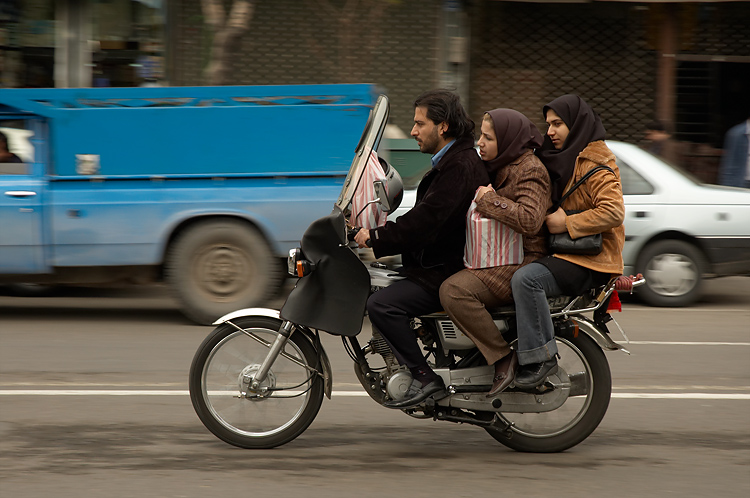
In the developing world a motorcycle is more likely to be the primary mode of transport for its owner, and often the owner's family as well. It is not uncommon for riders to transport multiple passengers or large goods aboard small motorcycles and scooters simply because there is no better alternative. Cost of ownership considerations regarding maintenance and parts, especially in remote areas, often place cars out of reach of families who consider motorbikes relatively affordable.[22] The simplicity demanded of motorcycles used in the developing world, coupled with the high volume of sales possible makes them a profitable and appealing product for major manufacturers, who go to substantial lengths to attract and retain market share.[23]
Propagation
[edit]
Motorbikes are one of the most affordable forms of motorised transport and, for most of the world's population, they are the most familiar type of motor vehicle.[1][2][3] While North America, Europe and Japan are car-centric cultures where motorcycles are uncommon, the non-car-centric cultures of India, China and Southeast Asia account for more than half of the world's population, and in those places two-wheelers outnumber four wheeled vehicles.
Over 700 million motorcycles, including mopeds, motor scooters, motorised bicycles, and other powered two and three-wheelers, are in use worldwide,[26] or about 100 motorcycles per 1000 people. By comparison, there are about 1 billion cars in the world, or about 141 per 1000 people, with about one third in service in Japan and the United States.[27]

The four largest motorcycle markets in the world are all in Asia: China, India, Indonesia, and Vietnam.[1][28] India, with an estimated 37 million motorcycles/mopeds, was home to the largest number of motorised two wheelers in the world. China came a close second with 34 million motorcycles/mopeds in 2002.[24][25] As the middle class in India, China, and other developing countries grows, they are repeating the transition from motorcycles to cars that took place in the US in the years after World War I, and in Europe following World War II, and the role of motorcycling is changing from a transport necessity to a leisure activity, and the motorcycle is changing from a family's primary motor vehicle to a second or third vehicle. The motorcycle is also popular in Brazil's frontier towns.[3]

In numerous cultures, motorcycles are the primary means of motorised transport. According to the Taiwanese government, for example, "the number of automobiles per ten thousand population is around 2,500, and the number of motorcycles is about 5,000."[29] In places such as Vietnam, motorised traffic consist of mostly motorbikes[2] due to a lack of public transport and low income levels that put automobiles out of reach for many.[1]
Changes in propagation
[edit]Recent years have seen an increase in the popularity of motorcycles elsewhere. In the US, registrations increased by 51% between 2000 and 2005.[30] This is mainly attributed to increasing fuel prices and urban congestion.[31]
During the 2008 financial crisis, the motorcycle market grew by 6.5%.[32]
In China, the number of motorcycles in use increased from 34 million in 2002 to 54 million in 2006, with annual production of 22 million units.[24][25][33][34]
Usage in the developed world
[edit]A Consumer Reports subscribers' survey of mainly United States motorcycle and scooter owners reported that they rode an average of only 1,000 miles (1,600 km) per year, 82% for recreation and 38% for commuting, adding to more than 100% because some riders rode for both recreation and commuting.[35] Americans put 10,000–12,000 miles (16,000–19,000 km) per year on their cars and light trucks.[36] As motorcyclists in mainly Western countries age, there is a tendency for riders to choose touring bikes over sports bikes.[37] The motorcycle is also popular with police departments with departments starting to make the switch to electric motorcycles.[38][39][40]
Safety
[edit]The relative risk of a motorcycle rider being killed or seriously injured per kilometre travelled was around 54 times higher in Great Britain in 2006 than for car drivers.[41] United States Department of Transportation data for 2005 from the Fatality Analysis Reporting System show that for passenger cars, 18.62 fatal crashes occur per 100,000 registered vehicles. For motorcycles this figure is 75.19 per 100,000 registered vehicles — four times higher than for cars.[42] The same data shows that 1.56 fatalities occur per 100 million vehicle miles travelled for passenger cars, whereas for motorcycles the figure is 43.47, which was 37 times higher than for cars in 2007.[43] The increased risk over other road users comes from the motorcyclist being relatively unprotected on the motorcycle.[citation needed]
There are also some statistics comparing the risk of hospital admissions for different leisure activities. A study shows that the probability for the activity leading to hospital admission was 4.9/10,000 hours of horseback riding, while the same number for motorcycling was 1.4/10,000 hours.[44]
To address motorcycle safety issues, motorcycle-specific training and personal protective equipment is important for motorcyclists' survival on the road, and mandated in many countries and several U.S. states and counties.[citation needed]
Causes for motorcycle accidents
[edit]A Norwegian study has looked at the reasons behind motorcycle death accidents. The study has looked at all fatal accidents in Norway (a total of 153) in the time frame 2005 to 2009.[45] In 66% of these accidents, the motorcyclist was to blame for the accident occurring, while others were to blame in 20% of the cases.[46] Technical problems with the motorcycle itself are rarely the cause of crashes, as this was shown to be a prominent factor in only 4% of the investigated accidents.[47]
Racing and supersport motorcycles, even while having the best handling capabilities, are overrepresented in fatal accidents.[48][49] Adventurous people are drawn to these bikes, and this group are more prone to be involved in crashes.[49] More fatal accidents on racing motorcycles are caused by extreme behaviour than on touring motorcycles.[50]
Helmet usage
[edit]In Europe, head injuries lead to death in about 75% of fatal motorcycle accidents. The same number for low- and middle-income countries is 88%. Helmet usage reduces the chance for death in an accident by 40% and the risk of serious injury by 70%.[51]
While helmet usage generally is increasing worldwide and 77% of the world's population is covered by extensive helmet laws, many countries still lack sufficient enforcement.[51] Pakistan has both laws requiring driver and passenger to wear a helmet and regulations on helmet standards. Still, only 10% of all riders in Pakistan wear a helmet.[52]
Subcultures
[edit]
Motorcycling lifestyles have been adopted by many different groups spanning nations and cultures. They include commuters, mainstream motorcycle clubs such as long-distance riding clubs, adventure touring, trail riding and those involved with motorcycle sports, such as motocross riding, drag racing, circuit racing and trick or stunt enthusiasts; and those involved in customizing their vehicles in various different styles. Organized rides are a key element of many groups.
Around the world, motorcycles have historically been associated with highly visible subcultures.[53] Some of these subcultures have been loose-knit social groups, such as the scooter riders and cafe racer riders of the 1950s and 60s in Great Britain, and they often are seen as inhabiting the fringes of society.[53] Numerous books about motorcycle subcultures have been written, including Hunter S. Thompson's Hells Angels, Lee Gutkind's Bike Fever, and Daniel R. Wolf's The Rebels.
Clubs, lobbying groups, and outlaw gangs
[edit]Motorcycle clubs
[edit]
Social motorcyclist organisations are popular and are sometimes organised geographically, focus on individual makes, or even specific models. Example motorcycle clubs include American Motorcyclist Association, Harley Owners Group and BMW MOA. Some organisations hold large international motorcycle rallies in different parts of the world that are attended by many thousands of riders. Many social motorcycle organisations raise money for charities as a secondary activity, through organised events and rides, and others exist primarily as social benefit organisations, such as Bikers Against Child Abuse.[54]
Advanced riding clubs
[edit] |
In the UK, advanced riding clubs exist in the Institute of Advanced Motorists and RoSPA Advanced Drivers and Riders. They provide a network of clubs around the United Kingdom that provides advanced skills training, preparation for taking an advanced driving test and social activities.
Lobbying
[edit]Since the late 20th century, motorcyclists have formed political lobbying organisations in order to influence legislators to introduce motorcycle-friendly legislation and to contribute more broadly to public discourse where motorcycles are concerned.
One of the oldest such organisations, the British Motorcycle Action Group, was founded in 1973 specifically in response to helmet compulsion, introduced without public consultation.[55] In addition, the British Motorcyclists Federation (BMF), founded in 1960 as a reaction to the public perception of motorcyclists as leather-jacketed hooligans, has itself moved into political lobbying.[56] Likewise, the U.S. has ABATE, which, like most such organisations, also works to improve motorcycle safety, as well as running the usual charity fund-raising events and rallies, often for motorcycle-related political interests.[57]
Outlaw gangs
[edit]At the other end of the spectrum from the charitable organisations and the motorcycle rights activists are the "outlaw motorcycle gangs". One definition, by the Provincial Court of Manitoba, is: "Any group of motorcycle enthusiasts who have voluntarily made a commitment to band together and abide by their organisations' rigorous rules enforced by violence, who engage in activities that bring them and their club into serious conflict with society and the law."[58] The Federal Bureau of Investigation (FBI) and Criminal Intelligence Service Canada have designated four MCs as Outlaw Motorcycle Gangs (OMGs), which are the Pagans, Hells Angels, Outlaws MC, and Bandidos,[59][60] known as the "Big Four".[61]
The motorcycle manufacturing industry and many government entities around the world have taken actions to clean up the reputation and activities of motorcyclists.[62][63]

Maintenance
[edit] | This section needs additional citations for verification. (July 2020) |
Motorcyclists will refer to maintenance or repair of a motorcycle as wrenching in the US and "spannering" in the UK. A do it yourself self-sufficiency is said to be part of motorcycles' allure in an "increasingly monolithic, unfixable world"[6] and being able to maintain one's own motorcycle is seen as part of the competency of being a motorcyclist.
Historically, motorcycle maintenance was a necessary skill for riders, since the materials and technology used in motorcycles often meant that repairs had to be done on the road-side miles from home. Modern motorcycles are as reliable as automobiles but many riders feel that their motorcycle is more than just a means of transportation which leads them to want to do maintenance on the motorcycles themselves.
Notes
[edit]- ^ a b c d Nakata, Hiroko (8 October 2008). "Motorcycle makers battle it out in Vietnam". Japan Times. Retrieved 11 March 2009.
- ^ a b c McCracken, Patti (1 October 2008). "Vietnam eats, sleeps, and dreams on motorbikes". The Christian Science Monitor. Retrieved 11 March 2009.
- ^ a b c Barrionuevo, Alexei (3 November 2008). "That Roar in the Jungle Is 15,000 Motorbikes". The New York Times. Retrieved 11 March 2009.
- ^ Sharma, Sopan (11 November 2010), "Bike Review: Honda CBR250R", The Economic Times, OCLC 61311680, retrieved 2011-03-19
- ^ Broughton, Paul; Walker, Linda (May 6, 2009), Motorcycling and Leisure; Understanding the Recreational PTW Rider, Ashgate Publishing, ISBN 9780754675013
- ^ a b Melissa Holbrook Pierson, The Perfect Vehicle: What It is about Motorcycles, 1997, W.W. Norton & Company, New York
- ^ Robert M. Pirsig, Zen and the Art of Motorcycle Maintenance, 1974, HarperCollins Publishers, New York
- ^ McDonald-Walker, Suzanne (2000). Bikers: Culture, Politics and Power. Berg. OCLC 490695406.
- ^ Ford, Dexter (October 12, 2010), "Nice Supercar. Now Eat My Dust", The New York Times, p. F13, ISSN 0362-4331, retrieved 2011-03-01
- ^ Hunter S. Thompson, Hell's Angels, 1967, Random House, New York
- ^ T. E. Lawrence, T. E. Lawrence to his Biographers Robert Graves and Liddell Hart, (edited by Robert Graves and B. H. Liddell Hart), 1963, Casell, London
- ^ Tomlins, Bob (September 1997). "Rider training in Europe The Views and the Needs of the Rider" (PDF). The Federation of European Motorcyclists. Archived from the original (PDF) on 24 February 2009. Retrieved 30 June 2007.
- ^ "All the info you need on lanesharing (lanesplitting)". www.WhyBike.com. Retrieved 28 June 2007.
- ^ "Discounts & exemptions". Transport for London. Retrieved 6 December 2014.
- ^ "Federal-Aid Highway Program Guidance on High Occupancy Vehicle (HOV) Lanes". US Department of Transportation. Archived from the original on April 3, 2009. Retrieved 9 May 2013.
- ^ "Drivers guide to Auckland City parking". City of Auckland. 2007. Archived from the original on 1 July 2008. Retrieved 8 August 2008.
- ^ "Motorcycle parking in Wellington CBD". Kiwibiker.co.nz. Retrieved 28 January 2010.
- ^ "Is Melbourne footpath parking under threat? – Motorbike Writer". Motorbike Writer. 2017-03-31. Retrieved 2017-07-23.
- ^ Patrick Thomas (Summer 2004). "In The Land of Ferries". Sound Rider!.
- ^ Travis Baker (August 13, 2015). "Motorcycle loading rules on ferries no different on holidays". Kitsap Sun. Bremerton, Washington.
- ^ "Frequently asked questions". BC Ferries.
- ^ "The Motorcycle Usage Characteristics in Developing Countries: The Operation Cost and Ownership of Motorcycles in Makassar – Indonesia" (PDF). Proceedings of the Eastern Asia Society for Transportation Studies. Retrieved 4 October 2014.
- ^ "Yamaha Motor Philippines GP 5". Yamaha Motor Philippines. Archived from the original on 6 October 2014. Retrieved 4 October 2014.
- ^ a b c d "Passenger Cars; Map No. 31". Worldmapper: The world as you've never seen it before. 2002. Archived from the original on 2017-11-12. Retrieved 2014-08-17. See Technical notes for this data
- ^ a b c d "Mopeds And Motorcycles Map No. 32". Worldmapper: The world as you've never seen it before. 2002. Archived from the original on 2018-03-20. Retrieved 2014-08-17. See data files for the statistics
- ^ "How many motorcycles are the in the world?". www.riders-share.com. Retrieved 2022-07-23.
- ^ Sousanis, John (15 August 2011). "World Vehicle Population Tops 1 Billion Units". Wards Auto. Retrieved 17 July 2012.
- ^ Hoang Dinh Nam (2011-07-25). "Honda Vietnam to build third motorbike plant". Yahoo News Singapore. Retrieved 2016-03-16.
- ^ Chung-Li. "Sustainable Development Indicators for Taiwan". Workshop on Sustainable Development Indicators. Archived from the original on 17 January 2008. Retrieved 14 August 2006.
- ^ "Popularity of high-performance motorcycles helps push rider deaths to near-record high". Insurance Institute for Highway Safety. 11 September 2007. Retrieved 22 October 2008.
- ^ PRNewswire (19 May 2008). "Soaring Gas Prices Shine Money-Saving Spotlight on Motorcycles". Reuters. Archived from the original on 9 March 2014. Retrieved 28 January 2010.
- ^ Kitamura, Makiko; Komatsu, Tetsuya (3 March 2009). "Honda's $140-a-Month Motorbikes Ease Pain of 'Grim' Car Market". Bloomberg. Retrieved 11 March 2009.
- ^ "2008 Motorcycle Statistics", Web Bike World, October 2008, archived from the original on August 7, 2011, retrieved 8 March 2014
- ^ "China Motorcycle production decrease10.93% in October 2010". Caam.org.cn. 2010-11-18. Retrieved 2016-03-16.
- ^ Travers, Jim (1 June 2010). "Survey: Motorcycle and scooter owners are very satisfied with their bikes". Consumer Reports. Archived from the original on 8 June 2010. Retrieved 2 August 2010.
- ^ "Emission Facts: Greenhouse Gas Emissions from a Typical Passenger Vehicle" (PDF). U.S. Environmental Protection Agency, Office of Transportation and Air Quality. February 2005. Archived from the original (PDF) on January 10, 2012. Retrieved 2 August 2010.
{{cite journal}}: Cite journal requires|journal=(help) - ^ Broughton, Paul; Walker, Linda (6 May 2009). Motorcycling and Leisure: Understanding the Recreational Ptw Rider. Farnham, UK: Ashgate Publishing. p. 74. ISBN 978-0754675013.
- ^ Staff Writer. "Livermore Police Add Electric Motorcycle". The Independent. Retrieved 20 May 2023.
- ^ Toll, Micah (September 2022). "Affordable Kollter electric motorcycle enters service with first police department in the US". Electrek. Retrieved 20 May 2023.
- ^ Dillon, Denise (13 March 2023). "Duluth police patrolling on motorcycles that can go just about anywhere". Fox 5 Atlanta. Retrieved 20 May 2023.
- ^ "Transport Statistics Bulletin: Compendium of Motorcycling Statistics" (PDF). United Kingdom Department for Transport. Retrieved 2009-01-12.
- ^ "Vehicles Involved in Fatal Crashes, 1994–2011". Fatality Analysis Reporting System. United States Department of Transportation. Retrieved 18 May 2014.
- ^ "Traffic safety facts, 2008. Report no. DOT HS-811-159" (PDF). NHTSA's National Center for Statistics and Analysis. 2008. Archived from the original (PDF) on April 1, 2010. Retrieved 15 September 2010.
- ^ Sorli, Janet M. (2000). "Equestrian injuries: a five year review of hospital admissions in British Columbia, Canada" (PDF). Injury Prevention. 6 (1): 59–61. doi:10.1136/ip.6.1.59. PMC 1730586. PMID 10728545.
- ^ Rydland, Haslie & Hansen 2011, p. 2.
- ^ Rydland, Haslie & Hansen 2011, p. 9.
- ^ Rydland, Haslie & Hansen 2011, p. 4.
- ^ Rydland, Haslie & Hansen 2011, p. 5.
- ^ a b Voldseth et al. 2004, p. 5.
- ^ Rydland, Haslie & Hansen 2011, p. 6.
- ^ a b Toroyan 2013, p. 18.
- ^ Toroyan 2013, p. 174.
- ^ a b The Science and Art of Branding. Giep Franzen, Sandra Moriarty. M.E. Sharpe, 1 Oct 2008
- ^ "About BACA". Bikers Against Child Abuse. Retrieved 10 October 2007.
- ^ "About MAG". MAG UK. Retrieved 10 October 2007.
- ^ "About » British Motorcyclists Federation". British Motorcyclists Federation. Retrieved 16 December 2020.
- ^ Some other lobbying organisations are listed in Category:Motorcyclists organizations.
- ^ Organized Crime Fact Sheet Archived 2008-10-18 at the Wayback Machine – Public Safety Canada
- ^ FBI Safe Street Violent Crime Initiative – Report Fiscal Year 2000 – FBI.org
- ^ 2004 Annual Report Archived 2009-12-22 at the Wayback Machine – Criminal Intelligence Service Canada, cisc.gc.ca
- ^ Motorcycle Gangs – Connecticut Gang Investigators Association
- ^ The Corporate Cyclists. Emile Milne, Black Enterprise Aug 1981
- ^ The Government's motorcycling strategy: fifth report of session 2006–07. House of Commons: Transport Committee, UK
References
[edit]- Voldseth, Svein; Wanvik, Per Ole; Hansen, Morten; Johansen, Bård Morten; Larsstuen, Finn (2004). Motorcycle Safety/MC-sikkerhet (PDF). Norwegian Public Roads Administration.
- Rydland, Gunnar; Haslie, Lars-Inge; Hansen, Morten (2011). Death Accidents on Motorcycle 2005-2009/Dødsulykker på motorsykkel 2005–2009 (PDF). Norwegian Public Roads Administration. ISSN 1892-3844.
- Toroyan, Tami (2013). Global status report on road safety 2013 (PDF). World Health Organization. ISBN 9789241564564.
External links
[edit]

- Season of the Bike "The difference between driving a car and climbing onto a motorcycle is the difference between watching TV and actually living your life."
- IHIE Guidelines for Motorcycling – these authoritative Guidelines are the first in the UK, setting out comprehensive, practical guidance for highway engineers, traffic engineers, road safety officers and transport planners on providing a safer transport environment for motorcycles, mopeds and scooters.
| International | |
|---|---|
| National | |
| Other | |

Motorcycling
View on GrokipediaHistory
Origins and Early Development
The concept of motorcycling originated in the mid-19th century as engineers sought to combine the mobility of bicycles with mechanical power sources. Early experiments involved attaching steam engines to velocipedes, with the first documented steam-powered motorcycle constructed in 1867 by French bicycle manufacturer Pierre Michaux in Paris, featuring a coal-fired boiler and achieving speeds up to 13 km/h (8 mph) over short distances.[8] These steam contraptions, however, were heavy, unreliable due to frequent boiler explosions, and limited by the need for constant water and fuel replenishment, rendering them impractical for widespread use.[1] A pivotal advancement occurred in 1885 when German inventors Gottlieb Daimler and Wilhelm Maybach developed the Reitwagen ("riding wagon"), widely regarded as the first true motorcycle powered by a gasoline internal combustion engine. This wooden-framed vehicle, built on a bicycle-like chassis without pedals, incorporated a 264 cc single-cylinder four-stroke engine producing 0.5 horsepower, enabling top speeds of 7-12 km/h (4-7 mph). First tested on November 10, 1885, in Cannstatt, Germany, it marked the shift from steam to liquid-fuel propulsion, emphasizing lightweight design and simplicity for personal transport.[1][2] The Reitwagen's engine innovations, including surface carburetion and hot-tube ignition, laid foundational principles for future internal combustion applications in vehicles.[9] Commercial production emerged in the 1890s, with the 1894 Hildebrand & Wolfmüller, designed by German engineers Heinrich Hildebrand, Alois Wolfmüller, and the Hildebrand brothers, becoming the first motorcycle manufactured in series for public sale. Featuring a 1,497 cc two-cylinder engine delivering about 2.5 horsepower and reaching 45 km/h (28 mph), approximately 1,000 units were produced between 1894 and 1897, though sales faltered due to poor handling from its steam-valve intake system and lack of throttle control.[10][11] These early machines highlighted engineering challenges like vibration, unreliable transmissions (often belt-driven), and rudimentary brakes, spurring iterative improvements in frame rigidity and engine efficiency by the late 1890s.[1] By 1900, motorcycle patents and prototypes proliferated across Europe, transitioning from experimental novelties to viable alternatives for short-distance travel amid advancing bicycle technology and petroleum availability.[8]Expansion in the 20th Century
The early 20th century marked the transition of motorcycling from experimental novelty to viable transportation, driven by mass production advancements. Indian Motorcycle, founded in 1901, initiated large-scale manufacturing in the United States, producing models like the 1901 single-cylinder bike that emphasized reliability for everyday use. Harley-Davidson, established in 1903, followed suit with its first production model in 1905, focusing on V-twin engines that offered superior torque for varied terrains. European firms such as Triumph (1902) and Germany's NSU contributed to this surge, with NSU pioneering efficient two-stroke designs that influenced global engineering. By 1913, manufacturers like Belgium's FN introduced four-cylinder models with shaft drives, reflecting rapid iteration in powertrain technology to meet rising demand from urban commuters and rural users.[12][13][14] World War I accelerated development through military procurement, as motorcycles provided agile reconnaissance and dispatch capabilities. Harley-Davidson diverted approximately 50% of its output—over 20,000 units by 1918—to Allied forces, incorporating sidecars and machine-gun mounts that refined durability and off-road performance. Similar demands in Europe boosted firms like Triumph, which supplied thousands of Model H bikes to British troops, leading to postwar refinements in suspension and braking. The interwar period saw racing fuel expansion: board-track events in the U.S. from 1910 onward drew crowds exceeding 50,000, showcasing speeds over 100 mph and spurring innovations in lightweight frames and tires. Germany's DKW overtook rivals to become the world's largest producer by 1928, with annual output surpassing 100,000 units via economical two-stroke engines suited for mass markets.[15][16] World War II further entrenched motorcycling's infrastructure, with U.S. manufacturers Harley-Davidson and Indian producing over 90,000 and 30,000 military bikes respectively, including the rugged Harley WLA model adapted for desert and mud operations. These efforts advanced enclosed chains, better gearboxes, and hydraulic components transferable to civilian use. Postwar surplus flooded markets at low prices—often under $200 per unit—enabling widespread adoption among returning veterans, who formed clubs like the Boozefighters in 1947 to channel adrenaline into group rides. In Europe, rationing lifted by the late 1940s spurred recovery, with BMW's R71-derived models exporting to the U.S. and influencing heavyweight touring designs. By the 1950s, motorcycle registrations in the U.S. climbed steadily, reflecting leisure appeal amid expanding highways, though exact early figures remain sparse due to fragmented records. This era's causal chain—from wartime necessity to affordable ubiquity—solidified motorcycling as a cultural and practical mainstay.[17][8][16]Post-1980 Advancements and Globalization
In the 1980s, motorcycle engineering advanced significantly with the introduction of electronic fuel injection, first implemented in mass production by Kawasaki's KZ1000G in 1980, enabling precise fuel delivery for improved efficiency and throttle response over carburetors.[18] This shift became widespread by the early 2000s, reducing emissions and enhancing cold-start reliability.[19] Concurrently, chassis design evolved from steel frames to aluminum perimeter structures, as seen in racing-derived production models, improving rigidity and handling without excessive weight.[20] Safety systems progressed with BMW's 1988 debut of antilock braking (ABS) on the K100, the first for motorcycles, which modulated brake pressure to prevent wheel lockup on varied surfaces.[21] By the 2000s, electronic aids proliferated, including traction control in 2007 on models like Ducati's 1098, ride-by-wire throttles for smoother power delivery, and cornering ABS integrating with inertial measurement units for lean-aware intervention.[22] These developments, driven by racing technologies from series like MotoGP, prioritized performance and crash mitigation, though empirical data indicates ABS reduces fatal single-vehicle crashes by up to 31% in some studies.[23] Globalization accelerated post-1980 as Japanese manufacturers like Honda expanded production to meet demand in Asia, reaching 200 million cumulative motorcycles by the 1990s through affordable models suited for urban commuting.[24] Emerging markets in China, India, and Indonesia drove growth, with annual global sales stabilizing around 55 million units from 2010 onward, dominated by small-displacement utility bikes for traffic-congested cities where cars were impractical.[25] By 2008, Asia accounted for over 80% of the world fleet, with China producing 20.54 million units annually, reflecting motorcycles' role as primary transport in low-income regions rather than recreation.[26] This shift contrasted with Western markets' focus on high-performance variants, fostering a bifurcated industry where volume production in Asia subsidized global R&D.[27]Technical Fundamentals
Engines and Propulsion Systems
Motorcycle engines primarily utilize reciprocating piston internal combustion engines fueled by gasoline, with four-stroke designs dominating due to their efficiency, durability, and compliance with emissions standards.[28] In a four-stroke cycle, the piston completes intake (drawing air-fuel mixture), compression (increasing pressure), power (combustion expansion), and exhaust (expelling gases) over two crankshaft revolutions, enabling separate lubrication for moving parts and reduced oil consumption compared to alternatives.[28] Single-cylinder four-strokes are common in lightweight and off-road models for simplicity and low cost, while multi-cylinder variants—such as parallel twins in mid-range commuters, V-twins in cruisers for torque emphasis, and inline-fours in sportbikes for high-revving power—scale displacement from under 125 cc to over 1,000 cc.[29] Two-stroke engines, which complete a power cycle in one crankshaft revolution by combining intake/compression and power/exhaust in alternating strokes, historically powered small-displacement bikes and off-road machines owing to their superior power-to-weight ratio and simpler construction without valves.[30] However, their higher emissions from incomplete combustion and oil-fuel mixing prompted regulatory phase-outs in many markets starting in the 1990s and 2000s, confining them largely to niche applications like vintage racing or specific dirt bikes by 2025.[30] Four-strokes now prevail in over 95% of production motorcycles, as evidenced by industry trends favoring cleaner operation and broader torque delivery for street use.[31] Propulsion systems transmit engine torque to the rear wheel via final drives, with chain systems most prevalent for their efficiency in power delivery—up to 98% transmission rate—and adjustability via sprocket ratios, though they necessitate regular cleaning, lubrication, and tensioning to prevent wear.[32] Belt drives, using reinforced rubber or composite toothed belts, offer quieter operation, reduced maintenance, and cleaner performance without lubrication needs, commonly fitted to cruisers and scooters, but they exhibit higher initial costs and limited lifespan under extreme loads.[33] Shaft drives employ enclosed cardan shafts with bevel gears for near-maintenance-free reliability and weather resistance, ideal for touring models, yet incur 5-10% power loss from friction and added unsprung weight that affects handling.[32] Electric motorcycles, comprising under 5% of global sales in 2025, integrate brushless DC or permanent magnet synchronous motors—often mid-mounted for balanced weight distribution—directly coupled to the drivetrain or wheel hubs, delivering instant torque without gearboxes and powered by lithium-ion batteries offering ranges from 50-200 miles per charge depending on capacity (typically 5-15 kWh).[34] Adoption lags internal combustion due to higher upfront costs, charging infrastructure limits, and battery degradation over time, though advancements like Honda's planned 10 electric models by late 2025 signal gradual integration in urban commuting segments.[35]Chassis, Suspension, and Ergonomics
The chassis, or frame, of a motorcycle provides the primary structural support for mounting the engine, drivetrain, fuel tank, and rider, while dictating overall rigidity, weight distribution, and handling characteristics through its geometry and materials. Early designs, such as the backbone or diamond frame prevalent from the late 19th century, integrated the engine as a stressed member along a central spine for simplicity and cost efficiency. Modern iterations favor double-cradle steel frames for off-road durability, where upper and lower tubes encase the engine to isolate vibrations and enhance protection, or aluminum twin-spar perimeter frames, which route beams around the engine to centralize mass low and rearward for superior cornering stability, as seen in sportbike applications since the 1980s. Trellis frames, composed of interconnected steel tubes for high strength-to-weight ratios, gained prominence in the 1970s through Italian racing manufacturers like Bimota, enabling precise tuning of flex characteristics. Materials like high-tensile steel offer weldability and impact resistance at densities around 7.8 g/cm³, while aluminum alloys, with densities near 2.7 g/cm³, reduce unsprung weight by up to 40% in perimeter designs but demand advanced joining techniques to match torsional stiffness.[36][37][38] Suspension systems employ springs, dampers, and linkages to manage road inputs, preserving tire-ground contact, isolating rider feedback, and influencing braking dive and acceleration squat via progressive damping rates typically adjustable from 5-20 N/mm stiffness. Front suspensions predominantly use telescopic forks, with conventional designs sliding outer tubes over inner stanchions lubricated by fork oil, providing 100-200 mm of travel; upside-down (USD) forks, inverting this arrangement since the 1980s, cut unsprung mass by relocating heavier components above the axle for sharper response in high-speed applications. Rear setups feature swingarms pivoting from the frame, paired with monoshock absorbers—single units with gas-charged reservoirs for fade resistance—evolving from twin-shock configurations in the 1970s to improve traction through rising-rate linkages that increase leverage progressively. Advancements like the 1934 oil-damped telescopic fork on the Nimbus model marked a shift from rigid girder systems, while 1936's Velocette swingarm introduced cantilever damping for smoother articulation over uneven terrain. Electronic aids, such as semi-active systems adjusting damping in milliseconds via solenoid valves, emerged in production models by the 2010s, adapting to load and speed for 20-30% variance in compliance.[39][40][41] Ergonomics center on the rider triangle—handlebars, seat, and footpegs—optimizing posture to distribute weight across core, hips, and legs while minimizing joint strain during sustained operation. Standard upright positions, with handlebars at shoulder height and feet near hip level, align the spine neutrally to reduce lower back torque by up to 50% on extended commutes, common in touring and adventure variants with seat heights of 30-34 inches. Sportbike ergonomics enforce forward leans via clip-on bars and rear-set pegs, lowering centers of gravity for aerodynamic drag reduction at speeds exceeding 100 mph but elevating wrist and neck loads through 15-30 degree torso angles. Cruiser styles extend forward controls and pullback bars for relaxed knee bend and elbow extension, suiting low-speed maneuvering yet risking shoulder fatigue from weight bias. Factors like saddle width (12-16 inches), peg-to-seat ratios (14-18 inches), and bar reach influence circulation and control precision, with taller riders (over 6 feet) favoring higher bars to avoid cramped reach angles below 90 degrees at elbows. Simulations confirm that mismatches exceeding 10% in inseam-to-wheelbase proportions correlate with 25% higher fatigue reports after 100 miles.[42][43][44]Classifications and Variants
Motorcycles are classified into categories based on their chassis design, engine configuration, ergonomics, and intended purpose, which determine handling, performance, and rider suitability. These classifications evolved from early 20th-century standards, with modern delineations standardized by manufacturers and regulatory bodies for safety and licensing purposes. Primary groupings emphasize street-legal road use versus off-road capabilities, with overlaps in dual-purpose models. Engine displacement often influences subclassifications, typically segmented as small (under 250 cc for urban mobility), mid-range (250-750 cc for versatility), and large (over 750 cc for high performance), though these are not rigid due to varying global regulations.[45][46] Sport motorcycles prioritize speed and agility through aerodynamic fairings, low clip-on handlebars, and rear-set footpegs, enabling high cornering speeds on paved roads or tracks; examples include models with inline-four engines producing over 100 horsepower for racing-derived performance. Cruisers feature a low-slung chassis, forward foot controls, and V-twin engines for relaxed, upright cruising at moderate speeds, often with custom aesthetics inspired by 1940s designs like those from Harley-Davidson. Touring variants extend cruiser ergonomics with added wind protection, integrated luggage, and advanced suspension for long-distance highway travel, supporting loads up to 500 pounds while maintaining stability at speeds exceeding 100 mph.[47][48][49] Standard or naked bikes offer neutral ergonomics with upright seating and mid-mounted handlebars on minimalist chassis, balancing daily commuting and light touring via parallel-twin or single-cylinder engines for fuel efficiency up to 60 mpg. Adventure and dual-sport models combine street-legal lighting and tires with long-travel suspension and high ground clearance for mixed terrain, often powered by 600-1200 cc engines for payloads over 400 pounds in remote areas. Off-road variants, including motocross and enduro bikes, employ lightweight perimeter frames, knobby tires, and single-cylinder engines tuned for torque rather than top speed, optimized for jumps and rough trails without street homologation. Scooters and mopeds, distinguished by step-through frames and automatic transmissions, focus on urban utility with engines under 150 cc, achieving efficiencies above 100 mpg but limited to low speeds under 50 mph.[50][51][52] Engine variants further diversify classifications, with configurations like single-cylinder for simplicity and low cost (common in off-road and small-displacement models), parallel twins for smooth mid-range power in standards, V-twins for torque in cruisers, and inline-fours for high-revving performance in sports. Cooling methods include air-cooled for lightweight durability in low-stress applications and liquid-cooled for sustained high-output operation, while fuel injection has supplanted carburetors since the 1990s for precise throttle response and emissions compliance. Chassis variants encompass frame types such as double-cradle for engine protection and rigidity in touring bikes, trellis for precision handling in sport models, and monocoque for integrated compactness in scooters, each influencing weight distribution and vibration control. Electric propulsion represents an emerging variant, with battery-integrated chassis providing instant torque but limited range under 200 miles per charge as of 2024.[53][49][54]Motivations and Practical Usage
Appeal and Psychological Factors
Motorcycle riders often score higher on measures of sensation seeking, a personality trait involving the pursuit of varied, novel, intense, and complex sensations and experiences, coupled with a willingness to accept physical, social, legal, and financial risks to achieve them.[55] This trait correlates strongly with engagement in high-risk riding behaviors, including speeding, stunts, and traffic errors, as evidenced in a survey of 550 North American riders using the Motorcycle Rider Behaviour Questionnaire.[55] Aggression, another associated trait, further predicts such violations, suggesting that motorcycling appeals disproportionately to individuals with thrill-seeking dispositions who derive psychological satisfaction from the adrenaline response triggered by speed, lean angles, and overtaking maneuvers.[55] The intrinsic appeal extends to the sense of adventure and escape, with surveys identifying enjoyment, convenience, and adventure-seeking as primary motives among leisure riders.[56] These factors align with broader rider segmentation into groups driven by passion for performance or practical utility, where the machine's responsiveness fosters a perception of mastery and autonomy not readily available in enclosed vehicles.[57] Physiologically, riding modulates attention and stress via heightened arousal: electroencephalography (EEG) during rides shows decreased N1 amplitude (enhanced sensory processing), increased mismatch negativity (improved detection of environmental changes), and reduced alpha power (heightened visual attention).[58] Accompanying elevations in epinephrine and heart rate indicate acute activation, while post-ride decreases in cortisol levels—by up to 28% in hormonal stress biomarkers—promote a sustained relaxed, focused state akin to mindfulness, lasting at least 30 minutes and aiding cognitive recovery.[58][59] This aftereffect, observed in controlled studies comparing riding to car driving or rest, underscores motorcycling's role in alleviating chronic stress through immersive sensory demands that override rumination.[58]Commuting and Utility Benefits
Motorcycles provide notable economic and practical advantages for urban commuting due to their high fuel efficiency and compact size. Many commuter-oriented models achieve 50 to 130 miles per gallon, far surpassing the 30-35 miles per gallon typical of automobiles.[60] Switching from an average car to a motorcycle can reduce fuel expenditures by nearly 50 percent, with even greater savings—up to two-thirds—possible depending on vehicle specifics and driving conditions.[61] The U.S. Department of Energy reports an average motorcycle fuel economy of 44 miles per gallon, contributing to lower overall operating costs including maintenance and insurance premiums often below those for cars.[62] In congested cities, lane splitting—where legal, such as in California—enables riders to bypass stopped or slow-moving traffic, reducing commute times significantly. Research indicates that motorcycles can double roadway capacities by occupying less lane space, thereby alleviating bottlenecks for all users and cutting overall travel delays.[63] Parking benefits further enhance utility, as motorcycles require approximately one-quarter the space of a standard automobile, minimizing search times and costs in space-constrained areas.[63] These factors make motorcycling a viable option for short- to medium-distance daily travel, particularly where public transit is inadequate. Beyond personal commuting, motorcycles excel in utility applications like delivery and courier services, leveraging maneuverability for efficient last-mile logistics. Their ability to access narrow streets and pedestrian zones reduces delivery times and fuel use compared to vans or trucks, with lower acquisition and operational costs supporting economic viability for small businesses and gig economy workers.[64] In densely populated regions such as Southeast Asia, motorcycles facilitate widespread goods transport, underscoring their role in supporting informal economies through affordability and versatility.[65]Touring and Recreational Applications
Motorcycle touring involves long-distance travel using specialized machines designed for endurance, comfort, and versatility, often incorporating large fuel tanks, wind protection, and luggage systems to facilitate multi-day journeys across varied terrains. Adventure touring motorcycles, capable of handling both paved roads and off-road paths, have seen substantial market expansion, with the global segment valued at USD 31.8 billion in 2022 and projected to reach USD 64.5 billion by 2032 at a compound annual growth rate of 7.5%. [66] This growth reflects increasing demand for exploratory travel, including transcontinental routes like the Pan-American Highway or the Trans-Europe Express, where riders prioritize scenic immersion and autonomy over automobile constraints. Empirical data from rider surveys indicate that touring appeals due to the sensory engagement of the journey itself, with motivations centered on natural landscapes and cultural encounters en route. [67] Recreational applications encompass leisure-oriented riding, such as weekend escapes, group outings, and hobbyist explorations of winding roads or rural byways, distinct from utilitarian commuting. In North America, sales of recreational and touring motorcycles rose 18% in August 2023, underscoring sustained popularity amid broader U.S. market valuation of USD 10.48 billion in 2024, expected to grow at 4.1% annually through 2030. [68] [69] Sport touring variants blend highway performance with ergonomic accommodations for extended pleasure rides, while the burgeoning motorcycle rentals and tours sector, propelled by adventure tourism and rising disposable incomes, supports casual participants in guided excursions. [70] Physiological studies confirm recreational riding yields measurable benefits, including heightened alertness and stress reduction; for instance, a 20-minute session elevates heart rates by 11% and adrenaline by 27% while decreasing cortisol by 28%, fostering mental clarity without reliance on subjective anecdotes. [71] Touring and recreational motorcycling also drive economic impacts, particularly in rural areas where events and routes stimulate local commerce through rider expenditures on accommodations, fuel, and services. Research on motorcycle tourism highlights its role in sustainable development by attracting visitors to less-accessible regions, with structural analyses linking trip experiences to enhanced well-being and repeat engagement. [72] Models like the BMW R 1250 GS exemplify adaptations for these uses, combining robust propulsion with adjustable suspensions for diverse conditions, enabling riders to cover thousands of kilometers annually in pursuit of personal challenge and environmental connection. [73]Safety Realities
Accident Statistics and Fatality Rates
Motorcyclists face significantly elevated risks compared to occupants of enclosed vehicles, with fatality rates per vehicle miles traveled (VMT) approximately 28 times higher than for passenger car occupants in the United States. In 2023, the motorcyclist fatality rate stood at 31.39 deaths per 100 million VMT, contrasted with 1.13 for passenger cars. Globally, motorized two- and three-wheelers account for about 30% of total road traffic fatalities, disproportionately affecting users in low- and middle-income countries where such vehicles comprise a larger share of traffic. The World Health Organization reports 1.19 million annual road traffic deaths worldwide, with vulnerable road users like motorcyclists bearing a substantial burden due to limited protective structures.[74][75][76][77] In the United States, 6,335 motorcyclists died in traffic crashes in 2023, representing 15% of all motor vehicle fatalities despite motorcycles comprising less than 3% of registered vehicles. This marked the highest annual total on record, a 26% rise from 2019 levels and roughly triple the figure from 1997. Injury data from the same year indicate 82,564 motorcyclist injuries, underscoring the severity of impacts absent crashworthy enclosures. Fatality trends post-1980 show a decline in the 1980s and early 1990s following helmet laws and awareness campaigns, but a sharp rebound from the late 1990s onward, with deaths more than doubling by 2008 amid increased ridership and aging rider demographics.[78][75][78][79]| Year | US Motorcyclist Fatalities | Fatality Rate per 100 Million VMT | Notes |
|---|---|---|---|
| 1997 | ~2,100 | N/A | Baseline for post-1990s surge[79] |
| 2021 | 5,932 | 30.20 | 24 times car occupant rate[80] |
| 2023 | 6,335 | 31.39 | Record high; 28 times car rate[75][74] |
Primary Causal Factors
The predominant causal factors in motorcycle crashes stem from human behaviors and perceptual errors, with empirical data indicating that rider actions contribute to roughly 60-70% of incidents across single- and multi-vehicle scenarios, while other motorists' failures account for the balance in multi-vehicle cases. Single-vehicle crashes, comprising about 38% of motorcyclist fatalities, are largely attributable to rider errors such as excessive speed, impairment, or loss of control on curves; for instance, speeding was a factor in 31% of fatal single-vehicle motorcycle crashes analyzed in NHTSA's Fatality Analysis Reporting System (FARS) data from recent years.[81] Alcohol impairment exacerbates these risks, with 27% of riders in fatal crashes having a blood alcohol concentration (BAC) of 0.08% or higher, often leading to overconfidence and reduced reaction times in maneuvers like cornering or braking.[82] In multi-vehicle crashes, which represent 62% of motorcyclist fatalities, the primary cause is other drivers' failure to detect the motorcycle, occurring in the majority of cases—specifically, NHTSA analyses show this perceptual error drives about two-thirds of such collisions, frequently involving left-turn violations where automobiles encroach on the motorcycle's right-of-way.[4] Rider inexperience compounds vulnerability here, as evidenced by 35-36% of fatally injured motorcyclists lacking a valid motorcycle license in 2021-2022 FARS data, correlating with higher rates of poor lane positioning or failure to anticipate hazards.[83] Environmental factors like road hazards or weather play secondary roles, influencing less than 10% of crashes as primary triggers in controlled studies, underscoring that behavioral lapses—rather than inherent vehicle defects or infrastructure alone—initiate most sequences.[84] Causal realism highlights interaction effects: motorcycles' smaller profile reduces detectability at distances over 100 feet in low-light or cluttered visual fields, but data from IIHS and NHTSA refute simplistic blame on vehicle size, as rider speed choices amplify collision severity and probability in detection failures. Peer-reviewed analyses confirm that aggressive riding behaviors, including weaving or tailgating, independently elevate crash odds by 2-4 times compared to compliant operation, independent of external variables.[85] These factors persist globally, with similar patterns in empirical studies from diverse regions, though underreporting in non-Western datasets limits cross-validation.[86]Effective Mitigation Strategies
Helmets substantially reduce the risk of fatal head injuries in motorcycle crashes, with estimates indicating they prevent 37% of rider fatalities and 69% of head injuries.[87] Full-face helmets provide additional protection against facial injuries compared to partial-coverage models. Protective clothing, including jackets, pants, gloves, and boots made from abrasion-resistant materials, mitigates injury severity in crashes by distributing impact forces and reducing road rash, though empirical data on overall fatality reduction is less quantified than for helmets.[88] Antilock braking systems (ABS) on motorcycles decrease fatal crash involvement by 22% per registered vehicle years, primarily by preventing wheel lockup during emergency braking and improving control on varied surfaces.[89] Combined with traction control and electronic stability systems in modern models, these technologies further enhance stability during cornering and acceleration, correlating with lower insurance claim frequencies by up to 20%.[90] Enforcement of alcohol impairment penalties effectively curbs riding under the influence, a factor in approximately 30% of fatal motorcycle crashes, by reducing recidivism through license suspension and fines.[88] Visibility enhancements, such as daytime running headlights and high-contrast fluorescent or reflective apparel, improve conspicuity to other road users; studies link mandatory daytime lights to reduced multi-vehicle collision rates, while bright helmets lower injury risk by 24% relative to dark ones.[91] Motorcycle rider training programs demonstrate mixed effectiveness in reducing crash rates; while they impart basic skills, multiple evaluations find no consistent decrease in accidents or even elevated risk due to increased confidence without proportional hazard avoidance, underscoring the need for ongoing advanced instruction focused on perceptual strategies rather than novice courses alone.[92][93] Prioritizing causal factors like excessive speed and failure-to-yield through rider self-audits and infrastructure adaptations, such as dedicated lanes, complements equipment-based mitigations for holistic risk reduction.[94]Cultural and Social Aspects
Rider Demographics and Global Propagation
In the United States, motorcycle ownership has grown to 8.8 million registered vehicles as of 2023, up from 4.3 million in 2002, with the average rider age hovering around 50 years and a pronounced skew toward older individuals, as 37% of fatalities in 2019 involved riders over 50.[95][96] Male riders predominate, comprising 92% of those killed in crashes in 2021.[81] Similar patterns hold in Europe; in the United Kingdom, 3.6 million motorcycles were registered by late 2021, with 48% of owners over age 60 and only 10% under 39, reflecting a recreational orientation among middle-aged and senior males rather than broad utilitarian adoption.[97] Globally, motorcycling demographics diverge sharply by economic context, with developing nations exhibiting far higher penetration for daily transport across genders and ages due to affordability and infrastructure constraints. India holds the largest absolute fleet, exceeding 200 million motorcycles, followed by China, Indonesia, Vietnam, and others in Asia where two-wheelers serve as primary mobility for urban masses amid congested roads and limited car access.[98] In Vietnam, 87% of households own at least one motorcycle, underscoring its role as an essential, gender-neutral commuting tool in high-density environments.[99] Sub-Saharan Africa shows rising household ownership rates, driven by similar practical necessities in regions with sparse public transit, though data remains patchy and tied to economic informality.[100] Motorcycling propagated from its European origins in the late 19th century—initially as an engineering novelty evolving from bicycles—into a global phenomenon post-World War II, fueled by manufacturing scale in Japan and later Asia, where low-cost production met surging demand in motorizing economies.[1] Adoption accelerated in Southeast Asia and South Asia during the late 20th century due to rapid urbanization, fuel efficiency advantages over cars, and minimal infrastructure needs, contrasting with slower recreational uptake in car-dominant affluent markets.[99] By the 21st century, Asia accounted for over 80% of global production and sales, with propagation sustained by economic pragmatism rather than leisure, though aging demographics in mature markets signal potential stagnation without youth influx.[101][102]Subcultures and Lifestyle Elements
Motorcycling subcultures emerged prominently after World War II, as returning veterans in the United States formed clubs to maintain camaraderie experienced during military service, often customizing surplus military motorcycles like Harley-Davidson models.[103] These groups emphasized independence, mechanical tinkering, and group rides, fostering a lifestyle centered on the open road's sense of freedom and escape from societal constraints.[104] Outlaw motorcycle clubs, known as "1%ers" following a 1947 American Motorcyclist Association statement labeling 99% of riders as law-abiding, represent a distinct subculture characterized by strict hierarchies, club patches, and rituals, with origins tied to post-war disillusionment.[105] While some clubs engage in organized crime including drug trafficking and violence, as documented by the U.S. Department of Justice, they constitute a small fraction of motorcycling; the FBI's 2013 report estimated outlaw gangs account for less than 1% of U.S. gang activity, with total membership around 2,500-3,000 across major groups.[106] [107] Statistical analyses indicate that even among club members, criminal involvement is limited, with only about 0.036% of U.S. convicted felons linked to these groups.[108] In the United Kingdom, the rocker subculture arose in the late 1950s, blending rock 'n' roll music with motorcycle enthusiasm, leading to the cafe racer phenomenon where riders modified British twins like Triumph Bonnevilles for speed, racing informally between transport cafes such as the Ace Cafe in London. [109] These lightweight, stripped-down machines prioritized performance over comfort, reflecting a youth-driven rebellion against post-war austerity.[110] American cruiser and bagger culture, popularized by Harley-Davidson touring models equipped with saddlebags, emphasizes long-distance comfort, customization, and social gatherings like rallies, embodying a lifestyle of self-expression through chrome detailing and leather apparel.[111] Lifestyle elements across subcultures include communal rides that build bonds, motorcycle maintenance as a ritualistic hobby, and events reinforcing identity, such as annual rallies drawing hundreds of thousands for shared experiences of adventure and mutual support.[112] [113]Clubs, Organizations, and Gangs
Motorcycle clubs and organizations primarily serve enthusiasts through social riding, advocacy, and event organization, with the American Motorcyclist Association (AMA) representing over 250,000 members since its founding on June 28, 1924, as a nonprofit dedicated to promoting motorcycling, defending rider rights, and sanctioning events.[114] The AMA charters thousands of local clubs focused on activities like road riding, dirt biking, and racing, emphasizing safety training and community engagement without criminal affiliations.[115] Internationally, the Fédération Internationale de Motocyclisme (FIM), established in 1904 and headquartered in Mies, Switzerland, governs motorcycle sports across 113 national federations, organizing world championships in disciplines such as MotoGP and enduro while promoting road safety and heritage preservation.[116] These bodies prioritize legal compliance and rider welfare, contrasting sharply with a minority of groups involved in illicit operations. Outlaw motorcycle gangs (OMGs), a term coined by the U.S. Department of Justice to describe organizations that exploit club structures for criminal enterprises, differ fundamentally from lawful clubs by engaging in systematic violence, drug trafficking, and extortion.[106] The "1%er" patch, originating from an AMA official's 1947 statement after the Hollister riot implying 99% of riders are law-abiding, is worn by OMGs to signal defiance of mainstream norms and law enforcement.[117] Prominent examples include the Hells Angels Motorcycle Club, founded March 17, 1948, in Fontana, California, by World War II veterans, which has expanded to over 6,000 members across 592 chapters in 66 countries but faces indictments for racketeering, murder, and narcotics distribution.[118] Similarly, the Bandidos, established 1966 in Texas, and the Outlaws, formed 1935 in Illinois, form part of the "Big Four" OMGs alongside Pagans and Mongols, collectively linked to thousands of arrests for offenses including assault, weapons trafficking, and money laundering as documented in federal reports.[106] Law enforcement data indicates OMGs generate revenue through methamphetamine production and distribution, with inter-gang conflicts causing fatalities, such as the 2015 Waco shootout involving rival factions.[119] While most global motorcycle clubs mirror AMA-style recreational groups—such as South Africa's Durban Bikers Club emphasizing camaraderie and charity—OMGs maintain territorial hierarchies and enforce loyalty through intimidation, leading to designations as organized crime threats by agencies like the FBI.[120] Empirical evidence from DOJ investigations underscores that OMG membership facilitates coordinated crime rather than mere riding, with over 2,000 documented violent incidents tied to these groups since the 1970s, prioritizing self-preservation over societal contributions.[121] This duality highlights motorcycling's spectrum, where legitimate entities foster positive subcultures amid the persistent risks posed by criminal outliers.Industry Dynamics
Major Manufacturers and Market Evolution
The Japanese "Big Four"—Honda, Yamaha, Suzuki, and Kawasaki—dominate global motorcycle production, accounting for a substantial portion of the over 60 million units manufactured annually, with Honda alone holding approximately 32% of the worldwide market share in 2024 through sales of 19.4 million units.[122][123] Honda, founded in 1948, leads in volume production of commuter and scooter models, particularly in Asia, while Yamaha (established 1955) emphasizes versatility across sport, touring, and off-road segments.[124] Suzuki (1952) and Kawasaki (motorcycle division from 1953) focus on performance-oriented bikes, including high-displacement sport and adventure models.[124] In India, Hero MotoCorp (formed 1984 via Honda partnership) and Bajaj Auto produce affordable entry-level bikes, with Hero claiming over 75 million cumulative units sold by 2023 and contributing to Indian brands' rising global presence, as seen in Q1 2025 rankings where TVS Motor and Royal Enfield ranked fourth and higher among volume leaders.[125] American manufacturers like Harley-Davidson (1903) specialize in heavyweight cruisers, selling around 200,000 units annually in recent years with a focus on premium, V-twin-powered heritage models, while Indian Motorcycle (revived 2011 under Polaris) targets similar demographics.[126] European firms such as BMW Motorrad (1923) excel in touring and adventure bikes, achieving record sales in 2024 amid sluggish industry growth elsewhere.[127] Chinese producers like Qianjiang and Lifan have expanded into mid-tier segments, often via exports and brand licensing (e.g., Benelli), though they trail in premium reputation.[27] The motorcycle industry's evolution began in the early 1900s with pioneering firms like Harley-Davidson (1903 production start) and Indian (1901), which established mass manufacturing of larger-displacement bikes in the United States and Europe, alongside British marques such as Triumph (1902) and Royal Enfield (1901).[8] By 1931, Harley-Davidson and Indian held a duopoly in American production amid economic pressures that consolidated smaller players.[126] Post-World War II reconstruction spurred Japanese entry, with Honda's 1949 D-Type model marking affordable two-stroke innovation, followed by rapid scaling in the 1950s that undercut Western competitors on cost and reliability.[27][124] The 1969 launch of Honda's CB750, the first production four-cylinder superbike, catalyzed a shift toward high-performance standards, eroding U.S. and European market shares as Japanese firms captured over 80% of global volume by the 1980s through efficient supply chains and fuel-injected models introduced in the 1980s.[128][124] Global market dynamics transitioned from a "golden age" of Western dominance (1900–1950s) to Asian-led mass production post-1970s oil crises, which favored lightweight, economical bikes over heavy cruisers, boosting adoption in developing regions like Southeast Asia and India where annual sales exceed 20 million units.[27][129] By the 1990s, urbanization and traffic congestion propelled scooter segments, with the overall market valued at $78.3 billion in 2024 and projected to reach $133.4 billion by 2033 at a 6.1% CAGR, driven by emerging-market demand despite stagnation in mature markets like Europe and the U.S. in 2024.[130][127] Recent trends include premiumization in the West (e.g., BMW's growth) and electrification pilots, though internal combustion engines persist due to infrastructure limits, with Japanese and Indian firms adapting via hybrid models amid regulatory pressures.[27][101]| Top Global Motorcycle Brands by Volume (2024 Estimates) | Approximate Market Share | Key Focus |
|---|---|---|
| Honda | 32% | Commuters, scooters |
| Yamaha | ~15-20% (inferred from Big Four dominance) | Versatile segments |
| Hero MotoCorp / Bajaj (Indian aggregate) | Significant in Asia | Entry-level |
| Harley-Davidson / BMW (premium) | <5% each globally | Cruisers, touring |