Hubbry Logo
Organometallic chemistryOrganometallic chemistryMain
Open search
Organometallic chemistry
Community hub
Organometallic chemistry
logo
8 pages, 0 posts
0 subscribers
Be the first to start a discussion here.
Organometallic chemistry
from Wikipedia

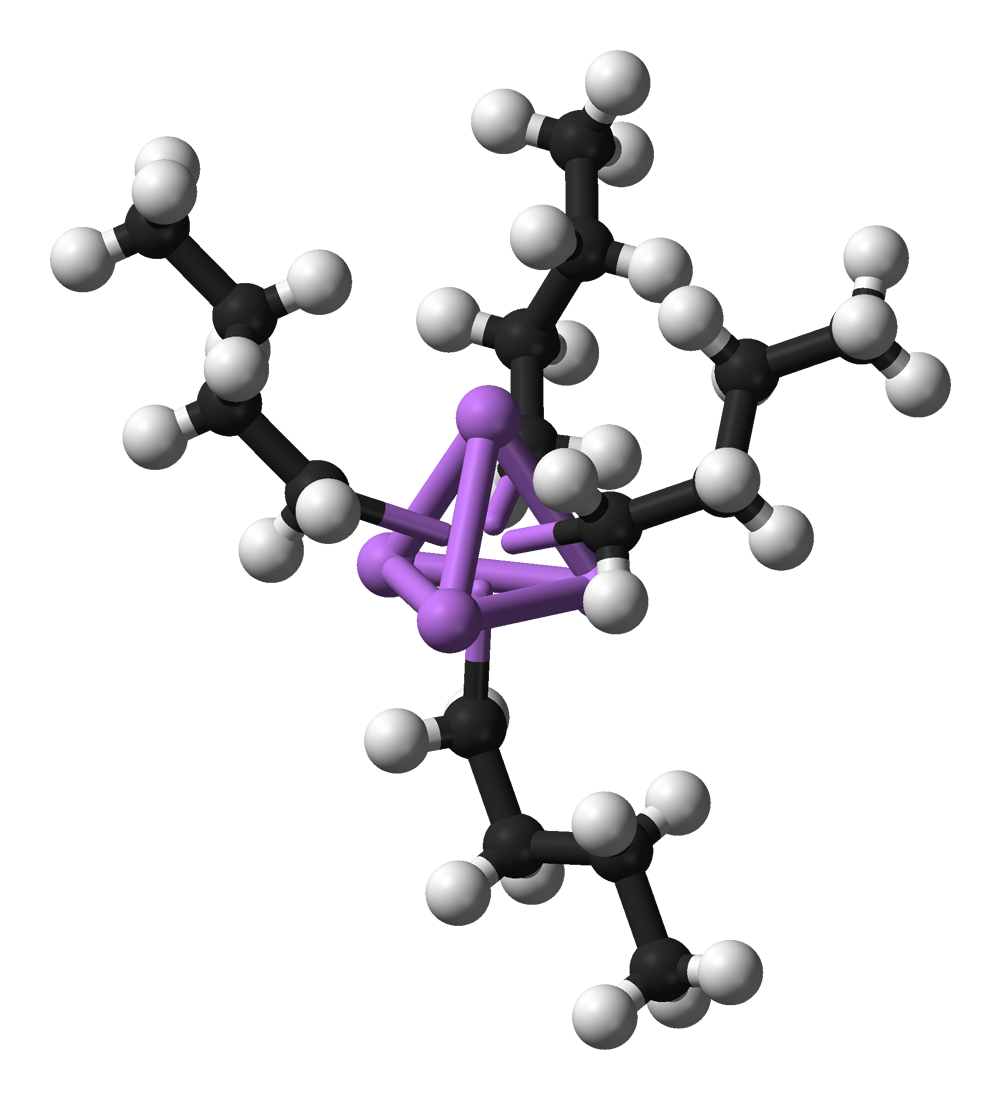
n-Butyllithium, an organometallic compound. Four lithium atoms (in purple) form a tetrahedron, with four butyl groups attached to the faces (carbon is black, hydrogen is white).

Organometallic chemistry is the study of organometallic compounds, chemical compounds containing at least one chemical bond between a carbon atom of an organic molecule and a metal, including alkali, alkaline earth, and transition metals, and sometimes broadened to include metalloids like boron, silicon, and selenium, as well.[1][2] Aside from bonds to organyl fragments or molecules, bonds to 'inorganic' carbon, like carbon monoxide (metal carbonyls), cyanide, or carbide, are generally considered to be organometallic as well. Some related compounds such as transition metal hydrides and metal phosphine complexes are often included in discussions of organometallic compounds, though strictly speaking, they are not necessarily organometallic. The related but distinct term "metalorganic compound" refers to metal-containing compounds lacking direct metal-carbon bonds but which contain organic ligands. Metal β-diketonates, alkoxides, dialkylamides, and metal phosphine complexes are representative members of this class. The field of organometallic chemistry combines aspects of traditional inorganic and organic chemistry.[3]

Organometallic compounds are widely used both stoichiometrically in research and industrial chemical reactions, as well as in the role of catalysts to increase the rates of such reactions (e.g., as in uses of homogeneous catalysis), where target molecules include polymers, pharmaceuticals, and many other types of practical products.

Organometallic compounds

[edit]
A steel bottle containing MgCp2 (magnesium bis-cyclopentadienyl), which, like several other organometallic compounds, is pyrophoric in air.

Organometallic compounds are distinguished by the prefix "organo-" (e.g., organopalladium compounds), and include all compounds which contain a bond between a metal atom and a carbon atom of an organyl group.[2] In addition to the traditional metals (alkali metals, alkali earth metals, transition metals, and post transition metals), lanthanides, actinides, semimetals, and the elements boron, silicon, arsenic, and selenium are considered to form organometallic compounds.[2] Examples of organometallic compounds include Gilman reagents, which contain lithium and copper, and Grignard reagents, which contain magnesium. Boron-containing organometallic compounds are often the result of hydroboration and carboboration reactions. Tetracarbonyl nickel and ferrocene are examples of organometallic compounds containing transition metals. Other examples of organometallic compounds include organolithium compounds such as n-butyllithium (n-BuLi), organozinc compounds such as diethylzinc (Et2Zn), organotin compounds such as tributyltin hydride (Bu3SnH), organoborane compounds such as triethylborane (Et3B), and organoaluminium compounds such as trimethylaluminium (Me3Al).[3]

A naturally occurring organometallic complex is methylcobalamin (a form of Vitamin B12), which contains a cobalt-methyl bond. This complex, along with other biologically relevant complexes are often discussed within the subfield of bioorganometallic chemistry.[4]

Distinction from coordination compounds with organic ligands

[edit]

Many complexes feature coordination bonds between a metal and organic ligands. Complexes where the organic ligands bind the metal through a heteroatom such as oxygen or nitrogen are considered coordination compounds (e.g., heme A and Fe(acac)3). However, if any of the ligands form a direct metal-carbon (M-C) bond, then the complex is considered to be organometallic. Although the IUPAC has not formally defined the term, some chemists use the term "metalorganic" to describe any coordination compound containing an organic ligand regardless of the presence of a direct M-C bond.[5]

The status of compounds in which the canonical anion has a negative charge that is shared between (delocalized) a carbon atom and an atom more electronegative than carbon (e.g. enolates) may vary with the nature of the anionic moiety, the metal ion, and possibly the medium. In the absence of direct structural evidence for a carbon–metal bond, such compounds are not considered to be organometallic.[2] For instance, lithium enolates often contain only Li-O bonds and are not organometallic, while zinc enolates (Reformatsky reagents) contain both Zn-O and Zn-C bonds, and are organometallic in nature.[3]

Structure and properties

[edit]

The metal-carbon bond in organometallic compounds is generally highly covalent.[1] For highly electropositive elements, such as lithium and sodium, the carbon ligand exhibits carbanionic character, but free carbon-based anions are extremely rare, an example being cyanide.

a single crystal of a Mn(II) complex, [BnMIm]4[MnBr4]Br2. Its bright green color originates from spin-forbidden d-d transitions

Most organometallic compounds are solids at room temperature, however some are liquids such as methylcyclopentadienyl manganese tricarbonyl, or even volatile liquids such as nickel tetracarbonyl.[1] Many organometallic compounds are air sensitive.[1] Some organometallic compounds such as triethylaluminium are pyrophoric and will ignite on contact with air.[6]

Concepts and techniques

[edit]

As in other areas of chemistry, electron counting is useful for organizing organometallic chemistry. The 18-electron rule is helpful in predicting the stabilities of organometallic complexes, for example metal carbonyls and metal hydrides. The 18e rule has two representative electron counting models, ionic and neutral (also known as covalent) ligand models, respectively.[7] The hapticity of a metal-ligand complex, can influence the electron count.[7] Hapticity (η, lowercase Greek eta), describes the number of contiguous ligands coordinated to a metal.[7] For example, ferrocene, [(η5-C5H5)2Fe], has two cyclopentadienyl ligands giving a hapticity of 5, where all five carbon atoms of the C5H5 ligand bond equally and contribute one electron to the iron center. Ligands that bind non-contiguous atoms are denoted the Greek letter kappa, κ.[7] Chelating κ2-acetate is an example. The covalent bond classification method identifies three classes of ligands, X,L, and Z; which are based on the electron donating interactions of the ligand. Many organometallic compounds do not follow the 18e rule. The metal atoms in organometallic compounds are frequently described by their d electron count and oxidation state. These concepts can be used to help predict their reactivity and preferred geometry. Chemical bonding and reactivity in organometallic compounds is often discussed from the perspective of the isolobal principle.

A wide variety of physical techniques are used to determine the structure, composition, and properties of organometallic compounds. X-ray diffraction is a particularly important technique that can locate the positions of atoms within a solid compound, providing a detailed description of its structure.[1][8] Other techniques like infrared spectroscopy and nuclear magnetic resonance spectroscopy are also frequently used to obtain information on the structure and bonding of organometallic compounds.[1][8] Ultraviolet-visible spectroscopy is a common technique used to obtain information on the electronic structure of organometallic compounds. It is also used monitor the progress of organometallic reactions, as well as determine their kinetics.[8] The dynamics of organometallic compounds can be studied using dynamic NMR spectroscopy.[1] Other notable techniques include X-ray absorption spectroscopy,[9] electron paramagnetic resonance spectroscopy, and elemental analysis.[1][8]

Due to their high reactivity towards oxygen and moisture, organometallic compounds often must be handled using air-free techniques. Air-free handling of organometallic compounds typically requires the use of laboratory apparatuses such as a glovebox or Schlenk line.[1]

History

[edit]

Early developments in organometallic chemistry include Louis Claude Cadet's synthesis of methyl arsenic compounds related to cacodyl, William Christopher Zeise's[10] platinum-ethylene complex,[11] Edward Frankland's discovery of diethyl- and dimethylzinc, Ludwig Mond's discovery of Ni(CO)4,[1] and Victor Grignard's organomagnesium compounds. (Although not always acknowledged as an organometallic compound, Prussian blue, a mixed-valence iron-cyanide complex, was first prepared in 1706 by paint maker Johann Jacob Diesbach as the first coordination polymer and synthetic material containing a metal-carbon bond.[12]) The abundant and diverse products from coal and petroleum led to Ziegler–Natta, Fischer–Tropsch, hydroformylation catalysis which employ CO, H2, and alkenes as feedstocks and ligands.

Recognition of organometallic chemistry as a distinct subfield culminated in the Nobel Prizes to Ernst Fischer and Geoffrey Wilkinson for work on metallocenes. In 2005, Yves Chauvin, Robert H. Grubbs and Richard R. Schrock shared the Nobel Prize for metal-catalyzed olefin metathesis.[13]

Organometallic chemistry timeline

[edit]

Scope

[edit]

Subspecialty areas of organometallic chemistry include:

Industrial applications

[edit]

Organometallic compounds find wide use in commercial reactions, both as homogenous catalysts and as stoichiometric reagents. For instance, organolithium, organomagnesium, and organoaluminium compounds, examples of which are highly basic and highly reducing, are useful stoichiometrically but also catalyze many polymerization reactions.[14]

Almost all processes involving carbon monoxide rely on catalysts, notable examples being described as carbonylations.[15] The production of acetic acid from methanol and carbon monoxide is catalyzed via metal carbonyl complexes in the Monsanto process and Cativa process. Most synthetic aldehydes are produced via hydroformylation. The bulk of the synthetic alcohols, at least those larger than ethanol, are produced by hydrogenation of hydroformylation-derived aldehydes. Similarly, the Wacker process is used in the oxidation of ethylene to acetaldehyde.[16]

A constrained geometry organotitanium complex is a precatalyst for olefin polymerization.

Almost all industrial processes involving alkene-derived polymers rely on organometallic catalysts. The world's polyethylene and polypropylene are produced via both heterogeneously via Ziegler–Natta catalysis and homogeneously, e.g., via constrained geometry catalysts.[17]

Most processes involving hydrogen rely on metal-based catalysts. Whereas bulk hydrogenations (e.g., margarine production) rely on heterogeneous catalysts, for the production of fine chemicals such hydrogenations rely on soluble (homogenous) organometallic complexes or involve organometallic intermediates.[18] Organometallic complexes allow these hydrogenations to be effected asymmetrically.

Many semiconductors are produced from trimethylgallium, trimethylindium, trimethylaluminium, and trimethylantimony. These volatile compounds are decomposed along with ammonia, arsine, phosphine and related hydrides on a heated substrate via metalorganic vapor phase epitaxy (MOVPE) process in the production of light-emitting diodes (LEDs).

Organometallic reactions

[edit]

Organometallic compounds undergo several important reactions:

The synthesis of many organic molecules are facilitated by organometallic complexes. Sigma-bond metathesis is a synthetic method for forming new carbon-carbon sigma bonds. Sigma-bond metathesis is typically used with early transition-metal complexes that are in their highest oxidation state.[19] Using transition-metals that are in their highest oxidation state prevents other reactions from occurring, such as oxidative addition. In addition to sigma-bond metathesis, olefin metathesis is used to synthesize various carbon-carbon pi bonds. Neither sigma-bond metathesis or olefin metathesis change the oxidation state of the metal.[20][21] Many other methods are used to form new carbon-carbon bonds, including beta-hydride elimination and insertion reactions.

Catalysis

[edit]

Organometallic complexes are commonly used in catalysis. Major industrial processes include hydrogenation, hydrosilylation, hydrocyanation, olefin metathesis, alkene polymerization, alkene oligomerization, hydrocarboxylation, methanol carbonylation, and hydroformylation.[16] The catalytically active organometallic species are often generated in situ starting from commercially available metal salts. Organometallic intermediates are also invoked in many heterogeneous catalysis processes, analogous to those listed above. Additionally, organometallic intermediates are assumed for Fischer–Tropsch process.

Organometallic complexes are commonly used in fine chemical synthesis as well, especially in cross-coupling reactions[22] that form carbon-carbon bonds, e.g. Suzuki-Miyaura coupling,[23] Buchwald-Hartwig amination for producing aryl amines from aryl halides,[24] and Sonogashira coupling, etc.

Organometallic species are also involved in photoredox catalysis, although not on a commercial scale.[25]

Environmental concerns

[edit]
Roxarsone is an organoarsenic compound used as an animal feed.

Natural and contaminant organometallic compounds are found in the environment. Some that are remnants of human use, such as organolead and organomercury compounds, are toxicity hazards. Tetraethyllead was prepared for use as a gasoline additive but has fallen into disuse because of lead's toxicity. Its replacements are other organometallic compounds, such as ferrocene and methylcyclopentadienyl manganese tricarbonyl (MMT).[26] The organoarsenic compound roxarsone is a controversial animal feed additive. In 2006, approximately one million kilograms of it were produced in the U.S alone.[27] Organotin compounds were once widely used in anti-fouling paints but have since been banned due to environmental concerns.[28]

See also

[edit]

References

[edit]

Sources

[edit]
[edit]
Revisions and contributorsEdit on WikipediaRead on Wikipedia
from Grokipedia
Organometallic chemistry is the study of organometallic compounds, which contain at least one direct bond between a carbon atom and a metallic element. These compounds, lying at the interface of organic and inorganic chemistry, exhibit distinctive reactivity arising from the high polarity and often nucleophilic character of the carbon-metal bond. The field encompasses main-group metals like lithium and magnesium as well as transition metals such as iron and rhodium, enabling applications from stoichiometric reagents in synthesis to homogeneous catalysts in industrial processes. The origins of organometallic chemistry trace back to 1827 with the synthesis of , the first recognized compound featuring a metal-carbon interaction via an . Subsequent milestones include the development of Grignard reagents by in 1900, which revolutionized carbon-carbon bond formation in , and the discovery of in 1951, which illuminated the stability and aromaticity of sandwich complexes. In 1955, and introduced catalysts for olefin polymerization, enabling the production of and stereoregular on an industrial scale. These advances earned Nobel Prizes, including 1963 for Ziegler and Natta's polymerization work and 1973 for Ernst Otto Fischer and Geoffrey Wilkinson's elucidation of organometallic sandwich compounds. Organometallic compounds underpin modern chemical manufacturing, serving as catalysts for processes like hydroformylation and cross-coupling reactions that produce pharmaceuticals, fragrances, and polymers with high efficiency and selectivity. Reagents such as organolithiums, Gilman cuprates, and palladium complexes facilitate precise molecular assembly, while biological examples like adenosylcobalamin highlight their roles in enzymatic carbon transformations. Despite challenges like air sensitivity and toxicity in some cases, the field's empirical foundations and mechanistic insights continue to drive innovations in materials science and sustainable synthesis.

Fundamentals

Definition and Classification

Organometallic compounds are defined as containing at least one bond between a metal atom and a carbon atom of an , which includes alkyl, alkenyl, aryl, or related moieties. This classical definition, established by the International Union of Pure and Applied Chemistry (IUPAC), excludes bonds to carbon atoms in inorganic groups like or , focusing instead on direct metal interactions with organic carbon frameworks. Such compounds span a broad reactivity spectrum, from highly ionic species that behave as sources to covalent complexes enabling catalytic processes, with applications in synthesis, , and . Classification of organometallic compounds primarily follows the nature of the metal-carbon bond polarity and the periodic group of the metal. For s-block metals (Groups 1 and 2), such as and magnesium, bonds are largely ionic due to the metals' low ionization potentials, exemplified by alkyllithiums (e.g., ) and Grignard reagents (e.g., ), which exist as separated ions in polar solvents and react vigorously with protic species. p-Block organometallics (Groups 13–15), including alkylaluminiums and organotins, feature covalent σ-bonds, often with electron-deficient or bridging structures, as in trimethylaluminium's dimeric form with three-center two-electron bonds. (d-block) compounds differ markedly, incorporating both σ-M-C bonds and π-backbonding to ligands like CO or alkenes, yielding stable clusters or complexes such as (dicyclopentadienyliron) or (chloro(ethylene)platinate), which underpin . Additional categories include π-complexed variants, where metals engage unsaturated organics without formal σ-bonds, and cluster compounds with metal-metal bonds supporting ligand arrays. Metalloids like or form borderline cases, often treated separately in organoelement chemistry despite structural analogies.

Distinction from Coordination and Bioinorganic Compounds

Organometallic compounds are defined by the IUPAC as those featuring direct bonds between one or more metal atoms and carbon atoms from an , encompassing both covalent and ionic interactions. This contrasts with coordination compounds, which generally involve central metal ions surrounded by ligands donating electron pairs through heteroatoms like , oxygen, or , forming dative (coordinate covalent) bonds without requiring carbon as the donor atom. Although overlap exists—many organometallics bear ancillary coordination ligands such as phosphines or carbonyls—the field of organometallic chemistry prioritizes the reactivity and bonding arising from metal-carbon sigma bonds (e.g., alkyl or aryl groups) or pi interactions (e.g., with alkenes or arenes), which enable applications in and C-C bond formation not typical of purely coordination-based systems. Bioinorganic chemistry examines the structural and functional roles of metals in living organisms, predominantly through coordination complexes where metals bind to biomolecules via oxygen, nitrogen, or sulfur donors, as seen in iron-porphyrin interactions in for O₂ transport or in for N₂ reduction. Organometallic elements in biological contexts form a narrow subset, termed bioorganometallic chemistry, characterized by rare metal-carbon bonds that support specific enzymatic transformations, such as the cobalt-alkyl bond in adenosylcobalamin enabling radical rearrangements in . These instances deviate from the coordination paradigm by incorporating organometallic reactivity, yet they remain exceptional amid the prevalence of non-carbon-bound metal centers in bioinorganic systems, highlighting organometallics' specialized niche in both synthetic and natural realms.

General Structure, Bonding, and Properties

Organometallic compounds are defined by the presence of at least one direct between a metal atom and a carbon atom from an organic group, such as alkyl, aryl, alkenyl, or alkynyl moieties. These structures often feature the metal coordinated to additional ligands, including halides, phosphines, or carbonyls, which influence geometry and reactivity; common configurations include monomeric linear forms for s-block metals or oligomeric clusters with bridging ligands for p-block elements like aluminum. The metal-carbon bond exhibits significant polarity due to the difference, with carbon typically bearing a partial negative charge (δ⁻) and acting as a , as metals generally have lower values (e.g., 0.9–1.5 for metals versus 2.5 for carbon). In main-group organometallics, bond character ranges from highly covalent in compounds like dimethylzinc to partially ionic in alkyllithiums, where ionic contribution can reach ~30%, promoting aggregation into tetramers or hexamers for stability. For transition metals, bonding incorporates d-orbital participation, enabling σ-donation from carbon to metal and π-backbonding from metal d-orbitals to π* orbitals, as seen in carbonyl or complexes; this synergic interaction strengthens bonds and dictates (η^n coordination). Stability in organometallics correlates with adherence to the for d-block complexes, where the metal achieves an effective electron count of 18 ( configuration via donation and metal valence electrons), favoring low-spin octahedral or tetrahedral geometries and reducing reactivity. Deviations occur in early or late s, where 16-electron configurations predominate for catalytic intermediates, but 18-electron species like exhibit exceptional air stability and sublimability. Properties vary markedly: main-group variants are often pyrophoric liquids or solids highly sensitive to air and moisture due to facile hydrolysis (e.g., Grignard reagents react exothermically with water), while certain complexes display volatility, thermal robustness, or , driven by ligand field effects and steric protection. Reactivity trends include β-hydride elimination in alkyl complexes, leading to instability above room temperature, and for forming C-C bonds, underscoring their utility in synthesis despite handling challenges under inert atmospheres.

Historical Development

Early Discoveries and 19th-Century Foundations

The earliest recognized organometallic compound was Zeise's salt, potassium trichloro(ethylene)platinate(II), K[PtCl₃(η²-C₂H₄)]·H₂O, isolated in 1827 by Danish chemist William Christopher Zeise through the reaction of platinum(II) chloride with ethanol, which generated ethylene in situ. Zeise's work, though initially controversial due to debates over the compound's composition and the novel platinum-ethylene interaction, represented the first documented metal-alkene complex, predating modern understandings of π-bonding. This discovery laid foundational groundwork for transition metal organometallics, despite limited immediate synthetic follow-up in the mid-19th century. A pivotal advancement occurred in 1849 when English chemist Edward Frankland synthesized the first stable main-group organometallic compounds, diethylzinc (Zn(C₂H₅)₂) and dimethylzinc (Zn(CH₃)₂), by heating alkyl iodides with metal. Frankland's initial aim was to isolate free alkyl radicals, but instead, he obtained these air-sensitive, pyrophoric liquids, which exhibited direct metal-carbon σ-bonds and demonstrated the feasibility of organozinc reagents for further synthesis. These compounds marked the birth of systematic organometallic chemistry for main-group elements, influencing subsequent developments in alkyl derivatives of magnesium, mercury, and other metals. Frankland's investigations extended to mixed alkyl-zinc halides, such as ethylzinc iodide, and highlighted the instability of many such species toward and oxygen, prompting early studies on handling and reactivity. By the late , analogous organometallics like alkylmercury compounds had been prepared, but zinc alkyls remained central to establishing the field, with Frankland credited as the originator of organometallic chemistry proper. These foundations emphasized empirical synthesis over theoretical bonding models, setting the stage for 20th-century expansions despite the era's limited analytical tools.

20th-Century Milestones and Nobel Contributions

A pivotal early 20th-century advancement in organometallic chemistry was the discovery of the process in 1938 by Otto Roelen at Ruhrchemie, utilizing carbonyl catalysts to convert alkenes into aldehydes by adding hydrogen and . This reaction, known as the oxo process, marked the first industrial application of homogeneous and laid groundwork for subsequent developments in carbonyl-based organometallics. In the late 1940s and early 1950s, Karl Ziegler discovered organoaluminum compounds such as triethylaluminum, which, when combined with titanium tetrachloride in 1953, formed the basis of the Ziegler-Natta catalyst system for stereospecific olefin polymerization. This breakthrough enabled the production of high-density polyethylene and isotactic polypropylene, transforming polymer chemistry and earning Ziegler and Giulio Natta the 1963 Nobel Prize in Chemistry for their work on the structure and chemistry of such polymers using organometallic initiators. The 1951 synthesis of by Thomas J. Kealy and Peter L. Pauson, involving the reaction of cyclopentadienyl with ferric chloride, introduced the first stable and sparked intense interest in pi-bonded organometallics. Its aromatic, eta-5-cyclopentadienyl-iron structure was independently elucidated in 1952 by teams including Robert B. Woodward, , and , revealing delocalized bonding that challenged traditional valence models and catalyzed the explosion of metallocene chemistry. Mid-century progress extended to homogeneous catalysis, exemplified by Geoffrey Wilkinson's development of chlorotris(triphenylphosphine)rhodium(I) in 1965–1967, the first effective catalyst for hydrogenation under mild conditions via mechanisms. This compound's stability and selectivity influenced synthetic methodology and industrial processes. Fischer and Wilkinson's foundational studies on sandwich complexes culminated in the 1973 , awarded for their independent elucidation of organometallic compounds' electronic structures, bonding, and reactivity, including derivatives and cyclobutadiene complexes. Their work established 18-electron rules and concepts, underpinning modern organometallic theory and applications.

Key Timeline and Influential Figures

The earliest recognized organometallic compound, cacodyl (tetramethyldiarsine), was isolated in 1760 by Louis Claude Cadet de Gassicourt through the distillation of arsenical pigments, marking an initial foray into carbon-metal bonding despite arsenic's semimetallic nature. In 1827, Danish chemist William Christopher Zeise prepared (K[PtCl₃(η²-C₂H₄)]), the first complex, demonstrating π-bonding to and challenging prevailing views on metal-organic interactions. Edward Frankland synthesized diethylzinc (Zn(C₂H₅)₂) in 1849, the first stable organozinc alkyl compound prepared via , which established key reactivity patterns like alkyl group transfer and ignited systematic studies of main-group organometallics. Victor Grignard discovered organomagnesium halides (RMgX) in 1900 at the , enabling nucleophilic additions to carbonyls and transforming synthetic ; this work earned him the 1912 , shared with Paul Sabatier. The 1951 independent syntheses of (Fe(η⁵-C₅H₅)₂) by Thomas Kealy, Peter Pauson, Samuel Miller, and revealed stable sandwich structures, prompting structural proposals by Michael Rosenblum, Robert Woodward, and , and catalyzing π-complex research. Karl Ziegler discovered titanium-alkylaluminum catalysts for olefin in 1953, with Giulio Natta extending them to stereoregular polypropylenes in 1954; their coordination-insertion mechanism revolutionized plastics production, earning the 1963 . Ernst Otto Fischer and elucidated metallocene bonding and reactivity in the 1950s–1960s, formalizing concepts like and backbonding, for which they shared the 1973 . Subsequent advances include Yves Chauvin's mechanism for (1970s), refined by Richard Schrock's catalysts and Robert Grubbs's variants, awarded the 2005 and enabling precise and syntheses. Influential figures include Frankland for foundational alkylmetals, Grignard for synthetic utility, Zeise for early π-complexes, and Natta for industrial catalysis, and and Wilkinson for theoretical frameworks underpinning organometallics' stability and reactivity.

Theoretical Foundations

Nature of Metal-Carbon Bonds

Metal-carbon bonds in organometallic compounds are predominantly covalent but exhibit significant polarity due to the difference between carbon (Pauling electronegativity 2.55) and metals (typically 0.7–2.0). This polarity imparts a partial negative charge on the carbon atom, rendering it nucleophilic and facilitating reactions such as to electrophiles. In main-group organometallics, the ionic character increases with metal electropositivity; for instance, alkyllithium compounds possess M–C bonds with roughly 30% ionic character, often manifesting as aggregated structures like tetramers in non-coordinating solvents. For s, M–C bonds arise from the overlap of a carbon sp³ hybrid orbital with metal d, s, or p orbitals, forming a two-center two-electron bond with limited pi-backbonding due to the absence of suitable acceptor orbitals on simple alkyl ligands. Bond dissociation energies (BDEs) for these bonds typically range from 50 to 100 kcal/mol, though values can be lower (e.g., ~30 kcal/mol) in labile systems prone to homolysis, influencing reactivity in catalytic cycles. Bridging M–C interactions, common in aluminum and early alkyls, involve three-center two-electron bonding, enhancing stability through delocalization. Pi-type M–C bonds occur in complexes such as alkylidenes (M=C double bonds) and alkylidynes (M≡C triple bonds), where the carbon contributes both sigma donation and pi donation or accepts backbonding into empty p orbitals. These multiple bonds are stronger than sigma counterparts, with BDEs exceeding 100 kcal/mol in some cases, and are stabilized by the metal's ability to engage d-orbitals in synergistic sigma-donation/pi-backdonation. The nature of these bonds underpins the diversity of organometallic reactivity, from migratory insertions to reductive eliminations.

Electron Counting and Stability Rules

Electron counting in organometallic complexes quantifies the total valence electrons at the metal center to assess electronic saturation, which correlates with stability and influences reactivity patterns such as or ligand substitution. Two equivalent formalisms are employed: the neutral ligand method, treating ligands as neutral donors ( as 2-electron donor via sigma donation, with backbonding implicit), and the ionic method, assigning formal s to the metal and anionic charges to ligands (e.g., Cp as 6-electron donor in Cp₂Fe). The metal contributes its group number electrons in neutral counting or (group number - ) d-electrons in ionic counting; equivalence holds as differences cancel. The , articulated by C. A. Tolman in 1972, states that diamagnetic complexes are typically stable when the metal center achieves 18 valence electrons, analogous to the closed-shell configuration and filling nine low-lying metal-based orbitals (ns¹ np³ nd⁵ + three hybrid orbitals). This saturation promotes kinetic inertness, as seen in octahedral d⁶ complexes like [Ru(bpy)₃]²⁺ (18 electrons), which resist ligand displacement under mild conditions. For d⁸ metals (e.g., Rh(I), Pd(II)), 16-electron square planar geometries prevail for stability, exemplified by RhCl(PPh₃)₃, where the coordinatively unsaturated site enables reactivity while maintaining overall stability. Deviations occur systematically: early transition metals (groups 3-5) often form 12-16 due to limited d-electrons and weaker π-acceptor stabilization, as in TiCl₄ (12 electrons), which dimerizes or coordinates additional ligands for partial saturation. Late metals (groups 9-11) tolerate 14-16 electrons in , where unsaturation facilitates migratory insertions, per Tolman's analysis of thousands of complexes showing 18- prevalence but 16- viability in low-spin d⁸ cases. The rule's empirical basis stems from closed-shell configurations minimizing unpaired electrons, though considerations reveal σ-donation and π-backbonding as causal drivers of stability rather than strict pairing. In metal cluster compounds, Wade-Mingos rules extend to skeletal bonding, treating clusters as polyhedra where vertices (metal atoms) share s for framework orbitals. The total skeletal electron pairs equal (sum of valence electrons from metals and capping ligands minus electrons for terminal ligands and M-M bonds)/2; structures follow: closo (n+1 pairs for n vertices, e.g., octahedral [Re₆Cl₁₂]²⁺ with 14 electrons or 7 pairs), nido (n+2, pyramidal), or arachno (n+3, open). This predicts stability for electron-precise clusters like Os₃(CO)₁₂ (nido, 50 valence electrons), where delocalized bonding enhances cluster integrity against fragmentation. Exceptions arise in electron-rich systems, underscoring the rules' utility as predictive heuristics grounded in topology and rather than isolated metal rules.

Characterization Techniques and Computational Methods

Nuclear magnetic resonance (NMR) spectroscopy serves as a primary tool for characterizing organometallic compounds, with and providing direct evidence of metal-carbon bonds through chemical shifts influenced by the paramagnetic or diamagnetic nature of the metal center; for instance, metal-alkyl protons typically appear upfield due to shielding effects. is particularly diagnostic for carbon atoms directly bound to metals, often displaying shifts in the 0–50 ppm range for σ-bonds, while quaternary carbons may require DEPT or indirect detection methods for resolution. These techniques necessitate inert-atmosphere handling via Schlenk lines or gloveboxes to prevent decomposition of air-sensitive species. Infrared (IR) spectroscopy complements NMR by revealing vibrational signatures, such as C-O stretches in metal carbonyls at 1850–2100 cm⁻¹, where terminal CO ligands absorb above 2000 cm⁻¹ and bridging modes below, allowing differentiation of and . , often via (ESI-MS) or (FAB), confirms molecular weights and fragmentation patterns indicative of metal-ligand interactions, though volatility and thermal stability limit its use for some complexes. X-ray crystallography remains the gold standard for precise bond lengths and angles, routinely applied to crystalline organometallics under cryogenic conditions to capture transient structures; for highly reactive species, enables analysis of sub-microgram samples at ambient temperatures without access. and provide supplementary data on composition and d-d transitions, respectively, ensuring purity and oxidation states. Computational methods, particularly (DFT), are integral for elucidating electronic structures and validating experimental data, with hybrid functionals like B3LYP or M06 accurately reproducing metal-carbon bond energies and geometries within 5–10 kcal/mol of gas-phase benchmarks. These approaches model effects via polarizable continuum models (PCM) or explicit clusters, addressing limitations in implicit treatments for polar transition states in catalytic cycles. DFT calculations support electron-counting formalisms, such as the , by computing frontier orbital energies and predicting stability for complexes like (d⁵ Cp₂Fe, 18 e⁻), though exceptions arise in low-coordinate or high-spin systems where steric factors dominate over electronic saturation. Advanced techniques, including time-dependent DFT (TD-DFT) for excited states and nudged elastic band (NEB) methods for transition states, facilitate mechanistic insights into insertions and oxidative additions, with benchmarks against coupled-cluster theory ensuring accuracy for . Relativistic effects, incorporated via scalar relativistic pseudopotentials, are essential for third-row transition metals to avoid overestimation of bond strengths by up to 20 kcal/mol.

Reaction Mechanisms and Synthetic Techniques

Preparation Methods for Organometallics

Preparation methods for organometallic compounds vary by metal type and desired , with main-group organometallics often synthesized via direct reaction of the metal with organic halides, while complexes frequently involve or transmetallation. For and metals, direct metallation predominates; organolithium reagents form by reacting metal with alkyl or aryl chlorides in solvents like or , as in 2 Li + C₄H₉Cl → 2 LiC₄H₉ + LiCl, yielding highly reactive species used in further syntheses. Grignard reagents, organomagnesium halides, are prepared by treating magnesium turnings with alkyl or aryl bromides or iodides in , following Mg + RX → RMgX (X = Br, I), a method enabling carbon-carbon bond formation since its discovery in 1900. Transmetallation, involving alkyl group transfer between metals, is versatile for less reactive elements; for instance, sodium phenyl reacts with to give tetraphenylsilane: 4 NaC₆H₅ + SiCl₄ → Si(C₆H₅)₄ + 4 NaCl, driven by the stability of NaCl lattice. with metal halides yield compounds like triphenylantimony: 3 C₆H₅MgBr + SbCl₃ → Sb(C₆H₅)₃ + 3 MgBrCl. Dialkylmercury compounds transfer groups to metals such as : Hg(CH₃)₂ + Be → Be(CH₃)₂ + Hg. For group 13 metals, direct hydroalumination of olefins occurs: 2 Al + 3 H₂ + 6 C₂H₄ → 2 Al(C₂H₅)₃, producing triethylaluminum industrially. Substitution reactions exchange groups, as in NaC₂H₅ + C₆H₆ → NaC₆H₅ + C₂H₆. Transition metal organometallics often arise via oxidative addition, where low-valent complexes add C-X bonds, increasing metal oxidation state and coordination number; alkyl halides add to Ni(0) or Pd(0) centers, e.g., [Ni(PPh₃)₄] + CH₃I → [Ni(CH₃)I(PPh₃)₃] + PPh₃. This route is key for preparing monoalkyl or monoaryl nickel(II) species. Transmetallation from main-group reagents to transition metals forms species like Gilman reagents: 2 RLi + CuI → R₂CuLi + LiI. Metal carbonyls, prototypical organometallics with M-C bonds to CO, form by direct combination under pressure; iron pentacarbonyl arises from finely divided iron and CO at elevated pressure: Fe + 5 CO → Fe(CO)₅. Nickel tetracarbonyl requires milder conditions: Ni + 4 CO (50 atm, 50°C) → Ni(CO)₄. Reductive methods involve reducing metal salts in CO atmosphere. Specialized techniques include activated metals (e.g., Rieke metals) for difficult substrates and electrochemical reductions for generation, though less common for bulk preparation. These methods ensure control over reactivity, with conditions tailored to avoid decomposition.

Core Reaction Types (Insertion, Elimination, Addition)

In organometallic chemistry, insertion, elimination, and addition reactions constitute fundamental transformations that enable substrate activation, bond formation, and catalyst turnover in synthetic and catalytic processes. These reactions often occur in concert within catalytic cycles, such as cross-coupling or , where introduces substrates, migratory insertion propagates chains or functionalizes s, and elimination releases products while regenerating active species. The mechanisms are governed by electronic factors, including metal d-electron count and ligand effects, as well as steric constraints that dictate migratory aptitudes and reversibility. Oxidative addition, the prototypical , entails the oxidative cleavage of a substrate X-Y bond across a low-valent metal center, yielding a cis-M(X)(Y) product with a formal two-unit increase in metal and . Common substrates include dihydrogen, which undergoes concerted three-center addition via a involving metal d-orbitals and H-H σ* interaction, or alkyl , which proceed via SN2-like backside attack facilitated by electron-rich metals like Pd(0) or Ni(0). Aryl , for instance, add oxidatively to Ni(0) tri complexes to form stable five-coordinate Ni(II) aryl species, with rates influenced by identity (I > Br > Cl) and phosphine sterics. This step is rate-determining in many Pd-catalyzed couplings, as evidenced by kinetic studies showing second-order dependence on metal and substrate concentrations. Migratory insertion involves the 1,2-migration of a σ-bound (typically alkyl or ) into an adjacent unsaturated , such as CO or an , without altering the metal's formal but decreasing by one. For CO insertion, an migrates to the carbonyl carbon, forming an acyl complex (M-R + M-CO → M-COR), with migratory aptitude favoring more electron-rich groups (e.g., methyl > phenylalkyl) due to better overlap with CO π* orbitals; this cis requirement stems from orbital alignment in the . In hydroformylation catalysts, insertion into M-H bonds extends carbon chains, with rates enhanced by electron-withdrawing ligands that polarize the M-H bond. Rare examples include CO insertion into Au(III)-C bonds, confirmed by and DFT, highlighting adaptability beyond traditional late metals. Elimination reactions, encompassing reductive and β-hydride variants, reverse addition or insertion processes to form products and low-valent metals. Reductive elimination couples two cis ligands (e.g., M(R)(R') → R-R' + M), decreasing oxidation state by two and coordination by two, often favored by high-valent, electron-poor metals like Pd(II); steric congestion accelerates this in cross-couplings, as bulkier ligands promote ligand-ligand approach. β-Hydride elimination, conversely, converts M-alkyl to M-H plus alkene via four-center transition state requiring β-hydrogen availability and vacant coordination site, serving as a common deactivation pathway in early-transition-metal alkyls but suppressed in sterically hindered late-metal systems. In Pt(II) alkyl hydrides, this elimination is reversible, with rates tuned by ligand electronics—electron donation stabilizes the alkyl, slowing elimination—enabling controlled alkene formation in catalytic dehydrogenation. These processes' reversibility underpins dynamic equilibria in catalysis, with β-elimination often thermodynamically driven by alkene stability.

Advanced Reaction Classes and Selectivity

C–H bond activation represents an advanced class of organometallic reactions enabling the selective functionalization of ubiquitous C–H bonds without prior installation of reactive groups. Transition metals such as and mediate these transformations via mechanisms spanning , concerted metallation-deprotonation, and σ-bond metathesis, with selectivity dictated by factors including directing groups that position the metal near target sites and electronic preferences for weaker C–H bonds. For instance, in nondirected aryl C–H activation, modifications can override substrate biases to favor meta-selectivity over ortho, achieving up to 90% site-specificity in polyfunctionalized arenes through steric and electronic tuning. Challenges persist due to comparable bond dissociation energies across C–H sites, often requiring computational screening of transition states to predict and enhance . σ-Bond metathesis constitutes another sophisticated reaction pathway, particularly for d⁰ early transition metals like and , where σ-ligands exchange without formal changes, facilitating access to high-oxidation-state alkyls and hydrides. The mechanism proceeds through a four-center , with selectivity governed by sterics and coordinative unsaturation; for example, in zirconocene-catalyzed silane , linear chain growth occurs via selective σ-metathesis over β-hydride elimination, yielding polysilanes with controlled molecular weights exceeding 10⁵ Da. This class contrasts with by avoiding two-electron changes, enabling reactions in redox-inert environments, as demonstrated in 1991 studies where Cp₂Zr(H)Cl exchanges with s to form hydrosilyl complexes with >95% stereoretention. Recent applications extend to C–H activation, where metathesis selectivity favors primary over secondary sites based on strain minimization. Carbometallation reactions involve the addition of organometallic species across C=C or C≡C bonds, forming new C–C and C–M bonds in a syn-selective manner, with advanced variants achieving high chemo- and through and metal control. Copper-mediated carbocuprations, for instance, exhibit exceptional in additions, directing nucleophilic attack to the less hindered carbon and yielding vinylcopper intermediates trapable by electrophiles with >98% E/Z control. In systems, or catalysts enable facially selective carbometallation, preserving while generating diastereomerically pure cyclopropylmetals for subsequent functionalization, as reported in 2007 studies attaining 20:1 diastereoselectivity via chelation-directed approach. tuning further refines outcomes; bulky phosphines in Pd-catalyzed carbopalladation invert innate regiochemistry, favoring branched products in 85–95% selectivity by stabilizing β-agostic interactions in key intermediates. Overall selectivity in these classes integrates steric, electronic, and conformational factors, often amplified by chiral auxiliaries or atropisomeric ligands to induce enantioselectivity exceeding 99% in asymmetric variants, as evidenced in 2022 accounts of diastereoselective additions. Mechanistic probes, including kinetic isotope effects and DFT computations, reveal that energies differing by 2–4 kcal/mol underpin observed preferences, guiding catalyst design for practical applications.

Applications in Catalysis

Principles of Homogeneous Catalysis

Homogeneous catalysis employs soluble complexes, often with organic ligands, that operate in the same phase as reactants, enabling precise control over reaction pathways through molecular-level interactions. Unlike heterogeneous systems, this allows for well-defined active sites and facilitates detailed mechanistic studies via techniques like NMR spectroscopy and kinetic analysis. The core principle is the , a closed loop of reversible elementary steps that lower activation energies by stabilizing transition states and aligning substrates in proximity to the metal center. Central to these cycles are organometallic transformations such as , where a substrate like H2 or an alkyl adds to the metal, increasing its and ; migratory insertion, involving transfer of a to a coordinated unsaturated molecule like CO or an ; and , which forms new bonds while regenerating lower-valent metal species. These steps adhere loosely to the for stability, with electron-deficient 14- or 16-electron intermediates often serving as active species in late transition metals, while early metals may favor 16-electron configurations. Ligand effects dominate reactivity: σ-donor ligands enhance nucleophilicity for insertions, π-acceptors like CO promote dissociation and stabilize unsaturated intermediates, and sterically bulky phosphines prevent unwanted coordination, as seen in systems achieving turnover numbers exceeding 10^6 in optimized hydrogenations. Selectivity arises from orbital interactions and steric tuning; for instance, chiral diphosphine s in catalysts yield branched aldehydes with enantiomeric excesses over 95% by discriminating facial approaches to the metal-alkene complex. Turnover frequency (TOF, moles product per mole catalyst per unit time) and number (, total moles product per mole catalyst) quantify efficiency, with industrial processes targeting TOFs above 1000 h⁻¹ to offset costs. However, cycles must avoid off-pathway decomposition, such as β-hydride elimination, which empirical data show is mitigated by ligand choice rather than inherent stability claims in some theoretical models. Empirical validation over purely computational predictions underscores causal mechanisms; spectroscopic evidence confirms associative pathways in many substitutions, contradicting dissociative assumptions in early ligand field models. This phase uniformity enables mild conditions—often ambient and —contrasting heterogeneous systems' harsher requirements, though catalyst recovery remains challenging due to strong .

Key Industrial Catalytic Processes

Hydroformylation, also known as the oxo process, represents one of the largest-scale applications of homogeneous organometallic catalysis, converting alkenes and synthesis gas (CO/H₂) into aldehydes using or carbonyl complexes as catalysts. Developed by Otto Roelen at Ruhrchemie in 1938 and commercialized by in 1943 with catalysts, the process produces over 10 million metric tons of aldehydes annually, primarily from propene to butanal, which serves as a precursor for plasticizers, detergents, and fragrances. -based systems, introduced in the 1970s by , offer higher selectivity for linear aldehydes (up to 95% n/iso ratio) and operate under milder conditions (100-150°C, 10-30 bar), though variants persist for higher olefins due to cost advantages. The Ziegler-Natta polymerization process employs titanium(IV) chloride activated by organoaluminum compounds, such as triethylaluminum, to produce stereoregular polyolefins like high-density polyethylene and isotactic polypropylene. Discovered independently by Karl Ziegler and Giulio Natta in the early 1950s, leading to their 1963 Nobel Prize, this heterogeneous catalysis—initiated via organometallic alkyl transfer—accounts for the majority of global polyolefin production, exceeding 100 million metric tons per year as of recent estimates. Modern variants use supported MgCl₂/TiCl₄ systems with electron donors for enhanced stereospecificity, enabling control over polymer tacticity and molecular weight distribution in slurry, solution, or gas-phase reactors. Methanol carbonylation to acetic acid, via the Monsanto process (rhodium/iodide catalyst, commercialized 1970) and its successor the Cativa process (iridium/iodide, introduced by BP in 1996), exemplifies efficient organometallic catalysis for commodity chemicals. The Cativa system achieves rates over 30 mol/L·h at low water concentrations (<5 wt%), reducing by-product formation and energy costs, contributing to over 60% of the world's 17 million metric tons annual acetic acid output. Mechanistically, it involves oxidative addition of methyl iodide to the metal center, followed by CO insertion and reductive elimination, with iodide promoters stabilizing low-valent species. The Wacker process oxidizes ethylene to acetaldehyde using Pd(II)/Cu(II) chloride catalysts in aqueous solution, marking the first industrial-scale application of organopalladium chemistry since its commercialization by in 1959. Operating at 100-130°C and 5-10 bar, it historically produced over 2 million tons annually, though its scale has declined with the rise of alternative routes like methanol carbonylation for downstream products. The mechanism proceeds via Pd-alkene coordination, nucleophilic attack by water, and β-hydride elimination, with Cu(II) reoxidizing Pd(0) using O₂.

Recent Catalytic Innovations (2010s-2025)

During the 2010s and early 2020s, organometallic catalysis experienced significant progress in replacing precious metals like rhodium and palladium with earth-abundant alternatives such as , iron, and manganese, motivated by resource scarcity and cost considerations. catalysts emerged as viable substitutes for , a process converting alkenes to aldehydes. In 2020, cationic cobalt(II) bisphosphine complexes developed by Chirik and Stanley demonstrated high activity for of internal alkenes at mild temperatures (around 80–100°C) and pressures (10–30 bar), achieving turnover frequencies up to 10,000 h⁻¹ and linear-to-branched selectivities exceeding 90:10 in some cases, rivaling rhodium systems while operating via a distinct Co(II)/Co(0) cycle that minimizes isomerization side products. This innovation addressed longstanding limitations of cobalt catalysis, which previously required harsher conditions (>150°C, >100 bar). Similarly, in 2022, unmodified carbonyl catalysts were shown to perform at 140°C and 30 bar pressure, enabling selective aldehyde production from terminal alkenes with yields over 90%. Pincer ligands, featuring tridentate coordination for enhanced stability, facilitated breakthroughs in base-metal-mediated activations. Iron pincer complexes, advanced since the mid-2010s, catalyzed efficient hydrogenations and transfer hydrogenations of ketones and imines with turnover numbers exceeding 1,000 under neutral conditions, leveraging reversible dearomatization of the backbone to stabilize low-valent intermediates. Manganese pincer systems enabled C-H borylation of arenes and heteroarenes using , achieving regioselectivities guided by steric and electronic effects, with yields up to 95% at . These developments extended to dehydrogenative couplings, where pincers promoted acceptorless alcohol dehydrogenations to esters or acids, bypassing hydrogen evolution challenges through hemilabile designs. N-heterocyclic carbene (NHC) ligands enhanced catalyst robustness in cross-coupling and metathesis. Unsymmetrical fluorene-based NHC-ruthenium complexes, reported in 2020, improved olefin metathesis for α-olefin self-metathesis, delivering Z-selective products with E/Z ratios up to 95:5 under low catalyst loadings (0.1–1 mol%). In C-H activation, NHC-metal complexes enabled directed functionalizations; for example, cobalt-NHC systems in the late 2010s facilitated arene C-H alkylations via radical intermediates, with site selectivities controlled by directing groups like pyridines. By 2024–2025, iron(III) catalysts advanced undirected C(sp²)-H and C(sp³)-H activations for deuteration, operating via Fe-C intermediates under electrochemical conditions to achieve isotopic incorporations >90% without prefunctionalization. These innovations underscore a trend toward milder, selective processes, though scalability remains challenged by ligand synthesis costs and byproduct management.

Broader Applications and Impacts

Role in Organic Synthesis and Pharmaceuticals

Organometallic reagents, such as Grignard reagents (organomagnesium halides) and organolithium compounds, serve as strong nucleophiles for forming carbon-carbon bonds through addition to carbonyls and conjugate additions, enabling the construction of complex organic frameworks essential for synthetic routes. These stoichiometric methods, historically dominant since the early , remain relevant in pharmaceutical discovery for rapid assembly of drug-like scaffolds, as seen in the synthesis of intermediates for antifungal agents like via aryl Grignard formation. Organocopper reagents, including (dialkylcuprates), provide regioselective 1,4-additions to α,β-unsaturated carbonyls, minimizing over-addition issues common with harder nucleophiles like Grignards. Transition metal-catalyzed reactions have revolutionized organometallic applications in both and pharmaceuticals by offering milder conditions, higher selectivity, and scalability over stoichiometric alternatives. Palladium-catalyzed cross-couplings, particularly the Suzuki-Miyaura reaction involving boronic acids and halides, facilitate biaryl formation critical for many pharmaceuticals, with industrial adoption rising from 4.3% of reactions at in 1985–1996 to 14.5% in 1997–2007 due to efficiency gains. This reaction has been pivotal in manufacturing drugs like losartan (93% yield, <50 ppm Pd residue) and atazanavir, enabling large-scale production while adhering to regulatory limits on metal impurities (<10 ppm). Other couplings, such as Negishi (zinc organometallics) and Buchwald-Hartwig aminations, support diverse functionalizations in drug candidates, with thousands of such catalytic processes run monthly in pharmaceutical R&D to optimize yields and stereocontrol. In pharmaceutical development, organometallic catalysis enhances process efficiency by reducing waste and steps, as exemplified by asymmetric hydrogenation in sitagliptin synthesis (95% ee, 0.15 mol% Rh catalyst) and ring-closing metathesis for macrocyclic HCV inhibitors. These methods address scalability challenges, with base-metal alternatives emerging to minimize costs and toxicity, though palladium remains dominant for its functional group tolerance. High-throughput experimentation aids catalyst optimization, ensuring robust routes for active pharmaceutical ingredients (APIs) like imatinib (Gleevec), where copper-catalyzed C-N couplings achieve 72–82% yields at 25% loading. Overall, organometallics bridge discovery and manufacturing, enabling the synthesis of chiral, bioactive molecules while prioritizing sustainability and regulatory compliance.

Industrial Processes in Petrochemicals and Materials

Organometallic compounds play a central role in the polymerization of olefins for petrochemical-derived materials, particularly through Ziegler-Natta catalysis. These catalysts, typically comprising titanium(IV) chlorides supported on magnesium chloride with triethylaluminum cocatalysts, facilitate the stereoregular coordination-insertion polymerization of ethylene to high-density polyethylene (HDPE) and propylene to isotactic polypropylene (iPP). Discovered in 1953-1954, this system revolutionized polyolefin production, enabling control over tacticity and molecular weight distribution that radical polymerization could not achieve, with industrial plants scaling up by the late 1950s to produce millions of tons annually for packaging, pipes, and automotive parts. Hydroformylation, or the oxo process, represents another cornerstone, where organometallic catalysts add hydrogen and carbon monoxide across alkenes to yield aldehydes, key precursors for alcohols, acids, and plasticizers in the petrochemical chain. Initially commercialized by BASF in 1943 using cobalt carbonyl hydrides like HCo(CO)4, the process evolved to rhodium-based systems in the 1970s for improved selectivity toward linear products, as in the Union Carbide LP Oxo process employing Rh with phosphine ligands. Annual global capacity exceeds 10 million metric tons of aldehydes, primarily from propene, supporting detergents and lubricants via hydrogenation or aldol condensation. Olefin metathesis, mediated by high-oxidation-state organometallic complexes such as molybdenum or ruthenium alkylidenes (e.g., Schrock or Grubbs catalysts), enables carbon-carbon bond redistribution in alkenes, applied industrially for propylene production via ethene-propene metathesis and in ring-opening metathesis polymerization (ROMP) for specialty elastomers. Commercialized by Phillips Petroleum in the 1960s for triptene production and later refined with well-defined catalysts in the 1990s, it offers atom-efficient routes to polymers with tailored microstructures, used in tires and coatings, though heterogeneous variants dominate large-scale petrochemical operations for cost efficiency. In materials synthesis beyond bulk polymers, volatile organometallics like trimethylaluminum serve as precursors in chemical vapor deposition (CVD) and atomic layer deposition (ALD) for aluminum oxide films in microelectronics and barriers. These processes deposit conformal layers at temperatures below 300°C, leveraging the reactivity of Al-C bonds for precise thickness control in semiconductor manufacturing, with adoption accelerating since the 1980s for integrated circuits.

Emerging Uses in Nanotechnology and Energy

Organometallic compounds enable precise surface modification of metal oxide nanocrystals, enhancing their properties for nanoscale applications. For instance, copper(I) mesitylene precursors facilitate the synthesis of 3–6 nm cuprous oxide (Cu₂O) nanocrystals, whose surface Cu–OH groups react with organozinc or organocobalt reagents such as [Zn(C₆F₅)₂] or [Co(C₆F₅)₂]·2THF at room temperature, forming stable metal–organic interfaces. This functionalization, confirmed by techniques including ¹⁹F NMR and XPS, boosts photoluminescence intensity up to 30-fold with zinc decoration, opening pathways to applications in photocatalysis, chemical sensing, and quantum technologies where controlled electronic interactions at the nanoscale are critical. In solar energy conversion, organometallic complexes serve as efficient hole transport materials (HTMs) in perovskite solar cells (PSCs), leveraging their tunable redox properties and charge mobility. Nickel phthalocyanine (Ni-Pc) variants, employed dopant-free, have yielded certified power conversion efficiencies (PCEs) of 21.03% with reverse scanning, retaining over 90% efficiency after 1000 hours of operation, outperforming traditional spiro-OMeTAD due to superior thermal and oxidative stability. Similarly, zinc porphyrin derivatives like ZnP-2FTPA achieve PCEs of 18.9%, while ruthenium cyclometalated complexes in dye-sensitized solar cells (DSSCs) reach 11.5%, demonstrating the role of metal–ligand coordination in facilitating exciton dissociation and carrier extraction. For energy storage, organometallic complexes emerge as active electrode materials in rechargeable batteries, benefiting from their redox-active metal centers and organic frameworks that accommodate ion intercalation. Phthalocyanine-based complexes exhibit high capacities and cycling stability in lithium-ion systems, with structural motifs enabling reversible metal ion coordination to mitigate dendrite formation and volume expansion. In metal–air batteries, these compounds support oxygen reduction reactions (ORR) with onset potentials comparable to platinum catalysts. Organometallics also advance electrocatalytic processes for hydrogen production and fuel cells by integrating molecular catalysts with nanostructured supports. Nickel porphyrin complexes, such as Ni-TPT-P on carbon fibers, catalyze ORR in alkaline media with half-wave potentials near 0.85 V vs. RHE, rivaling precious metal benchmarks while offering cost-effective scalability. Hybrid systems pairing organometallic photosensitizers with semiconductors further enable photocatalytic H₂ evolution, with turnover numbers exceeding 1000 in sacrificial donor setups, though long-term stability remains a challenge requiring ligand optimization.

Challenges, Limitations, and Criticisms

Practical Issues in Stability and Handling

Many organometallic compounds are highly sensitive to air and moisture, undergoing rapid decomposition or violent reactions upon exposure to oxygen or water, which complicates their synthesis, storage, and use in laboratory settings. This sensitivity stems from the polarity of the carbon-metal bond, where metals with low electronegativity render the carbon nucleophilic and prone to protonation or oxidation. For instance, main-group organometallics such as alkyllithiums and dialkylzincs are often pyrophoric, igniting spontaneously in air at temperatures below 55°C due to exothermic oxidation reactions. Handling these compounds requires strict inert-atmosphere conditions, typically using dry nitrogen or argon to exclude oxygen and water vapor. Schlenk line techniques, involving dual-manifold systems for vacuum and inert gas operations, enable manipulations like solvent evaporation, filtration, and transfers while minimizing exposure; these methods include freeze-pump-thaw degassing to remove dissolved gases from solvents. Syringe and cannula transfers are preferred for pyrophoric liquids to avoid direct air contact, with positive pressure from inert gas ensuring safe delivery. Storage protocols emphasize sealing under inert gas in flame-dried glassware, often with added stabilizers like coordinating solvents (e.g., diethyl ether for organolithiums) to enhance solubility and suppress reactivity. Gloveboxes with circulating purification systems provide ultra-low oxygen (<1 ppm) and water levels for precise weighing and small-scale assembly, reducing risks during initial handling. Stability varies by metal and ligands; early-transition-metal alkyls decompose via β-hydride elimination, while some late-transition complexes tolerate brief air exposure, but empirical testing via color changes or gas evolution is routine to assess integrity. Challenges include equipment maintenance to prevent leaks, as trace contaminants can initiate decomposition cascades, and scaling issues where larger quantities amplify hazards, as seen in industrial adaptations using flow chemistry for safer, continuous processing. Proper disposal involves quenching with isopropanol or water under controlled conditions to avoid explosions, followed by neutralization.

Toxicity, Safety, and Health Risks

Many organometallic compounds exhibit high reactivity toward air and moisture, posing immediate risks of ignition or explosion upon exposure, as seen with pyrophoric species such as alkyllithiums, Grignard reagents, and dialkylzincs, which spontaneously combust in the presence of oxygen. These hazards necessitate handling under inert atmospheres using techniques like or , with strict protocols including fire-resistant lab coats, chemical splash goggles, and prohibition of solitary work to mitigate fire risks from even minor leaks. Toxicity profiles vary by metal and ligand, but organometallics often amplify hazards beyond inorganic counterparts due to lipophilicity enhancing cellular uptake and bioaccumulation; for instance, alkylmercury compounds like dimethylmercury penetrate skin rapidly and cause severe neurotoxicity, as evidenced by the 1997 death of chemist Karen Wetterhahn from a few drops spilling through latex gloves, with symptoms delayed up to a year due to slow conversion to methylmercury. Blood mercury levels in such cases can exceed 80 times the toxicity threshold, leading to cerebellar degeneration and fatality despite chelation therapy. Organotin compounds, widely used as stabilizers and biocides, induce endocrine disruption, immunotoxicity, and organ damage (e.g., thymus atrophy, reproductive impairment) via mechanisms like peroxisome proliferation, with tributyltin showing LD50 values around 100-200 mg/kg in rodents and human exposure linked to dermal irritation or pneumoconiosis from inhalation. Health risks extend to chronic exposure from metals like lead, arsenic, and cadmium in organometallics, which exhibit higher toxicity than inorganic forms due to alkylation increasing absorption and targeting neural, renal, and hematopoietic systems; empirical data refute blanket "heavy metal toxicity" myths, as gallium or indium analogs show low hazard, but cadmium alkyls remain highly nephrotoxic. Laboratory guidelines emphasize minimizing quantities, using secondary containment, and immediate decontamination, as decomposition products (e.g., metal oxides or free metals) can retain or exacerbate toxicity. Overall, while not all organometallics are inherently toxic, their combination of reactivity and bioavailability demands rigorous risk assessment, with documented incidents underscoring the need for empirical validation over assumed safety.

Environmental Considerations and Empirical Risk Assessments

Organometallic compounds enter the environment through industrial effluents, agricultural applications, and degradation of consumer products, often persisting due to strong metal-carbon bonds that resist biodegradation and facilitate bioaccumulation in aquatic and terrestrial ecosystems. Empirical field studies reveal elevated concentrations of organotin species, such as tributyltin, in sediments near shipping ports, correlating with imposex in marine snails at parts-per-trillion levels, disrupting reproduction and indicating endocrine disruption. Similarly, organolead and organomercury compounds from historical pesticide use accumulate in food chains, with methylmercury biomagnifying to levels exceeding 1 mg/kg in predatory fish, posing neurotoxic risks to wildlife and humans. In industrial catalysis, transition metal organometallics like palladium and rhodium complexes risk release if recovery is incomplete, though modern processes achieve >99% recycling efficiency, minimizing effluent metal concentrations to below 1 μg/L in treated wastewater. Risk assessments employ models evaluating exposure via soil-water partitioning, with persistence assessed through half-life measurements; for instance, alkylmercury compounds exhibit environmental half-lives of months to years, leading to chronic toxicity rankings higher than inorganic forms due to lipophilicity enhancing cellular uptake. Ecotoxicological data from standardized assays show LC50 values for organotin compounds against algae and daphnids in the 0.1-10 μg/L range, underscoring acute hazards to primary producers. A notable case involves roxarsone, an organoarsenic growth promoter in phased out in the by 2013, which photodegrades and microbially transforms into inorganic species, elevating and litter concentrations to 10-50 mg/kg As, with leaching detected in surface waters at 1-5 μg/L, exceeding EPA drinking water standards and contributing to carcinogenic risks via . Empirical monitoring post-ban confirms residual arsenic persistence in amended fields, with impacts modeled at risk quotients >1 in high-application areas. To mitigate such risks, shifts toward earth-abundant, low-toxicity metals like iron and organometallics, reducing potential environmental burdens compared to scarce, heavier analogs.

References

Add your contribution
Related Hubs
User Avatar
No comments yet.