Hubbry Logo
search
logo
2199286

Parrotfish

logo
Community Hub0 Subscribers
Read side by side
from Wikipedia

Parrotfish
Temporal range: Miocene–present
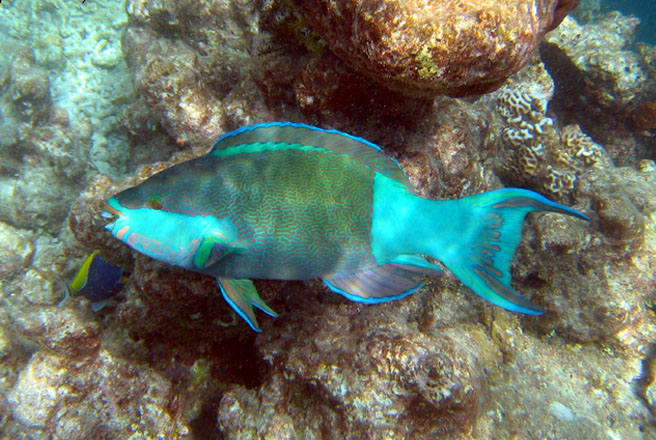
Scarus frenatus
Scientific classification Edit this classification
Kingdom: Animalia
Phylum: Chordata
Class: Actinopterygii
Order: Labriformes
Family: Labridae
Subfamily: Scarinae
Rafinesque, 1810
Genera

Parrotfish (named for their mouths, which resemble a parrot's beak) are a clade of fish placed in the subfamily Scarinae of the wrasse family (Labridae).[1][2] Formerly treated as their own family (Scaridae), genetic studies have found them to be deeply nested within the wrasses, and they are now treated as a subfamily (Scarinae).[3] With roughly 95 species, this group's largest species richness is in the Indo-Pacific. They are found in coral reefs, rocky coasts, and seagrass beds, and can play a significant role in bioerosion.[4][5][6]

Taxonomy

[edit]

Traditionally, the parrotfishes have been considered to be a family level taxon, Scaridae. Although phylogenetic and evolutionary analyses of parrotfishes are ongoing, they are now accepted to be a clade in the wrasses closely related to the tribe Cheilini, and are now commonly referred to as scarine labrids (tribe Scarini, family Labridae).[3][7] Some authorities have preferred to maintain the parrotfishes as a family-level taxon,[8] resulting in Labridae not being monophyletic (unless split into several families).

The following taxonomic placement is based on Eschmeyer's Catalog of Fishes, with tribes based on Viviani et al. (2022):[9][10]

The two tribes are associated with different feeding styles: sparisomatines feed on marine plants and macroalgae, while scarines feed on dead corals and rubble.[10]

Some sources retain the Scaridae as a family, placing it alongside the wrasses of the family Labridae and the weed whitings Odacidae in the order Labriformes, part of the Percomorpha. They also do not support the division of the Scaridae into two subfamilies.[11] However, as such a placement is paraphyletic, they are placed within the wrasses by Eschmeyer's Catalog of Fishes.[1]

Fossil remains of parrotfishes are known, with Bolbometopon sp. from the Early Miocene of Java, Indonesia and Sri Lanka, Calotomus preisli from Miocene Austria, along with indeterminate and dubious species found from the Ypresian of the Eocene onwards.[7]

Description

[edit]
Parrotfish skeleton

Parrotfish are named for their dentition,[12] which is distinct from other fish, including other labrids. Their numerous teeth are arranged in a tightly packed mosaic on the external surface of their jaw bones, forming a parrot-like beak with which they rasp algae from coral and other rocky substrates[13] (which contributes to the process of bioerosion).

Maximum sizes vary within the group, with the majority of species reaching 30–50 cm (12–20 in) in length. However, a few species reach lengths in excess of 1 m (3 ft 3 in), and the green humphead parrotfish can reach up to 1.3 m (4 ft 3 in).[14] The smallest species is the bluelip parrotfish (Cryptotomus roseus), which has a maximum size of 13 cm (5.1 in).[15][16][17]

Protective mucus

[edit]
Scarus zelindae in its mucus cocoon

Some parrotfish species, such as the queen parrotfish (Scarus vetula), secrete a mucus cocoon, particularly at night.[18] Prior to going to sleep, some species extrude mucus from their mouths, forming a protective cocoon that envelops the fish, presumably hiding its scent from potential predators.[19][20] This mucus envelope may also act as an early warning system, allowing the parrotfish to flee when it detects predators such as moray eels disturbing the membrane.[20]

The skin itself is covered in another mucous substance which may have antioxidant properties helpful in repairing bodily damage,[18][20] or repelling parasites, in addition to providing protection from UV light.[18]

Feeding

[edit]
The strong beak of Bolbometopon muricatum is suited to 'excavating', grinding the sturdiest corals.
The beak of Calotomus japonicus is suited to 'browsing' on seagrass, macroalgae, and epilithic algae without touching the rocky substrate.

Most parrotfish species are herbivores, feeding mainly on epilithic algae.[21][22][23] A wide range of other small organisms are sometimes eaten, including invertebrates (sessile and benthic species, as well as zooplankton), bacteria and detritus.[24] A few mostly larger species such as the green humphead parrotfish (Bolbometopon muricatum) feed extensively on living coral (polyps).[13][22][23] None of these are exclusive corallivores, but polyps can make up as much as half their diet[23] or even more in the green humphead parrotfish.[21] Overall it has been estimated that fewer than one percent of parrotfish bites involve live corals and all except the green humphead parrotfish prefer algae-covered surfaces over live corals.[23] Nevertheless, when they do eat coral polyps, localized coral death can occur.[23] Their feeding activity is important for the production and distribution of coral sands in the reef biome, and can prevent algal overgrowth of the reef structure. The teeth grow continuously, replacing material worn away by feeding.[16] Whether they feed on coral, rock or seagrasses, the substrate is ground up between the pharyngeal teeth.[23][25] After they digest the edible portions from the rock, they excrete it as sand, helping create small islands and the sandy beaches. The humphead parrotfish can produce 90 kg (200 lb) of sand each year.[26] Or, on average (as there are so many variables i.e. size/species/location/depth etc.), almost 250 g (9 oz) per parrotfish per day. While feeding, parrotfish must be cognizant of predation by one of their main predators, the lemon shark.[27] On Caribbean coral reefs, parrotfish are important consumers of sponges.[28] An indirect effect of parrotfish grazing on sponges is the protection of reef-building corals that would otherwise be overgrown by fast-growing sponge species.[29][30]

Analysis of parrotfish feeding biology describes three functional groups: excavators, scrapers and browsers.[21] Excavators have larger, stronger jaws that can gouge the substrate,[31] leaving visible scars on the surface.[21] Scrapers have less powerful jaws that can but infrequently do leave visible scraping scars on the substrate.[21][31] Some of these may also feed on sand instead of hard surfaces.[21] Browsers mainly feed on seagrasses and their epiphytes.[21] Mature excavating species include Bolbometopon muricatum, Cetoscarus, Chlorurus and Sparisoma viride.[21] These excavating species all feed as scrapers in early juvenile stages, but Hipposcarus and Scarus, which also feed as scrapers in early juvenile stages, retain the scraping feeding mode as adults.[21][31] Browsing species are found in the genera Calotomus, Cryptotomus, Leptoscarus, Nicholsina and Sparisoma.[21] Feeding modes reflect habitat preferences, with browsers chiefly living in the grassy seabed, and excavators and scrapers on coral reefs.[32][21]

Recently, the microphage feeding hypothesis challenged the prevailing paradigm of parrotfish as algal consumers by proposing that:

Most parrotfishes are microphages that target cyanobacteria and other protein-rich autotrophic microorganisms that live on (epilithic) or within (endolithic) calcareous substrata, are epiphytic on algae or seagrasses, or endosymbiotic within sessile invertebrates.[33]

Microscopy and molecular barcoding of coral reef substrate bitten by scraping and excavating parrotfish suggest that coral reef cyanobacteria from the order Nostocales are important in the feeding of these parrotfish.[34] Additional microscopy and molecular barcoding research indicates that some parrotfish may ingest microscopic biota associated with endolithic sponges.[35]

Life cycle

[edit]
Terminal phase rusty parrotfish (Scarus ferrugineus) fighting.

Most tropical species form large schools when feeding and these are often grouped by size. Harems of several females presided over by a single male are normal in most species, with the males vigorously defending their position from any challenge.[citation needed] As pelagic spawners, parrotfish release many tiny, buoyant eggs into the water, which become part of the plankton. The eggs float freely, settling into the coral until hatching.[citation needed]

Sex change

[edit]
The bicolor parrotfish (Cetoscarus bicolor) was described by Eduard Rüppell in 1829. In 1835, he mistakenly described the terminal phase, featured on this photo, as a separate species, C. pulchellus

The development of parrotfishes is complex and accompanied by a series of changes in sex and colour (polychromatism). Most species are sequential hermaphrodites, starting as females (known as the initial phase) and then changing to males (the terminal phase). In many species, for example the stoplight parrotfish (Sparisoma viride), a number of individuals develop directly to males (i.e., they do not start as females). These directly developing males usually most resemble the initial phase, and often display a different mating strategy than the terminal phase males of the same species.[36] A few species such as the Mediterranean parrotfish (S. cretense) are secondary gonochorists. This means that some females do not change sex (they remain females throughout their lives), the ones that do change from female to male do it while still immature (reproductively functioning females do not change to males) and there are no males with female-like colors (the initial phase males in other parrotfish).[37][38][39] The marbled parrotfish (Leptoscarus vaigiensis) is the only species of parrotfish known not to change sex.[16] In most species, the initial phase is dull red, brown, or grey, while the terminal phase is vividly green or blue with bright pink, orange or yellow patches.[16][8] In a smaller number of species the phases are similar,[16][8] and in the Mediterranean parrotfish the adult female is brightly colored, while the adult male is gray.[40] In most species, juveniles have a different color pattern from adults. Juveniles of some tropical species can alter their color temporarily to mimic other species.[41] Where the sexes and ages differ, the remarkably different phases often were first described as separate species.[8] As a consequence early scientists recognized more than 350 parrotfish species, which is almost four times the actual number.[36]

Female Scarus psittacus (= initial phase)
Male Scarus psittacus (= terminal phase)

The sex change in parrotfishes is accompanied by changes in circulating steroids. Females have high levels of estradiol, moderate levels of T and undetectable levels of the major fish androgen 11-ketotestosterone. During the transition from initial to terminal coloration phases, concentrations of 11-ketotestosterone rise dramatically and estrogen levels decline. If a female is injected with 11-ketotestosterone, it will cause a precocious change in gonadal, gametic and behavioural sex.[citation needed]

Economic importance

[edit]

A commercial fishery exists for some of the larger species, particularly in the Indo-Pacific,[16] but also for a few others like the Mediterranean parrotfish.[42] Protecting parrotfishes is proposed as a way of saving Caribbean coral reefs from being overgrown with seaweed[43] and sponges.[29][30] Despite their striking colors, their feeding behavior renders them highly unsuitable for most marine aquaria.[16]

A new study has discovered that the parrotfish is extremely important for the health of the Great Barrier Reef; it is the only one of thousands of reef fish species that regularly performs the task of scraping and cleaning inshore coral reefs.[44]

[edit]

Timeline of genera

[edit]
QuaternaryNeogenePaleogeneHolocenePleist.Plio.MioceneOligoceneEocenePaleoceneScarusQuaternaryNeogenePaleogeneHolocenePleist.Plio.MioceneOligoceneEocenePaleocene

References

[edit]

Further reading

[edit]
[edit]
Revisions and contributorsEdit on WikipediaRead on Wikipedia
from Grokipedia
Parrotfishes are a diverse group of approximately 90 species of colorful, tropical marine fish in the family Scaridae (sometimes classified as a subfamily of the wrasses, Labridae), renowned for their fused teeth forming a strong, beak-like structure adapted for scraping algae and other substrates from coral reefs. These medium- to large-sized fish, typically 10–100 cm in length, feature robust bodies covered in large scales and display vivid, iridescent colors and patterns that vary by species, age, and sex. Found exclusively in shallow subtropical and tropical waters worldwide, particularly on coral reefs, rocky reefs, and seagrass beds, parrotfishes are primarily herbivorous or detritivorous, consuming algae, coral mucus, and sediment while excreting fine calcium carbonate sand as a byproduct of their digestion—a process contributing significantly to beach formation in reef environments.[1][2][3] Ecologically, parrotfishes are keystone species in coral reef ecosystems, where their grazing activities control macroalgal overgrowth that could otherwise smother corals, thereby promoting reef resilience and biodiversity. Many species exhibit sequential hermaphroditism, functioning as protogynous (female-to-male sex changers), which influences population dynamics and mating behaviors, often forming harems or schools during diurnal feeding and nocturnal resting phases. Their feeding mechanisms, involving powerful jaw muscles and pharyngeal mills for grinding ingested material, enable diverse trophic roles, from excavating bioerosion to selective algal cropping, though overfishing has led to declines in many populations, underscoring their vulnerability and conservation importance.[3][4][5]

Taxonomy and Classification

Higher Classification

Parrotfish are classified within the class Actinopterygii, the ray-finned fishes, which encompasses the vast majority of extant fish species. They belong to the order Labriformes, a group that includes wrasses, parrotfishes, and related families, previously subsumed under the broader order Perciformes in traditional classifications but elevated to ordinal status based on molecular phylogenetic evidence.[6][7] Within Labriformes, parrotfish are placed in the family Labridae, which comprises wrasses and parrotfishes, reflecting their close evolutionary ties.[8] The parrotfish are specifically assigned to the subfamily Scarinae, a monophyletic clade nested within Labridae, as confirmed by phylogenetic analyses spanning the 2000s to 2025 that demonstrate their evolutionary embedding among wrasse lineages.[9][8] Historically, parrotfishes were recognized as a distinct family, Scaridae, separated from Labridae due to morphological distinctions like their fused dental plates; however, this separation is now considered outdated following robust molecular evidence showing Scarinae as a derived clade sister to certain wrasse subgroups, such as the cheiline labrids.[9] Recent 2025 phylogenetic revisions further solidify this integration, emphasizing the monophyly of Scarinae and its position within a unified Labridae framework that incorporates decades of systematic data.[8] The subfamily Scarinae includes approximately 10 genera, with Scarus representing the largest, encompassing about 52 species primarily distributed across Indo-Pacific reefs. Other prominent genera include Chlorurus, with around 18 species known for their robust builds and algal grazing habits, and Hipposcarus, a smaller genus with 2 species featuring elongated snouts adapted to specific reef niches.[10][11] These genera highlight the structural diversity within Scarinae while underscoring its monophyletic cohesion under Labridae.[8]

Species Diversity

Parrotfish (family Scaridae) encompass approximately 90 to 100 recognized species distributed across 10 genera, reflecting a moderate level of taxonomic diversity within the Labridae family.[12][13] The genus Scarus dominates this diversity, accounting for over half of all species, while others like Chlorurus, Sparisoma, and Bolbometopon contribute smaller but ecologically significant numbers.[9] This species richness underscores the family's adaptation to tropical reef environments, though ongoing taxonomic revisions based on molecular data continue to refine these estimates.[14] The distribution of parrotfish species exhibits stark regional disparities, with the Indo-Pacific harboring the greatest diversity—over 70 species across multiple genera—concentrated in areas like the Great Barrier Reef and the Coral Triangle.[15] In contrast, the Atlantic supports far fewer species, approximately 10 to 12, primarily in genera such as Sparisoma and Scarus, with limited overlap between western and eastern basins due to historical barriers like the Isthmus of Panama.[16][17] Notable examples include the stoplight parrotfish (Sparisoma viride), a widespread grazer in the western Atlantic reefs from Florida to Brazil, the humphead parrotfish (Bolbometopon muricatum), a large-bodied Indo-Pacific species listed as vulnerable due to overfishing and habitat loss, and the greenback parrotfish (Scarus trispinosus), an endangered endemic restricted to the southwestern Atlantic coast of Brazil. Endemism patterns highlight the role of geographic isolation in driving parrotfish speciation, with elevated rates in semi-enclosed or remote regions. The Red Sea, for instance, hosts several endemics such as the heavybeak parrotfish (Chlorurus gibbus), confined to its reefs and Gulf of Aqaba due to unique salinity and temperature gradients.[9] Similarly, the Hawaiian archipelago features restricted species like the spectacled parrotfish (Chlorurus perspicillatus), adapted to isolated Pacific atolls.[18] Recent DNA barcoding studies, including those from 2023 onward, have revealed cryptic species within morphologically similar complexes, potentially increasing recognized diversity by identifying hidden lineages in Indo-Pacific and Atlantic populations.[14][19] Hybridization among parrotfish remains rare but is documented in the genus Scarus, where genetic admixture has given rise to hybrid taxa such as Scarus compressus in the Tropical Eastern Pacific, resulting from crosses between ancient lineages like S. ghobban and S. perrico.[20] These events, though infrequent, illustrate the dynamic evolutionary processes in regions of sympatry and underscore the value of molecular tools in uncovering parrotfish biodiversity.[21]

Evolutionary History

Fossil Record

The fossil record of parrotfish (family Scaridae) is limited but indicates an ancient origin tied to the development of tropical marine ecosystems, with the earliest known remains dating to the Oligocene epoch (approximately 34–23 million years ago), such as beak fragments from South Carolina representing primitive scarines in shallow, reef-like environments during a period of global cooling and reef restructuring.[22] During the Oligocene (approximately 34–23 million years ago), primitive scarines—early members of the parrotfish lineage—appear in the fossil record, such as beak fragments from South Carolina, marking the family's adaptation to cooling climates and the establishment of modern reef structures in the western Atlantic. By the Miocene (23–5.3 million years ago), the record becomes more diverse, with genera like Bolbometopon documented from Early Miocene sites in Java, Indonesia, and Late Miocene deposits in Sri Lanka, highlighting their role as bioeroders in expanding Indo-Pacific reefs. Other notable Miocene fossils include Calotomus preisli from middle Miocene (Badenian) reefs in Austria, providing evidence of parrotfish presence in the closing Tethys Sea. [23] [24] Throughout the Pleistocene (2.6 million to 11,700 years ago), parrotfish lineages experienced minor losses linked to glacial cycles and sea-level fluctuations, but the overall group remained stable, with extant species surviving the Plio-Pleistocene transitions that affected many reef-associated taxa. This resilience is evidenced by continued fossil occurrences in Caribbean and Atlantic sites, underscoring the family's adaptability to episodic environmental stress. [25] [20]

Phylogenetic Relationships

Molecular phylogenetic analyses, including large-scale phylogenomic datasets, have confirmed that parrotfishes of the subfamily Scarinae form a monophyletic clade deeply nested within the wrasse family Labridae, rather than constituting a separate family as previously classified.[8] This placement aligns with the diversification of Labridae following an ancient basal split from the julidine wrasse lineage approximately 60 million years ago during the Paleocene-Eocene transition.[26] A 2025 genome-scale study reconstructing Labridae evolution further supports this topology, highlighting the Scarinae's emergence as a specialized herbivorous radiation within the broader labrid tree, with major lineage divergences occurring in the Eocene (~50 million years ago) and explosive diversification in the Early Miocene (~20 million years ago).[27] Within Scarinae, phylogenetic reconstructions reveal distinct biogeographic clades: the Indo-Pacific parrotfishes constitute a monophyletic assemblage that originated and diversified primarily in the Indo-West Pacific region, serving as the ancestral hub for the subfamily.[9] In contrast, Atlantic species, such as those in the genera Sparisoma and Scarus, represent a derived clade stemming from transpacific migrations of Indo-Pacific ancestors, with final isolation and divergence occurring after the closure of the Isthmus of Panama around 3 million years ago.[20] This vicariance event drove allopatric speciation, resulting in the current transisthmian disjunction observed in genera like Scarus.[28] A hallmark of scarinine evolution is the development of fused lower pharyngeal jaw bones, forming a robust grinding mill adapted for processing algal turf scraped from reef substrates, which specialized in the Early Miocene (~20 million years ago); this co-evolved with the fusion of dental plates into parrot-like beaks around the Oligocene (~32 million years ago).[27] [29] This innovation, documented through comparative morphology and time-calibrated phylogenies, facilitated the transition to obligate herbivory and marked a key adaptive shift within Labridae.[30] Genetic studies employing mitochondrial cytochrome c oxidase subunit I (mtCOI) and nuclear loci have illuminated hybrid zones, particularly in transitional reef areas like the Indo-Pacific, where interspecific gene flow blurs species boundaries.[14] These analyses also reveal cryptic speciation events, with barcode gaps absent in several morphospecies, indicating that 5-10% of parrotfish diversity—potentially including undescribed lineages in genera like Scarus—remains hidden from traditional taxonomy.[31] Such findings underscore the role of molecular data in uncovering evolutionary complexity beyond morphological variation.[32]

Physical Description

Anatomy and Morphology

Parrotfish exhibit a fusiform body shape, which is streamlined and adapted for efficient navigation through complex coral reef environments. Most species range in size from 15 to 50 cm in total length, though the family encompasses a broad spectrum from smaller forms like the slender parrotfish (Cryptotomus roseus) at about 13 cm to larger species exceeding 1 m. The green humphead parrotfish (Bolbometopon muricatum), the largest in the family, can reach up to 130 cm in length and 46 kg in weight.[2][33] A defining feature of parrotfish morphology is their dentition, where numerous small teeth fuse into dental plates forming a robust, parrot-like beak on the jaws. This structure, composed of tightly packed teeth on the premaxilla and dentary bones, is specialized for scraping algae and coral surfaces, with no distinct incisors present. The teeth are continuously replaced through ongoing growth from multiple rows, ensuring durability despite heavy wear.[34][35][2] The body is covered in large cycloid scales, providing flexibility and protection while allowing color variations across species and life stages. Fins are typically robust: the dorsal fin features 9 spines and 10 soft rays, the anal fin has 3 spines and 9 soft rays, and the pelvic fins include 1 spine and 5 soft rays. The caudal fin is strong and often emarginate, enabling bursts of speed for evasion in reef habitats.[2][36] Internally, parrotfish possess powerful jaw adductor muscles, such as the complex adductor mandibulae, which provide the force needed for their scraping bites. Digestion is supported by a pharyngeal jaw apparatus for initial grinding of ingested material, complemented by a long, coiled intestine in the absence of a true stomach, facilitating the breakdown of algae and coral skeletons.[4][2][37]

Coloration and Patterns

Parrotfish display a striking array of colors, including vivid blues, greens, and reds, primarily generated through the interaction of light with pigment-containing chromatophores and iridophore cells in their epidermis and dermis. Chromatophores, such as melanophores for dark pigments, xanthophores for yellows and oranges, and erythrophores for reds, provide the base pigmentation, while iridophores contribute structural coloration via guanine crystal platelets that reflect and interfere with light to produce blues and greens. These cellular mechanisms allow for dynamic visual displays that enhance survival and reproduction on coral reefs.[38] A prominent example of color variation occurs in the queen parrotfish (Scarus vetula), where terminal phase males have bluish to bluish-green bodies with blue markings including stripes on the head and pink centers on scales. In contrast, initial phase individuals, including females, have dark brown bodies with a broad white lateral stripe from the pectoral fin base to the tail base. These differences arise from sex-specific expression of pigments and structural elements, enabling males to signal dominance during territorial defense.[39] Many parrotfish species exhibit distinct color phases tied to maturity and sex, with the initial phase (IP) characterized by duller, mottled reds, browns, or grays in both females and primary males, often featuring cryptic spots or bars that blend with reef substrates. The terminal phase (TP), typically adopted by secondary males following sex change, features brighter, more uniform greens or blues with bold patterns like pink or yellow accents, serving as advertisement signals in social hierarchies. These phase transitions involve hormonal regulation of chromatophore activity and iridophore density, with IP individuals appearing less conspicuous to reduce aggression from TP males.[40] Ontogenetic color changes are widespread in parrotfish, with juveniles often displaying highly patterned, cryptic morphologies that differ markedly from adults, such as bold stripes or spots resembling toxic or unpalatable reef species for mimicry-based protection. For instance, juvenile Scarus species transition through striped patterns that evolve into the solid hues of adults, a process driven by developmental shifts in pigment cell proliferation and dispersal. In older adults, colors may fade under stress or senescence, reducing vibrancy as reproductive activity declines.[41][42]

Physiology

Protective Mucus

Parrotfish secrete a protective mucus envelope from specialized glands in their gill cavity, forming a transparent cocoon that envelops the entire body at night. This glycoprotein-rich slime consists of small proteins approximately 21 kDa in molecular weight, cross-linked through disulphate bonds to create an extensive, durable network.[43][44] The mucus serves multiple defensive functions, primarily masking the fish's odor to evade nocturnal predators such as moray eels, which rely on chemosensory detection.[45] It also possesses antibiotic properties that deter parasites, including gnathiid isopods, by forming a chemical and physical barrier akin to a biological mosquito net.[46][47] Mucus production is regulated by circadian rhythms, initiating each evening as the fish prepare to rest in crevices or open water, with the secretion process taking up to 60 minutes in some species.[48][49] In genera like Chlorurus, the cocoon volume is notably large, fully encasing the body to ensure comprehensive coverage during sleep.[47]

Sensory and Locomotor Adaptations

Parrotfish exhibit trichromatic vision with sensitivity to blue, green, and red wavelengths, enabling them to distinguish algae-covered substrates and conspecifics in the visually complex coral reef environment.[50][51] Their relatively large eyes further support navigation through dimly lit reef crevices and overhangs, where light penetration is limited.[52] In addition to visual adaptations, parrotfish rely on a lateral line system composed of neuromasts along the body to sense water vibrations and pressure changes, allowing early detection of approaching predators.[53] Chemosensory capabilities, particularly through olfactory receptors, aid in locating food sources by detecting dissolved organic compounds in the water column.[54] Locomotor adaptations in parrotfish emphasize agility within intricate reef structures, with robust pectoral fins enabling precise, slow-speed maneuvering and station-holding during feeding.[55] For evasion, they switch to caudal fin propulsion, generating rapid bursts of speed to escape threats.[36] Parrotfish maintain a diurnal activity pattern, foraging actively during daylight hours and seeking nocturnal resting sites, often in sheltered reef positions to minimize predation risk.[56] Specialized gill rakers, arranged in tight clusters, function to filter ingested sediment and detritus during feeding, retaining edible material while expelling excess particles through the opercula.[57] This adaptation supports their role as efficient herbivores in turbid reef conditions.[57]

Habitat and Distribution

Global Range

Parrotfish (family Scaridae) are predominantly distributed across tropical and subtropical marine waters worldwide, with the vast majority of their approximately 90-95 species occurring in coral reef ecosystems. Their range spans three major biogeographic provinces: the Indo-West Pacific, the Atlantic, and the Eastern Pacific, reflecting historical patterns of marine connectivity and isolation. These fishes are absent from temperate and polar regions due to their preference for warm waters typically between 24-30°C, limiting their occurrence to latitudes roughly between 30°N and 30°S.[15][58] The Indo-West Pacific represents the center of parrotfish diversity, encompassing over 80 species from the Red Sea in the west to the Hawaiian Islands in the east, including high-diversity areas like the Indo-Australian Archipelago and the Great Barrier Reef. This province hosts diverse assemblages, such as the more than 30 parrotfish species on the Great Barrier Reef, where they form important components of reef fish communities. In contrast, the Atlantic Ocean supports a much lower diversity, with approximately 10-14 species primarily in the western Atlantic, ranging from the Caribbean Sea and Brazil southward to West Africa. The Eastern Pacific has a limited parrotfish presence, with only about four species occurring in the Tropical Eastern Pacific, such as Scarus compressus and Scarus perrico, mainly off the coasts of Mexico, Central America, and Ecuador.[15][59][17][20] The disjunct distributions between the Atlantic and Pacific parrotfish faunas resulted from the closure of the Isthmus of Panama approximately 3 million years ago, which severed gene flow and promoted speciation through vicariance. This event isolated ancestral populations, leading to distinct evolutionary lineages on either side, with no subsequent natural reconnection. Recent ocean warming has driven poleward range expansions of tropical parrotfish species, particularly in the Pacific; for instance, 2025 assessments document increased sightings and abundance of species like Scarus ghobban off New South Wales, as boundary currents facilitate larval dispersal into cooler subtropical zones.[28][20][60] Endemic hotspots underscore regional biodiversity concentrations within these ranges. The Hawaiian Islands support seven parrotfish species, three of which (Calotomus carolinus, Chlorurus perspicillatus, and Scarus dubius) are endemic, adapted to isolated Pacific island ecosystems. Similarly, the Great Barrier Reef exemplifies a non-endemic but highly diverse hotspot, with its parrotfish assemblages contributing significantly to Indo-Pacific reef dynamics.[61][59]

Habitat Preferences

Parrotfish species predominantly occupy coral reef habitats, ranging from shallow lagoons to fore-reefs at depths of 1 to 30 meters, where they exploit the structural diversity for foraging and refuge.[56][5] These environments are characterized by high algal cover on benthic substrates, which supports their herbivorous diet, and elevated structural complexity such as branching corals and crevices that enhance habitat suitability.[62][63] Preference for such complex structures is evident across species, as they correlate with higher parrotfish densities and reduced predation risk.[64] In terms of substrates, adult parrotfish favor dead coral rubble and rocky outcrops within reefs, which offer stable platforms for grazing on epilithic algal matrices, while avoiding unconsolidated soft sediments that limit mobility and feeding efficiency.[65] Juveniles, in contrast, preferentially utilize seagrass beds and adjacent mangrove fringes as nursery habitats, where the dense vegetation provides protection from predators during early ontogeny.[66] Recent studies from 2025 highlight that juvenile recruitment is particularly enhanced in mangrove-adjacent reef systems, where hydrodynamic connectivity and resource availability facilitate settlement and growth.[67] Parrotfish thrive in warm, clear oligotrophic waters with temperatures typically between 22 and 30°C, conditions prevalent in tropical reef systems that align with their metabolic optima and reproductive cycles.[68] They exhibit tolerance to moderate salinity fluctuations, particularly in estuarine-influenced reef margins, allowing access to transitional habitats without physiological stress.[69] Adults often undertake seasonal migrations to slightly deeper waters within their preferred depth range, responding to variations in water temperature and algal productivity to optimize foraging opportunities.[70]

Behavior

Feeding Habits

Parrotfish are primarily herbivorous, relying on the epilithic algal matrix—comprising turf algae and coralline algae—as their main food source, which they scrape from reef substrates using their fused, beak-like dental plates. This feeding strategy targets the thin layer of microalgae, detritus, and microorganisms adhering to hard surfaces, providing essential nutrients while maintaining reef health. Incidental ingestion of coral polyps occurs during grazing.[15][71] Foraging techniques vary by species and body size, with biting rates reaching up to 100 bites per minute in smaller individuals to efficiently harvest algae. Excavating species, such as those in the genus Scarus, actively remove chunks of substrate along with the algal matrix, creating visible scars on the reef. In contrast, browsing species like those in the genus Sparisoma focus on surface-grazing larger macroalgal fronds without deep excavation. These methods reflect adaptations to different algal forms and reef conditions.[72][73][73] Daily feeding routines exhibit peaks at dawn and dusk, aligning with heightened activity during low-light transitions, followed by sustained grazing throughout daylight hours. Gut passage times typically range from 2 to 6 hours, enabling rapid throughput and multiple daily cycles of ingestion and digestion.[74][75][76] Symbiotic gut microbes play a crucial role in nutrient extraction, breaking down complex algal polysaccharides into usable forms like short-chain fatty acids.[74][75] Dietary variations are evident across ontogeny, with juveniles exhibiting more omnivorous habits that include planktonic prey such as crustaceans and foraminifera alongside algae.[77][78]

Social Structure and Activity Patterns

Parrotfish exhibit diverse social structures that vary by species, life stage, and environmental context. Many species form harems where a dominant terminal-phase male defends a territory containing several initial-phase females, typically numbering from 2 to 7 individuals, against intruders to secure mating opportunities.[16] Outside of breeding periods, non-territorial individuals often aggregate into schools of around 40 fish, primarily consisting of females and immature males, which facilitate foraging and predator avoidance.[79] Social hierarchies within these groups are primarily determined by body size, with larger individuals displaying more dominant behaviors such as priority access to resources and aggressive interactions toward subordinates.[80] Activity patterns in parrotfish are predominantly diurnal, with individuals actively foraging and patrolling territories during daylight hours before retreating to resting sites at night. Terminal-phase males conduct regular territorial patrols to maintain harem integrity and deter rivals, often covering fixed home ranges that constrain group movements.[56] At night, many species secrete a protective mucus cocoon from glands near their gills, enveloping themselves in a transparent barrier that masks their scent and reduces predation risk while they sleep in crevices or open water.[47] Some species undertake seasonal migrations to specific spawning aggregation sites, traveling along reef contours to rendezvous during peak reproductive periods.[81] Communication among parrotfish relies heavily on visual cues during social interactions. Dominant males employ displays such as fin flaring—extending dorsal and pelvic fins—and chasing subordinates or intruders to assert hierarchy and defend territories.[40] Acoustic signals, including low-frequency grunts produced during agonistic encounters, supplement these visuals, as documented through hydrophone recordings that capture broadband sounds from jaw movements and body vibrations in reef environments.[82] Variations in social structure occur across species, particularly in larger forms. For instance, the bumphead parrotfish (Bolbometopon muricatum) often exhibits more solitary behavior in adults, with individuals foraging independently or in small, loose groups rather than forming large harems or schools, reflecting adaptations to their size and low population densities.[83] In Pacific reefs, schools of smaller parrotfish species have been observed engaging in cooperative defense, mobbing predators like jacks through synchronized chases and displays to disrupt attacks.[53]

Reproduction and Life Cycle

Reproductive Biology

Parrotfish exhibit protogynous hermaphroditism, a reproductive strategy in which individuals typically mature first as females before potentially transitioning to males, though some species include primary males that develop directly as males without prior female function.[84] Females generally reach sexual maturity at sizes ranging from 20 to 30 cm, depending on the species and environmental conditions, with examples such as the rivulated parrotfish (Scarus rivulatus) maturing at approximately 17 cm.[85] Primary males, which are less common, often resemble initial-phase females in coloration and behavior, while secondary males arise from sex-changed individuals and adopt a more vibrant terminal-phase morphology to attract mates.[84] Spawning in parrotfish occurs primarily through group aggregations in shallow reef waters, where males and females gather in leks—communal display areas—to facilitate broadcast fertilization.[59] During these events, terminal-phase males release clouds of sperm into the water column, while females expel eggs, often in gelatinous ribbons, to maximize fertilization success; pair spawning by territorial males with individual females also occurs but is less dominant in many species.[86] These spawning activities peak during summer months and are frequently synchronized with lunar cycles, such as around the full or new moon, to optimize larval dispersal and survival.[87] Fecundity varies by species and body size but typically ranges from thousands to over 60,000 eggs per spawning event, as observed in the stoplight parrotfish (Sparisoma viride), enabling high reproductive output despite external fertilization risks.[88] Fertilized eggs hatch into pelagic larvae within about 25 hours, which then drift in the water column for 2 to 4 weeks—approximately 25 to 31 days in species like the bumphead parrotfish (Bolbometopon muricatum)—before settling onto reefs.[89] There is no parental care post-spawning; however, territorial males actively defend areas containing multiple females to secure mating opportunities and protect against intruders.[90]

Sex Change and Ontogeny

Parrotfish life history encompasses distinct developmental stages, starting with larval settlement onto reef habitats. Post-larval parrotfish typically settle at sizes ranging from 10 to 20 mm in total length, marking the transition from a pelagic existence to a benthic lifestyle.[91] This settlement phase is critical, as newly settled individuals face intense environmental pressures before entering the juvenile stage. The juvenile phase generally spans 1 to 2 years, during which fish grow rapidly while exhibiting distinct coloration patterns that aid in camouflage and predator avoidance.[92] Juveniles transition to sexual maturity as initial-phase adults, primarily females, with growth continuing into adulthood over 5 to 10 years, though maximum lifespans vary by species and can extend longer in larger forms.[93] A defining feature of parrotfish ontogeny is sequential hermaphroditism, specifically functional protogyny, where individuals develop as females before potentially changing sex to become males. This process is socially mediated and often triggered by the removal or death of a dominant male in the group, prompting the largest or oldest female to initiate sex reversal.[84] The physiological transformation involves rapid gonadal restructuring, with ovarian tissue degenerating and testicular tissue forming, typically completing within 1 to 3 weeks.[94] Concurrently, behavioral shifts occur, including the adoption of male courtship displays and territorial aggression, ensuring reproductive continuity in harem-like social structures. Coloration may also change during this transition, aligning with terminal-phase male patterns.[95] Growth in parrotfish is characterized by high initial rates that decelerate with age, following patterns described by the von Bertalanffy growth function. Early post-settlement growth can reach 5 to 15 cm per year in smaller species, supporting quick attainment of protective sizes, before slowing to sustain longevity.[96] Age validation through otolith analysis, including a 2024 radiocarbon study on western Atlantic species, confirms accurate ageing and reveals maximum lifespans over 30 years in some cases, far exceeding prior estimates for certain taxa.[97] Mortality patterns reflect these stages: juveniles experience high attrition rates exceeding 90% in the first year post-settlement due to predation and competition, while adult mortality is comparatively low, bolstered by larger body sizes and nocturnal mucus cocoons that deter predators.[98]

Ecological Role

Interactions with Coral Ecosystems

Parrotfish are key herbivores in coral reef ecosystems, primarily controlling macroalgal overgrowth through intensive grazing that prevents algae from smothering corals, especially following disturbances like storms or bleaching events. This herbivory maintains space for coral growth and reduces competition between algae and corals for light and nutrients.[99] In regions with abundant parrotfish populations, such as protected areas in the Caribbean, grazing pressure has been linked to significantly lower macroalgal cover compared to overfished sites.[100] By scraping algae from reef substrates, parrotfish also enhance coral recruitment, creating bare surfaces for larval settlement and promoting the establishment of new coral colonies, which supports overall reef resilience in recovery scenarios post-disturbance.[101] Parrotfish participate in mutualistic symbioses with cleaner fish, such as bluestreak cleaner wrasses (Labroides dimidiatus), where cleaners remove ectoparasites and dead tissue from parrotfish bodies in exchange for access to these food sources, improving the health and reducing stress for both species.[102] Indo-Pacific parrotfish species actively choose cleaning stations based on service quality, switching partners if cleaners cheat by consuming client mucus instead of parasites, which sustains the mutualism's benefits.[103] Additionally, while their diet is predominantly algal, parrotfish incidentally consume coral polyps and dead coral tissue during grazing; in balanced populations, this minor corallivory can aid coral health by clearing overgrown or unhealthy polyps, stimulating tissue regeneration, and preventing localized necrosis without overall harm to reef structure.[104] As prey in coral food webs, parrotfish face predation from apex predators like reef sharks (Carcharhinus spp.) and mesopredators such as groupers (Epinephelus spp.), which impose top-down control to limit parrotfish abundance and prevent overgrazing that could disrupt algal-coral dynamics.[105] This predation pressure structures parrotfish populations, with overfishing of predators leading to cascades that increase herbivore densities and alter reef community composition.[106] Terminal phase (TP) males in many parrotfish species, such as the stoplight parrotfish (Sparisoma viride), exhibit strong territoriality, defending fixed home ranges that encompass harems of females and influence local biodiversity by concentrating grazing efforts and excluding competitors, thereby shaping algal distribution and habitat patches.[107] These territorial behaviors enhance reproductive success but can homogenize biodiversity in defended areas by reducing interspecific interactions. Research on climate-induced disturbances reveals shifts in predator behavior following bleaching events, which can indirectly affect parrotfish dynamics in stressed reefs.[108] However, in highly degraded reefs, increased parrotfish populations may accelerate the loss of remaining coral framework through enhanced bioerosion, highlighting the context-dependent nature of their ecological impacts under ongoing climate change.[109][110]

Bioerosion and Sand Production

Parrotfish are key agents of bioerosion on coral reefs, primarily through their consumption of dead coral substrates covered in algal turfs. They ingest significant quantities of calcium carbonate skeleton material, with individual rates varying widely by species and body size, typically ranging from tens to hundreds of grams per day for adults and up to several kilograms for large individuals. This material is processed in the fish's pharyngeal mill—a specialized grinding apparatus in the throat formed by fused teeth—that pulverizes the hard skeleton into smaller fragments. The resulting erosion targets dead coral preferentially, with bioerosion rates across reef communities estimated at 0.1 to 1 kg/m²/year, influenced by parrotfish density and habitat characteristics.[111][112][113] Through this process, parrotfish produce substantial quantities of sediment, excreting fine calcium carbonate particles that comprise over 80% of their fecal output, derived mainly from ingested coral skeletons. These particles, often in the sand-size range (63–2000 μm), contribute directly to beach formation and reef sediment budgets. A single large parrotfish can generate up to 5000 kg of such sediment annually, underscoring their role in sediment production; on a global scale, parrotfish collectively produce hundreds of thousands to millions of tons of sand each year, supporting reef stability and coastal geomorphology.[57][114] Parrotfish exhibit selective feeding, strongly preferring dead coral and rubble over live tissue, which limits direct harm to reef-building corals while facilitating the removal of overgrown substrates. Modeling highlights that this bioerosion activity yields a net positive outcome for reef framework renewal in healthy systems, as the creation of bare space and nutrient-rich sediments enhances coral recruitment and overall ecosystem resilience, though benefits diminish in degraded reefs.[111][57][109] Variation among parrotfish species influences the nature of their erosive impact and sediment output. Excavating species, such as those in the genus Chlorurus, remove larger volumes of substrate per bite and produce coarser sand particles, contributing to more substantial framework modification. In contrast, browser and scraper species generate finer sediments through less intensive grazing, resulting in smaller particle sizes that integrate more readily into reef sands.[57][115] In tropical coral reef environments, particularly in regions with minimal terrestrial sediment input such as the Caribbean and Hawaii, parrotfish play a major role in sand production. Scientists estimate that up to 70% of the sand on white sandy beaches in these areas has been excreted by parrotfish [1] [116], with some studies citing figures as high as 85% in specific locations like certain Pacific islands. This biogenic sand, consisting of fine calcium carbonate particles, results from parrotfish ingesting coral and algae, grinding the indigestible carbonate in their pharyngeal mills, and excreting it as sand. Production rates vary by species and size; a single large adult parrotfish can produce from about 200 pounds (90 kg) to over 1,000 pounds (450 kg) or even up to several tons in exceptional cases annually, contributing significantly to beach, lagoon, and reef island formation. This process is especially crucial in isolated atoll systems where almost all sand is of biogenic origin.

Human Interactions

Economic Importance

Parrotfish support commercial and subsistence fisheries in the Caribbean and Indo-Pacific regions, where they are valued as a food source due to their firm, white flesh with a mild, sweet flavor suitable for grilling, frying, or soups.[117] Common harvesting methods include fish traps, hook and line, and spears, which target these herbivorous reef fish in shallow coastal waters.[118] Although global production data specific to parrotfish is limited, regional catches contribute to broader reef fish landings, with examples such as 44 tons annually in Mexico's Gulf of California highlighting their local economic role.[119] In Pacific island communities, including Hawaii and Guam, parrotfish—locally known as uhu—are integral to traditional cuisine, often prepared fresh through methods like grilling with local seasonings or in ceviche-style dishes such as kelaguen.[120] Smaller species of parrotfish are also collected for the international marine aquarium trade, prized for their vibrant colors and patterns, which add to the appeal of reef-themed aquariums; they form part of the global ornamental fish market involving approximately 55 million marine organisms annually valued at over $2 billion.[121] Parrotfish contribute indirectly to economic value through ecotourism, as their presence in healthy coral reefs attracts snorkelers and divers, supporting a global reef tourism industry estimated at $36 billion per year that sustains millions of jobs in coastal areas.[122] In Hawaii, sustainable management practices, including seasonal commercial fishery closures for species like uhu, aim to balance harvest with tourism benefits by preserving reef ecosystems.[123]

Conservation Status and Threats

Parrotfish populations exhibit varying levels of conservation concern across species, with the majority classified as Least Concern on the IUCN Red List, though many local populations face a heightened risk of extinction due to anthropogenic pressures. Notable exceptions include the greenback parrotfish (Scarus trispinosus), listed as Endangered (EN) owing to severe declines from overfishing in the southwestern Atlantic, and the bumphead parrotfish (Bolbometopon muricatum), assessed as Vulnerable (VU) globally due to its large size and vulnerability to targeted fisheries. These statuses reflect broader trends where larger, more valuable species are disproportionately affected, while data deficiencies persist for around 10% of the approximately 100 parrotfish species, complicating comprehensive assessments.[124][125] The primary threats to parrotfish include overfishing, which is often size-selective and targets larger individuals, skewing sex ratios toward juveniles and females in protogynous species and reducing reproductive output. Climate change exacerbates these pressures by causing coral bleaching events that diminish suitable habitat and algal food sources, leading to indirect population declines as reefs degrade. Pollution and sedimentation from coastal development further impair water quality, smothering reefs and limiting recruitment, while these combined stressors have contributed to localized extirpations in heavily exploited regions. Overexploitation for economic purposes, such as subsistence and commercial fisheries, amplifies these risks, particularly in the Caribbean where parrotfish landings have historically targeted herbivores.[126][127][93] Conservation efforts have focused on regulatory measures to curb exploitation, including national bans on parrotfish harvesting, such as Belize's 2009 prohibition on taking herbivorous fishes, which resulted in significant biomass increases within five years and enhanced overall reef resilience.[128] Marine protected areas (MPAs) in regions like the Caribbean and Indo-Pacific have similarly boosted populations by restricting fishing, with some sites showing up to threefold increases in herbivore biomass post-implementation. In developing countries, recent initiatives as of 2025 emphasize gear restrictions, such as speargun-only allowances and size limits, alongside community-based monitoring to promote sustainable practices. Gaps remain, however, including shortages in life history data for Caribbean species, which hinder accurate population modeling, and limited use of advanced tools like environmental DNA (eDNA) for non-invasive population assessments despite its proven efficacy in detecting reef fish diversity. As of November 2025, ongoing efforts through expanded MPAs and international frameworks like the UN Ocean Decade continue to address these challenges.[129][129]

References

User Avatar
No comments yet.