


Community hub
Recent from talks
Contribute something
Nothing was collected or created yet.
Redcar
View on Wikipedia
Redcar /ˈrɛdkər/ /rɛdkɑːr/ is a seaside town on the Yorkshire Coast in the Redcar and Cleveland unitary authority. It is in the ceremonial county of North Yorkshire, England, and is located 7 miles (11 km) east of Middlesbrough.
Key Information


.jpg)


.svg)

The Teesside built-up area's Redcar subdivision had a population of 37,073 at the 2011 Census.[1] The town is made up of Coatham, Dormanstown, Kirkleatham, Newcomen, West Dyke, Wheatlands and Zetland.[2]
It gained a town charter in 1922, from then until 1968 it was governed by the municipal borough of Redcar. Since the abolition of County Borough of Teesside, which existed from 1968 until 1974, the town has been unparished.[3]
History
[edit]Origins
[edit]Redcar occupies a low-lying site by the sea; the second element of its name is from Old Norse kjarr, meaning 'marsh', and the first may be either Old English (Anglo-Saxon) rēad meaning 'red' or OE hrēod 'reed'.[4][5] The town originated as a fishing hamlet in the 14th century, trading with the larger adjacent hamlet of Coatham.[5] Until the mid-19th century it was within the parish of Marske-by-the-Sea – mentioned in the Domesday Book of 1086.[citation needed]
Zetland lifeboat
[edit]Numerous ships have foundered off the Redcar coastline and many of their wrecks still exist.[6] The Zetland is the world's oldest surviving lifeboat. It was built by Henry Greathead of South Shields and is housed in a volunteer-led sea-front museum.[7] The lifeboat was first stationed at Redcar in 1802.[8][9]
Victorian Era
[edit]As seaside holidays became fashionable in the early 19th century, Redcar's facilities expanded. By 1841, Redcar had 794 inhabitants.[10] In 1846, work was completed on the Middlesbrough and Redcar Railway and the presently named Redcar Central station, created to attract tourism and trade.[11][12]
Redcar's population expansion corresponded with Middlesbrough's, with the discovery in 1850 of iron ore in the Eston area of Cleveland Hills.[13] Redcar prospered as a seaside town drawing tourists attracted by eight miles of sands stretching from South Gare to Saltburn-by-the-Sea.
Plans for a pier were drawn up in 1866, but lay dormant until prompted by the announcement of plans to build a pier at Coatham in 1871.[13][14] Coatham Pier was wrecked before it was completed when two sailing ships were driven through it in a storm. It had to be shortened because of the cost of repairs and was re-opened with an entrance with two kiosks and a roller-skating rink on the Redcar side, and a bandstand halfway along its length.
Redcar Racecourse was created in 1875. Redcar Pier, another pier as well as Coatham Pier, was built in the late 1870s. In October 1880 the brig Luna caused £1,000 worth of damage to this pier. In New Year's Eve 1885 SS Cochrane demolished the landing stage.[13] and in 1897 the schooner Amarant went through the pier. A year later, its head and bandstand burned down.[13]
In October 1898 the Coatham Pier was almost wrecked when the barque Birger struck it and the pier was thereafter allowed to disintegrate. An anchor from the Birger can be seen on the sea front pavement close to the Zetland Lifeboat Museum.
In 1907 a pavilion ballroom was built on Redcar Pier behind the entrance kiosks and in 1928 it was extended.[14] A glass house for concerts was added to the remains of Coatham Pier's entrance. The presently named Redcar East railway station was built in 1929.
In 1929 Coatham Pier's glasshouse was replaced by the New Pavilion theatre. After the war, comedian and entertainer Larry Grayson coined his catchphrase "Shut that Door!" while performing there, since the stage door was open to the cold North Sea breeze.[15]
Second World War
[edit]Redcar Pier was deliberately breached (sectioned) in 1940 to prevent its use by enemy invasion forces.[14] As a result of sectioning, damage by a mine explosion and deterioration it was never reconnected and instead allowed to become even more dilapidated.[16]
Post war
[edit]
.jpg)
In 1964 the New Pavilion Theatre was transformed into the Regent Cinema. The Redcar Pier pavilion continued in use after the war but storm damage led to it being declared unsafe and it was demolished in 1980–1981.[5][13]
Redcar Steelworks
[edit].jpg)
.jpg)
The town's main employers in the post-war era were the nearby Teesside Steelworks at Warrenby, founded by Dorman Long in 1917, and the ICI Wilton chemical works. The steel produced at Dorman Long was used to build the Sydney Harbour Bridge, Tyne Bridge, Auckland Harbour Bridge and many others. Both the Warrenby and Lackenby sites became part of Tata Steel when Corus was taken over in 2007, but continued to trade under the Corus name until at least February 2008. SSI bought the plant from Tata Steel in February 2011, for £320 million.
After a two-year hiatus following the mothballing of the plant in February 2010, steel was once again being made at Redcar. The Thai owners of the former Corus Plant at Lackenby, Sahaviriya Steel Industries (SSI), re-ignited the blast furnace, one of the largest in Europe, on 15 April 2012.[17]
On 18 September 2015, production was paused due to the decline in steel prices.[18] On 28 September 2015, the plant was "mothballed" amid poor steel trading conditions across the world and a drop in steel prices.[19] On 2 October, the owner of the site, SSI UK, entered liquidation. On 12 October 2015 the administrator announced that there was no realistic prospect of finding a buyer and the ovens would be extinguished.
Governance
[edit]Wards and areas
[edit]Wards periodically change, as of 2018 the town is made up of Coatham, Dormanstown, Kirkleatham, Newcomen, West Dyke, Wheatlands and Zetland.[2] Redcar is made up of areas that do not lend their name to a ward: Warrenby, Lakes Estate, Redcar East, The Ings, Ings Farm, Mickledales and Westfield.
Authority
[edit]Redcar was formerly a township and chapelry in the parishes of Marske and Upleatham.[20] In 1866, Redcar became a separate civil parish. A district in Redcar's name formed in 1885. Three years after the district was formed, the centuries-old Yorkshire authority was replaced by the North Riding of Yorkshire county council. The district became an urban district in 1894.[3]

The settlement's town charter occurred in 1922, the district was able to be styled as a municipal borough and the settlement as a town. On 1 April 1974 the parish was abolished and merged with Teesside and Marske.[21]
The 1974 reform created the non-metropolitan County of Cleveland, under the Langbaurgh non-metropolitan district. The county was also inserted into the North East England region. After further changes in 1996, the district became a unitary authority called Redcar & Cleveland in the ceremonial county of North Yorkshire, the county straddling two regions of England.[22]
The North East England region was sub-divided into combined authorities. In May 2017, the Tees Valley which includes Redcar, elected its first mayor. Ben Houchen has been Tees Valley Mayor since 2017, winning the inaugural mayoral election in the combined authority. Houchen was re-elected in 2021 and won a third term in 2024.
Parliament
[edit]The town of Redcar is within the Redcar parliamentary constituency, which also includes neighbouring South Bank, Eston, Ormesby (part), Nunthorpe (part) and Guisborough.
Culture and community
[edit]Culture
[edit]
.jpg)
The Palace Hub, on the beach front, was built by Redcar and Cleveland Council for the creative and cultural sector of the town. An art gallery and business start up centre are located in the building. The main library is in the Redcar Heart building in the centre of the town and there is a long-standing Redcar Literary Institute, which was founded in 1896.
Redcar is home to the Tuned In! Centre, which opened in 2011 and overlooks the sea front. The multi purpose venue hosts live music as well as creative workshops for young people. The annual event Clubland on the Beach, which showcases dance acts attracting visitors from across the country, has been held at Majuba Road in Redcar for the past three years.
Parks
[edit]
.jpg)
The town has had several parks built for tourism: Coatham Enclosure, Locke Park, Zetland Park, Lily Park, an Amusement Park with a roller coaster, and a small sea front park known locally as Titty Bottle Park. The Amusement Park near the railway closed decades ago, and Titty Bottle Park was absorbed into the redeveloped sea front around Redcar Beacon.
Landmarks
[edit]Towers
[edit]

At the west end of High Street is a Grade II listed clock tower,[24] a memorial to King Edward VII.
Construction of the Redcar Beacon started in 2011.[25] In 2013, when the building had been completed, it was nominated for the Building Design Carbuncle Cup for worst new building. It came third in the whole of the UK.[26] In December 2015, the Beacon was damaged by winds from Storm Desmond, with several large pieces of panelling falling onto the beach below. It was also damaged in winter 2016, where a panel from the top fell off in a storm.[27]
Buildings
[edit]-
 Zetland Lifeboat Museum, Esplanade
 -
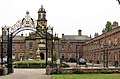 Turner's Hospital, Kirkleatham
 -
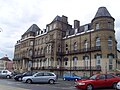 Former Coatham Hotel
.jpg)
.jpg)

There are 23 listed buildings in Redcar.[28] The Grade I Listed Sir William Turner's Hospital in Kirkleatham was built between 1674–1676 and listed on the 14 June 1952.[29]
On the Esplanade is the Grade II-Listed Zetland Lifeboat Museum[30] housing the world's oldest lifeboat, Zetland.
The Victorian, former Coatham Hotel stands on Newcomen Terrace sea front.[31][32] The ballroom of the hotel was home to the Redcar Jazz Club, a venue for bands of the late 1960s and early 1970s.
Structures and sculptures
[edit]In the south-east of Redcar is an aircraft listening post. This was built in 1916, during the First World War, as part of a regional defence system to give early warning of approaching aircraft, principally Zeppelins. It is an example of an acoustic mirror, similar to others found along the east coast of Britain. The mirror was used up until the invention of radar. It is now a Grade II listed building.[33][34]
Demographics
[edit]Religion
[edit]Catholic churches
In 1874, four furnaces were built at the nearby Warrenby ironworks, which attracted a lot of Irish Catholic workers. So, a small church dedicated to the Sacred Heart was built to welcome Redcar's Catholics to Mass. In the same year, a school-chapel was also built, which later became a Methodist chapel. The present Sacred Heart church, was built, in the fully-developed Gothic Revival style, soon afterwards. It opened in 1914.[35]
The architect Frank Spinks was commissioned to build St Augustine's church for the eastern part of the town, in 1937. These parishes were followed by St William's church in Dormanstown and St Alban's church, which was built amongst the newer housing estates of the 1960s and 70s.
With declining congregations, the number of parishes was reduced. In 2011, St Alban’s closed, and in 2012, St William’s also closed. The new parish of Blessed Nicholas Postgate was formed through the union of the parishes of the Sacred Heart and St Augustine, in 2015. Five years later, in 2020, the nearby Saltburn parish of St Bede’s Church, was also absorbed into the Parish of Blessed Nicholas Postgate.[36]
Church of England

To the east of Redcar there is the Anglican Church of St Peter, designed by Ignatius Bonomi and built 1822–29 on land given by Lord Dundas. It is a grade II* listed building. [37] The foundation stone was laid by Lady Turner of Kirkleatham in 1823. Formerly, it was part of Marske Parish, but became an independent parish in 1867.[38] It has a window commemorating local benefactor Sir William Turner.
Transport
[edit].jpg)
Redcar has two railway stations, on the Tees Valley line, with trains operated by Northern and TransPennine Express, namely Redcar Central and Redcar East. A third station Redcar British Steel, which closed in December 2019, served the steelworks.[39][40]
The main roads through the town are the A1085 and the A1042, with the A174 bypassing. Redcar is served primarily by Arriva North East buses, connecting Redcar with the surrounding towns and villages.
The Pangea North and CANTAT-3 submarine telecommunication cables both come ashore between Redcar and Marske-by-the-Sea.[41]
Education
[edit]The town's further education college is Redcar & Cleveland College.
The town's secondary schools are: Outwood Academy Redcar, Sacred Heart Catholic Secondary and Rye Hills Academy.
There are eleven primary schools in Redcar: Coatham, Dormanstown, Green Gates, Ings Farm, John E Batty, Lakes, Newcomen, Riverdale, St Benedict's, Wheatlands and Zetland.
Media
[edit]Local news and television programmes are provided by BBC North East and Cumbria and ITV Tyne Tees, the local television station TalkTeesside also broadcasts to the area. Television signals are received from the Bilsdale TV transmitter.[42]
Local radio stations are BBC Radio Tees, Heart North East, Capital North East, Smooth North East, Greatest Hits Radio Teesside, and Zetland FM, a community based radio station which broadcast from its studios on Newcomen Terrace in the town.[43]
The town is served by the local newspapers, East Cleveland Herald & Post which is published by the TeessideLive.[44] The Northern Echo also covers the area.[45]
Sport
[edit]In Coatham is Cleveland Golf Club, the first golf club to be formed in Yorkshire. It was established in 1887 and is a links course.[46] Also in Coatham is Redcar Cricket Club, which play in the NYSD league,[13][47] and Redcar Running Club.[48]
In association football, Redcar Athletic currently compete in the Northern Premier League Division One East while Redcar Town play in Northern League Division Two. Redcar Rugby Union Football club play at Mackinlay Park.[49]

Redcar Racecourse is one of nine thoroughbred horse racecourses in Yorkshire. There is also a motorcycle speedway racing team, the Redcar Bears racing in the SGB Championship. The race track is at the South Tees Motorsport Park in Southbank Street, South Bank and is unusual in that one bend is more highly banked than the other.[50] The team was formerly captained by 1992 World Champion Gary Havelock and was formerly managed by his father Brian.
The town is set to host the 2022 Tour of Britain stage four, UCI Europe Tour cycling race. The town was previously set to host a stage of the Tour de Yorkshire, the event was affected by the COVID-19 pandemic.[51]
Notable people
[edit]- Gertrude Bell, colonial administrator and contemporary of Lawrence of Arabia spent her youthful years at Red Barns House in Coatham,[52] which became, for a time, the Red Barns Hotel and a listed building.[53][54]
- Roy Chubby Brown, Stand up comedian[citation needed]
- Dylan Cartlidge, singer and multi-instrumentalist[citation needed]
- David Coverdale, lead singer with Deep Purple and Whitesnake[55]
- Pip Donaghy, actor[56]
- Mike Dunn, snooker player[citation needed]
- Felicity Finch, actor[57]
- Tanni Grey-Thompson, paralympian[58]
- Hayden Hackney, footballer[citation needed]
- Danny Hart, mountain biker[59]
- Rex Hunt, governor of the Falkland Islands during the 1982 invasion by Argentina, attended Coatham School.
- Jordan Jones, Rangers FC and Northern Ireland national football team midfielder was born in Redcar.[citation needed]
- June Laverick, actor[60]
- Mo Mowlam represented Redcar parliamentary constituency in the House of Commons.[61]
- Chris Norman, founder member and former lead singer of Smokie[62]
- Anne Reid, actor[63]
- Cole Robinson, international documentary filmmaker[64]
- David Wheater, former footballer[65]
- Pete York, drummer with the Spencer Davis Group and session drummer[66]
Film and television
[edit]- Atonement

In 2006, Redcar was used as a location for the film adaptation of the Ian McEwan novel Atonement. The Coatham Hotel, Regent Cinema, a section of Newcomen Terrace and part of the beach were dressed as 1940s Dunkirk. Filming took place across three days in August 2006, with local men playing the soldiers.[67][68]
- The Secret Millionaire
In 2010, Redcar was featured on the Channel 4 television programme The Secret Millionaire. David Jamilly a humanitarian, philanthropist and self-made millionaire, visited the Redcar community and gave £25,000 to Zoë's Place for a sensory room, £25,000 to Redcar Amateur Boxing Club to start an Olympic fund, and £25,000 to Sid's Place for special counselling.
There was a subsequent visit on 14 May to a screening at Redcar's cinema, attended by the mayor and mayoress along with all the charities and people involved.[citation needed] The feature of the documentary involved the closure of the nearby Corus steelworks as well as the charities. On 9 December 2011, Jamilly opened the new Redcar Education Development centre in Park Avenue, Redcar. The centre provides day care for adults with learning difficulties. He also opened the Redcar Primary Care Hospital on 9 December 2011 and the new Sid's Place on 15 December 2011.
- The Mighty Redcar
The town was filmed for the 2018 BBC television documentary The Mighty Redcar. The four-part series followed young people from Redcar and surrounding towns as they completed their studies and looked for work.[69]
See also
[edit]References
[edit]- ^ a b UK Census (2011). "Local Area Report – Redcar Built-up area Sub division (E35000002)". Nomis. Office for National Statistics. Retrieved 13 August 2021.
- ^ a b "Local electoral arrangements finalised for Redcar and Cleveland". Archived from the original on 19 July 2021. Retrieved 19 July 2021.
- ^ a b "Redcar Tn/CP". Archived from the original on 2 August 2021. Retrieved 1 August 2021.
- ^ Simpson, David (2009). "Yorkshire Place-Names P to S". Yorkshire. Archived from the original on 14 April 2010. Retrieved 31 August 2010.
- ^ a b c Fiona (29 April 2009). "History of Redcar". Gazette Live. Archived from the original on 20 April 2013. Retrieved 9 June 2009.
- ^ "Redcar Rocks". Dive Norway. Archived from the original on 23 November 2015. Retrieved 23 November 2015.
- ^ "The Zetland Lifeboat Museum enters a new era". RNLI. 16 March 2015. Archived from the original on 10 July 2015. Retrieved 3 August 2015.
- ^ "Welcome – Zetland Lifeboat Museum and Redcar Heritage Centre". Zetland Lifeboat Museum and Redcar Heritage Centre. Archived from the original on 18 October 2015. Retrieved 3 August 2015.
- ^ "World's oldest surviving lifeboat returns to Redcar home". BBC. 6 April 2019.
- ^ "Raydon – Redditch Pages 645–652 A Topographical Dictionary of England. Originally published by S Lewis, London, 1848". British History Online. Archived from the original on 13 July 2020. Retrieved 13 July 2020.
- ^ "The Stockton and Darlington Railway". Newcastle University. Archived from the original on 17 July 2011. Retrieved 16 April 2011.; "Railways and Waggonways in Cleveland". Waggonways in North East England. Archived from the original on 27 April 2012. Retrieved 21 June 2012.
- ^ Ellison, M. H. "The Stockton and Darlington Railway". Newcastle University. Archived from the original on 17 July 2011. Retrieved 27 May 2008.
- ^ a b c d e f "People & Places". redcar.org. Retrieved 5 August 2009.[dead link]
- ^ a b c Delplanque, Paul (31 October 2008). "The End of the Pier Show". Gazette Live – Remember When. Evening Gazette. Archived from the original on 15 April 2010. Retrieved 9 June 2009.
- ^ "this is Redcar & Cleveland History of the Regent Cinema". Redcar-cleveland.gov.uk. 17 August 2017. Archived from the original on 10 February 2017. Retrieved 5 December 2016.
- ^ "Youngsters delve deep to help uncover secrets of the sea". The Northern Echo. 13 August 2003. Archived from the original on 12 December 2013. Retrieved 9 June 2009.
- ^ "Blast furnace at former Corus Redcar steel plant relit". BBC News. BBC. 5 April 2012. Archived from the original on 15 April 2012. Retrieved 15 April 2012.; "Welcome to the British Steel Collection". British Steel Collection. 2011. Archived from the original on 13 September 2011. Retrieved 13 September 2011.
- ^ "SSI Redcar steel plant production 'paused'". BBC News. BBC. 18 September 2015. Archived from the original on 18 September 2015. Retrieved 18 September 2015.
- ^ "SSI Redcar steel plant mothballed, costing 1,700 jobs". BBC News. BBC. 28 September 2015. Archived from the original on 28 September 2015. Retrieved 28 September 2015.
- ^ "History of Redcar, in Redcar and Cleveland and North Riding". A Vision of Britain through Time. Archived from the original on 8 December 2023. Retrieved 8 December 2023.
- ^ "Cleveland Registration District". UKBMDe. Archived from the original on 8 December 2023. Retrieved 8 December 2023.
- ^ "The Cleveland (Structural Change) Order 1995", legislation.gov.uk, The National Archives, 30 January 1995, SI 1995/187, retrieved 13 July 2021
"The Cleveland (Further Provision) Order 1995", legislation.gov.uk, The National Archives, 10 July 1995, SI 1995/1747, retrieved 13 July 2021 - ^ Leigh Rayment's Historical List of MPs – Constituencies beginning with "R" (part 1)
- ^ "Redcar Town Clock". Communigate. Archived from the original on 25 July 2008. Retrieved 27 May 2008.
- ^ "Plans for Redcar's vertical pier approved". BBC News. BBC. 24 November 2010. Archived from the original on 20 July 2011. Retrieved 21 September 2011.
- ^ Smith, Oliver (19 August 2013). "Britain's ugliest new buildings named". Daily Telegraph. Archived from the original on 12 January 2022. Retrieved 19 August 2014.
- ^ "Storm Desmond hits UK". BBC News. BBC. 5 December 2015. Archived from the original on 6 December 2015. Retrieved 5 December 2015.
- ^ "Conservation and Listed Buildings – Redcar". Redcar and Cleveland Borough Council. Archived from the original on 14 October 2011. Retrieved 10 June 2009.
- ^ Historic England. "Sir William Turner's Hospital (1310786)". National Heritage List for England. Retrieved 18 July 2021.
- ^ "Royal National Lifeboat Institute Zetland Lifeboat Museum and Attached Wall, Redcar". British Listed Buildings. Archived from the original on 3 December 2013. Retrieved 17 June 2012.
- ^ "The Coatham Hotel 1905". Communigate. Archived from the original on 24 July 2008. Retrieved 27 May 2008.; Garratt, Mick. "Former Coatham Hotel". Geograph. Archived from the original on 28 April 2008. Retrieved 27 May 2008.
- ^ "Town Clock". British Listed Buildings. Retrieved 17 June 2012.
- ^ Grantham, Andrew. "Redcar sound mirror". Sound mirrors. Archived from the original on 6 October 2011. Retrieved 27 May 2008.
- ^ "Listening Post 330 Metres of Wheatlands Farmhouse, Redcar". British Listed Buildings. Archived from the original on 3 December 2013. Retrieved 17 June 2012.
- ^ TAKING STOCK Catholic Churches of England & Wales [1]
- ^ Middlesbrough Diocese: Parish of Blessed Nicholas Postgate [2]
- ^ "Church of St Peter, Redcar". British Listed Buildings. Retrieved 17 July 2012.
- ^ "History". St Peter's Church, Redcar. Archived from the original on 13 July 2020. Retrieved 13 July 2020.
- ^ "Bishop Auckland and Darlington to Middlesbrough and Saltburn Timetable" (PDF). Northern. Archived from the original (PDF) on 23 November 2019. Retrieved 22 November 2019.
- ^ "Redcar British Steel Station Information". Northern. Archived from the original on 9 December 2019. Retrieved 22 November 2019.
- ^ Twigg, Chris (9 October 2008). "CANTAT-3 and Pangea North Landing Point". Hidden Teesside. Archived from the original on 16 April 2012. Retrieved 17 June 2012.
- ^ "Bilsdale (North Yorkshire, England) Full Freeview transmitter". UK Free TV. 1 May 2004. Archived from the original on 3 September 2023. Retrieved 7 January 2024.
- ^ "About Zetland FM". Archived from the original on 19 December 2023. Retrieved 7 January 2024.
- ^ "East Cleveland Herald & Post". British Papers. 15 July 2013. Archived from the original on 7 January 2024. Retrieved 7 January 2024.
- ^ "The Northern Echo". British Papers. 12 May 2014. Archived from the original on 28 October 2023. Retrieved 7 January 2024.
- ^ "Cleveland Golf Club's green light for 'mound'". 26 January 2021. Archived from the original on 3 September 2021. Retrieved 3 September 2012.
- ^ "Redcar Cricket Club – RCC". Play-Cricket. Archived from the original on 31 January 2013. Retrieved 21 June 2012.
- ^ "Welcome to Redcar Running Club". Redcar Running Club. Archived from the original on 1 May 2012. Retrieved 21 June 2012.
- ^ "Redcar Rugby Union Football Club". Pitchero. Archived from the original on 29 July 2012. Retrieved 21 June 2012.
- ^ "Visitor Guide 2012.pdf" (PDF). 2012. Archived from the original (PDF) on 3 December 2013. Retrieved 23 June 2012.
- ^ "Redcar confirmed as Tour of Britain cycling race host town". 10 February 2022. Archived from the original on 10 February 2022. Retrieved 10 February 2022.
- ^ Proud, Keith (6 April 2005). "Queen of the desert". The Northern Echo's History Pages. Retrieved 16 March 2009.[dead link]
- ^ Yale, Pat (9 August 2016). "Gertrude of Arabia: the great adventurer may finally get her museum". The Guardian. Archived from the original on 8 April 2023. Retrieved 10 August 2016.
- ^ "Red Barns House and Red Barns Hotel, Redcar". British Listed Buildings. Retrieved 17 June 2012.
- ^ "David Coverdale". Wearsideonline.com. Archived from the original on 27 January 2007. Retrieved 27 May 2008.
- ^ "Pip Donaghy". IMDb.com. Archived from the original on 5 August 2015. Retrieved 4 August 2017.
- ^ Robson, Dave (29 June 2017). "Award for Teesside actress 4m people a week listen to". Gazette Live. Archived from the original on 3 December 2018. Retrieved 3 December 2018.
- ^ "Dame Tanni Grey Thompson DBE". Creating Excellence. Archived from the original on 16 October 2008. Retrieved 9 August 2008.
- ^ "UCI MTB World Championship | UCI MTB World Championship 2016 | Val di Sole, Italy". Red Bull TV. Archived from the original on 15 September 2016. Retrieved 14 September 2016.
- ^ "Place of Birth Search". Internet Movie Database. Retrieved 27 May 2008.[dead link]
- ^ Langdon, Julia (19 August 2005). "Obituary: Marjorie Mowlam". Guardian. Archived from the original on 12 December 2013. Retrieved 9 September 2008.
- ^ "Chris Norman (I)". IMDb.com. Archived from the original on 13 March 2005. Retrieved 10 August 2008.
- ^ Greenstreet, Rosanna (22 November 2014). "Q&A: Anne Reid". The Guardian. Retrieved 8 July 2024.
- ^ Banks, Georgia (30 July 2024). "Redcar filmmaker Cole Robinson making his mark on the international stage". TeessideLive. Reach plc. Retrieved 22 August 2025.
- ^ Taylor, Louise (21 March 2008). "Wheater swaps nights at the bingo for the bright lights of England". The Guardian. Archived from the original on 7 October 2014. Retrieved 20 September 2008.
- ^ "The Spencer Davis Group". geocities.com. Archived from the original on 4 August 2009. Retrieved 20 September 2008.
- ^ Hencke, David (24 May 2006). "Redcar scrubs up for starring role in film version of Atonement". The Guardian. Archived from the original on 9 February 2008. Retrieved 10 June 2009.; "This Month I'm Going Snap Happy on the Atonement Sets". CommuniGate. Archived from the original on 26 September 2007.
- ^ "Redcar". Gazette Live. Teesside: Evening Gazette. Archived from the original on 7 February 2008. Retrieved 27 May 2008.
- ^ "The Mighty Redcar: Review – a moving depiction of town's struggles". The Northern Echo. 6 September 2018. Archived from the original on 14 September 2018. Retrieved 14 September 2018.
External links
[edit]
- Tourist information: this is Redcar & Cleveland
- A Redcar local history site
- Tides at the River Tees entrance on the BBC Archived 14 April 2011 at the Wayback Machine, Easytide, and Tidetimes
- Sunrise and sunset times for Redcar.
| |||||||||||||||||||||||||


Redcar
View on GrokipediaRedcar is a seaside resort town located on the North Sea coast in the borough of Redcar and Cleveland, North Yorkshire, England, within the larger Teesside conurbation.[1]
The town, part of a borough with a population of 136,500 as of the 2021 census, originated as a small fishing village trading with nearby Coatham in the 14th century before expanding into a Victorian-era holiday destination following the opening of the Middlesbrough to Redcar railway in 1846.[2][3][4]
Its development was propelled by the establishment of Redcar Racecourse in 1872, which hosts flat horse racing events and draws visitors to its coastal setting, alongside attractions like the award-winning eight-mile stretch of sandy beaches extending from Coatham to the South Gare breakwater.[5][6]
In the 20th century, Redcar became intertwined with heavy industry, particularly steel production at the Teesside Steelworks founded in 1917, which provided major employment until the site's closure in 2015 due to unsustainable losses from international competition and operational debts exceeding £500 million.[3][7]
The steelworks' shutdown resulted in around 2,000 direct job losses and broader economic disruption, prompting regeneration initiatives focused on tourism, leisure facilities such as the Redcar Beacon viewpoint, and redevelopment of brownfield sites for new industries under frameworks like Teesworks.[8][9]
Geography and Environment
Location and Topography
Redcar is a seaside town situated on the North Sea coast in the unitary authority of Redcar and Cleveland, part of the Tees Valley region in England.[3] It lies immediately south of the Tees Estuary, approximately 11 kilometers east of Middlesbrough, and integrates into the broader Teesside built-up area, which encompasses continuous urban development along the estuary's southern shore.[10] The town's geographic coordinates are approximately 54°37′N 1°04′W, placing it within the ceremonial county of North Yorkshire.[11] , influenced by its North Sea location, resulting in mild winters, cool summers, and consistent precipitation throughout the year. Average annual temperatures hover around 9.5°C, with July recording the highest monthly mean high of 17.9°C and January the lowest at 5.8°C. [15] Winters rarely experience prolonged frost, with average lows in January near 2-3°C, while summers seldom exceed 20°C due to moderating sea breezes. [11] Precipitation averages approximately 650-750 mm annually, distributed fairly evenly but with wetter conditions in autumn and winter, often accompanied by overcast skies covering more than 50% of days. [11] The prevailing westerly winds, strengthened by North Sea fetch, contribute to frequent gales, with mean annual wind speeds exceeding 15 km/h and gusts commonly surpassing 50 km/h during storms. [16] This windy regime supports limited sunshine hours, averaging 1,400-1,500 annually, which tempers the appeal for sun-seeking tourism but favors activities resilient to variable weather, such as historical inshore fishing challenged by turbulent seas. [11] Coastal features include expansive sandy beaches backed by dunes, notably at Coatham Sands, where marram grass stabilizes sediments and fosters habitats for coastal species like sand lizards and nesting birds. These dunes, formed by longshore drift and aeolian processes, exhibit dynamic morphology but face erosion risks from North Sea storm surges, evidenced by post-2023 storm observations of lowered crests, vegetation loss, and beach profile retreat. Submerged peat beds and ancient forest remnants visible at low tide underscore long-term sea-level rise impacts, with the coastline retreating up to several meters per decade in exposed sections due to wave undercutting and sediment deficit. [17] Such features enhance ecological diversity, including saltmarsh transitions supporting invertebrates and migratory waders, while the mild, humid climate promotes lush dune slack vegetation.
History
Pre-Industrial Origins
Redcar emerged as a fishing hamlet in the 14th century, primarily trading with the larger adjacent settlement of Coatham, which served as a market center.[3] The community remained a sub-manor of Marske-by-the-Sea, reflecting its subordinate rural status within the broader parish structure of the North Riding of Yorkshire.[3] By the early 19th century, Redcar functioned as a modest fishing village with fewer than 400 residents, sustained mainly through inshore fishing for crab, lobster, and other seafood, alongside limited agriculture on surrounding marshy lands.[3] The local economy depended on these activities, with fishermen utilizing small boats for coastal operations, contributing essential income to the hamlet amid a predominantly agrarian landscape.[3] A pivotal early development occurred in 1802 when the first lifeboat, later named Zetland, was stationed at Redcar. Built by Henry Greathead of South Shields and delivered on October 7, this vessel marked an early commitment to maritime rescue in the area, eventually saving over 500 lives during its 62 years of service.[18] Historical records indicate scant archaeological evidence of significant pre-14th-century occupation, underscoring Redcar's character as a late-emerging, sparsely populated coastal outpost prior to industrial influences.[3]Victorian Resort Development
Redcar's evolution into a Victorian seaside resort accelerated with the opening of the Middlesbrough and Redcar Railway on 4 June 1846, which connected the town to the burgeoning industrial centers of Teesside and enabled day trips for middle-class visitors drawn to the era's enthusiasm for sea bathing and coastal health benefits.[19][20] Prior to this, Redcar was a modest fishing village with under 400 residents at the century's start, but the railway spurred infrastructural improvements, including the development of a promenade along the extensive sandy beaches stretching miles along the coast.[3][21] ![Former Coatham Hotel][float-right] The town's population grew to 794 by 1841, with further increases into the thousands by mid-century as tourism expanded, supported by bathing machines and assembly rooms catering to visitors escaping urban industrial life in nearby Middlesbrough and Stockton.[3] Prominent among leisure attractions was the establishment of Redcar Racecourse in 1872, relocated from the sands to a dedicated site with a grandstand added in 1875, which drew affluent patrons from Teesside's iron and coal magnates for flat racing events.[5] Architectural enhancements reflected the resort's rising status, including seafront hotels like the Victorian Coatham Hotel on Newcomen Terrace, providing lodging and entertainment such as ballrooms for the seasonal influx of holidaymakers.[22] These developments positioned Redcar as a favored destination for restorative seaside excursions, emphasizing its broad beaches and proximity to emerging rail networks without reliance on distant markets.[21]Industrial Expansion and Steelworks
The expansion of heavy industry in Redcar during the early 20th century was driven by the region's rich iron ore deposits in the Cleveland Hills and access to coal from Durham coalfields, enabling efficient steel production. Dorman Long & Co., a leading Teesside steel firm, established rolling mills at Redcar in 1917 to support World War I demands, marking the initial integration of steel manufacturing into the local economy. This development extended steel production eastward from Middlesbrough, capitalizing on coastal access for raw materials and exports.[23][24] To accommodate the influx of workers, Dorman Long constructed Dormanstown as a planned industrial village starting in 1918, designed in a garden suburb style with steel-framed 'Dorlonco' houses to house hundreds of employees and their families. By the 1920s, Dormanstown had become a self-contained community for steelworkers, featuring amenities that contrasted with Redcar's Victorian seaside resort character, though the influx of industrial labor boosted local population and services. The village's layout emphasized modernity and welfare, reflecting company paternalism amid rapid industrialization.[25][26] Under British Steel Corporation after nationalization in 1967, further investments expanded facilities, including a major £400 million ironmaking development at Redcar by the 1970s, incorporating advanced blast furnaces that positioned the site as a key node in Teesside's integrated steel operations. Employment in the sector grew significantly, with the Redcar works supporting thousands of jobs in rolling, smelting, and ancillary processes, leveraging economies of scale from local resources. These expansions intertwined industrial growth with Redcar's economy, shifting it from tourism reliance toward heavy manufacturing while maintaining coastal infrastructure for shipping ore and finished steel.[27][28]Wartime and Post-War Period
During the Second World War, Redcar's coastal location exposed it to aerial attacks and invasion threats, prompting defensive measures including the construction of coastal fortifications such as pillboxes and barriers along The Stray.[29] The nearby South Gare Coastal Battery, manned by 117 Coast Battery of 526 Regiment, provided artillery defense until its closure in February 1945.[30] German raids targeted the Teesside area, with bombs dropped on Redcar killing the town's mayor and several councilors during a meeting, and another incident involving a bomb striking Coatham churchyard, accompanied by the characteristic scream of falling ordnance.[31][32] Incendiary bombs also fell on nearby Warrenby Marsh, highlighting the vulnerability of the industrial and coastal zones.[33] In the immediate post-war years, reconstruction efforts focused on repairing war damage and supporting industrial recovery, though specific initiatives in Redcar emphasized bolstering the steel sector amid national economic rebuilding. The steel industry, including Teesside operations linked to Redcar, underwent nationalization in 1949 under the Iron and Steel Act, followed by further consolidation into the British Steel Corporation in 1967, which facilitated investments and expansions.[34] By the 1970s, this led to the development of major facilities like the Redcar blast furnace, erected in 1976 as part of BSC's modernization drive, providing thousands of stable employment opportunities in heavy manufacturing.[35] These industrial advancements drove population growth in Redcar and surrounding areas, as workers migrated to support the expanding steelworks and related industries during the 1950s and 1960s, transforming the town from a primarily resort-oriented community into a hub reliant on heavy industry for economic stability.[36] The post-war period thus marked a shift toward sustained job creation in steel production, underpinning local prosperity until later challenges emerged.Deindustrialization and Steel Closure
The Sahaviriya Steel Industries (SSI) Redcar steelworks entered compulsory liquidation on 12 October 2015, leading to the shutdown of its blast furnace and coke ovens with the direct loss of 2,200 jobs.[37] This event marked the end of primary steel production on Teesside after nearly a century, as no viable buyer emerged despite efforts to attract investment. The plant's closure was precipitated by plummeting global steel prices, largely due to oversupply from low-cost producers, including Chinese exports subsidized below market rates, alongside elevated UK energy costs that eroded profitability.[38][39] Although the Redcar facility housed Europe's second-largest blast furnace and operated with competitive production costs relative to peers, it remained vulnerable without trade safeguards or ongoing subsidies to counter import dumping.[40] SSI's financial distress, including inability to pay wages and debts, underscored structural uncompetitiveness in a liberalized market where high fixed costs met volatile commodity pricing.[41] Critics of prolonged state aid argued that such interventions distorted market signals, delaying inevitable adjustment to global realities, while proponents highlighted short-term EU state aid constraints limiting UK government options.[42] The immediate economic fallout included around 3,000 on-site contractor redundancies and over 6,000 additional supply chain job losses across Teesside, amplifying local unemployment from a pre-closure claimant rate of approximately 6% to 7% within months.[43][44] Redcar's constituency recorded England's second-highest unemployment rise that year at 16.2%, reflecting the concentrated shock to a steel-dependent economy.[45] UK government responses involved a post-closure £80 million support package for retraining and site redevelopment, but efforts to temporarily sustain furnace operations for potential relights failed amid absent private investment and adherence to EU competition rules.[46] Debates centered on whether protectionist measures, such as tariffs on dumped imports, could have preserved viability versus the view that uncompetitive assets required reallocation to higher-value sectors absent artificial props.[47]Recent Regeneration Efforts
The redevelopment of the former Redcar Steelworks site into Teesworks, initiated post-2015 closure, represents Europe's largest brownfield regeneration project, emphasizing private-sector led transformation into a hub for clean energy, advanced manufacturing, and green industries such as carbon capture, hydrogen production, and wind turbine components. By March 2025, the site's assets totaled £202.1 million, reflecting infrastructure investments and operational advancements, including the 2023 announcement of an electric arc furnace by British Steel to resume steelmaking on a lower-carbon basis. This shift has drawn private entities like BP for net-zero initiatives, prioritizing market-driven diversification over state subsidies, though total private commitments have faced scrutiny for opacity in commercial deals.[48][49][50] Levelling Up funding has complemented these efforts with targeted public investments, including £20.1 million awarded in 2023 for Redcar and Cleveland projects focused on town centre regeneration, enhanced leisure facilities, and improved walking and cycling infrastructure to boost local connectivity and tourism. In February 2024, an additional £20 million was allocated specifically to Redcar and Cleveland—part of a £40 million Teesside package—to accelerate site clearance and community enhancements, yielding partial job recovery in construction and services amid ongoing diversification. Local initiatives, such as the £5.9 million restoration of Redcar Central Station—a Grade II listed structure—began in May 2024 with completion slated for late 2025, converting the dilapidated building into a multi-use hub with retail, workspaces, cafes, and event spaces to serve as a revitalized town gateway.[51][52][53] Marking the 10-year anniversary of the steelworks closure in October 2025, assessments indicate mixed outcomes: measurable progress in site utilization and new sector employment—contrasting pre-closure heavy industry dependency—with over a decade of demolition and repurposing yielding operational facilities, yet persistent challenges including slow job absorption rates and criticisms of regeneration pace and value-for-money transparency in public-private arrangements. Evidence points to reduced local emissions (to 5,224 tonnes in 2024/25) and projected business rates growth from Freeport-linked activities, underscoring causal links between private innovation incentives and incremental economic stabilization, though full-scale recovery remains incomplete without broader market uptake.[48][54][55][56]Economy
Historical Industries
Redcar's economy in the 20th century was dominated by steel production and related metallurgical activities, building on the discovery of iron ore in the nearby Eston Hills in 1850, which spurred the development of ironworks and later steelmaking facilities. The Redcar steelworks, established in 1917 by Dorman Long, became a key component of the Teesside steel complex, contributing significantly to the production of structural steel used in major infrastructure projects worldwide. By the mid-20th century, steel dominated local employment and output, with the area's facilities forming part of Britain's industrial backbone, though vulnerable to international competition and economic cycles evident in the 1980s recessions.[14][57] Fishing, while foundational to Redcar's origins as a 14th-century inshore fleet targeting crab, lobster, and fish, had become secondary by the 1900s as depleted stocks drove many fishermen into steel and mining jobs. The industry provided seasonal income but lacked the scale to rival heavy industry, with historical catches supporting local trade rather than broader economic pillars.[3] Tourism emerged as another supplementary sector following Redcar's growth as a Victorian seaside resort, bolstered by eight miles of beaches and the opening of Redcar Racecourse in 1875, attracting visitors for leisure and events. However, it remained subordinate to steel, offering employment in hospitality but not matching the industrial output or workforce scale of metallurgy. At its peak in the 1970s and 1980s, Teesside's steel operations employed around 40,000 workers across sites including Redcar, underscoring the sector's outsized role before global market pressures began eroding viability.[3][58]Steelworks Impact and Closure
The Redcar steelworks, under Sahavirya Steel Industries (SSI), employed approximately 1,700 workers in high-wage production roles prior to closure, with thousands more supported indirectly through supply chains and related industries, forming a key pillar of local economic activity.[59][60] These positions typically offered earnings far exceeding those in prevailing low-skill service jobs, sustaining household incomes and regional spending in an area with limited diversification.[61] SSI suspended iron and steelmaking on September 18, 2015, amid a global steel price collapse exceeding 50% within a year, primarily attributable to chronic overcapacity—estimated at 35% worldwide—and surges in low-cost exports from China.[62][63][64] The firm entered liquidation in early October, culminating in the Insolvency Service confirming permanent shutdown of the blast furnace and coke ovens on October 12, with no viable buyers emerging despite efforts.[60] Direct job losses totaled 1,700 to 2,200, exacerbating unemployment and triggering contractions in local output, including the sharpest UK manufacturing decline in three years linked to the site's idling.[65][59] Decommissioning burdens fell on taxpayers, with cleanup estimates ranging from £600 million for basic remediation to over £1 billion for full site restoration suitable for redevelopment.[66][67] The abrupt transition intensified mental health strains, evidenced by at least two documented suicides among ex-SSI employees and a near-doubling of local suicide rates to 23 in 2019 from 12 in 2018, though direct causal links to closure versus confounding socioeconomic pressures require nuanced assessment.[68][69] Broader patterns from mass unemployment events indicate elevated suicide risks—up to three-fold in the first post-redundancy year—underscoring the health toll of such disruptions.[70]Current Economic Sectors
Redcar's economy features a mix of process industries, renewables, logistics, and tourism, reflecting diversification from historical manufacturing. The Wilton International site, a 2,000-acre industrial hub on the outskirts of Redcar, anchors chemical and advanced manufacturing activities, hosting operators in petrochemicals, polymers, and utilities provision. Managed by Sembcorp, it supplies steam, power, and infrastructure to tenants, fostering self-sustaining operations through efficient energy systems including gas turbines and biomass facilities.[71][72] Renewable energy initiatives at Wilton International have gained momentum, with projects emphasizing decarbonization and storage. In August 2025, NatPower secured a 32-acre plot for the UK's largest battery storage system at 1GW capacity, aimed at supporting grid stability and green manufacturing integration as part of the East Coast Cluster for carbon capture. Logistics sectors benefit from the site's multimodal access to Teesside ports, enabling efficient freight for heavy processing and waste management industries.[73][74] Tourism contributes through coastal attractions and events, with Redcar's beaches and racecourse drawing visitors. Analysis for 2024 indicated 2,584 direct tourism jobs in Redcar and Cleveland, part of a Tees Valley sector generating £1.4 billion, though day trips predominate over overnight stays. Service-oriented small businesses, including retail and hospitality, support local employment amid this shift.[75][76] Labor market data shows an employment rate of 73.3% and unemployment at 1.9% for Redcar and Cleveland in Q1 2025, indicating stabilization, though output per worker lags national benchmarks in line with Tees Valley trends.[77][78]Regeneration Projects and Challenges
The Teesworks project, redeveloping the former Redcar steelworks site closed in 2015, represents the primary regeneration initiative, transforming 2,300 acres into a hub for advanced manufacturing and green industries through a 2023 joint venture between the South Tees Development Corporation and private partners holding a 90% stake.[79][80] This deal, finalized after remediation efforts, has attracted investments such as GE Renewable Energy's 76,200 sq m offshore wind factory approved in 2021 and plans for electric arc furnaces announced in 2023, aiming to restore steelmaking with lower emissions.[81][82] The venture reported £54 million in profits for the year ending March 2023, with turnover reaching £143 million, signaling financial viability amid projections for 9,000 direct and indirect jobs and £2.7 billion in business rates over time.[83][84] Despite these advances, the project has faced scrutiny over transparency and governance, with a 2024 government review—commissioned in 2023—finding no evidence of corruption or cronyism but criticizing inadequate oversight, opaque decision-making in the joint venture's formation, and risks to taxpayer value from the public body's 10% stake without guaranteed returns.[85][56] Critics, including local councillors, have questioned job creation metrics, labeling them inconsistent or inflated amid disputes over verification methods, while site decontamination has progressed slowly, delaying full utilization of brownfield land.[86][87] Complementary efforts, such as the Levelling Up Fund's allocation of over £20 million in 2023 for Redcar town centre improvements, leisure facilities, and cycling infrastructure, have supported localized renewal, including £11 million for Loftus town centre revitalization.[88] By 2025, ten years post-closure, empirical indicators point to stabilization rather than full recovery, with the site hosting active tenants in net-zero sectors but ongoing challenges in scaling employment to offset the original 2,200 job losses, as governance reforms address prior weaknesses identified in 2024 audits.[48][89] Protests against ancillary proposals, like a waste-to-energy facility, highlight community tensions over environmental impacts and prioritization, though supporters emphasize the venture's role in averting further dereliction.[90] Overall, while private investment has driven tangible infrastructure gains, persistent issues in accountability and decontamination timelines underscore the protracted nature of post-industrial revival in the area.[91]Governance and Politics
Local Administration
Redcar forms part of the Borough of Redcar and Cleveland, a unitary authority established on 1 April 1996 under the Local Government Changes for England (Area and Membership of Councils) Order 1995, which abolished the former Cleveland County Council and transferred its functions to four new unitary councils, including Redcar and Cleveland. As a unitary authority, the Borough Council assumes responsibilities typically divided between district and county levels, encompassing services such as planning, housing, waste collection, social care, education oversight, and economic development.[92] The council consists of 59 elected councillors representing 24 wards across the borough, with Redcar specifically encompassing wards like Coatham (2 councillors) and Dormanstown (2 councillors), which handle localized issues including community facilities and residential planning.[93][94] The council's executive functions are led by a directly elected leader and cabinet, supported by committees for scrutiny, including planning and regulatory roles that influence local development, such as housing allocations and site permissions.[95] Annual Authority Monitoring Reports track performance against local plan targets, for instance, the 2022-2023 report detailing housing completions, affordable housing delivery, and economic indicators amid post-steel industry challenges.[96] These reports highlight ongoing efforts in housing strategy implementation, with the 2019-2024 Housing Strategy addressing supply needs through partnerships with developers and community groups to meet allocations set in the 2018 Local Plan.[97] Local administration intersects with regional governance via the Tees Valley Combined Authority (TVCA), formed in 2016 following a devolution deal that transferred powers from central government for transport, adult skills, and economic regeneration.[98] Redcar and Cleveland Borough Council is a constituent member of TVCA, with its leader holding a voting position on the authority's board and the council undertaking overview and scrutiny functions for TVCA decisions, including major projects like infrastructure investments that impact borough-level planning and funding priorities.[95] This devolved framework enables coordinated responses to economic issues but requires alignment between borough-specific services and mayoral-led initiatives, such as employment programs influencing local housing and skills policies.[99]Parliamentary Representation
The Redcar parliamentary constituency covers the town of Redcar and adjacent coastal settlements in North Yorkshire, including Marske-by-the-Sea, Skelton, Brotton, and Saltburn-by-the-Sea.[100] Following boundary adjustments implemented for the 2024 general election, the seat retains its core coastal focus while incorporating minor revisions to align with population changes in the North East region.[100] Since the July 2024 general election, Redcar has been represented in the House of Commons by Anna Turley of the Labour and Co-operative parties, who secured a majority of 3,323 votes over the Conservative candidate.[101] Turley previously held the seat from 2015 to 2019 before losing it to Jacob Young of the Conservative Party, who represented the constituency from December 2019 until the 2024 election.[102] Prior to 2019, Redcar was a Labour stronghold, with the party retaining the seat through multiple elections dating back to its creation in 1974, including victories by MPs such as Vera Baird (2001–2010) and Anna Turley in 2015.[103] The 2019 result marked a notable departure, as Young won with 41.6% of the vote amid widespread local economic disruption from the 2015 closure of the SSI UK steelworks, which eliminated approximately 2,200 direct jobs and triggered broader supply chain losses exceeding 3,000 positions.[60] This event, stemming from failed acquisition bids and global steel market pressures, heightened scrutiny of industrial policy and contributed to the constituency's 67% vote in favor of Brexit in the 2016 referendum, influencing subsequent parliamentary contests.[54]Political Dynamics and Voter Shifts
Redcar, long a Labour stronghold in the UK's parliamentary landscape, experienced a pronounced ideological realignment in the 2019 general election, emblematic of broader "Red Wall" voter shifts in post-industrial northern constituencies. The Conservative candidate Jacob Young captured the seat on December 12, 2019, defeating Labour incumbent Anna Turley by a margin of 3,527 votes—equivalent to 8.6% of valid votes cast—on a turnout of 62% from an electorate of 65,864.[104] This victory reversed decades of Labour dominance, with the constituency having returned Labour MPs consistently since its creation in 1974, including majorities exceeding 10,000 votes in the 1990s and early 2000s. The shift aligned with strong local support for Brexit—Redcar's area voted 66% Leave in the 2016 referendum—and appeals to "levelling up" policies promising regional investment, which resonated amid perceptions of metropolitan neglect.[105] Empirical analyses of voter behavior in Redcar and similar seats highlight causal links to distrust in Labour's establishment wing, rooted in deindustrialization-era policies. The 1967 nationalization of the steel industry under Labour's Harold Wilson government, followed by repeated interventions, fostered inefficiencies including overmanning and chronic losses totaling £1.4 billion by the early 1980s, exacerbating plant rationalizations that hollowed out local employment without sustainable alternatives.[106] Voter interviews conducted in Red Wall areas, including Teesside locales like Redcar, reveal recurring themes of betrayal: working-class respondents cited Labour's failure to shield communities from global competition post-nationalization, contrasting with perceived elite detachment on issues like immigration and cultural change.[107] This disillusionment, compounded by Labour's pro-Remain stance, drove a 12.8% swing to Conservatives in 2019, per uniform swing calculations from 2017 results where Labour held a 7,938-vote majority.[108] Ongoing political debates in Redcar center on steel sector narratives, pitting protectionist impulses against free-market reforms. Local sentiment, shaped by the 2015 closure of the SSI Redcar steelworks that eliminated 1,700 direct jobs and triggered a 20% rise in local unemployment, favors tariffs and subsidies to counter cheap imports, as articulated in parliamentary critiques of unmitigated globalization.[68] Proponents of protectionism argue it addresses causal asymmetries in energy costs and dumping—evident in UK steel's 40% production drop since 2015—while free-market advocates, drawing from privatization-era efficiencies under British Steel plc, warn of distortionary state interventions inflating costs without competitiveness.[109] These tensions underscore Redcar's volatility, with the 2024 election seeing Labour reclaim the seat amid national Tory losses, yet persistent Reform UK gains signaling unresolved working-class alienation from both major parties.[110]Demographics
Population Trends
According to the 2011 Census, the Redcar subdivision within the Teesside built-up area had a population of 37,073.[111] The 2021 Census recorded 37,651 residents in this subdivision, indicating an average annual population change of 0.16% over the decade.[111] In the broader Redcar and Cleveland unitary authority, the 2011 Census population stood at 135,177, increasing to 136,531 by 2021—a growth of 1.0%, substantially below the 6.0% national average for local authorities in England and Wales.[2][112] This modest rise reflects limited natural change and migration patterns, with the authority experiencing lower-than-projected growth in recent years.[113] Post-2015 steelworks closure, population trends have shown stagnation relative to regional and national benchmarks, driven by an aging demographic structure and historical net out-migration pressures among working-age groups, though recent mid-year estimates indicate slight net internal (363) and international (563) inflows between mid-2021 and mid-2022.[114] Office for National Statistics projections anticipate continued slow growth, with the over-65 cohort expanding significantly—projected to rise 31.6% from 2017 levels by 2041—potentially straining housing and services amid subdued overall expansion.[115] Factors such as limited new housing developments have contributed to constrained population dynamics.[113]Socioeconomic Profile
Redcar and Cleveland borough, encompassing Redcar, exhibits significant socioeconomic deprivation linked to the collapse of its heavy industry base, particularly following the 2015 closure of the Redcar steelworks, which employed over 1,700 workers and triggered widespread job losses. In the English Indices of Multiple Deprivation 2019, the borough ranked 40th most deprived out of 317 local authorities in England, with 28% of its lower-layer super output areas (LSOAs) falling in the 20% most deprived nationally across multiple domains including income, employment, and health. [116] [117] This ranking reflects a post-industrial legacy of concentrated poverty, where former steel-dependent communities face persistent barriers to economic recovery despite regional regeneration efforts. Median gross annual earnings for full-time employees residing in Redcar and Cleveland stood at approximately £32,090 in 2023, below the UK national median of £34,963 for the same year. [118] [119] Household incomes in the area hover around £25,000-£30,000 on average, exacerbated by a shift away from high-wage manufacturing roles, with many ex-steelworkers experiencing substantial wage reductions upon re-entering the workforce in lower-skilled service positions. [68] Unemployment rates have stabilized at 1.8-2.4% as of recent data, yet underemployment and in-work poverty remain elevated due to the predominance of part-time and gig economy jobs. [120] [118] The local economy has transitioned from manufacturing, which saw an average annual decline of 190 jobs between 1997 and 2015, to service-oriented sectors such as retail, health, and tourism, now comprising over 70% of employment. [121] Educational attainment lags behind national averages, with secondary school pupils achieving an average Attainment 8 score of 44.1 in 2024 compared to England's 46.1, indicating lower qualification levels that limit access to higher-skilled roles. [122] Health outcomes reflect these socioeconomic pressures, with elevated rates of unemployment-linked issues including substance misuse; for instance, an estimated 158 children and young people aged 0-17 in the South Tees area (including Redcar) were in treatment for substance use disorders as of recent public health data. [123] Broader indicators show higher incidences of alcohol and drug-related harms correlated with economic insecurity, underscoring the causal ties between industrial decline, job instability, and public health challenges in the region. [124]| Metric | Redcar & Cleveland | National (England/UK) | Year | Source |
|---|---|---|---|---|
| IMD Rank (out of 317 LAs) | 40 (most deprived) | - | 2019 | [116] |
| Median Full-Time Earnings (£) | 32,090 | 34,963 | 2023 | [118] [119] |
| Attainment 8 Score (Secondary) | 44.1 | 46.1 | 2024 | [122] |
| Unemployment Rate (%) | 1.8 | 3.8 (approx.) | Recent | [120] |
Ethnic and Cultural Composition
In the 2021 Census, the ethnic composition of Redcar ward remained overwhelmingly homogeneous, with 97.7% of residents identifying as White, comprising primarily White British at 96.5%. Non-White ethnic groups accounted for just 2.3%, including 0.7% Asian, 0.2% Black, 0.4% mixed, and smaller proportions of Arab and other categories.[111][112] Country of birth data further underscores this uniformity, with 96.7% of Redcar residents born in the United Kingdom, predominantly England, and only 1.1% born in the European Union (excluding UK) and 1.0% elsewhere. This high proportion of UK-born individuals reflects limited recent immigration and sustained local rootedness.[111][112] Religiously, the population aligns with broader secular trends in northern England, with 53.0% identifying as Christian, 40.2% reporting no religion, and 5.3% not stating a religion in the Redcar and Cleveland borough, which encompasses the town. Minority faiths are minimal, including 0.7% Muslim, 0.2% Buddhist, and under 0.1% each for Hindu and Sikh adherents. Such demographics indicate a cultural landscape dominated by traditional British norms, with integration facilitated by shared ethnic and national origins rather than requiring extensive multicultural policies.[125][126]Culture and Society
Cultural Heritage and Events
Redcar's cultural heritage is anchored in its maritime and recreational traditions, particularly its role as a 19th-century seaside resort and center for early life-saving efforts at sea. The Zetland lifeboat, constructed in 1802 and stationed in Redcar until 1880, holds the distinction of being the world's oldest surviving lifeboat, credited with rescuing over 500 lives during its service.[127] This vessel's legacy is preserved through the Zetland Lifeboat Museum, which hosts exhibits and contributes to commemorative activities tied to the Royal National Lifeboat Institution (RNLI), including a 2024 exhibition marking the RNLI's 200th anniversary.[128] Such events underscore Redcar's historical commitment to coastal rescue operations, rooted in the town's fishing community origins dating to the 14th century.[129] Annual events in Redcar prominently feature horseracing, a tradition tracing back to informal beach races in the early 18th century, with the formal Redcar Racecourse opening in 1872 under the stewardship of the Redcar Race Committee, formed in 1850.[5] The course hosts regular flat racing meetings throughout the year, culminating in fixtures like the Two Year Old Trophy, drawing participants and spectators to celebrate this enduring sporting heritage.[130] These gatherings maintain a continuity with Victorian-era leisure pursuits, when Redcar emerged as a resort destination.[131] Contemporary events blend historical seaside motifs with modern family-oriented activities, such as the Redcar Kite Festival, held annually in June at Majuba Beach, featuring kite displays, live music, and coastal-themed demonstrations that evoke the town's beachfront legacy.[132] The Between the Tides Festival, occurring in August, incorporates street theatre, circus performances, and illuminated installations at Kirkleatham, fostering communal engagement with Redcar's tidal and coastal environment.[133] Redcar has appeared in media portrayals that document its social fabric, notably the 2018 BBC Two documentary series The Mighty Redcar, which followed residents' lives over a year, highlighting everyday struggles and aspirations in the post-industrial town without romanticization. Earlier, in 2006, the beach served as a filming location for war scenes in a major production, transforming the sands into a historical battlefield set.[134]Community Life and Facilities
Redcar's public parks serve as key recreational spaces for local residents, offering amenities for leisure and exercise. Locke Park covers 23.6 acres and features a boating lake, tennis courts, a children's play area, gardens, picnic sites, restrooms, and wheelchair-accessible paths, attracting visitors for walking, dog exercise, and family outings amid wildlife such as swans, geese, ducks, and herons.[135][136][137] Zetland Park provides children's play equipment, an outdoor gym, and two hard tennis courts available for £4 per hour, with free courts noted for high usage among youth and families.[138][139] Following the 2015 closure of the SSI steelworks, which resulted in significant job losses, community facilities adapted to support workforce retraining. Government funding of up to £3 million enabled retraining programs at Redcar and Cleveland College, with relaxed eligibility rules facilitating access to courses at local providers like Stockton Riverside College.[46][140] The college's sports centre, open to the public outside term times, offers indoor and outdoor fitness activities as part of broader community access.[141] Youth and community centres, such as 25K in Redcar and Grangetown, provide spaces for activities and events managed by council youth services.[142][143] Voluntary organizations contribute to local engagement through structured opportunities. The Redcar & Cleveland Voluntary Development Agency coordinates volunteering roles, drop-in support sessions, and peer groups for participants.[144][145] The council's 2024-2027 Volunteer Strategy targets expanded participation in community groups, increased council-hosted roles, and greater youth involvement to sustain local activities.[146] Groups like Friends of Locke Park recruit volunteers for gardening and maintenance tasks, enhancing park upkeep.[147] These efforts align with post-industrial adaptation by promoting skill-building and social connections without guaranteed outcomes on employment transitions.[68]Social Issues and Community Responses
The closure of the SSI UK Redcar steelworks in October 2015 resulted in the direct loss of approximately 2,200 jobs, with broader impacts on thousands more in the supply chain, exacerbating mental health challenges and contributing to at least two documented suicides among former workers.[68][148] Local suicide rates in Redcar and Cleveland remained comparable to national averages until a spike during 2017–2019, amid reports linking industrial collapse to heightened insecurity and psychological distress rather than isolated personal failings. These outcomes reflect causal chains from sudden mass unemployment to eroded community cohesion, though comprehensive data on family structure disruptions remains limited to anecdotal accounts of relational strain.[149] In response, the UK government allocated up to £80 million in support for affected workers, funding retraining and job placement, while the SSI Task Force facilitated nearly 3,000 individual interventions by 2018, including placement of 51 former apprentices and creation of 1,800 new local positions.[46][150] Over 450 ex-steelworkers completed vocational courses at Redcar & Cleveland College by late 2015, emphasizing practical skills to transition into alternative sectors, with a 2016 evaluation indicating most redundant workers had exited benefits claims, signaling short-term labor market reabsorption despite frequent wage reductions of up to 50%.[151][152] Critiques from local analyses highlight entrenched welfare reliance as a barrier to self-sufficiency, advocating work-oriented incentives over indefinite aid to counter dependency cycles observed in prolonged post-industrial stagnation.[153] Signs of partial recovery include stabilized employment uptake, yet structural inequalities endure, with Redcar and Cleveland ranking among England's top 10% most deprived districts and child poverty affecting over 30% of households in parts of Teesside by the early 2020s.[154][155] Crime rates, while varying by category—such as a 38% drop in vehicle offenses in Redcar and Cleveland from April 2024 to 2025—remain elevated overall at 111.7 incidents per 1,000 residents in Redcar proper, surpassing national averages by 34% and underscoring unresolved social fractures from economic dislocation.[156][157] Community-led strategies, including poverty alleviation plans approved in 2025, prioritize targeted aid for families and skills-building to mitigate these disparities without fostering passivity.[158]Landmarks and Attractions
Historical Sites
Redcar's historical sites preserve elements of its maritime origins and 18th- to early 20th-century development. The Zetland Lifeboat Museum features the Zetland, constructed in 1802 by Henry Greathead in South Shields as the first lifeboat stationed at Redcar on October 7, 1802, and recognized as the world's oldest surviving lifeboat, credited with saving over 500 lives during its service until 1880.[159][160] Housed in a former boathouse since 1907 and formalized as a museum in 1980, it highlights Redcar's early role in coastal rescue efforts predating formal RNLI involvement.[161] Kirkleatham Old Hall, built in 1709 by Cholmley Turner as a free school on the Kirkleatham estate, serves as the core of the local history museum opened to the public in 1981 and designated Grade II* listed.[162][163] The adjacent Turner's Hospital, established in 1676 by philanthropist Sir William Turner as almshouses for the poor, underscores 17th-century charitable foundations tied to the area's ironstone mining and mercantile wealth.[163] These structures at Kirkleatham, 2 miles west of Redcar, exemplify preserved Georgian-era architecture amid the region's industrial past. The Town Clock, a Grade II listed memorial tower erected in 1913 to commemorate King Edward VII's reign (1901–1910), stands at the west end of High Street, designed by local architect John Dobson with inscriptions marking the monarch's dates.[164][165] Restored in 2006 after disrepair, it represents early 20th-century civic commemoration.[166] World War II memorials include the Garden of Remembrance on the site of the Zetland Club, destroyed in an air raid on October 21, 1941, killing 15 civilians, serving as a tribute to local wartime losses alongside broader war memorials encompassing both world wars and later conflicts like Korea and the Falklands.[167][168] A concrete sound mirror near the coast, constructed pre-1939 for acoustic aircraft detection, survives as a relic of early defense infrastructure.[169] Preservation initiatives by Redcar and Cleveland Borough Council maintain over 200 listed buildings through conservation areas and heritage management, balancing regeneration projects with protections for sites like the Town Clock and Kirkleatham structures to retain historical integrity against urban decay.[170][171]Architectural and Sculptural Features
Redcar's architectural landscape features several Victorian-era structures, including the Grade II-listed Redcar Central railway station, constructed in 1866 with an Italianate design characterized by gabled roofs and arched windows.[172] The station underwent conservation restoration starting in 2024 to preserve its original fabric amid dilapidation.[173] Similarly, the Zetland Lifeboat Museum, a Grade II-listed boathouse from 1828 with later Victorian modifications, exemplifies early 19th-century coastal architecture adapted for maritime use, retaining its attached boundary wall and original proportions.[174] The town includes over 20 Grade II-listed buildings, such as the Church of St Peter (built 1862 in Gothic Revival style with a prominent tower) and Clarendon House on High Street East (a mid-19th-century villa with iron railings).[175] These reflect Redcar's growth as a seaside resort in the Victorian period, though many face preservation challenges, including Red Barns—a Grade II*-listed Arts and Crafts house designed by Philip Webb in 1868, noted for its red-brick detailing and now in a state of disrepair despite campaigns for restoration.[176] Sculptural elements highlight industrial heritage, particularly from the former Redcar steelworks. The "Sinterlation" sculpture on the Esplanade, installed in the 2010s, incorporates steel chains and boat motifs to symbolize the town's steelmaking and fishing past, standing as a public art installation amid regeneration efforts.[177] In 2013, two steel-themed artworks were erected to commemorate the industry's history, including a memorial to union leader Geoff Waterfield near the site.[178] The Redcar Beacon, a 24-meter twisted steel tower completed in 2013, serves as a modern sculptural landmark with aluminum cladding and integrated lighting, functioning as a viewing platform while sparking debate over its abstract form in the coastal context.[179] Post-war architecture includes housing estates developed in the mid-20th century to accommodate steel industry workers, featuring prefabricated and low-rise blocks that contrast with Victorian promenades but have undergone partial regeneration. Controversial demolitions, such as parts of the steelworks infrastructure in the 2020s and the Coatham Hotel in 2014, have prioritized economic redevelopment over retention of industrial-era built forms, reducing remnants of heavy industry architecture.[178]Natural and Recreational Landmarks
Redcar Beach comprises an expansive sandy shoreline along the North Sea coast, characterized by firm sand suitable for long walks, crabbing in rock pools, and swimming, with easy public access and dog-friendly zones.[180] [6] Adjacent areas like Majuba Beach and Coatham Sands extend recreational opportunities for dog walking, horse riding, and kite surfing.[181] The Redcar Stray, the southernmost of four designated bathing beaches in the area, features gently sloping sands that support these activities while integrating with the town's esplanade.[182] Coastal paths, including sections of the King Charles III England Coast Path, traverse dunes, marshes, and promenades, offering scenic walks with views of the sea and nearby industrial landscapes.[183] [184] These routes facilitate outdoor recreation such as hiking and birdwatching, linking Redcar to broader Tees Valley trails.[185] The coastline faces ongoing erosion risks from North Sea storms, with widescale sand loss observed at Redcar Sands following severe weather events.[186] Redcar and Cleveland Borough Council manages these through annual beach nourishment, sea wall maintenance, groyne repairs, and slipway remediation to mitigate flood and erosion threats under the Flood and Water Management Act 2010.[187] [188] [189] Recreational parks like Locke Park and Zetland Park provide green spaces amid the coastal setting, featuring lawns, paths, and facilities for picnics and leisure strolls.[190] These areas complement the beachfront, supporting tourism with accessible natural amenities despite the region's exposure to tidal influences.[187]Infrastructure and Transport
Transport Networks
Redcar is served by three railway stations: Redcar Central, Redcar East, and Redcar West, all situated on the Tees Valley Line, which spans 38 miles (61 km) connecting Bishop Auckland to Saltburn via Darlington and Middlesbrough.[191] Redcar Central, the principal station, features two platforms and accommodates services operated by Northern Trains and TransPennine Express, providing frequent links to regional destinations including Middlesbrough (journey time approximately 15 minutes) and further afield to York and Manchester.[191] The station building dates to around 1861, constructed as part of the Stockton and Darlington Railway's coastal extension.[192] The initial railway connection to Redcar was established with the opening of the Middlesbrough and Redcar Railway on 5 June 1846, marking the site's first station, which operated until 1861 when it was replaced by the current facility.[193] This early infrastructure enhanced accessibility from industrial Teesside, supporting the town's emergence as a seaside destination by enabling influxes of visitors from inland areas.[192] Road connectivity centers on the A174, a primary coastal route extending from the A19 near Thornaby-on-Tees through Redcar and Cleveland to Whitby, facilitating east-west travel along the Yorkshire coast.[194] Local bus services, predominantly operated by Arriva North East, include routes such as the 63 linking Middlesbrough to Redcar (with services up to every 30 minutes during peak times) and the X4/X4A connecting to Whitby via Saltburn.[195][196] Maritime access is provided by Redcar Bulk Terminal, a deep-water facility on the south bank of the River Tees capable of handling Capesize vessels up to 17 meters draft via a 320-meter quay and ship unloader for bulk cargoes.[197] The terminal supports industrial logistics in the Tees Valley, with unrestricted North Sea access.[197]Key Infrastructure Developments
Redcar's proximity to Teesport, a major UK freight port within the Redcar and Cleveland unitary authority, supports bulk cargo handling including steel, aggregates, and forest products, with dedicated rail connections enhancing logistics efficiency.[198] The port's location approximately 5 miles from central Redcar facilitates regional freight distribution via road and rail links to the national network.[199] Wilton International, situated in Redcar, hosts extensive energy infrastructure including on-site power generation, private wire electricity grids, and pipeline networks totaling 120 km for industrial utilities.[200] In August 2025, NatPower UK secured a 32-acre site there for the UK's largest battery energy storage system, a 1 GW / 8 GWh lithium-ion facility aimed at grid stabilization and maritime electrification, fully privately financed with operations expected to commence post-construction.[73] Post-2015 infrastructure upgrades include the £6 million redevelopment of Redcar Central Station, a Grade II listed structure, where conservation and modernization works commenced in May 2024 to create accessible facilities, retail units, and community spaces, with completion targeted for late 2025.[201][53] Flood defence enhancements feature the 2013 completion of a 2.7 km concrete sea wall protecting over 1,000 properties from tidal surges, supplemented by 2024 allocations of £362,000 for property-level measures following flash flooding events.[202][203] Decontamination of the former Redcar steelworks site, now part of Teesworks, presents ongoing challenges, with cumulative costs reaching £70 million by August 2023 for remediation of contaminants from legacy industrial operations, amid broader estimates for full site preparation exceeding £1 billion due to the scale of demolition and environmental cleanup required.[204][68]Education and Media
Educational Institutions
Redcar features a range of primary schools serving children aged 3-11, including Newcomen Primary School on Trent Road, which caters to approximately 400 pupils and emphasizes a broad curriculum with strong community ties.[205] Other notable primaries include Ings Farm Primary School, focusing on foundational skills and extracurricular activities, and Belmont Primary School, a foundation school with over 340 full-time pupils.[206] [207] Secondary education in Redcar is primarily provided by Outwood Academy Redcar, an 11-16 academy located in the town center that serves around 1,000 students and prioritizes core academic subjects alongside pastoral support.[208] Sacred Heart Catholic Secondary, part of the Nicholas Postgate Catholic Academy Trust, offers faith-based education for students up to age 16, with a curriculum aligned to national standards.[209] These institutions operate within the Redcar and Cleveland borough framework, where secondary school attainment, measured by Attainment 8 scores, aligns broadly with national averages of approximately 46-48, though persistent socioeconomic challenges contribute to variability in outcomes like GCSE English and maths passes.[210] [211] Further education options center on Redcar & Cleveland College, which provides vocational training, apprenticeships, and T Levels for post-16 learners, with facilities supporting up to level 3 qualifications in fields such as engineering and health.[212] Following the closure of local steelworks in 2015, the college has expanded programs in industrial skills like welding and scaffolding to address skills gaps and facilitate workforce transitions, including a £4.7 million All Access Academy opened in recent years.[213] [214] No universities are based in Redcar, with higher education access typically via nearby institutions like Teesside University. Local exclusion rates in secondary settings, at 32.79% for Redcar and Cleveland, surpass the national average and correlate with deprivation indices, prompting targeted interventions in pupil support.[215]Local Media Landscape
The primary local newspaper serving Redcar is the Teesside Gazette, a daily publication that provides extensive coverage of regional news, including the town's economic challenges and developments.[216] [217] It circulates across Teesside, encompassing Redcar, and has historically focused on industrial matters, such as the 2015 closure of the SSI steel plant, which led to approximately 2,200 job losses and prompted the paper's "Save Our Steel" campaign to advocate for government intervention.[218] [219] BBC Radio Tees delivers broadcast coverage of Redcar-specific issues, particularly the steel industry's decline and subsequent regeneration projects at the former SSI site, now Teesworks.[220] Its reporting includes updates on the 2022 demolition of the Redcar blast furnace, the largest such operation in the UK in 75 years, using 1.6 tonnes of explosives to clear the site for industrial redevelopment aimed at creating up to 20,000 jobs over 25 years.[220] [221] The station also addresses ongoing proposals, such as transport hubs and energy facilities, contributing to public discourse on economic recovery without endorsing partisan narratives.[222] [223] Historically, local print media documented Redcar's industrial era through titles like the Redcar and Saltburn-by-the-Sea Gazette, published from 1869 to 1900, which reported on early seaside and emerging heavy industry growth in the area.[224] More recent coverage by the Teesside Gazette and Northern Echo marked the symbolic end of steel production with front-page features on the 2022 blast furnace demolition, reflecting nearly 170 years of the sector's dominance.[225] In response to broader trends in UK local journalism, Redcar's media outlets have increasingly emphasized digital platforms; the Teesside Gazette operates through Teesside Live for online news dissemination, enabling real-time updates on local politics, council decisions in Redcar and Cleveland, and community responses to regeneration.[226] This shift supports sustained coverage of politically sensitive topics, such as Tees Valley mayoral plans and industrial policy, prioritizing factual reporting over amplification of ideological divides.[227]Sport and Leisure
Sporting Traditions
Redcar Racecourse traces its origins to the early 18th century, when horse racing occurred on the local beach before relocating inland to its current site, establishing a longstanding tradition of flat racing.[5] The venue operates seasonally from April to early November, hosting numerous fixtures that draw visitors and contribute to the regional economy through racegoer spending, sponsorship, and related tourism, as part of Yorkshire's broader horseracing sector valued for its economic multipliers.[228] Football holds a prominent place in Redcar's sporting heritage, with community clubs reflecting the town's industrial past. Redcar Athletic F.C., founded in 1993 as Teesside Athletic, competes in the Northern Premier League Division One East and maintains ties to local steelworking history through events like the inaugural Steel and Iron Cup in 2024, pitting it against teams from similarly industrious backgrounds such as Holker Old Boys of Barrow-in-Furness.[229] Historically, steelworks employees participated in regional leagues, including Teesside League sides linked to firms like Acklam Steel Works, fostering grassroots competition amid the industry's peak employment of over 20,000 workers before the 2015 closure of the Redcar Steelworks.[230] Local sports facilities support these traditions, with Redcar Leisure Centre providing pitches and amenities for football and other activities, though adult participation rates in Redcar and Cleveland stand at approximately 22.4% for weekly moderate-intensity sport as of recent surveys, below national averages and highlighting ongoing community engagement efforts.[231]Recreational Opportunities
Redcar's coastal location facilitates non-competitive leisure activities centered on its beaches and promenade, where visitors and residents engage in walking, sunbathing, and sandcastle building along the wide expanse of Redcar Beach and adjacent Coatham Sands.[1] [190] These activities draw families, with the beach's golden sands supporting informal play and relaxation, particularly during summer months when attendance peaks due to the town's accessibility via rail and road.[1] The promenade offers paved paths for leisurely strolls, enhanced by sea views and occasional events, contributing to the area's appeal as a low-cost recreational venue.[232] Inland parks provide family-oriented options, notably Locke Park, which features a boating lake restored and reopened in October 2025 after refurbishment, allowing pedal boat rentals from April to October alongside wildlife observation of swans, ducks, and herons.[136] [1] The park includes tennis courts, children's play areas, and landscaped gardens suitable for picnics and casual exploration, with paths designed for dog walking and accessibility.[233] [137] Zetland Park complements this with open green spaces for informal gatherings, reflecting municipal efforts to maintain public amenities amid urban constraints.[190] Extensive walking trails leverage the coastal setting, including sections of the England Coast Path that traverse sandy beaches from Redcar to Marske-by-the-Sea and Saltburn-by-the-Sea, offering routes of varying lengths suitable for casual hikers.[232] Self-guided downloads from local authorities promote exploration of dunes and cliffs, with over 2 easy trails rated highly for family use on platforms like AllTrails.[234] These paths support daily physical activity, which local health assessments link to improved wellbeing in a borough where physical inactivity affects 25-30% of adults, particularly in deprived areas. [235] Following the decline of steel production in the 2010s, Redcar has pivoted toward tourism-driven recreation to bolster its economy, with investments in beachfront enhancements and park facilities aiming to attract day-trippers and offset socioeconomic challenges like high unemployment rates averaging 8-10% in recent years.[236] [237] This shift emphasizes accessible, low-barrier leisure to foster community health, as evidenced by council initiatives promoting outdoor activity for mental and physical benefits in post-industrial contexts.[float-right]References
- https://commons.wikimedia.org/wiki/File:Redcar_1st_railway_station_%28site%29%2C_Yorkshire_%28geograph_6556457%29.jpg
- ./assets/Boating_Lake_-geograph.org.uk-_3612806.jpg