Hubbry Logo
ScowScowMain
Open search
Scow
Community hub
Scow
logo
8 pages, 0 posts
0 subscribers
Be the first to start a discussion here.
Scow
Scow
from Wikipedia
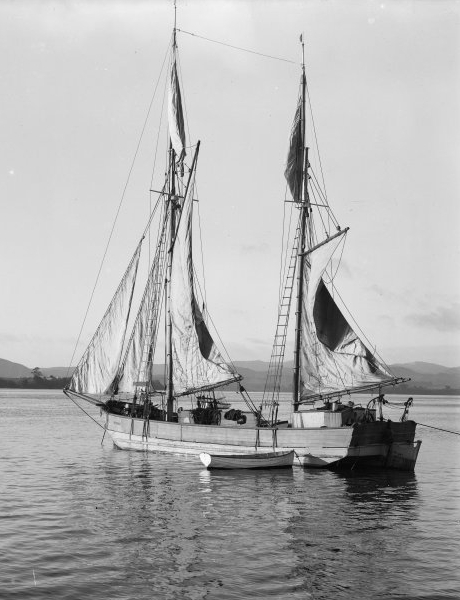
A New Zealand scow around 1900

A scow is a smaller type of barge. Some scows are rigged as sailing scows. In the 19th and early 20th centuries, scows carried cargo in coastal waters and inland waterways, having an advantage for navigating shallow water or small harbours. Scows were in common use in the American Great Lakes and other parts of the U.S., Canada, southern England, and New Zealand. In modern times their main purpose is for recreation and racing; there are also garbage scows for aquatic transport of refuse.

Scows

[edit]

The name "scow" derives from the Dutch schouw. Old Saxon has a similar word scaldan which means to push from the shore, clearly related to punting.[1] A second theory suggests that schouw comes from schol or schouw, meaning "shallow," referring to the vessel’s usefulness in shallow waters due to its flat bottom.[2] A third theory also connects the word to the act of pushing, proposing that the schouw could be pushed over reed beds and low dikes, allowing access to shallow peat lakes. The Dutch word schouw is also associated with ferryboats; 40 different places in the Netherlands include schouw in their name are or were locations of a ferry crossing.[3]

The basic scow was developed as a flat-bottomed barge (i.e. a large punt) capable of navigating shallow rivers and sitting comfortably on the bottom when the tide was out. By 1848 scows were being rigged for sailing using leeboards or sliding keels.[1] They were also used as dumb barges towed by steamers.[1] Dumb scows were used for a variety of purposes: garbage (see The Adventures of Tugboat Annie), dredging (see Niagara Scow) as well as general estuarine cargos.

Sailing scows

[edit]
A scow on the Adour in Bayonne in 1843 by Eugène de Malbos.

Sailing scows have significant advantages over traditional deep-keel sailing vessels that were common at the time the sailing scow was popular. Keelboats, while stable and capable in open water, were incapable of sailing into shallow bays and rivers, which meant that to ship cargo on a keelboat required a suitable harbour and docking facilities, or else the cargo had to be loaded and unloaded with smaller boats. Flat-bottomed scows, on the other hand, could navigate shallow waters, and could even be beached for loading and unloading. This made them useful for moving cargo from inland regions unreachable by keelboat to deeper waters where keelboats could reach. The cost of this shallow water advantage was the loss of the seaworthiness of flat-bottomed scow boats in open water and bad weather.

The squared-off shape and simple lines of a scow make it a popular choice for simple home-built boats made from plywood. Phil Bolger and Jim Michalak, for example, have designed a number of small sailing scows, and the PD Racer and the John Spencer designed Firebug are growing classes of home-built sailing scow. Generally these designs are created to minimize waste when using standard 4-foot by 8-foot sheets of plywood.

The scow hull is also the basis for the shantyboat or, on the Chesapeake, the ark, a cabin houseboat once common on American rivers. The ark was used as portable housing by Chesapeake watermen, who followed, for example, shad runs seasonally.

The Thames sailing barge and the Norfolk wherry are two British equivalents to the scow schooner. The Thames sailing barges, while used for similar tasks, used significantly different hull shapes and rigging.

The term scow is used in and around the west Solent for a traditional class of sailing dinghy. Various towns and villages claim their own variants (Lymington, Keyhaven, Yarmouth, West Wight, Bembridge, Chichester), they are all around 11 feet (3.35 m) in length and share a lug sail, pivoting centre board, small foredeck and a square transom with a transom-hung rudder.

Dutch GWS-schouw

[edit]

In the Netherlands, the GWS-schouw is a traditional flat-bottomed sailing boat derived from small working craft once used on the Frisian peat lakes. The class is still actively raced and maintained by the Vereniging Grouwster Watersport (GWS) in Grou, Friesland.[4] The boats are about 5 m long with approximately 11 m² of sail area (main and jib combined) and are rigged with a characteristic spritsail (spriettuig). GWS-schouwen are built of riveted steel and represent one of the few surviving national “schouw” classes that preserve the traditional design and sailing culture of Friesland.

Scow schooners

[edit]

An American design that reached its zenith of size on the American Great Lakes, and was also used widely in New Zealand, the schooner-rigged scow was used for coastal and inland transport, from colonial days to the early 1900s.[5] Scow schooners had a broad, shallow hull, and used centreboards, bilgeboards or leeboards rather than a deep keel. The broad hull gave them stability, and the retractable foils allowed them to move even heavy loads of cargo in waters far too shallow for keelboats to enter. The squared-off bow and stern accommodated a large cargo. The smallest sailing scows were sloop-rigged (making them technically a scow sloop), but were otherwise similar in design. The scow sloop eventually evolved into the inland lake scow, a type of fast racing boat.

Sailing scows were popular in the American South for economic reasons, because the pine planks found there were difficult to bend, and because inlets along the Gulf Coast and Florida were often shallow.

New Zealand trading scows

[edit]

The American scow design was copied and modified in New Zealand by early immigrant settlers to Auckland in the 1870s. In 1873, a sea captain named George Spencer,[6] who had once lived and worked on the American Great Lakes and had gained a first-hand knowledge of the practical working capabilities of the sailing barges that plied their trade on the lakes, recognised the potential use of similar craft in the protected waters of the Hauraki Gulf, Auckland. He commissioned a local shipbuilder, Septimus Meiklejohn,[7] to construct a small flat-bottomed sailing barge named the Lake Erie,[8] which was built at Ōmaha, not far from Mahurangi.[9] An account of the launching of this vessel appeared in 1873 in the Auckland newspaper, The Daily Southern Cross,[10] which gave its readers a good idea of the distinctive construction and advantages over other vessels.

The Lake Erie was 60 feet 6 inches in length, seventeen feet 3 inches in breadth and had a draught of three feet 4 inches. It was fitted with lee boards (a type of keel slotted onto the sides of the vessel), but these were highly impracticable in rough weather on the New Zealand coast. Later scows were constructed with the much safer slab-sided centre board, which crews raised and lowered as required. This one small craft spawned a fleet of sailing scows that became associated with the gum trade and the flax and kauri industries of northern New Zealand.

Scows came in all manner of shape and sizes and all manner of sailing rigs, but the "true" sailing scow displayed no fine lines or fancy rigging. They were designed for hard work and heavy haulage and they did their job remarkably well. They took cattle north from the stockyards of Auckland and returned with a cargo of kauri logs, sacks of kauri gum, shingle, firewood, flax or sand. With their flat bottoms they could be sailed or poled much further up the many tributaries and rivers where the bushmen and bullock teams had the freshly sawn kauri logs amassed, thereby saving a great deal of time and energy on the part of the bushmen. Flat-bottomed scows were also capable of grounding on a beach for loading and unloading. Over the side went duckboards, wheelbarrows, and banjo shovels. The crew then filled the vessel with sand, racing against the turn of the tide. When the tide did turn, they loaded the equipment back on board and put off to sea. Occasionally an inexperienced skipper overloaded the scow. Then, as the water rose against the outside of the hull (diminishing the amount of safe "free board"), the crew had to shovel rapidly to reduce the contents in the hold to a safe level.

Logs when hauled were always carried above deck, secured by heavy chain, the space between decks being left empty to give added buoyancy. The logs were taken to Auckland and unloaded into floating "booms" to await breaking down in the sawmills of the Kauri Timber Company[11] and other such mills that operated right on the edge of Auckland Harbour.

The golden age of scows and schooners lasted from the 1890s to the end of the First World War, when schooners were superseded by steamers and scows were gradually replaced with tugs.

Jane Gifford Re-rigged, Manukau Harbour 1993. Photo: Subritzky Collection.

The Subritzky family of Northland operated the scows Jane Gifford and Owhiti as the last fleet of working scows, operating between the Port of Auckland and the Island communities of the Hauraki Gulf.[12] The Jane Gifford was gifted to the Waiuku Historical Society[13] by Captain Bert Subritzky and his wife Moana in 1985, where it was re-masted and re-rigged to its original splendour. The Owhiti was sold to Captain Dave Skyme and fully restored to its 1924 sea worthiness, and it subsequently starred in the 1983 movie Savage Islands (starring Tommy Lee Jones and amongst others Kiwi icon and singer Prince Tui Teka as King Ponapa). Unfortunately the Owhiti was not maintained for a period of time, during which teredo shipworms destroyed much of her structure. She remains in a deteriorating condition at Opua. Her rig may see use in another scow when restored.

The main differences from American scows were sharper bows and favouring the ketch rig instead of the schooner rig, although a great many schooner- and topsail schooner-rigged vessels were built. Some 130 scows were built in the north of New Zealand between 1873 and 1925; they ranged from 45 to 130 ft (14–40 m). New Zealand trading scows travelled all around New Zealand as well as to Australia and to the west coast of America although the majority were based in the Hauraki Gulf of New Zealand.[14]

Notable sailing scows

[edit]

The scow schooner Alma of San Francisco, built in 1891, restored in the 1960s, and designated a National Historic Landmark (NHL) in 1988, was one of the last scow schooners in operation. She is a small example, 59 feet in length, 22.6 feet in beam, with a draft of 4 feet and a loaded displacement of 41 tons.

Elsie was the last scow sloop operated on the Chesapeake Bay. Although sailing scows were once numerous around the Bay, they are poorly documented.

The Ted Ashby is a ketch-rigged scow built in 1993 and based at the New Zealand National Maritime Museum in Auckland, it regularly sails the Auckland harbour as a tourist attraction. It was named after an old-time New Zealand seafarer and scowman, Ted Ashby, who had the foresight to document much of the history of these coastal work horses in his book Phantom Fleet - The Scows and Scowmen of Auckland, which was published by A. H. & A. W. Reed, Wellington, in 1976.

The Jane Gifford[15] is a ketch-rigged deck scow built in 1908 by Davey Darroch, Big Omaha, New Zealand. The vessel was re-launched at Waiuku on the 28 November 1992, with Captain Basil Subritzky, the son of the late Captain Bert Subritzky and his family as guests of honour. The Jane Gifford then commenced sailings and tours on the Manukau Harbour between Waiuku and the Onehunga Wharf. In 1999 she was pulled out of the water for a rebuild, which commenced at Okahu Bay on the Waitemata Harbour. She then sat rotting until 2005, when she was moved to Warkworth for rebuilding. A full rebuild, using modern materials has been done at Warkworth, and the vessel was relaunched on 16 May 2009. She returned to sail later, and has been occasionally under sail in the Hauraki Gulf. She is the only original New Zealand scow still afloat to carry sail.

The Echo was built in 1905 of Kauri in New Zealand. She is 104 feet (32 m) long, with two masts and topsail rigged. Twin diesel engines were installed in 1920. In 1942–44 she was used by US forces in the Pacific, see USS Echo (IX-95). Her story was the basis for the 1960 film with Jack Lemmon, The Wackiest Ship in the Army and the 1965 TV series. She was nearly broken up in 1990, but is now preserved at Picton, New Zealand

Scow in the treacherous Grand Canyon of the Fraser, BC, c.1908.

Howard I. Chapelle documented a number of scows in his book American Small Sailing Craft.

North American commercial scows

[edit]

Scows were widely used to carry freight and passengers along or across inland waterways, sometimes preceding the arrival of railway transportation. Many scows were pulled/pushed by a tug or shore cable, whereas others were powered only by the current.[16][17]

Historic 19th-century US canals used work scows for canal construction and maintenance,[18] as well as ice breaker scows,[19] filled with iron or heavy objects, to clear ice from canals.

The Niagara Scow is a former dredging scow stuck on the rocks in the Niagara River upstream from the brink of Niagara Falls Horseshoe Falls since 1918. After being stuck in place for more than 100 years, in November 2019, the scow broke loose during a wind storm and moved 50 metres (164 ft) closer to the edge of the Horseshoe Falls.[20]

Racing boats: the inland lake scows

[edit]

In the early 20th century, smaller sloop and cat rigged scows became popular sailboats on inland lakes throughout the midwestern United States. First popularized by Johnson Boat Works in Minnesota, these boats were distinguished by their larger sail plans, retractable bilgeboards, and (in some classes) twin rudders. There are many active racing classes throughout the Midwest, Western New York, the New Jersey Shore and parts of the South. These boats are traditionally identified by their class letters:

  • A: The largest inland lake scow at 38 feet long, the A normally requires a crew of six or seven. The sail plan includes a mainsail, a jib, and a large asymmetrical spinnaker. It has twin rudders. A new A scow (with sails and a trailer) cost $200,000 in 2020. Once the fastest monohull sailboat in the world, has been clocked in at 33 knots (61 km/h; 38 mph). It is possible to waterski behind these sailboats, as demonstrated by Buddy Melges.
  • E: This is essentially a smaller version of the A scow. Only 28 feet long, it requires a crew of three or four. In 2007, the class association NCESA[21] voted to make the asymmetrical spinnaker the class legal standard.
  • M-16: This 16-foot scow crews two, and has a mainsail and jib but no spinnaker. It has tiny dual rudders like the A and the E.
  • M-20: A 20-foot version of the M-16, with the addition of a backstay, a tunnel hull, twin bilgeboards and rudders, and a spinnaker. Modern boats are built with both the symmetrical spinnaker, or the I-20 version with an asymmetrical spinnaker. Because of the hull configuration, at a substantial angle of heel, it is similar to having a catamaran on one hull: the ratio of waterline length to breadth increases dramatically, along with a geometric increase in speed.
  • C: This is a 20-foot catboat with one large sail set far forward on the hull. It requires a crew of two or three. Unlike the A and E, the C-scow has a large, efficient single rudder. It has no permanent backstay, so jibing the boat requires the quick use of running backstays.
  • MC: The MC is a "mini-C" of sorts, a 16-foot cat-rigged boat with a higher and narrower sailplan. It also has a large efficient single rudder. It can be sailed competitively by 1 person. This is a growing class, especially popular in the midwest and southern USA.
  • 17: Introduced in 2005 by Melges Performance Sailboats, the 17 is a departure from traditional scow design. It has an asymmetrical spinnaker and retractable bowsprit, a high-roach full-battened mainsail, and unusually long and thin rudder and bilgeboards.
  • Butterfly: This small scow is meant to be sailed by one person. It features a cat rig, and unlike the boats above, it has a daggerboard.

Contrary to the connotations of the old definition of "scow" (large and slow), the inland lake scows are extremely fast—the wide, flat bottom hull allows them to plane easily. As a consequence of this, the A scow is the highest rated centerboard boat according to the US Portsmouth yardstick numbers.

Alternative design

[edit]

A 'semi-flying' scow that uses a host of design tricks, including wings/foils and a telescopic canting keel, a retractable bowsprit and an asymmetrical spinnaker, has been designed in France.[22]

References

[edit]
[edit]
Revisions and contributorsEdit on WikipediaRead on Wikipedia
from Grokipedia
A scow is a flat-bottomed barge with broad, square ends and vertical sides, designed primarily for transporting bulk materials such as ore, sand, refuse, brick, or stone in coastal, riverine, and inland waters. The term "scow" originates from the Dutch word schouw, referring to a similar flat-bottomed vessel, and entered English usage in the late 1700s, with scows documented in New York waters as early as 1717. These boats evolved from simple towed cargo carriers, often decked and featuring bulkheads for stability, into specialized forms by the 19th century, including open-deck scows for non-perishable goods, covered variants for perishables, and larger coal scows measuring 160–175 feet long, 24 feet wide, and 8 feet deep. Wooden construction dominated until the mid-20th century, with the last wooden scows built in the 1950s, after which steel became standard for durability in industrial applications like garbage disposal and crane operations. Beyond freight, scows have a prominent role in recreational and competitive , particularly on inland lakes in the . The A Scow, the largest and fastest in the scow family, measures 38 feet in length with an 8-foot-3-inch beam, weighs 1,850 pounds rigged, and accommodates 6–7 crew members, achieving speeds over 25 miles per hour under a area exceeding 1,700 square feet including . First designed in 1895 by J.O. Johnson at Johnson Boat Works in , the A Scow transitioned from wood to hulls in the and incorporated modern features like carbon fiber spars and asymmetrical in the late , fostering a resurgence in racing since 1979. Today, approximately 40–50 active A Scows compete primarily in regions like , , , and , built by Melges Performance Sailboats.

Design and Characteristics

Hull and Structure

The hull of a scow is characterized by its flat bottom, blunt bow, and squared-off transom stern, which collectively enable navigation in shallow waters and facilitate beaching for loading and unloading without the need for docks. The bow may be blunt, square, V-shaped, or spoon-shaped depending on the and , influencing wave handling and stability. This design provides high initial stability, particularly when carrying heavy deck loads such as lumber or hay, due to the wide beam and low center of gravity. The sides are typically vertical or slightly raked for enhanced stability, connected by hard chines that form a sharp 90-degree angle at the , reinforcing the boxy, barge-like form. Sailing commercial scows, such as scow , typically measure 50 to 150 feet in and 20 to 25 feet in beam, with depths of 4 to 8 feet and a shallow draft of 3 to 4 feet when loaded, allowing capacities up to 150 tons or more for larger examples; non-sailing towed scows can exceed 160 feet in . For instance, the scow Alma, built in 1891, has a of 59 feet, beam of 22 feet 6 inches, depth of 4 feet, and loaded draft of 3 feet 6 inches, with a of 41. Another example is the scow W.R. Hanna, lost in 1888, which measured 86 feet 2 inches in , 22 feet 4 inches in beam, and 6 feet in depth. Racing variants, such as the E-scow, are smaller at 28 feet in and 6 feet 9 inches in beam, optimized for speed rather than . Historically, scows were constructed primarily from wood, using for frames and or for planking until the mid-, with bottom planking laid athwartships or longitudinally for strength and economy. Thick planks, often 3 to 4 inches, were fastened with bolts and sealed with , while logs of 6 to 8 inches reinforced the hull edges. In the later , commercial scows shifted to for greater durability in heavy-duty applications like dump barges, as seen in modern 200-foot dump scows with capacities of 2,000 cubic yards. scows adopted reinforced with or resins and cores for lightweight performance, exemplified by E-scows built to standardized molds with minimum hull thicknesses of 1/2 inch. Internally, scows feature watertight bulkheads to divide the cargo hold for stability and safety during loading, particularly in commercial designs carrying bulk goods. Sailing variants incorporate retractable centerboards or leeboards in a centerline trunk to provide lateral resistance and prevent leeway without increasing draft, as in the Alma's single centerboard fin. These elements, combined with longitudinal braces, ensure structural integrity under varying loads.

Propulsion Systems

Scows traditionally rely on wind propulsion through gaff-rigged sails arranged in or configurations on one or two masts, enabling efficient operation in coastal and inland waters. The , characterized by a spar extending the upper edge of the , allows for a large area low to the waterline, minimizing heeling and enhancing stability under load. For instance, the scow schooner Vintage, a 67-foot vessel built in the late as a of historical designs, features a total area of 1,411 square feet distributed across fore and main sails. This setup was common in 19th-century trading scows, where the rig facilitated short-handed sailing for cargo transport in variable winds. Non-sailing commercial scows, particularly those used for like sand or timber, were primarily powered by from tugs or steamers, a practice dominant from the mid- onward. In the tow-barge system prevalent on the and , steam-powered vessels pulled one or more unrigged or lightly rigged scows in consort, allowing the towing steamer to maximize capacity with minimal additional fuel use. Breast or aft methods were employed in narrower channels to improve maneuverability, as seen in 19th-century operations where scows were positioned alongside or behind tugs for precise navigation. By the late , many scows operated without sails, relying entirely on mechanical for long-haul efficiency. Following the decline of sail in commercial use during the early , auxiliary engines were increasingly fitted to scows for enhanced maneuvering in harbors and shallow drafts. Inboard or outboard and later diesel engines, introduced post-, provided supplemental power for docking and short transits, particularly as outboard motors became commercially viable in the 1920s. These auxiliaries allowed scows to operate independently of or tugs, improving versatility in regional . Lateral resistance in sailing scows is provided by retractable leeboards or daggerboards, which extend from the hull sides or center to counteract without increasing draft. The shallow, flat-bottomed hulls of scows, with inherently low lateral resistance, made such pivoting or sliding foils essential for upwind performance in waters as shallow as 4 feet. In some modern racing variants, fixed keels have evolved to replace these for greater stability at speed, though traditional models retain adjustable boards for beaching and shallow-water access. Under sail, scows typically achieve cruising speeds of 5 to 8 knots, benefiting from the flat hull's reduced drag in shallow conditions for responsive handling.

Historical Overview

Early Origins

The origins of the scow trace back to European flat-bottomed barges, particularly Dutch designs like the schouw, a large, shallow-draft vessel used for inland and coastal transport as early as the sixteenth century. These prototypes, including horse-drawn types such as the trekschuit, emphasized flat hulls for navigating shallow waterways and beaching for loading, influencing colonial adaptations in during the eighteenth century. By the early 1700s, scow-like hull shapes appeared in New York waters, where Dutch settlers introduced simple, boxy flat-bottomed craft suited to the region's rivers, bays, and estuaries. In the American colonies, scows evolved from these European models into practical cargo carriers, with the term "scow" entering English usage in the late 1700s from the Dutch schouw. Early builders in New York, drawing on local shipbuilding traditions, constructed these vessels for shallow-water operations, avoiding the deep-draft limitations of traditional ocean-going ships. On the Hudson River, scows were documented by the 1790s, primarily for hauling sand, gravel, and other bulk materials in areas with variable depths and tidal influences. Their initial purposes centered on transporting non-perishable commodities like brick and stone in coastal and riverine settings, enabling efficient trade in colonial ports and avoiding the navigational challenges of deeper-keeled vessels. By the early nineteenth century, scows had established themselves as a distinct type, with rectangular hulls and raked ends becoming standard for stability in shallow drafts. Their spread westward accelerated in the , facilitated by emerging systems; the earliest records on the date to the mid-1820s, coinciding with the completion of the in 1825, which linked the to and promoted scow use for inland freight. This adaptation marked the transition from colonial experimentation to broader regional adoption, underscoring the scow's role in early American commerce.

Commercial and Trading Eras

The commercial era of scows began to surge during the starting in , as these flat-bottomed vessels proved ideal for navigating the shallow waters of and its tributaries to transport essential supplies to the booming . Scows hauled lumber from mills in the Sierra foothills, hay to feed the thousands of horses powering the region's , and bricks for rapid in the growing city. Their simple wooden , often relying on local timber, and schooner rigs enabled efficient coastal trade without needing deep harbors. By 1900, over 400 had been built around the Bay Area to meet this demand. Scows reached their peak usage from the 1880s to the 1920s, serving as vital workhorses on U.S. coastal and inland waterways, where they carried bulk commodities that fueled economic growth. In , fleets of up to 600 scows delivered grain, hay, and other agricultural products, supporting the city's horse-dependent economy and connecting rural producers to urban markets. Similar vessels transported grain and ore on the , while in the Northeast, scows handled oyster harvests from estuaries like those in , facilitating the booming trade. These operations underpinned regional and , enabling small communities to access markets before extensive rail networks expanded. A pivotal role for scows came during the recovery from the and fire, when they transported tons of newly fired bricks from kilns in the East and Bays to the for reconstruction efforts. This quick mobilization helped rebuild infrastructure amid widespread devastation, highlighting the vessels' reliability in crisis logistics. The commercial prominence of scows waned after , as improved road networks, expanded railroads, and diesel-powered barges and tugs offered faster, more scalable transport options for bulk goods. Trucking in particular eroded the scow's niche in short-haul coastal and inland routes, rendering sail-powered operations obsolete. The last working scow schooners, such as the Alma in , were retired by the late 1950s, marking the end of an era in American waterway trade.

Sailing Scows

General Sailing Designs

General sailing scow designs primarily feature single-mast configurations, such as sloop-rigged and cat-rigged variants, which were developed for versatile coastal and inland operations during the 18th and 19th centuries. These setups emphasized and ease of handling, making them suitable for crews navigating bays, rivers, and shallow estuaries where maneuverability was paramount. Unlike multi-masted schooners, these single-mast scows relied on fore-and-aft sails to facilitate quick adjustments in variable winds and tight spaces. The sloop rig, common in scow designs from as early as 1725, typically included a gaff and a single on a single mast, allowing for efficient power from a broad without the complexity of additional masts. This optimized short-handed operation by reducing the number of lines and sails to manage, enabling one or two crew members to handle the vessel effectively during loading, unloading, or sudden wind shifts. Cat-rigged variants, featuring only a large without a , offered even greater simplicity, further suiting solo or minimal crews in protected waters by minimizing adjustments. Both configurations were paired with the scow's characteristic wide beam, which enhanced stability and sail-carrying capacity, providing the leverage needed for in light airs common to inland and coastal routes. These scows measured typically 25 to 60 feet in length, with many in the 30- to 40-foot range adapted for mixed and in regional . For instance, mid-19th-century examples from the Mid-Atlantic, such as the scow built circa 1870 for the , carried lumber and provisions, often operated by diverse crews including , such as Captain Clint Williams and his brothers. The wide beam, often exceeding half the overall length, contributed to their sail power while maintaining a shallow draft for accessing remote landings. A key advantage of these designs lay in their ability to tack quickly in confined waters, thanks to the responsive single-mast rigs and flat-bottomed hulls that allowed pivoting with minimal . This made them ideal for fisheries and local commerce, where vessels needed to navigate narrow channels or in flats without deep keels. However, their limitations became evident in open conditions; the shallow draft and boxy shape led to excessive in strong winds and reduced seaworthiness compared to pointed-bow vessels designed for blue-water passages. As a result, these scows were largely confined to inshore work, excelling in environments where their stability and outweighed offshore vulnerabilities.

Scow Schooners

Scow schooners were two-masted vessels rigged fore-and-aft in a gaff configuration, featuring a shorter foremast forward of the taller mainmast, with , foresail, and often a for efficient windward performance. This setup allowed small crews of one to three individuals to handle sails effectively, making the vessels economical for coastal operations where labor costs were a key consideration. The design emphasized simplicity and durability, with flat bottoms and shallow drafts enabling of tidal flats and rivers inaccessible to deeper-keeled ships. Typically constructed between 50 and 80 feet in length, scow schooners like the preserved Alma measured 59 feet in registered length, 22.6 feet in beam, and 4 feet in depth, with a of around 41 tons and cargo capacities reaching 50 to 100 tons depending on the load, such as hay or lumber. In the during the 1890s to 1920s, prominent builders included local craftsmen like Fred Siemer, who launched the Alma in 1891 at Hunters Point, and Matthew Turner, who contributed to the regional fleet of over 400 such vessels built from 1850 to 1906. These dimensions supported deck cargoes of 600 to 700 bales of hay, stacked high to maximize volume in shallow-water trade routes. The balanced provided exceptional initial stability when fully loaded, preventing excessive heeling and allowing safe passage through variable coastal conditions, while the centerboard reduced without compromising the shallow draft. Primarily employed for heavy freight along the Pacific and Gulf coasts, including inter-island routes in areas like the Delta and Texas bays, scow schooners transported bulk goods such as , , and salt, connecting isolated communities before modern infrastructure. A notable innovation was the kick-up design, which pivoted upward to avoid damage during frequent groundings in tidal waters, enhancing operational reliability in shoal-prone environments.

New Zealand Trading Scows

New Zealand trading scows were specialized coastal vessels developed for inter-island and fjord navigation, featuring leeboards rather than centerboards to enhance stability in shallow waters and rough conditions, along with spoon bows that improved seaworthiness by reducing pitching in heavy seas. These designs were primarily constructed from durable kauri wood sourced from northern regions like Mahurangi and Kaipara, providing resistance to the marine environment. Prominent builders included David "Davey" Mackey Darroch and his family, who produced 35 scows at yards in Big Omaha and Stanley Bay, , adapting American-inspired models to suit challenges such as the Tasman Sea's swells. Typically ranging from 40 to 70 feet in length, these scows carried essential cargoes including , timber, and frozen from rural ports to urban centers, with capacities supporting up to several hundred tons depending on the vessel. Over 120 such scows were built between the and 1920s, enabling trade through challenging routes like Fiordland fjords and open passages across the . Examples include the 71.6-foot Owhiti, a ketch-rigged scow launched in 1924, which transported phosphate, butter, and construction materials along Northland coasts and harbors. Operationally, these vessels peaked in use from 1900 to , vital for linking isolated farming communities to markets and sustaining New Zealand's rural economy before the widespread adoption of diesel-powered craft in the mid-20th century. The last commercial scows, such as the 1925-built Alwin G (later Success), continued sailing until the 1940s, with some converted to and operating into the 1960s. In cultural terms, trading scows held iconic status in both and settler , facilitating indigenous networks for and while embodying the ingenuity of European immigrant shipbuilders in colonial expansion. crews and owners played a significant role in coastal freight from the onward, using these versatile vessels alongside traditional waka to connect remote settlements and support economic resilience.

Commercial Scows

North American Applications

In , commercial scows played a crucial role in transporting bulk cargoes such as , , , and other building materials along key waterways, including the , the , and the , from the mid-19th century onward. These flat-bottomed vessels were ideal for shallow drafts and could navigate rivers and coastal areas inaccessible to deeper-draft ships, supporting regional trade in construction and industrial goods. For instance, on the and in , scows were built in large numbers to haul , , brick, , and hay, with specialized designs emerging by the late 19th century to optimize deck loads for non-perishable bulk items. In urban and harbor operations, scows were predominantly towed by steam tugs, which revolutionized efficiency in congested areas like and the ports. This towing system allowed fleets to move heavy loads over short distances, with the Hudson River towing industry evolving from sail to steam power in the mid-19th century, enabling reliable transport despite variable winds and currents. Sailing variants persisted for remote coastal routes, particularly along the , where scow sloops and schooners were used for and local freight from the 1850s through the 1940s, leveraging their shallow drafts to access bays and lagoons. Scows significantly contributed to North American industrialization by supplying essential materials for urban growth; for example, on , they transported from northern forests to , fueling the city's expansion as a major rail and manufacturing hub in the late 19th century. Similarly, in following era, scow schooners formed fleets of approximately 250 vessels by 1880, carrying hay, , potatoes, and to support the burgeoning population and in the surrounding valleys. These operations underscored the scow's versatility in linking remote resources to growing industrial centers across the continent.

Other Regional Uses

In , the emerged in the 1800s as a proto-scow design optimized for river and coastal trade, featuring a flat-bottomed hull that allowed of shallow creeks and estuaries in and . These barges, capable of carrying 100-300 tonnes of cargo such as oats, sugar, barley, sand, and coke, were wind-powered with efficient rigging that required only two crew members, enabling cost-effective transport to wharves without engines. In the , traditional flat-bottomed boats known as schouws were widely used for local transport in polders and districts, particularly in , where their low draft facilitated movement through shallow canals and former lakes for hauling goods like since at least the . The GWS-schouw variant, derived from these working craft, exemplified simple construction suited to the marshy terrain, supporting fishing and freight in the Frisian inland waterways. Adapting scows to non-U.S. waters often involved addressing tidal variations, as seen in European designs like Thames barges, which incorporated raisable leeboards to prevent grounding and enhance stability in fluctuating depths of the and adjacent coasts.

Racing Scows

Inland Lake Classes

Inland lake scow classes represent a cornerstone of regional one-design racing in the United States, particularly within the Inland Lake Yachting Association (), where standardized designs ensure competitive equity among participants. These classes emphasize flat-bottomed, planing hulls optimized for the sheltered waters of Midwestern lakes, prioritizing speed and simplicity over ocean-going durability. Developed primarily in the early , they evolved from utilitarian workboats into high-performance racers, with strict class rules governing dimensions, materials, and to maintain fairness in fleet racing. The A-Scow stands as the flagship class, measuring 38 feet in length and 8 feet 3 inches in beam, with a hull weighing approximately 1,850 pounds. Designed in by J.O. Johnson at Johnson Boat Works in , it accommodates a of six or more and features a powerful setup for large-team coordination. The C-Scow, a smaller cat-rigged variant introduced around 1905–1906 by the same designer, spans 20 feet in length and 7 feet in beam, with a 650-pound hull and a area of 216 square feet, suited for 2–3 members. Complementing these, the E-Scow, launched in 1924, offers a 28-foot length and 6 feet 9 inches beam, with a 965-pound hull designed for 3–4 as a more accessible family racer. The I-20 class, an update to the 1960s M-20 design by Harry and Buddy Melges, measures 20 feet overall with a high-aspect fractional rig and asymmetrical , targeting two-person crews in a modernized scow format. Design standards across these classes enforce one-design principles through ILYA-sanctioned rules, mandating uniform or construction for hulls, aluminum , and precise measurements to promote fairness and minimize performance variances. For instance, the I-20 incorporates contemporary features like a carbon fiber mast option and bow sprit for the asymmetrical , while all classes prohibit hull modifications that alter hydrodynamic profiles. These regulations, overseen by national class associations affiliated with , ensure that success hinges on skill rather than equipment advantages. Performance characteristics highlight the scow's planing hull design, which allows boats to lift onto a flat plane in moderate winds, achieving speeds up to 15 knots in classes like the I-20 and C-Scow, while A-Scows can exceed 20 knots under optimal conditions. ILYA employs handicap systems, such as ratings, to facilitate inter-class racing, enabling mixed-fleet regattas where dissimilar scows compete on adjusted times for overall honors. The evolution of inland lake scows transitioned from wooden in the early 1900s to fiberglass post-World War II, with builders like Melges Performance Sailboats adopting the material in the for lighter, more durable hulls that enhanced planing efficiency without compromising the original scow lines. This shift, detailed in records, standardized production and reduced maintenance, sustaining class popularity into the modern era.

Racing History and Events

The Inland Lake Yachting Association () was founded on August 24, 1897, by representatives from ten yacht clubs in the at the White Bear Yacht Club in , establishing a framework for organized amateur on inland lakes. The association's inaugural regatta occurred in 1898 on White Bear Lake, setting the stage for regional competitions that initially featured diverse boat types before scow designs became central. Scow racing emerged prominently in the early 1900s, with the sanctioning the 20-foot cat-rigged C-scow class in 1905; early events on involved cross-lake travel by participants, as seen in the 1921 annual regatta where boats from ports journeyed to the event site. The 1920s marked a significant boom in scow racing, highlighted by the introduction of larger classes like the A-scow, with the first A-scow trophy awarded in 1920. This period saw expanded participation, culminating in the formation of the Western Michigan Yachting Association in 1929, which hosted its debut regatta in 1930 on Muskegon Lake featuring A-, C-, and E-scow classes. The 's annual championships, ongoing since 1898 with pauses during and , became cornerstone events, often attracting over 100 boats across classes by the mid-20th century and emphasizing one-design racing principles. Prominent key events include the longstanding regattas of the Oshkosh Yacht Club, which has hosted annual competitions on since the 1890s and played a pivotal role in scow evolution through members like Frank Gates in the late 19th century. Class-specific trophies, such as those for A-scows awarded at ILYA championships, underscore the sport's competitive heritage, with events like the annual A-scow fleet races continuing to honor top performers. These gatherings blend high-stakes racing with social traditions, rotating among member clubs to sustain regional engagement. In the current era, as of 2025 ILYA oversees 45 member clubs across multiple states primarily in the Midwest, supporting active scow fleets through structured championships that draw dozens of boats per class annually. Youth programs, including sailing schools and junior regattas, have expanded since the mid-20th century to introduce new generations to the sport, with initiatives like the ILYA Racing Curriculum fostering skills in and . Wartime interruptions aside, adaptations such as post-WWII fleet growth have ensured scow racing's endurance, with over 110 active fleets nationwide reflecting its ongoing vitality in the Midwest. In October 2025, Melges Performance Sailboats transitioned to new ownership after 80 years of family leadership, continuing support for scow production and racing.

Notable Scows

Famous Sailing and Trading Examples

The scow Alma, built in 1891 by Fred Siemer at Hunters Point in , represents one of the most enduring examples of Bay Area freight-hauling vessels. Designed with a flat-bottomed hull to navigate the shallow waters of the Sacramento-San Joaquin Delta, Alma primarily transported hay, , potatoes, and other bulk goods under sail until 1918, when she transitioned to service towing salt from Alviso. As the last operational sailing scow in the region, she continued working into the 1950s, symbolizing the decline of sail-powered commerce amid rising . In the , scow sloops emerged as vital workhorses for the during the late , particularly from the 1880s onward. These blunt-nosed, flat-bottomed vessels, typically 17 to 35 feet in length with , were optimized for shallow coastal bays and lagoons, enabling shrimpers and trawlers to access otherwise inaccessible grounds. Numbering in the hundreds by the early , they facilitated the burgeoning trade, dragging nets for bottom-dwelling species like and , and exemplified regional adaptations to the Gulf's estuarine environment before motorized boats dominated. Nathanael Herreshoff's 1903 defender Reliance bridged utilitarian scow designs with high-performance , incorporating scow-like features to push the boundaries of speed under the era's rating rules. With an extreme beam of 25 feet 8 inches, shallow draft, and flat sections forward and aft to minimize wetted surface and maximize sail-carrying ability, Reliance achieved 16,000 square feet of sail area on a 144-foot sparred length, defending the Cup by winning the best-of-five series 3-0 against the British challenger Shamrock III, after winning 15 of 19 trial races against the previous defender Columbia. Though fragile and short-lived—broken up after two seasons due to structural issues—her innovative hull form influenced subsequent racing developments, highlighting scows' potential beyond mere commerce. New Zealand's coastal trading scow Echo, launched in 1905 by William Brown & Sons at Te Kopuru on the Northern River, exemplifies the robustness of these vessels in challenging inter-island routes. Built of kauri timber with a 104-foot length and auxiliary engine, Echo initially carried timber and coal from the before shifting to general cargo, including meat from to Napier and later Ford cars and tractors across from her Blenheim base starting in 1920. Over her career, she completed approximately 15,000 crossings of the strait, setting informal records for reliability despite grounding 15 times, surviving three fires, seven collisions, and wartime service with the U.S. Army in , where she aided in rescuing downed aircrews; she retired in 1965 as ferries overtook traditional scows.

Wrecks and Preserved Vessels

The , an iron sand involved in operations, broke free from its towing vessel on August 6, 1918, and became stranded on a in the rapids, approximately 2,500 feet upstream from the brink of . The two crew members aboard were rescued by William "Red" Hill Sr. and others using a over a lifeline in a daring operation witnessed by thousands, after which the scow remained in place as a visible wreck. Over the decades, the vessel endured environmental shifts, including a partial dislodgement during a wind storm on Halloween weekend in October 2019, further breakup and shift in 2022 from ice flows, and another shift downstream on November 19, 2025; as of November 2025, its remains continue to attract tourists via viewing platforms, though its future is uncertain. The May Flower, a wooden scow-schooner constructed in 1887 in Sturgeon Bay, Wisconsin, represents the earliest documented wreck of its type in Minnesota's portion of Lake Superior. Measuring 147 feet in length and 230 tons, it foundered during a severe storm on June 2, 1891, while attempting to reach the Duluth harbor entrance, resulting in the loss of three crew members and its cargo of sandstone. The site's archaeological value lies in its well-preserved remains, including the hull structure and artifacts, which provide insights into late-19th-century Great Lakes scow construction and the vulnerabilities of these vessels to regional weather patterns. Preservation efforts have focused on notable surviving scows as cultural artifacts, with the Alma standing as a prime example. Built in 1891 as a flat-bottomed for hauling freight in , the Alma was acquired by the State of California in 1959 from the Alviso mudflats and underwent initial restoration starting in 1964 to return it to its original sailing configuration, before transfer to the in 1978 and designation as a in 1988. Now moored at the San Francisco Maritime National Historical Park, it receives ongoing maintenance, including propeller shaft replacements and hull planking repairs using traditional techniques to combat deterioration, with routine preservation work conducted in early 2025. Complementing such full-scale preservations, institutions like the Maritime Museum house scale models of historic scows, such as the (built circa 1870), which illustrate regional design features and are displayed alongside interpretive materials to educate on scow maritime heritage. Wooden scows present unique preservation challenges, primarily from wood rot caused by prolonged exposure to , which accelerates decay in hull planking and framing. Effective restoration techniques involve meticulous to identify and excise rotted sections, followed by application of penetrating consolidants to stabilize remaining wood, and replacement with rot-resistant species like or cedar, often bedded with modern sealants to mimic original while enhancing longevity. These methods, applied to vessels like the Alma, balance historical authenticity with practical durability against environmental stressors.

Modern Developments

Contemporary Adaptations

In the realm of modern racing, fiberglass-constructed A-, C-, and E-scows have become staples in competitive inland , with many fleets adopting carbon fiber rigs to enhance performance by reducing weight aloft and improving stiffness. These materials allow for taller masts and larger plans without compromising stability, enabling speeds exceeding 20 knots in optimal conditions. The Inland 20 (I-20) class, introduced in the late 1990s as a modern evolution of the M-20 scow, further exemplifies these adaptations by incorporating asymmetrical spinnakers and retractable bowsprits, which simplify downwind handling and boost average speeds by up to 2-3 knots compared to symmetric designs. Recreational applications have seen the resurgence of small power scows, particularly 20-foot outboard models suited for and short-distance touring in shallow waters. These vessels leverage the traditional flat-bottomed scow for superior load-carrying capacity and stability, often powered by 20-horsepower outboard engines that provide efficient at displacement speeds while minimizing draft to under 12 inches. Niche revivals highlight custom builds inspired by historical designs, such as , a -inspired scow schooner measuring approximately 40 feet, built in 1985 by Brooklin Boat Yard for heritage sailing experiences along the Gulf Coast. This vessel recreates the shallow-draft versatility of 19th-century scow schooners, using modern materials for durability while maintaining authentic for educational charters. Additionally, scow-bowed influences have permeated contemporary designs, where blunt, wide bows enhance initial stability and reduce pitching in choppy conditions, as seen in high-performance classes like the Mini 650, allowing solo sailors to maintain higher average speeds without excessive heel. Innovations in scow hulls focus on modifications to improve planing performance and reduce drag, enhancing in both power and sail variants while preserving shallow-water advantages.

Preservation Efforts

The Maritime National Historical Park (NHP) has been instrumental in scow preservation since acquiring the scow Alma in 1964, initiating a multi-decade restoration that transformed the vessel from a derelict into a fully operational historic exhibit by the late 1980s, emphasizing traditional woodworking techniques to maintain authenticity. This effort, supported by the , continues through ongoing maintenance, including hull plank replacements and repairs in the 2020s, to ensure the vessel's longevity amid environmental pressures. The Inland Lake Yachting Association (ILYA) supports historical fleet programs for racing scows by organizing annual championships that feature vintage classes, promoting the maintenance and racing of pre-1960s vessels to preserve the scow's legacy in inland lake sailing traditions. These programs encourage owners to restore older scows using original designs, fostering a fleet of historically accurate boats that participate in regattas, thereby sustaining the type's competitive heritage without modern modifications. Notable projects include the Maritime Museum's Riverport Wooden Boat Restoration initiative, launched in 2016, which has focused on replicating and restoring scow-like wooden vessels from the region's trading era, training apprentices in period construction methods to safeguard maritime heritage. In New Zealand, the Kaipuke Kaiapoi Heritage Trust has led efforts to restore the trading scow Success, one of the last wooden coastal traders, with major restoration work beginning in earnest in 2024 and ongoing as of 2025 through community fundraising and expert shipwright involvement. Educational initiatives highlight scow economics through exhibits at institutions like the Maritime NHP, where displays detail how scows facilitated affordable cargo transport in shallow waters, connecting rural producers to urban markets from the late onward. Annual events, such as ILYA's championship regattas, serve as festivals that educate participants and spectators on scow design evolution and historical significance, often incorporating talks on their role in regional trade networks. Preservation faces challenges like securing for labor-intensive wood repairs, as rot and require specialized rot-resistant timber and adhesives, often costing tens of thousands per vessel. Successes in the 2020s include from the National Maritime Heritage Grant Program, which have supported climate-resilient storage solutions, such as covered dry docks and humidity-controlled facilities, to protect wooden scows from rising sea levels and .

References

Add your contribution
Related Hubs
User Avatar
No comments yet.