



Community hub
Recent from talks
Contribute something
Nothing was collected or created yet.
Tenali
View on Wikipedia
Tenali is a city in Guntur district of the Indian state of Andhra Pradesh. It is a municipality, and the headquarters of Tenali mandal and Tenali revenue division.[6] The city is renowned for art, culture, drama, and hence, it is called "Andhra Paris".[7] It is one of the twelve urban local bodies in Andhra Pradesh Capital Region[8] and the twelfth most populous town in the state, with a population of 199,345 as of 2011. Tenali town is also part of Andhra Pradesh Capital Region Development Authority (APCRDA).
Key Information


.svg)


Tenali Rama, one of the jesters and eight poets of the early 16th century Vijayanagara ruler Krishnadevaraya, hailed from Tenali.
Etymology
[edit]The word Tenali is derived from Teravali.[6] Local lore claims that the word is a misnomer of Tella Naali, meaning White Naali tree. The white colour bark is an uncommon occurrence of Holoptelea integrifolia(Indian Elm), which is found in abundance around the town.[9]
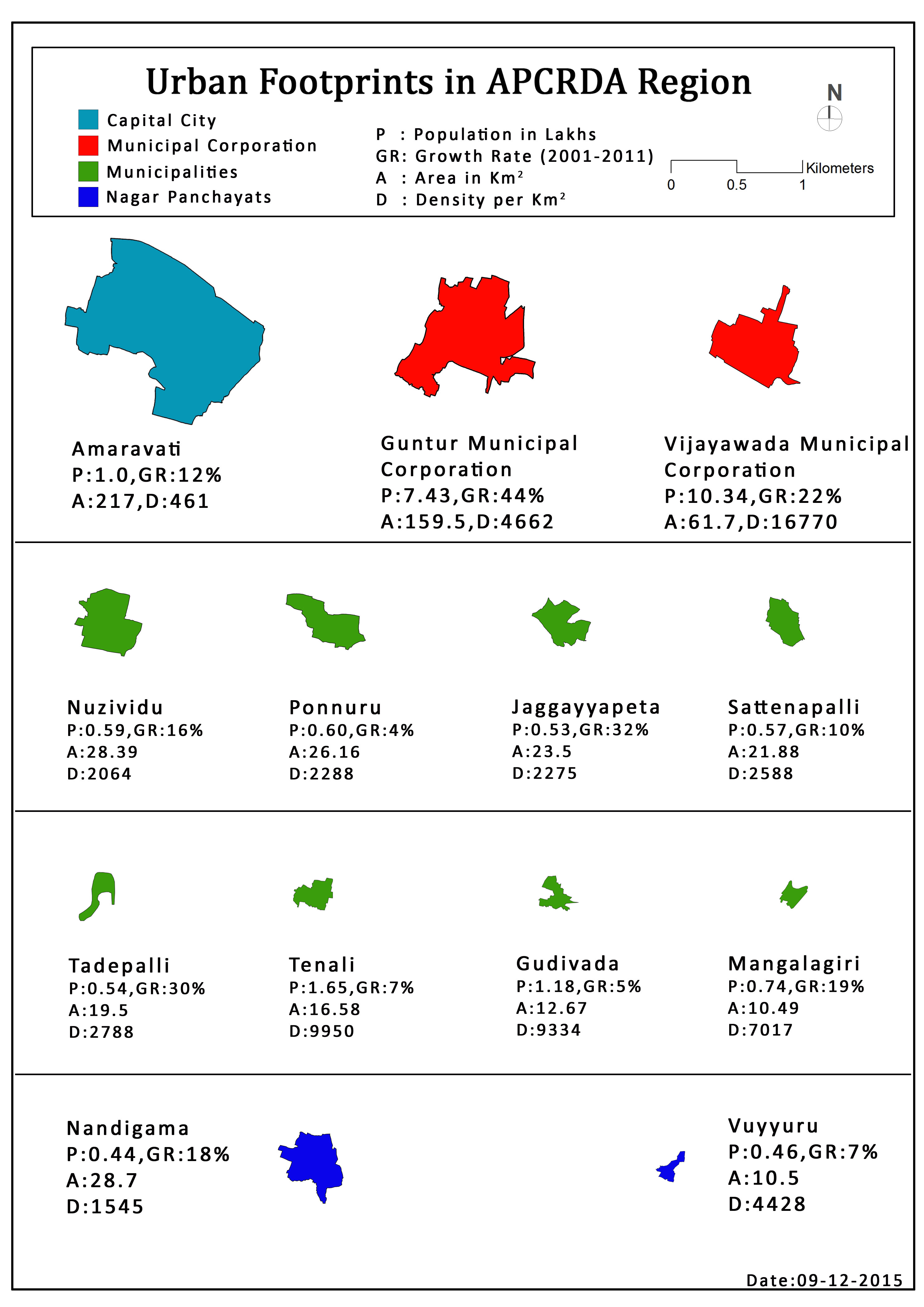
Three canals of the Krishna River flow through Tenali City, making it a part of the rice bowl of Andhra Pradesh, resembling Paris, where three canals pass through the city. Hence Tenali is affectionately called "Andhra Paris". In 2011 the city limits were expanded by many kilometers. The expansion included the villages of Angalakuduru, Nandivelugu, Kolakaluru, Pinapadu and Burripalem.
History
[edit]The Andhra–Satavahana dynasty ruled the region around the present city from 225 B.C. to 225 A.D. The relics found in the excavations around Tenali reveal the existence of Jainism and Buddhism.[6] One such example is the inscription in Ramalingeswara temple, dating back to the 16th century AD.[10]
Geography
[edit]
Tenali is situated at 16°14′20″N 80°38′42″E / 16.239°N 80.645°E, on the southern deltaic region of Krishna River.[3] The city is spread over an area of 29.56 km2 (11.41 mi2).[2] It lies at an average altitude of 13 metres (43 ft) above mean sea level. This city has no National or State Highway passing through it. The East canal, the Nizampatnam canal and the West canal flow through the city, which originates from Krishna River.[11] The region around the city forms a part of Western Delta System of Krishna river.[12][13] The area is covered by Alluvium and the main soil varieties are Red and Black.[3]
Climate
Tenali has a tropical wet and dry climate (Köppen Aw). The average annual temperatures range from a high of 33.3 °C (91.9 °F) to a low of 24.2 °C (75.6 °F). May is the hottest and December is the coolest months of the year.[14] The city receives maximum rainfall due to the onset of southwest monsoon season from June to October.[3] The annual precipitation averages 1,017 millimetres (40 in) with the month of August being the highest with 202 millimetres (8 in) and January being the lowest with 1 millimetre (0 in).[14]
Demographics
[edit]| Year | Pop. | ±% |
|---|---|---|
| 1971 | 102,937 | — |
| 1981 | 119,257 | +15.9% |
| 1991 | 149,726 | +25.5% |
| 2001 | 193,756 | +29.4% |
| 2011 | 222,895 | +15.0% |
| Source: [15] | ||
As of 2011[update] census of India, there were 43,593 households with a population of 164,937. It comprises 81,427 males, 83,510 females and 14,340 children (age group of 0–6 years). The average literacy rate stood at 82.75% with 124,618 literates, of which males were 164,467 and females were 160,151. There are a total of 60,756 workers and 6,238 non–workers.[4] The number of households in 74 slums (37 notified and 7 non–notified) were 18,958 and the total slum population was 75,831.[15]: 11, 23
Language and religion
[edit]Telugu is the most spoken language with a total of 142,085 native speakers, followed by 19,923 Urdu speakers. A significant minority speak Hindi, Marathi and Bengali.[16] The religious population constitute 138,156 Hindus (83.76%), 21,619 Muslims (13.11%), 3,206 Christians (1.94%) and 1,355 (0.82%) not stating any religion.[17]
Government and politics
[edit]Civic administration
[edit]
The Tenali Municipality is the seat of local government and the Tenali municipal council is the legislative body.[1] It was constituted in 1909 and is classified as a special grade municipality. The jurisdiction of the civic body is spread over an area of 16.63 km2 (6.42 mi2).[2] It has a total of 70 election wards: 27 unreserved and 43 reserved. The wards are reserved 4 for SCs, 12 for STs and 24 for BCs.[18] Each ward is represented by a ward member and the wards committee is headed by a Chairperson.[19] The present Municipal Commissioner of the city is Venkata Krishna.[20] The municipality of the city has received several awards, such as the Green Leaf Award 2015 for Best Decentralised Solid Waste Management[21] and Green City of the country for waste segregation management.[22]
The city is represented by Tenali Assembly constituency in the state legislative assembly.[23] The assembly segment forms a part of Guntur Lok Sabha constituency, which represents the lower house of Indian Parliament.[24] The present MLA from Tenali is Mr. Nadendla Manohar. Currently, Mr. Nadendla is serving as the Minister of Food and Civil Supplies and Consumer Affairs.
Public utilities
[edit]
The municipality oversees civic needs, such as water supply, sewerage, roads, and parks, and is included in the Atal Mission for Rejuvenation and Urban Transformation.[25] The city residents rely on borewells, overhead reservoirs, and a filtration plant for daily water needs, which mainly draws water from the Krishna river of Prakasam Barrage.[26][27] The city municipality implements two-bin garbage collection, sanitation campaigns like Mana Tenali – It's people's creation for hygiene of the people,[28] ban on plastic bags etc.[29]
Economy
[edit]
Tenali thrives on trade and agriculture.[30] Irrigation in the Western Delta, the region in which the city lies, is supported by water from the Krishna river.[31] Paddy is the major crop cultivated, producing on an average of 22–24 bags per acre.[13] Major crops include black gram, maize, and jowar.[32] The Tenali Agriculture Market Yard is used for trading and exporting agricultural products.[33]
The city being a part of the capital region, is recognized as one of the future growth centers.[34][35] It is also a part of the Tenali–Ponnur growth corridor.[36]
Culture
[edit]

The city is notable for drama, fine arts, literature and poetry. The iconic Martyr's Memorial at Ranarang Chowk denotes the impact of the city on the Indian freedom struggle during the Quit India Movement.[37] The people of Tenali had responded to Mahatma Gandhi's call and organised a bandh on 12 August 1942. The British police had opened fire on them, and seven people had been killed on the spot, at Morrispeta which later came to be known as Ranarang Chowk. After Independence, seven pillars had been erected in the memory of the seven martyrs, and a statue of Mother India with a baby in her arms had been installed at Ranarang Chowk.[38]
It was the domicile of doyen of several social and revolutionary moments viz. Non Bramin Movement 1920 (Suryadevara raghavaiah Chowdary), Rationalist movement 1940 (Kaviraju Sri Tripuraneni), Radical Humanist Movement 1950 (Sri M.N. Roy) etc.[39]
Drama and literature
[edit]The city has been the host for events such as the formation of the 1929 Andhra Nataka Kala Parishad, the Kanyasulkam play, and cultural fests.[37][40] Tenali Ramakrishna, one of the eight poets in the court of Sri Krishna Devaraya, hails from Tenali.[6] In the area of modern literature are contributors such as Chakrapani, Gudipati Venkata Chalam, Kodavatiganti Kutumbarao, Tripuraneni Ramaswamy. Furthermore, Nethi Parameswara Sarma wrote the book Nurella Tenali Rangastala Charitra, which translates to 100 years of theater in Tenali.[37][40]
Films
[edit]Many artists who hail from Tenali and the nearby villages have contributed a major share to the Telugu film industry, such as AVS, Govindarajula Subba Rao (the first Telugu cinema hero), Krishna, Gummadi Venkateswara Rao, Jamuna, Kanchanamala (the first Telugu cinema heroine), Kongara Jaggayya, Rama Prabha, Savitri, Sharada, Siva Parvati and Divya Vani.
Cityscape
[edit]There are various religious worship centers in the city, such as the Vaikuntapuram Venkateswara temple and the Iglesia ni Cristo church. The notable Satyanarayana UDA Lake Park (or Chinaravuru park), named after former municipal chairman Ravi Satyanarayana, is maintained by VGTMUDA (now APCRDA).[41]
Food
[edit]Jalebi is very famous in Tenali city. It is made with jaggery instead of the traditional way with sugar. There is no color added to jalebi. Many parcels are sent abroad on a daily basis.[42]
Transport
[edit]

Tenali has a total road length of 410.00 km (254.76 mi).[43] Guntur, Mangalagiri, Burripalem and Ponnur roads are the arterial roads for road connectivity to the city. The road towards Guntur connects with SH 48 at Narakodur. The Tenali–Mangalagiri road, the Tenali–Narakodur road, and the Tenali–Chandole road are a part of the core road network of the district, which connects the city with Mangalagiri, Narakodur and Chandole respectively.[44][45]
Bus and rail transport are the major modes of public transport for inter district and inter state commuting.[46] The bus transport is provided by Tenali bus station, owned and operated by APSRTC.[47] The station is also equipped with a bus depot for storage and maintenance of buses.[48][49] It operates bus services to nearby and intrastate destinations.[50][51]
The city's railway line, the Guntur-Tenali railway line, is an important and short route line that connects Andhra Pradesh and Telangana with Tamil Nadu and Kerala.[52] As it is a junction railway station, the trains are more frequent to any of the cities.[53] Tenali Junction provides rail connectivity to the city and is classified as an A–category station[citation needed] in the Vijayawada railway division of South Central Railway zone. It is an important junction station on the line between the Howrah–Chennai and the New Delhi–Chennai sections, which also connects the Tenali–Repalle branch line and the Guntur–Tenali section.[54]
Education
[edit]
The primary and secondary school education is imparted by government, aided, and private schools, under the School Education Department of the state.[55][56] As per the school information report for the academic year 2015–16, there are a total of 71 schools, comprising 26 private schools, 44 municipal schools, and 1 other type of school.[57] The total number of students enrolled in primary, upper primary and high schools of the city is 11,544.[58]
Sri Vivekananda Central School, Adarsh Public School,[59] Dr.K.K.R Gowtham[60] St. John's Public School,[61] Kendriya Vidyalaya,[62] and Westberry School[63] are some of the public and private schools under CBSE and state boards. Yalavarthy Veda Pathashala, one of the oldest vedic schools founded in 1894, is located in Gandhi Nagar area of the city.[64]
There are 20 private aided junior colleges, such as the Taluk Junior college, the JMJ college for Women, the VSR and NVR college, and the Dr. B. R. Ambedkar Memorial Junior college. Additionally, fourteen unaided junior colleges provide undergraduate education.[65] The JMJ college for women and the VSR and NVR college are the two autonomous colleges under Acharya Nagarjuna University.[66] There are colleges for different fields of study, such as nursing,[67] Government Industrial Training Institute, and other institutes for vocational courses.[68][69]
Sports
[edit]The city has an indoor sports complex for Badminton, Tennis and Volleyball at the Chenchupet area.[70]
Sports personalities from the city include National Senior Chess Silver Medalist International Master CRG Krishna,[71] National Challengers Championship winner and chess master S. Ravi Teja[72] and weightlifter Sai Revathi Ghattamaneni, a gold medalist at Senior Nationals in the 63-kg category.[73]
Notable people
[edit]- Tenali Rama, poet and key figure of the Court of Krishnadevaraya of Vijayanagara Empire
- Savitri, known as Mahanati and one of the greatest Indian female actors of all time
- Yalavarthy Nayudamma, popular Scientist who died in the Kanishka airplane bombing
- Nadendla Bhaskara Rao, Politician and former Chief Minister of combined Andhra Pradesh
- Nadendla Manohar, Politician, s/o Nadendla Bhaskara Rao and former speaker of Andhra Pradesh assembly
- J. C. M. Sastry, nephrologist
- Krishna, popular actor and winner of Filmfare Lifetime Achievement Award
- Sobhita Dhulipala, actress and winner of Femina Miss India Earth 2013
- Sarada, winner of 4 Indian national awards for best actress
- Chakrapani, founder of Chandamama and famous film producer
Other notable actors in film industry include Jaggayya,
- Rajyalakshmi,
- Kanchanamala,
- Ashwin Babu,
- Ohmkar,
- Maharshi Raghava,
- Punarnavi Bhupalam,
- Govindarajula Subba Rao,
- Gummadi,
- Priyadarshini Ram,
- Prabha among others.
Eminent academics and poets such as
- Chand Gudi, Roboticist and Entrepreneur (coined Fog robotics)
- Tripuraneni Ramaswamy
- Chalam
- Kodavatiganti Kutumba Rao
See also
[edit]References
[edit]- ^ a b M. N., Samdani (12 May 2015). "Andhra Pradesh's move to supply Krishna water to Coca-Cola plant irks opposition". The Times of India. Mangalagiri. Archived from the original on 25 February 2021. Retrieved 25 May 2019.
- ^ a b c "Municipality Profile". Tenali Municipality. Retrieved 13 May 2019.
- ^ a b c d Bhattacharya, Prosun; Ramanathan, A. L.; Mukherjee, Arun B.; Bundschuh, Jochen; Chandrasekharam, D.; Keshari, A. K. (9 April 2008). Groundwater for Sustainable Development: Problems, Perspectives and Challenges. CRC Press. p. 291. ISBN 978-0-203-89456-9.
- ^ a b "Population". Census of India. Registrar General and Census Commissioner of India. Retrieved 8 May 2019.
- ^ "Tenali H.O Pin Code Guntur, Andhra Pradesh, India". PinCode. Retrieved 8 February 2026.
{{cite web}}: CS1 maint: url-status (link) - ^ a b c d "About Tenali". VGTM Urban Development Authority. Archived from the original on 21 August 2015. Retrieved 26 February 2016.
- ^ "Big Cinema comes to Andhra Paris". The Hindu. 12 November 2008. Retrieved 11 May 2019.
- ^ "Declaration of A.P. Capital Region – Amendment: Urban Footprints in APCRDA Region". Andhra Pradesh Capital Region Development Authority. Government of Andhra Pradesh. 19 December 2015. Retrieved 10 May 2019.
- ^ Brown, Charles Philip (1903). "A Telugu-English Dictionary. New ed., thoroughly rev. and brought up to date...2nd ed". dsal.uchicago.edu. Retrieved 1 December 2023.
- ^ A Manual of the Kishna District, in the Presidency of Madras: Compiled for the Government of Madras. Lawrence Asylum Press. 1883. p. 213. Retrieved 4 July 2016.
- ^ "Project Report on Green Cover Augmentation in Tenali Municipality" (PDF). Tenali Municipality. Commissioner and Director of Municipal Administration, Andhra Pradesh. p. 4. Retrieved 13 May 2019.
- ^ "Good rain in AP, T but no water in Krishna projects". The Times of India. 22 July 2017. Archived from the original on 22 July 2017. Retrieved 28 May 2019.
- ^ a b Jonathan, P. Samuel (17 January 2018). "Dip in paddy price dampens the mood". The Hindu. Archived from the original on 9 November 2020. Retrieved 29 May 2019.
- ^ a b "Climate: Tenali – Climate graph, Temperature graph, Climate table – Climate-Data.org". en.climate-data.org. Retrieved 11 May 2016.
- ^ a b "City Sanitation Plan" (PDF). Tenali Municipality. Commissioner and Director of Municipal Administration, Andhra Pradesh. p. 12. Retrieved 13 May 2019.
- ^ "C-16 Population By Mother Tongue – Town Level". Census of India. Registrar General and Census Commissioner of India. Retrieved 13 May 2019. Select "Andhra Pradesh" from the download menu. Data for "Tenali (M)" is at row 12690 of the excel file.
- ^ "C-1 Population By Religious Community". Census of India. Registrar General and Census Commissioner of India. Retrieved 13 May 2019. Select "Andhra Pradesh" from the download menu. Data for "Tenali (M)" is at row 2693 of the excel file.
- ^ "Municipality wards" (PDF). Andhra PRadesh – State Election Commission. Archived from the original (PDF) on 6 September 2019. Retrieved 27 June 2016.
- ^ "The Constitution (Seventy-Fourth Amendment) Act, 1992". India Code. Ministry of Law and Justice, Legislative Department. Retrieved 28 March 2016.
- ^ MN, Samdani (5 May 2019). "Enrolment only on paper, Mepma fills staff pockets". The Times of India. Amaravati. Archived from the original on 4 January 2020. Retrieved 25 May 2019.
- ^ India, The Hans (8 June 2015). "TS and AP NGOs sweep Green Leaf awards". thehansindia.com. Archived from the original on 11 May 2019. Retrieved 11 May 2019.
- ^ "Green City award for Tenali". The Hindu. Vijayawada. 2 February 2012. Archived from the original on 6 April 2021. Retrieved 19 December 2015.
- ^ MN, Samdani (27 March 2019). "A three-cornered battle for Tenali". The Times of India. Tenali. Archived from the original on 6 April 2021. Retrieved 25 May 2019.
- ^ "Delimitation of Parliamentary and Assembly Constituencies Order, 2008" (PDF). The Election Commission of India. National Informatics Centre. 17 December 2018. p. 20,30. Archived from the original (PDF) on 3 October 2018. Retrieved 25 April 2019.
- ^ Vadlapatla, Sribala (11 August 2015). "Amaravati among 31 AP cities selected for Amruth development | Hyderabad News". The Times of India. Archived from the original on 5 April 2021. Retrieved 11 May 2019.
- ^ "New project to quench Tenali's thirst | Hyderabad News". The Times of India. 3 July 2012. Archived from the original on 28 October 2018. Retrieved 11 May 2019.
- ^ Staff Reporter (24 February 2012). "Delay in drinking water project irks residents". The Hindu. Retrieved 11 May 2019.
- ^ Staff Reporter (13 November 2015). "A litter-free town, the aim of 'Mana Tenali'". The Hindu. Archived from the original on 6 April 2021. Retrieved 11 May 2019.
- ^ "Ban on plastic bags in Tenali, Narasaraopet". The New Indian Express. Archived from the original on 12 May 2019. Retrieved 11 May 2019.
- ^ "Dimensions of Growth" (PDF). APCRDA. p. 53. Retrieved 29 May 2019.
- ^ "Where TDP would rule Andhra Pradesh from". The Indian Express. 4 September 2014. Archived from the original on 11 May 2019. Retrieved 11 May 2019.
- ^ "Maize heralds agricultural revolution". The Hindu. 8 April 2009. Archived from the original on 29 June 2018. Retrieved 11 May 2019.
- ^ Staff Reporter (11 August 2012). "Create awareness on State's welfare schemes, says Speaker". The Hindu. Retrieved 11 May 2019.
- ^ "Tenali to be Part of Amaravati Development". The New Indian Express. 5 January 2016. Archived from the original on 11 May 2019. Retrieved 11 May 2019.
- ^ Staff Reporter (26 April 2016). "APCCIF moots separate district for capital area". The Hindu. Retrieved 11 May 2019.
- ^ Staff Reporter (14 July 2012). "Need to enforce building rules: VGTM-UDA vice-chief". The Hindu. Retrieved 11 May 2019.
- ^ a b c "Tenali gearing up for centenary celebration". The Hindu. Tenali. 23 January 2010. Archived from the original on 29 October 2020. Retrieved 12 March 2016.
- ^ ilyas, md (12 August 2017). "Tenali people to remember its seven martyrs today". Deccan Chronicle. Archived from the original on 17 August 2017. Retrieved 28 August 2020.
- ^ Mohammad, Azgar Ali (24 September 2014). "Azgar Ali Mohammad: THE HISTORY OF TENALI 'THE ANDHRA PARIS' AND ITS ROLE IN FREEDOM AND COMMUNIST MOVEMENTS IN INDIA". Azgar Ali Mohammad. Retrieved 28 August 2020.
- ^ a b "Cultural fest all set to unfold on 16 December". The Hindu. 4 December 2012. Archived from the original on 27 December 2012. Retrieved 12 March 2016.
- ^ "A perfect getaway, for children and adults". Tenali. 13 January 2012. Archived from the original on 6 April 2021. Retrieved 14 March 2016.
- ^ "తేనెలూరే తెనాలి జిలేబీ.. తింటే మైమరచిపోవాల్సిందే!". Sakshi (in Telugu). 2 August 2021. Retrieved 18 April 2023.
- ^ "Details of Roads in each ULB of Andhra Pradesh". Municipal Administration and Urban Development Department. Archived from the original on 1 August 2016. Retrieved 27 June 2016.
- ^ "APRDC". Andhra Pradesh Road Development Corporation. Roads and Buildings Department. Archived from the original on 9 November 2016. Retrieved 9 November 2016.
- ^ "Traffic restrictions for TDP meet". The Hindu. 5 November 2008. ISSN 0971-751X. Archived from the original on 6 April 2021. Retrieved 12 May 2016.
- ^ "Metro transport committees for TUDA, VGTUDA". The New Indian Express. 19 October 2009. Archived from the original on 12 July 2018. Retrieved 8 May 2016.
- ^ "Bus Stations in Districts". Andhra Pradesh State Road Transport Corporation. Archived from the original on 22 March 2016. Retrieved 8 March 2016.
- ^ "Depot Name". APSRTC. Archived from the original on 9 March 2016. Retrieved 15 March 2016.
- ^ Susarla, Ramesh (11 September 2006). "Ponnur RTC depot on way out?". The Hindu. Archived from the original on 29 June 2018. Retrieved 15 March 2016.
- ^ "Bus commute to be more comfortable this summer". The Hindu. 23 January 2015. Archived from the original on 24 October 2020. Retrieved 10 June 2016.
- ^ "New Guntur–Hyderabad bus service inaugurated". The Hindu. Guntur. 28 January 2008. Archived from the original on 6 April 2021. Retrieved 21 March 2016.
- ^ "Guntur-Tenali double railway line in Andhra Pradesh commissioned". The New Indian Express. 27 April 2019. Retrieved 27 September 2024.
- ^ "Tenali Zonal Development Plan" (PDF). Andhra Pradesh Capital Region Development Authority. Government of Andhra Pradesh. Archived from the original (PDF) on 19 April 2016. Retrieved 8 May 2016.
- ^ "Divisional info" (PDF). Indian Railways. Archived from the original (PDF) on 28 January 2016. Retrieved 10 June 2016.
- ^ "School Education Department" (PDF). School Education Department, Government of Andhra Pradesh. Archived from the original (PDF) on 19 March 2016. Retrieved 12 April 2017.
- ^ "The Department of School Education – Official AP State Government Portal". ap.gov.in. Archived from the original on 13 April 2017. Retrieved 7 November 2016.
- ^ "School Information Report". Commissionerate of School Education. Government of Andhra Pradesh. Archived from the original on 8 November 2016. Retrieved 8 November 2016.
- ^ "Student Information Report". Commissionerate of School Education. Child info 2015–16, District School Education – Andhra Pradesh. Archived from the original on 8 November 2016. Retrieved 8 November 2016.
- ^ "Adarsh Public School, Tenali, Guntur district". The Hindu. 23 March 2007. Archived from the original on 10 June 2016. Retrieved 10 June 2016.
- ^ "Dr.K.K.R Gowtham near bustand tenali". The Hindu. 5 January 2010. Archived from the original on 10 June 2016. Retrieved 10 June 2016.
- ^ Sujatha Varma, P (6 March 2015). "Be like the frog that made it to the treetop". The Hindu. Vijayawada. Archived from the original on 1 December 2017. Retrieved 1 April 2016.
- ^ "Kendriya Vidyalaya at Tenali: MP". The Hindu. 1 November 2014. Archived from the original on 6 April 2021. Retrieved 1 April 2016.
- ^ "School introduces CBSE's Plus One". The Hindu. Guntur. 10 March 2016. Archived from the original on 6 April 2021. Retrieved 1 April 2016.
- ^ "Vedapatasalas in Andhra Pradesh" (PDF). Vedic Heritage. Government of India. p. 3. Retrieved 11 May 2019.
- ^ "List of colleges in Guntur district" (PDF). Board of Intermediate Education. pp. 8–9. Archived from the original (PDF) on 21 October 2016. Retrieved 28 September 2016.
- ^ "Autonomous colleges of Acharya Nagarjuna University" (PDF). Nagarjuna University. Retrieved 5 October 2016.
- ^ "List of College of Nursing in A.P." hmis.ap.nic.in. Retrieved 5 October 2016.
- ^ "List of colleges offering vocational courses in Guntur district" (PDF). Sakshi Education. Retrieved 5 October 2016.
- ^ "Government ITI" (PDF). Sakshi Education. Retrieved 5 October 2016.
- ^ Staff Reporter (1 January 2014). "Speaker opens indoor stadium". The Hindu. Archived from the original on 6 October 2016. Retrieved 5 October 2016.
- ^ "Aravindh Chithambaram is the Indian National Champion 2018 - ChessBase India". www.chessbase.in. 20 December 2018. Retrieved 17 May 2024.
- ^ "TS boy AP girl clinch national chess honours". The Hans India. Archived from the original on 30 September 2020. Retrieved 5 October 2016.
- ^ Jonathan, P. Samuel (13 August 2014). "Defying odds, Revathi scales new heights". The Hindu. Retrieved 5 October 2016.
| International | |
|---|---|
| National | |

Tenali
View on GrokipediaHistory
Etymology
The name Tenali derives from Telugu linguistic roots, likely a corruption of Teravali, combining tera ("open plain" or "spread out") and valli ("village" or "settlement"), reflecting the area's expansive terrain.[3] This etymology aligns with descriptions of the region as a "plains village," consistent with its historical geography near the Krishna River delta.[3] Folk interpretations occasionally link Tenali to Dravidian elements denoting settlements amid fields and canals, or even Tenā implying "honey" or sweetness, though these lack primary textual support and appear as later rationalizations.[4] No direct Sanskrit derivations are attested in regional records, emphasizing instead indigenous Telugu-Dravidian origins over Indo-Aryan influences. The name's early usage is evidenced by archaeological inscriptions from the Vijayanagara period in the Guntur district, where Tenāli appears as a toponym for the locale, predating modern forms and confirming its antiquity as a settlement identifier.[5] Local folklore connects the name to the 16th-century poet Tenali Ramakrishna, born in the town and adopting it as a surname, though chronological evidence places the settlement's naming prior to his lifetime, rendering myths of personal attribution anachronistic.[5][6]Ancient and medieval periods
Archaeological evidence points to early human habitation in the Tenali region during the Satavahana period (c. 230 BCE–220 CE), a dynasty that ruled much of the Deccan and Andhra regions, fostering trade along coastal routes and agricultural expansion in fertile riverine areas. Nearby early historic sites, such as ash mounds at Mallepadu, suggest settled communities engaged in pastoral and proto-agricultural activities, with the Krishna River's proximity enabling reliance on alluvial soils for sustenance. Buddhist influences prevalent in Satavahana territories, evidenced by stupas and relics in adjacent Andhra sites like Amaravati, likely extended to local practices, though direct artifacts from Tenali remain limited.[7] In the medieval era, Tenali integrated into the Kakatiya kingdom (c. 1163–1323 CE), as demonstrated by 11th-century inscriptions on stone pillars in Amrutaluru village and neglected Kakatiya-period sculptures unearthed in Kolakaluru village, indicating administrative and cultural presence. These findings reflect the kingdom's emphasis on temple construction and land grants, which supported local agrarian economies amid regional power consolidation. Transitioning to the Vijayanagara Empire (1336–1646 CE), Tenali functioned as an agricultural hub within the Krishna River delta, where natural flooding and rudimentary irrigation via tanks and channels boosted rice yields, sustaining dense populations and contributing to the empire's tribute-based revenue system.[8][9][10]Colonial and post-colonial eras
During the late 19th and early 20th centuries, Tenali fell under the Madras Presidency of British India, administered through the ryotwari land revenue system prevalent in much of coastal Andhra. In 1909, the Repalle taluk in Guntur district was bifurcated on July 1 to create the separate Tenali taluk, enhancing local administrative focus on agriculture and revenue collection in the region's fertile Krishna delta lands.[11] Concurrently, the Tenali Municipality was constituted in 1909 as one of the earliest such bodies in the presidency, responsible for basic civic functions like sanitation and taxation amid growing urban trade in rice and tobacco.[12] Local participation intensified in the independence struggle during the 1930s and 1940s, driven by agrarian grievances over high revenue demands and tenancy exploitation under colonial policies. Tenali emerged as a center of Congress activity, with leaders organizing protests against British salt taxes and land assessments in the 1930s Civil Disobedience campaigns. The 1942 Quit India Movement saw heightened unrest, including a bandh called by local workers under Kalluri Chandramouli on August 12, resulting in clashes with authorities and the deaths of seven martyrs—known locally as the "Magnificent Seven"—who symbolized resistance to colonial suppression.[13] These events underscored demands for tenancy protections and revenue relief, influencing post-war policy shifts toward reform. Post-independence, Tenali transitioned from Madras Province to the newly formed Andhra State on October 1, 1953, following the States Reorganisation Commission's linguistic demarcation, which integrated Telugu-majority districts like Guntur into the entity carved from Madras. This realignment centralized governance under Kurnool temporarily, streamlining local taluk administration while initiating agrarian changes, including the extension of the Madras Estates Abolition Act (1948) to abolish intermediary tenures and confer ryotwari rights on tillers, boosting smallholder farming in Tenali's paddy-dominated economy. In 1956, Andhra State merged with Telugu areas from Hyderabad State to form Andhra Pradesh, preserving Tenali's municipal autonomy but integrating it into expanded state revenue and irrigation frameworks. The 2014 bifurcation under the Andhra Pradesh Reorganisation Act retained Tenali in residual Andhra Pradesh, with negligible disruption to local governance; the municipality continued operations under Guntur district, though state-level asset reallocations indirectly strained infrastructure funding without altering taluk boundaries or civic powers.[14]Recent historical developments
In 2011, Tenali's municipal boundaries expanded significantly to incorporate surrounding villages including Angalakuduru, Nandivelugu, Kolakaluru, Pinapadu, and Burripalem, increasing the city's area to approximately 16.63 square kilometers and facilitating urban integration with nearby Guntur and Vijayawada.[12] This expansion supported a population of 164,937 as recorded in the 2011 census, reflecting growth driven by Tenali's strategic location in the Krishna River delta, which enhanced connectivity and economic spillovers from the Vijayawada-Guntur urban corridor.[15] The 2014 bifurcation of Andhra Pradesh, which separated Telangana and left the residual state without Hyderabad as its capital, prompted regional realignments affecting Tenali through the establishment of the Vijayawada, Guntur, Tenali, Mangalagiri Urban Development Authority (VGTM UDA) to coordinate infrastructure in the capital region.[16] This led to a statewide real estate surge, with property registrations in Andhra Pradesh's 13 coastal districts doubling in the months following the split, as investors shifted focus to areas like Guntur district amid uncertainties over resource allocation and new capital development.[17] Tenali experienced indirect benefits from proposals for integrated transport, including metro rail extensions linking Vijayawada-Guntur-Tenali, as part of central government assistance to offset bifurcation losses.[18] Debates over Andhra Pradesh's capital, centered on Amaravati in adjacent Thullur mandal, influenced local dynamics in Tenali, with political tensions manifesting in protests and clashes in 2020 amid shifts between single-capital and decentralized models.[19] By 2025, renewed emphasis on Amaravati's development under the TDP-led government spurred targeted investments, including Rs 97.6 crore sanctioned for Tenali's infrastructure upgrades such as roads and urban amenities, aiming to leverage proximity for sustained urbanization without direct land acquisition pressures on the town.[20] These policy shifts, rooted in post-bifurcation fiscal reallocations, prioritized coastal urban nodes like Tenali for balanced growth, though implementation has varied with state administrations.[18]Geography and environment
Location and topography
Tenali is situated at coordinates 16°14′20″N 80°38′42″E in Guntur district, Andhra Pradesh, India, approximately 26 km east of Guntur city and within the southern deltaic region of the Krishna River.[21][22] The city occupies flat alluvial plains formed by sediment deposition from the Krishna River system, which has facilitated historical settlement through provision of fertile land suitable for agriculture.[21][23] The topography features low elevation averaging around 12-17 meters above sea level, with minimal variation across the urban area, contributing to uniform land use patterns dominated by paddy fields and urban expansion.[21][24][25] Proximity to Krishna River distributaries and canals shapes the local geomorphology, depositing nutrient-rich silt while exposing the area to periodic inundation during monsoons, which has influenced infrastructure development such as elevated roads and drainage systems.[23][21] The surrounding mandals, including Etcherla and Prathipadu, bound Tenali, integrating it into the broader Krishna deltaic plain spanning roughly 6,322 square kilometers.[23]Climate patterns
Tenali exhibits a tropical savanna climate (Köppen Aw), marked by a pronounced wet season driven by monsoons and a extended dry period.[26] Annual precipitation averages 1,037 mm, with over 80% concentrated between June and October, aligning with the southwest monsoon (June–September) and early northeast monsoon influences.[26] September typically records the peak monthly rainfall at 191 mm, while January sees the minimum at 9 mm, underscoring the region's reliance on seasonal downpours for water-intensive crops like paddy rice, which dominates local agriculture.[26] Temperatures fluctuate between 20 °C and 40 °C year-round, with a mean annual average of 28.1 °C; May emerges as the hottest month, often exceeding 40 °C during pre-monsoon heatwaves, while December–January dips to lows around 20–24 °C.[26] Data from proximate stations, such as those in Vijayawada (approximately 30 km north), corroborate these patterns, reflecting the coastal plain's humidity-amplified thermal extremes. High humidity (70–90%) persists through the wet season, exacerbating heat stress, whereas the dry season features lower moisture and occasional cyclonic depressions from the Bay of Bengal. Excessive monsoon rains occasionally trigger flooding in the Krishna River basin, which borders Tenali's environs and supplies irrigation; notable events in 2005 and 2020 stemmed from upstream reservoir releases and intense precipitation, disrupting agricultural cycles and local infrastructure.[27] These incidents highlight vulnerabilities in the wet-dry regime, where erratic heavy downpours—sometimes surpassing 200 mm in single events—can overwhelm deltaic topography, though long-term records indicate no systematic increase in flood frequency attributable to climate shifts alone.[27] Such patterns underscore the climate's pivotal role in sustaining Tenali's agrarian economy, with timely monsoons enabling multiple rice harvests annually.Environmental challenges
Tenali, situated in the Krishna River delta, experiences soil salinity primarily from over-irrigation practices and inherent sediment characteristics, with electrical conductivity (EC) levels in affected Krishna delta soils rising between 1991 and 1999, potentially impairing crop yields through reduced nutrient availability and osmotic stress.[28] However, recent assessments of the Krishna Western Delta ecosystem in Guntur district, which includes Tenali, determine that soil salinity remains a minor issue, with EC values not posing a substantial barrier to agriculture. Groundwater extraction for irrigation via pumps contributes to depletion pressures across Andhra Pradesh, where state-wide assessments report elevated stages of development nearing or exceeding sustainable thresholds in deltaic blocks, including those near Tenali, alongside regulatory efforts under the Water, Land and Trees Act of 2002 to curb overuse.[29] Localized quality degradation exacerbates challenges, as infiltration from municipal dumps and urban runoff contaminates aquifers, yielding water quality indices that classify samples near Tenali's dump sites as unsuitable for drinking due to heavy metals and pathogens.[30][31] Urban pollution stems from small industries and waste handling, with groundwater in Tenali's slum areas showing elevated pollution indices from domestic and industrial effluents, though air quality monitoring records generally low AQI levels around 44, indicating minimal acute respiratory risks from emissions.[32][33] These issues, while persistent, lack evidence of systemic crisis, as delta management practices and municipal initiatives mitigate broader ecological collapse narratives.[34]Demographics
Population statistics and trends
As per the 2011 Indian census, Tenali municipality had a total population of 164,937, consisting of 81,427 males and 83,510 females.[35][36][37] This yielded a sex ratio of 1,026 females per 1,000 males.[35] The population density was approximately 10,916 persons per square kilometer, calculated over an urban area of 15.11 km².[38] Between the 2001 and 2011 censuses, the decadal growth rate was 7.23%, from 153,756 to 164,937 residents, reflecting moderate expansion amid broader rural-to-urban migration patterns in Andhra Pradesh.[38] The 2021 census was postponed due to the COVID-19 pandemic, leaving 2011 as the most recent official enumeration.[39] Extrapolated estimates project Tenali's population at around 238,000 by 2025, assuming sustained annual growth rates of approximately 3-4% driven by inflows from adjacent agricultural regions.[39] Tenali remains predominantly urban, with negligible rural components within municipal limits.[1]Religious composition
According to the 2011 Indian census, Hinduism is the predominant religion in Tenali municipality, practiced by 138,156 individuals or 83.76% of the total population of 164,937.[39][35] Islam follows as the largest minority faith, with 21,619 adherents comprising 13.11%, while Christianity accounts for 3,206 persons or 1.94%.[39][35] Smaller groups include Jains at 0.34% (approximately 561 individuals), with Sikhs, Buddhists, and other unspecified religions each under 0.1%.[39]| Religion | Population | Percentage |
|---|---|---|
| Hinduism | 138,156 | 83.76% |
| Islam | 21,619 | 13.11% |
| Christianity | 3,206 | 1.94% |
| Jainism | 561 | 0.34% |
| Sikhism | 20 | 0.01% |
| Buddhism | 5 | 0.00% |
| Other/None | 1,370 | 0.83% |
Linguistic distribution
Telugu serves as the dominant mother tongue in Tenali, reflecting the linguistic hegemony of the language across Coastal Andhra Pradesh, where it is spoken natively by the vast majority of residents. In Guntur district, which encompasses Tenali, Telugu accounted for 87.69% of the population's mother tongues as per the 2011 Census.[42] This predominance underscores Telugu's role as the official and primary medium of communication, administration, and cultural expression in the region.[43] Urdu ranks as the second most common language in the district at 10.33%, largely correlated with the local Muslim population, while Hindi and other minor tongues, including English as a secondary language, comprise the remainder.[42] These minority languages are often used in specific community contexts, such as trade or religious practices, but do not challenge Telugu's overarching status. The Telugu variant spoken in Tenali belongs to the Coastal Andhra dialect continuum, featuring smoother intonation and vocabulary influenced by proximity to Krishna and Guntur urban centers, distinguishing it from Rayalaseema's harsher tones or Telangana's archaic elements.[44] Literacy among Telugu speakers relies on the Telugu script, a Brahmic abugida with rounded glyphs adapted for the language's phonology, facilitating widespread reading and writing in local literature, signage, and official documents.[43] This script's use reinforces cultural continuity, though bilingualism in Hindi or English occurs among educated urban dwellers for interstate interactions.[45]Caste and social composition
The Scheduled Caste population in Tenali municipality accounted for 14.4% of the total inhabitants in 2011, numbering 23,737 individuals out of 164,937.[35] The Scheduled Tribe population comprised 4.1%, totaling 6,830 persons in the same census.[35] In the wider Tenali Mandal, which encompasses both urban and rural areas, Scheduled Castes formed 18.2% (43,577 individuals) and Scheduled Tribes 3.9% (9,310 individuals) of the 240,031 residents.[41] Official censuses do not enumerate Other Backward Classes or forward castes, but regional socio-economic analyses identify Kamma and Reddy communities as predominant among landowning groups in Guntur district's deltaic areas, including Tenali, where they have historically controlled agricultural resources and influenced rural social structures.[46] Local estimates place these forward caste groups at 30-40% of the population in influential rural segments, though precise town-level figures remain unavailable due to the absence of comprehensive caste enumeration post-1931.[47] Reservation policies under India's affirmative action framework allocate 15% of government jobs and educational seats to Scheduled Castes and 7.5% to Scheduled Tribes in Andhra Pradesh, impacting social mobility in Tenali by enabling access to public sector employment and higher education for these groups amid competition from dominant landowning castes. Backward Classes, including Kapu and Arya Vysya communities, form a substantial portion of the remaining population and play key roles in trade and small-scale agriculture.[47]Governance and administration
Civic administration
Tenali Municipality, established in 1909, was upgraded to special grade status in 1965 and administers the urban local body over an area of 16.63 square kilometers.[48] The municipality is divided into 40 wards, each represented by an elected councilor who participates in the legislative functions of the municipal council.[49] This structure ensures localized representation within the civic governance framework. As the headquarters of the Tenali revenue division, the municipality coordinates with the Revenue Divisional Officer for broader administrative oversight across eight mandals in Guntur district.[50] The Tenali mandal parishad provides additional rural oversight for the mandal encompassing the town, integrating urban and peri-urban governance. The municipal council, as the elected legislative body, approves budgets and policies, while the appointed municipal commissioner holds executive authority for administrative execution and decision-making.[51] Transparency in operations is facilitated through digitized workflows managed by the commissioner, linking various departments under a hierarchical structure typical of special grade municipalities in Andhra Pradesh.[51] Annual budgets are prepared by the council, reflecting revenue from property taxes, grants, and other sources, though specific figures vary annually based on fiscal reports from rating agencies.[52]Political representation
Tenali falls under the Tenali Assembly constituency within Guntur district, which elects a member to the Andhra Pradesh Legislative Assembly every five years. In the 2024 state assembly elections held on May 13, Nadendla Manohar of the Janasena Party (JSP), allied with the Telugu Desam Party (TDP) and Bharatiya Janata Party (BJP), secured victory with 123,961 votes, defeating incumbent Annabathuni Siva Kumar of the Yuvajana Sramika Rythu Congress Party (YSRCP) who received 90,099 votes, by a margin of 33,862 votes.[53][54] This outcome reflected a shift from the 2019 elections, where YSRCP's Annabathuni Siva Kumar won with 94,495 votes against TDP's Alapati Rajendra Prasad's 76,846 votes, capturing 46.12% of the vote share amid YSRCP's statewide sweep post-2014 bifurcation.[53][55] The constituency's voter turnout in 2024 was approximately 80.5%, consistent with regional trends favoring TDP-led alliances after perceived governance lapses under YSRCP rule from 2019 to 2024.[54] At the national level, Tenali is encompassed by the Guntur Lok Sabha constituency, comprising seven assembly segments including Tenali. The 2024 Lok Sabha elections, conducted on May 13, resulted in TDP candidate Dr. Chandra Sekhar Pemmasani winning with 864,948 votes (59.4% share), defeating YSRCP's Kilari Venkata Rosaiah by a margin exceeding 2.5 lakh votes, buoyed by the NDA alliance's momentum.[56][57] Pemmasani's victory marked TDP's return to the seat after YSRCP held it in 2019, underscoring Tenali's alignment with broader Guntur district preferences for economic and infrastructure-focused platforms over welfare-centric incumbency.[56] Local body elections for Tenali Municipality, conducted on March 10, 2021, saw YSRCP dominate, securing a majority of the 50 wards amid the party's statewide urban sweep under Chief Minister Y. S. Jagan Mohan Reddy's administration.[58] This contrasted with the 2024 assembly reversal, indicating fluctuating voter priorities between local welfare schemes and state-level accountability, with YSRCP's 2021 hold reflecting high approval for direct benefit transfers prior to subsequent electoral disillusionment.[58]Public services and utilities
Tenali Municipality sources its water supply primarily from the Krishna River through associated canals and local borewells, supplemented by initiatives like rainwater harvesting awareness campaigns to address conservation needs. However, residents often face irregular potable water distribution via municipal taps, leading to heavy reliance on groundwater, which exhibits contamination issues in slum areas as indicated by Nemerow's Pollution Index assessments revealing moderate to high pollution levels in samples from 59 slums. A 2012 municipal project aimed to enhance supply amid shortages, but ongoing challenges persist, including protests over water allocation priorities such as industrial diversions.[32][59][60] Electrification in Tenali falls under the Andhra Pradesh Central Power Distribution Corporation Limited (APCPDCL), with the Tenali circle achieving 96.35% efficiency in energy accounting for FY 2023-24, reflecting high coverage rates nearing universal access in urban areas. State-wide efforts have pushed Andhra Pradesh toward 100% household electrification, though rural-urban disparities and occasional outages due to grid demands remain.[61] Waste management and sanitation have advanced through Swachh Bharat Mission implementation, including two-bin segregation for garbage collection and regular public awareness drives, culminating in Open Defecation Free (ODF) certification by the Swachh Andhra Corporation and Quality Council of India. The municipality ranked third in Andhra Pradesh's Swachh Bharat assessments as of 2017, with outsourced solid waste operations costing approximately 150 lakhs annually; however, the absence of a comprehensive sewerage network limits wastewater treatment, relying instead on moderate storm water drain coverage.[62]Law and order
Tenali falls under the jurisdiction of the Guntur district police, with local policing handled by several stations including Tenali 1 Town Police Station, Tenali 2 Town Police Station, Tenali 3 Town Police Station, and Tenali Rural Police Station, which cover urban and surrounding rural areas.[63] [64] These stations manage routine law enforcement, including responses to thefts, assaults, and public order issues, though specific NCRB data for Tenali is aggregated at the district level; Guntur district reported efforts to curb rowdyism through surprise checks on repeat offenders in May 2025.[65] A notable crime wave in 2024 involved serial murders in Tenali, where three women—Munagappa Rajini, G. Ramanamma, and M. Venkateshwari—were arrested in September for killing at least four individuals, including one woman in June, by luring victims with cyanide-laced drinks to rob them of gold, cash, and valuables.[66] [67] [68] Police investigations revealed the perpetrators targeted strangers, often under the guise of offering alcohol, highlighting vulnerabilities in public interactions for material gain. In 2025, tensions escalated over rowdy-sheeter activities and police responses, including a May incident where Tenali 2 Town police publicly beat three youths—Chebrolu John Victor, Shaik Babulal, and Doma Rakesh—accused of assaulting a constable during a marijuana possession confrontation; the action was defended by police as a deterrent but condemned by Human Rights Forum (HRF) as a violation of constitutional rights, prompting calls for judicial probes.[69] [70] [71] The youths, described as followers of a local rowdy-sheeter and from Dalit and minority backgrounds, faced public outrage over the beating, which went viral; related disputes included the suspicious death of rowdy-sheeter Matangi Bharath in an Itanagar pond, with his family alleging police involvement, and a gold theft suspect's custody death, contested by YSR Congress Party leaders as brutality.[72] [73] These events underscore ongoing challenges with organized rowdyism and custodial accountability in the area.Economy
Agricultural base
Agriculture constitutes the economic foundation of Tenali, situated in the fertile Krishna Western Delta of Guntur district, Andhra Pradesh, where alluvial soils support intensive cropping. Irrigation relies on the canal network stemming from the Prakasam Barrage, originally the Krishna Anicut, constructed between 1852 and 1855 to divert Krishna River waters for delta-wide agriculture and flood control.[74] This system enables multiple cropping cycles, primarily of paddy, bolstered by the region's tropical climate and water availability. Paddy emerges as the dominant crop, with Andhra Pradesh achieving rice production of 7,940 thousand tons in 2023, ranking third nationally, much of which derives from delta mandals including Tenali.[75] Cash crops such as tobacco and chilies also thrive; Guntur district accounts for 15% of India's chili cultivation area, underscoring Tenali's role in chili output through rainfed and irrigated fields.[76] Tobacco cultivation, particularly Virginia varieties, benefits from local soil conditions, contributing to the state's position as a major exporter. Farmer cooperatives and the Tenali Agricultural Market Yard facilitate produce aggregation and sales, integrating smallholders into supply chains via market committees regulated under state agricultural marketing laws. These structures support efficient trading of rice, chilies, and other outputs, though challenges like water allocation variability persist amid upstream demands.[77]Industrial and commercial activities
Tenali's industrial sector is characterized by small-scale manufacturing, concentrated in the Autonagar industrial estate covering 54.87 acres with 479 allotted plots and 433 units in production.[78] These enterprises primarily engage in agro-based processing, including rice milling to handle paddy from the surrounding Krishna delta region.[78] Notable examples include registered MSMEs like Harith Rice Mill, which processes rice under Udyam registration.[79] Tobacco processing forms another key activity, with local manufacturers handling threshing and curing of flue-cured Virginia tobacco sourced from Guntur district's cultivation belts.[78] Textile clusters in Tenali specialize in weaving bedsheets, towels, and dhotis, leveraging handloom traditions and contributing to MSME networks across the district's 7,390 registered units.[78] Commercially, Tenali functions as a regional trade hub, positioned strategically between Vijayawada and Guntur, fostering wholesale and retail exchanges in commodities and consumer goods.[80] Daily mandi operations at the Tenali Agricultural Market Yard support commodity trading, while proximity to Guntur's larger commercial centers amplifies local market access without extensive large-scale industrial development.[81] The emphasis on MSMEs reflects constraints from fertile agricultural land, limiting expansion of capital-intensive large industries in favor of decentralized, labor-oriented operations.[78]Employment and economic indicators
In Guntur district, which encompasses Tenali, approximately 60% of the population is employed in agriculture and allied activities, underscoring the sector's dominance in local livelihoods. Services account for around 20% of employment, primarily in trade, transport, and small-scale enterprises, while industry remains limited to under 10%. These figures align with state-level patterns where agriculture absorbs the majority of workers, often characterized by seasonal fluctuations leading to underemployment, as laborers face idle periods between cropping cycles. Unemployment rates in Andhra Pradesh hovered at 4.1% in recent surveys, though urban areas like Tenali experience higher effective rates of 7-10% when accounting for underutilization and youth joblessness, per labor force assessments. District-level labor participation stands at about 51%, with rural-urban divides exacerbating disguised unemployment in agrarian households.[42] Per capita income in Guntur district reached Rs. 232,024 in 2022-2023, falling below the state average of Rs. 268,653 estimated for 2024-2025, reflecting lower productivity in agriculture-dominated economies compared to industrial hubs. Remittances from migrant workers in Gulf countries supplement household incomes, mitigating some underemployment pressures, though precise local contributions remain underdocumented amid broader state migration trends.[42][82]Development initiatives and challenges
The Andhra Pradesh government allocated ₹97.6 crore in March 2025 for infrastructure development in Tenali, encompassing road upgrades, bridge construction, and civic enhancements to bolster urban functionality.[20] In parallel, state initiatives under Minister Nadendla Manohar's oversight, announced in January 2025, targeted public grievances through expanded roadways, improved healthcare access, protected drinking water schemes, and a new sports stadium, with groundwork commencing by December 2024 to foster recreational and employment opportunities.[83][84] Additional projects in September 2025 included panchayat buildings, school renovations, and road networks, reflecting a push toward localized welfare and administrative efficiency.[85] The Andhra Pradesh Industrial Development Policy 2023-27 provides incentives such as capital subsidies and tax rebates to stimulate manufacturing in underdeveloped districts, including Guntur where Tenali resides, aiming to diversify beyond agriculture; however, uptake in Tenali has been modest, with policy implementation yielding limited new industrial parks or job creation metrics specific to the locality as of 2025.[86] Complementing state efforts, grassroots NGOs like the Needs for Education and Economical Development Society (NEEDS) in Tenali promote sustainable economic activities through community partnerships, while GRETNALTES addresses poverty-linked health issues via leprosy treatment and rehabilitation programs, incorporating self-care training to enhance affected individuals' livelihoods.[87][88] Persistent challenges undermine these advances, notably acute water scarcity exacerbated by urbanization and over-extraction, with 2025 assessments revealing poor groundwater suitability for drinking in parts of Tenali municipality due to contamination and declining levels.[31][32] September 2024 floods inflicted severe agricultural losses across Guntur district, ravaging over 40,000 hectares of crops—primarily paddy on 28,628 hectares—affecting more than 6,000 farmers in Tenali's vicinity and amplifying recovery costs amid inadequate drainage infrastructure.[89] Skill deficiencies in technical and industrial competencies further impede employment absorption, as local workforce training lags behind emerging sector demands, contributing to underutilized incentives under the 2023-27 policy.[90]Culture and heritage
Literature and folklore
Tenali Ramakrishna, a prominent Telugu poet of the 16th century, authored Panduranga Mahatmyam, a prabandha-style narrative poem drawing from the Skanda Purana to recount the exploits of devotees of Lord Panduranga (Vithoba) at Pandharpur.[91][92] This work, composed during his tenure as one of the Ashtadiggajas in Emperor Krishnadevaraya's court (r. 1509–1529), blends devotional themes with poetic innovation and is classified among the Pancha Mahakavyas of Telugu literature for its narrative depth and linguistic flair.[93][94] Beyond formal compositions, Ramakrishna's legacy endures through oral folklore emphasizing his courtly wit and problem-solving acumen, often depicted in anecdotes where he outmaneuvers rivals or advises the emperor with humor and logic.[95] These tales, rooted in Vijayanagara-era traditions but amplified over centuries, parallel didactic fables in structure, promoting virtues like intelligence and humility without direct textual borrowing from sources like the Panchatantra.[96] Manuscripts and regional retellings preserve variants, such as his satirical poem Udbhataradhya Charitamu, which critiques hypocrisy through exaggerated verse.[97] In modern print, these narratives appear in collections adapting the originals for broader audiences, including children's editions that highlight moral lessons from his escapades, though some embellish historical details for accessibility.[98] Scholarly analyses affirm the core historicity of Ramakrishna as a multilingual advisor, while noting folklore's role in elevating him to archetypal trickster status in Telugu cultural memory.[99]Performing arts and festivals
Burrakatha, a traditional oral storytelling art form involving rhythmic narration, sarcasm, and percussion instruments like the tambura and ghata, remains practiced in rural Andhra Pradesh, including areas around Tenali, where performers recount historical tales, epics, and local legends to entertain and educate audiences.[100] This folk theater, evolved from Jangam Katha traditions, occasionally incorporates anecdotes from Tenali Ramakrishna's life, the 16th-century poet and courtier native to the town, whose witty exploits are dramatized in community performances to highlight themes of ingenuity and moral lessons.[101] Such enactments, though diminishing due to modern media, foster social bonding during village gatherings and reinforce cultural identity tied to the region's agrarian ethos. Sankranti, observed on January 14, celebrates the harvest with rural customs including bonfires (bhogi mantalu), kite-flying competitions, and cattle adorning, drawing from Tenali's farming heritage where families exchange sugarcane and sesame-based sweets amid communal feasts.[102] Ugadi, the Telugu New Year in March or April, features panchanga shravanam (almanac readings) and consumption of ugadi pachadi—a tangy preparation of raw mango, jaggery, neem flowers, and tamarind symbolizing life's six tastes—conducted in homes and temples to invoke prosperity.[103] Temple festivals dominate Tenali's religious calendar, emphasizing Hindu rituals at sites like Vaikuntapuram Temple, where annual Brahmotsavams include chariot processions (rath yatras), devotional music, and classical dances performed by priests and troupes over nine days, attracting thousands for darshan and cultural immersion.[104] Key events such as Sri Rama Navami (March-April), Hanuman Jayanti (April-May), and Vaikunta Ekadashi (December-January) involve elaborate pujas, bhajans, and folk dances, underscoring devotion to deities like Rama and Lakshmi Narayana while integrating community participation through volunteer service and almsgiving.[105] These observances, rooted in Shaiva-Vaishnava traditions, maintain continuity with Vijayanagara-era practices and adapt minimally to contemporary logistics, prioritizing scriptural fidelity over innovation.Cuisine and daily life
Cuisine in Tenali centers on rice-based dishes, reflecting the town's location in the fertile Krishna delta, known as a rice-producing hub of India.[106] Steamed rice accompanies spicy curries, dals, and pickles, with staples including pulihora, a tangy tamarind rice preparation flavored with peanuts, curry leaves, and spices, commonly served during festivals and daily meals.[107] Seafood features prominently due to the delta's rivers and canals, incorporating fish and prawns in curries or fried preparations alongside rice.[107] Local specialties highlight Andhra's bold flavors, such as gongura mutton, a tangy sorrel leaf-based curry cooked with goat meat and served over rice, and egg dosa, a street-style crepe topped with spiced egg and pepper.[108] Sweets like Tenali jilebi, crispy fried spirals soaked in sugar syrup, are popular confections tied to the region's confectionery tradition. Street food markets bustle with vendors offering these items, chaats, and fried snacks, drawing locals for quick, affordable bites.[109] Daily life in Tenali revolves around agrarian rhythms, with many residents engaged in rice farming, vegetable cultivation, and related activities on the delta's alluvial soils. Farmers typically rise early for fieldwork, irrigation from canals, and crop tending, especially during the kharif and rabi seasons yielding multiple rice harvests annually.[110] Market visits to the agricultural yard or local bazaars punctuate routines, where produce is sold and essentials procured, fostering community interactions amid the town's semi-urban setting. Natural farming practices, emphasizing organic methods without chemicals, have gained traction among some cultivators, boosting yields of lemons, vegetables, and rice while reducing costs.[111]Modern cultural influences
Telugu cinema maintains a presence in Tenali through films that utilize its rural-urban settings and draw on local folklore for contemporary narratives. The 2005 Hindi sports drama Iqbal, directed by Nagesh Kukunoor, was filmed entirely in and around Tenali, capturing authentic depictions of small-town life in Andhra Pradesh to portray the protagonist's journey in cricket.[112] More recently, the 2019 Telugu film Tenali Ramakrishna BA. BL, starring Sundeep Kishan and directed by G. Nageswara Reddy, incorporates the town's namesake historical figure into a modern courtroom comedy, adapting witty, problem-solving tropes from traditional tales to address current legal and ethical dilemmas.[113] This cinematic activity contrasts with Tenali's folklore roots by integrating global and pan-Indian influences, as evidenced by the decline of standalone historic theaters like Swaraj Talkies, which operated for over 75 years before closing in 2021 due to low viability amid multiplex competition and digital alternatives.[114] Urban youth in Tenali increasingly favor Bollywood productions and Western content via streaming services, reflecting a broader 2020s shift in media habits driven by smartphone penetration and OTT platforms, which dilute exclusive engagement with regional Telugu media.[115] The proliferation of digital local news outlets in the 2020s further shapes modern influences, with YouTube channels such as TENALI NEWS CHANNEL—reaching over 90,000 subscribers by providing hyper-local updates—and STV TENALI delivering breaking news, film updates, and community reports, catering to youth preferences for on-demand, mobile-accessible content over traditional TV.[116] These platforms amplify real-time cultural discourse, often blending local events with national entertainment trends, and underscore a transition from folklore-centric traditions to interactive, algorithm-driven media ecosystems.Infrastructure
Transportation
Tenali Junction (station code: TEL) functions as the main railway station, falling under the Vijayawada division of South Central Railway.[117] It serves as a junction for lines connecting to Vijayawada (BZA), Guntur (GNT), Gudur (GDR), and Repalle (RAL), accommodating both passenger trains and freight operations.[117] The station is situated on Prakasam Road in Chenchupet, handling significant daily traffic as a key stop on the coastal rail corridor.[117] Road access is facilitated by National Highway 16 (NH-16), a major east coast route linking Chennai to Kolkata, which passes through the region and connects Tenali to nearby urban centers like Vijayawada and Guntur.[118] This highway supports inter-city travel and logistics, with Tenali positioned along the Guntur-Tenali section. Local and regional bus services are operated by the Andhra Pradesh State Road Transport Corporation (APSRTC) from the Tenali bus station, offering routes to Vijayawada (approximately 35-40 km north) and longer-distance destinations such as Hyderabad and Visakhapatnam.[119] Intra-city mobility relies primarily on auto-rickshaws, supplemented by shared autos and private vehicles on narrower internal roads.[120]Healthcare
The primary healthcare infrastructure in Tenali includes the District Government Hospital, a key public facility located on NTR Road in Chenchupet, offering multispecialty services such as general medicine, obstetrics, and emergency care.[121][122] This hospital, with approximately 200 beds, serves a population of around 200,000, yielding a bed-to-population ratio of roughly 1:1,000, aligning with broader norms in Andhra Pradesh where public facilities often fall short of Indian Public Health Standards recommendations for higher occupancy and capacity.[123] Primary Health Centres (PHCs), such as those in Tenali Old and Sangamjagarlamudi, handle basic outpatient services, preventive care, and maternal health, integrated under the Guntur district's network linked to the District Hospital Tenali for referrals.[124][125] Private healthcare supplements public options, with over 190 hospitals and clinics listed in Tenali, including super-specialty providers like Sri Chakra Super Speciality Hospital, which operates 24-hour emergency and ICU services.[126][127] Facilities such as Mamahta Hospital and various multispecialty clinics focus on advanced diagnostics, surgery, and specialized treatments, though access often depends on proximity and affordability, with studies in Tenali Mandal indicating that 36.8% of residents choose providers based on nearness and 35.4% on physician reputation.[128][129] During the COVID-19 pandemic, Tenali's facilities managed outbreaks through enhanced protocols, including PPE distribution to the District Hospital and treatment of severe cases, such as an 83-year-old resident admitted in May 2025 amid a regional spike.[123][130] Local nurses faced challenges like resource shortages in designated COVID wards across Tenali-area government hospitals.[131] Vaccination drives utilized centers like urban health facilities and private hospitals.[132] Labor disruptions have periodically affected services, notably the 2014 junior doctors' strike across Andhra Pradesh, which involved demands for better stipends and security; it was resolved on December 11 after negotiations in Tenali with Health Minister Kamineni Srinivas.[133]Urban utilities and planning
Electricity distribution in Tenali is handled by the Andhra Pradesh Central Power Distribution Corporation Limited (APCPDCL), with high-tension transmission managed by the Andhra Pradesh Transmission Corporation of India Limited (APTRANSCO).[134] [135] The local sub-division, Tenali-Town, oversees multiple feeders from 33/11 kV substations to ensure supply reliability, though outages remain a common challenge in municipal areas due to load variations and maintenance needs.[136] Water supply is coordinated by Tenali Municipality through pumping stations drawing from regional sources, with distribution varying by residential proximity and infrastructure condition, leading to inconsistent availability in peripheral zones.[137] A 30.50 million liters per day (MLD) augmentation scheme was initiated around 2017 to address demand, achieving a per capita supply of approximately 135 liters per day (lpcd) by 2015 benchmarks.[34] [138] Under the Atal Mission for Rejuvenation and Urban Transformation (AMRUT), Tenali received ₹40 crore allocation in 2021 for enhancements in water distribution and sewerage, reflecting post-2014 efforts to modernize utilities amid rapid urbanization, though implementation delays have persisted due to funding and execution hurdles.[139] Sewerage and sanitation fall under the City Sanitation Plan, a 30-year framework prioritizing gap closure in wastewater management, with ongoing projects focusing on septage treatment amid variable groundwater quality in slum areas.[137] Solid waste management includes dedicated parks and initiatives like the NAMASTE scheme for waste picker integration, but maintenance issues contribute to irregular collection in high-density zones.[140] Urban planning is governed by Tenali Municipality, a special-grade entity established in 1909, in coordination with the Vijayawada-Guntur-Tenali-Mangalagiri Urban Development Authority (VGTM-UDA) for regional master plan oversight since 2014.[12] [141] Digital reforms include online building approvals launched in 2016 to streamline permissions, yet derelict spaces and slum proliferation—encompassing 44 notified areas with 18,958 households and 75,831 residents as of 2011 census data—highlight persistent challenges in redevelopment and equitable infrastructure upkeep.[48] [48] Slum rehabilitation efforts rely on national programs, but quantifiable progress remains limited, with groundwater pollution indices indicating substandard conditions in these pockets.[32]Education
Literacy rates and primary education
As per the 2011 Census of India, the literacy rate in Tenali municipality was 82.75%, exceeding the Andhra Pradesh state average of 67.02%. Male literacy stood at 87.02%, compared to 78.61% for females, reflecting a gender gap of 8.41 percentage points.[39] In the Tenali mandal, which includes surrounding rural areas, the overall literacy rate was lower at 79.89%, with male literacy at 84.44% and female literacy at 75.47%.[41] Primary education in Tenali, covering classes 1 through 5, is delivered via government-operated Mandal Parishad Primary Schools (MPPS) and a range of private institutions under the Andhra Pradesh School Education Department. Examples of government primary schools in the mandal include MPPS Kolakaluru (enrollment of 50 students as of recent district records) and MPPS Peravali West (enrollment of 45 students).[142] These schools serve both urban and rural populations, with rural facilities often facing infrastructure constraints that contribute to comparatively lower retention rates beyond primary levels.[143] Statewide data from Andhra Pradesh indicate primary-level dropout rates of around 4% in recent years, with rural areas experiencing elevated risks due to factors like child labor in agriculture and family migration, though specific Tenali metrics align with this trend given the mandal's mixed urban-rural composition.[144] Government initiatives, including mid-day meals and free uniforms, aim to boost enrollment, particularly among girls in underserved rural pockets.[145]Secondary and higher education
Secondary education in Tenali encompasses high schools up to class 10 and intermediate programs for classes 11-12, with institutions like Sharon English Medium High School providing English-medium instruction and Sree Harsha High School, established in 1998 as a private unaided school in the urban area.[146][147] Kendriya Vidyalaya Tenali offers centralized schooling up to higher secondary levels under the CBSE curriculum.[148] Dropout rates at the secondary level (classes 9-10) in Andhra Pradesh stood at 15.4% in 2025, reflecting challenges in retention influenced by socioeconomic factors, though specific Tenali data aligns with state trends.[149] Higher education institutions in Tenali are primarily affiliated with Acharya Nagarjuna University (ANU), including A.S.N. Degree College on Prakasam Road, which provides undergraduate programs in arts, science, and commerce.[150][151] JMJ College for Women, founded in 1963 as a minority institution, emphasizes empowerment through quality education in undergraduate and postgraduate courses, ranking 122nd nationally in 2023 per Education World assessments.[152][153] Engineering options include NVR College of Engineering and Technology, accredited with NAAC 'A' grade, offering B.Tech programs, and ASN Pharmacy College for pharmaceutical sciences.[154][155] Vocational training addresses skill gaps through the Government Industrial Training Institute (ITI) Tenali, which delivers certificate-level courses such as fitter training to prepare youth for industrial employment.[156] These programs aim to mitigate secondary-level dropouts by providing practical alternatives, though state-wide data indicates persistent challenges in transitioning to skilled labor markets.[157]Sports and recreation
Local sports culture
Cricket dominates Tenali's local sports culture, mirroring national trends in India where the sport unites communities through widespread participation and spectatorship. Local teams, such as the Tenali Cricket Team, compete in the Andhra Pradesh Cricket League T20 (APCLT20), a multi-town tournament that promotes grassroots competition among amateur and semi-professional players from various districts.[158] Coaching academies like KK Global Cricket Academy offer structured training, emphasizing skill development for youth and adults, with sessions focusing on techniques and match simulations.[159] Kabaddi, a traditional contact sport originating from ancient India, sees strong local engagement in Tenali, particularly as a physically demanding activity suited to the region's rural and semi-urban demographics. Training programs and classes are available through local academies, attracting participants for both recreational play and competitive preparation, often held in community spaces.[160] [161] Kho-kho, another indigenous tag-based game, remains prevalent in rural outskirts, where informal village matches build endurance and teamwork among children and young adults during festivals and off-seasons. Community leagues foster social bonds, with cricket tournaments drawing crowds for weekend matches and kabaddi events emphasizing team raids and defenses in local circuits. Participation trends indicate growing involvement from diverse age groups, though data on formal metrics remains limited to regional reports.[162]Facilities and achievements
Tenali's primary sports facilities include the ASN Stadium, which serves as the venue for the state-level handball academy established in 2022 with an investment of ₹20 lakh.[163] The academy provides free training, accommodation, boarding, sports kits, education, and nutrition to selected under-18 players, with initial selections drawing 60 participants from across Andhra Pradesh districts in May 2022.[164] An existing indoor stadium in the city supports local events in multiple disciplines, while a new multi-sport facility is under development on 1.76 acres of municipal land at a cost of ₹3 crore, incorporating volleyball and basketball courts alongside a swimming pool.[84] In handball, Tenali-based athletes have recorded notable successes, including J. Madhu Babu, a 19-year-old from the area, who represented India at the International Men's Handball Championship in Bulgaria in April 2023 after persistent training efforts.[165] Local player Naveen secured a bronze medal at the national junior handball competitions in 2020, leveraging academy support to pursue international aspirations.[163] The Andhra Pradesh Under-17 boys' handball team, backed by Tenali's Double Horse Foundation initiatives, earned a silver medal at the 68th National Level School Handball Championship.[166] Recreational facilities complement sports infrastructure through municipal parks such as the renovated Chinaravuru Park, allocated ₹20 lakh for upgrades completed by late 2024, and the under-construction Ikarus Park budgeted at ₹1.15 crore, offering spaces for community leisure activities including light athletics.[84] These venues host informal local tournaments, though documented school-level wins remain centered on handball rather than broader district competitions.Notable individuals
Historical figures
Tenali Ramakrishna (c. 1485–1531), also known as Tenali Rama, was a Telugu poet, scholar, and court advisor in the Vijayanagara Empire, originating from the region of Tenali in present-day Andhra Pradesh.[167] He served under Emperor Krishnadevaraya (r. 1509–1529) as one of the Ashtadiggajas, a group of eight eminent poets recognized for their literary and intellectual contributions to the empire's cultural flourishing.[95] Historical accounts portray him as a witty counselor who employed humor and ingenuity to resolve court disputes and expose flaws in rivals' arguments, influencing administrative decisions through practical wisdom rather than formal doctrine.[168] Traditional biographies indicate Ramakrishna was born to a temple priest father in Garalapadu near Tenali, overcoming early hardships including his father's death and initial scholarly struggles before gaining patronage at the Vijayanagara court.[95] His role extended beyond poetry to strategic advising, as evidenced in preserved anecdotes where he thwarted espionage and curbed arrogance among courtiers, thereby bolstering the emperor's governance stability during a period of military expansions.[169] While many tales blend legend with fact, his documented presence in the Ashtadiggajas underscores a verifiable impact on Vijayanagara's intellectual milieu, distinct from purely mythical attributions.[167] No other pre-20th-century figures from Tenali with comparable historical verification emerge from primary records or scholarly consensus.Modern contributors
Yelavarthy Nayudamma (1922–1985), born in Yelavarru village near Tenali, emerged as a leading Indian chemical engineer and scientist specializing in leather technology. He pioneered mineral-free tanning processes using vegetable extracts and developed protein-based adhesives from leather waste, contributing to sustainable industrial practices during the mid-20th century.[170] Appointed Director of the Central Leather Research Institute in 1963 and later Director General of the Council of Scientific and Industrial Research in 1981, Nayudamma emphasized applied research for economic development, authoring over 100 papers and patents.[171] His tenure as Vice-Chancellor of Jawaharlal Nehru University from 1983 advanced interdisciplinary education, reflecting his commitment to science outreach in rural contexts akin to his origins.[171] Nadendla Manohar (born 1964), a career politician tied to Tenali through family roots and electoral representation, has served multiple terms as MLA for the Tenali constituency since 2004, including victories in 2019 with 94,495 votes.[172] As Minister for Civil Supplies, Food, and Consumer Affairs in the Andhra Pradesh government since 2024, he oversees distribution networks impacting over 5 crore beneficiaries via public systems like rice subsidies. His contributions include policy reforms in food security, building on his father's legacy as a former Chief Minister while focusing on local agricultural constituencies.References
- https://commons.wikimedia.org/wiki/File:An_ash_mound_at_Mallepadu_early_Historic_archaeological_site_near_Tenali.jpg
- https://wikitravel.org/wiki/en/index.php?title=Tenali&mobileaction=toggle_view_mobile