Hubbry Logo
Tree squirrelTree squirrelMain
Open search
Tree squirrel
Community hub
Tree squirrel
logo
8 pages, 0 posts
0 subscribers
Be the first to start a discussion here.
Tree squirrel
Tree squirrel
from Wikipedia
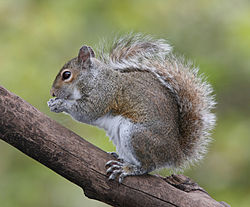
Eastern gray squirrel (Sciurus carolinensis)
Prevost's squirrel (Callosciurus prevostii)

Tree squirrels are the members of the squirrel family (Sciuridae) commonly just referred to as "squirrels". They include more than 100 arboreal species native to all continents except Antarctica and Oceania.[1][2][3][a]

They do not form a single natural, or monophyletic, group; they are variously related to others in the squirrel family, including ground squirrels, flying squirrels, marmots, and chipmunks. The defining characteristic used to determine which species of Sciuridae are tree squirrels is dependent on their habitat rather than their physiology. Tree squirrels live mostly among trees, as opposed to those that live in burrows in the ground or among rocks. An exception is the flying squirrel that also makes its home in trees, but has a physiological distinction separating it from its tree squirrel cousins: special flaps of skin called patagia, acting as glider wings, which allow gliding flight.

The best-known genus of tree squirrels is Sciurus, which includes the eastern gray squirrel of North America (introduced to Great Britain in the 1870s),[4] the red squirrel of Eurasia, and the North American fox squirrel, among many others. Many tree squirrel species have adapted to human-altered environments such as rural farms, suburban backyards and urban parks.

Classification

[edit]
Indian palm squirrel (Funambulus palmarum)
American red squirrel (Tamiasciurus hudsonicus)

Current taxonomy, based on genetic data, splits the tree squirrels into several subfamilies. The following genera of the squirrel family are classified as tree squirrels.[3][5]

Relationship with humans

[edit]

Squirrels are generally inquisitive and persistent animals. In residential neighborhoods, they are notorious for circumventing obstacles in order to eat from bird feeders. Although they are expert climbers, and primarily arboreal, some species of squirrels also thrive in urban environments, where they have adapted to humans.

As pets

[edit]
Depiction of a pet squirrel on a leash with a feeder in a 14th-century antiphonary (Bruges Public Library, MS. SVC 010A)

Squirrels have been kept as pets in Western society at least until the 19th century. Because of their small size and tame nature, they were especially popular with women and the clergy.[6]

As pests

[edit]

Iron bird feeder advertised as being "squirrel-proof and bear-resistant"

Squirrels are sometimes considered pests because of their propensity to chew on various edible and inedible objects, and their stubborn persistence in trying to get what they want. Their characteristic gnawing trait also aids in maintaining sharp teeth, and because their teeth grow continuously, prevents their over-growth. On occasion, squirrels will chew through plastic and even metal to get to the food.

Tree squirrels may bury food in the ground for later retrieval. Squirrels use their keen sense of smell to search for buried food, but can dig numerous holes in the process. This may become an annoyance to gardeners with strict landscape requirements, especially when the garden contains edibles.

Homeowners in areas with a heavy squirrel population must be vigilant in keeping attics, basements, and sheds carefully sealed to prevent property damage caused by nesting squirrels.[7][8][9] A squirrel nest is called a "drey".

Squirrels can create serious fire hazards when they break into buildings. They often treat exposed power cables as tree branches, and gnaw on the electrical insulation. The resulting exposed conductors can short out, causing a fire. For this reason alone, squirrel nests inside buildings cannot be safely ignored. A squirrel nest will also cause problems with noise, excreta, unpleasant odors, and eventual structural damage.[7][9]

Some homeowners resort to more interesting ways of dealing with this problem, such as collecting and placing fur from pets such as domestic cats and dogs in attics. It is thought that this fur would indicate to nesting squirrels that a potential predator roams, and will encourage evacuation. Odoriferous repellents, including mothballs and ammonia, are generally ineffective in expelling squirrels from buildings.[7]

This squirrel has become desensitized to humans. The distance between the squirrel and the camera was less than 18 in (46 cm).

Once established in a nest, squirrels ignore fake owls and scarecrows, along with bright flashing lights, loud noises, and ultrasonic or electromagnetic devices. However, squirrels must leave the nest to obtain food and water (usually daily, except in bad weather), affording an opportunity to trap them or exclude them from re-entering.[7][9]

To discourage chewing on an object, it can be coated or covered with something to make it distasteful: for instance a soft cloth doused with chili pepper paste or powder.[10] Capsaicin and Ro-pel are other forms of repellent.[9] To remain effective, the coating must be reapplied regularly, especially if it is exposed to the weather. Poisoning squirrels can be problematic because of the risks to other animals in the building, and because the odor of a dead squirrel in an attic or wall cavity is very unpleasant and persistent.[7]

Trapping is often used to remove squirrels from residential structures.[11] Effective baits include fruit, peanut butter, nuts, seeds and vanilla extract.[12]

An alternative method is to wait until squirrels have left in search of food, and then close up all their access openings, or to install one-way trap doors or a carefully angled pipe.[9] Attempting to get rid of all squirrels in a neighborhood is generally futile; the focus instead should be on physically excluding them from places where they can do damage.[7] There are other humane techniques to remove squirrels from buildings, but removal is ineffective unless steps are taken to prevent them from immediately re-entering.[7][8][13]

Squirrels are often the cause of power outages. They can readily climb a power pole and crawl or run along a power cable. The animals will climb onto power transformers or capacitors looking for food, or a place to cache acorns. If they touch a high voltage conductor and a grounded portion of the enclosure at the same time, they are electrocuted, and often cause a short circuit that shuts down equipment. Squirrels have brought down the NASDAQ stock market twice and were responsible for a spate of power outages at the University of Alabama.[14][15][16] To sharpen their teeth, squirrels will often chew on tree branches or even the occasional live power line.[7] Rubber or plastic plates, or freely rotating sleeves ("squirrel guards") are sometimes used to discourage access to these facilities.[17][18]

Squirrels otherwise appear to be safe and pose almost zero risk of transmitting rabies.[19]

Squirrels cause economic losses to homeowners, nut growers, and forest managers in addition to damage to electric transmission lines. These losses include direct damage to property, repairs, lost revenue and public relations. While dollar costs of these losses are sometimes calculated for isolated incidents, there is no tracking system to determine the total extent of the losses.[20]

As roadkill and traffic hazards

[edit]

In regions where squirrels are plentiful, roadkill is a common sight on roadways, especially in the spring and fall, when there is a fresh crop of young rodents. Motorists have caused serious accidents by attempting to swerve or stop to avoid a squirrel in the road.[21][22][23] Evasive maneuvers are difficult since squirrels are much more agile and have much quicker reaction times than motorists in heavy vehicles; the majority of vehicular encounters end with no harm to either party.[24]

An effort to mitigate these hazards to both squirrels and humans is the Nutty Narrows Bridge in Longview, Washington, listed on the National Register of Historic Places. It provides a way for squirrels to cross a busy street safely.

Tree squirrels are a common attraction of many urban parks.

As urban wildlife

[edit]

Tree squirrels are a common type of urban wildlife.[25] They can be trained to be hand-fed, and will take as much food as is available because they cache the surplus. Squirrels living in parks and campuses[26] in cities have learned that humans are typically a ready source of food, either deliberately or from careless disposal of surplus. Some people do "squirrel fishing" as a way of simultaneously playing with and feeding squirrels.

Humans commonly offer various nuts and seeds; however, wildlife rehabilitators in the field have noted that neither raw nor roasted peanuts nor sunflower seeds are healthy for squirrels, because they are deficient in several essential nutrients. This type of deficiency has been found to cause metabolic bone disease, a somewhat common ailment found in malnourished squirrels.[27][28][dubiousdiscuss]

As game

[edit]

Squirrels are sometimes hunted as game animals, whether for their fur or as food. In the Middle Ages the red squirrel was hunted for its blue-gray winter coat, traditionally called vair, which now lends its name to a heraldic fur. The hairs from squirrel tails are prized in fly fishing when tying fishing flies.[citation needed]

In the US

[edit]

In many areas of the US, squirrels are still hunted for food, as they were historically.[29][30][31][32][33] Recipes calling for squirrel even appear in cookbooks, including James Beard's American Cookery[34] and pre-1997 copies of The Joy of Cooking.[35][36] Squirrel meat can be substituted for rabbit or chicken in many recipes and was an ingredient in the original recipe for Brunswick stew, a popular dish in various parts of the Southern US.[37] Other similar stews were also based on squirrel meat, including burgoo and Southern Illinois chowder.

Although squirrel meat is low in fat content, unlike most game meat it has been found by the American Heart Association to be high in cholesterol.[38]

Squirrels Unlimited[39] host a World Championship Squirrel cook-off each year in Bentonville, Arkansas.[40]

In the UK

[edit]

For most of the history of the United Kingdom, squirrel has been a meat not commonly eaten, and even scorned by many.[41] In the early 21st century however, the wild squirrel has become a more popular meat to cook with,[35] showing up in restaurants and shops more often in Britain as a fashionable alternative meat.[41][42][43] Specifically, Britons are cooking with the invasive grey squirrel, which is praised for its low fat content and the fact that it comes from free range sources.[35] Additionally, the novelty of a meat considered unusual or special has contributed to the spread of squirrel consumption.[41] Due to the difficulty of a clean kill and other factors, the majority of squirrel eaten in the UK is acquired from professional hunters, trappers and gamekeepers.[41][42][43]

Some Britons are eating grey squirrel as a direct attempt to help the native red squirrel, which has been dwindling since the 19th-century introduction of the grey squirrel, resulting in dramatic habitat loss for the indigenous red squirrels.[41][42][43] This factor was marketed by a national "Save Our Squirrels" campaign that used the slogan, "Save a red, eat a grey!"[41]

Risks of eating

[edit]

As with other wild game and fish species, the consumption of squirrels that have been exposed to high levels of pollution or toxic waste poses a health risk to humans. In 2007 in the northern New Jersey community of Ringwood, the New Jersey Department of Health and Senior Services issued a warning to anyone who eats squirrel (especially children and those who are pregnant) to limit their consumption after a lead-contaminated squirrel was found near the Ringwood Mines Landfill.[44] Toxic waste had been illegally dumped at this location for many years, before authorities cracked down on this practice in the 1980s.[45]

In 1997, doctors in Kentucky published a paper in the Lancet that considered a possible association between the local tradition of consuming squirrel brains and five cases of Creutzfeldt–Jakob disease, a rare but serious prion-based disorder. The authors posed this as a mere possibility, unconfirmed by either post-mortem analysis of the patients' brain tissue, or identification of a contagious prion agent in squirrels. Nonetheless, the Lancet article generated substantial media coverage, including articles in the New Yorker and New York Times.[36][46][47] A 2015 case of CJD in a Pittsburgh man who had eaten squirrel brains played out similarly: the media seized on the patient's unconventional food choice, positing squirrel brains as the source of his disease.[48] The doctor who made the initial report later clarified that he had not meant to assert the squirrel meat was the cause.[49] Analysis of the patient's brain tissue ruled out the possibility of CJD acquired from food. As of 2018, Creutzfeldt–Jakob disease had never been identified in squirrels, and the association between squirrel consumption and CJD remained speculative.[50]

Relationship with trees

[edit]

The biggest source of food for tree squirrels is tree nuts. Red squirrels store nuts in a single stash (a midden) that tends to dry out, so the seeds don't take root. Fox squirrels and gray squirrels bury nuts over a widespread area (scatterhoarding), and often forget them, resulting in new trees (mutualism).[51][52]

In culture

[edit]
Seventeenth-century Icelandic manuscript illustration depiction Ratatoskr, a squirrel in Norse mythology said to live in the world-tree Yggdrasil and to convey insults and gossip[53]

In the Ramayana, an ancient Sanskrit epic poem, a squirrel assists in constructing a bridge from India to Sri Lanka to help Rama rescue his wife Sita.[53] Rama rewards the squirrel by stroking his back with his three middle fingers, thus giving the Indian palm squirrel the three white stripes that appear on its back.[53] In Norse mythology, the squirrel Ratatoskr is a messenger who scurries up and down the trunk of the world-tree Yggdrasil, carrying malicious gossip and insults back and forth between the dragon Níðhöggr, who sits at the bottom of the tree gnawing on its roots, and the hawk Veðrfölnir, who sits at the top of the tree keeping watch.[54][53][55] According to Richard W. Thorington, Jr. and Katie E. Ferrell, this legend may have originated from the red squirrel's habit of giving a "scolding alarm call in response to danger", which some Norsemen may have imagined as insults.[53]

In Irish mythology, the goddess Medb is said to always have a bird perched on one shoulder and a squirrel on the other, serving as her messengers to the sky and the earth respectively.[55] In Europe during the Middle Ages, squirrels were sometimes used in bestiaries as symbols of greed and avarice on account of their storing of nuts,[55] but, in the nineteenth century, British natural history books often praised them as thrifty for this same reason.[55] A myth told by the Ainu people of Japan holds that squirrels are the discarded sandals of the ancestral deity Aioina, possibly because squirrels move in spurts like footsteps.[55] The Kalevala, a Finnish epic poem collected in the nineteenth century but rooted in much older oral tradition, contains references to squirrels, including mention of a white squirrel being born of a virgin.[53]

Literary references to squirrels include the works of Beatrix Potter, Brian Jacques' Redwall series (including Jess Squirrel and numerous other squirrels), Pattertwig in C. S. Lewis' Prince Caspian, Michael Tod's Woodstock Saga of novels featuring squirrel communities in the style of Watership Down, and the Starwife and her subjects from Robin Jarvis's Deptford novels. The title character in Miriam Young's 1964 children's book Miss Suzy is a squirrel.

Anthropomorphic red squirrels were used in British road safety campaigns between the 1950s and 1980s.[56]

An episode of the radio program This American Life called "Squirrel Cop" describes the unintentionally humorous misadventure of a newly hired policeman in trying to remove a frantic squirrel from a homeowner's living room, which results in personal injury and a small fire.[57] First aired in 1998,[58] this episode turned out to be one of the most popular ones of the series,[59] prompting rebroadcasts and a lead position on the two-CD compilation Crimebusters + Crossed Wires: Stories from This American Life.

Albino and white squirrels

[edit]

One of the ways that squirrels affect human society is inspired by the fascination that people seem to have over local populations of white squirrels (often misidentified as being albino).[60] This manifests itself by the creation of social group communities that form from a commonly shared interest in these rare animals. Other impacts on human society inspired by white squirrels include the creation of organizations that seek to protect them from human predation, and the use of the white squirrel image as a cultural icon.

Although these squirrels are commonly referred to as "albinos", most of them are likely non-albino squirrels that exhibit a rare white fur coloration known as leucism that is as a result of a recessive gene found within certain eastern gray squirrel (Sciurus carolinensis) populations, and so technically they ought to be referred to as white squirrels, instead of albino.[60][61]

A project run by Untamed Science is seeking to report and document the occurrence of both white squirrels, albinos, and other piebald morphs. Users are encouraged to submit their sightings.[62]

Local pride

[edit]
Welcome sign for Kenton, Tennessee, an example of competition for "White Squirrel Capital".

Olney, Illinois, known as the "White Squirrel Capital of the World", is home of the world's largest known white squirrel colony. These squirrels have the right of way on all streets in the town, with a $500 fine for hitting one. The Olney Police Department features the image of a white squirrel on its officers' uniform patches.[63]

Along with Olney, there are four other towns in North America that avidly compete with each other to be the official "Home of the White Squirrel", namely: Marionville, Missouri; Brevard, North Carolina; Exeter, Ontario; and Kenton, Tennessee, each of which holds an annual white squirrel festival, among other things designed to promote their claim of "White Squirrel Capital".[64]

A list of white squirrel sightings around the world is maintained by the White Squirrel Research Institute, a group based in Brevard, North Carolina.[65]

Other towns that have reported white squirrel populations in North America (although not necessarily competing to be the "official" white squirrel capital) include Bowling Green, Kentucky; Columbia, Mississippi;[66] DeForest, Wisconsin;[67] Stratford, Connecticut;[68] and some of the snowbelt cities in the Western, Central and Finger Lakes regions of New York State (Buffalo, Rochester, Ithaca and Syracuse).[62] The Trinity Bellwoods[69] neighborhood of Toronto, Ontario is locally known for white squirrel sightings.

Campus populations

[edit]

In addition to the various towns that boast of their white squirrel populations, a number of university campuses in North America have white squirrels. The University of Texas at Austin is home to a white squirrel population which has spurred the myth of the albino squirrel as a good luck charm. There are many versions of the tale; one of the more popular versions is if one spots the albino squirrel before an exam, they will ace it.[61][70][71] The University of North Texas founded the Albino Squirrel Preservation Society in 2001, which has since acquired several "worldwide" chapters.[72] In 2006, the University of North Texas held a student referendum to name their white squirrel as the university's secondary mascot, but the vote was narrowly defeated by the student body.[73] University of Wisconsin - Eau Claire has a significant white squirrel population both on the campus and in other areas of the city of Eau Claire. Michigan Technological University in Houghton, Michigan is home to frequently sighted white squirrels that live on and around the campus.[74] A Facebook group dedicated to these squirrels, called I've Seen the Albino Squirrel of Michigan Tech, was created for people to post photographs and anecdotes of their encounters with the white squirrels, and includes some stories from Michigan Tech alumni that recall seeing white squirrels in Houghton dating back to the 1930s.

In Kentucky, the University of Louisville has established its own chapter of the Albino Squirrel Preservation Society, which maintains contact with its members and interested parties through a Facebook group by that name. The university has an open policy to give away a free t-shirt to anyone who takes a photograph of a white squirrel on campus grounds and brings it to the administration offices.[75]

Other university campuses that have albino squirrel populations include Oberlin College in Ohio,[76] Ohio State University in Columbus, Ohio,[77] Western Kentucky University in Bowling Green, Kentucky (which has had a population of albino squirrels since the 1960s),[60] and Youngstown State University in Youngstown, Ohio.[citation needed]

Michael Stokes, a biology professor at Western Kentucky University, commented that the probable cause for the abundance of white squirrels on university campuses was because they were originally introduced by someone: "We're not sure how they got here, but I'll tell you how it usually happens...When you see them, especially around a college campus or parks, somebody brought them in because they thought it would be neat to have white squirrels around."[60]

Albert Meier, another biology professor at Western Kentucky University, added that: "... white squirrels rarely survive in the wild because they can't easily hide. But on a college campus, they are less likely to be consumed by other animals."[60]

In folklore

[edit]

A story in which a Nāga shapeshifts into a white or albino squirrel, is killed by a hunter, and is magically transformed into meat equal to 8,000 cartloads figures prominently in the folklore of rocket festival traditions and the origin of Nong Han Kumphawapi Lake in Northeast Thailand.[78]

Red and grey squirrels in the UK

[edit]
Red squirrel at a feeding tray in the Lake District, England.

A decline of the red squirrel and the rise of the eastern gray squirrel, an introduced species from North America, has been widely remarked upon in British popular culture. It is mostly regarded as the invading greys driving out the native red species.[79] Evidence also shows that grey squirrels are vectors of the squirrel parapoxvirus for which no vaccine is currently available, and which is deadly to red squirrels but does not seem to affect the non-native host.[80]

Currently,[when?] the red squirrel's range has been reduced to the coniferous forests in Scotland, Anglesey in Wales, and in England's Formby, the Lake District, Brownsea Island, and the Isle of Wight.[81] The majority of England's red squirrels are found in the county of Northumberland. Special measures are in place to contain and remove any infiltration of grey squirrels into these areas. Though the population has dramatically decreased, they remain listed on the IUCN Red List as Least Concern.[citation needed][82]

As of 2008, the eastern gray squirrel was regarded as vermin and it was illegal to release any into the wild; any caught could be released only if one applied for and was granted a licence to do so.[83] As of 2015, any caught in Scotland had to be humanely killed.[84]

See also

[edit]

References

[edit]

Further reading

[edit]
[edit]
Revisions and contributorsEdit on WikipediaRead on Wikipedia
from Grokipedia

Tree squirrels are arboreal primarily within the genus and related taxa of the family Sciuridae, adapted for life in trees through features such as long bushy tails for balance and signaling, sharp claws for gripping bark, and ankles capable of 180-degree rotation to facilitate climbing and leaping. These small to medium-sized mammals, weighing 176–768 grams and measuring 160–308 mm in body length, inhabit temperate and tropical forests, montane regions, swamps, and urban areas across North and , , and parts of the , but are absent from , , and certain zones. Diurnal and generally solitary, they forage for nuts, seeds, fruits, fungi, and occasionally or small vertebrates, caching excess food in scattered locations which aids in and forest regeneration. With up to 28 species in alone contributing to the family's roughly 300 species, tree squirrels demonstrate high reproductive potential—litters of 3–4 young after 29–65 day gestations—and lifespans of 5–10 years in the wild, though they face significant predation and habitat pressures. In human-modified landscapes, their adaptability leads to conflicts, including structural damage from nesting in buildings and consumption of crops or garden produce.

Taxonomy and Evolution

Phylogenetic Classification

Tree squirrels constitute the arboreal members of the family Sciuridae, primarily classified within the tribe Sciurini of the subfamily Sciurinae, alongside the Southeast Asian forms in the subfamily Callosciurinae, as delineated by molecular phylogenies integrating mitochondrial DNA (mtDNA) and nuclear loci. Phylogenetic analyses, including supermatrix approaches from cytochrome b and other genes, confirm the monophyly of Sciurini relative to ground squirrels (e.g., tribes Marmotini and Xerini) and flying squirrels (subfamily Pteromyinae), with shared synapomorphies such as derived claw structures and limb proportions supporting arboreal adaptations in parsimony-based reconstructions. These clades diverge from basal sciurid lineages, with Sciurini emerging in the early Oligocene based on calibrated molecular clocks from RAG1 and c-myc sequences. Key genera in Sciurini include Sciurus (encompassing gray and Eurasian red squirrels, with ~28-30 species across Holarctic and Neotropical distributions), Tamiasciurus (North American red squirrels, 3 species: T. hudsonicus, T. douglasii, T. fremonii), Microsciurus (Neotropical dwarf tree squirrels, 5 species), Syntheosciurus (1 Mexican species), and Rheinthrosciurus (1 Bornean species), totaling approximately 40 recognized species globally when excluding Callosciurinae. Within Sciurus, multilocus phylogenies reveal paraphyly, with Neotropical lineages forming a distinct clade sister to Holarctic taxa, as evidenced by Bayesian inference on concatenated datasets showing deep divergences predating the Pleistocene. Tamiasciurus occupies a basal position within Sciurini, supported by mitogenome alignments that place it divergent from Sciurus by ~20-25 million years. In Callosciurinae, the genus Callosciurus (Asian tree squirrels, ~15 ) forms a monophyletic group distinct from , with phylogenomic data from whole mitogenomes affirming its separation and rapid diversification in during the . Post-2020 mitogenomic studies, incorporating 99 Sciuridae mitogenomes, reinforce these topologies, highlighting low intergeneric divergence in nuclear markers but robust mtDNA support for tribe-level boundaries, while noting ongoing refinements to subgeneric divisions in Sciurus via denser sampling of Amazonian taxa. Such analyses underscore the polyphyletic nature of "tree squirrels" across subfamilies but validate as a cohesive defined by genetic synapomorphies rather than solely morphological convergence.

Fossil Record and Adaptive Radiation

The fossil record of the Sciuridae family, which includes tree squirrels of the tribe , originates in the late Eocene epoch, with early representatives documented from the in , dated to approximately 37 million years ago. These fossils, comprising two extinct large-bodied , exhibit morphological traits consistent with , such as elongated tarsals and phalanges suited for climbing, indicating an initial evolutionary shift toward tree-dwelling in paleoforests dominated by early angiosperms. By the early , around 33–34 million years ago, more complete specimens like Douglassciurus jeffersoni from deposits reveal advanced adaptations for scansorial habits, including flexible ankle joints and claw morphology enabling precise grip on bark, features that parallel those in modern tree squirrels and suggest continuity in occupation amid cooling global climates favoring coniferous and woodlands. The record of specifically remains fragmentary in the Eocene–Oligocene, with North American occurrences from the Chadronian land-mammal age (~36–34 Ma) but limited diversity until later epochs, reflecting sparse preservation rather than absence. Adaptive radiation of tree squirrels accelerated in the , marked by dispersals across and into the , as evidenced by mitogenomic phylogenies showing crown-group divergences and range expansions tied to the proliferation of temperate offering mast resources like acorns and seeds. This diversification, potentially originating in with subsequent Old World colonization, involved parallel radiations in Nearctic and Palearctic realms, where ecological opportunities from shifts—such as and fragmentation—drove through specialization and dietary reliance on seasonal, nutrient-dense tree fruits. Key causal factors include the expansion of nut-bearing angiosperms, which selected for behavioral innovations like scatter-hoarding, though direct paleontological traces of caching remain elusive, inferred instead from modern analogs and indirect dental wear patterns in fossils indicating hard-seed processing.

Physical and Physiological Traits

Morphology and Size Variation

Tree squirrels exhibit a body size range with head and body lengths typically measuring 150–350 mm and tail lengths 120–300 mm, yielding total lengths of 20–60 cm; body masses span 200–1000 g across species, though many common temperate forms fall between 300–700 g. in size remains minimal in most species, with males and females showing comparable measurements and no consistent differences in coloration or mass; exceptions occur in select taxa, where males average slightly larger, up to 767 g versus lower female averages in some populations. Anatomically, tree squirrels feature pentadactyl limbs with sharp, curved claws on all digits, facilitating grip on bark; the forefeet include four long digits plus a short, opposable , while hindfeet are elongated for propulsion. A bushy , often equal to or exceeding head-body length, consists of dense, elongated guard hairs over an underfur layer. The dentition includes prominent, ever-growing incisors suited for gnawing tough seeds and nuts, a trait shared with other . Fur is generally dense and coarse, with variations such as the grizzled gray pelage in Sciurus carolinensis contrasting the reddish-brown coat in Tamiasciurus hudsonicus. Intraspecific size variation often follows altitudinal and latitudinal clines, with larger body masses observed in populations from cooler, higher-elevation habitats, partially conforming to as mediated by and energetic demands; this pattern holds despite deviations linked to structures and overwinter pressures.

Sensory and Locomotor Adaptations

Tree squirrels demonstrate dichromatic vision optimized for diurnal arboreality, with cone photoreceptors sensitive primarily to and wavelengths, enabling discrimination of ultraviolet-reflecting foliage and conspecific signals but limited red-green contrast resolution. This , coupled with an expanded dorsolateral relative to ground-dwelling sciurids, supports acute motion detection and essential for navigating discontinuous canopy supports. Olfactory acuity is pronounced, facilitated by enlarged olfactory bulbs and a high of receptor neurons that detect volatile compounds from cached and predators, allowing location of buried under up to 30 cm of snow cover. This sensory reliance on scent integrates with for cache recovery, independent of visual cues in low-light conditions. Locomotor adaptations emphasize power for leaping, with extensor muscles (e.g., gastrocnemius and plantaris) exhibiting greater relative volume and force-velocity properties in arboreal species like compared to relatives, enabling launches that propel body masses of 0.5–1 kg across gaps up to 5–7 m horizontally. Elastic tendons in the digital flexors and Achilles apparatus store during takeoff, recycling up to 20–30% of kinetic demands for efficient burst propulsion rather than endurance. Predominance of fast-twitch glycolytic fibers in and musculature prioritizes anaerobic power output for rapid acceleration (reaching 8–10 m/s in short sprints), while the non-prehensile but bushy provides aerodynamic stabilization and proprioceptive feedback during mid-air corrections. Physiologically, tree squirrels sustain elevated field metabolic rates, averaging 2–4 times basal levels during peak activity to fuel and locomotion across temperature gradients from –10°C to 35°C, without reliance on deep bouts characteristic of ground squirrels. This hypermetabolic strategy, supported by efficient oxygen delivery via large capacities and hemoglobin affinities tuned for arboreal hypoxia, underscores adaptations for continuous vigilance over seasonal .

Ecological Niche

Habitat Preferences and Distribution

Tree squirrels of the tribe predominantly occupy wooded habitats that provide arboreal cover, including temperate deciduous forests, coniferous woodlands, tropical rainforests, montane regions, and swamp environments. These species exhibit a strong preference for areas with mature trees suitable for nesting and locomotion, as open grasslands and other treeless landscapes lack the vertical structure necessary for predator evasion and foraging security. Predation pressures from ground-dwelling carnivores, such as canids and felids, reinforce this avoidance of exposed terrains, where squirrels cannot readily ascend to safety. The global distribution of tree squirrels centers on the , with significant diversity in the Nearctic region and extensions into the through Asian lineages. In , species such as the (Sciurus carolinensis) occupy ranges from southern and southward to and westward to eastern , favoring mixed hardwood stands dominated by oaks and hickories. Eurasian representatives, like the Eurasian red squirrel (Sciurus vulgaris), span coniferous and broadleaf forests across and northern . Human-mediated introductions have expanded ranges beyond native limits, with S. carolinensis establishing populations in parts of since the late and select species appearing in South American woodlands. Urban expansion has facilitated tree squirrel persistence in peri-urban and city-adjacent zones, where fragmented woodlots and parks mimic core elements, though populations remain anchored to mast-producing trees such as oaks (Quercus spp.) and pines (Pinus spp.) for reliable seed crops. suitability models indicate that canopy connectivity and tree density above 40% cover thresholds predict occupancy, with deviations risking local extirpation due to heightened vulnerability. These adaptations underscore a resilience to anthropogenic fragmentation, yet underscore the role of contiguous forests in sustaining viable densities.

Foraging Behavior and Diet

Tree squirrels exhibit an omnivorous diet dominated by seeds and nuts from mast-producing trees, such as acorns and conifer cones, which form the primary nutritional base supplemented by fungi, invertebrates, fruits, and occasionally bark or buds. Empirical analyses of fecal samples from species like eastern gray squirrels (Sciurus carolinensis) and Douglas squirrels (Tamiasciurus douglasii) in Washington state reveal consistent consumption of hypogeous fungi across all seasons, with spores detected in 272 of 275 samples, indicating fungi's role as a staple rather than opportunistic food. Seasonal shifts occur, with increased intake of invertebrates like insects during spring when fresh mast is scarce, alongside higher proportions of fruits and buds in summer. Caching behaviors vary by genus, reflecting adaptations to resource predictability and predation risks. Red squirrels (Tamiasciurus spp.) primarily employ larder , centralizing large quantities of cones or nuts in defended middens near their dreys, which allows efficient processing but exposes caches to territorial competitors. In contrast, gray and fox squirrels ( spp.) favor scatter , burying individual items in numerous dispersed locations to reduce pilferage risk from conspecifics, though this demands superior for retrieval. Pilferage rates for scatter caches can reach up to 30% daily under experimental conditions, prompting hoarders to select sites based on prior cache distributions and environmental cues to minimize . Dependence on high-fat mast crops synchronizes squirrel populations with masting cycles, where abundant "boom" years enable elevated and , followed by "bust" periods of that cull numbers through or . This pulsed resource dynamic underscores mast's causal role in driving boom-bust population fluctuations, as evidenced by correlations between abundance and subsequent squirrel densities in eastern forests. While caching mitigates short-term shortages, failure to recover stores during lean seasons amplifies nutritional stress, occasionally leading to bark-stripping behaviors that damage layers but provide minimal caloric relief.

Life History Strategies

Reproduction and Development

Tree squirrels generally exhibit polygynandrous or promiscuous mating systems, characterized by multiple matings per female with several males during estrus, often involving competitive chases and dominance hierarchies among males. Breeding typically occurs in one or two seasons annually, varying by species and latitude; for instance, eastern gray squirrels (Sciurus carolinensis) breed primarily from December to January and May to June, while red squirrels (Tamiasciurus hudsonicus) often have a single spring breeding period. Females produce 1-2 litters per year, with average litter sizes of 2-4 young (ranging from 1-7 across species), and sex ratios at birth approximating 1:1. Gestation periods last 40-45 days, yielding altricial young that are born blind, hairless, and entirely dependent on maternal care. Females invest heavily in offspring by constructing secure nests, either in tree cavities lined with and leaves or in external dreys of twigs and foliage, which provide insulation and protection from predators and weather. Young remain in the nest for 6-8 weeks, during which mothers nurse them exclusively at first, gradually introducing solid foods; occurs around 10-12 weeks, after which juveniles begin foraging independently but may stay nearby for additional weeks. Reproductive output varies with environmental conditions, particularly food availability; in mast-seeding years with abundant tree seeds, females across like red squirrels show elevated through larger litters or higher breeding success, enabling population irruptions timed to resource pulses. This plasticity reflects adaptations to unpredictable arboreal food supplies, though baseline remains constrained by energetic demands of and nest maintenance in non-mast years.

Population Dynamics and Dispersal

Tree squirrel populations exhibit cyclic fluctuations closely tied to mast cycles of and trees, with periodicities generally spanning 2 to 5 years, as documented in long-term monitoring of species like the ( carolinensis) and red squirrel (Tamiasciurus hudsonicus). These cycles drive booms in following abundant years, where enhanced juvenile and occur due to ample resources, and busts during scarcity, marked by elevated mortality and suppressed reproduction. Mark-recapture studies across North American forests quantify these shifts, showing densities peaking post-mast and declining by up to 50-80% in failure years through reduced natality and increased emigration. Density-dependent mechanisms regulate these dynamics, primarily through intraspecific competition for cached seeds, territories, and breeding sites, which intensifies at higher densities and triggers emigration, particularly among subadults. Telemetry and live-trapping data indicate that resource limitation during non-mast periods exacerbates competition, leading to aggressive interactions and forced dispersal that prevent overexploitation and stabilize populations at carrying capacities estimated at 1-10 individuals per hectare in optimal deciduous or mixed forests with reliable mast production. Habitat fragmentation further modulates this by creating isolated patches where reduced connectivity amplifies local density dependence and lowers effective carrying capacity. Dispersal patterns, tracked via radio and mark-recapture, reveal sex-biased natal movements: juvenile males commonly travel 1-5 km to establish new ranges, promoting , while females display , with over 50% settling within 1 km of natal sites in species like the . Physical barriers such as rivers constrain these distances, reducing inter-population as evidenced by genetic structuring in fragmented landscapes, though occasional long-distance events exceeding 10 km occur in low-competition contexts.

Behavioral Repertoire

Daily Cycles and Social Interactions

Tree squirrels exhibit primarily diurnal activity patterns, with individuals emerging from nests shortly after dawn and retreating before dusk, often displaying bimodal peaks of activity in the early morning and late afternoon to optimize while minimizing exposure to midday heat or predators. These cycles vary seasonally; for instance, in temperate regions, gray squirrels ( carolinensis) show heightened crepuscular activity during summer, aligning with longer daylight hours and abundant food resources. Activity levels are influenced by environmental factors such as temperature, with reduced midday in hot conditions to conserve . Socially, tree squirrels form loose aggregations at resource-rich sites like feeding areas but do not maintain pack structures, instead prioritizing individual territories defended through vocalizations—including rattles, kuks, screeches, and buzzes—and scent marking via cheek glands or . Dominance hierarchies emerge in these contexts, particularly during feeding, where adult males typically outrank females and juveniles, with rank correlating to age and sex; for example, in eastern gray squirrels, males dominate females in approximately 79% of interactions. is minimal outside kin groups, limited to occasional maternal care or shared tolerance among related females, reflecting a largely solitary lifestyle punctuated by opportunistic affiliations. Agonistic interactions, such as chases, tail-flicking displays, and physical fights, intensify during seasons—typically late winter to early spring and late summer—when males compete aggressively for access to receptive females through prolonged pursuits and dominance assertions. Tolerance among individuals increases during food scarcity, reducing overt conflicts to conserve , as observed in populations where hierarchy enforcement softens amid limited resources. These behaviors underscore a balance between territorial exclusivity and adaptive flexibility in response to ecological pressures.

Cognitive Abilities and Intelligence

Tree squirrels exhibit strong capabilities, particularly in relocating food caches, with controlled studies demonstrating recovery accuracies often exceeding 80% even after delays of up to 21 days. For instance, grey squirrels (Sciurus carolinensis) retrieve significantly more nuts from their own buried caches than from those of conspecifics, indicating reliance on individualized spatial cues rather than olfactory or landmark proxies alone. Fox squirrels (Sciurus niger) further employ mnemonic chunking strategies, grouping caches by nut type when from single locations, which enhances retrieval efficiency in scatter-hoarding contexts. In experimental settings, tree squirrels demonstrate problem-solving skills through novel food-extraction tasks, where eastern gray squirrels successfully innovate manipulations to access rewards, showing improvements in efficiency across trials via associative learning and . However, tool use remains rare, limited to opportunistic —such as paw rotations to assess nut integrity—rather than detached implements for indirect action, distinguishing them from or corvids. Recent field experiments from 2024–2025 reveal that urban human disturbance impairs problem-solving in tree squirrels; Eurasian red squirrels (Sciurus vulgaris) in high-activity areas, including playgrounds with elevated and , show decreased success rates in solving extraction puzzles compared to less disturbed sites. Conversely, certain urban traits like reduced green cover can indirectly boost individual solving speed by altering perceived predation risk or resource competition. Interspecies gut variations contribute to behavioral differences among tree squirrels; grey squirrels possess more diverse bacterial profiles enabling superior breakdown of bark and fungi, correlating with heightened foraging aggression and competitive displacement of squirrels, as evidenced by microbiome sequencing in 2024 analyses. Comparatively, tree squirrels surpass ground-dwelling relatives in arboreal cognitive demands, such as visuospatial judgments for gap-crossing leaps, supported by expanded visual cortices adapted for three-dimensional , whereas ground squirrels allocate more neural resources to somatosensory for burrowing. No experimental evidence supports advanced in tree squirrels; deceptive caching behaviors, like feigned burials under observation, reflect tactical pilfering awareness but lack demonstrated mental state attribution beyond simple contingency learning.

Predators, Diseases, and Mortality Factors

Natural Predators and Predation Pressures

Tree squirrels face predation primarily from avian raptors and mammalian carnivores, with juveniles experiencing higher mortality rates from aerial predators. Diet analyses of Cooper's hawks ( cooperii) and other raptors indicate that tree squirrels, particularly juveniles, comprise a substantial portion of their prey, often exceeding 20% in urban and forested habitats where squirrels are abundant. Great horned owls (Bubo virginianus) and barred owls (Strix varia) similarly target juvenile squirrels during nocturnal hunts, ambushing from perches or canopy cover, contributing to annual juvenile mortality rates that can reach 50-75% in some populations due to combined predation pressures. Mammalian predators such as red foxes (Vulpes vulpes), least weasels (Mustela nivalis), and pine martens (Martes martes) preferentially target adult squirrels, especially during ground foraging or caching activities. Scat and stomach content studies reveal squirrels in 5-15% of red fox diets in woodland areas, with weasels exploiting tree cavities to access adults and nests. These ground-based strikes exploit squirrels' vulnerability when descending from trees, accounting for up to 30% of adult mortality in predator-rich ecosystems. Squirrels employ anti-predator strategies including species-specific alarm calls—such as "kuks" for terrestrial threats and "quaas" for aerial ones—to alert conspecifics, alongside behaviors where groups harass intruders with vocalizations and chases. Erratic, zigzagging flights and rapid ascents into dense foliage further reduce capture success by disrupting raptor strikes. Predation rates intensify in fragmented habitats, where increase exposure to ground predators and reduce escape cover, elevating overall mortality by 10-20% compared to continuous forests. As primary prey, tree squirrels sustain raptor populations, with studies showing their abundance correlating positively with and densities in both native and urban ranges. In ecosystems like North American woodlands, squirrels form a keystone food source, buffering raptor breeding success against fluctuations in alternative prey like . This trophic linkage underscores squirrels' role in maintaining predator viability, though elevated squirrel densities in human-modified landscapes can amplify predation feedback loops.

Pathogens, Parasites, and Health Threats

Tree squirrels are susceptible to a range of ectoparasites, including fleas (Neohaematopinus spp.), ticks (Ixodes scapularis), and mites, which can act as vectors for bacterial and viral pathogens while directly impairing host condition through blood loss and irritation. In North American red squirrels (Tamiasciurus hudsonicus), ectoparasite loads vary seasonally and by sex, with higher infestation in males facilitating parasite transmission. These parasites contribute to reduced fitness by increasing energetic costs and predisposing hosts to secondary infections, though prevalence is typically moderate in healthy populations. Endoparasites, particularly intestinal nematodes such as Strongyloides robustus, infect tree squirrels across genera like Sciurus and Tamiasciurus, leading to gastrointestinal inflammation, nutrient , and lowered reproductive output. In red squirrels, nematode burdens correlate with decreased body mass and survival, exacerbating effects during resource scarcity. Protozoan and trematode infections occur less frequently but similarly diminish host vigor by competing for resources and triggering immune responses. Viral pathogens include (SQPV), a parapoxvirus causing ulcerative lesions, systemic infection, and high mortality in naive hosts like Eurasian red squirrels (Sciurus vulgaris), with outbreaks documented in isolated populations where prevalence exceeds 20% in affected groups. Bacterial diseases such as , caused by Leptospira interrogans, affect North American tree squirrels including s (Sciurus niger), with renal and hepatic damage leading to acute illness; seroprevalence reaches 60.6% in urban fox squirrel populations. Mange, primarily notoedric mange from Notoedres mites, triggers epizootics in species like western gray squirrels (Sciurus griseus), resulting in extensive alopecia, thickened , secondary bacterial infections, and ; outbreaks have reduced by up to 50% in affected Washington populations during winter. Population-level die-offs remain infrequent due to squirrels' arboreal habits limiting density-dependent transmission, but localized events occur every 5–10 years in high-density areas. Genetic diversity mitigates outbreak severity in tree squirrels, as heterozygosity enhances immune responsiveness and resistance; populations with reduced variation, such as insular or fragmented groups of squirrels, exhibit amplified mortality from parapoxvirus and nematodes compared to mainland counterparts with higher allelic richness. In Sciurus species, across landscapes buffers against fixation of susceptibility alleles, preventing sustained epizootics.

Human Interactions and Impacts

Damage to Agriculture and Property

Tree squirrels, particularly eastern gray squirrels (Sciurus carolinensis) and fox squirrels (Sciurus niger), inflict substantial damage to agricultural crops through raiding behaviors targeting nuts, fruits, and grains. In orchards, they consume significant portions of , , and yields, with reports from U.S. extension services indicating localized losses that can exceed 20-30% in unmanaged stands during peak population years. Bark stripping, where squirrels incise the layer of young trees to access , often girdles saplings and branches, leading to dieback or mortality in species like , , and fruit trees; this behavior peaks in late winter and early spring when food is scarce. In the , introduced gray squirrels cause an estimated £14 million in annual losses to the timber industry from such bark damage, primarily affecting broadleaf plantations and exacerbating replacement costs for affected trees. Overabundant squirrel populations, often unchecked by sufficient predation in human-modified landscapes, intensify these agricultural impacts by exceeding natural carrying capacities and concentrating pressure on vulnerable crops. Without predators like hawks or maintaining balance—where natural mortality can claim over 50% of individuals annually—densities can surge, amplifying raiding episodes and bark stripping beyond sustainable levels for farmers. In , , gray squirrels have been documented damaging poplar plantations and nearby orchards, though incidence varies with proximity to refugia. On properties, tree squirrels cause structural harm by gnawing insulation, wood, and in and , where they establish dreys or seek . Chewing on wiring poses fire hazards and contributes to power outages, with squirrels responsible for more U.S. electrical disruptions annually than other or weather events in some utility reports. Attic infestations lead to insulation contamination and chewing damage requiring repairs costing $200 to $1,500 per incident, while persistent nesting can weaken structural integrity over time. Urban and suburban settings see compounded effects, as high squirrel densities—fueled by supplemental feeding and reduced predators—result in dreys that aesthetically degrade properties and necessitate ongoing exclusion efforts.

Hunting, Trapping, and Management Benefits

In the United States, tree squirrel is regulated through state-specific seasons and bag limits designed to ensure sustainable harvests, typically allowing 4 to 12 squirrels per day depending on the species and location. For instance, permits a daily bag limit of 12 gray squirrels, while restricts it to four tree squirrels per day, with seasons often spanning several months from fall through winter to align with natural population peaks driven by mast availability. These limits, enforced by wildlife agencies, prevent overexploitation by accounting for high reproductive rates—females can produce two to three litters annually, each with 3-7 young—allowing populations to rebound post-season. Harvesting tree squirrels provides ecological benefits by mitigating localized overabundance, particularly for invasive or competitively dominant species that can suppress native vegetation through excessive browsing on buds, twigs, and seeds. Regulated hunting reduces pressure on forest regeneration, as unchecked squirrel densities have been linked to decreased hardwood mast production in fragmented habitats; post-harvest surveys in states like Mississippi show population stability or recovery when combined with habitat enhancements like den tree retention. For invasive gray squirrels in non-native ranges, culling via hunting has demonstrated improved outcomes for co-occurring species by alleviating competition for resources, with empirical data indicating sustained native population levels after targeted reductions. Tree squirrel meat offers a lean, protein-dense food source, with 3 ounces of roasted squirrel providing approximately 147 calories, 26 grams of protein, and minimal fat, making it comparable to other wild game in nutritional profile. Contaminant risks are generally low in properly prepared wild specimens from rural areas, as squirrels bioaccumulate fewer urban pollutants than larger mammals, though hunters are advised to avoid heavily industrialized zones. Economically, small game hunting like squirrels bolsters rural communities by generating revenue through licenses, equipment sales, and related tourism, contributing to broader wildlife management funds that support habitat conservation; in aggregate, hunting activities inject billions into rural economies, with small game serving as an accessible entry point that fosters skills in marksmanship and self-reliance.

Urban Adaptation and Conflicts

Tree squirrels, particularly species like the (Sciurus carolinensis), have demonstrated remarkable adaptability to urban environments by exploiting anthropogenic sources and modified habitats such as city parks and green spaces. These squirrels frequently consume human-provided subsidies, including contents, discarded , and intentionally offered nuts, which supplement natural and support higher population densities compared to rural areas. In urban parks, access to these reliable resources enables squirrels to maintain body condition and breeding success, even amidst fragmented tree cover. Despite these advantages, urban squirrels face elevated mortality risks from vehicular , which accounts for 20% to 65% of recorded in some populations, particularly among adults crossing roads for or dispersal. This hazard contributes to annual losses estimated at significant portions of urban cohorts, though exact rates vary by city and squirrel species. Conflicts arise from squirrels nesting in attics, tree cavities near residences, or urban structures, leading to , structural interference, and occasional human complaints about proximity. On the positive side, urban tree squirrels facilitate by caching nuts and seeds in parks and green spaces, inadvertently promoting tree regeneration and enhancing in these anthropogenic landscapes. Recent from 2025 indicates that while increased human presence and activities like use impair squirrels' innovative problem-solving abilities—reducing success rates in novel tasks—urban populations continue to expand without systematic controls, bolstered by food availability and reduced natural predation.

Zoonotic Diseases and Public Health

Tree squirrels pose limited zoonotic risks to humans compared to other , with transmission primarily occurring through direct contact, bites, or indirect vectors like ticks rather than airborne or widespread environmental contamination. Empirical surveillance data from the Centers for Disease Control and Prevention (CDC) indicate that squirrels are not significant reservoirs for most human pathogens, and documented human cases remain sporadic and low in incidence globally. Rabies transmission from tree squirrels to humans has never been recorded, despite the virus's presence in mammalian populations; squirrels rarely test positive due to their small size and behavioral traits that limit sustained and aggression toward humans. CDC from 1995–2010 show only incidental detections in and lagomorphs, with no verified human transmissions from squirrels, underscoring their negligible role as vectors relative to bats or raccoons. Tularemia (), a bacterial , represents a more plausible direct risk via squirrel bites or handling of infected carcasses, with ulceroglandular forms documented in rare human cases, such as a 2022 German incident following a bite. In the United States, state health departments report fewer than 1–6 annual human cases nationwide, often linked to outdoor activities rather than urban squirrel encounters, though 2025 outbreaks in areas like and involved squirrel die-offs prompting public alerts. Squirrels serve as amplifying hosts but not primary reservoirs, with ticks and rabbits posing higher transmission threats. Tick-borne illnesses like () involve squirrels indirectly as hosts for ticks, though their competency as reservoirs varies; studies show western gray squirrels can maintain infection cycles, while eastern species may dilute risk by supporting non-competent tick populations. Human exposure rises in urban-adjacent woodlands where squirrels forage, but CDC data attributes most cases to deer and mice, not squirrels, with no disproportionate outbreaks tied to squirrel density. In urban settings, increased human-squirrel proximity—through feeding or habitat overlap—elevates incidental contact without correlating to outbreak scales, as squirrels lack the fecal shedding efficiency of rats for pathogens like leptospirosis or salmonellosis. Public health mitigation emphasizes behavioral precautions, such as avoiding handling wild squirrels and prompt wound cleaning after bites, over broad population control, given the empirical rarity of transmission events.

Conservation and Population Management

Native tree squirrel populations across their ranges exhibit stability or abundance for most species, as evidenced by sustained harvest levels that counter narratives of widespread scarcity. In the United States, eastern gray squirrels (Sciurus carolinensis) and fox squirrels (Sciurus niger) support substantial hunting pressure, with over 16 million individuals harvested across 28 states between 2014 and 2016, reflecting robust reproductive capacity and minimal population-level impacts from exploitation. These harvests occur alongside stable densities in forested habitats, where annual observations by hunters consistently report sightings of multiple individuals per outing, such as averages of 5.2 gray squirrels observed per hunt in Kentucky during 2022-2023. Localized declines occur in certain native populations, such as the western gray squirrel (Sciurus griseus) in Washington state, estimated at 468 to 1,405 individuals statewide based on 1994-2005 data with no subsequent recovery noted, or the Mount Graham red squirrel (Tamiasciurus hudsonicus grahamensis) in Arizona, reduced by wildfires and disease impacting food and cover resources. For American red squirrels (Tamiasciurus hudsonicus), fluctuations are common but not primarily driven by habitat loss; instead, densities vary with cone crop availability, maintaining overall viability in boreal and coniferous forests. In Europe, native Eurasian red squirrels (Sciurus vulgaris) show resilience to environmental pressures, with a 2025 analysis of bioclimatic data across western Europe indicating no direct influence of temperature fluctuations or reduced rainfall on distribution or survivability. Population dynamics are buffered by periodic mast events, where synchronized production triggers irruptive increases followed by moderated declines, enabling range expansions and preventing chronic scarcity; for instance, mast years in northeastern U.S. forests correlate with elevated abundances and elevational shifts. In managed forests employing retention strategies, such as legacy preservation, squirrel densities remain consistent—e.g., northern flying squirrels (Glaucomys sabrinus) at levels approaching old-growth stands—whereas unmanaged areas experience amplified fluctuations tied to unpredictable mast cycles and predator dynamics. These patterns underscore inherent adaptability, with stable metrics in timber-managed coniferous stands supporting densities of 1-2 individuals per for species like American red squirrels.

Invasive Species Dynamics and Competition

Introduced eastern grey squirrels (Sciurus carolinensis) outcompete native Eurasian s (Sciurus vulgaris) in the through interference competition and resource exploitation, including superior caching behaviors that allow greys to pilfer and dominate stored tree seeds critical for red squirrel survival during lean periods. Exclusion experiments reveal that the presence of grey squirrels reduces red squirrel breeding success and juvenile by limiting access to food resources. Additionally, grey squirrels serve as asymptomatic carriers of parapoxvirus (SQPV), a to which they exhibit resistance but which causes high mortality in reds, amplifying competitive displacement. Since grey squirrels were introduced in the 1870s, red squirrel populations have undergone severe range contraction, retreating to fragmented refugia mainly in and offshore islands. In and introduced ranges, species of the genus Callosciurus, such as (C. prevostii), disrupt native forest ecosystems via high rates of and consumption, reducing availability for germination and favoring altered regeneration dynamics. These invasives act as significant in invaded habitats, including plantations and natural woodlands, where their depletes caches and impacts timber species. Interspecific rivalry extends to direct competition for arboreal niches, with introduced squirrels displacing or hybridizing with locals in regions like and . Recent studies highlight how invasive tree squirrels influence recruitment through exclusion-mediated predation, often reducing native plant establishment while potentially aiding non-native dispersal via scatter-hoarding biases. In 2024 analyses, elevated abundances of scatter-hoarding , including invasives, were shown to suppress overall woody by burying and predating seeds at rates that limit phases. These dynamics underscore causal pathways where invasive squirrels reshape composition, favoring resilient or exotic less targeted by their foraging preferences.

Control Measures and Policy Debates

Targeted culling of invasive grey squirrels ( carolinensis) in the has demonstrated efficacy in facilitating red squirrel ( vulgaris) recovery within designated zones, with ongoing removal efforts averaging 252 grey squirrels annually in select areas since 2014, correlating with stabilized or increased red populations. Similarly, air rifle shooting reduces grey squirrel densities while minimizing transmission risks to reds, supporting conservation goals without broad disruption. serves as a low-cost analog to natural predation, with regulations in regions like permitting licensed take during established seasons to curb invasive impacts on agriculture and natives. Fertility control methods, including oral immunocontraceptives and GnRH agonists, offer non-lethal alternatives but require integration with for landscape-scale efficacy, as models indicate standalone contraception fails to eradicate low-density populations without initial reductions. Recent trials achieved in proxy via free-feeding baits, paving the way for species-specific delivery systems, though scalability remains limited by breeding seasonality and delivery costs. Policy debates pit animal rights advocacy, which categorically opposes lethal control as inhumane, against conservation imperatives prioritizing and property protection from invasive damage. Proponents of control argue it sustains and mitigates ecological costs like habitat competition and spread, with empirical data from zones showing reversal of species replacement. Opponents, often emphasizing individual over , overlook evidence that unchecked invasives exacerbate net losses, rendering sentimental alternatives like relocation ineffective long-term due to reinvasion and welfare concerns in translocation. bodies assert that science-based interventions, including targeted removal, align with causal realities of predator-prey imbalances, outweighing absolutist rights philosophies incompatible with .

Cultural and Symbolic Significance

Folklore and Traditional Uses

In Native American folklore, tree squirrels are frequently depicted as noisy gossips and troublemakers, embodying their observed chattering and aggressive behaviors that instigate conflicts among other animals in tales. Among certain tribes like the , black squirrels served as negative omens portending harm to humans. Conversely, in broader indigenous interpretations, squirrels symbolize preparation and resourcefulness due to their habit of storing food for winter. European folklore portrays squirrels as mischievous tricksters, with their clever antics and agility featuring in stories of wit and evasion; for instance, the appears as a figure of resourcefulness in Irish traditions. In some Celtic tales, black squirrels were associated with good luck. Traditional societies utilized tree squirrels for subsistence, hunting them for meat as a minor dietary supplement, especially during famines, as practiced by the Haudenosaunee who targeted various squirrel species alongside larger game. Pelts provided durable material for clothing and small items, with eastern Finnish communities employing squirrel skins in villages until the early 1900s. In the spanning the 16th to 18th centuries, squirrel pelts were harvested and exported as lower-value furs, contributing to economies where they symbolized modest wealth in places like ancient . Prehistoric evidence from the indicates exploitation of squirrel furs among other fur-bearers for practical uses.

Modern Representations and Perceptions

In modern media, tree squirrels appear frequently in cartoons and animations that emphasize nut-hoarding tropes and acrobatic feats, such as obsessive acorn pursuits in stock footage libraries featuring squirrel characters interacting with trees. Viral videos on platforms like TikTok and YouTube amplify their antics, with content creators sharing humorous clips of squirrels navigating urban obstacles or displaying unexpected behaviors, fostering an image of them as entertaining, resilient urban dwellers. A 2025 YouTube animation depicting a full day in a grey squirrel's life from sunrise to sunset underscores their curiosity and adaptability, garnering views that reinforce positive, anthropomorphic perceptions. Public perceptions of tree squirrels vary sharply by locale, with urban residents often viewing them as charming icons despite complaints about like gnawed feeders and wiring. In contrast, rural communities, especially in the and Midwest, regard squirrels as prized game animals, sustaining a culture where they serve as an accessible entry point for new hunters. Approximately 1.5 million hunters pursue squirrels annually, reflecting their enduring in rural traditions and as a counter to urban-centric "hands-off" sentiments that prioritize non-intervention over . Recent analyses from 2023 to 2025 highlight a nuanced shift in perceptions, balancing squirrels' roles as ecosystem engineers—through seed caching that aids forest regeneration—against their status as pests causing agricultural and structural harm. A 2025 Audubon feature emphasizes their contributions to environmental adaptation via nut dispersal, yet acknowledges frustrations from overabundance in human-modified landscapes. In regions with invasive species dynamics, such as grey squirrels in the UK, public attitudes favor control measures for non-native populations, viewing them more as nuisances than beneficial agents. This evolving discourse reflects a departure from purely utilitarian historical views toward pragmatic management, informed by empirical damage assessments rather than unbridled romanticism.

References

Add your contribution
Related Hubs
User Avatar
No comments yet.