Community hub
Recent from talks
Contribute something
Nothing was collected or created yet.
.svg)  American and international logos used since 2024 and 2023, respectively. | |
 | |
| Type | Lemon-lime drink |
|---|---|
| Manufacturer | Keurig Dr Pepper (United States) PepsiCo (international) |
| Distributor | Keurig Dr Pepper (United States) PepsiCo (international) |
| Origin | United States |
| Introduced | August 7, 1928 (as SEVEN UP)[1]: §2 |
| Color | Colorless Pink (Cherry/Diet Cherry, United States only) |
| Variants | List
|
| Related products | Mitsuya Cider, Sprite, Bubble Up, Starry |
| Website | www |

7 Up (stylized as 7UP worldwide) or Seven Up, is an American brand of lemon-lime–flavored non-caffeinated soft drink. The brand and formula are owned by Keurig Dr Pepper, although the beverage is internationally distributed by PepsiCo except in the UK where it is distributed by Britvic, PepsiCo's designated UK distributor.
History
[edit].jpg)
7 Up was created by Charles Leiper Grigg, who launched his St. Louis–based company The Howdy Corporation in 1920.[2] Grigg came up with the formula for a lemon-lime soft drink in 1928, and the product was launched a year before the Wall Street crash of 1929. The trademark "SEVEN-UP" was granted in 1928, and a 1929 taste test advertisement featured a flying "7up" logo. The name became "7up Lithiated Lemon Soda" in 1930–1931, as indicated by the use of a logo with tilted "up" and historical paper labels.
An oft-repeated story is that the drink was originally called "Bib-Label Lithiated Lemon-Lime Soda,"[3][4][5] but investigative reports find little or no evidence that a drink with this name ever existed.[1]: §1 [6] In fact, "Bib-Label" is not part of the name of the soda, but refers to the practice of hanging a piece of paper around the neck of a soda bottle like a bib.[1]: §1
The drink did, initially, claim to contain lithium citrate, a mood-stabilizing drug.[1]: §2 It was one of a number of patent medicine products popular in the late-19th and early-20th centuries.[7] In 1936 the federal government forced the manufacturer to remove a number of health claims, and because "lithium was not an actual ingredient", the name was changed to just "7 Up" in 1937.[1]: §2
The origin of the name 7 Up is unclear.[8] Britvic claims that the name comes from the seven main ingredients in the drink,[a][10] while others have claimed that the number was a reference to the lithium contained in the original recipe, which has an atomic mass of 7.[11] Britvic also claims that the name alluded to 7 Up being packaged in seven-ounce bottles when Coca-Cola and most other soft drinks were bottled in six-ounce bottles.
The 7 Up company was privately owned by its founding families until it was sold in 1978 to Philip Morris, which sold it in 1986 in two parts: the international division to PepsiCo[12] and the US business to a group led by the investment firm Hicks & Haas.[13] In the US, 7 Up merged with Dr Pepper in 1988 to form Dr Pepper/Seven Up; Cadbury Schweppes bought the combined company in 1995. In 2008 the Dr Pepper Snapple Group was spun off from Cadbury Schweppes. In 2018, The Dr Pepper Snapple Group was acquired by Keurig Green Mountain, forming Keurig Dr Pepper; in 2026, this merger will effectively be undone following KDP's 2025 acquisition of JDE Peet's and the subsequent separation of its coffee business and beverage business.
Consumption
[edit] |
7 Up is commonly consumed cold – refrigerated or with ice. It is also used as a mixer for highball alcoholic lemon-lime soda cocktails, including the 7 and 7 (Seagram's 7 Crown and 7 Up) and CC and Seven (Canadian Club whisky and 7 Up). 7 Up is also used in both alcoholic and non-alcoholic punches.
Formula
[edit]7 Up has been reformulated several times since its launch in 1928. In 2006, the version of the product sold in the U.S. was reformulated so it could be marketed as being "100% natural". This was achieved by eliminating the chelating agent calcium disodium EDTA, and replacing sodium citrate with potassium citrate to reduce the beverage's sodium content.[14] This reformulation contains no fruit juice and, in the U.S., is sweetened with high-fructose corn syrup (HFCS). The manufacturing process used in the production of HFCS has led some public health and advocacy groups to challenge the ad campaign's "natural" claims.[15]
In 2007, after the Center for Science in the Public Interest threatened to sue 7 Up, it was announced that 7 Up would stop being marketed as "100% natural". Instead, it is now promoted as having "100% Natural Flavors". The controversy does not extend to other countries, such as the United Kingdom, where HFCS is not generally used in foods, including 7 Up. In 2011, 7 Up began test marketing a formula, called 7 Up Retro,[citation needed] using sugar rather than HFCS. Container labels sport the caption "Made With Real Sugar".
Variants
[edit].jpg)


United States
[edit]Regular
[edit]| Name | Year launched |
Notes | Ref. |
|---|---|---|---|
| 7 Up | 1928 | A Lemon-Lime flavored soda and the original variety. | |
| Cherry 7 Up | 1987 | A variant with added Cherry flavor and a pink color.
It was renamed and reformulated as Cherry 7 Up Antioxidant in January 2009; however, the soda's antioxidant line was pulled from shelves in 2012 amid a controversy about the rumored detrimental health effects of consuming antioxidant drinks, and the original formula returned. |
[16][17][18] |
| 7 Up Gold | 1988 | A spice-flavored beverage, similar to Vernor's Ginger Ale. Though 7 Up's marketing slogan at that time was "Never Had It, Never Will" (referring to caffeine), 7 Up Gold included caffeine as an ingredient. It was introduced by 7 Up in the hopes of capturing 1% of the cola market, which at the time was $26.6 billion. However, it only captured 0.1% of the market because people were confused by 7 Up marketing a dark-colored soft drink with caffeine, and the drink was discontinued the following year. The 7 Up Gold recipe was actually an unused Dr Pepper invention. | [19] |
| 7 Citrus | 1980s | A fruity soda with real juices. Sold for a short time in the United States. | [20] |
| dnL (7 Up turned upside down) |
2002 | An alternate take on 7 Up released in the United States containing an added citrus kick, green color and caffeine, made to rival Mountain Dew in the market. It was released during a time when other attempts to extend soft drink brand names were done with new variations, including Pepsi Blue, Dr Pepper Red Fusion, and Vanilla Coke. The drink was discontinued in 2006 in favor of the "7 Up Plus" brand. | [21][22] |
| Pomegranate 7 Up | 2007 | A pomegranate flavoured variety that was sold for the holiday season in the United States from 2007 until 2010, and saw returns in 2016, 2021 and 2022. The 2009 and 2010 formulas were named Pomegranate 7 Up Antioxidant. | |
| 7 Up Retro | 2011 | A variety sold in the United States that uses cane sugar instead of corn syrup. It was Introduced on the 2011 season finale of The Apprentice, packaging in 12-oz. cans features either the 1970s disco mirrorball-themed logo or the 1980s logo. It is also available in 12-oz. glass bottles with a label inspired by 7 Up's original logo. | [23] |
| Mixed Berry 7 Up Antioxidant | 2011 | A mixed berry variety that was sold for a limited time in 2011. It used the "Antioxidant" formula. | |
| Tropical 7 Up | 2014 | A pineapple and mango flavored variety. It was sold in the United States in 2014 for a limited time, as well as a return in 2015 with newer branding. It was re-released in 2023 and sold exclusively at Kroger-owned stores. | |
| Simple 7 Up | 2022 | A natural variant made using filtered water, cane sugar, and stevia leaf extract. | |
| Shirley Temple 7 Up | 2024 | A cherry and pomegranate flavored variant based on the lemon-lime soda and grenadine combination featured in the Shirley Temple non-alcoholic mixed drink. | [24][25] |
| 7 Up Hecho en Mexico | A variant of regular 7 UP sold in the United States produced and imported from Mexico using real cane sugar and packaged in 12-ounce glass bottles. |
Low Calorie
[edit]| Name | Year launched |
Notes | Ref. |
|---|---|---|---|
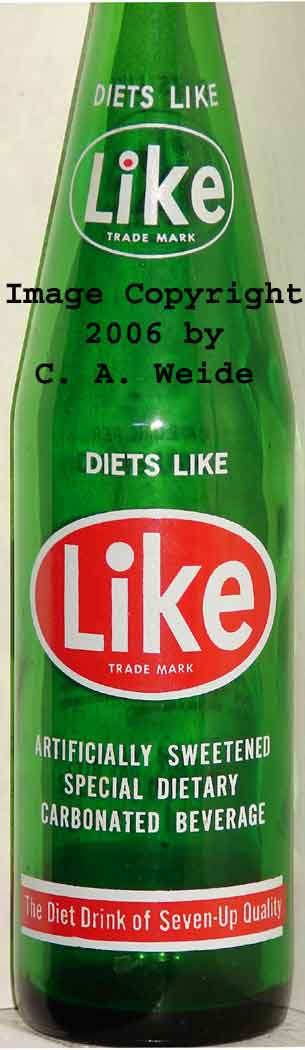
| 7 Up Zero Sugar | 1963 | No calorie variant of 7 Up. It was originally introduced in 1963 under the name of Like (not to be confused with 7 Up's Like Cola from the 1980s), using cyclamate as sweetener. After the U.S. government ban of the sweetener the drink was discontinued in 1969, and relaunched as Diet 7 Up in 1970. The drink had a brief period of using the name Sugar Free 7 Up between 1973 and 1979 before reverting to its former name.
Diet 7 Up was later reformulated and advertised as being sweetened with sucralose and acesulfame potassium replacing aspartame. The recipe later reverted to using aspartame. The beverage was rebranded as 7 Up Zero Sugar in late 2020. |
[26][27][28] [29][30][31] |
| Cherry 7 Up Zero Sugar | 1980s | Low-calorie version of Cherry 7 Up. It was pulled from shelves around the time 7 Up Plus Cherry was introduced but was reintroduced in 2006 due to popular demand.
As with the regular variety, it was reformulated as Diet Cherry 7 Up Antioxidant in 2009 before reverting to the original formula in 2013. It was rebranded as Cherry 7 Up Zero Sugar in late 2020. |
[32][33] |
| Diet 7 Up Gold | 1988 | Low-calorie variant of 7 Up Gold, released and discontinued at the same time as the standard variety. | |
| 7 Up Plus | 2004 | A range of healthy low-calorie alternative drinks, containing no caffeine and has 2 grams of carbohydrates per serving, as well as 5% apple juice, which is uncommon among American market carbonated beverages. It was available in three varieties - Mixed Berry, Cherry and Island Fruit. | [34] |
| Diet Pomegranate 7 Up | 2007 | A low calorie pomegranate flavoured variety that was sold for the holiday season in the United States from 2007 until 2010. The 2009 and 2010 formulas were named Diet Pomegranate 7 Up Antioxidant. | |
| Diet Mixed Berry 7 Up Antioxidant | 2011 | A mixed berry variety that was sold for a limited time in 2011. It used the "Antioxidant" formula. | |
| 7 Up Ten | 2013 | A low-calorie variant with only ten calories per serving, sold as part of Dr. Pepper Snapple Group's "Ten" lineup in the United States. It uses a blend using high fructose corn syrup along with aspartame and acesulfame potassium to sweeten it. | [35] |
| Tropical 7 Up Zero Sugar | 2023 | Low calorie Mango and Pineapple flavored variety, sold exclusively at Kroger-owned stores. |
International
[edit]| Name | Year launched |
Notes | Ref. |
|---|---|---|---|
| 7 Up with Cherry on Top | 1989 | A variety originally sold in the United Kingdom (Originally as Cherry 7 Up), although has since been discontinued. It is differentiated from the US variety as it is a pure Cherry flavored drink with a completely different recipe. It was also sold in the Netherlands during the early-1990s, and currently in France since 2014.[citation needed] | [36] |
| 7 Up Ice Cola | 1995 | Produced by PepsiCo for the Netherlands and a few other international territories, this was a clear cola, in essence, a repackaging of Crystal Pepsi. As with that, it failed in the market and was discontinued shortly afterward. | [37] |
| Orange 7 Up | 1980s | A variety with added orange flavor. It was sold in many non-US territories by PepsiCo throughout the 1990s including Canada (As 7 Up Orange Chill) Thailand (As 7 Up Clear Orange Flavour), Germany (As Orange 7 Up Plus, Austria (As 7 Up Orange) and The Netherlands (as 7 Up Clear Orange). | [38][39] |
| Raspberry 7 Up | 1980s | A variety with added raspberry flavor. It was sold for a short time in some European territories and in Canada (as 7 Up Raspberry Chill) and was later sold in several Asian territories including Vietnam (from 2002) before becoming sold exclusively in Singapore.[citation needed] | |
| 7 Up Revive | 1990 | A special variant sold in India and Laos and is marketed as an Isotonic drink. It was relaunched in 2015, and prior to that was also sold in other Asian territories such as Malaysia, Brunei Darussalam and Vietnam. | [40] |
| 7 Up Free/7 Up Light/7 Up Zero Sugar | 1990s | The alternative to Diet 7 Up sold in countries such as Iceland, UK, Ireland, Mexico, Spain, Norway, Sweden, Argentina, Finland, UAE, Uruguay, Pakistan, the Netherlands, Thailand, Malaysia, France and Germany. However, some regions also have it under the original Diet 7 Up brand. In the UK, the drink was originally branded as 7 Up Light until rebranding as 7 Up Free in 2005.[41]
In Norway, it contained a combination of artificial sugars, and for eight years was the only variety on the Norwegian market. The lack of the usual light or zero-label is confusing to Norwegian consumers, who often buy it not knowing they are buying a product with artificial sugars.[citation needed] |
[42][43] |
| 7 Up Tropical Twist | 2002 | A tropical flavored drink that was sold in Canada by PepsiCo for a limited time in 2002 as 7 Up Tropical Splash, and re-released for a limited time in 2018. It was also sold in the Netherlands during 2002. | [44] |
| 7 Up Citrus Splash | 2004 | A variety with added Pink Grapefruit flavor. It was sold in Canada by PepsiCo until being discontinued in 2006, with a brief re-release in 2008. | [45] |
| 7 Up Ice | 2004 | A mint-flavoured variety which was sold by PepsiCo in a few international territories such as Portugal, Russia, and France and Mexico before being discontinued in 2006.[citation needed] | |
| 7 Up Ice Tropical | 2006 | A variant of 7 Up Ice with added tropical flavor. Only sold in Russia.[citation needed] | |
| 7 Up Frootaz | 2000s | A tropical flavored variety sold by PepsiCo in the Philippines for a short time in the 2000s.[citation needed] | |
| 7 Up H2OH! | 2000s | A range of lightly carbonated water drinks that were sold in Latin America, Malaysia, the UK, and Ireland in the late 2000s, it was discontinued as a 7 Up-exclusive variant in the early 2010s. In South America, it is sold solely under the brand H2OH!, distributed for the first time in 2005, with exotic flavors such as: Grapefruit, lemon lime, apple, passion fruit, and many more. | [46][47] |
| 7 Up Lemon Squeeze | 2007 | A variety with extra lemon juice. It was sold in Canada by PepsiCo for a limited time during the 2007 season, as the Canadian alternative to Sierra Mist Lemon Squeeze. | [48] |
| 7 Up Clear Dry | 2010 | A limited edition no-calorie variant with a high carbonation and caffeine count. It was sold exclusively in Japan by Suntory.[citation needed] | |
| 7 Up Yerbabuena | 2013 | A variety containing the Yerba buena mint. It was available for a limited time in Colombia in 2013.[citation needed] | |
| Salted Lemon 7 Up | 2014 | A variant exclusively sold in Hong Kong that contains Salted Lemon. It is a common drink that can be found in dai pai dong and cha chaan teng. It is also named one of the Hong Kong summer drinks by Cathay Pacific Discovery. | [49][50] |
| 7 Up Mojito | 2014 | A mint-flavored variety that was first released in France, but was later released in Belgium and Germany as well. | |
| 7 Up Cocktail Exotique | 2014 | A tropical flavored variety sold in France, originally as 7 Up Goût Tropical. | |
| 7 Up Free Mojito | 2016 | Low calorie variant of 7 Up Mojito sold in the United Kingdom, and later was released in Belgium and France. | [51] |
| 7 Up Lemon Lemon | 2016 | A lemonade sold in France, the Netherlands and Belgium. | |
| 7 Up Free Cherry/7 Up Zero Sugar Cherry | 2020 | A low-calorie cherry variant sold in the United Kingdom. It was originally known as 7 Up Free Cherry. | [52] |
| 7 Up Zero Sugar Pink Lemonade | 2025 | A low-calorie raspberry variant sold in the United Kingdom. It has a pink color scheme. | [53] |
Barbecue sauces and marinades
[edit]In 2007, Cadbury Schweppes entered into a licensing partnership with Vita Food Products to produce a line of barbecue sauces and marinades flavored with Dr Pepper, 7 Up, and A&W Root Beer.[54]
Advertising campaigns
[edit].jpg)
Metal pedestrian crossing markers saying "Drink 7up Safety First" were installed in many U.S. cities in the 1930s.[55]
"Fresh-Up Freddie" was the rooster mascot for 7 Up in the 1950s. He gave viewers lessons about how to plan successful parties and picnics by having plenty of 7 Up on hand. The commercials were produced by Disney, giving the character the specific Disney look of the time.[56] Freddie has been described as a hybrid of the rooster Panchito Pistoles from The Three Caballeros and the zany Aracuan Bird from the same film.[56] He often was dressed in human clothes. Freddie also appeared in the 1957 Zorro TV series' commercial intermissions.[57] In these commercials, Freddie fought with Pete the Cat. Freddie, who was featured in a small amount of merchandising, was voiced by Paul Frees.[56]
In the late 1960s and 1980s, Geoffrey Holder appeared in television ads as part of 7 Up's "Uncola" ad campaign, designed to highlight differences between 7 Up and other soft drinks on the market with cola flavoring. In the ads, Geoffrey holds a pair of cola nuts in one hand and a lemon & lime (used to flavor 7 Up) in the other hand and describes them as "Uncola nuts".[58]
In 1987, 7 Up introduced Spot, the red-orange dot in the 7 Up logo anthropomorphized into a mascot. The character was used heavily in advertising and licensed items across the U.S.,[59] including the 1993 platformer video game Cool Spot, and its 1995 sequel, Spot Goes to Hollywood.[60]
The cartoon character Fido Dido was used as a mascot in international areas from the late 1980s through the early 1990s, and was reintroduced in international markets in the early 2000s.[61] Since PepsiCo did not own the rights to 7 Up in the US, certain ads featuring Fido Dido were instead reworked to advertise the company's Slice brand of lemon-lime soda.[62]
In the early 2000s, Orlando Jones served as the spokesperson for 7 Up in the United States in a series of commercials. Notably, one commercial had him wear a t-shirt that had 7 Up's then-slogan Make 7 Up Yours divided between the front and back with the double entendre on the back that featured the Up Yours part; 7 Up would sell the shirt through specialty retailer Spencer Gifts for many years.[63]
Corporate sponsorship
[edit]In 1974, 7 Up became The Jerry Lewis MDA Labor Day Telethon's first corporate sponsor; this was at a time when its sponsorship was generally limited to trade unions and civic organizations.[64][65]
See also
[edit]Notes
[edit]References
[edit]- ^ a b c d e Lockhart, Bill; Brown, Bob (2024). "The Seven-Up Company and 7-Up Bottles The Real Story: A Look at the Myths, the Mystery, and the Magic" (PDF). Society for Historical Archaeology. Chapter 1 Chapter 2
- ^ "7 Up – The Making of a Legend". brandspeoplelove.com. Cadbury-Schweppes. 2006. Archived from the original on April 30, 2008. Retrieved February 6, 2016.
- ^ Mikkelson, Barbara (August 6, 2004). "Origins of the 7Up Soft Drink Name". Snopes. Retrieved February 7, 2025.
- ^ McCluskey, Megan (February 20, 2016). "Here's the Gross Thing That Happens When You Mix 7-Up With Lithium". TIME. Retrieved February 7, 2025.
- ^ Johnson, Mark (August 9, 2025). "How lithium went from 7Up to treatment for mental illness — and maybe Alzheimer's". The Washington Post. Retrieved August 10, 2025.
- ^ Baccellieri, Emma (February 6, 2025). "Untangling the Lie of the 7Up Origin Story". The Soda Fountain. Retrieved August 10, 2025.
- ^ Mikkelson, Barbara (April 27, 2014). "Origins of the 7Up Soft Drink Name". Snopes. Archived from the original on March 27, 2022. Retrieved September 5, 2021.
- ^ Mikkelson, Barbara (January 13, 2010). "7Up". snopes.com. Archived from the original on May 6, 2023. Retrieved January 16, 2014.
- ^ "The Original 7-Up Was A Mind-Altering Substance". HuffPost. September 17, 2014. Archived from the original on August 17, 2023. Retrieved March 16, 2023.
- ^ britvic.co.uk Archived April 5, 2018, at the Wayback Machine. Accessed January 16, 2014
- ^ Graedon, Joe (August 21, 2017). "Rediscovering Lithium for Mood Disorders". peoplespharmacy.com. The People's Pharmacy. Archived from the original on March 26, 2023. Retrieved August 30, 2017.
- ^ "PepsiCo Buys Seven-Up's International Division". The New York Times. July 15, 1986. Archived from the original on March 27, 2022. Retrieved September 21, 2018.
- ^ "Seven-Up Sale Set at $240 Million". The New York Times. October 4, 1986. Archived from the original on March 27, 2022. Retrieved February 4, 2017.
- ^ "7UP". Discover our Products. Keurig Dr Pepper. Archived from the original on November 15, 2019. Retrieved February 6, 2016.
- ^ "CSPI to Sue Cadbury Schweppes over 'All Natural' 7UP". Center for Science in the Public Interest. May 11, 2006. Archived from the original on March 3, 2016. Retrieved February 6, 2016.
- ^ "Our Brands – 7Up". Keurig Dr Pepper. Archived from the original on August 15, 2020. Retrieved May 27, 2015.
- ^ "7Up with antioxidants to be taken off the market". Tulsa World. November 9, 2012. Archived from the original on April 27, 2023. Retrieved November 10, 2012.
- ^ "7Up with antioxidants to be cancelled amid health claims lawsuit". CBS News. November 9, 2012. Archived from the original on March 19, 2022. Retrieved November 10, 2012.
- ^ McGill, Douglas C. (February 11, 1989). "7-UP Gold: The failure of a can't-lose plan". The New York Times. Archived from the original on July 9, 2018. Retrieved July 27, 2018.
- ^ "7 UP-Citrus soda-355mL-United States-198?".
- ^ "DNP for 7 Up's dnL". bevnet.com. July 27, 2005. Archived from the original on June 13, 2011. Retrieved July 28, 2010.
- ^ "dnL Soda (History, Flavor & Pictures) - Snack History". November 7, 2021. Archived from the original on April 22, 2023. Retrieved April 22, 2023.
- ^ "Photo of 7 Up Bottles". Archived from the original on January 16, 2013. Retrieved November 11, 2012.
- ^ "7UP confirms limited release of 'most overdue' soda flavor: 'Dream come true'". October 2024. Archived from the original on October 2, 2024. Retrieved October 2, 2024.
- ^ "7UP clears up rumors about mocktail-inspired flavor, confirms Shirley Temple soda is real". USA Today. Archived from the original on October 2, 2024. Retrieved October 2, 2024.
- ^ "7Up Timeline and History". Twoop.com. August 29, 2005. Archived from the original on March 27, 2022. Retrieved July 28, 2010.
- ^ Weide, C.A. "Image of glass bottle of 7Up-like beverage". ca-yd.com. Archived from the original on July 8, 2011. Retrieved January 16, 2014.
- ^ "Cadbury Global :: Our Brands :: History of our Brands". Cadbury.com. Archived from the original on August 15, 2010. Retrieved July 3, 2016.
- ^ "Chapter 10e: Bottles of Bottles of Seven-Up Bottling Co. and Seven-Up Royal Crown Bottling Co". Archived from the original on March 27, 2008. Retrieved July 28, 2010.
- ^ "Diet 7 Up Nutritional Facts". 7up.com. Archived from the original on September 27, 2007. Retrieved March 30, 2007.
- ^ "Diet 7 Up with Splenda Nutritional Facts". 7up.com. Archived from the original on March 20, 2022. Retrieved July 28, 2010.
- ^ Lang, Derrik J. (June 23, 2006). "The Slug: Rejoice! Diet Cherry 7 Up to Return to Us!". The Slug. Archived from the original on July 17, 2011.
- ^ "Diet Cherry 7 Up Nutritional Facts Archived December 27, 2010, at the Wayback Machine". 7up.com.
- ^ "Review: 7Up Plus: Island Fruit". Bevreview.com. Archived from the original on June 4, 2010. Retrieved July 28, 2010.
- ^ "7UP.com · Products". 7UP.com. Archived from the original on December 20, 2014. Retrieved May 12, 2014.
- ^ "Britvic - 7UP". Archived from the original on February 9, 2007.
- ^ PopularTimelines Archived August 15, 2020, at the Wayback Machine. History of 7 Up in Timeline Archived December 2, 2021, at the Wayback Machine. Accessed on April 24, 2020.
- ^ "ottakringer shop – party & bier". Archived from the original on March 1, 2005. Retrieved March 1, 2005.
- ^ "Feels Good to Be You I 7UP®". my7up. Archived from the original on March 26, 2020. Retrieved May 12, 2014.
- ^ "7UP Revive; India's first hydrotonic drink". 7up.in. Archived from the original on February 14, 2019. Retrieved May 2, 2016.
- ^ "Britvic rebrands 7UP Light to allay health concerns". Marketing Week. March 24, 2005. Archived from the original on September 28, 2022. Retrieved November 11, 2023.
- ^ "7UP Free". Ölgerðin. Archived from the original on December 22, 2006. (in Icelandic)
- ^ Hong, Tan Heng (February 23, 2020). "7 Up Free debuts in Malaysia, Thailand". Mini Me Insights. Archived from the original on August 25, 2023. Retrieved August 25, 2023.
- ^ "7-Up Tropical Splash". sodafinder.com. Archived from the original on May 12, 2014. Retrieved May 12, 2014.
- ^ "7-Up Citrus Splash". sodafinder.com. Archived from the original on May 12, 2014. Retrieved May 12, 2014.
- ^ "7-Up H2OH!". beta.thedieline.com. Archived from the original on April 17, 2019. Retrieved April 17, 2019.
- ^ "PEPSICO ingresa al negocio de aguas saborizadas sin gas con su nueva H2OH!" [PEPSICO enters the lightly sparkling flavored water business with its new H2OH!]. puntotrade.net (in Spanish). April 24, 2024. Retrieved February 5, 2025.
- ^ "7-Up Lemon Squeeze". sodafinder.com. Archived from the original on May 12, 2014. Retrieved May 12, 2014.
- ^ "Day Day Cook Recipe". Pan Fried Pork Chop with Salted Lime and 7UP. Archived from the original on November 3, 2014. Retrieved October 20, 2014.
- ^ "Hong Kong Summer Drinks: Salted lemon 7 Up". Cathay Pacific Discovery. Archived from the original on November 3, 2014. Retrieved September 13, 2014.
- ^ Selwood, Daniel. "Britvic targets 'grown-ups' with sugar-free 7up Free Mojito". The Grocer. Archived from the original on October 2, 2018. Retrieved July 5, 2016.
- ^ "7UP free extends its range with new cherry flavour". Archived from the original on July 14, 2023. Retrieved July 14, 2023.
- ^ "7UP launches new refreshing Pink Lemonade in time for summer". Britvic Limited. Retrieved September 1, 2025.
- ^ "Vita Foods and Cadbury Schweppes Americas Beverages Get Cooking With the Introduction of Dr Pepper, 7UP and A&W Root Beer Branded Sauces and Marinades". PR Newswire. May 7, 2007. Archived from the original on April 27, 2023. Retrieved March 14, 2011. Press release
- ^ "Original 1930s Bronze 7up Safety First Sidewalk Sreet Marker Soda Advertising • $65.00". PicClick. Archived from the original on March 27, 2022. Retrieved June 15, 2019.
- ^ a b c Fresh-Up Freddie Archived November 20, 2023, at the Wayback Machine at Don Markstein's Toonopedia. Retrieved on July 28, 2010. from the original on July 30, 2016.
- ^ Dotz, Warren; Morton, Jim (1996). What a Character! 20th Century American Advertising Icons. Chronicle Books. p. 107. ISBN 0-8118-0936-6.
- ^ 7-UP "THE UNCOLA" Archived July 11, 2022, at the Wayback Machine Retrieved on March 24, 2018
- ^ "7UP". Dr Pepper Snapple Group. Archived from the original on August 15, 2020. Retrieved February 19, 2020.
- ^ Cool Spot at MobyGames
- ^ "Fido Dido returns as face of 7 Up" Archived May 3, 2008, at the Wayback Machine at B&T,
- ^ 7-Up / Slice - "Fido Dido" commercial side-by-side comparison, November 29, 2021, retrieved December 5, 2023
- ^ 7UP Commercial - Make 7...UP yours!. YouTube: grid41productions. May 17, 2010. Archived from the original on June 23, 2022. Retrieved June 23, 2022.
- ^ "Telethon raised more than $59 million". ABC 10/CW 5 – WBUP/WBKP. September 3, 2013. Archived from the original on December 1, 2021. Retrieved October 1, 2020.
- ^ "News". March 24, 2016. Archived from the original on November 13, 2020. Retrieved October 1, 2020.
External links
[edit]
- Official website

- 7Up page on PepsiCo International UK & Ireland (archived)
- 7 Up (undetermined source of product name from Snopes.com)
| Soda |  | |
|---|---|---|
| Coffees | ||
| Juice, teas and others | ||
| Beverage mixers | ||
| Brands and subsidiaries |
|  | ||||||||||
|---|---|---|---|---|---|---|---|---|---|---|---|---|
| Other holdings | ||||||||||||
| Former holdings and products | ||||||||||||
| People |
| |||||||||||
| Related articles | ||||||||||||
| ||||||||||||