Hubbry Logo
RamuneRamuneMain
Open search
Ramune
Community hub
Ramune
logo
8 pages, 0 posts
0 subscribers
Be the first to start a discussion here.
Ramune
Ramune
from Wikipedia

Ramune
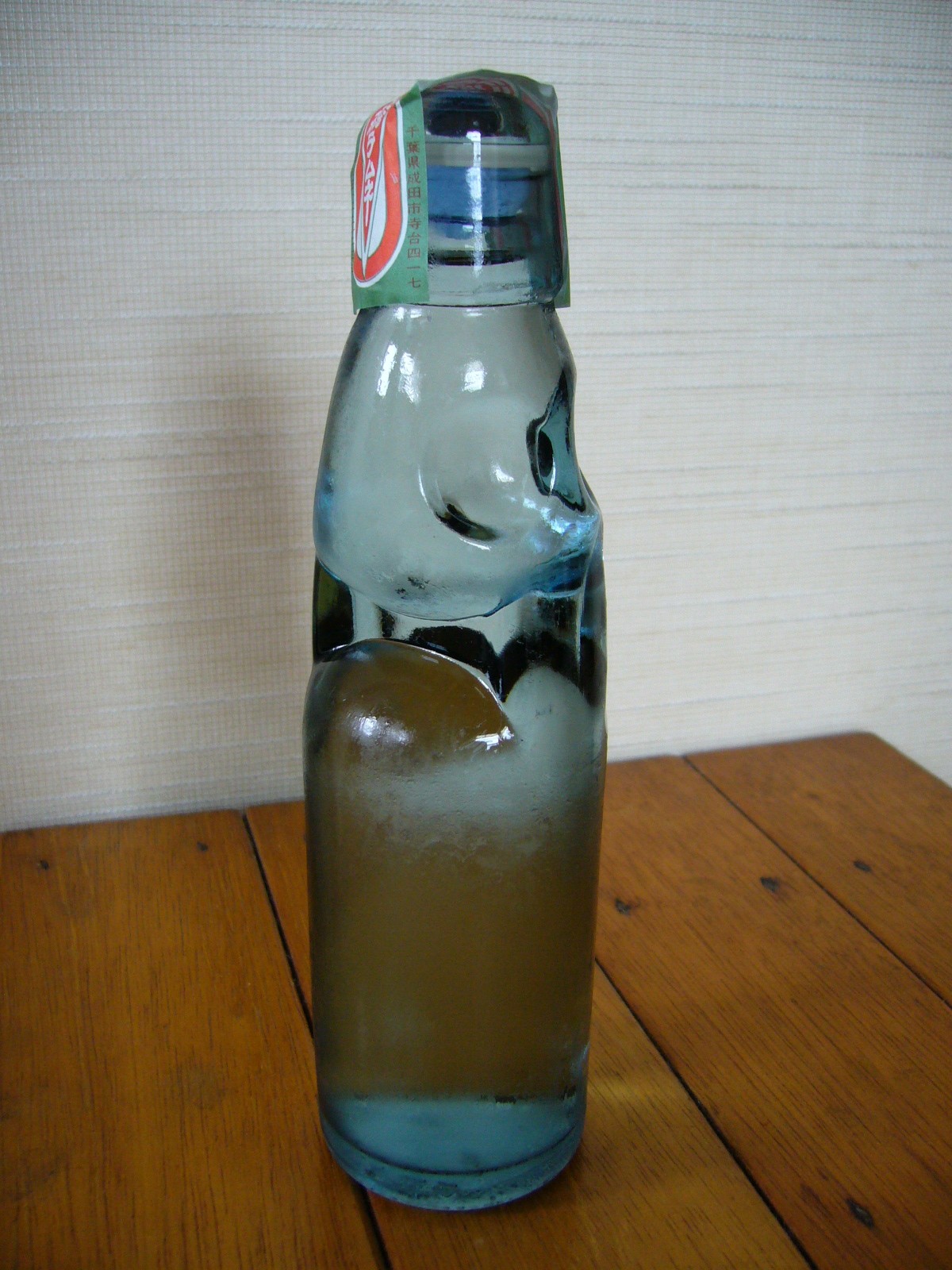
A lemonade ramune bottle
TypeSoft drink
ManufacturerVarious
DistributorNishimoto Trading Co., Ltd., Sangaria U.S.A., Inc.
OriginJapan
Introduced1884
ColorClear
Flavor
  • Original (lemon-lime)
  • Blueberry
  • Melon
  • Lychee
  • Orange
  • Peach
  • Pineapple
  • Strawberry
  • Matcha
  • Grape
  • Yuzu
  • Cola
  • Cherry
  • Raspberry
  • Yogurt
  • Bubble Gum
  • Mango

Ramune (ラムネ) (Japanese pronunciation: [ɾamɯne]) is a carbonated soft drink served in a Codd-neck bottle.[1][2] It was introduced in 1884 in Kobe as a carbonated lemonade by the Scottish pharmacist Alexander Cameron Sim.[3] The name ramune is derived from the English word lemonade.[4][5]

History

[edit]

In 1884, Alexander Cameron Sim introduced a lemonade carbonated beverage to the Kobe foreign settlement. The drink soon became popular with Japanese people after it was advertised in the Tokyo Mainichi Newspaper.

Ramune is one of the modern symbols of summer in Japan and is widely consumed during festival days.[6] As ramune is popular among children, there have been package design collaborations with popular Japanese franchises such as Hello Kitty.[7]

The original ramune flavor is effectively identical to the modern Japanese use of the word "cider" Saida (サイダー) (a lemon-lime soft drink), making the distinguishing characteristic of ramune its Codd-neck bottle. Any soft drink in a Codd-neck bottle is generally regarded as ramune, while ciders and soft drinks in any other container are generally not called ramune. It is not a brand name and it is produced by several companies. Like tofu, its manufacture in Japan is restricted to small-to-medium-sized businesses (the 1977 Act on Adjustment of Business Activities of Large Enterprises to Ensure Business Opportunities for Small and Medium-Sized Enterprises [ja]).[8]

There are many flavors of ramune, including peach, cola, melon, and bubble gum.[9]

See also

[edit]

References

[edit]
Revisions and contributorsEdit on WikipediaRead on Wikipedia
from Grokipedia
Ramune is a traditional Japanese carbonated , originally flavored with and lime, and characterized by its unique that features a marble as a pressure-sealed stopper, which is depressed using a built-in to release the beverage with a distinctive popping sound. The drink's origins trace back to 1884, when Scottish pharmacist Alexander Cameron Sim introduced it in Kobe, Japan, initially as a medicinal carbonated lemonade marketed to prevent cholera outbreaks during the Meiji era; it was first known as "Mabu Soda," derived from "marble soda," before being renamed "ramune," the Japanese phonetic adaptation of the English word "lemonade." The Codd-neck bottle design was patented in 1872 by English inventor Hiram Codd to securely contain carbonation without corks. Although carbonated lemonade (ramune) production began in Japan around 1872, the marble-sealed Codd-neck version was introduced by Sim in 1884, with imports of such bottles starting around 1887 and domestic manufacturing in the 1890s, leading to widespread adoption. Over time, ramune evolved from a health tonic popular among foreigners to a in , especially at summer festivals (matsuri) where it is sold by vendors, symbolizing refreshment and nostalgia; its production peaked in the mid-20th century, accounting for over 60% of Japan's carbonated drinks by 1953. While the original lemon-lime flavor remains the most iconic, modern variations include diverse options such as melon, strawberry, grape, and even savory ones like curry or , reflecting its adaptability in contemporary and pop culture. Despite the invention of the crown cap in 1892 rendering the marble bottle less practical globally, ramune's retention of this 19th-century design underscores its enduring appeal as a playful and distinctive element of Japanese beverage tradition.

History

Origins and Invention

Ramune was introduced in 1884 in the foreign settlement of , , by Scottish pharmacist as a carbonated lemonade designed to address local health concerns, including outbreaks and heat-related illnesses prevalent in the humid climate. Sim formulated the beverage at a stand targeted initially at expatriates, drawing on Western soda traditions to create a refreshing, effervescent drink that could serve as a medicinal tonic. Born in 1840 in northeastern , Sim had trained as a in before relocating to around 1870, where he established himself in Kobe's international community and began adapting European pharmaceutical and beverage practices to the local market. His expertise in chemistry enabled him to produce carbonated drinks using imported techniques, tailoring the lemonade base to appeal to both foreign residents and emerging Japanese consumers seeking novel refreshments. The name "ramune" derives from the Japanese phonetic approximation of the English word "lemonade," reflecting its origins as a citrus-flavored soda. From the outset, the beverage was bottled using the Codd-neck design, patented in by British inventor , which employed a glass marble and rubber gasket to maintain carbonation without corks. Initial production remained limited to and the port city of , where it was distributed primarily to foreigners and affluent Japanese, establishing ramune as an exotic import before wider adoption.

Popularization in Japan

Ramune's transition from an imported novelty to a widely accessible beverage in Japan began in the late 19th century, driven by strategic media promotion during public health crises. In 1886, amid a cholera epidemic and heat wave in Tokyo, the Tokyo Yokohama Mainichi Shinbun newspaper advertised ramune as a preventive measure against the disease, claiming that its carbonation made it safer than plain water and capable of alleviating symptoms. This endorsement led to a surge in demand, causing shortages and marking ramune's shift from an elite import targeted at foreigners to a public staple embraced by ordinary Japanese consumers. The drink's original lemon-lime flavor further enhanced its appeal as a refreshing alternative during hot summers. During the (1868–1912), ramune solidified its association with summer refreshment, coinciding with rapid urbanization and increasing disposable incomes that enabled broader access to consumer goods. As modernized, the urban population grew from about 10% in the late 19th century to around 18% by 1920, fostering a burgeoning with greater spending power on novelties like carbonated drinks. By the , following the start of domestic bottle production in in 1892, ramune spread nationwide, often promoted at summer festivals such as the Summer Festival, where its Codd-neck bottle's portability made it ideal for on-the-go consumption at events. In the early , production expanded to numerous small local manufacturers, decentralizing output and giving rise to regional variations in flavor profiles and packaging while maintaining the core lemon-lime essence. This proliferation aligned with ramune's widespread availability in shops by the 1900s, transforming it into an everyday treat for children and families across urban and rural areas. Following , ramune survived economic hardship and resurged in the 1950s as a nostalgic, affordable amid Japan's recovery, with production peaking at around 2,300 small-scale makers protected by laws safeguarding medium and small enterprises from large competitors. This era saw a boom in festival vending, where ramune became a quintessential summer item sold chilled at stalls, evoking postwar optimism and simplicity for a generation rebuilding daily life.

Design and Packaging

The Codd-Neck Bottle

The Codd-neck bottle is a distinctive glass container designed specifically for carbonated beverages, featuring a narrow neck with an internal chamber that houses a glass marble and a rubber washer or gasket. The carbonation pressure within the bottle forces the marble upward against the washer, creating an airtight seal that preserves the drink's fizz without the need for external corks or caps. This mechanism, which relies on the bottle's internal pressure to maintain closure, distinguishes the Codd-neck from conventional bottles and ensures the marble remains securely in place until intentionally dislodged. The design originated in Britain, where English inventor patented the marble-sealing mechanism in 1872 as a solution for sealing carbonated soft drinks like soda water. Intended to address issues with traditional corks that could pop out under pressure or allow leakage, Codd's innovation quickly gained popularity for British sodas before being adapted elsewhere. In , the was introduced in 1884 by Scottish pharmacist in , where it became integral to the original Ramune carbonated lemonade, marking its transition from a Western invention to a staple of Japanese beverage culture. Ramune bottles typically hold 200 ml of liquid and are constructed from thick, durable glass to withstand the internal pressure of carbonation, with dimensions around 57 mm in diameter and 200 mm in height. While most are clear for a classic aesthetic, colored variants in blue or green exist to enhance visual appeal, particularly in limited editions. These features contribute to the bottle's robustness, making it resistant to breakage during handling or transport. Key advantages of the Codd-neck include its ability to maintain carbonation effectively over time, as the pressure-sealed marble prevents gas escape more reliably than corks, and its tamper-evident design, which requires a specific tool to open, reducing the risk of unauthorized access. Despite the rise of plastic alternatives in the late 20th century, the glass Codd-neck bottle has been retained for Ramune into the 21st century, preserving its traditional charm and sensory experience even as some modern versions use PET plastic for convenience.

Opening Mechanism

The opening mechanism of a Ramune bottle relies on a provided plunger tool designed to safely depress the lodged in the bottle's neck, allowing carbonated liquid to flow around it once unsealed. To begin, consumers remove the outer seal and extract the from its attached position on the , then position it over the and apply firm downward pressure—often using the heel of the hand for leverage—to push the into a widened chamber below the neck. This action releases the internal pressure, enabling the drink to be poured or sipped directly from the , with the remaining inside and occasionally rattling during consumption. Historically, early Codd-neck bottles, upon which Ramune's is based, presented challenges as consumers frequently resorted to improvised methods such as using thumbs, fingers, or even teeth to force the down, often resulting in sore fingers, bruised thumbs, or minor injuries from failed attempts. These rudimentary techniques were common before specialized openers became standard, highlighting the need for safer alternatives to prevent mishaps during the opening process. Modern Ramune bottles address these issues by including an integrated or rubberized with prongs that securely grip and guide the 's descent, significantly reducing the risk of injury and ensuring a controlled . The physics of the mechanism centers on the bottle's pressure, typically ranging from 2.7 to 4.7 bar (approximately 3 to 4 atmospheres), which holds the firmly against a rubber at the neck to maintain the seal until intentionally displaced. Upon pressing the , this causes an initial burst of fizzing as the gas escapes, potentially leading to overflow if the bottle is opened abruptly or if it has been shaken. For safe handling, it is recommended to place the bottle on a stable surface, tilt it slightly while applying gradual to direct any spray away from the face, and hold the in place for several seconds after the drops to allow excess to subside before fully removing it and proceeding to drink. After opening, the can be left inside the bottle or carefully extracted for disposal, though it is non-removable without risk of breakage.

Varieties and Flavors

Original Flavor

The original flavor of Ramune, introduced in 1884, is characterized by a classic lemon-lime profile derived from natural extracts, providing a benchmark for the beverage's authenticity that has remained largely unchanged since its . The composition typically includes , or , as an acidity regulator, and natural and lime flavors, with added to balance the tartness. This formulation yields approximately 10-12% content, contributing to a mild that avoids overpowering the notes. The taste profile delivers a refreshing tang, enhanced by effervescent bubbles that create a crisp, lightly fizzy , with subtle hints of sweetness reminiscent of bubblegum fruitiness. Originally designed as a digestive aid during Japan's to combat and promote gut health through its and mild acidity—lower than many Western sodas—Ramune's original variant stimulates production and eases without harsh sharpness. This low-acidity approach, combined with no and minimal preservatives like , makes it a gentle, hydrating option. Nutritionally, a standard 200 ml bottle contains around 80-90 calories, primarily from carbohydrates, with no fat or protein and zero , positioning it as a simple, low-impact refreshment. Its historical consistency underscores Ramune's role as an enduring summer staple, best enjoyed chilled as a standalone quencher to evoke nostalgic, festival-like vibes.

Modern Variants

Since the mid-20th century, Ramune has diversified beyond its original lemon-lime profile, with manufacturers introducing a wide array of fruit-inspired and novelty flavors to appeal to evolving consumer tastes. Among these, has emerged as the most popular variant, offering a sweet, refreshing taste reminiscent of Japanese melons, followed by , orange, , , , , , , cherry, , , green tea, and . Novelty savory options, such as and , have also been released as limited editions. These additions reflect market experimentation, drawing from both traditional Japanese fruits and international influences to create distinct carbonated experiences. While the iconic Codd-neck glass bottle remains the standard for preserving authenticity and the signature marble-opening ritual, some modern variants are packaged in aluminum cans or plastic bottles for greater convenience and portability, particularly in multipacks or for export. This adaptation allows easier access without the need for an opener, though it sacrifices the traditional tactile element. Seasonal and limited-edition releases further expand Ramune's appeal, with holiday-themed options like winter ginger or summer capturing festive moods, and collaborations featuring branded packaging such as Hello Kitty-themed bottles that integrate pop culture icons. By the 2020s, the lineup had grown to over 20 flavors, driven by demand from younger consumers and tourists seeking unique souvenirs. Ramune variants are generally vegan, formulated with plant-based ingredients.

Production

Manufacturing Process

The manufacturing of Ramune involves a series of precise steps to ensure the beverage's signature fizz and flavor are preserved within its distinctive . Production typically starts with supplying clean bottles to an automated line, where they are washed thoroughly to remove any contaminants. A base, consisting of , water, and flavorings such as , is prepared and measured for consistency using tools like a digital meter to verify content. Next, the bottles are filled in a specific sequence using specialized ramune filling machines: the is added first, followed by to achieve the desired . These machines are designed to handle the unique and minimize air pockets, ensuring even distribution of the . The is pre-infused with gas under controlled pressure to create the beverage's refreshing bubbles, a critical step for maintaining quality during storage and transport. After filling, a marble is inserted into the bottle's neck, and the bottle is inverted to allow the internal pressure to push the marble against a rubber washer, forming a secure seal that traps the gas without the need for traditional during initial closure. A "marble push" is then attached over the top for safe opening by consumers. This marble placement requires specialized to position the marble accurately and avoid disruptions to the . Rigorous inspections follow at multiple stages, including checks for fill levels, seal integrity, and retention to ensure no leaks or inconsistencies. Quality control is integral throughout, with samples tested for acidity using pH meters and overall composition to meet standards for flavor stability and bubble retention. Additional culture inspections are conducted before shipping to verify microbial safety. Labels are applied to the bottles, detailing flavor and branding, before the final products are packed into cartons for distribution. Ramune production is primarily handled by regional firms in , such as Hata Kosen in , operating on semi-automated lines that emphasize craftsmanship over full . These small-to-medium enterprises collectively produce around 114 million bottles annually as of fiscal 2022, with individual facilities like Hata Kosen outputting up to 65,000 bottles per day, much of it for export. This scale allows for regional variations while adhering to traditional methods. Sustainability practices in modern Ramune manufacturing include the use of recyclable bottles, often incorporating recycled materials to reduce environmental impact. Ramune production in is governed by specific regulations designed to protect small and medium-sized enterprises (SMEs), ensuring that large corporations cannot dominate the market. A key provision stems from the Act on Securing Business Opportunities for Small and Medium-sized Enterprises by Adjusting Business Activities of Large Enterprises (Act No. 74 of 1977), which restricts entry into certain traditional sectors, including ramune , to foster coexistence between large firms and SMEs. This framework has historically limited production to smaller operations, with ramune makers benefiting from protections that peaked with around 2,300 manufacturers in the , preventing by major beverage conglomerates. Food safety for ramune falls under Japan's Food Sanitation Law (Act No. 233 of 1947, as amended), which mandates strict compliance for all non-alcoholic beverages, including limits on preservatives to ensure . For instance, , commonly used as a in carbonated soft drinks like ramune, is capped at no more than 0.6 g/kg (expressed as benzoic acid) in carbonated beverages, as specified in the Standards for Use of Food Additives under the law. Manufacturers must also adhere to general standards for production facilities, ingredient sourcing, and labeling to prevent , with regular inspections by the Ministry of Health, Labour and Welfare enforcing these requirements. The term "ramune" itself is a generic descriptor for the carbonated category in and is not subject to exclusive protection, allowing multiple producers to use it while competing on branding. However, individual companies hold trademarks for their specific product names, designs, and formulations. These protections help differentiate brands in a fragmented market dominated by SMEs. For and , ramune must comply with Japan's Food and international standards under agreements like those from the , particularly regarding levels to preserve the integrity of the Codd-neck bottle's seal during shipping. Exporters also follow customs regulations from the , including phytosanitary certificates for ingredients if applicable, to meet destination country requirements. In the 2020s, ramune production has seen regulatory pushes toward , aligned with 's broader plastic resource circulation strategy initiated in 2019, which promotes reduced use and eco-labeling for . Although ramune uses traditional glass bottles, secondary like labels and shipping materials are targeted for eco-certification, with manufacturers encouraged to adopt recyclable or reduced- alternatives under the Containers and (amended 2021). This includes voluntary eco-labels from programs like the Japan Environment Association's Eco Mark, applied to sustainable ramune to support national goals for a 25% reduction in by 2030.

Cultural Significance

Role in Japanese Festivals

Ramune has been a staple at Japanese , or festivals, since the late , where it is sold chilled from vendor stands to provide refreshment amid the summer heat. These stands, often featuring ice-filled buckets, offer ramune in popular flavors like , making it a quintessential drink for attendees navigating crowded events. Its presence dates back to the 1890s, when the drink's portability and fizz first gained traction at such gatherings. Socially, ramune fosters rituals that enhance the festive atmosphere, particularly among children who often collect the glass marbles from the bottles as cherished souvenirs after drinking. It is commonly paired with street foods like , creating a shared snacking experience that complements the savory bites with its sweet, carbonated fizz. Symbolically, ramune embodies cool relief during Japan's humid summers, serving as an emblem of respite at displays and parades where attendees seek hydration in the sweltering conditions. This association underscores its role in evoking seasonal joy and endurance against the heat. Economically, ramune sales surge during peak festival months of July and August, supporting local vendors who rely on these events for substantial revenue; for instance, disruptions like the COVID-19 pandemic led to a 35% drop in glass-bottled ramune sales due to canceled matsuri. In modern iterations, ramune booths at matsuri incorporate nostalgic themes with photo opportunities, allowing visitors to pose with the iconic bottles and marbles for social media shares that blend tradition with contemporary appeal. Ramune has permeated Japanese media, often appearing as a nostalgic symbol of summer and youth in . In the anime series Dr. Ramune: Mysterious Disease Specialist (2021), the titular character, a quirky doctor, embodies the drink's name and effervescent personality, drawing on its cultural familiarity to enhance the story's whimsical tone. Similarly, the original video Knights of Ramune (1990–1991) features the beverage as a central motif in its comedic sci-fi narrative, where characters navigate absurd adventures tied to the drink's playful imagery. The Chitose Is in the Ramune Bottle (2020–2025) further integrates Ramune as a metaphorical element, using the bottle's translucent marble to symbolize hidden emotions and introspection in its slice-of-life storytelling. In music, Ramune references evoke refreshment and fleeting joy in and tracks. The song "Ramune" by (2024) uses the drink's fizzing bubbles as a for transient emotions and seasonal change, capturing a sense of nostalgic melancholy in its lyrics about shifting feelings. producer Aqu3ra's "Ramune" (2019) likens the marble's peek-through clarity to , with lines describing "peering through the translucent marble," blending the beverage's physicality with themes of transparency and . Merchandise collaborations have amplified Ramune's cute appeal, particularly through tie-ins with characters. In 2021, Kuppy Ramune partnered with to release plush mascots and candy sets featuring and other characters in ramune-themed packaging, emphasizing the drink's playful, collectible nature. For 's 50th anniversary in 2024, special edition Ramune cans in strawberry daifuku flavor were produced, merging the soda's traditional fizz with 's iconography to evoke joyful . In video games, Ramune appears as restorative items; in Persona 5: The Phantom X (2025), the "Pickle Ramune" serves as a purchasable consumable from vending machines, restoring health and tying into the series' urban Japanese setting. The "Retro Ramune Set" functions as a gift to boost character bonds, highlighting the drink's retro charm. Artistically, Ramune symbolizes Meiji-era innovation and summer nostalgia in modern interpretations. Contemporary designs inspired by prints depict the against waves or cherry blossoms, reimagining the 19th-century drink as a timeless cultural artifact in posters and illustrations. In advertisements, brands like Sangaria leverage this heritage, with campaigns portraying the marble's pop as a trigger for childhood memories, reinforcing Ramune's role in evoking Japan's pre-war leisure culture. Among youth, Ramune fuels trends centered on its interactive opening mechanism. Viral videos showcase users attempting to dislodge the without spilling, often under challenges that highlight the drink's fizzy unpredictability and shareable frustration-turned-triumph moments. This aligns with aesthetics, where Ramune's colorful bottles and bubbly essence inspire custom designs in and , positioning it as a staple in youthful, playful expressions of Japanese pop culture.

Global Distribution and Popularity

Export and International Markets

Ramune exports from experienced significant growth starting in the 2010s, particularly following the 2013 UNESCO designation of Washoku as an of Humanity, which amplified international interest in Japanese and beverage traditions. This recognition led to increased demand abroad, with production for tripling over the subsequent decade and reaching 90% of total output by the early 2020s. By fiscal 2022, annual Ramune production had surged to approximately 114 million bottles, the vast majority exported to meet rising global appetite. The stands as the primary export market for Ramune, accounting for the largest share of shipments, followed by key regions including , , , and . In , consistent year-round sales are driven by the region's hot climate, while in and , demand peaks during holiday seasons like and . Exports now reach over 90 countries, supported by the drink's appeal as a novel, culturally iconic product tied to and pop . To facilitate , Japanese producers partner with established global distributors, such as Wismettac Asian Foods, Inc. (formerly Nishimoto Trading Co., Ltd.), which imports and distributes Ramune across the U.S. market. Similarly, Sangaria collaborates with U.S.-based entities to ensure products meet regulatory requirements, including FDA standards for carbonation levels, labeling, and in imported soft drinks. These strategies emphasize compliance with varying international regulations to maintain product integrity during global distribution. Exporters face notable challenges, including shortages of specialized bottles, which have bottlenecked production capacity amid surging . Additionally, the fragility of incurs high shipping costs, particularly for long-distance maritime transport to distant markets like the U.S. and , complicating and pricing for overseas buyers. Despite these hurdles, Ramune remains a valuable niche within Japan's broader non-alcoholic beverage sector, valued at around $40 billion domestically and contributing to cultural through its unique positioning as an accessible symbol of Japanese heritage.

Availability Outside Japan

Outside Japan, Ramune is primarily accessible through Asian supermarkets, online retailers, and specialty import stores catering to enthusiasts of products. Chains like in the United States stock various flavors of Ramune in their beverage sections, often alongside other imported sodas and snacks. Online platforms such as Amazon offer variety packs and single bottles with nationwide delivery, while subscription services like Bokksu provide curated boxes featuring Ramune as part of Japanese snack assortments. Specialty stores, including J-Mart and in the UK, maintain dedicated sections for Ramune, emphasizing its novelty bottle design. Regional adaptations enhance Ramune's appeal in international markets, with packaging and flavors tailored to local preferences. In the , while the traditional 200 ml size predominates, some variants offer larger volumes such as 480 ml in PET bottles. In , localized flavors like are readily available through retailers such as and online importers, blending the classic marble-sealed format with fruit profiles popular in the region. Ramune's international popularity is boosted by , fandoms, and virality, drawing in younger demographics eager to experience Japanese . Tourists returning from often seek out Ramune to recreate festival vibes, while and conventions amplify demand through fan-driven shares on platforms like , where opening tutorials and flavor reviews go viral. Events such as Comic-Con feature Ramune at vendor booths in artist alleys and otaku markets, where it's sold alongside merchandise to immerse attendees in Japanese pop . Pricing for Ramune abroad typically ranges from $2 to $4 per 200 ml bottle, significantly higher than the approximately $1 cost in , largely due to import duties and shipping expenses on carbonated beverages. For instance, a single bottle at Asian grocers might retail for $1.50 to $2, while bulk packs on Amazon can lower the per-unit price to around $1.67. These premiums reflect tariffs on imported goods from , which add costs without altering the product's core appeal.

References

Add your contribution
Related Hubs
User Avatar
No comments yet.