Hubbry Logo
Alexander KerenskyAlexander KerenskyMain
Open search
Alexander Kerensky
Community hub
Alexander Kerensky
logo
8 pages, 0 posts
0 subscribers
Be the first to start a discussion here.
Alexander Kerensky
Alexander Kerensky
from Wikipedia

Alexander Fyodorovich Kerensky[h] (4 May [O.S. 22 April] 1881 – 11 June 1970) was a Russian lawyer and revolutionary who led the Russian Provisional Government and the short-lived Russian Republic for three months from late July to early November 1917 (N.S.).

Key Information

After the February Revolution of 1917, he joined the newly formed provisional government, first as Minister of Justice, then as Minister of War, and after July as the government's second Minister-Chairman. He was the leader of the social-democratic Trudovik faction of the Socialist Revolutionary Party. Kerensky was also a vice-chairman of the Petrograd Soviet, a position that held a sizable amount of power. Kerensky became the prime minister of the Provisional Government, and his tenure was consumed with World War I. Despite mass opposition to the war, Kerensky chose to continue Russia's participation. His government cracked down on anti-war sentiment and dissent in 1917, which made his administration even more unpopular.

Kerensky remained in power until the October Revolution. This revolution saw the Bolsheviks create a government led by them in a coalition with Left SRs, to replace Kerensky's government. Kerensky fled Russia and lived the remainder of his life in exile, mostly in Paris and New York City. He also worked for the Hoover Institution at Stanford University, California.

He died in New York on 11 June 1970, at the age of 89. Both the local Russian and Serbian Orthodox churches refused his body due to his Freemasonry, and because they saw him as largely responsible for the Bolshevik seizure of power. Eventually, his body was flown to London and buried in the non-sectarian Putney Vale Cemetery.

Biography

[edit]

Early life and activism

[edit]

Alexander Kerensky was born in Simbirsk (now Ulyanovsk) on the Volga river on 4 May 1881 and was the eldest son in the family.[3] His father, Fyodor Mikhailovich Kerensky, was a teacher[3] and director of the local gymnasium, and was later promoted to be an inspector of public schools. His paternal grandfather Mikhail Ivanovich served as a priest in the village of Kerenka in the Gorodishchensky district of the Penza Governorate from 1830. The surname Kerensky comes from the name of this village.[4] His maternal grandfather was head of the Topographical Bureau of the Kazan Military District. His mother, Nadezhda Aleksandrovna (née Adler),[5] was the granddaughter of a former serf who had managed to purchase his freedom before serfdom was abolished in 1861. He subsequently embarked upon a mercantile career, in which he prospered. This allowed him to move his business to Moscow, where he continued his success and became a wealthy Moscow merchant.[4][6][7]

Members of the Kerensky and Ulyanov families were friends; Kerensky's father was the teacher of Vladimir Ulyanov (Lenin), and had even secured him acceptance into the University of Kazan.[8] In 1889, when Kerensky was eight, the family moved to Tashkent, where his father had been appointed the main inspector of public schools (superintendent). Kerensky graduated with honours in 1899. The same year he entered St. Petersburg University, where he studied history and philology. The next year he switched to law. He earned his law degree in 1904 and married Olga Lvovna Baranovskaya, the daughter of a Russian general, the same year.[9] Kerensky joined the Narodnik movement and worked as a legal counsel to victims of the Revolution of 1905. At the end of 1904, he was jailed on suspicion of belonging to a militant group. Afterwards, he gained a reputation for his work as a defence lawyer in a number of political trials of revolutionaries.[10]

In 1912, Kerensky became widely known when he visited the goldfields at the Lena River and published material about the Lena massacre.[11] In the same year, Kerensky was elected to the Fourth Duma as a member of the Trudoviks, a socialist, non-Marxist labour party founded by Alexis Aladin that was associated with the Socialist-Revolutionary Party, and joined a Freemason society uniting the anti-monarchy forces that strived for democratic renewal of Russia.[12][13] In fact, the Socialist Revolutionary Party bought Kerensky a house, as he otherwise would not be eligible for election to the Duma, according to the Russian property-laws.

During the 4th Session of the Fourth Duma in spring 1915, Kerensky appealed to Mikhail Rodzianko with a request from the Council of elders to inform the tsar that to succeed in the war he must:

  1. change his domestic policy,
  2. proclaim a General Amnesty for political prisoners,
  3. restore the Constitution of Finland,
  4. declare autonomy of Poland,
  5. provide national minorities autonomy in the field of culture,
  6. abolish restrictions against Jews,
  7. end religious intolerance,
  8. stop the harassment of legal trade union organizations.[14][15][16]

In August, he became a significant member of the Progressive Bloc, which included several socialist parties, Mensheviks, and Liberals – but not Bolsheviks.[17]

Kerensky was an active member of the irregular Freemasonic lodge, the Grand Orient of Russia's Peoples,[18] which derived from the Grand Orient of France. Kerensky was Secretary-General of the Grand Orient of Russia's Peoples and stood down following his ascent to the government in July 1917. He was succeeded by a Menshevik, Alexander Halpern.

Rasputin

[edit]

In response to bitter resentments held against the imperial favourite Grigori Rasputin in the midst of Russia's failing effort in World War I, Kerensky, at the opening of the Duma on 2 November 1916, called the imperial ministers "hired assassins" and "cowards", and alleged that they were "guided by the contemptible Grishka Rasputin!"[19] Grand Duke Nicholas Mikhailovich, Prince Georgy Lvov, and General Mikhail Alekseyev attempted to persuade the Tsar to send away the Empress Alexandra Feodorovna, Rasputin's steadfast patron, either to the Livadia Palace in Yalta or to Britain.[20] Lvov, Zinaida Yusupova (the mother of Felix Yusupov), Alexandra's sister Elisabeth, Grand Duchess Victoria and the empress's mother-in-law Maria Feodorovna also tried to influence and pressure the imperial couple[21] to remove Rasputin from his position of influence within the imperial household, but without success.[22] According to Kerensky, Rasputin had terrorised the empress by threatening to return to his native village.[23]

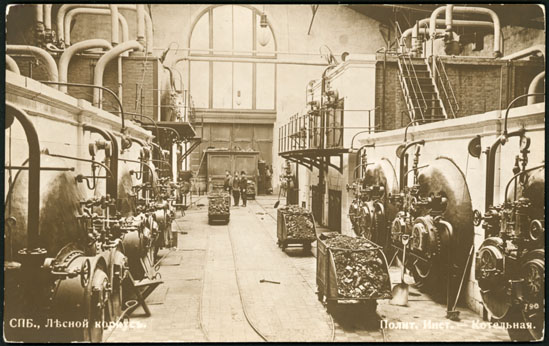
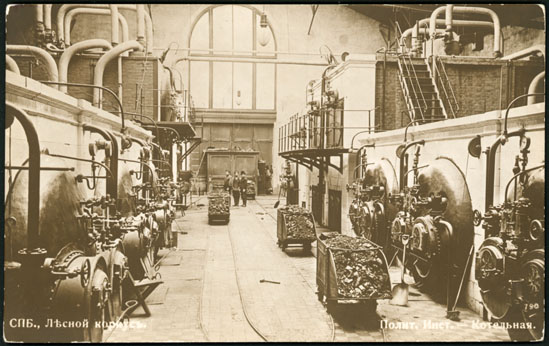
Members of the nobility murdered Rasputin in December 1916, and he was buried near the imperial residence in Tsarskoye Selo. Shortly after the February Revolution of 1917, Kerensky ordered soldiers to re-bury the corpse at an unmarked spot in the countryside. However, the truck broke down or was forced to stop because of the snow on Lesnoe Road outside of St. Petersburg. It is likely the corpse was incinerated (between 3 and 7 in the morning) in the cauldrons of the nearby boiler shop[24][25][26] of the Saint Petersburg State Polytechnical University, including the coffin, without leaving a single trace.[27]

Russian Provisional Government of 1917

[edit]
Kerensky as Minister of War (sitting second from the right)

When the February Revolution broke out in 1917, Kerensky – together with Pavel Milyukov – was one of its most prominent leaders. As one of the Duma's most well-known speakers against the monarchy and as a lawyer and defender of many revolutionaries, Kerensky became a member of the Provisional Committee of the State Duma and was elected vice-chairman of the newly formed Petrograd Soviet. These two bodies, the Duma and the Petrograd Soviet, or – rather – their respective executive committees, soon became each other's antagonists on most matters except regarding the end of the tsar's autocracy.[28]

The Petrograd Soviet grew to include 3000 to 4000 members, and their meetings could drown in a blur of everlasting orations. At the meeting of 12 March [O.S. 27 February] 1917 to 13 March [O.S. 28 February] 1917 the executive committee of the Petrograd Soviet, or Ispolkom, formed a self-appointed committee, with (eventually) three members from each of the parties represented in the Soviet. Kerensky became one of the members representing the Socialist Revolutionary Party (the SRs).[29]

On 14 March [O.S. 1 March] 1917, without any consultation with the government, the Ispolkom of the Soviet issued the infamous Order No. 1, intended only for the 160,000-strong Petrograd garrison, but soon interpreted as applicable to all soldiers at the front. The order stipulated that all military units should form committees like the Petrograd Soviet. This led to confusion and "stripping of officers' authority"; further, "Order No. 3" stipulated that the military was subordinate to Ispolkom in the political hierarchy. The ideas came from a group of socialists and aimed to limit the officers' power to military affairs. The socialist intellectuals believed the officers to be the most likely counterrevolutionary elements. Kerensky's role in these orders is unclear, but he participated in the decisions. But just as before the revolution he had defended many who disliked the tsar, he now saved the lives of many[quantify] of the tsar's civil servants about to be lynched by mobs.[30]

Kerensky sitting next to later Supreme Leader, Alexander Kolchak

Additionally, the Duma formed an executive committee which eventually became the Russian Provisional Government. As there was little trust between Ispolkom and this government (and as he was about to accept the office of Attorney General in the Provisional Government), Kerensky gave a most passionate speech, not just to the Ispolkom, but to the entire Petrograd Soviet. He then swore, as minister, never to violate democratic values, and ended his speech with the words "I cannot live without the people. In the moment you begin to doubt me, then kill me."[31] The huge majority (workers and soldiers) gave him great applause, and Kerensky now became the first and the only one[32] who participated in both the Provisional Government and the Ispolkom. As a link between Ispolkom and the Provisional Government, Kerensky stood to benefit from this position.[30][33]

After the first government crisis over Milyukov's secret note re-committing Russia to its original war-aims on 2–4 May, Kerensky became the Minister of War and the dominant figure in the newly formed socialist-liberal coalition government. On 10 May (Julian calendar), Kerensky started for the front and visited one division after another, urging the men to do their duty. His speeches were impressive and convincing for the moment, but had little lasting effect.[34][35] Under Allied pressure to continue the war, he launched what became known as the Kerensky Offensive against the Austro-Hungarian/German South Army on 1 July [O.S. 18 June] 1917.[36] At first successful, the offensive soon met strong resistance and the Central Powers riposted with a strong counter-attack. The Russian army retreated and suffered heavy losses, and it became clear from many incidents of desertion, sabotage, and mutiny that the army was no longer willing to attack.

Kerensky in May 1917

The military heavily criticised Kerensky for his liberal policies, which included stripping officers of their mandates and handing over control to revolutionary-inclined "soldier committees" (Russian: солдатские комитеты, romanizedsoldatskie komitety) instead; abolition of the death penalty; and allowing revolutionary agitators to be present at the front. Many officers scornfully referred to commander-in-chief Kerensky as the "persuader-in-chief".

On 2 July 1917 the Provisional Government's first coalition collapsed over the question of Ukraine's autonomy. Following the July Days unrest in Petrograd (3–7 July [16–20 July, N.S.] 1917) and the official suppression of the Bolsheviks, Kerensky succeeded Lvov as Russia's prime minister on 21 July [O.S. 8 July] 1917. Following the Kornilov Affair, an attempted military coup d'état at the end of August, and the resignation of the other ministers, he appointed himself Supreme Commander-in-Chief, as well.

On 15 September Kerensky proclaimed Russia a republic, which was contrary to the non-socialists' understanding that the Provisional Government should hold power only until a Constituent Assembly should meet to decide Russia's form of government, but which was in line with the long-proclaimed aim of the Socialist Revolutionary Party.[37] He formed a five-member Directory, which consisted of himself, Minister of Foreign Affairs Mikhail Tereshchenko, Minister of War General Aleksandr Verkhovsky, Minister of the Navy Admiral Dmitry Verderevsky and Minister of Posts and Telegraphs Aleksei Nikitin [ru]. He retained his post in the final coalition government in October 1917 until the Bolsheviks overthrew it on 7 November [O.S. 26 October] 1917.

Kerensky in office

Kerensky faced a major challenge: three years of participation in World War had exhausted Russia, while the provisional government offered little motivation for a victory outside of continuing Russia's obligations towards its allies. Russia's continued involvement in the war was not popular among the lower and middle classes, and especially not popular among the soldiers. They had all believed that Russia would stop fighting when the Provisional Government took power,[citation needed] and subsequently felt deceived. Furthermore, Lenin and his Bolshevik party were promising "peace, land, and bread" under a communist system. The Russian army, war-weary, ill-equipped, dispirited and ill-disciplined, was disintegrating, with soldiers deserting in large numbers. By autumn 1917, an estimated two million men had unofficially left the army.

Kerensky and other political leaders continued Russia's involvement in World War I, thinking that a glorious victory was the only way forward,[38] and fearing that the economy, already under huge stress from the war effort, might become increasingly unstable if vital supplies from France and from the United Kingdom ceased flowing.[39] The dilemma of whether to withdraw was a great one, and Kerensky's inconsistent and impractical policies further destabilised the army and the country at large.

Furthermore, Kerensky adopted a policy that isolated the right-wing conservatives and nationalists, both democratic and monarchist-oriented. His philosophy of "no enemies to the left" greatly empowered the Bolsheviks and gave them a free hand, allowing them to take over the military arm or "voyenka" (Russian: Военка) of the Petrograd and Moscow Soviets.[40] His arrest of Lavr Kornilov and other officers left him without strong allies against the Bolsheviks, who ended up being Kerensky's strongest and most determined adversaries, as opposed to the right wing, which evolved into the White movement.

Autochrome portrait by Georges Chevalier, 1921

October Revolution of 1917

[edit]

During the Kornilov Affair, Kerensky had distributed arms to the Petrograd workers, and by November most of these armed workers had gone over to the Bolsheviks.[41] On 6–7 November [O.S. 25–26 October] 1917, the Bolsheviks launched the second Russian revolution of the year. Kerensky's government in Petrograd had almost no support in the city. Only one small force, a subdivision of the 2nd company of the First Petrograd Women's Battalion, also known as The Women's Death Battalion, was willing to fight for the government against the Bolsheviks, but this force was overwhelmed by the numerically superior pro-Bolshevik forces, defeated, and captured.[42] The Bolsheviks overthrew the government rapidly by seizing governmental buildings and the Winter Palace.[43]

Kerensky escaped the Bolsheviks and fled to Pskov, where he rallied some loyal troops for an attempt to re-take the city. His troops managed to capture Tsarskoye Selo but were beaten the next day at Pulkovo. Kerensky narrowly escaped, and he spent the next few weeks in hiding before fleeing the country, eventually arriving in France. During the Russian Civil War, he supported neither side, as he opposed both the Bolshevik regime and the White Movement.[44] Meanwhile, viewed by Woodrow Wilson as the spokesman for Russian democracy, he strongly influenced Wilson on Russian matters. Kerensky sought to discredit Alexander Kolchak in Western eyes, telling American diplomats that if Kolchak succeeded, he would "inaugurate a regime hardly less sanguinary and repressive than that of the Bolshevists."[45]

Personal life

[edit]
Kerensky at the National Press Club in 1938

Kerensky was married to Olga Lvovna Baranovskaya and they had two sons, Oleg (1905–1984) and Gleb (1907–1990), who both went on to become engineers. Kerensky's grandson (also named Oleg), according to the Internet Movie Database, played his grandfather's role in the 1981 film Reds.[better source needed] Kerensky and Olga were divorced in 1939 soon after he settled in Paris. In 1939, while visiting the United States, he met and secretly married Australian journalist Lydia Ellen "Nell" Tritton (1899–1946), who became his press secretary and translator.[46][47] The marriage took place in Martins Creek, Pennsylvania.

When Germany invaded France in 1940, they emigrated to the United States.[48]

During the Nazi invasion of the Soviet Union, Kerensky expressed his willingness to support the Russian people's defense against Hitler, despite his long-standing opposition to the Soviet regime. In a published article, he criticized both Lenin and Stalin but stated that the survival of Russia as a nation took precedence over political differences.[49]

When his wife Nell became terminally ill in 1945, Kerensky travelled with her to Brisbane, Australia, and lived there with her family. She suffered a stroke in February 1946, and he remained there until her death on 10 April 1946. Kerensky then returned to the United States, where he spent the rest of his life.[50]

Alexandre Fiodorovitch Kerenski in 1943

Kerensky eventually settled in New York City, living on the Upper East Side on 91st Street near Central Park[51] but spent much of his time at the Hoover Institution at Stanford University in California, where he both used and contributed to the Institution's huge archive on Russian history, and where he taught graduate courses. He wrote and broadcast extensively on Russian politics and history. His last public lecture was delivered at Kalamazoo College in Kalamazoo, Michigan, in October 1967.[52]

Death

[edit]
Two white marble gravestones surmounted by Orthodox crosses
The graves of Alexander Kerensky (left), and of his first wife, Olga, and his son Gleb and Gleb's wife, Mary, at Putney Vale Cemetery, London, 2014

Kerensky died of arteriosclerotic heart disease at St. Luke's Hospital in New York City on 11 June 1970 at the age of 89, after being initially admitted for injuries sustained from a fall.[51] He was one of the last surviving major participants in the turbulent events of 1917. The local Russian Orthodox Churches in New York City refused to grant Kerensky burial rites because of his association with Freemasonry, and because they saw him as largely responsible for the Bolsheviks' seizure of power.[53] A Serbian Orthodox Church also refused burial rites. Kerensky's body was flown to London, where his two sons resided; he was buried at the non-denominational Putney Vale Cemetery.[54]

Works

[edit]
  • The Prelude to Bolshevism (1919). ISBN 0-8383-1422-8.
  • The Catastrophe (1927)
  • The Crucifixion of Liberty (1934)
  • Russia and History's Turning Point (1965)
  • Memoirs (1966)

Archives

[edit]

Papers of the Kerensky family are held at the Cadbury Research Library, University of Birmingham.[55]

See also

[edit]

Explanatory notes

[edit]

References

[edit]

Further reading

[edit]
[edit]
Revisions and contributorsEdit on WikipediaRead on Wikipedia
from Grokipedia
Alexander Fyodorovich Kerensky (4 May [O.S. 22 April] 1881 – 11 June 1970) was a Russian lawyer, socialist revolutionary, and statesman who served as Minister of Justice from March to May 1917, Minister of War from May to July 1917, and Prime Minister (Minister-President) of the Russian Provisional Government from July to October 1917. A member of the Trudovik faction in the Duma, Kerensky gained prominence for his oratory and advocacy of civil liberties during the early stages of the 1917 Revolution, helping to orchestrate the abdication of Tsar Nicholas II and the establishment of a provisional democratic regime amid World War I. His government's commitment to continuing the war effort, exemplified by the failed Kerensky Offensive in July 1917, exacerbated military desertions and public discontent, while delays in implementing land reforms alienated peasants and workers, ultimately enabling the Bolsheviks' October Revolution. Exiled after the coup, Kerensky spent his later years in the United States, authoring memoirs that defended his policies against Bolshevik totalitarianism.

Early Life and Education

Family Background and Childhood

Alexander Fyodorovich Kerensky was born on 22 April 1881 (Old Style) in Simbirsk, a provincial town on the River, to Mikhailovich Kerensky, a gymnasium teacher who served as director of the Simbirsk Classical Gymnasium, and Nadezhda Aleksandrovna (née Adler). , born in 1837, had earlier directed the Vyatka Gymnasium from 1877 to 1879 before taking the Simbirsk post, where he focused on organizing public education amid the era's emphasis on classical schooling. The Kerensky family belonged to the educated Russian middle class, with Fyodor's career reflecting the Tsarist system's reliance on provincial educators to implement centralized curricula. Simbirsk's intellectual environment, marked by educational institutions and figures like the Ulyanov family—Vladimir Lenin's relatives, whose patriarch also inspected schools—provided indirect exposure to regional discussions on , though no personal links connected the households. In , when Kerensky was eight, the family moved to after Fyodor's promotion to inspector of schools in , a remote administrative . Kerensky completed his secondary education at the First Men's Gymnasium, graduating with honors in a program centered on , , and classical languages, which honed analytical skills amid the isolation of colonial outposts. This upbringing in structured, elite schooling environments emphasized discipline and erudition, shaping foundational habits without evident early immersion in overt political dissent.

Legal Training and Entry into Politics

Kerensky enrolled at St. Petersburg University in 1899, initially pursuing studies in history before transferring to the law faculty after one year. He completed his and graduated in 1904. After obtaining his degree, Kerensky passed the in 1905 and established a legal practice in St. Petersburg, focusing exclusively on defending individuals accused of political offenses. He represented revolutionaries, socialists, and peasants in notable cases, including the 1908 defense of 15 Estonian peasants charged with sacking a Baltic German manor house during agrarian unrest, where his eloquent advocacy highlighted systemic injustices under Tsarist rule. In 1910, he served as chief counsel for members of the Social Revolutionary Organization, accused of anti-government armed activities, further building his reputation as a defender of radical dissidents against repressive state prosecutions. Kerensky's immersion in these trials amid the Tsarist regime's crackdowns, intensified by the 1905 Revolution's suppression—which saw over 14,000 executed and 75,000 imprisoned—exposed the regime's reliance on arbitrary arrests and curtailed , prompting his deeper engagement with liberal and socialist opposition networks. By distributing clandestine publications like the liberal journal Osvobozhdenie (Liberation) as early as 1904, he aligned with calls for constitutional reforms and human rights, though his initial political efforts yielded no immediate electoral breakthroughs. This period marked his transition from scholarly pursuits to active anti-autocratic advocacy, grounded in firsthand encounters with judicial politicization.

Pre-Revolutionary Activism

Membership in the Socialist Revolutionary Party

Alexander Kerensky joined the (SR) in 1905 amid the revolutionary upheavals of that year, attracted by its agrarian socialist ideology that prioritized land redistribution to peasants through socialization of large estates, in contrast to the Marxist emphasis on urban industrial workers and . The SRs, as ideological successors to the 19th-century Narodnik populists, sought a with federal structures to empower rural communities, viewing the peasantry as the primary revolutionary force capable of dismantling via cooperative land use rather than state seizure. Kerensky's alignment reflected his upbringing and legal background, fostering sympathy for peasant grievances over abstract class warfare. Within the SR, Kerensky adopted a moderate stance, focusing on legal and propagandistic efforts rather than the terrorism pursued by the party's radical Combat Organization, which had assassinated officials like in 1904. He contributed to underground activities by editing the radical St. Petersburg newspaper Burevestnik (Stormy Petrel), distributing socialist literature, and providing legal defense to political prisoners, which led to his arrest in 1906 and brief internal . These roles underscored his commitment to non-violent agitation and advocacy, positioning him as a bridge between the SR's maximalist terrorists and reformist elements seeking parliamentary influence despite the party's official boycott of tsarist elections. By 1912, Kerensky's SR affiliation facilitated his election to the Fourth under the allied Trudovik (Toil) faction banner, from which he promoted and expanded as extensions of the party's peasant-oriented platform. His moderation within the SR—eschewing maximalist demands for immediate seizures in favor of phased reforms—distinguished him from leaders like , yet aligned with the party's broad appeal that garnered over 1 million voter supporters by 1917. This organizational loyalty persisted until the , when SR divisions deepened over wartime policies.

Service in the Duma and Anti-Tsarist Campaigns

Kerensky was elected as a deputy to the Fourth in November 1912, representing the Volsk district in Province as a member of the Trudovik faction, a left-leaning group aligned with agrarian socialist principles that emphasized and opposition to autocratic rule. In this role, he emerged as one of the 's most outspoken critics of the Tsarist regime, leveraging parliamentary debates to highlight systemic corruption, bureaucratic inefficiency, and abuses of power by officials, including instances of and favoritism in government contracts. His efforts included initiating inquiries into ministerial misconduct, which exposed failures in administrative oversight and contributed to growing public disillusionment with the autocracy's governance structures, though these probes often faced obstruction from the Tsarist-appointed ministers. Kerensky advocated persistently for the establishment of a accountable to the rather than the , as well as a general for political prisoners and exiles, arguing that such measures were essential to address the regime's repressive policies and foster national unity amid social unrest. These positions resonated with liberal and moderate socialist constituencies, enhancing his reputation as a principled reformer who prioritized legal and constitutional challenges to over radical upheaval. His oratory in the , marked by eloquent denunciations of and arbitrary arrests, helped bridge divides between progressive members and extraparliamentary opposition groups. With the outbreak of in July 1914, Kerensky initially endorsed a effort, urging workers and peasants to support the national defense while rejecting war credits that implied annexationist aims. However, as the conflict progressed, he intensified criticisms of the Tsarist high command's mismanagement, pointing to empirical failures such as chronic supply shortages, inadequate medical provisions for troops, and leadership incompetence that resulted in disproportionate casualties—over 2 million Russian soldiers killed or wounded by mid-1916. Following the partial successes of the in June-September 1916, which nonetheless exposed logistical breakdowns and in , Kerensky demanded parliamentary investigations into these deficiencies, framing them as symptoms of autocratic decay that eroded military morale and civilian support without calling for immediate violent overthrow. These critiques amplified revolutionary sentiments by underscoring the regime's inability to adapt to modern warfare's demands, though Kerensky maintained a commitment to patriotic reform within legal bounds.

Involvement in the Rasputin Investigations

In late 1916, as a Trudovik deputy in the Fourth State Duma, Alexander Kerensky contributed to the parliamentary scrutiny of Grigori Rasputin's undue influence over Tsarina Alexandra Feodorovna and key government decisions. Amid Russia's mounting military setbacks in World War I, Kerensky aligned with the Progressive Bloc's demands for ministerial accountability, emphasizing how Rasputin's sway—rooted in his perceived mystical healing of Tsarevich Alexei—extended to appointments in the War Ministry and other state roles, often favoring incompetents or German sympathizers. On November 2, 1916, during a heated Duma session, Kerensky delivered a fiery speech denouncing imperial ministers as "hired assassins" complicit in national betrayal, directly invoking Rasputin as a symbol of the "dark forces" paralyzing effective governance. Kerensky's rhetoric drew on circulating testimonies from officials and leaked documents, publicizing instances where Rasputin intervened in , such as opposing offensive strategies or endorsing ministers like , whose incompetence exacerbated supply shortages and troop morale collapse. He argued that the Tsarina's reliance on Rasputin's counsel for state matters—not merely personal ones—undermined administrative rationality, fostering perceptions of corruption that alienated the and officer corps. This exposure amplified elite disillusionment, as members corroborated claims of Rasputin's debauchery and meddling through private inquiries and press leaks, though formal interrogations remained limited by tsarist . While Kerensky lacked authority for independent witness interrogations, his advocacy within the Bloc pressured Tsar Nicholas II to curb Rasputin's access, a bid that failed but highlighted causal ties between unchecked personal influence and regime fragility—evident in how Rasputin's endorsements correlated with policy inertia during 1915–1916 defeats, eroding public trust in monarchical competence. These efforts, grounded in debates rather than judicial probes, prefigured broader anti-tsarist momentum without directly inciting Rasputin's December 1916 assassination.

Role in the February Revolution

Overthrow of the Tsarist Regime

The erupted spontaneously in Petrograd on 22 February 1917 (Old Style), triggered by strikes among metal workers amid acute food shortages and economic dislocation from , which had mobilized millions of men, strained transportation networks, and fueled inflation eroding urban living standards. On 23 February (), demonstrations expanded as women joined the protests for bread and peace, swelling crowds to approximately 200,000 and halting most industrial activity. By 25–27 February, a gripped the city, while initial troop deployments to suppress unrest faltered; the Volynsky Life-Guards Regiment mutinied on 26 February, refusing to fire on demonstrators, followed by cascading defections among the 310,000-strong Petrograd garrison, with about 10,000 soldiers actively joining protesters due to shared war fatigue, poor conditions, and aversion to killing civilians. These soldier revolts—representing a critical causal break in regime enforcement—isolated Nicholas II, who was distant at the front, rendering military coercion impossible amid the collapse of loyalty in the capital. The , rejecting the Tsar's 27 February dissolution decree, established the Temporary Committee under Chairman , electing Alexander Kerensky—a Socialist Revolutionary —as a key member and the sole socialist voice. Kerensky pressed the committee to assume authority and demand the Tsar's ouster, vocally rejecting monarchical concessions in favor of a ; on 1 March, he publicly affirmed his republican stance. Simultaneously, he liaised with radical crowds and mutinous troops at the , directing energies to avert chaos while amplifying pressure on the . This convergence of uncontrolled popular upheaval and institutional defiance compelled Nicholas II's on 2 March, nominally to his brother Grand Duke Michael Alexandrovich, whose the next day sealed the regime's end—driven less by coordinated than by empirical breakdowns in supply, , and command cohesion.

Appointment to the Provisional Government

Following Tsar Nicholas II's abdication on March 15, 1917, the was established under Prince Georgy Lvov as its first premier, with Alexander Kerensky appointed as Minister of Justice—the sole representative of the in the initial liberal-dominated cabinet. This inclusion signaled an effort to broaden the government's base amid revolutionary fervor, reflecting Kerensky's prominence as a deputy and his rapid elevation from opposition figure to executive role. Kerensky's appointment occurred against the backdrop of emerging dual power (dvoevlastie), where the Provisional Government held formal authority but competed with the more radical Petrograd Soviet of Workers' and Soldiers' Deputies, which commanded grassroots support and military loyalty through its Order No. 1. As a bridge between these structures—having been elected vice-chairman of the Soviet's Executive Committee—Kerensky sought to stabilize the regime by endorsing Soviet influence while prioritizing orderly transition, including commitments to convene a Constituent Assembly via universal suffrage elections to determine Russia's future governance. In his early ministerial capacity, Kerensky championed foundational to consolidate liberal support and legitimize the government, decreeing freedoms of speech, press, assembly, and religion; introducing ; and granting equal rights to women. These measures embodied initial optimism for a free from autocratic remnants, though they navigated Soviet pressures without conceding to immediate land redistribution or peace demands, preserving the Provisional Government's commitment to continuity until electoral mandates.

Leadership of the Provisional Government

Initial Reforms and Governance Challenges

Upon assuming the role of Minister of Justice in the on March 15, 1917 (Old Style), Alexander Kerensky initiated a series of liberal reforms aimed at dismantling Tsarist repressive structures. These included a general political that released thousands of political prisoners, including revolutionaries and common criminals convicted under political pretexts, and the abolition of the death penalty for civilians. He also proclaimed freedoms of speech, press, assembly, and association, alongside the removal of religious, ethnic, and class-based legal disabilities, such as the abolition of the Pale of Settlement restricting Jewish residence. Religious tolerance was advanced through , granting autonomy to the Orthodox Church and equal rights to other faiths, though implementation faced resistance from clerical authorities. Kerensky oversaw preparations for elections to the All-Russian , intended to draft a and resolve fundamental issues like land redistribution, but logistical challenges and ongoing efforts delayed voting until November 12, 1917 (Old Style). This postponement stemmed from the government's commitment to await elected representatives for major decisions, reflecting a legalistic approach that prioritized procedural legitimacy over immediate action. In May 1917, Kerensky transitioned to Minister of War in the first formed on May 5 (New Style), amid crises eroding the regime's authority. Governance challenges intensified as the under Kerensky's influence hesitated to expropriate noble and church lands, deferring reforms to the despite peasant demands fueled by wartime shortages and inequality. This inaction prompted widespread spontaneous seizures of private estates by peasants, who burned manor houses and redistributed , with over 500 reported incidents in by summer , undermining rural support for the . Urban workers similarly occupied factories, forming soviets that challenged state control, while the prioritization of continuing over domestic peace negotiations exacerbated economic collapse, inflation, and food crises, fostering among soldiers and civilians who viewed the as out of touch with exigencies. The resulting structure with soviets diluted executive authority, as local committees bypassed central directives, highlighting the causal tension between wartime commitments and unmet socioeconomic aspirations.

Continuation of World War I and the Kerensky Offensive

Alexander Kerensky succeeded Georgy Lvov as prime minister of the Provisional Government on July 7, 1917 (Old Style), amid escalating crises including the July Days unrest. As minister of war since May 1917, Kerensky had already committed to a major offensive to demonstrate Russia's continued participation in the Entente alliance and to rally domestic support for the government through perceived military success. The operation, planned by General Aleksei Brusilov, launched on June 18, 1917 (O.S.; July 1, N.S.), targeting Austro-Hungarian positions in Galicia, with initial gains capturing over 10,000 prisoners in the first days. However, these advances collapsed under German and Austro-Hungarian counterattacks by mid-July, resulting in approximately 60,000 Russian casualties from killed, wounded, and missing in the opening phase alone, alongside a surge in desertions exceeding 1 million soldiers by autumn. Kerensky's strategy hinged on the belief that battlefield victories would legitimize the and suppress radical opposition, leading him to reject informal German overtures for that might have allowed to withdraw from the war. This commitment to Allied obligations ignored the profound demoralization among Russian troops, exacerbated by three years of grueling conflict, supply shortages, and the revolutionary upheaval that had politicized the ranks. Empirical outcomes of the offensive underscored a causal disconnect: rather than restoring discipline, the disproportionate casualties—far exceeding the limited territorial gains—fueled mutinies and refusals to obey orders, validating the growing authority of soldier committees over traditional command structures. The failure eroded officer credibility, as troops attributed defeats to incompetent leadership and perceived the offensive as an imposition disconnected from frontline realities, where committees increasingly vetoed advances and prioritized anti-war agitation. By late July 1917, Russian forces had retreated from much of the captured ground, with the counteroffensive inflicting additional losses estimated at 150,000, paralyzing further offensive capabilities and amplifying dynamics between the government and Soviets. Kerensky's personal tours to exhort troops, while initially boosting some units, ultimately highlighted the limits of rhetorical appeals against entrenched , as rates spiked post-offensive, reflecting a breakdown in coercive and motivational mechanisms essential for sustained military effort.

The Kornilov Affair and Internal Divisions

In late August 1917 (Old Style), Prime Minister Alexander Kerensky faced escalating tensions with General Lavr Kornilov, whom he had appointed Commander-in-Chief of the Russian Army on July 19 (O.S. July 8). Kornilov sought to impose stricter military discipline amid widespread desertions and Bolshevik agitation, demanding the restoration of the death penalty for desertion at the front, the suppression of soviet influence in the army, and the relocation of factories producing war materials to state control. These measures aligned with conservative pressures on the Provisional Government but clashed with socialist elements within it. On August 25 (O.S.), Kornilov issued orders for the Third Cavalry Corps under General A. M. Krymov to advance toward Petrograd to restore order, citing threats from anarchists and soviets. Communications between Kerensky and Kornilov proved highly ambiguous, fueling historical debate over intentions. Kerensky, fearing a loss of authority, exchanged telegrams with Kornilov on August 26-27 (O.S.), initially urging troop movements to Petrograd for defense against potential unrest but later interpreting Kornilov's responses as insubordinate demands for a . Kornilov maintained he acted on Kerensky's directives to counter revolutionary threats, while Kerensky publicly denounced him as a traitor on August 27 (O.S.), dismissing him and assuming personal command of the armed forces. Evidence from the exchanges suggests mutual misinterpretation or deliberate escalation by Kerensky to neutralize a rival power center, as Kornilov's ultimatums echoed prior government discussions on discipline without explicit calls for Kerensky's ouster. Desperate to defend Petrograd, Kerensky appealed to the for assistance, authorizing the arming of workers and soldiers to repel the perceived coup. The Soviet's , increasingly Bolshevik-influenced, mobilized approximately 25,000-40,000 armed defenders, including nascent Red Guard units, and organized strikes among railway workers to halt Kornilov's advance. Bolshevik agitation among Kornilov's troops proved decisive; many units refused orders or defected, with Krymov's forces stalling short of the city due to and rather than combat. Kornilov was arrested on September 2 (O.S.), and Kerensky's government suppressed his supporters, executing none but imprisoning key officers. The affair exacerbated internal divisions within the and Russian society. Kerensky's reliance on soviet militias alienated conservative and military elites, who viewed the arming of radicals as a betrayal that militarized Bolshevik forces for future use against the government itself—arms distributed numbered in the tens of thousands, later bolstering the . Socialists criticized Kerensky for initially courting Kornilov, while right-wing elements saw the suppression as prioritizing personal power over a potential authoritarian stabilization that might have curbed soviet . The crisis eliminated a viable , isolating Kerensky between Bolshevik ascendance on the left and disillusioned officers on the right, thus hastening the 's collapse.

Downfall and the Bolshevik Takeover

Rising Bolshevik Influence

Following the in August 1917, capitalized on their role in mobilizing and workers to counter the perceived counter-revolutionary threat, which enhanced their credibility among soldiers and urban laborers disillusioned with the Provisional Government's instability. Kerensky, seeking allies against Kornilov, politically rehabilitated by releasing arrested leaders like and lifting prior suppressions from the , inadvertently allowing them to regain organizational footing within the soviets. By early , this shift propelled to a majority in the , previously dominated by and Socialist Revolutionaries, as their agitation emphasized immediate peace, land redistribution, and worker control—demands the Provisional Government had failed to address. Kerensky's underestimation of Bolshevik tactics, rooted in Lenin's advocating withdrawal of support from the and transfer of power to soviets, permitted radical propaganda to penetrate factories, barracks, and villages unchecked after the Kornilov crisis. The Theses rejected any collaboration with the bourgeois regime, framing it as a tool of , which resonated amid ongoing war failures and ; Bolshevik influence surged as they positioned themselves as the sole force capable of ending Russia's involvement in . Although Kerensky's government had cracked down during the —disbanding armed demonstrations and forcing Lenin into hiding—the incomplete suppression allowed Bolshevik regrouping, with Lenin returning clandestinely in October to direct intensified agitation. Escalating peasant revolts and urban unrest further eroded the Provisional Government's base, driving support toward who exploited unfulfilled promises on and bread. In the countryside, over 1,000 documented seizures of noble estates occurred by autumn , as peasants ignored government moratoriums and took matters into their own hands amid food shortages. Urban workers, facing and factory shutdowns, staged strikes involving hundreds of thousands in Petrograd and , while desertions from the front reached 2 million soldiers by , many influenced by Bolshevik calls for "peace without annexations." Kerensky's postponement of elections—from an initial June target to November 25, citing logistical unpreparedness in provinces—fueled perceptions of elite consolidation, alienating radicals and moderates alike who viewed it as evading popular mandate. This delay, combined with reliance on vague reforms, highlighted Kerensky's miscalculation of Leninist strategy, which prioritized soviet infiltration over electoral legitimacy, steadily shifting power dynamics leftward.

Collapse of the Provisional Government

On October 25, 1917 (Old Style), the Bolshevik , under Leon Trotsky's direction, began coordinating the seizure of strategic points in Petrograd, including railway stations, the , and government ministries, with support from sympathetic soldiers and . The , concentrated in the , issued orders to suppress the uprising but lacked reliable forces to enforce them, as many troops in the capital had been influenced by Soviet agitation. Kerensky departed Petrograd around 5 a.m. in an attempt to secure reinforcements, initially by automobile and later by train, heading toward the northern front to link with General Aleksei Kaledin and Cossack units. Kerensky's appeals for democratic legitimacy and promises of resistance against "" fell on deaf ears among military commanders and rank-and-file soldiers, who were broadly disaffected due to the government's continuation of the war and prior military setbacks that had eroded discipline and willingness to fight. Efforts to mobilize Cossack cavalry under yielded only about 700 men, insufficient to challenge Bolshevik control of the city, as broader units refused to advance amid pervasive mutiny risks. The Provisional Government's earlier decisions, such as permitting the Petrograd Soviet to maintain armed militias and releasing Bolshevik leaders after the , had enabled the accumulation of organized opposition within key institutions, precluding any decisive loyalist response. By late into the 26th, after a prolonged standoff involving sporadic gunfire and blank salvos from the cruiser Aurora, Bolshevik detachments—numbering fewer than 1,000 effectives—entered the with minimal opposition, arresting 15 ministers including Kerensky's deputies. The government's dissolution proceeded without significant combat in Petrograd, reflecting the collapse of central authority in a context of institutional fragmentation and the inability to command allegiance from a war-weary military apparatus. Kerensky, evading capture, continued southward but could not reverse the regime's fall, marking the effective end of Provisional rule after eight months.

Exile and Post-Revolutionary Life

Flight from Russia and Settlement Abroad

Following the Bolshevik seizure of power on November 7, 1917 (October 25 Old Style), Kerensky fled Petrograd in an automobile commandeered from the consulate, evading immediate capture amid the chaos of the coup. He proceeded to , headquarters of the Russian Northern Front, where he rallied General Pyotr Krasnov's Cossack detachment of approximately 700 troopers for a counter-offensive aimed at retaking the capital; initial advances reached the outskirts of Petrograd by , but lack of broader military support and Bolshevik reinforcements led to defeat, with Krasnov's forces withdrawing after negotiations on November 1. Kerensky then went into hiding, traveling incognito through and while seeking Allied assistance against the Bolsheviks. In May 1918, after months underground, Kerensky escaped proper and arrived in , where British authorities initially hesitated on his visa due to his socialist affiliations but permitted his stay for anti-Bolshevik coordination. Denied entry to the owing to concerns over his ties to , he relocated to later that year, joining the burgeoning Russian émigré community amid personal hardships including poverty, as he subsisted on sparse lecture fees and donations while facing recurrent threats of from Bolshevik operatives targeting prominent exiles. Throughout this period, Kerensky upheld his commitment to , endorsing the White anti-Bolshevik armies' fight against Soviet rule but publicly rebuking their monarchist factions for prioritizing tsarist restoration over republican governance, which he argued alienated potential moderate supporters and hindered unified opposition.

Activities in Emigration

In 1940, following the German invasion of , Kerensky emigrated to the , where he resided primarily in and later spent extended periods in . There, he pursued academic and public speaking engagements, delivering lectures and seminars on the at institutions such as —where he conducted research and taught starting in 1955—and serving as a visiting trustee professor at Mills College in Oakland in 1965 under a grant. These activities aimed to educate audiences on the perils of Bolshevik rule, emphasizing its totalitarian character as a masquerading as rather than true . Kerensky actively participated in émigré organizations opposing the Soviet regime, including as a prominent figure in the Coordinating Center for Anti-Bolshevik Struggle, formed in October 1952 to unify Russian and non-Russian exiles in advocating and resistance against . However, internal factionalism—exacerbated by rivalries and accusations of Great Russian nationalism—fractured the group by mid-1953, resulting in the withdrawal of U.S. subsidies from the American Committee for Liberation and underscoring the émigrés' marginalization amid strategies prioritizing over active restoration efforts. Throughout his exile, Kerensky endured personal hardships, including modest financial circumstances that confined him to simple accommodations like those at Stanford's Kingscote Gardens, as well as health decline marked by failing eyesight necessitating reader assistance and mobility aids. These challenges persisted despite his continued advocacy for dialogue between the U.S. and Soviet leaders, such as proposing direct talks between President and Premier to address global tensions.

Death and Personal Reflections

Alexander Kerensky died on June 11, 1970, at St. Luke's Hospital in at the age of 89, from arteriosclerotic heart disease following a fall that resulted in a broken elbow and pelvis. His body was transported to per the wishes of his sons and , and interred at . Local Russian and Serbian Orthodox churches declined burial rites, citing his and role in the fall of the Tsarist regime. Kerensky was married twice: first to Olga Lvovna Baranovskaya in 1904, with whom he had two sons, (1905–1984), a , and (1907–1990), also an engineer; the couple divorced around 1939. His second wife was Lydia Ellen "Nell" Tritton, an Australian and heiress whom he wed in New York; she accompanied him in exile but suffered a and died after a period of illness in the late . Despite the Orthodox Church's refusal of rites, Kerensky came from a family with deep Russian Orthodox roots—his grandfather was a —and maintained personal ties to the faith amid his secular revolutionary career. In his memoirs, Kerensky reflected on the Provisional Government's confronting wartime realities, defending the overthrow of Tsarism as indispensable while lamenting the revolution's descent into Bolshevik authoritarianism.

Legacy and Evaluations

Contributions to the Anti-Tsarist Movement

As a in St. Petersburg, Kerensky represented numerous anti-Tsarist activists and revolutionaries in trials from the early , leveraging his legal practice to challenge the autocracy's repressive policies despite personal risks of arrest. Elected to the Fourth in 1912 as a member of the Trudovik faction—a moderate socialist group advocating and —he utilized to deliver scathing critiques of II's government, including investigations into ministerial abuses and dissemination of oppositional . These activities positioned him as a vocal leader in the socialist opposition, fostering public discontent that eroded support for the monarchy. Kerensky's oratory played a pivotal role during the (February 23–27, 1917, Old Style), where his addresses in the galvanized members and protesters, contributing to the Tsar's abdication on March 2, 1917 (Old Style). This success facilitated the formation of the on March 3, 1917 (Old Style), marking the end of over three centuries of Romanov autocracy and initiating Russia's first experiment with parliamentary democracy, albeit provisional until a constituent assembly could convene. The revolution's outcomes included immediate extensions of political rights, such as enacted in July 1917, which empowered female participation in the electoral process for the first time. Appointed Minister of Justice in the on March 5, 1917 (Old Style), Kerensky spearheaded legal reforms that systematically dismantled the Tsarist security apparatus, including the release of thousands of political prisoners through general decrees issued in March 1917 and the abolition of the death penalty across , including at the front lines. Additional measures guaranteed freedoms of speech, press, assembly, and ; introduced ; and removed legal restrictions based on class, , or ethnicity, laying foundational principles that influenced subsequent constitutional frameworks despite the government's brevity. These reforms neutralized institutions like the secret police and promoted equal rights, crediting Kerensky with accelerating the transition from absolutism to liberal governance. In international affairs, Kerensky's administration pursued to affirm the revolution's legitimacy, securing formal recognition from Allied powers such as Britain on March 23, 1917 (Old Style), and shortly thereafter, which preserved wartime loans and supplies while preventing Russia's diplomatic . This recognition, achieved through dispatches emphasizing continuity in commitments, bolstered the Provisional Government's authority amid internal upheaval and underscored Kerensky's efforts to integrate post-Tsarist into the Entente framework.

Criticisms of Policy Failures and Strategic Errors

Kerensky's policies toward the military exacerbated indiscipline through the endorsement of soldiers' committees established under Order No. 1 of the , issued on March 1, 1917 (O.S.), which empowered enlisted men to elect committees that routinely debated and overrode officers' commands, eroding the chain of authority essential for operational cohesion. This , intended to foster loyalty to the , instead fostered anarchy, as soldiers increasingly refused orders and prioritized political agitation over combat duties, contributing to the army's rapid disintegration. By October 1917, these measures had precipitated mass desertions, with over two million soldiers abandoning the front lines amid the collapse of morale following the failed of July 1917. Critics, including military analysts, attribute this to Kerensky's prioritization of ideological reforms over restoring discipline through decisive enforcement, such as reinstating at the front only belatedly in July, which proved insufficient to halt driven by war weariness and radical . Kerensky's refusal to address peasant land hunger through immediate redistribution, deferring action to the anticipated , ignored the acute agrarian crisis where s, facing food shortages and wartime requisitions, engaged in widespread illegal seizures of noble estates beginning in spring 1917, fueling rural unrest that undermined government authority. Compounding this, his commitment to continuing the war without pursuing —rejecting overtures for negotiations absent Allied consent—intensified soldier and civilian fatigue, as the adhered to pre-revolutionary war aims despite evident incapacity, exemplified by the July Offensive's heavy casualties and subsequent German counteroffensives. The handling of the Kornilov Affair in late August to early September 1917 represented a strategic blunder, as Kerensky, fearing a conservative coup, appealed to socialist groups including for support, releasing political prisoners and authorizing the rearmament of , thereby equipping his most ideologically opposed enemies with organizational and martial capacity that facilitated their subsequent seizure of power. This indecisiveness stemmed from an overreliance on liberal proceduralism—such as reliance on soviets and delayed elections—rather than pragmatic consolidation of executive control, allowing extremists to exploit power vacuums through agitation and force, as evidenced by the ' strengthened position post-affair.

Historiographical Debates and Long-Term Impact

Historians of varying ideological persuasions have critiqued Kerensky's leadership for its failure to consolidate power amid revolutionary chaos, with Marxist scholars arguing that the Provisional Government's reluctance to expropriate bourgeois property and redistribute land delayed proletarian seizure of power, thereby prolonging capitalist influence. Right-leaning analysts, emphasizing the need for institutional continuity, contend that Kerensky's hasty dismantling of monarchical authority without establishing a robust alternative governance structure created a exploited by Bolshevik radicals, as evidenced by the government's inability to suppress Bolshevik agitation despite early opportunities post-July Days. These views highlight systemic biases in Soviet-era , which portrayed Kerensky as a mere bourgeois puppet, while Western conservative interpretations stress his ideological commitment to liberal reforms over pragmatic order restoration. Debates persist over the Kornilov Affair's intentionality, with some scholars positing that Kerensky deliberately provoked General Lavr Kornilov's advance on Petrograd in August 1917 to discredit right-wing military elements and consolidate socialist support, interpreting ambiguous telegrams as a calculated ploy rather than miscommunication. Others maintain it stemmed from genuine mutual distrust, exacerbated by Kerensky's earlier appeals for Kornilov's loyalty amid desertions totaling over 1 million soldiers by mid-1917. Similarly, the of July 1–19, 1917 (O.S.), which aimed to rally national morale but resulted in 60,000 Russian casualties against minimal gains, is contested for its avoidability; data on plummeting troop discipline—refusals to advance reached 40% in frontline units—suggest it was strategically untenable given wartime attrition, yet Kerensky's insistence on continuing the war to secure Allied loans underscored causal links between military adventurism and domestic . Kerensky's tenure serves as a cautionary exemplar of how moderate revolutionaries, lacking coercive mechanisms in dual-power scenarios, are often supplanted by extremists, as Bolshevik forces capitalized on Provisional weaknesses to seize Petrograd on October 25, 1917 (O.S.). Long-term, the eight-month interlude illuminated democracy's vulnerability in multi-ethnic empires ravaged by , where —wheat prices surged 300% from 1914–1917—and ethnic autonomist demands fragmented liberal coalitions, informing analyses of state fragility in contexts like post-colonial transitions. Empirical assessments prioritize these structural factors over personal agency, underscoring that without decisive suppression of soviet parallels to state authority, transitional regimes risk dissolution into authoritarian successors.

Major Works

Memoirs and Political Writings

Kerensky's earliest major publication, The Catastrophe: Kerensky's Own Story of the (1927), offered a firsthand narrative of the Provisional Government's tenure, spanning from the February Revolution's outbreak on March 8, 1917 (February 23 Old Style) to the Bolshevik coup on November 7, 1917 (October 25 Old Style). In it, he justified key decisions such as maintaining Russia's war commitments to preserve alliances and national honor, while attempting liberal reforms like abolishing the death penalty and preparing for a election, which occurred on November 12, 1917, yielding a socialist majority opposed to Bolshevik rule. Kerensky attributed the government's downfall primarily to Bolshevik-orchestrated sabotage, including Lenin's advocating "all power to the Soviets" and armed uprisings that undermined military discipline, rather than inherent flaws in democratic governance. His later memoir, Russia and History's Turning Point (1965), expanded on these themes with reflections from nearly five decades in , framing 1917 as a pivotal juncture where 's potential for constitutional was thwarted by communist aggression. Kerensky reiterated defenses of policies like the July offensive, which aimed to rally national unity but collapsed amid desertions totaling over 1 million soldiers by October, and blamed Bolshevik treachery—such as the secret German funding of Lenin's return in April —for exploiting war weariness and structures. The work emphasized principled adherence to liberty and as non-negotiable, critiquing expedients like Kornilov's aborted coup in September as deviations that, while ill-advised, stemmed from genuine security threats posed by radical soviets. In The Crucifixion of Liberty (1934), Kerensky detailed the Provisional Government's reforms, including the emancipation of over 100 million peasants via land committee distributions and the extension of civil liberties to ethnic minorities comprising 57% of the empire's population, positioning these as triumphs of anti-tsarist liberalism subsequently "crucified" by Bolshevik authoritarianism. He critiqued tsarist autocracy for suppressing political freedoms, as evidenced by his pre-revolutionary legal defenses of over 50 dissidents, while condemning communism's rejection of individual rights in favor of class dictatorship, arguing that moral imperatives of justice precluded compromises with either system's coercive excesses. These writings collectively served as primary defenses shaping émigré discourse, countering Soviet historiography by underscoring causal roles of ideological betrayal over structural inevitability.

Lectures and Public Advocacy

Following his flight from Russia, Kerensky engaged in extensive across and the , focusing on critiques of Bolshevik rule and alerts to communism's expansionist dangers. In the , he delivered addresses in and other European centers, emphasizing the Provisional Government's democratic aspirations and the Soviet regime's authoritarian betrayal, though specific tour itineraries from the remain sparsely documented in archival records. By the mid-20th century, his efforts intensified in America, where he warned audiences of the ideological and geopolitical threats posed by the USSR. From 1955 onward, Kerensky maintained a close affiliation with and the , residing periodically on campus for over a decade to deliver seminars and lectures drawing on archival materials. These sessions dissected the Revolution's failures, attributing the Bolshevik seizure to missteps while underscoring communism's inherent incompatibility with liberal democracy and its global ambitions. He also recorded speeches for institutions like Mills College, reinforcing anti-Soviet narratives through firsthand testimony. Kerensky's advocacy extended to multimedia efforts, including his 1962 introduction to the documentary The Truth About Communism, narrated by , which highlighted Soviet oppression and urged vigilance against Marxist infiltration in the West. While these orations fostered pockets of intellectual opposition among émigré circles and academic audiences—particularly at Hoover, a hub for anti-communist —contemporary accounts note their marginal sway over broader Western policy, overshadowed by pragmatic diplomacy like U.S. recognition of the USSR in 1933. His persistent warnings, however, sustained émigré resistance narratives into the era.

References

Add your contribution
Related Hubs
User Avatar
No comments yet.