Hubbry Logo
Combined oral contraceptive pillCombined oral contraceptive pillMain
Open search
Combined oral contraceptive pill
Community hub
Combined oral contraceptive pill
logo
8 pages, 0 posts
0 subscribers
Be the first to start a discussion here.
Contribute something
Combined oral contraceptive pill
from Wikipedia

Combined oral contraceptive pill
Background
TypeHormonal
First use1960; 65 years ago (1960) (United States)
Failure rates (first year)
Perfect use0.3%[1]
Typical use9%[1]
Usage
Duration effect1–4 days
ReversibilityYes
User remindersTaken within same 24-hour window each day
Clinic review6 months
Advantages and disadvantages
STI protectionNo
PeriodsRegulated, and often lighter and less painful
WeightNo proven effect
BenefitsEvidence for reduced mortality risk and reduced death rates in all cancers.[2] Possible reduced ovarian and endometrial cancer risks.[3][citation needed]
May treat acne, PCOS, PMDD, endometriosis[citation needed]
RisksIncrease in some cancers.[4][5] Increase in DVTs; stroke,[6] cardiovascular disease[7]
Medical notes
Affected by the antibiotic rifampicin,[8] the herb Hypericum (St John's wort) and some anti-epileptics, also vomiting or diarrhea. Caution if history of migraines.

The combined oral contraceptive pill (COCP), often referred to as the birth control pill or colloquially as "the pill", is a type of birth control that is designed to be taken orally by women. It is the oral form of combined hormonal contraception. The pill contains two important hormones: a progestin (a synthetic form of the hormone progestogen/progesterone) and estrogen (usually ethinylestradiol or 17β estradiol).[9][10][11][12] When taken correctly, it alters the menstrual cycle to eliminate ovulation and prevent pregnancy.

Combined oral contraceptive pills were first approved for contraceptive use in the United States in 1960, and remain a very popular form of birth control. They are used by more than 100 million women worldwide [13][14] including about 9 million women in the United States.[15][16] From 2015 to 2017, 12.6% of women aged 15–49 in the US reported using combined oral contraceptive pills, making it the second most common method of contraception in this age range (female sterilization is the most common method).[17] Use of combined oral contraceptive pills, however, varies widely by country,[18] age, education, and marital status. For example, one third of women aged 16–49 in the United Kingdom use either the combined pill or progestogen-only pill (POP),[19][20] compared with less than 3% of women in Japan (as of 1950–2014).[21]

Combined oral contraceptives are on the World Health Organization's List of Essential Medicines.[22] The pill was a catalyst for the sexual revolution.[23]

Background

[edit]

Oral contraceptives

[edit]
chemical structure of Progesterone
chemical structure of Oestrogen

Hormonal oral contraceptives are preventive medications taken orally by females to avoid pregnancy by manipulating their sex hormones. The first oral contraceptive was approved by the US Food and Drug Administration (FDA) and sold to the market in 1960. There are two types of hormonal oral contraceptives, namely Combined Oral Contraceptives and Progesterone Only Pills. Oral contraceptives, be it combined or progesterone-only, can effectively prevent pregnancy by regulating hormonal changes in the menstrual cycle, inhibiting ovulation, and altering cervical mucus to impede sperm mobility; combined pills have extra effects in menstrual cycle regulation and menstrual pain relief. Common off-label uses include menstrual suppression and acne relief, with Combined Oral Contraceptives having additional benefits in relieving menstrual migraine.

Variants

[edit]

Progesterone-only pills (POPs) utilise progestin, the synthetic form of progesterone, as the only active pharmaceutical ingredient in the formulation.[24][25] In the US, drospirenone and norethindrone are the most commonly used compounds in formulations.[26]

Combined oral contraceptives (COCs) are commonly classified into generations, referring to their order of development in history.[27] This discussion may also help identify some key features in a variety of products. According to EMA, the first generation of combined oral contraceptives, which made use of a high concentration of oestrogen only, were those invented in the 1960s.[27] In the second generation of products, progestogens were introduced into the formulation while the concentration of oestrogen was reduced.[27] Starting from the 1990s, the progression in the development of combined oral contraceptives has been directed towards varying the type of progestogen incorporated.[27] These products are referred as the third and fourth generation.[27]

Oestrogen ingredients: estradiol, ethinylestradiol, estetrol.[24]

1st generation progestin: norethindrone acetate, ethynodiol diacetate, lynestrenol, norethynodrel.[24]

2nd generation progestin: levonorgestrel, dl-norgestrel.[24]

3rd generation progestin: norgestimate, gestodene, desogestrel.[24]

The menstrual cycle

[edit]

Hormonal oral contraceptives (HOCs) interact with hormonal changes in the menstrual cycle in females to prevent ovulation, and hence achieve contraception.[24] In a 28-day menstrual cycle, there are the proliferative phase, ovulation, and then the secretory phase.[28]

Menstruation marks the beginning of proliferative phase in day 1-14.[28] In this period, the pituitary gland located near the brain secretes follicle-stimulating hormone (FSH) into the bloodstream to signal the development of follicle in ovary in the female reproductive system.[28] While follicle serves as the chamber of ovum development, it secretes Oestrogen, a hormone that not only triggers the thickening of uterine lining in preparation for implantation, but also inhibits the secretion of FSH in pituitary via a negative feedback mechanism.[28]

Specifically in ovulation, transient positive feedback by Oestrogen on FSH and Luteinising Hormone (LH) secretion from pituitary is permitted so that the release of mature ovum from follicle is triggered.[28]

In secretory phase on day 14-28, this follicle then transforms into corpus luteum and continues releasing Oestrogen with Progesterone into bloodstream.[28] While Oestrogen and Progesterone primarily aid the maintenance of thickness in uterine lining,[28] the negative feedback in pituitary allows them to inhibit FSH and LH secretion.[28] In the absence of LH, corpus luteum degenerates and ultimately causes blood Oestrogen and Progesterone levels to decline.[28] Without these thickness maintaining agents, uterine lining breaks down and hence the presentation of menstruation.[28]

Mechanism of action

[edit]

Progesterone and Oestrogen, either in combination or with Progesterone-only, are the active pharmaceutical ingredients found in a hormonal oral contraceptive formulation.[29] These medications are orally administered for systemic absorption to exert their effects.[29] An artificially enhanced level of Progesterone throughout the menstrual cycle inhibits the pituitary secretion of FSH and LH such that their actions in stimulating follicular development and ovulation are prevented.[24] Similarly, a boosted Oestrogen level activates the negative feedback mechanism in reducing FSH secretion from pituitary and therefore prevents follicular development.[24] In the absence of a developed follicle, ovulation cannot occur so that fertilisation is made impossible and contraception is achieved.[29] In comparison, Progesterone is more efficacious than Oestrogen not only because of its additional action in impeding LH, but also its ability to modulate the cervical mucus into sperm-repellent.[24]

Combined oral contraceptive pills were developed to prevent ovulation by suppressing the release of gonadotropins. Combined hormonal contraceptives, including combined oral contraceptive pills, inhibit follicular development and prevent ovulation as a primary mechanism of action.[30][31][32][33]

Under normal circumstances, luteinizing hormone (LH) stimulates the theca cells of the ovarian follicle to produce androstenedione. The granulosa cells of the ovarian follicle then convert this androstenedione to estradiol. This conversion process is catalyzed by aromatase, an enzyme produced as a result of follicle-stimulating hormone (FSH) stimulation.[34] In individuals using oral contraceptives, progestogen negative feedback decreases the pulse frequency of gonadotropin-releasing hormone (GnRH) release by the hypothalamus, which decreases the secretion of FSH and greatly decreases the secretion of LH by the anterior pituitary. Decreased levels of FSH inhibit follicular development, preventing an increase in estradiol levels. Progestogen negative feedback and the lack of estrogen positive feedback on LH secretion prevent a mid-cycle LH surge. Inhibition of follicular development and the absence of an LH surge prevent ovulation.[30][31][32]

Estrogen was originally included in oral contraceptives for better cycle control (to stabilize the endometrium and thereby reduce the incidence of breakthrough bleeding), but was also found to inhibit follicular development and help prevent ovulation. Estrogen negative feedback on the anterior pituitary greatly decreases the secretion of FSH, which inhibits follicular development and helps prevent ovulation.[30][31][32]

Another primary mechanism of action of all progestogen-containing contraceptives is inhibition of sperm penetration through the cervix into the upper genital tract (uterus and fallopian tubes) by decreasing the water content and increasing the viscosity of the cervical mucus.[30]

The estrogen and progestogen in combined oral contraceptive pills have other effects on the reproductive system, but these have not been shown to contribute to their contraceptive efficacy:[30]

  • Slowing tubal motility and ova transport, which may interfere with fertilization.
  • Endometrial atrophy and alteration of metalloproteinase content, which may impede sperm motility and viability, or theoretically inhibit implantation.
  • Endometrial edema, which may affect implantation.

Insufficient evidence exists on whether changes in the endometrium could actually prevent implantation. The primary mechanisms of action are so effective that the possibility of fertilization during combined oral contraceptive pill use is very small. Since pregnancy occurs despite endometrial changes when the primary mechanisms of action fail, endometrial changes are unlikely to play a significant role, if any, in the observed effectiveness of combined oral contraceptive pills.[30]

Formulations

[edit]

Oral contraceptives come in a variety of formulations, some containing both estrogen and progestins, and some only containing progestin. Doses of component hormones also vary among products, and some pills are monophasic (delivering the same dose of hormones each day) while others are multiphasic (doses vary each day). combined oral contraceptive pills can also be divided into two groups, those with progestins that possess androgen activity (norethisterone acetate, etynodiol diacetate, levonorgestrel, norgestrel, norgestimate, desogestrel, gestodene) or antiandrogen activity (cyproterone acetate, chlormadinone acetate, drospirenone, dienogest, nomegestrol acetate).

Combined oral contraceptive pills have been somewhat inconsistently grouped into "generations" in the medical literature based on when they were introduced.[35][36]

  • First generation combined oral contraceptive pills are sometimes defined as those containing the progestins noretynodrel, norethisterone, norethisterone acetate, or etynodiol acetate;[35] and sometimes defined as all combined oral contraceptive pills containing ≥ 50 μg ethinylestradiol.[36]
  • Second generation combined oral contraceptive pills are sometimes defined as those containing the progestins norgestrel or levonorgestrel;[35] and sometimes defined as those containing the progestins norethisterone, norethisterone acetate, etynodiol acetate, norgestrel, levonorgestrel, or norgestimate and < 50 μg ethinylestradiol.[36]
  • Third generation combined oral contraceptive pills are sometimes defined as those containing the progestins desogestrel or gestodene;[36] and sometimes defined as those containing desogestrel, gestodene, or norgestimate.[35]
  • Fourth generation combined oral contraceptive pills are sometimes defined as those containing the progestin drospirenone;[35] and sometimes defined as those containing drospirenone, dienogest, or nomegestrol acetate.[36]

Medical use

[edit]
Half-used blister pack of LevlenED

Contraceptive use

[edit]

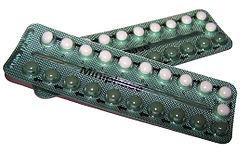
Combined oral contraceptive pills are a type of oral medication that were originally designed to be taken every day at the same time of day in order to prevent pregnancy.[26][37] There are many different formulations or brands, but the average pack is designed to be taken over a 28-day period (also known as a cycle).[citation needed] For the first 21 days of the cycle, users take a daily pill that contains two hormones, estrogen and progestogen.[citation needed] During the last 7 days of the cycle, users take daily placebo (biologically inactive) pills and these days are considered hormone-free days.[citation needed] Although these are hormone-free days, users are still protected from pregnancy during this time.[medical citation needed]

Some combined oral contraceptive pill packs only contain 21 pills and users are advised to take no pills for the last 7 days of the cycle.[9] Other combined oral contraceptive pill formulations contain 91 pills, consisting of 84 days of active hormones followed by 7 days of placebo (Seasonale).[26] Combined oral contraceptive pill formulations can contain 24 days of active hormone pills followed by 4 days of placebo pills (e.g. Yaz 28 and Loestrin 24 Fe) as a means to decrease the severity of placebo effects.[9] These combined oral contraceptive pills containing active hormones and a placebo/hormone-free period are called cyclic combined oral contraceptive pills. Once a pack of cyclical combined oral contraceptive pill treatment is completed, users start a new pack and new cycle.[38]

Most monophasic combined oral contraceptive pills can be used continuously such that patients can skip placebo days and continuously take hormone active pills from a combined oral contraceptive pill pack.[9] One of the most common reasons users do this is to avoid or diminish withdrawal bleeding. The majority of women on cyclic combined oral contraceptive pills have regularly scheduled withdrawal bleeding, which is vaginal bleeding mimicking users' menstrual cycles with the exception of lighter menstrual bleeding compared to bleeding patterns prior to combined oral contraceptive pill commencement. As such, a study reported that out of 1003 women taking combined oral contraceptive pills approximately 90% reported regularly scheduled withdrawal bleeds over a 90-day standard reference period.[9] Withdrawal bleeding usually occurs during the placebo, hormone-free days.[medical citation needed] Therefore, avoiding placebo days can diminish withdrawal bleeding among other placebo effects.[medical citation needed]

Regimen

[edit]

This section demonstrates the overall rationalisation of dosing route and intervals of hormonal oral contraceptives, please seek advice and follow instructions from healthcare professionals in administering specific hormonal oral contraceptives. Considering the menstrual cycle as a 28-day cycle, hormonal oral contraceptives are available in packages of 21, 28, or 91 tablets.[29]  These pills have typically undergone unit dose optimisation so that they follow the administration pattern of once daily, every day or almost every day on a regular basis.[29] Since they are formulated into daily doses, it is recommended that the medication should be taken at the same time every day to maximise efficacy.[29]

28-tablet pack

For 21-tablet packs, the general instruction is to take one tablet daily for 21 days, followed by a 7-day blank interval without taking hormonal oral contraceptives before initiating another 21-tablet pack.[29] For 28-tablet packs, the 1st tablet from a new pack should be taken on the next day when the 28th tablet from an old pack was finished.[29] While the 7-day blank period does not apply to 28-tablet packs, they will likely include tablets in distinctive colours indicating that they have an alternate amount of active ingredients, otherwise inactive ingredient or folate supplement only.[29] The instruction for 91-tablet pack follows that of 28-tablet packs with some colour-distinguishable tablets which contain different amounts of medicine or supplement.[29]

To acquire immediate contraceptive effects, the initiation of hormonal oral contraceptive dosing is recommended within the 1st-5th day from menstruation in order to discard other means of contraception.[39] Specific to Progesterone only pills, even if dosing is initiated within five days, backup contraception is suggested in the first 48 hours since the first pill.[24] In the case of dosing initiated after the 5th day from menstruation, effects usually take place after seven days and other contraceptive methods should remain in place until then.[39]

Effectiveness

[edit]

If used exactly as instructed, the estimated risk of getting pregnant is 0.3% which means that about 3 in 1000 women on combined oral contraceptive pills will become pregnant within one year.[40] However, typical use of combined oral contraceptive pills by users often consists of timing errors, forgotten pills, or unwanted side effects. With typical use, the estimated risk of getting pregnant is about 9% which means that about 9 in 100 women on combined oral contraceptive pills will become pregnant in one year.[41] The perfect use failure rate is based on a review of pregnancy rates in clinical trials, and the typical use failure rate is based on a weighted average of estimates from the 1995 and 2002 US National Surveys of Family Growth (NSFG), corrected for underreporting of abortions.[42][43]

Several factors account for typical use effectiveness being lower than perfect use effectiveness:

  1. Mistakes on part of those providing instructions on how to use the method
  2. Mistakes on part of the user
  3. Conscious user non-compliance with instructions

For instance, someone using combined oral contraceptive pills might have received incorrect information by a health care provider about medication frequency, forgotten to take the pill one day or not gone to the pharmacy in time to renew a combined oral contraceptive pill prescription.

Combined oral contraceptive pills provide effective contraception from the very first pill if started within five days of the beginning of the menstrual cycle (within five days of the first day of menstruation). If started at any other time in the menstrual cycle, combined oral contraceptive pills provide effective contraception only after 7 consecutive days of use of active pills, so a backup method of contraception (e.g. condoms) must be used in the interim.[44][45]

The effectiveness of combined oral contraceptive pills appears to be similar whether the active pills are taken continuously or if they are taken cyclically.[46] Contraceptive efficacy, however, could be impaired by numerous means. Factors that may contribute to a decrease in effectiveness:[44]

  1. Missing more than one active pill in a packet,
  2. Delay in starting the next packet of active pills (i.e., extending the pill-free, inactive pill or placebo pill period beyond 7 days),
  3. Intestinal malabsorption of active pills due to vomiting or diarrhea,
  4. Drug-drug interactions among combined oral contraceptive pills and other medications of the user that decrease contraceptive estrogen and/or progestogen levels.[44]

In any of these instances, a backup contraceptive method should be used until hormone active pills have been consistently taken for 7 consecutive days or drug-drug interactions or underlying illnesses have been discontinued or resolved.[44] According to the US Centers for Disease Control and Prevention (CDC) guidelines, a pill is considered "late" if a user takes the pill after the user's normal medication time, but no longer than 24 hours after this normal time. If 24 hours or more have passed since the time the user was supposed to take the pill, then the pill is considered "missed".[40] CDC guidelines discuss potential next steps for users who missed their pill or took it late.[47]

Role of placebo pills

[edit]

The role of the placebo pills is two-fold: to allow the user to continue the routine of taking a pill every day and to simulate the average menstrual cycle. By continuing to take a pill every day, users remain in the daily habit even during the week without hormones. Failure to take pills during the placebo week does not impact the effectiveness of the pill, provided that daily ingestion of active pills is resumed at the end of the week.[48]

The placebo, or hormone-free, week in the 28-day pill package simulates an average menstrual cycle, though the hormonal events during a pill cycle are significantly different from those of a normal ovulatory menstrual cycle. Because the pill suppresses ovulation (to be discussed more in the Mechanism of action section), birth control users do not have true menstrual periods. Instead, it is the lack of hormones for a week that causes a withdrawal bleed.[37] The withdrawal bleeding that occurs during the break from active pills has been thought to be reassuring, a physical confirmation of not being pregnant.[49] The withdrawal bleeding is also predictable. Unexpected breakthrough bleeding can be a possible side effect of longer term active regimens.[50]

Since it is not uncommon for menstruating women to become anemic, some placebo pills may contain an iron supplement.[51][52] This replenishes iron stores that may become depleted during menstruation. As well, birth control pills, such as combined oral contraceptive pills, are sometimes fortified with folic acid as it is recommended to take folic acid supplementation in the months prior to pregnancy to decrease the likelihood of neural tube defect in infants.[53][54]

No or less frequent placebos

[edit]

If the pill formulation is monophasic, meaning each hormonal pill contains a fixed dose of hormones, it is possible to skip withdrawal bleeding and still remain protected against conception by skipping the placebo pills altogether and starting directly with the next packet. Attempting this with bi- or tri-phasic pill formulations carries an increased risk of breakthrough bleeding and may be undesirable. It will not, however, increase the risk of getting pregnant.

Starting in 2003, women have also been able to use a three-month version of the pill.[55] Similar to the effect of using a constant-dosage formulation and skipping the placebo weeks for three months, Seasonale gives the benefit of less frequent periods, at the potential drawback of breakthrough bleeding. Seasonique is another version in which the placebo week every three months is replaced with a week of low-dose estrogen.

A version of the combined pill has also been packaged to eliminate placebo pills and withdrawal bleeds. Marketed as Anya or Lybrel, studies have shown that after seven months, 71% of users no longer had any breakthrough bleeding, the most common side effect of going longer periods of time without breaks from active pills.

While more research needs to be done to assess the long term safety of using combined oral contraceptive pills continuously, studies have shown there may be no difference in short term adverse effects when comparing continuous use versus cyclic use of birth control pills.[46]

Non-contraceptive use

[edit]

The hormones in the pill have also been used to treat other medical conditions, such as polycystic ovary syndrome (PCOS), endometriosis, adenomyosis, acne, hirsutism, amenorrhea, menstrual cramps, menstrual migraines, menorrhagia (excessive menstrual bleeding), menstruation-related or fibroid-related anemia and dysmenorrhea (painful menstruation).[41][56] Besides acne, no oral contraceptives have been approved by the US FDA for the previously mentioned uses despite extensive use for these conditions.[57]

PCOS

[edit]

The cause of PCOS, or polycystic ovary syndrome, is multifactorial and not well-understood. Women with PCOS often have higher than normal levels of luteinizing hormone (LH) and androgens that impact the normal function of the ovaries.[58] While multiple small follicles develop in the ovary, none are able to grow in size enough to become the dominant follicle and trigger ovulation.[59] This leads to an imbalance of LH, follicle stimulating hormone, estrogen, and progesterone. Without ovulation, unopposed estrogen can lead to endometrial hyperplasia, or overgrowth of tissue in the uterus.[60] This endometrial overgrowth is more likely to become cancerous than normal endometrial tissue.[61] Thus, although the data varies, it is generally agreed upon by most gynecological societies that due to the unopposed estrogen, women with PCOS are at higher risk for endometrial cancer.[62]

To reduce the risk of endometrial cancer, it is often recommended that women with PCOS who do not desire pregnancy take hormonal contraceptives to prevent the effects of unopposed estrogen. Both combined oral contraceptive pills and progestin-only methods are recommended.[citation needed] It is the progestin component of combined oral contraceptive pills that protects the endometrium from hyperplasia, and thus reduces a woman with PCOS's endometrial cancer risk.[63] Combined oral contraceptive pills are preferred to progestin-only methods in women who also have uncontrolled acne, symptoms of hirsutism, and androgenic alopecia, because combined oral contraceptive pills can help treat these symptoms.[37]

Acne and hirsutism

[edit]

Combined oral contraceptive pills are sometimes prescribed to treat symptoms of androgenization, including acne and hirsutism.[64] The estrogen component of combined oral contraceptive pills appears to suppress androgen production in the ovaries. Estrogen also leads to increased synthesis of sex hormone binding globulin, which causes a decrease in the levels of free testosterone.[65]

Ultimately, the drop in the level of free androgens leads to a decrease in the production of sebum, which is a major contributor to development of acne.[citation needed] Four different oral contraceptives have been approved by the US FDA to treat moderate acne if the patient is at least 14 or 15 years old, has already begun menstruating, and needs contraception. These include Ortho Tri-Cyclen, Estrostep, Beyaz, and YAZ.[66][67][68]

Hirsutism is the growth of coarse, dark hair where women typically grow only fine hair or no hair at all.[69] This hair growth on the face, chest, and abdomen is also mediated by higher levels or action of androgens. Therefore, combined oral contraceptive pills also work to treat these symptoms by lowering the levels of free circulating androgens.[70]

Studies have shown that combined oral contraceptives are effective in reducing both inflammatory and non-inflammatory facial acne lesions.[71] However, comparisons between different combined oral contraceptives have not been studied to understand if any brand is superior than the others.[71] Oestrogen decreases sebum production by shrinking the sebaceous gland, increasing Sex hormone-binding globulin (SHBG) production to reduce unbound testosterone, and regulating LH and FSH levels.[72] Studies have not shown that POPs are effective against acne lesions.[citation needed]

Endometriosis

[edit]

For pelvic pain associated with endometriosis, combined oral contraceptive pills are considered a first-line medical treatment, along with NSAIDs, GnRH agonists, and aromatase inhibitors.[73] Combined oral contraceptive pills work to suppress the growth of the extra-uterine endometrial tissue. This works to lessen its inflammatory effects.[37] Combined oral contraceptive pills, along with the other medical treatments listed above, do not eliminate the extra-uterine tissue growth, they just reduce the symptoms. Surgery is the only definitive treatment. Studies looking at rates of pelvic pain recurrence after surgery have shown that continuous use of combined oral contraceptive pills is more effective at reducing the recurrence of pain than cyclic use.[74]

Adenomyosis

[edit]

Similar to endometriosis, adenomyosis is often treated with combined oral contraceptive pills to suppress the growth the endometrial tissue that has grown into the myometrium. Unlike endometriosis however, levonorgestrel containing IUDs are more effective at reducing pelvic pain in adenomyosis than combined oral contraceptive pills.[37]

Menorrhagia

[edit]

In the average menstrual cycle, a woman typically loses 35 to 40 milliliters of blood.[75] However, up to 20% of women experience much heavier bleeding, or menorrhagia.[76] This excess blood loss can lead to anemia, with symptoms of fatigue and weakness, as well as disruption in their normal life activities.[77] Combined oral contraceptive pills contain progestin, which causes the lining of the uterus to be thinner, resulting in lighter bleeding episodes for those with heavy menstrual bleeding.[78]

Amenorrhea

[edit]

Although the pill is sometimes prescribed to induce menstruation on a regular schedule for women bothered by irregular menstrual cycles, it actually suppresses the normal menstrual cycle and then mimics a regular 28-day monthly cycle.

Women who are experiencing menstrual dysfunction due to female athlete triad are sometimes prescribed oral contraceptives as pills that can create menstrual bleeding cycles.[79] However, the condition's underlying cause is energy deficiency and should be treated by correcting the imbalance between calories eaten and calories burned by exercise. Oral contraceptives should not be used as an initial treatment for female athlete triad.[79]

Menstrual suppression

[edit]

Menstrual bleeding is not necessary in women who do not wish to conceive, therefore menstrual suppression may be implemented in women who do not want to have menstrual bleeding for convenience, gynecologic disorders, bleeding disorders or other medical conditions.[80]

In the two types of hormonal oral contraceptives, only combined oral contraceptives can achieve amenorrhea, while POPs can only reduce the amount of blood.[81] The method of using combined oral contraceptives for menstrual suppression is to skip the 7 placebo pills and continue taking active pills after the 21 active pills.[82] This can be used in extended method or continuous method.[82] For extended method, patients who take active pills for 3, 4, or 6 months and then take placebo pills for a period of time will more likely experience withdrawal bleeding.[82] The interval can be decided by the patients according to their own preferences.[82] For continuous method, people can take combined oral contraceptives for a year continuously without any placebo pills.[82] In the first few months of extended or continuous use of combined oral contraceptives, unscheduled bleeding or spotting may occur.[83] However, the bleeding or spotting is expected to resolve after a few months of use.[83]

Menstrual suppression is commonly used for convenience especially when women go on vacation.[80] It is also used for gynecologic disorders such as dysmenorrhea (commonly known as menstrual pain), symptoms related to premenstrual hormone change and excessive bleeding related to uterine fibroids. Patients can also benefit from menstrual suppression for bleeding disorders or chronic anemia.[80]

Menstrual migraine

[edit]

Patients with menstrual Oestrogen-related migraine, but without aura and additional risk factors to stroke, can be benefited from combined oral contraceptives.[84][85] However, older women and those with a strong family history of problematic headaches may find that using hormonal oral contraceptives worsens their headache.[84][85]

Benefits

[edit]

The distinctive feature of hormonal oral contraceptives when compared to other contraceptive methods is that they are less invasive and do not interfere with sex.[39] Conclusive data suggest that the failure rate of contraception in using hormonal oral contraceptives for the first year is 9% in typical use which allows missed doses, and <1% in perfect use.[24][39] The efficacy of hormonal oral contraceptives in preventing pregnancy is high overall.[24] Furthermore, the regular use of hormonal oral contraceptive tends to not only ease premenstrual syndrome, but also allow lighter and less painful menstruation.[39] In addition, the association between a suppressed risk of developing ovarian cancer and hormonal oral contraceptive use is proven.[86][87]

Contraindications

[edit]

While combined oral contraceptives are generally considered to be a relatively safe medication, they are contraindicated for those with certain medical conditions. The World Health Organization and the US Centers for Disease Control and Prevention publish guidance, called medical eligibility criteria, on the safety of birth control in the context of medical conditions.[88][41]

In terms of protection in sexual intercourse, a sole reliance on hormonal oral contraceptives does not defend one from sexually transmitted infections such as HPV.[24][39] Additionally, breakthrough bleeding and spotting are exceptionally prevalent in the early stage of using hormonal oral contraceptives.[24][29][39] Although most reported side effects including nausea, headache, or mood swings will disappear as the therapy progresses or upon switching formulation, elevated blood pressure or blood clots in patients with cardiovascular conditions are documented side effects that requires medical attention if not termination of hormonal oral contraceptives.[24][29][39] It is because combined oral contraceptives uses have been found to be related to an increased risk of ischemic stroke or myocardial infarction, especially in combined oral contraceptives with >50 μg Oestrogen.[89] Besides, some ongoing studies giving evidence on the association between hormonal oral contraceptive use and escalated breast cancer risks cannot be neglected.[90][91][86][87]

According to WHO Medical Eligibility Criteria for Contraceptive Use 2015, Category 3 implies that the use of such contraception is usually not recommended, unless other more appropriate methods are neither available nor acceptable and with good resources of clinical judgment; Category 4 implies that the contraceptive method should not be used even with good resources of clinical judgment.[92] Both categories suggest that the contraceptive method should not be used with limited resources for clinical judgment.[92] The tables below summarise conditions of category 3 and 4 from World Health Organization Medical Eligibility Criteria for Contraceptive Use 2015.

Precautions and contraindications for combined oral contraceptives

[edit]
Condition Category
Breastfeeding
for < 6 weeks postpartum 4
for ≥  6 weeks to < 6 months postpartum 3
Postpartum (non-breastfeeding)
< 21 days postpartum without other risk factors for VTE 3
< 21 days postpartum with other risk factors for VTE 4
≥  21 days to 42 days postpartum with other risk factors for VTE 3
Smoking
age ≥ 35 years and smoking < 15 cigarettes/day 3
age ≥ 35 years and smoking ≥ 15 cigarettes/day 4
Multiple risk factors for arterial cardiovascular disease 3/4*
Hypertension
history of hypertension, where blood pressure CANNOT be evaluated 3
adequately controlled hypertension, where blood pressure CAN be evaluated 3
elevated blood pressure levels (properly taken measurements)

with systolic 140–159 or diastolic 90–99 mm Hg

3
elevated blood pressure levels (properly taken measurements)

with systolic ≥ 160 or diastolic ≥ 100 mm Hg

4
elevated blood pressure levels (properly taken measurements) with Vascular disease 4
Deep vein thrombosis (DVT) / Pulmonary embolism (PE)
with History of DVT/PE 4
with acute DVT/PE 4
with DVT/PE and established on anticoagulant therapy 4
with Major surgery with prolonged immobilization 4
Known thrombogenic mutations 4
Current and history of ischemic heart disease 4
Stroke (history of cerebrovascular accident) 4
Complicated valvular heart disease 4
Positive (or unknown) antiphospholipid antibodies Systemic Lupus Erythematous 4
Headache
migraine without aura of age ≥  35 years (for initiation of combined oral contraceptives) 3
migraine without aura of age < 35 years (for continuation of combined oral contraceptives) 3
migraine without aura of age ≥ 35 years (for continuation of combined oral contraceptives) 4
migraine with aura, at any age (for initiation and continuation of combined oral contraceptives) 4
Breast cancer
current Breast cancer 4
past Breast Cancer and no evidence of current disease for 5 years 3
Nephropathy/retinopathy/neuropathy 3/4*
Other vascular disease or diabetes of > 20 years' duration 3/4*
Medically treated symptomatic gall bladder disease 3
Current symptomatic gall bladder disease 3
Past-combined oral contraceptive related history of Cholestasis 3
Acute or flare viral hepatitis (for initiation of combined oral contraceptives) 3/4*
Severe cirrhosis (decompensated) 4
Liver tumors
hepatocellular adenoma 4
malignant (hepatoma) 4
On anticonvulsant therapy
with phenytoin, carbamazepine, barbiturates, primidone, topiramate, oxcarbazepine 3
with Lamotrigine 3
On antimicrobial therapy with Rifampicin or rifabutin therapy

*The category should be assessed according to the severity of the condition.

Hypercoagulability

[edit]

Estrogen in high doses can increase risk of blood clots. All combined oral contraceptive pill users have a small increase in the risk of venous thromboembolism compared with non-users; this risk is greatest within the first year of combined oral contraceptive pill use.[93] Individuals with any pre-existing medical condition that also increases their risk for blood clots have a more significant increase in risk of thrombotic events with combined oral contraceptive pill use.[93] These conditions include but are not limited to high blood pressure, pre-existing cardiovascular disease (such as valvular heart disease or ischemic heart disease[94]), history of thromboembolism or pulmonary embolism, cerebrovascular accident, and a familial tendency to form blood clots (such as familial factor V Leiden).[95] There are conditions that, when associated with combined oral contraceptive pill use, increase risk of adverse effects other than thrombosis. For example, women with a history of migraine with aura have an increased risk of stroke when using combined oral contraceptive pills, and women who smoke over age 35 and use combined oral contraceptive pills are at higher risk of myocardial infarction.[88]

Pregnancy and postpartum

[edit]

Women who are known to be pregnant should not take combined oral contraceptive pills. Those in the postpartum period who are breastfeeding are also advised not to start combined oral contraceptive pills until 4 weeks after birth due to increased risk of blood clots.[40] While studies have demonstrated conflicting results about the effects of combined oral contraceptive pills on lactation duration and milk volume, there exist concerns about the transient risk of combined oral contraceptive pills on breast milk production when breastfeeding is being established early postpartum.[96] Due to the stated risks and additional concerns on lactation, women who are breastfeeding are not advised to start combined oral contraceptive pills until at least six weeks postpartum, while women who are not breastfeeding and have no other risks factors for blood clots may start combined oral contraceptive pills after 21 days postpartum.[97][88]

Breast cancer

[edit]

The World Health Organization (WHO) does not recommend the use of combined oral contraceptive pills in women with breast cancer.[41][98] Since combined oral contraceptive pills contain both estrogen and progestin, they are not recommended to be used in those with hormonally-sensitive cancers, including some types of breast cancer.[99][unreliable medical source?][100] Non-hormonal contraceptive methods, such as the Copper IUD or condoms,[101] should be the first-line contraceptive choice for these patients instead of combined oral contraceptive pills.[102][unreliable medical source?]

Other

[edit]

Women with known or suspected endometrial cancer or unexplained uterine bleeding should also not take combined oral contraceptive pills to avoid health risks.[94] Combined oral contraceptive pills are also contraindicated for people with advanced diabetes, liver tumors, hepatic adenoma or severe cirrhosis of the liver.[41][95] Combined oral contraceptive pills are metabolized in the liver and thus liver disease can lead to reduced elimination of the medication. Additionally, severe hypercholesterolemia and hypertriglyceridemia are also contraindications, but the evidence showing that combined oral contraceptive pills lead to worse outcomes in this population is weak.[37][40] Obesity is not considered to be a contraindication to taking combined oral contraceptive pills.[40]

Side effects

[edit]

It is generally accepted that the health risks of oral contraceptives are lower than those from pregnancy and birth,[103] and "the health benefits of any method of contraception are far greater than any risks from the method".[104] Some organizations have argued that comparing a contraceptive method to no method (pregnancy) is not relevant—instead, the comparison of safety should be among available methods of contraception.[105]

Common

[edit]

Different sources note different incidence of side effects. The most common side effect is breakthrough bleeding. Combined oral contraceptive pills can improve conditions such as dysmenorrhea, premenstrual syndrome, and acne,[106] reduce symptoms of endometriosis and polycystic ovary syndrome, and decrease the risk of anemia.[107] Use of oral contraceptives also reduces lifetime risk of ovarian and endometrial cancer.[108][109][110]

Nausea, vomiting, headache, bloating, breast tenderness, swelling of the ankles/feet (fluid retention), or weight change may occur. Vaginal bleeding between periods (spotting) or missed/irregular periods may occur, especially during the first few months of use.[111]

Heart and blood vessels

[edit]

Combined oral contraceptives are associated with an increased risk of venous thromboembolism, including deep vein thrombosis (DVT) and pulmonary embolism (PE).[112][113]

While lower doses of estrogen in combined oral contraceptive pills may have a lower risk of stroke and myocardial infarction compared to higher estrogen dose pills (50 μg/day), users of low estrogen dose combined oral contraceptive pills still have an increased risk compared to non-users.[114] These risks are greatest in women with additional risk factors, such as smoking (which increases risk substantially) and long-continued use of the pill, especially in women over 35 years of age.[115]

The overall absolute risk of venous thrombosis per 100,000 woman-years in current use of combined oral contraceptives is approximately 60, compared with 30 in non-users.[116] The risk of thromboembolism varies with different types of birth control pills; compared with combined oral contraceptives containing levonorgestrel (LNG), and with the same dose of estrogen and duration of use, the rate ratio of deep venous thrombosis for combined oral contraceptives with norethisterone is 0.98, with norgestimate 1.19, with desogestrel (DSG) 1.82, with gestodene 1.86, with drospirenone (DRSP) 1.64, and with cyproterone acetate 1.88.[116] In comparison, venous thromboembolism occurs in 100–200 per 100.000 pregnant women every year.[116]

One study showed more than a 600% increased risk of blood clots for women taking combined oral contraceptive pills with drospirenone compared with non-users, compared with 360% higher for women taking birth control pills containing levonorgestrel.[117] The US Food and Drug Administration (FDA) initiated studies evaluating the health of more than 800,000 women taking combined oral contraceptive pills and found that the risk of VTE was 93% higher for women who had been taking drospirenone combined oral contraceptive pills for 3 months or less and 290% higher for women taking drospirenone combined oral contraceptive pills for 7–12 months, compared with women taking other types of oral contraceptives.[118]

Based on these studies, in 2012, the FDA updated the label for drospirenone combined oral contraceptive pills to include a warning that contraceptives with drospirenone may have a higher risk of dangerous blood clots.[119]

A 2015 systematic review and meta-analysis found that combined birth control pills were associated with 7.6-fold higher risk of cerebral venous sinus thrombosis, a rare form of stroke in which blood clotting occurs in the cerebral venous sinuses.[120]

Risk of venous thromboembolism (VTE) with hormone therapy and birth control (QResearch/CPRD)
Type Route Medications Odds ratio (95% CITooltip confidence interval)
Menopausal hormone therapy Oral Estradiol alone
    ≤1 mg/day
    >1 mg/day
1.27 (1.16–1.39)*
1.22 (1.09–1.37)*
1.35 (1.18–1.55)*
Conjugated estrogens alone
    ≤0.625 mg/day
    >0.625 mg/day
1.49 (1.39–1.60)*
1.40 (1.28–1.53)*
1.71 (1.51–1.93)*
Estradiol/medroxyprogesterone acetate 1.44 (1.09–1.89)*
Estradiol/dydrogesterone
    ≤1 mg/day E2
    >1 mg/day E2
1.18 (0.98–1.42)
1.12 (0.90–1.40)
1.34 (0.94–1.90)
Estradiol/norethisterone
    ≤1 mg/day E2
    >1 mg/day E2
1.68 (1.57–1.80)*
1.38 (1.23–1.56)*
1.84 (1.69–2.00)*
Estradiol/norgestrel or estradiol/drospirenone 1.42 (1.00–2.03)
Conjugated estrogens/medroxyprogesterone acetate 2.10 (1.92–2.31)*
Conjugated estrogens/norgestrel
    ≤0.625 mg/day CEEs
    >0.625 mg/day CEEs
1.73 (1.57–1.91)*
1.53 (1.36–1.72)*
2.38 (1.99–2.85)*
Tibolone alone 1.02 (0.90–1.15)
Raloxifene alone 1.49 (1.24–1.79)*
Transdermal Estradiol alone
   ≤50 μg/day
   >50 μg/day
0.96 (0.88–1.04)
0.94 (0.85–1.03)
1.05 (0.88–1.24)
Estradiol/progestogen 0.88 (0.73–1.01)
Vaginal Estradiol alone 0.84 (0.73–0.97)
Conjugated estrogens alone 1.04 (0.76–1.43)
Combined birth control Oral Ethinylestradiol/norethisterone 2.56 (2.15–3.06)*
Ethinylestradiol/levonorgestrel 2.38 (2.18–2.59)*
Ethinylestradiol/norgestimate 2.53 (2.17–2.96)*
Ethinylestradiol/desogestrel 4.28 (3.66–5.01)*
Ethinylestradiol/gestodene 3.64 (3.00–4.43)*
Ethinylestradiol/drospirenone 4.12 (3.43–4.96)*
Ethinylestradiol/cyproterone acetate 4.27 (3.57–5.11)*
Notes: (1) Nested case–control studies (2015, 2019) based on data from the QResearch and Clinical Practice Research Datalink (CPRD) databases. (2) Bioidentical progesterone was not included, but is known to be associated with no additional risk relative to estrogen alone. Footnotes: * = Statistically significant (p < 0.01). Sources: See template.

Cancer

[edit]

Decreased risk of ovarian, endometrial, and colorectal cancers

[edit]

Usage of combined oral concetraption decreased the risk of ovarian cancer, endometrial cancer,[44] and colorectal cancer.[4][106][121] Two large cohort studies published in 2010 both found a significant reduction in adjusted relative risk of ovarian and endometrial cancer mortality in ever-users of OCs compared with never-users.[2][122] The use of oral contraceptives (birth control pills) for five years or more decreases the risk of ovarian cancer in later life by 50%.[121][123] Combined oral contraceptive use reduces the risk of ovarian cancer by 40% and the risk of endometrial cancer by 50% compared with never users. The risk reduction increases with duration of use, with an 80% reduction in risk for both ovarian and endometrial cancer with use for more than 10 years. The risk reduction for both ovarian and endometrial cancer persists for at least 20 years.[44]

Increased risk of Breast, cervical, and liver cancers

[edit]

Combined oral concetraption is a IARC group 1 Carcinogen meaning there is sufficient evidence of carcinogenicity in humans.

An association between use of birth control pills and liver cancer has been suspected, but subsequent large population research has failed to confirm such an association.[124]

Increased risk of breast cancer was reported in women who take combined oral concetraption.[125][126] The relative risk of breast cancer in the current combined oral concetraption users was 1.24 (95% confidence interval [CI], 1.15–1.33), and this increased risk disappeared 10 years after discontinuation.[127] There was also a higher risk of premature deaths due to breast cancer in the population who used COCP (P < 0.0001) for longer duration.[128] 24 observational studies showed a higher risk of cervical cancer in women who use COCP, especially with an increased duration of COCP use.[129][126]

A 2013 meta-analysis concluded that every use of birth control pills is associated with a modest increase in the risk of breast cancer (relative risk 1.08) and a reduced risk of colorectal cancer (relative risk 0.86) and endometrial cancer (relative risk 0.57). Cervical cancer risk in those infected with HPV is increased.[130] A similar small increase in breast cancer risk was observed in other meta analyses.[131][132] A study of 1.8 million Danish women of reproductive age followed for 11 years found that the risk of breast cancer was 20% higher among those who currently or recently used hormonal contraceptives than among women who had never used hormonal contraceptives.[133] This risk increased with duration of use, with a 38% increase in risk after more than 10 years of use.[133]

Weight

[edit]

A 2016 systematic review found low quality evidence that studies of combination hormonal contraceptives showed no large difference in weight when compared with placebo or no intervention groups.[134] The evidence was not strong enough to be certain that contraceptive methods do not cause some weight change, but no major effect was found.[134] This review also found "that women did not stop using the pill or patch because of weight change".[134]

Sexual function and risk aversion

[edit]

Sexual desire

[edit]

Some researchers question a causal link between combined oral contraceptive pill use and decreased libido;[135] a 2007 study of 1700 women found combined oral contraceptive pill users experienced no change in sexual satisfaction.[136] A 2005 laboratory study of genital arousal tested fourteen women before and after they began taking combined oral contraceptive pills. The study found that women experienced a significantly wider range of arousal responses after beginning pill use; decreases and increases in measures of arousal were equally common.[137][138]

In 2012, The Journal of Sexual Medicine published a review of research studying the effects of hormonal contraceptives on female sexual function that concluded that the sexual side effects of hormonal contraceptives are not well-studied and especially in regards to impacts on libido, with research establishing only mixed effects where only small percentages of women report experiencing an increase or decrease and majorities report being unaffected.[139] In 2013, The European Journal of Contraception & Reproductive Health Care published a review of 36 studies including 8,422 female subjects in total taking combined oral contraceptive pills that found that 5,358 subjects (or 63.6 percent) reported no change in libido, 1,826 subjects (or 21.7 percent) reported an increase, and 1,238 subjects (or 14.7 percent) reported a decrease.[140] In 2019, Neuroscience & Biobehavioral Reviews published a meta-analysis of 22 published and 4 unpublished studies (with 7,529 female subjects in total) that evaluated whether women expose themselves to greater health risks at different points in the menstrual cycle including by sexual activity with partners and found that subjects in the last third of the follicular phase and at ovulation (when levels of endogenous estradiol and luteinizing hormones are heightened) experienced increased sexual activity with partners as compared with the luteal phase and during menstruation.[141]

A 2006 study of 124 premenopausal women measured sex hormone-binding globulin (SHBG), including before and after discontinuation of the oral contraceptive pill. Women continuing use of oral contraceptives had SHBG levels four times higher than those who never used it, and levels remained elevated even in the group that had discontinued its use.[142][143] Theoretically, an increase in SHBG may be a physiologic response to increased hormone levels, but may decrease the free levels of other hormones, such as androgens, because of the unspecificity of its sex hormone binding. In 2020, The Lancet Diabetes & Endocrinology published a cross-sectional study of 588 premenopausal female subjects aged 18 to 39 years from the Australian states of Queensland, New South Wales, and Victoria with regular menstrual cycles whose SHBG levels were measured by immunoassay that found that after controlling for age, body mass index, cycle stage, smoking, parity, partner status, and psychoactive medication, SHBG was inversely correlated with sexual desire.[144]

Sexual attractiveness and function

[edit]

Combined oral contraceptive pills may increase natural vaginal lubrication,[145] while some women experience decreased lubrication.[145][146]

In 2004, the Proceedings of the Royal Society B: Biological Sciences published a study where pairs of digital photographs of the faces of 48 women at Newcastle University and Charles University between the ages 19 and 33 who were not taking hormonal contraceptives during the study were photographed in the late follicular and early mid-luteal phases of their menstrual cycles and the photographs were then rated by 261 blinded subjects (130 male and 131 female) at their respective universities who compared the facial attractiveness of each photographed woman in their photograph pairs, and found that the subjects perceived the late follicular phase images of the photographed women as being more attractive than the luteal phase images by more than expected by random chance.[147]

In 2007, Evolution and Human Behavior published a study where 18 professional lap dancers recorded their menstrual cycles, work shifts, and tip earnings at gentlemen's clubs for 60 days that found by a mixed model analysis of 296 work shifts (or approximately 5,300 lap dances) that the 11 dancers with normal menstrual cycles earned US$335 per 5-hour shift during the late follicular phase and at ovulation, US$260 per shift during the luteal phase, and US$185 per shift during menstruation, while the 7 dancers using hormonal contraceptives showed no earnings peak during the late follicular phase and at ovulation.[148] In 2008, Evolution and Human Behavior published a study where the voices of 51 female students at the State University of New York at Albany were recorded with the women counting from 1 to 10 at four different points in their menstrual cycles were rated by blinded subjects who listened to the recordings to be more attractive at the points of the menstrual cycle with higher probabilities of conception, while the ratings of the voices of the women who were taking hormonal contraceptives showed no variation over the menstrual cycle in attractiveness.[149]

Risk-taking behaviour

[edit]

In 1998, Evolution and Human Behavior published a study of 300 female undergraduate students at the State University of New York at Albany between the ages of 18 and 54 (with a mean age of 21.9 years) that surveyed the subjects engagement in 18 different behaviors over the 24 hours prior to filling out the study's questionnaire that varied in their risk of potential rape or sexual assault and the first day of their last menstruations, and found that subjects at ovulation showed statistically significant decreased engagement in behaviors that risked rape and sexual assault while subjects taking birth control pills showed no variation over their menstrual cycles in the same behaviors (suggesting a psychologically adaptive function of the hormonal fluctuations during the menstrual cycle in causing avoidance of behaviors that risk rape and sexual assault).[150][151] In 2003, Evolution and Human Behavior published a conceptual replication study of the 1998 survey that confirmed its findings.[152]

In 2006, a study presented at the annual conference of the Cognitive Science Society surveyed 176 female undergraduate students at Michigan State University (with a mean age of 19.9 years) in a decision-making experiment where the subjects chose between an option with a guaranteed outcome or an option involving risk and indicated the first day of their last menstruations, and found that the subjects risk aversion preferences varied over the menstrual cycle (with none of the subjects at ovulation preferring the risky option) and only subjects not taking hormonal contraceptives showed the menstrual cycle effect on risk aversion.[153] In the 2019 Neuroscience & Biobehavioral Reviews meta-analysis, the research reviewed also evaluated whether the 7,529 female subjects across the 26 studies showed greater risk recognition and avoidance of potentially threatening people and dangerous situations at different phases of the menstrual cycle and found that the subjects displayed better risk accuracy recognition during the late follicular phase and at ovulation as compared to the luteal phase.[141]

Depression

[edit]

Low levels of serotonin, a neurotransmitter in the brain, have been linked to depression. High levels of estrogen, as in first-generation combined oral contraceptive pills, and progestin, as in some progestin-only contraceptives, have been shown to lower the brain serotonin levels by increasing the concentration of a brain enzyme that reduces serotonin.[citation needed]

Current medical reference textbooks on contraception[44] and major organizations such as the American ACOG,[154] the WHO,[88] and the United Kingdom's RCOG[155] agree that current evidence indicates low-dose combined oral contraceptives are unlikely to increase the risk of depression, and unlikely to worsen the condition in women that are depressed.

Hypertension

[edit]

Bradykinin lowers blood pressure by causing blood vessel dilation. Certain enzymes are capable of breaking down bradykinin (Angiotensin Converting Enzyme, Aminopeptidase P). Progesterone can increase the levels of Aminopeptidase P (AP-P), thereby increasing the breakdown of bradykinin, which increases the risk of developing hypertension.[156]

Thyroid

[edit]

Estrogen in oral contraceptives may increase thyroid binding globulin and decrease free T4. Thus, longer history of oral contraceptives use may be strongly associated with hypothyroidism, especially for more than 10 years. Also, a higher dose of thyroxine may be needed with oral contraceptives.[157]

Other effects

[edit]

Other side effects associated with low-dose combined oral contraceptive pills are leukorrhea (increased vaginal secretions), reductions in menstrual flow, mastalgia (breast tenderness), and decrease in acne. Side effects associated with older high-dose combined oral contraceptive pills include nausea, vomiting, increases in blood pressure, and melasma (facial skin discoloration); these effects are not strongly associated with low-dose formulations.[medical citation needed]

Excess estrogen, such as from birth control pills, appears to increase cholesterol levels in bile and decrease gallbladder movement, which can lead to gallstones.[158] Progestins found in certain formulations of oral contraceptive pills can limit the effectiveness of weight training to increase muscle mass.[159] This effect is caused by the ability of some progestins to inhibit androgen receptors. One study claims that the pill may affect what male body odors a woman prefers, which may in turn influence her selection of partner.[160][161][162] Use of combined oral contraceptives is associated with a reduced risk of endometriosis, giving a relative risk of endometriosis of 0.63 during active use, yet with limited quality of evidence according to a systematic review.[163]

Combined oral contraception decreases total testosterone levels by approximately 0.5 nmol/L, free testosterone by approximately 60%, and increases the amount of sex hormone binding globulin (SHBG) by approximately 100 nmol/L. Contraceptives containing second generation progestins and/or estrogen doses of around 20 –25 mg EE were found to have less impact on SHBG concentrations.[164] Combined oral contraception may also reduce bone density.[165]

Drug interactions

[edit]

Some drugs reduce the effect of the pill and can cause breakthrough bleeding, or increased chance of pregnancy. These include drugs such as rifampicin, barbiturates, phenytoin and carbamazepine. In addition cautions are given about broad spectrum antibiotics, such as ampicillin and doxycycline, which may cause problems "by impairing the bacterial flora responsible for recycling ethinylestradiol from the large bowel" (BNF 2003).[166][167][168][169]

The traditional medicinal herb St John's Wort has also been implicated due to its upregulation of the P450 system in the liver which could increase the metabolism of ethinyl estradiol and progestin components of some combined oral contraception.[170]

Accessibility

[edit]

The availability of pharmaceutical products to the public is determined by the local governing body. In the US, the responsible organisation is the Food and Drug Administration (FDA). According to a press announcement in July 2023, a daily hormonal oral contraceptive was first made accessible to the public without a prescription.[171] Although this drug class was approved for prescription use as early as in 1973, it took an additional 50 years to de-escalate its legal status. Such allowance is made plausible thanks to the demonstration of its safe and effective use by the general public, not needing any guidance from healthcare professionals.[171] Ultimately, the governing body should act accordingly to applicants' evidence and update the local legislation.[171]

History

[edit]
Introduction of first-generation birth control pills
Progestin Estrogen Brand name Manufacturer US UK
Noretynodrel Mestranol Enovid (US) Conovid (UK) Searle 1960 1961
Norethisterone Mestranol Ortho-Novum
Norinyl
Syntex and
Ortho
1963 1966
Norethisterone Ethinylestradiol Norlestrin Syntex and
Parke-Davis
1964 1962
Lynestrenol Mestranol Lyndiol Organon 1963
Megestrol acetate Ethinylestradiol Volidan
Nuvacon
BDH 1963
Norethisterone acetate Ethinylestradiol Norlestrin Parke-Davis 1964 ?
Quingestanol acetate Ethinylestradiol Riglovis Vister
Quingestanol acetate Quinestrol Unovis Warner Chilcott
Medroxyprogesterone
acetate
Ethinylestradiol Provest Upjohn 1964
Chlormadinone acetate Mestranol C-Quens Merck 1965 1965
Dimethisterone Ethinylestradiol Oracon BDH 1965
Etynodiol diacetate Mestranol Ovulen Searle 1966 1965
Etynodiol diacetate Ethinylestradiol Demulen Searle 1970 1968
Norgestrienone Ethinylestradiol Planor
Miniplanor
Roussel Uclaf
Norgestrel Ethinylestradiol Ovral Wyeth 1968 1972
Anagestone acetate Mestranol Neo-Novum Ortho
Lynestrenol Ethinylestradiol Lyndiol Organon 1969
Sources: [172][173][174][175][176][177][178]

By the 1930s, scientists had isolated and determined the structure of the steroid hormones and found that high doses of androgens, estrogens or progesterone inhibited ovulation,[179][180][181][182] but obtaining these hormones, which were produced from animal extracts, from European pharmaceutical companies was extraordinarily expensive.[183]

In 1939, Russell Marker, a professor of organic chemistry at Pennsylvania State University, developed a method of synthesizing progesterone from plant steroid sapogenins, initially using sarsapogenin from sarsaparilla, which proved too expensive. After three years of extensive botanical research, he discovered a much better starting material, the saponin from inedible Mexican yams (Dioscorea mexicana and Dioscorea composita) found in the rain forests of Veracruz near Orizaba. The saponin could be converted in the lab to its aglycone moiety diosgenin. Unable to interest his research sponsor Parke-Davis in the commercial potential of synthesizing progesterone from Mexican yams, Marker left Penn State and in 1944 co-founded Syntex with two partners in Mexico City. When he left Syntex a year later the trade of the barbasco yam had started and the period of the heyday of the Mexican steroid industry had been started. Syntex broke the monopoly of European pharmaceutical companies on steroid hormones, reducing the price of progesterone almost 200-fold over the next eight years.[184][185][186]

Midway through the 20th century, the stage was set for the development of a hormonal contraceptive, but pharmaceutical companies, universities and governments showed no interest in pursuing research.[187]

Progesterone to prevent ovulation

[edit]

Progesterone, given by injections, was first shown to inhibit ovulation in animals in 1937 by Makepeace and colleagues.[188]

In 1951, reproductive physiologist Gregory Pincus, a leader in hormone research and co-founder of the Worcester Foundation for Experimental Biology (WFEB) in Shrewsbury, Massachusetts, first met American birth control movement founder Margaret Sanger at a Manhattan dinner hosted by Abraham Stone, medical director and vice president of Planned Parenthood (PPFA), who helped Pincus obtain a small grant from PPFA to begin hormonal contraceptive research.[189][190][191] Research started in April 1951, with reproductive physiologist Min Chueh Chang repeating and extending the 1937 experiments of Makepeace et al. that was published in 1953 and showed that injections of progesterone suppressed ovulation in rabbits.[188] In October 1951, G. D. Searle & Company refused Pincus' request to fund his hormonal contraceptive research, but retained him as a consultant and continued to provide chemical compounds to evaluate.[183][192][193]

In March 1952, Sanger wrote a brief note mentioning Pincus' research to her longtime friend and supporter, suffragist and philanthropist Katharine Dexter McCormick, who visited the WFEB and its co-founder and old friend Hudson Hoagland in June 1952 to learn about contraceptive research there. Frustrated when research stalled from PPFA's lack of interest and meager funding, McCormick arranged a meeting at the WFEB in June 1953, with Sanger and Hoagland, where she first met Pincus who committed to dramatically expand and accelerate research with McCormick providing fifty times PPFA's previous funding.[192][194]

Pincus and McCormick enlisted Harvard clinical professor of gynecology John Rock, chief of gynecology at the Free Hospital for Women and an expert in the treatment of infertility, to lead clinical research with women. At a scientific conference in 1952, Pincus and Rock, who had known each other for many years, discovered they were using similar approaches to achieve opposite goals. In 1952, Rock induced a three-month anovulatory "pseudopregnancy" state in eighty of his infertility patients with continuous gradually increasing oral doses of an estrogen (5 to 30 mg/day diethylstilbestrol) and progesterone (50 to 300 mg/day), and within the following four months 15% of the women became pregnant.[192][195][196]

In 1953, at Pincus' suggestion, Rock induced a three-month anovulatory "pseudopregnancy" state in twenty-seven of his infertility patients with an oral 300 mg/day progesterone-only regimen for 20 days from cycle days 5–24 followed by pill-free days to produce withdrawal bleeding.[197] This produced the same 15% pregnancy rate during the following four months without the amenorrhea of the previous continuous estrogen and progesterone regimen.[197] But 20% of the women experienced breakthrough bleeding and in the first cycle ovulation was suppressed in only 85% of the women, indicating that even higher and more expensive oral doses of progesterone would be needed to initially consistently suppress ovulation.[197] Similarly, Ishikawa and colleagues found that ovulation inhibition occurred in only a "proportion" of cases with 300 mg/day oral progesterone.[198] Despite the incomplete inhibition of ovulation by oral progesterone, no pregnancies occurred in the two studies, although this could have simply been due to chance.[198][199] However, Ishikawa et al. reported that the cervical mucus in women taking oral progesterone became impenetrable to sperm, and this may have accounted for the absence of pregnancies.[198][199]

Progesterone was abandoned as an oral ovulation inhibitor following these clinical studies due to the high and expensive doses required, incomplete inhibition of ovulation, and the frequent incidence of breakthrough bleeding.[188][200] Instead, researchers would turn to much more potent synthetic progestogens for use in oral contraception in the future.[188][200]

Progestins to prevent ovulation

[edit]

In October 1951, Chemist Luis Miramontes, working under the supervision of Carl Djerassi, and the direction of George Rosenkranz at Syntex in Mexico City, synthesized the first oral contraceptive, which was based on highly active progestin norethisterone. Frank B. Colton at Searle in Skokie, Illinois synthesized the orally highly active progestins noretynodrel (an isomer of norethisterone) in 1952 and norethandrolone in 1953.[183]

Pincus asked his contacts at pharmaceutical companies to send him chemical compounds with progestogenic activity. Chang screened nearly 200 chemical compounds in animals and found the three most promising were Syntex's norethisterone and Searle's noretynodrel and norethandrolone.[201]

In December 1954, Rock began the first studies of the ovulation-suppressing potential of 5–50 mg doses of the three oral progestins for three months (for 21 days per cycle—days 5–25 followed by pill-free days to produce withdrawal bleeding) in fifty of his patients with infertility in Brookline, Massachusetts. Norethisterone or noretynodrel 5 mg doses and all doses of norethandrolone suppressed ovulation but caused breakthrough bleeding, but 10 mg and higher doses of norethisterone or noretynodrel suppressed ovulation without breakthrough bleeding and led to a 14% pregnancy rate in the following five months. Pincus and Rock selected Searle's noretynodrel for the first contraceptive trials in women, citing its total lack of androgenicity versus Syntex's norethisterone very slight androgenicity in animal tests.[202][203]

Combined oral contraceptive

[edit]

Noretynodrel (and norethisterone) were subsequently discovered to be contaminated with a small percentage of the estrogen mestranol (an intermediate in their synthesis), with the noretynodrel in Rock's 1954–5 study containing 4–7% mestranol. When further purifying noretynodrel to contain less than 1% mestranol led to breakthrough bleeding, it was decided to intentionally incorporate 2.2% mestranol, a percentage that was not associated with breakthrough bleeding, in the first contraceptive trials in women in 1954. The noretynodrel and mestranol combination was given the proprietary name Enovid.[203][204]

The first contraceptive trial of Enovid led by Celso-Ramón García and Edris Rice-Wray began in April 1956 in Río Piedras, Puerto Rico.[205][206][207] A second contraceptive trial of Enovid (and norethisterone) led by Edward T. Tyler began in June 1956 in Los Angeles.[186][208] In January 1957, Searle held a symposium reviewing gynecologic and contraceptive research on Enovid through 1956 and concluded Enovid's estrogen content could be reduced by 33% to lower the incidence of estrogenic gastrointestinal side effects without significantly increasing the incidence of breakthrough bleeding.[209]

While these large-scale trials contributed to the initial understanding of the pill formulation's clinical effects, the ethical implications of the trials generated significant controversy. Of note is the apparent lack of both autonomy and informed consent among participants in the Puerto Rican cohort prior to the trials. Many of these participants hailed from impoverished, working-class backgrounds.[10]

Public availability

[edit]

As of 2013, less than a third of countries worldwide required a prescription for oral contraceptives.[210]

United States

[edit]
Oral contraceptives, 1970s

In June 1957, the Food and Drug Administration (FDA) approved Enovid 10 mg (9.85 mg noretynodrel and 150 μg mestranol) for menstrual disorders, based on data from its use by more than 600 women. Numerous additional contraceptive trials showed Enovid at 10, 5, and 2.5 mg doses to be highly effective. In July 1959, Searle filed a supplemental application to add contraception as an approved indication for 10, 5, and 2.5 mg doses of Enovid. The FDA refused to consider the application until Searle agreed to withdraw the lower dosage forms from the application. In May 1960, the FDA announced it would approve Enovid 10 mg for contraceptive use, and did so in June 1960. At that point, Enovid 10 mg had been in general use for three years and, by conservative estimate, at least half a million women had used it.[207][211][212]

Although FDA-approved for contraceptive use, Searle never marketed Enovid 10 mg as a contraceptive. Eight months later, in February 1961, the FDA approved Enovid 5 mg for contraceptive use. In July 1961, Searle finally began marketing Enovid 5 mg (5 mg noretynodrel and 75 μg mestranol) to physicians as a contraceptive.[211][213]

Although the FDA approved the first oral contraceptive in 1960, contraceptives were not available to married women in all states until Griswold v. Connecticut in 1965, and were not available to unmarried women in all states until Eisenstadt v. Baird in 1972.[187][213]

The first published case report of a blood clot and pulmonary embolism in a woman using Enavid (Enovid 10 mg in the US) at a dose of 20 mg/day did not appear until November 1961, four years after its approval, by which time it had been used by over one million women.[207][214][215] It would take almost a decade of epidemiological studies to conclusively establish an increased risk of venous thrombosis in oral contraceptive users and an increased risk of stroke and myocardial infarction in oral contraceptive users who smoke or have high blood pressure or other cardiovascular or cerebrovascular risk factors.[211] These risks of oral contraceptives were dramatized in the 1969 book The Doctors' Case Against the Pill by feminist journalist Barbara Seaman who helped arrange the 1970 Nelson Pill Hearings called by Senator Gaylord Nelson.[216] The hearings were conducted by senators who were all men and the witnesses in the first round of hearings were all men, leading Alice Wolfson and other feminists to protest the hearings and generate media attention.[213] Their work led to mandating the inclusion of patient package inserts with oral contraceptives to explain their possible side effects and risks to help facilitate informed consent.[217][218][219] Today's standard dose oral contraceptives contain an estrogen dose that is one third lower than the first marketed oral contraceptive and contain lower doses of different, more potent progestins in a variety of formulations.[44][211][213]

Beginning in 2015, certain states passed legislation allowing pharmacists to prescribe oral contraceptives. Such legislation was considered to address physician shortages and decrease barriers to birth control for women.[220] Pharmacists in Oregon, California, Colorado, Hawaii, Maryland, and New Mexico have authority to prescribe birth control after receiving specialized training and certification from their respective state Board of Pharmacy.[221][222] As of January 2024, pharmacists in 29 states can prescribe oral contraceptives.[223]

A progestin-based birth control pill (Opill) was approved by the FDA in 2023 and is available over the counter.[224] Estrogen-based pills still require prescriptions as of 2024.

Australia

[edit]

The first oral contraceptive introduced outside the United States was Schering's Anovlar (norethisterone acetate 4 mg + ethinylestradiol 50 μg) in January 1961, in Australia.[225]

Germany

[edit]

The first oral contraceptive introduced in Europe was Schering's Anovlar in June 1961, in West Germany.[225] The lower hormonal dose, still in use, was studied by the Belgian Gynaecologist Ferdinand Peeters.[226][227]

United Kingdom

[edit]

Before the mid-1960s, the United Kingdom did not require pre-marketing approval of drugs. The British Family Planning Association (FPA) through its clinics was then the primary provider of family planning services in the UK and provided only contraceptives that were on its Approved List of Contraceptives (established in 1934). In 1957, Searle began marketing Enavid (Enovid 10 mg in the US) for menstrual disorders. Also in 1957, the FPA established a Council for the Investigation of Fertility Control (CIFC) to test and monitor oral contraceptives which began animal testing of oral contraceptives and in 1960 and 1961 began three large clinical trials in Birmingham, Slough, and London.[207][228]

In March 1960, the Birmingham FPA began trials of noretynodrel 2.5 mg + mestranol 50 μg, but a high pregnancy rate initially occurred when the pills accidentally contained only 36 μg of mestranol—the trials were continued with noretynodrel 5 mg + mestranol 75 μg (Conovid in the UK, Enovid 5 mg in the US).[229] In August 1960, the Slough FPA began trials of noretynodrel 2.5 mg + mestranol 100 μg (Conovid-E in the UK, Enovid-E in the US).[230] In May 1961, the London FPA began trials of Schering's Anovlar.[231]

In October 1961, at the recommendation of the Medical Advisory Council of its CIFC, the FPA added Searle's Conovid to its Approved List of Contraceptives.[232] In December 1961, Enoch Powell, then Minister of Health, announced that the oral contraceptive pill Conovid could be prescribed through the NHS at a subsidized price of 2s per month.[233][234] In 1962, Schering's Anovlar and Searle's Conovid-E were added to the FPA's Approved List of Contraceptives.[207][230][231]

France

[edit]

In December 1967, the Neuwirth Law legalized contraception in France, including the pill.[235] The pill is the most popular form of contraception in France, especially among young women. It accounts for 60% of the birth control used in France. The abortion rate has remained stable since the introduction of the pill.[236]

Japan

[edit]

In Japan, lobbying from the Japan Medical Association prevented the pill from being approved for general use for nearly 40 years. The higher dose "second generation" pill was approved for use in cases of gynecological problems, but not for birth control. Two main objections raised by the association were safety concerns over long-term use of the pill, and concerns that pill use would lead to decreased use of condoms and thereby potentially increase sexually transmitted infection (STI) rates.[237]

However, when the Ministry of Health and Welfare approved Viagra's use in Japan after only six months of the application's submission, while still claiming that the pill required more data before approval, women's groups cried foul.[238] The pill was subsequently approved for use in June 1999, when Japan became the last UN member country to do so.[239] However, the pill has not become popular in Japan.[240] According to estimates, only 1.3 percent of 28 million Japanese females of childbearing age use the pill, compared with 15.6 percent in the United States. The pill prescription guidelines the government has endorsed require pill users to visit a doctor every three months for pelvic examinations and undergo tests for sexually transmitted diseases and uterine cancer. In the United States and Europe, in contrast, an annual or bi-annual clinic visit is standard for pill users. However, beginning as far back as 2007, many Japanese OBGYNs have required only a yearly visit for pill users, with multiple checks a year recommended only for those who are older or at increased risk of side effects.[241] As of 2004, condoms accounted for 80% of birth control use in Japan, and this may explain Japan's comparatively low rates of AIDS.[241]

Society and culture

[edit]
Historical chart of the United States birth rate. The arrival of the contraceptive pill in the 1960s correlated with a rapid decline in the birth rate, thus putting an end to the mid-20th century baby boom.
In countries such as Ireland where contraceptives were illegal or otherwise not commonly available, the baby boom lasted longer.[242]

The pill was approved by the US FDA in the early 1960s; its use spread rapidly in the late part of that decade, generating an enormous social impact. Time magazine placed the pill on its cover in April 1967.[243][244] In the first place, it was more effective than most previous reversible methods of birth control, giving women unprecedented control over their fertility.[245] Its use was separate from intercourse, requiring no special preparations at the time of sexual activity that might interfere with spontaneity or sensation, and the choice to take the pill was a private one. This combination of factors served to make the pill immensely popular within a few years of its introduction.[184][213]

Claudia Goldin, among others, argue that this new contraceptive technology was a key player in forming women's modern economic role, in that it prolonged the age at which women first married allowing them to invest in education and other forms of human capital as well as generally become more career-oriented. Soon after the birth control pill was legalized, there was a sharp increase in college attendance and graduation rates for women.[246] From an economic point of view, the birth control pill reduced the cost of staying in school. The ability to control fertility without sacrificing sexual relationships allowed women to make long term educational and career plans.[247]

Because the pill was so effective, and soon so widespread, it also heightened the debate about the moral and health consequences of pre-marital sex and promiscuity. Never before had sexual activity been so divorced from reproduction. For a couple using the pill, intercourse became purely an expression of love, or a means of physical pleasure, or both; but it was no longer a means of reproduction. While this was true of previous contraceptives, their relatively high failure rates and their less widespread use failed to emphasize this distinction as clearly as did the pill. The spread of oral contraceptive use thus led many religious figures and institutions to debate the proper role of sexuality and its relationship to procreation. The Roman Catholic Church in particular, after studying the phenomenon of oral contraceptives, re-emphasized the stated teaching on birth control in the 1968 papal encyclical Humanae vitae. The encyclical reiterated the established Catholic teaching that artificial contraception distorts the nature and purpose of sex.[248] On the other side Anglican and other Protestant churches, such as the Protestant Church in Germany (EKD), accepted the combined oral contraceptive pill.[249]

The United States Senate began hearings on the pill in 1970 and where different viewpoints were heard from medical professionals. Dr. Michael Newton, President of the College of Obstetricians and Gynecologists said:

The evidence is not yet clear that these still do in fact cause cancer or related to it. The FDA Advisory Committee made comments about this, that if there wasn't enough evidence to indicate whether or not these pills were related to the development of cancer, and I think that's still thin; you have to be cautious about them, but I don't think there is clear evidence, either one way or the other, that they do or don't cause cancer.[250]

Another physician, Dr. Roy Hertz of the Population Council, said that anyone who takes this should know of "our knowledge and ignorance in these matters" and that all women should be made aware of this so they can decide to take the pill or not.[250]

The Secretary of Health, Education, and Welfare at the time, Robert Finch, announced the federal government had accepted a compromise warning statement which would accompany all sales of birth control pills.[250]

[edit]

The introduction of the birth control pill in 1960 allowed more women to find employment opportunities and further their education. As a result of women getting more jobs and an education, their husbands had to start taking over household tasks like cooking.[251] Wanting to stop the change that was occurring in terms of gender norms in an American household, many films, television shows, and other popular culture items portrayed what an ideal American family should be. Below are listed some examples:

Poem

[edit]

Music

[edit]
  • Singer Loretta Lynn commented on how women no longer had to choose between a relationship and a career in her 1974 album with a song entitled "The Pill", which told the story of a married woman's use of the drug to liberate herself from her traditional role as wife and mother.[253]

Environmental impact

[edit]

A woman using combined oral contraceptive pills excretes in her urine and feces natural estrogens, estrone (E1) and estradiol (E2), and synthetic estrogen ethinylestradiol (EE2).[254] These hormones can pass through water treatment plants and into rivers.[255] Other forms of contraception, such as the contraceptive patch, use the same synthetic estrogen (EE2) that is found in combined oral contraceptive pills, and can add to the hormonal concentration in the water when flushed down the toilet.[256] This excretion is shown to play a role in causing endocrine disruption, which affects the sexual development and reproduction of wild fish populations in segments of streams contaminated by treated sewage effluents.[254][257] A study done in British rivers supported the hypothesis that the incidence and the severity of intersex wild fish populations were significantly correlated with the concentrations of the E1, E2, and EE2 in the rivers.[254]

A review of activated sludge plant performance found estrogen removal rates varied considerably but averaged 78% for estrone, 91% for estradiol, and 76% for ethinylestradiol (estriol effluent concentrations are between those of estrone and estradiol, but estriol is a much less potent endocrine disruptor to fish).[258]

Several studies have suggested that reducing human population growth through increased access to contraception, including birth control pills, can be an effective strategy for climate change mitigation as well as adaptation.[259][260] According to Thomas Wire, contraception is the 'greenest technology' because of its cost-effectiveness in combating global warming — each $7 spent on contraceptives would reduce global carbon emissions by 1 tonne over four decades, while achieving the same result with low-carbon technologies would require $32.[261]

See also

[edit]

References

[edit]

Further reading

[edit]
[edit]
Revisions and contributorsEdit on WikipediaRead on Wikipedia
from Grokipedia
The (COCP), often referred to as "the pill," is a consisting of synthetic and progestin hormones taken daily to prevent through multiple mechanisms including suppression, cervical thickening to impede penetration, and endometrial thinning to reduce implantation likelihood. Introduced in 1960 with the approval of Enovid by the FDA, the COCP represented a breakthrough in reversible contraception, rapidly gaining widespread adoption and enabling greater control over . With perfect use, it achieves a 99% effectiveness rate in preventing , though typical use effectiveness drops to about 91% due to inconsistencies in adherence. Beyond contraception, COCPs offer non-contraceptive benefits such as regulation of menstrual cycles, reduction in , and treatment of conditions like and symptoms via modulation. However, they carry risks including a three- to sixfold increased incidence of venous thromboembolism, particularly in the first year of use or among smokers and women over 35, as well as modest elevations in risk during current use that decline post-discontinuation. These risks, substantiated in large cohort studies, underscore the importance of individualized assessment, with formulations evolving over decades to lower doses and mitigate adverse effects while maintaining efficacy.

Biological and Physiological Basis

The Natural Menstrual Cycle

The natural encompasses recurring hormonal and physiological changes in the , typically spanning an average of 28 days from the first day of one to the first day of the next, though cycles ranging from 21 to 35 days are considered normal in adults. This process is orchestrated by the , where the secretes (GnRH) in a pulsatile manner to stimulate the gland to release (FSH) and (LH). These gonadotropins regulate development and , while ovarian hormones—primarily (a form of estrogen) and progesterone—feedback to modulate pituitary secretion and prepare the for potential implantation. The cycle divides into the , , and , with marking the onset if does not occur. In the early , low levels following trigger elevated FSH, which promotes the recruitment and growth of multiple antral follicles in the ovaries; production rises as follicles mature, exerting to suppress further FSH and allowing a dominant follicle to emerge. levels peak just prior to , shifting to that induces a mid-cycle surge in LH (and to a lesser extent FSH), culminating in approximately 36 hours later, typically around day 14 in a 28-day cycle. Post-ovulation, the dominant follicle transforms into the , which secretes progesterone to maintain endometrial secretory changes conducive to implantation, alongside sustained production. If fertilization and implantation fail, the involutes after about 14 days due to the absence of (hCG), causing progesterone and levels to decline sharply; this withdrawal triggers endometrial breakdown and , lasting 3 to 7 days and shedding the functional layer of the . The duration remains relatively fixed at 12 to 14 days, while variability accounts for most inter-individual and intra-individual cycle length differences, with greater irregularity observed in adolescents (cycles 21–45 days) and perimenopausal women. Empirical tracking data confirm that cycle lengths outside 24–38 days in reproductive-age women often signal underlying ovulatory dysfunction, though natural variation persists even in eumenorrheic cycles.

Hormonal Mechanisms of Ovulation and Implantation

The hormonal mechanisms governing and implantation are orchestrated by the hypothalamic-pituitary-ovarian (HPO) axis, involving (GnRH) from the , which stimulates the to secrete (FSH) and (LH). FSH initiates follicular development in the ovaries during the of the , promoting proliferation and production by dominant follicles. Rising levels exert positive feedback on the pituitary, culminating in an LH surge approximately 36 hours before . The LH surge triggers final oocyte maturation, resumption of meiosis in the oocyte, and follicular rupture, releasing the mature oocyte into the fallopian tube. This process involves increased intrafollicular proteolytic enzymes that weaken the ovarian wall, allowing expulsion of the oocyte-cumulus complex. Post-ovulation, the ruptured follicle transforms into the under LH influence, which secretes progesterone to maintain the . Progesterone induces secretory changes in the , transforming it from proliferative to receptive for potential implantation. It promotes endometrial gland development, , and vascular remodeling, creating a nutrient-rich environment for attachment. , in synergy with progesterone, modulates receptivity by downregulating barriers like mucin 1 (MUC1) on epithelial cells, enabling adhesion typically 6-10 days post-ovulation. Without fertilization, regression leads to progesterone withdrawal, triggering and cycle reset.

Mechanism of Action

Inhibition of Ovulation

The combined oral contraceptive (COC) pill inhibits primarily by suppressing the release of gonadotropins, (FSH) and (LH), through on the hypothalamic-pituitary-ovarian axis. The synthetic estrogen component mimics elevated levels, inhibiting (GnRH) pulsatility from the and directly suppressing LH secretion from the . Concurrently, the progestin component further diminishes FSH secretion, limiting follicular recruitment and growth in the ovaries, while also blunting the mid-cycle LH surge essential for final maturation and rupture of the dominant follicle. This dual hormonal action sustains a pseudoluteal state, preventing the estrogen-positive feedback loop that triggers in natural cycles. Follicular development is arrested early due to persistently low FSH levels, with ovarian follicles rarely exceeding 10-13 mm in diameter during COC use, insufficient for . The progestin enhances this by reducing ovarian responsiveness to any residual FSH and inhibiting LH synthesis at the pituitary level. doses as low as 20-35 μg , combined with progestins like or , achieve reliable suppression, with rates below 2% in compliant users across multiple formulations. Breakthrough is rare but can occur with missed pills or drug interactions that lower hormone levels, though backup mechanisms like altered cervical mucus often prevent fertilization. Clinical evidence from ultrasonography and hormonal assays confirms inhibition in over 97% of cycles with standard COCs taken correctly for at least 7 days. A literature review of 23 studies found desogestrel-containing COCs and traditional progestin-only pills comparably effective, with no in most monitored cycles under controlled conditions. Even extended or continuous regimens maintain suppression, though slight follicular activity may increase with lower-dose estrogens, without compromising overall efficacy. These findings underscore inhibition as the dominant contraceptive mechanism, supported by direct measurement of absent LH peaks and immature follicles.

Effects on Cervical Mucus and Endometrium

The progestin component in combined oral contraceptive pills (COCPs) primarily induces changes in cervical mucus by increasing its viscosity and altering its composition, resulting in a thick, scanty, and opaque secretion that forms a barrier impermeable to sperm penetration into the upper genital tract. This effect mimics the postovulatory progesterone-dominated phase of the natural cycle but is sustained due to exogenous progestin, thereby inhibiting sperm capacitation and transport as a secondary contraceptive mechanism beyond ovulation suppression. Clinical evaluations, such as Insler scoring, demonstrate rapid mucus thickening within hours of progestin administration, with scores remaining low during active pill phases in both standard 21/7 and extended 24/4 regimens. Regarding the , COCPs promote glandular , stromal , and overall thinning of the lining under progestin influence, which counteracts estrogen-driven proliferation and diminishes vascularity and receptivity to implantation. This thinning frequently results in minimal or absent withdrawal bleeding during hormone-free intervals, as there is little endometrial tissue to shed. Endometrial biopsies after 3–13 cycles of low-dose COCPs show atrophic changes in 41–100% of users, depending on duration, with mean thicknesses reduced to approximately 8–9 mm on cycle day 10 in long-term users compared to non-users. This thinning persists during continuous regimens, rendering the inactive and reducing risk, though recovery may require weeks post-discontinuation. These alterations collectively contribute to contraceptive efficacy by creating an inhospitable environment for fertilized ova, supported by histological and ultrasonographic evidence from controlled studies.

Additional Physiological Impacts

The progestin component of combined oral contraceptives reduces motility and , slowing the transport of gametes and thereby impeding fertilization even if penetrate the cervical barrier. This effect stems from progestin mimicking luteal-phase suppression of contractility, with studies documenting decreased propulsion in users compared to non-users. Beyond primary ovulation suppression, combined oral contraceptives inhibit follicular maturation, leading to persistent small, non-functional follicles that produce minimal and are unlikely to yield fertilizable ova during cycles, which occur in approximately 2-5% of cycles depending on adherence. Endogenous levels remain low, curtailing ovarian steroidogenesis and maintaining hypoestrogenic states outside the pill-free interval. In rare escape ovulations, the continuous progestin exposure sustains endometrial atrophy and dyssynchrony, creating a hostile environment for implantation; evidence from animal models and ectopic pregnancy data supports potential postfertilization interference, though incidence is low due to dominant pre-ovulatory mechanisms. Systemically, induces hepatic synthesis of (SHBG), elevating levels 2- to 4-fold within weeks, which sequesters free testosterone and androgens, reducing their bioavailability and contributing to physiological shifts like decreased in hyperandrogenic states but potential impacts on muscle and . Progestins variably influence insulin sensitivity, with some formulations increasing resistance via androgenic effects, while others improve it through anti-androgenic action. These changes reflect dose-dependent interactions with metabolic pathways, independent of contraceptive efficacy.

Formulations and Administration

Estrogen and Progestin Components

The estrogen component in combined oral contraceptive pills (COCs) consists primarily of (EE), a synthetic derivative of with enhanced oral due to ethinylation at carbon 17, rendering it resistant to first-pass hepatic . Most formulations deliver 20 to 35 mcg of EE per active tablet, a reduction from earlier 50 mcg doses that correlated with higher risks of and other estrogen-related adverse effects. This low-dose EE primarily stabilizes the endometrial lining and enhances progestin-mediated suppression, though progestins alone can inhibit at sufficient doses. Newer COC variants incorporate bioidentical or modified natural estrogens, such as estradiol valerate (converted to estradiol in vivo) or estetrol (E4), a fetal estrogen with selective receptor affinity that may reduce clotting factor activation compared to EE. For instance, estradiol-based pills like those containing 1 to 3 mg estradiol valerate paired with dienogest aim to mimic physiologic estrogen levels more closely, potentially lowering venous thromboembolism incidence, though long-term data remain limited. Mestranol, an EE prodrug used in early formulations, has largely been phased out due to requiring higher doses for equivalent activity. Progestins in COCs are synthetic analogues of progesterone, classified into generations based on and pharmacologic profile, primarily derived from 19-nortestosterone or scaffolds. First-generation progestins, such as norethindrone (0.35–1 mg doses), exhibit moderate androgenic activity, contributing to potential or in susceptible users. Second-generation agents like (0.1–0.15 mg) offer higher progestogenic potency with residual androgenicity, effective for ovulation blockade via strong suppression. Third-generation progestins, including (0.15 mg, to ), norgestimate (0.18–0.25 mg), and gestodene (0.075 mg), feature reduced androgen binding to receptors, minimizing metabolic side effects like while maintaining contraceptive reliability. Fourth-generation progestins, such as (3 mg, structurally akin to ) and dienogest (2–3 mg), provide anti-androgenic effects beneficial for and , alongside anti-mineralocorticoid activity that counters -induced fluid retention. Progestin selection influences non-contraceptive benefits, with no established differences in inhibition or overall efficacy across types when combined with adequate .
GenerationKey Examples (Typical Dose)Pharmacologic Notes
FirstNorethindrone (0.35–1 mg)Androgenic; derived from 19-nortestosterone
Second (0.1–0.15 mg)High progestogenic potency; androgenic
Third (0.15 mg), Norgestimate (0.18–0.25 mg)Lower androgenicity; improved lipid profiles
Fourth (3 mg), Dienogest (2–3 mg)Anti-androgenic, anti-mineralocorticoid

Standard and Extended Regimens

The standard regimen for combined oral contraceptive pills (COCs) consists of 21 consecutive days of active pills containing fixed doses of and progestin, followed by a 7-day hormone-free interval (HFI) of pills or no pills, during which withdrawal bleeding typically occurs. This 28-day cyclic schedule, introduced in the and refined with lower hormone doses by the 1980s, aligns with the approximate length of the natural to facilitate user adherence and endometrial shedding. Absence of withdrawal bleeding during the HFI is often normal and common, as the hormones suppress ovulation and thin the uterine lining, leaving little or no endometrium to shed; this is particularly prevalent with low-dose pills, long-term use, or continuous cycling approaches. However, it can indicate pregnancy if adherence is imperfect, such as missed or late doses, or impaired absorption from vomiting or diarrhea, warranting a pregnancy test. Less common etiologies include switching to a new formulation, interacting medications, excessive exercise, low body weight, or conditions like thyroid dysfunction or polycystic ovary syndrome (PCOS). Provided pills are taken correctly without accompanying symptoms, absent bleeding typically poses no concern, though persistent absence merits medical consultation. Variations include 24 active days followed by 4 HFIs, often with low-dose in the latter to minimize unscheduled bleeding, as seen in formulations approved since the early . Pills must be taken daily at the same time for optimal , with backup contraception recommended if doses are missed during the active phase. Extended regimens extend the active pill phase beyond 21 or 24 days to reduce withdrawal bleed frequency, such as 84 active days followed by a 7-day HFI, yielding approximately four periods annually, or fully continuous use without scheduled HFIs. Formulations like those with 84 days of 20 μg ethinyl and 100 μg , approved by the FDA in 2003, support this approach while maintaining low cumulative hormone exposure. These regimens, increasingly prescribed since the for conditions involving heavy or painful bleeding, involve skipping phases across multiple packs or using continuous dosing, with initial bleeding often resolving after 3–6 months. Contraceptive in extended use matches standard cyclic regimens ( approximately 0.3 with perfect use), with no significant differences in overall safety profiles reported in comparative studies up to 2024. Providers may tailor regimens by omitting HFIs in standard packs, though dedicated extended-cycle products minimize dosing errors.

Recent Formulation Advances

Advances in combined oral contraceptive (COC) formulations since the early 2000s have primarily focused on reducing doses to minimize adverse effects while preserving , introducing novel progestins with improved side-effect profiles, and developing extended or continuous regimens to decrease withdrawal frequency. Contemporary low-dose COCs typically contain 20 to 35 micrograms (mcg) of ethinyl estradiol (EE), a significant reduction from earlier high-dose formulations exceeding 50 mcg, which has lowered risks such as venous without compromising suppression. These ultra-low-dose options, including those with 10 to 15 mcg EE paired with potent progestins like , maintain contraceptive effectiveness rates above 99% with perfect use but may increase unscheduled in some users. New progestins have addressed androgenic side effects common in older generations, such as and . Drospirenone (DRSP), introduced in COCs like Yasmin in 2001, exhibits anti-mineralocorticoid and anti-androgenic properties akin to , reducing bloating and improving premenstrual symptoms, though it carries a slightly elevated thrombotic compared to levonorgestrel-based pills. Dienogest (DNG), combined with EE in formulations approved in the 2000s, offers strong progestogenic activity with minimal androgenicity or estrogenicity, benefiting conditions like while maintaining endometrial transformation for contraception. More recently, estetrol (E4), a natural derived from fetal metabolism, has been incorporated into COCs with DRSP (e.g., Nextstellis, approved by the FDA in 2021), demonstrating reduced impacts on , , and relative to EE-based pills in clinical trials. Extended-cycle and continuous regimens represent a shift from the traditional 21/7 (active/hormone-free days) model, extending active pill intake to 84 or more days followed by shortened or no hormone-free intervals, thereby suppressing menstruation to four or fewer times annually. Seasonique, approved in 2006, combines 84 days of 30 mcg EE/0.15 mg levonorgestrel with 7 days of 10 mcg EE (no progestin), mitigating breakthrough bleeding and hypoestrogenic symptoms better than placebo intervals. These regimens, supported by evidence of sustained follicular suppression, improve quality of life for users with dysmenorrhea or heavy bleeding but require monitoring for cumulative estrogen exposure. Phasic formulations, such as biphasic or triphasic pills varying hormone doses within cycles, further optimize bleeding patterns and tolerability, with triphasic norgestimate/EE showing reduced cycle control issues in comparative studies.

Efficacy and Clinical Use

Contraceptive Effectiveness Rates

The combined oral contraceptive pill (COCP) demonstrates high contraceptive efficacy under ideal conditions. With perfect use—involving daily ingestion at the same time without omissions, delays, or confounding factors such as or interactions—the first-year is approximately 0.3%, meaning 0.3 pregnancies occur per 100 woman-years of exposure. This rate aligns with the calculations from clinical trials, where adherence is closely monitored, yielding values typically between 0.1% and 1.0% depending on the specific estrogen-progestin formulation tested.00049-7/fulltext) In typical use, which incorporates real-world inconsistencies like missed doses (reported in up to 50% of users over a year), incorrect timing, or interactions with antibiotics and anticonvulsants, the first-year increases to 7-9%. These estimates derive from large-scale demographic surveys adjusting for user demographics, with higher failure rates observed among younger women (e.g., 9% for ages 15-19) and lower among older or higher-income groups due to better adherence.
Use TypeFirst-Year Failure RateEffectiveness RateKey Factors Influencing Rate
Perfect Use0.3%>99%Strict daily adherence, no interactions
Typical Use7-9%91-93%Missed pills, timing errors, user demographics
These figures, primarily from U.S.-based analyses like those by Trussell, reflect probabilities rather than guarantees, as individual risks vary with timing and survival. Failure rates in clinical settings often underestimate typical-use realities due to toward motivated participants. Using the COCP in combination with the withdrawal method further reduces the failure rate. For perfect use, combining the COCP failure rate of 0.3% with the withdrawal method's 4% yields an approximate combined rate of 0.012% (assuming independence of methods). For typical use, pairing the COCP's 7-9% with withdrawal's 20-22% substantially lowers the overall pregnancy risk compared to either method alone, though specific combined rates for this pairing are not standardly published.

Factors Affecting

The of combined oral contraceptive pills (COCs) depends on consistent daily intake, with perfect use yielding a failure rate of 0.3 pregnancies per 100 woman-years, while typical use, incorporating real-world inconsistencies, results in a rate of 7% to 9%. This disparity arises primarily from user-dependent factors that disrupt steady levels necessary to inhibit and alter cervical and endometrial receptivity. Adherence represents the dominant influence on efficacy, as missed pills, delayed dosing, or irregular timing can lead to follicular development and . Non-compliance accounts for most unintended pregnancies among COC users, with surveys showing that up to 50% of young women forget doses periodically, elevating first-year failure rates to 3% to 8% under typical conditions. Interventions like reminders or extended-cycle regimens can mitigate this, but lapses beyond 24 hours typically require backup contraception for 7 days to restore . Pharmacokinetic interactions with concurrent medications significantly impair efficacy by accelerating hepatic metabolism of and progestins via induction. Rifampin, certain anticonvulsants (e.g., , , ), and some antiretroviral inhibitors reduce , prompting guidelines to recommend alternative or supplemental contraception during co-administration and for 28 days post-discontinuation. While broad-spectrum antibiotics like amoxicillin show no consistent impact in pharmacokinetic studies, enzyme-inducing agents pose a clear risk, with failure rates potentially doubling in affected users. Gastrointestinal events compromise absorption if occurring soon after dosing; vomiting within 2 to 3 hours warrants repeating the pill, while severe exceeding 24 hours mimics missed doses by reducing enterohepatic recirculation of hormones, necessitating backup methods until recovery and for 7 subsequent days. Chronic conditions like may chronically elevate failure risk through similar mechanisms. Body mass index (BMI) has a debated but minimal net effect on per meta-analyses of large cohorts; higher-quality prospective studies report no substantial increase in failure rates for BMI ≥30 kg/m² versus <25 kg/m², attributing early concerns to confounding factors like adherence rather than pharmacokinetics. Pharmacodynamic modeling confirms adequate ovulation suppression across weight ranges with standard formulations, though ultra-low-dose variants may warrant caution in obesity due to marginally lower plasma levels.62524-4/fulltext)00272-5/fulltext)00603-4/fulltext) Formulation-specific elements, including estrogen dose and progestin type, indirectly affect efficacy through tolerability; lower-dose COCs (e.g., ≤20 μg ethinylestradiol) demand stricter timing to maintain suppression, while user errors in initiation (e.g., not starting on day 1 of menses) transiently heighten risk.

Non-Contraceptive Medical Applications

Combined oral contraceptives (COCs) are employed to manage various gynecological conditions by suppressing ovulation, stabilizing endometrial proliferation, and modulating hormone levels, thereby alleviating symptoms without addressing underlying pathologies. In polycystic ovary syndrome (PCOS), COCs serve as first-line therapy alongside lifestyle interventions, improving menstrual regularity (achieving 100% cycle normalization versus 0% with no treatment, per low-certainty evidence from randomized trials) and reducing hyperandrogenism manifestations such as hirsutism and acne through increased sex hormone-binding globulin and decreased free testosterone. For hyperandrogenic disorders, COCs effectively diminish acne severity and hirsutism in women with PCOS, with formulations containing anti-androgenic progestins (e.g., cyproterone acetate or drospirenone) showing superior outcomes in reducing sebum production and pilosebaceous activity compared to standard types. Menstrual irregularities, including heavy bleeding (menorrhagia) and painful periods (dysmenorrhea), are ameliorated by COCs via reduced menstrual blood loss (up to 40-50% decrease) and prostaglandin-mediated uterine contractility, with evidence from systematic reviews indicating consistent symptom relief across diverse populations. In endometriosis, COCs mitigate pelvic pain and dysmenorrhea by inducing endometrial atrophy and decreasing lesion growth, though they do not eradicate ectopic tissue; observational data and guidelines endorse their use for symptom control, particularly in extended regimens to minimize cyclic bleeding. Premenstrual syndrome (PMS) and associated migraines benefit from COC-induced cycle regulation, with suppression of ovulatory hormone fluctuations reducing symptom intensity in affected individuals. Approximately 40-60% of COC prescriptions in Europe target such gynecological disturbances rather than contraception alone, underscoring their therapeutic prevalence. Despite these applications, COCs provide symptomatic management rather than curative effects, necessitating ongoing monitoring for metabolic impacts in conditions like PCOS.

Evidence-Based Health Benefits

Reductions in Ovarian, Endometrial, and Colorectal Cancers

Use of combined oral contraceptives (COCs) has been consistently associated with a reduced incidence of ovarian cancer, with the magnitude of risk reduction increasing with duration of use. A 2023 meta-analysis of epidemiological studies reported up to a 50% decrease in ovarian cancer incidence among users after 10 or more years of exposure. Similarly, a 2024 systematic review found that hormonal contraceptive users, particularly those using COCs, experienced a 36% lower risk (relative risk [RR] 0.64, 95% confidence interval [CI] 0.60–0.68). This protective effect persists long-term, remaining evident up to 30 years after discontinuation, attributed mechanistically to the suppression of ovulation and resultant fewer ovulatory cycles that may promote ovarian epithelial damage. Long-term use also mitigates risk across diverse lifestyle and genetic factors, including in BRCA1/2 mutation carriers. For endometrial cancer, COCs exert a dose-dependent protective effect, with longer durations yielding greater reductions. A 2025 meta-analysis indicated that use for 10 or more years lowered odds by approximately 69% (odds ratio [OR] 0.31, 95% CI 0.13–0.70), building on prior evidence of a 50% risk decrease for ever-users in large cohort and case-control studies. Every additional 5 years of use correlates with further risk attenuation, as shown in a 2015 pooled analysis of 36 studies, where the effect stems from progestin-induced endometrial atrophy that counters estrogen-driven proliferation. Overall long-term use reduces risk by at least 30–34%, with benefits enduring for decades post-cessation. Evidence for colorectal cancer risk reduction is also supportive but slightly less pronounced than for gynecological sites. Meta-analyses of cohort studies estimate a 15–20% lower risk among ever-users (OR 0.84, 95% CI 0.72–0.97), with some large prospective data like the Nurses' Health Study confirming a 19% overall reduction. This association holds across multiple epidemiologic designs, potentially linked to progestins' modulation of bile acid metabolism and anti-inflammatory effects in the colon, though the effect size appears independent of duration and may wane more rapidly after stopping compared to ovarian or endometrial protection.

Treatment of Conditions like PCOS, Acne, and Endometriosis

Combined oral contraceptive pills (COCPs) are frequently prescribed as a first-line treatment for polycystic ovary syndrome (PCOS), particularly to regulate menstrual cycles and mitigate hyperandrogenism symptoms such as hirsutism and acne, alongside lifestyle interventions. By suppressing gonadotropin-releasing hormone (GnRH) pulsatility, COCPs reduce ovarian androgen production and increase sex hormone-binding globulin (SHBG) levels, thereby lowering free testosterone concentrations by approximately 30-50% after 6-12 months of use. Randomized controlled trials indicate that COCPs improve menstrual regularity in 70-90% of PCOS patients, with formulations containing cyproterone acetate (CPA) demonstrating superior efficacy in reducing hirsutism scores compared to other progestins, as measured by the Ferriman-Gallwey scale.00339-5/fulltext) Continuous or extended-cycle regimens may further protect the endometrium from unopposed estrogen exposure, reducing hyperplasia risk in anovulatory PCOS. For acne vulgaris, COCPs are approved by regulatory bodies like the FDA for moderate cases in women, with specific formulations including Yaz, Ortho Tri-Cyclen, and Estrostep approved for this indication due to their ability to regulate hormones and reduce breakouts. Evidence from systematic reviews shows significant reductions in inflammatory and noninflammatory lesion counts versus placebo, achieving up to 55% overall lesion reduction after 6 months. This effect stems from decreased androgen-mediated sebum production and anti-inflammatory properties of specific progestins, such as drospirenone (DRSP), where ethinyl estradiol 20 μg/DRSP 3 mg regimens outperform placebo in pooled analyses of phase III trials involving over 2,000 participants. Guidelines from dermatological societies endorse COCPs as adjunctive therapy when topical treatments fail, particularly for hormonal acne linked to menstrual cycles, though efficacy varies by formulation, with norgestimate and DRSP showing consistent benefits in reducing total lesions by 40-60%. In endometriosis management, COCPs alleviate symptoms like dysmenorrhea and pelvic pain by inducing endometrial atrophy and suppressing ovulation, with meta-analyses confirming comparable efficacy to progestogens in reducing pain scores by 20-40% over 6-24 months. Continuous dosing minimizes menstrual flow and retrograde menstruation, potentially limiting lesion progression, as supported by trials where estradiol-based or estetrol-containing COCPs outperformed ethinyl estradiol variants in pain relief for endometriosis-associated dysmenorrhea. Long-term studies, including those post-surgery, report sustained dyspareunia and chronic pain reduction similar to long-acting progestogens, with adherence rates favoring COCPs due to fewer irregular bleeding episodes in some regimens. However, COCPs do not eradicate ectopic tissue and are less effective for advanced disease requiring surgical intervention.

Other Gynecological Benefits

Combined oral contraceptive pills (COCPs) effectively reduce symptoms of primary dysmenorrhea through ovulation suppression and decreased endometrial tissue growth, which lowers prostaglandin production responsible for uterine contractions. A 2023 Cochrane systematic review of 13 randomized controlled trials involving over 2,000 women found that COCPs significantly alleviate dysmenorrhea pain compared to placebo, with a number needed to treat of approximately 4 for moderate to severe cases; however, they increase risks of irregular bleeding (risk ratio 1.67) and possibly headache and nausea. Observational and clinical data further support consistent benefits, particularly with low-dose formulations, though efficacy may vary by individual pain severity and pill type. COCPs also manage heavy menstrual bleeding (menorrhagia) by inducing endometrial atrophy, resulting in reduced menstrual blood loss. A 2019 Cochrane review of five randomized trials with 704 women demonstrated moderate-quality evidence that COCPs over six months achieve amenorrhea or spotting in up to 77% of users with unacceptable heavy bleeding, compared to 12% on placebo or no treatment; pictorial blood loss assessments showed mean reductions of 40-60 mL per cycle. This benefit is attributed to stable hormone levels preventing excessive endometrial buildup, with extended-cycle regimens enhancing outcomes by minimizing bleeding episodes. Beyond these, COCPs regulate irregular menstrual cycles by stabilizing hormone fluctuations, promoting predictable withdrawal bleeding and shorter cycle lengths. Clinical guidelines note their use in adolescents and adults with oligomenorrhea or polymenorrhea, where they normalize cycles within 3-6 months by overriding endogenous ovarian activity. For premenstrual syndrome (PMS), formulations containing drospirenone yield superior relief of physical symptoms like bloating and breast tenderness versus standard COCPs, per a 2023 meta-analysis of trials showing improved daily functioning in women with moderate to severe PMS.

Health Risks and Adverse Effects

Cardiovascular and Thrombotic Risks

Combined oral contraceptive pills (COCPs) are associated with an increased risk of venous thromboembolism (VTE), including and , with a relative risk of approximately 3 to 5 compared to non-users. The absolute risk remains low, typically 7 to 10 events per 10,000 woman-years among users versus 4 to 5 per 10,000 in non-pregnant, non-postpartum non-users, though this varies by formulation and individual factors. For example, drospirenone-containing COCPs are associated with roughly 8–12 VTE events per 10,000 woman-years, while levonorgestrel-containing COCPs have 5–7 per 10,000 (versus 1–2 per 10,000 in non-users). Third-generation progestins (e.g., , ) and drospirenone-containing COCPs carry a higher VTE risk than second-generation ones (e.g., ), with relative risks 50% to 80% elevated in meta-analyses of randomized and observational data. Inherited thrombophilias amplify this risk substantially; for instance, women with factor V Leiden or prothrombin G20210A mutations using COCPs face relative risks up to 30-fold higher for VTE compared to non-users without thrombophilia, with absolute incidences reaching 4.3 to 4.6% in severe cases versus near-zero in mild ones among relatives. Acquired risks, such as obesity (BMI >30 kg/m²), , and age over 35, further elevate VTE incidence multiplicatively, with combined effects potentially tripling baseline user risks. COCPs also confer arterial thrombotic risks, including ischemic and (MI), with relative risks of 1.5 to 2.8 for MI and similar for among users versus non-users, after adjusting for confounders like and . These risks escalate with age, (up to 10-fold in heavy smokers over 35), , , and with aura, though absolute incidences remain rare in young, healthy users (e.g., <1 MI per 10,000 woman-years). Recent Danish cohort data indicate slightly higher ischemic and MI risks with certain contemporary formulations, including progestin-only options, but no significant association with cardiovascular mortality overall. Blood pressure elevations occur in some users, with meta-analyses showing modest mean increases (3-5 mmHg systolic) linked to estrogen dose, though progression to clinical hypertension is not consistently elevated across studies. Risks generally attenuate post-discontinuation, returning to baseline within months, but persist longer in those with predisposing factors. Guidelines recommend screening for modifiable risks and preferring lower-risk formulations (e.g., levonorgestrel) in vulnerable populations to minimize events.

Oncogenic Risks: Breast, Cervical, and Liver Cancers

Use of combined oral contraceptives (COCs) is associated with a modest increase in breast cancer risk, particularly among current or recent users. A 2023 meta-analysis of hormonal contraception found an odds ratio (OR) of 1.33 (95% CI: 1.19-1.49) for breast cancer in ever-users compared to never-users. Current or recent use of estrogen-progestagen COCs elevates risk by approximately 20-30%, though this elevation is not consistently observed across all studies and tends to diminish or disappear about 10 years after discontinuation. The absolute increase in risk remains small, with estimates suggesting an additional 1-2 cases per 10,000 women per year among current users aged 16-49. For cervical cancer, prolonged COC use correlates with elevated risk, potentially independent of human papillomavirus (HPV) infection, though confounding factors like sexual behavior and screening practices complicate attribution. The National Cancer Institute reports a duration-dependent effect: less than 5 years of use yields a 10% risk increase, rising to 60% for 10 or more years. A 2023 review confirmed a relative risk (RR) of 1.40 (95% CI: 1.28-1.53) for recent or current users. Population studies indicate higher incidence among those using COCs for over 5 years, with risk declining after cessation but persisting for long-term users. Liver cancer risk from COCs primarily involves rare benign hepatocellular adenomas (HCAs), which occur in approximately 3-4 per 100,000 users and carry a small potential for malignant transformation to hepatocellular carcinoma. HCAs are strongly linked to estrogen-containing , especially high-dose formulations used historically, with prevalence rising in reproductive-age women on long-term therapy. A 2025 meta-analysis reported a slightly increased liver cancer risk per 5 years of COC use, though absolute incidence remains low at under 1 per 100,000 women annually. Discontinuation often leads to regression of HCAs, reducing malignancy risk, which is estimated at 4-10% for adenomas over 5 cm. Modern low-dose appear to confer lower adenoma risk than earlier formulations.

Mental Health and Neurological Effects

Observational studies have linked combined oral contraceptive (COC) use to elevated risks of depressive symptoms, particularly among adolescents and young women. A systematic review of studies comparing COC users to non-users reported consistent increases in depression, anxiety, and eating disorder symptoms, with factors like younger age and prior side effects amplifying vulnerability. Adolescent COC users specifically exhibit heightened depressive symptoms compared to non-users, though overall population-level associations remain mixed due to confounding variables such as self-selection and underlying mental health predispositions. COC use has been associated with increased suicidal behavior in large cohort analyses. A Danish registry study of over 1 million women found hormonal contraceptive use doubled the rate of suicide attempts and tripled completed suicides, independent of prior psychiatric diagnoses in some subgroups. A meta-analysis confirmed a positive association between hormonal contraceptives and suicide consumption, suggesting heightened risk in susceptible populations prior to initiation. However, analyses excluding women with pre-existing psychiatric illness indicate no elevated suicide risk from combined formulations, pointing to mediation by underlying vulnerabilities rather than universal causation. Short-term experimental studies demonstrate acute mood disruptions, with COC users showing a 12.67% increase in negative affect and 7.42% rise in anxiety during stress tasks compared to controls. Broader reviews note conflicting general-population results—ranging from slight risk elevations (RR 1.13 for depression) to protective effects in postpartum or comorbid cases—but emphasize observational biases and the need for causal inference via randomized designs, which remain limited. Neurologically, COCs induce alterations in brain structure, function, and connectivity. Neuroimaging reveals changes in regional volumes, with macrostructural increases and decreases across cortical and subcortical areas, alongside shifts in functional connectivity during emotional processing. Functional MRI studies show COC users exhibit modified dynamic brain states and reduced reward-related activation, correlating with reported mood declines. These effects stem from synthetic estrogens and progestins mimicking or suppressing endogenous hormones, influencing neuroendocrine pathways and stress responses, though long-term implications for cognition and resilience require further longitudinal data.

Metabolic and Other Side Effects

Combined oral contraceptives (COCs) influence lipid metabolism, typically increasing triglycerides and high-density lipoprotein cholesterol (HDL-C), with variable effects on low-density lipoprotein cholesterol (LDL-C) depending on the progestin component. Most formulations elevate triglycerides due to estrogen's stimulation of hepatic production, alongside rises in HDL-C from progestins, though third-generation progestins may attenuate LDL-C increases compared to earlier types. These shifts generally lack clinical significance for cardiovascular risk in healthy users but warrant monitoring in those with dyslipidemia. Regarding carbohydrate metabolism, COCs exert minor effects on insulin sensitivity, fasting glucose, and HbA1c in normoglycemic women, with meta-analyses indicating no substantial impairment of glycemic control. However, in subgroups such as women with polycystic ovary syndrome (PCOS) or obesity, usage can worsen glucose tolerance, potentially amplifying insulin resistance via progestin-mediated androgen suppression and estrogen-induced hepatic glucose output. Acute post-ingestion glucose excursions may also rise, though long-term diabetes risk remains unestablished. Weight gain is not consistently linked to COC use; systematic reviews find no clinically meaningful increase in body mass index (BMI) beyond placebo levels, attributing perceived gains to fluid retention or behavioral factors rather than direct metabolic causation. COCs may modestly elevate blood pressure, with average systolic increases of 4-5 mmHg observed in some users, particularly smokers or those with baseline hypertension, though most remain normotensive. Non-metabolic side effects include transient nausea, headaches, and breast tenderness, affecting up to 10-20% of initiators but diminishing within 3 months as adaptation occurs. These arise from estrogen's vascular and gastrointestinal effects or progestin's mammary stimulation, often resolvable by dose adjustment or formulation switch. Long-term use associates with heightened gallbladder disease risk, including cholelithiasis and cholecystitis, via estrogen-promoted cholesterol supersaturation in bile; relative risks approximate 1.3-2.0 for ever-users versus never-users, escalating with duration beyond 5 years. On bone health, low-dose COCs in adolescents may reduce bone mineral density (BMD) accrual by 1-2% annually compared to non-users, potentially due to suppressed ovarian estrogen peaks, though effects reverse post-discontinuation and appear neutral or protective in adults. High-quality evidence remains limited, emphasizing individualized assessment for young users.

Contraindications, Precautions, and Interactions

Absolute and Relative Contraindications

Absolute contraindications for combined oral contraceptive pills (COCs) encompass medical conditions classified as category 4 in the U.S. Medical Eligibility Criteria (USMEC) for combined hormonal contraceptives, indicating an unacceptable health risk if used. These conditions primarily involve heightened risks of thromboembolism, cardiovascular events, or hormone-sensitive malignancies, where the estrogen component exacerbates underlying pathologies. Guidelines emphasize that COCs should not be initiated or continued in such cases, with alternative contraception recommended. Key absolute contraindications include:
  • Current or history of breast cancer, due to potential promotion of hormone-sensitive tumor growth or recurrence.
  • Known or suspected pregnancy, as exogenous hormones offer no benefit and may pose fetal risks.
  • Current venous thromboembolism (VTE), deep vein thrombosis (DVT), or pulmonary embolism (PE), or history thereof without ongoing anticoagulation therapy, owing to estrogen's prothrombotic effects elevating recurrence risk.
  • Acute myocardial infarction, current or history of ischemic heart disease, or stroke, reflecting amplified arterial thrombotic hazards.
  • Thrombogenic mutations (e.g., factor V Leiden, prothrombin mutation, protein C/S or antithrombin deficiencies), which compound VTE propensity.
  • Benign hepatocellular adenoma or malignant liver tumors, with risk of hemorrhage or progression from estrogen influence.
  • Severe (decompensated) cirrhosis or acute liver disease, impairing metabolism and increasing thrombotic complications.
  • Uncontrolled hypertension (systolic ≥160 mm Hg or diastolic ≥100 mm Hg), associated with cerebrovascular and cardiac event escalation.
  • Migraine with aura, particularly in those aged ≥35 years, due to stroke risk augmentation.
  • Major surgery with prolonged immobilization (≥1 week), heightening postoperative VTE incidence.
  • Postpartum period <21 days (breastfeeding or non-breastfeeding women), driven by elevated baseline VTE susceptibility.
  • Complicated valvular heart disease or peripartum cardiomyopathy within 6 months postpartum with impaired function, predisposing to thrombosis.
Relative contraindications correspond to USMEC category 3, where risks typically outweigh benefits but may permit use after careful clinical judgment, monitoring, and consideration of alternatives, especially if no superior options exist. These often involve moderate elevations in cardiovascular or amenable to mitigation. Key relative contraindications include:
  • Hypertension adequately controlled or with systolic 140–159 mm Hg or diastolic 90–99 mm Hg, necessitating blood pressure surveillance.
  • Smoking in women aged ≥35 years (<15 cigarettes/day), with dose-dependent cardiovascular hazard.
  • Multiple risk factors for atherosclerotic cardiovascular (e.g., age ≥40 years, diabetes, ), warranting risk-benefit assessment.
  • History of DVT/PE on anticoagulation therapy, where ongoing treatment may offset but not eliminate recurrence potential.
  • Diabetes mellitus with vascular complications (e.g., nephropathy, retinopathy) or duration >20 years, due to microvascular and macrovascular interplay.
  • Postpartum 21–42 days with additional VTE risk factors (e.g., cesarean delivery, ), balancing puerperal thrombosis against contraceptive needs.
  • history without of for ≥5 years, with lingering recurrence concerns.
  • Current or treated symptomatic or past COC-related , risking hepatic or biliary exacerbation.
  • Certain drug interactions (e.g., rifampin, some anticonvulsants like ), reducing efficacy and requiring backups.
These classifications derive from epidemiological data, clinical trials, and expert consensus, with USMEC updated in 2024 to incorporate recent evidence on thrombotic and oncogenic profiles. Individual evaluation remains essential, as comorbidities can elevate category ratings.

Special Populations: , ,

Combined oral contraceptives (COCs) are contraindicated during known or suspected due to potential risks to the , though human data indicate no definitive teratogenic effects. Animal studies have demonstrated congenital anomalies with high-dose exposure, but prospective cohort studies of inadvertent first-trimester use report malformation rates comparable to the general population, with no consistent increase in major structural defects such as or limb reduction anomalies. Periconceptional COC use has been associated with elevated risks of (adjusted 1.47), (1.25), low birthweight (1.20), and small-for-gestational-age infants (1.23) in a 2023 of over 1.5 million pregnancies, potentially due to hormonal disruption of implantation or . Discontinuation is recommended upon confirmation, with no need for termination based solely on exposure. COCs are generally not recommended during , particularly in the early , as components can suppress secretion and reduce volume and duration. Randomized trials show that initiation of COCs within 6 weeks postpartum decreases exclusive rates by up to 20% and shortens overall duration compared to progestin-only methods, with inconsistent effects on growth—some reporting transient weight faltering in the first month. The CDC and WHO advise deferring combined hormonal methods until postpartum for non-breastfeeding women and favoring progestin-only options for lactating women to minimize interference, though low-dose COCs initiated after 6 weeks appear to have negligible impact on established supply in some studies. exposure via is minimal, with no adverse neurodevelopmental effects documented in follow-up data. Smoking synergistically amplifies COC-related cardiovascular risks, particularly and , through endothelial damage and prothrombotic effects. Women aged 35 or older who smoke 15 or more cigarettes daily face a Category 4 per WHO guidelines, with relative risk of increasing 10-fold versus nonsmokers on COCs; for heavy smokers under 35, the attributable cardiovascular mortality risk rises to 19.4 per 100,000 users annually. This interaction stems from nicotine-induced compounding estrogen-mediated venous propensity, with cohort studies confirming dose-dependent escalation—light smokers (<15 cigarettes/day) under 35 incur only moderate risk elevation (1.7-fold for arterial events). Cessation counseling is imperative, as quitting reduces risks toward baseline within months, underscoring smoking as the dominant modifiable factor over COC use alone.

Drug and Lifestyle Interactions

Combined oral contraceptives (COCs) interact with certain medications primarily through induction of hepatic cytochrome P450 enzymes, particularly , which accelerates the metabolism and reduces plasma levels of ethinyl estradiol and progestins, thereby diminishing contraceptive efficacy and increasing the risk of unintended pregnancy. Drugs known to cause this interaction include rifampin and other rifamycins, which substantially lower hormone exposure; anticonvulsants such as phenytoin, carbamazepine, phenobarbital, and oxcarbazepine; and griseofulvin. For users of these agents, alternative or additional contraception is recommended, such as barrier methods during treatment and for 28 days after discontinuation of the inducer. Non-enzyme-inducing antibiotics, such as penicillins, tetracyclines, or macrolides (except rifamycins), do not reliably reduce COC effectiveness based on clinical data, though theoretical risks from gut flora disruption have been proposed but not substantiated in pregnancy rate studies. Herbal supplements like St. John's wort also induce enzymes and decrease COC reliability. Conversely, COCs may inhibit the metabolism of other drugs, such as cyclosporine or , potentially elevating their levels and toxicity, necessitating monitoring. COCs can interact with lifestyle factors that amplify health risks rather than directly alter efficacy. Cigarette smoking synergistically elevates the incidence of cardiovascular events, including myocardial infarction and venous thromboembolism, with relative risks increasing to 4- to 6-fold for women over 35 smoking 15 or more cigarettes daily compared to nonsmokers. This interaction stems from estrogen's prothrombotic effects compounded by smoking-induced endothelial damage and coagulation changes. Alcohol consumption does not pharmacokinetically impair COC hormone levels or efficacy, but heavy intake raises risks of missed doses, vomiting (reducing absorption if within 3-4 hours of ingestion), or dehydration, indirectly promoting failure. Obesity (BMI ≥30 kg/m²) is associated with modestly lower hormone bioavailability due to increased volume of distribution and first-pass metabolism, though evidence for substantially reduced efficacy remains inconsistent across studies. Users are advised to maintain consistent administration and consult providers for personalized risk assessment.

Historical Development

Pioneering Research on Hormones (1930s-1950s)

In the early 1930s, researchers isolated and characterized the primary female sex hormones, establishing their chemical foundations. extracted , the first , from pregnancy urine in 1929, while Edward Doisy independently isolated it from sow ovaries, earning both the in 1939 for their steroid hormone work, though Butenandt shared it with Leopold Ruzicka due to wartime politics. was crystallized in 1934 by Butenandt from sow corpora lutea, with George Corner and Willard Allen confirming its biological activity via the Allen-Doisy test for progestational effects on uterine mucosa. These isolations relied on bioassays tracking estrus induction in rodents and endometrial changes in rabbits, revealing hormones' roles in reproductive cycles but initially limited by scarce animal-derived supplies yielding mere milligrams. wartime shortages spurred synthesis efforts, transforming hormones from laboratory curiosities to scalable compounds. In 1938, Hans Inhoffen at Schering synthesized ethinyl estradiol by adding an ethinyl group to estradiol, enhancing oral bioavailability and potency over natural estrogens, which degrade in the gut. Progesterone synthesis advanced decisively in 1944 when Russell Marker devised the Marker degradation process, converting diosgenin from Mexican wild yams () into progesterone via microbial fermentation and chemical steps, producing kilograms affordably—up to 10% yield from starting sterols—bypassing costly ovarian extraction. Marker's venture scaled this to industrial levels by 1946, dropping progesterone costs from $80 per gram to under $1, enabling broader endocrine research. The 1940s and early 1950s saw progestin innovations critical for oral contraception's feasibility, as natural progesterone proved ineffective orally due to rapid metabolism. In 1951, Carl Djerassi's team at Syntex, including Luis Miramontes and George Rosenkranz, synthesized norethindrone (norethisterone) and norethynodrel—19-norsteroids with ethinyl substitutions at carbon-17—demonstrating potent progestational activity in rabbits and humans at microgram doses, far surpassing progesterone's efficacy. These analogs suppressed ovulation in animal models by mimicking luteal phase inhibition, building on 1930s observations by Ludwig Haberlandt and others that corpus luteum extracts blocked estrus in rats. Gregory Pincus, exploring steroid contraception since the 1930s via rabbit egg studies, tested these progestins in vitro by 1953, confirming ovulation blockade without disrupting menstrual cycles, though human trials awaited funding. This era's biochemical triumphs, grounded in structural modifications for oral stability, directly enabled the combined pill's formulation, prioritizing empirical synthesis over speculative applications.

Clinical Trials and Approval (1950s-1960s)

In the early 1950s, following successful animal studies demonstrating ovulation suppression with synthetic progestins, biologist Gregory Pincus collaborated with obstetrician John Rock to initiate human clinical trials for a potential oral contraceptive. Preliminary testing began in 1954 at Rock's Boston clinic, involving about 50 infertile or post-partum women who received varying doses of norethynodrel, a progestin analog, often combined with small amounts of estrogen (mestranol) to stabilize cycles and reduce breakthrough bleeding. These Phase I trials confirmed reliable ovulation inhibition in nearly all participants, with no pregnancies reported among those compliant, though side effects such as nausea and irregular bleeding were observed due to the high hormone doses—10 mg norethynodrel and 0.15 mg mestranol, far exceeding later formulations.62148-4/fulltext) To scale up efficacy and safety data amid restrictive U.S. anti-contraception laws in Massachusetts, Pincus shifted larger Phase II and III trials overseas, starting in 1956 in Puerto Rico, where population pressures and legal permissiveness facilitated recruitment. Under Pincus's oversight and local physicians' administration, initial trials in Rio Piedras involved 221 women from low-income backgrounds, expanding to over 1,300 participants across multiple sites by 1957; a parallel smaller trial occurred in Haiti. Participants took 20 active pills followed by 10 placebo days to mimic menstrual cycles, achieving contraceptive efficacy rates above 99% with typical use, based on self-reported compliance and absence of pregnancies. However, the trials revealed dose-related adverse effects, including weight gain, depression, and vascular symptoms, prompting dose adjustments; informed consent was minimal, with many women unaware of the experimental nature or risks, reflecting ethical standards of the era rather than rigorous modern protocols.62148-4/fulltext) G.D. Searle & Company, holding the patent for Enovid (norethynodrel-mestranol), submitted a New Drug Application to the U.S. Food and Drug Administration (FDA) in 1957, initially framing it as treatment for menstrual disorders like dysmenorrhea rather than contraception to navigate regulatory and cultural hurdles. The FDA approved Enovid-10 mg for these indications on June 10, 1957, based on trial data showing cycle regulation. By 1959, accumulating contraceptive-specific evidence from the Puerto Rican cohorts—demonstrating no ectopic pregnancies and reversible effects upon discontinuation—supported a supplemental application. Despite FDA concerns over long-term safety from elevated hormone levels, including potential thrombotic risks not fully quantified in short-term trials, approval for contraceptive use was granted on May 9, 1960, marking Enovid as the first combined oral contraceptive available by prescription in the U.S.; initial labeling restricted use to two years maximum to mitigate unproven risks.62148-4/fulltext)

Evolution and Global Dissemination

Following the 1960 approval of Enovid in the United States, which contained 150 µg of mestranol (an estrogen equivalent to about 100-150 µg ethinyl estradiol) and 9.85 mg norethynodrel (a progestin), formulations evolved to mitigate side effects such as thromboembolism and breakthrough bleeding observed in early users. By the late 1960s, estrogen doses were reduced to 50-100 µg to lower cardiovascular risks, while progestin doses dropped to 1-4 mg, enabling monophasic pills with consistent daily hormone levels across 21 active days followed by 7 placebo days. Second-generation progestins like norethindrone and levonorgestrel, introduced in the 1970s, offered improved potency and cycle control, further allowing estrogen reduction to 30-50 µg by the 1980s. Subsequent innovations included multiphasic regimens—biphasic and triphasic pills—in the 1970s and 1980s, which varied progestin (and sometimes estrogen) doses across the cycle to mimic natural fluctuations, reducing total hormone exposure by up to 35% compared to high-dose monophasics while maintaining efficacy above 99%. Third- and fourth-generation progestins, such as desogestrel and drospirenone (approved in the 1980s-2000s), provided anti-androgenic benefits for acne and hirsutism but raised debates over venous thromboembolism risks, prompting some regulatory scrutiny. By the 1990s, ultra-low-dose formulations with 20 µg ethinyl estradiol became standard in many markets, balancing efficacy, tolerability, and safety, with ongoing refinements incorporating natural estrogens like 17β-estradiol for potentially fewer metabolic effects. Global dissemination accelerated post-1960, with approvals in Britain by 1961 and widespread European adoption by the mid-1960s, driven by clinical data from U.S. trials extrapolated internationally. Usage surged in developed nations: by 1962, 1.2 million American women used the pill, rising to 10 million by 1967; Europe and Australia followed, with North American, European, Australian, and New Zealand markets showing rapid uptake in the late 1960s-1970s due to falling fertility rates and policy shifts toward family planning. In developing regions, dissemination lagged due to regulatory, cultural, and access barriers but expanded via international aid programs; by the 1980s, an estimated 50-80 million women worldwide used combined pills, reaching over 100 million by the 1990s through WHO-supported initiatives emphasizing lower-dose versions for safety. Today, usage exceeds 150 million women annually, concentrated in high-income countries (e.g., 20-30% prevalence in and ) but growing in and via generic formulations, though disparities persist in where injectables often dominate.

Societal and Cultural Dimensions

Empowerment and Lifestyle Changes

The introduction of the in the early 1960s provided women with a reliable method to control fertility, decoupling sexual activity from unintended pregnancy and enabling greater autonomy in timing reproduction. This technological advance lowered the risks associated with long-term investments in education and careers, as women could plan family formation without the constant threat of unplanned births derailing professional trajectories. Empirical analyses attribute a significant portion of the rise in women's college enrollment—estimated at 12 to 20 percent in the United States—to expanded access to the pill, particularly among cohorts reaching adulthood after its approval in 1960. By facilitating delayed marriage and childbearing, the pill contributed to shifts in lifestyle patterns, with the median age at first marriage for women rising from 20.3 years in 1960 to 23.9 years by 1980 in the U.S., coinciding with reduced fertility rates from 3.65 children per woman in 1960 to 1.74 by 1980. This deferral allowed for extended workforce participation; Claudia Goldin's research demonstrates that states with earlier legal access to the pill for unmarried women under 21 saw faster increases in professional degree attainment and labor force entry among young women, accounting for up to 10 percent of the convergence in gender wage gaps by enabling career continuity. Such changes fostered smaller family sizes, averaging two children per U.S. family by the 1970s, aligning with broader socioeconomic empowerment through planned family structures. These lifestyle alterations extended to enhanced economic independence, as the pill's diffusion correlated with a "thicker" marriage market for career-oriented women, reducing penalties for delaying partnership in favor of occupational advancement. Longitudinal data from cohorts born between 1935 and 1955 indicate that pill access reduced the "career cost" of sex by providing certainty against pregnancy, promoting investments in skills that yielded higher lifetime earnings and professional roles traditionally male-dominated. Globally, similar patterns emerged in developed nations where pill adoption accelerated in the 1970s, linking to fertility declines and increased female labor participation, though causal attribution varies by cultural and policy contexts.

Demographic and Family Structure Impacts

The introduction of the combined oral contraceptive pill facilitated greater control over reproduction, contributing to declines in fertility rates and shifts toward smaller family sizes in developed nations during the late 20th century. In the United States, total fertility rates dropped from 3.65 births per woman in 1960 to 1.74 by 1976, with the pill's widespread adoption in the 1960s and 1970s playing a causal role alongside other factors like economic conditions and women's increased labor force participation. Peer-reviewed analyses estimate that the pill induced a short-term 7-10% reduction in fertility among young women, equivalent to approximately 6 fewer births per 1,000 women in affected cohorts. This decoupling of sexual activity from unintended pregnancy enabled women to pursue extended education and careers, resulting in deferred childbearing and ultimately fewer total children per family, as later ages at first birth correlate with reduced completed fertility. Changes in marriage patterns further reflected the pill's influence on family structure. Access to reliable contraception lowered the risks associated with delaying marriage, leading to a rise in the median age at first marriage for U.S. college-educated women from around 22 in the early 1960s to over 24 by the mid-1970s, with state-level variations in pill availability confirming causality through quasi-experimental designs. This delay contributed to a broader demographic transition toward nuclear families with fewer dependents, as women prioritized professional development before forming households. Fertility expectations among college women also shifted dramatically; in 1963, 80% of non-Catholic female students anticipated three or more children, but by 1972, only 42% did, aligning with the pill's diffusion. The pill's effects on marital stability were heterogeneous, with competing mechanisms affecting divorce rates. For marriages formed before widespread pill access, improved contraceptive options enhanced women's outside options, increasing divorce probabilities by up to 3.1 percentage points in affected cohorts. Conversely, for unions post-access, better partner matching due to delayed marriage reduced divorce risks by 1-2 percentage points, suggesting long-term stabilization for later-formed families. Observational data indicate higher divorce rates among ever-users of hormonal contraceptives compared to natural family planning adherents (27-39% vs. 9-14%), though selection effects into method use complicate causal inference. Overall, these dynamics promoted more individualized family trajectories, with reduced fertility and later family formation altering traditional structures toward smaller, potentially less stable households in the short term.

Controversies: Health, Ethics, and Social Consequences

Combined oral contraceptives (COCs) have been linked to a 3- to 7-fold increased risk of venous thromboembolism (VTE), with meta-analyses of cohort and case-control studies confirming relative risks ranging from 3.8 to 6.0 compared to non-users, depending on progestin type and estrogen dose. This risk is highest in the first year of use and among women with predisposing factors like obesity or smoking, though absolute incidence remains low at approximately 5-12 events per 10,000 woman-years. Cardiovascular controversies include stable elevations in ischemic stroke and myocardial infarction risks, with recent Danish registry data showing hazard ratios of 1.2-1.5 for current users across generations of formulations. Mental health effects are debated, with Danish cohort studies reporting a 1.8-fold increased risk of antidepressant use and 2.1-fold for suicide attempts in initiators under 25, particularly in the first two years, though some analyses find no overall association after adjustments. Ethical concerns center on informed consent, as historical and ongoing prescribing practices often emphasize benefits while minimizing disclosure of rare but serious risks like VTE or mood disorders, potentially violating principles of autonomy under frameworks like those in medical ethics literature. Provision to minors without parental involvement raises additional issues, with 21 U.S. states and the District of Columbia permitting adolescent consent for contraception, yet ethical analyses highlight conflicts between child welfare, confidentiality, and risks of coercion or inadequate maturity for weighing long-term effects. In developing countries, early trials such as those in Puerto Rico during the 1950s involved high-dose formulations tested on thousands without full voluntary consent or comprehensive risk disclosure, fueling debates over exploitation in population control efforts. Social consequences include contributions to fertility declines, with rapid COC adoption in the 1970s correlating with total fertility rates dropping below replacement levels in many developed nations, enabling delayed childbearing and smaller family sizes through decoupled reproduction from intercourse. Critics argue this facilitated increased premarital sexual activity and promiscuity, evidenced by rising sexually transmitted infection rates post-introduction despite health education aims, though causal attribution remains contested in empirical models. In global contexts, promotion in high-fertility regions has intersected with population policies perceived as coercive, amplifying distrust among women's health advocates who link long-acting hormonal methods to reduced agency. These shifts have been associated with higher divorce rates and altered family structures, as longitudinal data from the U.S. and Europe show marriage delays and nonmarital births rising post-1960s, though multifaceted causation precludes direct attribution solely to COCs.

Accessibility, Regulation, and Global Patterns

Availability, Cost, and Over-the-Counter Status

The is widely available in pharmacies, clinics, and health facilities across most countries, though access varies by regulatory framework and healthcare infrastructure. In developed nations such as the , , , , , and many European countries, it requires a prescription due to the need for medical evaluation of contraindications like smoking history, hypertension, or thrombotic risks. Globally, however, combined oral contraceptives are available over the counter in the majority of countries, particularly in , parts of , , and some European nations, where no formal screening is mandated before purchase. This OTC status facilitates broader access in resource-limited settings but raises concerns about self-screening for health risks without professional oversight. Costs differ significantly by region, insurance coverage, and generic availability. In the United States, generic combined oral contraceptives typically cost $15 to $50 per month without insurance, though brand-name versions can exceed $150; with insurance under the Affordable Care Act, out-of-pocket expenses are often $0 to $20 monthly due to no-copay mandates for preventive services. In Europe, national health systems like the UK's National Health Service provide them free or at nominal fees (e.g., £9.65 for three months in England as of 2023), subsidized by public funding. In developing regions, retail prices for an annual supply can surpass $100 without subsidies, though international aid programs and generics reduce effective costs to under $10 per year in many low-income countries via initiatives like those from the United Nations Population Fund. Over-the-counter availability of combined formulations remains limited in high-income countries to mitigate estrogen-related risks, contrasting with progestin-only pills, which gained OTC approval in the US in 2023 (e.g., Opill). Advocacy groups argue for expanded OTC access to combined pills to reduce barriers, citing successful low-risk use in over 100 nations without prescription requirements, though evidence on adverse event rates in unscreened populations is sparse. In 2021, approximately 874 million women of reproductive age worldwide used modern contraceptive methods, representing 77.5% of those with a need for family planning, though oral contraceptives specifically accounted for usage among an estimated 151 million women as of recent global estimates. Prevalence of modern contraceptive use varies markedly by region, with higher rates in Europe and North America—such as 79% in Finland and 73% in Canada—compared to lower rates in sub-Saharan Africa, where coverage remains below 30% in many countries. Over time, global modern contraceptive prevalence has risen steadily, with an average annual growth rate of 2.1% from 1990 to 2020 across 48 low- and middle-income countries, driven by expanded access to methods including oral pills. In the United States, oral contraceptive use among women aged 15–49 stood at 14.0% in 2015–2017, with higher rates among younger women (21.6% for ages 20–29) declining with age, though overall reliance on hormonal methods has shown a downward trend amid rising adoption of long-acting reversible contraceptives (LARCs) like intrauterine devices. Recent data indicate a shift toward non-hormonal options, with natural family planning methods increasing and hormonal contraceptive use, including pills, decreasing in some populations. Disparities in oral contraceptive use persist along socioeconomic, racial, and ethnic lines. In the US, women from higher socioeconomic backgrounds are more likely to receive prescriptions for oral contraceptives compared to those from low-income groups, where access to preferred methods is limited by cost, insurance, and provider biases. Racial differences show Black and Hispanic women less likely than White women to use oral contraceptives (odds ratios of 0.4 and 0.6, respectively, in low-income cohorts), often relying instead on less effective barrier methods or facing recommendations skewed toward LARCs. Globally, unmet needs for contraception affect over 160 million women, disproportionately in low-income regions, exacerbating fertility disparities despite overall progress in method availability.

Regulatory Frameworks by Region

In the United States, the approved the first combined oral contraceptive, Enovid, for contraceptive use on May 9, 1960, following initial submission in 1957 for menstrual disorders and infertility treatment. The FDA's regulatory framework requires manufacturers to demonstrate safety and efficacy through clinical trials, including large-scale studies assessing risks such as venous thromboembolism (VTE), cardiovascular events, and cancer associations, with ongoing post-marketing surveillance via adverse event reporting. Combined oral contraceptives remain prescription-only, unlike progestin-only options approved for over-the-counter access in 2023, due to concerns over -related risks necessitating medical oversight. Patient package inserts, mandated since the 1970s, must detail specific risks and benefits, reflecting FDA emphasis on informed consent amid historical scrutiny of early formulations' side effects. In the European Union, the European Medicines Agency (EMA) oversees centralized authorization for combined hormonal contraceptives (CHCs), with a 2013 review confirming that benefits outweigh VTE risks for approved formulations, though recommending second-generation progestogens like levonorgestrel as first-line due to lower thrombotic potential compared to third- and fourth-generation alternatives. Clinical investigation guidelines require at least 400 women completing one year of treatment for new contraceptives, harmonizing standards across member states while allowing national variations in prescribing. Post-approval pharmacovigilance monitors rare events, influenced by national alerts, such as France's 2013 request prompting EMA scrutiny of drospirenone-containing pills. Canada's Health Canada regulates combined oral contraceptives under the Food and Drugs Act, with legal availability since 1969 following rigorous pre-market reviews mirroring FDA processes for efficacy and safety data. Guidance emphasizes combined products' role in reversible contraception, with consensus statements from bodies like the Society of Obstetricians and Gynaecologists of Canada outlining eligibility criteria to mitigate risks in smokers over 35 or those with hypertension.39786-9/pdf) Unlike some U.S. states, national policy maintains prescription status without pharmacist-initiated supply, though provincial variations affect access. Australia's Therapeutic Goods Administration (TGA) classifies low-dose combined oral contraceptives as Schedule 4 prescription medicines, prioritizing formulations with levonorgestrel or norethisterone paired with ≤35 micrograms ethinylestradiol as first-line to minimize VTE incidence. Ongoing consultations, such as 2021 proposals, explore pharmacist supply for established users to enhance continuity, subject to training and protocols, while upholding bioequivalence standards for generics. The framework aligns with international norms but emphasizes local pharmacovigilance for interactions and contraindications. In developing regions, the World Health Organization (WHO) provides non-binding guidelines on medical eligibility, recommending combined oral contraceptives for women without contraindications like cardiovascular disease, with prequalification for generics ensuring quality in low-resource settings. Regulatory standards vary, with many countries adopting WHO criteria for import and local production, though challenges persist in enforcement, leading to reliance on international procurement for verified products amid risks of substandard formulations. Unlike harmonized systems in the EU or U.S., frameworks in sub-Saharan Africa and South Asia often prioritize accessibility over stringent post-market monitoring, contributing to disparities in safety data.

Environmental and Broader Impacts

Ecological Effects of Pharmaceutical Residues

Pharmaceutical residues from combined oral contraceptive pills (COCPs), primarily synthetic estrogens such as 17α-ethinylestradiol (EE2) and progestins like levonorgestrel or norethindrone, enter aquatic ecosystems mainly through human excretion in urine, which passes into municipal wastewater systems. These compounds are not fully degraded during standard wastewater treatment processes, leading to detectable concentrations in effluents and downstream surface waters, often in the range of nanograms per liter (ng/L). EE2, in particular, exhibits high environmental persistence due to its resistance to microbial degradation and photolysis, persisting longer than natural estrogens like 17β-estradiol. In aquatic environments, EE2 acts as a potent endocrine disruptor, inducing estrogenic responses in fish at concentrations as low as 0.1–10 ng/L. Studies have documented intersex characteristics, such as ovotestis formation in male fathead minnows (Pimephales promelas) and reduced fecundity in populations exposed to sewage effluents containing COCP-derived residues, with EE2 levels in some effluents exceeding thresholds for reproductive impairment by factors of up to 45. Chronic exposure to environmentally relevant EE2 concentrations has been linked to population-level declines in wild fish species, including vitellogenin induction in males—a biomarker of estrogenic disruption—and impaired gonadal development. Predicted no-effect concentrations (PNECs) for EE2 in fish are estimated at around 0.1 ng/L to protect against reproductive toxicity, yet measured levels in European and U.S. surface waters frequently approach or exceed this in low-flow conditions downstream of treatment plants. Progestins from COCPs contribute additional endocrine-disrupting effects, often at ng/L levels in wastewater-impacted waters, altering reproductive behaviors and physiology in fish and amphibians. Synthetic progestins like gestodene have been shown to reduce spawning success and alter sex hormone balances in exposed zebrafish (Danio rerio), with effects observed at concentrations mimicking those in polluted effluents. These compounds can synergize with EE2, exacerbating disruptions such as delayed oocyte maturation and hermaphroditism, though progestins remain less studied than estrogens due to analytical challenges in detection. While natural hormones from livestock and human metabolism constitute larger overall estrogen loads in some ecosystems, COCP residues are notable for their synthetic nature and higher potency per unit mass, prompting calls for advanced treatment technologies like activated carbon or ozonation to mitigate releases.

Sustainability Considerations

The production of combined oral contraceptive pills entails resource-intensive processes, including the synthesis of active pharmaceutical ingredients such as ethinylestradiol and progestins, which contribute substantially to greenhouse gas emissions. A hybrid life cycle assessment of oral medicines identifies API production as responsible for 28.5% of the carbon footprint, with manufacturing accounting for 25.5% and corporate emissions for 34.5%; the mean footprint per box reaches 8.47 kg CO₂eq, though medians are lower at 1.46 kg CO₂eq due to variability across formulations. Packaging stages add 5.3% to emissions, primarily from energy use in forming blister packs. Blister packaging, commonly composed of polyvinyl chloride (PVC) or similar plastics laminated with aluminum foil, ensures product stability but generates non-biodegradable waste that persists in landfills, exacerbating plastic pollution. These multilaminate materials resist moisture and tampering yet hinder recycling due to their composite nature, with global pharmaceutical blister consumption dominated by regions like North America (34.1% market share). Efforts toward sustainability include mono-polymer alternatives to eliminate PVC and improve recyclability, though regulatory requirements for barrier protection limit adoption. Patient package inserts, required for regulatory compliance, constitute a major source of paper waste, comprising 55% of total package weight with a mean leaflet mass of 12.3 grams. For oral contraceptives alone, this yields an estimated 22,435 tons of global annual paper waste and 21,134 tons of CO₂eq emissions, equivalent to the felling of 538,445 trees based on 152 million users. Mitigation strategies propose standardizing to minimal-weight leaflets (4.7 grams) or QR code-linked digital versions, potentially saving over 3,500 tons of CO₂eq yearly in major markets. Such changes face hurdles from legal mandates for printed information in jurisdictions like the and .

Current Research and Future Prospects

Ongoing Studies on Long-Term Effects

Recent cohort studies have investigated the persistence of breast cancer risk following long-term use of combined oral contraceptives (COCs), with a 2025 analysis of duration-specific effects finding a significant association between use for five or more years and elevated breast cancer incidence, though risks appear to diminish after discontinuation. A separate 2025 prospective study on progestin-based methods, including comparisons to COCs, reported 20-30% increased risks during current or recent use but highlighted the need for further longitudinal tracking of post-use trajectories. These findings build on earlier Danish cohort data but underscore ongoing debates about whether progestin potency in modern formulations sustains subtle elevations beyond active use periods. Cardiovascular outcomes remain a focus of current research, with a 2025 BMJ analysis of contemporary COCs demonstrating stable increased risks of ischemic stroke (approximately twofold) and myocardial infarction across user ages, persisting during use but requiring extended follow-up to assess durability after cessation. Contrasting evidence from a 2023 cohort linked COC use to paradoxically lower all-cause mortality and certain cardiovascular events, potentially attributable to selection biases in healthier users or protective hormonal modulation, though mechanistic studies are needed to reconcile these with established thrombotic risks. A 2025 review further implicated estrogen-containing COCs in long-term blood pressure dysregulation, elevating postmenopausal hypertension odds, prompting calls for prospective trials isolating dose and duration effects. Mental health investigations continue to explore affective disorders, with a 2023 population-based cohort identifying heightened depression risk in the initial two years of COC initiation, particularly among initiators aged 21 or older (92% increased odds), though longer-term data suggest attenuation or even reduced symptoms in sustained users aged 25-34. Suicide-related research, including a 2023 case-control on pill-free intervals, has linked hormonal fluctuations to transient mood dips but found no enduring elevation post-discontinuation, while a 2024 review of observational data reported associations with anxiety and eating disorders during use, emphasizing the role of individual vulnerability factors in ongoing pharmacovigilance efforts. Fertility restoration post-COC has been affirmed in recent syntheses, with 2023 analyses of discontinuation cohorts showing comparable one-year pregnancy rates (79-95%) to non-users, dispelling persistent myths of delayed fecundity despite prior concerns over prolonged suppression. No evidence of lasting ovarian reserve impairment emerged from longitudinal tracking, though select subgroups with extended use (>10 years) warrant further monitoring for subtle delays. Cognitive persistence studies, such as a cross-sectional evaluation of former users, detected minimal enduring impacts on executive function or , attributing transient deficits to active hormonal interference rather than permanent neurostructural changes. These efforts collectively highlight a shift toward dissecting formulation-specific, dose-dependent legacies, with emphasis on underrepresented long-term cohorts to clarify causal pathways beyond observational associations.

Innovations in Contraceptive Technology

Innovations in combined oral contraceptive (COC) technology have primarily focused on reducing dosages and developing synthetic progestins and estrogens with improved safety profiles and tolerability. Early formulations in the 1960s contained high doses of (EE), up to 150 mcg, combined with potent progestins like norethindrone, which were associated with increased risks of and metabolic disturbances. By the , advancements led to low-dose COCs with EE reduced to 20-35 mcg, minimizing estrogen-related side effects while maintaining contraceptive efficacy through more potent progestins such as . Further refinements introduced third-generation progestins like , gestodene, and norgestimate in the and 1990s, characterized by reduced androgenic activity and lower doses (e.g., at 150 mcg), which improved lipid profiles and decreased but raised debates over venous thromboembolism (VTE) risk compared to second-generation options. Fourth-generation progestins, including (introduced in COCs like Yasmin in 2001) and dienogest (combined with in formulations approved in the ), incorporate anti-mineralocorticoid and anti-androgenic properties, offering benefits for acne and while potentially mitigating and . Nomegestrol acetate (NOMAC), a highly selective progestin, was paired with or hemihydrate in COCs approved in Europe around 2010, providing suppression with minimal impact on and androgens. These progestins enable lower overall exposure without compromising efficacy, with typical Pearl Indices for modern COCs ranging from 0.3 to 1.0 in perfect use. Efforts to emulate natural cycles have yielded phasic regimens—biphasic and triphasic pills, first marketed in the with norgestimate/EE (e.g., Ortho Tri-Cyclen in 1990)—which vary hormone levels across the cycle to reduce breakthrough and total progestin dose by up to 35%. Extended-cycle and continuous-use formulations, such as those with 84 active days followed by low-dose EE (e.g., Seasonique, approved by the FDA in 2006), suppress more effectively, addressing and heavy for users seeking amenorrhea. Emerging estrogen alternatives include bioidentical 17β-estradiol valerate (E2V) in dynamic dosing with dienogest (approved in as Qlaira in 2009), which aims to lower VTE risk through natural , though clinical data show comparable efficacy to EE-based pills with potentially fewer estrogenic side effects. Estetrol, a selective derived from fetal , entered COC combinations (e.g., with , approved in the as Nextstellis in 2021), offering high oral and tissue-selective effects that may further optimize . Recent developments emphasize prolonged-release mechanisms and personalized formulations to enhance adherence, with investigations into once-monthly oral options incorporating long-acting progestins, though these remain in preclinical stages as of 2023. These innovations collectively prioritize reducing adverse events—such as VTE incidence, now estimated at 5-12 per 10,000 woman-years for low-dose COCs—while preserving inhibition and endometrial transformation. However, source analyses indicate that while newer progestins improve non-contraceptive benefits, claims of superior safety require ongoing randomized trials, as observational data can confound user profiles.

References

Add your contribution
Related Hubs
Contribute something
User Avatar
No comments yet.