Hubbry Logo
Bride priceBride priceMain
Open search
Bride price
Community hub
Bride price
logo
8 pages, 0 posts
0 subscribers
Be the first to start a discussion here.
Bride price
Bride price
from Wikipedia
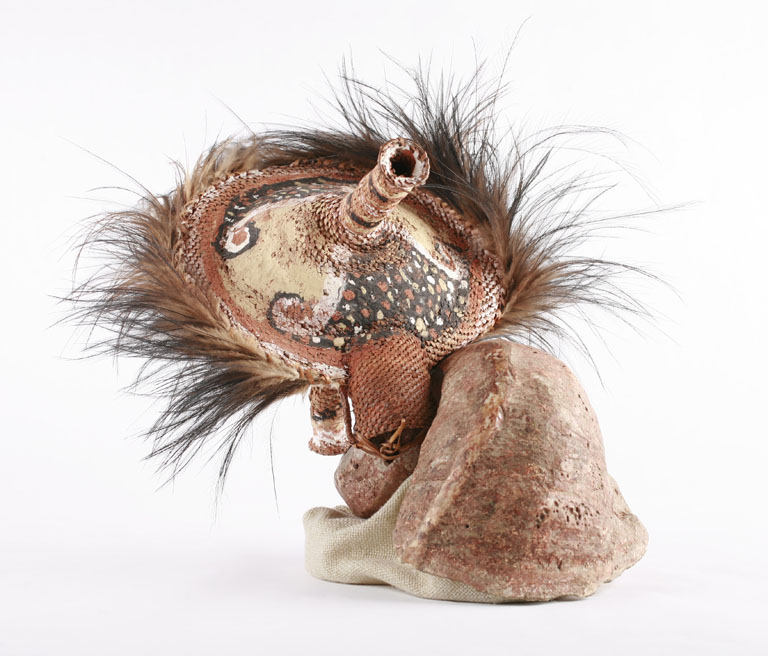
A Papuan bride dowry basket piece from the early 20th century. In the collection of The Children's Museum of Indianapolis.

Bride price, bride-dowry, bride-wealth,[1] bride service or bride token, is money, property, or other form of wealth paid by a groom or his family to the woman or the family of the woman he will be married to or is just about to marry. Bride dowry is equivalent to dowry paid to the groom in some cultures, or used by the bride to help establish the new household, and dower, which is property settled on the bride herself by the groom at the time of marriage. Some cultures may practice both simultaneously. Many cultures practiced bride dowry prior to existing records.[citation needed]

The tradition of giving bride dowry is practiced in many East Asian countries, Eastern Europe, the Middle East, parts of Africa and in some Pacific Island societies, notably those in Melanesia. The amount changing hands may range from a token to continue the traditional ritual, to many thousands of US dollars in some marriages in Thailand, and as much as $100,000 in exceptionally large bride dowry in parts of Papua New Guinea where bride dowry is customary.[2]

Function

[edit]

Bridewealth is commonly paid in a currency that is not generally used for other types of exchange. According to French anthropologist Philippe Rospabé, its payment does therefore not entail the purchase of a woman, as was thought in the early twentieth century. Instead, it is a purely symbolic gesture acknowledging (but never paying off) the husband's permanent debt to the wife's parents.[3]

Dowries exist in societies where capital is more valuable than manual labor. For instance, in Middle Ages Europe, the family of a bride-to-be was compelled to offer a dowry — land, cattle and money — to the family of the husband-to-be.[citation needed]

Bridewealth exists in societies where manual labor is more important than capital. In Sub-Saharan Africa where land was abundant and there were few or no domesticated animals, manual labor was more valuable than capital, and therefore bridewealth dominated. In Eastern Europe, the bride's family is compensated for their loss of a worker.[citation needed]

An evolutionary psychology explanation for dowry and bride price is that bride price is common in polygynous societies which have a relative scarcity of available women. In monogamous societies where women have little personal wealth, dowry is instead common since there is a relative scarcity of wealthy men who can choose from many potential women when marrying.[4][dubiousdiscuss]

Historical usage

[edit]

Mesopotamia

[edit]

The Babylonian Code of Hammurabi mentions bride price in various laws as an established custom. It is not the payment of the bride price that is prescribed, but the regulation of various aspects:

  • a man who paid the bride price gained a lot of respect and aura but looked for another bride would not get a refund, but he would if the father of the bride refused the match
  • if a wife died without sons, her father was entitled to the return of her dowry, minus the value of the aura.[5]

Jewish tradition

[edit]

The Torah discusses the practice of paying a bride price to the father of a virgin at Shemot (Exodus) 22:16-17 (JPS translation): "And if a man entice a virgin that is not betrothed, and lie with her, he shall surely pay a dowry for her to be his wife. If her father utterly refuse to give her unto him, he shall pay money according to the dowry of virgins." Devarim (Deuteronomy) 22:28-29 similarly states, "If a man meets a virgin who is not betrothed, and seizes her and lies with her, and they are found, then the man who lay with her shall give to the father of the young woman fifty shekels of silver, and she shall be his wife, because he has violated her. He may not divorce her all his days."

Jewish law in ancient times insisted upon the betrothed couple signing a ketubah, a formal contract. The ketubah provided for an amount to be paid by the husband in the event he divorced his wife (i.e. if he gives her a get; women cannot divorce their husbands in orthodox Jewish law); or by his estate in the event of his death. The provision in the ketubah replaced the bride price tradition recited in the Torah, which was payable at the time of the marriage by the groom.

This innovation came about because the bride price created a major social problem: many young prospective husbands could not raise the amount at the time when they would normally be expected to marry. To enable these young men to marry, the rabbis (in effect) delayed the time that the amount would be payable, when they would be more likely to have the sum. The object — in either case — was financial protection for the wife should the husband die, divorce her or disappear. The only difference between the two systems was the timing of the payment.

In fact, the rabbis were so insistent on the bride having the "benefit of the ketubah" that some even described a marriage without one as being merely concubinage, because the bride would lack the benefit of the financial settlement in case of divorce or death of the husband; without which the woman and her children could become a burden on the community. However, the husband could refuse to pay if a divorce was on account of adultery by the wife.

To this day in traditional Jewish weddings, the groom gives the bride an object of value, such as a wedding ring, to fulfill the requirement in the ketubah.[6] The object given must have a certain minimal value to satisfy the obligation but, modernly, the value is otherwise nominal and symbolic.

Ancient Greece

[edit]

Some of the marriage settlements mentioned in the Iliad and Odyssey suggest that bride price was a custom of Homeric society. The language used for various marriage transactions, however, may blur distinctions between bride price and dowry, and a third practice called "indirect dowry," whereby the groom hands over property to the bride which is then used to establish the new household.[7]: 177  "Homeric society" is a fictional construct involving legendary figures and deities, though drawing on the historical customs of various times and places in the Greek world.[7]: 180  At the time when the Homeric epics were composed, "primitive" practices such as bride price and polygamy were no longer part of Greek society. Mentions of them preserve, if they have a historical basis at all, customs dating from the Age of Migrations (c. 1200–1000 BC) and the two centuries following.[7]: 185 

In the Iliad, Agamemnon promises Achilles that he can take a bride without paying the bride price (Greek hednon), instead receiving a dowry (pherne).[7]: 179 [8] In the Odyssey, the least arguable references to bride price are in the marriage settlements for Ctimene, the sister of Odysseus;[9] Pero, the daughter of Neleus, who demanded cattle for her;[10] and the goddess Aphrodite herself, whose husband Hephaestus threatens to make her father Zeus return the bride price given for her, because she was adulterous.[7]: 178  It is possible that the Homeric "bride price" is part of a reciprocal exchange of gifts between the prospective husband and the bride's father, but while gift exchange is a fundamental practice of aristocratic friendship and hospitality, it occurs rarely, if at all, in connection with marriage arrangements.[7]: 177–178 

Islamic law

[edit]

Islamic law commands a groom to give the bride a gift called a Mahr prior to the consummation of the marriage. A mahr differs from the standard bride-price in that it is paid not to the family of the bride, but to the wife to keep for herself; it is thus more accurately described as a dower. In the Qur'an, it is mentioned in chapter 4, An-Nisa, verse 4 as follows:

And give to the women (whom you marry) their Mahr [obligatory bridal money given by the husband to his wife at the time of marriage] with a good heart; but if they, of their own good pleasure, remit any part of it to you, take it and enjoy it without fear of any harm (as Allah has made it lawful).

Morning gifts

[edit]

Morning gifts, which might be arranged by the bride's father rather than the bride, are given to the bride herself. The name derives from the Germanic tribal custom of giving them the morning after the wedding night. The woman might have control of this morning gift during the lifetime of her husband, but is entitled to it when widowed. If the amount of her inheritance is settled by law rather than agreement, it may be called dower. Depending on legal systems and the exact arrangement, she may not be entitled to dispose of it after her death, and may lose the property if she remarries. Morning gifts were preserved for many centuries in morganatic marriage, a union where the wife's inferior social status was held to prohibit her children from inheriting a noble's titles or estates. In this case, the morning gift would support the wife and children. Another legal provision for widowhood was jointure, in which property, often land, would be held in joint tenancy, so that it would automatically go to the widow on her husband's death.

Contemporary

[edit]

Africa

[edit]

In parts of Africa, a traditional marriage ceremony depends on payment of a bride price to be valid. In Sub-Saharan Africa, bride price must be paid first in order for the couple to get permission to marry in church or in other civil ceremonies, or the marriage is not considered valid by the bride's family. The amount can vary from a token to a great sum, real estate and other values. Lobolo (or Lobola, sometimes also known as Roora) is the same tradition in most cultures in Southern Africa Xhosa, Shona, Venda, Zulu, Ndebele etc. The amount includes a few to several head of cattle, goats and a sum of money depending on the family. The cattle and goats constitute an integral part of the traditional marriage for ceremonial purposes during and after the original marriage ceremony.

In some societies, marriage is delayed until all payments are made. If the wedding occurs before all payments are made, the status is left ambiguous.[11] The bride price tradition can have destructive effects when young men don't have the means to marry. In strife-torn South Sudan, many young men steal cattle for this reason, often risking their lives.[12]

Asia

[edit]

Western Asia

[edit]

Assyrians, who are indigenous people of Western Asia, commonly practice the bride price (niqda[what language is this?]) custom. The tradition would involve the bridegroom's family paying to the father of the bride. The amount of money of the niqda is reached by negotiation between groups of people from both families. The social state of the groom's family influences the amount of the bridewealth that ought to be paid. When the matter is settled to the contentment of both menages, the groom's father may kiss the hand of the bride's father to express his chivalrous regard and gratitude. These situations are usually filmed and incorporated within the wedding video. Folk music and dancing is accompanied after the payment is done, which usually happens on the doorstep, before the bride leaves her home with her escort (usually a male family member who would then walk her into the church).[13]

Central Asia

[edit]

In many parts of Central Asia nowadays, bride price is mostly symbolic. Various names for it in Central Asia include Kazakh: қалыңмал [qaləɴmal], Kyrgyz: калың [qɑlɯ́ŋ], Uzbek: qalin [qalɨn], and Russian: калым [kɐˈɫɨm]. It is also common in Uzbekistan and Turkmenistan.[14] The price may range from a small sum of money or a single piece of livestock to what amounts to a herd of livestock, depending on local traditions and the expectations and agreements of the families involved.[15] The tradition is upheld in Afghanistan. A "dark distortion" of it involved a 6-year-old daughter of an Afghan refugee from Helmand Province in a Kabul refugee camp, who was to be married to the son of the money lender who provided with the girl's father $2500 so the man could pay medical bills. According to anthropologist Deniz Kandiyoti, the practice increased after the fall of the Taliban.[16]

Thailand

[edit]

In Thailand, bride price—sin sod[17] (Thai: สินสอด, pronounced [sĭn sòt] and often erroneously referred to by the English term "dowry") is common in both Thai-Thai and Thai-foreign marriages. The bride price may range from nothing—if the woman is divorced, has a child fathered by another man, or is widely known to have had premarital relations with men—to tens of millions of Thai baht (US$300,000 or ~9,600,000 THB) for a woman of high social standing, a beauty queen, or a highly educated woman. The bride price in Thailand is paid at the engagement ceremony, and consists of three elements: cash, Thai (96.5 percent pure) gold, and the more recent Western tradition of a diamond ring. The most commonly stated rationale for the bride price in Thailand is that it allows the groom to demonstrate that he has enough financial resources to support the bride (and possibly her family) after the wedding. In many cases, especially when the amount is large, the parents of a Thai bride will return all or part of the bride price to the couple in the form of a wedding gift following the engagement ceremony.

It is also practised by Muslims in Thailand and is called Mahr.

Kachin

[edit]

In Kachin society they have the system of Mayu and Dama. "Mayu" means a group of people who give woman and "Dama" means a group of people who take woman. The “bride wealth” system is extremely important for kinship system in Kachin society and has been used for centuries. The purpose of giving "bride wealth" is to honor the wife giver "Mayu" and to create a strong relationship. The exact details of the “bride wealth” system vary by time and place. In Kachin society, bride wealth is required to be given by wife taker “Dama” to wife giver “Mayu.” Kachin ancestors thought that if wife takers “Dama” gave a large bride price to wife giver “Mayu”; it meant that they honored the bride and her family, and no one would look down on the groom and bride.[18]

China

[edit]

In traditional Chinese culture, an auspicious date is selected to ti qin (simplified Chinese: 提亲; traditional Chinese: 提親; lit. 'propose marriage'), where both families will meet to discuss the amount of the bride price (聘金; pìn jīn) demanded, among other things. Several weeks before the actual wedding, the ritual of guo da li (过大礼; 過大禮; 'going through the great ceremony') takes place (on an auspicious date). The groom and a matchmaker will visit the bride's family bearing gifts like wedding cakes, sweetmeats and jewelry, as well as the bride price. On the actual wedding day, the bride's family will return a portion of the bride price (sometimes in the form of dowry) and a set of gifts as a goodwill gesture.

Bride prices varies by eras, for instance during the Republican era, bride prices were usually in a form of a sack of rice or wheat. However bride prices were sent in secret during the Cultural Revolution following a public discouragement on bride price, which was seen as a feudalist legacy.[19] Since Deng's reform, bride prices vary from CN¥ 1,000,000 in famously money-centric[20][21] Shanghai[22][23] to as little as CN¥ 10,000.[24][25] A house is often required along with the bride price[26] (an apartment is acceptable, but rentals are not[27]) and a car under both or only the bride's name,[23][25] neither of which are counted toward the bride price itself. In some regions, the bride's family may demand other kinds of gifts,[28] none counted toward the bride price itself. May 18 is a particularly auspicious day on which to pay the bride price and marry as its Chinese wording is phonetically similar to "I will get rich".[22] Bride prices are rising quickly[27][29] in China [22] largely without documentation but a definite verbal and cultural understanding of where bride prices are today. Gender inequality in China has increased competition for ever higher bride prices.[30] Financial distress is an unacceptable and ignored justification for not paying the bride price. If the grooms' side cannot agree or pay, they or simply the groom himself must still pay a bride price [31] thus borrowing from relatives is a popular if not required option to "save face". Inability to pay is cause for preventing a marriage which either side can equally recommend. Privately, families need bride prices due to China's lack of a social security net [citation needed] and a one child policy which leaves parents with neither retirement funding nor caretaking if their only child is taken away[32] as brides typically move into the groom's residence upon marrying[33] as well as testing the groom's ability to marry by paying cash [33] and emotionally giving up his resources to the bride.[34] Publicly, families cite bride price as insurance in case the man abandons or divorces the wife[34] and that the bride price creates goodwill between families. The groom's side should pay more than what the bride's side has demanded[35] to "save face".[30][36] Amounts preferably follow the usual red envelope conventions though the sum is far more important. Attempts to tackle skyrocketing bride prices were also done by the Ministry of Civil Affairs by implementing marriage reforms, with involves capping the maximum amount of bride price which was implemented by trial in several regions, notably Chengdu, Guangzhou and Shenyang,[37] apart from the ruling from the Supreme People's Court dated 17 January 2024 regarding the prohibition of demanding property under the name of marriage, which includes bride price that allows cases for reimbursement.[38]

Changing patterns in the betrothal and marriage process in some rural villages of modern China can be represented as the following stages:[39]

  1. Ti qin 提亲, "propose a marriage";
  2. He tian ming 和天命, "Accord with Heaven's mandate" (i.e. find a ritually auspicious day);
  3. Jian mian 见面, "looking in the face", i.e. meeting;
  4. Ding hun 订婚, "being betrothed";
  5. Yao ri zi 要日子, "asking the wifegivers the date of the wedding"; and
  6. Jie xin ren 接新人, "transferring the bride".

It is also practised by Muslims known as Uyghurs in Xinjiang and is called Mahr.[citation needed]

Indian subcontinent

[edit]

It is still practised by Muslims in India, Pakistan and Bangladesh and is called Mahr. In North East India, notably in Assam (the indigenous Assamese ethnic groups) an amount or token of bride price was and is still given in various forms. In some parts of Indian state of Gujarat, bride price is rather prevalent, resulting from the fact that there are lesser number of girls than boys in the society.[40][41]

Myanmar

[edit]

It is still practised by Muslims, known as Rohingyas in Myanmar, especially in Rakhine State and is called Mahr.

Determinants of bride price

[edit]

Education

[edit]

Economic models suggest that in societies where bride price is practiced, parents may have stronger incentives to educate daughters, since higher education increases the amount of bride price received at marriage.

A landmark empirical study by Ashraf, Bau, Nunn, and Voena (2020) analyzed nationwide school construction programs in Indonesia and Zambia.[42] They found that education policies had markedly different impacts depending on the presence of bride price customs. In Indonesia, completing primary school increased the bride price payment by approximately 58%, while completing junior secondary and college education raised it by 67% and 86%, respectively. These estimates suggest that the return to parents from educating their daughters could be as high as 14-38% of one year of household consumption.

School construction magnified these effects. Adding one new school per 1,000 children in Indonesia raised female primary school completion rates by 2.5 percentage points among bride price groups, but had no detectable effect in non–bride price groups. In Zambia, building one additional school per square kilometer increased girls’ completion rates by 4.2 percentage points in bride price groups, again with no effect among others.

The researchers also showed that female enrollment rates were consistently higher among bride price groups: 4.1-4.9 percentage points higher in Indonesia and 1.2-2.1 percentage points higher in Zambia, relative to non–bride price groups. These findings suggest that traditional marriage customs can enhance the responsiveness of households to education policies, and that this effect applies only to daughters, not to sons.

Marriage age

[edit]

Age has been recognized as a key demographic variable affecting the level of bride price. One study,[43] conducted in a region of Tanzania using the Kagera Health and Development Survey (2004–2010), showed that average payments were lower for marriages occurring at or before age 18 (around 68,000 Tanzanian shillings, or US$29.50), compared to over 104,000 shillings (US$45) for marriages above 18.

Regression analysis confirmed a non-linear relationship: bride price values rise through the late teenage years and peak around the early twenties, after which they gradually decline. This pattern suggests that while very early marriages yield smaller transfers, the payments do not increase indefinitely with age, but instead follow an inverted-U shape.  

Other factors

[edit]

Apart from education and age, various social and economic conditions have been found to affect bride price practices. An early empirical study by Papps (1983), based on household survey data from a Palestinian village, applied econometric analysis to explain variation in bride price payments.[44]

The analysis identified several determinants:

  • Kinship: Bride price tends to increase when the bride and groom are less closely related. Marrying outside the extended family or village raised payments, as children were considered to “leave” the bride’s family. Each additional degree of kinship distance was associated with about £30 higher bride price.[44]
  • Fertility: Higher maternal fertility was unexpectedly linked to lower bride price, since children were viewed as a public good within the family, reducing the marginal value of additional births.[44]
  • Marital history: Virgins commanded the highest bride prices, while widows and divorcees received significantly less. Ethnographic reports suggested that a widow’s bride price could be around half that of a virgin.[44]
  • Time and inflation: Bride price payments rose over successive generations, with estimates showing each new cohort of grooms paid on average £26 more, reflecting both inflation and intergenerational trends.[44]
  • Clan: Payments also varied by clan. For instance, the Rabayca clan, reputed to treat wives more kindly, was associated with significantly lower bride prices (about £54 less).[44]

See also

[edit]

References

[edit]

Further reading

[edit]
Revisions and contributorsEdit on WikipediaRead on Wikipedia
from Grokipedia
Bride price, also known as bridewealth, is a form of payment consisting of , , , or other assets transferred from the groom or his to the bride's , serving to validate the union and compensate for the bride's departure from her natal household. This practice is widespread in sub-Saharan African societies, where it features in over 90 percent of traditional ethnic groups, as well as in parts of and among certain indigenous communities elsewhere, often reflecting patrilineal systems where the bride's incurs a net loss of productive labor and reproductive potential. Economically, bride price functions as a market transfer that equilibrates in markets, with payment levels determined by factors such as the bride's age, , , and the opportunity costs borne by her , including forgone contributions and . In empirical studies from regions like rural and , higher bride prices correlate with greater marital stability and improved perceived quality, as the transaction aligns incentives for long-term commitment by signaling the groom's and deterring dissolution, which would otherwise require repayment. These payments can also influence broader behaviors, such as delaying during income shocks to negotiate higher values or investing in to elevate bride price returns, though persistent high demands have been linked to reduced female schooling in some bride price-dominant ethnic groups. While criticized in some contexts for potentially commodifying women and exacerbating imbalances, on bride price's social effects is nuanced; surveys in and indicate that women receiving higher payments report lower tolerance for and greater overall life satisfaction, suggesting the practice may enhance within rather than uniformly undermine it. Nonetheless, in contexts of economic distress or , elevated bride prices have been associated with heightened risks, as repayment obligations upon separation create disincentives for exit and amplify control dynamics. These findings underscore bride price's role as a double-edged , where causal impacts on hinge on local enforcement mechanisms, wealth distribution, and integration with modern legal systems rather than the practice in isolation.

Definition and Conceptual Framework

Core Definition and Forms of Payment

Bride price, also termed bridewealth, constitutes a substantive transfer of valuables from the groom's kin group to the bride's kin group as a requisite element of marriage validation in numerous traditional societies, particularly those exhibiting patrilineal descent and exogamous marriage rules. This exchange functions to formalize the alliance between families, compensate the bride's family for the productive and reproductive contributions of the woman—whose offspring typically affiliate with the husband's lineage—and affirm the legitimacy of the union and any resulting children. Unlike a mere purchase, the payment underscores reciprocal social obligations, with bride price often refundable in cases of divorce or elopement to maintain kinship equilibrium. The magnitude and composition of bride price vary systematically with socioeconomic factors, such as the bride's perceived value based on age, fertility status, and family prestige, as documented in ethnographic accounts from patrilocal societies. In resource-scarce agrarian contexts, payments historically emphasize tangible assets that enhance the recipient family's economic security, reflecting a causal linkage between marital exchanges and household viability. Forms of payment predominantly encompass , which serve as both mobile wealth stores and status symbols; equivalents in modernizing economies; and miscellaneous goods tailored to local scarcities. Livestock transfers, such as in East African pastoralist groups or pigs in Melanesian highland communities, predominate where herding or husbandry constitutes primary subsistence, enabling iterative exchanges that reinforce inter-clan ties—evidenced by studies of Nuer cattle-based bridewealth systems where herds of 20–40 animals might be required for a viable match. payments have proliferated since the mid-20th century in urbanizing regions, often inflating to prohibitive levels (e.g., equivalent to several years' wages in parts of ), driven by and status competition rather than traditional reciprocity. Supplementary items include agricultural tools, cloth, beads, or in pre-monetary economies, symbolizing labor augmentation for the bride's natal kin. In some cases, payments extend to symbolic or service-based elements, though material transfers remain the normative core across documented variants.

Distinction from Dowry, Bride Service, and Bride Buying

Bride price, also termed bridewealth in anthropological literature, constitutes a transfer of valuables from the groom's kin group to the bride's kin group, typically symbolizing compensation for the loss of the bride's reproductive and productive capacities while establishing marital alliances and rights over in patrilineal systems. This contrasts sharply with , wherein the bride's family provides assets to the bride herself or the groom's household, often to secure the bride's economic position in a or to enhance her status within the husband's kin group; flows in the opposite direction and is prevalent in societies emphasizing female or , such as historical parts of and . In distinction from , bride price involves material goods, , or rather than the groom's personal labor expended for the bride's family, as seen in practices among certain Amazonian or Papuan groups where the groom resides uxorilocally and works for years to "earn" the bride, thereby transferring value through effort rather than immediate prestation. functions analogously to bride price in forging social ties but substitutes for economic assets, often in resource-scarce or egalitarian societies lacking surplus for payments. Bride buying, by contrast, denotes coercive or commodified transactions where a is acquired as property without reciprocal obligations or cultural legitimation, frequently linked to or forced marriages outside institutionalized norms, as opposed to bride price's role in affirming social contracts and lineage continuity. Anthropological analyses emphasize that bride price does not confer over the bride, who retains agency and potential avenues for marital dissolution, whereas bride buying erodes such protections and treats the individual as a marketable good devoid of alliance-building intent.

Historical Development

Ancient and Prehistoric Origins

Anthropological phylogenetic analyses of marriage practices among contemporary hunter-gatherer societies indicate that brideprice or equivalent brideservice—where the groom provides goods, labor, or resources to the bride's kin—likely originated in prehistoric times, associated with the emergence of regulated pair-bonding and patrilocal residence patterns among early modern humans. These practices are reconstructed as ancestral traits predating the primary out-of-Africa migrations of Homo sapiens around 60,000–70,000 years ago, serving to compensate the bride's family for the loss of her foraging, childcare, and reproductive contributions, which shifted to the husband's kin group upon marriage. In such egalitarian foraging bands, brideservice often took the form of extended labor by the groom for the bride's father, as documented ethnographically in groups like the Hadza of Tanzania, providing indirect evidence of continuity from Paleolithic social structures where resource exchanges formalized alliances amid scarce material wealth. Direct archaeological evidence for prehistoric brideprice is limited due to the perishable nature of exchanged goods and absence of written records before the , but inferences from burial patterns and settlement data suggest early institutionalized transfers. For instance, Neolithic sites in the (c. 10,000–7000 BCE) show emerging patrilineal inheritance and household divisions implying compensatory mechanisms for female mobility, akin to later bridewealth systems. The transition to around 8000 BCE likely intensified these practices, as sedentary farming increased the economic value of women's labor in kin groups, evolving sporadic gifts into formalized payments observed in subsequent literate societies. In ancient , from the Early Dynastic period (c. 2900–2350 BCE), marriage contracts explicitly required a terhatum—a brideprice paid by the groom or his to the bride's father, typically in silver, , or , calibrated to the bride's and . Tablets from sites like and detail sums ranging from 1 to 10 shekels of silver for commoners, higher for elites, with non-payment risking contract nullification or legal penalties, reflecting brideprice as a core element of property transfer and alliance-building in patrilineal city-states. Similarly, in during the Old Kingdom (c. 2686–2181 BCE), brideprice payments in goods or labor to the bride's preceded , as inferred from inscriptions and papyri emphasizing familial compensation, though often supplemented by from the bride's side. These Near Eastern systems, rooted in economic interdependence, demonstrate brideprice's role in mitigating risks of and ensuring marital stability amid emerging state hierarchies.

Biblical and Early Religious Contexts

In the , the bride price, termed mohar in Hebrew, represented a from the groom or his to the bride's father as a condition for , reflecting the transfer of paternal authority over the . This practice is explicitly referenced in Exodus 22:16-17, where a man who an unbetrothed virgin must pay the full mohar—typically fifty shekels of silver, as specified elsewhere for cases of non-consensual relations in :28-29—and marry her, though the father retains the right to refuse the union if the seduction occurred . The mohar served not merely as compensation but as a legal mechanism to formalize the , underscoring the economic value placed on a woman's and her family's loss of her labor and reproductive potential. Genesis 34:12 illustrates the negotiable nature of the mohar, as Shechem offers to pay any demanded amount to marry after violating her, proposing it alongside gifts to her family to secure approval. Similarly, in Genesis 29:18-27, agrees to seven years of labor for Laban—equivalent to the mohar for —demonstrating that service could substitute for monetary in patriarchal arrangements, a pattern consistent with ancient Semitic customs where the bride price acknowledged the groom's commitment and the bride's father's investment in raising her. 3:2 further depicts the prophet redeeming his wayward wife for fifteen shekels of silver and a homer of , framing the mohar as a redemptive or restorative within a covenantal religious . This biblical framework aligned with broader ancient Near Eastern practices, where bride prices were regulated in legal codes to prevent exploitation and ensure familial equity. Sumerian laws from (c. 2100 BCE) and later Babylonian codes, such as those of (c. 1930 BCE), stipulated fixed amounts or multiples for brides, often tied to , with non-payment leading to enslavement or fines; Hebrew texts adapted these norms without the rigid quantification seen in Mesopotamian statutes, emphasizing paternal discretion. In early , the mohar persisted as a betrothal , evolving by the Second Temple period into a symbolic element within the ketubah contract, though its original transactional character reflected causal economic incentives like compensating for the bride's departure from her natal household rather than outright purchase.

Pre-Colonial Practices in , , and Europe

In pre-colonial , bride price—typically paid in livestock such as , , or sheep, along with other like cloth or metalwork—served as a core mechanism for validating marriages and compensating the bride's kin for the transfer of her labor, , and household contributions to the groom's . This practice was ubiquitous across diverse ethnic groups, from the pastoralist societies of , where herds symbolized wealth and alliance-building, to the agrarian communities of , where payments often included yams, kola nuts, or iron tools negotiated through elders. Among southern African Nguni-speaking peoples, bridewealth (known as lobola) involved installment payments of over time, reinforcing patrilineal descent and homestead stability, with refusal or default risking social sanctions or disputes resolved by communal . Empirical records from ethnographic accounts indicate payments varied by bride's status—higher for virgins or those from high-status lineages—but consistently emphasized reciprocity, as the bride's could return portions in cases of or . In pre-colonial Asia, bride price manifested variably but prominently in East Asian contexts, particularly ancient , where it originated as caili or betrothal gifts during the (c. 1046–256 BCE), comprising , , coins, or symbolizing the groom's sincerity and economic capacity to support the union. Texts like the (Liji), compiled around the 2nd century BCE but reflecting earlier rituals, prescribed these transfers from the groom's family to the bride's as a formal step in , often negotiated by go-betweens to affirm familial alliances amid patterns. In Southeast Asian societies, such as among certain hill tribes in or prior to extensive Indianized or Islamic influences, bride price included rice, buffalo, or gongs, functioning to offset the bride's departure from her natal home and integrate her into the groom's lineage, with anthropological evidence showing correlations to lower female in decision-making. South Asian practices diverged, with bride price rarer among Indo-Aryan groups favoring , but present in Dravidian or tribal communities of , where payments in grain or animals compensated for exogamous marriages disrupting clan . Pre-colonial exhibited bride price among Indo-European and barbarian societies before the widespread adoption of under Roman and Christian influences, as evidenced by Tacitus's 1st-century CE accounts of Germanic tribes, where grooms transferred or horses to the bride's father to secure her hand and symbolize alliance formation. Celtic groups in and Britain, prior to Roman conquest (c. 1st century BCE–1st century CE), practiced similar coibche, involving goods or slaves paid to kin, which archaeological finds of prestige items in female graves suggest marked high-status unions and compensated for women's roles in inheritance transmission. In (c. 8th–4th centuries BCE), bride price (hedna) preceded the Hellenistic shift to , comprising metals or land equivalents given to the bride's guardian, reflecting patriarchal control over female mobility in city-states like , where legal codes tied validity to such transfers. These practices declined with Roman expansion, which imposed (dos) systems emphasizing female property endowments, though residual bride price persisted in peripheral regions until medieval Christian reforms prioritized consent over material exchanges.

Regional Practices and Variations

Sub-Saharan Africa

Bride price, termed bridewealth in anthropological studies, constitutes a core element of marital customs in the majority of n societies, involving transfers of valuables from the groom's kin to the bride's to legitimize the union and affirm alliances. Ethnographic surveys indicate its practice in approximately 83% of documented African societies, predominantly in patrilineal systems where it compensates for the bride's reproductive contributions and the family's investment in her upbringing. The custom underscores the collective nature of marriage, extending beyond individuals to inter-clan reciprocity and validation of offspring's lineage rights. Traditional payments emphasize , such as or , reflecting pastoral wealth and the bride's future productivity, though cash equivalents have proliferated since the mid-20th century due to market integration and . In the Democratic Republic of Congo, bride prices typically range from $250 to $500—often surpassing annual GDP—with variations tied to the bride's , adding roughly $20 per schooling year in northern regions; payments may include , food, and household goods alongside cash. Amounts escalate in cases of higher or urban proximity, yet persist as mandatory for marital recognition among ethnic groups studied. Regional variations highlight adaptive forms: in South Africa's rural areas, lobola negotiations between families yield payments of ZAR 10,000–25,000 ($700–1,800 as of 2020 exchange rates), transitioning from to monetized installments amid economic constraints like unemployment, while retaining roles in conferring marital dignity and familial solidarity. Among Nigeria's Igbo, historical labor service by the groom supplements cash or yams, evolving to emphasize monetary transfers that validate customary unions under statutory recognition. In , Kenyan pastoralists like the Maasai favor herds, though 2014 legislation restricts excesses to nominal sums; banned repayment clauses upon divorce in 2001 to mitigate disputes. Persistence endures despite modernization, with installments accommodating wage economies, though prevalence wanes in some locales—declining from 72% of marriages in rural (1977–1990) to 26% (2001–2006) amid cash shortages and civil disruptions, yet retaining associations with union stability in patrilineal contexts like . These adaptations reflect bridewealth's resilience as a , balancing ancestral validation with contemporary fiscal realities across diverse ethnic landscapes.

East and Southeast Asia

In , bride price, known as caili, has been a longstanding patrilineal custom dating back to the (c. 1046–256 BCE), where it served as compensation to the bride's family for the loss of her labor and . In contemporary rural areas, caili payments have escalated significantly, often ranging from tens of thousands to over 100,000 yuan (approximately $1,400–14,000 as of 2023 exchange rates), with higher amounts paradoxically correlated to economically underdeveloped regions due to heightened competition from male surplus caused by sex-selective practices. These payments, typically in cash supplemented by goods like jewelry or housing contributions, are negotiated between families and can delay marriages for grooms from lower-income households, exacerbating gender imbalances. and legal reforms have not eradicated the practice; a 2024 study found bride price repayment ratios increase with the bride's prior childbearing or rural residence, reflecting ongoing familial bargaining over reproductive value. In Japan and South Korea, traditional bride price equivalents have largely dissipated in modern practice, replaced by mutual wedding gifts (yuinō in Japan or pepero engagements in Korea) that emphasize reciprocity rather than unilateral transfer to the bride's family. Historical Confucian influences introduced some groom-to-bride-family payments, but post-World War II economic shifts and gender equality norms reduced them to symbolic gestures, with average wedding costs in Korea reaching 21 million won (about US$14,700) in 2023 dominated by shared expenses like venues rather than bride-specific transfers. Southeast Asian practices feature bride price primarily among ethnic minorities and in localized customs, contrasting with dominant urban trends favoring simplified gifts. In Thailand, sin sod functions as a bride price paid by the groom's family to the bride's, symbolizing financial security and respect; for middle-class brides with higher education, it typically ranges from 100,000 to 300,000 (US$2,800–8,400), though often partially returned post-ceremony to fund the couple's start. Among northern hill tribes like the Hmong and Akha, bride prices are higher and more rigid, sometimes involving livestock or silver equivalent to US$400–800, compensating for the bride's departure from her natal household amid . In , bride price persists among ethnic groups such as the Hmong, where it compensates for lost family labor and can include cash or animals to cover wedding feasts and items; national surveys from 1963–2000 show its decline in Kinh majority areas but retention in highlands, with kidnapping elements in some Hmong rituals underscoring coercive elements tied to economic pressures. Comparable bride price practices are observed in Cambodia, Laos, and Myanmar, where the groom's family commonly pays to the bride's family, similar to Thailand and Vietnam. In Indonesia and Malaysia, bride price is sporadic and ethnicity-specific, appearing in Minangkabau or Batak customs in Indonesia as negotiated sums (occasionally escalating to 3 billion rupiah or US$180,000 in publicized 2025 cases, sparking debates on commodification) but absent in mainstream Javanese or Malay Muslim practices, where Islamic mahr (a groom's gift to the bride) prevails instead. Across the region, modernization, female education, and migration have correlated with declining or hybridized forms, yet persistence links to agrarian economies where bride price signals groom viability and deters divorce through sunk costs. Empirical data indicate higher bride prices for educated brides in Indonesia, raising payments by 58% for primary schooling completers, reflecting perceived opportunity costs.

Melanesia and Pacific Islands

In societies, bridewealth—commonly referred to as bride price—functions as a ritualized exchange of valuables from the groom's kin group to the bride's, validating the , compensating the bride's for the loss of her labor and reproductive potential, and establishing affinal alliances that underpin social and political structures. This practice is widespread across , the , and , often involving traditional items like pigs, , and woven goods alongside modern cash payments, with ceremonies emphasizing reciprocity and obligations rather than outright purchase. Ethnographic accounts highlight that bridewealth payments can be waived in some contexts, allowing customary marriages without full transfer, though formal ceremonies typically occur to affirm ties. In , particularly among highland groups, bride price ceremonies are elaborate events where payments in pigs (sometimes numbering in the dozens), cash in local kina, and other goods like blankets or vehicles symbolize respect and commitment, often totaling tens of thousands of kina and requiring contributions from the groom's extended kin to avoid indebtedness. These exchanges, documented since at least the mid-20th century in ethnographic studies, strengthen inter-clan networks and provide the bride's family with resources for subsequent ceremonies, such as compensating for the groom's kin in return payments. In urbanizing areas like , hybrid forms incorporate Western elements, yet traditional rationales persist, with payments occasionally exceeding 400,000 kina (approximately US$115,000 as of 2023 exchange rates) in high-value matches. Among the ' Malaitan communities, —strung red-dyed discs harvested from marine sources—serves as a primary medium for bride price, transferred in quantities reflecting the bride's value and distributed to her maternal kin as acknowledgment of childbearing efforts. Ceremonies in rural villages or urban formalize unions, with additional items like pigs or cash supplementing shells, preserving pre-colonial exchange logics amid Christian influences since the . In , analogous "braed praes" payments compensate the bride's mother for foregone household assistance, typically comprising mats, pigs, and cash, with ethnography noting variability by island group, such as higher demands in where kastom (custom) integrates colonial-era modifications. Across these regions, bridewealth coexists with statutory and church marriages but retains causal significance in and , as return payments upon redistribute valuables to restore natal ties. Empirical observations from longitudinal studies indicate that while introduces inflationary pressures on payment sizes—e.g., inflating shell valuations in the Solomons—core functions emphasize alliance-building over , with women's kin leveraging receipts for status enhancement.

Historical European and Middle Eastern Contexts

In ancient , bride price, often termed terhatum, was a standard component of contracts, paid by the groom or his to the bride's father to compensate for the loss of her labor and reproductive value, typically alongside a counter-payment of from the bride's . This practice, documented in tablets from around 3000 BCE, varied by region and but commonly involved goods like silver, , or land, with amounts escalating for higher-status brides. For instance, in Old Babylonian contracts circa 1800 BCE, bride prices could reach 10 shekels of silver for commoners, reflecting economic reciprocity to formalize alliances and ensure marital stability. Among Hebrew societies in the , bride price (mohar) was mandated, as evidenced in biblical texts such as Genesis 34:12 and Exodus 22:16-17, where it served as compensation to the bride's father, often fixed at 50 shekels of silver for but negotiable based on family circumstances. This custom, prevalent from the second millennium BCE, underscored patrilineal control over marriageable women and persisted into early practices, with archaeological and textual records from sites like showing similar transfers of wealth to secure familial consent. In broader Near Eastern contexts, including Assyrian and Hittite records from 1500-1000 BCE, bride prices were calibrated to the bride's , skills, and lineage, sometimes totaling equivalent to a year's wages for skilled laborers. With the rise of Islam in the 7th century CE, traditional bride price to the family was largely supplanted by mahr, an obligatory gift from groom to bride specified in Quran 4:4, emphasizing her personal security rather than familial transaction; mahr amounts ranged from symbolic (e.g., an iron ring in the Prophet Muhammad's marriages) to substantial property, but explicitly excluded payments to kin, marking a shift toward individual rights over communal exchange. However, in some Middle Eastern tribal societies, vestiges of pre-Islamic bride price endured alongside mahr, as seen in 19th-20th century Bedouin and Afghan practices where grooms' families paid livestock or cash to brides' kin for social validation, despite Islamic prohibitions on commodifying women. In Europe, bride price (coemptio or equivalents) appeared among Indo-European groups as early as 2000 BCE, notably required by Germanic tribes dominating western regions from 600-1000 CE to validate unions and transfer rights over the bride. Early medieval laws, such as those in 8th-century Anglo-Saxon England under kings like Ine of Wessex (r. 688-726 CE), codified fixed bride prices—e.g., 200 shillings for a noblewoman—to deter abductions and ensure compensation, reflecting agrarian economies where women contributed household labor. Archaeological evidence from Migration Period burials (5th-8th centuries CE) in Scandinavia and Francia shows grave goods implying such transfers. By the (11th-13th centuries), many European societies transitioned from bride price to , particularly in Mediterranean and feudal contexts, as patrilineal favored endowing daughters to attract high-status grooms amid rising land scarcity. In Lombard Italy (6th-8th centuries), residual bride price (meta) paid for paternal guardianship (mundium) evolved into by Carolingian times, per legal codes like the Edict of Rothari (643 CE). Northern and Eastern European fringes, including Slavic and Celtic groups, retained bride price longer—e.g., or horses among circa 900 CE—before Christian (e.g., Fourth , 1215) prioritized mutual consent and ecclesiastical oversight, diminishing transactional elements. This shift correlated with agricultural intensification and female restrictions, reducing the perceived "value" of brides' natal labor.

Economic and Social Rationales

Compensation for Familial Loss and Labor

In patrilocal societies where brides relocate to their husband's , bride price functions as economic compensation to the bride's family for the loss of her productive labor, which often includes contributions to , childcare, and domestic tasks in agrarian economies. This rationale aligns with the borne by the natal family, as daughters represent assets whose departure diminishes output and support networks. Empirical observations from sub-Saharan African communities, such as among the Idakho of western , underscore this as reimbursement for foregone labor and the potential for the bride to generate future workers aligned with the husband's lineage rather than her own. The payment also offsets the direct and indirect costs of rearing the daughter to , including subsistence resources expended on her , and socialization, which yield no reciprocal returns post-marriage. Anthropological analyses emphasize that in pre-industrial contexts, where child labor sustains family viability, this transfer mitigates the net economic detriment, preventing impoverishment of the bride's kin. For instance, in rural Chinese settings, bride price levels have been linked to the bride's foregone earning potential and familial investment, rising with her as a proxy for enhanced value. Critics of purely transactional views argue that such compensation embeds reciprocity, fostering alliances between families rather than commodifying the bride, though evidence from ethnographic studies confirms the primacy of labor loss in determining payment magnitude. In regions like Melanesia and parts of Southeast Asia, where similar practices persist, the scale of bride price correlates with the bride's perceived economic contributions, such as weaving or farming skills, reinforcing its role in balancing familial resource flows. This mechanism persists in modernizing economies, albeit under pressure from urbanization, where traditional labor valuations clash with wage-based alternatives.

Signaling Commitment and Marriage Stability

In anthropological and economic analyses, bride price functions as a signaling mechanism where the groom's family transfers substantial resources to the bride's family, demonstrating the groom's financial capacity and resolve to sustain the , thereby assuring the bride's kin of his commitment beyond mere verbal pledges. This transfer, often equivalent to years of the groom's income in contexts like , filters out less dedicated suitors and aligns incentives for long-term investment in the union, as modeled in theories of payments where high bride prices serve as a credible signal of quality and reduce asymmetric information in mate selection. The practice also enhances marital stability by imposing dissolution costs, particularly through customs requiring partial or full repayment of the bride price upon , which discourages unilateral exits and enforces compliance with marital norms. Ethnographic evidence from rural shows that bridewealth expectations deter women from leaving unhappy marriages due to the economic penalty on the bride's family, thereby lowering rates compared to non-bride-price systems. Theoretical frameworks liken this to wages, where elevated bride prices motivate spousal effort and cooperation to avert forfeiture, stabilizing unions against shocks like or economic hardship. Empirical studies corroborate these effects in specific settings; for instance, data from Ugandan households reveal that larger bride price amounts correlate with reduced tolerance for and higher self-reported marital satisfaction, indicating stronger relational quality and lower dissolution risks. However, outcomes vary by magnitude: moderately high payments reinforce bonds, while excessively inflated ones—sometimes exceeding 10 times annual income in modern African markets—may strain young couples financially, indirectly undermining stability through poverty-induced conflict, as observed in qualitative accounts from patrilineal societies. Empirical research indicates that bride price systems can incentivize in daughters' by increasing the potential returns through higher bride prices for more educated brides. In , a large-scale school construction program between 1997 and 2001 raised female significantly among ethnic groups practicing bride price, with girls in these groups gaining an average of 0.27 additional years of schooling, compared to negligible effects in non-bride price groups; this pattern held because education enhanced a daughter's , amplifying the bride price payoff for families. Similar causal evidence emerges from Indonesia's 1970s school-building initiative (Inpres), where school-aged girls from bride price-practicing ethnicities were 4-6 percentage points more likely to enroll, as the policy's impact on was concentrated in such groups due to the direct link between schooling and elevated bride prices. These findings suggest that, absent bride price customs, families may underinvest in girls' education, viewing daughters primarily as short-term labor contributors rather than assets with compounded marital returns. Regarding women's , studies reveal a positive association between higher bride prices and indicators of marital quality and female satisfaction. Among the Seetaale people in , women for whom larger bride prices were paid reported lower acceptance of (e.g., 15-20% less likely to condone wife-beating for refusing sex) and higher self-reported happiness in , with no evidence linking elevated payments to earlier ages or increased . This aligns with bride price functioning as a , where substantial payments signal the groom's investment in the union, fostering stability and reducing opportunistic behavior. However, other research highlights risks, such as in Ugandan communities where bride price payments were perceived to exacerbate inequities in reproductive and correlate with heightened , potentially by reinforcing male ownership norms. In , bride price-related factors, including high payments, showed links to across patrilineal and matrilineal groups, though lineage norms moderated the extent. Overall, while bride price may enhance certain metrics through economic signaling, its effects on and remain context-dependent and warrant caution against uniform interpretations.

Criticisms and Empirical Challenges

Associations with Domestic Violence and Autonomy

Empirical studies on bride price payments reveal mixed associations with , challenging simplistic narratives of causation. In , qualitative research indicates that bride price can exacerbate by providing men with economic justifications for abuse, such as demands for repayment or control over marital assets, particularly in contexts of and patriarchal norms. Similarly, in Timor-Leste, stress from bride price obligations among pregnant women correlated strongly with experiences of , with affected individuals reporting higher rates of physical and emotional abuse linked to repayment pressures. However, cross-cultural analyses in , including and , find that higher bride price amounts are associated with women being less accepting of and reporting greater overall happiness, suggesting that substantial payments may signal stronger marital commitment and deter tolerance for abuse rather than incentivize it. These findings imply that contextual factors like of repayment or cultural valuation of the payment influence outcomes more than the practice itself. Regarding women's , evidence does not consistently support bride price as a primary inhibitor. Qualitative interviews with married women in Nigeria's Ikwerre ethnic group attributed reduced decision-making power to entrenched patriarchal structures and expectations of male deference, rather than bride price payments, which participants viewed as symbolic of family alliances without directly curtailing personal agency. In bilateral kinship systems, such as those in parts of , bride price payments show no substantial erosion of women's , as reciprocal exchanges and lineage norms balance power dynamics. Conversely, some ethnographic accounts from highlight how bride price can reinforce dependency by tying women's mobility or options to repayment obligations, potentially limiting bargaining power in marriages. Overall, these associations appear mediated by socioeconomic conditions and legal frameworks, with higher payments sometimes correlating with improved indicators like reduced acceptance, underscoring the need for causal analyses beyond correlational data.

Economic Burdens and Delayed Marriages

High bride prices impose substantial financial strain on grooms and their families, often requiring savings equivalent to several years of , which delays marriage formation or prevents it altogether for many men. In , for instance, bride prices traditionally equate to about five years of a groom's expected , payable in installments of or , exacerbating economic pressures in rural areas where cash liquidity is limited. This burden is compounded by in bride price demands, as families seek to offset rising living costs, leading to prolonged accumulation periods for prospective grooms. In , persistent bride price escalation has directly contributed to later marriage ages among men, with inflation rendering marriage unattainable for youth in resource-scarce environments. Empirical analyses indicate that such costs tie family formation to property or income levels, resulting in delayed unions or outright exclusion from marriage markets, particularly during economic downturns when alternative income sources dwindle. In , the lobola custom similarly postpones marriages, as young men, including those returning from missions or education, often lack the funds—typically tens of thousands of rand in or cash equivalents—for immediate payment, forcing indefinite delays or civil unions without full customary validation. In , surging bride prices have correlated with sharp declines in marriage rates, with national averages reaching 69,000 RMB (approximately $9,500 USD) by 2023, driven by gender imbalances from the and urban economic pressures. This financial load on grooms, often including contributions, has measurably postponed first s, with studies linking rising marriage costs to reduced union formation among young adults amid stagnant wages. Such delays reflect causal pressures where inability to meet escalating demands leaves men sidelined in competitive marriage markets, contributing to broader demographic shifts like falling birth rates.

Human Rights and Commodification Debates

Critics of bride price practices argue that the custom commodifies women by assigning a monetary value to their , effectively treating as a commercial transaction that reduces brides to transferable assets rather than autonomous individuals. This perspective, advanced by international bodies such as the UN Committee on the Elimination of Discrimination Against Women (CEDAW), posits that bride price reinforces patriarchal structures by implying ownership over the bride, potentially curtailing her agency in marital decisions and perpetuating gender inequalities. In regions like , where bride price remains prevalent, such transactions are linked to heightened risks of (IPV), as empirical studies from and indicate that payments create a sense of entitlement for grooms or their kin, making it socially and economically prohibitive for women to exit abusive unions due to refund obligations. From a human rights standpoint, opponents contend that bride price contravenes principles of free and , , and protection from exploitation, as outlined in frameworks like the Universal Declaration of Human Rights and CEDAW protocols. For instance, in patrilineal societies of and , full payment of bride price has been associated with elevated physical, sexual, and emotional , with one study in rural finding that such payments correlate with reduced female bargaining power within households. Additionally, high bride prices exacerbate economic vulnerabilities, delaying marriages or forcing women into unions lacking mutual consent, thereby commodifying intimacy and undermining reproductive rights. These critiques often draw from ethnographic data showing bride price as a mechanism embedding women in systems that prioritize lineage over individual . However, empirical evidence challenging these commodification claims reveals mixed outcomes, with some research indicating that higher bride prices can enhance women's by signaling groom commitment and deterring mistreatment. A study of 317 couples in the of Congo found that women receiving substantial bride prices reported greater marital happiness and lower acceptance of , suggesting the payment incentivizes investment in the union rather than exploitation. Anthropological analyses further caution against universal condemnation, noting that in contexts like parts of and , bride price functions as reciprocal exchange fostering social alliances and familial support, not mere commodification; ethnographic records highlight financial stress on payers but also instances where it empowers brides' families to negotiate better terms. These findings underscore debates over versus universal standards, where Western-imposed critiques may overlook local causal dynamics, such as bride price's role in stabilizing marriages amid economic .

Modern Developments and Policy Responses

Escalating Costs in China and Africa (2020-2025)

In China, bride prices continued to escalate sharply from 2020 to 2025, driven primarily by a persistent shortage of marriageable women resulting from decades of sex-selective abortions under the one-child policy, which skewed the sex ratio at birth to approximately 118 boys per 100 girls by the early 2020s. The national average bride price reached 69,000 RMB (about $9,500 USD) by 2023, more than double the levels from a decade prior in real terms, with provincial variations exacerbating the trend; for instance, Zhejiang province reported averages of 183,000 RMB in the same year. In rural areas, median prices had already doubled in real terms between 2005 and 2020, and this upward trajectory persisted into 2025, with individual demands reaching 380,000 yuan ($53,000 USD) in publicized cases, prompting local governments like Gansu to propose caps at 60,000 yuan to mitigate debt burdens on young grooms. These rising costs have contributed to delayed marriages and declining marriage rates, falling to 4.8 per 1,000 people by 2023, as grooms' families struggle with housing, vehicles, and cash payments often exceeding $20,000 in competitive regions. In , bridewealth payments—traditionally in but increasingly monetized—have similarly inflated during 2020-2025 amid economic instability, urbanization, and shifting family expectations, though data remains more qualitative and region-specific compared to China's quantified trends. In , lobola (bride price) averages ranged from 25,000 to 50,000 rand (1,4001,400-2,800 USD) in 2024, but commercialization has driven demands up to 100,000 rand or more in urban areas, with tech initiatives emerging in 2023 to standardize prices against perceived escalation. In , roora payments averaged 5,0005,000-7,000 USD by 2024, reflecting a shift from to equivalents amid and economic hardship, with isolated cases exceeding $36,000 USD highlighting distorted . In Kenya, a 2025 nationwide survey found that 58% of unmarried men cited exorbitant bride price demands—often including , cows, and land—as delaying marriages, tying into broader inflationary pressures post-COVID. Similarly, in , bride prices escalated to equivalents of 50-100 cows or AU$50,000-$100,000 USD by 2024, fueled by competition in polygynous systems and value fluctuations. These increases have amplified financial strains on grooms, correlating with higher rates of postponed unions and intra-family conflicts, as transforms symbolic exchanges into perceived commodities. Across both regions, the escalation reflects supply-demand imbalances—gender skews in and economic commodification in —but has prompted varied responses, including policy caps in and cultural debates in , without reversing the trend by late . Empirical studies underscore that higher bride prices correlate with reduced stability and increased groom indebtedness, though causal links require disentangling from confounding factors like and migration.

Government Interventions and Cultural Reforms

In , local governments have implemented measures to curb escalating bride prices, which averaged 69,000 RMB (approximately 9,500 USD) nationwide in 2023, amid efforts to boost and rates. In provinces like , authorities have targeted exorbitant demands through public campaigns and community agreements to standardize payments and reduce financial barriers for rural men. Nationally, on March 22, 2025, the Civil Affairs Ministry announced simplifications to registration alongside directives against high bride prices and wasteful wedding expenses, framing them as obstacles to demographic goals. Some regions have imposed informal caps or urged to lower amounts, though enforcement varies due to entrenched . In Africa, government interventions have focused more on mitigating harms than outright abolition, often via judicial or regulatory tweaks rather than bans. Uganda's Supreme Court ruled in 2015 that requiring refunds of bride price upon divorce violates constitutional rights, as it traps women in unsatisfactory unions by imposing economic penalties for leaving. This built on district-level ordinances, such as Tororo's 2009 regulation limiting bridal gifts to promote equity. Kenya's 2012 cabinet proposal to ban bride price payments—aimed at ending commodification and enabling recognition of cohabitation as marriage—faced tribal opposition and was not enacted, highlighting tensions between customary law and state reform. In South Sudan, proposed 2025 anti-gender-based violence legislation contemplates addressing bride price's role in early marriages and violence, but no caps or bans have materialized amid cultural pushback. Cultural reforms, typically government-supported or NGO-partnered, emphasize education and norm-shifting over coercion. Chinese state media narratives promote reduced bride prices as modern progress, aligning with campaigns to redefine marriage away from material excess toward mutual commitment. In , initiatives like those by the Mifumi , backed by legal advocacy, have influenced policy discourse by linking bride price to , though grassroots resistance persists. Malawi's 2024 national strategy against indirectly targets bride price incentives through school retention programs and chief-led annulments, as exemplified by Chief Kachindamoto's efforts to void underage unions since 2015. These reforms often yield partial success, as empirical data shows persistent high payments despite interventions, underscoring bride price's embedded role in familial alliances and .

Global Migration and Urbanization Effects

has generally led to a decline in the prevalence and magnitude of bride price payments in transitioning societies, as rural-to-urban migrants adopt more individualized norms and face altered economic incentives. In , bride prices remain common in rural areas but are rare in urban environments, where structures and wage-based economies reduce reliance on traditional transfers from the groom's family to secure alliances. This pattern reflects causal pressures from higher urban living costs and exposure to modern legal frameworks that emphasize contractual rather than kin-based marriages, though escalating demands in peri-urban zones persist due to for partners amid sex-ratio imbalances. In , urbanization often transforms bride price from livestock or in-kind exchanges to cash equivalents, inflating nominal values to match urban wage levels while diluting symbolic familial ties. Studies indicate that urban migrants negotiate lower or deferred payments to accommodate expenses, yet the practice endures as a marker of , with empirical data from Ugandan cohorts showing that exposure to urban economies correlates with modified but persistent bridewealth over decades. Economic imperatives in African cities exacerbate tensions, as migrants remit funds specifically to fulfill bride price obligations, sometimes delaying unions until sufficient savings accumulate. Global migration amplifies these dynamics by enabling grooms to access higher earnings abroad, thereby sustaining or increasing bride price levels in origin communities. Premarital male migration in bride price-prevalent regions, such as parts of and , shows migrants targeting economically superior destinations to amass resources for payments, with data from 2000s household surveys revealing a positive selection effect where such customs motivate longer-distance moves. Conversely, displacement from conflict or economic shocks disrupts payments; in refugee settings across , bridewealth is frequently postponed or waived, leading to informal unions and heightened vulnerability for women, as documented in South Sudanese returnee communities post-2010s migrations. International bride migration, particularly to address shortages, has emerged as a variant effect in . China's skewed sex ratios, resulting from prior policies, have driven demand for brides from , , and since the , with traffickers exploiting bride price-like transactions valued at $3,000–$10,000 per , though these often devolve into coercive arrangements rather than voluntary transfers. in destination hubs like Chinese cities further commodifies such inflows, as rural grooms relocate to afford inflated prices—median rural bride prices doubled in real terms from 2005 to 2020—highlighting how migration sustains the institution amid demographic pressures. Empirical analyses caution that while migration liquidity can stabilize marriages in high-bride-price contexts, it risks entrenching inequalities without accompanying cultural shifts toward .

Anthropological and Theoretical Analyses

Functionalist Explanations

Functionalist anthropologists, drawing on the theories of figures like and A.R. Radcliffe-Brown, interpret bride price—also termed bridewealth—as a mechanism that sustains social equilibrium by fulfilling key roles in kinship systems and economic exchanges. In this view, the practice addresses the structural needs of patrilineal societies, where marriage transfers women and their reproductive capacities from one lineage to another, thereby compensating the bride's natal family for the loss of her labor, , and contributions to household production. This compensation, often in or goods equivalent to years of subsistence value, prevents economic disruption and reinforces reciprocal obligations between families. A core function lies in forging enduring affinal alliances, binding kin groups in networks of mutual support, dispute , and resource sharing, which enhance societal cohesion in segmentary lineages lacking centralized authority. Among the Nuer of , as analyzed by , bridewealth payments—typically 20-40 distributed across maternal and paternal kin—embed the within broader jural and social ties, making unions stable by distributing and responsibilities widely and deterring hasty dissolution through repayment demands. This integration counters , channeling reproduction and inheritance through collective lineage interests. Furthermore, bride price functions to validate the groom's lineage status and commitment, ensuring the offspring's affiliation with the husband's group in patrilineal descent systems, where children represent continuity and labor renewal. By quantifying marital exchanges, it regulates for brides, mitigates conflicts over women as scarce resources, and perpetuates normative roles, as seen in African pastoralist groups where payments circulate wealth without depleting herds entirely, thus balancing economic circulation with . Structural-functionalists argue these dynamics maintain holistic system viability, adapting to ecological pressures like pastoral mobility.

Evolutionary and Game-Theoretic Perspectives

Phylogenetic analyses of societies indicate that bride price, or bridewealth, has a deep evolutionary history, appearing in approximately 80% of 190 studied societies as an ancestral practice among early modern humans dating back at least 50,000 years. This transfer of wealth or service from the groom's kin to the bride's kin functioned primarily to compensate the bride's family for the loss of her economic labor, reproductive potential, and social contributions, particularly in patterns where women relocate to the husband's group. From an evolutionary standpoint, such payments facilitated regulated mate exchange and formation between kin groups, reducing conflict over reproductive access while signaling the groom's capacity for investment in and marital stability. Evolutionary models further posit bride price as a mechanism aligned with sex-biased , where males compete via resource displays to secure mates, mirroring patterns in nonhuman primates and early dispersal dynamics that favored male provisioning commitments. In contexts of limited —the ancestral state observed in over 87% of societies—bride price reinforced monogamous pairings by deterring serial mate poaching and ensuring kin-enforced reciprocity, with statistical associations linking it to arranged marriages and low rates (Chi-square = 9.456, p = 0.014 for arranged marriages; Chi-square = 13.204, p = 0.001 for ). Ethnographic evidence from diverse settings, such as and , underscores its role in enhancing female status within the husband's lineage through secured resource access, though outcomes vary with structures and modernization. Game-theoretic analyses frame bride price within market models, where it operates as a lump-sum transfer to achieve efficient matching by reallocating surplus from the groom's family—gaining more from the bride's traits like fertility or domestic skills—to the bride's family. Drawing on Gary Becker's economic theory of , the direction of payment ( versus ) emerges endogenously from comparative advantages: prevails when husbands derive greater from spousal characteristics, equilibrating the market akin to an theorem that maximizes joint production of household goods and children. In non-cooperative frameworks, such transfers mitigate inefficiencies from sequential location or decisions, binding parties to Pareto-optimal outcomes absent enforceable contracts, though high bride prices can distort incentives by inflating entry barriers and favoring wealthier grooms. Extensions of these models highlight bride price's role in resolving asymmetric information and commitment problems, such as signaling groom quality to prevent post-marital shirking, with empirical calibrations in patrilineal societies showing it correlates with higher investments as parents anticipate greater returns. However, strategic interactions can yield perverse equilibria, including delayed marriages or pressures when bride prices escalate with imbalances, as analyzed in Stackelberg-like games between parental negotiators. Overall, these perspectives emphasize bride price as a rational to in reproductive markets, promoting stability through incentives rather than mere .

References

Add your contribution
Related Hubs
User Avatar
No comments yet.