Hubbry Logo
ChettinadChettinadMain
Open search
Chettinad
Community hub
Chettinad
logo
8 pages, 0 posts
0 subscribers
Be the first to start a discussion here.
Chettinad
Chettinad
from Wikipedia

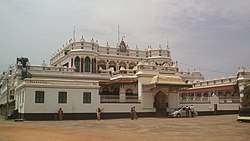
The Heritage Palace, Chettinad

Chettinad [1] (also known as Chettinadu) is a region in Tamil Nadu comprising 56 villages in Sivaganga district and 20 villages in Pudukottai district,[2] which was historically ruled by the Ramnad kingdom of Pandya Nadu. It has a small portion extending into the Pudukottai District in Tamil Nadu; Karaikudi is the major city of this area and is considered the urban centre for the Chettinadu villages.[3]

Etymology

[edit]

The name chettinad(u) comes from 2 Tamil words Chettiar and Nadu. Chettiar refers to a specific community of traders, Landlords people and Nadu means land. Collectively called as "land of the Chettiars".[4]

Demography

[edit]

In the 19th and early 20th centuries, many residents of Chettinad were trading in South and Southeast Asia, particularly Burma, Ceylon, Vietnam and Malaysia. By 2010, only 74 villages remained of the original 96,[5] organised in clusters spread over a territory of 1,550 square kilometres (600 square miles) in the districts of Sivagangai and Pudukottai in the State of Tamil Nadu. It finds itself in the UNESCO nomination for palatial house sites of historic and cultural value.[6] It is located on National Highway 536 between Trichy and Karaikudi[7] which is approximately 10kms away from this place.

Community

[edit]

Chettinad is the home of the Nattukottai Chettiars (Nagarathar), a prosperous banking and business community and for high hierarchy, non-Brahmin Vallambar feudal community with an aristocrat title Nattar - Ambalam. It is also known for its local cuisine, architecture, and religious temples.[8]

Chettinad cuisine

[edit]

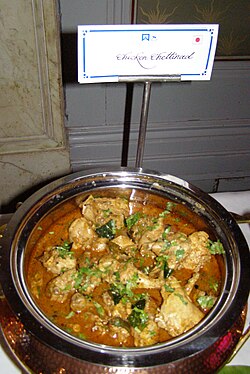
The word "Chettiar" refers to the social caste of mercantile bankers. The Chettiars are known to be traders in salt and spices and this is reflected in the Chettinad cuisine. Meals also consist of cooked lentils, Brinjal curry, drumstick sambar, ghee for flavouring rice, and sweet meals like payasam and paal paniyaram. Some well-known local dishes are Chicken Chettinad (spicy chicken curry), Vegetable Chettinad (a vegetable curry) and dishes featuring seafood.

Architecture

[edit]

The Chettinad region is well known for its 19th-century mansions, whose wide courtyards and spacious rooms are embellished with marble and teak. Construction materials, decorative items, and furnishings were mostly imported from East Asian countries and Europe. The marble was brought from Italy, chandeliers and teak from Burma, crockery from Indonesia, crystals from Europe and wall-to-wall mirrors from Belgium.

Many of these mansions were built using a type of limestone known as karai.[9] According to locals the mansion walls were polished with a paste made out of egg whites and palm sugar to give them a smooth texture and for their cooling qualities.[citation needed]

Temples

[edit]

Originally built by early Tamil dynasties like the Cholas, the temples of Chettinad stand testimony to the spiritual beliefs of local people. Temples are built according to Vaastu Shastras and Agamas as the Chettinad wealthy sponsored the buildings and the shilpis after the royal families declined. On a side note, traditional houses were also built according to ancient text in an architectural style called Vaastu Shastras.

Each temple has its own tank called oorani where water lilies are grown and used for holy rituals. Even today, much of Chettinad's daily activities are centered around the festivities of the temple. Among the many famous temples are: Vairavan Kovil, Iraniyur, Karpaga Vinayakar, Kundrakudi Murugan, Kottaiyur Sivan, and Kandanur Sivan temples, with each having its own unique deity.[10][11]

Vinayagar Chathurthi is celebrated every year, on the day when the two stars Shasti and Sadhayam mingle together. This day typically falls as the 22nd day after Periya Karthigai. Pillaiyar Nonmbu, its name, is usually in the month of December. On this day, they sing songs of the deity Lord Vinayagar and then take a sweet called Ellai.[10]

Local crafts

[edit]

Sari

[edit]

The cotton sari, also known as kandaangi, is unique in its dramatic patterns and colours.[12] Its vibrance and weight are its distinguishing factors. Records and old photographs show the use of sari by previous generations, before the advent of blouses and underskirts, and thus worn rather differently from the typical contemporary sari. At present, it is available in Kundi.

Aathangudi tiles

[edit]

Athangudi tiles, named after the place of the manufacture in Chettinad, come in a myriad of colours and patterns, and are made by a unique process using local soil and glass plates.[13] These tiles are a testament to the rich cultural heritage of the Chettiar community, who effectively adapted many influences to their own brand of local craftsmanship. The designs and colours used in Athangudi tiles are still those of a bygone era. However, of late, new designs and patterns are being incorporated.

The Athangudi tiles are hand-made. However, with a short shelf life and relatively slow manufacturing process, these tiles are not much in demand. The situation has led to the decline in the market.

Industry

[edit]
CECRI entrance.

Chettinad's principal town, Karaikudi is also the location of a branch of the Central Electro Chemical Research Institute (CECRI), one of the forty national laboratories under the aegis of the Council of Scientific and Industrial Research (CSIR) in New Delhi. The CSIR lab specialises in electro-chemical research and has been operational for more than fifty years. The campus is on over 300 scenic acres (120 ha), filled with traditional and ornamental vegetation.[14] CECRI conducts four-year Engineering and Technology courses in chemical and electro-chemical engineering and technology affiliated with the Anna University in Chennai.

Travel

[edit]

The nearest airports are Madurai International Airport and Tiruchirappalli International Airport while the largest towns in the area are Karaikudi and Devakottai.

Chettinad has its own railway station, but expresses don't stop here. The only halting train is the thrice daily MEMU train running from Tiruchirapalli to Virudhunagar connecting Pudukottai, Karaikudi, Devakottai, Sivaganga, Manamadurai and Aruppukottai with Chettinad station. All the trains running in the Chennai-Tiruchirapalli-Manamadurai Section stop at Karaikudi. Karaikudi Junction railway station is the nearest major station.There are also frequent town buses connecting Chettinad to Karaikudi, Ponnamaravathy, Devakottai Pudukkottai and Aranthangi.

Agriculture college

[edit]

The Tamil Nadu Agriculture University established a Dryland Agriculture Research Station (DARS) in Chettinad which was later upgraded to Agriculture College and Research Institute. It has a total of 450 acres (182 ha) of Farmland adopted for Research and Education. It houses a Centre of Excellence in Dryland Farming (CEDF) and a Food Processing Research and Training Centre (FPRTC). The college currently offers an Undergraduate Course of Bachelor of science Honours in Agriculture.

Notable people

[edit]

References

[edit]
[edit]
Revisions and contributorsEdit on WikipediaRead on Wikipedia
from Grokipedia
Chettinad is a socio-cultural region in the Sivagangai and districts of , , encompassing a network of 73 villages and 2 towns spread across 1,550 square kilometers, with serving as its principal town. It is the ancestral homeland of the Nattukottai Chettiars (also known as Nagarathars), a Tamil mercantile community renowned for their roles as bankers and traders. The region's name derives from the people, and it represents a distinctive cluster of settlements that flourished due to the community's economic prosperity. Historically, Chettinad's development accelerated in the 19th and early 20th centuries when Chettiar merchants established extensive banking networks across Southeast Asia, including Burma, Ceylon, and Malaysia, amassing wealth that transformed the local landscape. This era saw the construction of approximately 10,000 to 15,000 grand mansions between 1850 and the 1940s, characterized by spacious courtyards, intricate woodwork, and imported materials such as Italian marble, Burmese teak, and Belgian chandeliers, reflecting a fusion of indigenous Tamil design with international Art Deco influences. The Chettiars' return from abroad also enriched the region's temple architecture and community rituals, blending Tamil Shaivite traditions with global cultural exchanges. Today, Chettinad is recognized on UNESCO's Tentative List for its outstanding universal value in demonstrating cultural interchange, sustainable urban planning, and intangible heritage associated with Chettiar lifeways. Beyond architecture, Chettinad is celebrated for its vibrant , which originated in areas like and features bold, aromatic non-vegetarian dishes prepared with freshly ground spices, shallots, and unique ingredients such as kalpasi (black stone flower) and dried flower pods, alongside vegetarian specialties like paniyaram and kozhukkattai. The region also preserves artisanal traditions, including handwoven textiles, Athangudi floor tiles made from local clay, and bronze casting, which continue to sustain its cultural identity amid modern preservation efforts.

Etymology and History

Etymology

The term "Chettinad" derives from the combination of two Tamil words: "Chettiar," referring to a prominent merchant community, and "Nadu," meaning land or region, collectively translating to "the land of the Chettiars." This nomenclature reflects the area's historical association with the Chettiar (also known as Nattukottai Nagarathar) community, whose members were influential traders and bankers shaping the region's identity. The word "Chettiar" itself originates from "Chetti," a Tamil term denoting a or trader, which traces back to the "Śreṣṭha" (or "Shreshti"), signifying a superior or individual, often applied to heads of guilds or financiers in ancient trade networks. This linguistic root underscores the Chettiars' position within India's mercantile traditions, within the broader context of early Tamil trading guilds that institutionalized trade practices influencing mercantile communities like the Chettiars, embedding the term in a broader historical context of Tamil commerce. The name "Chettinad" gained formal recognition in the through British colonial administrative records, where it was used to delineate the cluster of villages inhabited by the community in present-day and districts, . During this period, as traders expanded their banking operations across under colonial facilitation, the region's designation solidified in gazetteers and economic surveys, highlighting its role as a hub of mercantile activity.

Historical Background

The origins of the Chettinad region are intertwined with the Nattukottai Chettiars, a mercantile community whose roots trace back to the ancient period in , where they established themselves as prominent traders. Oral traditions and historical accounts indicate that Chettiars were engaging in maritime trade with as early as two millennia ago, facilitating the exchange of goods and cultural influences across the region. By the and onward, their commercial networks had solidified, with the community leveraging kinship ties and caste-based guilds to expand operations in ports and inland areas of what is now . These early activities laid the foundation for Chettinad as a hub of economic activity, centered in the arid plains of present-day and districts. Under British colonial rule in the , Chettinad coalesced as a distinct socio-economic comprising 73 villages and two towns, serving as the base for the Chettiars' global ventures. The marked a peak of prosperity, as Chettiars migrated en masse to , Ceylon (now ), and , where they dominated banking and moneylending sectors critical to colonial export economies like and rubber. This era saw immense wealth accumulation, with Chettiar firms providing essential credit to local farmers and businesses, amassing fortunes equivalent to a significant portion of regional capital by the early —such as holding mortgages on approximately a quarter of the cultivated land in Lower Burma's principal rice-growing districts by the . The influx of remittances enabled large-scale investments back home, transforming Chettinad into a showcase of opulence. The trajectory shifted dramatically with the World Wars, which severely disrupted Chettiar trade networks; curtailed migrations and credit flows in Malaya, while World War II's Japanese occupations in and Malaya led to evacuations, asset seizures, and the loss of lives among the diaspora, prompting initial return migrations in the . Post-Indian independence, further decline ensued due to policies in former colonies: 's 1963-1964 bank seizures under the military regime forced the exodus of around 155,000 Indians, including many Chettiars, between 1963 and 1970, while similar measures in Ceylon and restrictions in eroded overseas operations through the . These events triggered widespread return migrations, diminishing the community's global influence and leading to economic challenges in Chettinad. In recognition of this historical legacy, the region was added to 's World Heritage Tentative List in 2014 as "Chettinad, Village Clusters of the Tamil Merchants," highlighting its enduring cultural significance.

Geography and Demography

Location and Extent

Chettinad is a distinct cultural and geographical region in the central part of , India, encompassing 73 villages and two towns spread across the and Pudukottai districts. This area covers approximately 1,550 square kilometers, forming a cohesive network of settlements that reflect a shared historical and environmental context. The region's terrain is predominantly flat, characterized by expansive agricultural plains interspersed with small hillocks such as those in , which contribute to its scenic and functional landscape. The soil composition features red and clay types, supporting a variety of crops and lending a distinctive reddish hue to the earth, while the landscape is dotted with palm trees and acacia groves. Situated inland but in proximity to the approximately 50-60 kilometers to the east, Chettinad is bounded by to the north and to the south, with the influencing local water resources through numerous tanks. Chettinad experiences a typical of southern , classified as hot and semi-arid, with scorching summers where temperatures can reach up to 43°C during and May. The region receives moderate monsoon rainfall, averaging around 905 mm annually, which sustains its agricultural productivity despite the dry conditions. Administratively, key hubs include the towns of and in , along with , which anchor the cultural and economic activities of the core area.

Demographics

The Chettinad region, encompassing 73 villages and two principal towns across and districts, has a population based on data for the core taluks and villages. Population density varies significantly, remaining lower in rural villages (around 300-500 persons per square kilometer) compared to urban centers like , which supports over 100,000 residents and serves as the region's economic hub. The demographic composition is diverse, with the Nattukottai Chettiars forming the dominant community, numbering about 110,000 individuals known for their historical mercantile roles. Other major groups include Thevars (a prominent agrarian and martial community), (comprising roughly 10-11% regionally, aligned with district figures), and Scheduled Castes (around 20%). The overall gender ratio is approximately 1,003 females per 1,000 males, reflecting balanced demographics with a child sex ratio of 956. Literacy rates exceed 80% across the region, surpassing the state average, with urban areas like achieving 90.5% (94.7% for males and 86.3% for females). A notable trend is the outflow of youth to urban centers such as and international destinations for higher education and job opportunities, driven by limited local prospects in traditional sectors. Socio-economic indicators highlight the role of s in sustaining households, with recording the highest remittance density in at 35.1 receiving households per 100, significantly boosting average monthly incomes (estimated at around ₹4,600 in mid-2010s surveys, adjusted upward with migration inflows).

The Chettiar Community

Social Structure

The Nattukottai Chettiars, also known as Nagarathars, maintain a patrilineal characterized by joint family systems and strict caste-based . Traditionally, families operate within a "valavu" or extended joint household comprising multiple "pulli" units—each consisting of a husband, wife, and children—under the guidance of a patriarchal head, fostering and business continuity. follows patrilineal lines, with assets divided equally among sons upon the father's death, adjusted for individual debts with interest, while daughters receive and stridhanam at but are excluded from ancestral to ensure lineage preservation. This system supports the community's mercantile ethos, where self-acquired wealth passes to male successors or through . is rigidly enforced, prohibiting marriages within the same temple or outside the , with temple registries serving as official records to maintain purity and social cohesion. Sub-clans, known as "kudis" or "kovil pirivu," form the backbone of social governance, organized around nine ancestral temples such as Ilayathankudi, Pillaiyarpatti, and Iraniyur, each linked to specific deities and villages in Chettinad. These kudis regulate , marital alliances (encouraging cross-clan unions except between certain pairs like Iraniyur and Pillaiyarpatti), and affairs, acting as registries for units and forums for dispute resolution through elder . institutions like the Nattukottai Chettiar Association (NCA) extend this governance, handling —such as funding schools and temples—and resolving conflicts beyond temple , while global chambers of commerce protect economic interests. Festivals like , celebrated with processions and temple rituals in , reinforce social bonds by uniting kudis in devotion to deities like Murugan, promoting communal harmony and identity. Gender roles historically delineate men as traders and expatriates, often absent for extended periods in or beyond, while women oversee households, manage finances including funds, and engage in crafts like basket-weaving to supplement income, embodying thrift and domestic authority within segregated spaces like the "irandamkattu" (women's zone). Urbanization and economic shifts have transitioned many families toward nuclear structures, reducing joint households from the norm to rarity, though kinship networks persist for business support. By 2025, women's has risen, with greater access to , including initiatives like Dr. Alagappa Chettiar's donations to women's colleges in and in the mid-20th century, which supported ongoing community efforts.

Cultural Practices

The Chettiar community in Chettinad observes Vinayagar Chathurthi, the festival celebrating the birth of Lord Ganesha, with vibrant community processions and devotional gatherings that emphasize communal harmony and obstacle removal. These celebrations often include eco-friendly installations and group prayers in local institutions, reflecting a blend of tradition and modern sustainability practices. Marriage customs among the Chettiars are elaborate, spanning up to six days and requiring prior temple approval for auspicious timing. A central ritual is the tying of the thali, known as Thirupootuthal, where the groom secures a special Chettiyar thali (Kaluthiru) around the bride's neck using a pink silk towel, symbolizing eternal union, followed by community prayers and offerings. Dowry traditions manifest in Vaevu Irakkuthal, where the bride's family presents symbolic gifts like food grains and vegetables to the groom's household, underscoring familial alliances and prosperity. Daily life in Chettinad revolves around customs that highlight and restraint, with virundhombal representing the cultural norm of warmly hosting guests as a mark of respect and community bonding. The community adheres to on most days, particularly auspicious occasions, reserving non-vegetarian meals for Wednesdays and Saturdays to maintain purity. The Chettiars speak a of Tamil influenced by through historical interactions with broader Hindu traditions, enriching their oral expressions in rituals and commerce. Art forms play a vital role in Chettinad's cultural expression, with kummi, a rhythmic performed by women through handclaps and songs, fostering social unity during gatherings. Therukoothu, an ancient tradition involving storytelling from epics like the , serves as a communal entertainment and moral education tool, enacted with elaborate costumes and music. Astrology holds significant sway in life events, guiding decisions on marriages, business ventures, and ceremonies through practices like , which draws on ancient palm-leaf predictions tied to Tamil heritage. Amid modernization, community-led preservation initiatives in 2025 focus on reviving traditions through events like the Chettinad Heritage and Cultural Festival, held from September 12 to 16, which showcases , , and festivals to engage younger generations and . Collaborative efforts by heritage hotels and local organizations promote sustainable practices in festivals and , ensuring cultural continuity while adapting to contemporary challenges.

Cultural Heritage

Chettinad Cuisine

, originating from the community in Tamil Nadu's , is renowned for its bold, aromatic profiles derived from an extensive use of freshly ground spices and traditional preparation techniques. This culinary tradition reflects the Chettiars' historical role as traders and bankers, who traveled across , incorporating exotic flavors while emphasizing local ingredients like and for balance. The cuisine balances intense heat from chilies and pepper with cooling elements such as and , resulting in dishes that are both spicy and complex. Central to Chettinad cuisine are a wide variety of key spices sourced from the Chettiars' ancient trade networks, including star anise (anasipoo), black stone flower (kalpasi), fennel seeds (sombu), , , cloves, and dried red chilies. These spices are often slow-roasted and stone-ground into fresh masalas to preserve their potency, distinguishing the cuisine from other South Indian styles that rely on pre-mixed powders. Sundried meats, salted vegetables, and generous use of —fresh, grated, or as milk—add depth and texture, while provides the signature tang. The emphasis on hand-pounded pastes ensures that each dish bursts with layered flavors, a practice rooted in the community's mercantile exposure to diverse ingredients from Burma and during the 19th and early 20th centuries. Signature dishes highlight the cuisine's versatility, with non-vegetarian staples like , a fiery where chicken is simmered in a gravy of , star , , and paste, often tempered with curry leaves for an aromatic finish. Vegetable variants, such as brinjal masala (kathirikai masala), feature cooked in a spice blend of roasted , red chilies, and , offering a smoky, tangy profile suitable for rice accompaniments. Desserts provide a sweet counterpoint, including athirasam, a deep-fried sweet infused with and , and payasam, a creamy enriched with and . These dishes are typically served on banana leaves in communal feasts, underscoring the cuisine's role in social gatherings. Cooking methods in Chettinad emphasize slow, deliberate processes to extract maximum flavor, such as podiyal—the dry roasting of whole spices before grinding—and tadka (tempering), where mustard seeds, , and are fried in or to release their essences. Influences from travels are evident in the incorporation of Southeast Asian elements like fermented pastes and wood-fired cooking (aduppu), which impart a subtle smokiness to curries prepared in clay pots. Hand-pounding in stone mortars (ural) remains a hallmark, avoiding modern grinders to retain the spices' volatile oils. In recent years, Chettinad cuisine has gained global traction through fusion innovations, with 2025 trends featuring adaptations like Chettinad-spiced pastas and tacos in urban restaurants outside , blending its spice intensity with international formats to appeal to diverse palates. This evolution highlights the cuisine's adaptability while preserving its core emphasis on fresh, bold seasonings.

Architecture

Chettinad's architecture is epitomized by the opulent "kottai" mansions constructed in the 19th and early 20th centuries by the prosperous Nattukottai merchants, whose wealth from global trade enabled these lavish builds. These fortified residences, often spanning vast compounds, feature multi-courtyard layouts designed to accommodate extended families, with many having over 50 rooms across a single story. The structures blend indigenous and international elements, incorporating Athangudi tiles for vibrant, handcrafted ; Italian for columns and verandas; Burmese for sturdy doors, pillars, and ceilings; and Belgian chandeliers for dramatic interior lighting, showcasing the Chettiars' far-reaching commercial ties to , , and beyond. Construction techniques emphasize durability and climate adaptation in the region's hot, humid environment. Walls are built using karai limestone—a local lime derived from seashells—mixed with sand and applied in multiple layers, then polished to a glossy finish by incorporating egg whites, which create a waterproof, mirror-like surface that has endured for over a century in many homes. The mansions' orientations prioritize natural ventilation through expansive central courtyards, wide verandas, and high ceilings that facilitate cross-breezes, keeping interiors cool without modern cooling systems. These layouts draw on traditional principles to harmonize with the tropical climate, ensuring airflow and light penetration across the sprawling interiors. Symbolic elements infuse the architecture with cultural depth, particularly in the Athangudi tiles, whose intricate geometric and floral patterns often incorporate motifs symbolizing hospitality, prosperity, and positive energy. These designs, etched into the floors of courtyards and hallways, reflect local traditions and invite auspiciousness into the home. Following economic decline in the mid-20th century, many mansions deteriorated due to abandonment and lack of maintenance, prompting conservation initiatives. The has supported restoration efforts since 2006, including documentation and community involvement to safeguard these heritage sites from further decay. By 2025, has gained momentum, with numerous kottai mansions converted into homestays and boutique heritage hotels to foster and generate income for preservation. These conversions maintain original features while providing experiential stays, helping to revive rural economies and ensure the architectural legacy endures for future generations.

Temples and Religious Sites

Chettinad's religious landscape is characterized by a rich array of Hindu temples that reflect the region's deep spiritual traditions and historical patronage by the Nattukottai Chettiar community. These sites, primarily dedicated to deities like , , and local guardian gods, serve as focal points for devotion and community life, blending ancient with later expansions funded by trade prosperity. The temples embody Dravidian stylistic elements, including towering gopurams and adherence to Vaastu Shastra principles for spatial alignment, which ensure harmonious energy flow within the sacred precincts. Among the prominent temples is the Karpaga Vinayagar Temple in Pillaiyarpatti, near , an ancient rock-cut cave shrine dating back to the 7th century CE or earlier, featuring intricate granite carvings of the elephant-headed without a vehicle or modak, unique to this site. Expanded over centuries, it includes structural additions from the Pandya and Chola periods, with the main sanctum hewn directly from a single rock, underscoring its enduring sanctity as one of Tamil Nadu's oldest cave temples. Another notable site is Vairavan Kovil in Vairavapatti, a historic temple linked to the Chola through its architectural motifs and inscriptions that document early medieval patronage and land grants, highlighting the integration of regional with classical Shaivite worship. Complementing these are over a hundred Ayyanaar shrines scattered across Chettinad villages, dedicated to the pre-Vedic guardian Ayyanar, often featuring distinctive terracotta horses as votive offerings symbolizing protection and fertility; these open-air shrines, unique to the region, are typically located on village outskirts and maintained through communal contributions. The architectural features of Chettinad temples draw from Dravidian traditions, with multi-tiered gopurams serving as ornate gateways adorned with figures of and mythical beings, acting as visual narratives of Hindu epics. Vaastu alignments orient the temples toward cardinal directions, promoting cosmic balance, while interiors boast pillared halls (mandapas) and sanctums (garbhagrihas) crafted from local and . Many sculptures and bronzes within these temples were donated by merchants, who allocated a portion of their profits from Southeast Asian trade ventures—such as in and Ceylon—to adorn shrines as acts of and vow fulfillment, evident in the opulent vimanas and icons that reflect their global mercantile influence. Rituals at these temples, such as the Kodi Vizha or Kodiyetram—the flag-hoisting ceremony—mark the commencement of annual festivals, where a vibrant cloth flag (kodi) embroidered with the deity's emblem is raised on the dwaja stambham (flagpost) amid chants and processions, invoking divine blessings for the community. This ritual, performed with elaborate poojas and animal invocations, symbolizes the deity's journey and protection over the region, drawing devotees for vibrant celebrations that last several days. Chettiar patronage historically tied these practices to trade vows, where successful merchants sponsored festivals upon safe returns from Southeast Asia, reinforcing the temples' role in economic and spiritual reciprocity. These temples function as vital centers for community gatherings, hosting festivals like and that unite s in rituals, feasts, and cultural exchanges, preserving social cohesion amid historical migrations. Their historical significance stems from Chettiar endowments during the 19th and early 20th centuries, when wealth from banking and commodity trade in funded renovations and expansions, transforming modest shrines into grand complexes that symbolized prosperity and piety. In 2025, under Tamil Nadu's heritage initiatives, the ICSSR-funded Chettinad Heritage Project has advanced efforts for temple archives, including inscriptions and manuscripts, to safeguard epigraphic records of Chola-era grants and Chettiar donations for scholarly access and conservation. As of November 2025, the ICSSR-funded Chettinad Heritage Project continues to advance of temple archives, including inscriptions and manuscripts, enhancing scholarly access and conservation efforts.

Traditional Crafts and Industries

Chettinad Sari

The Chettinad , commonly known as the Kandangi sari, is a handwoven garment emblematic of the region's heritage, distinguished by its bold checked patterns, contrasting borders, and intricate gold embellishments. These saris feature temple-inspired motifs such as peacocks, elephants, and floral designs drawn from South Indian temple architecture, often rendered in vibrant hues like deep red, lush green, and earthy mustard tones that reflect the local landscape and cultural vibrancy. Crafted from fine local , the sari measures approximately 5.5 meters in length, ideal for the traditional nine-yard drape that allows for elaborate pleating and pallu styling. The production of saris relies on the time-honored pit-loom technique, primarily practiced in villages around in the , where weavers operate raised pit looms equipped with fly shuttles to achieve the signature checks and borders. Artisans use pure local cotton yarns, typically 60s count for both , which are first scoured and dyed using sources like madder roots for reds and fermented for blacks, ensuring colorfastness and breathability suited to Tamil Nadu's humid climate. The process, which can take 5-7 days per , involves multiple shuttles for color contrasts and dobby mechanisms for motifs, emphasizing precision and in every stage. Originating over 200 years ago, the Kandangi sari was traditionally woven by Devanga weavers exclusively for the women of the prosperous Nattukottai (Chettinad) community, who wore it during religious rituals, weddings, and festivals to symbolize prosperity and adherence to custom. This patronage arose from the Chettiars' mercantile travels to , where they encountered diverse textile influences that enriched local designs. In recognition of its unique craftsmanship tied to the Chettinad region, the Kandangi sari was awarded a (GI) tag on August 30, 2019, by the Geographical Indications Registry, safeguarding its authenticity against mass-produced imitations. By 2025, the Chettinad sari has experienced a significant revival driven by handloom cooperatives, such as the Amarar Rajeev Gandhi Handloom Weavers Co-operative Production and Sales Society in , which provide training, raw materials, and market linkages to over 80 weavers, many of them women sustaining family traditions. These initiatives have facilitated exports to international markets in the United States, Europe, and , with annual shipments reaching thousands of units through platforms like Global Export Mart, generating while countering competition from inexpensive synthetic fabrics. This resurgence not only preserves the artisanal skill but also promotes eco-conscious consumption, as the saris' natural dyes and durable weaves appeal to global demand for .

Athangudi Tiles

Athangudi tiles are handmade, eco-friendly flooring tiles originating from the village of Athangudi in the Chettinad region of , , renowned for their vibrant colors and intricate patterns that reflect local artistic traditions. Developed in the early by the community as a cost-effective alternative to expensive imported tiles, these tiles utilize locally available materials, making them sustainable and well-suited to the tropical climate due to their heat-resistant properties that help keep interiors cool. Their production avoids high-energy processes like firing, relying instead on natural sun-drying, which underscores their environmental benefits. The production process begins with preparing a mixture of local red , , pieces for smoothness, and natural oxides for pigmentation, which are ground and blended with to form colored pastes. These pastes are poured into metal molds or stencils placed on sheets to create designs, followed by layering with a binding mortar of and , which is pressed firmly to ensure . The tiles are then cured by soaking in for up to two weeks to harden naturally, sun-dried for an additional period, and finally waxed or polished with husks to achieve a glossy finish. This labor-intensive, manual method, passed down through generations, produces tiles typically 18 mm thick and in sizes like 12x12 inches, without the use of machinery or . Common designs feature floral motifs, peacocks, geometric patterns, and (traditional ) inspired by Chettiar trade influences from , often combining multiple colors such as red, green, mustard, and blue for visually striking floors. These tiles hold significant heritage value as a symbol of Chettinad's artisanal legacy, primarily used in the grand mansions and temples of the region to adorn floors with , interlocking patterns that enhance architectural . However, the has faced decline since the mid-20th century due to competition from cheaper, mass-produced tiles, leading to reduced and a shortage of skilled artisans as younger generations migrate to urban jobs. In response, efforts as of 2025 include government subsidies and training programs to support remaining artisans, alongside participation in international exhibitions to promote the tiles globally and revive interest.

Modern Industries

The (CECRI), located in , stands as a key modern research institution in Chettinad, established in 1948 under the Council of Scientific and Industrial Research (CSIR) and becoming fully operational in January 1953. Specializing in , CECRI focuses on areas such as battery technologies, corrosion science, and processes, contributing to advancements in and materials . The institute employs approximately 233 staff members, including 77 scientists, fostering innovation through collaborative research projects. Beyond research, Chettinad's modern industrial landscape includes small-scale mills and processing units, primarily clustered in the SIDCO Industrial Estate in . These operations involve weaving, garment production, and dyeing, supporting local employment while leveraging the region's historical heritage in a mechanized format. processing units, such as those operated by Thillai's Masala, produce regional blends like Chettinad masala, emphasizing quality control and export-oriented packaging for domestic and international markets. Post-2020, the region has seen growth in IT outsourcing hubs, with companies like Overseas Cyber Technical Services (OCTS), founded in 2008, expanding services in and from . This development aligns with broader trends in Tamil Nadu's IT sector, where small-town hubs have proliferated due to enablement and cost advantages, employing local talent in coding, , and digital solutions. Economically, these industries contribute to Chettinad's output through chemical-related exports from CECRI-linked innovations and local manufacturing, though reports indicate challenges in scaling due to skill gaps in specialized areas like advanced electrochemistry and digital technologies. As of 2024, Tamil Nadu's skill development reports highlight a need for enhanced training in emerging sectors, with only about 4.7% of the population aged 15 and above having undergone vocational training, affecting industrial productivity in districts like . CECRI has driven innovations through numerous patents in materials, including high-capacity lithium-insertion anodes for batteries and insulated containers for low-temperature performance, supporting regional by enabling efficient for solar and other green applications in Tamil Nadu's arid climate. These advancements promote eco-friendly technologies, reducing reliance on fossil fuels and aligning with national goals for .

Economy and Education

Agriculture and Economy

Chettinad's agricultural sector is predominantly rainfed, with significant focus on dryland crops suited to the region's red soils. Major field crops include paddy (), cultivated on 76.7 thousand hectares (as of 2011) across kharif, rabi, and summer seasons, groundnut on 5.2 thousand hectares (as of 2011), and millets such as alongside pulses like black gram. Spice cultivation, particularly chili (3 thousand hectares as of 2011) and pepper, supports local traditions and adds value to the agrarian economy, though horticultural crops like (6.1 thousand hectares as of 2011) also play a key role. covers a net area of 79.7 thousand hectares (as of 2011) in the broader encompassing Chettinad, primarily from tanks (65.4 thousand hectares as of 2011) and wells, enabling paddy and other water-intensive crops on limited . The economy of Chettinad draws from , trade, and services, bolstered by remittances from the Nattukottai Chettiar diaspora, which historically financed local development and continue to supplement household incomes. Per capita income in the , which includes Chettinad, stood at approximately ₹1.82 in 2022–23, reflecting contributions from agrarian output, remittances, and emerging service sectors. Agro-processing industries provide limited support for value addition in crops like groundnut and spices, enhancing economic resilience without dominating the landscape. Water scarcity poses a persistent challenge to farming in Chettinad's semi-arid terrain, exacerbated by erratic monsoons and over-reliance on , prompting interventions like check dams to recharge aquifers and improve efficiency. Since 2015, shifts toward have gained traction through state initiatives promoting seeds, bio-fertilizers, and cluster-based certification, reducing chemical inputs and addressing degradation in rainfed areas; the Organic Farming Policy of 2023 further supports chemical-free agriculture via single-window certification and cluster development. The region's trade legacy stems from the Nattukottai Chettiars' traditional moneylending networks, which evolved into modern banking institutions and cooperatives, facilitating agricultural credit and for local farmers and traders. These cooperatives, rooted in community kinship structures, continue to support rural economies by providing low-cost loans and services, bridging historical practices with contemporary needs.

Agricultural College

The Agricultural College and Research Institute (AC&RI), Chettinad, was established in 2021 as a constituent college of (TNAU) to provide specialized education and research in dryland agriculture. Located in Chettinad village, , , the institution spans 317 acres within the Dryland Agricultural (DARS) campus, situated at the of the Nagamalai hills, approximately 12 km from . This strategic placement addresses the region's predominant rainfed farming challenges, including semi-arid conditions and red soils prevalent in . The offers a four-year B.Sc. (Hons.) program, with an intake of 75 students annually, emphasizing practical training in sustainable agricultural practices tailored to local such as paddy, groundnut, and millets. The integrates classroom instruction with hands-on experience in management, , and water-efficient techniques suitable for alfisols under rainfed conditions. As of 2025, postgraduate programs have not yet been introduced, but the focus remains on to build a skilled for the region's agricultural sector. Facilities at AC&RI, Chettinad, include modern classrooms equipped with LCD projectors, audio systems, and LCD TVs for , alongside specialized laboratories such as well-equipped , , and analytical labs, botany labs, and entomology sections. The campus also features a central , IT infrastructure with , an , sports facilities, separate hostels for boys and girls, and extensive research farms dedicated to dryland experimentation. These resources support systems, including greenhouses and demonstration plots for crop trials. Through its extension arm, the Centre of Excellence in (CEDF), the college delivers advisory services, training workshops, and technology dissemination to farmers in , focusing on weather-based planning, plant protection, and management. efforts have contributed to developing drought-tolerant varieties and improved cropping systems for rainfed areas, enhancing resilience against variability in local agriculture.

Tourism and Travel

Key Attractions

Chettinad Palace in stands as one of the region's premier heritage sites, constructed in 1912 by the notable businessman Dr. Annamalai Chettiar as a grand family residence spanning over 70,000 square feet. Featuring intricate Burmese teak woodwork, granite pillars imported from various regions, stained-glass windows, and handcrafted Italian marble floors, the palace exemplifies the opulent that defined Chettiar prosperity during the early 20th century. Today, it functions as a private museum and heritage hotel, offering guided tours that highlight its 12 courtyards, antique furnishings, and historical artifacts, drawing visitors to explore the legacy of Chettiar mercantile wealth. The Pillayarpatti Karpagavinayagar Temple, located about 15 kilometers from , is a renowned rock-cut temple dedicated to Lord Ganesha, featuring ancient cave shrines and intricate carvings from the . This significant religious site attracts pilgrims and tourists with its historical and annual festivals, offering insights into Chettinad's spiritual heritage. Heritage walks in offer immersive experiences through clusters of over 75 grand Chettiar mansions, many dating from the late 19th to early 20th centuries, showcasing sprawling courtyards, Athangudi tile flooring, and Belgian chandeliers that reflect global trade influences. These guided tours often extend to Athangudi tile workshops, where visitors observe the traditional handmade process using local , lime, and natural dyes to create vibrant, durable floor tiles unique to the region. The area, including these mansion clusters, was added to UNESCO's Tentative World Heritage List in 2014 as "Chettinad, Village Clusters of the Tamil Merchants," recognizing its exemplary and living cultural heritage across 73 villages. Experiential attractions enhance visits with hands-on cooking classes focused on , offered at heritage properties like The Bangala and Visalam, where participants learn to prepare signature spicy dishes such as mutton chukka or vegetable kootu using stone-ground masalas and local ingredients. These sessions, typically lasting 2-3 hours, emphasize the culinary traditions rooted in Chettiar history and are available year-round for small groups. Complementing this, the annual Chettinad Heritage and Cultural Festival, launched in 2019 by the Chettinad Heritage and Cultural Trust in collaboration with local hotels, features four-day events in September with mansion tours, craft demonstrations, and performances, raising funds for conservation while immersing attendees in the region's arts and customs. The 2025 edition, held from September 12 to 16, highlighted mansion tours and cultural performances. In , new eco-tourism trails have emerged in Chettinad following post-monsoon restorations, including nature hikes through 's lush outskirts that highlight , ancient groves, and restored pathways linking heritage sites to rural landscapes, promoting sustainable exploration with guided low-impact tours.

Accessibility and Transportation

Chettinad is accessible primarily through nearby airports, with International Airport () serving as the closest option at approximately 97 kilometers away, offering a drive time of about two hours via well-maintained highways. (), located around 89 kilometers from central Chettinad hubs like , provides another convenient entry point with similar travel durations by road. Both airports connect to major domestic and international flights, facilitating easy access for visitors from cities like , Bangalore, and . Rail connectivity is robust, centered on Karaikudi Junction (KKDI), a key station on the Chennai Egmore-Rameswaram line operated by Southern Railway. Multiple daily express trains, including the Chennai Egmore-Rameswaram Express, link directly to (about 466 kilometers away) in roughly 8-9 hours, while southern routes extend to in 3-4 hours. This line supports frequent services, making it a reliable option for budget-conscious travelers exploring the region's heritage sites. Road access to Chettinad is facilitated by National Highway 32 from , covering approximately 406 kilometers in 7-8 hours by car or bus. From , National Highway 87 or 36 provides direct routes of about 100 kilometers. Local transport within Chettinad includes auto-rickshaws, , and private vehicles, with heritage-themed bus tours available for scenic village explorations; hiring a dedicated car is recommended for flexibility across the 75-village region. The optimal visiting period is from to , when mild temperatures (20-30°C) and low enable comfortable outdoor activities, avoiding the intense summer exceeding 40°C. As of 2025, Tamil Nadu's transportation infrastructure has seen enhancements, including feasibility studies for semi-high-speed rail corridors (160-200 km/h) connecting to southern districts like Villupuram and potentially benefiting Chettinad access, alongside statewide expansion to 2,500 EV charging stations to support eco-friendly road travel. For seamless navigation, visitors can join guided tours departing from , which often include expert-led heritage walks and mansion visits, while staying at restored heritage hotels like Visalam or Chettinad Mansion offers immersive accommodations with on-site transport arrangements.

Notable People

Business Leaders and Philanthropists

The Chettinad region's business leaders, primarily from the Nattukottai Chettiar community, have historically leveraged their mercantile acumen to build vast commercial empires while channeling significant wealth into , particularly in education and community welfare. These figures exemplified a blend of entrepreneurial innovation and , establishing institutions that continue to shape South India's economic and cultural landscape. Dr. R.M. (1909–1957), born in Kottaiyur near , emerged as a pioneering industrialist and philanthropist whose ventures spanned textiles, plantations, and aviation. He co-founded Cochin Textiles in 1937 and expanded into rubber plantations in Malaya, tin mines in Burma, and textile mills in , among other sectors including , , and cinema theaters. His business success, which earned him a knighthood in 1946 (later renounced post-independence), funded extensive charitable endeavors; he established the Alagappa Arts College in in 1944, the Alagappa Chettiar College of Engineering and Technology, and several schools such as the Alagappa Matriculation School in . Additionally, Alagappa donated 300 acres and Rs. 15 lakhs to found the Central Electro-Chemical Research Institute in , opened in 1953, and supported hospitals and relief efforts, including a in Cochin and aid to Gandhi's causes. Awarded the in 1957 shortly before his death, his legacy redefined by reinvesting industrial profits into public institutions. Raja Sir Annamalai Chettiar (1881–1948), a scion of the prominent Chettiar family, transformed family banking operations into a cross-border financial powerhouse that extended across , including Ceylon, Burma, and . Utilizing community networks for trust-based lending and correspondent-style banking, he co-founded in 1907 with his brother and later served as the first Indian governor of the (now ) from 1941 to 1946. Despite challenges like the Great Depression's impact on overseas loans, his empire facilitated trade and remittances vital to colonial India's economy. As a philanthropist, Annamalai established the in in 1929, evolving from his earlier Sri Meenakshi College founded in 1920, to provide accessible higher education; he also created cultural bodies like the Tamil Isai Sangam, supported music academies and publications preserving Tamil literary traditions, and built the iconic Chettinad Palace. Knighted in 1923 and titled , his contributions earned him election to the for three terms. M. A. Chidambaram (1918–2000), the youngest son of Raja Annamalai Chettiar, built the MAC Group into a diversified conglomerate encompassing shipping, fertilizers, automobiles, and steel, with early forays into textiles through family enterprises. As chairman of the Southern India Shipping Company and other ventures, he played a key role in post-independence industrial growth, including introducing motor scooters to and leading the Madras Fertiliser Company. His business leadership extended to serving as president of the Board of Control for Cricket in from 1960 to 1961, reflecting his broader influence. Chidambaram's philanthropic efforts supported arts, promotion, and community welfare, aligning with the Chettiar tradition of reinvesting wealth for public good. In 2025, the enduring legacy of these leaders manifests through Chettiar-led endowments and initiatives preserving Chettinad's heritage, such as the Chettinad Heritage and Cultural Festival held in , which unites family-run heritage hotels like Visalam and The Bangala to showcase and restore opulent mansions, fostering cultural and economic sustainability. These efforts, backed by community endowments, highlight ongoing commitments to architectural conservation and traditional crafts amid modern challenges.

Figures in Arts, Politics, and Other Fields

M. A. M. Ramaswamy (1931–2015) was a prominent politician and philanthropist from the Chettinad region, serving as a Member of Parliament in the Rajya Sabha from Karnataka under the Janata Dal (Secular) party. He played a key role in education by establishing and supporting institutions such as the Chettinad Health City and serving as Chancellor of its university, reflecting his commitment to community development. Additionally, Ramaswamy was a pioneering figure in Indian horse racing, founding the Madras Race Club and owning notable racehorses, which elevated the sport's profile in the country. Other notable figures from Chettinad include Lena Tamilvanan, a and author born in , who has contributed extensively to Tamil media as the editor of the weekly "Kalkandu" and author of over 70 books, often exploring regional narratives and social issues. In cinema, , hailing from , directed more than 75 Tamil films from the 1970s onward, including successful works like Nallavan (1984) and Kazhugu (1981), blending commercial appeal with cultural storytelling rooted in South Indian contexts. In contemporary times, as of 2025, the Chettinad Heritage & Cultural Festival has emerged as a vital platform for up-and-coming artists in cinema and , fostering works inspired by the region's , , and traditions, such as short films and narratives showcased during its annual editions that attract filmmakers and writers to explore Chettinad motifs.

References

Add your contribution
Related Hubs
User Avatar
No comments yet.