Hubbry Logo
Connaught RangersConnaught RangersMain
Open search
Connaught Rangers
Community hub
Connaught Rangers
logo
8 pages, 0 posts
0 subscribers
Be the first to start a discussion here.
Connaught Rangers
Connaught Rangers
from Wikipedia

Connaught Rangers (88th Foot & 94th Foot)
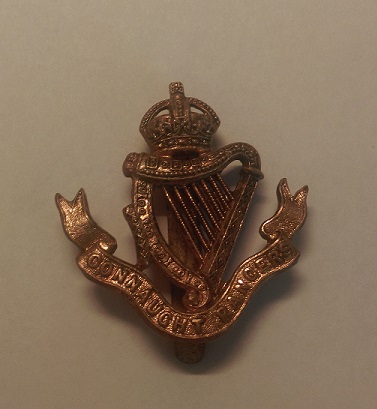
Connaught Rangers Cap Badge
Active1881–1922
CountryUnited Kingdom United Kingdom of Great Britain and Ireland
Branch British Army
TypeLine infantry
RoleInfantry
Size2 Regular Battalions

2–4 Militia and Special Reserve Battalions

Up to 2 Hostilities-only Battalions
Garrison/HQRHQ – Renmore Barracks, Galway
NicknameThe Devil's Own
MottoQuis Separabit (Who will separate us) (Latin)
MarchQuick: Brian Boru March
EngagementsEgypt 1801; India; South America; The Peninsula; The Crimea; Indian Mutiny; South Africa 1877–1882; Egypt 1884–86; South Africa 1899–1902;
The Great War – France & Flanders; Mesopotamia; Macedonia; Gallipoli; Bulgaria

The Connaught Rangers ("The Devil's Own") was an Irish line infantry regiment of the British Army formed by the amalgamation of the 88th Regiment of Foot (Connaught Rangers) (which formed the 1st Battalion) and the 94th Regiment of Foot (which formed the 2nd Battalion) in July 1881. Between the time of its formation and Irish independence, it was one of eight Irish regiments raised largely in Ireland. Its home depot was in Galway.[1] It was disbanded following the establishment of the independent Irish Free State in 1922, along with the other five regiments that had their traditional recruiting grounds in the counties of the new state.[2]

History

[edit]

Early history

[edit]

The regiment was formed by the amalgamation of the 88th Regiment of Foot (Connaught Rangers) (which formed the 1st Battalion) and the 94th Regiment of Foot (which formed the 2nd Battalion) in July 1881. The amalgamation of the two regiments into one with the title The Connaught Rangers, was part of the United Kingdom government's reorganisation of the British Army under the Childers Reforms, a continuation of the Cardwell Reforms implemented in 1879.[3]

"The Connaught Rangers" by Richard Simkin (1840–1926)

It was one of eight Irish regiments raised largely in Ireland, with its home depot at Renmore Barracks in Galway.[1] The regiment recruited mainly in the province of Connacht. Militarily, the whole of Ireland was administered as a separate command within the United Kingdom with Command Headquarters at Parkgate (Phoenix Park) in Dublin, directly under the War Office in London.[4]

The 88th were based in Bengal, British India, when they were amalgamated into the new regiment.[5] The 94th were based in South Africa at the time of amalgamation; as the 2nd Battalion, it returned to Ireland the following year and sent a small detachment on the Nile Expedition in 1884 as Camel Mounted Infantry.[5] The 2nd Battalion deployed to the Sudan in 1896 for the Dongola Expeditionary Force under the command of Lord Kitchener as part of the reconquest of the Sudan before moving to India in 1897.[5]

Second Boer War

[edit]

The 1st Battalion deployed to South Africa as part of 5th (Irish) Brigade, commanded by Major-General Fitzroy Hart, and saw action at the Battle of Colenso in December 1899, part of the attempt to relieve the town of Ladysmith, besieged by Boer forces. The brigade suffered heavily during their participation in the battle, the Boers inflicting heavy casualties: the regiment had 24 men killed and 105 officers and men wounded.[6] The Rangers fought at Spion Kop in January 1900 and the Tugela Heights in February 1900 during further attempts by General Sir Redvers Buller to relieve the besieged town of Ladysmith. In late February the siege of Ladysmith finally came to an end after it was relieved by British forces.[7] The battalion stayed in South Africa after the end of the war (June 1902), leaving Cape Town for Southampton on the SS Staffordshire in January 1903.[8] After a brief stay in Mullingar, they returned to India later in 1903.[5]

In 1908, the Volunteers and Militia were reorganised nationally, with the former becoming the Territorial Force and the latter the Special Reserve;[9] the regiment now had two Reserve but no Territorial battalions.[10][11]

First World War

[edit]
Battle of the Somme. Photo by Ernest Brooks
ALB ANDERSON'S BADGE
Connaught Rangers Badge 1914
Connaught Rangers Association badge, 1920
Connaught Rangers
A.L.B. Anderson's Tunic

Regular Army

[edit]

The 1st Battalion, which was commanded by Lieutenant-Colonel Hurdis Ravenshaw and had been stationed in Ferozepore, India, landed as part of the 7th (Ferozepore) Brigade in the 3rd (Lahore) Division at Marseille in September 1914 for service on the Western Front.[12]

The 2nd Battalion landed at Boulogne-sur-Mer as part of the 5th Brigade in the 2nd Division with the British Expeditionary Force in August 1914 for service on the Western Front.[12] Its marching song It's a Long Way to Tipperary became famous.[5] By October, the battalion was involved in the fighting around Ypres. On one occasion Private Grogan rushed seven Germans who had occupied a section of trench. He killed all of them. It cost him a cut forehead and four teeth.[13]

Following severe losses in the battles of 1914, the 2nd Battalion was disbanded, with survivors transferring into the 1st Battalion. In turn, the 1st Battalion was redeployed to the Middle East in 1916, where it fought primarily in modern-day Iraq as part of the British Tigris Corps.[14]

The 3rd (Reserve) Battalion was based in Galway upon the declaration of war and would remain in Ireland until November 1917 when it moved to England.[12] The 4th (Extra Reserve) Battalion had been based in Boyle in August and would remain there until November 1917 when it relocated to Scotland: it was absorbed into the 3rd Battalion in May 1918.[12]

New Armies

[edit]

The 5th (Service) Battalion, which was formed in Dublin in August 1914, landed at Anzac Cove in Gallipoli in August 1915 as part of the 29th Brigade in the 10th (Irish) Division but moved to Salonika in September 1915 for service on the Macedonian front and then transferred to Egypt for service in Palestine in September 1917 before landing at Marseilles in June 1918 for service on the Western Front.[12]

The 6th (Service) Battalion, which was formed in County Cork in September 1914 though largely recruited in west Belfast,[15][16] landed at Le Havre as part of the 47th Brigade in the 16th (Irish) Division in December 1915 for service on the Western Front.[12] In just over a week's fighting in the Battle of the Somme in September 1916, the 6th Battalion lost 23 officers and 407 other ranks.[17] On 21 March 1918, the same Battalion was "practically annihilated" during the German spring offensive breakthrough. In one week the battalion lost "22 officers and 618 other ranks".[18] As a result of these heavy losses, the survivors were transferred into the 2nd Battalion, the Leinster Regiment.[12]

1916 Easter Rising

[edit]

In April 1916, during World War 1, in what became known as the Easter Rising, Irish Republican forces in Ireland launched an armed insurrection against the authority of the government of the United Kingdom, with the declared aim of establishing an Irish Republic wholly independent in its sovereign governance from the United Kingdom. In response, the Connaught Rangers and other British Army units were deployed to fight against the paramilitary forces of the "Irish Volunteers". None of the Connaught Rangers were killed in action but one was wounded.[19]

A 584-man strong column from the 3rd Battalion Connaught Rangers, commanded by Lieutenant Colonel A J Digan DSO, marched on Enniscorthy to fight the rebels who had taken over the town, however on arrival decided not to attack the insurrectionists' positions within the town to avoid turning Enniscorthy into a battlefield.[20] In the days after the insurrection began the Connaughts patrolled the countryside seeking contact with any of those war parties that cared to show themselves, in the process capturing hundreds of prisoners of war and seizing their weapons stocks.[21] A 250 strong force of the Connaughts, under the command of Major H.M. Hutchinson, marched to Ferns on 4 May 1916, and then on to Gorey the next day.[22] A party of 31 Connaught Rangers led by Lieutenant L.C. Badham searched houses in Kinsale on 4 May 1916, and the next day captured a large number of rebels and their weapons.[23] The Connaught Rangers' Column searched houses in New Ross on 9 May 1916 and then at Waterford the next day.[23] The Connaught Rangers Column reached Clonmel on 16 May 1916, searching further residences in the town and capturing another large number of rebels and their weapon-stocks.[22]

Another Column of Connaught Rangers, 422 men strong, led by Major O.F. Lloyd, searched houses in Bandon from 6 to 11 May 1916, capturing further numbers of rebels and weapons. The Column proceeded on to Clonakilty on 11 May and searched the district there also, capturing more rebels and their equipment. This Column marched to Skibbereen on 16 May, and entering the town and fanning out through the surrounding area, succeeded in rounding up yet more rebels with their arms. A number of Connaught Rangers who were in Dublin at the time of the Easter Rising had volunteered for temporary secondment to other units of the British Army such as the Royal Irish Fusiliers and Royal Dublin Fusiliers specifically to take part in the capital city's defence against the rising.[21] Sergeant John Joseph Barror of the Connaught Rangers killed two rebels in the fighting in Dublin.[21]

Postwar

[edit]

Following demobilization the Connaught Rangers was reduced to its peacetime establishment of two regular battalions. With the outbreak of the Irish War of Independence in 1919 both were stationed outside Ireland (the 2nd Battalion in Dover and the 1st in India).[24] This was part of a general policy aimed at minimizing the pressures of divided loyalties, by relocating serving Irish regiments during "the troubles".[25]

Mutiny in India, 1920

[edit]
Connaught Rangers mutineers' memorial, Glasnevin Cemetery, Dublin

On 28 June 1920, four men from C Company of the 1st Battalion, based at Wellington Barracks, Jalandhar in the Punjab, protested against martial law in Ireland by refusing to obey orders. One of them, Joe Hawes, had been on leave in Clare in October 1919 and had seen a hurling match prevented from happening by British forces with bayonets drawn.[26] Poor accommodation conditions in the Wellington Barracks may have provided an additional cause of the dispute.[27]

The protestors were soon joined by other Rangers, including several English soldiers, such as John Miranda from Liverpool and Sergeant Woods.[28][29] By the following morning, when a rebel muster took place, over 300 soldiers were involved in the mutiny.[30]

On 30 June 1920, two mutineers from the Jalandhar barracks (Frank Geraghty and Patrick Kelly) travelled to Solon barracks where C Company were stationed and, despite arrest, helped spark a mutiny there, led by Private James Daly, whose brother William also took part in the protest.[31][32]

Initially, the protests were peaceful with the men involved donning green, white and orange rosettes and singing Irish nationalist songs. At Solon, however, on the evening of 1 July a party of about thirty men led by James Daly, carrying bayonets, attempted to seize their company's rifles,[33] stored in the armoury. The troops guarding the magazine opened fire and two men were killed: Pte. Smythe who was with Daly's party, and Pte. Peter Sears (who had not been involved in the attack on the magazine but was returning to his billet when hit by a stray bullet).[34] Within days, both garrisons were occupied by other British troops. Daly and his followers surrendered and were arrested. Eighty-eight mutineers were court-martialed: seventy-seven were sentenced to imprisonment and ten were acquitted.[5] James Daly was shot by a firing squad at Dagshai Prison on 2 November 1920. He was the last member of the British Armed Forces to be executed for mutiny.[5] The bodies of Ptes. Sears and Smythe were buried at Solan, while Daly and Miranda (who later died in prison) were buried at a cemetery in Dagshai. Among those who received a sentence of life in prison was Martin Conlon (a half brother to the eight brothers from Sligo town who fought in the First World War, in which four were killed in action).[35]

In 1923, following Irish Independence, the imprisoned mutineers were released and returned to Ireland.[33] In 1936, the Free State's Fianna Fáil government awarded pensions to those whose British Army pensions were forfeited by conviction for their part in the mutiny.[36] The bodies of Ptes. Sears, Smythe, and Daly were repatriated from India to Ireland for reburial in 1970.[37]

Disbandment

[edit]

Due to substantial defence cuts and the establishment of the Irish Free State in 1922, it was decided that the six former Southern Ireland regiments would be disbanded,[2][38] including the Connaught Rangers. On 12 June, five regimental colours were laid up in a ceremony at St George's Hall, Windsor Castle in the presence of HM King George V.[39] The six regiments were then all disbanded on 31 July 1922.[11] With the simultaneous outbreak of the Irish Civil War conflict some thousands of their ex-servicemen and officers contributed to expanding the Free State government's newly formed National Army. They brought considerable combat experience with them contributing significantly to the success of the Free State’s cause, and by May 1923 comprised 50 per cent of its 53,000 soldiers and 20 per cent of its officers.[40]

Memorials

[edit]
Banner commemorating the regiment in St. Nicholas' Collegiate Church, Galway.
Gravestone of Private F. Brady, Connaught Rangers, in Kells, County Meath.

In 1966 a stained glass memorial window to the Connaught Rangers was included in the new Galway Cathedral, which renders honour to a regiment so long associated with that part of Ireland.[41]

There are various memorials to the regiment and its soldiers in St. Nicholas' Collegiate Church in Galway.[42]

Battle honours

[edit]

The regiment was awarded the following battle honours:[11]

  • From the 88th Regiment of Foot: Egypt, Talavera, Busaco, Fuentes d'Onoro, Ciudad Rodrigo, Badajoz, Salamanca, Vittoria, Nivelle, Orthes, Toulouse, Peninsula, Alma, Inkerman, Sevastopol, Central India
  • From the 94th Regiment of Foot: Seringapatam, Ciudad Rodrigo, Badajoz, Salamanca, Vittoria, Nivelle, Orthes, Toulouse, Peninsula, Pyrenees, South Africa 1877-78-79
  • Second Boer War: Relief of Ladysmith, South Africa 1899–1902
  • The Great War: Mons, Retreat from Mons, Marne 1914, Aisne 1914, Messines 1914 '17, Armentières 1914, Ypres 1914 '15 '17, Langemarck 1914 '17, Gheluvelt, Nonne Bosschen, Festubert 1914, Givenchy 1914, Neuve Chapelle, St. Julien, Aubers, Somme, 1916 '18, Guillemont, Ginchy, St. Quentin, Bapaume 1918, Rosières, Hindenburg Line, Cambrai 1918, Selle, France and Flanders 1914–1918, Kosturino, Struma, Macedonia 1915–17, Suvla, Sari Bair, Scimitar Hill, Gallipoli 1915, Gaza, Jerusalem, Tell 'Asur, Megiddo, Sharon, Palestine 1917–18, Tigris 1916, Kut al Amara 1917, Baghdad, Mesopotamia 1916–18
The reverse of Sgt. Danaher's duplicate VC

Victoria Crosses

[edit]
  • Private Thomas Hughes - First World War, 3 September 1916
  • Lance Corporal James Murray - First Boer War, 16 January 1881
  • Sergeant John Danaher - First Boer War, 12 February 1881 (the unit, according to the naming engraved on his duplicate VC see picture; private collection)

Regimental Colonels

[edit]

Colonels of the regiment were:[11]

Great War Memorials

[edit]

Uniforms and insignia

[edit]
Listed for the Connaught Rangers by Elizabeth Thompson, 1878

From 1881 to 1914 the Connaught Rangers wore the standard scarlet and blue full dress of British infantry (see illustration above) with green facings. The green collars and cuffs were intended to be a national distinction for infantry regiments recruited in Ireland but the Connaught Rangers was the only one of these not to have a "Royal" title and accordingly the distinction of dark blue facings.[44]

The regimental buttons had a harp and crown surrounded by a shamrock wreath. The harp and crown reappeared on cap and home service helmet badges, in silver on a green background.[45]

Nickname

[edit]

In the mid-19th century a tradition grew up that the 88th had been given the nickname 'Devil's Own' by Major General Thomas Picton during the Peninsular War, "as a compliment to their dauntless bravery in presence of the enemy, and their uniform irregularity in camp and quarters",[46] a tradition that was inherited by the Connaught Rangers when the 88th and 94th were joined to form the new regiment in 1881. However, there is no contemporary record of the 88th receiving this sobriquet, and subsequent regimental histories and memoirs make no reference either to the nickname or its origins. [47]

See also

[edit]

References

[edit]

Sources

[edit]
  • Boyle, John F. (2009). The Irish Rebellion of 1916: a brief history of the revolt and its suppression. BiblioBazaar. ISBN 978-1290147095.
  • Churchill, W.S. (1900). London to Ladysmith via Pretoria, London. Longmans, Green & Co. ISBN 978-1557423825. {{cite book}}: ISBN / Date incompatibility (help)
  • Cottrell, Peter (2008). The Irish Civil War 1922–23. Osprey Publishing. ISBN 978-1-84603-270-7.
  • Denman, Terence (1992). Ireland's unknown soldiers: the 16th (Irish) Division in the Great War, 1914–1918. Irish Academic Press. ISBN 978-0716525615.
  • Harris, Major Henry E. D. (1968). The Irish Regiments in the First World War. Mercer Press Cork. ISBN 978-0853420729.
  • Jourdain, Lieutenant-Colonel H. F. N. CMG. The Connaught Rangers – 1st Battalion, Formerly 88th Foot. London, Royal United Service Institution, 1926 3-volume regimental history. Vol.1: 1st Battalion, 1793–1922; Vol.2: 2nd, 3rd and 4th Battalions, 1793–1922; Vol.3: 5th and 6th (Service) Battalions, 1914–18.
  • Martin, Francis (1967). Leaders and Men of the Easter Rising: Dublin 1916. Cornell University Press. ISBN 978-0801402906.
  • McCarthy, Mark (2012). Ireland's 1916 Rising: Explorations of History-Making, Commemoration & Heritage in Modern Times. Ashgate Publishing. ISBN 978-1409436232.
  • Murphy, David (2007). Irish Regiments in the World Wars. Osprey Publishing. ISBN 978-1846030154.
  • Pollock, Sam (1971). Mutiny for the Cause. Lee Cooper, London, 1969. ISBN 978-0722169315.
  • Reagan, Geoffrey (1992). Military Anecdotes. Guinness Publishing. ISBN 0-85112-519-0.

Further reading

[edit]
[edit]
Revisions and contributorsEdit on WikipediaRead on Wikipedia
from Grokipedia

The Connaught Rangers was an infantry regiment of the British Army, formed in 1881 by amalgamating the 88th Regiment of Foot (Connaught Rangers), raised in 1793, and the 94th Regiment of Foot, which traced its origins to 1684, under the Childers Reforms linking regiments to Irish recruiting districts. Recruited predominantly from County Connaught in western Ireland, it served in major conflicts including the Peninsular War—where the 88th earned the nickname "the Devil's Own" for its aggressive tactics at battles like Talavera (1809) and Badajoz (1812)—the Crimean War, the Second Boer War, and World War I, sustaining heavy casualties such as at the Somme in 1916. The regiment's defining controversy arose in June 1920 when elements of its 1st Battalion mutinied at Jullundur and Solon in India, protesting the Black and Tans' conduct during the Irish War of Independence; this led to 61 convictions, two executions including leader Private James Daly, and foreshadowed the unit's disbandment in 1922 amid the Anglo-Irish Treaty.

Origins and Formation

Predecessor Regiments: The 88th and 94th Foot

The 88th Regiment of Foot, designated the Connaught Rangers, was raised on 25 September 1793 in the province of Connaught, , by John Thomas de Burgh, 13th Earl of Clanricard, in response to the outbreak of the . Recruited primarily from local , the regiment quickly mobilized for service abroad, deploying to the in 1794 as part of the Duke of York's campaign against French forces. Suffering heavy casualties from disease and combat during the harsh winter campaigns, it was withdrawn in and redirected to the , where it participated in amphibious operations against French-held islands, including the capture of in 1796. These early engagements established the 88th's reputation for resilience amid logistical hardships and tropical fevers, with over 500 men lost to illness alone in the theater. In the Peninsular War, the 88th served under the Duke of Wellington from 1808 onward, forming part of the 5th Brigade in the 3rd Division and earning acclaim for its steadiness in line infantry tactics. At the Battle of Talavera on 27–28 July 1809, the regiment advanced against French artillery and cavalry charges, holding the Allied right flank despite intense fire that inflicted 200 casualties, contributing to Wellington's tactical victory. Two years later, at Fuentes de Oñoro on 3–5 May 1811, the 88th repulsed Masséna's assaults on the village, executing disciplined volleys and bayonet charges that secured the position after three days of skirmishing, with losses exceeding 100 men but preventing a French breakout from Almeida. Wellington reportedly praised the regiment's reliability as infantry capable of enduring prolonged combat without breaking, a quality rooted in rigorous training and Catholic recruits' cohesion under Protestant officers; this legacy of discipline earned it the nickname "the Devil's Own," first attributed to General Picton for their ferocious counterattacks, though sometimes linked to Wellington's wry acknowledgment of their unyielding spirit. The 94th Regiment of Foot, reformed in December 1823 at following its prior disbandment in 1818, drew initial recruits from but incorporated Irish elements during subsequent duties, laying groundwork for its later Irish designation. Embarked for in April 1824, it performed routine colonial defense until transferring to in 1832, then in the 1840s for frontier skirmishes against Afghan tribes. During the , detachments and volunteers from the 94th reinforced Allied forces, participating in the on 20 September 1854, where they supported the Light Division's assault on Russian heights, enduring rifle fire and countercharges to help breach the Alma River defenses alongside French and British brigades. The regiment's contributions at Alma, involving storming entrenched positions under enfilade fire, underscored its adaptability in operations, with service companies sustaining operations through 1856 despite high attrition from and exposure. Prior Peninsular service from 1810, including Fuentes de Oñoro and , had honed this effectiveness, fostering a tradition of versatile support in major European campaigns.

Amalgamation in 1881 and Initial Organization

The Connaught Rangers was formed on 1 July 1881 by amalgamating the 88th Regiment of Foot (Connaught Rangers), which became the 1st Battalion, and the 94th Regiment of Foot, which became the 2nd Battalion, as part of the that reorganized British infantry into territorial regiments with linked depots. The reforms aimed to foster local ties by assigning regiments to specific districts, with the Connaught Rangers designated for the western Irish province of , encompassing counties Galway, Mayo, Sligo, Roscommon, and Leitrim. The regimental depot and headquarters were established at Renmore Barracks in Galway, which served as the central hub for training, administration, and recruitment, replacing the dispersed depots of the predecessor units. The initial organization comprised two regular battalions intended for alternating home and overseas service, supplemented by battalions for reserve roles and volunteer corps for local defense, aligning with the standard structure for regiments under the reforms. Peacetime stations for the regular battalions were primarily in and Britain, facilitating proximity to the recruitment area while maintaining operational readiness. Adaptation to localized recruitment from proved effective despite the region's rural character and linguistic diversity; enlistment records indicate 3,950 men joined between 1 July 1881 and 21 March 1891, averaging 405 annually—a robust figure that ranked the regiment highly among contemporaries and reflected successful outreach to agrarian communities. This data underscores the viability of territorial recruitment, countering potential concerns over limited urban pools in western .

19th-Century Campaigns

Service in the Napoleonic Wars and Aftermath

The 88th Regiment of Foot, raised in 1793 primarily from Irish recruits, deployed to the Peninsular War in 1809 as part of Wellington's army, where it earned a reputation for aggressive line infantry tactics emphasizing disciplined musket volleys followed by bayonet charges. At the Battle of Bussaco on 27 September 1810, the regiment played a pivotal role in repelling French assaults on the Allied ridge position, executing a bayonet charge against advancing columns that Wellington later described as one of the most gallant he had witnessed, contributing to the French failure to break the line despite their numerical superiority in that sector. This effectiveness stemmed from rigorous training in volley fire discipline, enabling the British to deliver rapid, concentrated musket fire—up to two to three rounds per minute under combat stress—disrupting French formations before closing with the bayonet, a causal factor in Wellington's defensive successes against column attacks. The 88th suffered severe losses in subsequent engagements, including heavy casualties at Albuera on 16 May 1811, where it helped stem a French breakthrough amid overall British losses exceeding 1,500, and at of in April 1812, with at least 60 killed during the storming of the breaches on 6 April. For their role in the Badajoz assault, multiple officers of the 88th received clasps on the Military General Service Medal, recognizing the regiment's contribution to capturing the fortress after prolonged siege operations marked by high attrition from artillery and close-quarters fighting. In contrast, the 94th Regiment of Foot, originally the Scotch Brigade with prior service in until , arrived in the in 1810 and saw more limited combat, participating in the Battle of Sabugal on 3 April 1811 and the from 3 to 5 May 1811, where it supported defensive lines but avoided the heaviest fighting. Neither regiment fought at Waterloo in 1815; the 88th, recalled from the , arrived in Europe too late for the battle but served in the Army of Occupation in until 1818, maintaining order amid logistical challenges of and duties. The 94th, after its Peninsular service, undertook postings, including in to secure British North American territories against potential American incursions post-1812 War, and returned to for colonial security roles, where records note disciplined conduct despite the strains of tropical service and supply issues. These aftermath assignments highlighted the regiments' adaptability in non-combat roles, with low rates compared to peer units, attributable to established maintaining unit cohesion.

Mid-Victorian Conflicts and Colonial Duties

The 88th and 94th Regiments of Foot, predecessors to the Connaught Rangers, contributed to Britain's response to the Indian Mutiny of 1857-1859. The 88th Regiment participated in active operations against rebel forces in , sustaining casualties in engagements that helped restore Company control over key territories. Meanwhile, detachments from the 94th Regiment reinforced garrisons in Baluchistan and along the North-West Frontier, securing supply routes and preventing the uprising from extending into frontier regions amid logistical strains from disrupted rail and telegraph networks. In the ensuing decades, both regiments rotated through imperial postings to maintain order and deter unrest, including extended service in from the 1850s, Gibraltar until 1856, and intermittent duties in Ireland and . These assignments emphasized routine patrols, fortification maintenance, and rapid response to local disturbances, with regimental strengths typically numbering 800-1,000 men per , supported by efficient sea-based supply chains that reduced spoilage rates compared to overland routes. remained a persistent hazard, particularly in Mediterranean and African stations, where annual invaliding rates for fevers and averaged 10-15% of effective strength, though quinine prophylaxis and improved camp mitigated worse outcomes seen in earlier tropical deployments. The 88th Regiment's most notable mid-Victorian field service came in 1877 with its dispatch to the , where it joined the Ninth Xhosa War against Gcaleka and Ngqika forces, conducting punitive expeditions that dispersed raiders and secured eastern frontier settlements with limited direct combat losses. Transitioning into the Zulu War of 1879, the regiment integrated into the coastal column of the British 1st Division under Major-General C. Crealock, performing missions, convoy escorts, and road construction over 200 miles of hostile terrain. This column advanced methodically from the , avoiding major ambushes but encountering sporadic Zulu probes; regimental accounts record no significant battle honors for the 88th, underscoring a campaign dominated by engineering feats and supply endurance rather than pitched fights, with daily marches of 10-15 miles burdened by wagon trains vulnerable to oxen fatigue and foraging shortfalls. Following the 1881 amalgamation, the newly formed Connaught Rangers upheld these colonial imperatives, with the 2nd Battalion arriving in Malta on 22 July 1889 for a four-year tenure at Verdala Barracks, focused on harbor defense drills and anti-smuggling operations amid Mediterranean tensions. Such duties exemplified the regiment's role in sustaining Britain's global posture through disciplined, low-intensity engagements, where operational efficiency hinged on regimental cohesion and adaptation to endemic health risks like enteric fever, which claimed 5-8% of troops annually in similar postings.

Second Boer War Engagements

The 1st Battalion of the Connaught Rangers deployed to in October 1899 as part of Major-General Fitzroy Hart's 5th (Irish) Brigade, arriving amid the initial Boer invasions of Natal and . The battalion participated in Sir Redvers Buller's Natal Field Force operations aimed at relieving the besieged garrison at Ladysmith, commencing with set-piece assaults against entrenched Boer positions along the . At the Battle of Colenso on 15 December 1899, the Rangers advanced across the river under heavy rifle and artillery fire, suffering approximately 130 casualties: 24 men killed, 2 officers and 103 other ranks wounded, and 2 officers and 23 men missing. This engagement exposed empirical shortcomings in British command, including insufficient reconnaissance of Boer entrenchments and premature infantry commitment without dominating artillery fire, resulting in uncoordinated advances and high exposure to defensive fire. Subsequent attempts to force the Tugela Heights included actions at Venter's Spruit from 20 to 24 January 1900, where losses remained light amid probing operations. The battalion pressed the assault on Hart's Hill (also known as Inniskilling Hill) on 23 February 1900, coordinating with the Royal Inniskilling Fusiliers and elements of the Royal Dublin Fusiliers; casualties here totaled over 125, with 19 men killed and 7 officers plus more than 100 other ranks wounded. These efforts contributed to the eventual on 28 February 1900, earning commendations for the Rangers' endurance, including despatches for 4 officers and 3 men. Elements of the battalion also qualified for clasps denoting participation in the relief of Kimberley and the (18-27 February 1900), involving encirclement tactics against General Piet Cronje's forces, though the unit's primary focus remained in Natal operations. As the war transitioned to guerrilla warfare post-1900, with Boer commandos employing hit-and-run tactics, the Connaught Rangers adapted by conducting mobile patrols and defensive stands in eastern Cape Colony. After-action accounts from operations like the relief of Wepener in mid-April 1900 and support for Mafeking's relief in May-June 1900 emphasized smaller, sustained engagements over massed assaults. At Zuurvlakte on 14 July 1901, between Aliwal North and Jamestown, the battalion repelled a determined attack by commandos under Commandants Fouche and Myburg, holding positions through prolonged fighting before counterattacking to drive off the enemy; losses were 7 killed and 3 officers plus 17 men wounded. This shift reflected broader British doctrinal evolution toward blockhouse lines and flying columns, reducing vulnerability to ambushes but requiring infantry units like the Rangers to prioritize endurance and rapid response over early-war overextensions. The battalion remained in theater until 1902, with over 14 officers and 17 non-commissioned officers or men cited in Lord Roberts' despatches for gallantry amid these irregular operations.

First World War Service

Regular Battalions on the Western Front

The 2nd Battalion, Connaught Rangers, as part of the British Expeditionary Force's 13th Brigade in the 5th Division, landed at , France, on 13 August 1914 and advanced to the Mons Condé Canal, where it engaged German forces on 23 August during the . The battalion provided rearguard cover during the subsequent , suffering severe losses at Le Grand Fayt on 26 August, including 5 officers and 284 other ranks killed, wounded, or captured amid close-quarters fighting against superior numbers. This action exemplified the tactical disadvantages faced by professional infantry in open retreats, where disciplined volleys and early machine-gun employment slowed German pursuit despite overwhelming enemy and infantry pressure. Participating in the from 6 to 9 September 1914, the 2nd Battalion helped counter the German advance, then crossed the River in mid-September, entrenching positions that marked the onset of static warfare. By October, it defended against massed German assaults at the , where entrenched machine-gun nests and rapid rifle fire inflicted disproportionate casualties on attacking waves, halting breakthroughs despite the battalion's exposure to enfilading fire and shelling; empirical outcomes showed German advances faltering against prepared defenses, with British lines holding through superior fire discipline rather than numerical parity. Sustained attrition from continuous front-line duty, including winter operations around Festubert in November 1914, reduced the battalion's effective strength, culminating in its amalgamation with the 1st Battalion on 5 December 1914 after over 500 casualties in four months. The 1st Battalion, recalled from garrison duty in Ferozepore, , arrived at on 26 September 1914 and moved northward to reinforce the line, joining the 3rd Brigade in the 1st Division. It assumed trench-holding duties amid the stalemate, enduring high attrition from artillery barrages and sniping; by late 1915, the merged battalion had incurred approximately 80% from its original establishment through combined effects of offensive actions and defensive attrition. At Festubert from 15 to 25 May 1915, the battalion supported limited advances but faced entrenched German machine-gun fire, underscoring the causal inefficacy of human-wave tactics against fortified positions equipped with interlocking fields of fire. In the from 25 September to 13 October 1915, the 1st Battalion assaulted German lines under gas cover, capturing initial objectives but suffering heavy losses—over 200 officers and men—from counterattacks and wire entanglements, with survivors holding gains against repeated German probes repelled by and rifle concentrations that exploited the static nature of defenses. These engagements highlighted the regular battalions' as seasoned professionals in maintaining cohesion under fire, where machine-gun sections proved decisive in breaking momentum, though overall casualty rates reflected the grinding toll of positional warfare prior to major 1916 offensives. The battalions' pre-1916 service emphasized endurance in a war of material over manpower, with empirical data from divisional returns showing sustained line-holding prevented collapses despite attritional parity approaching 1:1 in prolonged exchanges.

New Army and Kitchener Battalions

The 5th (Service) Battalion of the Connaught Rangers was formed in in August 1914 as part of Kitchener's First (K1), initially assigned to the 10th (Irish) Division's 29th , while the 6th (Service) Battalion followed in September 1914 under for the 16th (Irish) Division's 48th ; subsequent service battalions up to the 10th were raised through 1915 to bolster these formations. These volunteer units, comprising civilians with minimal prior military experience, underwent initial training at in , emphasizing basic infantry drills and rifle marksmanship amid rapid expansion that strained equipment and instructor availability. Recruits hailed predominantly from provinces like Mayo and Galway—predominantly Catholic and nationalist-leaning areas—along with urban centers such as , where over 1,000 nationalists enlisted in the regiment, countering narratives of enlistment being confined to unionist strongholds. Deployed to the Somme offensive in 1916, the Kitchener battalions faced their sternest test at Guillemont on 3 September, where the 6th Battalion, advancing amid uncaptured German strongpoints and faltering support, suffered catastrophic losses reflecting their green status compared to seasoned regular battalions: 23 officers and 407 other ranks killed, wounded, or missing in just over a week of fighting. This engagement exposed vulnerabilities in coordinating with creeping barrages and wire entanglements, with the unit's inexperience contributing to disorganized assaults and high exposure to machine-gun fire, though small parties reached German trenches before withdrawing under counterattacks. By contrast, later actions demonstrated hardening: at Messines Ridge on 7 June 1917, the 16th Division's Connaught Rangers elements exploited massive underground mine detonations and a meticulously planned barrage, capturing objectives with fewer proportional casualties through improved discipline and integration of Stokes mortars for close support. In the Third Battle of Ypres (Passchendaele) commencing 31 July 1917, the battalions contended with quagmire conditions that neutralized early tank deployments and prolonged barrages, yet adapted by employing Lewis guns for suppression and pioneering small-scale raids to probe mud-choked flanks, sustaining advances toward the Bellevue Spur despite rain-soaked failures that amplified attrition. Overall, these units, drawing from a broad spectrum of Irish society—including nationalists motivated by economic pressures and imperial loyalty rather than uniform political ideology—transitioned from high-casualty novices to competent assault troops, though their Somme-era toll underscored the perils of mass volunteer mobilization without extended seasoning.

Other Theatres and Home Service

The 5th (Service) Battalion of the Connaught Rangers, part of the 10th (Irish) Division, arrived in Salonika on 10 October 1915 following its evacuation from Gallipoli, deploying to the Macedonian front to counter Bulgarian advances allied with the Central Powers. The battalion engaged in static trench warfare along the Struma River valley, conducting limited offensives such as the Doiran operations in 1916 and 1917, where Bulgarian forces repelled Allied assaults amid challenging terrain and supply lines. It remained in theatre until September 1917, when it transferred to Egypt for the Palestine campaign, having suffered minimal combat fatalities but extensive non-battle losses. Malaria proved the dominant scourge in Salonika, with the Struma valley's endemic populations infecting British forces at rates far exceeding battle casualties; by late 1916, over 70% of troops in affected sectors required hospitalization for the disease, compounded by inadequate prophylaxis and . The 5th Battalion's exposure mirrored this, as units in the 10th Division reported thousands of cases annually, eroding and necessitating frequent rotations to rear areas for recovery. In , the 1st Battalion transferred from the Western Front, departing on 11 1915 and disembarking at on 10 January 1916 to reinforce the Mesopotamian Expeditionary Force against armies. It participated in riverine advances up the , including the relief of Kut-al-Amara attempts and subsequent pushes toward , enduring extreme heat, dust storms, and dysentery alongside combat at positions like Istabulat in 1917. The battalion operated with divisions until April 1918, when it redeployed to , having contended with Ottoman irregulars and supply constraints over 500 miles of hostile desert. Logistics failures, including insufficient river transport, amplified attrition, with disease claiming more lives than enemy fire in early phases. Reserve battalions, including the 3rd and 4th, maintained home service primarily in Ireland from depots at Galway and , focusing on training recruits and dispatching over 10,000 drafts to frontline units amid acute manpower shortages exacerbated by Irish enlistment hesitancy post-1916. These formations undertook coastal defense patrols and duties, contributing to anti-invasion measures without overseas deployment, though their output strained under limited volunteer inflows and equipment deficits.

Irish Home Front and Easter Rising

Role in Suppressing the 1916 Uprising

The reserve battalions of the Connaught Rangers, including the 3rd (Reserve) Battalion, were deployed as part of the British Army's response to the , which commenced on April 24, 1916, with rebel seizures of buildings in and other locations. Stationed primarily , these units mobilized rapidly to reinforce forces and form mobile columns for counter-insurgency operations. The 3rd Battalion, drawing from its role in training drafts for active service battalions, contributed personnel to suppression efforts across counties including , Wicklow, Wexford, and Cork from April 25 to May 27, 1916. Detachments operated in coordination with other British units, such as elements from garrison, to conduct house searches, dismantle barricades, and detain suspects amid asymmetric rebel tactics involving urban strongpoints and sniping. In , some Connaught Rangers volunteered for temporary attachment to line units engaged in , supporting the isolation of rebel positions like the General Post Office. Operations emphasized methodical advances with supported by and naval gunfire, minimizing exposure to ambushes; the regiment recorded negligible casualties in these engagements, contrasting with heavier losses among forward units like the in areas such as North King Street. By , coordinated assaults had quelled major fighting in , enabling mop-up actions that resulted in the detention of hundreds of individuals suspected of rebel involvement. Military records, including battalion war diaries, highlight the effectiveness of these reserve formations in restoring order through superior firepower and mobility against outnumbered insurgents lacking heavy weapons. Subsequent court-martials of captured rebels, numbering over 100 executions and thousands of internments, drew on evidence from such operations, underscoring the Rangers' contribution to evidentiary sweeps despite the regiment's predominantly Irish composition. The 3rd Battalion's columns, such as a 584-man force under Lieutenant-Colonel A. J. Digan in Wexford, exemplified this approach by advancing on rebel-held Enniscorthy, forcing surrenders without prolonged sieges.

Recruitment Patterns and Irish Divisions

The Connaught Rangers drew the majority of their recruits from the province of in western Ireland, encompassing counties Galway, Mayo, Roscommon, Sligo, and Leitrim, where the regiment maintained its primary recruiting grounds since formation in 1881. This regional concentration accounted for the bulk of enlistments, reflecting longstanding ties to rural communities in these areas characterized by agricultural economies and limited civilian employment opportunities. During the First World War, recruitment patterns expanded modestly beyond , incorporating significant numbers of Catholic nationalists from urban centers; for instance, over 1,000 men from nationalist enlisted in the regiment between 1914 and 1918. Service battalions of the Connaught Rangers, notably the 5th (Service) Battalion formed in September 1914 at Kilworth and the 6th (Service) Battalion, integrated into the 47th Brigade of the 16th (Irish) Division in December 1915. This all-Irish formation, raised under Lord Kitchener's New Army initiative, comprised units primarily from southern and western Ireland, enabling ethnic and regional cohesion among predominantly Catholic ranks drawn from similar socioeconomic backgrounds. The division's structure facilitated deployment to the Western Front, where Connaught Rangers battalions participated in engagements like the Somme Offensive, sustaining heavy casualties while maintaining operational integrity. Enlistment drivers emphasized practical incentives over ideological alignment, with economic hardship in impoverished Connacht districts—marked by high rural unemployment and famine legacies—prompting voluntary service as a stable income source. networks further reinforced patterns, as family traditions and peer sustained regimental loyalty across generations, including among Catholic populations harboring nationalist sympathies yet prioritizing immediate survival needs. These factors underscored mixed loyalties, evidenced by robust participation in Irish divisions despite ambient political tensions; overall desertion rates hovered around 0.2% during the war, with no disproportionate incidence reported in Rangers units to support claims of endemic disloyalty.

Post-War Disbandment and Reorganization

Demobilization and Army Reforms

The demobilization of the Connaught Rangers commenced following the Armistice on 11 November 1918, aligning with the British Army's phased release scheme that prioritized personnel based on occupational utility for postwar reconstruction, length of service, and age. Wartime expansions had swelled the regiment to over ten battalions, including regular, reserve, and Kitchener service units; by early 1919, most service battalions were disbanded, with surviving personnel repatriated and the unit reverting to its prewar structure of two regular battalions—the 1st and 2nd—stationed primarily in Ireland and Britain. This rapid contraction addressed the army's wartime peak of over 4 million men but strained logistics, as shipping shortages and administrative backlogs delayed releases for some, fostering grievances over extended postings abroad. Delays in the process contributed to localized unrest among demobilizing troops, including protests during 1919 amid economic pressures and anticipation of civilian reintegration. In Limerick, frustrations over timelines intersected with broader labor disputes and , leading to riots and strikes that highlighted tensions between military obligations and domestic instability, though these incidents within Irish garrisons stopped short of organized . The regiment's administrative wind-down emphasized orderly separations, with many Connaught Rangers personnel receiving discharge kits, gratuities averaging £5–£10, and access to King’s National Roll employment schemes, yet implementation varied by battalion readiness. Postwar army reforms accelerated under the 1922 Geddes Committee recommendations, dubbed the Geddes Axe, which mandated slashing defense expenditure by over £100 million annually amid Britain's fiscal crisis and return to the gold standard. Infantry regiments like the Connaught Rangers underwent forced efficiencies, reducing overall army strength from 230,000 to approximately 140,000 regulars by 1923 through amalgamation, reserve integrations, and compulsory retirement of surplus officers and men. These cuts preserved the regiment's two-battalion core but prompted voluntary separations, particularly among Irish ranks wary of escalating violence during the (1919–1921). Irish veterans from the Connaught Rangers faced disproportionately high unemployment, with rates exceeding British averages—estimated at 20–30% for ex-servicemen by 1920, compared to 10–15% UK-wide—due to industrial stagnation, agrarian disruptions, and targeted intimidation by republican groups. Government out-of-work donations supported around 27,500 Irish claimants initially, but many veterans emigrated or entered irregular forces like the , reflecting voluntary exits from regular service amid political realignments rather than solely economic compulsion.

Formal Disbandment in 1922

The disbandment of the Connaught Rangers on 31 July 1922 formed part of a broader policy to reduce the following the of 1921 and the establishment of the on 6 December 1922, compounded by the Geddes Axe's mandate for postwar fiscal austerity and military downsizing. This affected six southern Irish-recruited regiments, including the Connaught Rangers, whose traditional recruiting grounds fell within the Free State's jurisdiction, necessitating the cessation of units tied to partitioned territories while preserving Northern Ireland-linked formations. The process prioritized administrative efficiency and troop relocation amid ongoing British withdrawal from southern Ireland, which had begun in January 1922, over punitive measures unrelated to operational performance. A ceremonial handover preceded the effective dissolution, with regimental colours presented to King George V at on 12 June 1922 and subsequently laid up in St George's Hall for perpetual safekeeping under royal custody. Regimental silver and other heirlooms followed suit, retained in British institutional collections to maintain historical continuity without transfer to the nascent Free State forces. Personnel faced structured options: officers and enlisted men could transfer to extant British regiments via expedited postings, opt for with pensions, or seek roles in the Free State's provisional army, which absorbed experienced ranks to build its initial structure. Many lower ranks transitioned to Irish units, fostering empirical lineage in Free State infantry battalions, while a significant portion of officers—predominantly prewar regulars—elected retention in British service to avoid uncertainty in the emerging dominion. These arrangements underscored a pragmatic response to geopolitical partition, where southern regiments' viability hinged on inaccessible recruitment pools and reduced imperial obligations, independent of prior disciplinary events. The Rangers' depot at Renmore Barracks, Galway, was handed to Free State control in 1922, symbolizing the shift, though British logistical planning ensured minimal disruption to overall defense postures. By formalizing the end of a 240-year lineage, the disbandment aligned military policy with treaty-mandated sovereignty, enabling resource reallocation amid economic pressures rather than ideological reprisal.

The 1920 Mutiny in India

Prelude and Triggers

The 1st Battalion of the Connaught Rangers, a regular infantry unit predominantly recruited from western Ireland, was stationed in the Punjab province of India after the Armistice of 11 November 1918, with C Company at Wellington Barracks in Jullundur on the plains and other elements at Solon in the Himalayan foothills. This posting reflected the British Army's practice of maintaining imperial garrisons amid post-war retrenchment, though many soldiers anticipated repatriation under demobilization schemes that prioritized industrial workers and long-serving personnel. By mid-1920, accumulated frustrations over protracted overseas service—coupled with rumors of compulsory extensions to address ongoing global commitments, such as potential deployments to Russia or the Middle East—fostered resentment, mirroring grievances in other units where demobilization delays affected over 20,000 troops in India alone during 1919 negotiations at Simla. These military conditions were exacerbated by reports of escalating violence in Ireland during the War of Independence, disseminated via personal letters from relatives describing reprisals by forces against civilians and IRA activities. Such correspondence, arriving sporadically amid postal disruptions, heightened emotional strain among Irish soldiers whose enlistment predated the conflict's intensification in 1919, though it did not indicate coordinated agitation. Pay irregularities, including deferred allotments and inadequate colonial allowances amid rising living costs, further compounded dissatisfaction, as evidenced by broader complaints where base pay remained stagnant at around 1 per day for privates despite wartime promises of reform. Post-1918 disciplinary erosion across the provided contextual triggers, with rates spiking due to institutional strains: from Etaples in 1917 (over 1,000 men rioting against harsh training regimes) to 1919 incidents like Kinmel Park (5 deaths from unrest over delays) and (9,000 reservists looting amid demob frustrations). Empirical data from court-martials show a post-Armistice uptick in refusals of duty and collective protests, often rooted in causal failures of command responsiveness rather than ideological subversion, though isolated Bolshevik pamphlets circulated in Indian garrisons with scant proven impact on the Rangers. This pattern underscored systemic vulnerabilities in a force transitioning from wartime expansion to peacetime contraction, setting the stage for localized breakdowns without implying premeditated conspiracy.

Events at Jullundur and Solon

On June 28, 1920, five soldiers from C Company, 1st Battalion, Connaught Rangers, stationed at Wellington Barracks in Jullundur (now Jalandhar), Punjab, initiated the mutiny by refusing to perform military duties, parading without rifles, and hoisting an Irish tricolour flag atop the company bungalow as a symbol of protest. This act of defiance quickly drew in additional men from the company, totaling approximately 60 to 70 participants who laid down their arms and withdrew to their lines, isolating themselves from routine operations without engaging in violence or attempting to seize control of the barracks. Loyal elements within the battalion, supported by adjacent units, promptly secured the perimeter and prevented escalation, confining the mutineers under guard while maintaining order in the garrison. The following day, two emissaries from the Jullundur mutineers traveled roughly 20 miles to , a where another detachment of the Connaught Rangers was posted, urging similar action and disseminating news of the flag-hoisting and stand-down. On July 1, approximately 50 men at responded by seizing rifles from the guardroom, stacking arms in a central area, and declaring one of their huts "" in emulation of Irish labor actions, thereby refusing orders and barricading themselves against intervention. When loyal troops and officers moved to disarm the group, a brief clash ensued, resulting in the fatal shooting of Privates Patrick Smythe and Peter amid the struggle to recover weapons; the remaining mutineers surrendered without further resistance on July 2. Across both locations, participation remained confined to 400 to 500 men out of the regiment's larger strength in , with over 300 eventually placed in confinement under armed watch, as loyalist forces—bolstered by rapid reinforcements and internal divisions—effectively isolated the dissenters and restored discipline without broader unrest or attempts to rally other units. records indicate that the mutineers at Jullundur and made no coordinated push for control of armories or fortifications beyond initial seizures at , allowing authorities to contain the episode within days through segregation and minimal force.

Court Martials, Executions, and Punishments

The mutineers from the Jullundur and Solon garrisons were subjected to general courts-martial convened at Dagshai, with trials commencing on 20 August 1920. A total of 88 soldiers faced charges under the Army Act for mutiny, with proceedings emphasizing evidence of premeditated refusal of duty and unauthorized assembly. Of the convicted, 14 received death sentences by firing squad, while 61 were sentenced to penal servitude ranging from 1 to 20 years, with many initially receiving life terms later commuted. Thirteen death sentences were confirmed as commuted to life imprisonment by reviewing authorities, but Private James Joseph Daly, identified as a ringleader for his role in organizing the protest and handling Sinn Féin materials, had his appeal for clemency denied by the Viceroy due to documented premeditation and leadership in the defiance. Daly was executed by firing squad on 2 November 1920 at Dagshai. The courts-martial applied standard British military procedure in , where —defined as collective disobedience or —carried capital penalties to uphold discipline, with sentences ratified through chain-of-command review up to the as . Lesser punishments included dismissals and short-term confinements for peripheral participants, totaling over 90 affected personnel across both sites. No further instances of occurred within the Connaught Rangers following these proceedings, consistent with the deterrent effect of enforced military law.

Causes, Motivations, and Military Analysis

The mutiny arose primarily from institutional deficiencies in the , particularly the erosion of command cohesion following demobilization, which left the 1st Battalion Connaught Rangers with an imbalance of inexperienced or overly senior officers relative to seasoned non-commissioned officers. This structural weakness, compounded by specific leadership shortcomings such as the detachment of regimental commander Lieutenant-Colonel Deacon and the ineffectiveness of subordinates like Major Alexander, undermined discipline and responsiveness to grievances. Regimental records indicate that pre-war disciplinary models clashed with post-war troop expectations, fostering resentment over mundane garrison routines, extreme heat, and inactivity in rather than deliberate subversion. War fatigue among troops with extended frontline service further eroded morale, as delayed repatriation and the psychological toll of prolonged deployment mirrored broader post-1918 Army discontent, evident in contemporaneous unrest like 1919 soldier strikes in Britain over pay and conditions. Incoming reports of the , including operations, served as a secondary trigger by amplifying frustrations, yet Irish nationalist sympathy was neither universal nor the root cause; many soldiers explicitly declined involvement, with only approximately 61 men from C Company at Jullundur—less than 10% of the battalion's roughly 800-1000 strength—engaging in the refusal of duties. The remainder upheld orders, underscoring a localized breakdown rather than regiment-wide politicization. Military analysis reveals the episode as a spontaneous act of indiscipline akin to other 1920s Army disturbances, driven by causal failures in unit cohesion rather than orchestrated rebellion; regimental inspections and after-action reports highlight chronic low morale metrics, such as absenteeism and minor infractions predating the incident, over exogenous ideological coordination. Nationalist interpretations exaggerating political intent, often centered on figures like Private James Daly, overlook these empirical indicators from primary Army documentation, which prioritize internal command lapses as the precipitating mechanism. The rapid containment by loyal elements further demonstrates resilience in the force's overall structure, preventing escalation into systemic revolt.

Historical Perspectives and Debates

Irish republican narratives frame the mutineers as patriots who sacrificed for independence, portraying figures like Private James Daly as heroic resisters against imperial oppression in solidarity with the Irish struggle, evidenced by his ceremonial reinterment in Glasnevin Cemetery in 1970 with republican honors typically reserved for executed independence fighters. This perspective emphasizes the mutiny's alignment with anti-colonial sentiment, drawing symbolic parallels to broader Irish defiance despite the soldiers' prior service in the British Army. In contrast, British analyses view the incident as a grave violation of enlistment oaths and regimental discipline, particularly amid instability and the Anglo-Irish conflict, arguing that such actions eroded and necessitated exemplary punishment to deter further unrest in overseas garrisons. Scholarly histories substantiate this by highlighting institutional factors—such as prolonged peacetime , inadequate , and frustrations—as primary drivers over orchestrated political , with limited archival evidence for deep transnational coordination between Irish mutineers and Indian nationalists. These accounts weigh the response as proportionate, noting the mutiny's scale (involving roughly 70-100 men across two locations) paled against the Étaples disturbances, where thousands protested training conditions without fatalities or executions due to swift concessions rather than ideological confrontation. Commemorations for the 2020 centenary in Ireland reflected divided legacies, with state events including a presidential address in Sligo and wreath-layings at underscoring the mutineers' place in independence memory, yet prompting debates within military circles on reconciling their British service with later republican veneration. Irish Defence Forces participation in some ceremonies highlighted ambivalence, as the event symbolized both anti-imperial resolve and the risks of divided loyalties in colonial forces. Posthumous pardon campaigns, including a 2020 appeal to the British monarch, have faced rejection on grounds of preserving military legal precedents and avoiding retrospective validation of mutiny, though some republican voices oppose pardons as they affirm the executed's martyr status over clemency. These efforts underscore ongoing tensions between historical reconciliation and evidentiary assessments of intent, with analyses prioritizing verifiable motivations like reaction to Irish martial law reports over unsubstantiated global solidarity claims.

Regimental Traditions and Identity

Uniforms, Insignia, and Equipment

The Connaught Rangers adopted the standard British infantry full dress uniform following their formation in 1881, consisting of a scarlet tunic with green facings on the collar and cuffs to denote their Irish affiliation. Collar badges featured an Irish harp surmounted by a crown, while the cap badge incorporated a similar harp-and-crown design above a scroll inscribed "Connaught Rangers," typically in brass or bronzed metal. From the Second Boer War onward, the regiment transitioned to khaki service dress for field use, including uniforms by 1902–1905, aligning with broader reforms for practicality in arid environments. In tropical postings such as , personnel wore pith helmets for sun protection, as evidenced by officer examples from the Boer War era and battalion use up to the . Equipment followed standard infantry patterns, with battalions in the First World War issued Brodie steel helmets and Lewis guns for machine-gun sections, supplemented by issue lists specifying per-battalion allocations of rifles, bayonets, and entrenching tools.

Nickname, Motto, and Regimental Customs

The Connaught Rangers earned the nickname "The Devil's Own" for their reputation of fearless and ferocious combat performance, particularly during the Peninsular War (1808–1814). This moniker was reportedly bestowed by General Sir Thomas Picton, who commanded them in actions from 1809 onward, reflecting their aggressive tactics and high casualties in battles such as Talavera (1809) and Fuentes de Oñoro (1811). The regimental motto, Quis separabit? (Latin for "Who shall separate us?"), derived from Romans 8:35 in the Vulgate Bible, was adopted at the regiment's formation as the 88th Regiment of Foot on 25 September 1793. It appeared alongside a crowned harp emblem on colors, appointments, and badges from inception, symbolizing unbreakable unity among the predominantly Irish-recruited ranks, and was retained through amalgamation with the 94th Regiment in 1881 to form the Connaught Rangers. The phrase underscored the regiment's cohesion amid deployments from Egypt (1801) to the Crimea (1854–1856). Key customs included St. Patrick's Day observances on 17 March, treated as the regimental anniversary since the 88th's raising aligned with Irish heritage; officers and men wore sprigs of shamrock sourced locally, followed by feasts, toasts, and marches like the quick step "St. Patrick's Day." Reverence for standards was central, with particular veneration of captured trophies such as French imperial eagles from Napoleonic engagements, displayed and paraded to honor battle exploits. The regiment's pipe and drum contingent performed Irish reels and jigs during ceremonies, maintaining cultural ties through music that evoked Connaught folk traditions. These practices persisted empirically in successor units like the Royal Irish Regiment post-1922 disbandment, where the motto and shamrock custom endured despite political partition.

Recruitment, Composition, and Irish Identity

The Connaught Rangers drew the majority of its recruits from the western , with a primary focus on , where the regimental depot was established in Galway. This regional emphasis resulted in a composition heavily weighted toward men from rural, economically disadvantaged areas of counties such as Galway, Mayo, and Sligo, reflecting the province's demographic profile of predominantly Catholic populations exceeding 90% in southern and western regions. Other ranks were overwhelmingly Catholic, comprising the bulk of enlistees motivated by and limited opportunities rather than exclusive ideological alignment with unionism, as evidenced by sustained from impoverished Catholic communities despite periodic political tensions. Officers, by contrast, were often Protestant, mirroring systemic underrepresentation of in the British Army's commissioned ranks, where access remained restricted until reforms. During the First World War, the regiment's strength expanded markedly, with 13,431 men serving overseas across its battalions, underscoring broad Irish participation that included nationalists such as members and Redmondite supporters who enlisted voluntarily. This multivocal enlistment challenges exclusionary myths, as recruitment figures from areas demonstrated high Catholic involvement without corresponding spikes in disloyalty indicators. rates remained low, aligning with the British Army's overall wartime average of approximately 1% per 1,000 men, attributable more to individual circumstances than ethnic or religious factors. Post-disbandment in 1922, the regiment's Irish identity persisted through a diaspora of veterans who transferred to other units or emigrated while maintaining ties to traditions rooted in Connacht's socioeconomic realities.

Achievements and Recognitions

Battle Honours Earned

The Connaught Rangers inherited battle honours from their predecessor units, the 88th and 94th Regiments of Foot, with the combined total exceeding 40 by the time of disbandment in 1922. These honours were awarded based on participation in qualifying actions as determined by criteria, including royal warrants for the Napoleonic and Crimean Wars and the 1919-1926 gazettes for the First World War, emphasizing unit involvement in major engagements rather than individual feats. The distribution reflects lighter colonial and early imperial acquisitions, with the heaviest concentration—over 20—from the Western Front in 1914-1918, underscoring the regiment's extensive service in that conflict across multiple battalions. Early honours from the 88th Regiment included Egypt (1801), marking service under Abercromby against French forces; Talavera (1809), Busaco (1810), Fuentes d'Onoro (1811), Ciudad Rodrigo (1812), Badajoz (1812), Salamanca (1812), Vittoria (1813), the Pyrenees (1813), Nivelle (1813), Nive (1813), Orthes (1814), and Toulouse (1814), all earned during the Peninsular War; and Waterloo (1815). The 88th also received Alma (1854), Inkerman (1854), and Sevastopol (1855) from the Crimean War. The 94th contributed Ulundi (1879) from the Anglo-Zulu War, recognizing its role in the final decisive battle against Cetshwayo's forces. First World War honours, granted to service battalions and perpetuated by the regiment, encompassed France and Flanders actions: Mons (1914), Retreat from Mons (1914), Marne 1914, Aisne 1914, Ypres 1914 and '14-'15, Langemarck 1914, Gheluveld, Nonne Bosschen, Neuve Chapelle (1915), Aubers (1915), Festubert 1915, Loos (1915), Somme 1916, Guillemont (1916), Ginchy (1916), Messines 1917, Passchendaele (1917), Cambrai 1917, St. Quentin (1918), Lys (1918), Bailleul (1918), Kemmel (1918), Scherpenberg (1918), Hindenburg Line (1918), and Epehy (1918); plus Italian theatre honours Piave (1918) and Vittorio Veneto (1918). These were emblazoned on colours and drums, symbolizing collective regimental prowess and fostering unit cohesion through historical pride.

Victoria Cross Awards and Notable Actions

The Connaught Rangers, incorporating the antecedent 88th and 94th Regiments of Foot, earned multiple Victoria Crosses, with at least five confirmed awards for gallantry in late 19th-century South African colonial campaigns and one during the First World War. These citations reflect empirical instances of solo or small-group actions suppressing enemy fire, capturing positions, or rescuing personnel amid superior numbers and intense combat, often in open terrain favoring defenders. The distribution underscores the regiment's engagements in frontier warfare against irregular forces, where individual initiative proved decisive, contrasting with the massed infantry actions of later European fronts. A prominent First World War example involved Private Thomas Hughes of the 6th Battalion at Guillemont, France, on 3 September 1916, during the Battle of the Somme. Despite prior wounds, Hughes advanced alone ahead of his company toward a German machine gun emplacement, killed the gunner at close range, seized the weapon, and returned with four prisoners, enabling his unit's continued assault. He received the award at Buckingham Palace in 1917 and continued limited service postwar, though severe injuries contributed to unemployment and alcohol-related legal issues; he died in 1942 without involvement in the 1920 regimental mutiny. In South African operations, Private Francis Fitzpatrick of the 94th Regiment (later 2nd Battalion, Connaught Rangers) earned his VC at Sekukuni's Town on 28 November 1879 during the Basuto War. Under heavy rifle fire, Fitzpatrick and a comrade carried a wounded officer one mile to safety across exposed ground, exposing themselves repeatedly to retrieve him after initial evacuation attempts failed. Discharged in 1888, Fitzpatrick lived until 1933, his original medal later reacquired by regimental funds. Similarly, Major Hans Garrett Moore of the 88th Regiment led a bayonet charge against entrenched Xhosa positions near Komgha on 29 December 1877 in the Gaika-Galeka War, personally engaging multiple foes to secure the objective. Other awards included Private Thomas Flawn of the 94th Regiment for actions in the same 1879 assault on Sekukuni's Town, where he helped repel a counterattack, and Lance Corporal James Murray of the 2nd Battalion for rescuing a comrade under fire at Elandsfontein on 16 January 1881 during the First Boer War. Sergeant John Danaher, associated via later Connaught service, received his for a parallel rescue in the same Boer War engagement while detached to local forces. These recipients' post-award careers typically involved continued enlistment or civilian life in Ireland or Britain, with no recorded participation in the 1920 India mutiny, which affected separate units.

Leadership

Key Regimental Colonels and Commanders

Lieutenant-Colonel Henry Francis Newdigate Jourdain emerged as a pivotal figure in the Connaught Rangers' leadership during the First World War, raising the 5th (Service) on 19 August 1914 from volunteers at the regimental depot in Galway, demonstrating effective mobilization amid rapid wartime expansion that saw the regiment grow from two regular battalions to multiple service and reserve units by late 1914. Appointed of the 5th , Jourdain led it through the Gallipoli landings at on 6 August 1915, where his personal diary records the battalion's deployment under heavy fire, sustaining significant but maintaining cohesion in amphibious assaults. His command tenure emphasized disciplined and rapid integration of recruits, contributing to the battalion's operational readiness for subsequent Western Front engagements following evacuation from Gallipoli in January 1916. Jourdain's broader regimental influence extended to administrative documentation, including authoring The Connaught Rangers in 1924, which cataloged the unit's service records and mess traditions, aiding in preserving institutional knowledge during demobilization. As the final Officer Commanding the regiment after the 1920 mutiny in India—which involved elements of the 1st Battalion refusing duties in protest against events in Ireland—Jourdain managed the stabilization of remaining personnel, reallocating survivors to other units like the King's Shropshire Light Infantry by 1922, when the regiment was disbanded under army reductions. He declined a commission in the nascent Irish Free State Army, prioritizing British military continuity over political realignments. Appointments to key command roles, including battalion colonels and the ceremonial Colonel of the Regiment, were formalized through royal warrants issued on the recommendation of the Army Council, ensuring seniority and proven service as criteria for selections that prioritized operational success, such as Jourdain's recruitment achievements yielding over 1,000 men for the 5th Battalion within weeks of mobilization. Earlier precedents from the regiment's 88th Foot origins included General John Reid's appointment as colonel on 27 November 1794, succeeding the founding Earl of Clanricarde and overseeing deployments in the West Indies and Egypt campaigns through 1807. These selections reflected empirical metrics like battalion strength and combat performance, rather than patronage alone.

Memorials and Legacy

First World War Memorials

The Connaught Rangers incurred 2,019 fatalities during the First World War, according to records compiled from the database. These losses occurred across multiple battalions serving on fronts including the Western Front, Gallipoli, and Salonika, with heavy tolls in engagements such as the Retreat from Mons in 1914 and the Somme offensive in 1916. The primary regimental memorial stands at the former depot in Renmore Barracks, Galway—now Dún Uí Mhaoilíosa, an installation housing a dedicated to the regiment's . Established as the Connaught Rangers' recruiting and base upon the regiment's formation in , the site features commemorative plaques in St. Patrick's Garrison Church listing fallen soldiers from the . These bronze inscriptions detail names and service details, focusing on empirical service records without interpretive commentary. The memorial was maintained through local efforts post-disbandment in , reflecting the regiment's western Irish roots. Battlefield memorials include the Ginchy Cross on the Somme, erected to honor the 16th (Irish) Division's capture of the village on 9 September 1916, in which the 6th Battalion Connaught Rangers participated after advances at Guillemont. This granite cross, located near Guillemont and Ginchy, bears division insignia and dates key actions, serving as a site for annual commemorations of the 47th Brigade's assaults amid high casualties. Additional plaques at sites like Thiepval Memorial record unidentified dead from Somme battles, including Connaught Rangers personnel.

Mutiny and Post-Disbandment Commemorations

The 1920 mutiny of the 1st Battalion Connaught Rangers in Jullundur, India, prompted the regiment's eventual disbandment in 1922, with commemorations focusing on the executed leaders and imprisoned soldiers as acts of protest against British policy in Ireland. A key memorial in Glasnevin Cemetery, Dublin, dedicated to the mutiny, bears the inscription "MUTINY INDIA 1920 1ST CONNAUGHT RANGERS BATT. IN COMMEMORATION OF THOSE MEMBERS OF THE BATTALION WHO GAVE THEIR LIVES DURING THE MUTINY," reflecting an Irish republican interpretation of the event as patriotic resistance rather than military disobedience. Private James Daly, executed on 2 November 1920 for leading the mutiny, is buried in Tyrellspass Cemetery, County Westmeath, where his grave serves as a site of annual remembrance; on 28 June 2020, the Connaught Rangers Association laid a wreath there to mark the centenary, blending regimental tradition with acknowledgment of the mutineers' actions. Centenary events in 2020 and 2021 included services in Tubbercurry, County Sligo, where President Michael D. Higgins delivered a keynote address on 2 November 2021, emphasizing the soldiers' solidarity with Ireland's independence struggle, attended by local officials and descendants. These gatherings featured military honors from Irish Defence Forces personnel, highlighting official state recognition despite the British Army's prior classification of the incident as a court-martial offense. Post-disbandment legacy persists through artifacts preserved at Dún Uí Mhaoilíosa Museum in Renmore Barracks, Galway, which houses Connaught Rangers uniforms, weapons, and personal items from the regiment's service, including periods leading to and following the mutiny, maintaining historical continuity for researchers and visitors. While early post-1922 regimental association reunions drew veteran attendees, participation declined sharply after the 1950s as survivors aged and passed away, shifting focus to archival preservation and periodic centenary observances rather than active gatherings. Commemorations vary in perspective: republican-leaning events frame the mutiny as anti-colonial heroism, whereas British military records emphasize disciplinary failure, with no unified narrative reconciling the two.

References

Add your contribution
Related Hubs
User Avatar
No comments yet.