Hubbry Logo
Cyprus PoliceCyprus PoliceMain
Open search
Cyprus Police
Community hub
Cyprus Police
logo
8 pages, 0 posts
0 subscribers
Be the first to start a discussion here.
Cyprus Police
Cyprus Police
from Wikipedia

Cyprus Police
Greek: Αστυνομία Κύπρου
Turkish: Kıbrıs Polisi
Cyprus police logo
Cyprus police logo
MottoΑνθρώπινη και Υπερήφανη
(Humane and Proud)
Agency overview
Formed1960
Jurisdictional structure
National agencyCY
Operations jurisdictionCY
Relief map of Cyprus
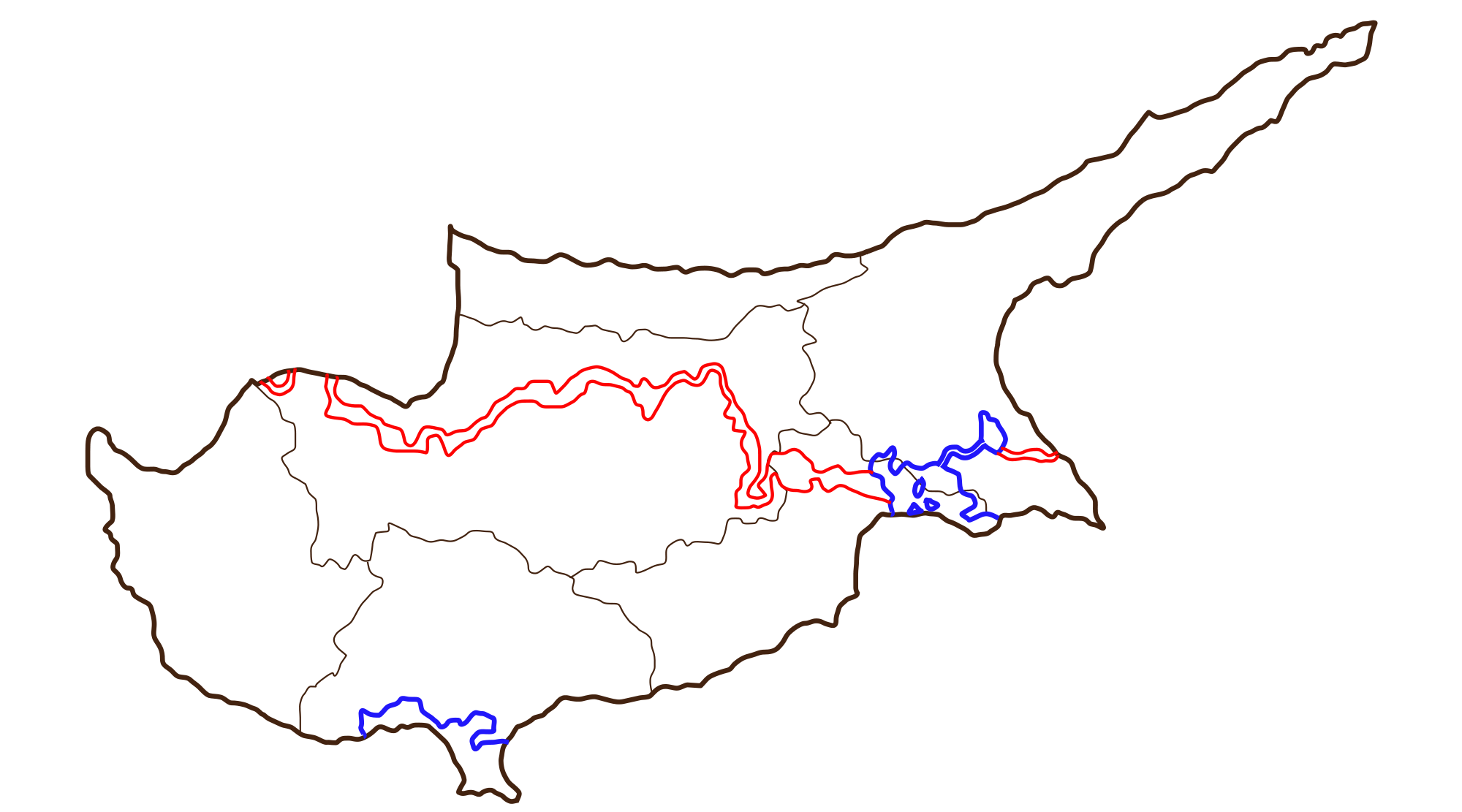
Above: Northern part of the island currently not policed by the Republic of Cyprus as it is under the de facto control of Northern Cyprus. Outlined in red is the UN buffer zone and outlined in blue are the areas of the British Sovereign Bases.
Below: Relief map of Cyprus showing mountains and sea. Red dot indicating capital and Headquarters location.
Size9,251 km2 total

Areas Cyprus Police does not operate in
3,355 km2 occupied area (North)
346km² UN buffer zone
254km² British Sovereign Bases[1]
Population956,000 [2]
Primary governing bodyRepublic of Cyprus
Secondary governing bodyMinistry of Justice and Public Order (Cyprus)
Constituting instruments
  • The Constitution of the Republic of Cyprus[3]
  • Police Law 73(I)2004[3]
  • Criminal Code Cap.154[3]
  • Criminal Procedure Law Cap.155[3]
  • Evidence Law Cap-9[3]
  • The Processing of Personal Data (Protection of the Individual) Law 138(1)/2001[3]
General nature
Operational structure
Overseen by Government AgencyIndependent Authority for the Investigation of Allegations and Complaints against the Police[4]
HeadquartersAntistratigou Evaggelou Floraki Str., Aglantzia, Nicosia, Cyprus
Police officers4927 (data taken on 01/01/2019) [2]
Specialized posts92
Minister responsible
  • Marios Hartsiotis
Agency executive
  • Themistos Arnaoutis, Chief of Police [5]
Facilities
Police stations50[6] excluding substations, offices, units etc.
Airbases1[7]
Boats5 fast sea patrol boats
5 patrol boats
6 rigid inflatable boats[8]
Helicopters2 Bell 412EP
2 AgustaWestland AW139[7]
Website
http://www.police.gov.cy/
Emergency Telephone Number 112 or 199
Citizens' line 1460
Narcotics line 1498
Hunters' line 1414
Fire report line 1407
Rescue Coordination Center 1441

The Cyprus Police (Greek: Αστυνομία Κύπρου, Turkish: Kıbrıs Polisi), is the national police service of the Republic of Cyprus, falling under the Ministry of Justice and Public Order since 1993.[9]

The duties and responsibilities of the Cyprus police are set out in the amended Police Law (N.73(1)) of 2004 and include the maintenance of law and order, the prevention and detection of crime, as well as arresting and bringing offenders to justice.[10]

History

[edit]

Although the history of Law enforcement in Cyprus goes back to 1879 when the first Police Law was passed by the then British Colonial Government, which operated a mounted gendarmerie force known as the Cyprus Military Police, the history of the Cyprus Police begins with the establishment of the Republic of Cyprus in 1960.

In 1960 two Public Security Forces were established within the framework of the Constitution: the Police Force, which was responsible for policing the urban areas, and the Gendarmerie, which was responsible for policing rural areas. A Greek-Cypriot Chief and a Turkish-Cypriot Chief administered the two Forces respectively.[11]

The two forces of the police were joined to form the present police service during the year 1964, shortly after the intercommunal troubles between the Greek and the Turkish communities, as a result of which the Turkish Cypriot officers abandoned their posts.[9] Additionally the conflict created great problems for the police, who had to handle the situation, along with the then sparsely manned Cypriot Army, because it was the only organized force.

With the creation of the Cypriot National Guard in 1964, the duties of military nature were transferred to the National Guard and the police was limited back to its usual duties.[12]

Also notable is that a museum dedicated to the history of the Cyprus Police and Law enforcement in Cyprus in general exists, with a history of its own. The Cyprus Police Museum, owned by the Cyprus Police and managed by the Department A' of the Police Headquarters is open to the general public.

Authorities

[edit]

The Cyprus Police operates and exercises its authorities throughout the territory of the Republic of Cyprus based on the following Laws and Regulations:[3]

  • The Constitution of the Republic of Cyprus
  • Police Law (N.73(I)/2004)[13]
  • Police Regulations
  • Police Standing Orders
  • Criminal Code Cap.154
  • Criminal Procedure Law Cap.155
  • Evidence Law Cap-9
  • The Processing of Personal Data (Protection of the Individual) Law 138(1)/2001

The legal framework within which the Cyprus Police exists and operates is determined by the Constitution, Police Law Cap.285 and other laws that provide the authority for investigation, detention, arrest, questioning and prosecution of offenders of the Law.

Structure and organisation

[edit]

The structure and organisation of the Cyprus Police is governed by Police Ordinance 1/10 and is formed as stated below:[14]

Headquarters

[edit]

The Police Headquarters is divided into different Departments/Directorates/Services and Units, each specializing in a different field/aspect of policing.

Departments

[edit]
  • Department A' (Administration)
  • Department B' (Traffic, Transport)
  • Department C' (Criminal Investigations, Prosecutors)
  • Department D' (Scientific & Technical Support)
  • Research and Development Department

Directorates

[edit]
  • European Union & International Police Cooperation Directorate
  • Materials & Supplies Management Directorate
  • Airports Security Directorate
  • Finance Directorate
  • Directorate of Professional Standards

Services

[edit]
  • Aliens & Immigration Service
  • Drug Law Enforcement Service
  • Forensic Investigations Service
  • Audit & Inspection Service
  • Central Intelligence Service

Units

[edit]

Divisions

[edit]
Policing areas of Cyprus

The Cyprus Police has one Division for each district of Cyprus. Under this divisions are the Police Stations but also within each Police Division, branches can be created similar to the branches of the Police Headquarters. For example, there is a Headquarters Drug Law Enforcement Service but also a Nicosia, Limassol etc. Drug Law Enforcement Service. Other examples include Headquarters Criminal Investigation Department (C.I.D.)- Larnaca, Nicosia, Limassol etc. C.I.D. and Headquarters Traffic Department - Nicosia, Limassol etc. Traffic Department . The difference is that the Headquarters units/services etc. operate throughout the territory of the Cyprus Republic while the divisional (provincial) units/services operate mostly within the District that are located.[15]

Because of the Turkish invasion and continuing occupation, the Police Divisional Headquarters of Famagusta and Morphou are temporarily housed in Paralimni and Evrychou respectively, while the Kyrenia Police Division has temporarily suspended its operation.[17]

Ranks of the Cyprus Police

[edit]
Title
Chief constable

Deputy chief constable

Assistant chief constable

Chief superintendent

Superintendent A

Superintendent B

Chief inspector

Inspector
Senior sergeant Sergeant Acting sergeant / Senior Constable Acting Sergeant Senior constable
Constable

Special constable
Insignia

Equipment

[edit]

Vehicles

[edit]

Markings

[edit]

Cyprus Police cars are white with a blue stripe that goes around the car. On both sides they have printed on them the words POLICE and ΑΣΤΥΝΟΜΙΑ, which means Police in Greek. They also have the logo of the Cyprus Police, usually on the front doors and also have printed on them the Police's website www.police.gov.cy. An exception to this is some of the cars used by the Neighbourhood Police that have the Neighbourhood Police logo instead of the Cyprus Police Logo. On the front part of the car they have again the logo with the words POLICE and ΑΣΤΥΝΟΜΙΑ and at the back they could have, depending on the model of the car and the space available, the words Police in Greek and English or just the Cyprus Police insignia or both. On the roof they have printed a distinct number for each one as aerial roof markings.

In 2011 a trial version for new markings was used on an old Opel Vectra patrol car. These were half-Battenburg markings with a highly reflective blue-yellow stripe on the sides instead of the solid blue stripe. Additionally the back was covered in reflective yellow-red diagonal stripes and had printed the emergency phone number 112. The front part on the hood of the car had the words ΑΣΤΥΝΟΜΙΑ and POLICE printed inverted so that they would appear correctly when seen through a mirror. These markings were not enforced.

In 2012 new markings were enforced were the blue stripe although still solid was replaced with a highly reflective one, and the rear horizontal line was replaced from a solid blue stripe to a blue-white diagonal line similar to the rear usually found on vehicles with Battenburg markings.

The Cyprus Police also uses unmarked vehicles. Unmarked vehicles are not necessarily covert to be used for undercover work. Most unmarked cars are the same models as the patrol cars and they are mostly used by plain clothed officers such as crime investigators, crime prevention squads, technicians etc. Most of these cars are fitted with sirens and can be seen in the streets with detachable strobe lights.

Lists of vehicles

[edit]
List of vehicles used by Cyprus Police (past and present)
Year entered
service*
Vehicle Photo Manufacturer Production
Model
Engine Purpose Notes
2000
Toyota Landcruiser JapanToyota
3.0L Diesel
Multi-purpose car
2001
Opel Vectra GermanyOpel
2.6L V6
Multi-purpose car
Peugeot 406 FrancePeugeot Multi-purpose car
Renault Laguna FranceRenault Multi-purpose car
Renault Megane FranceRenault Multi-purpose car
2004
Prinoth Husky ItalyPrinoth Snow Trac
Honda CR-V JapanHonda Multi-purpose car
Isuzu Trooper JapanIsuzu Multi-purpose car
2007
Mazda3 JapanMazda Multi-purpose car
Peugeot Boxer FrancePeugeot Support
Ford Transit GermanyFord Support
Renault Trafic FranceRenault Support
Renault Master FranceRenault Support
Nissan Pathfinder JapanNissan
2.5 TD
Multi-purpose car
Mitsubishi Pajero JapanMitsubishi
3.2 Di-D
Multi-purpose car
2008
Kia Magentis South KoreaKia Multi-purpose car
2009[18]
Chevrolet Matiz South KoreaChevrolet Neighbourhood Police
Kia Rio South KoreaKia Multi-purpose car
Isuzu D-Max JapanIsuzu Support
Ford Focus GermanyFord Multi-purpose car
2010
Ford Mondeo GermanyFord Multi-purpose car
2012
Ford Mondeo GermanyFord Multi-purpose car

*Unless specifically referenced, the dates the vehicles entered service are based on their license plate registration numbers

List of Motorcycles used by Cyprus Police (past and present)
Year entered
service*
Motorcycle Photo Manufacturer Production
Model
Engine Purpose Notes
Honda CBX750
750cc
Traffic/Response vehicle
Suzuki GSX 750P
750cc
Traffic/Response vehicle
Honda Pan-European
1100cc
Traffic/Response vehicle
Suzuki GSX-R1000
1000cc
Traffic/Response vehicle
Suzuki V-Strom 1000
1000cc
Traffic/Response vehicle
KTM 640 Adventure
625cc
Traffic/Response vehicle
BMW C1 Neighbourhood Police
Honda CBR1000RR
1000cc
Traffic/Response vehicle
Honda Varadero
1000cc
Traffic/Response vehicle

*Unless specifically referenced, the dates the vehicles entered service are based on their license plate registration numbers

Aerial vehicles

[edit]

Boats

[edit]
[edit]

Cyprus police has been the main feature and appeared in television shows such as:

  • "Εσύ Στον Κόσμο Σου", which was a series on ANT1 revolving around a family with the main protagonist being a police officer and showing multiple investigations, mainly organised crime.[19]
  • "Στα Όρια" which was a series based on fictional investigations by a team police officers, shown on RIK.[20]
  • "Κάρμα" which was a television series on Alpha TV, based on real criminal events that have happened in Cyprus.[21]
[edit]

See also

[edit]

References

[edit]
[edit]
Revisions and contributorsEdit on WikipediaRead on Wikipedia
from Grokipedia
The is the principal body of the Republic of , tasked with maintaining public order, preventing and investigating criminal activity, and ensuring security within the government-controlled areas of the island south of the UN .
Established in 1960 coinciding with 's from British colonial rule, the force initially comprised two separate entities under the Zurich-London agreements—a Greek Cypriot-led urban Police Force and a Turkish Cypriot-led rural —which were merged into a unified in 1964 following the withdrawal of Turkish Cypriot personnel amid intercommunal clashes.
Overseen by the and Public Order, it operates under a supported by four Assistant Chiefs responsible for administration, operations, training, and support services, with organizational units including six district divisions, specialized departments for crime combating, traffic enforcement, immigration control, and maritime policing, as well as the integrated Fire Service.
As a member of since 1962, the collaborates internationally on cross-border crime, while domestically it has faced scrutiny over isolated incidents of alleged excessive force, such as beatings of detainees reported by monitors and use of measures during protests, prompting internal professional standards directorates and external oversight efforts to address accountability.

History

Colonial Origins and EOKA Insurgency (1878–1960)

Following the Anglo-Turkish Convention of June 4, 1878, which granted Britain administrative control over Cyprus while it remained Ottoman sovereign territory, the colonial authorities established a gendarmerie force known as the Cyprus Military Police to replace Ottoman policing and maintain order in the island's multi-ethnic society, comprising approximately 80% Greek Cypriots and 18% Turkish Cypriots. This paramilitary body, initially around 300 strong and modeled loosely on British constabulary traditions but retaining a military structure, focused on tax enforcement, rural patrols, and suppressing banditry rather than urban civil policing. By the early 20th century, it transitioned toward a more civilian-oriented police force under the 1879 Police Law, incorporating Greek and Turkish Cypriots in proportions reflecting demographics, though operational challenges arose from linguistic divisions and communal tensions that undermined impartial enforcement. The force's role intensified amid rising Greek Cypriot nationalism advocating (union with Greece), culminating in the Ethniki Organosis Kyprion Agoniston () insurgency launched on April 1, 1955, by General , which targeted British colonial infrastructure including police stations through bombings, ambushes, and assassinations to coerce withdrawal. Cypriot police, as frontline enforcers of British rule, became primary targets; EOKA deemed Greek Cypriot officers traitors for continuing service, executing dozens via drive-by shootings and booby traps, which eroded the force's cohesion as sympathies for enosis spread among personnel. This led to widespread , with Greek Cypriot ranks—initially dominant—proving unreliable due to defections, passive resistance, or outright collaboration, compelling British authorities to suspend recruitment from that community and expand the force rapidly to over 2,000 by 1956. To offset losses and restore functionality, the colonial government recruited Turkish Cypriots, who opposed enosis and favored partition (taksim), forming auxiliary units that by 1958 comprised a significant portion of the force despite their minority status, thus shifting composition toward ethnic imbalance. responded by attacking these auxiliaries as well, resulting in at least 62 Cypriot police fatalities overall (including 25 ), alongside hundreds wounded, though exact attribution varies due to underreporting of insurgent tactics. This favoritism toward Turkish recruits, while pragmatically addressing operational voids caused by 's ethnic-targeted terror, exacerbated intercommunal distrust, as viewed the policy as divisive favoritism that prioritized loyalty over representativeness, further entrenching polarization without resolving the insurgency's core challenge of enforcing law amid widespread civilian non-cooperation. The campaign ended with 's ceasefire in March 1959, following the Zurich-London agreements, but left the police force structurally strained by ethnic fractures.

Formation and Intercommunal Conflict (1960–1974)

The was established on 16 August 1960 with the creation of the Republic of , initially consisting of two distinct forces as outlined in the 1960 Constitution: the urban-focused Police Force and the rural Force, which together formed the core of the island's security apparatus. The Constitution stipulated a total strength of 2,000 personnel for these forces, apportioned at a 70 percent Greek Cypriot to 30 percent Turkish Cypriot ratio to reflect the island's demographic and bi-communal governance structure. This setup aimed to ensure balanced representation in , but ethnic quotas extended across roles, including policing, to maintain the power-sharing republic. The fragile bi-communal arrangement collapsed following the December 1963 constitutional crisis, triggered by proposed amendments from President that viewed as undermining their safeguards, leading to widespread intercommunal violence known as Bloody Christmas on 21 December 1963. subsequently withdrew from mixed government institutions, including and , resulting in their effective exclusion and the Greek Cypriot domination of the force by early 1964; this created policing vacuums in , where militias filled the gap amid ongoing attacks. From 1963 to 1967, the now predominantly Greek Cypriot police engaged in patrols and operations targeting areas, escalating clashes; notable incidents included heavy fighting at Ayios Theodoros and Kophinou on 15-16 November 1967, where police actions resulted in 24 deaths, and an assault on Ayios Sozomenos village observed by British patrols on 6 February 1964. These events, documented across UN and diplomatic reports, highlight the police's shift from internal security to partisan enforcement favoring Greek Cypriot expansionist aims, often in coordination with irregular militias, rather than neutral law enforcement. In response to the violence, expanded its beyond conventional requirements, acquiring armored cars and light artillery during the to conduct sieges and assaults on enclaves, transforming it into a quasi-militarized entity amid the breakdown of constitutional order. Turkish Cypriot sources emphasize systematic police-led aggression driving enclave formation, while Greek Cypriot accounts frame responses as defensive; empirical records from neutral observers, such as UN peacekeepers, confirm disproportionate incursions into Turkish areas, contributing to over 500 Turkish Cypriot deaths and the abandonment of 103 villages by 1967. By 1974, escalating tensions culminated in the 15 July orchestrated by the Greek junta via the , which overthrew President Makarios and installed ; while the Guard led the operation, police units maintained control in areas and participated in pre-invasion hostilities against Turkish Cypriot positions, heightening the risk of full-scale conflict under the 1960 Treaty of Guarantee. The subsequent Turkish intervention on 20 July partitioned the island, confining the Cyprus Police to the southern Republic-controlled territory, with the loss of northern facilities, personnel, and jurisdiction over approximately 37 percent of the land, including major urban centers like and . This reorganization marked the end of any nominal bi-communal policing, as the force aligned fully with the administration amid the displacement of around 200,000 and the solidification of separate security regimes.

Post-Invasion Reorganization and Modern Era (1974–Present)

Following the Turkish invasion in July–August 1974, the Cyprus Police underwent significant reorganization, as the force lost control over approximately one-third of the island's territory in the north, along with associated stations, equipment, and personnel. Turkish Cypriot officers, who had comprised a substantial portion of the pre-invasion force, largely relocated to the occupied areas, necessitating a rapid reconfiguration centered on the government-controlled southern regions. This shift compelled the police to prioritize internal stability, management of over 200,000 displaced Greek Cypriot refugees, and initial patrolling along the newly established Green Line ceasefire demarcation, where responsibilities included preventing incursions and smuggling amid the absence of a formal . The invasion's territorial partition causally narrowed operational jurisdiction, redirecting resources from nationwide policing to fortified defense of the south, a focus compounded by pre-existing ethnic imbalances in the force that had eroded Turkish Cypriot trust and contributed to intercommunal vulnerabilities leading to the conflict. Personnel strength, estimated at around 3,000–4,000 immediately post-invasion after losses and reallocations, temporarily swelled to about 4,440 to address heightened security demands before stabilizing. By the 1990s, administrative reforms enhanced oversight and professionalization; in 1993, authority over the Cyprus Police transferred from the Ministry of Interior to the newly renamed and Public Order, aiming to insulate operations from political interference and align with modern rule-of-law principles. This change facilitated greater emphasis on judicial coordination and accountability, though implementation faced challenges from the ongoing division. Personnel gradually expanded to meet evolving needs, reaching approximately 4,900 sworn officers by 2019, reflecting recruitment drives to cover expanded duties in a population-dense south. Cyprus's accession to the on May 1, 2004, prompted alignment with EU justice and home affairs standards, including enhanced data-sharing protocols and safeguards in policing, despite the suspension of acquis application in the north and non-participation in Schengen. The police integrated into frameworks like for cross-border intelligence, monitoring EU directives on law enforcement cooperation without full borderless integration due to the partition. Post-9/11 global threats amplified counter-terrorism priorities, leading to bolstered specialized units and legislative updates to combat financing of , though Cyprus recorded minimal domestic incidents. Since , surges in irregular migration—primarily via sea from and , with asylum applications rising from 2,265 in to peaks exceeding 13,000 annually by 2022—have strained resources, prompting the police's Immigration Unit to intensify Green Line surveillance, coordinate with joint operations, and manage initial interdictions and receptions, often amid criticisms of processing delays in overcrowded facilities. These adaptations underscore the partition's enduring constraint, channeling police efforts toward southern border enforcement over broader island-wide functions.

Governance and Oversight

The Cyprus Police is administratively subordinate to the Ministry of Justice and Public Order, to which it has reported since 1993, with the ministry responsible for policy direction, modernization efforts, and coordination on public order matters. The is appointed directly by the , a process characterized as inherently political and requiring no parliamentary involvement or competitive selection, as evidenced by recent appointments in 2024 of Themistos Arnaoutis as Chief and Panikos Stavrou as Deputy Chief during a presidential ceremony. This structure aims to ensure executive alignment but has drawn recommendations for greater transparency in selections to mitigate risks of politicization, per evaluations. Independent external oversight is provided by the Independent Authority Against Corruption (IAACA), operational since 2021, which investigates public sector corruption complaints, including those involving police, and operates autonomously from to handle cases without referral back to the force. Internally, the Police Internal Affairs Service (PIAS) focuses on preventing, probing, and prosecuting corruption by officers, while the Professional Standards, Audit and Inspection Directorate examines non-corruption-related misconduct, such as deviant behavior, through targeted inspections and audits. In 2023, PIAS and related units processed 342 conduct complaints, yielding one criminal probe recommendation, underscoring selective escalation amid broader accountability concerns. Budgetary controls tie police funding to the ministry's annual allocation, approved by the as part of the national budget, with post-2004 EU membership driving reforms for financial transparency and compliance under frameworks like GRECO. A September 2025 GRECO compliance report highlighted implementation of processes for officers, alongside undercover audits and simulated tests, as key empirical mechanisms to counter integrity risks, though full requires ongoing verification. These measures reflect responses to elevated public perceptions of in policing, with 94% of Cypriots viewing it as widespread per 2023 surveys.

Jurisdictional Powers and Limitations

The Cyprus Police derives its core jurisdictional powers from the Police Law of 2004 (N.73(I)/2004), which authorizes operations to maintain law and order, preserve public peace, prevent and detect criminal offenses, and apprehend suspects throughout the sovereign territory of the Republic of Cyprus—though effective control is limited to government-administered areas. Under this framework, officers possess statutory authority for warrantless arrests in cases of cognizable offenses, searches of arrested persons and evasion-related premises, and interventions in crowd control or public disturbances, as detailed in the Criminal Procedure Law (Cap. 155). These powers emphasize civilian distinct from military functions, with the Police prohibited from engaging in armed defense roles reserved for the . Territorial limitations stem directly from the 1974 Turkish military intervention, which partitioned the island and placed approximately 36% of its land—including Morphou Bay and the Karpass Peninsula—under Turkish Cypriot and Turkish administration, beyond Police reach. This division creates enforcement voids exploited for illicit activities, such as narcotics smuggling via the Green Line buffer zone and routes, as cross-border policing relies on limited bilateral checkpoints rather than unilateral authority. Constitutional ethnic quotas for Police recruitment, originally mandating proportional Greek and Turkish Cypriot representation under the 1960 framework, collapsed after the 1963-1964 intercommunal clashes when Turkish Cypriots withdrew from joint institutions, yielding a Greek Cypriot majority that has persisted despite formal bi-communal intent. In scenarios involving elevated threats like organized migration or , the Police coordinates with the for logistical support, such as joint maritime patrols, while retaining lead on criminal investigations to avoid blurring and remits. Extraterritorial extensions include maritime policing by the Port and Marine Police, which covers the coastline, ports, (12 nautical miles), and contiguous zone for offenses like and illegal , though exclusive economic zone (EEZ) enforcement—spanning hydrocarbon exploration blocks—is hampered by Turkish vessels contesting Cypriot claims since 2011. Warrants issued against intruding Turkish crews, as in the 2018-2019 incidents, demonstrate asserted legal authority but reveal practical constraints without allied naval backing.

Organization and Structure

Central Headquarters and Key Departments

The central of the Cyprus Police is situated at Antistratigou Evangelou Floraki Street in Aglantzia, , serving as the primary administrative and coordination center for national policing functions. It houses core departments under the oversight of Assistant Chiefs of Police, focusing on policy development, resource allocation, and specialized support services rather than frontline operations. Key departments at headquarters include the Administration and Human Resources Department, which manages personnel policies, budgeting, and logistical support across the force; the Traffic Department, responsible for developing regulations, investigation protocols, and guidelines; and the Crime Combating Department, which coordinates investigations into serious offenses such as , cybercrimes, and organized through centralized analysis and sharing. The Technological Development Department advances tools for crime detection and operational efficiency, while the Department maintains digital systems for and secure communications. Support functions are bolstered by the Criminalistic Service Department, which conducts forensic examinations of evidence, including , , and , to aid investigations nationwide. The Cyprus Police Academy, affiliated with headquarters, delivers centralized training programs on legal procedures, investigative techniques, and administrative skills to ensure standardized capabilities. These Nicosia-based entities emphasize strategic oversight and technical expertise, enabling coordinated responses without direct involvement in district-level enforcement.

Regional Divisions and Local Operations

The Cyprus Police maintains a decentralized structure through seven district police divisions corresponding to the island's administrative divisions: Nicosia, Limassol, Larnaca, Paphos, Famagusta, Kyrenia, and Morphou. Since the 1974 Turkish invasion, operational focus has consolidated in the five government-controlled southern divisions—Nicosia, Limassol, Larnaca, Paphos, and the free areas of Famagusta—with the Kyrenia and Morphou divisions inactive due to occupation. Each active division operates under a divisional commander and includes multiple police stations tailored to local geography, providing routine vehicle and foot patrols, emergency response, and initial incident handling in both urban centers and rural interiors. Local operations emphasize adaptation to Cyprus's island terrain and demographic patterns, with Nicosia Division—the largest by land area and population—coordinating extensive coverage across the capital's urban sprawl and surrounding rural zones. Coastal districts like and allocate resources to high-density tourist zones, incorporating seasonal patrols to address visitor-related demands alongside standard rural station duties, such as those in inland areas like Kofinou under Division. At the station level, community policing integrates preventive measures for minor offenses, with Community Police Officers conducting door-to-door advisories, coordination, and visible patrols to foster public cooperation and early intervention. This approach supports decentralized command, enabling divisions to respond to region-specific challenges like urban congestion in versus sparse rural policing in peripheral stations.

Specialized Directorates, Services, and Units

The Cyprus Police operates specialized directorates, services, and units focused on targeted threats such as trafficking, cyber offenses, irregular migration, and high-risk interventions, enhancing operational effectiveness through dedicated expertise and inter-agency collaboration. These entities contribute to empirical outcomes, including seizures and international arrests, by leveraging specialized and intelligence-sharing protocols. The Drug Law Unit (YKAN), part of the Combating Department, targets the suppression of illegal drug production, trade, and supply, enforcing narcotics laws through proactive investigations and coordinated operations. Between 2021 and 2024, YKAN facilitated rehabilitation programs for 420 young individuals identified in drug-related cases, demonstrating a dual focus on and prevention. The Emergency Response Unit (ERU, also known as MMAD) provides rapid intervention for counter-terrorism, VIP protection, and , including repression of disturbances at sports events and witness safeguarding. It supports other police units in high-threat scenarios, maintaining readiness for immediate deployment across the island. The Office for Combating , established in September 2007 under Police Order No. 3/45 and aligned with the Convention on Cybercrime (Law 22(III)/2004), investigates digital offenses like hacking, online , and child exploitation material, supported by the Digital Evidence Forensic Laboratory operational since 2009. It monitors cyber threats nationwide and conducts awareness training. The Aliens and Immigration Unit, headquartered in with divisional branches, enforces immigration laws at entry points, combats irregular migration and illegal , manages detention facilities like Mennoyeia, and processes residence permits and repatriations, contributing to integrity amid rising unauthorized entries. The Cyprus Police Aviation Unit (CPAU), established on June 10, 2008, conducts aerial surveillance of , patrols exclusive economic zones, and supports search-and-rescue missions, bolstering . The Port and Marine Police secures coastal and port areas, preventing and enforcing maritime regulations, with stations at key locations like Latchi and to monitor vessel traffic and interdict illicit activities. Canine units, utilizing approximately 40 trained dogs as of , assist in detecting narcotics, explosives, and fugitives, with handlers undergoing specialized to enhance operational reliability. These units integrate with international partners, notably through a operational agreement with enabling joint actions against cross-border , including narcotics and human smuggling networks.

Ranks, Recruitment, and Personnel Composition

The Cyprus Police maintains a hierarchical rank structure modeled on the British system, featuring approximately 20 grades that ensure a clear chain of command from entry-level to senior leadership. Ranks progress from Constable and Senior Constable at the base, through non-commissioned grades such as Sergeant, Senior Sergeant, Inspector, and Chief Inspector, to commissioned officer levels including Superintendent B, Superintendent A, Chief Superintendent, Assistant Chief Constable, Deputy Chief Constable, and culminating in Chief Constable. Promotions are determined by a combination of competitive examinations, years of service, performance assessments, and seniority, as outlined in internal regulations to maintain merit-based advancement. Recruitment into the Cyprus Police is conducted through annual competitive processes managed by the force's human resources division, targeting primarily police constables and specialized roles. Candidates must meet stringent prerequisites, including Cypriot citizenship, minimum age and educational requirements, physical fitness standards verified through testing, and clearance of background checks excluding criminal records. Applications are submitted electronically via government portals, followed by written exams, interviews, and medical evaluations; successful applicants undergo initial training at the Cyprus Police Academy in Athalassa, which provides a multi-year program blending theoretical instruction in law, ethics, and procedures with practical field exercises. The academy, established as the primary training institution since the 1990s, emphasizes non-discriminatory selection criteria based on objective merits, though entry remains competitive with limited annual intakes to align with budgetary and operational needs. The personnel composition of the Cyprus Police totals over 5,000 sworn officers, predominantly Greek Cypriot, mirroring the ethnic majority in the Republic of Cyprus's government-controlled areas where operates. Ethnic minorities, such as , , or other small communities, represent a minimal proportion, with policies post-2004 accession incorporating anti-discrimination and to promote broader representation, though no mandatory quotas or substantial shifts in demographics have been implemented or quantified in official data. distribution skews male-dominated, consistent with traditional patterns in the , while recent internal guidelines stress equality in hiring and advancement without specified targets. In 2025, faced human resource challenges with the expiration of fixed-term contracts for nearly 300 special constables (often deployed in maritime or auxiliary roles), resulting in their dismissal by despite parliamentary debates and partial plans for reabsorption via future s, highlighting tensions between fiscal constraints and staffing stability.

Operations and Effectiveness

Cyprus exhibits relatively low overall crime rates compared to global standards, ranking 13th among the safest countries in the world in 2023 per Global Finance Magazine's assessment based on homicide rates, terrorist attacks, and other violent indicators. Despite this, serious crimes have trended upward, with 6,014 cases recorded in 2024—a 6.5% increase from 5,649 in 2023 and the highest annual figure in at least three years—totaling 17,065 serious offenses from 2022 to 2024. The crime index per 100,000 inhabitants rose 18.2% in 2022 alone, reflecting consecutive per capita increases through 2024. Property-related offenses, particularly , constitute the majority of reported incidents, while violent crimes such as and remain infrequent, contributing to the nation's safer profile. cases persist as a challenge, with foreign victims identified from multiple countries in 2023, underscoring ongoing vulnerabilities linked to migration and inflows that correlate with opportunistic crimes like targeting visitors. District-level data highlights concentrations in urban areas, with reporting 1,474 serious crimes in 2024, followed closely by at 1,443. Police clearance rates demonstrate moderate effectiveness in resolving cases, averaging 85-90% for select and personal crimes from to 2023, though overall detection for serious offenses hovers lower amid rising volumes, indicating resource strains without fully mitigating escalations. These trends align with external pressures including seasonal surges and demographic shifts from migration, which have amplified incidents like theft and isolated attacks on migrant workers, rather than inherent policing shortfalls alone. from the Cyprus Police underscore the need for sustained investigative focus to curb the upward trajectory in reported serious crimes.

Countering Organized Crime, Terrorism, and Trafficking

The Cyprus Police's Mobile Immediate Action Unit (MMAD) conducts targeted operations against , including trafficking networks, often in coordination with specialized units like the Unit for Combating Narcotics (YKAN). In 2025, YKAN-led efforts resulted in record seizures, with 613 kilograms of and 39.5 kilograms of confiscated from January to August, marking a doubling of quantities compared to the previous year. These operations have dismantled segments of imported criminal networks, such as a multi-agency with FBI assistance that seized over €700,000 in proceeds linked to . Human trafficking investigations fall under the Crime Combating Department, which collaborates with the (EUAA) for training and victim identification during asylum processes. In 2024, authorities identified 11 trafficking victims, down from 31 in 2023, with most cases involving labor exploitation and a smaller portion ; real-time operations have uncovered additional potential victims, such as four during EU-supported exercises in April 2024. Despite these efforts, challenges persist due to vulnerabilities in protections, as noted in a 2025 GRETA evaluation, which identified gaps in detection amid decreasing formal victim counts (110 from 2020 to August 2024). In , Cyprus Police have foiled Iranian-linked plots targeting Israeli interests through international cooperation, including with ; notable successes include thwarting an IRGC-directed attack in 2023 and arresting an alleged IRGC member in June 2025 for planning assaults on military bases. A British national was also detained in June 2025 on suspicion of terror-related offenses and . Border security remains vigilant amid tensions with , focusing on preventing infiltration across the Green Line dividing the island, though criminal networks exploit the northern unoccupied areas for evasion, complicating full dismantlement of operations like and arms . From January 2024 to May 2025, financial disruptions froze or confiscated €1.2 million in assets tied to foreign groups, alongside seizures, targeting evasion routes.

Community Engagement and Public Safety Initiatives

The Cyprus Police initiated its Community Policing Program in October 2003, deploying dedicated officers to conduct foot and vehicle patrols, deliver door-to-door safety advice on , and engage in community events such as children's fairs, drives, visits, and local meetings. By recent assessments, 81 Community Police Officers cover 178 communities serving around 720,000 residents, with these activities aimed at building public cooperation and deterring opportunistic crimes through visible presence and direct interaction. Complementary programs include the scheme, piloted in 2011 and expanded to 341 communities with roughly 118,000 volunteer participants, which correlates with localized reductions in and by encouraging resident vigilance and police partnerships. patrols, introduced in 2017 across coastal areas like and , further support accessibility in pedestrian-heavy zones for tourist safety and minor incident prevention. Road safety efforts feature targeted awareness campaigns by the Traffic Department, including youth-focused programs in December 2024 to curb violations and juvenile-related incidents, alongside intensified summer patrols from June to September 2025 emphasizing vulnerable road users. These initiatives align with broader preventive strategies that preceded a 36% drop in fatalities to 33 in 2023, though numbers rose in 2024, underscoring enforcement's role in modulating trends amid rising vehicle volumes. Victim support measures, bolstered post-2010s via EU-aligned directives, involve police officers offering immediate on-scene assistance, referrals to social welfare for counseling and financial aid, and specialized handling for cases, including awareness drives to encourage reporting without immediate arrest mandates. Public trust metrics from surveys reveal police approval around 30% with 36% in a CYMAR poll, positioning the force as the most trusted institution in a Cypronetwork assessment despite overall institutional ; ethnic minorities report lower confidence, linked to victimization experiences and cultural barriers.

Equipment and Capabilities

Ground Vehicles and Markings

The Cyprus Police operate a fleet of ground vehicles tailored for patrol, rapid response, and specialized operations, managed through a dedicated fleet allocation office that distributes new acquisitions across departments and units. Routine maintenance and repairs, including preventive servicing, clutch replacements, and timing adjustments, are conducted by the Vehicle Engineering Unit within the Technological Development Department. Recent enhancements include the addition of 46 patrol cars and two mobile command stations in February 2024, aimed at strengthening operational capacity. In January 2025, ten Land Cruisers were delivered as the final installment of a 31-vehicle , emphasizing the force's ongoing reliance on durable four-wheel-drive vehicles for rugged terrain and pursuit duties; this brings the cumulative supply of such models to over 120 since initial adoptions. For high-risk scenarios, the fleet incorporated its first EU-funded B6-rated armored vehicle in October 2025, capable of withstanding fire from high-caliber rifles such as Kalashnikovs and G3s, at a cost of €755,000; this addition supports motorized rapid response teams in counter-terrorism raids and rescues, with initial maintenance outsourced to the manufacturer Urovesa for five years. Standard patrol and operational vehicles feature a white base color with blue reflective stripes for enhanced visibility during day and night operations, though specific high-visibility variants are employed for traffic enforcement.

Aviation and Maritime Assets

The Cyprus Police Aviation Unit operates a fleet of five aircraft dedicated to aerial surveillance, border patrol, and support roles. This includes one Britten-Norman BN-2T Turbine Islander fixed-wing aircraft (registration CP-1, delivered 1990), configured for maritime patrols and crime detection over coastal areas. The rotary-wing components consist of two Bell 412 helicopters—the SP model 'APOLLON' (CP-2, delivered 1990) and the EP model 'AKRITAS' (CP-4, delivered 1997)—equipped for coastal monitoring, search and rescue, and aerial firefighting with provisions for loud hailers and cargo hooks. Complementing these are two AgustaWestland AW139 helicopters—'ACHILLEAS' (CP-6) and 'IASON' (CP-8), both delivered in 2010—optimized for search and rescue, illegal immigration interdiction, and rapid response along territorial boundaries. Established on 10 June 2008, the unit bases its operations at Larnaca International Airport to cover Cyprus's exclusive economic zone and adjacent airspace. The Port and Marine Police maintain a fleet of 16 patrol vessels tailored for graduated offshore enforcement, including five Category A fast patrol boats (F.P.B. JET type) capable of operations in the contiguous zone up to 24 nautical miles and open seas, five Category B boats (SAB-12 type) for the 12-nautical-mile , and six Category C rigid inflatable boats (R.I.B./SP7 type) for inshore . In February 2025, ten additional high-speed rigid inflatable boats, co-financed by the and at €5.64 million, were integrated into service, featuring long-range detection radars and communication suites for enhanced monitoring of routes and migrant flows. These assets primarily enforce maritime law within 's territorial and contiguous zones, focusing on anti-smuggling s against narcotics, , and unauthorized entries.

Armaments, Technology, and Infrastructure

The Police's Emergency Response Unit is equipped with special weapons, anti-riot gear for non-lethal , and protective armoring to address high-risk operations. Officers in operational roles utilize standard protective equipment, including armored vests, alongside handguns and rifles suited to duties, though specific models for routine patrol are not publicly detailed in official inventories. Technological capabilities include the Digital Evidence Forensic Laboratory (DEFL), operational within the Crime Combating Department and staffed by specialists for the collection, preservation, and analysis of digital evidence from electronic devices such as computers and mobiles. The Criminalistic Service Department operates dedicated labs for forensic examinations, including fingerprint matching from crime scenes against suspect records and ballistic analysis to support investigations. Cyber tools are managed through the Office for Combating Cybercrime, established in September 2007, which incorporates a Digital Forensic Laboratory for investigating digital threats and electronic crimes. Surveillance infrastructure features expanding CCTV networks, bolstered by a €6.49 million allocation in October 2025 for advanced camera systems and radar integration to enhance monitoring of traffic and public spaces. Physical infrastructure encompasses forensic laboratories, branches under the Technological Development Department equipped for signal interception and , and a network of specialized facilities modernized via EU co-financing. Projects under the Internal Security Fund and Fund have funded upgrades, including anti-terrorism gear and border surveillance enhancements like the (SIS) implementation with advanced workstations. These investments support centralized operations from headquarters in and distributed labs, ensuring forensic and cyber capacities align with EU standards for evidence handling and threat detection.

Controversies and Criticisms

Corruption Scandals and Internal Accountability

In early 2025, the Cyprus Police faced a surge in allegations, with at least four s arrested within two months for offenses including and . On January 8, a was detained by the Internal Affairs Service for allegedly extorting payments from delivery drivers in exchange for leniency, facing charges of , misuse of power, and . Days later, on January 13, the same officer was rearrested in connection with a second case, alongside another policeman implicated in similar . By January 21, a Paphos-based was arrested for extorting money from migrants, prompting ongoing investigations into and . These incidents marked the fourth such probe in quick succession, highlighting patterns of officers leveraging authority for personal gain. The Internal Affairs Service (PIAS), established to investigate and prosecute , has handled these cases but struggles with efficacy, as evidenced by historically low conviction rates. Since 2018, PIAS investigations led to 15 court cases against officers, yet only two resulted in convictions, suggesting systemic barriers such as insufficient evidence gathering or prosecutorial hurdles that undermine deterrence. Oversight remains internal and questioned for , with 270 complaints filed against police in 2025 alone, but only 70 advancing to active investigation, compared to 358 complaints in 2024 yielding limited outcomes. This pattern indicates potential institutional tolerance or capacity issues, where self-policing fails to root out graft rooted in opportunities for in vulnerable sectors like migration and . Such scandals have eroded public trust in the force and facilitated links to , as compromised officers enable activities like people trafficking—exemplified by prior arrests of three officers in a smuggling ring, the first such internal prosecution. Multiplying reports in 2025, amid over 500 broader complaints to independent bodies, underscore entrenched issues where low perpetuates vulnerability to external criminal influence. Causal factors include discretionary powers in enforcement without robust external checks, fostering a culture where minor extortions escalate unchecked.

Allegations of Excessive Force and Human Rights Abuses

In February 2021, Cyprus Police deployed and s to disperse an and anti-lockdown in , resulting in injuries to several participants and arrests. described the response as excessive and unlawful force against largely peaceful demonstrators, including incidents where a targeted individuals gesturing in , and urged independent investigations to address for ill-treatment. Reports indicated clashes erupted after protesters breached barriers near , prompting police intervention to restore order amid heightened tensions from restrictions and corruption scandals. The European Committee for the Prevention of Torture (CPT) documented ongoing concerns in its 2023 visit to Cyprus police facilities, noting allegations of physical ill-treatment during initial detention phases, including slaps and , though overall reports of mistreatment had decreased compared to prior visits. Police stations were found routinely holding migrants under aliens legislation for extended periods in substandard conditions, exacerbating vulnerabilities to abuse, with the CPT recommending safeguards like mandatory medical exams and CCTV to curb . In 2023, Cypriot authorities received 342 complaints regarding police conduct, yet only one led to a recommendation, highlighting systemic gaps. Cyprus Police practices of intercepting and returning migrant boats from without asylum screenings have drawn human rights scrutiny, with the ruling in 2024 that such pushbacks violated the by denying individual assessments and risking refoulement. reported instances of force during these operations, including physical handling of Syrian refugees, amid Cyprus's migration pressures from regional instability, though authorities maintain operations target illegal entries while complying with EU law. Historically, during the 1960s intercommunal violence between Greek and Turkish Cypriots, police forces—predominantly Greek Cypriot—were accused by Turkish Cypriot sources of partisan actions that escalated ethnic clashes, contributing to over 350 deaths between 1964 and 1974. These events, amid breakdowns in the 1960 power-sharing constitution, involved police in maintaining order but often aligned with Greek Cypriot militias, fostering long-term distrust. Modern reforms include enhanced use-of-force training and internal reviews, yet critics from Amnesty and the CPT argue persistent low prosecution rates perpetuate a culture of unaccountability.

Political Interference and Ethnic Tensions

The Cyprus Police has experienced significant political influence in leadership appointments and internal promotions, often prioritizing partisan loyalty over merit, as evidenced by longstanding patterns of favoritism linked to ruling parties. This interference stems from the executive's authority over senior positions, enabling governments to embed aligned personnel, which has undermined operational independence and in investigations involving political figures. Following Cyprus's 1960 independence, the police force initially reflected the constitutional ethnic quotas, with approximately 70% Greek Cypriots and 30% Turkish Cypriots in public service roles, including policing. The 1963 constitutional crisis, triggered by proposed amendments that Turkish Cypriots viewed as eroding their safeguards, led to their mass withdrawal from state institutions, resulting in a near-total Greek Cypriot dominance in the police by 1964. This shift, driven by the majority's consolidation of control amid escalating intercommunal distrust, causally fueled perceptions of the police as an extension of Greek Cypriot interests, prompting Turkish Cypriot enclaves to establish self-defense militias and eroding any shared law enforcement framework. Ethnic imbalances exacerbated breakdowns in policing efficacy during the , as Greek Cypriot-led forces were deployed in operations against Turkish Cypriot areas, such as the February 1964 assault on Ayios Sozomenos village, where armed police units attacked without effective restraint from higher authorities. Similarly, clashes near Kophinou in November 1967 involved Greek Cypriot police engaging Turkish Cypriot groups, resulting in 24 Turkish Cypriot deaths and further entrenching segregation, as the absence of balanced representation rendered neutral enforcement impossible and incentivized retaliatory violence over . Analyses from security-oriented perspectives frame these dynamics as pragmatic necessities for majority self-preservation amid existential threats, whereas critiques, often from international monitors, decry the resultant ethnic bias in force application as a failure of . The 1974 coup, orchestrated by the Greek junta-influenced rather than the police directly, nonetheless highlighted politicized fault lines, with Cyprus Police units variably complying or remaining passive amid the overthrow of President on , deepening the north-south . Post-invasion, the enduring division confined the Cyprus Police to the of Cyprus's southern territories, excluding Turkish Cypriot-administered areas in the north, where a separate apparatus operates under the self-declared . This bifurcation sustains ethnic tensions in cross-line policing, including disputes over incidents and migrant flows, where Greek Cypriot police actions are scrutinized for disproportionate responses toward or third-country nationals, perpetuating mutual accusations of overreach without unified oversight.

Reforms and Future Directions

Anti-Corruption and Integrity Measures

In response to recommendations from the Group of States against Corruption (GRECO) in its 2023 evaluation report on preventing corruption in agencies, the Cyprus Police amended Standing Order no. 1/86, published on 19 September 2024, to establish vetting procedures encompassing reviews of personal files, criminal and disciplinary records, police databases, dependency relationships, and social activities. These processes are applied as needed, with vetting criteria subject to biennial review, though the absence of routine re-vetting throughout careers and limited financial disclosure requirements for senior officers contribute to partial implementation of GRECO's related recommendation (xviii). Integrity promotion efforts include the introduction of undercover audits, targeted inspections, and simulated incidents as components of a broader , implemented following the 2023 GRECO evaluation to detect and deter corrupt practices. The Police Service Anti-Corruption and Department (PSAID) offers confidential counseling on ethical dilemmas, supplemented by legislative enhancements to whistleblower protections under amendments to Law no. 6(I)/2022 effective 23 February 2024, enabling internal and external reporting channels within the force. Training initiatives emphasize ethics and , with modules on risks, , and integrated into the Cyprus Police Academy's 2024-2025 curriculum for all ranks, including 51 targeted sessions delivered since June 2023 to approximately 1,300 personnel, among them 60 top executive functions holders. Complementing these, collaborations with the U.S. (FBI) have provided specialized instruction on detection, financial investigations, and sanctions evasion prosecution, conducted in 2024 and continuing into 2025 to address corruption-linked financial crimes. GRECO's September 2025 compliance report rated 85% overall compliant with its 22 recommendations across and , deeming police-specific measures on prevention policy (recommendation xiv) and whistleblower safeguards (xxi) fully implemented, while , /counseling (xv), and financial declarations (xix) remain partly addressed. Quantitative outcomes, such as reductions in internal investigations, lack comprehensive post-reform data as of October 2025, with GRECO requiring further advancements within 18 months to achieve full compliance.

Modernization, Training, and Strategic Planning

In 2024, the Cyprus Police bolstered its fleet with 46 patrol vehicles and two specially configured mobile command stations to improve response times and coordination during operations. In January 2025, ten Land Cruisers were delivered as part of a 31-vehicle contract, enhancing off-road and tactical mobility. By June 2025, an armored vehicle was introduced specifically for counter-terrorism raids, hostage rescues, and high-risk interventions, addressing gaps in specialized tactical equipment. The Cyprus Police Academy serves as the primary institution for officer training, incorporating EU-aligned curricula through partnerships with the European Union Agency for Law Enforcement Training (CEPOL) and for and counter-terrorism skills. Recent enhancements include specialized sessions on investigation in collaboration with the FBI, conducted in November 2024 to strengthen capabilities against . Training for technological integrations, such as patrol tablets equipped with real-time database access and connectivity, began in July 2025 at the Academy, with initial cohorts of officers serving as instructors for wider rollout. The 2026–2028 strategic plan, finalized in summer 2025 and disseminated to personnel on June 27, outlines six priority areas: counter-terrorism and prevention, comprehensive management amid the island's partition, road safety enforcement, technological modernization, staffing optimization through contract-to-permanent officer transitions, and enhanced inter-agency coordination. This framework builds on a March 2025 reorganization initiative aimed at streamlining commands and upgrading service delivery across . Implementation emphasizes data-driven policing, with investments in analytics and mobility tools projected to reduce response delays by integrating units directly with national and networks.

References

Add your contribution
Related Hubs
User Avatar
No comments yet.