Hubbry Logo
DyneinDyneinMain
Open search
Dynein
Community hub
Dynein
logo
8 pages, 0 posts
0 subscribers
Be the first to start a discussion here.
Dynein
Dynein
from Wikipedia

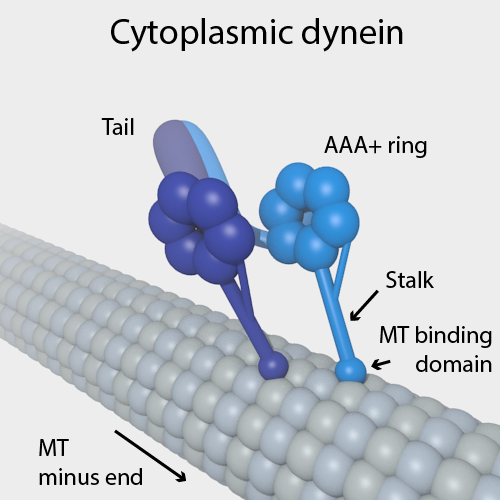
Cytoplasmic dynein on a microtubule

Dyneins are a family of cytoskeletal motor proteins (though they are actually protein complexes) that move along microtubules in cells. They convert the chemical energy stored in ATP to mechanical work. Dynein transports various cellular cargos, provides forces and displacements important in mitosis, and drives the beat of eukaryotic cilia and flagella. All of these functions rely on dynein's ability to move towards the minus-end of the microtubules, known as retrograde transport; thus, they are called "minus-end directed motors". In contrast, most kinesin motor proteins move toward the microtubules' plus-end, in what is called anterograde transport.

Classification

[edit]
Dynein heavy chain, N-terminal region 1
Identifiers
SymbolDHC_N1
PfamPF08385
InterProIPR013594
Available protein structures:
Pfam  structures / ECOD  
PDBRCSB PDB; PDBe; PDBj
PDBsumstructure summary
Dynein heavy chain, N-terminal region 2
Identifiers
SymbolDHC_N2
PfamPF08393
InterProIPR013602
Available protein structures:
Pfam  structures / ECOD  
PDBRCSB PDB; PDBe; PDBj
PDBsumstructure summary
Dynein heavy chain and region D6 of dynein motor
Identifiers
SymbolDynein_heavy
PfamPF03028
InterProIPR004273
Available protein structures:
Pfam  structures / ECOD  
PDBRCSB PDB; PDBe; PDBj
PDBsumstructure summary
Dynein light intermediate chain (DLIC)
Identifiers
SymbolDLIC
PfamPF05783
Pfam clanCL0023
Available protein structures:
Pfam  structures / ECOD  
PDBRCSB PDB; PDBe; PDBj
PDBsumstructure summary
PDBhttp://www.rcsb.org/pdb/explore/explore.do?structureId=4w7g
Dynein light chain type 1
structure of the human pin/lc8 dimer with a bound peptide
Identifiers
SymbolDynein_light
PfamPF01221
InterProIPR001372
PROSITEPDOC00953
SCOP21bkq / SCOPe / SUPFAM
Available protein structures:
Pfam  structures / ECOD  
PDBRCSB PDB; PDBe; PDBj
PDBsumstructure summary
Roadblock
Structure of Roadblock/LC7 protein - RCSB PDB 1y4o
Identifiers
SymbolRobl1, Robl2
PfamPF03259
InterProIPR016561
SCOP21y4o / SCOPe / SUPFAM
Available protein structures:
Pfam  structures / ECOD  
PDBRCSB PDB; PDBe; PDBj
PDBsumstructure summary

Dyneins can be divided into two groups: cytoplasmic dyneins and axonemal dyneins, which are also called ciliary or flagellar dyneins.

Function

[edit]

Axonemal dynein causes sliding of microtubules in the axonemes of cilia and flagella and is found only in cells that have those structures.

Cytoplasmic dynein, found in all animal cells and possibly plant cells as well, performs functions necessary for cell survival such as organelle transport and centrosome assembly.[1] Cytoplasmic dynein moves processively along the microtubule; that is, one or the other of its stalks is always attached to the microtubule so that the dynein can "walk" a considerable distance along a microtubule without detaching.

Cytoplasmic dynein helps to position the Golgi complex and other organelles in the cell.[1] It also helps transport cargo needed for cell function such as vesicles made by the endoplasmic reticulum, endosomes, and lysosomes (Karp, 2005). Dynein is involved in the movement of chromosomes and positioning the mitotic spindles for cell division.[2][3] Dynein carries organelles, vesicles and possibly microtubule fragments along the axons of neurons toward the cell body in a process called retrograde axonal transport.[1] Additionally, dynein motor is also responsible for the transport of degradative endosomes retrogradely in the dendrites.[4]

Mitotic spindle positioning

[edit]

Cytoplasmic dynein positions the spindle at the site of cytokinesis by anchoring to the cell cortex and pulling on astral microtubules emanating from centrosome. While a postdoctoral student at MIT, Tomomi Kiyomitsu discovered how dynein has a role as a motor protein in aligning the chromosomes in the middle of the cell during the metaphase of mitosis. Dynein pulls the microtubules and chromosomes to one end of the cell. When the end of the microtubules become close to the cell membrane, they release a chemical signal that punts the dynein to the other side of the cell. It does this repeatedly so the chromosomes end up in the center of the cell, which is necessary in mitosis.[5][6][7][8] Budding yeast have been a powerful model organism to study this process and has shown that dynein is targeted to plus ends of astral microtubules and delivered to the cell cortex via an offloading mechanism.[9][10]

Viral replication

[edit]

Dynein and kinesin can both be exploited by viruses to mediate the viral replication process. Many viruses use the microtubule transport system to transport nucleic acid/protein cores to intracellular replication sites after invasion host the cell membrane.[11] Not much is known about virus' motor-specific binding sites, but it is known that some viruses contain proline-rich sequences (that diverge between viruses) which, when removed, reduces dynactin binding, axon transport (in culture), and neuroinvasion in vivo.[12] This suggests that proline-rich sequences may be a major binding site that co-opts dynein.

Structure

[edit]
Human cytoplasmic dynein 2 domains. Shown is the order of regions of interest for human cytoplasmic dynein 2 motor domains as they occur from the linker to C-terminal. This is oriented to demonstrate the general bound position of dynein on a microtubule. The mirror effect allows the view to observe the dynein from both sides of the complex.[13]

Each molecule of the dynein motor is a complex protein assembly composed of many smaller polypeptide subunits. Cytoplasmic and axonemal dynein contain some of the same components, but they also contain some unique subunits.

Cytoplasmic dynein

[edit]

Cytoplasmic dynein, which has a molecular mass of about 1.5 megadaltons (MDa), is a dimer of dimers, containing approximately twelve polypeptide subunits: two identical "heavy chains", 520 kDa in mass, which contain the ATPase activity and are thus responsible for generating movement along the microtubule; two 74 kDa intermediate chains which are believed to anchor the dynein to its cargo; two 53–59 kDa light intermediate chains; and several light chains.

The force-generating ATPase activity of each dynein heavy chain is located in its large doughnut-shaped "head", which is related to other AAA proteins, while two projections from the head connect it to other cytoplasmic structures. One projection, the coiled-coil stalk, binds to and "walks" along the surface of the microtubule via a repeated cycle of detachment and reattachment. The other projection, the extended tail, binds to the light intermediate, intermediate and light chain subunits which attach dynein to its cargo. The alternating activity of the paired heavy chains in the complete cytoplasmic dynein motor enables a single dynein molecule to transport its cargo by "walking" a considerable distance along a microtubule without becoming completely detached.

In the apo-state of dynein, the motor is nucleotide free, the AAA domain ring exists in an open conformation,[14] and the MTBD exists in a high affinity state.[15] Much about the AAA domains remains unknown,[16] but AAA1 is well established as the primary site of ATP hydrolysis in dynein.[17] When ATP binds to AAA1, it initiates a conformational change of the AAA domain ring into the "closed" configuration, movement of the buttress,[14] and a conformational change in the linker.[18][19] The linker becomes bent and shifts from AAA5 to AAA2 while remaining bound to AAA1.[14][19] One attached alpha-helix from the stalk is pulled by the buttress, sliding the helix half a heptad repeat relative to its coilled-coil partner,[15][20] and kinking the stalk.[14] As a result, the MTBD of dynein enters a low-affinity state, allowing the motor to move to new binding sites.[21][22] Following hydrolysis of ATP, the stalk rotates, moving dynein further along the MT.[18] Upon the release of the phosphate, the MTBD returns to a high affinity state and rebinds the MT, triggering the power stroke.[23] The linker returns to a straight conformation and swings back to AAA5 from AAA2[24][25] and creates a lever-action,[26] producing the greatest displacement of dynein achieved by the power stroke[18] The cycle concludes with the release of ADP, which returns the AAA domain ring back to the "open" configuration.[22]

Yeast dynein can walk along microtubules without detaching, however in metazoans, cytoplasmic dynein must be activated by the binding of dynactin, another multisubunit protein that is essential for mitosis, and a cargo adaptor.[27] The tri-complex, which includes dynein, dynactin and a cargo adaptor, is ultra-processive and can walk long distances without detaching in order to reach the cargo's intracellular destination. Cargo adaptors identified thus far include BicD2, Hook3, FIP3 and Spindly.[27] The light intermediate chain, which is a member of the Ras superfamily, mediates the attachment of several cargo adaptors to the dynein motor.[28] The other tail subunits may also help facilitate this interaction as evidenced in a low resolution structure of dynein-dynactin-BicD2.[29]

One major form of motor regulation within cells for dynein is dynactin. It may be required for almost all cytoplasmic dynein functions.[30] Currently, it is the best studied dynein partner. Dynactin is a protein that aids in intracellular transport throughout the cell by linking to cytoplasmic dynein. Dynactin can function as a scaffold for other proteins to bind to. It also functions as a recruiting factor that localizes dynein to where it should be.[31][32] There is also some evidence suggesting that it may regulate kinesin-2.[33] The dynactin complex is composed of more than 20 subunits,[29] of which p150(Glued) is the largest.[34] There is no definitive evidence that dynactin by itself affects the velocity of the motor. It does, however, affect the processivity of the motor.[35] The binding regulation is likely allosteric: experiments have shown that the enhancements provided in the processivity of the dynein motor do not depend on the p150 subunit binding domain to the microtubules.[36]

Axonemal dynein

[edit]
A cross-section of an axoneme, with axonemal dynein arms

Axonemal dyneins come in multiple forms that contain either one, two or three non-identical heavy chains (depending upon the organism and location in the cilium). Each heavy chain has a globular motor domain with a doughnut-shaped structure believed to resemble that of other AAA proteins, a coiled coil "stalk" that binds to the microtubule, and an extended tail (or "stem") that attaches to a neighboring microtubule of the same axoneme. Each dynein molecule thus forms a cross-bridge between two adjacent microtubules of the ciliary axoneme. During the "power stroke", which causes movement, the AAA ATPase motor domain undergoes a conformational change that causes the microtubule-binding stalk to pivot relative to the cargo-binding tail with the result that one microtubule slides relative to the other (Karp, 2005). This sliding produces the bending movement needed for cilia to beat and propel the cell or other particles. Groups of dynein molecules responsible for movement in opposite directions are probably activated and inactivated in a coordinated fashion so that the cilia or flagella can move back and forth. The radial spoke has been proposed as the (or one of the) structures that synchronizes this movement.

The regulation of axonemal dynein activity is critical for flagellar beat frequency and cilia waveform. Modes of axonemal dynein regulation include phosphorylation, redox, and calcium. Mechanical forces on the axoneme also affect axonemal dynein function. The heavy chains of inner and outer arms of axonemal dynein are phosphorylated/dephosphorylated to control the rate of microtubule sliding. Thioredoxins associated with the other axonemal dynein arms are oxidized/reduced to regulate where dynein binds in the axoneme. Centerin and components of the outer axonemal dynein arms detect fluctuations in calcium concentration. Calcium fluctuations play an important role in altering cilia waveform and flagellar beat frequency (King, 2012).[37]

History

[edit]

The protein responsible for movement of cilia and flagella was first discovered and named dynein in 1963 (Karp, 2005). 20 years later, cytoplasmic dynein, which had been suspected to exist since the discovery of flagellar dynein, was isolated and identified (Karp, 2005).

Chromosome segregation during meiosis

[edit]

Segregation of homologous chromosomes to opposite poles of the cell occurs during the first division of meiosis. Proper segregation is essential for producing haploid meiotic products with a normal complement of chromosomes. The formation of chiasmata (crossover recombination events) appears to generally facilitate proper segregation. However, in the fission yeast Schizosaccharomyces pombe, when chiasmata are absent, dynein promotes segregation.[38] Dhc1, the motor subunit of dynein, is required for chromosomal segregation in both the presence and absence of chiasmata.[38] The dynein light chain Dlc1 protein is also required for segregation, specifically when chiasmata are absent.

See also

[edit]

References

[edit]

Further reading

[edit]
[edit]
Revisions and contributorsEdit on WikipediaRead on Wikipedia
from Grokipedia
Dynein is a superfamily of microtubule-based motor proteins that utilize to drive movement toward the minus ends of , enabling force generation and motility in eukaryotic cells. These ancient proteins, conserved across nearly all eukaryotes except land plants, form large multisubunit complexes and play critical roles in diverse processes such as intracellular cargo transport, mitotic spindle assembly, and ciliary or flagellar beating. Dyneins are distinguished from other motor proteins like kinesins by their directionality and structural features, including a ring of AAA+ ATPase domains that power conformational changes. The dynein family is broadly divided into cytoplasmic and axonemal subtypes, each adapted for specific functions. Cytoplasmic dyneins, primarily dynein-1 and dynein-2, facilitate retrograde transport of organelles, vesicles, and other cargos along microtubules in the cytoplasm and cilia, respectively; dynein-1, for instance, is essential for endocytic trafficking, nuclear positioning, and chromosome segregation during cell division. Axonemal dyneins, located in the axonemes of motile cilia and flagella, generate the sliding forces between microtubule doublets that produce oscillatory beating motions, crucial for cellular locomotion and fluid clearance in tissues like the respiratory tract. Mutations in dynein genes are linked to human diseases, including primary ciliary dyskinesia, underscoring their physiological importance. Structurally, dyneins are massive complexes, with cytoplasmic dynein-1 exceeding 1.4 MDa and comprising two heavy chains (each ~500 ) that form the motor domains, along with intermediate, light intermediate, and chains that regulate activity, stability, and cargo binding. The motor domain features a hexagonal AAA+ ring with up to six nucleotide-binding sites, a flexible linker that undergoes ATP-dependent remodeling to produce a power stroke, and a coiled-coil stalk that binds . Axonemal dyneins lack light intermediate chains but include specialized chains for assembly and regulation within the axonemal structure. High-resolution cryo-electron and crystal structures have revealed the mechanochemical cycle, where ATP binding at the primary AAA1 site triggers dissociation from , followed by rebinding and force production. These insights highlight dynein's processive motion and adaptability, often requiring accessory proteins like dynactin for efficient cellular function.

Classification

Cytoplasmic dynein

Cytoplasmic dynein functions as a minus-end-directed microtubule motor protein that powers the retrograde transport of various cellular cargoes, including vesicles, organelles, and protein complexes, toward the microtubule-organizing center. This motor belongs to the broader dynein family of AAA+ ATPases, which convert ATP hydrolysis into mechanical force for intracellular motility. Unlike axonemal dyneins, cytoplasmic forms operate primarily in the cytosol and are essential for non-motile processes such as cargo positioning and cellular organization. Two principal subtypes of cytoplasmic dynein exist: dynein-1, the conventional form responsible for general and mitotic processes, and dynein-2, which specializes in retrograde intraflagellar transport during ciliogenesis. Dynein-1 predominates in most eukaryotic cells for broad retrograde , whereas dynein-2 is adapted for the confined environment of cilia and flagella, facilitating the return of complexes to the ciliary base. These subtypes share core architectural features but differ in subunit composition and regulatory interactions to suit their distinct locales. Isoforms of cytoplasmic dynein arise primarily from variations in the heavy chain subunits, which encode the motor domains. For dynein-1, the heavy chain is encoded by the DYNC1H1 gene, producing a ~530 kDa protein with high expression levels in post-mitotic neurons to support long-distance axonal retrograde transport of signaling molecules and organelles. and post-translational modifications of DYNC1H1 generate tissue-specific isoforms, with enriched variants in neural tissues compared to epithelial cells. In contrast, dynein-2's heavy chain, encoded by DYNC2H1, exhibits more restricted expression tied to ciliated cell types, ensuring targeted roles in ciliary assembly without overlapping extensively with dynein-1 functions. Evolutionarily, cytoplasmic dynein traces back to the last eukaryotic common ancestor, where dynein-1 emerged as a conserved minus-end-directed motor for fundamental intracellular trafficking across diverse eukaryotic lineages. This conservation underscores its indispensable role in eukaryotic , with dynein-2 likely evolving later in conjunction with the acquisition of cilia in and other ciliated taxa. Genomic analyses reveal that while axonemal dyneins diversified extensively in multiciliated organisms, cytoplasmic forms maintained a streamlined repertoire, reflecting their core transport duties preserved from early eukaryotes.

Axonemal dynein

Axonemal dynein represents a subclass of the dynein superfamily, comprising motile AAA+ ATPases that assemble into structural arms attached to the A-tubule of the nine outer doublet in the 9+2 of motile cilia and flagella. These arms generate force for sliding, which translates into the bending motions essential for ciliary and flagellar motility. Axonemal dyneins are categorized into outer arm dyneins (ODAs) and inner arm dyneins (IDAs), each with distinct organizations and contributions to motility. ODAs, positioned periodically every 24 nm along the doublet microtubules, consist of multi-subunit complexes with two heavy chains (β and γ) in humans and primarily regulate beat frequency by providing strong, coordinated pulling forces. In respiratory cilia, ODAs exhibit two variants: type 1 (proximal, containing DNAH5 but not DNAH9) and type 2 (distal, containing both). IDAs, arrayed in a more complex 96-nm repeating unit with six single-headed variants (a–e and g) and one double-headed variant (f), are located closer to the axonemal center and control waveform shape and torque generation for fine-tuned bending patterns. Recent cryo-EM structures have mapped specific heavy chains to these positions, including DNAH12 (IDA a), DNAH3 (IDA c), DNAH1 (IDA d), DNAH6 (IDA g), and DNAH2/DNAH10 (dynein f/I1). Among IDA subtypes, dynein f (also known as I1/f) stands out as a regulatory double-headed complex essential for mechanochemical signaling and torque production, docking via specific anchors like MIA complexes. Intermediate chain variants such as DNAI1 and DNAI2 support assembly, particularly for ODAs. Mutations in genes encoding axonemal dynein components frequently disrupt arm assembly, leading to (PCD), a disorder characterized by immotile or dyskinetic cilia resulting in chronic respiratory infections, situs abnormalities, and infertility. For instance, loss-of-function mutations in DNAH5, which encodes an outer arm heavy chain, abolish ODA formation and cause PCD with absent ODAs in approximately 50% of affected individuals with ODA defects. Similarly, DNAI2 mutations impair ODA docking, leading to complete ODA loss; these rare mutations (2-5% of PCD cases) are associated with PCD symptoms, including which occurs in approximately 50% of all PCD cases. Defects in IDA-specific genes like those for dynein f components (e.g., DNAH10) or assembly factors such as TTC12 selectively reduce certain single-headed IDAs, resulting in altered waveforms and reduced motility in PCD patients. Axonemal dyneins are distributed in motile cilia across specific tissues, including the multiciliated epithelial cells of the (e.g., trachea and bronchi) for , the fallopian tubes for ovum transport, and efferent ductules in the . They are also integral to flagella, where ODAs and IDAs enable propulsive whipping motions for fertilization. In contrast, nodal cilia during embryogenesis rely on a modified 9+0 structure with axonemal dyneins for left-right asymmetry determination.

Molecular Structure

Heavy chain

The dynein heavy chain (HC) serves as the core catalytic subunit of the dynein motor complex, characterized by an overall that includes an N-terminal stem region for dimerization and interaction, a central motor domain forming a hexameric AAA+ ring, a coiled-coil stalk for binding, and a linker element that transmits conformational changes. The motor domain, comprising the C-terminal portion of the HC, consists of six AAA+ modules (AAA1–AAA6) arranged in a ring-like with an inner of approximately 32 Å and an outer of 92 Å. This ring is buttressed by diverse structural elements, including four nucleotide-binding P-loop motifs primarily in AAA1–AAA4, which facilitate ATP coordination despite only AAA1 and sometimes AAA3 exhibiting hydrolytic activity. Within the motor domain, AAA1 functions as the primary site for , driving the core mechanochemical cycle, while AAA2–AAA4 act as regulatory modules that modulate ring conformation and linker positioning without robust catalytic turnover. The linker, an α-helical bundle emerging from the of the AAA+ ring near AAA1, undergoes a swinging motion relative to the ring during the power stroke, amplifying small nucleotide-induced changes in AAA1 into larger displacements of the stalk for force generation. This conserved mechanism relies on the linker's docking and undocking from specific AAA modules, such as AAA5 in post-powerstroke states, ensuring coordinated . The stalk protrudes from the ring between AAA4 and AAA5 as a 10–15 nm antiparallel coiled-coil, terminating in a globular microtubule-binding domain (MTBD) that adopts a perpendicular orientation to the lattice. Dynein HCs exhibit high sequence conservation across isoforms, typically spanning approximately 4,000–4,500 with a molecular weight of around 500 kDa, including signature P-loop (Walker A) and sensor motifs for binding in the AAA domains. These motifs, particularly the four P-loops (P1–P4) in AAA1–AAA4, are evolutionarily preserved, enabling ATP-dependent conformational dynamics essential for motor function. Cytoplasmic dynein HCs form homodimers via their N-terminal stems, supporting processive intracellular transport, whereas axonemal HCs assemble as heterodimers or heterotrimers with distinct isoforms (e.g., α, β, γ in outer arm dyneins), facilitating periodic sliding in cilia and flagella through specialized tail docking domains.

Accessory chains

Dynein accessory chains, comprising intermediate chains (ICs), light intermediate chains (LICs), and light chains (LCs), form the non-catalytic subunits that stabilize the holoenzyme, facilitate dimerization of heavy chains (HCs), and enable specificity and complex assembly. These subunits attach to the HC domain, serving as a scaffold for regulatory interactions without contributing to activity. In cytoplasmic dynein-1, the accessory chains include two ICs, two LICs, and multiple LCs, totaling 8-10 LCs per dimer, while axonemal dyneins feature specialized ICs and LCs adapted for attachment and coordinated beating. Intermediate chains (ICs) are elongated proteins (~70-140 ) that dimerize the two HCs and anchor the complex to or adaptors like dynactin in cytoplasmic dynein. Structurally, ICs contain C-terminal WD40 β-propeller domains that bind the HC tail and N-terminal regions with coiled-coil motifs and disordered segments for LC attachment. In dynein-1, IC1 and IC2 form a heterodimer essential for HC dimerization and dynactin binding, promoting processive intracellular transport. Axonemal ICs, such as DNAI1 and DNAI2 in outer arm dyneins (OADs), differ by closely associating with the HC stem to facilitate and arm attachment to the axonemal doublet . Light intermediate chains (LICs), ranging from 50-70 , provide cargo specificity primarily in cytoplasmic dynein-1 by binding adaptors that link to diverse , such as autophagosomes via interactions with FYCO1. LICs feature an N-terminal Ras-like domain for HC attachment at helix bundle 6 and a C-terminal disordered region with amphipathic for adaptor recruitment, enhancing motor processivity and directionality. Dynein-1 incorporates two LICs (LIC1 and LIC2), with LIC1 associating with early endosomes and pericentriolar material, while dynein-2 uses a single LIC3 for intraflagellar transport; axonemal dyneins lack LICs, relying instead on other subunits for stability. Light chains (LCs) are small (~10-25 ), dimeric proteins classified into Tctex-type (Tctex1/DYNLT), Roadblock-type (LC7/ROBL), and LC8-type (DYNLL1/2) families, acting as a dimerization hub and modulating cargo interactions. LC8, the most ubiquitous LC, forms homodimers that bind disordered regions of ICs and LICs, stabilizing the complex and serving as a multifunctional adaptor for over 100 partners beyond dynein. In the dynein-1 holoenzyme, each IC binds two dimers of LC8, two of Roadblock, and two of Tctex1, totaling six to eight LCs that regulate assembly and autoinhibition release. Axonemal LCs include unique variants like LC1 (DYNLL3) in OADs, which tethers the motor to the A-tubule for precise binding and beat regulation. The dynein holoenzyme assembles with two HCs as the core, dimerized via ICs at the tail, with LICs and LCs attaching sequentially to form a stable ~1.2 MDa complex in cytoplasmic forms or specialized outer/inner arm configurations in axonemal dyneins. This stoichiometry—two ICs, two LICs (cytoplasmic only), and 8-10 LCs—ensures structural integrity and functional versatility, with axonemal-specific ICs and LCs (e.g., LC4 for inner arms) enabling attachment to the nexin-dynein regulatory complex for oscillatory motion. Cryo-EM structures confirm that accessory chains rigidify the linker and stalk, optimizing force transmission during motility.

Mechanism of Action

ATP-dependent motility

Dynein's ATP-dependent motility is powered by the of ATP at the primary site, AAA1, within each heavy chain motor domain. ATP binding to AAA1 induces a conformational change that remodels the linker region, transitioning it from a post-powerstroke (straight) to a pre-powerstroke (bent) configuration, which weakens the affinity of the microtubule-binding domain (MTBD) for the track, leading to its release. Subsequent ATP at AAA1 generates the ADP-Pi intermediate state, priming the motor for the power stroke upon Pi release, during which the linker straightens and the MTBD rebinds to the , propelling the motor toward the microtubule minus end. This cycle repeats with ADP release, resetting the motor to the apo state ready for the next ATP binding event. The stepping mechanism of dynein follows a hand-over-hand model, where the dimeric coordinates alternating steps of the two motor domains along the protofilament toward the minus end. Each step advances the trailing head by approximately 8 nm, with the center of mass of the dimer exhibiting variable displacements ranging from 4 to 24 nm due to diffusive and coordinated motions, including occasional 24-nm effective steps in cytoplasmic dynein under certain conditions. This processive walking is inherently , differing from the strict alternation in , but maintains directionality through biased attachment of the leading head. Force generation during arises from the conformational changes in the , with individual dynein motors producing forces in the range of 1-7 pN, and stall forces up to 7-8 pN observed in single-molecule assays. Processivity, enabling sustained movement over multiple steps without dissociation, is significantly enhanced by the presence of the second motor domain, which acts as a tether to the , preventing premature detachment and allowing runs of several micrometers. The velocity of dynein motility can be described by the relation v=dtv = \frac{d}{t} where dd is the step size (approximately 8 nm) and tt is the ATPase cycle time (typically 20-50 ms under physiological conditions), resulting in speeds of about 160-400 nm/s for unactivated cytoplasmic dynein. This velocity reflects the rate-limiting steps in the hydrolysis cycle and can vary with ATP concentration and load.

Microtubule interaction

Dynein's interaction with is mediated primarily by the stalk domain, a long antiparallel coiled-coil structure extending from the motor domain, which terminates in the microtubule-binding domain (MTBD) at its . The MTBD forms electrostatic interactions with the beta- subunit on the surface, enabling specific recognition and attachment to the tubulin lattice. Dynein exhibits polarity sensing, preferentially binding to the minus-end of due to the stalk's conformational flexibility and the asymmetric arrangement of the lattice. This orientation allows the stalk to adopt an angled conformation that stabilizes binding toward the minus end, facilitating directed along the polar tracks. The binding affinity of dynein to is dynamically modulated, transitioning from a weak state in the pre-power conformation to a strong state following . This switch is driven by changes in the stalk's registry, altering the MTBD's interaction with and enabling processive movement, with ATP binding in the cycle briefly triggering release from the . Axonemal dyneins differ from cytoplasmic dyneins in their interactions, as they are anchored to the A-tubule of axonemal doublets and generate sliding forces on the adjacent B-tubule, promoting relative displacement rather than processive . In contrast, cytoplasmic dyneins engage single protofilaments on cytoplasmic for directed, processive stepping toward the minus end.

Biological Functions

Intracellular transport

Cytoplasmic dynein-1 serves as the primary for retrograde intracellular transport, moving various cargos along toward their minus ends at the in the cell periphery. This process is essential for maintaining cellular by materials from distal sites back to the central microtubule-organizing . Dynein-1 achieves this through that powers a hand-over-hand walking mechanism along the lattice. Key cargos transported by dynein-1 include endosomes, lysosomes, and mitochondria, often following initial anterograde delivery by motors. Early and late endosomes are recruited via adaptors such as proteins for early stages and RILP for late endosomes, enabling their clustering near the for maturation and recycling. Lysosomes rely on similar Rab7-mediated interactions with RILP to undergo perinuclear positioning, supporting degradative functions. Mitochondria are transported retrogradely through TRAK adaptors binding to Miro on their outer membrane, facilitating distribution and after kinesin-driven delivery to peripheral sites. In neurons, dynein-1 plays a critical role in , particularly for neurofilaments, which maintain cytoskeletal integrity. These structures move retrogradely at rates of 1-3 μm/s during intermittent bursts, contributing to the overall slow component of despite rapid episodic motion. This dynein-driven return of neurofilaments from axon terminals to the cell body ensures efficient material turnover in long neuronal processes. Dynein-2, a specialized isoform, drives retrograde intraflagellar transport (IFT) within cilia, powering the return of protein complexes from the ciliary tip to the base. This movement is vital for cilium assembly and disassembly, as it recycles IFT trains loaded with structural components like tubulin. Mutations disrupting dynein-2 lead to defective IFT and ciliopathies, underscoring its role in ciliary maintenance. Bidirectional transport involving dynein and plus-end-directed kinesins, such as kinesin-1 in the or kinesin-2 in cilia, allows cargos to navigate dynamic networks. In cytoplasmic contexts, cargos often switch directions via motor coordination or tug-of-war mechanisms, with dynein pulling toward the minus end after kinesin-mediated anterograde progress. Dynactin acts as a key cofactor, enhancing dynein's processivity and enabling stable interactions with these kinesins during handoffs.

Ciliary and flagellar motility

Axonemal dyneins are the primary motor proteins responsible for generating the oscillatory waves that drive in cilia and flagella, enabling essential physiological processes such as fluid propulsion and cell locomotion. These multi-subunit complexes attach to the A-tubule of one doublet in the 9+2 structure and interact with the B-tubule of the adjacent doublet, hydrolyzing ATP to produce force that slides adjacent doublets relative to each other. This sliding is converted into by elastic constraints, including nexin (now known as the nexin-dynein regulatory complex), which resist inter-doublet displacement and transform linear shear into curvature. The coordinated activation of dynein arms around the creates propagating waves, with activity switching between doublets on opposite sides to alternate bend directions. The beat cycle of motile cilia and flagella consists of two distinct phases: the effective (power) , where the cilium or flagellum extends rigidly to propel fluid or the forward, and the recovery , where it bends flexibly to return to the starting position with minimal resistance. In cilia, this asymmetric pattern facilitates directional flow, while in flagella, it often produces planar or helical waves for . Beat is tightly regulated, typically ranging from 10 to 50 Hz in flagella, depending on ATP availability, , and mechanical load, ensuring efficient . Outer dynein arms (ODAs) primarily contribute to beat frequency and overall power output, with their absence reducing frequency by up to 50% without altering shape. In contrast, inner dynein arms (IDAs) are crucial for , bend , and fine-tuning the effective and recovery stroke geometries, allowing to environmental viscosities. This division of labor ensures robust, adaptable motility, as demonstrated in mutants where ODA defects slow beats but IDAs maintain form, while IDA loss disrupts bend coordination. In respiratory epithelia, coordinated ciliary beating powered by axonemal dyneins drives , propelling mucus and trapped particles out of airways at rates of several millimeters per minute. Similarly, in spermatozoa, flagellar dynein activity generates propulsive waves that enable swimming through viscous fluids, achieving velocities up to 100-200 μm/s in human sperm.

Roles in cell division

Cytoplasmic dynein is essential for multiple aspects of mitotic spindle dynamics and movements. In spindle assembly, dynein complexes with NuMA to tether and bundle microtubule minus ends, focusing them into organized poles and enabling bipolar spindle formation. Depletion of this complex results in unfocused microtubule arrays and defective half-spindles. At kinetochores, dynein powers the initial rapid poleward transport of mono-oriented chromosomes during , achieving speeds of 29 ± 19 μm/min and stabilizing kinetochore- attachments by generating tension that reduces inter-kinetochore distance by 47%. This process facilitates error correction and congression to the plate, with dynein inhibition causing 47% of cells to fail congression. During A, dynein contributes to chromosome-to-pole migration, where its inhibition slows movement by approximately 40% (from 1.4 μm/min to 0.8 μm/min) without altering flux. For spindle positioning, cortical dynein captures astral ends and exerts pulling forces of approximately 5 pN per , orienting the spindle toward polarity cues in asymmetric divisions, such as in C. elegans embryos where posterior cortex has 50% more active sites. Dynein balances these inward forces against outward forces from kinesins like Eg5, providing mechanical robustness to prevent spindle fracturing (91% failure in dual inhibition vs. 25% in controls) and functional robustness to minimize segregation errors (45.7% vs. 7.1%). In meiosis, cytoplasmic dynein supports chromosome organization and segregation, with roles varying between sexes and stages. During prophase I, dynein localizes to telomeres and drives oscillatory movements that promote homologous pairing and recombination, independent of specific light chain complexes like DYNLRB2. In male meiosis I, DYNLRB2-containing dynein complexes recruit NuMA to spindle poles, ensuring bipolarity and preventing multipolar spindles or centriole disengagement; knockout leads to 60% reduced NuMA and infertility. In female oocyte meiosis, which features acentrosomal spindles, dynein at kinetochores resolves monopolar (syntelic) attachments by generating poleward pulling forces, silencing the spindle assembly checkpoint and reducing segregation errors that cause aneuploidy in up to 25% of human eggs. This resolution is critical for aligning bivalents and ensuring balanced chromosome distribution during meiosis I. In the budding yeast Saccharomyces cerevisiae, cytoplasmic dynein plays a crucial role in mitotic spindle positioning and nuclear segregation during asymmetric cell division. It facilitates the alignment of the spindle across the mother-bud neck by generating forces along astral microtubules, ensuring proper partitioning of chromosomes to the daughter cell (bud). Disruption of the dynein heavy chain gene DYN1 results in spindle misalignment relative to the bud neck and abnormal nuclear distribution, leading to binucleate mother cells or anucleate buds in approximately 20-30% of divisions. Dynein mediates microtubule sliding along the bud cortex in an actin-independent manner during late mitosis, coordinating with the Kar9 pathway and dynactin complex to pull the nucleus into the bud. This process is essential for maintaining genomic stability in polarized cell growth and is regulated by cortical anchors like Num1.

Role in viral replication

Viruses exploit the microtubule-based system powered by cytoplasmic dynein-1 to facilitate key steps in their replication cycles, including entry, intracellular trafficking, and assembly. By recruiting dynein motors, often through direct interactions with viral structural proteins or via host adaptors, pathogens hijack the host's retrograde machinery to move toward the microtubule-organizing center (MTOC) and nucleus, enhancing efficiency. In inbound transport, human immunodeficiency virus type 1 (HIV-1) utilizes dynein-1 to direct its , containing the reverse transcription complex, along toward the nucleus for integration. The viral accessory protein Vpr, incorporated into the , facilitates this by associating with the dynein light chain LC8 (DYNLL1), promoting perinuclear accumulation observable via GFP-Vpr tracking; disruption by anti-dynein antibodies halts this movement. Similarly, adenovirus 5 employs cytoplasmic dynein for translocation from peripheral endosomes to the nuclear periphery, with the capsid hexon protein binding the dynein intermediate chain to initiate association; inhibition with reduces transport by approximately 50%. These processes rely on the canonical intracellular transport pathway but are subverted by viral recruitment of dynein-dynactin complexes. Mechanisms of dynein hijacking often involve viral proteins binding dynein or intermediate chains. For HIV-1, while early studies emphasized Vpr-LC8 interaction, recent evidence indicates direct binding to dynein without intermediaries, enabling processive . In type 1 (HSV-1), tegument proteins like VP26 bind the chain Tctex-1 (DYNLT1), and the UL9 interacts with LC8, supporting docking to dynein for retrograde transport. For outbound trafficking, herpesviruses repurpose dynein to direct glycoproteins to assembly sites. In HSV-1, dynein mediates of glycoproteins such as gB and gD from the to the trans-Golgi network or cytoplasmic viral assembly compartments (cVACs), where secondary envelopment occurs; dynactin colocalizes with these structures, and dynein inhibition disrupts glycoprotein recruitment. This retrograde movement positions viral components for efficient virion maturation near the MTOC. During replication, leverages dynein for perinuclear positioning of endocytosed virions, enabling endosomal acidification and release of viral ribonucleoproteins (RNPs) for nuclear import. Dynein drives migration along to the MTOC, as confirmed by antibody-mediated blockade reducing ; this step is crucial before RNPs traverse nuclear pores via importins.

Regulation

Adaptor proteins and cofactors

Adaptor proteins and cofactors play crucial roles in recruiting cytoplasmic dynein to specific cellular cargos and enhancing its processive motility along . These extrinsic factors bridge dynein to diverse organelles and structures, enabling targeted intracellular while regulating motor through multivalent interactions. In axonemal dynein assemblies, specialized cofactors facilitate the stable attachment of dynein arms to the ciliary or flagellar . The dynactin complex is a key cofactor that activates dynein by promoting its processive movement and facilitating cargo ing. Its p150Glued subunit directly binds to the dynein intermediate chain (DIC), stabilizing the dynein-dynactin interaction and converting dynein from a low-processivity state to one capable of sustained, unidirectional motility. This binding also allows dynactin to interact with via its CAP-GLY domain, acting as a dynamic tether that enhances force production and regulates dynein detachment during transport. Dynactin can recruit multiple dynein motors, increasing overall motility speed and force output in cellular contexts. Specific adaptor proteins further specify cargo recruitment by linking the dynein-dynactin complex to particular organelles or structures. The BICD , including BICD1 and BICD2, primarily recruits dynein to early , where they bind Rab GTPases and promote endosome movement toward microtubule minus ends. Hook adaptors, such as Hook3, target the Golgi apparatus by interacting with Golgi-associated proteins and stabilizing the dynein-dynactin complex for vesicle transport. NudE and NudEL proteins serve as adaptors for the mitotic spindle, recruiting dynein to kinetochores to facilitate alignment and spindle pole focusing. TRAK adaptors (TRAK1 and TRAK2) link dynein to mitochondria, coordinating bidirectional transport by also binding kinesins and regulating mitochondrial distribution in neurons. Activation by these adaptors often involves multivalent binding interfaces that simultaneously engage dynein, dynactin, and . For instance, BICD2 and proteins use multiple domains to cluster binding sites, which allosterically enhance dynein motility and ensure robust processivity over long distances. This mechanism allows adaptors to override dynein's autoinhibited state, promoting productive motor- complexes. In axonemal dyneins, docking complexes act as cofactors to anchor outer dynein arms (ODAs) to the A-tubule of ciliary doublets. The ODA-docking complex (ODA-DC), composed of subunits like DC1, DC2, and DC3, provides a stable platform for ODA attachment, ensuring coordinated force generation during ciliary beating. These complexes exhibit , where initial attachment of one ODA-DC facilitates subsequent assemblies along the . Mutations in ODA-DC components disrupt arm positioning, leading to defects in cilia and flagella.

Post-translational modifications

Post-translational modifications (PTMs) of dynein subunits and associated proteins finely tune the motor's activity, subcellular localization, and interactions with cargoes and , enabling context-specific functions such as intracellular and mitotic progression. These covalent alterations, including and ubiquitination, respond to cellular signals to activate or inhibit dynein motility, while modifications on tracks influence binding affinity. Phosphorylation is a prominent PTM regulating dynein during , where (CDK1) phosphorylates the light intermediate chain 1 (LIC1) at specific C-terminal sites, promoting dynein recruitment to kinetochores and ensuring timely spindle assembly. This modification facilitates cargo switching from to mitotic roles, enhancing dynein's processivity along . Conversely, protein phosphatase 1 (PP1)-mediated of the intermediate chain (IC) inactivates kinetochore-bound dynein, triggering its poleward streaming and contributing to silencing. For instance, tension release at kinetochores activates PP1, which dephosphorylates IC, detaching dynein from kinetochores and promoting microtubule-based transport of checkpoint proteins. Phosphorylation also modulates dynein interactions with regulatory proteins, as seen in neuronal migration where CDK5/p35 phosphorylates NDEL1, a LIS1-binding partner, to enhance the LIS1-dynein complex formation and support nucleokinesis along . This PTM-dependent binding of LIS1 to dynein heavy chain stabilizes the motor and regulates its velocity, critical for proper cortical layering during brain development. Ubiquitination targets dynein light chains for proteasomal degradation, controlling motor complex stability and turnover in response to cellular needs. The light chain DYNLL1 undergoes ubiquitination by ligases such as PRKN (parkin), leading to its degradation and thereby modulating dynein-mediated . of α-tubulin on 40 within tracks enhances dynein's binding affinity and promotes bundling, facilitating more efficient retrograde of cargoes such as organelles. This modification stabilizes long-lived in stable cellular domains, where dynein preferentially operates over dynamic tracks, influencing localization during processes like .

Clinical Significance

Associated diseases

Dynein dysfunction is a key contributor to various ciliopathies, most notably (PCD), which arises from mutations in genes encoding components of the axonemal dynein arms, such as DNAI1. These mutations impair the assembly or function of outer dynein arms, leading to defective motility of motile cilia in the , airways, and . As a result, affected individuals experience recurrent respiratory infections, , and situs inversus totalis due to randomized left-right body axis determination during embryogenesis. Additionally, is common in males from immotile sperm flagella and in females from disrupted oviductal cilia that fail to facilitate egg transport. PCD follows an autosomal recessive inheritance pattern and has a prevalence of at least 1 in 7,500 live births worldwide (as of 2025), though underdiagnosis may mean the true figure is higher. In neurodegenerative disorders, rare mutations in the cytoplasmic dynein heavy chain gene DYNC1H1, such as novel de novo variants, have been associated with and disrupt retrograde , leading to impaired trafficking of cargos like neurofilaments and organelles and resulting in degeneration and in affected neurons. Similarly, disruptions in the interaction between dynein and the lissencephaly-1 (LIS1) protein, often caused by , underlie type-1 , a malformation of cortical development. LIS1 normally enhances dynein and processivity for microtubule-based essential for neuronal migration; its deficiency causes somal translocation defects and disorganized cortical layering. Beyond these, dynein defects manifest in other conditions, including , where mutations or dysfunction in dynein components, such as the axonemal heavy chain homolog Mdnah5 ( model for DNAH5), impair motile cilia in ependymal cells lining ventricles. This reduces flow, leading to ventricular enlargement and increased . In cancer, aberrant cytoplasmic dynein function during promotes spindle assembly errors, chromosome missegregation, and chromosomal instability, fostering that drives tumor progression. These pathologies highlight how specific dynein isoforms—axonemal for motile cilia and cytoplasmic for intracellular transport—underlie distinct disease mechanisms when genetically or regulatorily compromised.

Potential therapeutic targets

Dynein inhibitors have emerged as promising therapeutic agents, particularly for disrupting intracellular transport processes exploited by pathogens. Ciliobrevin, a small-molecule inhibitor, targets the AAA1 domain of cytoplasmic dynein, blocking ATP hydrolysis and thereby inhibiting dynein-mediated vesicle transport along microtubules. This compound has shown potential in antiviral applications by halting the retrograde transport of viral components; for instance, dynein inhibition disrupts the microtubule-dependent trafficking required for dengue virus replication and assembly, suggesting ciliobrevin or similar agents could impede viral dissemination without broadly affecting host cell motility. Related inhibitors, such as dynapyrazoles, offer improved cell permeability and potency by similarly antagonizing dynein's ATPase activity, enhancing their utility in targeting dynein-dependent viral entry and egress. Dynarrestin is a potent inhibitor that decouples ATP hydrolysis from microtubule binding in dynein-dynactin assemblies. In neurodegenerative disorders like (ALS), where dynein-dynactin dysfunction impairs , modulators that stabilize or enhance dynein complexes are under investigation. High-throughput screens have identified small molecules that enhance dynein processivity by promoting stable interactions with dynactin and adaptors, potentially alleviating transport deficits in ALS motor neurons and slowing disease progression. approaches targeting dynein mutations hold significant promise for (PCD), a condition arising from defects in axonemal dynein arms that impair . CRISPR-Cas9 editing has successfully corrected mutations in dynein genes such as DNAH11 in patient-derived airway cells, restoring ciliary beat frequency and motility , which could translate to therapies via viral vectors to regenerate functional dynein in respiratory epithelia. Complementary strategies, including mRNA delivery of dynein components like DNAI1, have demonstrated rescue of ciliary function in PCD models, highlighting the feasibility of targeted genetic interventions. Developing dynein-targeted therapies faces key challenges, including achieving isoform and tissue specificity to prevent off-target effects on essential cellular processes like and positioning. Cytoplasmic and axonemal dyneins share structural similarities, complicating selective inhibition or , while adaptor interactions further demand precise modulation to avoid widespread disruptions in non-diseased cells. Ongoing structural studies of dynein's AAA domains are guiding the refinement of allosteric inhibitors to enhance therapeutic windows.

History

Discovery and early characterization

The discovery of dynein began in 1963 when Ian R. Gibbons isolated a high-molecular-weight protein exhibiting adenosine triphosphatase (ATPase) activity from the cilia of the protozoan Tetrahymena pyriformis. Using electron , Gibbons observed arm-like structures projecting from the A tubules of the outer doublet microtubules within the characteristic 9+2 arrangement, which he confirmed through detailed structural analysis of demembranated cilia. Biochemical extraction with high-salt solutions yielded fractions enriched in this , suggesting its association with these arms and potential role in ciliary motility. In 1965, Gibbons and colleague A.J. Rowe purified and named the protein "dynein," derived from "dyne"—the centimeter-gram-second unit of force—emphasizing its function in force generation powered by ATP hydrolysis. Early characterization revealed dynein as a large (approximately 1.25 million Da) asymmetric particle with Mg²⁺-activated ATPase activity, distinct from previously known ATPases and marking it as a novel mechanochemical enzyme linked to microtubule-based movement. This work laid the foundation for distinguishing dynein from actin-associated motors like myosin, positioning it as the first identified microtubule motor protein. Further assays in the mid-1960s connected dynein's activity to sliding, a key mechanism underlying flagellar bending. Using flagella, Gibbons demonstrated ATP-induced structural changes consistent with inter-doublet sliding, supporting the sliding filament model for axonemal . These experiments, building on the 9+2 observations, established dynein as the force-producing agent responsible for translocation in cilia and flagella.

Key structural and functional discoveries

In the 1980s, the identification of a cytoplasmic form of dynein marked a pivotal advance in understanding microtubule-based transport beyond axonemal structures. In 1987, researchers purified and characterized microtubule-associated protein 1C (MAP1C) from bovine brain as a microtubule-activated ATPase capable of translocating microtubules in vitro, exhibiting properties akin to axonemal dynein but distinct in its cytoplasmic localization. This discovery, later confirmed through electron microscopy showing MAP1C's two-headed structure, established cytoplasmic dynein as a novel motor protein essential for intracellular motility. The brought further insights into dynein's regulatory mechanisms and evolutionary classification. In 1991, dynactin was identified as a conserved multisubunit complex that activates dynein-driven vesicle motility, acting as a cofactor to enhance dynein's processivity and cargo-binding capabilities in squid axoplasmic extracts. Concurrently, sequencing of dynein heavy chains revealed their membership in the AAA+ ATPase superfamily, characterized by tandem repeats of nucleotide-binding domains that underpin the motor's mechanochemical cycle. This classification highlighted dynein's structural homology to other chaperone-like ATPases, informing models of its force generation and regulation. Advancements in the focused on structural visualization and specialized isoforms. Cryo-electron microscopy (cryo-EM) in 2004 provided the first detailed views of the dynein motor domain from Dictyostelium discoideum, revealing its ring-shaped AAA+ architecture and linker elements critical for ATP-dependent conformational changes. In 2004, dynein-2 was characterized as the dedicated motor for retrograde intraflagellar transport (IFT), distinct from cytoplasmic dynein-1, with genetic studies in confirming its role in ciliary assembly and maintenance. The and 2020s have yielded high-resolution structures and functional assays, deepening knowledge of dynein's activation and pathophysiology. A landmark 2017 cryo-EM study at 3.7 resolution elucidated the full human cytoplasmic dynein holoenzyme structure, demonstrating its autoinhibited state via intra-molecular interactions and activation by dynactin and cargo adaptors that release the motor domains. In 2017, Ian R. Gibbons received the in Life Science and Medicine for his discovery of dynein as a microtubule-based . Optogenetic tools, applied in the late , enabled precise spatiotemporal control of dynein clusters at the , quantifying spindle-pulling forces in as multi-motor ensembles generating up to several piconewtons per cluster. Additionally, mutations in the DYNC1H1 gene encoding the dynein heavy chain were linked to () in the , with dominant variants disrupting motor function and axonal in patient-derived models.

References

Add your contribution
Related Hubs
User Avatar
No comments yet.